

The DOI matches its Crossref record; 30 of the 30 references it cites were found in a registry or an index.
Image-based consensus molecular subtype (imCMS) classification of colorectal cancer using deep learning
Open accessPublished version of a preprint
Abstract
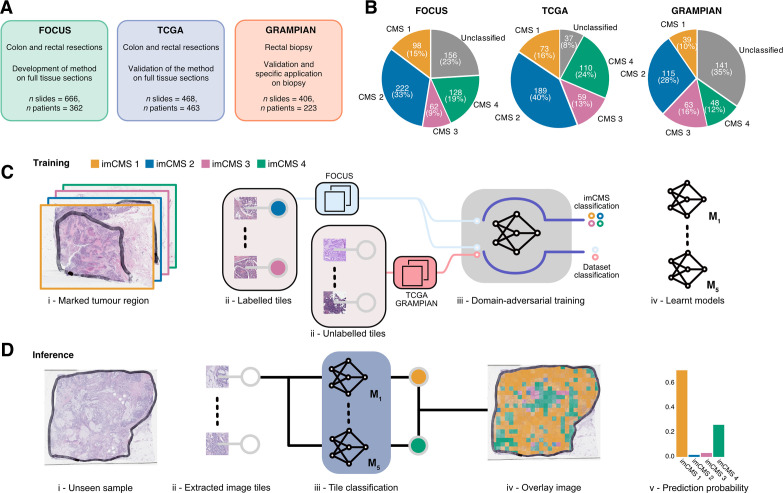
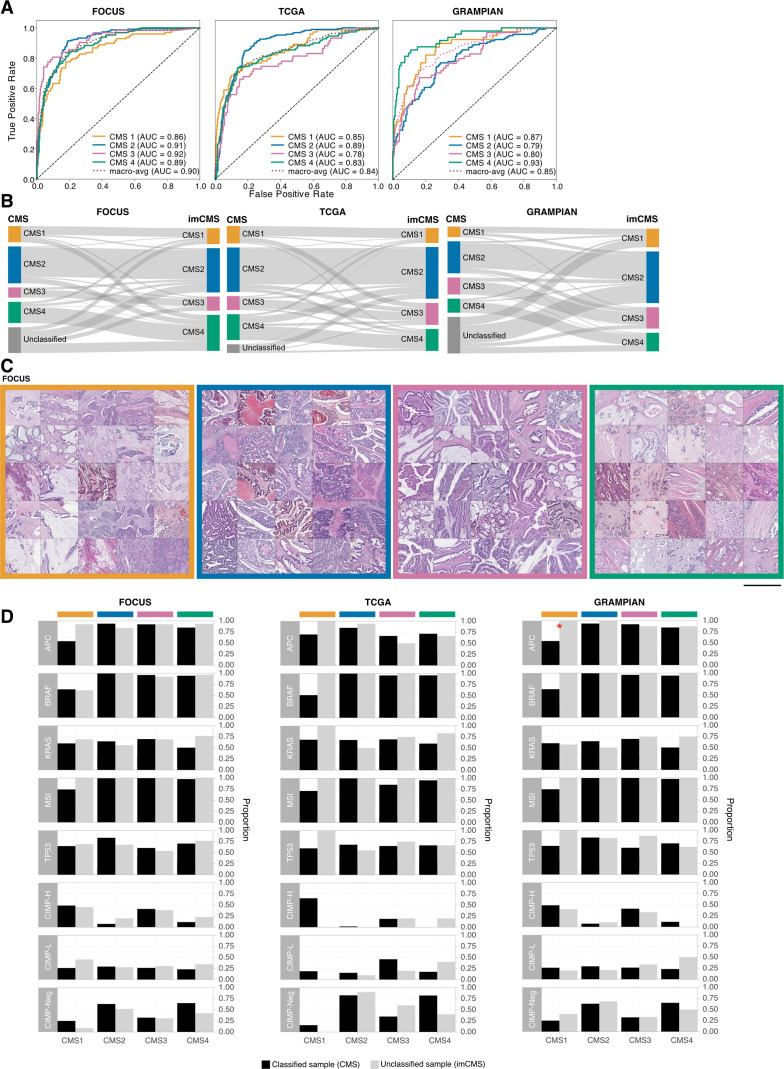
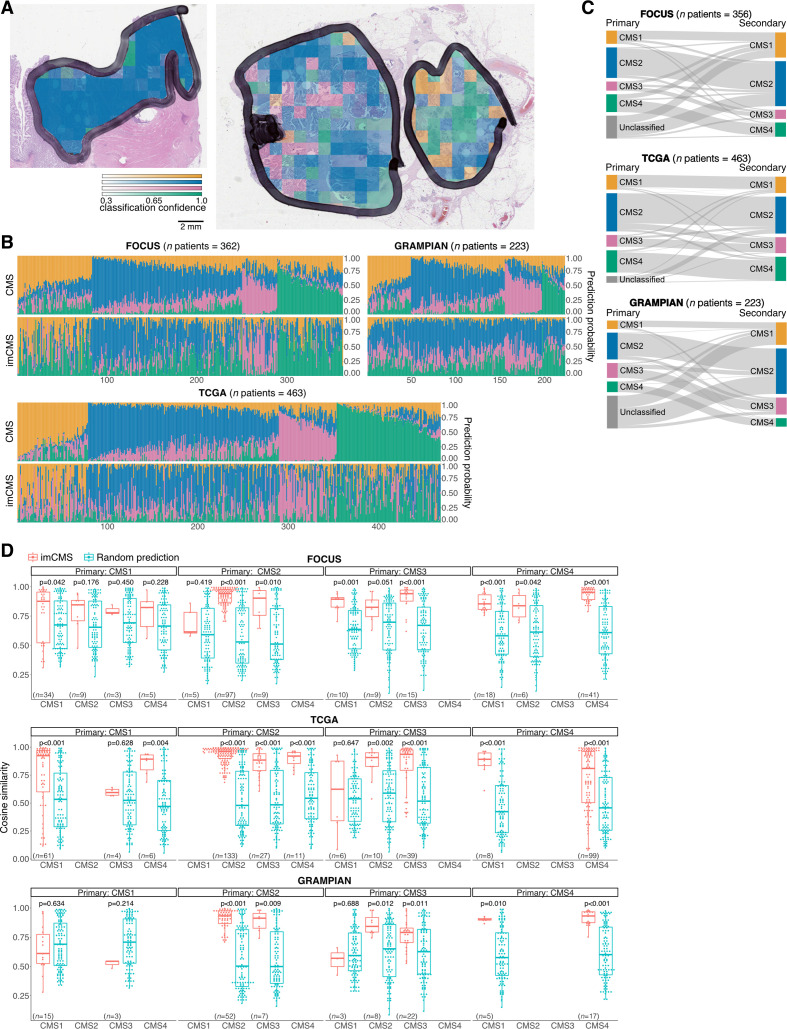
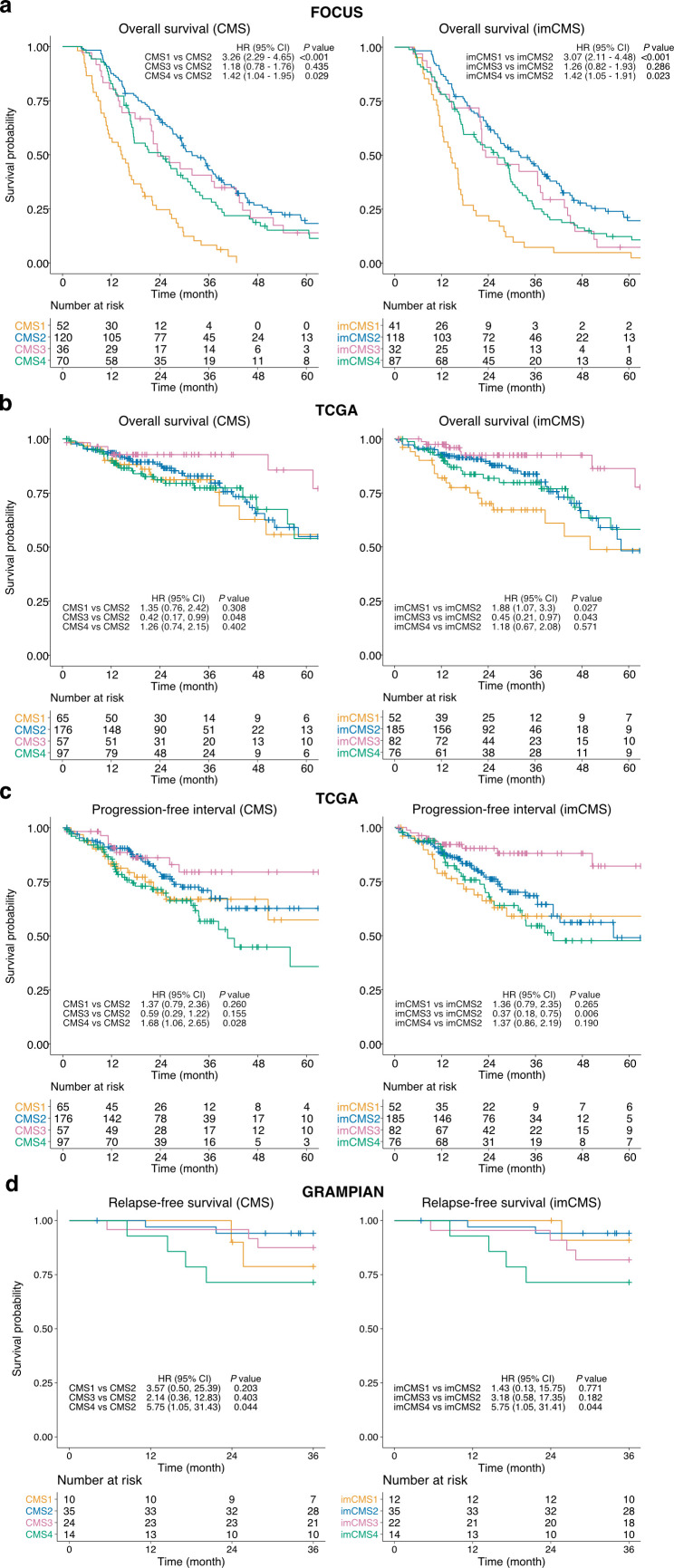
Objective: Complex phenotypes captured on histological slides represent the biological processes at play in individual cancers, but the link to underlying molecular classification has not been clarified or systematised. In colorectal cancer (CRC), histological grading is a poor predictor of disease progression, and consensus molecular subtypes (CMSs) cannot be distinguished without gene expression profiling. We hypothesise that image analysis is a cost-effective tool to associate complex features of tissue organisation with molecular and outcome data and to resolve unclassifiable or heterogeneous cases. In this study, we present an image-based approach to predict CRC CMS from standard H&E sections using deep learning. Design: Training and evaluation of a neural network were performed using a total of n=1206 tissue sections with comprehensive multi-omic data from three independent datasets (training on FOCUS trial, n=278 patients; test on rectal cancer biopsies, GRAMPIAN cohort, n=144 patients; and The Cancer Genome Atlas (TCGA), n=430 patients). Ground truth CMS calls were ascertained by matching random forest and single sample predictions from CMS classifier. Results: Image-based CMS (imCMS) accurately classified slides in unseen datasets from TCGA (n=431 slides, AUC)=0.84) and rectal cancer biopsies (n=265 slides, AUC=0.85). imCMS spatially resolved intratumoural heterogeneity and provided secondary calls correlating with bioinformatic prediction from molecular data. imCMS classified samples previously unclassifiable by RNA expression profiling, reproduced the expected correlations with genomic and epigenetic alterations and showed similar prognostic associations as transcriptomic CMS. Conclusion: This study shows that a prediction of RNA expression classifiers can be made from H&E images, opening the door to simple, cheap and reliable biological stratification within routine workflows.
Overview
The claims and statistics of this paper haven’t been checked yet.
Run the check — free, no account needed. It reads the open-access text and checks the sources it cites.
Integrity signals
Registry
Cites
Statistics
Figures
Verification
Claims the paper makes
The claims and statistics of this paper haven’t been checked yet.
Run the check — free, no account needed. It reads the open-access text and checks the sources it cites.
Claims other papers make about this one
Each is checked against this paper’s own text: does it say what the citing paper says it does?
The cited source says what the claim attributes to it.
In the citing paper
“several studies have documented an association between the CMS4 subtype and tumor budding, defined as a single tumor cell or tumor cluster of up to four cells at the invasive margin (29–31)”
From Clinical Challenges of Consensus Molecular Subtype CMS4 Colon Cancer in the Era of Precision Medicine (2024) · cites this paper as [29]
In the citing paper
“A second outstanding and undisputed hallmark of CMS4 tumors is their stromal enrichment, which emerged both from transcriptomic signature (2) and histologic analyses (29).”
From Clinical Challenges of Consensus Molecular Subtype CMS4 Colon Cancer in the Era of Precision Medicine (2024) · cites this paper as [29]
In the citing paper
“artificial intelligence is now opening up new avenues for colorectal cancer classification, with a high degree of robustness (29).”
From Clinical Challenges of Consensus Molecular Subtype CMS4 Colon Cancer in the Era of Precision Medicine (2024) · cites this paper as [29]
Self-check
Percentages, sums and reported differences re-computed from the paper’s own numbers.
The self-check needs the paper’s full text.
Citations
Cites
Rethinking the Inception Architecture for Computer Vision
Szegedy, C., Vanhoucke, V., Ioffe, S., Shlens, J., & Wojna, Z. (2016) · 2016 IEEE Conference on Computer Vision and Pattern Recognition (CVPR) · doi:10.1109/cvpr.2016.308 · Cited by 32,138
DeLong, E. R., DeLong, D. M., & Clarke-Pearson, D. L. (1988) · Biometrics · doi:10.2307/2531595 · Cited by 22,649
TNM Classification of Malignant Tumours
Hermanek, P., & Sobin, L. H. (1987) · Springer eBooks · doi:10.1007/978-3-642-82982-6 · Cited by 16,077
Domain-Adversarial Training of Neural Networks
Ganin, Y., Ustinova, E., Ajakan, H., Germain, P., Larochelle, H., Laviolette, F., Marchand, M., & Lempitsky, V. (2017) · Advances in Computer Vision and Pattern Recognition · doi:10.1007/978-3-319-58347-1_10 · Cited by 8,318
The consensus molecular subtypes of colorectal cancer
Guinney, J., Dienstmann, R., Wang, X., de Reyniès, A., Schlicker, A., Soneson, C., Marisa, L., Roepman, P., Nyamundanda, G., Angelino, P., et al. (2015) · Nature Medicine · doi:10.1038/nm.3967 · Cited by 5,170
WHO Classification of Tumours of the Digestive System
Bosman, F. T. (2010) · Medical Entomology and Zoology · Cited by 5,041
Cetuximab and Chemotherapy as Initial Treatment for Metastatic Colorectal Cancer
Van Cutsem, E., Köhne, C.-H., Hitre, E., Zaluski, J., Chang Chien, C.-R., Makhson, A., D'Haens, G., Pintér, T., Lim, R., Bodoky, G., et al. (2009) · New England Journal of Medicine · doi:10.1056/nejmoa0805019 · Cited by 3,877
Tumour heterogeneity and resistance to cancer therapies
Dagogo-Jack, I., & Shaw, A. T. (2018) · Nature Reviews Clinical Oncology · doi:10.1038/nrclinonc.2017.166 · Cited by 3,846
Striving for Simplicity: The All Convolutional Net
Springenberg, J. T., Dosovitskiy, A., Brox, T., & Riedmiller, M. (2014) · arXiv · doi:10.48550/arxiv.1412.6806 · Cited by 3,447
Coudray, N., Ocampo, P. S., Sakellaropoulos, T., Narula, N., Snuderl, M., Fenyö, D., Moreira, A. L., Razavian, N., & Tsirigos, A. (2018) · Nature Medicine · doi:10.1038/s41591-018-0177-5 · Cited by 2,930
Immunotherapy in colorectal cancer: Rationale, challenges and potential
Ganesh, K., Stadler, Z. K., Cercek, A., Mendelsohn, R. B., Shia, J., Segal, N. H., & Diaz, L. A. (2019) · Nature Reviews Gastroenterology & Hepatology · doi:10.1038/s41575-019-0126-x · Cited by 1,954 · cited 1×
“10 Tumour and non-tumour tissue contributes to image information on the histological slide and to the consensus molecular subtype (CMS) classification of CRC at the transcriptional level.”
Brierley, J. D., Gospodarowicz, M. K., & Wittekind, C. (2017) · TNM Online · doi:10.1002/9780471420194.tnmc26.pub3 · Cited by 1,231
Image analysis and machine learning in digital pathology: challenges and opportunities
Madabhushi, A., & Lee, G. (2016) · Medical Image Analysis · doi:10.1016/j.media.2016.06.037 · Cited by 1,093 · cited 1×
“6 More recently, deep learning is being used to capture morphological differences with a precision that exceeds human performance.”
Consensus molecular subtypes and the evolution of precision medicine in colorectal cancer
Dienstmann, R., Vermeulen, L., Guinney, J., Kopetz, S., Tejpar, S., & Tabernero, J. M. (2017) · Nature reviews. Cancer · doi:10.1038/nrc.2016.126 · Cited by 1,075
From tumour heterogeneity to advances in precision treatment of colorectal cancer
Punt, C. J. A., Koopman, M., & Vermeulen, L. (2017) · Nature Reviews Clinical Oncology · doi:10.1038/nrclinonc.2016.171 · Cited by 654
Stromal contribution to the colorectal cancer transcriptome
Isella, C., Terrasi, A., Bellomo, S. E., Petti, C., Galatola, G., Muratore, A., Mellano, A., Senetta, R., Cassenti, A., Sonetto, C., et al. (2015) · Nature Genetics · doi:10.1038/ng.3224 · Cited by 640
Stratified medicine: strategic and economic implications of combining drugs and clinical biomarkers
Trusheim, M. R., Berndt, E. R., & Douglas, F. L. (2007) · Nature Reviews Drug Discovery · doi:10.1038/nrd2251 · Cited by 510
Sepulveda, A. R., Hamilton, S. R., Allegra, C. J., Grody, W. W., Cushman‐Vokoun, A. M., Funkhouser, W. K., Kopetz, S., Lieu, C. H., Lindor, N. M., Minsky, B. D., et al. (2017) · Journal of Clinical Oncology · doi:10.1200/jco.2016.71.9807 · Cited by 374
Chua, Y. J., Barbáchano, Y., Cunningham, D., Oates, J., Brown, G. M., Wotherspoon, A. C., Tait, D., Massey, A., Tebbutt, N. C., & Chau, I. (2010) · The Lancet Oncology · doi:10.1016/s1470-2045(09)70381-x · Cited by 317
Kugaya, A., Akechi, T., Okuyama, T., Nakano, T., Mikami, I., Okamura, H., & Uchitomi, Y. (2000) · Cancer · doi:10.1002/1097-0142(20000615)88:12 · Cited by 309
Long-Term Neuropathy After Oxaliplatin Treatment: Challenging the Dictum of Reversibility
Park, S. B., Lin, C. S.-Y., Krishnan, A. V., et al. (2011) · The Oncologist · doi:10.1634/theoncologist.2010-0248 · Cited by 198
Artificial intelligence—the third revolution in pathology
Salto‐Tellez, M., Maxwell, P., & Hamilton, P. (2018) · Histopathology · doi:10.1111/his.13760 · Cited by 176 · cited 2×
“8 In CRC, it is well known that tumour morphology, growth pattern and architecture hold important clues to differentiating biological subtypes with clinical impact.”
Song, N., Pogue–Geile, K. L., Gavin, P. G., Yothers, G., Kim, S. R., Johnson, N. L., Lipchik, C., Allegra, C. J., Petrelli, N. J., O’Connell, M. J., et al. (2016) · JAMA Oncology · doi:10.1001/jamaoncol.2016.2314 · Cited by 172
Dunne, P. D., McArt, D. G., Bradley, C. A., O’Reilly, P. G., Barrett, H. L., Cummins, R., O’Grady, T., Arthur, K., Loughrey, M. B., Allen, W. L., et al. (2016) · Clinical Cancer Research · doi:10.1158/1078-0432.ccr-16-0032 · Cited by 162
Self-citationLawler, M., Alsina, D., Adams, R., Anderson, A. S., Brown, G. M., Fearnhead, N. S., Fenwick, S. W., Halloran, S. P., Hochhauser, D., Hull, M. A., et al. (2017) · Gut · doi:10.1136/gutjnl-2017-315333 · Cited by 91
Self-citationAl‐Kateb, H., Nguyen, T. T., Steger-May, K., & Pfeifer, J. D. (2015) · Molecular Oncology · doi:10.1016/j.molonc.2015.05.004 · Cited by 84 · cited 1×
“29 As a stemlike (CMS4) transcriptional profile of CRC has been linked to poor prognosis and therapeutic resistance, imCMS could allow for more effective stratification of patients for prospective studies in primary surgery or neoadjuvant treatment.”
Alderdice, M., Richman, S. D., Gollins, S., Stewart, P., Hurt, C. N., Adams, R., McCorry, A. M. B., Roddy, A. C., Vimalachandran, D., Isella, C., et al. (2018) · The Journal of Pathology · doi:10.1002/path.5051 · Cited by 65
Self-citationMolecular pathology – The value of an integrative approach
Salto‐Tellez, M., James, J. A., & Hamilton, P. W. (2014) · Molecular Oncology · doi:10.1016/j.molonc.2014.07.021 · Cited by 42
Image-based surrogate biomarkers for molecular subtypes of colorectal cancer
Popovici, V. C., Budínská, E., Dušek, L., Kozubek, M., & Bosman, F. T. (2017) · Bioinformatics · doi:10.1093/bioinformatics/btx027 · Cited by 30
Vascular liver lesions: contemporary views on long-recognized entities
Sempoux, C. L., & Bioulac‐Sage, P. (2018) · Archiv für Pathologische Anatomie und Physiologie und für Klinische Medicin · doi:10.1007/s00428-018-2328-y · Cited by 10
Research works printed but not linked: 1
- Popovici, 2018, 30(th) European congress of pathology: recognising molecular subtypes of colon cancer from virtual slides, Virchows Arch, 473, 1
Cited by
Sorted by citations
Deep learning in cancer diagnosis, prognosis and treatment selection
Tran, K. A., Kondrashova, O., Bradley, A., Williams, E. D., Pearson, J. V., & Waddell, N. (2021) · Genome Medicine · doi:10.1186/s13073-021-00968-x · Cited by 932
“eosin (H&E) sections to predict molecular subtypes of lung [49], colorectal [50], breast [51, 52] and bladder”
BackgroundMethodDeep learning in histopathology: the path to the clinic
van der Laak, J., Litjens, G., & Ciompi, F. (2021) · Nature Medicine · doi:10.1038/s41591-021-01343-4 · Cited by 902
“…currently impossible to capture by sole visual inspection of histopathology slides, such as prediction of response to chemotherapy or immunotherapy, or even future events such as recurrence or survival 97–104 as well as the presence of genetic mutations 95,105–110 or molecular subtypes 30,111,112 .”
BackgroundDeep learning in cancer pathology: a new generation of clinical biomarkers
Echle, A., Rindtorff, N. T., Brinker, T. J., Luedde, T., Pearson, A. T., & Kather, J. N. (2021) · British Journal of Cancer · doi:10.1038/s41416-020-01122-x · Cited by 667
Artificial intelligence in histopathology: enhancing cancer research and clinical oncology
Shmatko, A., Ghaffari Laleh, N., Gerstung, M., & Kather, J. N. (2022) · Nature Cancer · doi:10.1038/s43018-022-00436-4 · Cited by 446
“Although prediction performance did not reach clinical standards, this work provided seminal proof of principle and gave rise to follow-up studies on a number of solid tumor types, including breast cancer 73 , prostate cancer 74 and gastro-intestinal tumors 61,75,76 .”
BackgroundResultBilal, M., Raza, S. E. A., Azam, A., Graham, S., Ilyas, M., Cree, I. A., Snead, D., Minhas, F., & Rajpoot, N. M. (2021) · The Lancet Digital Health · doi:10.1016/s2589-7500(21)00180-1 · Cited by 299
“In histopathology, deep learning-based algorithms have been shown to predict clinically relevant molecular phenotypes, 13 microsatellite instability, 4,14,15 consensus mole cular subtypes, 4,16 and outcomes 17 in colorectal cancer.”
Background
Metadata
- Authors
- Sirinukunwattana, K., Domingo, E., Richman, S. D., Redmond, K. L., Blake, A., Verrill, C., Leedham, S. J., Chatzipli, A., Hardy, C., Whalley, C. M., Wu, C.-H., Beggs, A. D., McDermott, U., Dunne, P. D., Meade, A., Walker, S. M., Murray, G. I., Samuel, L., Seymour, M., Tomlinson, I., Quirke, P., Maughan, T., Rittscher, J., & Koelzer, V. H.
- Affiliations
- University of Oxford (GB)
- University of Leeds (GB)
- Queen's University Belfast (GB)
- Centre for Human Genetics (GB)
- Wellcome Sanger Institute (GB)
- University of Birmingham (GB)
- MRC Clinical Trials Unit at UCL (GB)
- Almac (United Kingdom) (GB)
- University of Aberdeen (GB)
- Aberdeen Royal Infirmary (GB)
- Department of Oncology, Leeds Institute of Cancer and Pathology, Leeds, UK
- Edinburgh Cancer Research (GB)
- Department of Pathology and Tumour Biology, Leeds Institute of Cancer and Pathology, Leeds, UK
- CRUK/MRC Oxford Institute for Radiation Oncology, University of Oxford, Oxford, UK
- University of Zurich (CH)
- Corresponding author
- Koelzer, Viktor H
- ORCID
- Sirinukunwattana, Korsuk
- Domingo, Enric
- Richman, Susan D
- Redmond, Keara L
- Blake, Andrew
- Verrill, Clare
- Leedham, Simon J
- Chatzipli, Aikaterini
- Whalley, Celina M
- Wu, Chieh-hsi
- Beggs, Andrew D
- McDermott, Ultan
- Dunne, Philip D
- Meade, Angela
- Walker, Steven M
- Murray, Graeme I
- Samuel, Leslie
- Tomlinson, Ian
- Maughan, Timothy
- Rittscher, Jens
- Koelzer, Viktor H
- Venue
- Gut
- Publisher
- BMJ
- Published
- 2020-07-20
- Volume
- 70
- Issue
- 3
- Pages
- 544-554
- ISSN
- 0017-5749 (ISSN-L)
- 1468-3288
- PMC
- PMC7873419
- OpenAlex
- W3043602140
- Semantic Scholar
- 9531fb91f6876c57e3cf9bcb77ec79cc6f2a84d3
- Cited by
- 264
- References
- 30
- Citations by year
- 2026: 35 · 2025: 40 · 2024: 63 · 2023: 37 · 2022: 57 · 2021: 28 · 2020: 4
- FWCI
- 12.37
- Type
- journal article
- Language
- en
- Open access
- hybrid
- doi.org
- Locations
- Gut (publishedVersion, cc-by)
- PubMed Central (publishedVersion, cc-by)
- PubMed (publishedVersion)
- Research Portal (Queen's University Belfast) (publishedVersion, cc-by)
- ePrints Soton (University of Southampton) (acceptedVersion)
- Zurich Open Repository and Archive (University of Zurich) (acceptedVersion, cc-by)
- Aberdeen University Research Archive (Aberdeen University) (submittedVersion)
- UCL Discovery (University College London) (submittedVersion)
- University of Birmingham Research Portal (University of Birmingham) (submittedVersion)
- University of Birmingham Research Portal (University of Birmingham) (submittedVersion, cc-by)
- Edinburgh Research Explorer (University of Edinburgh) (submittedVersion, cc-by)
- Zurich Open Repository and Archive (University of Zurich) (submittedVersion, cc-by)
- Zurich Open Repository and Archive (University of Zurich)
- Greater South Information System
- Funders
- National Institute for Health Research (NIHR) Oxford Biomedical Research Centre
- Engineering and Physical Sciences Research Council (EP/M013774/1)
- Medical Research Council UK
- Cancer Research UK
- Promedica Foundation (F-87701-41-01)
- Schweizerischer Nationalfonds zur Förderung der Wissenschaftlichen Forschung (P2SKP3_168322/1)
- Topics
- Physical Sciences › Computer Science › Artificial Intelligence › AI in cancer detection
- Health Sciences › Medicine › Radiology, Nuclear Medicine and Imaging › Radiomics and Machine Learning in Medical Imaging
- Health Sciences › Medicine › Pathology and Forensic Medicine › Genetic factors in colorectal cancer
- Keywords
- colorectal cancer, consensus molecular subtypes, image classification, H&E histology, deep learning, intratumoral heterogeneity, rectal cancer, histopathology, molecular classification, prognostic stratification, epigenetic modifications
- MeSH terms
- Deep Learning, Biopsy, Humans, Phenotype, Predictive Value of Tests, Prognosis, RNA, Biomarkers, Tumor, Colorectal Neoplasms, Gene Expression Regulation, Neoplastic, Disease Progression, Gene Expression Profiling, Consensus, Neoplasm Grading, Datasets as Topic
About these checks
Registry, retraction, Cites and statistics results are computed, not judged, with one exception: a printed reference that no index lists is read once by a model before it counts as a citation error. Claims are extracted by a model and kept only when their quote appears verbatim in the text; each cited source is then checked, with a model’s help, for whether it says what the claim relies on. Those verdicts can be wrong — read the claim’s quote and the cited source before relying on one.
Statistics and arithmetic are recomputed, not judged.
Confidence bands are shown only for fields calibrated on our annotated test set. None is calibrated yet, so no band is shown.
What counts as a claim ›How we measure confidence ›How we check this ›
Are you an author, or do you see a problem with this page? Request a review
