

The DOI matches its Crossref record; 30 of the 30 references it cites were found in a registry or an index.
Image-based consensus molecular subtype (imCMS) classification of colorectal cancer using deep learning
Open accessPublished version of a preprint
Abstract
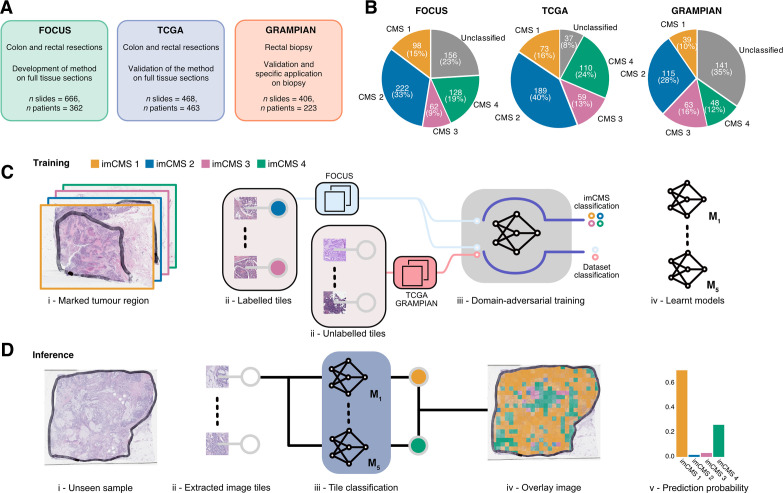
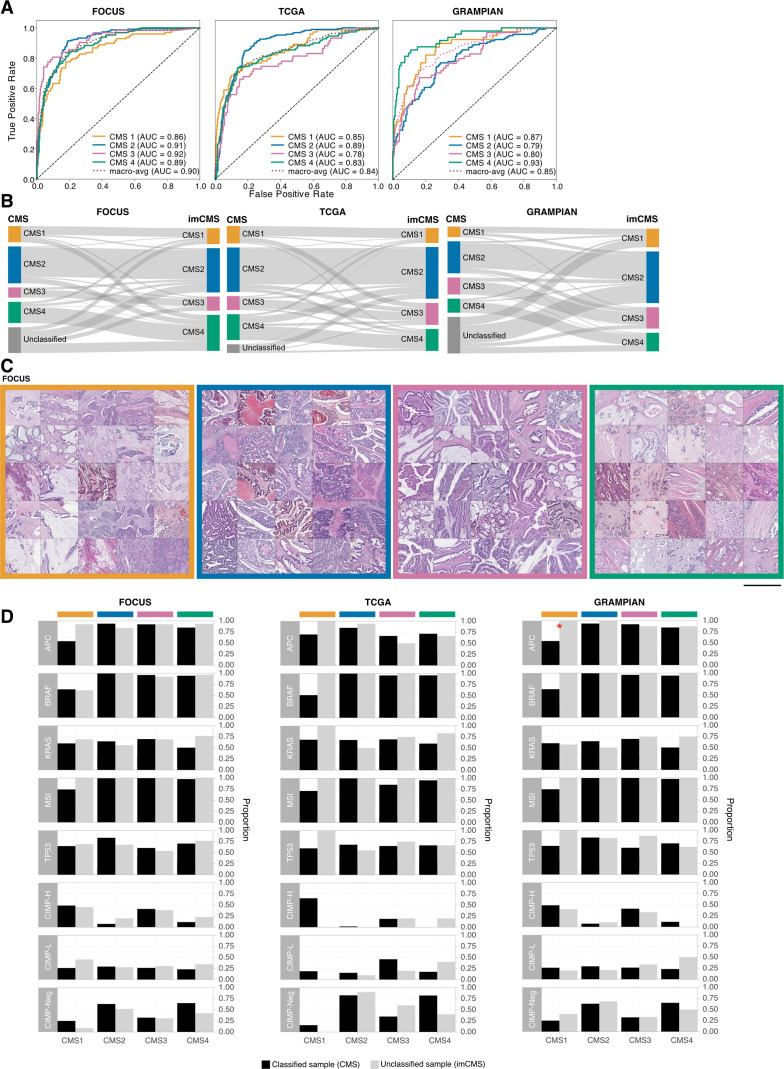
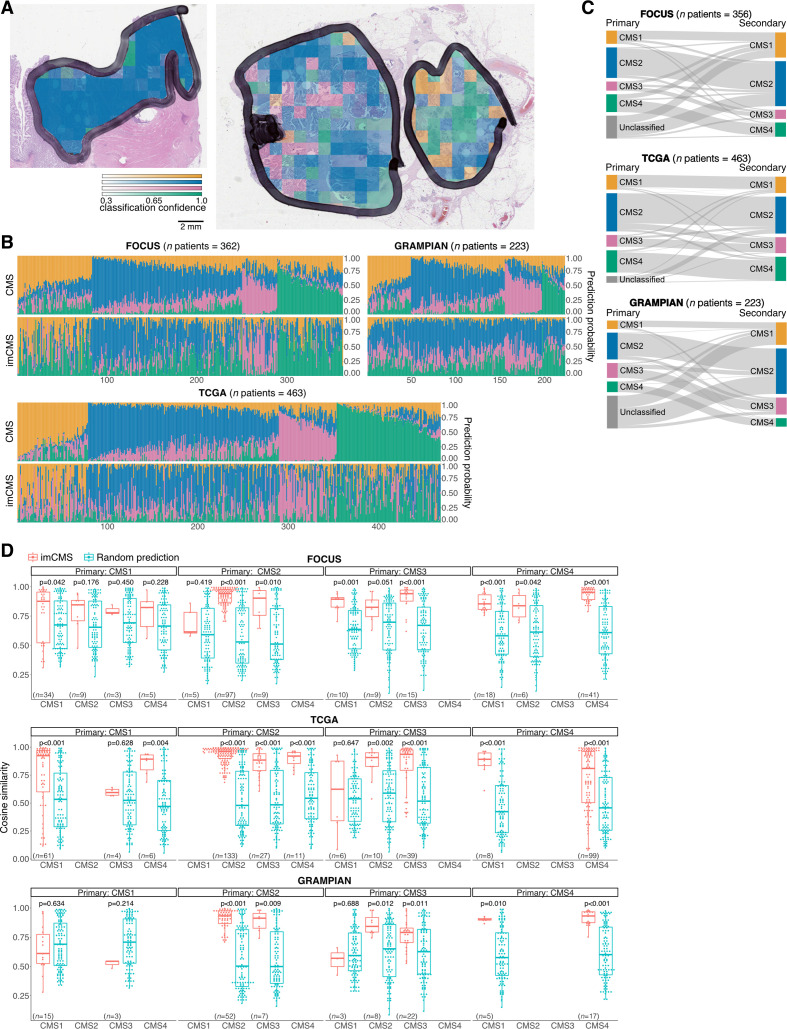
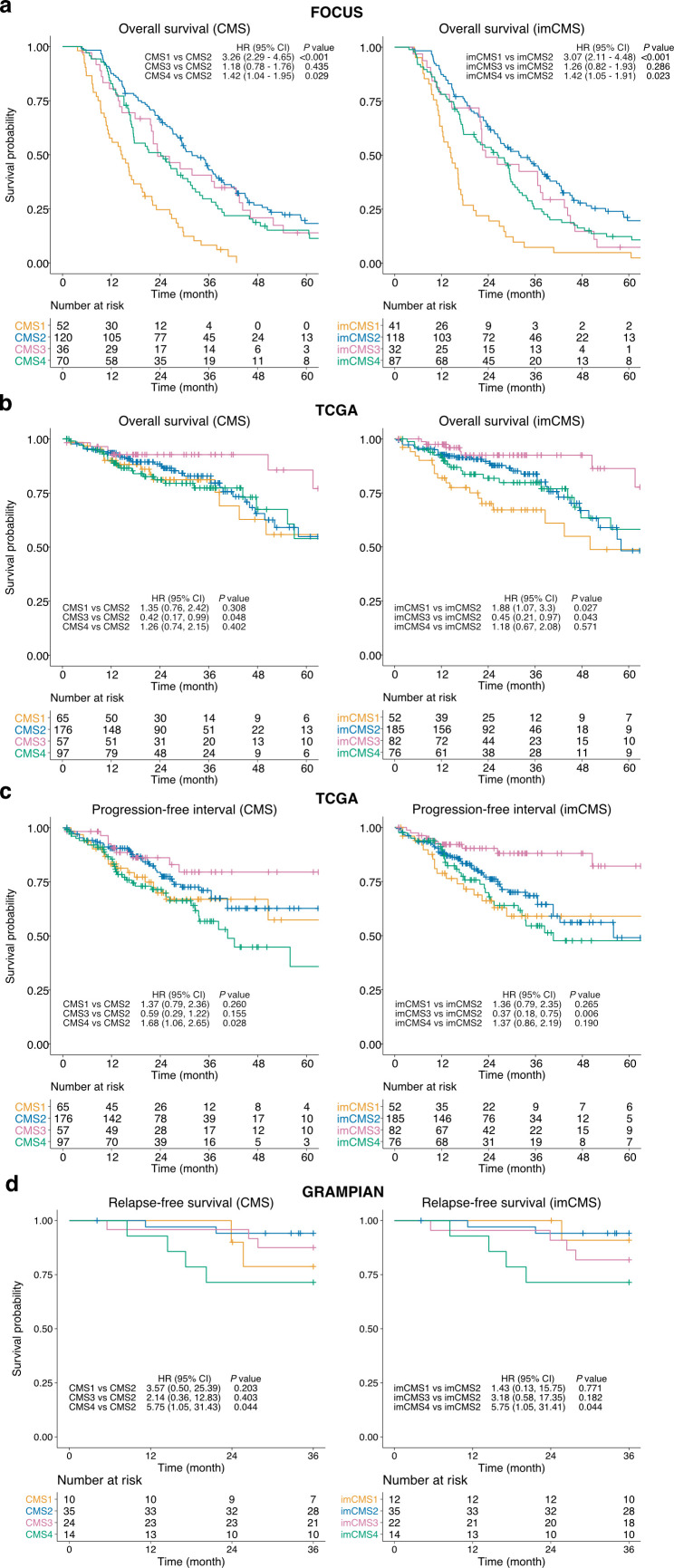
Objective: Complex phenotypes captured on histological slides represent the biological processes at play in individual cancers, but the link to underlying molecular classification has not been clarified or systematised. In colorectal cancer (CRC), histological grading is a poor predictor of disease progression, and consensus molecular subtypes (CMSs) cannot be distinguished without gene expression profiling. We hypothesise that image analysis is a cost-effective tool to associate complex features of tissue organisation with molecular and outcome data and to resolve unclassifiable or heterogeneous cases. In this study, we present an image-based approach to predict CRC CMS from standard H&E sections using deep learning. Design: Training and evaluation of a neural network were performed using a total of n=1206 tissue sections with comprehensive multi-omic data from three independent datasets (training on FOCUS trial, n=278 patients; test on rectal cancer biopsies, GRAMPIAN cohort, n=144 patients; and The Cancer Genome Atlas (TCGA), n=430 patients). Ground truth CMS calls were ascertained by matching random forest and single sample predictions from CMS classifier. Results: Image-based CMS (imCMS) accurately classified slides in unseen datasets from TCGA (n=431 slides, AUC)=0.84) and rectal cancer biopsies (n=265 slides, AUC=0.85). imCMS spatially resolved intratumoural heterogeneity and provided secondary calls correlating with bioinformatic prediction from molecular data. imCMS classified samples previously unclassifiable by RNA expression profiling, reproduced the expected correlations with genomic and epigenetic alterations and showed similar prognostic associations as transcriptomic CMS. Conclusion: This study shows that a prediction of RNA expression classifiers can be made from H&E images, opening the door to simple, cheap and reliable biological stratification within routine workflows.
Overview
The claims and statistics of this paper haven’t been checked yet.
Run the check — free, no account needed. It reads the open-access text and checks the sources it cites.
Integrity signals
Registry
Cites
Statistics
Figures
Verification
Claims the paper makes
The claims and statistics of this paper haven’t been checked yet.
Run the check — free, no account needed. It reads the open-access text and checks the sources it cites.
Claims other papers make about this one
Each is checked against this paper’s own text: does it say what the citing paper says it does?
In the citing paper
“A second outstanding and undisputed hallmark of CMS4 tumors is their stromal enrichment, which emerged both from transcriptomic signature (2) and histologic analyses (29).”
From Clinical Challenges of Consensus Molecular Subtype CMS4 Colon Cancer in the Era of Precision Medicine (2024) · cites this paper as [29]
In the citing paper
“several studies have documented an association between the CMS4 subtype and tumor budding, defined as a single tumor cell or tumor cluster of up to four cells at the invasive margin (29–31)”
From Clinical Challenges of Consensus Molecular Subtype CMS4 Colon Cancer in the Era of Precision Medicine (2024) · cites this paper as [29]
In the citing paper
“artificial intelligence is now opening up new avenues for colorectal cancer classification, with a high degree of robustness (29).”
From Clinical Challenges of Consensus Molecular Subtype CMS4 Colon Cancer in the Era of Precision Medicine (2024) · cites this paper as [29]
Self-check
Percentages, sums and reported differences re-computed from the paper’s own numbers.
The self-check needs the paper’s full text.
Citations
Cites
Rethinking the Inception Architecture for Computer Vision
Szegedy, C., Vanhoucke, V., Ioffe, S., Shlens, J., & Wojna, Z. (2016) · 2016 IEEE Conference on Computer Vision and Pattern Recognition (CVPR) · doi:10.1109/cvpr.2016.308 · Cited by 32,138
DeLong, E. R., DeLong, D. M., & Clarke-Pearson, D. L. (1988) · Biometrics · doi:10.2307/2531595 · Cited by 22,649
TNM Classification of Malignant Tumours
Hermanek, P., & Sobin, L. H. (1987) · Springer eBooks · doi:10.1007/978-3-642-82982-6 · Cited by 16,077
Domain-Adversarial Training of Neural Networks
Ganin, Y., Ustinova, E., Ajakan, H., Germain, P., Larochelle, H., Laviolette, F., Marchand, M., & Lempitsky, V. (2017) · Advances in Computer Vision and Pattern Recognition · doi:10.1007/978-3-319-58347-1_10 · Cited by 8,318
The consensus molecular subtypes of colorectal cancer
Guinney, J., Dienstmann, R., Wang, X., de Reyniès, A., Schlicker, A., Soneson, C., Marisa, L., Roepman, P., Nyamundanda, G., Angelino, P., et al. (2015) · Nature Medicine · doi:10.1038/nm.3967 · Cited by 5,170
WHO Classification of Tumours of the Digestive System
Bosman, F. T. (2010) · Medical Entomology and Zoology · Cited by 5,041
Cetuximab and Chemotherapy as Initial Treatment for Metastatic Colorectal Cancer
Van Cutsem, E., Köhne, C.-H., Hitre, E., Zaluski, J., Chang Chien, C.-R., Makhson, A., D'Haens, G., Pintér, T., Lim, R., Bodoky, G., et al. (2009) · New England Journal of Medicine · doi:10.1056/nejmoa0805019 · Cited by 3,877
Tumour heterogeneity and resistance to cancer therapies
Dagogo-Jack, I., & Shaw, A. T. (2018) · Nature Reviews Clinical Oncology · doi:10.1038/nrclinonc.2017.166 · Cited by 3,846
Striving for Simplicity: The All Convolutional Net
Springenberg, J. T., Dosovitskiy, A., Brox, T., & Riedmiller, M. (2014) · arXiv · doi:10.48550/arxiv.1412.6806 · Cited by 3,447
Coudray, N., Ocampo, P. S., Sakellaropoulos, T., Narula, N., Snuderl, M., Fenyö, D., Moreira, A. L., Razavian, N., & Tsirigos, A. (2018) · Nature Medicine · doi:10.1038/s41591-018-0177-5 · Cited by 2,930
Research works printed but not linked: 1
- Popovici, 2018, 30(th) European congress of pathology: recognising molecular subtypes of colon cancer from virtual slides, Virchows Arch, 473, 1
Cited by
Sorted by citations
Deep learning in cancer diagnosis, prognosis and treatment selection
Tran, K. A., Kondrashova, O., Bradley, A., Williams, E. D., Pearson, J. V., & Waddell, N. (2021) · Genome Medicine · doi:10.1186/s13073-021-00968-x · Cited by 932
“eosin (H&E) sections to predict molecular subtypes of lung [49], colorectal [50], breast [51, 52] and bladder”
BackgroundMethodDeep learning in histopathology: the path to the clinic
van der Laak, J., Litjens, G., & Ciompi, F. (2021) · Nature Medicine · doi:10.1038/s41591-021-01343-4 · Cited by 902
“…currently impossible to capture by sole visual inspection of histopathology slides, such as prediction of response to chemotherapy or immunotherapy, or even future events such as recurrence or survival 97–104 as well as the presence of genetic mutations 95,105–110 or molecular subtypes 30,111,112 .”
BackgroundDeep learning in cancer pathology: a new generation of clinical biomarkers
Echle, A., Rindtorff, N. T., Brinker, T. J., Luedde, T., Pearson, A. T., & Kather, J. N. (2021) · British Journal of Cancer · doi:10.1038/s41416-020-01122-x · Cited by 667
Artificial intelligence in histopathology: enhancing cancer research and clinical oncology
Shmatko, A., Ghaffari Laleh, N., Gerstung, M., & Kather, J. N. (2022) · Nature Cancer · doi:10.1038/s43018-022-00436-4 · Cited by 446
“Although prediction performance did not reach clinical standards, this work provided seminal proof of principle and gave rise to follow-up studies on a number of solid tumor types, including breast cancer 73 , prostate cancer 74 and gastro-intestinal tumors 61,75,76 .”
BackgroundResultBilal, M., Raza, S. E. A., Azam, A., Graham, S., Ilyas, M., Cree, I. A., Snead, D., Minhas, F., & Rajpoot, N. M. (2021) · The Lancet Digital Health · doi:10.1016/s2589-7500(21)00180-1 · Cited by 299
“In histopathology, deep learning-based algorithms have been shown to predict clinically relevant molecular phenotypes, 13 microsatellite instability, 4,14,15 consensus mole cular subtypes, 4,16 and outcomes 17 in colorectal cancer.”
BackgroundSwarm learning for decentralized artificial intelligence in cancer histopathology
Saldanha, O. L., Quirke, P., West, N. P., James, J. A., Loughrey, M. B., Grabsch, H. I., Salto-Tellez, M., Alwers, E., Cifci, D., Ghaffari Laleh, N., et al. (2022) · Nature Medicine · doi:10.1038/s41591-022-01768-5 · Cited by 227
“Figure S2 ), a large population-based case-control study, including samples of CRC patients at different disease stages recruited at >20 hospitals in Germany, which is coordinated by the German Cancer Research Center (DKFZ, Heidelberg, Germany) 30–32 .”
BackgroundSelf-citationten Hoorn, S., de Back, T. R., Sommeijer, D. W., & Vermeulen, L. (2022) · JNCI: Journal of the National Cancer Institute · doi:10.1093/jnci/djab106 · Cited by 203
“Alternatively, image-based transcriptomic classification could be further explored, because this circumvents the abovementioned issues and seems promising in first attempts(110).”
BackgroundNew clinical trial design in precision medicine: discovery, development and direction
Duan, X.-P., Qin, B., Jiao, X., Liu, K., Wang, Z., & Zang, Y. (2024) · Signal Transduction and Targeted Therapy · doi:10.1038/s41392-024-01760-0 · Cited by 225
Kuntz, S., Krieghoff‐Henning, E., Kather, J. N., Jutzi, T. B., Höhn, J., Kiehl, L., Hekler, A., Alwers, E., Kalle, C. V., Fröhling, S., et al. (2021) · European Journal of Cancer · doi:10.1016/j.ejca.2021.07.012 · Cited by 203
Deep Learning With Radiomics for Disease Diagnosis and Treatment: Challenges and Potential
Zhang, X., Zhang, Y., Zhang, G., Qiu, X., Tan, W., Yin, X., & Liao, L. (2022) · Frontiers in Oncology · doi:10.3389/fonc.2022.773840 · Cited by 201
Phenotypic plasticity and genetic control in colorectal cancer evolution
Househam, J., Heide, T., Cresswell, G. D., Spiteri, I., Kimberley, C., Zapata, L., Lynn, C., James, C. T., Mossner, M., Fernández-Mateos, J., et al. (2022) · Nature · doi:10.1038/s41586-022-05311-x · Cited by 187
Deep Learning on Histopathological Images for Colorectal Cancer Diagnosis: A Systematic Review
Davri, A. S., Birbas, E., Kanavos, T., Ntritsos, G., Γιαννακέας, Ν., Tzallas, A. T., & Batistatou, A. K. (2022) · Diagnostics · doi:10.3390/diagnostics12040837 · Cited by 144
Volinsky-Fremond, S., Andani, S., Wolf, J. B., Dijkstra, J., Melsbach, S., Jobsen, J. J., Brinkhuis, M., Roothaan, S. M., Jurgenliemk-Schulz, I. M., Lutgens, L. C. H. W., et al. (2022) · The Lancet Digital Health · doi:10.1016/s2589-7500(22)00210-2 · Cited by 150
Self-citationArtificial intelligence to identify genetic alterations in conventional histopathology
Çifçi, D., Foersch, S., & Kather, J. N. (2022) · The Journal of Pathology · doi:10.1002/path.5898 · Cited by 140
“[65] 2021 Gene expression Consensus molecular subtype AUROC = 0.”
BackgroundDeep learning in cancer genomics and histopathology
Unger, M., & Kather, J. N. (2024) · Genome Medicine · doi:10.1186/s13073-024-01315-6 · Cited by 135
Farin, H. F., Mosa, M. H., Ndreshkjana, B., Grebbin, B. M., Ritter, B., Menche, C., Kennel, K. B., Ziegler, P. K., Szabó, L., Bollrath, J., et al. (2023) · Cancer Discovery · doi:10.1158/2159-8290.cd-23-0050 · Cited by 120
QuPath: The global impact of an open source digital pathology system
Humphries, M. P., Maxwell, P., & Salto‐Tellez, M. (2021) · Computational and Structural Biotechnology Journal · doi:10.1016/j.csbj.2021.01.022 · Cited by 133
“were able to take complex tissue organisation features from unclassifiable or heterogeneous cases of colorectal cancer and accurately predict RNA expression [17].”
BackgroundIntegrated approaches for precision oncology in colorectal cancer: The more you know, the better
Andrei, P., Battuello, P., Grasso, G., Rovera, E., Tesio, N., & Bardelli, A. (2021) · Seminars in Cancer Biology · doi:10.1016/j.semcancer.2021.04.007 · Cited by 116
Regression-based Deep-Learning predicts molecular biomarkers from pathology slides
El Nahhas, O. S. M., Loeffler, C. M. L., Carrero, Z. I., van Treeck, M., Kolbinger, F. R., Hewitt, K. J., Muti, H. S., Graziani, M., Zeng, Q., Calderaro, J., et al. (2024) · Nature Communications · doi:10.1038/s41467-024-45589-1 · Cited by 108
Prediction of recurrence risk in endometrial cancer with multimodal deep learning
Volinsky-Fremond, S., Horeweg, N., Andani, S., Wolf, J. B., Lafarge, M. W., de Kroon, C. D., Ørtoft, G., Høgdall, E. V. S., Dijkstra, J., Jobsen, J. J., et al. (2024) · Nature Medicine · doi:10.1038/s41591-024-02993-w · Cited by 111
Self-citationArtificial intelligence-based pathology for gastrointestinal and hepatobiliary cancers
Caldéraro, J., & Kather, J. N. (2020) · Gut · doi:10.1136/gutjnl-2020-322880 · Cited by 108
“12 57–59 62 The detection of this phenotype has also major implications for the patient and his/her relatives, as it warrants further investigations to diagnose Lynch syndrome.”
BackgroundMarra, A., Morganti, S., Pareja, F. G., Campanella, G. S. V., Bibeau, F., Fuchs, T. J., Loda, M. F., Parwani, A. V., Scarpa, A., Reis-Filho, J. S., et al. (2025) · Annals of Oncology · doi:10.1016/j.annonc.2025.03.006 · Cited by 114
Hildebrand, L. A., Pierce, C., Dennis, M. J., Paracha, M., & Maoz, A. (2021) · Cancers · doi:10.3390/cancers13030391 · Cited by 91
Automated quality assessment of large digitised histology cohorts by artificial intelligence
Haghighat, M., Browning, L., Sirinukunwattana, K., Malacrino, S., Alham, N. K., Colling, R. T., Cui, Y., Rakha, E. A., Hamdy, F. C., Verrill, C. L., et al. (2022) · Scientific Reports · doi:10.1038/s41598-022-08351-5 · Cited by 89
Self-citationMolecular pathological classification of colorectal cancer—an update
Dunne, P. D., & Arends, M. J. (2024) · Archiv für Pathologische Anatomie und Physiologie und für Klinische Medicin · doi:10.1007/s00428-024-03746-3 · Cited by 91
“…and transcriptional data from both tumour resections and pre-treatment biopsies assembled within the S:CORT consortium, Sirinukunwattana et al. [39] developed an image-based CMS (imCMS) deep learning classifier that could accurately call the four CMS classes when deployed on independent…”
MethodSelf-citationOvercoming the challenges to implementation of artificial intelligence in pathology
Reis-Filho, J. S., & Kather, J. N. (2023) · JNCI: Journal of the National Cancer Institute · doi:10.1093/jnci/djad048 · Cited by 79
Deep learning–driven multi-omics analysis: enhancing cancer diagnostics and therapeutics
Zhang, J., Che, Y., Liu, R., Wang, Z., & Liu, W. (2025) · Briefings in Bioinformatics · doi:10.1093/bib/bbaf440 · Cited by 91
“Various DL algorithms can integrate multiple bioinformatics data types such as TCGA, gene expression, CNV, methylation status, and protein expression to reveal the heterogeneity of cancer and identify molecular subtypes associated with prognosis and treatment response [52, 177] (Table 1).”
Machine learning in computational histopathology: Challenges and opportunities
Cooper, M. C., Ji, Z., & Krishnan, R. G. (2023) · Genes Chromosomes and Cancer · doi:10.1002/gcc.23177 · Cited by 87
“…classification, 36,43,112 – 115 researchers have developed methods for classifying colon cancer cell subtypes into a 4-class categorization 112,116,117 and a 9-class (adipose, background, debris, lymphocytes, mucus, smooth muscle, normal colon mucosa, cancer-associated stroma, and COAD…”
MethodMetastatic heterogeneity of the consensus molecular subtypes of colorectal cancer
Eide, P. W., Moosavi, S. H., Eilertsen, I. A., Brunsell, T. H., Langerud, J., Berg, K. C. G., Røsok, B. I., Bjørnbeth, B. A., Nesbakken, A., Lothe, R. A., et al. (2021) · npj Genomic Medicine · doi:10.1038/s41525-021-00223-7 · Cited by 70
Shao, J., Ma, J., Zhang, Q., Li, W., & Wang, C. (2023) · Seminars in Cancer Biology · doi:10.1016/j.semcancer.2023.02.006 · Cited by 85
Jang, H., Lee, A., Kang, J., Song, I. H., & Lee, S. H. (2020) · World Journal of Gastroenterology · doi:10.3748/wjg.v26.i40.6207 · Cited by 76
Spatially resolved transcriptomics provide a new method for cancer research
Zheng, B., & Fang, L. (2022) · Journal of Experimental & Clinical Cancer Research · doi:10.1186/s13046-022-02385-3 · Cited by 87
“ST-NET was directly applied to the interpretation of breast cancer HE images from the TCGA tumor database, the results demonstrate that this algorithm can be extended to the construction of breast cancer gene expression datasets without repeated training, and It is also applicable to the tumor genome, The same approac…”
MethodAdvances in colon cancer research: in vitro and animal models
Lannagan, T. R. M., Jackstadt, R., Leedham, S. J., & Sansom, O. J. (2021) · Current Opinion in Genetics & Development · doi:10.1016/j.gde.2020.12.003 · Cited by 74
“The use of image based CMS (imCMS), where machine learning algorithms are capable of automated detection of CMS specific morphological features from H&E slide alone, is a promising application with potential for clinical implication [35].”
MethodSelf-citationDeveloping image analysis methods for digital pathology
Bankhead, P. (2022) · The Journal of Pathology · doi:10.1002/path.5921 · Cited by 76
Artificial Intelligence Enables Quantitative Assessment of Ulcerative Colitis Histology
Najdawi, F., Sucipto, K., Mistry, P., Hennek, S. R., Jayson, C., Lin, M., Fahy, D., Kinsey, S., Wapinski, I. N., Beck, A. H., et al. (2023) · Modern Pathology · doi:10.1016/j.modpat.2023.100124 · Cited by 68
Feng, B., Shi, J., Huang, L., Yang, Z., Feng, S., Li, J., Chen, Q., Xue, H., Chen, X., Wan, C., et al. (2024) · Nature Communications · doi:10.1038/s41467-024-44946-4 · Cited by 64
Malla, S. B., Byrne, R. M., Lafarge, M. W., Corry, S. M., Fisher, N. C., Tsantoulis, P. K., Mills, M. L., Ridgway, R. A., Lannagan, T. R. M., Najumudeen, A. K., et al. (2024) · Nature Genetics · doi:10.1038/s41588-024-01654-5 · Cited by 68
“Using hematoxylin and eosin (H&E) slides from FOCUS and SPINAL samples, we set out to identify distinguishing histological features between PDS classes using a methodology similar to the image-based CMS (imCMS) classifier 16,17 (Fig.”
MethodSelf-citationDomain Generalization in Computational Pathology: Survey and Guidelines
Jahanifar, M., Raza, M., Xu, K., Vuong, T. T. L., Jewsbury, R., Shephard, A., Tajeddin, N. Z., Kwak, J. T., Raza, S. E. A., Minhas, F., et al. (2025) · ACM Computing Surveys · doi:10.1145/3724391 · Cited by 86
“The popularity of domain adversarial training [66] is witnessed by its deployment in numerous studies [122, 193].”
Pai, R. K., Hartman, D. J., Schaeffer, D. F., Rosty, C., Shivji, S., Kirsch, R., & Pai, R. K. (2021) · Histopathology · doi:10.1111/his.14353 · Cited by 58
Wong, A. N. N., He, Z., Leung, K. L., To, C. C. K., Wong, C. Y., Wong, S. C. C., Yoo, J. S., Chan, C. K. R., Chan, A. Z., Lacambra, M. D., et al. (2022) · Cancers · doi:10.3390/cancers14153780 · Cited by 64
“[114] developed a deep learning model (imCMS) for the differentiation of four consensus molecular subtype groups with distinct clinical behaviours and underpinning biology from standard H&E-stained WSIs.”
BackgroundMethodLaleh, N. G., Ligero, M., Pérez-López, R., & Kather, J. N. (2022) · Clinical Cancer Research · doi:10.1158/1078-0432.ccr-22-0390 · Cited by 59
Zhang, X., Zhuge, J., Liu, J., Xia, Z., Wang, H., Gao, Q., Jiang, H., Qu, Y., Fan, L., Ma, J., et al. (2023) · Frontiers in Immunology · doi:10.3389/fimmu.2023.1153423 · Cited by 56
Arslan, S., Schmidt, J., Bass, C., Mehrotra, D. G., Geraldes, A., Singhal, S., Hense, J., Li, X., Raharja-Liu, P., Maiques, Ó., et al. (2024) · Communications Medicine · doi:10.1038/s43856-024-00471-5 · Cited by 64
Alam, R., Abdul‐Ghafar, J., Yim, K., Thakur, N., Lee, S. H., Jang, H., Jung, C. K., & Chong, Y. (2022) · Cancers · doi:10.3390/cancers14112590 · Cited by 46
Self-Supervision Closes the Gap Between Weak and Strong Supervision in HistologyPreprint
Dehaene, O., Camara, A., Moindrot, O., de Lavergne, A., & Courtiol, P. (2020) · arXiv (Cornell University) · doi:10.48550/arxiv.2012.03583 · Cited by 83
“[31], expert knowledge is added to the model by annotating regions of interest (the tumor area), which may be seen as a weaker form of strong supervision.”
BackgroundArtificial intelligence in gastroenterology and hepatology: Status and challenges
Cao, J., Lu, Z., Chen, M., Zhang, B., Juengpanich, S., Hu, J., Li, S., Topatana, W., Zhou, X.-Y., Xu, F., et al. (2021) · World Journal of Gastroenterology · doi:10.3748/wjg.v27.i16.1664 · Cited by 52
Mouillet-Richard, S., Cazelles, A., Sroussi, M., Gallois, C., Taieb, J., & Laurent-Puig, P. (2024) · Clinical Cancer Research · doi:10.1158/1078-0432.ccr-23-3964 · Cited by 43
Deep Learning-Based Prediction of Molecular Tumor Biomarkers from H&E: A Practical Review
Couture, H. D. (2022) · Journal of Personalized Medicine · doi:10.3390/jpm12122022 · Cited by 45
Pai, R. K., Banerjee, I., Shivji, S., Jain, S., Hartman, D., Buchanan, D. D., Jenkins, M. A., Schaeffer, D. F., Rosty, C., Como, J., et al. (2022) · Gastroenterology · doi:10.1053/j.gastro.2022.08.025 · Cited by 44
Chou, T., Dacic, S., Wistuba, I. I., Beasley, M. B., Berezowska, S., Chang, Y., Chung, J.-H., Connolly, C., Han, Y., Hirsch, F. R., et al. (2024) · Journal of Thoracic Oncology · doi:10.1016/j.jtho.2024.11.016 · Cited by 43
AI in Computational Pathology of Cancer: Improving Diagnostic Workflows and Clinical Outcomes?
Çifçi, D., Veldhuizen, G. P., Foersch, S., & Kather, J. N. (2023) · Annual Review of Cancer Biology · doi:10.1146/annurev-cancerbio-061521-092038 · Cited by 41
The therapeutic and prognostic implications of immunobiology in colorectal cancer: a review
Zaborowski, A. M., Winter, D. C., & Lynch, L. (2021) · British Journal of Cancer · doi:10.1038/s41416-021-01475-x · Cited by 40
“Furthermore, development of image-based molecular profiling using standard histology sections and deep learning may facilitate widespread implementation of precision therapy on the basis of gene expression [15].”
Multi-modality artificial intelligence in digital pathology
Qiao, Y., Zhao, L., Luo, C., Luo, Y., Wu, Y., Li, S., Bu, D., & Zhao, Y. (2022) · Briefings in Bioinformatics · doi:10.1093/bib/bbac367 · Cited by 44
Guo, B., Li, X., Yang, M., Jonnagaddala, J., Zhang, H., & Xu, S. X. (2023) · The Journal of Pathology Clinical Research · doi:10.1002/cjp2.312 · Cited by 39
Peters, N. A., Constantinides, A., Ubink, I., van Kuik, J., Bloemendal, H. J., van Dodewaard, J. M., Brink, M. A., Schwartz, T. P., Lolkema, M. P. J. K., Lacle, M. M., et al. (2022) · Frontiers in Oncology · doi:10.3389/fonc.2022.969855 · Cited by 35
“Several tissue-based diagnostic tools have been developed for clinical CMS stratification (2, 9, 51, 52).”
MethodFu, X., Sahai, E. A., & Wilkins, A. C. (2023) · The Journal of Pathology · doi:10.1002/path.6153 · Cited by 37
Reitsam, N. G., Grozdanov, V., Loeffler, C. M. L., Muti, H. S., Grosser, B., Kather, J. N., & Märkl, B. (2023) · Cancer Gene Therapy · doi:10.1038/s41417-023-00695-y · Cited by 35
Improving feature extraction from histopathological images through a fine-tuning ImageNet model
Li, X., Cen, M., Xu, J., Zhang, H., & Xu, X. S. (2022) · Journal of Pathology Informatics · doi:10.1016/j.jpi.2022.100115 · Cited by 36
“convolutional neural networks (CNNs), which has also been successfully applied for tumor detection, prediction of histological subtypes, genomic mutations, transcriptomic expression, molecular subtyping, and patient prognosis [1, 3-15].”
MethodStrating, E., Wassenaar, E., Verhagen, M., Rauwerdink, P., van Schelven, S., de Hingh, I., Rinkes, I. B., Boerma, D., Witkamp, A., Lacle, M., et al. (2022) · British Journal of Cancer · doi:10.1038/s41416-022-01748-z · Cited by 36
“The currently available diagnostic tools for CMS4 identification involve the molecular, immunohistochemical or imaging-based analysis of one or more tumour biopsies and/or sections thereof [4, 11, 14, 15].”
MethodDeep learning in digital pathology for personalized treatment plans of cancer patients
Wen, Z., Wang, S., Yang, D. M., Xie, Y., Chen, M., Bishop, J., & Xiao, G. (2023) · Seminars in Diagnostic Pathology · doi:10.1053/j.semdp.2023.02.003 · Cited by 34
Lee, S. H., & Jang, H. (2022) · Clinical and Molecular Hepatology · doi:10.3350/cmh.2021.0394 · Cited by 39
The Potential of Artificial Intelligence to Detect Lymphovascular Invasion in Testicular Cancer
Ghosh, A., Sirinukunwattana, K., Alham, N. K., Browning, L., Colling, R. T., Protheroe, A. S., Protheroe, E. A., Jones, S., Aberdeen, A., Rittscher, J., et al. (2021) · Cancers · doi:10.3390/cancers13061325 · Cited by 33
“Annotated slides were then exported to the AIDA platform.”
BackgroundMethodInfluentialSelf-citationYoshida, H., & Kiyuna, T. (2021) · World Journal of Gastroenterology · doi:10.3748/wjg.v27.i21.2818 · Cited by 34
Krieg, C., Weber, L. M., Fosso, B., Marzano, M., Hardiman, G., Olcina, M. M., Domingo, E., Aidy, S. E., Mallah, K., Robinson, M. D., et al. (2022) · Journal for ImmunoTherapy of Cancer · doi:10.1136/jitc-2022-004717 · Cited by 29
Self-citationFlinner, N., Gretser, S., Quaas, A., Bankov, K., Stoll, A. K., Heckmann, L., Mayer, R. S., Döring, C., Demes, M. C., Buettner, R., et al. (2022) · The Journal of Pathology · doi:10.1002/path.5879 · Cited by 31
“Recently, molecular subclasses based on tissue morphology were also shown to be successfully predicted using convolutional neuronal networks (cNNs) in bladder [30] and colorectal [31] cancer.”
BackgroundLafarge, M. W., Domingo, E., Sirinukunwattana, K., Wood, R., Samuel, L. M., Murray, G. I., Richman, S. D., Blake, A., Sebag‐Montefiore, D., Gollins, S., et al. (2024) · npj Precision Oncology · doi:10.1038/s41698-024-00580-3 · Cited by 34
“The prognostic value of CMS classes has been reported in several studies [12, 13], yet their association with treatment outcome is an open research topic [11].”
BackgroundMethodInfluentialSelf-citationNguyen, H.-G., Blank, A., Dawson, H., Lugli, A., & Zlobec, I. (2021) · Scientific Reports · doi:10.1038/s41598-021-81352-y · Cited by 29
Ding, G., Tan, W., Lin, Y., Ling, Y., Huang, W. K., Zhang, S., Shi, J.-Y., Luo, R., Ji, Y., Wang, X., et al. (2024) · BMC Medicine · doi:10.1186/s12916-024-03482-0 · Cited by 30
Recent advances and challenges in colorectal cancer: From molecular research to treatment
Qi, G., Zhao, R., Gao, C., Ma, Z., Wang, S., & Xu, J. (2025) · World Journal of Gastroenterology · doi:10.3748/wjg.v31.i21.106964 · Cited by 40
Morphology-Based Deep Learning Approach for Predicting Osteogenic Differentiation
Lan, Y., Huang, N., Fu, Y., Liu, K., Zhang, H., Li, Y., & Yang, S. L. (2022) · Frontiers in Bioengineering and Biotechnology · doi:10.3389/fbioe.2021.802794 · Cited by 28
“Second, when we focus on image-based deep learning in the biomedical area, many other deep learning methods like YOLO (Li et al., 2021), GANs (Rubin et al., 2019; Sirinukunwattana et al., 2021) were applied and achieved good results.”
MethodBrouwer, N. P. M., Webbink, L., Haddad, T. S., Rutgers, N., van Vliet, S., Wood, C. S., Jansen, P. W. T. C., Lafarge, M. W., de Wilt, J. H. W., Hugen, N., et al. (2023) · The Journal of Pathology · doi:10.1002/path.6196 · Cited by 28
“This ensemble model was trained to predict CMSs from input H&E-stained WSIs using a multicohort dataset of WSIs paired with transcriptional CMS calls, covering all cancer stages among resection and biopsy specimens [15].”
BackgroundMethodResultInfluentialOral epithelial dysplasia detection and grading in oral leukoplakia using deep learning
Peng, J., Xu, Z., Dan, H., Li, J., Wang, J., Luo, X., Xu, H. Y., Zeng, X. Y., & Chen, Q. (2024) · BMC Oral Health · doi:10.1186/s12903-024-04191-z · Cited by 27
Deep Learning–Powered Whole Slide Image Analysis in Cancer Pathology
Dang, C., Qi, Z., Xu, T., Gu, M., Chen, J., Wu, J. J., Lin, Y., & Qi, X. (2025) · Laboratory Investigation · doi:10.1016/j.labinv.2025.104186 · Cited by 32
Brown, L. C., Graham, J., Fisher, D. J., Adams, R., Seligmann, J. F., Seymour, M., Kaplan, R. S., Yates, E., Parmar, M., Richman, S. D., et al. (2022) · Clinical Trials · doi:10.1177/17407745211069879 · Cited by 27
“It may be that the revolution in digital pathology and artificial intelligence will enable some biological stratification to be achieved directly from routine images as shown recently with consensus molecular subtyping.(26) In undertaking FOCUS4 as a platform design, we have noted some important distinctions between a…”
BackgroundSelf-citationAlam, R., Seo, K. J., Abdul‐Ghafar, J., Yim, K., Lee, S. H., Jang, H., Jung, C. K., & Chong, Y. (2023) · Briefings in Bioinformatics · doi:10.1093/bib/bbad151 · Cited by 26
Immune subtyping of melanoma whole slide images using multiple instance learning
Godson, L., Alemi, N., Nsengimana, J., Cook, G. P., Clarke, E. L., Treanor, D. E., Bishop, D. T., Newton‐Bishop, J., Gooya, A., & Magee, D. (2024) · Medical Image Analysis · doi:10.1016/j.media.2024.103097 · Cited by 26
A review of current systems for annotation of cell and tissue images in digital pathology
Korzynska, A., Roszkowiak, L., Zak, J., & Siemion, K. (2021) · Biocybernetics and Biomedical Engineering · doi:10.1016/j.bbe.2021.04.012 · Cited by 26
Chen, Z., Li, X., Yang, M., Zhang, H., & Xu, S. X. (2022) · The Journal of Pathology Clinical Research · doi:10.1002/cjp2.302 · Cited by 33
Zhao, S., Yan, C., Lv, H., Yang, J., You, C., Li, Z., Ma, D., Xiao, Y., Hu, J., Yang, W., et al. (2022) · Fundamental Research · doi:10.1016/j.fmre.2022.06.008 · Cited by 25
“Future work may tackle this problem using the domain adaption approach [ 18 , 49 ].”
Patharia, P., Sethy, P. K., & Nanthaamornphong, A. (2024) · Cancer Informatics · doi:10.1177/11769351241290608 · Cited by 26
“56 Sirinukunwattana et al. 87 developed an image-based method, imCMS, to predict colorectal cancer (CRC) consensus molecular subtypes (CMS) from standard H&E-stained tissue sections using deep learning.”
MethodThe impact of AI on modern oncology from early detection to personalized cancer treatment
Li, J., Zhang, L., Yu, Z., Bao, Z., Li, D., & Wang, L. (2026) · npj Precision Oncology · doi:10.1038/s41698-026-01276-6 · Cited by 24
Brochet, T., Lapuyade‐Lahorgue, J., Huat, A., et al. (2022) · Entropy · doi:10.3390/e24040436 · Cited by 24
“Classification can be used to identify automatically the kind of cancer from which the patient is suffering [28,29] or the relevant outcomes after treatment, such as survival expectation [30] or relation to the treatment [31].”
Pathogenomics for accurate diagnosis, treatment, prognosis of oncology: a cutting edge overview
Feng, X., Shu, W., Li, M., Li, J., Xu, J., & He, M. (2024) · Journal of Translational Medicine · doi:10.1186/s12967-024-04915-3 · Cited by 27
“Similarly, deep-learning models can assist pathologists in the detection of cancer subtype or gene mutations [24, 33].”
BackgroundLangerud, J., Eilertsen, I. A., Moosavi, S. H., Klokkerud, S. M. K., Reims, H. M., Backe, I. F., Hektoen, M., Sjo, O. H., Jeanmougin, M., Tejpar, S., et al. (2024) · Nature Communications · doi:10.1038/s41467-024-48706-2 · Cited by 28
Artificial Intelligence Applications in the Treatment of Colorectal Cancer: A Narrative Review
Yang, J., Huang, J., Han, D., & Ma, X. (2024) · Clinical Medicine Insights Oncology · doi:10.1177/11795549231220320 · Cited by 25
Prezja, F., Annala, L., Kiiskinen, S., Lahtinen, S., Ojala, T., Ruusuvuori, P., & Kuopio, T. (2024) · Heliyon · doi:10.1016/j.heliyon.2024.e37561 · Cited by 27
Leonard, N. A., Corry, S. M., Reidy, E., Egan, H., O’Malley, G., Thompson, K., McDermott, E. A., O’Neill, A., Zakaria, N., Egan, L. J., et al. (2024) · iScience · doi:10.1016/j.isci.2024.110701 · Cited by 22
Self-citationApplications of Digital Pathology in Cancer: A Comprehensive Review
Omar, M., Alexanderani, M. K., Valencia, I., Loda, M. F., & Marchionni, L. (2024) · Annual Review of Cancer Biology · doi:10.1146/annurev-cancerbio-062822-010523 · Cited by 24
Decoding pathology: the role of computational pathology in research and diagnostics
Hölscher, D. L., & Bülow, R. D. (2024) · Pflügers Archiv - European Journal of Physiology · doi:10.1007/s00424-024-03002-2 · Cited by 23
Cao, B., Zhang, K., Wei, B., & Chen, L. (2021) · World Journal of Gastroenterology · doi:10.3748/wjg.v27.i21.2681 · Cited by 21
Volinsky-Fremond, S., Koelzer, V. H., Horeweg, N., & Bosse, T. (2022) · Frontiers in Oncology · doi:10.3389/fonc.2022.928977 · Cited by 22
“Among these DL-based studies, one research angle that has got some particular interests is explaining the DL predictions, frequently referred to as a “black box” and deriving human-interpretable features (31, 36, 37, 44).”
BackgroundSelf-citationPrezja, F., Äyrämö, S., Pölönen, I., Ojala, T., Lahtinen, S., Ruusuvuori, P., & Kuopio, T. (2023) · Scientific Reports · doi:10.1038/s41598-023-42357-x · Cited by 24
Han, X. G., Weng, Z., Sun, K., Shen, J., Lin, J., Chen, S., Ли, Б., Shi, Y., Kuang, M., Song, X., et al. (2024) · British Journal of Cancer · doi:10.1038/s41416-024-02573-2 · Cited by 24
“…have been some studies con fi rmed the feasibility of further in-depth analysis of histological images through deep-learning algorithm, such as classifying consensus molecular subtypes [24], predicting microsatellite instability [25, 26], and developing a biomarker of cancer-speci fi c survival [27].”
Artificial intelligence in tumor drug resistance: Mechanisms and treatment prospects
Gu, J., Zhang, J., Zeng, S., Zhang, W., Xia, R., Wang, X., Zhou, Q., Guo, S., Wang, H., & Chen, Z.-S. (2025) · Intelligent Oncology · doi:10.1016/j.intonc.2025.02.001 · Cited by 22
Nguyen, H.-G., Lundström, O., Blank, A., Dawson, H., Lugli, A., Anisimova, M. O., & Zlobec, I. (2021) · Modern Pathology · doi:10.1038/s41379-021-00894-8 · Cited by 20
Deep learning model to predict Epstein–Barr virus associated gastric cancer in histology
Jeong, Y., Cho, C. E., Kim, J.-E., Lee, J., Kim, N., Jung, W. Y., Sung, J., Kim, J. H., Lee, Y. J., Jung, J., et al. (2022) · Scientific Reports · doi:10.1038/s41598-022-22731-x · Cited by 22
Reitsam, N. G., Enke, J. S., Trung, K. V., Märkl, B., & Kather, J. N. (2024) · Digestion · doi:10.1159/000539678 · Cited by 27
Kantha, A., Das, D., Pai, E., Kumar, T., & Pandey, M. (2025) · World Journal of Surgical Oncology · doi:10.1186/s12957-025-04117-1 · Cited by 19
“Histological grading and other traditional techniques are not good predictors [4].”
InfluentialComprehensive Imaging Characterization of Colorectal Liver Metastases
Maclean, D., Tsakok, M., Gleeson, F. V., Breen, D. J., Goldin, R. D., Primrose, J. M., Harris, A. L., & Franklin, J. M. (2021) · Frontiers in Oncology · doi:10.3389/fonc.2021.730854 · Cited by 23
“As yet, there have been no studies linking radiological imaging to CMS subtypes, although deep learning technologies have been applied to histological images to predict CMS subtypes and advanced imaging processing techniques (56), which are discussed in more detail below, have been used to classify other molecular fea…”
BackgroundState of machine and deep learning in histopathological applications in digestive diseases
Kobayashi, S., Saltz, J. H., & Yang, V. W. (2021) · World Journal of Gastroenterology · doi:10.3748/wjg.v27.i20.2545 · Cited by 20
Metadata
- Authors
- Sirinukunwattana, K., Domingo, E., Richman, S. D., Redmond, K. L., Blake, A., Verrill, C., Leedham, S. J., Chatzipli, A., Hardy, C., Whalley, C. M., Wu, C.-H., Beggs, A. D., McDermott, U., Dunne, P. D., Meade, A., Walker, S. M., Murray, G. I., Samuel, L., Seymour, M., Tomlinson, I., Quirke, P., Maughan, T., Rittscher, J., & Koelzer, V. H.
- Affiliations
- University of Oxford (GB)
- University of Leeds (GB)
- Queen's University Belfast (GB)
- Centre for Human Genetics (GB)
- Wellcome Sanger Institute (GB)
- University of Birmingham (GB)
- MRC Clinical Trials Unit at UCL (GB)
- Almac (United Kingdom) (GB)
- University of Aberdeen (GB)
- Aberdeen Royal Infirmary (GB)
- Department of Oncology, Leeds Institute of Cancer and Pathology, Leeds, UK
- Edinburgh Cancer Research (GB)
- Department of Pathology and Tumour Biology, Leeds Institute of Cancer and Pathology, Leeds, UK
- CRUK/MRC Oxford Institute for Radiation Oncology, University of Oxford, Oxford, UK
- University of Zurich (CH)
- Corresponding author
- Koelzer, Viktor H
- ORCID
- Sirinukunwattana, Korsuk
- Domingo, Enric
- Richman, Susan D
- Redmond, Keara L
- Blake, Andrew
- Verrill, Clare
- Leedham, Simon J
- Chatzipli, Aikaterini
- Whalley, Celina M
- Wu, Chieh-hsi
- Beggs, Andrew D
- McDermott, Ultan
- Dunne, Philip D
- Meade, Angela
- Walker, Steven M
- Murray, Graeme I
- Samuel, Leslie
- Tomlinson, Ian
- Maughan, Timothy
- Rittscher, Jens
- Koelzer, Viktor H
- Venue
- Gut
- Publisher
- BMJ
- Published
- 2020-07-20
- Volume
- 70
- Issue
- 3
- Pages
- 544-554
- ISSN
- 0017-5749 (ISSN-L)
- 1468-3288
- PMC
- PMC7873419
- OpenAlex
- W3043602140
- Semantic Scholar
- 9531fb91f6876c57e3cf9bcb77ec79cc6f2a84d3
- Cited by
- 264
- References
- 30
- Citations by year
- 2026: 35 · 2025: 40 · 2024: 63 · 2023: 37 · 2022: 57 · 2021: 28 · 2020: 4
- FWCI
- 12.37
- Type
- journal article
- Language
- en
- Open access
- hybrid
- doi.org
- Locations
- Gut (publishedVersion, cc-by)
- PubMed Central (publishedVersion, cc-by)
- PubMed (publishedVersion)
- Research Portal (Queen's University Belfast) (publishedVersion, cc-by)
- ePrints Soton (University of Southampton) (acceptedVersion)
- Zurich Open Repository and Archive (University of Zurich) (acceptedVersion, cc-by)
- Aberdeen University Research Archive (Aberdeen University) (submittedVersion)
- UCL Discovery (University College London) (submittedVersion)
- University of Birmingham Research Portal (University of Birmingham) (submittedVersion)
- University of Birmingham Research Portal (University of Birmingham) (submittedVersion, cc-by)
- Edinburgh Research Explorer (University of Edinburgh) (submittedVersion, cc-by)
- Zurich Open Repository and Archive (University of Zurich) (submittedVersion, cc-by)
- Zurich Open Repository and Archive (University of Zurich)
- Greater South Information System
- Funders
- National Institute for Health Research (NIHR) Oxford Biomedical Research Centre
- Engineering and Physical Sciences Research Council (EP/M013774/1)
- Medical Research Council UK
- Cancer Research UK
- Promedica Foundation (F-87701-41-01)
- Schweizerischer Nationalfonds zur Förderung der Wissenschaftlichen Forschung (P2SKP3_168322/1)
- Topics
- Physical Sciences › Computer Science › Artificial Intelligence › AI in cancer detection
- Health Sciences › Medicine › Radiology, Nuclear Medicine and Imaging › Radiomics and Machine Learning in Medical Imaging
- Health Sciences › Medicine › Pathology and Forensic Medicine › Genetic factors in colorectal cancer
- Keywords
- colorectal cancer, consensus molecular subtypes, image classification, H&E histology, deep learning, intratumoral heterogeneity, rectal cancer, histopathology, molecular classification, prognostic stratification, epigenetic modifications
- MeSH terms
- Deep Learning, Biopsy, Humans, Phenotype, Predictive Value of Tests, Prognosis, RNA, Biomarkers, Tumor, Colorectal Neoplasms, Gene Expression Regulation, Neoplastic, Disease Progression, Gene Expression Profiling, Consensus, Neoplasm Grading, Datasets as Topic
About these checks
Registry, retraction, Cites and statistics results are computed, not judged, with one exception: a printed reference that no index lists is read once by a model before it counts as a citation error. Claims are extracted by a model and kept only when their quote appears verbatim in the text; each cited source is then checked, with a model’s help, for whether it says what the claim relies on. Those verdicts can be wrong — read the claim’s quote and the cited source before relying on one.
Statistics and arithmetic are recomputed, not judged.
Confidence bands are shown only for fields calibrated on our annotated test set. None is calibrated yet, so no band is shown.
What counts as a claim ›How we measure confidence ›How we check this ›
Are you an author, or do you see a problem with this page? Request a review
