

Roseburia intestinalis generated butyrate boosts anti-PD-1 efficacy in colorectal cancer by activating cytotoxic CD8 + T cells
Open accessThe DOI matches its Crossref record; 38 of the 38 references it cites were found in a registry or an index.
Abstract
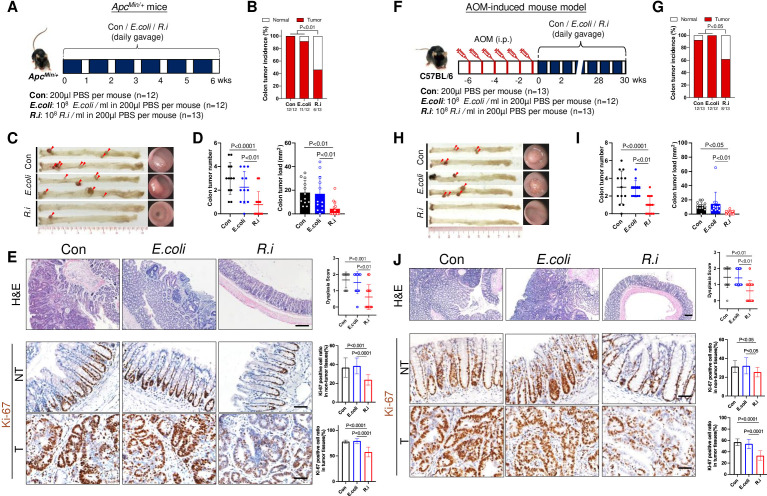
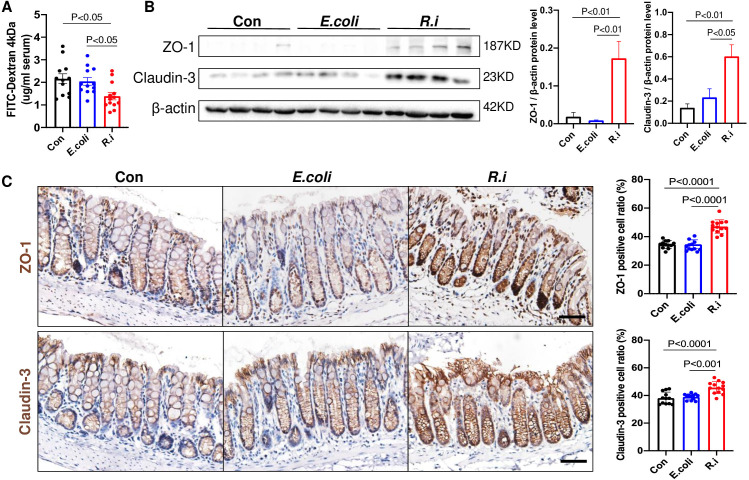
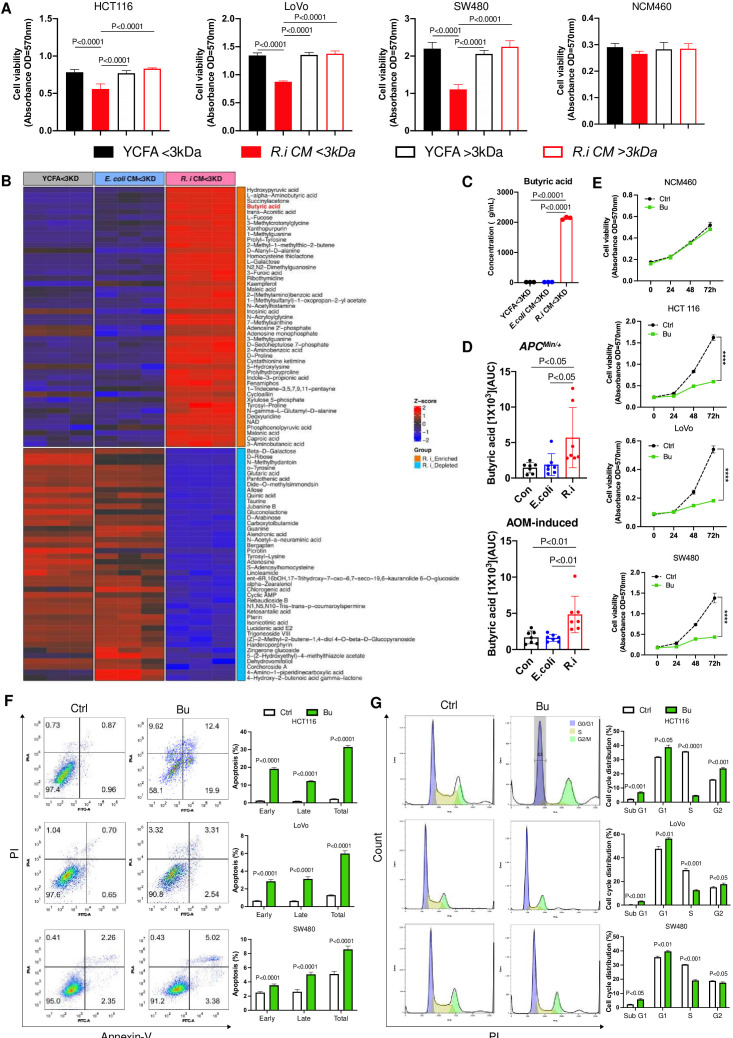
Objective: Roseburia intestinalis is a probiotic species that can suppress intestinal inflammation by producing metabolites. We aimed to study the role of R. intestinalis in colorectal tumourigenesis and immunotherapy. Design: R. intestinalis abundance was evaluated in stools of patients with colorectal cancer (CRC) (n=444) and healthy controls (n=575). The effects of R. intestinalis were studied in Apc Min/+ or azoxymethane (AOM)-induced CRC mouse models, and in syngeneic mouse xenograft models of CT26 (microsatellite instability (MSI)-low) or MC38 (MSI-high). The change of immune landscape was evaluated by multicolour flow cytometry and immunohistochemistry staining. Metabolites were profiled by metabolomic profiling. Results: R. intestinalis was significantly depleted in stools of patients with CRC compared with healthy controls. R. intestinalis administration significantly inhibited tumour formation in Apc Min/+ mice, which was confirmed in mice with AOM-induced CRC. R. intestinalis restored gut barrier function as indicated by improved intestinal permeability and enhanced expression of tight junction proteins. Butyrate was identified as the functional metabolite generated by R. intestinalis. R. intestinalis or butyrate suppressed tumour growth by inducing cytotoxic granzyme B + , interferon (IFN)-γ + and tumour necrosis factor (TNF)-α + CD8 + T cells in orthotopic mouse models of MC38 or CT26. R. intestinalis or butyrate also significantly improved antiprogrammed cell death protein 1 (anti-PD-1) efficacy in mice bearing MSI-low CT26 tumours. Mechanistically, butyrate directly bound to toll-like receptor 5 (TLR5) receptor on CD8 + T cells to induce its activity through activating nuclear factor kappa B (NF-κB) signalling. Conclusion: R. intestinalis protects against colorectal tumourigenesis by producing butyrate, which could also improve anti-PD-1 efficacy by inducing functional CD8 + T cells. R. intestinalis is a potential adjuvant to augment anti-PD-1 efficacy against CRC.
Overview
The claims and statistics of this paper haven’t been checked yet.
Free: it reads the open-access text and checks the first 5 claims that cite a source we can check. Create a free account to check every claim.
Integrity signals
Registry
Cites
Statistics
Figures
Verification
Claims the paper makes
The claims and statistics of this paper haven’t been checked yet.
Free: it reads the open-access text and checks the first 5 claims that cite a source we can check. Create a free account to check every claim.
Claims other papers make about this one
Each is checked against this paper’s own text: does it say what the citing paper says it does?
The source backs part of the claim, not all of it — or backs it for a different population, condition or comparison.
In the citing paper
“They can enhance PD‑1 blockade when administered orally (drinking water or gavage) at physiologically relevant concentrations.148–150”
From Gut dysbiosis in oncology: a risk factor for immunoresistance (2026) · doi:10.1038/s41422-025-01212-6 · cites this paper as [150]
Experimental — accuracy not yet measuredThe source backs part of the claim, not all of it — or backs it for a different population, condition or comparison.
In the citing paper
“Selective metabolites produced by distinct intestinal bacteria modulate cancer immunosurveillance in extraintestinal tumors.”
From Impact of the ONCOBIOME network in cancer microbiome research (2025) · cites this paper as [69]
Experimental — accuracy not yet measuredThe cited source says what the claim attributes to it.
In the citing paper
“the production of gut microbial metabolites (polyamines 58,65-67 , short-chain fatty acids [68][69][70][71] , indoles [72][73][74][75] , vitamins [76][77][78][79] , bile acids 80,81 ) that impact the cancer-immunity dialog.”
From Impact of the ONCOBIOME network in cancer microbiome research (2025) · cites this paper as [69]
Self-check
Percentages, sums and reported differences re-computed from the paper’s own numbers.
The self-check needs the paper’s full text.
Citations
Cites
Trott, O., & Olson, A. J. (2010) · Journal of Computational Chemistry · doi:10.1002/jcc.21334 · Cited by 38,412 · cited 1×
“MGLTools 1.5.6 from AutoDock Vina 1.1.2 programme was used for processing TLR5, 14 while AutoDock was used for docking analysis.”
InfluentialSiegel, R. L., Miller, K. D., Fuchs, H. E., & Jemal, A. (2022) · CA: A Cancer Journal for Clinicians · doi:10.3322/caac.21708 · Cited by 17,196
Safety and activity of anti-PD-L1 antibody in patients with advanced cancer
Brahmer, J. R., Tykodi, S. S., Chow, L. Q. M., Hwu, W.-J., Topalian, S. L., Hwu, P., Drake, C. G., Camacho, L. H., Kauh, J., Odunsi, K., et al. (2012) · New England Journal of Medicine · doi:10.1056/nejmoa1200694 · Cited by 7,945
From Dietary Fiber to Host Physiology: Short-Chain Fatty Acids as Key Bacterial Metabolites
Koh, A., De Vadder, F., Kovatcheva-Datchary, P., & Bäckhed, F. (2016) · Cell · doi:10.1016/j.cell.2016.05.041 · Cited by 7,070
Mismatch repair deficiency predicts response of solid tumors to PD-1 blockade
Le, D. T., Durham, J. N., Smith, K. N., Wang, H., Bartlett, B. R., Aulakh, L. K., Lu, S., Kemberling, H., Wilt, C., Luber, B. S., et al. (2017) · Science · doi:10.1126/science.aan6733 · Cited by 6,645
LigPlot+: Multiple Ligand–Protein Interaction Diagrams for Drug Discovery
Laskowski, R. A., & Swindells, M. B. (2011) · Journal of Chemical Information and Modeling · doi:10.1021/ci200227u · Cited by 6,471
Gut microbiome influences efficacy of PD-1-based immunotherapy against epithelial tumors
Routy, B., Le Chatelier, E., Derosa, L., Duong, C. P. M., Alou, M. T., Daillère, R., Fluckiger, A., Messaoudene, M., Rauber, C., Roberti, M. P., et al. (2018) · Science · doi:10.1126/science.aan3706 · Cited by 5,671
The innate immune response to bacterial flagellin is mediated by Toll-like receptor 5
Hayashi, F., Smith, K. D., Ozinsky, A., Hawn, T. R., Yi, E. C., Goodlett, D. R., Eng, J. K., Akira, S., Underhill, D. M., & Aderem, A. (2001) · Nature · doi:10.1038/35074106 · Cited by 3,601 · cited 1×
“TLR5 is a receptor expressed on epithelial and immune cells specifically recognising flagellin on bacteria, 36 whereas currently there is a lack of studies reporting its interaction with microbial metabolites.”
Anticancer immunotherapy by CTLA-4 blockade relies on the gut microbiota
Vétizou, M., Pitt, J. M., Daillère, R., Lepage, P., Waldschmitt, N., Flament, C., Rusakiewicz, S., Routy, B., Roberti, M. P., Duong, C. P. M., et al. (2015) · Science · doi:10.1126/science.aad1329 · Cited by 3,488
Microsatellite Instability in Colorectal Cancer
Boland, C. R., & Goel, A. (2010) · Gastroenterology · doi:10.1053/j.gastro.2009.12.064 · Cited by 2,456
Cited by
Items 101–200 of 394
Han, J., Ding, L., Zhao, X., Liu, J., Yin, J., Wang, Q., Li, P., & Gu, Q. (2025) · Food & Function · doi:10.1039/d5fo01925g · Cited by 17
The role of the microbiome on immune homeostasis of the host nervous system
Zhao, S., Fu, D., Lin, Y., Sun, X., Wang, X., Wu, X., & Zhang, X. (2025) · Frontiers in Immunology · doi:10.3389/fimmu.2025.1609960 · Cited by 16
Cao, Z., Zhang, C., Lei, H., Lin, W., Yu, W.-K., Gao, X., He, Y., Li, X., Xiang, Q., Zhang, Z., et al. (2025) · Advanced Science · doi:10.1002/advs.202515794 · Cited by 21
From Structure to Function: How Prebiotic Diversity Shapes Gut Integrity and Immune Balance
Pedrosa, L. D. F., de Vos, P., & Fabi, J. P. (2024) · Nutrients · doi:10.3390/nu16244286 · Cited by 18
“PD-1 is considered an immune system “brake” protein, limiting immune response throughout CRC development [37].”
Byrd, D. A., Damerell, V., Gómez, M. F. L., Hogue, S., Lin, T., Ose, J., Himbert, C., Ilozumba, M. N., Kahlert, C., Shibata, D., et al. (2025) · International Journal of Cancer · doi:10.1002/ijc.35342 · Cited by 13
“30 Another butyrate producing strain of the Clostridiales order, Clostridium butyricum , was shown, via destabilization of MYC, to suppress CRC cell proliferation, CRC patient-derived organoid growth as well as metastasis formation in a CRC mouse model.”
Zhao, X.-L., Xu, L.-Y., Li, K.-D., Tang, F., Liu, D., Zhang, J., Cao, Z.-J., Peng, C., & Ao, H. (2025) · Journal of Ethnopharmacology · doi:10.1016/j.jep.2025.119616 · Cited by 17
Wang, R., Li, W., Cao, H., & Zhang, L. (2025) · Biology · doi:10.3390/biology14030243 · Cited by 17
“Moreover, short-chain fatty acids (SCFAs) such as butyrate, produced by Roseburia intestinalis , have been shown to inhibit histone deacetylases [133,134], thereby altering gene expression and suppressing tumor growth.”
García-Vicente, R., Rodríguez-García, A., Ancos-Pintado, R., Arroyo, A., Ortega‐Hernández, A., Bragado-García, I., Castellano, E., Ortiz-Ruiz, A., Navarro-Aguadero, M. Á., Modrego, J., et al. (2025) · Clinical Cancer Research · doi:10.1158/1078-0432.ccr-25-1676 · Cited by 13
“In preclinical models of non–small cell lung and colorectal cancer, oral butyrate supplementation has demonstrated increased efficacy of immune checkpoint inhibitor–based immunotherapy (45, 76), as well as alleviation of treatment-related toxicities (77).”
Macrophages and Tissue Homeostasis: From Physiological Functions to Disease Onset
Li, Y., Chen, H., & Zhou, S. (2025) · Frontiers in Bioscience-Landmark · doi:10.31083/fbl42706 · Cited by 14
Ren, P., Yue, H., Tang, Q., Wang, Y., & Xue, C. (2023) · Food & Function · doi:10.1039/d3fo04633h · Cited by 13
Progress on the mechanism of intestinal microbiota against colorectal cancer
Xing, G., Cui, Y., Guo, Z., Han, B., & Zhao, G. (2025) · Frontiers in Cellular and Infection Microbiology · doi:10.3389/fcimb.2025.1565103 · Cited by 14
“…can induce the production of Small Proline-Rich Protein 2A (SPRR2A), which disrupts the cell membrane of Gram-positive bacteria, preventing such bacteria from breaching the intestinal barrier (Settanni et al., 2021; Li and Roy, 2023; Liu et al., 2023; Masenga and Kirabo, 2023; Suslov et al., 2024).”
Xu, J., Xu, H., Li, X., Huang, W., Li, Y., Guo, X., Zhu, M., Peng, Y., Zhou, Y., & Nie, Y. (2025) · Microbiological Research · doi:10.1016/j.micres.2025.128203 · Cited by 14
Gut microbiome, a novel precision medicine biomarker for hepatocellular carcinoma
Chen, P., Devkota, S., Shiao, S. L., Hendifar, A. E., & Yang, J. D. (2025) · Frontiers in Immunology · doi:10.3389/fimmu.2025.1568962 · Cited by 13
Li, Q., Xie, S., Liu, Y., Yue, W., Wang, L., Liang, Y., Chen, Y., Yuan, H., & Yu, J. (2024) · Frontiers in Endocrinology · doi:10.3389/fendo.2024.1410295 · Cited by 15
Self-citationYang, J.-Z., Li, J., Liu, J., Zhou, A.-D., Wang, H., Xie, X., Zhang, K.-K., & Wang, Q. (2025) · Environmental Pollution · doi:10.1016/j.envpol.2025.126050 · Cited by 14
Zheng, Z., Du, Y., Jiang, H., Shi, Z., Zhou, H., Jiao, L., Liu, P., & Gong, Y. (2025) · Phytomedicine · doi:10.1016/j.phymed.2025.156766 · Cited by 11
Lin, H., Chen, Y., Zhou, M., Wang, H., Chen, L.-C., Li, Z., Wang, Z., Zheng, X., & Lu, S. (2025) · Virulence · doi:10.1080/21505594.2025.2489154 · Cited by 11
“The efficacy of anti-programmed cell death protein-1 (PD-1) in CRC can also be improved by inducing functional CD8+ T cells [29–31].”
Fatty acid metabolism: The crossroads in intestinal homeostasis and tumor
Lu, Y., Chen, L., Lin, Y., Zhang, Y., Wang, Y., Yu, W., Ren, F., & Guo, H. (2025) · Metabolism · doi:10.1016/j.metabol.2025.156273 · Cited by 17
Sun, J., Shi, L., Xu, F., Sun, H., Liu, Y., Sun, J., & Zhou, Q. (2025) · Journal of Microbiology and Biotechnology · doi:10.4014/jmb.2412.12029 · Cited by 14
Zhang, Y., Song, W. C., Zhou, L., Wei, S., Xu, L., Li, X., & Yu, J. Q. (2025) · Gut · doi:10.1136/gutjnl-2025-335306 · Cited by 11
Self-citationLi, W., Shangguan, W., Huang, W., Zhao, J., Zhu, Y., Xie, M., Yu, Y., Yang, Q., Zheng, J., Yang, L., et al. (2025) · Advanced Science · doi:10.1002/advs.202504688 · Cited by 37
Maihemuti, N., Shi, Y., Zhang, K., Jiang, X., Chu, J., Xu, Y., Xu, Z., & Wang, K. (2025) · MedComm · doi:10.1002/mco2.70308 · Cited by 12
“The symbiotic microbiota in CRC patients activates CD8 + T cells TLR5, promoting T cell cytotoxicity against tumors [192].”
Metabolic hallmarks of type 2 diabetes compromise T cell function
Liang, Y., Chen, W., Gao, Q., Tan, K. C. B., Lee, C., & Ling, G. S. (2025) · Trends in Endocrinology and Metabolism · doi:10.1016/j.tem.2025.08.005 · Cited by 13
Mukhopadhya, I., Martin, J. C., Shaw, S., Gutierrez-Torrejon, M., Boteva, N., McKinley, A. J., Gratz, S. W., & Scott, K. P. (2025) · Gut Microbes · doi:10.1080/19490976.2025.2473516 · Cited by 13
Microbial metabolites for cancer immunotherapy: Current evidence and future directions
Wang, X., Liang, J.-J., Duan, X., & Chen, G. (2025) · Seminars in Cancer Biology · doi:10.1016/j.semcancer.2025.10.005 · Cited by 12
Tao, H., Mao, K., Zhang, Z., Wei, W., Huang, X., Chen, Y., Mei, S., & Tian, X. (2025) · Pharmacological Research · doi:10.1016/j.phrs.2025.108020 · Cited by 13
Jia, K., Chen, Y., Dai, D., Xie, Y., Peng, H., Cao, Y., Zou, H., Qiu, C., Tan, Y., zhang, X., et al. (2026) · BMC Medicine · doi:10.1186/s12916-025-04575-0 · Cited by 12
Huang, H., Peng, S., Liu, Y., Chen, L., & Wu, F. (2026) · Journal of Translational Medicine · doi:10.1186/s12967-026-07885-w · Cited by 11
“In addition, specific microbiota can also promote CD8 ⁺ T cell infiltration, optimize antigen presentation and regulate Treg function, thereby enhancing the response to immunotherapy [31–34].”
Roseburia intestinalis: A possible target for vascular calcification
Pan, X., Song, Y., Liang, Y., Feng, G., & Wang, Z. (2024) · Heliyon · doi:10.1016/j.heliyon.2024.e39865 · Cited by 13
Gan, A., Kang, X., Goh, S. S., Wong, S. H., & Loo, S. C. J. (2025) · Journal of Functional Foods · doi:10.1016/j.jff.2025.106804 · Cited by 12
Self-citationZhang, H., Yao, Z., Song, Y., Hua, Q., Geng, X., Zhou, F., Li, Q., Li, Z., Luo, Z., Sun, J., et al. (2025) · Food & Function · doi:10.1039/d5fo01649e · Cited by 11
Wang, F., Chen, W., Jia, Y., He, T., Wu, S., Xiang, J., Chen, R., Jiang, Q., Yu, T., Lan, Y., et al. (2025) · Cancer Medicine · doi:10.1002/cam4.70994 · Cited by 17
CRCpred: An AI-ML tool for colorectal cancer prediction using gut microbiome
Pateriya, D., Malwe, A. S., & Sharma, V. K. (2025) · Computers in Biology and Medicine · doi:10.1016/j.compbiomed.2025.110592 · Cited by 13
Zhang, Y., Xing, H., Li, R., Andersson, J., Bozdogan, A., Straßl, R. P., Draphoen, B., Lindén, M., Henkel, M., Knippschild, U., et al. (2024) · Advanced Healthcare Materials · doi:10.1002/adhm.202403827 · Cited by 10
Shao, P., Sha, Y., Liu, X., He, Y., Wang, F., Hu, J., Wang, J., Li, S., Chen, X., Yang, W., et al. (2024) · Animals · doi:10.3390/ani14050788 · Cited by 11
“At the genus level, Roseburia species are important butyric acid-producing bacteria [54], and butyric acid, as one of the main VFAs in the rumen, plays an anti-inflammatory role as well as a metabolic regulatory role while providing energy to the organism [55–57].”
BackgroundMajumder, B., Nataraj, N. B., Maitreyi, L., & Datta, S. (2024) · Frontiers in Immunology · doi:10.3389/fimmu.2024.1414376 · Cited by 11
Wiese, M., van der Wurff, M., Ouwens, A. M. T., van Leijden, B., Verheij, E. R., Heerikhuisen, M., & van der Vossen, J. M. B. M. (2024) · Frontiers in Nutrition · doi:10.3389/fnut.2024.1403007 · Cited by 12
Targeting the gut and tumor microbiome in cancer treatment resistance
Čierniková, S., Ševčíková, A., & Mego, M. (2024) · American Journal of Physiology-Cell Physiology · doi:10.1152/ajpcell.00201.2024 · Cited by 12
Shen, J., Gong, X., Ren, H., Tang, X., Yu, H., Tang, Y., Chen, S., & Ji, M. (2025) · BMC Cancer · doi:10.1186/s12885-025-13448-x · Cited by 10
“Certain immune cells such as CD8 + T cells can limit CRC development by killing tumor cells, whereas Th17 cells or macrophages promote CRC cell proliferation by releasing inflammatory factors such as IL-17 or IL-6 [41–43].”
Wu, J., Ji, K., Kang, G., Zhang, M., Wang, J., Wang, L., Gao, M., Jia, X., Lu, X., Wang, Y., et al. (2025) · Pharmacological Research · doi:10.1016/j.phrs.2025.107642 · Cited by 11
Sodium butyrate attenuates liver fibrogenesis via promoting H4K8 crotonylation
Tang, R., Zha, H., Liu, R., Lv, J., Cao, D., & Li, J. (2025) · Molecular and Cellular Biochemistry · doi:10.1007/s11010-025-05274-3 · Cited by 11
Liu, Z., Zhou, X., Kuang, L., Chen, Q., Zhao, J., Yin, H., Zhou, Z., Liu, X., Liu, D., Wu, S.-G., et al. (2025) · Infectious Agents and Cancer · doi:10.1186/s13027-025-00653-3 · Cited by 18
Cui, H., Zhang, R., Huang, J., Kong, C., Yao, C., & Jin, Z. (2025) · Journal of Hazardous Materials · doi:10.1016/j.jhazmat.2025.139652 · Cited by 11
Communication between gut microbiota-derived metabolites and the tumor microenvironment
Hu, X., Li, B., Li, Y., Liang, Y., & Huang, T. (2025) · Frontiers in Immunology · doi:10.3389/fimmu.2025.1649438 · Cited by 11
Gut–lung axis in allergic rhinitis: microbial dysbiosis and therapeutic strategies
Yang, W., Wu, H., Li, X., Wan, Z., Kong, W., & Huang, C. (2025) · Frontiers in Microbiology · doi:10.3389/fmicb.2025.1654997 · Cited by 13
Finderle, J., Schleicher, V. S., Schleicher, L. M. S., Kršek, A., Braut, T., & Batičić, L. (2025) · Gastrointestinal Disorders · doi:10.3390/gidisord8010001 · Cited by 13
“…genus level, beneficial changes included increases in Lachnospira (50% of studies, SCFA producer) [94], Bifidobacterium (60% of studies, marker of gut health) [95], Roseburia (67% of studies, butyrate producer) [96], and Oscillospira (100% of studies, associated with lower body mass index) [97].”
Zhu, R., Gu, S., Tao, Y., & Zhang, Y. (2025) · Discover Oncology · doi:10.1007/s12672-025-02686-x · Cited by 8
Pearson, J. A., Hu, Y., Peng, J., Wong, F. S., & Li, W. (2024) · Frontiers in Immunology · doi:10.3389/fimmu.2024.1333967 · Cited by 8
Zhang, C., Shen, W., Leng, Z., Liu, S., Pei, P., Liu, T., Hu, L. T., & Yang, K. (2025) · Biomaterials · doi:10.1016/j.biomaterials.2025.123386 · Cited by 9
Unraveling the Role of the Microbiota in Cancer Immunotherapy: A New Frontier
Wang, S., Li, S., Zhang, M., Liu, R., Ye, X., Mao, S., Yu, J., Xie, X., & Tan, W. (2025) · Research · doi:10.34133/research.0744 · Cited by 13
Self-citationLu, Y., Lan, R., Fan, Q., Tang, H., Hu, D., Zhang, S., Lin, X., Wang, R., Zhao, R., Sun, H., et al. (2025) · The ISME Journal · doi:10.1093/ismejo/wraf130 · Cited by 8
“Roseburia intestinalis protected against CRC by producing butyrate which boosted anti-PD-1 efficacy in CRC by activating cytotoxic CD8 + T cells [7].”
Pan, D., Bao, Y., Lu, X., Gu, Q., Zhang, Y., & Zheng, Y. (2025) · International Journal of Molecular Medicine · doi:10.3892/ijmm.2025.5655 · Cited by 11
The crosstalk between probiotics and T cell immunity
Liu, Y., Cao, X., Liu, H., & Zhang, W. (2025) · Frontiers in Immunology · doi:10.3389/fimmu.2025.1695840 · Cited by 12
Zhang, L., Wu, Z., Shen, H., Meng, Y., Li, H., Cai, R., Tang, D., Kang, M., Yin, Y., Tan, B., et al. (2026) · Microbiome · doi:10.1186/s40168-025-02310-8 · Cited by 9
Engineering microbial metabolites to modulate tumor immunity and advance cancer immunotherapy
Chigozie, V. U., & Esimone, C. O. (2026) · Discover Immunity. · doi:10.1007/s44368-026-00019-w · Cited by 11
Ming, G., Zheng, Y., Tang, S., Fang, Z., Wang, T., Li, K., Chen, H., Zhang, J., Zhou, N., Wei, X., et al. (2026) · Microbiome · doi:10.1186/s40168-026-02370-4 · Cited by 7
Decoding Immunotherapy Response in Colorectal Cancer: Translational Insights Beyond MSI
Cataldi, C., Karaoğlan, B. B., Liotta, E., & Dosso, S. D. (2026) · Cancers · doi:10.3390/cancers18050852 · Cited by 11
Engineered commensals for metabolic modulation of the gut-liver-brain axis
Aggarwal, N., Shen, H., Lee, L. T., Zhou, L., Zhu, M. T., Koh, X. Q., Ng, A. X. Y., Li, M., Jumat, N. H. B., Cheah, W. Y., et al. (2026) · Cell · doi:10.1016/j.cell.2026.03.048 · Cited by 13
Zhong, Y., Liu, Z., Wang, Y., Cai, S., Qiao, Z., Hu, X., Wang, T., & Yi, J. (2024) · Food Reviews International · doi:10.1080/87559129.2024.2414908 · Cited by 13
Optimal Timing of PD-1/PD-L1 Blockade Protects Organ Function During Sepsis
Xiang, J., Wang, Y., Shi, L., Qiu, J., Gan, L., Xu, Z., Zhang, H., Deng, J., Wang, Z., Xu, F., et al. (2024) · Inflammation · doi:10.1007/s10753-024-02113-3 · Cited by 7
Bacteria and Carcinogenesis and the Management of Cancer: A Narrative Review
Plewa, P., Kiełbowski, K., Mentel, O., Figiel, K., Bakinowska, E., Becht, R., Banach, B., & Pawlik, A. (2025) · Pathogens · doi:10.3390/pathogens14050509 · Cited by 9
“For instance, butyrate-producing bacteria were found to promote pro-inflammatory changes in cancer TMEs, thus enhancing the benefits of immunotherapy in vivo [130,131].”
Roy, S., More, M., Trivedi, A., Saha, P., Bose, D., Das, S., Mahmud, Z. H., Hanifi, S., & Chatterjee, S. (2025) · The Science of The Total Environment · doi:10.1016/j.scitotenv.2025.179881 · Cited by 9
Butyrate derived from intratumoral microbiome facilitates pulmonary metastasis in osteosarcoma
Yu, J., Lu, W., Chen, Y., Li, Y., Yang, J., Cai, Z., Li, L., Fang, K., Guo, Y., Kang, H., et al. (2025) · Pharmacological Research · doi:10.1016/j.phrs.2025.107897 · Cited by 7
Self-citationWang, F., Fan, J., Pan, W., Liu, M., Wang, J., Wei, X., Xian, Y., Chen, S., Cui, C., Chen, Y., et al. (2025) · Bioactive Materials · doi:10.1016/j.bioactmat.2025.10.012 · Cited by 14
The Gut Nexus: Unraveling Microbiota-Mediated Links Between Type 2 Diabetes and Colorectal Cancer
Mahboob, A., Shin, C., Almughanni, S., Horňáková, Ľ., Kubatka, P., & Büsselberg, D. (2025) · Nutrients · doi:10.3390/nu17233803 · Cited by 11
“Of particular interest are butyrate-producing genera such as Roseburia and Coprococcus : their depletion impairs colonocyte energy homeostasis and anti-inflammatory defenses, while butyrate itself acts as a histone deacetylase inhibitor with direct antiproliferative effects in CRC cells [12–16].”
Microbiota and cancer immunotherapy: Mechanisms, clinical implications, and precision therapeutics
Wei, D., Sun, Y., Han, J., & Liu, J. (2025) · Seminars in Cancer Biology · doi:10.1016/j.semcancer.2025.12.002 · Cited by 9
Microbiota and tumor epigenetics: deep interconnections and emerging therapeutic perspectives
Duan, L., Hu, D., Zhang, H., & Liao, Y. (2026) · Critical Reviews in Clinical Laboratory Sciences · doi:10.1080/10408363.2025.2602551 · Cited by 9
“For example, by increasing PD-1 and CD28 expression on CD8 + T cells [39] or by activating TLR-5 [40], which multiplies T cell cytotoxicity and responsiveness to immunotherapy.”
Microbiota-derived metabolites as modulators of cancer immunotherapy response
Toner-Bartelds, C., Mimpen, I. L., Parra-Martinez, M., Burgering, B. M. T., & Voest, E. E. (2026) · Nature Communications · doi:10.1038/s41467-026-72178-1 · Cited by 10
“Molecules like, but not limited to, inosine 55 , butyrate 56 , and phenylacetylglutamine (PAGln) 57 have established immune signalling-modulating functions.”
Zhao, F., He, W., Wu, T., Elmhadi, M., Jiang, N., Zhang, A., & Guan, P. (2024) · Frontiers in Veterinary Science · doi:10.3389/fvets.2024.1423920 · Cited by 7
Godínez-Méndez, L. A., Vega‐Magaña, N., Rodríguez, M. P., Valencia-Hernández, G. A., Muñoz-Sánchez, G., Íñiguez-Gutiérrez, L., López-Roa, R. I., Ramos-Márquez, M. E., Fafutis‐Morris, M., & Delgado‐Rizo, V. (2025) · International Journal of Molecular Sciences · doi:10.3390/ijms26167968 · Cited by 7
Zhou, L., Wang, C., Gao, J., Wu, X., Li, G., Jiang, X., Xia, Y., Zhang, J., Lv, B., Zhao, F., et al. (2025) · Advanced Science · doi:10.1002/advs.202511895 · Cited by 11
Recent Advances in Nanomedicine for Modulating Intratumoral Bacteria in Cancer Therapy
Zhang, Y., Zhang, H., Xu, J., Xu, Z., Lou, J., Zheng, Q., Yuan, S., Zhu, L., & Xu, X. (2025) · Molecular Pharmaceutics · doi:10.1021/acs.molpharmaceut.5c00677 · Cited by 8
Microbiome unlocks cancer immunotherapeutic potential: State of the art and future
Luo, H.-Y., Cao, L., Zhou, K., Xiao, Y., Li, Z., Liu, B., & Bu, L. (2025) · Seminars in Cancer Biology · doi:10.1016/j.semcancer.2025.08.001 · Cited by 6
Chen, J., Li, W., Yang, L., Li, J., Wang, S., Chen, Z., Xu, S., Wen, M., Liang, J., Hu, Z., et al. (2025) · Biomedicine & Pharmacotherapy · doi:10.1016/j.biopha.2025.118560 · Cited by 8
Research progress on gut microbiota in colorectal cancer immunotherapy
Li, J., Yue, Y., Pan, J., & Liang, F. (2025) · Biochimica et Biophysica Acta (BBA) - Reviews on Cancer · doi:10.1016/j.bbcan.2025.189476 · Cited by 7
Yuan, S., Bremmer, A., Yang, X., & Hu, Q. (2025) · Seminars in Cancer Biology · doi:10.1016/j.semcancer.2025.11.023 · Cited by 8
Fuller-Shavel, N., Davies, E. J., & Hasson, S. P. (2025) · Frontiers in Nutrition · doi:10.3389/fnut.2025.1670598 · Cited by 7
“…pathway, increased CD8 T cell NFkB signaling through butyrate binding to the toll-like receptor 5 (TLR5) receptor, and upregulation of PD-1 and PD-L1 expression for ICI targeting through butyrate’s action as an HDAC (histone deacetylase) inhibitor and PI3K/AKT pathway modulation (31, 39–42).”
Microbial-Derived Metabolites and Their Impact on Cancer Immunotherapy
Jeong, J., Baines, K. J., & Vareki, S. M. (2026) · Cancer Immunology Research · doi:10.1158/2326-6066.cir-25-1018 · Cited by 9
Heroux, D., Sun, X., Zhang, S., Sharifiaghdam, M., Leung, A. W., Farzaneh, S., Milne, K., MacFarlane, T., Vito, C. D., Nelson, B. H., et al. (2026) · Cancer Letters · doi:10.1016/j.canlet.2026.218281 · Cited by 6
Chen, Y., Wang, Y., Hu, J.-Y., Wang, E.-C., Jia, X.-H., Wang, J., Min, G., Jin, W.-L., & Jiang, L. (2026) · Gut Microbes · doi:10.1080/19490976.2026.2652476 · Cited by 9
“50 Mechanistically, butyrate acts as an inhibitor of histone deacetylases (HDACs), leading to chromatin remodeling that promotes the expression of effector molecules (e.g., IFN-γ , granzyme B) in CD8 + T cells and sustains their stem-like properties and long-term immunological memory.”
Self-citationGastric microbiota-mediated immune remodelling in gastric cancer
Gao, J., Lau, H. C.-H., Fuhler, G. M., & Yu, J. (2026) · Gut · doi:10.1136/gutjnl-2026-338505 · Cited by 9
“25 Besides, S. anginosus , a known oral pathogen that promotes gastric tumourigenesis, alters the arginine metabolic pathway to inhibit the differentiation and infiltration of CD8 + T cells in the gastric TME.”
Self-citationIdentification of gut microbes-related molecular subtypes and their biomarkers in colorectal cancer
Liu, X., Zhang, G., Li, S., Liu, Y., Ma, K., & Wang, L. (2024) · Aging · doi:10.18632/aging.205480 · Cited by 8
Impact of high-fat diet on ovarian epigenetics: Insights from altered intestinal butyric acid levels
Qi, J., Xia, C., Zhang, Y., Ding, R., Zhang, Y., Cao, W., Duan, C., Yao, Z., Qin, H., Ye, Y., et al. (2024) · Heliyon · doi:10.1016/j.heliyon.2024.e33170 · Cited by 6
“Roseburia intestinalis, a Gram-positive, obligate anaerobic bacterium that produces butyrate, is renowned for mitigating intestinal inflammation and significantly enhancing intestinal barrier resilience through its metabolites [28].”
BackgroundZhou, X., Xu, L., Zhang, Q., Chen, W., & Xie, H. (2024) · European Journal of Gastroenterology & Hepatology · doi:10.1097/meg.0000000000002827 · Cited by 8
“For example, the genus Roseburia, which is known to improve gut biodiversity, enhance glucose tolerance, aid in weight loss, and rejuvenate colon cells, is a common beneficial bacterium [38,39].”
Immunomodulation aspects of gut microbiome-related interventional strategies in colorectal cancer
Cheraghpour, M., Fatemi, N., Shadnoush, M., Talebi, G., Tierling, S., & Bermúdez‐Humarán, L. G. (2024) · Medical Oncology · doi:10.1007/s12032-024-02480-9 · Cited by 8
Microbiota mechanisms in cancer progression and therapy
Zhang, X., Fam, K. T., Dai, T., & Hang, H. C. (2025) · Cell chemical biology · doi:10.1016/j.chembiol.2025.04.005 · Cited by 9
Li, X., Hua, D., Wu, D., Hong, W., Kang, Y., Tang, L., Yang, Q., Wang, X., Li, B., Li, R., et al. (2025) · Cancer Medicine · doi:10.1002/cam4.70987 · Cited by 8
Li, M., Wu, X. Q., & Lee, T. K. (2025) · Clinical and Molecular Hepatology · doi:10.3350/cmh.2025.0476 · Cited by 7
Duquesnoy, M., & Chassaing, B. (2026) · Gut Microbes · doi:10.1080/19490976.2026.2612804 · Cited by 7
Gut microbiota drives cancer evolution and therapy resistance
Min, S., Zhang, Y., Zhang, H., & Liu, Q. (2026) · Molecular Cancer · doi:10.1186/s12943-025-02564-8 · Cited by 10
Renukadevi, J., Panneerselvam, S., Saravanan, M. D., Keerthivasan, N., & Valliappan, S. (2026) · Food Bioengineering · doi:10.1002/fbe2.70044 · Cited by 10
Yang, X., Zhang, K., Xia, L., & Li, J. (2026) · iMetaMed · doi:10.1002/imm3.70030 · Cited by 5
Lobel, L., Fonseca‐Pereira, D., Nakatsu, G., Michaud, M., Cao, Y. G., Bae, S., Krabak, C., Oren, Y., Clay, S. L., Tekle, G. E., et al. (2026) · Immunity · doi:10.1016/j.immuni.2026.05.001 · Cited by 6
Gut microbiota metabolites in inflammatory bowel disease: advances in mechanistic insights
Liang, Y., Zhou, Y., Luo, P., & Lin, J. (2026) · Frontiers in Immunology · doi:10.3389/fimmu.2026.1827426 · Cited by 11
Dou, L., Guo, T., Jin, W., Wang, Y., Huang, J., Chen, C., Liu, X., Wang, C., Zheng, Y., Liu, H., et al. (2026) · ACS Nano · doi:10.1021/acsnano.6c02436 · Cited by 6
Song, Y., Pan, S., Tian, J., Yu, Y., Wang, S., Qiu, Q., Shen, Y., Yang, L., Liu, X., Luan, J., et al. (2024) · Biomedicines · doi:10.3390/biomedicines12061140 · Cited by 6
“Moreover, by analyzing intercellular interactions, we probed the likely mechanism that involves the activation of the IFN-γ signaling pathway in CD14-MC-CCL3 cells.”
BackgroundLian, J., Xia, L., Wang, G., Wu, W., Yi, P., Li, M., Su, X., Chen, Y., Li, X., Dou, F., et al. (2024) · Stem Cell Research & Therapy · doi:10.1186/s13287-024-03986-9 · Cited by 8
Luan, Y., Liang, C., Han, Q., Zhou, X., Yang, N., & Zhao, L. (2025) · BMC Cancer · doi:10.1186/s12885-024-13409-w · Cited by 6
Roseburia intestinalis Modulates Immune Responses by Inducing M1 Macrophage Polarization
Bircher, A., Katkeviciutė, E., Morsy, Y., Lang, S., Montalban‐Arques, A., & Scharl, M. M. (2025) · International Journal of Molecular Sciences · doi:10.3390/ijms26115049 · Cited by 6
Straining to define a healthy microbiome
Seekatz, A. M. (2025) · mSphere · doi:10.1128/msphere.00797-24 · Cited by 4
Metadata
- Authors
- Kang, X., Liu, C., Ding, Y., Ni, Y., Ji, F., Lau, H. C. H., Jiang, L., Sung, J. J., Wong, S. H., & Yu, J.
- Affiliations
- Chinese University of Hong Kong (HK)
- Department of Anatomical and Cellular Pathology, Faculty of Medicine, The Chinese University of Hong Kong, Shatin, Hong Kong
- Nanyang Technological University (SG)
- Corresponding author
- Yu, Jun
- ORCID
- Venue
- Gut
- Publisher
- BMJ
- Published
- 2023-07-25
- Volume
- 72
- Issue
- 11
- Pages
- 2112-2122
- ISSN
- 0017-5749 (ISSN-L)
- 1468-3288
- PMC
- PMC10579466
- OpenAlex
- W4385232541
- Semantic Scholar
- 6ffb94165afc68321ea0792ce3784fc014483277
- Cited by
- 394
- References
- 38
- Citations by year
- 2026: 144 · 2025: 178 · 2024: 68 · 2023: 4
- FWCI
- 35.11
- Type
- journal article
- Language
- en
- Open access
- hybrid
- doi.org
- Licence
- Locations
- Gut (publishedVersion, cc-by-nc)
- PubMed Central (publishedVersion, cc-by-nc)
- PubMed (publishedVersion)
- DR-NTU (Nanyang Technological University) (submittedVersion, cc-by-nc)
- HighWire Press Open Archive (submittedVersion)
- Funders
- Shenzhen-Hong Kong-Macao Science and Technology Program (Category C) Shenzhen (SGDX20210823103535016)
- Centre for Microbiome Medicine and Wang Lee Wah Memorial Fund (Not Applicable, N/A)
- Vice-Chancellor’s Discretionary Fund Chinese University of Hong Kong (4930775)
- RGC Research Impact Fund Hong Kong (R4032-21F)
- Research Talent Hub-Innovation and Technology Fund Hong Kong (ITS/177/21FP)
- NTU Start Up Grant (021281-00001, 021337-00001)
- Singapore Ministry of Health’s National Medical Research Council Clinician Scientist Individual Research Grant (MOH-CIRG23jan-0001)
- Topics
- Life Sciences › Biochemistry, Genetics and Molecular Biology › Molecular Biology › Gut microbiota and health
- Health Sciences › Medicine › Oncology › Cancer Immunotherapy and Biomarkers
- Life Sciences › Agricultural and Biological Sciences › Food Science › Probiotics and Fermented Foods
- Keywords
- Roseburia intestinalis, butyrate, colorectal cancer, anti-PD-1 therapy, CD8+ T cells, TLR5, NF-κB signaling, intestinal barrier, intestinal permeability, tight junctions, tumor immunology, probiotics, tumor microenvironment, microsatellite instability, ApcMin/+ mice
- MeSH terms
- Eubacteriales, Clostridiales, Animals, Butyrates, Cell Transformation, Neoplastic, Humans, Colorectal Neoplasms, CD8-Positive T-Lymphocytes, Mice, Carcinogenesis
About these checks
Registry, retraction, Cites and statistics results are computed, not judged, with one exception: a printed reference that no index lists is read once by a model before it counts as a citation error. Claims are extracted by a model and kept only when their quote appears verbatim in the text; each cited source is then checked, with a model’s help, for whether it says what the claim relies on. Those verdicts can be wrong — read the claim’s quote and the cited source before relying on one.
Statistics and arithmetic are recomputed, not judged.
Confidence bands are shown only for fields calibrated on our annotated test set. None is calibrated yet, so no band is shown.
What counts as a claim ›How we measure confidence ›How we check this ›
Are you an author, or do you see a problem with this page? Request a review
Data sources
Bibliographic data: Semantic Scholar, OpenAlex, Crossref.
Contains information from the Semantic Scholar Academic Graph Datasets, made available under the ODC Attribution License (ODC-BY 1.0).
Semantic Scholar’s data is described in: Kinney, R., et al. (2023). The Semantic Scholar Open Data Platform. arXiv:2301.10140.
