

Roseburia intestinalis generated butyrate boosts anti-PD-1 efficacy in colorectal cancer by activating cytotoxic CD8 + T cells
Open accessThe DOI matches its Crossref record; 38 of the 38 references it cites were found in a registry or an index.
Abstract
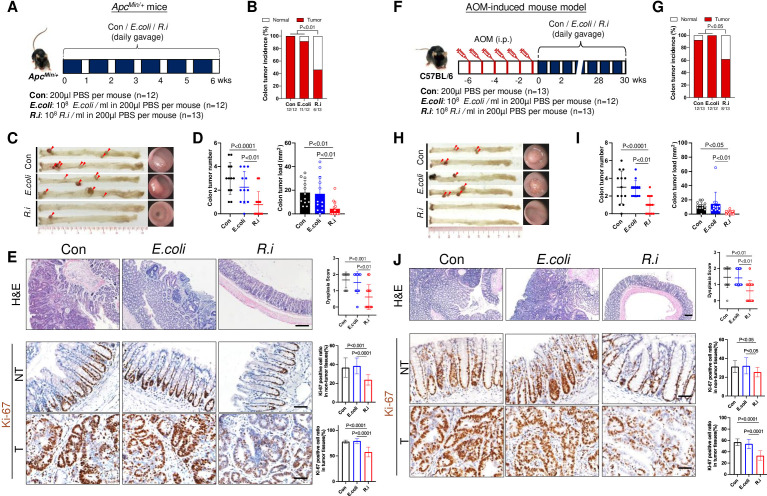
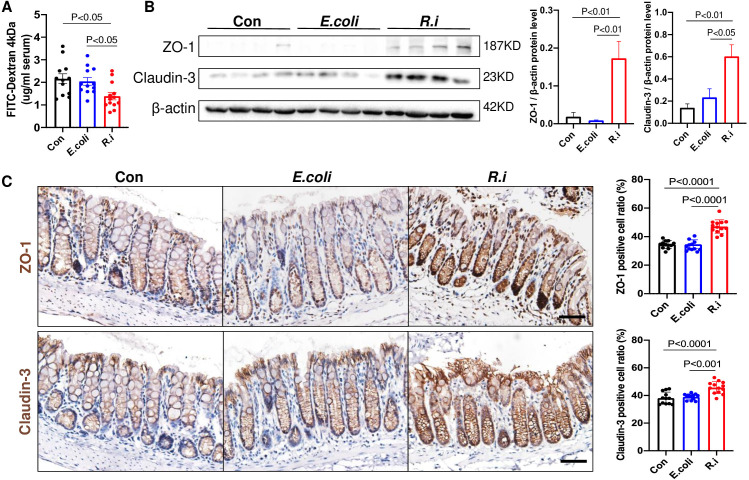
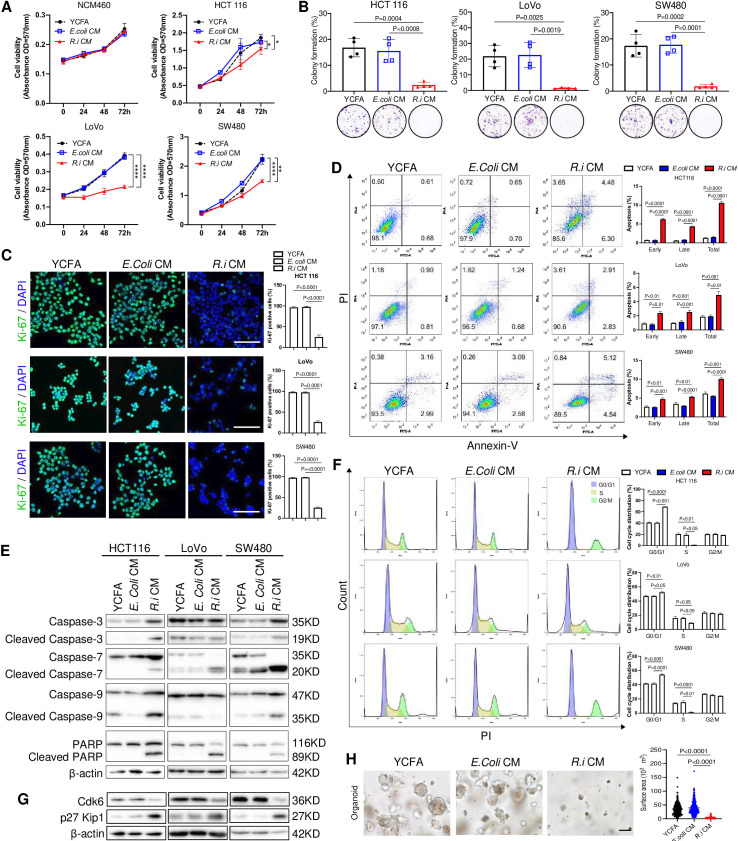
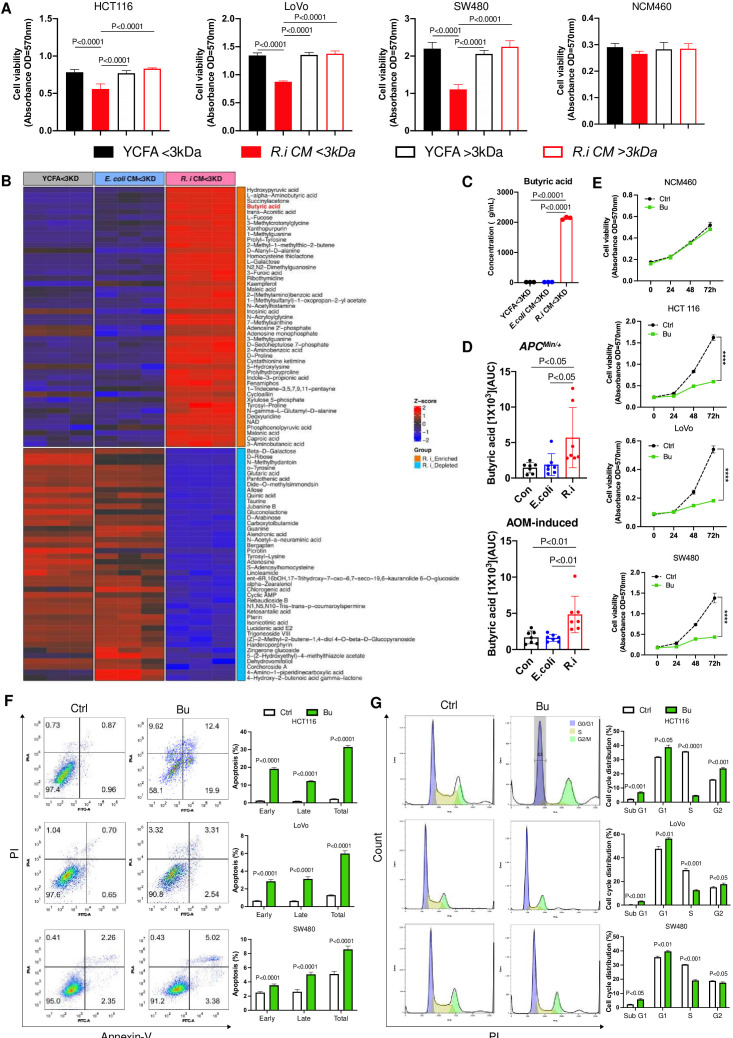
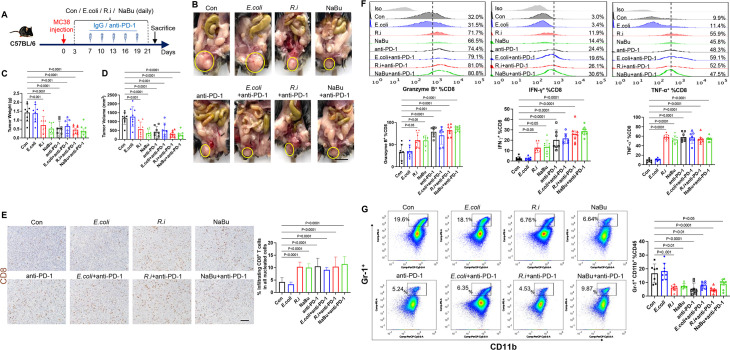
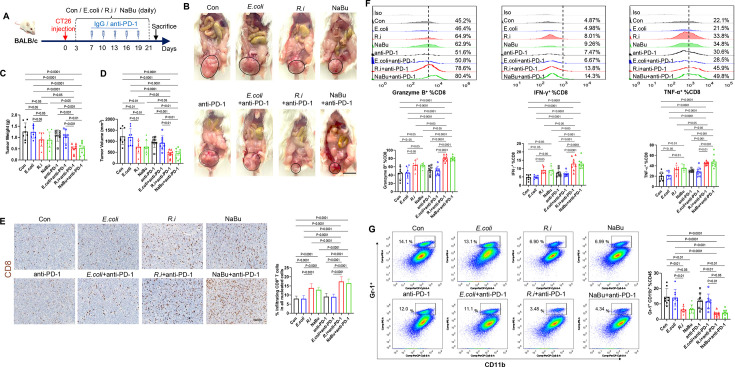
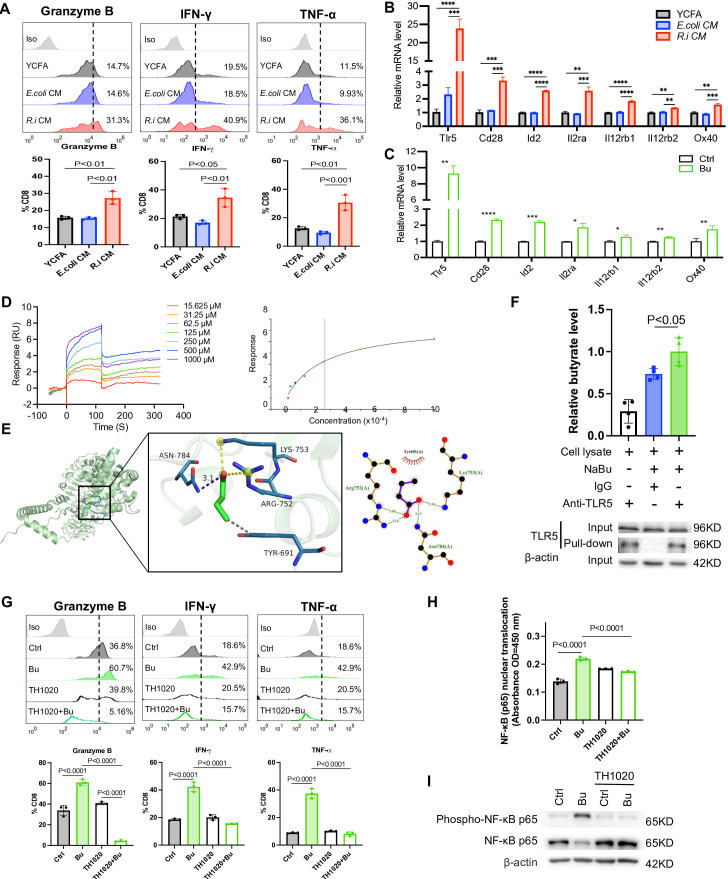
Objective: Roseburia intestinalis is a probiotic species that can suppress intestinal inflammation by producing metabolites. We aimed to study the role of R. intestinalis in colorectal tumourigenesis and immunotherapy. Design: R. intestinalis abundance was evaluated in stools of patients with colorectal cancer (CRC) (n=444) and healthy controls (n=575). The effects of R. intestinalis were studied in Apc Min/+ or azoxymethane (AOM)-induced CRC mouse models, and in syngeneic mouse xenograft models of CT26 (microsatellite instability (MSI)-low) or MC38 (MSI-high). The change of immune landscape was evaluated by multicolour flow cytometry and immunohistochemistry staining. Metabolites were profiled by metabolomic profiling. Results: R. intestinalis was significantly depleted in stools of patients with CRC compared with healthy controls. R. intestinalis administration significantly inhibited tumour formation in Apc Min/+ mice, which was confirmed in mice with AOM-induced CRC. R. intestinalis restored gut barrier function as indicated by improved intestinal permeability and enhanced expression of tight junction proteins. Butyrate was identified as the functional metabolite generated by R. intestinalis. R. intestinalis or butyrate suppressed tumour growth by inducing cytotoxic granzyme B + , interferon (IFN)-γ + and tumour necrosis factor (TNF)-α + CD8 + T cells in orthotopic mouse models of MC38 or CT26. R. intestinalis or butyrate also significantly improved antiprogrammed cell death protein 1 (anti-PD-1) efficacy in mice bearing MSI-low CT26 tumours. Mechanistically, butyrate directly bound to toll-like receptor 5 (TLR5) receptor on CD8 + T cells to induce its activity through activating nuclear factor kappa B (NF-κB) signalling. Conclusion: R. intestinalis protects against colorectal tumourigenesis by producing butyrate, which could also improve anti-PD-1 efficacy by inducing functional CD8 + T cells. R. intestinalis is a potential adjuvant to augment anti-PD-1 efficacy against CRC.
Overview
The claims and statistics of this paper haven’t been checked yet.
Free: it reads the open-access text and checks the first 5 claims that cite a source we can check. Create a free account to check every claim.
Integrity signals
Registry
Cites
Statistics
Figures
Verification
Claims the paper makes
The claims and statistics of this paper haven’t been checked yet.
Free: it reads the open-access text and checks the first 5 claims that cite a source we can check. Create a free account to check every claim.
Claims other papers make about this one
Each is checked against this paper’s own text: does it say what the citing paper says it does?
The source backs part of the claim, not all of it — or backs it for a different population, condition or comparison.
In the citing paper
“They can enhance PD‑1 blockade when administered orally (drinking water or gavage) at physiologically relevant concentrations.148–150”
From Gut dysbiosis in oncology: a risk factor for immunoresistance (2026) · doi:10.1038/s41422-025-01212-6 · cites this paper as [150]
Experimental — accuracy not yet measuredThe source backs part of the claim, not all of it — or backs it for a different population, condition or comparison.
In the citing paper
“Selective metabolites produced by distinct intestinal bacteria modulate cancer immunosurveillance in extraintestinal tumors.”
From Impact of the ONCOBIOME network in cancer microbiome research (2025) · cites this paper as [69]
Experimental — accuracy not yet measuredThe cited source says what the claim attributes to it.
In the citing paper
“the production of gut microbial metabolites (polyamines 58,65-67 , short-chain fatty acids [68][69][70][71] , indoles [72][73][74][75] , vitamins [76][77][78][79] , bile acids 80,81 ) that impact the cancer-immunity dialog.”
From Impact of the ONCOBIOME network in cancer microbiome research (2025) · cites this paper as [69]
Self-check
Percentages, sums and reported differences re-computed from the paper’s own numbers.
The self-check needs the paper’s full text.
Citations
Cites
Trott, O., & Olson, A. J. (2010) · Journal of Computational Chemistry · doi:10.1002/jcc.21334 · Cited by 38,412 · cited 1×
“MGLTools 1.5.6 from AutoDock Vina 1.1.2 programme was used for processing TLR5, 14 while AutoDock was used for docking analysis.”
InfluentialSiegel, R. L., Miller, K. D., Fuchs, H. E., & Jemal, A. (2022) · CA: A Cancer Journal for Clinicians · doi:10.3322/caac.21708 · Cited by 17,196
Safety and activity of anti-PD-L1 antibody in patients with advanced cancer
Brahmer, J. R., Tykodi, S. S., Chow, L. Q. M., Hwu, W.-J., Topalian, S. L., Hwu, P., Drake, C. G., Camacho, L. H., Kauh, J., Odunsi, K., et al. (2012) · New England Journal of Medicine · doi:10.1056/nejmoa1200694 · Cited by 7,945
From Dietary Fiber to Host Physiology: Short-Chain Fatty Acids as Key Bacterial Metabolites
Koh, A., De Vadder, F., Kovatcheva-Datchary, P., & Bäckhed, F. (2016) · Cell · doi:10.1016/j.cell.2016.05.041 · Cited by 7,070
Mismatch repair deficiency predicts response of solid tumors to PD-1 blockade
Le, D. T., Durham, J. N., Smith, K. N., Wang, H., Bartlett, B. R., Aulakh, L. K., Lu, S., Kemberling, H., Wilt, C., Luber, B. S., et al. (2017) · Science · doi:10.1126/science.aan6733 · Cited by 6,645
LigPlot+: Multiple Ligand–Protein Interaction Diagrams for Drug Discovery
Laskowski, R. A., & Swindells, M. B. (2011) · Journal of Chemical Information and Modeling · doi:10.1021/ci200227u · Cited by 6,471
Gut microbiome influences efficacy of PD-1-based immunotherapy against epithelial tumors
Routy, B., Le Chatelier, E., Derosa, L., Duong, C. P. M., Alou, M. T., Daillère, R., Fluckiger, A., Messaoudene, M., Rauber, C., Roberti, M. P., et al. (2018) · Science · doi:10.1126/science.aan3706 · Cited by 5,671
The innate immune response to bacterial flagellin is mediated by Toll-like receptor 5
Hayashi, F., Smith, K. D., Ozinsky, A., Hawn, T. R., Yi, E. C., Goodlett, D. R., Eng, J. K., Akira, S., Underhill, D. M., & Aderem, A. (2001) · Nature · doi:10.1038/35074106 · Cited by 3,601 · cited 1×
“TLR5 is a receptor expressed on epithelial and immune cells specifically recognising flagellin on bacteria, 36 whereas currently there is a lack of studies reporting its interaction with microbial metabolites.”
Anticancer immunotherapy by CTLA-4 blockade relies on the gut microbiota
Vétizou, M., Pitt, J. M., Daillère, R., Lepage, P., Waldschmitt, N., Flament, C., Rusakiewicz, S., Routy, B., Roberti, M. P., Duong, C. P. M., et al. (2015) · Science · doi:10.1126/science.aad1329 · Cited by 3,488
Microsatellite Instability in Colorectal Cancer
Boland, C. R., & Goel, A. (2010) · Gastroenterology · doi:10.1053/j.gastro.2009.12.064 · Cited by 2,456
Cited by
Items 301–394 of 394
Gut microbial metabolites for potentiating cancer therapy
Kamrad, S., Gagliani, N., Lawley, T. D., Patil, K. R., & Tintelnot, J. (2026) · Trends in cancer · doi:10.1016/j.trecan.2026.04.005 · Cited by 3
Jin, Y. G., Zhu, H., Fan, J., & Xu, H. G. (2026) · Frontiers in Cellular and Infection Microbiology · doi:10.3389/fcimb.2026.1693161 · Cited by 1
Liu, J., Zhao, P., Jiang, D., Li, S. B., Jin, C., Xu, D., Wang, X. M., Chen, Y., Tang, B., & Qu, X. (2026) · Gut Microbes · doi:10.1080/19490976.2026.2672791 · Cited by 3
“Multiple mechanisms underlie gut microbiota's modulation of tumor development, including immuno-modulation, 1,2 metabolite-mediated signaling, 3,4 and direct cellular stimulation of tumor cells, 5,6 as emerging evidence demonstrates.”
罗霆, Wu, T., Liu, K., Li, Y., Li, J., & Wang, W. (2026) · Foods · doi:10.3390/foods15111982 · Cited by 4
“The protective mechanism may involve enhanced CD8 + T-cell activity and improved responsiveness to anti-PD-1 therapy, with microbial butyrate production playing a critical regulatory role [45].”
Guo, W., Li, Y., Han, J., Liu, X. Y., & Ni, L. (2026) · Foods · doi:10.3390/foods15112016 · Cited by 1
“Notably, Lactobacillus and Roseburia are recognized for their capacity to ferment carbohydrates into acetate and butyrate, providing essential energy substrates for colonic epithelial cells and reinforcing tight junction integrity [23,24].”
Metagenome analysis reveals multi-kingdom gut microbiota as diagnostic markers for colorectal cancer
Wang, X., Wang, J., Chen, W., Sun, J., Li, J. Z., & Hu, H. (2026) · Frontiers in Microbiology · doi:10.3389/fmicb.2026.1805055 · Cited by 1
“Kang et al. (2023) demonstrated that Roseburia enhances anti-PD-1 efficacy by promoting CD8 + T cell butyrate production.”
Gu, M., Wang, Z., 黄负雪, Li, Y., Liu, Z., Huang, Z., & Chang, P. (2026) · Life Sciences · doi:10.1016/j.lfs.2026.124581 · Cited by 1
Luo, W., Huang, Z., Mei, S., Zhang, Q., Chen, Z., Chen, P.-P., Huang, G.-H., Wang, F., Deng, Y., Tu, H.-Y., et al. (2026) · Journal of Translational Medicine · doi:10.1186/s12967-026-08580-6 · Cited by 1
Alanazi, Y. N. (2026) · Frontiers in Immunology · doi:10.3389/fimmu.2026.1883259 · Cited by 1
Wu, Y., Zhao, M., Zhang, P., & Ho, C. (2026) · Journal of Agricultural and Food Chemistry · doi:10.1021/acs.jafc.5c17587 · Cited by 1
Mechanisms of key gut microbial metabolites: SCFAs, BAs, and TDMs
Mu, L., Choi, G. Y. S., Hitch, T. C. A., Ho, K. M., Chan, M. T. V., Wu, W. K. K., & Chen, H. (2026) · Trends in Microbiology · doi:10.1016/j.tim.2026.07.005 · Cited by 4
Doneparthi, P. S., Cao, H., Chen, W., Dou, W., Fang, H., & Smith, J. P. (2025) · Cancers · doi:10.3390/cancers17182998 · Cited by 1
“Roseburia, a bacterium that has been shown to improve anti-PD-1 efficacy by inducing functional CD8 + T-cells [41], was significantly increased with the combination therapy.”
Li, Y., Chen, Y., Guo, Y., Wu, L., Hu, S., Wang, D., Li, T., An, N., & Yan, J. (2025) · Frontiers in Nutrition · doi:10.3389/fnut.2025.1647811 · Cited by 1
Yin, X., Sasson, G., Sun, Z., Ke, S., Babazadeh, D., Mahmood, S. D., Andrews, M., Hurwitz, S., Chikowore, T., Paul, M., et al. (2024) · medRxiv · doi:10.1101/2024.02.23.24303167 · Cited by 1
Yim, H. C. H., El-Omar, E. M., Wu, J. C., Sung, J. J. �., & Lee, Y. Y. (2024) · Journal of Gastroenterology and Hepatology · doi:10.1111/jgh.16565 · Cited by 2
Self-citationYang, S., Wang, S., Wang, Y., Rong, R., Li, B., Koh, A. Y., Xiao, G., Liu, D. J., Liu, D., & Zhan, X. (2026) · Frontiers in Microbiomes · doi:10.3389/frmbi.2026.1825540 · Cited by 1
The impact of pancreatic fat infiltration on immune environment and pancreatic cancer
Wei, H., & Ren, H. (2024) · Journal of Pancreatology · doi:10.1097/jp9.0000000000000206
Microbiota in patients with cefuroxime resistance and anal fistula revealed by 16S ribosomal DNA
Ling, Y.-T., Yao, F., Li, S., Cao, C.-X., Chen, Z., Qiu, M. R., Li, B.-Z., Hu, B.-W., Zhong, S.-Y., Hu, G.-L., et al. (2024) · World Journal of Gastrointestinal Surgery · doi:10.4240/wjgs.v17.i1.100790
Berry Supplement-Modified Human Microbiome Improves Immunotherapy Response in Mouse ModelsPreprint
Jahanbahkshi, S., Bibi, A., Hoyd, R., Dravillas, C. E., Williams, N. F., Zhang, S., Pallerla, A., Suman, S., Amann, J. M., Goruganthu, M., et al. (2025) · medRxiv · doi:10.1101/2025.01.16.25320666
Cho, M., Lee, K.-H., Kim, K., Hwang, J. S., & Kim, J. K. (2025) · Label-free Biomedical Imaging and Sensing (LBIS) · doi:10.1117/12.3041583
“[ 11] Due to defects in the mismatch repair system, abnormal accumulation of nucleotides can occur.”
Metagenomic Comparison of Gut Microbes of Lemur catta in Captive and Semi-Free-Range Environments
Xu, C., Guo, X., & Li, L. (2025) · Animals · doi:10.3390/ani15101442 · Cited by 1
Righetti, F., Massara, M., & Calcinotto, A. (2025) · The microbiomes of humans, animals, plants, and the environment · doi:10.1007/978-3-031-84065-4_8
Prospect of interdisciplinary research on gut microbiota and colorectal cancer immunotherapy
Lu, Y., Zhang, Z., Chen, L., Xue, P., Zhang, Y., Li, Y., & Guo, H. (2025) · Critical Reviews in Oncology/Hematology · doi:10.1016/j.critrevonc.2025.104832 · Cited by 1
Peng, X.-R., Jia, Z., Zhou, M., Lu, M., Li, Y., & Chen, D. (2025) · Asian Journal of Surgery · doi:10.1016/j.asjsur.2025.04.098
Shao, L., Zhang, Y., Hu, Y., dao, Z., Zhang, H., Leng, S., Zhang, X., Wang, L., zhang, Y., Jian, T., et al. (2025) · Research Square · doi:10.21203/rs.3.rs-7181845/v1 · Cited by 1
Hitayezu, E., Mauliasari, I. R., Yu, S., Moon, S. H., Cho, B.-R., Kang, Y.-H., Lim, S. K., & Cha, K. H. (2025) · Journal of Microbiological Methods · doi:10.1016/j.mimet.2025.107269
Lai, J., & Chen, H. (2025) · Scientia Sinica Vitae · doi:10.1360/ssv-2025-0114
Wang, J., Wang, B., Wang, M., Zhao, L., Liu, L., & Fan, Z. (2025) · Probiotics and Antimicrobial Proteins · doi:10.1007/s12602-025-10860-4
Characterization of the Gut Microbiota in Patients with Erythroderma
Wang, H., Wang, R., Wang, Y., & Sun, J. (2025) · Acta Dermato Venereologica · doi:10.2340/actadv.v105.44643
Intratumoral microbiota-based designing strategies for precision cancer therapeutics
Chen, Y. J., & Wu, Q. (2026) · Chemical Engineering Journal · doi:10.1016/j.cej.2026.173636
The role of gut microbiota and its metabolites in preventing oncogenesis
Li, Z., Yan, J., Zeng, Z., & Zhao, L. (2026) · Frontiers in Cell and Developmental Biology · doi:10.3389/fcell.2026.1790063
“…Sears and Pardoll, 2011; Jans and Vereecke, 2025) and depletion of beneficial gut bacteria such as Bifidobacterium , Clostridium butyricum , Faecalibacterium prausnitzii , Roseburia intestinalis , and Streptococcus thermophilus (Lopez-Siles et al., 2017; Kang et al., 2023; Correa et al., 2005).”
Liu, Z., Liu, M., Chen, H., Li, S., Zheng, N., Xing, G., Zhang, Y., Xu, J., Li, M., Xiao, C., et al. (2026) · Journal of Translational Medicine · doi:10.1186/s12967-026-07900-0 · Cited by 2
Gut microbiome in integrative oncology
Lacey, J., Stringer, A. M., Cross, C., & Wardill, H. R. (2026) · Elsevier eBooks · doi:10.1016/b978-0-443-30194-0.00004-7
Wang, C., Nie, L., Li, X., Sun, K., Du, H., Song, S., Wang, F., & Shen, X. T. (2026) · Supportive Care in Cancer · doi:10.1007/s00520-026-10396-5 · Cited by 3
The hidden mycobiome: emerging role in anticancer immunotherapy
Peng, Z.-C., Liu, X.-Y., Liu, Q.-Y., Lü, W., Jin, C.-Z., Zhang, T.-Y., & Liu, N.-N. (2026) · Mycology: An International Journal on Fungal Biology · doi:10.1080/21501203.2026.2640728
Xu, Q., Dong, M., Yuan, Y., & Zhang, Q. (2026) · Journal of Physiology and Biochemistry · doi:10.1007/s13105-026-01162-6
Chioccioli, S., Meriggi, N., Monroy, M. M., Renzi, S., Cerasuolo, B., Caderni, G., & Filippo, C. D. (2026) · Scientific Reports · doi:10.1038/s41598-026-48074-5
You, Q., Jin, M., Zhou, B., Huang, C., Lin, Z. B., Hu, J. B., Xue, J., Chen, X., Xiao, Y., Li, R., et al. (2026) · Frontiers in Pharmacology · doi:10.3389/fphar.2026.1829108 · Cited by 1
“…B) signalling, and induces the expression of granzyme B (GZMB), interferon-γ (IFN-γ ) and tumour necrosis factor-α (TNF-α ) in CD8 + T cells, thereby inhibiting tumour growth and enhancing anti-programmed death receptor 1 (PD-1) therapeutic responses in tumour-bearing mice (Kang et al., 2023).”
Zhang, X., Chen, F., Yang, J., Ma, J., Li, X., Wang, H. X., Li, Q. J., Zhao, Y., & Xu, J. (2026) · Frontiers in Immunology · doi:10.3389/fimmu.2026.1851811 · Cited by 1
Guidelines for gut microbiota technology of the chinese anti-cancer association (2025 Edition)
Wang, Q., Guo, Z., Wu, Q., Wang, X., He, M., Liang, J., Li, X., Long, H., Qiao, M., Wang, J., et al. (2026) · Holistic Integrative Oncology · doi:10.1007/s44178-026-00264-x
Self-citationWang, Y., Li, Z., & Kong, X. (2026) · Cancer Screening and Prevention · doi:10.14218/csp.2026.00033
Abebaw, D., Adugna, A., Tegegne, B. A., Teffera, Z. H., Selabat, B., Kindie, Y., Tilahun, M., Belew, H., Baylie, T., Mengistu, G., et al. (2026) · Clinical and Experimental Medicine · doi:10.1007/s10238-026-02222-3
The role of gut microbiota in cancer development and translational modulation strategies
Bai, X., Kang, X., & Wong, S. H. (2026) · Elsevier eBooks · doi:10.1016/b978-0-443-40306-4.00017-x
Self-citationTang, A., Chen, Y., Ding, K., Zhang, J., Xu, L., Chen, W., Hu, S., & Lai, J. (2026) · Journal of Zhejiang University SCIENCE B · doi:10.1631/jzus.b2500219
“…Roseburia and Clostridia_vadinBB60 _group demon‐ strate anti-inflammatory potential via butyrate produc‐ tion, which is typically associated with gut barrier in‐ tegrity and protection against inflammatory pathology (Machiels et al., 2014; Shen et al., 2022; Kang et al., 2023; Song et al., 2023).”
Zhang, X., Fu, Y., Chen, J., Shen, H., Du, Y., Wu, J., Lai, H., Liu, Y., Chen, J., Hou, X., et al. (2026) · PLoS ONE · doi:10.1371/journal.pone.0351316
“Propionate played an anti-inflammatory role by inducing apoptosis of human colon cancer cells [29] while butyrate increased the expression of tight-junction proteins in the gut to reduce the potential intestinal hyperper-meability [30].”
Zheng, Y., Wang, S., Ying, J., Lv, Y., Zhou, Y., You, J., Fan, W., Ye, X., Luo, G., Chen, Y., et al. (2026) · Phytomedicine · doi:10.1016/j.phymed.2026.158548
Bioactive Food Ingredients and Their Impact on Health and Disease
Nayab, Z., Ansari, M. M., Ali, N., Akhtar, N., Gupta, I. R., & Son, Y. (2026) · Food bioactive ingredients · doi:10.1007/978-3-032-23814-6_2
Guo, Z., Jie, L., Yuyue, X., Fang, Y., Dianqun, R., Zhang, Q. P., & Xiaojun, L. (2026) · Frontiers in Microbiology · doi:10.3389/fmicb.2026.1842365 · Cited by 1
Alkhafaje, Z., Malathi, H., Dash, A., Selvakumari, J. P., Singh, G., Sinha, A., Suliman, M., & Smerat, A. (2026) · Cancer Chemotherapy and Pharmacology · doi:10.1007/s00280-026-04911-y
Gouveia, L., Serpa, J., & Mendes, C. (2026) · Advances in experimental medicine and biology · doi:10.1007/978-3-032-12166-0_3
Chen, S., Yan, L., Zeng, J., Chen, Y., Zhao, X., Meng, W., Zhuang, J., Chen, F., Guo, Y., El‐Aty, A. M. A., et al. (2026) · Food Frontiers · doi:10.1002/fft2.70319
Benlaïfaoui, M., Richard, C., Hunter, S., Méndez-Salazar, E. O., Kourtian, S., Malo, J., Prifti, D. K., Ponce, M., Khalfi, S., Belkaïd, W., et al. (2026) · Gut Microbes · doi:10.1080/19490976.2026.2699457 · Cited by 4
“57,58 Whether the CCR9 ⁺ CXCR3 ⁺ T cells phenotype observed here reflects cells that were gut-primed and subsequently co-opted CXCR3 expression upon encountering inflammatory signals in the tumor, or that they acquired both receptors through the local tumor microenvironment, cannot be determined…”
The Relationship Between (Endo)cannabinoids, the Microbiome and Melanoma
Javid, F. A., Golčić, M., Harej, A., & Belančić, A. (2026) · Pharmacology Research & Perspectives · doi:10.1002/prp2.70304
“Improved intestinal permeability and tight junction protein expression were associated with a better response to anti- PD-1 therapy [114].”
He, Y., Zhao, Y., Ju, S., Zhou, P., Si, J., Pan, Y., & Jiang, Y. (2026) · Frontiers in Cellular and Infection Microbiology · doi:10.3389/fcimb.2026.1890330
Liang, F., Li, J., Yue, Y., Pan, J., Liu, C., Cheng, D., Zhang, N., Li, K., Chu, F., & Wu, H. (2026) · Polish Journal of Microbiology · doi:10.33073/pjm-2026-016
“The mechanism involves butyrate directly binding to Toll-like receptor 5 (TLR5) on the surface of CD8⁺ T cells and enhancing its activity through nuclear factor-κB (NF-κB) signaling pathway activation, thereby improving the anti-tumor response (Kang et al. 2023).”
Self-citationAlotaibi, B. S. (2026) · Saudi Pharmaceutical Journal · doi:10.1007/s44446-026-00107-w
“In addition, butyrate generated by Roseburia intes-tinalis was linked with enhanced efficacy of anti-PD-1 therapy against mouse models of colorectal cancer (Kang et al. 2023).”
Sun, S., Fang, Y., Hao, H., Yu, J., Zhou, Y., Wen, S., Li, Y., Wang, T., Yu, M., & Wu, M. (2026) · Biomaterials · doi:10.1016/j.biomaterials.2026.124546
Self-citationThe role of pharmacomicrobiomics in colorectal cancer therapy
Feng, X., Pora, M., Ebert, M., Zimmermann, M., & Zhan, T. (2026) · Trends in Molecular Medicine · doi:10.1016/j.molmed.2026.07.006
Cheng, Z., Xu, M., Yan, W., Li, H., Zhang, C., & Wang, X. (2026) · Pathology - Research and Practice · doi:10.1016/j.prp.2026.156667
Yang, M., He, H., Fu, J., Yu, Z., Li, W., Kai, L., Hu, C., Feng, J., Shan, T., Wang, Y., et al. (2026) · Nutrients · doi:10.3390/nu18172776
“Notably, LEfSe analysis identified enrichment of beneficial bacteria, including Clostridium butyricum (a well-characterized butyrate producer) and Faecalibacterium prausnitzii (associated with anti-inflammatory effects in the gut), in probiotic-treated groups [53,54].”
Bhokare, S., Wagh, A., Jadhav, P., Kumawat, J. A., Khandgaonkar, M., Madibone, M., & Kalam, S. (2026) · Biomarkers · doi:10.1080/1354750x.2026.2715050
Wen, J., Lu, B., Li, P., Yang, Q., Huo, J., & Wang, W. (2026) · Journal of Functional Foods · doi:10.1016/j.jff.2026.107480
Ethyl caffeate alleviates NAFLD by modulating JNK/IRS-1/AKT signaling and the gut microbiota
Qi, M., Qin, F., 王若瑄, Zhang, Y., & Xuanfeng, Y. U. E. (2026) · Food & Function · doi:10.1039/d6fo03689a
Yan, J., Ma, R., & Xi, Y. (2026) · Genes · doi:10.3390/genes17091025
Panda, P., Mohanty, S., & Mohapatra, R. (2026) · Clinical Microbiology Newsletter · doi:10.1016/j.clinmicnews.2026.08.003
Interplay of gut microbiota, immune cells and natural products in reshaping cancer immunotherapy
Wu, X., Lu, L., Li, T., Zhao, L., Wang, L., Yao, Y., Chen, J., Liu, T., Li, X., Zhu, X., et al. (2026) · Frontiers in Microbiology · doi:10.3389/fmicb.2026.1898063
Shi, Z., Mei, J., Zhang, Q., Li, L., & Cheng, H. (2026) · Frontiers in Immunology · doi:10.3389/fimmu.2026.1932903
Wang, J., Tian, Z., Chen, S., Chen, G., Wang, Y., & Wang, P. (2026) · Inflammation Research · doi:10.1007/s00011-026-02341-3
“Moreover, growing evidence highlights specific host signaling pathways that can be modulated by microbial metabolites [15].”
Huang, K., Liang, G., Jiang, L., 智, 庆., Fang, B., Wu, M., Chen, X., & Huang, H. (2026) · Future Microbiology · doi:10.1080/17460913.2026.2720339
Self-citationLin, J., Lin, H., Zhang, Z., & Wang, H. (2026) · Frontiers in Immunology · doi:10.3389/fimmu.2026.1892843
Gut microbiome in gastrointestinal cancer
Xie, M., & Jun, Y. U. (2026) · Shengming kexue · doi:10.3724/cbls.2026044
Self-citationRuiz‐Pozo, V. A., Tamayo‐Trujillo, R., Paredes, A. S. C., Guevara‐Ramírez, P., Cadena-Ullauri, S., Paz‐Cruz, E., & Zambrano, A. K. (2026) · Frontiers in Immunology · doi:10.3389/fimmu.2026.1952635
“In addition, Roseburia is also elevated in vitiligo individuals and is also involved in CD8+T cell activation by its binding to the Toll-like receptor 5 (TLR5), which could potentially exacerbate autoimmune responses (18, 21), as is observed in vitiligo individuals.”
Kong, Y., Li, X., Li, Q., Wang, X., & Yang, F. (2026) · Research Square · doi:10.21203/rs.3.rs-10853985/v1
Nanoparticle pharmacomicrobiomics: Reprogramming the microbiome–immune axis for cancer immunotherapy
Siddiqua, K. S., Farooqui, S. A., Zhang, Y., Wang, L., Zhang, G., Jiang, F., & 文庭池 (2026) · Pharmacological Research · doi:10.1016/j.phrs.2026.108481
Biazzo, M., Soriani, M., Micallef, M. P., Zaky, E., & Podrini, C. (2026) · Microorganisms · doi:10.3390/microorganisms14102147
“The investigators proposed direct activation of Toll-like receptor 5 (TLR5)-nuclear factor kappa B (NF-κ B) signalling in CD8 + T cells, although TLR5 is not conventionally considered a principal SCFA receptor and this mechanism requires independent confirmation [32].”
Zhan, X., 刘洪玲, Han, L., Liu, Y., Huang, C., Yang, X., & Shi, D. (2026) · Research Square · doi:10.21203/rs.3.rs-10990887/v1
Luo, N., Yan, H., Wang, N., Fan, W., & Chen, P. (2026) · Archives of Microbiology · doi:10.1007/s00203-026-05220-x
“Consistent with this functional relevance, R. intestinalis-derived butyrate has been shown to enhance cytotoxic CD8 + T-cell activity and anti-PD-1 efficacy in CRC models (Kang et al. 2023 ).”
Pan, J., Tong, L., Fei, R., Wu, K., Ji, J., Sun, T., Zhao, Y., Zhang, J., Feng, H., Hua, H., et al. (2026) · Journal for ImmunoTherapy of Cancer · doi:10.1136/jitc-2026-015279 · Cited by 1
Zheng, M., Chen, R., Wei, Y., Zeng, Y., Wang, D., Ren, Y., Wang, X., Liu, L., Yang, X., Shi, L., et al. (2026) · Microorganisms · doi:10.3390/microorganisms14102280
Yang, J., Cai, X., He, F., 张君红, Zhang, Z., Yi, Z., Xie, C., & Xu, B. (2026) · Signal Transduction and Targeted Therapy · doi:10.1038/s41392-026-02903-1
Microbiome-directed therapies in oncology: from animal models to clinical implementation
Skonieczna‐Żydecka, K., Marlicz, M., Kaczmarczyk, M., Łoniewski, I., Boluk, P., Ekstedt, N., Kutrzuba, K., & Marlicz, W. M. (2026) · Best Practice & Research Clinical Gastroenterology · doi:10.1016/j.bpg.2026.102148
徐, 丽. (2026) · Journal of Clinical Personalized Medicine · doi:10.12677/jcpm.2026.55356
Modulation of Toll-like receptor signaling by intestinal bacteria in colorectal cancer
Wang, S., Chen, D., Yang, D., Gao, L., & Zhang, Y. (2026) · Frontiers in Cellular and Infection Microbiology · doi:10.3389/fcimb.2026.1963456
ying, S., Zin, M. H. M., & Amrit, M. F. (2026) · F1000Research · doi:10.12688/f1000research.179354.1
Dietary exposures, microbial ecology and carcinogenesis: An integrated review
Kang, X., Soh, W. S., & Wong, S. H. (2026) · Best Practice & Research Clinical Gastroenterology · doi:10.1016/j.bpg.2026.102155
Self-citationGál, K., Mikolás, M., Barabás, M., Fauszt, P., David, P., Szilágyi-Tolnai, E., Balogh, K., Solymosi, D., Miklós, S., Mikáczó, J., et al. (2026) · Scientific Reports · doi:10.1038/s41598-026-69383-9
Zhao, L., Lin, Q., Zhang, D., Liu, Y., Zong, M., Xi, L., Xie, F., Song, S., Xue, P., Zhu, S., et al. (2026) · Frontiers in Microbiology · doi:10.3389/fmicb.2026.1931054
Fusobacterium nucleatum-associated metabolites in disease pathogenesis: from cancer to immunotherapy
Farah, H. S., Padmapriya, G., Sahoo, S., Alhasso, B., Srivastav, S. K., Rani, A., Singh, R., & Khdyr, A. H. (2026) · Frontiers in Microbiology · doi:10.3389/fmicb.2026.1996310
Araújo, C., da Silva, T. N. G., & Brandão, F. (2026) · Research Square · doi:10.21203/rs.3.rs-10880210/v1
The Emerging Role of Butyrate in Immune Tolerance
Zhang, J., Shen, S., Cao, J., Li, Y., Tong, B., Shi, Y., Zhou, Y.-N., & Qi, X. (2026) · Journal of Immunology Research · doi:10.1155/jimr/6636669
Cheng, S., Zhang, Y., Li, W., Xu, G., & Qu, J. (2026) · Biomedicines · doi:10.3390/biomedicines14112485
Liu, J., Li, W., Qi, M., Zhao, J., Wu, J., Wang, Y., Yang, Y., & Song, X. (2026) · mSystems · doi:10.1128/msystems.00548-26
Metadata
- Authors
- Kang, X., Liu, C., Ding, Y., Ni, Y., Ji, F., Lau, H. C. H., Jiang, L., Sung, J. J., Wong, S. H., & Yu, J.
- Affiliations
- Chinese University of Hong Kong (HK)
- Department of Anatomical and Cellular Pathology, Faculty of Medicine, The Chinese University of Hong Kong, Shatin, Hong Kong
- Nanyang Technological University (SG)
- Corresponding author
- Yu, Jun
- ORCID
- Venue
- Gut
- Publisher
- BMJ
- Published
- 2023-07-25
- Volume
- 72
- Issue
- 11
- Pages
- 2112-2122
- ISSN
- 0017-5749 (ISSN-L)
- 1468-3288
- PMC
- PMC10579466
- OpenAlex
- W4385232541
- Semantic Scholar
- 6ffb94165afc68321ea0792ce3784fc014483277
- Cited by
- 394
- References
- 38
- Citations by year
- 2026: 144 · 2025: 178 · 2024: 68 · 2023: 4
- FWCI
- 35.11
- Type
- journal article
- Language
- en
- Open access
- hybrid
- doi.org
- Licence
- Locations
- Gut (publishedVersion, cc-by-nc)
- PubMed Central (publishedVersion, cc-by-nc)
- PubMed (publishedVersion)
- DR-NTU (Nanyang Technological University) (submittedVersion, cc-by-nc)
- HighWire Press Open Archive (submittedVersion)
- Funders
- Shenzhen-Hong Kong-Macao Science and Technology Program (Category C) Shenzhen (SGDX20210823103535016)
- Centre for Microbiome Medicine and Wang Lee Wah Memorial Fund (Not Applicable, N/A)
- Vice-Chancellor’s Discretionary Fund Chinese University of Hong Kong (4930775)
- RGC Research Impact Fund Hong Kong (R4032-21F)
- Research Talent Hub-Innovation and Technology Fund Hong Kong (ITS/177/21FP)
- NTU Start Up Grant (021281-00001, 021337-00001)
- Singapore Ministry of Health’s National Medical Research Council Clinician Scientist Individual Research Grant (MOH-CIRG23jan-0001)
- Topics
- Life Sciences › Biochemistry, Genetics and Molecular Biology › Molecular Biology › Gut microbiota and health
- Health Sciences › Medicine › Oncology › Cancer Immunotherapy and Biomarkers
- Life Sciences › Agricultural and Biological Sciences › Food Science › Probiotics and Fermented Foods
- Keywords
- Roseburia intestinalis, butyrate, colorectal cancer, anti-PD-1 therapy, CD8+ T cells, TLR5, NF-κB signaling, intestinal barrier, intestinal permeability, tight junctions, tumor immunology, probiotics, tumor microenvironment, microsatellite instability, ApcMin/+ mice
- MeSH terms
- Eubacteriales, Clostridiales, Animals, Butyrates, Cell Transformation, Neoplastic, Humans, Colorectal Neoplasms, CD8-Positive T-Lymphocytes, Mice, Carcinogenesis
About these checks
Registry, retraction, Cites and statistics results are computed, not judged, with one exception: a printed reference that no index lists is read once by a model before it counts as a citation error. Claims are extracted by a model and kept only when their quote appears verbatim in the text; each cited source is then checked, with a model’s help, for whether it says what the claim relies on. Those verdicts can be wrong — read the claim’s quote and the cited source before relying on one.
Statistics and arithmetic are recomputed, not judged.
Confidence bands are shown only for fields calibrated on our annotated test set. None is calibrated yet, so no band is shown.
What counts as a claim ›How we measure confidence ›How we check this ›
Are you an author, or do you see a problem with this page? Request a review
Data sources
Bibliographic data: Semantic Scholar, OpenAlex, Crossref.
Contains information from the Semantic Scholar Academic Graph Datasets, made available under the ODC Attribution License (ODC-BY 1.0).
Semantic Scholar’s data is described in: Kinney, R., et al. (2023). The Semantic Scholar Open Data Platform. arXiv:2301.10140.
