

Roseburia intestinalis generated butyrate boosts anti-PD-1 efficacy in colorectal cancer by activating cytotoxic CD8 + T cells
Open accessThe DOI matches its Crossref record; 38 of the 38 references it cites were found in a registry or an index.
Abstract
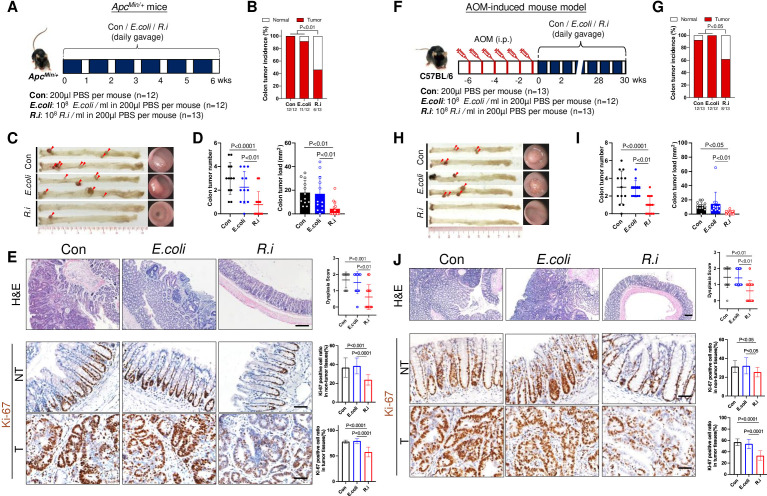
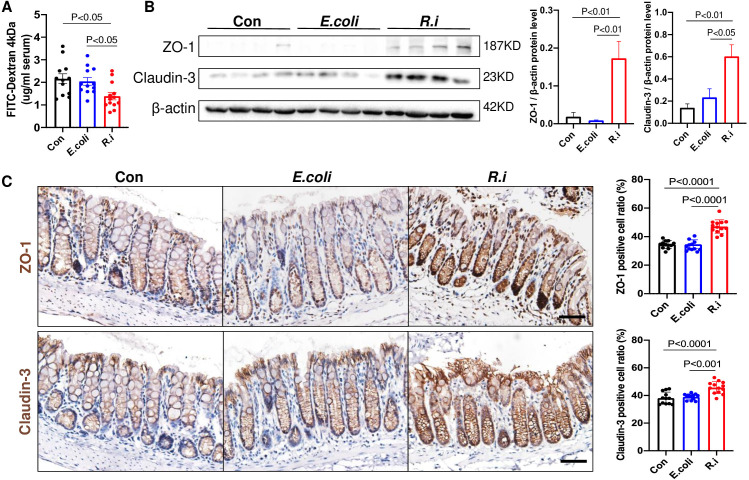
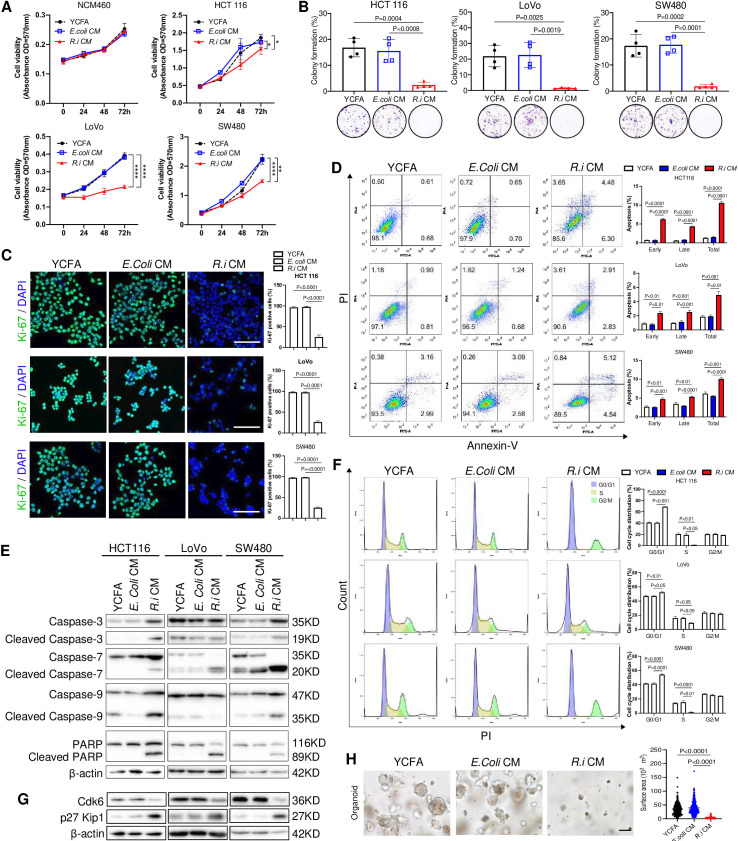
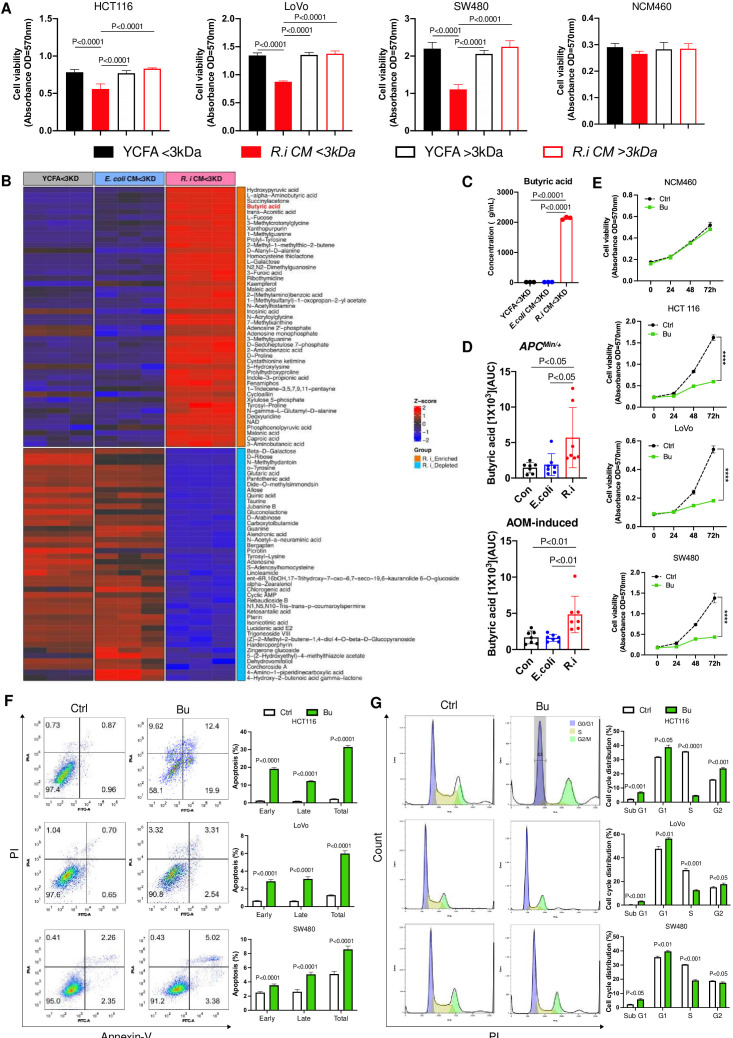
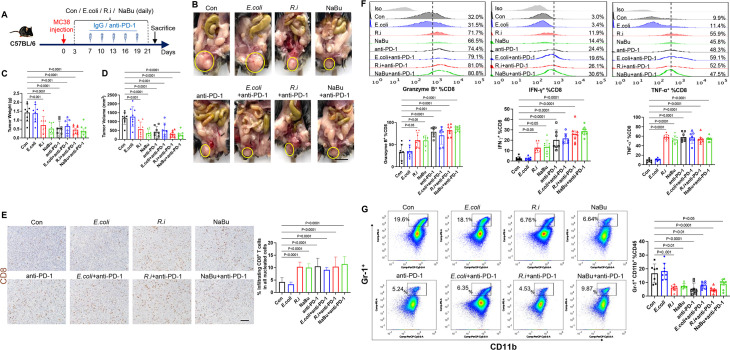
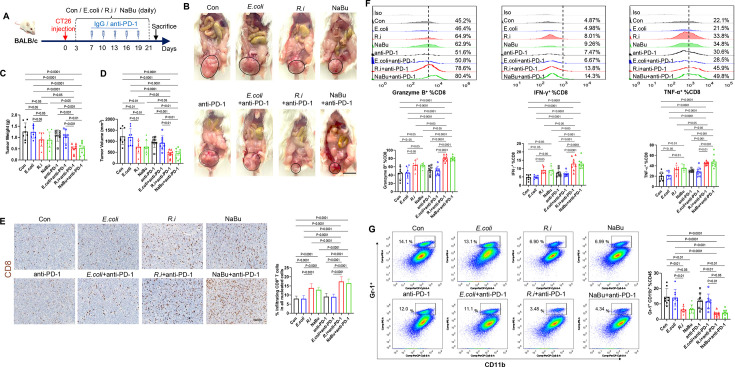
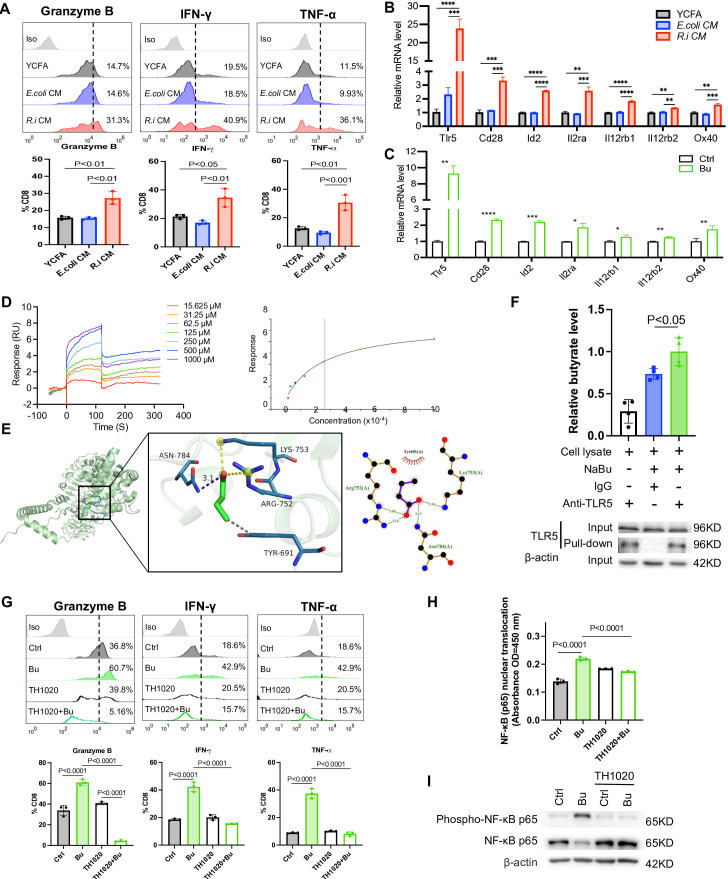
Objective: Roseburia intestinalis is a probiotic species that can suppress intestinal inflammation by producing metabolites. We aimed to study the role of R. intestinalis in colorectal tumourigenesis and immunotherapy. Design: R. intestinalis abundance was evaluated in stools of patients with colorectal cancer (CRC) (n=444) and healthy controls (n=575). The effects of R. intestinalis were studied in Apc Min/+ or azoxymethane (AOM)-induced CRC mouse models, and in syngeneic mouse xenograft models of CT26 (microsatellite instability (MSI)-low) or MC38 (MSI-high). The change of immune landscape was evaluated by multicolour flow cytometry and immunohistochemistry staining. Metabolites were profiled by metabolomic profiling. Results: R. intestinalis was significantly depleted in stools of patients with CRC compared with healthy controls. R. intestinalis administration significantly inhibited tumour formation in Apc Min/+ mice, which was confirmed in mice with AOM-induced CRC. R. intestinalis restored gut barrier function as indicated by improved intestinal permeability and enhanced expression of tight junction proteins. Butyrate was identified as the functional metabolite generated by R. intestinalis. R. intestinalis or butyrate suppressed tumour growth by inducing cytotoxic granzyme B + , interferon (IFN)-γ + and tumour necrosis factor (TNF)-α + CD8 + T cells in orthotopic mouse models of MC38 or CT26. R. intestinalis or butyrate also significantly improved antiprogrammed cell death protein 1 (anti-PD-1) efficacy in mice bearing MSI-low CT26 tumours. Mechanistically, butyrate directly bound to toll-like receptor 5 (TLR5) receptor on CD8 + T cells to induce its activity through activating nuclear factor kappa B (NF-κB) signalling. Conclusion: R. intestinalis protects against colorectal tumourigenesis by producing butyrate, which could also improve anti-PD-1 efficacy by inducing functional CD8 + T cells. R. intestinalis is a potential adjuvant to augment anti-PD-1 efficacy against CRC.
Overview
The claims and statistics of this paper haven’t been checked yet.
Free: it reads the open-access text and checks the first 5 claims that cite a source we can check. Create a free account to check every claim.
Integrity signals
Registry
Cites
Statistics
Figures
Verification
Claims the paper makes
The claims and statistics of this paper haven’t been checked yet.
Free: it reads the open-access text and checks the first 5 claims that cite a source we can check. Create a free account to check every claim.
Claims other papers make about this one
Each is checked against this paper’s own text: does it say what the citing paper says it does?
The source backs part of the claim, not all of it — or backs it for a different population, condition or comparison.
In the citing paper
“They can enhance PD‑1 blockade when administered orally (drinking water or gavage) at physiologically relevant concentrations.148–150”
From Gut dysbiosis in oncology: a risk factor for immunoresistance (2026) · doi:10.1038/s41422-025-01212-6 · cites this paper as [150]
Experimental — accuracy not yet measuredThe source backs part of the claim, not all of it — or backs it for a different population, condition or comparison.
In the citing paper
“Selective metabolites produced by distinct intestinal bacteria modulate cancer immunosurveillance in extraintestinal tumors.”
From Impact of the ONCOBIOME network in cancer microbiome research (2025) · cites this paper as [69]
Experimental — accuracy not yet measuredThe cited source says what the claim attributes to it.
In the citing paper
“the production of gut microbial metabolites (polyamines 58,65-67 , short-chain fatty acids [68][69][70][71] , indoles [72][73][74][75] , vitamins [76][77][78][79] , bile acids 80,81 ) that impact the cancer-immunity dialog.”
From Impact of the ONCOBIOME network in cancer microbiome research (2025) · cites this paper as [69]
Self-check
Percentages, sums and reported differences re-computed from the paper’s own numbers.
The self-check needs the paper’s full text.
Citations
Cites
Trott, O., & Olson, A. J. (2010) · Journal of Computational Chemistry · doi:10.1002/jcc.21334 · Cited by 38,412 · cited 1×
“MGLTools 1.5.6 from AutoDock Vina 1.1.2 programme was used for processing TLR5, 14 while AutoDock was used for docking analysis.”
InfluentialSiegel, R. L., Miller, K. D., Fuchs, H. E., & Jemal, A. (2022) · CA: A Cancer Journal for Clinicians · doi:10.3322/caac.21708 · Cited by 17,196
Safety and activity of anti-PD-L1 antibody in patients with advanced cancer
Brahmer, J. R., Tykodi, S. S., Chow, L. Q. M., Hwu, W.-J., Topalian, S. L., Hwu, P., Drake, C. G., Camacho, L. H., Kauh, J., Odunsi, K., et al. (2012) · New England Journal of Medicine · doi:10.1056/nejmoa1200694 · Cited by 7,945
From Dietary Fiber to Host Physiology: Short-Chain Fatty Acids as Key Bacterial Metabolites
Koh, A., De Vadder, F., Kovatcheva-Datchary, P., & Bäckhed, F. (2016) · Cell · doi:10.1016/j.cell.2016.05.041 · Cited by 7,070
Mismatch repair deficiency predicts response of solid tumors to PD-1 blockade
Le, D. T., Durham, J. N., Smith, K. N., Wang, H., Bartlett, B. R., Aulakh, L. K., Lu, S., Kemberling, H., Wilt, C., Luber, B. S., et al. (2017) · Science · doi:10.1126/science.aan6733 · Cited by 6,645
LigPlot+: Multiple Ligand–Protein Interaction Diagrams for Drug Discovery
Laskowski, R. A., & Swindells, M. B. (2011) · Journal of Chemical Information and Modeling · doi:10.1021/ci200227u · Cited by 6,471
Gut microbiome influences efficacy of PD-1-based immunotherapy against epithelial tumors
Routy, B., Le Chatelier, E., Derosa, L., Duong, C. P. M., Alou, M. T., Daillère, R., Fluckiger, A., Messaoudene, M., Rauber, C., Roberti, M. P., et al. (2018) · Science · doi:10.1126/science.aan3706 · Cited by 5,671
The innate immune response to bacterial flagellin is mediated by Toll-like receptor 5
Hayashi, F., Smith, K. D., Ozinsky, A., Hawn, T. R., Yi, E. C., Goodlett, D. R., Eng, J. K., Akira, S., Underhill, D. M., & Aderem, A. (2001) · Nature · doi:10.1038/35074106 · Cited by 3,601 · cited 1×
“TLR5 is a receptor expressed on epithelial and immune cells specifically recognising flagellin on bacteria, 36 whereas currently there is a lack of studies reporting its interaction with microbial metabolites.”
Anticancer immunotherapy by CTLA-4 blockade relies on the gut microbiota
Vétizou, M., Pitt, J. M., Daillère, R., Lepage, P., Waldschmitt, N., Flament, C., Rusakiewicz, S., Routy, B., Roberti, M. P., Duong, C. P. M., et al. (2015) · Science · doi:10.1126/science.aad1329 · Cited by 3,488
Microsatellite Instability in Colorectal Cancer
Boland, C. R., & Goel, A. (2010) · Gastroenterology · doi:10.1053/j.gastro.2009.12.064 · Cited by 2,456
Cited by
Items 201–300 of 394
Role of gut microbiome in colorectal cancer: a comprehensive umbrella review protocol
Seneviwickrama, M., Gunasekera, K. M., Gamage, K., Gonapaladeniya, M., & Ranasinghe, S. (2025) · BMJ Open · doi:10.1136/bmjopen-2025-104450 · Cited by 8
Zhang, Y., Li, H., Jiang, N., & Ru, Q. (2025) · The American Journal of Chinese Medicine · doi:10.1142/s0192415x25500788 · Cited by 6
Chen, L., Wang, C., Zhang, H., Wu, Y., Li, F., Shi, H., Ren, Z., Chen, Y., Huang, J., Zhao, D., et al. (2025) · BMC Microbiology · doi:10.1186/s12866-025-04427-0 · Cited by 6
“Butyrate can also activate the nuclear factor kappa B (NF-κB) pathway by binding to toll-like receptor 5 (TLR5) on cytotoxic CD8 + T cells [69], which enhances the ability of CD8 + T cells to clear tumour cells.”
Zhong, Y., Chen, G., Chen, M., Cui, J., Tan, Q., & Xiao, Z. (2025) · Frontiers in Immunology · doi:10.3389/fimmu.2025.1460936 · Cited by 7
Host–microbiota interaction during cancer progression from bulk to single‐cell level
Ma, Y., Zhu, R., & Liu, N. (2024) · Clinical and Translational Discovery · doi:10.1002/ctd2.263 · Cited by 5
Yang, J., Lim, J., Kim, E. H., An, J., Lee, D., Lee, H. C., Jeong, J., & Shim, J. H. (2025) · Journal of Hepatocellular Carcinoma · doi:10.2147/jhc.s537216 · Cited by 4
The gut microbiota and colorectal cancer: Molecular insights and translational implications
Chen, J., Du, X., Shao, M., Sun, Y., Shi, X., & He, S. (2025) · Clinical Surgical Oncology · doi:10.1016/j.cson.2025.100107 · Cited by 5
Allahverdi, M., & Dadmehr, M. (2026) · Journal of Food Composition and Analysis · doi:10.1016/j.jfca.2026.108917 · Cited by 13
Surfactin's impact on gut microbiota and intestinal tumor cells
Wei, X., Wang, H., Liu, S., Bao, K., Ke, S., & Zhou, Z. (2024) · International Journal of Biological Macromolecules · doi:10.1016/j.ijbiomac.2024.138607 · Cited by 8
Guo, H., Bi, Y., Zhang, G., Luo, S., Jia, X., Yang, R., Ye, P., & Zhang, L. (2025) · Frontiers in Microbiology · doi:10.3389/fmicb.2025.1551028 · Cited by 4
Zhong, H., Song, Y., Hu, S., Zhang, C., & Li, L. (2025) · Journal of Microbiology and Biotechnology · doi:10.4014/jmb.2502.02037 · Cited by 4
Fatty acid in the tumor microenvironment: Perspectives for immunotherapy
Li, T., Bie, Y.-R., Chen, S.-M., Shang, Y., & Hu, P. (2025) · Critical Reviews in Oncology/Hematology · doi:10.1016/j.critrevonc.2025.104878 · Cited by 5
Li, Y., Xu, X., Peng, C., Liu, Y., Lü, N., Zhu, Y., & He, C. (2025) · mSystems · doi:10.1128/msystems.01090-25 · Cited by 6
Meng, L. M., Yan, N., Li, X., Sun, Z., Qin, M., Liu, S., Duan, X., Zhao, Y., Zhang, Z., Li, Q., et al. (2025) · Scientific Reports · doi:10.1038/s41598-025-31105-y · Cited by 4
Microbiome-modulated immunotherapy in oncology: Current applications and future prospects
Liu, Y., Miao, K., & Yang, X. (2026) · Seminars in Cancer Biology · doi:10.1016/j.semcancer.2026.01.001 · Cited by 4
The role of the microbiota in cancer drug resistance and emerging therapeutic strategies
Che, C., Zhou, Y., Chen, L., Li, S., fan, D., Lu, Y., & Zhao, X. (2026) · Cancer Letters · doi:10.1016/j.canlet.2026.218305 · Cited by 6
The gut-joint axis in juvenile idiopathic arthritis
Matei, D. E., & Rosser, E. C. (2026) · Arthritis Research & Therapy · doi:10.1186/s13075-026-03786-x · Cited by 4
Ji, S., Liu, Y., Xu, Y., Gao, J., Jin, J., Jiang, P., Li, Y. K., Su, D., Zhao, Y., Yang, S., et al. (2026) · Nature Microbiology · doi:10.1038/s41564-026-02326-2 · Cited by 6
Intratumoral microbiota in cancer: molecular mechanism and therapeutic strategies
Yu, Y., Guo, Z., Luo, Z., Dian, Y., Yang, X., Chen, X., Zeng, F., & Deng, G. (2026) · Molecular Biomedicine · doi:10.1186/s43556-026-00473-w · Cited by 5
“Moreover, metabolites such as butyrate and indole-3-lactic acid (ILA) influence immunity and therapy response [327, 328].”
Xie, Y., Li, J., Tao, Q., Wu, Y., Liu, Z., Chen, Y., & Zeng, C. (2024) · Scientific Reports · doi:10.1038/s41598-024-63891-2 · Cited by 4
Sun, W., Ma, S., Meng, D., Wang, C., & Zhang, J. (2025) · Molecular Medicine Reports · doi:10.3892/mmr.2025.13498 · Cited by 7
Li, S., Li, J., Chen, K., Wang, J., Wang, L., Feng, C., Wang, K., Xu, Y., Gao, Y., Yan, X., et al. (2025) · Journal of Applied Toxicology · doi:10.1002/jat.4782 · Cited by 5
Xu, L., Mo, Y., Yu, B., & Fan, S. (2025) · Discover Oncology · doi:10.1007/s12672-025-03157-z · Cited by 5
Ying, T., Lin, T.-C., Hong, Y., Zhou, Y., Sibeko, L. N., & Liu, Z. (2024) · Nutrition Research · doi:10.1016/j.nutres.2024.04.006 · Cited by 5
Multiple primary malignancies and gut microbiome
Wu, Y., Qu, Z., Wu, Z., Jing, Z., Wang, Y., Wang, Z., Chu, J., Quan, Q., & Han, S. (2025) · BMC Cancer · doi:10.1186/s12885-025-13894-7 · Cited by 4
Chen, L., Ruan, G., Zhao, X., Yi, A., Xiao, Z., Tian, Y., Cheng, Y., Chen, D., & Wei, Y. (2025) · Frontiers in Immunology · doi:10.3389/fimmu.2025.1553757 · Cited by 5
Luan, M., Mao, B., Zhao, Y., Chen, J., Yang, P., Li, W., Lei, H., Yang, Y., Chang, W., Mou, K., et al. (2025) · Journal of Dermatological Science · doi:10.1016/j.jdermsci.2025.04.011 · Cited by 3
Polyphenol-mediated microbiome modulation in STEMI patients: a pilot study
Issilbayeva, A., Sergazy, S., Zhashkeyev, A., Gulyayev, A., Kozhakhmetov, S., Shulgau, Z., Nurgaziyev, M., Nurgaziyeva, A., Zhetkenev, S., Mukhanbetzhanov, N., et al. (2025) · Frontiers in Medicine · doi:10.3389/fmed.2025.1522373 · Cited by 4
Immune Landscape of Intrahepatic Cholangiocarcinoma: Evasion and Therapeutic Insights
Porro, N., Spínola-Lasso, E., Marra, F., & Gentilini, A. (2025) · Immuno · doi:10.3390/immuno5030040 · Cited by 4
Cen, Y., Li, X.-X., Chen, Y., Xu, O., Yu, B.-X., Chen, X., Liu, Y., Qiu, W., Chen, X., Tang, Y., et al. (2025) · ACS Applied Materials & Interfaces · doi:10.1021/acsami.5c12335 · Cited by 3
HGMT: a database of human gut microbiota for tumors and immunotherapy response
Liu, J., Wang, M., Xu, C., Jia, L., Lai, S., Zhang, Z.-C., Zhang, J., Chen, W., Yang, Y., & Zhao, X. (2025) · Genome biology · doi:10.1186/s13059-025-03865-3 · Cited by 4
Unraveling the microbiome’s role in breast cancer progression and treatment response
Taki, A. G., Shareef, A., Arora, V., Oweis, R. J., Jyothi, S. R., Singh, U., Sahoo, S., Chauhan, A. S., Alimova, F., Sameer, H. N., et al. (2025) · Current Problems in Cancer · doi:10.1016/j.currproblcancer.2025.101264 · Cited by 3
Zhou, Q., Tong, H., Wang, Z., Liu, J., Chen, X., Song, Z., & Wang, Y. (2025) · Phytomedicine · doi:10.1016/j.phymed.2025.157721 · Cited by 3
Microbial-derived immunostimulatory small molecule augments anti-PD-1 therapy in lung cancer
Newsome, R. C., Liu, H., Agbodzi, B., Gharaibeh, R. Z., Zhou, L., & Jobin, C. (2025) · Cell Reports Medicine · doi:10.1016/j.xcrm.2025.102519 · Cited by 5
Zhang, Y., Zhang, Q., Luo, Y., Li, X., Zhao, R., Xu, Y., Zhang, S., Bai, X., Chen, H., Li, H., et al. (2026) · Journal of Nanobiotechnology · doi:10.1186/s12951-026-04275-8 · Cited by 4
“Emerging evidence indicates that secreted bacterial effectors, including EVs directly or indirectly modulate colorectal carcinogenesis [21–23].”
Yang, S., Lu, H., Jin, M., Pei, W., Wang, Z., Ni, J., Shi, Y., Zhang, S., Li, Y., Li, C., et al. (2026) · Cell Host & Microbe · doi:10.1016/j.chom.2026.05.002 · Cited by 7
Intratumoral Microbiota in Tumor: Current Understandings and Future Perspectives
Chen, J., Bai, Y., Shen, L., Ying, J., Xu, J. Q., Tang, J., & Bao, Y.-J. (2026) · MedComm · doi:10.1002/mco2.70825 · Cited by 3
Gut microbiota in health and disease
Li, Y. N., Xiao, X., Jiang, X., Li, X., WANG, W., & Lin, R. (2026) · Molecular Biomedicine · doi:10.1186/s43556-026-00512-6 · Cited by 8
“Butyrate may also enhance anti-PD-1 efficacy [205] and potentiate the pro-ferroptotic effect of oxaliplatin [206].”
Modulation of host N6-methyladenosine modification by gut microbiota in colorectal cancer
Jiang, T.-Q., Wang, H., Cheng, W.-X., & Xie, C. (2024) · World Journal of Gastroenterology · doi:10.3748/wjg.v30.i38.4175 · Cited by 4
Gut Microbiome Profiles in Colorectal Cancer Patients in Iraq
Kadhim, F. J., Aziz, Z. S., & Ibrahim, K. S. (2025) · Microbiology Research · doi:10.3390/microbiolres16010022 · Cited by 4
Tong, Y., Abbas, Z., Wu, S. L., Zhang, J., Mo, P., Wang, J., Li, Z., Zhang, H., Hu, X., Yao, M., et al. (2025) · Food Bioscience · doi:10.1016/j.fbio.2025.106732 · Cited by 5
Chakrawarti, A., Cromarty, R. T., Basting, C. M., Anderson, J. L., Schroeder, T. A., Escandón-Vargas, K., Shields‐Cutler, R. R., Langat, R., Swanson, E., Soon‐Shiong, P., et al. (2025) · bioRxiv (Cold Spring Harbor Laboratory) · doi:10.1101/2025.10.01.679827 · Cited by 3
“In a colorectal cancer study, Roseburia intestinalis was shown to enhance CD8 ⁺ T cell function and improve responses to checkpoint blockade [45].”
Dang, Y., Du, M., Sun, X., Sun, Z., Liu, J., Xie, M., Chen, Z., Gu, S., Wang, Q., & Liu, G. (2024) · Current Pharmaceutical Analysis · doi:10.2174/0115734129298520240812062841 · Cited by 2
Kan, Y., Liu, Y., Zhao, L., Jiang, C., Pang, W., Zhang, B., Lin, W., & Hu, J. (2025) · Food Science & Nutrition · doi:10.1002/fsn3.70789 · Cited by 2
Ma, Y., Wang, D., Yu, X., Fan, Y., Yang, Z., Gao, X., Huang, X., Meng, J., Cheng, P., Liu, X., et al. (2025) · BMC Microbiology · doi:10.1186/s12866-025-04245-4 · Cited by 4
“…could enhance insulin resistance to induce metabolic syndrome and diabetes [98, 99], butyric acid promotes colorectal cancer tumorigenesis [100, 101], hexanoic acid enhances human colonic epithelium damage induced by entero-hemorrhagic E. coli infection [102], and nonanoic acid induces thymic…”
Invisible influencers: the tumor microbiome’s impact on immunotherapy in colorectal cancer (CRC)
Omar, T. M., Al-Hussainy, A. F., Jyothi, S. R., Nayak, P. P., Janney, J. B., Singh, G., Polatova, D., Sameer, H. N., Salih, R. M., Adil, M., et al. (2025) · Expert Review of Anticancer Therapy · doi:10.1080/14737140.2025.2579656 · Cited by 3
“Furthermore, it has been shown to enhance the efficacy of anti-PD-1 therapy by promoting the induction of functional CD8 + T cells [87].”
Coufal, Š., Zakostelska, Z. J., Thon, T., Roubalová, R., Kadlečková, D., Saláková, M., Tachezy, R., Hrncir, T., Kverka, M., Tichá, V., et al. (2025) · iScience · doi:10.1016/j.isci.2025.113872 · Cited by 3
The role of microbiome in immunotherapy: Insights and perspectives
Ye, M., Ju, H., Ren, G., & Hu, J. (2025) · Seminars in Cancer Biology · doi:10.1016/j.semcancer.2025.11.001 · Cited by 4
Zhao, Y., Li, H., Xu, J., Li, H., Bao, L., Wu, K., Qiu, M., Yu, H., Shang, S., He, Y., et al. (2025) · Microbiome · doi:10.1186/s40168-025-02266-9 · Cited by 2
“Additionally, Roseburia , a well-known butyric acid producer, can ameliorate ulcerative colitis and cancer [58, 59], and limit pathobiont translocation across the gut-mammary axis to alleviate gut dysbiosis-induced mastitis [13].”
Su, P., Tao, Y., Wang, A., & Xiao, Y. (2025) · International Journal of Surgery · doi:10.1097/js9.0000000000004476 · Cited by 4
Hou, Y., Wang, H., He, X., Zhang, M., Sheng, J., Chen, W., Wu, Y., & Zheng, C. (2026) · International Journal of Biological Macromolecules · doi:10.1016/j.ijbiomac.2026.150175 · Cited by 2
Roseburia intestinalis Offers Vagus-Dependent Neuroprotection Against Parkinson’s Disease
Li, M., Wu, J., Xiang, J., Yang, Z., Wang, B., Li, P., Zheng, M., Li, Y., Shao, X., & He, L. (2026) · Molecular Neurobiology · doi:10.1007/s12035-026-05707-0 · Cited by 2
Zhang, S., Sun, Y., Li, Y., Chen, C., & Shaoping, N. (2026) · Food Research International · doi:10.1016/j.foodres.2026.118617 · Cited by 3
A responder-informed gut microbial consortium enhances anti-PD-1 efficacy in a mouse cancer model
Jeong, U. J., Ali, M., Park, Y. J., You, J. S., & Yoon, S. S. (2026) · Microbiome Research Reports · doi:10.20517/mrr.2025.117 · Cited by 2
Liu, P., Li, N., Jiwu, G. U. O., Zhao, G. T., Wang, J., Mou, Z., & Mao, J. (2026) · Frontiers in Immunology · doi:10.3389/fimmu.2026.1716934 · Cited by 4
Competition and compromise between exogenous probiotics and native microbiota
Han, Z., Sun, Z., Zhao, Q., Du, L., Zhen, D., Liu, X., Jiang, S., Liu, Y., & Zhang, J. (2026) · Cell Systems · doi:10.1016/j.cels.2025.101516 · Cited by 2
Song, W., Liu, S., Zang, D., Meng, W., Liu, C., & Chen, J. (2026) · Frontiers in Oncology · doi:10.3389/fonc.2025.1683347 · Cited by 4
Self-citationLiu, J., Fu, L., Tang, Z., Li, X., Manglike, A. Y., Wang, X., Mo, H., Liu, G., Jiang, L., Gao, R., et al. (2026) · Journal of Neuroinflammation · doi:10.1186/s12974-026-03755-w · Cited by 3
“R.i. produces SCFAs [14, 15], particularly butyrate, playing vital roles in maintaining intestinal barrier function, immune regulation and neural processes [16].”
Self-citationGao, W., Xiong, J., Wu, G., Chen, Y., & Lin, X. (2026) · Journal of Translational Medicine · doi:10.1186/s12967-026-07986-6 · Cited by 3
“…a major site for butyrate-mediated immunomodulation, where microbial metabolites prime immune cells (e.g., dendritic cells, T cells) that then traffic to distant tumors, a concept supported by studies showing that oral butyrate supplementation enhances anti-tumor immunity in murine models [38, 39].”
Arshad, M., Zhang, C.-Y., Gao, Z.-K., Sun, H., Xu, D.-Q., Fan, C., Zhang, B.-W., Geng, J.-X., Li, Y., Kotusov, A., et al. (2026) · Scientific Reports · doi:10.1038/s41598-026-43626-1 · Cited by 2
Advances in microbiome in gastrointestinal cancer
Wong, C. C., & Yu, J. (2026) · Holistic Integrative Oncology · doi:10.1007/s44178-026-00241-4 · Cited by 2
Self-citationTumor-associated bacterial effectors: novel frontiers in tumor biology and immunity
Dai, J.-H., Lu, Y.-Q., Feng, S.-Y., Tan, X.-R., Li, L., Zeng, Y.-C., Chen, J., Ma, J., & Liu, N. (2026) · Science Bulletin · doi:10.1016/j.scib.2026.04.034 · Cited by 4
Cheng, C., Yuan, F., Li, J., Fan, Y., Liu, Y., Zhang, Q., Lu, Y., & He, L. (2026) · Breast Cancer Research · doi:10.1186/s13058-026-02297-6 · Cited by 3
“On the one hand, Roseburia has been reported to enhance anti-cancer immunity through butyrate-mediated activation of CD8 + T cells [54], while other studies suggest it may promote tumor metastasis by inducing M2 macrophage polarization [11].”
Sun, B., & Wang, T. (2026) · Frontiers in Immunology · doi:10.3389/fimmu.2026.1768792 · Cited by 4
“GPR109A activation on macrophages and dendritic cells further promotes Treg and IL-10 + T cell differentiation, mitigating tumor-promoting in fl ammation (74).”
InfluentialLi, Y., Zhang, J., Wu, S., Liu, Z., & Qin, S. (2026) · Frontiers in Immunology · doi:10.3389/fimmu.2026.1826283 · Cited by 3
Eysha, M., Fouani, M., Munir, M., Black, M., Long, A., Elchouemi, M., Singh, S., & Abid, M. B. (2026) · Frontiers in Cellular and Infection Microbiology · doi:10.3389/fcimb.2026.1787954 · Cited by 2
Microbiome and cancer: mechanistic insights, diagnostic potential, and therapeutic strategies
Kumar, V., Chaudhary, A., Gautam, M., Verma, P., & Singh, M. (2026) · Frontiers in Cell and Developmental Biology · doi:10.3389/fcell.2026.1844436 · Cited by 3
“…intestinalis ( R. intestinalis ) and F. prausnitzii have been associated with favorable immunotherapy outcomes through modulation of immune cell differentiation, maintenance of epithelial barrier integrity, and regulation of inflammatory signaling pathways (Bredon et al., 2024; Kang et al., 2023).”
Bautista, J., & López-Cortés, A. (2026) · Frontiers in Immunology · doi:10.3389/fimmu.2026.1887873 · Cited by 2
Gut Microbiota: Role in Health and Diseases
Bhardwaj, K., Das, B., Zuo, T., & Vrati, S. (2025) · IntechOpen eBooks · doi:10.5772/intechopen.1007004 · Cited by 4
Research Progress on the Correlation between Gut Microbes and Its Metabolites and Colorectal Cancer
李, 贤. (2025) · Medical Diagnosis · doi:10.12677/md.2025.151007 · Cited by 3
Beyond the tumor: the gut microbiome as a key player in immunotherapy efficacy and resistance
Zhao, Y., Liu, W., & Hu, Y. (2025) · Naunyn-Schmiedeberg s Archives of Pharmacology · doi:10.1007/s00210-025-04315-4 · Cited by 3
“For example, butyrate produced by Roseburia intestinalis can also lead to increased anti-PD-1 efficacy against colorectal cancer (CRC) in a mouse model (Kang et al. 2023).”
Liu, X., Long, G., Wang, Q., Wang, J., Chen, X., Zhou, Y., You, K., Li, H., Jiang, Y., Zhang, Z., et al. (2025) · Free Radical Biology and Medicine · doi:10.1016/j.freeradbiomed.2025.06.029 · Cited by 2
Singh, B., Mal, G., Sharma, R., Gopinath, D., Jairath, G., Rialch, A., He, F., & Marotta, F. (2024) · Functional Food Science · doi:10.31989/ffs.v4i3.1306 · Cited by 6
XiaoYing, X. I. A. N., HongHao, Z. H. O. U., & ZHANG, W. (2024) · Scientia Sinica Vitae · doi:10.1360/ssv-2024-0091 · Cited by 1
Jia, J., Guo, J. P., Yan, C., Gu, Y., & Xia, X. (2025) · Food & Function · doi:10.1039/d4fo06068g · Cited by 1
Link between dysbiosis and cancer: Contributing mechanisms and factors
Turner, N., Colunga-Minutti, J., Alekseev, S., Jenq, R. R., & Nurieva, R. (2025) · International review of cytology · doi:10.1016/bs.ircmb.2024.12.004 · Cited by 1
Comparative analysis of gut microbiota in healthy and diarrheic foals
Zhu, D., Li, S., Xu, Z., Kulyar, M. F., Bai, X., Wang, Y., Wang, B., Khateeb, E., Deng, D., Wang, L., et al. (2025) · Microbiology Spectrum · doi:10.1128/spectrum.00871-24 · Cited by 2
Zhang, L., Kang, X., Wang, T., Yu, X., Liang, M., Jiang, J., Qi, J., & Li, W. (2025) · Angewandte Chemie · doi:10.1002/ange.202504684 · Cited by 6
Self-citationShi, K., Zhou, X., Dai, J., Jia, J., Dong, G., Wang, Y., Shen, Y., & Chen, S.-F. (2025) · Frontiers in Microbiology · doi:10.3389/fmicb.2025.1598365 · Cited by 1
Protective Effects of Pectin From Honey‐Processed Hawthorn on Acute Myocardial Ischemia
Li, H., Liu, M., Zheng, Y., Cai, Q., Zhang, B., & Qu, Y. (2025) · Food Science & Nutrition · doi:10.1002/fsn3.70764 · Cited by 1
“Additionally, the MOD group showed enrichment of Roseburia , a Gram-positive anaerobe known for its high butyric acid production, which contributed to the inhibition of intestinal inflammation through the generation of beneficial metabolites (Kang et al. 2023).”
Potential Pathogens Associated with Colorectal Cancer
Nezhadi, J., Kafil, H. S., Mahdavi, F., Sadrkabir, M., Hashemzadeh, S., Moaddab, S. Y., Nouri, R., Mohammadzadeh-Asl, Y., Sattarpour, S., & Rezaee, M. A. (2025) · Current Pharmaceutical Biotechnology · doi:10.2174/0113892010338997241216053634 · Cited by 1
He, S., Song, R., Li, Z., Shi, S., & Pang, J. (2025) · Emergency and Critical Care Medicine · doi:10.1097/ec9.0000000000000157 · Cited by 1
Li, K., Kong, Y., & Chen, T. (2025) · Microbial Cell Factories · doi:10.1186/s12934-025-02901-y · Cited by 1
Dong, X., Zhang, H., Chen, M., Liu, H., Sun, M., Jiang, K., Ruan, H., Wang, B., & Zhong, W. (2025) · Journal of Translational Medicine · doi:10.1186/s12967-025-07366-6 · Cited by 1
“RI has also shown protective effects against various digestive and systemic diseases, including experimental colitis, colorectal cancer (CRC), and depression [14–16].”
Chen, Z.-K., Zhao, J.-W., Wang, Y.-G., Wang, C., & Shi, M. (2026) · World Journal of Gastrointestinal Oncology · doi:10.4251/wjgo.v18.i1.115309 · Cited by 1
Jun Yu: the leading navigator in the field of gut microbiota
Pan, Y., Liu, L., & Zhang, X. (2026) · Chinese Science Bulletin (Chinese Version) · doi:10.1360/csb-2025-6006 · Cited by 1
Alterations in Gut Microbiota and Metabolic Profiles in Relapsed or Refractory Lymphoma
Guo, Y., Xue, K., Wang, L., Wang, G., Zhang, T., & Hou, S. (2026) · MicrobiologyOpen · doi:10.1002/mbo3.70225 · Cited by 1
“These results show that butyrate‐producing flora can play an inhibitory role in various tumors through different mechanisms (Kang et al. 2023).”
Zhuang, X., Sun, Y., & Zhuang, D. (2026) · Frontiers in Oncology · doi:10.3389/fonc.2026.1750519 · Cited by 1
Gut microbiome‐derived metabolites show promise in cancer research and therapy
Yang, K., Wang, Y., Tang, D., Li, P., & Du, L. (2026) · Interdisciplinary medicine · doi:10.1002/inmd.70096 · Cited by 1
Liu, X., Cai, R., Meng, Y., Xu, Y., Wang, B., Liu, M., Wang, Y., Yu, Y., Lu, C., Wei, Y., et al. (2026) · Critical Reviews in Oncology/Hematology · doi:10.1016/j.critrevonc.2026.105220 · Cited by 1
Prevention of colorectal cancer and modulation of murine gut microbiota using functional meats
McAlpine, P. L., Borondo, J., Grande, M., Gil-Martínez, L., Falcón-Piñeiro, A., Baños, A., Losada, E. C., Reyes‐Sosa, F. M., Ruiz, M. C., Oyarbide, I. U., et al. (2026) · Food & Function · doi:10.1039/d5fo04442a · Cited by 1
Dynamic reorganisation of intratumoural bacterial florae during colorectal cancer progression
Li, M., Li, Y., Li, C., Liu, A., Liu, Y., Li, Y., Xiao, J., Zhang, D., Jin, Y., Wang, G., et al. (2026) · British Journal of Cancer · doi:10.1038/s41416-026-03344-x · Cited by 1
Su, X., Jin, J., Huang, Y., Hou, H., Li, Z., Cao, C., Wang, X., Li, F., Deng, Z., & Zhang, M. (2026) · Scientific Reports · doi:10.1038/s41598-026-44494-5 · Cited by 3
Jin, Y., Wang, S., Yang, R., Wang, H. W., & Wang, T. (2026) · Journal of Water Process Engineering · doi:10.1016/j.jwpe.2026.109897 · Cited by 1
Multiomics Research Strategies in Cancer: A Growing and Innovative Field
Du, Z., Liu, X., Lv, Z., Wang, B., Xia, Y., Al-duais, W. A. M., Yan, L., Zhang, F., & Li, Y. (2026) · MedComm · doi:10.1002/mco2.70644 · Cited by 2
Bartelli, T. F., Baydogan, S., Sahin, I., Hoffman, K. L., Petrosino, J. F., Blackburn, K. W., Zhao, J., Wood, A., Ayvaz, T., Surathu, A., et al. (2026) · Pancreas · doi:10.1097/mpa.0000000000002618 · Cited by 1
Microbiota as a modulator of drug response: targeting microbial–drug crosstalk in cancer therapy
Zhao, T., Liu, M., Qiu, L. X., Zhang, H., Zhang, N., Liu, Z., Xia, Z., Luo, P., Huang, J., & Cheng, Q. (2026) · Gut Microbes · doi:10.1080/19490976.2026.2651930 · Cited by 1
Bukovac, J., Husain, M., Sapper, T. N., O’Dell, A., Bittoni, M. A., Gastier, H., Chebbi, A., Hockenhull, V., Dohar, Z., Moon, J., et al. (2026) · Nutrition and Cancer · doi:10.1080/01635581.2026.2658807 · Cited by 1
Wang, Y., Yin, J., Wang, W., Song, M., Shen, X., Wu, T., Sun, R., Liu, M., Han, X., Yong, J., et al. (2026) · International Journal of Biological Macromolecules · doi:10.1016/j.ijbiomac.2026.152468 · Cited by 1
Chen, C., Xing, Y., Xing, G., Zeng, F., Zheng, N., Sha, S., Zhao, L., Zhang, Y., Ling, Y., Yao, X., et al. (2026) · Cell Reports Medicine · doi:10.1016/j.xcrm.2026.102777 · Cited by 2
“54,55 These virus-host interactions were consistent with bacteriome alterations, underscoring their potential impact on disease.”
Self-citation
Metadata
- Authors
- Kang, X., Liu, C., Ding, Y., Ni, Y., Ji, F., Lau, H. C. H., Jiang, L., Sung, J. J., Wong, S. H., & Yu, J.
- Affiliations
- Chinese University of Hong Kong (HK)
- Department of Anatomical and Cellular Pathology, Faculty of Medicine, The Chinese University of Hong Kong, Shatin, Hong Kong
- Nanyang Technological University (SG)
- Corresponding author
- Yu, Jun
- ORCID
- Venue
- Gut
- Publisher
- BMJ
- Published
- 2023-07-25
- Volume
- 72
- Issue
- 11
- Pages
- 2112-2122
- ISSN
- 0017-5749 (ISSN-L)
- 1468-3288
- PMC
- PMC10579466
- OpenAlex
- W4385232541
- Semantic Scholar
- 6ffb94165afc68321ea0792ce3784fc014483277
- Cited by
- 394
- References
- 38
- Citations by year
- 2026: 144 · 2025: 178 · 2024: 68 · 2023: 4
- FWCI
- 35.11
- Type
- journal article
- Language
- en
- Open access
- hybrid
- doi.org
- Licence
- Locations
- Gut (publishedVersion, cc-by-nc)
- PubMed Central (publishedVersion, cc-by-nc)
- PubMed (publishedVersion)
- DR-NTU (Nanyang Technological University) (submittedVersion, cc-by-nc)
- HighWire Press Open Archive (submittedVersion)
- Funders
- Shenzhen-Hong Kong-Macao Science and Technology Program (Category C) Shenzhen (SGDX20210823103535016)
- Centre for Microbiome Medicine and Wang Lee Wah Memorial Fund (Not Applicable, N/A)
- Vice-Chancellor’s Discretionary Fund Chinese University of Hong Kong (4930775)
- RGC Research Impact Fund Hong Kong (R4032-21F)
- Research Talent Hub-Innovation and Technology Fund Hong Kong (ITS/177/21FP)
- NTU Start Up Grant (021281-00001, 021337-00001)
- Singapore Ministry of Health’s National Medical Research Council Clinician Scientist Individual Research Grant (MOH-CIRG23jan-0001)
- Topics
- Life Sciences › Biochemistry, Genetics and Molecular Biology › Molecular Biology › Gut microbiota and health
- Health Sciences › Medicine › Oncology › Cancer Immunotherapy and Biomarkers
- Life Sciences › Agricultural and Biological Sciences › Food Science › Probiotics and Fermented Foods
- Keywords
- Roseburia intestinalis, butyrate, colorectal cancer, anti-PD-1 therapy, CD8+ T cells, TLR5, NF-κB signaling, intestinal barrier, intestinal permeability, tight junctions, tumor immunology, probiotics, tumor microenvironment, microsatellite instability, ApcMin/+ mice
- MeSH terms
- Eubacteriales, Clostridiales, Animals, Butyrates, Cell Transformation, Neoplastic, Humans, Colorectal Neoplasms, CD8-Positive T-Lymphocytes, Mice, Carcinogenesis
About these checks
Registry, retraction, Cites and statistics results are computed, not judged, with one exception: a printed reference that no index lists is read once by a model before it counts as a citation error. Claims are extracted by a model and kept only when their quote appears verbatim in the text; each cited source is then checked, with a model’s help, for whether it says what the claim relies on. Those verdicts can be wrong — read the claim’s quote and the cited source before relying on one.
Statistics and arithmetic are recomputed, not judged.
Confidence bands are shown only for fields calibrated on our annotated test set. None is calibrated yet, so no band is shown.
What counts as a claim ›How we measure confidence ›How we check this ›
Are you an author, or do you see a problem with this page? Request a review
Data sources
Bibliographic data: Semantic Scholar, OpenAlex, Crossref.
Contains information from the Semantic Scholar Academic Graph Datasets, made available under the ODC Attribution License (ODC-BY 1.0).
Semantic Scholar’s data is described in: Kinney, R., et al. (2023). The Semantic Scholar Open Data Platform. arXiv:2301.10140.
