

Reactive cholangiocyte-derived ORM2 drives a pathogenic modulation of the injured biliary niche through macrophage reprogramming
Open accessThe DOI matches its Crossref record; 67 of the 67 references it cites were found in a registry or an index.
Abstract
Background: Injured or reactive biliary epithelial cells participate in most chronic liver injuries in a process referred to as ductular reaction, which involves multicellular interactions with marked local infiltration of macrophages and fibrogenic cell activation. The direct roles of biliary epithelial cells in shaping their cellular niche remain unknown. Objective: We aimed at investigating the effects of biliary epithelial cell-derived acute phase response protein orosomucoid 2 (ORM2) in shaping monocyte/macrophage response to liver injury. Design: Transcriptome data sets from human and mouse livers were used, results were confirmed with multiplex immunofluorescence. A multicellular biliary-niche-on-a-chip derived from primary liver and blood cells (wild-type, Mdr2 −/− mice) was established to model ductular reaction. Human blood cells collected from healthy donors and intrahepatic cholangiocyte organoids derived from normal and cirrhotic liver patients were used. Results: Our transcriptome data set and multiplex immunofluorescence analyses indicated a previously unrecognised involvement of the acute phase response protein ORM2 in ductular reactions in both human and mouse livers. ORM2 gene expression was increased in biliatresone-challenged, bile acid-challenged and acetaminophen-challenged cholangiocytes. Cholangiocyte-derived ORM2 induced unique transcriptome changes and functional adaptation of liver macrophages. ORM2-activated macrophages exacerbated cholangiocyte cell stress and Orm2 expression, but also tended to promote fibrogenic activation of hepatic stellate cells. Mechanistically, ORM2 effects were mediated by an inositol 1,4,5-trisphosphate receptor type 2-dependent calcium pathway. Conclusion: This study reveals a paracrine communication circuit during ductular reaction, in which reactive cholangiocyte-derived ORM2 reprogrammes liver macrophages, participating in a pathogenic remodelling of the immune biliary niche.
Overview
The claims and statistics of this paper haven’t been checked yet.
Free: it reads the open-access text and checks the first 5 claims that cite a source we can check. Create a free account to check every claim.
Integrity signals
Registry
Cites
Statistics
Figures
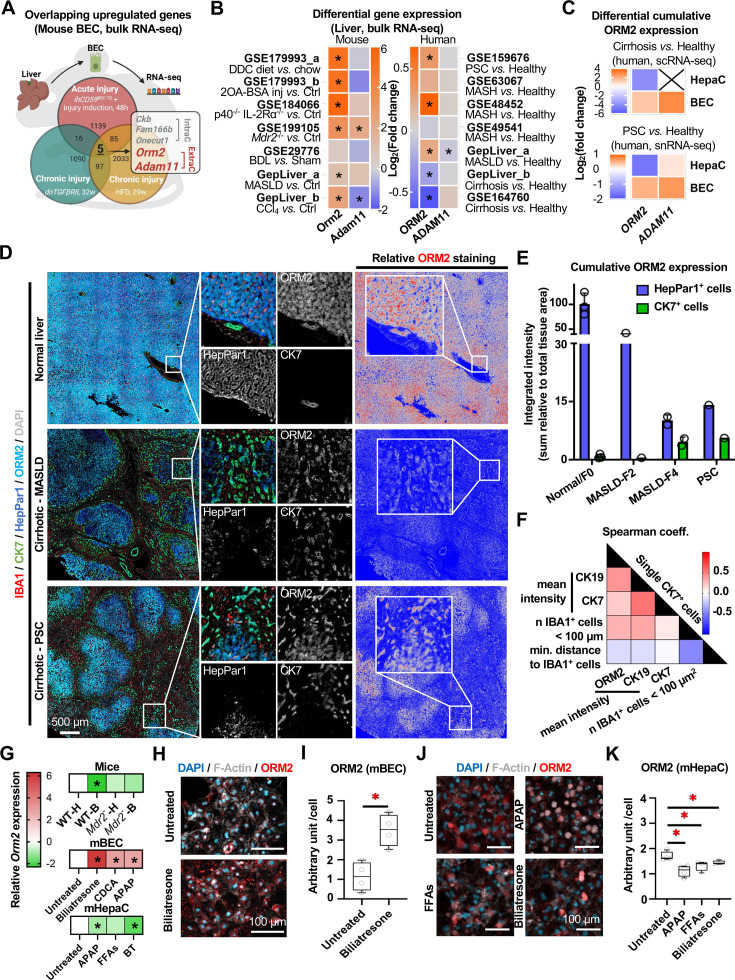
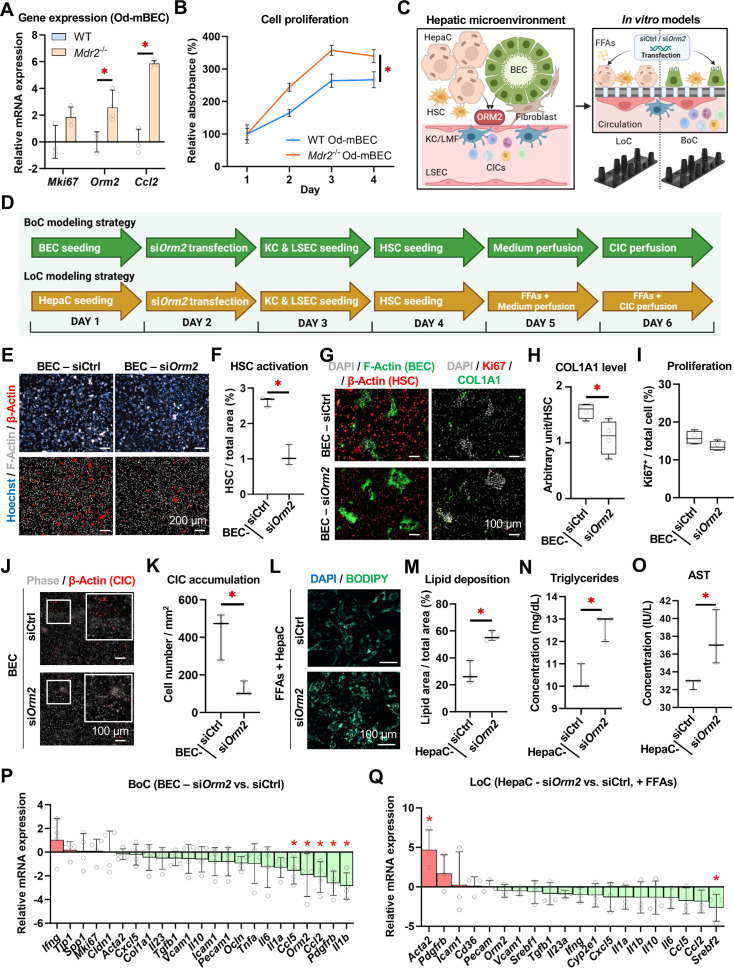
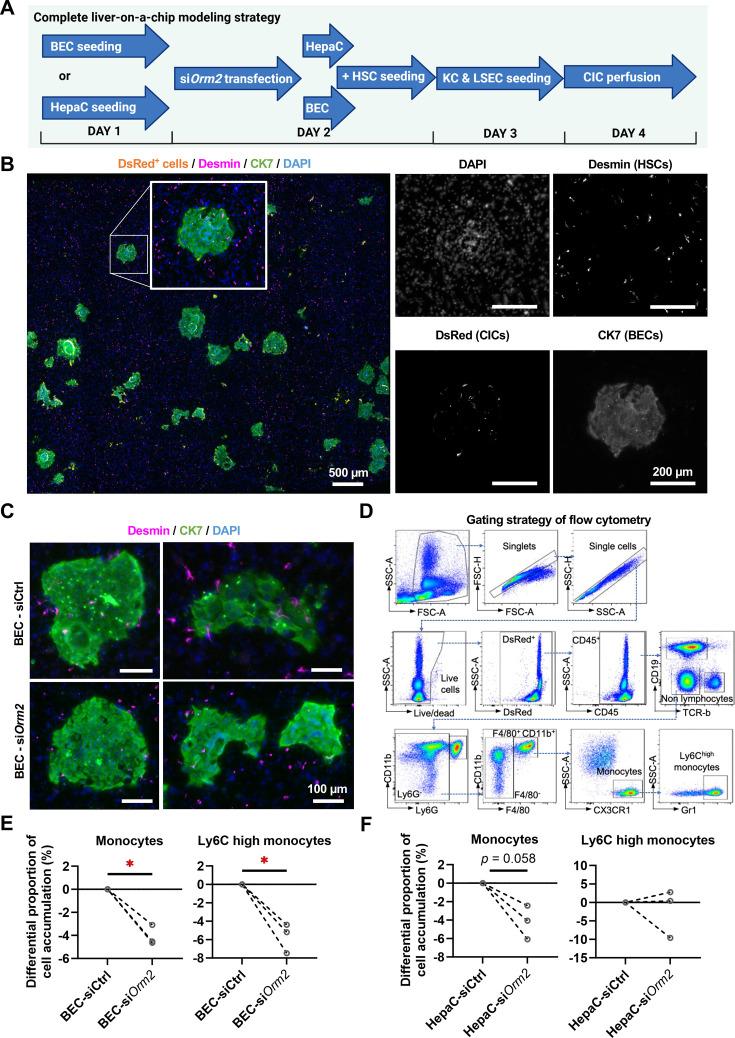
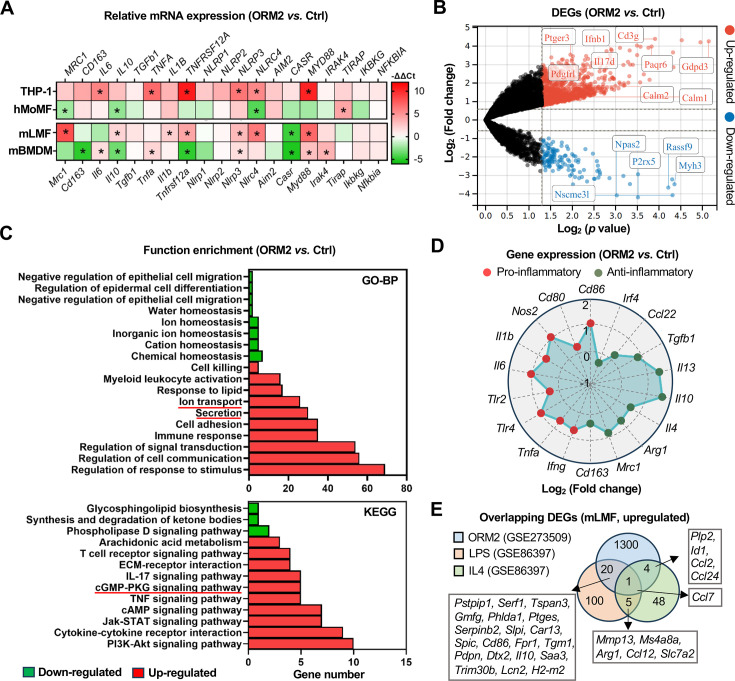
Verification
Claims the paper makes
The claims and statistics of this paper haven’t been checked yet.
Free: it reads the open-access text and checks the first 5 claims that cite a source we can check. Create a free account to check every claim.
Claims other papers make about this one
Each is checked against this paper’s own text: does it say what the citing paper says it does?
In the citing paper
“In those studies, ORM2 was shown to protect hepatocytes from steatosis while increasing portal inflammation in murine in vivo and in vitro models.”
From Inflammation and immunity in liver homeostasis and disease: a nexus of hepatocytes, nonparenchymal cells and immune cells (2025) · doi:10.1038/s41423-025-01313-7 · cites this paper as [62]
In the citing paper
“Similarly, we recently showed in a primary mouse cell-based biliary niche-on-a-chip model that injured BECs release APP ORM2, shifting liver macrophages to a phenotype marked by increased secretion of pro- and anti-inflammatory cytokines [62].”
From Inflammation and immunity in liver homeostasis and disease: a nexus of hepatocytes, nonparenchymal cells and immune cells (2025) · doi:10.1038/s41423-025-01313-7 · cites this paper as [62]
Self-check
Percentages, sums and reported differences re-computed from the paper’s own numbers.
The self-check needs the paper’s full text.
Citations
Cites
Tissue-based map of the human proteome
Uhlén, M., Fagerberg, L., Hallström, B. M., Lindskog, C., Oksvold, P., Mardinoglu, A., Sivertsson, Å., Kampf, C., Sjöstedt, E., Asplund, A., et al. (2015) · Science · doi:10.1126/science.1260419 · Cited by 15,286 · cited 1×
“28 29 Besides, publicly-available bulk RNA-seq data sets from multiple mouse models and patients with liver diseases 30–40 indicated that ORM2 (cid:18) Orm2 expression was more strongly upregulated than ADAM11/Adam11 in cirrhotic and PSC livers (vs healthy control).”
Gene set knowledge discovery with enrichr
Xie, Z., Bailey, A., Kuleshov, M. V., Clarke, D. J. B., Evangelista, J. E., Jenkins, S. L., Lachmann, A., Wojciechowicz, M. L., Kropiwnicki, E., Jagodnik, K. M., et al. (2021) · Current Protocols · doi:10.1002/cpz1.90 · Cited by 3,451
Resolving the fibrotic niche of human liver cirrhosis at single-cell level
Ramachandran, P., Dobie, R., Wilson-Kanamori, J. R., Dora, E. F., Henderson, B. E. P., Luu, N. T., Portman, J. R., Matchett, K. P., Brice, M., Marwick, J. A., et al. (2019) · Nature · doi:10.1038/s41586-019-1631-3 · Cited by 1,784
Self-citationThe multifaceted roles of fatty acid synthesis in cancer
Röhrig, F., & Schulze, A. (2016) · Nature Reviews Cancer · doi:10.1038/nrc.2016.89 · Cited by 1,651
α-ketoglutarate orchestrates macrophage activation through metabolic and epigenetic reprogramming
Liu, P.-S., Wang, H., Li, X., Chao, T., Teav, T., Christen, S., Di Conza, G., Cheng, W.-C., Chou, C.-H., Vavakova, M., et al. (2017) · Nature Immunology · doi:10.1038/ni.3796 · Cited by 1,264
Hu, C., Li, T., Xu, Y., Zhang, X., Li, F., Bai, J., Chen, J., Jiang, W., Yang, K., Ou, Q., et al. (2023) · Nucleic Acids Research · doi:10.1093/nar/gkac947 · Cited by 1,261
Roles for chemokines in liver disease
Marra, F., & Tacke, F. (2014) · Gastroenterology · doi:10.1053/j.gastro.2014.06.043 · Cited by 829
Self-citationThe Inositol Trisphosphate/Calcium Signaling Pathway in Health and Disease
Berridge, M. J. (2016) · Physiological Reviews · doi:10.1152/physrev.00006.2016 · Cited by 753 · cited 1×
“54 55 58 In line, our study identified and characterised for the first time the calcium-mediated liver macrophage polarisation through the ORM2-ITPR2 axis, most notably by enhancing liver macrophage scavenging functions and inflammation-related cytokine release.”
Wen, Y., Lambrecht, J., Ju, C., & Tacke, F. (2021) · Cellular & Molecular Immunology · doi:10.1038/s41423-020-00558-8 · Cited by 695 · cited 1×
“52 53 Our study demonstrated that a novel cholangiokine, the acute phase response protein ORM2, can influence the microenvironment of the biliary niche by reprogramming liver macrophages during liver injury.”
Self-citationKrenkel, O., Puengel, T., Govaere, O., Abdallah, A. T., Mossanen, J. C., Kohlhepp, M., Liepelt, A., Lefebvre, E., Luedde, T., Hellerbrand, C., et al. (2018) · Hepatology · doi:10.1002/hep.29544 · Cited by 557 · cited 1×
“Thus,”
Self-citation
Cited by
(2025) · doi:10.1038/s41423-025-01313-7 · Cited by 97
“Similarly, ORM2 levels in the livers and plasma of patients with MASLD as well as in MASH model mice are lower than those in the corresponding controls [62, 63].”
Self-citationLiu, H., Lefere, S., Guillot, A., Zheng, M., & Tacke, F. (2025) · Hepatology · doi:10.1097/hep.0000000000001417 · Cited by 44
Self-citationSpatial single-cell omics: new insights into liver diseases
Suo, Y., Thimme, R., & Bengsch, B. (2025) · Gut · doi:10.1136/gutjnl-2024-332105 · Cited by 32
“155 Wu et al integrated scRNA-seq and stereo-seq, building a spatial and temporal liver atlas with nine zonation layers revealing the injured cholangiocytes as a signalling hub that recruits LAM, drives liver progenitor-like cells into cholangiocytes and modulates hepatocyte regeneration.”
Macrophage heterogeneity and plasticity in liver injury and repair mechanisms
Zhang, T., Horn, P., Peiseler, M., & Tacke, F. (2025) · Stem Cells · doi:10.1093/stmcls/sxaf072 · Cited by 16
Self-citationReviewing the function of macrophages in liver disease
Chen, L., Guillot, A., & Tacke, F. (2025) · Expert Review of Gastroenterology & Hepatology · doi:10.1080/17474124.2025.2508963 · Cited by 16
“Similarly, we recently evidenced that, in human chronic liver diseases including cholangiopa-thies, reactive biliary epithelial cells overexpressed ORM2, thereby modulating the activation profile of portal macrophages [124].”
Self-citationLou, C., Lan, T., Xu, S., Hu, X., Li, J., Xiang, Z., Lin, S., Fan, X., Chen, J., & Xu, X. (2025) · Gut · doi:10.1136/gutjnl-2025-334763 · Cited by 20
Self-citationEngineering liver disease models in vitro: emerging trends and innovations
Rao, Q., Wang, L., Tacke, F., Guillot, A., & Ma, N. (2025) · eGastroenterology · doi:10.1136/egastro-2025-100279 · Cited by 10
“124 As a cell source, iPSC-derived hepatocytes are also an option, offering unlimited expansion and potential for personalised disease modelling.”
Self-citationMolecular mechanisms and pathogenesis of MASH
Gallage, S., Govaere, O., Anstee, Q. M., Shulman, G. I., Tacke, F., & Heikenwälder, M. F. (2026) · Nature · doi:10.1038/s41586-026-10529-0 · Cited by 10
“Within the portal tract, reactive cholangiocytes secrete the acute-phase protein ORM2, which reprograms liver macrophages in a paracrine manner through an ITPR2-dependent calcium signalling pathway, thereby amplifying chol-angiocyte stress and promoting fibrogenic activation 218 .”
Self-citationPan, W., Yong, Y., Li, Y., Shi, G., Zhang, M., Wan, L., Zhao, Y., Zhan, W., Lin, Y., Qin, Q., et al. (2025) · Advanced Science · doi:10.1002/advs.202512799 · Cited by 7
The KDM6B/SLC10A2 Axis Suppresses MDSCs Recruitment via ERK/AP‐1 Signaling in Colorectal Cancer
Hu, Z., Xun, J., Liu, B., Jiang, X., Han, Y., Yang, H., Gao, Q., Gao, R., Zhang, A., Wu, X., et al. (2025) · Advanced Science · doi:10.1002/advs.202514086 · Cited by 3
Unified platform for multiplex immunofluorescence across liver tissues and engineered models
Leonardi, B. F., Guo, Y., Amiridze, N., Lan, T., Ahmed, Y. A., Berger, H., Tacke, F., Kohlhepp, M. S., & Guillot, A. (2026) · eGastroenterology · doi:10.1136/egastro-2026-100379 · Cited by 4
“29 Beyond liver disease, we used mIF in studies related to protein carbamylation in atherosclerotic plaques, 39 revealed the retinol saturase (RetSat) expression pattern in intes-tines, 40 or monocyte migration promoting ferroptosis in lung epithelial cells.”
Self-citationKim, H., & Lachmann, N. (2026) · Frontiers in Immunology · doi:10.3389/fimmu.2026.1767691 · Cited by 2
“Cholangiocyte-derived signals can recruit MoMFs to periportal areas during ductular reaction after 3,5-diethoxycarbonyl-1,4-dihydrocollidine (DDC) injury (85, 86), whereas steatotic hepatocytes drive MoMF accumulation in pericentral or panzonal patterns in MASLD/ MASH (41, 43, 45, 46).”
Schofield, A., Kamath, B., MacParland, S. A., Trauner, M., Trivedi, P., & Mann, J. P. (2026) · Cellular and Molecular Gastroenterology and Hepatology · doi:10.1016/j.jcmgh.2026.101778 · Cited by 1
“40”
When getting reactive becomes the nORM: the emerging roles of proinflammatory cholangiokines
He, Y., & Kostallari, E. (2025) · Gut · doi:10.1136/gutjnl-2025-335426
“6 By using multiplex immunofluorescence and tailored primary cell-based and immunocompetent liver- on- a-chip systems, the authors dissected the spatial distribution of ORM2 and discovered the distinct functions of ORM2 derived from injured hepatocytes versus BEC.”
Decoding the PSC fibrotic niche: Hepatocyte stress and metallothioneins
Nakib, D., & MacParland, S. A. (2025) · Hepatology · doi:10.1097/hep.0000000000001478
Role of efferocytosis in liver transplantation via hepatic macrophage
Zhao, M., Xu, X., Peng, H., Tang, C., Luo, J., Liu, J., Liu, Z., Gong, J., Gong, J., & Li, J. (2025) · Molecular Immunology · doi:10.1016/j.molimm.2025.10.003
Huang, Y., Yang, X., Liu, D., Qin, S., Cao, Y., Xie, M., & Wang, J. (2026) · Frontiers in Nutrition · doi:10.3389/fnut.2026.1760274
“The expression pattern was opposite to the downregulation of Orm2 observed in classic NAFLD models and patients, suggesting that its upregulation in PNALD represents a compensatory adaptive response of the liver to the specific metabolic disorders of PNALD (42).”
The biliary tree: A new frontier in mucosal immunology?
Guo, Y., Chouik, Y., Hao, Y., Kohlhepp, M. S., & Guillot, A. (2026) · Mucosal Immunology · doi:10.1016/j.mucimm.2026.04.006
Self-citationHepatokine ORM2 suppresses pathological ferritinophagy to prevent acute tissue injury
Tang, H., Wang, S., FANG Min, L. J., Shen, B., Jiang, F., Xiong, X., Yang, N., Zhu, H., Zhang, R., Xia, D., et al. (2026) · Cell Death and Disease · doi:10.1038/s41419-026-08803-0
“The cultures were maintained in a humidi fi ed atmosphere containing 5% CO ₂ at 37°C.”
Sun, X., Tang, X., & Yuan, G. (2026) · Frontiers in Cardiovascular Medicine · doi:10.3389/fcvm.2026.1859065
“Whether ORM2 signals through pattern recognition receptors, lipocalin-binding partners, or a novel uncharacterized receptor system has not yet been established (11 – 13).”
InfluentialTacke, F., Detjen, K. M., Heisig, J., & Hampe, J. (2026) · Zeitschrift für Gastroenterologie · doi:10.1055/a-2890-7253
“Project-ID 535081457)”
Self-citationHepatic Orosomucoid 2 aggravates demyelination and drives microglial DAM-like activation
Bi, H., Xu, Y., Xu, M., Zhang, N., Li, X., Chen, C., 郑明华, Lü, Y., Shi, W., & Wang, Q. (2026) · Journal of Neuroinflammation · doi:10.1186/s12974-026-03988-9
“In contrast, ORM2 has been reported to promote inflammation by reprogramming macrophages or activating NF-κB and MAPK pathways in biliary and immune contexts [26, 27].”
Liu, H., Zhang, M., & Tacke, F. (2026) · Drug Design Development and Therapy · doi:10.2147/dddt.s543657
“202 Furthermore, developmental signaling pathways including Notch and Wnt signaling are critically involved in cholangiocyte activation and ductular reaction, prompting investigation of Notch inhibitors and Wnt pathway modulators as potential therapeutic strategies.”
Self-citationKamei, K. (2026) · Communications Biology · doi:10.1038/s42003-026-10887-5
“However, despite increasing technical sophistication, most in vitro liver models continue to exhibit limited functional stability, immature phenotypes, poor metabolic zonation, and inconsistent disease manifestations 15,18,19 .”
Metadata
- Authors
- Liu, H., Yin, G., Franco Leonardi, B., Lan, T., Ait Ahmed, Y., Berger, H., Kohlhepp, M. S., Amiridze, N., Martagón Calderón, N., Frau, C., Vallier, L., Rezvani, M., Tacke, F., & Guillot, A.
- Affiliations
- National Institutes of Health (US)
- Charité – Universitätsmedizin Berlin (DE)
- Department of Hepatology and Gastroenterology, Campus Virchow-Klinikum and Campus Charité Mitte, Charité - Universitätsmedizin Berlin, Berlin, BE, Germany
- Sichuan University (CN)
- Department of Pediatric Gastroenterology, Nephrology and Metabolic Medicine, Charité – Universitätsmedizin Berlin, corporate member of Freie Universität Berlin and Humboldt Universität zu Berlin, Berlin, Germany
- Berlin-Brandenburger Centrum für Regenerative Therapien (DE)
- Humboldt-Universität zu Berlin (DE)
- Stiftung Charité (DE)
- Corresponding author
- Guillot, Adrien
- ORCID
- Venue
- Gut
- Publisher
- BMJ
- Published
- 2025-04-08
- Volume
- 74
- Issue
- 10
- Pages
- 1694-1710
- ISSN
- 0017-5749 (ISSN-L)
- 1468-3288
- PMC
- PMC12505066
- OpenAlex
- W4409263718
- Cited by
- 23
- References
- 67
- Citations by year
- 2026: 11 · 2025: 12
- FWCI
- 12.93
- Type
- journal article
- Language
- en
- Open access
- hybrid
- doi.org
- Locations
- Gut (publishedVersion, cc-by)
- Europe PMC (PubMed Central) (publishedVersion, cc-by)
- PubMed (publishedVersion)
- PubMed Central (publishedVersion, cc-by)
- MPG.PuRe (Max Planck Society) (submittedVersion, other-oa)
- RWTH Publications (RWTH Aachen)
- Funders
- Fundação de Amparo à Pesquisa do Estado de São Paulo (2024/06344-8)
- China Scholarship Council (202008320386, 202206240096, 202208320084)
- Luise and Horst Köhler Foundation (A4R-2023-02-BA)
- National Natural Science Foundation of China (82300730)
- Deutsche Forschungsgemeinschaft (Emmy Noether Program, Project-ID 437638965, SFB1382, Project-ID 403224013, Ta434/8-1)
- Topics
- Health Sciences › Medicine › Hepatology › Liver physiology and pathology
- Health Sciences › Medicine › Hepatology › Liver Diseases and Immunity
- Life Sciences › Pharmacology, Toxicology and Pharmaceutics › Pharmacology › Drug-Induced Hepatotoxicity and Protection
- Keywords
- ORM2, ductular reaction, hepatic stellate cell activation, liver fibrosis, acute phase response, calcium signaling, paracrine signaling, cholangiocyte organoids, MDR2, liver injury
- MeSH terms
- Animals, Disease Models, Animal, Epithelial Cells, Humans, Liver, Macrophages, Mice
About these checks
Registry, retraction, Cites and statistics results are computed, not judged, with one exception: a printed reference that no index lists is read once by a model before it counts as a citation error. Claims are extracted by a model and kept only when their quote appears verbatim in the text; each cited source is then checked, with a model’s help, for whether it says what the claim relies on. Those verdicts can be wrong — read the claim’s quote and the cited source before relying on one.
Statistics and arithmetic are recomputed, not judged.
Confidence bands are shown only for fields calibrated on our annotated test set. None is calibrated yet, so no band is shown.
What counts as a claim ›How we measure confidence ›How we check this ›
Are you an author, or do you see a problem with this page? Request a review
Data sources
Bibliographic data: Semantic Scholar, OpenAlex, Crossref.
Contains information from the Semantic Scholar Academic Graph Datasets, made available under the ODC Attribution License (ODC-BY 1.0).
Semantic Scholar’s data is described in: Kinney, R., et al. (2023). The Semantic Scholar Open Data Platform. arXiv:2301.10140.
