

SOD3 induces a HIF-2α-dependent program in endothelial cells that provides a selective signal for tumor infiltration by T cells
Open accessThe DOI matches its Crossref record; 58 of the 58 references it cites were found in a registry or an index.
Abstract
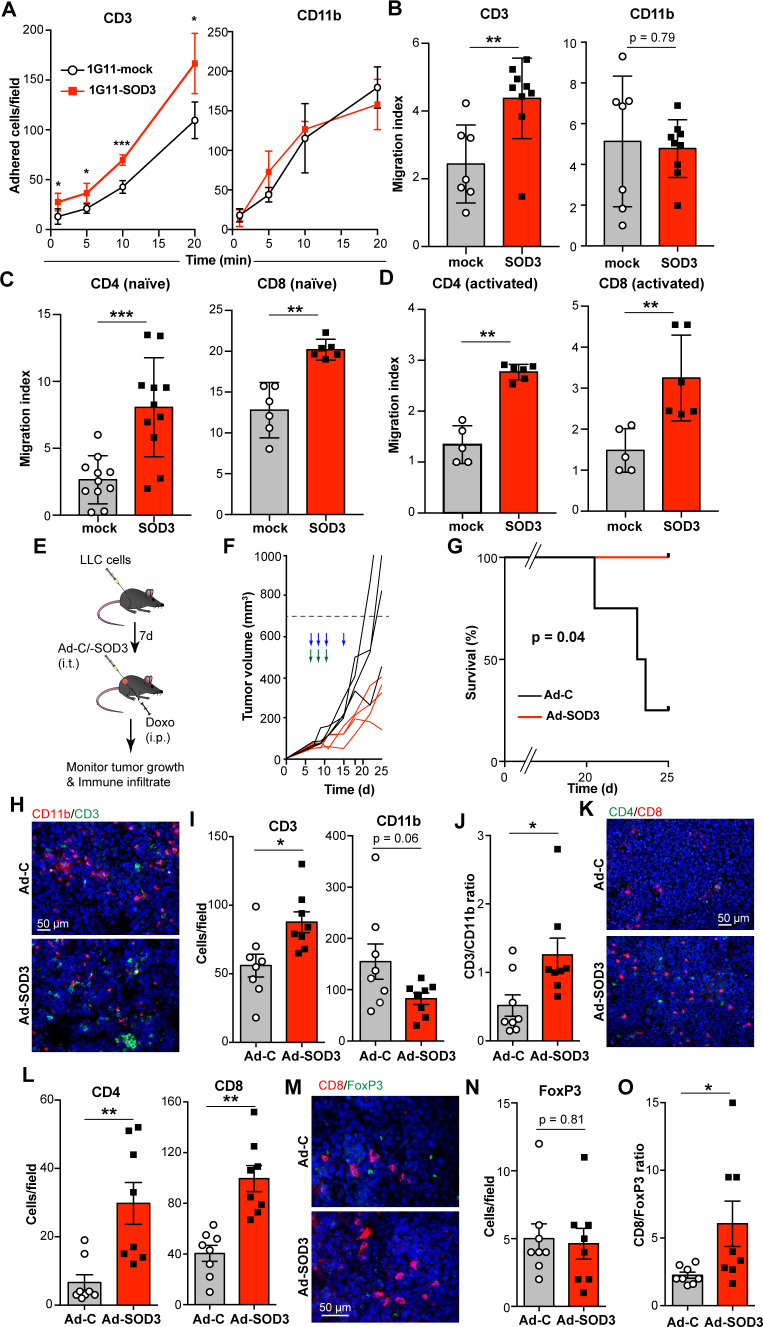
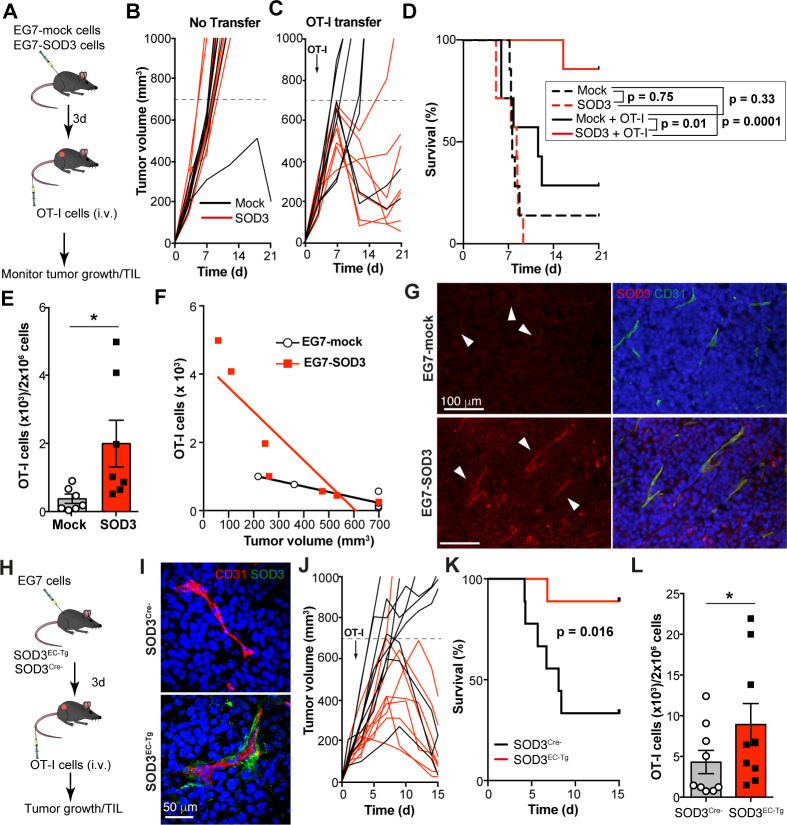
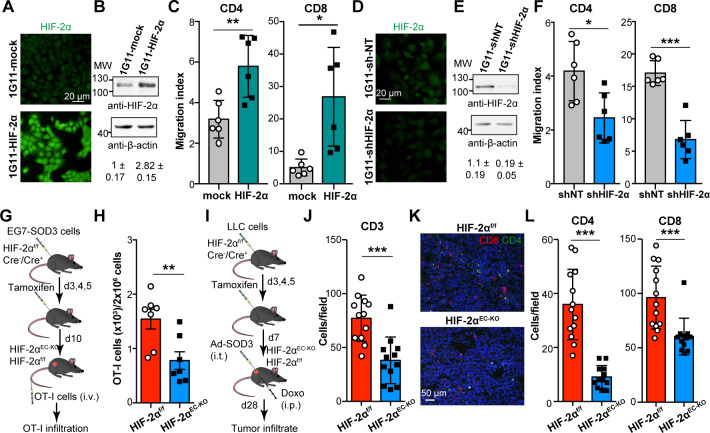
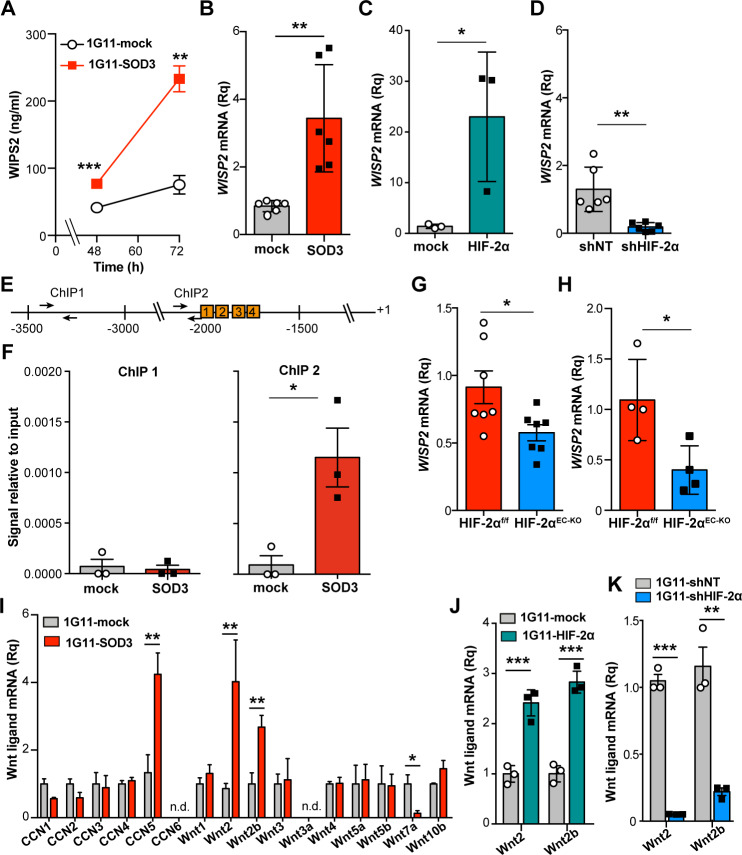
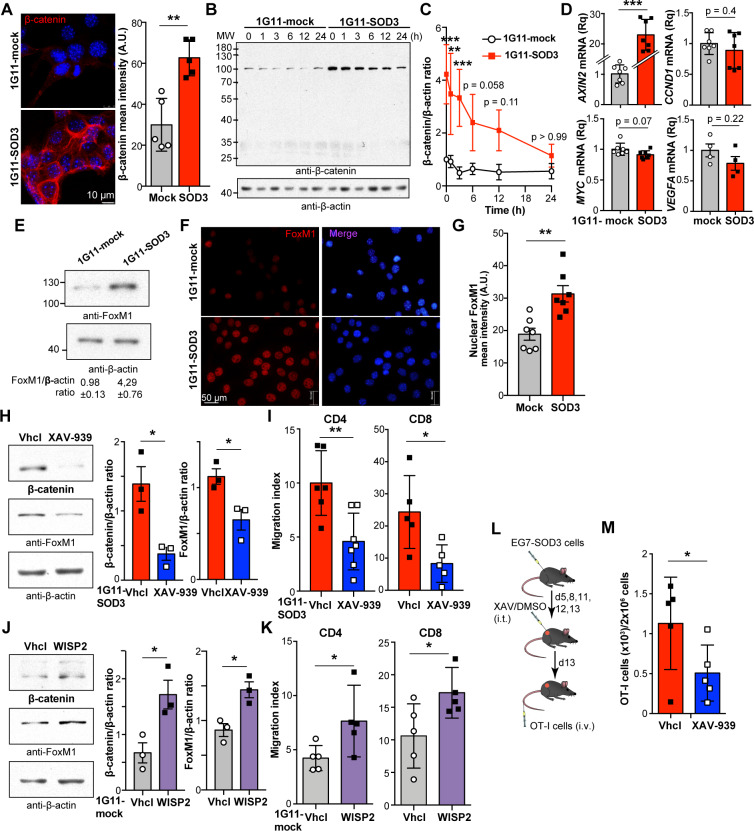
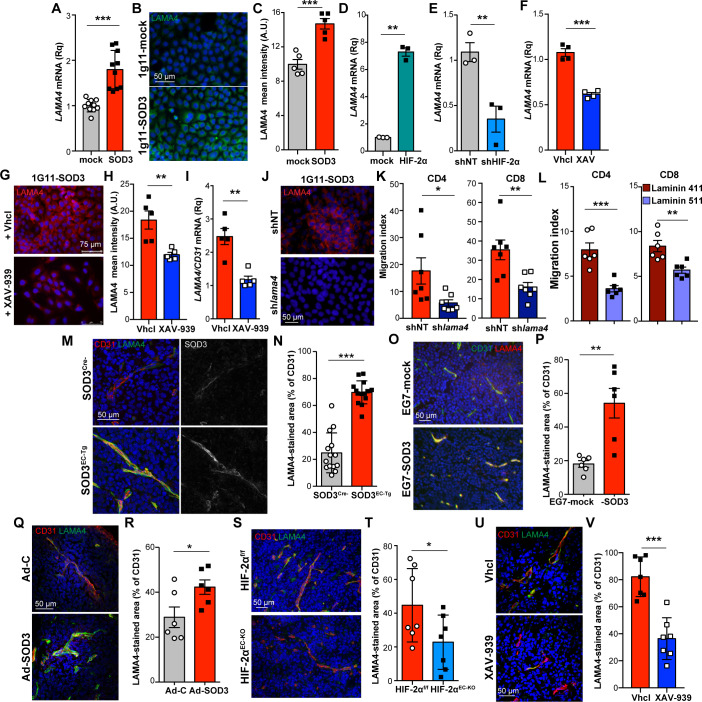
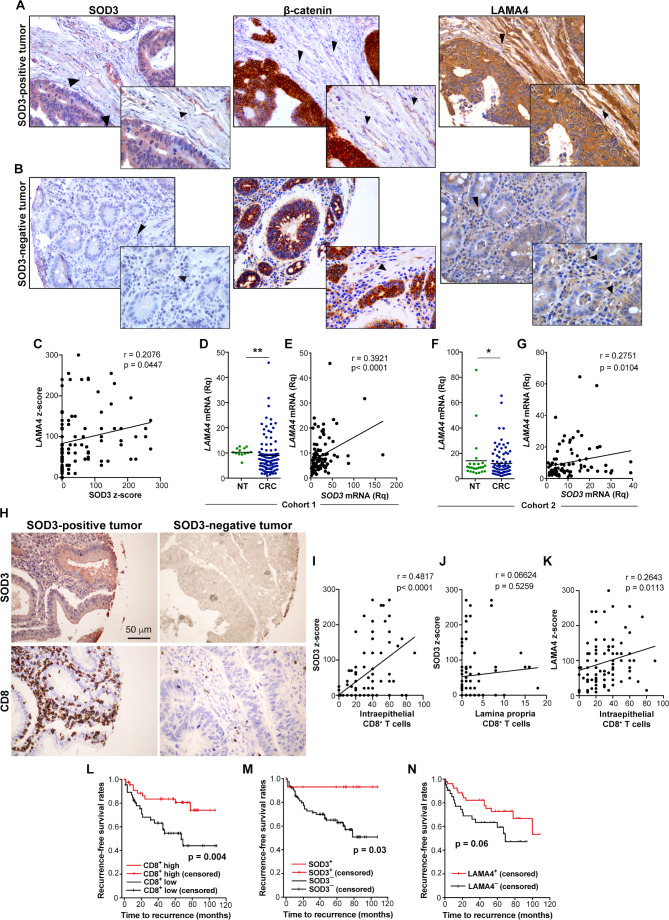
Background: Tumor-infiltrating lymphocytes (TILs), mainly CD8+ cytotoxic T lymphocytes (CTL), are linked to immune-mediated control of human cancers and response to immunotherapy. Tumors have nonetheless developed specific mechanisms that selectively restrict T cell entry into the tumor microenvironment. The extracellular superoxide dismutase (SOD3) is an anti-oxidant enzyme usually downregulated in tumors. We hypothesize that upregulation of SOD3 in the tumor microenvironment might be a mechanism to boost T cell infiltration by normalizing the tumor-associated endothelium. Results: Here we show that SOD3 overexpression in endothelial cells increased in vitro transmigration of naïve and activated CD4+ and CD8+ T cells, but not of myeloid cells. Perivascular expression of SOD3 also specifically increased CD4+ and CD8+ effector T cell infiltration into tumors and improved the effectiveness of adoptively transferred tumor-specific CD8+ T cells. SOD3-induced enhanced transmigration in vitro and tumor infiltration in vivo were not associated to upregulation of T cell chemokines such as CXCL9 or CXCL10, nor to changes in the levels of endothelial adhesion receptors such as intercellular adhesion molecule-1 (ICAM-1) or vascular cell adhesion molecule-1 (VCAM-1). Instead, SOD3 enhanced T cell infiltration via HIF-2α-dependent induction of specific WNT ligands in endothelial cells; this led to WNT signaling pathway activation in the endothelium, FOXM1 stabilization, and transcriptional induction of laminin-α4 (LAMA4), an endothelial basement membrane component permissive for T cell infiltration. In patients with stage II colorectal cancer, SOD3 was associated with increased CD8+ TIL density and disease-free survival. SOD3 expression was also linked to a T cell–inflamed gene signature using the COAD cohort from The Cancer Genome Atlas program. Conclusion: Our findings suggest that SOD3-induced upregulation of LAMA4 in endothelial cells boosts selective tumor infiltration by T lymphocytes, thus transforming immunologically “cold” into “hot” tumors. High SOD3 levels are associated with human colon cancer infiltration by CD8+ T cells, with potential consequences for the clinical outcome of these patients. Our results also uncover a cell type–specific, distinct activity of the WNT pathway for the regulation of T cell infiltration into tumors.
Overview
The claims and statistics of this paper haven’t been checked yet.
Free: it reads the open-access text and checks the first 5 claims that cite a source we can check. Create a free account to check every claim.
Integrity signals
Registry
Cites
Statistics
Figures
Verification
Claims the paper makes
The claims and statistics of this paper haven’t been checked yet.
Free: it reads the open-access text and checks the first 5 claims that cite a source we can check. Create a free account to check every claim.
Claims other papers make about this one
Each is checked against this paper’s own text: does it say what the citing paper says it does?
The check wasn’t confident either way, so it gives no verdict — never disputed.
In the citing paper
“Finally, hypoxia-induced HIF-1α (but not HIF-2α) in hepatocellular carcinoma (HCC) cells induces Ectonucleoside triphosphate diphosphohydrolase 2 (ENTPD2) expression, which increases MDSC infiltration into the tumor mass, promotes the growth of syngeneic Hepa1–6 HCC tumors in mice [84].”
From Revisiting the HIF switch in the tumor and its immune microenvironment. (2022) · cites this paper as [84]
Experimental — accuracy not yet measuredThe check wasn’t confident either way, so it gives no verdict — never disputed.
In the citing paper
“Inhibition of ENTPD2 significantly decreased tumor growth and potentiated the effects of ICBs, suggesting the inhibition of MDSCs as a potential therapeutic strategy to increase the efficacy of ICB.”
From Revisiting the HIF switch in the tumor and its immune microenvironment. (2022) · cites this paper as [84]
Experimental — accuracy not yet measured
Self-check
Percentages, sums and reported differences re-computed from the paper’s own numbers.
The self-check needs the paper’s full text.
Citations
Cites
Type, Density, and Location of Immune Cells Within Human Colorectal Tumors Predict Clinical Outcome
Galon, J., Costes, A., Sanchez-Cabo, F., Kirilovsky, A., Mlecnik, B., Lagorce-Pagès, C., Tosolini, M., Camus, M., Berger, A., Wind, P., et al. (2006) · Science · doi:10.1126/science.1129139 · Cited by 6,516
Wnt/β-Catenin Signaling, Disease, and Emerging Therapeutic Modalities
Nusse, R., & Clevers, H. (2017) · Cell · doi:10.1016/j.cell.2017.05.016 · Cited by 4,342
Intratumoral T Cells, Recurrence, and Survival in Epithelial Ovarian Cancer
Zhang, L., Conejo-Garcia, J. R., Katsaros, D., Gimotty, P. A., Massobrio, M., Regnani, G., Makrigiannakis, A., Gray, H., Schlienger, K., Liebman, M. N., et al. (2003) · New England Journal of Medicine · doi:10.1056/nejmoa020177 · Cited by 3,397
Convergence of Wnt, ß-Catenin, and Cadherin Pathways
Nelson, W. J., & Nusse, R. (2004) · Science · doi:10.1126/science.1094291 · Cited by 2,515
Caspase-dependent immunogenicity of doxorubicin-induced tumor cell death
Casares, N., Pequignot, M. O., Tesniere, A., Ghiringhelli, F., Roux, S., Chaput, N., Schmitt, E., Hamai, A., Hervas-Stubbs, S., Obeid, M., et al. (2005) · The Journal of Experimental Medicine · doi:10.1084/jem.20050915 · Cited by 1,512
Spranger, S., Dai, D., Horton, B., & Gajewski, T. F. (2017) · Cancer Cell · doi:10.1016/j.ccell.2017.04.003 · Cited by 1,441
Early colon cancer: ESMO Clinical Practice Guidelines for diagnosis, treatment and follow-up
Labianca, R., Nordlinger, B., Beretta, G. D., Mosconi, S., Mandalà, M., Cervantes, A., & Arnold, D. (2013) · Annals of Oncology · doi:10.1093/annonc/mdt354 · Cited by 1,404
McCarty, K. S., MILLER, L. S., Cox, E. B., Konrath, J. G., & McCarty, K. S. (1985) · PubMed · Cited by 1,027
How leukocytes cross the vascular endothelium
Vestweber, D. (2015) · Nature Reviews Immunology · doi:10.1038/nri3908 · Cited by 858
WNT/β-catenin pathway activation correlates with immune exclusion across human cancers
Luke, J. J., Bao, R., Sweis, R. F., Spranger, S., & Gajewski, T. F. (2019) · Clinical Cancer Research · doi:10.1158/1078-0432.ccr-18-1942 · Cited by 722
Impact of oncogenic pathways on evasion of antitumour immune responses
Spranger, S., & Gajewski, T. F. (2018) · Nature Reviews Cancer · doi:10.1038/nrc.2017.117 · Cited by 665
Zhang, N., Wei, P., Gong, A., Chiu, W.-T., Lee, H.-T., Colman, H., Huang, H., Xue, J., Liu, M., Wang, Y., et al. (2011) · Cancer Cell · doi:10.1016/j.ccr.2011.08.016 · Cited by 584
The nature and biology of basement membranes
Pozzi, A., Yurchenco, P. D., & Iozzo, R. V. (2017) · Matrix Biology · doi:10.1016/j.matbio.2016.12.009 · Cited by 575
Genetic Mechanisms of Immune Evasion in Colorectal Cancer
Grasso, C. S., Giannakis, M., Wells, D. K., Hamada, T., Mu, X. J., Quist, M., Nowak, J. A., Nishihara, R., Qian, Z. R., Inamura, K., et al. (2018) · Cancer Discovery · doi:10.1158/2159-8290.cd-17-1327 · Cited by 535
Regulation of vascular endothelial growth factor by the Wnt and K-ras pathways in colonic neoplasia.
Zhang, X., Gaspard, J. P., & Chung, D. C. (2001) · PubMed · Cited by 527
Sixt, M., Engelhardt, B., Pausch, F., Hallmann, R., Wendler, O., & Sorokin, L. M. (2001) · The Journal of Cell Biology · doi:10.1083/jcb.153.5.933 · Cited by 507
Mice lacking extracellular superoxide dismutase are more sensitive to hyperoxia.
Carlsson, L. M., Jonsson, J., Edlund, T., & Marklund, S. L. (1995) · Proceedings of the National Academy of Sciences · doi:10.1073/pnas.92.14.6264 · Cited by 487
Nishiuchi, R., Takagi, J., Hayashi, M., Ido, H., Yagi, Y., Sanzen, N., Tsuji, T., Yamada, M., & Sekiguchi, K. (2006) · Matrix Biology · doi:10.1016/j.matbio.2005.12.001 · Cited by 385
Wang, S., Voisin, M.-B., Larbi, K. Y., Dangerfield, J., Scheiermann, C., Tran, M., Maxwell, P. H., Sorokin, L., & Nourshargh, S. (2006) · The Journal of Experimental Medicine · doi:10.1084/jem.20051210 · Cited by 373
Priceman, S. J., Sung, J. L., Shaposhnik, Z., Burton, J. B., Torres-Collado, A. X., Moughon, D. L., Johnson, M., Lusis, A. J., Cohen, D. A., Iruela-Arispe, M. L., et al. (2010) · Blood · doi:10.1182/blood-2009-08-237412 · Cited by 356
Wessel, F., Winderlich, M., Holm, M., Frye, M., Rivera-Galdos, R., Vockel, M., Linnepe, R., Ipe, U., Stadtmann, A., Zarbock, A., et al. (2014) · Nature Immunology · doi:10.1038/ni.2824 · Cited by 354
Deletion of the Laminin α4 Chain Leads to Impaired Microvessel Maturation
Thyboll, J., Kortesmaa, J., Cao, R., Soininen, R., Wang, L., Iivanainen, A., Sorokin, L., Risling, M., Cao, Y., & Tryggvason, K. (2002) · Molecular and Cellular Biology · doi:10.1128/mcb.22.4.1194-1202.2002 · Cited by 348
Wu, C., Ivars, F., Anderson, P., Hallmann, R., Vestweber, D., Nilsson, P., Robenek, H., Tryggvason, K., Song, J., Korpos, E., et al. (2009) · Nature Medicine · doi:10.1038/nm.1957 · Cited by 262
Adhesion-independent mechanism for suppression of tumor cell invasion by E-cadherin
Wong, A. S. T., & Gumbiner, B. M. (2003) · The Journal of Cell Biology · doi:10.1083/jcb.200212033 · Cited by 260
Laminin isoforms in endothelial and perivascular basement membranes
Yousif, L. F., Di Russo, J., & Sorokin, L. (2013) · Cell Adhesion & Migration · doi:10.4161/cam.22680 · Cited by 254
WNT Signaling in Cancer Immunosurveillance
Galluzzi, L., Spranger, S., Fuchs, E., & López-Soto, A. (2019) · Trends in Cell Biology · doi:10.1016/j.tcb.2018.08.005 · Cited by 239
Wimmer, I., Tietz, S., Nishihara, H., Deutsch, U., Sallusto, F., Gosselet, F., Lyck, R., Muller, W. A., Lassmann, H., & Engelhardt, B. (2019) · Frontiers in Immunology · doi:10.3389/fimmu.2019.00711 · Cited by 233
Dahlin, A. M., Henriksson, M. L., Van Guelpen, B., Stenling, R., Öberg, Å., Rutegård, J., & Palmqvist, R. (2011) · Modern Pathology · doi:10.1038/modpathol.2010.234 · Cited by 228
Osterman, E., & Glimelius, B. (2018) · Diseases of the Colon & Rectum · doi:10.1097/dcr.0000000000001158 · Cited by 192
Subrahmanyam, P. B., Dong, Z., Gusenleitner, D., Giobbie-Hurder, A., Severgnini, M., Zhou, J., Manos, M., Eastman, L. M., Maecker, H. T., & Hodi, F. S. (2018) · Journal for ImmunoTherapy of Cancer · doi:10.1186/s40425-018-0328-8 · Cited by 190
Transendothelial migration: unifying principles from the endothelial perspective
Muller, W. A. (2016) · Immunological Reviews · doi:10.1111/imr.12443 · Cited by 173
Hilmi, M., Neuzillet, C., Calderaro, J., Lafdil, F., Pawlotsky, J.-M., & Rousseau, B. (2019) · Journal for ImmunoTherapy of Cancer · doi:10.1186/s40425-019-0824-5 · Cited by 172
Kim, I.-M., Ramakrishna, S., Gusarova, G. A., Yoder, H. M., Costa, R. H., & Kalinichenko, V. V. (2005) · Journal of Biological Chemistry · doi:10.1074/jbc.m500936200 · Cited by 162
D’Amico, L., Mahajan, S., Capietto, A.-H., Yang, Z., Zamani, A., Ricci, B., Bumpass, D. B., Meyer, M., Su, X., Wang-Gillam, A., et al. (2016) · Journal of Experimental Medicine · doi:10.1084/jem.20150950 · Cited by 160
Song, J., Zhang, X., Buscher, K., Wang, Y., Wang, H., Di Russo, J., Li, L., Lütke-Enking, S., Zarbock, A., Stadtmann, A., et al. (2017) · Cell Reports · doi:10.1016/j.celrep.2016.12.092 · Cited by 159
Maximal T Cell–Mediated Antitumor Responses Rely upon CCR5 Expression in Both CD4+ and CD8+ T Cells
González-Martín, A., Gómez, L., Lustgarten, J., Mira, E., & Mañes, S. (2011) · Cancer Research · doi:10.1158/0008-5472.can-11-1687 · Cited by 137
Self-citationFaveeuw, C., Preece, G., & Ager, A. (2001) · Blood · doi:10.1182/blood.v98.3.688 · Cited by 130
Wnt‐induced deubiquitination FoxM1 ensures nucleus β‐catenin transactivation
Chen, Y., Yu, L., Xue, J., Gong, A., Yu, G., Zhou, A., Lin, K., Zhang, S., Zhang, N., Gottardi, C. J., et al. (2016) · The EMBO Journal · doi:10.15252/embj.201592810 · Cited by 125
Chemokine Receptor Signaling and the Hallmarks of Cancer
Lacalle, R. A., Blanco, R., Carmona‐Rodríguez, L., Martín‐Leal, A., Mira, E., & Mañes, S. (2016) · International review of cytology · doi:10.1016/bs.ircmb.2016.09.011 · Cited by 106
Self-citationTeoh-Fitzgerald, M. L., Fitzgerald, M. P., Zhong, W., Askeland, R. W., & Domann, F. E. (2014) · Oncogene · doi:10.1038/onc.2012.582 · Cited by 92
Laminins affect T cell trafficking and allograft fate
Warren, K. J., Iwami, D., Harris, D. G., Bromberg, J. S., & Burrell, B. E. (2014) · Journal of Clinical Investigation · doi:10.1172/jci73683 · Cited by 86
Teoh-Fitzgerald, M. L. T., Fitzgerald, M. P., Jensen, T. J., Futscher, B. W., & Domann, F. E. (2012) · Molecular Cancer Research · doi:10.1158/1541-7786.mcr-11-0501 · Cited by 83
Wragg, J. W., Finnity, J. P., Anderson, J. A., Ferguson, H. J. M., Porfiri, E., Bhatt, R. I., Murray, P. G., Heath, V. L., & Bicknell, R. (2016) · Cancer Research · doi:10.1158/0008-5472.can-15-1364 · Cited by 82
CD99 and CD99L2 act at the same site as, but independently of, PECAM-1 during leukocyte diapedesis
Bixel, M. G., Li, H., Petri, B., Khandoga, A. G., Khandoga, A., Zarbock, A., Wolburg-Buchholz, K., Wolburg, H., Sorokin, L., Zeuschner, D., et al. (2010) · Blood · doi:10.1182/blood-2009-12-256388 · Cited by 79
CCN5 Is a Growth Arrest-Specific Gene That Regulates Smooth Muscle Cell Proliferation and Motility
Lake, A. C., Bialik, A., Walsh, K. X., & Castellot, J. J. (2003) · American Journal Of Pathology · doi:10.1016/s0002-9440(10)63813-8 · Cited by 79
O’Leary, B. R., Fath, M. A., Bellizzi, A. M., Hrabe, J. E., Button, A. M., Allen, B. G., Case, A. J., Altekruse, S. F., Wagner, B. A., Buettner, G. R., et al. (2015) · Clinical Cancer Research · doi:10.1158/1078-0432.ccr-14-1959 · Cited by 79
Intergroup, O. B. O. T. I. M., Massi, D., Rulli, E., Cossa, M., Valeri, B., Rodolfo, M., Merelli, B., Logu, F. D., Nassini, R., Vecchio, M. D., et al. (2019) · Journal for ImmunoTherapy of Cancer · doi:10.1186/s40425-019-0797-4 · Cited by 79
Eriksen, A. C., Sørensen, F. B., Lindebjerg, J., Hager, H., Christensen, R. D., Kjær‐Frifeldt, S., & Hansen, T. F. (2018) · Translational Oncology · doi:10.1016/j.tranon.2018.03.008 · Cited by 75
SOD3 improves the tumor response to chemotherapy by stabilizing endothelial HIF-2α
Mira, E., Carmona‐Rodríguez, L., Pérez‐Villamil, B., Casas, J., Fernández‐Aceñero, M. J., Martínez-Rey, D., Martín-González, P., Heras‐Murillo, I., Paz-Cabezas, M., Tardáguila, M., et al. (2018) · Nature Communications · doi:10.1038/s41467-018-03079-1 · Cited by 64
Self-citationMira, E., Carmona-Rodríguez, L., Tardáguila, M., Azcoitia, I., González-Martín, A., Almonacid, L., Casas, J., Fabriás, G., & Mañes, S. (2013) · Oncotarget · doi:10.18632/oncotarget.1376 · Cited by 63
Self-citationYang, Z.-X., Zhang, B., Wei, J., Jiang, G., Wu, Y., Leng, B., & Xing, C.-G. (2018) · Cancer Cell International · doi:10.1186/s12935-018-0512-4 · Cited by 62
Kenne, E., Soehnlein, O., Genové, G., Rotzius, P., Eriksson, E. E., & Lindbom, L. (2010) · Journal of Leukocyte Biology · doi:10.1189/jlb.0110043 · Cited by 55
Cumulative prognostic power of laminin genes in colorectal cancer
Galatenko, V., Maltseva, D. V., Galatenko, A. V., Rodin, S., & Tonevitsky, A. (2018) · BMC Medical Genomics · doi:10.1186/s12920-018-0332-3 · Cited by 52
Immunomodulatory and Anti-Inflammatory Activities of Statins
Mira, E., & Mañes, S. (2009) · Endocrine Metabolic & Immune Disorders - Drug Targets · doi:10.2174/187153009789044383 · Cited by 48
Self-citationWenger, R. H., Fuady, J. H., Bordoli, M. R., Abreu‐Rodríguez, I., Kristiansen, G., Hoogewijs, D., & Stiehl, D. P. (2014) · Hypoxia · doi:10.2147/hp.s54404 · Cited by 22
Proteomic analysis of minute amount of colonic biopsies by enteroscopy sampling
Liu, X., Xu, Y., Meng, Q., Zheng, Q., Wu, J., Wang, C., Jia, W., Figeys, D., Chang, Y., & Zhou, H. (2016) · Biochemical and Biophysical Research Communications · doi:10.1016/j.bbrc.2016.05.114 · Cited by 19
MMP-Independent Role of TIMP-1 at the Blood Brain Barrier during Viral Encephalomyelitis
Savarin, C., Bergmann, C. C., Hinton, D. R., & Stohlman, S. A. (2013) · ASN NEURO · doi:10.1042/an20130033 · Cited by 17
The matricellular protein CCN5 regulates podosome function via interaction with integrin αvβ3
Myers, R. B., Lan, W., & Castellot, J. J. (2014) · Journal of Cell Communication and Signaling · doi:10.1007/s12079-013-0218-2 · Cited by 16
Cited by
Turning cold tumors into hot tumors by improving T-cell infiltration
Liu, Y.-T., & Sun, Z.-J. (2021) · Theranostics · doi:10.7150/thno.58390 · Cited by 827
Modulating extracellular matrix stiffness: A strategic approach to boost cancer immunotherapy
Mai, Z., Lin, Y., Lin, P., Zhao, X., & Cui, L. (2024) · Cell Death & Disease · doi:10.1038/s41419-024-06697-4 · Cited by 398
Revisiting the HIF switch in the tumor and its immune microenvironment.
Cowman, S. J., & Koh, M. Y. (2022) · Trends in Cancer · doi:10.1016/j.trecan.2021.10.004 · Cited by 256
The Importance of Mitochondrial Pyruvate Carrier in Cancer Cell Metabolism and Tumorigenesis
Ruiz-Iglesias, A., & Mañes, S. (2021) · Cancers · doi:10.3390/cancers13071488 · Cited by 92
Self-citationCancer immune exclusion: breaking the barricade for a successful immunotherapy
Bruni, S., Mercogliano, M. F., Mauro, F. L., Russo, R. I. C., & Schillaci, R. (2023) · Frontiers in Oncology · doi:10.3389/fonc.2023.1135456 · Cited by 79
Metadata
- Authors
- Carmona-Rodríguez, L., Martínez-Rey, D., Fernández-Aceñero, M. J., González-Martín, A., Paz-Cabezas, M., Rodríguez-Rodríguez, N., Pérez-Villamil, B., Sáez, M. E., Díaz-Rubio, E., Mira, E., & Mañes, S.
- Affiliations
- Department of Immunology and Oncology, Centro Nacional de Biotecnología, Madrid, Spain
- Centro Nacional de Biotecnología (ES)
- Surgical Pathology, Hospital Clínico Universitario San Carlos, Madrid, Spain
- Hospital Clínico San Carlos (ES)
- Genomics and Microarray Laboratory, Hospital Clínico Universitario San Carlos, Madrid, Spain
- Centro Andaluz de Estudios Bioinformáticos, Sevilla, Spain
- Clinical Oncology, Hospital Clínico Universitario San Carlos, Madrid, Spain
- Corresponding author
- Mañes, Santos
- Venue
- Journal for ImmunoTherapy of Cancer
- Publisher
- BMJ
- Published
- 2020-06
- Volume
- 8
- Issue
- 1
- Pages
- e000432
- ISSN
- 2051-1426 (ISSN-L)
- PMC
- PMC7319787
- OpenAlex
- W3038069830
- Cited by
- 51
- References
- 58
- Citations by year
- 2026: 4 · 2025: 9 · 2024: 7 · 2023: 11 · 2022: 7 · 2021: 10 · 2020: 3
- FWCI
- 3.25
- Type
- journal article
- Language
- en
- Open access
- gold
- doi.org
- Licence
- Locations
- Journal for ImmunoTherapy of Cancer (publishedVersion, cc-by-nc)
- PubMed Central (publishedVersion, cc-by-nc)
- PubMed (publishedVersion)
- DIGITAL.CSIC (Spanish National Research Council (CSIC)) (submittedVersion)
- DOAJ (DOAJ: Directory of Open Access Journals) (submittedVersion, cc-by-sa)
- Funders
- Consejería de Sanidad, Comunidad de Madrid (B2017/BMD-3733)
- Consejo Superior de Investigaciones Científicas (SAF2017-83732-R)
- Ministerio de Ciencia, Innovación y Universidades (PRE2018-084023)
- Fundación CRIS contra el cancer
- Topics
- Health Sciences › Medicine › Oncology › Cancer Immunotherapy and Biomarkers
- Life Sciences › Biochemistry, Genetics and Molecular Biology › Molecular Biology › Angiogenesis and VEGF in Cancer
- Health Sciences › Medicine › Immunology and Allergy › Cell Adhesion Molecules Research
- Keywords
- SOD3, extracellular superoxide dismutase, HIF-2α, tumor-infiltrating lymphocytes, CD8+ T cell infiltration, endothelial cells, Wnt signaling, FOXM1, laminin α4, tumor microenvironment, cancer immunotherapy, colorectal cancer, T cell transmigration, cold-to-hot tumor conversion
- MeSH terms
- Endothelial PAS Domain-Containing Protein 1, Animals, Female, Humans, Lymphocyte Activation, Mice, Inbred C57BL, Neoplasms, Superoxide Dismutase, Tumor Cells, Cultured, Signal Transduction, Lymphocytes, Tumor-Infiltrating, Mice, Knockout, CD8-Positive T-Lymphocytes, Endothelial Cells, Mice, Basic Helix-Loop-Helix Transcription Factors, Basic Helix-Loop-Helix Proteins, Tumor Microenvironment
About these checks
Registry, retraction, Cites and statistics results are computed, not judged, with one exception: a printed reference that no index lists is read once by a model before it counts as a citation error. Claims are extracted by a model and kept only when their quote appears verbatim in the text; each cited source is then checked, with a model’s help, for whether it says what the claim relies on. Those verdicts can be wrong — read the claim’s quote and the cited source before relying on one.
Statistics and arithmetic are recomputed, not judged.
Confidence bands are shown only for fields calibrated on our annotated test set. None is calibrated yet, so no band is shown.
What counts as a claim ›How we measure confidence ›How we check this ›
Are you an author, or do you see a problem with this page? Request a review
Data sources
Bibliographic data: Semantic Scholar, OpenAlex, Crossref.
Contains information from the Semantic Scholar Academic Graph Datasets, made available under the ODC Attribution License (ODC-BY 1.0).
Semantic Scholar’s data is described in: Kinney, R., et al. (2023). The Semantic Scholar Open Data Platform. arXiv:2301.10140.
