

Quantifying echo chamber effects in information spreading over political communication networks
Open accessThe DOI matches its Crossref record; 43 of the 43 references it cites were found in a registry or an index.
Abstract
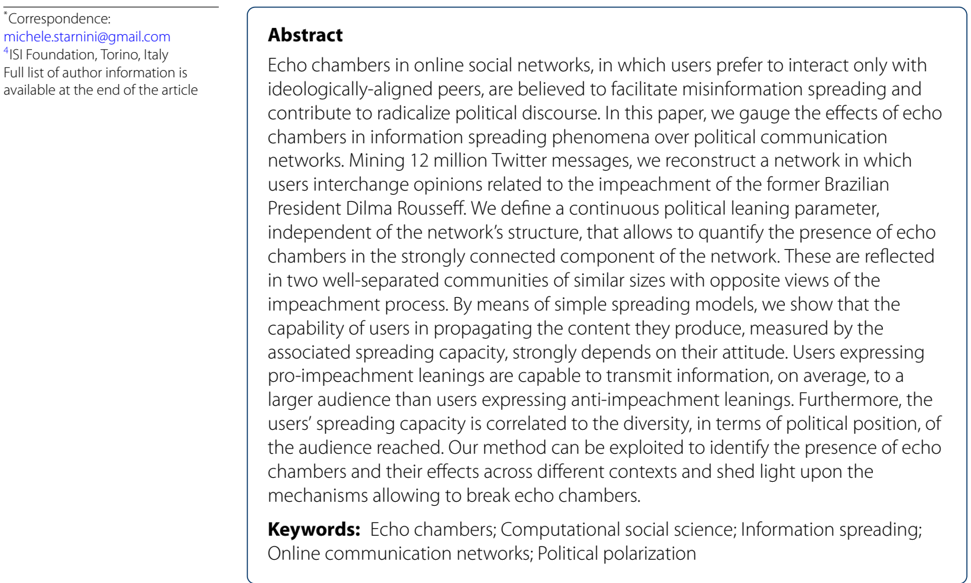
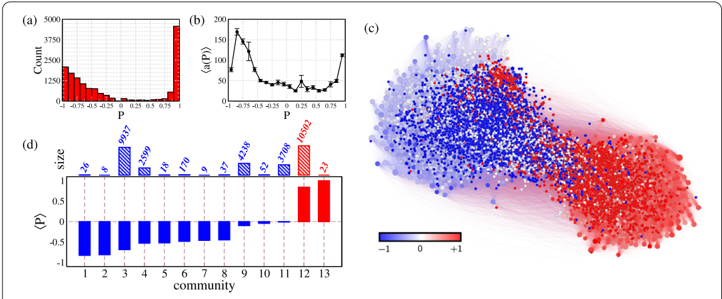
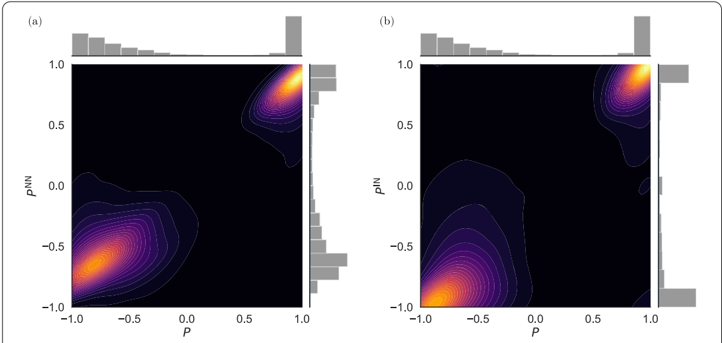
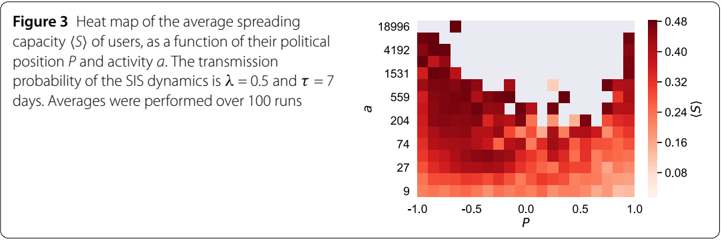
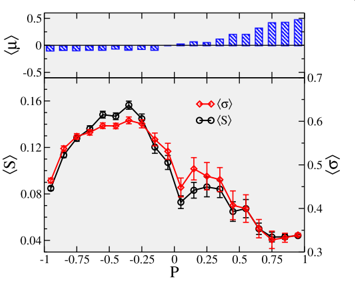
Echo chambers in online social networks, in which users prefer to interact only with ideologically-aligned peers, are believed to facilitate misinformation spreading and contribute to radicalize political discourse. In this paper, we gauge the effects of echo chambers in information spreading phenomena over political communication networks. Mining 12 million Twitter messages, we reconstruct a network in which users interchange opinions related to the impeachment of the former Brazilian President Dilma Rousseff. We define a continuous political leaning parameter, independent of the network’s structure, that allows to quantify the presence of echo chambers in the strongly connected component of the network. These are reflected in two well-separated communities of similar sizes with opposite views of the impeachment process. By means of simple spreading models, we show that the capability of users in propagating the content they produce, measured by the associated spreading capacity, strongly depends on their attitude. Users expressing pro-impeachment leanings are capable to transmit information, on average, to a larger audience than users expressing anti-impeachment leanings. Furthermore, the users’ spreading capacity is correlated to the diversity, in terms of political position, of the audience reached. Our method can be exploited to identify the presence of echo chambers and their effects across different contexts and shed light upon the mechanisms allowing to break echo chambers.
Overview
The claims and statistics of this paper haven’t been checked yet.
Free: it reads the open-access text and checks the first 5 claims that cite a source we can check. Create a free account to check every claim.
Integrity signals
Registry
Cites
Statistics
Figures
Verification
Claims the paper makes
The claims and statistics of this paper haven’t been checked yet.
Free: it reads the open-access text and checks the first 5 claims that cite a source we can check. Create a free account to check every claim.
Claims other papers make about this one
Each is checked against this paper’s own text: does it say what the citing paper says it does?
The cited source says what the claim attributes to it.
In the citing paper
“Furthermore, users show a tendency to favor information adhering to their beliefs and join groups formed around a shared narrative, that is, echo chambers (1, 14–18).”
From The echo chamber effect on social media (2021) · cites this paper as [18]
The cited source says what the claim attributes to it.
In the citing paper
“Simple models of information spreading can gauge the presence of echo chambers: Users are expected to be more likely to exchange information with peers sharing a similar leaning (18, 42, 43).”
From The echo chamber effect on social media (2021) · cites this paper as [18]
The cited source says what the claim attributes to it.
In the citing paper
“Echo chambers have been quantified in several controversial debates on different social media platforms [2, 16, 17] and may be related to the spread of misinformation [18].”
From Modeling echo chambers and polarization dynamics in social networks (2020) · cites this paper as [16]
The cited source says what the claim attributes to it.
In the citing paper
“In network terms, this translates into a node i with a given leaning xi more likely to be connected with nodes with a leaning close to xi (18).”
From The echo chamber effect on social media (2021) · cites this paper as [18]
The cited source says what the claim attributes to it.
In the citing paper
“On the other hand, when considering social networks and the impact of digital media on homophilic structures, the literature contains consistent reports of ideologically homogeneous social clusters147–151.”
From A systematic review of worldwide causal and correlational evidence on digital media and democracy (2022) · cites this paper as [149]
2 more claims about this paper
Create a free account to see every claim other papers make about this one.
Self-check
Percentages, sums and reported differences re-computed from the paper’s own numbers.
The self-check needs the paper’s full text.
Citations
Cites
Fast unfolding of communities in large networks
Blondel, V. D., Guillaume, J.-L., Lambiotte, R., & Lefebvre, E. (2008) · Journal of Statistical Mechanics: Theory and Experiment · doi:10.1088/1742-5468/2008/10/p10008 · Cited by 21,424
Social Network Analysis: Methods and Applications
Wasserman, S., & Faust, K. (1994) · doi:10.1017/cbo9780511815478 · Cited by 17,557
Fortunato, S. (2010) · Physics Reports · doi:10.1016/j.physrep.2009.11.002 · Cited by 11,293
Newman, M. (2010) · doi:10.1093/acprof:oso/9780199206650.001.0001 · Cited by 6,595
Infectious Diseases of Humans: Dynamics and Control
Anderson, R. M., & May, R. M. (1991) · doi:10.1093/oso/9780198545996.001.0001 · Cited by 6,179
Lazer, D., Pentland, A., Adamic, L., Aral, S., Barabási, A.-L., Brewer, D., Christakis, N., Contractor, N., Fowler, J., Gutmann, M., et al. (2009) · Science · doi:10.1126/science.1167742 · Cited by 3,365
A simple model of global cascades on random networks
Watts, D. J. (2002) · Proceedings of the National Academy of Sciences · doi:10.1073/pnas.082090499 · Cited by 2,673
A 61-million-person experiment in social influence and political mobilization
Bond, R. M., Fariss, C. J., Jones, J. J., Kramer, A. D. I., Marlow, C., Settle, J. E., & Fowler, J. H. (2012) · Nature · doi:10.1038/nature11421 · Cited by 2,575
The spreading of misinformation online
Del Vicario, M., Bessi, A., Zollo, F., Petroni, F., Scala, A., Caldarelli, G., Stanley, H. E., & Quattrociocchi, W. (2016) · Proceedings of the National Academy of Sciences · doi:10.1073/pnas.1517441113 · Cited by 2,407
Ferrara, E., Varol, O., Davis, C., Menczer, F., & Flammini, A. (2016) · Communications of the ACM · doi:10.1145/2818717 · Cited by 1,973
Research works printed but not linked: 7
- 1. Masum H, Newmark C, Tovey M (2011) The reputation society: how online opinions are reshaping the offline world. Information society series. MIT Press, Cambridge
- 9. Borge-Holthoefer J, Magdy W, Darwish K, Weber I (2015) Content and network dynamics behind Egyptian political polarization on Twitter. In: Proceedings of the 18th ACM conference on computer supported cooperative work & social computing, CSCW 2015, Vancouver, BC, Canada, March 14-18, 2015, pp 700-711
- 22. Lambiotte R, Masuda N (2016) A guide to temporal networks. Series on complexity science, vol 4. World Scientific, Singapore
- 23. Galuba W, Aberer K, Chakraborty D, Despotovic Z, Kellerer W (2010) Outtweeting the Twitterers-predicting information cascades in microblogs. In: Proceedings of the 3rd wonference on online social networks, WOSN'10. USENIX Association, Berkeley, pp 3-3
- Holme P, Saramäki J (eds) (2013) Temporal networks. Springer, Berlin
- 33. Anderson RM, May RM (1992) Infectious diseases in humans. Oxford University Press, Oxford
- 46. Saito K, Nakano R, Kimura M (2008) Prediction of information diffusion probabilities for independent cascade model. In: Proceedings of the 12th international conference on knowledge-based intelligent information and engineering systems, part III, KES '08. Springer, Berlin, pp 67-75
Cited by
The echo chamber effect on social media
Cinelli, M., De Francisci Morales, G., Galeazzi, A., Quattrociocchi, W., & Starnini, M. (2021) · Proceedings of the National Academy of Sciences · doi:10.1073/pnas.2023301118 · Cited by 2,092
“Simple models of information spreading can gauge the presence of echo chambers: Users are expected to be more likely to exchange information with peers sharing a similar leaning (18, 42, 43).”
BackgroundSelf-citationModeling echo chambers and polarization dynamics in social networks
Baumann, F., Lorenz-Spreen, P., Sokolov, I. M., & Starnini, M. (2020) · Physical Review Letters · doi:10.1103/physrevlett.124.048301 · Cited by 427
Self-citationA systematic review of worldwide causal and correlational evidence on digital media and democracy
Lorenz-Spreen, P., Oswald, L., Lewandowsky, S., & Hertwig, R. (2022) · Nature Human Behaviour · doi:10.1038/s41562-022-01460-1 · Cited by 348
How behavioural sciences can promote truth, autonomy and democratic discourse online
Lorenz-Spreen, P., Lewandowsky, S., Sunstein, C. R., & Hertwig, R. (2020) · Nature Human Behaviour · doi:10.1038/s41562-020-0889-7 · Cited by 223
“…and misin-formation (falsehoods created without intent, for example, poorly researched content or biased reporting)—or attitudinal and emotional polarization 15,16 (for example, polarization of elites 17 , partisan sorting 18 and polarization with respect to controversial topics 19,20 ).”
BackgroundPersistent interaction patterns across social media platforms and over time
Avalle, M., Marco, N. D., Etta, G., Sangiorgio, E., Alipour, S., Bonetti, A., Alvisi, L., Scala, A., Baronchelli, A., Cinelli, M., et al. (2024) · Nature · doi:10.1038/s41586-024-07229-y · Cited by 224
“…below—this is a standard approach that has been used in several studies, and has become a common and established practice in the field of social media analysis due to its practicality and effectiveness in providing a broad understanding of political dynamics on these online platforms 1,43,86–88 .”
BackgroundFalling into the Echo Chamber: The Italian Vaccination Debate on Twitter
Cossard, A., De Francisci Morales, G., Kalimeri, K., Mejova, Y., Paolotti, D., & Starnini, M. (2020) · Proceedings of the International AAAI Conference on Web and Social Media · doi:10.1609/icwsm.v14i1.7285 · Cited by 126
Self-citation#MaskOn! #MaskOff! Digital polarization of mask-wearing in the United States during COVID-19
Lang, J., Erickson, W. W., & Jing-Schmidt, Z. (2021) · PLoS ONE · doi:10.1371/journal.pone.0250817 · Cited by 126
Echo chamber effects on short video platforms
Gao, Y., Liu, F., & Gao, L. (2023) · Scientific Reports · doi:10.1038/s41598-023-33370-1 · Cited by 109
“…is a group in which users’ opinions, political leanings, or beliefs about a topic are reinforced by repeated interactions with peers with similar tendencies and attitudes, and they tend to gravitate toward information that supports their beliefs and join in around a common discussion 36,38,39 .”
Neutral bots probe political bias on social media
Chen, W., Pacheco, D., Yang, K.-C., & Menczer, F. (2021) · Nature Communications · doi:10.1038/s41467-021-25738-6 · Cited by 64
A model for the influence of media on the ideology of content in online social networks
Brooks, H. Z., & Porter, M. A. (2020) · Physical Review Research · doi:10.1103/physrevresearch.2.023041 · Cited by 97
Modelling how social network algorithms can influence opinion polarization
de Arruda, H. F., Cardoso, F. M., de Arruda, G. F., Hernández, A. R., Costa, L. D. F., & Moreno, Y. (2021) · Information Sciences · doi:10.1016/j.ins.2021.12.069 · Cited by 96
Quantifying ideological polarization on a network using generalized Euclidean distance
Hohmann, M., Devriendt, K., & Coscia, M. (2023) · Science Advances · doi:10.1126/sciadv.abq2044 · Cited by 74
Interian, R., G. Marzo, R., Mendoza, I., & Ribeiro, C. C. (2023) · International Transactions in Operational Research · doi:10.1111/itor.13224 · Cited by 67
Echo Chambers in Online Social Networks: A Systematic Literature Review
Mahmoudi, A., Jemielniak, D., & Ciechanowski, L. (2024) · IEEE Access · doi:10.1109/access.2024.3353054 · Cited by 79
“Initially, a vector of polarization values undergoes a hyperbolic tangent the former Brazilian President [53].”
BackgroundA Bounded-Confidence Model of Opinion Dynamics on Hypergraphs
Hickok, A., Kureh, Y. H., Brooks, H. Z., Feng, M., & Porter, M. A. (2022) · SIAM Journal on Applied Dynamical Systems · doi:10.1137/21m1399427 · Cited by 79
Hartmann, D., Wang, S. M., Pohlmann, L., & Berendt, B. (2025) · Journal of Computational Social Science · doi:10.1007/s42001-025-00381-z · Cited by 59
“…communities ([20], [62], [183] [225]), “Democrats” and “Republicans”, or groups centered around specific events like the Polish elections in 2015 [13], the impeachment of the Brazilian President Dilma Rousseff [56], the French presidential elections in 2017 [86], or the 2016 U.S. elections [98].”
BackgroundOpinion dynamics: Statistical physics and beyond
Starnini, M., Baumann, F., Galla, T., Garcia, D., Íñiguez, G., Karsai, M., Lorenz, J., & Sznajd-Weron, K. (2026) · Reviews of Modern Physics · doi:10.1103/j1zg-ddqv · Cited by 73
Self-citationThe systemic impact of deplatforming on social media
Mekacher, A., Falkenberg, M., & Baronchelli, A. (2023) · PNAS Nexus · doi:10.1093/pnasnexus/pgad346 · Cited by 68
“In contrast, mainstream platforms are often politically diverse, but with opposed political groups con - fined to echo-chambers (39, 43, 45 – 49).”
Organization and evolution of the UK far-right network on Telegram
Bovet, A., & Grindrod, P. (2022) · Applied Network Science · doi:10.1007/s41109-022-00513-8 · Cited by 58
“However, echo chambers take different forms depending on the medium in which interactions happen (Jamieson and Cappella 2008; Garrett 2009; Garimella et al. 2018; Cota et al. 2019; Cinelli et al. 2021).”
BackgroundThe drivers of online polarization: Fitting models to data
Valensise, C. M., Cinelli, M., & Quattrociocchi, W. (2023) · Information Sciences · doi:10.1016/j.ins.2023.119152 · Cited by 61
Emergence of Polarization in Coevolving Networks
Liu, J., Huang, S., Aden, N. M., Johnson, N. F., & Song, C. (2023) · Physical Review Letters · doi:10.1103/physrevlett.130.037401 · Cited by 69
Plikynas, D., Rizgelienė, I., & Korvel, G. (2025) · IEEE Access · doi:10.1109/access.2025.3530688 · Cited by 40
Three-state opinion dynamics in modular networks
Oestereich, A. L., Pires, M. A., & Crokidakis, N. (2019) · Physical review. E · doi:10.1103/physreve.100.032312 · Cited by 33
Ideology and polarization set the agenda on social media
Loru, E., Galeazzi, A., Bonetti, A., Sangiorgio, E., Marco, N. D., Cinelli, M., Falkenberg, M., Baronchelli, A., & Quattrociocchi, W. (2025) · Scientific Reports · doi:10.1038/s41598-025-19776-z · Cited by 37
“Consistent with previous research on online polarization [8, 71, 74, 75], our findings reveal the presence of communities supporting conflicting ideologies.”
Effect of collaborative-filtering-based recommendation algorithms on opinion polarization
Bellina, A., Castellano, C., Pineau, P., Iannelli, G., & Marzo, G. D. (2023) · Physical review. E · doi:10.1103/physreve.108.054304 · Cited by 36
Do Recommender Systems Make Social Media More Susceptible to Misinformation Spreaders?
Tommasel, A., & Menczer, F. (2022) · ACM Conference on Recommender Systems (RecSys) · doi:10.1145/3523227.3551473 · Cited by 35
“This is confirmed by the interaction correlation [5, 9], which showed that popularity and topology increased the correlation for spreaders (i.e, spreaders are surrounded by other spreaders) and decreased it for non-spreaders (i.e., there were more spreaders in their neighbourhood).”
BackgroundMethodCascade-based Echo Chamber Detection
Minici, M., Cinus, F., Monti, C., Bonchi, F., & Manco, G. (2022) · ACM International Conference on Information and Knowledge Management (CIKM) · doi:10.1145/3511808.3557253 · Cited by 34
“Other researchers have approached the task of detecting echo chambers as a community detection task, thus exploiting the network structure, followed by an interpretation step to properly identify communities that have echo-chamber traits [14, 15, 18, 19, 24].”
BackgroundEvidence of Demographic rather than Ideological Segregation in News Discussion on Reddit
Monti, C., D'Ignazi, J., Starnini, M., & De Francisci Morales, G. (2023) · Proceedings of the ACM Web Conference 2023 · doi:10.1145/3543507.3583468 · Cited by 26
“On the same platform, the presence of echo chambers in the debate about the impeachment of former Brazilian President Dilma Roussef has been shown to alter the information difusion between the two sides, supporters and opponents of the impeachment [18].”
BackgroundSelf-citationThe evolution dynamics of collective and individual opinions in social networks
Dong, J., Zhang, Y., & Kong, Y.-X. (2024) · Expert Systems with Applications · doi:10.1016/j.eswa.2024.124813 · Cited by 29
I Want to Break Free! Recommending Friends from Outside the Echo Chamber
Tommasel, A., Rodríguez, J. M., & Godoy, D. L. (2021) · ACM Conference on Recommender Systems (RecSys) · doi:10.1145/3460231.3474270 · Cited by 39
“From Echo chambers are characterized by users mostly interacting with others with similar views [6], in this case, their political leaning.”
BackgroundMethodComparing the Impact of Social Media Regulations on News Consumption
Etta, G., Cinelli, M., Galeazzi, A., Valensise, C. M., Quattrociocchi, W., & Conti, M. (2022) · IEEE Transactions on Computational Social Systems · doi:10.1109/tcss.2022.3171391 · Cited by 31
“The combination of these aspects has been reported to create online groups of like-minded people that go under the name of echo chambers, which may represent a threat in the spreading of fake news [34]–[38].”
BackgroundSun, M., Ma, X., & Huo, Y. (2022) · International Journal of Environmental Research and Public Health · doi:10.3390/ijerph192315869 · Cited by 27
Jung, H., Dai, W., & Albarracín, D. (2023) · Perspectives on Psychological Science · doi:10.1177/17456916231198471 · Cited by 34
“According to Lorenz-Spreen et al. (2023), although social media links users to like-minded others who can thus form homogeneous social clusters (see Cota et al., 2019; Guerrero-Solé & Lopez-Gonzalez, 2019; Koiranen et al., 2019), they also diver-sify users’ newsfeed and information exposure (see…”
Lenti, J., Mejova, Y., Kalimeri, K., Panisson, A., Paolotti, D., Tizzani, M., & Starnini, M. (2023) · JMIR Infodemiology · doi:10.2196/44714 · Cited by 26
Self-citationLachlan, K. A., Hutter, E., & Gilbert, C. (2021) · Health Security · doi:10.1089/hs.2020.0176 · Cited by 24
Polarization of Opinions on COVID-19 Measures: Integrating Twitter and Survey Data
Reiter-Haas, M., Klösch, B., Hadler, M., & Lex, E. (2022) · Social Science Computer Review · doi:10.1177/08944393221087662 · Cited by 29
Liu, J., Schwarz, A., Risius, M., Hirschheim, R., & Scotter, J. R. V. (2025) · The Journal of Strategic Information Systems · doi:10.1016/j.jsis.2025.101904 · Cited by 31
KHAN: Knowledge-Aware Hierarchical Attention Networks for Accurate Political Stance Prediction
Ko, Y., Ryu, S., Han, S., Jeon, Y., Kim, J., Park, S., Han, K., Tong, H., & Kim, S. (2023) · International World Wide Web Conference (WWW) · doi:10.1145/3543507.3583300 · Cited by 33
Contesting personalized recommender systems: a cross-country analysis of user preferences
Starke, C., Metikoš, L., Helberger, N., & de Vreese, C. H. (2024) · Information Communication & Society · doi:10.1080/1369118x.2024.2363926 · Cited by 24
“The empirical evidence for this assertion is mixed, with some studies supporting it (Cota et al., 2019), others refuting it (Haim et al., 2018), and some suggesting that some RS can even enhance content diversity (Nguyen et al., 2014).”
Shaping opinions in social networks with shadow banning
Chen, Y.-S., & Zaman, T. R. (2024) · PLoS ONE · doi:10.1371/journal.pone.0299977 · Cited by 30
Transitions between polarization and radicalization in a temporal bilayer echo-chamber model
Gajewski, Ł. G., Sienkiewicz, J., & Hołyst, J. A. (2022) · Physical review. E · doi:10.1103/physreve.105.024125 · Cited by 25
Separating Polarization from Noise: Comparison and Normalization of Structural Polarization Measures
Salloum, A., Chen, T. H. Y., & Kivelä, M. (2022) · Proceedings of the ACM on Human-Computer Interaction · doi:10.1145/3512962 · Cited by 20
News sharing on Twitter reveals emergent fragmentation of media agenda and persistent polarization
Cicchini, T., del Pozo, S. M., Tagliazucchi, E., & Balenzuela, P. (2022) · EPJ Data Science · doi:10.1140/epjds/s13688-022-00360-8 · Cited by 23
Amendola, M., Cavaliere, D., Maio, C. D., Fenza, G., & Loia, V. (2024) · Online Social Networks and Media · doi:10.1016/j.osnem.2024.100276 · Cited by 23
Bianchi, F. P., & Tafuri, S. (2023) · Human Vaccines & Immunotherapeutics · doi:10.1080/21645515.2023.2259398 · Cited by 28
“63 This mechanism creates a high polarization of content and users, and misinformation proliferates rapidly in this environment.”
BackgroundCo-evolutionary Game Dynamics of Competitive Cognitions and Public Opinion Environment
Liu, H., Wang, X., Liu, L., & Li, Z. (2021) · Frontiers in Physics · doi:10.3389/fphy.2021.658130 · Cited by 20
A Comprehensive Review on Countering Rumours in the Age of Online Social Media Platforms
Fard, A. E., & Verma, T. (2022) · Springer eBooks · doi:10.1007/978-981-16-5268-4_11 · Cited by 22
Echo Chambers in the Age of Algorithms: An Audit of Twitter’s Friend Recommender System
Duskin, K., Schafer, J. S., West, J. D., & Spiro, E. S. (2024) · ACM Web Science Conference · doi:10.1145/3614419.3643996 · Cited by 17
“Many studies on digital trace data have used these methods to characterize ideological echo chambers on a variety of social media platforms, especially in regard to politics [10, 18], their relationship to online political polarization [12, 17, 19, 29] and the spread of misinformation [13, 32].”
BackgroundHow Twitter data sampling biases U.S. voter behavior characterizations
Yang, K.-C., Hui, P.-M., & Menczer, F. (2022) · PeerJ Computer Science · doi:10.7717/peerj-cs.1025 · Cited by 22
News and misinformation consumption: A temporal comparison across European countries
Baqir, A., Galeazzi, A., & Zollo, F. (2024) · PLoS ONE · doi:10.1371/journal.pone.0302473 · Cited by 21
Soga, K., Yoshida, S., & Muneyasu, M. (2024) · De Computis · doi:10.3390/computation12040082 · Cited by 15
Alodjants, A. P., Tsarev, D. V., Avdyushina, A. E., Khrennikov, A. Y., & Boukhanovsky, A. V. (2024) · Scientific Reports · doi:10.1038/s41598-024-65684-z · Cited by 20
“The maximal social polarization occurs at ¯ σ = 0 , which accounts for an approximately equal number of actors that exhibit opposite opinions 58 .”
BackgroundRosen, Z. P., & Dale, R. A. C. (2023) · Behavior Research Methods · doi:10.3758/s13428-023-02267-2 · Cited by 18
Exploring cognitive inertia in opinion dynamics using an activity-driven model
Pranesh, S., & Gupta, S. (2024) · Chaos Solitons & Fractals · doi:10.1016/j.chaos.2024.115879 · Cited by 16
Aydin, Z., Fuess, A., Förster, M., & Sunier, T. (2022) · Social Media + Society · doi:10.1177/20563051221115211 · Cited by 16
Gill, H., & Rojas, H. (2021) · Communication Studies · doi:10.1080/10510974.2021.1899008 · Cited by 15
Análisis sobre desinformación política en los discursos de líderes del Gobierno español vía X
Rando-Cueto, D., Heras-Pedrosa, C. D. L., & Rojano, F. J. P. (2024) · Revista Latina de Comunicación Social · doi:10.4185/rlcs-2025-2308 · Cited by 14
Evaluating social perceptions and diffusion networks of green travel: A case of China with Weibo
Fu, Y., Wu, J., Barbrook-Johnson, P., & Wen, P. (2025) · Transport Policy · doi:10.1016/j.tranpol.2025.04.028 · Cited by 14
Nature conservation in a digitalized world: echo chambers and filter bubbles
Miller, A., Arndt, S., Engel, L., & Boot, N. (2021) · Ecology and Society · doi:10.5751/es-12549-260311 · Cited by 15
Controversy-seeking fuels rumor-telling activity in polarized opinion networks
Maia, H. P., Ferreira, S. C., & Martins, M. L. (2023) · Chaos Solitons & Fractals · doi:10.1016/j.chaos.2023.113287 · Cited by 16
Self-citationQuantifying the Echo Chamber Effect: An Embedding Distance-based Approach
Alatawi, F., Sheth, P., & Liu, H. (2023) · IEEE/ACM International Conference on Advances in Social Networks Analysis and Mining (ASONAM) · doi:10.1145/3625007.3627731 · Cited by 19
Mean-field theory of superradiant phase transition in complex networks
Bazhenov, A. Y., Tsarev, D. V., & Alodjants, A. P. (2021) · Physical review. E · doi:10.1103/physreve.103.062309 · Cited by 15
Filter bubble effect in the multistate voter model
Iannelli, G., Marzo, G. D., & Castellano, C. (2022) · Chaos An Interdisciplinary Journal of Nonlinear Science · doi:10.1063/5.0079135 · Cited by 18
Interian, R., & Rodrigues, F. A. (2023) · Journal of Physics Complexity · doi:10.1088/2632-072x/acf6a4 · Cited by 16
“Cota et al. [5] analyzed the effects of echo chambers in information spreading in a Twitter interaction network related to the impeachment of the former Brazilian President Dilma Rousseff.”
BackgroundDepolarization of opinions on social networks through random nudges
Pal, R., Kumar, A., & Santhanam, M. S. (2023) · Physical review. E · doi:10.1103/physreve.108.034307 · Cited by 18
Adaptive network approach for emergence of societal bubbles
Maia, H. P., Ferreira, S. C., & Martins, M. L. (2021) · Physica A Statistical Mechanics and its Applications · doi:10.1016/j.physa.2020.125588 · Cited by 17
Self-citationQuantifying the potentiality for polarization in opinion networks
Carballosa, A., Crego, Á., & Muñuzuri, A. P. (2023) · Chaos Solitons & Fractals · doi:10.1016/j.chaos.2023.113697 · Cited by 11
Gagrčin, E., Ohme, J., Buttgereit, L., & Grünewald, F. (2023) · Media and Communication · doi:10.17645/mac.v11i3.6641 · Cited by 10
Simple quasistationary method for simulations of epidemic processes with localized states
Costa, G. S., & Ferreira, S. C. (2021) · Computer Physics Communications · doi:10.1016/j.cpc.2021.108046 · Cited by 10
Self-citationLee, H., & Albarracín, D. (2025) · Journal of Consumer Psychology · doi:10.1002/jcpy.70014 · Cited by 10
“On the one hand, social media users find like-minded others and form homogeneous networks (see Cota et al., 2019; Guerrero-Solé & Lopez-Gonzalez, 2017; Koiranen et al., 2019).”
Random Lasers as Social Processes Simulators
Alodjants, A. P., Zakharenko, P. V., Tsarev, D. V., Avdyushina, A. E., Mariya, N., Khrennikov, A. Y., & Boukhanovsky, A. V. (2023) · Entropy · doi:10.3390/e25121601 · Cited by 9
“As a result, the echo chamber effect in social communities evokes a social polarization of the DM agents who make their decisions in agreement with the information circulated in the echo chamber, cf. [47].”
BackgroundOswald, L. (2024) · Humanities and Social Sciences Communications · doi:10.1057/s41599-024-03115-0 · Cited by 12
“Studies examining data within one speci fi c platform fi nd robust evidence for homophily in social networks (Cinelli et al., 2021; Cota et al. 2019; Guerrero-Solé and Lopez-Gonzalez 2019; Koiranen et al. 2019; Rivero 2019).”
Syabana, M. S. A., & Suyono, S. (2023) · Jurnal Bisnis dan Komunikasi Digital · doi:10.47134/jbkd.v1i1.1909 · Cited by 9
“…kepercayaan dan nilai-nilai anggota partai, melainkan untuk meyakinkan orang bahwa keadaan akan membaik jika mereka memilih kandidat dari partai lain. dengan kata lain, untuk memberi tahu orang-orang tentang pasangan calon mana yang menurut mereka harus dipilih sebagai pemimpin (Cota, 2019).”
BackgroundInside the Echo Chamber: Disentangling network dynamics from polarizationPreprint
Balsamo, D., Gelardi, V., Han, C., Rama, D., Samantray, A., Zucca, C., & Starnini, M. (2019) · arXiv (Cornell University) · doi:10.48550/arxiv.1906.09076 · Cited by 9
Self-citationZhang, C., Wang, X., Min, Y., Yu, S., Wu, Y., Xuan, Q., & Fu, C. (2025) · Physica A Statistical Mechanics and its Applications · doi:10.1016/j.physa.2025.130487 · Cited by 8
Ecological validation of soil food-web robustness for managed grasslands
Mauro, L. S. D., Pluchino, A., Conti, E., & Mulder, C. (2022) · Ecological Indicators · doi:10.1016/j.ecolind.2022.109079 · Cited by 8
Transient behavior of gossip opinion dynamics with community structure
Xing, Y., & Johansson, K. H. (2024) · Automatica · doi:10.1016/j.automatica.2024.111627 · Cited by 8
Modeling Political Activism around Gun Debate via Social Media
Mejova, Y., An, J., Morales, G. D. F., & Kwak, H. (2022) · ACM Transactions on Social Computing · doi:10.1145/3532102 · Cited by 9
Wen, P.-H., Wu, J.-L., Wu, Y., & Fu, Y. (2024) · Technology and Society · doi:10.1016/j.techsoc.2024.102784 · Cited by 9
Bassolas, A., Massachs, J., Cozzo, E., & Vicens, J. (2025) · Royal Society Open Science · doi:10.1098/rsos.241974 · Cited by 9
OK Boomer: Probing the socio-demographic Divide in Echo Chambers
Geiß, H.-J., Sakketou, F., & Flek, L. (2022) · International Workshop on Natural Language Processing for Social Media (SocialNLP) · doi:10.18653/v1/2022.socialnlp-1.8 · Cited by 8
Inside the echo chamber: Linguistic underpinnings of misinformation on Twitter
Wang, X., Li, J., & Rajtmajer, S. M. (2024) · ACM Web Science Conference (WebSci) · doi:10.1145/3614419.3644009 · Cited by 12
“This approach follows precedent set in prior literature, e.g., [20], and is particularly suitable for modeling echo chambers on platforms like Twitter where interactions are often non-reciprocal [38, 65].”
BackgroundInfodemics on Youtube: Reliability of Content and Echo Chambers on COVID-19 (Preprint)Preprint
Marco, N. D., Cinelli, M., & Quattrociocchi, W. (2021) · doi:10.2196/preprints.32258 · Cited by 7
Echo chamber formation sharpened by priority users
Ferraz de Arruda, H., Andrade Oliveira, K., & Moreno, Y. (2024) · iScience · doi:10.1016/j.isci.2024.111098 · Cited by 6
Impiccichè, P., & Viviani, M. (2025) · ACM Transactions on the Web · doi:10.1145/3707701 · Cited by 9
“” Given these characteristics, echo chambers also affect the way in which information dissem-inates over a network and influence people [12, 48], also with the risk of increasing people’s reliance on online misinformation [40] and other forms of information disorder [6, 46].”
Depolarizing power of anticonformity
Lipiecki, A., & Sznajd-Weron, K. (2025) · Expert Systems with Applications · doi:10.1016/j.eswa.2025.127879 · Cited by 6
Media preference increases polarization in an agent-based election model
Benedetto, A., Wieners, C., Dijkstra, H. A., & Stoof, H. T. C. (2023) · Physica A Statistical Mechanics and its Applications · doi:10.1016/j.physa.2023.129014 · Cited by 6
Evaluating the relationship between news source sharing and political beliefs
del Pozo, S. M., Pinto, S., Serafino, M., Moss, F., Cicchini, T., Makse, H. A., & Balenzuela, P. (2025) · Scientific Reports · doi:10.1038/s41598-024-84110-y · Cited by 7
“For instance one approach involves utilizing hashtags information from tweets, as in [8], to quantify the level of support to the impeachment of the former Brazilian president.”
Emergence of echo chambers in social media communication involving multiple topics
Nagura, T., & Akiyama, E. (2025) · Information Communication & Society · doi:10.1080/1369118x.2025.2456561 · Cited by 6
“Notably, empirical studies investigating the emergence of echo chambers have traditionally focused on events of significant societal interest, including presidential impeachments (Cota et al., 2019) or Covid-19 vaccinations (Jiang et al., 2021).”
Network analysis reveals news press landscape and asymmetric user polarization
Lee, B., Ryu, H.-S., Lee, J. K., Jeong, H., & Kim, B. J. (2025) · Physica A Statistical Mechanics and its Applications · doi:10.1016/j.physa.2025.130842 · Cited by 8
“[9], we define individual political leaning as follows.”
InfluentialWill You Take the Knee? Italian Twitter Echo Chambers’ Genesis During EURO 2020
Buongiovanni, C., Candusso, R., Cerretini, G., Febbe, D., Morini, V., & Rossetti, G. (2023) · Studies in computational intelligence · doi:10.1007/978-3-031-21127-0_3 · Cited by 12
Visibility graphs of critical and off-critical time series for absorbing state phase transitions
Moraes, J. T., & Ferreira, S. C. (2023) · Physical review. E · doi:10.1103/physreve.108.044309 · Cited by 6
“Moreover, epidemic contagion phenomena [11–13] can be extended to the information propagation [14, 15] or marketing [16].”
BackgroundSelf-citationBubble reachers and uncivil discourse in polarized online public sphere
Kobellarz, J. K., Broćić, M., Silver, D. L., & Silva, T. H. (2024) · PLoS ONE · doi:10.1371/journal.pone.0304564 · Cited by 6
“In a filter bubble, users are presented with information that aligns with their interests and beliefs while filtering out opposing viewpoints or dissenting opinions [12].”
Wang, R., Pan, X., & Zhang, W. (2024) · International Journal of Human-Computer Interaction · doi:10.1080/10447318.2024.2443522 · Cited by 5
“And some specific types of echo chambers, such as political echo chambers (Cota et al., 2019), healthcare echo chambers (Baines et al., 2021), and emotional echo chambers (Wollebæk et al., 2019) have been focused on.”
Point process analysis of geographical diffusion of news in Argentina
García, L. L., Tirabassi, G., Masoller, C., & Balenzuela, P. (2025) · Chaos An Interdisciplinary Journal of Nonlinear Science · doi:10.1063/5.0240799 · Cited by 5
A New Method to Investigate the Presence of the Echo Chamber Effect on Consumer Behavior
Mahmoudi, A., & Jemielniak, D. (2025) · Journal of Consumer Behaviour · doi:10.1002/cb.2493 · Cited by 5
Multi-population opinion dynamics model
Bakaryan, T., Gu, Y., Hovakimyan, N., Abdelzaher, T., & Lebiere, C. J. (2024) · Nonlinear Dynamics · doi:10.1007/s11071-024-10263-0 · Cited by 5
“Furthermore, the features of BC models are explored in real-world studies of opinion formations; see, for example, [14,15].”
Conflict Detection in Linguistically Diverse On-line Social Networks: A Russia-Ukraine Case Study
Tkachenko, N., & Guo, W. (2019) · International Conference on Management of Emergent Digital EcoSystems (MEDES) · doi:10.1145/3297662.3365819 · Cited by 5
Liu, J., Wang, T., Shen, D., Zhang, Z., Yao, F., & He, R. (2021) · International Conference on Big Data and Information Analytics (BigDIA) · doi:10.1109/bigdia53151.2021.9619747 · Cited by 6
Modeling Polarization Caused by Empathetic and Repulsive Reaction in Online Social Network
Hirakura, N., Aida, M., & Kawashima, K. (2022) · IEICE Transactions on Communications · doi:10.1587/transcom.2021ebp3150 · Cited by 6
Metadata
- Authors
- Cota, W., Ferreira, S. C., Pastor-Satorras, R., & Starnini, M.
- Affiliations
- Universidade Federal de Viçosa (BR)
- Institute for Scientific Interchange (IT)
- Corresponding author
- Starnini, Michele
- Venue
- EPJ Data Science
- Published
- 2019-12
- Volume
- 8
- Issue
- 1
- ISSN
- 2193-1127 (ISSN-L)
- OpenAlex
- W2909429265
- Cited by
- 146
- References
- 40
- Citations by year
- 2026: 15 · 2025: 26 · 2024: 26 · 2023: 31 · 2022: 29 · 2021: 13 · 2020: 5 · 2019: 1
- FWCI
- 5.55
- Type
- journal article
- Language
- en
- Open access
- gold
- doi.org
- Licence
- cc-by
- creativecommons.org/licenses/by/4.0 (tdm)
- creativecommons.org/licenses/by/4.0 (vor, 8 d)
- Locations
- EPJ Data Science (publishedVersion, cc-by)
- Repositori digital de la UPF (Universitat Pompeu Fabra) (publishedVersion, cc-by)
- arXiv (Cornell University) (submittedVersion)
- DOAJ (DOAJ: Directory of Open Access Journals) (submittedVersion)
- UPCommons institutional repository (Universitat Politècnica de Catalunya) (submittedVersion, cc-by-nc-nd)
- arXiv (Cornell University)
- Funders
- James S. McDonnell Foundation
- Coordenação de Aperfeiçoamento de Pessoal de Nível Superior (88881, 2013‐01, (Code 001), 88881.030375/2013-01)
- Generalitat de Catalunya
- Conselho Nacional de Desenvolvimento Científico e Tecnológico (88881)
- Institució Catalana de Recerca i Estudis Avançats
- Fundação de Amparo à Pesquisa do Estado de Minas Gerais (Code 001, 88881.030375/2013-01)
- Ciência sem Fronteiras
- Topics
- Physical Sciences › Physics and Astronomy › Statistical and Nonlinear Physics › Complex Network Analysis Techniques
- Social Sciences › Communication › Social Media and Politics
- Social Sciences › Sociology and Political Science › Misinformation and Its Impacts
- Keywords
- echo chambers, information dissemination, Twitter, misinformation, ideological polarization, political orientation, Dilma Rousseff impeachment, social network reconstruction, spreading models
About these checks
Registry, retraction, Cites and statistics results are computed, not judged, with one exception: a printed reference that no index lists is read once by a model before it counts as a citation error. Claims are extracted by a model and kept only when their quote appears verbatim in the text; each cited source is then checked, with a model’s help, for whether it says what the claim relies on. Those verdicts can be wrong — read the claim’s quote and the cited source before relying on one.
Statistics and arithmetic are recomputed, not judged.
Confidence bands are shown only for fields calibrated on our annotated test set. None is calibrated yet, so no band is shown.
What counts as a claim ›How we measure confidence ›How we check this ›
Are you an author, or do you see a problem with this page? Request a review
Data sources
Bibliographic data: Semantic Scholar, OpenAlex, Crossref.
Contains information from the Semantic Scholar Academic Graph Datasets, made available under the ODC Attribution License (ODC-BY 1.0).
Semantic Scholar’s data is described in: Kinney, R., et al. (2023). The Semantic Scholar Open Data Platform. arXiv:2301.10140.
