

Understanding and Visualizing Data Iteration in Machine Learning
Open accessThe DOI matches its Crossref record; 50 of the 50 references it cites were found in a registry or an index.
Abstract
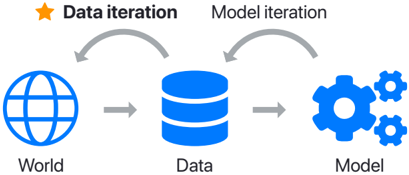
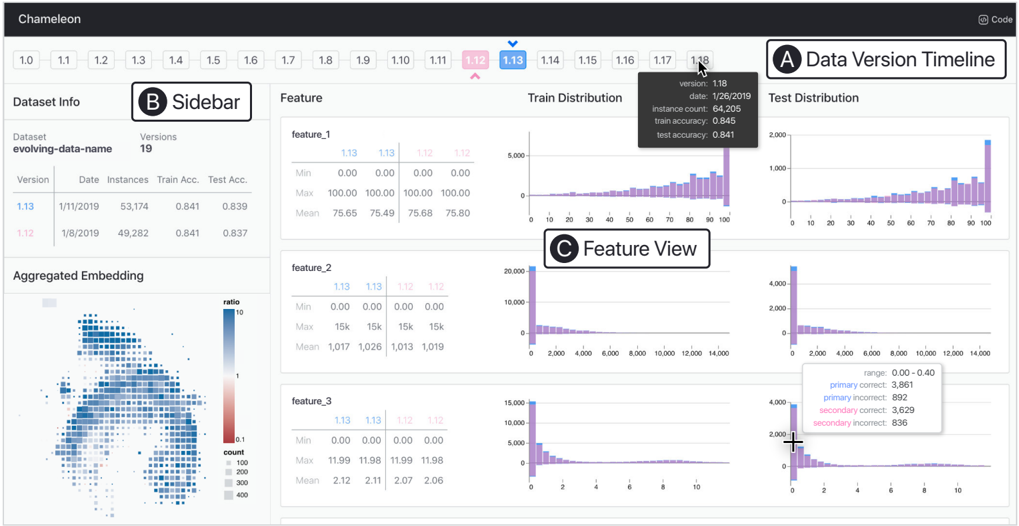
Successful machine learning (ML) applications require iterations on both modeling and the underlying data. While prior visualization tools for ML primarily focus on modeling, our interviews with 23 ML practitioners reveal that they improve model performance frequently by iterating on their data (e.g., collecting new data, adding labels) rather than their models. We also identify common types of data iterations and associated analysis tasks and challenges. To help attribute data iterations to model performance, we design a collection of interactive visualizations and integrate them into a prototype, Chameleon, that lets users compare data features, training/testing splits, and performance across data versions. We present two case studies where developers apply \system to their own evolving datasets on production ML projects. Our interface helps them verify data collection efforts, find failure cases stretching across data versions, capture data processing changes that impacted performance, and identify opportunities for future data iterations.
Overview
The claims and statistics of this paper haven’t been checked yet.
Free: it reads the open-access text and checks the first 5 claims that cite a source we can check. Create a free account to check every claim.
Integrity signals
Registry
Cites
Statistics
Figures

Verification
Claims the paper makes
The claims and statistics of this paper haven’t been checked yet.
Free: it reads the open-access text and checks the first 5 claims that cite a source we can check. Create a free account to check every claim.
Self-check
Percentages, sums and reported differences re-computed from the paper’s own numbers.
The self-check needs the paper’s full text.
Citations
Cites
(2008) · Journal of Machine Learning Research · Cited by 33,051
David, F. N., & Tukey, J. W. (1977) · Biometrics · doi:10.2307/2529486 · Cited by 12,708 · cited 1×
“During exploratory data analysis [43, 14], users may be unfamiliar with their resources (e.g., data), uncertain of their goals, and unsure how to reach them.”
BackgroundTensorFlow: Large-Scale Machine Learning on Heterogeneous Distributed Systems
Abadi, M., Agarwal, A., Barham, P., Brevdo, E., Chen, Z., Citro, C., Corrado, G. S., Davis, A., Dean, J., Devin, M., et al. (2016) · arXiv · doi:10.48550/arxiv.1603.04467 · Cited by 9,408
UMAP: Uniform Manifold Approximation and Projection for Dimension Reduction
McInnes, L., Healy, J., & Melville, J. (2018) · arXiv · doi:10.48550/arxiv.1802.03426 · Cited by 7,101 · cited 2×
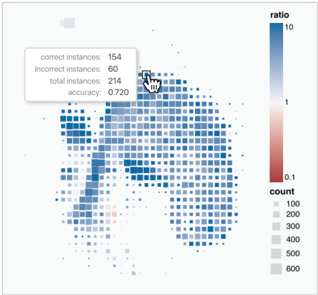
“For reduction and visualization, the Aggregated Embedding uses UMAP [26]: a non-linear dimensionality reduction that better preserves global data structure compared to other techniques like t-SNE [25].”
MethodSoftware Engineering for Machine Learning: A Case Study
Amershi, S., Begel, A., Bird, C., DeLine, R., Gall, H., Kamar, E., Nagappan, N., Nushi, B., & Zimmermann, T. (2019) · 2019 IEEE/ACM 41st International Conference on Software Engineering: Software Engineering in Practice (ICSE-SEIP) · doi:10.1109/icse-seip.2019.00042 · Cited by 1,135 · cited 1×
“A recent study of ML industry professionals found that “discovering, managing, and versioning the data needed for machine learning applications is much more complex and difficult than other types of software engi-neering” [3].”
BackgroundPower to the People: The Role of Humans in Interactive Machine Learning
Amershi, S., Cakmak, M., Knox, W. B., & Kulesza, T. (2014) · AI Magazine · doi:10.1609/aimag.v35i4.2513 · Cited by 1,084 · cited 3×
“Successful machine learning (ML) applications require an iterative process to create models that deliver desired performance and user experience [4, 38].”
BackgroundA Survey on Data Collection for Machine Learning: A Big Data - AI Integration Perspective
Roh, Y., Heo, G., & Whang, S. E. (2021) · IEEE Transactions on Knowledge and Data Engineering · doi:10.1109/tkde.2019.2946162 · Cited by 968 · cited 4×
“This is corroborated in prior data collection work [35].”
BackgroundResultInfluentialFaceted metadata for image search and browsing
Yee, K.-P., Swearingen, K., Li, K., & Hearst, M. (2003) · Proceedings of the SIGCHI Conference on Human Factors in Computing Systems · doi:10.1145/642611.642681 · Cited by 898 · cited 1×
“Faceted browsing [47] lets users use metadata to filter subsets of data that share desired properties.”
BackgroundVega-Lite: A Grammar of Interactive Graphics
Satyanarayan, A., Moritz, D., Wongsuphasawat, K., & Heer, J. (2017) · IEEE Transactions on Visualization and Computer Graphics · doi:10.1109/tvcg.2016.2599030 · Cited by 883 · cited 1×
“Visual-izations were constructed and rendered using Vega-Lite [37].”
MethodSelf-citationSnorkel: rapid training data creation with weak supervision
Ratner, A., Bach, S. H., Ehrenberg, H., Fries, J., Wu, S., & Ré, C. (2017) · Proceedings of the VLDB Endowment · doi:10.14778/3157794.3157797 · Cited by 777 · cited 1×
“…Probabilistic Labels from Data Programming As data programming, weakly-supervised probabilistic label generation for large sets of unlabeled data [32, 33], becomes more popular and is used as an alternative to expensive data labeling tasks, it is important to know when and how label updates are…”
Background
Research works printed but not linked: 1
- 12. Matthias Feurer, Aaron Klein, Katharina Eggensperger, Jost Springenberg, Manuel Blum, and Frank Hutter. 2015. Efficient and robust automated machine learning. In Advances in Neural Information Processing Systems. 2962-2970.
Cited by
On the Opportunities and Risks of Foundation Models
Bommasani, R., Hudson, D. A., Adeli, E., Altman, R., Arora, S., von Arx, S., Bernstein, M. S., Bohg, J., Bosselut, A., Brunskill, E., et al. (2021) · arXiv · doi:10.48550/arxiv.2108.07258 · Cited by 2,676
“Everyone wants to do the model work, not the data work”: Data Cascades in High-Stakes AI
Sambasivan, N., Kapania, S., Highfill, H., Akrong, D., Paritosh, P., & Aroyo, L. M. (2021) · Proceedings of the 2021 CHI Conference on Human Factors in Computing Systems · doi:10.1145/3411764.3445518 · Cited by 781
“identified common types of data iterations and created a tool to visualise them [52].”
BackgroundMethodTrustworthy Artificial Intelligence: A Review
Kaur, D., Uslu, S., Rittichier, K. J., & Durresi, A. (2023) · ACM Computing Surveys · doi:10.1145/3491209 · Cited by 709
“Some researchers [89, 179, 182] proposed visualization techniques to better understand the data before using it.”
BackgroundTransfer Learning for Sentiment Analysis Using BERT Based Supervised Fine-Tuning
Prottasha, N. J., Sami, A. A., Kowsher, M., Murad, S. A., Bairagi, A. K., Masud, M., & Baz, M. (2022) · Sensors · doi:10.3390/s22114157 · Cited by 248
“Data preparation is essential in machine learning-based classification, as the model’s accuracy is heavily dependent on the quality of the input data [33].”
BackgroundTechnology readiness levels for machine learning systems
Lavin, A., Gilligan-Lee, C. M., Visnjic, A., Ganju, S., Newman, D., Ganguly, S., Lange, D., Baydin, A. G., Sharma, A., Gibson, A., et al. (2022) · Nature Communications · doi:10.1038/s41467-022-33128-9 · Cited by 209
“For instance, a more iterative process for Bayesian ML [60] and even more specifically for probabilistic programming [39], a data mining process defined in 2000 that remains widely used [61], others for describing data iterations [62], and human-computer interaction cycles [63].”
A survey of visual analytics for Explainable Artificial Intelligence methods
Alicioglu, G., & Sun, B. (2022) · Computers & Graphics · doi:10.1016/j.cag.2021.09.002 · Cited by 221
“Hohman et al. [46] presented a rank-by-feature framework for feature subset selection by using ranking criteria such as normality, Pearson’s correlation coefficient , and entropy .”
MethodEthical machines: The human-centric use of artificial intelligence
Lepri, B., Oliver, N., & Pentland, A. (2021) · iScience · doi:10.1016/j.isci.2021.102249 · Cited by 149
“As recently discussed by Hohman et al. (Hohman et al., machine learning applications require an iterative process to create successful models (Amershi et al., 2014).”
BackgroundShankar, S., Garcia, R., Hellerstein, J. M., & Parameswaran, A. (2024) · Proceedings of the ACM on Human-Computer Interaction · doi:10.1145/3653697 · Cited by 155
“Of the three large stages, several studies have identified preparation as the most time-intensive stage of the workflow [27, 66], where data scientists commonly iterate on rules to help generate features [30, 72].”
BackgroundWhither AutoML? Understanding the Role of Automation in Machine Learning Workflows
Xin, D., Wu, E. Y., Lee, D. J.-L., Salehi, N., & Parameswaran, A. (2021) · Proceedings of the 2021 CHI Conference on Human Factors in Computing Systems · doi:10.1145/3411764.3445306 · Cited by 110
“This work is related to a larger body of studies on ML work practices [4, 22, 23, 25, 48] of specific groups of practitioners, including software engineers using ML [4], nonexpert ML users [48], as well as specific aspects of work practices, such as model interpretation [23] and iterative behavior in ML development [2…”
BackgroundA Survey of Data Quality Requirements That Matter in ML Development Pipelines
Priestley, M., O’donnell, F., & Simperl, E. (2023) · Journal of Data and Information Quality · doi:10.1145/3592616 · Cited by 86
“The first of these relates to data iteration, where the steps of model building and testing are frequently followed by the need to collect new data, or enriching the existing dataset [5, 11, 31, 34].”
BackgroundResultInfluentialNeo: Generalizing Confusion Matrix Visualization to Hierarchical and Multi-Output Labels
Görtler, J., Hohman, F., Moritz, D., Wongsuphasawat, K., Ren, D., Nair, R. S., Kirchner, M., & Patel, K. (2022) · CHI Conference on Human Factors in Computing Systems · doi:10.1145/3491102.3501823 · Cited by 106
“Machine learning development is an inherently iterative process [4, 13, 15, 24], where multiple models are often compared against each other.”
BackgroundSelf-citationHeger, A. K., Marquis, L. B., Vorvoreanu, M., Wallach, H., & Wortman Vaughan, J. (2022) · Proceedings of the ACM on Human-Computer Interaction · doi:10.1145/3555760 · Cited by 58
“While this finding generally aligns with previous research [1, 24, 35, 47], our findings point to specifics of how this integration might happen and what kinds of information could be brought together.”
ResultForgetting Practices in the Data Sciences
Muller, M., & Strohmayer, A. (2022) · CHI Conference on Human Factors in Computing Systems · doi:10.1145/3491102.3517644 · Cited by 55
“In Section 4, we provided a linearized sequence of activities in the data science cycle [81, 126, 139, 157, 226], while acknowledging that the lived work of data science is even more complex than our simplified version [94, 225, 229].”
BackgroundConceptExplainer: Interactive Explanation for Deep Neural Networks from a Concept Perspective
Huang, J., Mishra, A., Kwon, B. C., & Bryan, C. (2023) · IEEE Transactions on Visualization and Computer Graphics · doi:10.1109/tvcg.2022.3209384 · Cited by 47
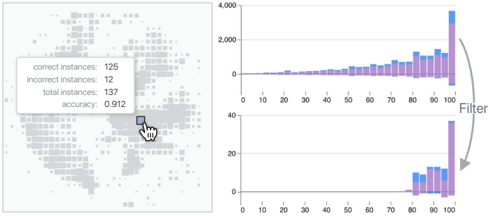
“To prevent overplotting, we grid the bounding box of the 2D t-SNE point cloud and aggregate classes into “clique” circles, sized by the number of total classes and colored based on average accuracy of classes in the clique (This design is inspired by the Chameleon system [21]).”
MethodWhat Did My AI Learn? How Data Scientists Make Sense of Model Behavior
Cabrera, Á. A., Ribeiro, M. T., Lee, B., DeLine, R. A., Perer, A., & Drucker, S. M. (2023) · ACM Transactions on Computer-Human Interaction · doi:10.1145/3542921 · Cited by 62
“Improving an existing AI system often requires developers to know what types of data their model fails on so they can target their data collection [37].”
BackgroundHoque, M. N., Mashiat, T., Ghai, B., Shelton, C. D., Chevalier, F., Kraus, K., & Elmqvist, N. (2024) · Proceedings of the CHI Conference on Human Factors in Computing Systems · doi:10.1145/3613904.3641895 · Cited by 48
“In comparison, policies from academic venues provide explicit guides for using and reporting LLMs [21, 22].”
BackgroundTowards Trustworthy Machine Learning in Production: An Overview of the Robustness in MLOps Approach
Bayram, F., & Ahmed, B. S. (2025) · ACM Computing Surveys · doi:10.1145/3708497 · Cited by 48
“A robust versioning mechanism must ensure that the different ML artifacts, such as configuration and hyperparameters, data and algorithm, have consistent version numbers for a specific iteration [67].”
Marcelle: Composing Interactive Machine Learning Workflows and Interfaces
Françoise, J., Caramiaux, B., & Sanchez, T. (2021) · ACM Symposium on User Interface Software and Technology (UIST) · doi:10.1145/3472749.3474734 · Cited by 64
“Some of the benefits of IML include helping users to efficiently convey expert knowledge to the system [43], allowing system adaptation to a user’s specific needs [35], enabling ML as design material [31], or helping users to better understand caveats and strengths of a ML pipeline [42].”
BackgroundAI-Assisted Human Labeling: Batching for Efficiency without Overreliance
Ashktorab, Z., Desmond, M., Andres, J., Muller, M., Joshi, N. N., Brachman, M., Sharma, A., Brimijoin, K., Pan, Q., Wolf, C. T., et al. (2021) · Proceedings of the ACM on Human-Computer Interaction · doi:10.1145/3449163 · Cited by 45
“In a simple sense, any labeling or annotating task involves a human teaching a machine-learning model about the ground truth of the data [24, 49].”
BackgroundDiff in the Loop: Supporting Data Comparison in Exploratory Data Analysis
Wang, A. Y., Epperson, W., DeLine, R. A., & Drucker, S. M. (2022) · CHI Conference on Human Factors in Computing Systems · doi:10.1145/3491102.3502123 · Cited by 51
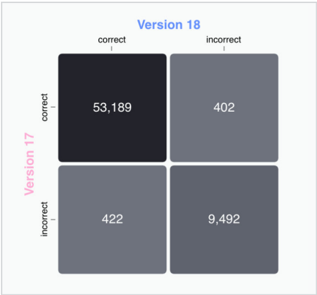
“In model development data scientists must consider shifts in feature distribution, train test splits, and model performance when comparing data iterations [21].”
BackgroundMethodResultCanvil: Designerly Adaptation for LLM-Powered User Experiences
Feng, K. J. K., Liao, Q. V., Xiao, Z., Vaughan, J. W., Zhang, A. X., & McDonald, D. W. (2025) · CHI Conference on Human Factors in Computing Systems · doi:10.1145/3706598.3713139 · Cited by 43
“…scientists to perform data wrangling [39, 49, 57, 104, 110], model training and evaluation [1, 8, 16, 37, 45, 64, 82], managing model iterations [41, 84], and so on, to those allowing for “human-in-the-loop” paradigms at various stages of the model development pipeline, including data…”
Wang, X., & Yin, M. (2023) · Proceedings of the 2023 CHI Conference on Human Factors in Computing Systems · doi:10.1145/3544548.3581366 · Cited by 38
“Note that this kind of model updates can be realistic in the real world, as the training dataset may constantly get updated [39], yet the additional training data obtained may be biased (e.g., due to sampling biases).”
BackgroundPublic Health Calls for/with AI: An Ethnographic Perspective
Ismail, A., Thakkar, D., Madhiwalla, N., & Kumar, N. (2023) · Proceedings of the ACM on Human-Computer Interaction · doi:10.1145/3610203 · Cited by 47
“Hohman et al. developed a design probe to understand how data scientists understand machine learning [32], and have also studied how data scientists wrangle with and iterate on datasets in machine learning [33, 74].”
BackgroundChatzimparmpas, A., Martins, R. M., Kucher, K., & Kerren, A. (2022) · IEEE Transactions on Visualization and Computer Graphics · doi:10.1109/tvcg.2022.3141040 · Cited by 38
“For instance, the tool by Hohman et al. [63] facilitates the visual comparison of feature distributions for a high number of features.”
MethodDead or Alive: Continuous Data Profiling for Interactive Data Science
Epperson, W., Gorantla, V., Moritz, D., & Perer, A. (2023) · IEEE Transactions on Visualization and Computer Graphics · doi:10.1109/tvcg.2023.3327367 · Cited by 47
“Prior systems in the visualization community have addressed parts of this space such as comparing data over time as models are trained on subsequent data versions [18] or methods for cleaning up notebooks during analysis [14].”
MethodDesigning Interactive Transfer Learning Tools for ML Non-Experts
Mishra, S., & Rzeszotarski, J. M. (2021) · Proceedings of the 2021 CHI Conference on Human Factors in Computing Systems · doi:10.1145/3411764.3445096 · Cited by 32
Co-ML: Collaborative Machine Learning Model Building for Developing Dataset Design Practices
Tseng, T., Davidson, M. J., Morales‐Navarro, L., Chen, J. K., Delaney, V., Leibowitz, M., Beason, J., & Shapiro, R. B. (2024) · ACM Transactions on Computing Education · doi:10.1145/3641552 · Cited by 41
“Data preparation involves many considerations across the model-building process, from planning and prioritizing what data to initially collect, to iterating on data in response to model performance issues or shifting project goals [ 33 ].”
BackgroundMethodInfluentialData-First Visualization Design Studies
Oppermann, M., & Munzner, T. (2020) · IEEE Evaluation and Beyond - Methodological Approaches for Visualization (BELIV) · doi:10.1109/beliv51497.2020.00016 · Cited by 40
“Data iteration [15], including the integration of secondary data sources in a visualization system, can be a crucial step to address a specific domain problem.”
BackgroundHow Domain Experts Work with Data: Situating Data Science in the Practices and Settings of Craftwork
Jung, J. Y., Steinberger, T., King, J. L., & Ackerman, M. S. (2022) · Proceedings of the ACM on Human-Computer Interaction · doi:10.1145/3512905 · Cited by 35
“Data science for working with situated versus abstract data builds on a view that the material context leads to variations in the meaning and relevance of data, and these variations need to be designed for rather than controlled [e.g., 2, 35].”
BackgroundMethodModel Sketching: Centering Concepts in Early-Stage Machine Learning Model Design
Lam, M. S., Ma, Z., Li, A., Freitas, I., Wang, D., Landay, J. A., & Bernstein, M. S. (2023) · CHI Conference on Human Factors in Computing Systems · doi:10.1145/3544548.3581290 · Cited by 33
Artificial intelligence enhances food testing process: A comprehensive review
Ding, H., Xie, Z., Yu, W., Cui, X., & Wilson, D. I. (2025) · Food Bioscience · doi:10.1016/j.fbio.2025.106404 · Cited by 31
Stop Misusing t-SNE and UMAP for Visual AnalyticsPreprint
Jeon, H., Park, J., Shin, S., & Seo, J. (2025) · arXiv (Cornell University) · doi:10.48550/arxiv.2506.08725 · Cited by 41
“Such effectiveness makes DR widely used for visual analytics across diverse domains [7], including bioinformatics [12], machine learning [25,39], and finance [11]. t -SNE.”
Inspecting the Running Process of Horizontal Federated Learning via Visual Analytics
Li, Q., Wei, X., Lin, H., Liu, Y., Chen, T., & Ma, X. (2021) · IEEE Transactions on Visualization and Computer Graphics · doi:10.1109/tvcg.2021.3074010 · Cited by 28
“In the data engineering stage, data visualization can help humans explore the data and obtain a qualitative sense of the nature of the data [38], [39].”
BackgroundWorkflow analysis of data science code in public GitHub repositories
Ramasamy, D., Sarasua, C., Bacchelli, A., & Bernstein, A. (2022) · Empirical Software Engineering · doi:10.1007/s10664-022-10229-z · Cited by 38
“Other studies focused on specific steps in the data science workflow (Lee et al. 2020; Hohman et al. 2020).”
BackgroundWang, Y., Zhang, B., Ma, J., & Jin, Q. (2023) · Concurrency and Computation Practice and Experience · doi:10.1002/cpe.7827 · Cited by 27
Machine learning experiment management tools: a mixed-methods empirical study
Idowu, S., Osman, O., Strüber, D., & Berger, T. (2024) · Empirical Software Engineering · doi:10.1007/s10664-024-10444-w · Cited by 30
“1) involve numerous experiment runs due to the experimental approach often required when designing and building models (Hohman et al. 2020; Bouthillier and Varoquaux 2020).”
Loops: Leveraging Provenance and Visualization to Support Exploratory Data Analysis in Notebooks
Eckelt, K., Gadhave, K., Lex, A., & Streit, M. (2024) · IEEE Transactions on Visualization and Computer Graphics · doi:10.1109/tvcg.2024.3456186 · Cited by 28
“Changes may be introduced through code or updates of the data source [3,26,41].”
BackgroundMuller, M., Aragon, C., Guha, S., Kogan, M., Neff, G., Seidelin, C., Shilton, K., & Tanweer, A. (2020) · Companion Publication of the 2020 Conference on Computer Supported Cooperative Work and Social Computing · doi:10.1145/3406865.3418584 · Cited by 19
“demonstrated that data science workers may iterate on datasets while leaving models relatively unchanged ([15]; see also [3]).”
BackgroundLee, M. H., Siewiorek, D. P., Smailagic, A., Bernardino, A., & Bermúdez i Badia, S. (2022) · 27th International Conference on Intelligent User Interfaces · doi:10.1145/3490099.3511112 · Cited by 19
“In addition, researchers have discussed the importance of iterating on data (e.g. collecting new data or labels) [26] and explored interactive approaches for annotations in various applications: sound event detection [32], semantic annotations [35], and animal behavior [28].”
BackgroundMitigating Bias in AI Model Using eXplainable AI in Terms of Hiring Process in the Industry
Alsubaie, N., & Aleisa, N. (2025) · IEEE Access · doi:10.1109/access.2025.3599947 · Cited by 22
“The following are included in the first training phase [45], [46].”
Kshirsagar, M., Robinson, C., Yang, S., Gholami, S., Klyuzhin, I. S., Mukherjee, S., Nasır, Ortiz, A., Oviedo, F., Tanner, D., et al. (2021) · Proceedings of the AAAI/ACM Conference on AI Ethics and Society · doi:10.1145/3461702.3462599 · Cited by 30
“A common industry practice for improving model performance is to iterate on improving datasets instead of iterating on improving models [31].”
MethodCollaborative Machine Learning Model Building with Families Using Co-ML
Tseng, T., Chen, J. K., Abdelrahman, M., Kery, M. B., Hohman, F., Hilliard, A., & Shapiro, R. B. (2023) · ACM International Conference on Interaction Design and Children (IDC) · doi:10.1145/3585088.3589356 · Cited by 20
Self-citationWilde, B. C., Bragg, J. G., & Cornwell, W. K. (2023) · American Journal of Botany · doi:10.1002/ajb2.16167 · Cited by 17
"There’s no way to keep up!": Diverse Motivations and Challenges Faced by Informal Learners of ML
Chaudhury, R., Guo, P. J., & Chilana, P. K. (2022) · IEEE Symposium on Visual Languages and Human-Centric Computing (VL/HCC) · doi:10.1109/vl/hcc53370.2022.9833100 · Cited by 17
“by ML-practitioners to introduce interventions to support it [28, 34, 35].”
BackgroundColaroid: A Literate Programming Approach for Authoring Explorable Multi-Stage Tutorials
Wang, A. Y., Head, A., Zhang, G., Oney, S., & Brooks, C. A. (2023) · CHI Conference on Human Factors in Computing Systems · doi:10.1145/3544548.3581525 · Cited by 20
“…of changes [28], contextualized text discussions atop source code files [36] and note-books [49], automatically generating documentation of changes [3, 30], visualizing changes to data outputs [47] and models [20], and advanced navigation affordances for code repositories [25] and notebooks [22].”
BackgroundHow do People Train a Machine? Strategies and (Mis)Understandings
Sanchez, T., Caramiaux, B., Françoise, J., Bevilacqua, F. P., & Mackay, W. E. (2021) · Proceedings of the ACM on Human-Computer Interaction · doi:10.1145/3449236 · Cited by 27
“[21] showed that ML practitioners improve model performance mostly by iterating on their data (i.”
BackgroundSun, T., Gao, Y., Khaladkar, S., Liu, S., Zhao, L., Kim, Y., & Hong, S.-S. (2023) · Proceedings of the ACM on Human-Computer Interaction · doi:10.1145/3610187 · Cited by 18
“For instance, Chameleon lets users compare data features, training/testing splits, and performance across data versions [41].”
BackgroundTowards a Non-Ideal Methodological Framework for Responsible ML
Mothilal, R. K., Guha, S., & Ahmed, S. I. (2024) · CHI Conference on Human Factors in Computing Systems · doi:10.1145/3613904.3642501 · Cited by 16
“…has discussed how practitioners often follow complex processes drawing on domain knowledge and subjective experiences to perform their day-to-day data-related activities such as capturing, designing, cleaning, integrating, and deciding ground truth data [10, 24, 39, 53, 95, 97, 98, 104, 106, 107].”
BackgroundDeep Visual Analytics (DVA): Applications, Challenges and Future Directions
Islam, M. R., Prome, S. A., Ratan, M. R., Kamal, A. R. M., & Xu, G. (2021) · Human-Centric Intelligent Systems · doi:10.2991/hcis.k.210704.003 · Cited by 14
“The analysis of these data are grimy, irreconcilable and complex [44].”
BackgroundAutomated Electro-construction waste Sorting: Computer vision for part-level segmentation
Senanayake, A., & Arashpour, M. (2025) · Waste Management · doi:10.1016/j.wasman.2025.114883 · Cited by 15
Balayn, A., Rikalo, N., Yang, J., & Bozzon, A. (2023) · CHI Conference on Human Factors in Computing Systems · doi:10.1145/3544548.3581555 · Cited by 18
“Existing tools for data exploration in the context of machine learning [17, 46] could be refned for the specifc needs identifed.”
MethodImpact Of Data Visualization In Data Analysis To Improve The Efficiency Of Machine Learning Models
Shinde, M. B. G., & Shivthare, S. K. (2024) · Journal Of Advanced Zoology · doi:10.53555/jaz.v45is4.4161 · Cited by 12
Whombat: An open‐source audio annotation tool for machine learning assisted bioacoustics
Martínez Balvanera, S., Mac Aodha, O., Weldy, M. J., Pringle, H., Browning, E., & Jones, K. E. (2025) · Methods in Ecology and Evolution · doi:10.1111/2041-210x.14468 · Cited by 11
“These visualisation tools enable users to become familiar with the variety of sound events and identify potential issues such as outliers and overlaps between categories.”
Goodman, S. M., McDonnell, E. J., Froehlich, J. E., & Findlater, L. (2025) · CHI Conference on Human Factors in Computing Systems · doi:10.1145/3706598.3713294 · Cited by 12
“The examples, grouped by recording, are presented as spectrograms, with the option to switch to waveform SPECTRA’s emphasis on data iteration aligns with practices observed among expert ML practitioners, who typically prioritize dataset refinement over changes to the models themselves [23].”
Schofield, A., Wu, S., de Volo, T. B., Kuze, T., Gomez, A., & Sultana, S. (2025) · Proceedings of the ACM on Human-Computer Interaction · doi:10.1145/3701201 · Cited by 12
“…based on model output: while many works exploring machine-learning-assisted analysis workflows describe reacting to model issues by changing model parameters [26, 68, 70, 86, 106, 118], fewer specifically describe also reacting by changing the data processing prior to model training [53, 84, 123].”
Lee, S., Park, S., Kang, B., Choi, M.-I., Jang, H., Shmilovitz, D., & Park, S. (2023) · Buildings · doi:10.3390/buildings13082050 · Cited by 12
“If some of the performance indicators of the best model fall below a certain threshold, the process is repeated [43].”
BackgroundEnhancing Computational Notebooks with Code+Data Space Versioning
Fang, H., Chockchowwat, S., Sundaram, H., & Park, Y. (2025) · CHI Conference on Human Factors in Computing Systems · doi:10.1145/3706598.3714141 · Cited by 12
“Approaches like Diff-in-the-Loop [55], Loops [11], and Chameleon [21] offer visual aids for comparing data between iterative explorations.”
InfluentialAnalyzing Collaborative Challenges and Needs of UX Practitioners when Designing with AI/ML
Muralikumar, M. D., & McDonald, D. W. (2024) · Proceedings of the ACM on Human-Computer Interaction · doi:10.1145/3686986 · Cited by 12
“Potential examples of model-related groupware systems exist in the literature although they largely cater to teams of MLP and data scientists [10, 33, 37, 52, 54, 57].”
Varlamis, I. (2025) · Education Sciences · doi:10.3390/educsci15040500 · Cited by 9
Harrison, G., Bryson, K., Bamba, A. E. B., Dovichi, L., Binion, A. H., Borem, A., & Ur, B. (2024) · CHI Conference on Human Factors in Computing Systems · doi:10.1145/3613904.3642755 · Cited by 11
“Chameleon is a system for understanding model performance under different versions of the data [29], which overlaps in small ways with one notification we designed.”
BackgroundAmin, R., Mo, Y., Richter, F., Kurzer, C., Werther, N., & Rein, G. (2024) · Fire Technology · doi:10.1007/s10694-024-01593-x · Cited by 9
“To address this issue and ensure reliable results, an iteration feasibility study was conducted to show reproducibility [55].”
Tyche: Making Sense of PBT Effectiveness
Goldstein, H., Tao, J., Hatfield-Dodds, Z., Pierce, B. C., & Head, A. (2024) · ACM Symposium on User Interface Software and Technology (UIST) · doi:10.1145/3654777.3676407 · Cited by 13
Studying Collaborative Interactive Machine Teaching in Image Classification
Mohammadzadeh, B., Françoise, J., Gouiffès, M., & Caramiaux, B. (2024) · ACM International Conference on Intelligent User Interfaces (IUI) · doi:10.1145/3640543.3645204 · Cited by 9
“It has also proved useful for ML professionals in model development [21].”
BackgroundFüßl, A., & Nissen, V. (2025) · Requirements Engineering · doi:10.1007/s00766-025-00437-6 · Cited by 9
“Hohman et al. [55] also show the distribution of all features of an instance in a histogram in the feature view.”
Exploring Empty Spaces: Human-in-the-Loop Data Augmentation
Yeh, C., Ren, D., Assogba, Y., Moritz, D., & Hohman, F. (2025) · CHI Conference on Human Factors in Computing Systems · doi:10.1145/3706598.3713491 · Cited by 15
“Many natural language processing (NLP) techniques have been proposed for generating synthetic text for data augmentation, which either operate on the feature or data space [8].”
Self-citationDeep authoring - an AI Tool set for creating immersive MultiMedia experiences
Takács, B., & Vincze, Z. (2021) · Multimedia Tools and Applications · doi:10.1007/s11042-020-10275-z · Cited by 8
“To improve model performance Machine Learning (ML) practitioners frequently iterate on their data [25], however the lack of existing sets and/or the mere effort and cost to capture domain specific new imagery often hampers these efforts.”
BackgroundOppermann, M., & Munzner, T. (2021) · IEEE Transactions on Visualization and Computer Graphics · doi:10.1109/tvcg.2021.3114841 · Cited by 7
“The goal is insights on model effectiveness and limitations that can subsequently inform new parameter and model choices, or data iteration [27].”
BackgroundTool Support for Improving Software Quality in Machine Learning Programs
Cheng, K. S., Huang, P.-C., Ahn, T.-H., & Song, M. (2023) · Information · doi:10.3390/info14010053 · Cited by 8
Ferreira, M. D., Cantareira, G. D., de Mello, R. F., & Paulovich, F. V. (2021) · Journal of Visualization · doi:10.1007/s12650-021-00809-4 · Cited by 7
“Hohman et al. (2020) presented a visualization approach to analyze evolving training data sets.”
BackgroundWu, E. X., Turakhia, D. G., Wu, G., Koutras, C., Keegan, S., Liu, W., Szeitz, B., Fenyö, D., Silva, C. T., & Freire, J. (2025) · IEEE Transactions on Visualization and Computer Graphics · doi:10.1109/tvcg.2025.3634843 · Cited by 6
“This reflects recent HCI research on enhancing transparency and trust in AI-supported interfaces [14, 29, 60, 70] and ensures that non-expert users can meaningfully engage with the matching process.”
Introducing the Method of Exhibit-Based Research
Eccles, K., Herman, L., Moruzzi, C., & Mustaklem, M. (2024) · Communication Design Quarterly · doi:10.1145/3563890.3713037 · Cited by 6
Zhu, Q., Wang, D., Ma, S., Wang, A. Y., Chen, Z., Khurana, U., & Ma, X. (2024) · Designing Interactive Systems Conference · doi:10.1145/3643834.3661517 · Cited by 7
“How to balance humans’ input and automation in such ML tools warrants further exploration [23, 29, 44, 78].”
BackgroundRivero, L., Diniz, J. O. B., Silva, G., Borralho, G., Bráz, G., de Paiva, A. C., Alves, E. W. B. A. L., & Oliveira, M. (2020) · Brazilian Symposium on Software Quality (SBQS) · doi:10.1145/3439961.3439991 · Cited by 7
Jin, Y., Carrasco-Revilla, A., & Chen, M. (2024) · arXiv (Cornell University) · doi:10.48550/arxiv.2409.15848 · Cited by 7
“As demonstrated by many existing VIS4ML techniques (Section 2), VIS techniques can help reduce the number of iterations and speed up the human-centric processes in these iterations.”
Thomas, I., Oh, S. Y., & Szafir, D. A. (2024) · ACM International Conference on Intelligent User Interfaces (IUI) · doi:10.1145/3640543.3645207 · Cited by 8
Towards Actionable Data Science: Domain Experts as End-Users of Data Science Systems
Jung, J. Y., Steinberger, T., & So, C. (2023) · Computer Supported Cooperative Work (CSCW) · doi:10.1007/s10606-023-09475-6 · Cited by 6
“Built on an assumption of a ‘largely stable world’ (Marcus, 2018), data science often views changes to data (or their underlying distribution), called ‘data drift’, as detrimental to model performance (Hohman et al., 2020; Hoens et al., 2012; Williamson and Henderson, 2021).”
InfluentialEvoVis: A Visual Analytics Method to Understand the Labeling Iterations in Data Programming
Li, S., Liu, G., Wei, T., Jia, S., & Zhang, J. (2024) · IEEE Transactions on Visualization and Computer Graphics · doi:10.1109/tvcg.2024.3370654 · Cited by 6
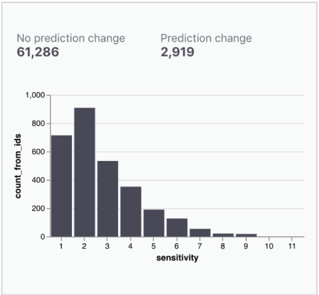
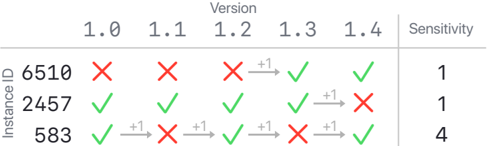
“Hohman et al. [26] attributes model performance changes to iterative data updates.”
Rivero, L., Portela, C. D. S., Boaro, J. M. C., Santos, P., Rego, V., Bráz, G., de Paiva, A. C., Alves, E. W. B. A. L., Oliveira, M., Moraes, R., et al. (2021) · Lecture notes in computer science · doi:10.1007/978-3-030-78321-1_18 · Cited by 7
Large-scale Evaluation of Notebook Checkpointing with AI Agents
Fang, H., Chockchowwat, S., Sundaram, H., & Park, Y. (2025) · CHI Conference Extended Abstracts on Human Factors in Computing Systems (CHI EA) · doi:10.1145/3706599.3719928 · Cited by 4
“(a) Intended data exploration Data scientists often revisit previous explored phases [9, 11, 18, 19, 22, 26].”
Understanding Collections of Related Datasets Using Dependent MMD Coresets
Williamson, S. A., & Henderson, J. (2021) · Information · doi:10.3390/info12100392 · Cited by 8
“Here, summary statistics offer interpretable comparisons: we can plot the mean and standard deviation of a given marginal quantity over time, and easily see how it changes [19,20].”
BackgroundUnderstanding Human-side Impact of Sampling Image Batches in Subjective Attribute Labeling
Chung, C., Lee, J., Park, K., Lee, J., Kim, M., Song, M., Kim, Y., Choo, J., & Hong, S.-S. (2021) · Proceedings of the ACM on Human-Computer Interaction · doi:10.1145/3476037 · Cited by 6
“’s work on the visualization view [30].”
Auditable Augmented/Mixed/Virtual Reality: The Practicalities of Mobile System Transparency
Cloete, R., Norval, C., & Singh, J. (2021) · Proceedings of the ACM on Interactive Mobile Wearable and Ubiquitous Technologies · doi:10.1145/3495001 · Cited by 7
“…in the context of transparency and accountability, is something of a nascent, yet growing topic for the technical disciplines, and has had some initial consideration in areas including cloud [72] and AI services [40, 41], the Internet of Things [53, 81], and machine learning [21, 25, 33, 52, 65].”
BackgroundLeveraging Large Language Models to Enhance Domain Expert Inclusion in Data Science Workflows
Shih, J. Y., Mohanty, V., Katsis, Y., & Subramonyam, H. (2024) · CHI Conference Extended Abstracts on Human Factors in Computing Systems (CHI EA) · doi:10.1145/3613905.3651115 · Cited by 4
“Visualizations of data changes [17, 24, 32] have proved to be an effective means of supporting understanding beyond serving the function of documentation.”
Towards User-Focused Research in Training Data Attribution for Human-Centered Explainable AIPreprint
Nguyen, E., Bertram, J., Kortukov, E., Song, J. Y., & Oh, S. J. (2024) · arXiv (Cornell University) · doi:10.48550/arxiv.2409.16978 · Cited by 6
“There are tools that enable model developers to explore datasets by offering a visual interface [40, 74], but they often do not inform about the connection between model output and training data.”
Anomaly Detection Method for Unknown Protocols in a Power Plant ICS Network with Decision Tree
Lee, K.-M., Cho, M.-Y., Kim, J., & Lee, K.-H. (2023) · Applied Sciences · doi:10.3390/app13074203 · Cited by 3
Lee, J., Yu, S., Jang, Y., Woo, S. S., & Jo, J. (2026) · IEEE Transactions on Visualization and Computer Graphics · doi:10.1109/tvcg.2026.3658325 · Cited by 7
“Our initial design took inspiration from prior work [58], [59] that uses size and color for a double-encoding heatmap, representing predicted proportions with circle size and average confidence with color (Fig.”
DSWorkFlow: A Framework for Capturing Data Scientists’ Workflows
Mash, M., Rosenthal, S. L., & Simmons, R. G. (2021) · CHI Conference Extended Abstracts on Human Factors in Computing Systems (CHI EA) · doi:10.1145/3411763.3451683 · Cited by 3
“As a result of their uncertainty, data scientists may collect additional data in spite of a solidifed distribution [17], stop the process too early if they cannot make progress [16], or repeat the same actions, such as feature selection, over and over again as they focus on one aspect of the task at the expense of oth…”
BackgroundVFLens: Co-design the Modeling Process for Efficient Vertical Federated Learning via Visualization
Tian, Y., Wang, H., Xie, L., Ma, X., & Li, Q. (2022) · International Symposium of Chinese CHI (Chinese CHI) · doi:10.1145/3565698.3565765 · Cited by 3
“As a slang expression in classical ML terminology, ‘ ‘garbage in, garbage out” [20] indicates the samples used for prediction should have a high-quality”
BackgroundMethodInfluentialEliciting Model Steering Interactions From Users via Data and Visual Design Probes
Crisan, A., Shang, M., & Brochu, E. (2023) · IEEE Transactions on Visualization and Computer Graphics · doi:10.1109/tvcg.2023.3322898 · Cited by 4
“The Chameleon [47] prototype enables ML practitioners to visualize the effects of their data changes on the model’s features and performance.”
BackgroundColor Pattern Analogy: AI-Assisted Chinese Blue–Green Landscape Painting Restoration
Chang, R., & Wang, J. (2023) · International Conference on Information and Network Technologies (ICINT) · doi:10.1109/icint58947.2023.00008 · Cited by 3
“Several studies advocated for the opening of data pipeline to end users and evaluated the impact of data selection on model performance [32], [33].”
BackgroundHuang, Y., Deng, W. H., Xiao, S., Eslami, M., Hong, J., Narechania, A. A., & Perer, A. (2026) · CHI Conference on Human Factors in Computing Systems · doi:10.1145/3772318.3791942 · Cited by 4
“For instance, visualizations could take the form of timelines to capture changes across iterative audits, given similar practices in visualizing iterations of data or code [22, 30, 70].”
Data-Prompt Co-Evolution: Growing Test Sets to Refine LLM Behavior
Lee, M., & Kahng, M. (2026) · CHI Conference on Human Factors in Computing Systems · doi:10.1145/3772318.3791222 · Cited by 5
“Chameleon [18] shows how practitioners can attribute performance changes to data, comparing features, splits, and successive dataset versions through interactive visualizations.”
Towards Interactive Guidance for Writing Training Utterances for Conversational Agents
Piorkowski, D., Ostrand, R., Brimijoin, K., He, J., Albert, E., & Houde, S. (2024) · ACM Conference on Conversational User Interfaces (CUI) · doi:10.1145/3640794.3665553 · Cited by 2
“Traditional conversational agent models will need to be retrained many times in order to better converge on the needs of end users [1, 18].”
BackgroundThe Role of Expertise on Insight Generation from Visualization Sequences
Rosenthal, S. L., & Chung, T. R. (2022) · IEEE Symposium on Visual Languages and Human-Centric Computing (VL/HCC) · doi:10.1109/vl/hcc53370.2022.9833097 · Cited by 2
Debugging Support for Machine Learning Applications in Bioengineering Text Corpora
Cheng, K. S., Ahn, T.-H., & Song, M. (2022) · IEEE Annual International Computer Software and Applications Conference (COMPSAC) · doi:10.1109/compsac54236.2022.00166 · Cited by 2
Lee, J., Veinot, T. C., & Yakel, E. (2026) · CHI Conference on Human Factors in Computing Systems · doi:10.1145/3772318.3791155 · Cited by 3
“Such artifacts could be enhanced by making data changes more visible—for example, through data summary dashboards that support diffing, version tracking, and modification alerts [50, 127].”
Transfer Dataset in Image Segmentation Use Case
Wróblewska, A., Sysko-Romańczuk, S., & Prusinowski, K. (2020) · Lecture notes in computer science · doi:10.1007/978-3-030-63836-8_12 · Cited by 1
DSInfoSearch: Supporting Experimentation Process of Data Scientists
Sivasothy, S. (2021) · IEEE/ACM International Conference on Automated Software Engineering (ASE) · doi:10.1109/ase51524.2021.9678873 · Cited by 1
“Further, the existing research has focused on experimentation in data science in terms of reproducibility [20], provenance tracking [21]–[23], history search [24], versioning of multiple experiments [25], infrastructure management [26], specialised for model management [27]–[29], collaborative experimentation [1], [30…”
MethodVisualization for Machine Learning
Xenopoulos, P., Nonato, L. G., & Silva, C. T. (2022) · SIBGRAPI Conference on Graphics, Patterns and Images (SIBGRAPI) · doi:10.1109/sibgrapi55357.2022.9991759 · Cited by 2
“While visualization often serves as a useful tool for iteration and debugging [16], we namely focus on understanding how the attributes of the data impact a model’s decision.”
MethodByrd, V. L., Saraswat, D., & Ahmad, A. (2023) · IEEE Frontiers in Education Conference (FIE) · doi:10.1109/fie58773.2023.10343451 · Cited by 1
“Although not extensive, the literature review of multidisciplinary instructional design shows ML has been utilized in agriculture [35], [36], and data visualization [37].”
Background
Metadata
- Authors
- Hohman, F., Wongsuphasawat, K., Kery, M. B., & Patel, K.
- Affiliations
- Georgia Institute of Technology (US)
- Apple (United States) (US)
- Carnegie Mellon University (US)
- Venue
- Proceedings of the 2020 CHI Conference on Human Factors in Computing Systems
- Publisher
- ACM
- Published
- 2020-04-21
- Pages
- 1-13
- OpenAlex
- W3032086959
- Semantic Scholar
- d6b9a5a2af3c2f9044c505855b27310132b7f3d4
- Cited by
- 110
- References
- 48
- Citations by year
- 2026: 5 · 2025: 16 · 2024: 24 · 2023: 19 · 2022: 19 · 2021: 22 · 2020: 5
- FWCI
- 5.01
- Type
- conference paper
- Language
- en
- Open access
- hybrid
- doi.org
- Licence
- Locations
- CHI Conference on Human Factors in Computing Systems (publishedVersion, cc-by)
- Topics
- Physical Sciences › Computer Science › Computer Graphics and Computer-Aided Design › Data Visualization and Analytics
- Physical Sciences › Computer Science › Information Systems › Software Engineering Research
- Social Sciences › Decision Sciences › Information Systems and Management › Scientific Computing and Data Management
- Keywords
- interactive visualization, data versioning, training-test split, data collection, data annotation, failure case analysis, machine learning in production
About these checks
Registry, retraction, Cites and statistics results are computed, not judged, with one exception: a printed reference that no index lists is read once by a model before it counts as a citation error. Claims are extracted by a model and kept only when their quote appears verbatim in the text; each cited source is then checked, with a model’s help, for whether it says what the claim relies on. Those verdicts can be wrong — read the claim’s quote and the cited source before relying on one.
Statistics and arithmetic are recomputed, not judged.
Confidence bands are shown only for fields calibrated on our annotated test set. None is calibrated yet, so no band is shown.
What counts as a claim ›How we measure confidence ›How we check this ›
Are you an author, or do you see a problem with this page? Request a review
Data sources
Bibliographic data: Semantic Scholar, OpenAlex, Crossref.
Contains information from the Semantic Scholar Academic Graph Datasets, made available under the ODC Attribution License (ODC-BY 1.0).
Semantic Scholar’s data is described in: Kinney, R., et al. (2023). The Semantic Scholar Open Data Platform. arXiv:2301.10140.
