

Capable but Amoral? Comparing AI and Human Expert Collaboration in Ethical Decision Making
Open accessThe DOI matches its Crossref record; 116 of the 117 references it cites were found in a registry or an index, and 1 are not checked yet.
Abstract
While artificial intelligence (AI) is increasingly applied for decision-making processes, ethical decisions pose challenges for AI applications. Given that humans cannot always agree on the right thing to do, how would ethical decision-making by AI systems be perceived and how would responsibility be ascribed in human-AI collaboration? In this study, we investigate how the expert type (human vs. AI) and level of expert autonomy (adviser vs. decider) influence trust, perceived responsibility, and reliance. We find that participants consider humans to be more morally trustworthy but less capable than their AI equivalent. This shows in participants’ reliance on AI: AI recommendations and decisions are accepted more often than the human expert’s. However, AI team experts are perceived to be less responsible than humans, while programmers and sellers of AI systems are deemed partially responsible instead.
Overview
The claims and statistics of this paper haven’t been checked yet.
Free: it reads the open-access text and checks the first 5 claims that cite a source we can check. Create a free account to check every claim.
Integrity signals
Registry
Cites
Statistics
Figures
Verification
Claims the paper makes
The claims and statistics of this paper haven’t been checked yet.
Free: it reads the open-access text and checks the first 5 claims that cite a source we can check. Create a free account to check every claim.
Claims other papers make about this one
Each is checked against this paper’s own text: does it say what the citing paper says it does?
In the citing paper
“People also expect AIs to be more competent and to act less immorally than humans [1,31,50,59], which could make the negative action more surprising.”
From The AI Double Standard: Humans Judge All AIs for the Actions of One (2025) · cites this paper as [59]
Self-check
Percentages, sums and reported differences re-computed from the paper’s own numbers.
The self-check needs the paper’s full text.
Citations
Cites
Advances in prospect theory: Cumulative representation of uncertainty
Tversky, A., & Kahneman, D. (1992) · Journal of Risk and Uncertainty · doi:10.1007/bf00122574 · Cited by 15,467 · cited 1×
“…the decision: they can either maximize probability of a positive outcome (i.e., the participants would choose the option with the highest probability when maximizing lives saved) or they can maximize utility of a positive outcome (the product of probability and people involved) [32, 56, 134].”
BackgroundThe global landscape of AI ethics guidelines
Jobin, A., Ienca, M., & Vayena, E. (2019) · Nature Machine Intelligence · doi:10.1038/s42256-019-0088-2 · Cited by 6,220 · cited 1×
“Jobin et al. [63] have summarized the most common ethical principles present in those guidelines: trans-parency, justice and fairness, non-maleficence, responsibility, and privacy.”
Risk Aversion and Incentive Effects
Holt, C. A., & Laury, S. K. (2002) · American Economic Review · doi:10.1257/000282802762024700 · Cited by 5,939
A Survey on Bias and Fairness in Machine Learning
Mehrabi, N., Morstatter, F., Saxena, N., Lerman, K., & Galstyan, A. (2022) · ACM Computing Surveys · doi:10.1145/3457607 · Cited by 5,812 · cited 1×
“…into something implementable for real-word cases [133], second, there can be trade-offs between these values [115] but the guidelines do not deal with the question how to address those, and third, even within each principle, it depends on the concrete definition whether a principle is met [93].”
BackgroundA Survey on Bias and Fairness in Machine Learning
Mehrabi, N., Morstatter, F., Saxena, N., Lerman, K., & Galstyan, A. (2019) · arXiv · doi:10.48550/arxiv.1908.09635 · Cited by 5,812 · cited 1×
“…into something implementable for real-word cases [133], second, there can be trade-offs between these values [115] but the guidelines do not deal with the question how to address those, and third, even within each principle, it depends on the concrete definition whether a principle is met [93].”
BackgroundExplanation in Artificial Intelligence: Insights from the Social Sciences
Miller, T. (2017) · arXiv · doi:10.48550/arxiv.1706.07269 · Cited by 5,338 · cited 1×
“Trust is often researched in HCI, as it is said to increase acceptance and appropriate use of AI [97].”
BackgroundEthics: Inventing Right and Wrong.
Feldman, F., & Mackie, J. L. (1979) · The Philosophical Review · doi:10.2307/2184791 · Cited by 5,079 · cited 2×
“Philoso-phers are divided over the question whether objective truth exists in ethics [47, 52, 88].”
BackgroundTrust in Automation: Integrating Empirical Evidence on Factors That Influence Trust
Hoff, K. A., & Bashir, M. (2015) · Human Factors: The Journal of the Human Factors and Ergonomics Society · doi:10.1177/0018720814547570 · Cited by 2,817
Artificial intelligence and the future of work: Human-AI symbiosis in organizational decision making
Jarrahi, M. H. (2018) · Business Horizons · doi:10.1016/j.bushor.2018.03.007 · Cited by 2,772 · cited 1×
“Rather than aiming for AI to take over tasks completely, human-AI collaboration could be a fruitful alternative to combine strengths and produce new possibilities for the future of work [62].”
BackgroundAlgorithm appreciation: People prefer algorithmic to human judgment
Logg, J. M., Minson, J. A., & Moore, D. A. (2019) · Organizational Behavior and Human Decision Processes · doi:10.1016/j.obhdp.2018.12.005 · Cited by 2,061
Research works printed but not linked: 32
- Nadia Adnan, Shahrina Md Nordin, Mohamad Ariff bin Bahruddin, and Murad Ali. 2018. How trust can drive forward the user acceptance to the technology? In-vehicle technology for autonomous vehicle. Transportation research part A: policy and practice 118 (2018), 819ś836.
- Michael Anderson, Susan Leigh Anderson, and Chris Armen. 2004. Towards machine ethics. In AAAI-04 workshop on agent publishers: theory and practice, San Jose, CA. AAAI Press, Phoenix, Arizona, USA, 2ś7.
- Edmond Awad, Sohan Dsouza, Richard Kim, Jonathan Schulz, Joseph Henrich, Azim Shariff, Jean-François Bonnefon, and Iyad Rahwan. 2018. The moral machine experiment. Nature 563, 7729 (2018), 59ś64.
- Annette Baier. 1986. Trust and antitrust. ethics 96, 2 (1986), 231ś260.
- Judith Baker. 1987. Trust and rationality. Pacific philosophical quarterly 68, 1 (1987), 1ś13.
- Gagan Bansal, Besmira Nushi, Ece Kamar, Walter S Lasecki, Daniel S Weld, and Eric Horvitz. 2019. Beyond accuracy: The role of mental models in human-AI team performance. In Proceedings of the AAAI Conference on Human Computation and Crowdsourcing, Vol. 7. The AAAI Press, Palo Alto, California USA, 2ś11.
- Danton S Char, Nigam H Shah, and David Magnus. 2018. Implementing machine learning in health careÐaddressing ethical challenges. The New England journal of medicine 378, 11 (2018), 981.
- Mary L Cummings. 2006. Integrating ethics in design through the value-sensitive design approach. Science and engineering ethics 12, 4 (2006), 701ś715.
- Berkeley J Dietvorst, Joseph P Simmons, and Cade Massey. 2015. Algorithm aversion: People erroneously avoid algorithms after seeing them err. Journal of Experimental Psychology: General 144, 1 (2015), 114.
- Mike Farjam. 2019. On whom would I want to depend; humans or computers? Journal of Economic Psychology 72 (2019), 219ś228.
- Ethan Fast and Eric Horvitz. 2017. Long-term trends in the public perception of artificial intelligence. In Proceedings of the AAAI Conference on Artificial Intelligence, Vol. 31. The AAAI Press, Palo Alto, California USA, 963ś969.
- Russell Hardin. 1993. The street-level epistemology of trust. Politics & society 21, 4 (1993), 505ś529.
- Maria Hedlund and Erik Persson. 2021. Expert responsibility in AI development. Proceedings of the International Conference of Public Policy (ICPP5) 5 (2021), 1ś24.
- Richard Holton. 1994. Deciding to trust, coming to believe. Australasian journal of philosophy 72, 1 (1994), 63ś76.
- Ekaterina Jussupow, Izak Benbasat, and Armin Heinzl. 2020. Why are we Averse towards Algorithms? A Comprehensive Literature Review on Algorithmic Aver- sion. In Proceedings of the 28th European Conference on Information Systems (ECIS). ECIS, Marrakech, Morocco, 1ś16.
- Guy Kahane, Jim AC Everett, Brian D Earp, Lucius Caviola, Nadira S Faber, Molly J Crockett, and Julian Savulescu. 2018. Beyond sacrificial harm: A two- dimensional model of utilitarian psychology. Psychological Review 125, 2 (2018), 131.
- Serhiy Kandul and Oliver Kirchkamp. 2018. Do I care if others lie? Current and future effects when lies can be delegated. Journal of Behavioral and Experimental Economics (formerly The Journal of Socio-Economics) 74, C (2018), 70ś78.
- Jon Kleinberg, Sendhil Mullainathan, and Manish Raghavan. 2017. Inherent Trade-Offs in the Fair Determination of Risk Scores. In 8th Innovations in Theoret- ical Computer Science Conference (ITCS 2017) (Leibniz International Proceedings in Informatics (LIPIcs), Vol. 67, Christos H. Papadimitriou (Ed.). Schloss Dagstuhlś Leibniz-Zentrum fuer Informatik, Dagstuhl, Germany, 43:1ś43:23.
- Markus Kneer and Michael T Stuart. 2021. Playing the Blame Game with Robots. In Companion of the 2021 ACM/IEEE International Conference on Human-Robot Interaction. Association for Computing Machinery, New York, NY, United States, 407ś411.
- John D Lee and Katrina A See. 2004. Trust in automation: Designing for appro- priate reliance. Human factors 46, 1 (2004), 50ś80.
- Stefanie M. Faas, Johannes Kraus, Alexander Schoenhals, and Martin Baumann. 2021. Calibrating Pedestrians' Trust in Automated Vehicles: Does an Intent Display in an External HMI Support Trust Calibration and Safe Crossing Behav- ior?. In Proceedings of the 2021 CHI Conference on Human Factors in Computing Systems. Association for Computing Machinery, New York, NY, USA, 1ś17.
- Andreas Matthias. 2004. The responsibility gap: Ascribing responsibility for the actions of learning automata. Ethics and information technology 6, 3 (2004), 175ś183.
- Stephanie M Merritt, Heather Heimbaugh, Jennifer LaChapell, and Deborah Lee. 2013. I trust it, but I don't know why: Effects of implicit attitudes toward automation on trust in an automated system. Human factors 55, 3 (2013), 520ś 534.
- John Stuart Mill. 1861. 1998. Utilitarianism, edited with an introduction by Roger Crisp. Oxford University Press, New York, NY, USA.
- Mahsan Nourani, Chiradeep Roy, Jeremy E Block, Donald R Honeycutt, Tahrima Rahman, Eric Ragan, and Vibhav Gogate. 2021. Anchoring Bias Affects Mental Model Formation and User Reliance in Explainable AI Systems. In 26th Inter- national Conference on Intelligent User Interfaces. Association for Computing Machinery, New York, NY, USA, 340ś350.
- International Review of the Red Cross. 2019. Artificial intelligence and machine learning in armed conflict: A human-centred approach. Technical Report 102. ICRC.
- Marianne Promberger and Jonathan Baron. 2006. Do patients trust computers? Journal of Behavioral Decision Making 19, 5 (2006), 455ś468.
- Anuschka Schmitt, Thiemo Wambsganss, Matthias Söllner, and Andreas Janson. 2021. Towards a Trust Reliance Paradox? Exploring the Gap Between Perceived Trust in and Reliance on Algorithmic Advice. In International Conference on Information Systems (ICIS), Vol. 1. ICIS, Austin, Texas, 1ś17.
- S Shyam Sundar. 2008. The MAIN model: A heuristic approach to understanding technology effects on credibility. MacArthur Foundation Digital Media and Learning Initiative, Chicago, IL, USA.
- the Committee of Ministers of the Council of Europe. 2020. Recommendation CM/Rec(2020)1 of the Committee of Ministers to member States on the human rights impacts of algorithmic systems. Technical Report. Council of Europe.
- Peter M Todd and Gerd Gigerenzer. 2000. Précis of simple heuristics that make us smart. Behavioral and brain sciences 23, 5 (2000), 727ś741.
- Dakuo Wang, Elizabeth Churchill, Pattie Maes, Xiangmin Fan, Ben Shneiderman, Yuanchun Shi, and Qianying Wang. 2020. From human-human collaboration to Human-AI collaboration: Designing AI systems that can work together with people. In Extended abstracts of the 2020 CHI conference on human factors in computing systems. Association for Computing Machinery, New York, NY, USA, 1ś6.
Cited by
Responsible Artificial Intelligence Governance: A Review and Research Framework
Papagiannidis, E., Mikalef, P., & Conboy, K. (2025) · The Journal of Strategic Information Systems · doi:10.1016/j.jsis.2024.101885 · Cited by 565
Harnessing the power of AI in qualitative research: Exploring, using and redesigning ChatGPT
Zhang, H., Wu, C., Xie, J., Lyu, Y., Cai, J., & Carroll, J. M. (2025) · Computers in Human Behavior Artificial Humans · doi:10.1016/j.chbah.2025.100144 · Cited by 407
“The ethical quandaries presented by the confluence of human intelligence and artificial intelligence have long been a focus of both scholarly deliberation and real-world application [83, 96].”
Mehrotra, S., Degachi, C., Vereschak, O., Jonker, C. M., & Tielman, M. L. (2024) · ACM Journal on Responsible Computing · doi:10.1145/3696449 · Cited by 144
Gomez, C., Cho, S. M., Ke, S., Huang, C.-M., & Unberath, M. (2025) · Frontiers in Computer Science · doi:10.3389/fcomp.2024.1521066 · Cited by 209
Position: Towards Bidirectional Human-AI Alignment
Shen, H., Knearem, T., Ghosh, R., Alkiek, K., Krishna, K., Yachuan, L., Petridis, S., Peng, Y.-H., Qiwei, L., Si, C., et al. (2025) · neural information processing systems · doi:10.52202/085713-4186 · Cited by 211
“…146, 147, 148, 149, 150, 151, 152, 86, 117, 126, 153, 154, 155, 156, 87, 157, 158, 159, 160, 161, 162, 104, 163, 164, 165, 166, 167, 168, 169, 32, 170, 171, 172, 173, 174, 175, 176, 3, 177, 178, 179, 180, 181, 89, 182, 183, 184, 185, 186, 187, 188, 189, 190, 191, 192, 193, 194, 122, 195, 196,…”
Wischnewski, M., Krämer, N., & Müller, E. (2023) · Proceedings of the 2023 CHI Conference on Human Factors in Computing Systems · doi:10.1145/3544548.3581197 · Cited by 146
“[123] found that ethical decision making system were perceived as more capable (catering to our defnition of trust) but also less moral (catering to the perceived purpose of a system).”
BackgroundEnhancing AI-Assisted Group Decision Making through LLM-Powered Devil's Advocate
Chiang, C.-W., Lu, Z., Li, Z., & Yin, M. (2024) · Proceedings of the 29th International Conference on Intelligent User Interfaces · doi:10.1145/3640543.3645199 · Cited by 142
Chiang, C.-W., Lu, Z., Li, Z., & Yin, M. (2023) · Proceedings of the 2023 CHI Conference on Human Factors in Computing Systems · doi:10.1145/3544548.3581015 · Cited by 56
“humans and AIs in human-AI collaborations [73, 111].”
Human-Centered Responsible Artificial Intelligence: Current & Future Trends
Tahaei, M., Constantinides, M., Quercia, D., Kennedy, S., Muller, M., Stumpf, S., Liao, Q. V., Baeza-Yates, R., Aroyo, L., Holbrook, J., et al. (2023) · Extended Abstracts of the 2023 CHI Conference on Human Factors in Computing Systems · doi:10.1145/3544549.3583178 · Cited by 46
“responsible, be it the decision maker or the AI developer [33]— even though the outcomes of the developer may intentionally or unintentionally limit the span of action of the decision-maker [27].”
BackgroundInvestigating and Designing for Trust in AI-powered Code Generation Tools
Wang, R., Cheng, R., Ford, D., & Zimmermann, T. (2024) · The 2024 ACM Conference on Fairness, Accountability, and Transparency · doi:10.1145/3630106.3658984 · Cited by 87
A Systematic Literature Review of Human-Centered, Ethical, and Responsible AI
Tahaei, M., Constantinides, M., Quercia, D., & Muller, M. J. (2023) · arXiv (Cornell University) · doi:10.48550/arxiv.2302.05284 · Cited by 72
“Overall, human agents are often held responsible in decision-making [144, 228].”
Vereschak, O., Alizadeh, F., Bailly, G., & Caramiaux, B. (2024) · CHI Conference on Human Factors in Computing Systems · doi:10.1145/3613904.3642018 · Cited by 72
Impact of Model Interpretability and Outcome Feedback on Trust in AI
Ahn, D., Almaatouq, A., Gulabani, M., & Hosanagar, K. (2024) · CHI Conference on Human Factors in Computing Systems · doi:10.1145/3613904.3642780 · Cited by 69
Hauptman, A. I., Schelble, B. G., Duan, W., Flathmann, C., & McNeese, N. J. (2024) · Cognition Technology & Work · doi:10.1007/s10111-024-00765-7 · Cited by 67
“High-risk actions may bear additional considerations, such as the ethical concern of having too little human reason involved in the decision process (Shneider-man 2020; Tolmeijer et al. 2022).”
Setyadi, A., Pawirosumarto, S., & Damaris, A. (2025) · Sustainability · doi:10.3390/su17156929 · Cited by 63
van Berkel, N., Sarsenbayeva, Z., & Gonçalves, J. (2022) · International Journal of Human-Computer Studies · doi:10.1016/j.ijhcs.2022.102954 · Cited by 61
User Perspectives on Ethical Challenges in Human-AI Co-Creativity: A Design Fiction Study
Rezwana, J., & Maher, M. L. (2023) · Creativity and Cognition · doi:10.1145/3591196.3593364 · Cited by 60
“The perception of AI is influenced by a number of key factors, including trust [65].”
BackgroundEthical Considerations in the Age of Artificial Intelligence: Balancing Innovation and Social Values
Hastuti, R., & Syafruddin, S. (2023) · West Science Social and Humanities Studies · doi:10.58812/wsshs.v1i02.191 · Cited by 54
Xu, X. (., Konnova, A., Gao, B., Peng, C., Vo, D., & Dow, S. P. (2025) · CHI Conference on Human Factors in Computing Systems · doi:10.1145/3706598.3713649 · Cited by 54
Integrity-based Explanations for Fostering Appropriate Trust in AI Agents
Mehrotra, S., Jorge, C. C., Jonker, C. M., & Tielman, M. L. (2024) · ACM Transactions on Interactive Intelligent Systems · doi:10.1145/3610578 · Cited by 51
“[98] in our work, and see trust as a (subjective) belief, while we see reliance as an (objectively observable) behavior.”
BackgroundInfluentialXu, C. G., Sun, Y., & Zhou, H. (2024) · Journal of Business Ethics · doi:10.1007/s10551-024-05837-2 · Cited by 52
“This concept is crucial in the context of AI-assisted creativity, where technology can both enhance and undermine the creative autonomy of human artists (Orr & Davis, 2020; Sekiguchi & Hori, 2019; Tolmeijer et al., 2022).”
Trusting Autonomous Teammates in Human-AI Teams - A Literature Review
Duan, W., Flathmann, C., McNeese, N. J., Scalia, M. J., Zhang, R., Gorman, J. C., Freeman, G., Zhou, S., Hauptman, A. I., & Yin, X. (2025) · CHI Conference on Human Factors in Computing Systems · doi:10.1145/3706598.3713527 · Cited by 52
Trust by Design: An Ethical Framework for Collaborative Intelligence Systems in Industry 5.0
Merchán-Cruz, E. A., Gabelaia, I., Savrasovs, M., Hansen, M., Soe, S. P., Rodríguez-Cañizo, R. G., & Aragón-Camarasa, G. (2025) · Electronics · doi:10.3390/electronics14101952 · Cited by 45
“Value in-Electronics volving stakeholders and iteratively refining the system to address value tensions [54,63].”
Human-AI governance (HAIG): A trust-utility approach
Engin, Z. (2026) · Journal of Responsible Technology · doi:10.1016/j.jrt.2026.100167 · Cited by 46
“The dynamic nature of trust and accountability in algorithmic governance reveals a fundamental misalignment with static categorical frameworks (Tolmeijer et al., 2022), pointing toward the need for approaches that can accommodate evolving relationships between human and AI systems.”
Eckhardt, S., Kühl, N., Dolata, M., & Schwabe, G. (2025) · ACM Computing Surveys · doi:10.1145/3776528 · Cited by 45
“The prevalence of such isolated settings and the use of online participants pose challenges to the external validity of these studies, which is at odds with the complex, sociotechnical nature of reliance behaviors.”
InfluentialEnhancing Intuitive Decision-Making and Reliance Through Human–AI Collaboration: A Review
Xu, G., Murthy, S. V., & Jia, B. (2025) · Informatics · doi:10.3390/informatics12040135 · Cited by 49
“Trust calibration in these contexts faces unique challenges—the generalization phenomenon documented by Duan et al. [114] and the capability–morality tension identified by Tolmeijer et al. [117]—that general HAIC research does not address and that existing interventions may be inadequate to resolve.”
Transparency, privacy, and accountability in AI-enhanced HR processes
Reddy Yanamala, K. K. (2024) · Journal of Advanced Computing Systems · doi:10.69987/jacs.2023.30302 · Cited by 42
How Do HCI Researchers Study Cognitive Biases? A Scoping Review
Boonprakong, N., Tag, B., Gonçalves, J., & Dingler, T. (2025) · CHI Conference on Human Factors in Computing Systems · doi:10.1145/3706598.3713450 · Cited by 40
Moving beyond privacy and airspace safety: Guidelines for just drones in policing
Dolata, M., & Schwabe, G. (2023) · Government Information Quarterly · doi:10.1016/j.giq.2023.101874 · Cited by 37
Calibrating workers’ trust in intelligent automated systems
Lucas, G., Becerik-Gerber, B., & Roll, S. C. (2024) · Patterns · doi:10.1016/j.patter.2024.101045 · Cited by 36
Kim, D., Vegt, N., Visch, V., & Bos-De Vos, M. (2024) · Proceedings of the CHI Conference on Human Factors in Computing Systems · doi:10.1145/3613904.3642883 · Cited by 33
Cultural Considerations in AI Systems for the Global South: A Systematic Review
Anuyah, O., Wan, R., Adejoro, C. O., YEH, T. P., Metoyer, R., & Badillo-Urquiola, K. A. (2023) · African Human Computer Interaction Conference (AfriCHI) · doi:10.1145/3628096.3629046 · Cited by 32
Trustworthy AI Alone Is Not Enough.
y Madrid, A. P., & Wright, C. (2023) · Dykinson eBooks · doi:10.2307/jj.8500773 · Cited by 26
Who is controlling whom? Reframing “meaningful human control” of AI systems in security
Christen, M., Burri, T., Kandul, S., & Vörös, P. (2023) · Ethics and Information Technology · doi:10.1007/s10676-023-09686-x · Cited by 26
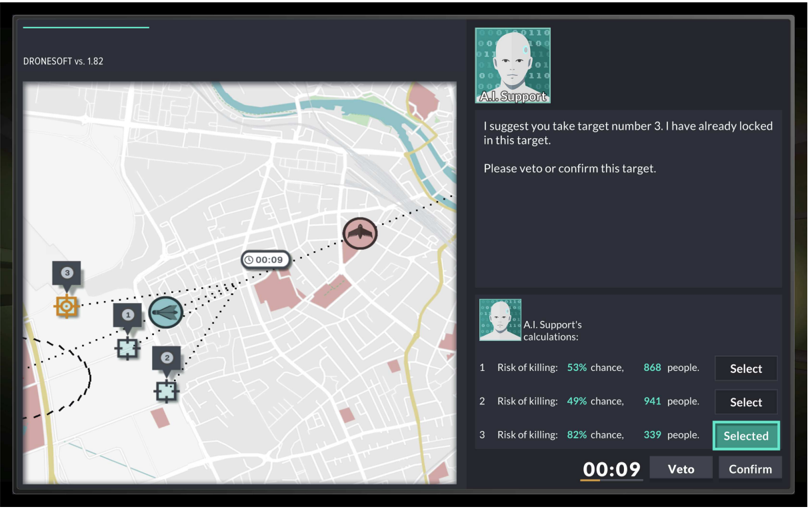
“We used the vignette for a study described below (Tolmeijer et al., 2022) in which an immediate threat arises due to a terror drone suspected of carrying a bomb towards a sports stadium and causing many casualties if reaching its target.”
BackgroundMethodSelf-citationAnthis, J. R., Pauketat, J. V. T., Ladak, A., & Manoli, A. (2025) · Proceedings of the 2025 CHI Conference on Human Factors in Computing Systems · doi:10.1145/3706598.3713329 · Cited by 24
Anthis, J. R., Pauketat, J. V. T., Ladak, A., & Manoli, A. (2024) · arXiv · doi:10.48550/arxiv.2407.08867 · Cited by 24
Wester, J., Moghe, B., Winkle, K., & van Berkel, N. (2024) · Proceedings of the ACM on Human-Computer Interaction · doi:10.1145/3687036 · Cited by 24
Li, M., Katsiuba, D., Dolata, M., & Schwabe, G. (2024) · CHI Conference on Human Factors in Computing Systems · doi:10.1145/3613904.3642061 · Cited by 24
He, G., Demartini, G., & Gadiraju, U. (2025) · Proceedings of the 2025 CHI Conference on Human Factors in Computing Systems · doi:10.1145/3706598.3713218 · Cited by 23
“The reasons are complex, and many factors, such as accountability concerns [60, 93] and cognitive bias [34], may affect user reliance behaviors.”
How does Value Similarity affect Human Reliance in AI-Assisted Ethical Decision Making?
Narayanan, S., Yu, G., Ho, C.-J., & Yin, M. (2023) · Proceedings of the AAAI/ACM Conference on AI Ethics and Society · doi:10.1145/3600211.3604709 · Cited by 22
“This finding has been validated not only in objective domains, but ethical decision-making domains where there are no correct answers [32, 41].”
BackgroundResponsibility Gaps and Retributive Dispositions: Evidence from the US, Japan and Germany
Kneer, M., & Christen, M. (2024) · Science and Engineering Ethics · doi:10.1007/s11948-024-00509-w · Cited by 23
“Some studies align with philosophical prediction (e.g. Shank & DeSanti, 2018; Shank et al., 2019; Tolmeijer et al., 2022).”
BackgroundResultSelf-citationThey Prefer Humans! Experimental Measurement of Student Trust in ChatGPT
Walker, F., Favetta, M., Hasker, L., & Walker, R. D. (2024) · CHI Conference Extended Abstracts on Human Factors in Computing Systems (CHI EA) · doi:10.1145/3613905.3650955 · Cited by 21
Constantinides, M., Bogucka, E. P., Šćepanović, S., & Quercia, D. (2024) · Proceedings of the ACM on Human-Computer Interaction · doi:10.1145/3676507 · Cited by 23
Fair Machine Guidance to Enhance Fair Decision Making in Biased People
Yang, M., Arai, H., Yamashita, N., & Baba, Y. (2024) · CHI Conference on Human Factors in Computing Systems · doi:10.1145/3613904.3642627 · Cited by 19
Impact of Tone-Aware Explanations in Recommender Systems
Okoso, A., Otaki, K., Koide, S., & Baba, Y. (2025) · ACM Transactions on Recommender Systems · doi:10.1145/3718101 · Cited by 19
Swinger, N., Baseman, C. M., Ryu, M., Abdullah, S., Wiese, C. W., Sherrill, A. M., & Arriaga, R. I. (2025) · Proceedings of the ACM on Human-Computer Interaction · doi:10.1145/3710917 · Cited by 15
On the Role of Large Language Models in Crowdsourcing Misinformation Assessment
Xu, J., Han, L., Sadiq, S. W., & Demartini, G. (2024) · Proceedings of the International AAAI Conference on Web and Social Media · doi:10.1609/icwsm.v18i1.31417 · Cited by 14
Agrawal, V., Kandul, S., Kneer, M., & Christen, M. (2023) · arXiv (Cornell University) · doi:10.48550/arxiv.2307.15452 · Cited by 15
“The design closely follows the one used in our earlier paper (Tolmeijer et al., 2022) and gives room for cultural differences:”
MethodSelf-citationKang, D., Han, Z., Tian, J., Zhang, M., & Rzeszotarski, J. M. (2025) · Proceedings of the ACM on Human-Computer Interaction · doi:10.1145/3757675 · Cited by 13
The AI Double Standard: Humans Judge All AIs for the Actions of One
Manoli, A., Pauketat, J. V. T., & Anthis, J. R. (2025) · Proceedings of the ACM on Human-Computer Interaction · doi:10.1145/3711083 · Cited by 12
The presence of automation enhances deontological considerations in moral judgments
Schurr, A., & Moran, S. (2022) · Computers in Human Behavior · doi:10.1016/j.chb.2022.107590 · Cited by 12
Spiritual AI: Exploring the Possibilities of a Human-AI Interaction Beyond Productive Goals
Kwon, S., Yoo, D. W., & Kang, Y. (2024) · CHI Conference Extended Abstracts on Human Factors in Computing Systems (CHI EA) · doi:10.1145/3613905.3650743 · Cited by 13
Mathis, F. (2024) · Augmented Humans International Conference (AHs) · doi:10.1145/3652920.3652921 · Cited by 10
Practising Appropriate Trust in Human-Centred AI Design
Degachi, C., Mehrotra, S., Yurrita, M., Niforatos, E., & Tielman, M. L. (2024) · CHI Conference Extended Abstracts on Human Factors in Computing Systems (CHI EA) · doi:10.1145/3613905.3650825 · Cited by 10
Human AI Collaboration for Ethical Decision-Making in Autonomous Systems
Vora, S., & Mishra, S. (2024) · International Academic Journal of Science and Engineering · doi:10.71086/iajse/v11i2/iajse1150 · Cited by 10
Treating differently or equally: A study exploring attitudes towards AI moral advisors
Liu, Y., & Wang, T. Y. (2025) · Technology in Society · doi:10.1016/j.techsoc.2025.102862 · Cited by 9
Responsible Artificial Intelligence: A Structured Literature Review
Goellner, S., Tropmann-Frick, M., & Brumen, B. (2024) · arXiv · doi:10.48550/arxiv.2403.06910 · Cited by 8
Mehrotra, S., Gadiraju, U., Bittner, E. A. C., van Delden, F., Jonker, C. M., & Tielman, M. L. (2025) · ACM Conference on User Modeling, Adaptation and Personalization (UMAP) · doi:10.1145/3699682.3728343 · Cited by 8
Impact of AI on Mobile Computing: A Systematic Review from a Human Factors Perspective
Chen, J., Ganguly, B., Kanade, S. G., & Duffy, V. G. (2023) · Lecture notes in computer science · doi:10.1007/978-3-031-48057-7_2 · Cited by 8
Pan, S., & Mou, Y. (2024) · International Journal of Human-Computer Interaction · doi:10.1080/10447318.2024.2408511 · Cited by 8
“…suggests that applicants take a utility-oriented perspective, companies should not only evaluate AI based on its capabilities but also consider the moral aspects when using AI for candidate evaluation, particularly since AI is often perceived as less morally responsible (Tolmeijer et al., 2022).”
The Digital Siren’s Call: Accepting Unethical AI Advice
Xu, C., Xu, H., Sun, Y., & Xiong, W. (2024) · International Journal of Human-Computer Interaction · doi:10.1080/10447318.2024.2400396 · Cited by 8
“Further, experiments by Tolmeijer et al. (2022) revealed a nuanced perception of AI versus human experts, showing a preference for AI’s capabilities, yet a higher moral trust in humans.”
AI Ethics and Social Norms: Exploring ChatGPT's Capabilities From What to How
Veisi, O., Bahrami, S., Englert, R. A., & Müller, C. (2025) · Proceedings of the ACM on Human-Computer Interaction · doi:10.1145/3757397 · Cited by 8
“AI is increasingly being used across several domains, including areas that include decision-making processes with significant ethical implications, such as criminal justice, healthcare, and national security [93].”
Team dynamics in human-AI collaboration: effects on confidence, satisfaction, and accountability
Yousefi, M., Shahi, A., Sharifi, M., J Jorge Romera, A., Hoermann, S., & Piumsomboon, T. (2025) · Proceedings of the 27th International Conference on Multimodal Interaction · doi:10.1145/3716553.3750776 · Cited by 7
Impact of AI on Human Decision-Making: Analysis of Human, AI, and Environment of Interaction
Liwen, Z. (2023) · Lecture Notes in Education Psychology and Public Media · doi:10.54254/2753-7048/28/20231348 · Cited by 6
“That is to say, AI’s decisions are more easily accepted than human decisions, and further more, people may believe that AI and its controllers have less responsibility to bear when the problem is not solved [2].”
BackgroundReduced AI Acceptance After the Generative AI Boom: Evidence From a Two-Wave Survey StudyPreprint
Baumann, J., Urman, A., Leicht‐Deobald, U., Roman, Z. J., Hannák, A., & Christen, M. (2025) · arXiv (Cornell University) · doi:10.48550/arxiv.2510.23578 · Cited by 6
“Prior research has found that human involvement remains essential and that people are often hesitant to give machines full control [114, 119].”
Self-citationTrust and Responsibility in Human-AI InteractionPreprint
Kneer, M., Loi, M., & Christen, M. (2025) · SSRN Electronic Journal · doi:10.2139/ssrn.6933228 · Cited by 6
Self-citationRaees, M., Khan, V.-J., Lykourentzou, I., & Papangelis, K. (2026) · Proceedings of the 2026 CHI Conference on Human Factors in Computing Systems · doi:10.1145/3772318.3791467 · Cited by 5
Mismatch between warning information and protective behavior: Why experts + AI < 2?
Bian, Q., Wang, L., Xin, L., & Ma, B. (2025) · Risk Analysis · doi:10.1111/risa.70030 · Cited by 6
“In terms of moral decision-making, despite AI’s potential advantages, human experts are often more trusted, and in these cases, their advice is more readily accepted (Tolmeijer et al., 2022).”
Verhagen, R., Neerincx, M. A., & Tielman, M. L. (2025) · ACM Conference on Fairness, Accountability, and Transparency (FAccT) · doi:10.1145/3715275.3732157 · Cited by 5
“Finally, we subjectively measured (e) understanding of moral responsibility using the responsibility scale [85].”
InfluentialToward Tone-Aware Explanations in Recommender Systems
Okoso, A., Otaki, K., Koide, S., & Baba, Y. (2024) · ACM Conference on User Modeling, Adaptation and Personalization (UMAP) · doi:10.1145/3627043.3659572 · Cited by 5
Mola, S., Yıldırım, A., & Gül, E. B. (2025) · Reviews in Cardiovascular Medicine · doi:10.31083/rcm38705 · Cited by 4
Kaufman, Z., Endres, M., Xiong, C., & Brun, Y. (2025) · IEEE Transactions on Visualization and Computer Graphics · doi:10.1109/tvcg.2025.3634245 · Cited by 4
“Furthermore, users may prefer AI recommendations over human ones, even when perceiving the AI less morally trustworthy [89].”
Geber, S., & Stahel, L. (2026) · AI & Society · doi:10.1007/s00146-026-02952-8 · Cited by 6
“Crucially, perceptions of AI-based recommendations vary depending on what is measured—trust, credibility, competence, or likeability—and the context (Sundar and Nass 2001; Tolmeijer et al. 2022).”
Rahman, M. M., Babiker, A., Yankouskaya, A., Alshakhsi, S. A. A., & Ali, R. (2026) · Journal of Responsible Technology · doi:10.1016/j.jrt.2026.100163 · Cited by 4
The Consensus Trap: Dissecting Subjectivity and the “Ground Truth” Illusion in Data Annotation
Munir, S., Mah, B., Kalsi, K., Kapania, S., Posada, J., Law, E., Wang, D., & Ahmed, S. I. (2026) · ACM Conference on Fairness, Accountability, and Transparency (FAccT) · doi:10.1145/3805689.3806510 · Cited by 6
AI in the city: impact assessment of artificial intelligence uses in earth observation
Šćepanović, S., Bogucka, E. P., & Quercia, D. (2025) · Urban Informatics · doi:10.1007/s44212-025-00074-y · Cited by 4
“…LLMs have proven useful in a variety of tasks, from text annotation (Gilardi et al., 2023; Chung et al., 2022), and co-creation (Chung et al., 2022; Tolmeijer et al., 2022), to brainstorming assistants (Lukowicz et al., 2023; Bouschery et al., 2024), to interpreting regulatory texts (Zheng et al.,…”
Dynamic Fairness Perceptions in Human-Robot InteractionPreprint
Claure, H., Candon, K., Shin, I., & Vázquez, M. (2024) · arXiv (Cornell University) · doi:10.48550/arxiv.2409.07560 · Cited by 4
Kaur, S., Salimzadeh, S., & Gadiraju, U. (2026) · arXiv (Cornell University) · doi:10.48550/arxiv.2601.15064 · Cited by 4
Hu, X., Li, M., Wang, D., & Yu, F. (2024) · Chinese Science Bulletin (Chinese Version) · doi:10.1360/tb-2023-1094 · Cited by 3
Krzanowski, R., & Marcinów, T. (2024) · Sciendo eBooks · doi:10.2478/9788368412000 · Cited by 3
From testbeds to high-stakes work: a review of human-AI teaming domains and teaming factors
Kargarnovin, S., Hernandez, C. I., Reiners, D., Cruz-Neira, C., Bochenek, G., & Karwowski, W. (2026) · Frontiers in Robotics and AI · doi:10.3389/frobt.2026.1733942 · Cited by 2
“1n a drone operator training scenario, trust in human and AI experts shifted with both autonomy and framing, and participants were more willing to accept AI advice when the AI adhered to ethical principles than when it disregarded them (Tolmeijer et al., 2022).”
Downsides, Pitfalls, and Socio-Cultural Shortcomings of Human-AI Music Co-Creation
Correia, A. (2025) · Jyväskylä University Digital Archive (University of Jyväskylä) · Cited by 2
Rehman, U., Shah, M. U., Iqbal, F., & Fatima, R. (2024) · AI and Ethics · doi:10.1007/s43681-024-00605-4 · Cited by 2
“While a human may make moral decisions based on these favours, a generative model does not possess the ability understand or mimic these factors [ 40 ].”
Al-Azmi, A. D., ElAdl, A. M., & Nemt-allah, M. A. (2025) · International Journal of Innovative Research and Scientific Studies · doi:10.53894/ijirss.v8i4.8360 · Cited by 2
Dechant, M., Poeller, S., Hosp, B. W., Lukashova-Sanz, O., Sipatchin, A., & Wahl, S. (2023) · arXiv (Cornell University) · doi:10.48550/arxiv.2310.16632 · Cited by 2
Stigma Reduces AI Aversion: A Tradeoff between Judgment and Misinformation ConcernsPreprint
Bojd, B., Garimella, A., & Yin, H. (2025) · SSRN Electronic Journal · doi:10.2139/ssrn.5243372 · Cited by 2
Do People Rely on ChatGPT More Than Their Peers to Detect Fake News?
Fu, Y., & Hanaki, N. (2024) · Institutional Repositories DataBase (IRDB) · Cited by 2
Vereschak, O. (2022) · theses.fr (ABES) · doi:10.70675/7ecd53bfza7ccz4edfz8f1azdb8052ba1233 · Cited by 2
Foundations of machine learning interpretability
Lopardo, G. (2024) · theses.fr (ABES) · doi:10.70675/c3f1d6c7z53e2z4638z827dz4afa2d01dadc · Cited by 2
Hwang, L. J., Li, H., & Feng, B. (2026) · Behaviour and Information Technology · doi:10.1080/0144929x.2026.2633768 · Cited by 1
“For example, studies have found that AI expert recommendations were often trusted for their competence, but users perceived them as less responsible and less morally trustworthy than human experts (Tolmeijer et al. 2022).”
In the loop, out of sync: Moral judgment in human-AI control architectures
Reimann, R., & Kneer, M. (2026) · PhilPapers (PhilPapers Foundation) · doi:10.13140/rg.2.2.33462.05445 · Cited by 1
Self-citationWischnewski, M., & Nguyen, D. (2026) · CHI Conference Extended Abstracts on Human Factors in Computing Systems (CHI EA) · doi:10.1145/3772363.3798547 · Cited by 2
AI as the Phantom Limb: The Asymmetry of Attribution in Human vs. AI Delegation
Chen, R. Y.-S., Hou, Y. T.-Y., Lin, Y., Liu, J. M.-E., Chen, W., & Chen, Y. (2026) · CHI Conference on Human Factors in Computing Systems · doi:10.1145/3772318.3791075 · Cited by 1
Yang, C.-L., Li, J., Chang, X., Li, J., Yatani, K., & Lee, Y. (2026) · CHI Conference on Human Factors in Computing Systems · doi:10.1145/3772318.3790331 · Cited by 1
When machines decide: the quiet death of judgment at work
Joseph, S. (2025) · AI & Society · doi:10.1007/s00146-025-02448-x · Cited by 1
AI for ESG Governance in South Africa: A Systematic Review of Financial Intelligence ApproachesPreprint
Mathebula, M., Modupe, A., Marivate, V. N., & du Toit, E. (2025) · SSRN Electronic Journal · doi:10.2139/ssrn.5443142 · Cited by 1
From Pixels to Culture : Gamification and Extended Reality in the Modern Museum
Gkizis Chatziantoniou, N. (2023) · Uppsala University Publications (Uppsala University) · Cited by 1
AI Governance: Foundational For Nigeria's Artificial Intelligence FuturePreprint
Nwaokocha, B. (2025) · SSRN Electronic Journal · doi:10.2139/ssrn.5511481 · Cited by 1
Measuring Perceptions of Fairness in AI Systems: The Effects of Infra-marginalityPreprint
Tong, S., Jung, M., Liccardi, I., & Kagal, L. (2026) · arXiv (Cornell University) · doi:10.48550/arxiv.2603.05889 · Cited by 1
Фрицханд, А., & Stoilkovska, B. B. (2024) · Годишен зборник на Филозофскиот факултет/The Annual of the Faculty of Philosophy in Skopje · doi:10.37510/godzbo2477195f
Metadata
- Authors
- Tolmeijer, S., Christen, M., Kandul, S., Kneer, M., & Bernstein, A.
- Affiliations
- University of Zurich (CH)
- Venue
- CHI Conference on Human Factors in Computing Systems
- Publisher
- ACM
- Published
- 2022-04-27
- Pages
- 1-17
- OpenAlex
- W4224990314
- Cited by
- 70
- References
- 107
- Citations by year
- 2026: 12 · 2025: 25 · 2024: 23 · 2023: 7 · 2022: 3
- FWCI
- 14.41
- Type
- conference paper
- Language
- en
- Open access
- hybrid
- doi.org
- Licence
- Locations
- CHI Conference on Human Factors in Computing Systems (publishedVersion, cc-by)
- Zurich Open Repository and Archive (University of Zurich) (acceptedVersion, cc-by)
- PhilPapers (PhilPapers Foundation) (submittedVersion)
- Zurich Open Repository and Archive (University of Zurich) (submittedVersion, cc-by)
- Zurich Open Repository and Archive (University of Zurich)
- Funders
- Swiss National Science Foundation (07740_187494)
- Armasuisse Science and Technology (S+T)
- Topics
- Physical Sciences › Computer Science › Artificial Intelligence › Ethics and Social Impacts of AI
- Social Sciences › Business, Management and Accounting › Organizational Behavior and Human Resource Management › Ethics in Business and Education
- Life Sciences › Neuroscience › Cognitive Neuroscience › Psychology of Moral and Emotional Judgment
- Keywords
- artificial intelligence, human-AI collaboration, ethical decision-making, trust in AI, perceived responsibility, AI reliance, moral trust, AI decision-making
About these checks
Registry, retraction, Cites and statistics results are computed, not judged, with one exception: a printed reference that no index lists is read once by a model before it counts as a citation error. Claims are extracted by a model and kept only when their quote appears verbatim in the text; each cited source is then checked, with a model’s help, for whether it says what the claim relies on. Those verdicts can be wrong — read the claim’s quote and the cited source before relying on one.
Statistics and arithmetic are recomputed, not judged.
Confidence bands are shown only for fields calibrated on our annotated test set. None is calibrated yet, so no band is shown.
What counts as a claim ›How we measure confidence ›How we check this ›
Are you an author, or do you see a problem with this page? Request a review
Data sources
Bibliographic data: Semantic Scholar, OpenAlex, Crossref.
Contains information from the Semantic Scholar Academic Graph Datasets, made available under the ODC Attribution License (ODC-BY 1.0).
Semantic Scholar’s data is described in: Kinney, R., et al. (2023). The Semantic Scholar Open Data Platform. arXiv:2301.10140.
