

Alternative Macroautophagic Pathways
Open accessThe DOI matches its Crossref record; 80 of the 80 references it cites were found in a registry or an index.
Abstract
Macroautophagy is a bulk degradation process that mediates the clearance of long-lived proteins, aggregates, or even whole organelles. This process includes the formation of autophagosomes, double-membrane structures responsible for delivering cargo to lysosomes for degradation. Currently, other alternative autophagy pathways have been described, which are independent of macroautophagic key players like Atg5 and Beclin 1 or the lipidation of LC3. In this review, we highlight recent insights in indentifying and understanding the molecular mechanism responsible for alternative autophagic pathways.
Overview
The claims and statistics of this paper haven’t been checked yet.
Free: it reads the open-access text and checks the first 5 claims that cite a source we can check. Create a free account to check every claim.
Integrity signals
Registry
Cites
Statistics
Figures
Verification
Claims the paper makes
The claims and statistics of this paper haven’t been checked yet.
Free: it reads the open-access text and checks the first 5 claims that cite a source we can check. Create a free account to check every claim.
Claims other papers make about this one
Each is checked against this paper’s own text: does it say what the citing paper says it does?
The check wasn’t confident either way, so it gives no verdict — never disputed.
In the citing paper
“Recent studies identified that 3xTg-AD mice had enhanced mTOR activity in the hippocampus and neocortex, two areas known to have high concentrations of Aβ plaques.502”
From Amyloid β-based therapy for Alzheimer’s disease: Challenges, successes and future (2023) · cites this paper as [502]
Experimental — accuracy not yet measured
Self-check
Percentages, sums and reported differences re-computed from the paper’s own numbers.
The self-check needs the paper’s full text.
Citations
Cites
Repertoires of Autophagy in the Pathogenesis of Ocular Diseases
Li, Y.-J., Jiang, Q., Cao, G.-F., Yao, J., & Yan, B. (2015) · Cellular Physiology and Biochemistry · doi:10.1159/000373980 · Cited by 16,304
Levine, B., & Klionsky, D. J. (2004) · Developmental Cell · doi:10.1016/s1534-5807(04)00099-1 · Cited by 3,678 · cited 1×
“Additionally, macroautophagy is essential for development, cell survival, and tissue-specific processes [12, 13].”
BackgroundInduction of autophagy and inhibition of tumorigenesis by beclin 1
Liang, X. H., Jackson, S., Seaman, M., Brown, K., Kempkes, B., Hibshoosh, H., & Levine, B. (1999) · Nature · doi:10.1038/45257 · Cited by 3,347 · cited 1×
“In this review, we highlight recent insights in indentifying and understanding the molecular mechanism responsible for alternative autophagic pathways.”
BackgroundAutophagosome formation: core machinery and adaptations
Xie, Z., & Klionsky, D. J. (2007) · Nature Cell Biology · doi:10.1038/ncb1007-1102 · Cited by 2,164 · cited 1×
“These autophagosomes are subsequently transported in a dynein-dependent manner along microtubules and fuse with endosomes or directly with lysosomes to form autolysosomes, resulting in breakdown of their contents by hydrolytic enzymes [11].”
BackgroundReactive oxygen species are essential for autophagy and specifically regulate the activity of Atg4
Scherz‐Shouval, R., Shvets, E., Fass, E., Shorer, H., Gil, L., & Elazar, Z. (2007) · The EMBO Journal · doi:10.1038/sj.emboj.7601623 · Cited by 2,101 · cited 1×
“A better understanding of the role of these alternative autophagic pathways and their molecular regulators raise to two crucial questions: (1) What is the origin of the autophagic membrane in the different autophagic routes, and (2)Which stimuli trigger the different autophagic pathways? In mammalian macroautophagy, v…”
BackgroundAxe, E. L., Walker, S. A., Manifava, M., Chandra, P., Roderick, H. L., Habermann, A., Griffiths, G., & Ktistakis, N. T. (2008) · The Journal of Cell Biology · doi:10.1083/jcb.200803137 · Cited by 1,885
Regulation of Mammalian Autophagy in Physiology and Pathophysiology
Ravikumar, B., Sarkar, S., Davies, J. E., Futter, M., Garcia-Arencibia, M., Green-Thompson, Z. W., Jimenez-Sanchez, M., Korolchuk, V. I., Lichtenberg, M., Luo, S., et al. (2010) · Physiological Reviews · doi:10.1152/physrev.00030.2009 · Cited by 1,727 · cited 1×
“In addition to its role in maintaining cellular homeostasis, autophagy is implicated in a wide range of physiological and pathological conditions, including early embryological development, clearance of pathogens, tumor suppression, and antigen processing and presentation [1].”
BackgroundThe role of autophagy in cancer development and response to therapy
Kondo, Y., Kanzawa, T., Sawaya, R., & Kondo, S. (2005) · Nature Reviews Cancer · doi:10.1038/nrc1692 · Cited by 1,654 · cited 1×
“These studies have shown that several agents stimulate autophagic cell death through Beclin 1 in canonical autophagy pathways [56].”
BackgroundAutophagy in mammalian development and differentiation
Mizushima, N., & Levine, B. (2010) · Nature Cell Biology · doi:10.1038/ncb0910-823 · Cited by 1,555 · cited 1×
“Additionally, macroautophagy is essential for development, cell survival, and tissue-specific processes [12, 13].”
BackgroundMitochondria Supply Membranes for Autophagosome Biogenesis during Starvation
Hailey, D. W., Rambold, A. S., Satpute-Krishnan, P., Mitra, K., Sougrat, R., Kim, P. K., & Lippincott-Schwartz, J. (2010) · Cell · doi:10.1016/j.cell.2010.04.009 · Cited by 1,429 · cited 2×
“A better understanding of the role of these alternative autophagic pathways and their molecular regulators raise to two crucial questions: (1) What is the origin of the autophagic membrane in the different autophagic routes, and (2)Which stimuli trigger the different autophagic pathways? In mammalian macroautophagy, v…”
BackgroundLC3, GABARAP and GATE16 localize to autophagosomal membrane depending on form-II formation
Kabeya, Y., Mizushima, N., Yamamoto, A., Oshitani-Okamoto, S., Ohsumi, Y., & Yoshimori, T. (2004) · Journal of Cell Science · doi:10.1242/jcs.01131 · Cited by 1,394 · cited 1×
“Similar to the knockdown of the various LC3 isoforms (LC3A-C), knockdown of the Atg8-related GABARAP proteins, that can interact with autophagosomes, did not affect the targeting of peptides towards lysosomes [44, 45].”
BackgroundSeglen, P. O., & Gordon, P. B. (1982) · Proceedings of the National Academy of Sciences · doi:10.1073/pnas.79.6.1889 · Cited by 1,360
Nix is a selective autophagy receptor for mitochondrial clearance
Novak, I., Kirkin, V., McEwan, D. G., Zhang, J., Wild, P., Rozenknop, A., Rogov, V., Löhr, F., Popovic, D., Occhipinti, A., et al. (2010) · The EMBO Reports · doi:10.1038/embor.2009.256 · Cited by 1,309
A Unified Nomenclature for Yeast Autophagy-Related Genes
Klionsky, D. J., Cregg, J. M., Dunn, W. A., Emr, S. D., Sakai, Y., Sandoval, I. V., Sibirny, A., Subramani, S., Thumm, M., Veenhuis, M., et al. (2003) · Developmental Cell · doi:10.1016/s1534-5807(03)00296-x · Cited by 1,266 · cited 1×
“Macroautophagy is a multistep process controlled by proteins termed autophagy-related (Atg) proteins [18].”
BackgroundHDAC6 rescues neurodegeneration and provides an essential link between autophagy and the UPS.
Pandey, U. B., Nie, Z., Batlevi, Y., McCray, B. A., Ritson, G. P., Nedelsky, N. B., Schwartz, S. L., DiProspero, N. A., Knight, M. A., Schuldiner, O., et al. (2007) · Nature · doi:10.1038/nature05853 · Cited by 1,234
Essential role for Nix in autophagic maturation of erythroid cells
Sandoval, H., Thiagarajan, P., Dasgupta, S. K., Schumacher, A., Prchal, J. T., Chen, M., & Wang, J. (2008) · Nature · doi:10.1038/nature07006 · Cited by 1,185 · cited 1×
“but it may also target mitochondria for degradation in an LC3-independent manner [27, 33, 34].”
BackgroundWu, Y.-T., Tan, H.-L., Shui, G., Bauvy, C., Huang, Q., Wenk, M. R., Ong, C.-N., Codogno, P., & Shen, H.-M. (2010) · Journal of Biological Chemistry · doi:10.1074/jbc.m109.080796 · Cited by 1,127
The Atg12-Atg5 Conjugate Has a Novel E3-like Activity for Protein Lipidation in Autophagy
Hanada, T., Noda, N. N., Satomi, Y., Ichimura, Y., Fujioka, Y., Takao, T., Inagaki, F., & Ohsumi, Y. (2007) · Journal of Biological Chemistry · doi:10.1074/jbc.c700195200 · Cited by 1,123 · cited 1×
“This process requires Atg7 and Atg3, and the Atg16L complex modulates the LC3-I lipidation by acting like an E3-like enzyme [25].”
BackgroundA subdomain of the endoplasmic reticulum forms a cradle for autophagosome formation
Hayashi-Nishino, M., Fujita, N., Noda, T., Yamaguchi, A., Yoshimori, T., & Yamamoto, A. (2009) · Nature Cell Biology · doi:10.1038/ncb1991 · Cited by 1,060 · cited 1×
“Several studies reported that the autophagosomal membrane can be classified as of a thin type (6–8 nm), similar to membranes of the ER and mitochondria [60, 72–75].”
BackgroundDiscovery of Atg5/Atg7-independent alternative macroautophagy
Nishida, Y., Arakawa, S., Fujitani, K., Yamaguchi, H., Mizuta, T., Kanaseki, T., Komatsu, M., Otsu, K., Tsujimoto, Y., & Shimizu, S. (2009) · Nature · doi:10.1038/nature08455 · Cited by 1,001 · cited 5×
“Atg5/Atg7independent Beclin 1 Vps34 Ulk1 Fip200 Atg5 Atg7 Atg9 Atg12 Atg16 LC3 Etoposide Staurosporine Starvation Atg5-/- MEF Atg7-/- MEF wt MEF [49]”
BackgroundInfluentialA Receptor for the Selective Uptake and Degradation of Proteins by Lysosomes
Cuervo, A. M., & Dice, J. F. (1996) · Science · doi:10.1126/science.273.5274.501 · Cited by 979 · cited 1×
“The chaperone-substrate complex subsequently binds the lysosome through interaction with the receptor Lamp-2a on the lysosomal membrane [8].”
BackgroundNIX is required for programmed mitochondrial clearance during reticulocyte maturation
Schweers, R. L., Zhang, J., Randall, M. S., Loyd, M. R., Li, W., Dorsey, F. C., Kundu, M., Opferman, J. T., Cleveland, J. L., Miller, J. L., et al. (2007) · Proceedings of the National Academy of Sciences · doi:10.1073/pnas.0708818104 · Cited by 936 · cited 3×
“but it may also target mitochondria for degradation in an LC3-independent manner [27, 33, 34].”
BackgroundMicroautophagy of Cytosolic Proteins by Late Endosomes
Sahu, R., Kaushik, S., Clement, C. C., Cannizzo, E. S., Scharf, B., Follenzi, A., Potolicchio, I., Nieves, E., Cuervo, A. M., & Santambrogio, L. (2011) · Developmental Cell · doi:10.1016/j.devcel.2010.12.003 · Cited by 902 · cited 1×
“Finally, we also examined endosomal microautophagy, a process that delivers soluble cytosolic material to vesicles of late endosomes or multivesicular bodies (MVBs) [46, 47].”
BackgroundPlasma membrane contributes to the formation of pre-autophagosomal structures
Ravikumar, B., Moreau, K., Jahreiss, L., Puri, C., & Rubinsztein, D. C. (2010) · Nature Cell Biology · doi:10.1038/ncb2078 · Cited by 902
Blommaart, E. F. C., Krause, U., Schellens, J. P. M., Vreeling‐Sindelárová, H., & Meijer, A. J. (1997) · European Journal of Biochemistry · doi:10.1111/j.1432-1033.1997.0240a.x · Cited by 869
Studies on the mechanisms of autophagy: formation of the autophagic vacuole.
Dunn, W. A. (1990) · The Journal of cell biology · doi:10.1083/jcb.110.6.1923 · Cited by 787
HDAC6 and microtubules are required for autophagic degradation of aggregated huntingtin.
Iwata, A., Riley, B. E., Johnston, J. A., & Kopito, R. R. (2005) · Journal of Biological Chemistry · doi:10.1074/jbc.m508786200 · Cited by 719
Polson, H. E. J., de Lartigue, J., Rigden, D. J., Reedijk, M., Urbé, S., Clague, M. J., & Tooze, S. A. (2010) · Autophagy · doi:10.4161/auto.6.4.11863 · Cited by 712 · cited 1×
“In this review, we highlight recent insights in indentifying and understanding the molecular mechanism responsible for alternative autophagic pathways.”
BackgroundDing, W.-X., Ni, H.-M., Gao, W., Yoshimori, T., Stolz, D. B., Ron, D., & Yin, X.-M. (2007) · The American Journal of Pathology · doi:10.2353/ajpath.2007.070188 · Cited by 708
3D tomography reveals connections between the phagophore and endoplasmic reticulum
Ylä-Anttila, P., Vihinen, H., Jokitalo, E., & Eskelinen, E.-L. (2009) · Autophagy · doi:10.4161/auto.5.8.10274 · Cited by 675 · cited 1×
“Several studies reported that the autophagosomal membrane can be classified as of a thin type (6–8 nm), similar to membranes of the ER and mitochondria [60, 72–75].”
BackgroundAutophagy Inhibition Compromises Degradation of Ubiquitin-Proteasome Pathway Substrates
Korolchuk, V. I., Mansilla, A., Menzies, F. M., & Rubinsztein, D. C. (2009) · Molecular Cell · doi:10.1016/j.molcel.2009.01.021 · Cited by 610 · cited 1×
“Indeed, silencing of p62 increases the amount of UPS clients, whereas overexpression of p62 inhibits degradation of the proteasomal substrates p53 and UbG76V-GFP [40, 41].”
BackgroundKundu, M., Lindsten, T., Yang, C.-Y., Wu, J., Zhao, F., Zhang, J., Selak, M. A., Ney, P. A., & Thompson, C. B. (2008) · Blood · doi:10.1182/blood-2008-02-137398 · Cited by 569 · cited 1×
“differentiation where a lack of mitochondria is achieved by mitophagy [27, 31, 32].”
BackgroundCanonical and non-canonical autophagy: variations on a common theme of self-eating?
Codogno, P., Mehrpour, M., & Proikas-Cezanne, T. (2012) · Nature Reviews Molecular Cell Biology · doi:10.1038/nrm3249 · Cited by 549 · cited 1×
“In this review, we highlight recent insights in indentifying and understanding the molecular mechanism responsible for alternative autophagic pathways.”
BackgroundNanodomain coupling between Ca2+ channels and sensors of exocytosis at fast mammalian synapses
Eggermann, E., Bucurenciu, I., Goswami, S. P., & Jonas, P. (2012) · Nature Reviews Neuroscience · doi:10.1038/nrn3125 · Cited by 500
Coordination of membrane events during autophagy by multiple class III PI3-kinase complexes
Simonsen, A., & Tooze, S. A. (2009) · Journal of Cell Biology · doi:10.1083/jcb.200907014 · Cited by 497 · cited 1×
“In this review, we highlight recent insights in indentifying and understanding the molecular mechanism responsible for alternative autophagic pathways.”
BackgroundAn Atg9-containing compartment that functions in the early steps of autophagosome biogenesis
Mari, M., Griffith, J., Rieter, E., Krishnappa, L., Klionsky, D. J., & Reggiori, F. (2010) · Journal of Cell Biology · doi:10.1083/jcb.200912089 · Cited by 491 · cited 1×
“In this review, we highlight recent insights in indentifying and understanding the molecular mechanism responsible for alternative autophagic pathways.”
BackgroundAutophagy requires endoplasmic reticulum targeting of the PI3-kinase complex via Atg14L
Matsunaga, K., Morita, E., Saitoh, T., Akira, S., Ktistakis, N. T., Izumi, T., Noda, T., & Yoshimori, T. (2010) · Journal of Cell Biology · doi:10.1083/jcb.200911141 · Cited by 456 · cited 1×
“In this review, we highlight recent insights in indentifying and understanding the molecular mechanism responsible for alternative autophagic pathways.”
BackgroundZhu, J.-H., Horbinski, C., Guo, F., Watkins, S., Uchiyama, Y., & Chu, C. T. (2007) · The American Journal of Pathology · doi:10.2353/ajpath.2007.060524 · Cited by 445 · cited 1×
“In this review, we highlight recent insights in indentifying and understanding the molecular mechanism responsible for alternative autophagic pathways.”
BackgroundScarlatti, F., Maffei, R., Beau, I., Codogno, P., & Ghidoni, R. (2008) · Cell Death & Differentiation · doi:10.1038/cdd.2008.51 · Cited by 412 · cited 7×
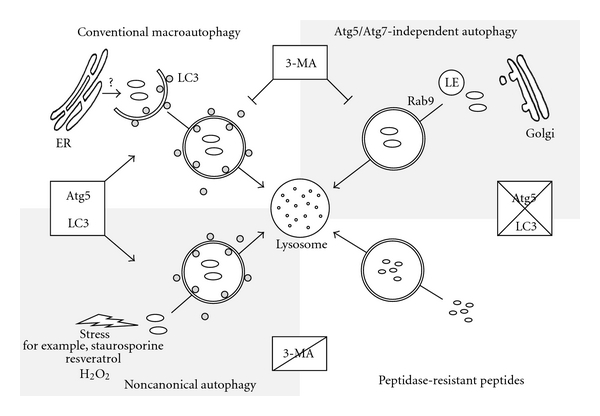
“Accordingly, protein degradation via this pathway was inhibited by the PI3K inhibitor 3-MA.”
BackgroundInfluentialSatoo, K., Noda, N. N., Kumeta, H., Fujioka, Y., Mizushima, N., Ohsumi, Y., & Inagaki, F. (2009) · The EMBO Journal · doi:10.1038/emboj.2009.80 · Cited by 379 · cited 1×
“Atg4 is also involved in the deconjugation reaction of LC3-II, as Atg4 delipidates LC3-II and removes it from the autophagosomal membrane [24, 26].”
BackgroundTanida, I., Sou, Y.-S., Ezaki, J., Minematsu-Ikeguchi, N., Ueno, T., & Kominami, E. (2004) · Journal of Biological Chemistry · doi:10.1074/jbc.m401461200 · Cited by 334
LC3 and GATE-16 N Termini Mediate Membrane Fusion Processes Required for Autophagosome Biogenesis
Weidberg, H., Shpilka, T., Shvets, E., Abada, A., Shimron, F., & Elazar, Z. (2011) · Developmental Cell · doi:10.1016/j.devcel.2011.02.006 · Cited by 324 · cited 1×
“Similar to the knockdown of the various LC3 isoforms (LC3A-C), knockdown of the Atg8-related GABARAP proteins, that can interact with autophagosomes, did not affect the targeting of peptides towards lysosomes [44, 45].”
BackgroundAn Intralysosomal hsp70 Is Required for a Selective Pathway of Lysosomal Protein Degradation
Agarraberes, F. A., Terlecky, S. R., & Dice, J. F. (1997) · The Journal of Cell Biology · doi:10.1083/jcb.137.4.825 · Cited by 312 · cited 1×
“Upon delivery by Hsc70, the substrate protein is unfolded before crossing the lysosomal membrane and lysosomal Hsc70 pulls the substrate into the lysosomal matrix where it is degraded by proteases [9].”
BackgroundTwo ubiquitin-like conjugation systems essential for autophagy
Ohsumi, Y., & Mizushima, N. (2004) · Seminars in Cell & Developmental Biology · doi:10.1016/j.semcdb.2003.12.004 · Cited by 308 · cited 1×
“on two ubiquitin-like conjugation systems [23].”
Seeing is believing: The impact of electron microscopy on autophagy research
Eskelinen, E.-L., Reggiori, F., Baba, M., Kovács, A. L., & Seglen, P. O. (2011) · Autophagy · doi:10.4161/auto.7.9.15760 · Cited by 281
Molecular determinants of protein half‐lives in eukaryotic cells
Dice, J. F. (1987) · The FASEB Journal · doi:10.1096/fasebj.1.5.2824267 · Cited by 266 · cited 1×
“The second type of autophagy is CMA, which selectively degrades specific cytosolic proteins containing a pentapeptide motif (KFERQ) that is recognized by the heat shock cognate protein 70 (Hsc70) [6, 7].”
BackgroundLu, Q., Yang, P., Huang, X., Hu, W., Guo, B., Wu, F., Lin, L., Kovács, A. L., Yu, L., & Zhang, H. (2011) · Developmental Cell · doi:10.1016/j.devcel.2011.06.024 · Cited by 236
GFP-like Proteins Stably Accumulate in Lysosomes
Katayama, H., Yamamoto, A., Mizushima, N., Yoshimori, T., & Miyawaki, A. (2008) · Cell Structure and Function · doi:10.1247/csf.07011 · Cited by 225 · cited 1×
“Upon expression, these fluorescent proteins formed cytoplasmic fluorescent puncta that resembled lysosomes, similar as observed for the peptidase-resistant peptides [48].”
BackgroundNix directly binds to GABARAP: A possible crosstalk between apoptosis and autophagy
Schwarten, M., Mohrlüder, J., Ma, P., Stoldt, M., Thielmann, Y., Stangler, T., Hersch, N., Hoffmann, B., Merkel, R., & Willbold, D. (2009) · Autophagy · doi:10.4161/auto.5.5.8494 · Cited by 224
Autophagy, heterophagy, microautophagy and crinophagy as the means for intracellular degradation
Marzella, L., Ahlberg, J., & Glaumann, H. (1981) · Virchows Archiv B Cell Pathology Including Molecular Pathology · doi:10.1007/bf02912068 · Cited by 196 · cited 1×
“Finally, we also examined endosomal microautophagy, a process that delivers soluble cytosolic material to vesicles of late endosomes or multivesicular bodies (MVBs) [46, 47].”
BackgroundMortimore, G. E., Hutson, N. J., & Surmacz, C. A. (1983) · Proceedings of the National Academy of Sciences · doi:10.1073/pnas.80.8.2179 · Cited by 186 · cited 1×
“Hindawi Publishing Corporation International Journal of Cell Biology Volume 2012, Article ID 189794, 8 pages doi:10.1155/2012/189794”
BackgroundInfluentialBeclin 1-independent autophagy contributes to apoptosis in cortical neurons
Grishchuk, Y., Ginet, V., Truttmann, A. C., Clarke, P. G. H., & Puyal, J. (2011) · Autophagy · doi:10.4161/auto.7.10.16608 · Cited by 178 · cited 1×
“Etoposide MK801 primary cortical neurons [51]”
Müller, O., Sattler, T., Flötenmeyer, M., Schwarz, H., Plattner, H., & Mayer, A. (2000) · The Journal of Cell Biology · doi:10.1083/jcb.151.3.519 · Cited by 173 · cited 1×
“Hindawi Publishing Corporation International Journal of Cell Biology Volume 2012, Article ID 189794, 8 pages doi:10.1155/2012/189794”
BackgroundInfluentialDiwan, A., Koesters, A. G., Odley, A. M., Pushkaran, S., Baines, C. P., Spike, B. T., Daria, D., Jegga, A. G., Geiger, H., Aronow, B. J., et al. (2007) · Proceedings of the National Academy of Sciences · doi:10.1073/pnas.0610666104 · Cited by 158 · cited 1×
“but it may also target mitochondria for degradation in an LC3-independent manner [27, 33, 34].”
BackgroundAutophagy: A Forty-Year Search for a Missing Membrane Source
Juhasz, G., & Neufeld, T. P. (2006) · PLoS Biology · doi:10.1371/journal.pbio.0040036 · Cited by 152
Smith, D. M., Patel, S., Raffoul, F., Haller, E., Mills, G. B., & Nanjundan, M. (2010) · Cell Death & Differentiation · doi:10.1038/cdd.2010.53 · Cited by 135 · cited 1×
“Similarly, a Beclin 1-independent pathway has been reported in neuronal cells treated with the neurotoxin 1-methyl-4phenylpyridinium (MPP+) [53] and in other cellular systems in response to various drugs [54, 55].”
BackgroundA novel link between autophagy and the ubiquitin-proteasome system
Korolchuk, V. I., Menzies, F. M., & Rubinsztein, D. C. (2009) · Autophagy · doi:10.4161/auto.8840 · Cited by 130 · cited 2×
“Interestingly, in a study using Green Fluorescent Protein (GFP) like fluorophores, a pathway reminiscent of that we observed for the peptidase-resistant peptides was observed [40].”
BackgroundSeglen, P. O., Gordon, P. B., & Holen, I. (1990) · PubMed · Cited by 127
Dice, J. F., Chiang, H. L., Spencer, E. P., & Backer, J. M. (1986) · Journal of Biological Chemistry · doi:10.1016/s0021-9258(19)62694-3 · Cited by 126 · cited 1×
“The second type of autophagy is CMA, which selectively degrades specific cytosolic proteins containing a pentapeptide motif (KFERQ) that is recognized by the heat shock cognate protein 70 (Hsc70) [6, 7].”
BackgroundCell-Free Reconstitution of Microautophagic Vacuole Invagination and Vesicle Formation
Sattler, T., & Mayer, A. (2000) · The Journal of Cell Biology · doi:10.1083/jcb.151.3.529 · Cited by 121 · cited 1×
“Hindawi Publishing Corporation International Journal of Cell Biology Volume 2012, Article ID 189794, 8 pages doi:10.1155/2012/189794”
BackgroundInfluentialToward unraveling membrane biogenesis in mammalian autophagy
Yoshimori, T., & Noda, T. (2008) · Current Opinion in Cell Biology · doi:10.1016/j.ceb.2008.03.010 · Cited by 117 · cited 1×
“Hindawi Publishing Corporation International Journal of Cell Biology Volume 2012, Article ID 189794, 8 pages doi:10.1155/2012/189794”
BackgroundInfluentialThe puzzling origin of the autophagosomal membrane
Mari, M., Tooze, S. A., & Reggiori, F. (2011) · F1000 Biology Reports · doi:10.3410/b3-25 · Cited by 117 · cited 1×
“Several studies reported that the autophagosomal membrane can be classified as of a thin type (6–8 nm), similar to membranes of the ER and mitochondria [60, 72–75].”
BackgroundThe proapoptotic factor Nix is coexpressed with Bcl-xL during terminal erythroid differentiation
Aerbajinai, W., Giattina, M., Lee, Y. T., Raffeld, M., & Miller, J. L. (2003) · Blood · doi:10.1182/blood-2002-11-3324 · Cited by 116
Mauthe, M., Jacob, A., Freiberger, S., Hentschel, K., Stierhof, Y.-D., Codogno, P., & Proikas-Cezanne, T. (2011) · Autophagy · doi:10.4161/auto.7.12.17802 · Cited by 116 · cited 1×
“Similarly, a Beclin 1-independent pathway has been reported in neuronal cells treated with the neurotoxin 1-methyl-4phenylpyridinium (MPP+) [53] and in other cellular systems in response to various drugs [54, 55].”
BackgroundA Role for Autophagic Protein Beclin 1 Early in Lymphocyte Development
Arsov, I., Adebayo, A., Kucerova-Levisohn, M., Haye, J., MacNeil, M., Papavasiliou, F. N., Yue, Z., & Ortiz, B. D. (2011) · The Journal of Immunology · doi:10.4049/jimmunol.1002223 · Cited by 114 · cited 1×
“In this review, we highlight recent insights in indentifying and understanding the molecular mechanism responsible for alternative autophagic pathways.”
BackgroundYamamoto, A., Masaki, R., & Tashiro, Y. (1990) · Journal of Histochemistry & Cytochemistry · doi:10.1177/38.4.2319125 · Cited by 94 · cited 1×
“A better understanding of the role of these alternative autophagic pathways and their molecular regulators raise to two crucial questions: (1) What is the origin of the autophagic membrane in the different autophagic routes, and (2)Which stimuli trigger the different autophagic pathways? In mammalian macroautophagy, v…”
BackgroundUeno, T., Muno, D., & Kominami, E. (1991) · Journal of Biological Chemistry · doi:10.1016/s0021-9258(18)55161-9 · Cited by 88 · cited 1×
“A better understanding of the role of these alternative autophagic pathways and their molecular regulators raise to two crucial questions: (1) What is the origin of the autophagic membrane in the different autophagic routes, and (2)Which stimuli trigger the different autophagic pathways? In mammalian macroautophagy, v…”
BackgroundReggiori, F. (2006) · Current Topics in Developmental Biology · doi:10.1016/s0070-2153(06)74001-7 · Cited by 85 · cited 2×
“[16, 17].”
BackgroundThe nuclear cofactor DOR regulates autophagy in mammalian and Drosophila cells
Mauvezin, C., Orpinell, M., Francis, V. A., Mansilla, F., Duran, J., Ribas, V., Palacín, M., Boya, P., Teleman, A. A., & Zorzano, A. (2010) · EMBO reports · doi:10.1038/embor.2009.242 · Cited by 85 · cited 1×
“identified the nuclear cofactor of thyroid hormone receptors, termed DOR (diabetes- and obesity-regulated gene), as a new player of macroautophagy [35].”
BackgroundDu, Y., Yang, D., Liang, L., Luo, G., Li, T., Fan, X., Wang, Q., Zhang, X., Wang, Y., & Le, W. (2009) · Autophagy · doi:10.4161/auto.5.5.8377 · Cited by 83
Autophagy receptors in developmental clearance of mitochondria
Novak, I., & Dikic, I. (2011) · Autophagy · doi:10.4161/auto.7.3.14509 · Cited by 73
Kovács, A. L., Pálfia, Z., Réz, G., Vellai, T., & Kovács, J. (2007) · Autophagy · doi:10.4161/auto.4590 · Cited by 71 · cited 1×
“In this review, we highlight recent insights in indentifying and understanding the molecular mechanism responsible for alternative autophagic pathways.”
BackgroundMimicking proteasomal release of polyglutamine peptides initiates aggregation and toxicity
Raspe, M. A., Gillis, J. M. E. P., Krol, H. A., Schipper-Krom, S., Bosch, K. S., van Veen, H. A., & Reits, E. A. (2009) · Journal of Cell Science · doi:10.1242/jcs.045567 · Cited by 68
Self-citationEndoplasmic Reticulum and Golgi Complex: Contributions to, and Turnover by, Autophagy
Mijaljica, D., Prescott, M., & Devenish, R. J. (2006) · Traffic · doi:10.1111/j.1600-0854.2006.00495.x · Cited by 61 · cited 1×
“Therefore, attempting to determine the origin of the autophagosomal membrane based on the associated proteins remains a challenge [71].”
BackgroundWaal, E. J. D., Vreeling‐Sindelárová, H., Schellens, J. P. M., Houtkooper, J. M., & James, J. (1986) · Cell and Tissue Research · doi:10.1007/bf00218073 · Cited by 55 · cited 1×
“Hindawi Publishing Corporation International Journal of Cell Biology Volume 2012, Article ID 189794, 8 pages doi:10.1155/2012/189794”
BackgroundInfluentialSeo, G., Kim, S. K., Byun, Y. J., Oh, E., Jeong, S.-W., Chae, G. T., & Lee, S.-B. (2011) · Free Radical Research · doi:10.3109/10715762.2010.535530 · Cited by 52 · cited 2×
“7 (macrophage cells) [52]”
BackgroundHendil, K. B., Lauridsen, A. M. B., & Seglen, P. O. (1990) · Biochemical Journal · doi:10.1042/bj2720577 · Cited by 34
Atg9 reservoirs, a new organelle of the yeast endomembrane system?
Mari, M. C., & Reggiori, F. (2010) · Autophagy · doi:10.4161/auto.6.8.13792 · Cited by 33 · cited 1×
“In this review, we highlight recent insights in indentifying and understanding the molecular mechanism responsible for alternative autophagic pathways.”
BackgroundAraki, N., Takashima, Y., & Makita, T. (1995) · Histochemistry and Cell Biology · doi:10.1007/bf01464321 · Cited by 13 · cited 1×
“A better understanding of the role of these alternative autophagic pathways and their molecular regulators raise to two crucial questions: (1) What is the origin of the autophagic membrane in the different autophagic routes, and (2)Which stimuli trigger the different autophagic pathways? In mammalian macroautophagy, v…”
BackgroundAminopeptidase‐Resistant Peptides Are Targeted to Lysosomes and Subsequently Degraded
Gillis, J. M. E. P., Benckhuijsen, W. E., van Veen, H. A., Sanz, A. S., Drijfhout, J. W., & Reits, E. A. (2011) · Traffic · doi:10.1111/j.1600-0854.2011.01270.x · Cited by 5 · cited 4×
“The Atg5/Atg7-independent autophagic pathway was recently discovered in mouse embryonic fibroblasts (MEF) lacking Atg5 and Atg7 that were treated with the cytotoxic stressor etoposide, which caused an equivalent appearance of autophagic vacuoles when compared to wild-type cells [49].”
BackgroundSelf-citation
Research works printed but not linked: 1
- Axe EL Walker SA Manifava M Autophagosome formation from membrane compartments enriched in phosphatidylinositol 3-phosphate and dynamically connected to the endoplasmic reticulum Journal of Cell Biology 2008 182 4 685 701 18725538 PMC2518708 · DOI · Paper page
Cited by
Amyloid β-based therapy for Alzheimer’s disease: Challenges, successes and future
Zhang, Y., Chen, H., Li, R., Sterling, K., & Song, W. (2023) · Signal Transduction and Targeted Therapy · doi:10.1038/s41392-023-01484-7 · Cited by 988
“Recent studies identified that 3xTg-AD mice had enhanced mTOR activity in the hippocampus and neocortex, two areas known to have high concentrations of Aβ plaques.(502) Treatment with rapamycin significantly stimulated autophagy associated with markedly reduced both intracellular Aβ and extracellular amyloid depositio…”
BackgroundRole of tau protein in Alzheimer’s disease: The prime pathological player
Muralidar, S., Ambi, S. V., Sekaran, S., Thirumalai, D., & Palaniappan, B. (2020) · International Journal of Biological Macromolecules · doi:10.1016/j.ijbiomac.2020.07.327 · Cited by 278
Regulation of autophagy by polyphenolic compounds as a potential therapeutic strategy for cancer
Hasima, N., & Ozpolat, B. (2014) · Cell Death & Disease · doi:10.1038/cddis.2014.467 · Cited by 257
Diminished Autophagy Limits Cardiac Injury in Mouse Models of Type 1 Diabetes
Xu, X., Kobayashi, S., Chen, K., Timm, D., Volden, P., Huang, Y., Gulick, J., Yue, Z., Robbins, J., Epstein, P. N., et al. (2013) · Journal of Biological Chemistry · doi:10.1074/jbc.m113.474650 · Cited by 251
“Diabetes and Autophagy Deficiency Increased the Expression of Rab9, an Essential Component of a Non-canonical Autophagic Pathway—Except for canonical autophagy, other forms of non-canonical autophagic pathways have been reported in recent years (44, 45).”
BackgroundFerretta, A., Gaballo, A., Tanzarella, P., Piccoli, C., Capitanio, N., Nico, B., Annese, T., Di Paola, M., Dell'Aquila, C., De Mari, M., et al. (2014) · Biochimica et Biophysica Acta (BBA) - Molecular Basis of Disease · doi:10.1016/j.bbadis.2014.02.010 · Cited by 243
“These results would be consistent with the occurrence of both LC3-dependent and LC3-independentmacroautophagic pathways, as recently suggested [44], with the latter being promotable by resveratrol in a parkin context.”
Result
Metadata
- Authors
- Juenemann, K., & Reits, E. A.
- Affiliations
- Amsterdam UMC Location University of Amsterdam (NL)
- Corresponding author
- Juenemann, Katrin
- Reits, Eric A.
- ORCID
- Reits, Eric A.
- Venue
- International Journal of Cell Biology
- Publisher
- Hindawi Limited
- Published
- 2012
- Volume
- 2012
- Pages
- 1-8
- ISSN
- 1687-8876 (ISSN-L)
- 1687-8884
- PMC
- PMC3320029
- OpenAlex
- W2089004935
- Cited by
- 58
- References
- 80
- Citations by year
- 2024: 1 · 2023: 1 · 2022: 4 · 2021: 3 · 2020: 4 · 2019: 4 · 2018: 2 · 2017: 3 · 2016: 3 · 2015: 11 · 2014: 10 · 2013: 10 · 2012: 2
- FWCI
- 7.90
- Type
- journal article
- Language
- en
- Open access
- gold
- doi.org
- Locations
- International Journal of Cell Biology (publishedVersion, cc-by)
- Europe PMC (PubMed Central) (publishedVersion, cc-by)
- PubMed Central (publishedVersion, cc-by)
- PubMed (publishedVersion)
- Pure Amsterdam UMC (publishedVersion)
- Data Archiving and Networked Services (DANS) (submittedVersion)
- DOAJ (DOAJ: Directory of Open Access Journals) (submittedVersion, cc-by-sa)
- Topics
- Life Sciences › Biochemistry, Genetics and Molecular Biology › Cell Biology › Autophagy in Disease and Therapy
- Life Sciences › Biochemistry, Genetics and Molecular Biology › Physiology › Calcium signaling and nucleotide metabolism
- Life Sciences › Biochemistry, Genetics and Molecular Biology › Molecular Biology › Ubiquitin and proteasome pathways
- Keywords
- macroautophagy, autophagosome formation, lysosomal degradation, protein clearance, protein aggregates, ATG5, Beclin-1, LC3 lipidation
About these checks
Registry, retraction, Cites and statistics results are computed, not judged, with one exception: a printed reference that no index lists is read once by a model before it counts as a citation error. Claims are extracted by a model and kept only when their quote appears verbatim in the text; each cited source is then checked, with a model’s help, for whether it says what the claim relies on. Those verdicts can be wrong — read the claim’s quote and the cited source before relying on one.
Statistics and arithmetic are recomputed, not judged.
Confidence bands are shown only for fields calibrated on our annotated test set. None is calibrated yet, so no band is shown.
What counts as a claim ›How we measure confidence ›How we check this ›
Are you an author, or do you see a problem with this page? Request a review
Data sources
Bibliographic data: Semantic Scholar, OpenAlex, Crossref.
Contains information from the Semantic Scholar Academic Graph Datasets, made available under the ODC Attribution License (ODC-BY 1.0).
Semantic Scholar’s data is described in: Kinney, R., et al. (2023). The Semantic Scholar Open Data Platform. arXiv:2301.10140.
