

TSH and Thyrotropic Agonists: Key Actors in Thyroid Homeostasis
Open accessThe DOI matches its Crossref record; 434 of the 434 references it cites were found in a registry or an index.
Abstract
This paper provides the reader with an overview of our current knowledge of hypothalamic-pituitary-thyroid feedback from a cybernetic standpoint. Over the past decades we have gained a plethora of information from biochemical, clinical, and epidemiological investigation, especially on the role of TSH and other thyrotropic agonists as critical components of this complex relationship. Integrating these data into a systems perspective delivers new insights into static and dynamic behaviour of thyroid homeostasis. Explicit usage of this information with mathematical methods promises to deliver a better understanding of thyrotropic feedback control and new options for personalised diagnosis of thyroid dysfunction and targeted therapy, also by permitting a new perspective on the conundrum of the TSH reference range.
Overview
The claims and statistics of this paper haven’t been checked yet.
Free: it reads the open-access text and checks the first 5 claims that cite a source we can check. Create a free account to check every claim.
Integrity signals
Registry
Cites
Statistics
Figures
Verification
Claims the paper makes
The claims and statistics of this paper haven’t been checked yet.
Free: it reads the open-access text and checks the first 5 claims that cite a source we can check. Create a free account to check every claim.
Claims other papers make about this one
Each is checked against this paper’s own text: does it say what the citing paper says it does?
The source backs part of the claim, not all of it — or backs it for a different population, condition or comparison.
In the citing paper
“the true nature of TSH referencing is bivariate in relation to an appropriate individual TSH level when combined with a certain FT4 level (101, 186–189).”
From Homeostatic control of the thyroid-pituitary axis: perspectives for diagnosis and treatment (2015) · cites this paper as [101]
Experimental — accuracy not yet measuredThe source backs part of the claim, not all of it — or backs it for a different population, condition or comparison.
In the citing paper
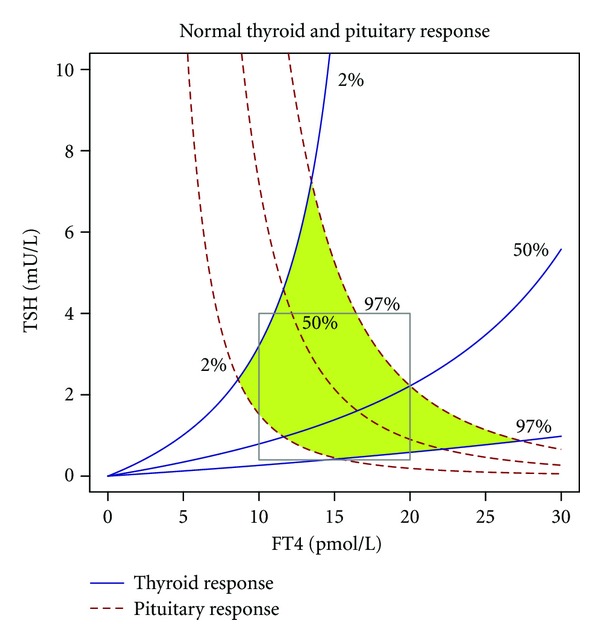
“It is important to appreciate that the homeostatic relationship of TSH and FT4 defines the reference range of TSH in a “kite-shaped” graphical configuration, as opposed to the rectangular area obtained by plotting the two univariate parameters (101).”
From Homeostatic control of the thyroid-pituitary axis: perspectives for diagnosis and treatment (2015) · cites this paper as [101]
Experimental — accuracy not yet measuredThe source backs part of the claim, not all of it — or backs it for a different population, condition or comparison.
In the citing paper
“However, the simple ratios are conceptually incompatible with known kinetic properties of enzyme-mediated processes, as they wrongly assume linear relationships (6).”
From Calculated Parameters of Thyroid Homeostasis: Emerging Tools for Differential Diagnosis and Clinical Research (2016) · cites this paper as [6]
Experimental — accuracy not yet measuredThe source backs part of the claim, not all of it — or backs it for a different population, condition or comparison.
In the citing paper
“A small trial with 20 healthy volunteers revealed the re-test reliability of SPINA-GT to be higher than that of every other parameter (6, 32).”
From Calculated Parameters of Thyroid Homeostasis: Emerging Tools for Differential Diagnosis and Clinical Research (2016) · cites this paper as [6]
Experimental — accuracy not yet measuredThe cited source says what the claim attributes to it.
In the citing paper
“Unfortunately, however, the location of the set point is unknown and inaccessible in the situation of hypothyroidism (6, 19).”
From Calculated Parameters of Thyroid Homeostasis: Emerging Tools for Differential Diagnosis and Clinical Research (2016) · cites this paper as [6]
2 more claims about this paper
Create a free account to see every claim other papers make about this one.
Self-check
Percentages, sums and reported differences re-computed from the paper’s own numbers.
The self-check needs the paper’s full text.
Citations
Cites
Colowick, S. P., Joshi, M. D., Jagannathan, & KAPLAN, N. O. (1966) · Cited by 26,137
Molecular Mechanisms of Depression: Perspectives on New Treatment Strategies
Lang, U. E., & Borgwardt, S. (2013) · Cellular Physiology and Biochemistry · doi:10.1159/000350094 · Cited by 8,475
Hormones and endocrine-disrupting chemicals: low-dose effects and nonmonotonic dose responses
Vandenberg, L. N., Colborn, T., Hayes, T. B., Heindel, J. J., Jacobs, D. R., Lee, D.-H., Shioda, T., Soto, A. M., vom Saal, F. S., Welshons, W. V., et al. (2012) · Endocrine Reviews · doi:10.1210/er.2011-1050 · Cited by 3,209 · cited 1×
“Similar effects may ensue from exposure to endocrine disruptors [265] like phthalates [266–268], brominated flame retardants [266, 267, 269], perfluorinated compound [266, 267, 270], polychlorinated biphenyls [271–276], bisphenol A [254, 266–269, 274], or bisphenol F [277].”
BackgroundUnrepeatable Repeatabilities: A Common Mistake
Lessells, C. M., & Boag, P. T. (1987) · The Auk · doi:10.2307/4087240 · Cited by 2,916
The incidence of thyroid disorders in the community: a twenty-year follow-up of the Whickham Survey
Vanderpump, M. P. J., Tunbrldge, W. M. G., French, J. M., Appleton, D., Bates, D., Clark, F., Evans, J. G., Hasan, D. M., Rodgers, H., Tunbridge, F., et al. (1995) · Clinical Endocrinology · doi:10.1111/j.1365-2265.1995.tb01894.x · Cited by 2,432
Bile acids induce energy expenditure by promoting intracellular thyroid hormone activation
Watanabe, M., Houten, S. M., Mataki, C., Christoffolete, M. A., Kim, B. W., Sato, H., Messaddeq, N., Harney, J. W., Ezaki, O., Kodama, T., et al. (2006) · Nature · doi:10.1038/nature04330 · Cited by 2,220 · cited 1×
“In addition, T3 is regulated by nonthyroidal factors, first of all peripheral deiodination [19, 21–25] that is subject of multiple metabolic control inputs [19, 26–30], which would also render a primarily T3-dependent feedback mechanism ineffective.”
BackgroundIngbar, S. H. (1965) · Archives of Internal Medicine · doi:10.1001/archinte.1965.03870060154035 · Cited by 1,743
Molecular Aspects of Thyroid Hormone Actions
Cheng, S.-Y., Leonard, J. L., & Davis, P. J. (2010) · Endocrine Reviews · doi:10.1210/er.2009-0007 · Cited by 1,384 · cited 1×
“Possible mechanisms of acquired thyroid hormone resistance include impairments of transmembrane transport [15, 16, 243], deiodination [19, 227, 228, 244], entry into nucleus [245, 246], receptor binding [243, 247–253], and nongenomic effects of iodothyronines [28, 254–264].”
BackgroundGlinoer, D. (1997) · Endocrine Reviews · doi:10.1210/edrv.18.3.0300 · Cited by 1,364 · cited 9×
“Mutations of TSH receptor leading to increased sensitivity to HCG may lead to overt hyperthyroidism even in normal pregnancy [336].”
BackgroundInfluentialLaboratory Support for the Diagnosis and Monitoring of Thyroid Disease
(2003) · Thyroid · doi:10.1089/105072503321086962 · Cited by 1,212
Research works printed but not linked: 14
- Aron M Action de la préhypophyse sur la thyroïde chez le cobaye Comptes Rendus des Séances de la Société de Biologie 1929 102 682 684
- Dietrich JW Der Hypophysen-Schilddrüsen-Regelkreis. Entwicklung und klinische Anwendung eines nichtlinearen Modells Entwicklung Und Klinische Anwendung Eines Nichtlinearen Modells 2002 Berlin, Germany Logos
- Prummel MF Méduri G Loosfeldt H Human anterior pituitary contains a TSH-receptor Journal of Endocrinological Investigation 1997 20, article 27
- DiStefano JJ Stear EB Neuroendocrine control of thyroid secretion in living systems: a feedback control system model The Bulletin of Mathematical Biophysics 1968 30 1 3 26 2-s2.0-0014257362 4969955 · DOI
- Cohen JL Becker KL Thyroid-stimulation hormone and its disorders Principles and Practice of Endocrinology and Metabolism 1990 Philadelphia, Pa, USA J. B. Lippincott Company 144 152
- Dietrich JW Mitzdorf U Weitkunat R Pickardt CR The pituitary-thyroid feedback control: stability and oscillations in a new nonlinear model Journal of Endocrinological Investigation 1997 20 5
- Dietrich JW Fischer MR Jauch J Pantke E Gärtner R Pickardt CR SPINA-THYR: a novel systems theoretic approach to determine the secretion capacity of the thyroid gland European Journal of Internal Medicine 1999 10 supplement 1 p. S34
- Rothacker K Hadlow NC Wardrop R Walsh JP The relationship between TSH and free T4 is not log-linear and differs between genders and age groups Proceedings of the ASN Events: The Annual Scientific Meeting of the Endocrine Society of Australia and the Society for Reproductive Biology August 2012 Queensland, Australia Gold Coast
- Martino E Pinchera A Braverman LE Utiger RD Central hypothyroidism Werner and Ingbar's the Thyroid 2005 9th edition Philadelphia, Pa, USA Lippincott Williams & Wilkins 754 768
- Grußendorf M Metabolismus der Schilddrüsenhormone 1988 1st edition Stuttgart, Germany Georg Thieme
- Dumont JE Vassart G DeGroot Thyroid regulation Endocrinology 1995 WB Saunders
- Jeyabalan A Urban A Ackermann A Die berechnete Sekretionsleistung der Schilddrüse unterstützt die Differentialdiagnose zwischen latenter Hyperthyreose und Non-Thyroidal-Illness-Syndrom mit thyreotroper Adaptation Kongress Der Deutschen Gesellschaft Für Innere Medizin 2011 117 Wiesbaden, Germany p. PS97
- Cohen RN Wondisford FE Braverman LE Uller RP Chemistry and biosynthesis of thyrotropin Werner and Ingbar's the Thyroid 2005 Philadelphia, Pa, USA Lippincott Williams & Wilkins 159 175
- Heinzeller T Stuttgart GR Entwicklungsgeschichte, Ontogenese und Histologie Schilddrüsenerkrankungen 2004 Wissenschaftliche Verlagsgesellschaft 3 15
Cited by
Bisphenol A and human health: A review of the literature
Rochester, J. R. (2013) · Reproductive Toxicology · doi:10.1016/j.reprotox.2013.08.008 · Cited by 2,018
“The production of 12 thyroid hormones are regulated by negative feedback to the brain [142].”
BackgroundBallesteros, V., Costa, O., Iñiguez, C., Fletcher, T., Ballester, F., & Lopez-Espinosa, M.-J. (2017) · Environment International · doi:10.1016/j.envint.2016.10.015 · Cited by 242
Chatzitomaris, A., Hoermann, R., Midgley, J. E., Hering, S., Urban, A., Dietrich, B., Abood, A., Klein, H. H., & Dietrich, J. W. (2017) · Frontiers in Endocrinology · doi:10.3389/fendo.2017.00163 · Cited by 173
“Thyroid Control Homeostatic control of thyroid function represents a classical example of a hypothalamic–pituitary-mediated endocrine feedback mechanism (Figure 2) (18, 35).”
BackgroundInfluentialDietrich, J. W., Landgrafe-Mende, G., Wiora, E., Chatzitomaris, A., Klein, H. H., Midgley, J. E. M., & Hoermann, R. (2016) · Frontiers in Endocrinology · doi:10.3389/fendo.2016.00057 · Cited by 164
“They found it to be increased in iodine deficiency (41) and other settings of hyperdeiodination (42–44) – possibly accompanied by intrathyroidal hypoiodination and representing an iodine recovery mechanism – and to be decreased in NTIS (45, 46), central hypothyroidism ensuing from thyrotropic insufficiency (47, 48), c…”
BackgroundInfluentialHomeostatic control of the thyroid-pituitary axis: perspectives for diagnosis and treatment
Hoermann, R., Midgley, J. E. M., Larisch, R., & Dietrich, J. W. (2015) · Frontiers in Endocrinology · doi:10.3389/fendo.2015.00177 · Cited by 143
Self-citationMECHANISMS IN ENDOCRINOLOGY: Beyond the fixed setpoint of the hypothalamus–pituitary–thyroid axis
Fliers, E., Kalsbeek, A., & Boelen, A. (2014) · European Journal of Endocrinology · doi:10.1530/eje-14-0285 · Cited by 124
Aker, A. M., Ferguson, K. K., Rosario, Z. Y., Mukherjee, B., Alshawabkeh, A. N., Calafat, A. M., Cordero, J. F., & Meeker, J. D. (2019) · Environmental Health · doi:10.1186/s12940-019-0459-5 · Cited by 124
Subclinical hypothyroidism: a historical view and shifting prevalence
Hennessey, J. V., & Espaillat, R. (2015) · International Journal of Clinical Practice · doi:10.1111/ijcp.12619 · Cited by 120
Johns, L. E., Ferguson, K. K., McElrath, T. F., Mukherjee, B., & Meeker, J. D. (2016) · Environmental Health Perspectives · doi:10.1289/ehp170 · Cited by 101
“This ratio has been used as an index of the peripheral conversion of T 4 to T 3 (the more biologically active hormone) by deiodinase enzymes, and can be high or low in certain thyroid disease states (Dietrich et al. 2012; Mortoglou and Candiloros 2004).”
Berger, K., Gunier, R. B., Chevrier, J., Calafat, A. M., Ye, X., Eskenazi, B., & Harley, K. G. (2018) · Environmental Research · doi:10.1016/j.envres.2018.05.005 · Cited by 92
Hoermann, R., Midgley, J. E. M., Giacobino, A., Eckl, W. A., Wahl, H. G., Dietrich, J. W., & Larisch, R. (2014) · Clinical Endocrinology · doi:10.1111/cen.12527 · Cited by 82
Self-citationThyroid Circadian Timing: Roles in Physiology and Thyroid Malignancies
Philippe, J., & Dibner, C. (2015) · Journal of Biological Rhythms · doi:10.1177/0748730414557634 · Cited by 82
“…stimulation of TSH, while high thyroid hormone levels rapidly and directly suppress TSH gene expression and inhibit the stimulation of TSH by TRH (Dietrich et al., 2012; Kalsbeek and Fliers, 2013; Mullur et al., 2014). circadian regulation of thYroid function Based on current understanding, the…”
BackgroundDietrich, J. W., Müller, P., Schiedat, F., Schlömicher, M., Strauch, J., Chatzitomaris, A., Klein, H. H., Mügge, A., Köhrle, J., Rijntjes, E., et al. (2015) · European Thyroid Journal · doi:10.1159/000381543 · Cited by 68
Self-citationCathey, A. L., Watkins, D. J., Rosario, Z., Vélez-Vega, C. M., Loch-Caruso, R. K., Alshawabkeh, A. N., Cordero, J. F., & Meeker, J. D. (2020) · The Science of The Total Environment · doi:10.1016/j.scitotenv.2020.141581 · Cited by 71
“The ratios of progesterone to estriol (Prog/E3) and T3 to T4 (T3/T4) were assessed in addition to measured hormones because previous research indicated their relevance to adverse birth outcomes (Dietrich et al., 2012; Romero et al., 1988; Ruiz et al., 2008).”
BackgroundCathey, A. L., Watkins, D. J., Rosario, Z., Vélez, C. N., Alshawabkeh, A. N., Cordero, J. F., & Meeker, J. D. (2019) · Journal of the Endocrine Society · doi:10.1210/js.2019-00010 · Cited by 69
Berberich, J., Dietrich, J. W., Hoermann, R., & Müller, M. A. (2018) · Frontiers in Endocrinology · doi:10.3389/fendo.2018.00091 · Cited by 55
Self-citationThe Role of Thyroid Hormone Signaling in the Prevention of Digestive System Cancers
Brown, A. R., Simmen, R. C. M., & Simmen, F. A. (2013) · International Journal of Molecular Sciences · doi:10.3390/ijms140816240 · Cited by 59
“These hormones control the release of both thyrotropin-releasing hormone (TRH) from the hypothalamus and thyroid-stimulating hormone (TSH) from the anterior pituitary gland via negative feedback loops [1].”
BackgroundGoede, S. L., Leow, M. K.-S., Smit, J. W. A., & Dietrich, J. W. (2014) · Mathematical Biosciences · doi:10.1016/j.mbs.2014.01.001 · Cited by 50
“In an individual patient GT can be estimated from equilibrium levels of [TSH] and [FT4] as previously described [21,22].”
BackgroundMethodSelf-citationHoermann, R., Midgley, J., Larisch, R., & Dietrich, J. (2015) · Hormone and Metabolic Research · doi:10.1055/s-0034-1398616 · Cited by 50
Self-citationRivera‐Núñez, Z., Ashrap, P., Barrett, E. S., Watkins, D. J., Cathey, A. L., Vélez-Vega, C. M., Rosario, Z., Cordero, J. F., Alshawabkeh, A. N., & Meeker, J. D. (2020) · Environment International · doi:10.1016/j.envint.2020.106310 · Cited by 53
“The ratios of progesterone/E3 and T3/T4 were calculated and assessed as these ratios may be better indicators of adverse pregnancy outcome than individual hormone measurement (Dietrich et al. 2012; Romero et al. 1988).”
BackgroundRelational Stability in the Expression of Normality, Variation, and Control of Thyroid Function
Hoermann, R., Midgley, J. E. M., Larisch, R., & Dietrich, J. W. (2016) · Frontiers in Endocrinology · doi:10.3389/fendo.2016.00142 · Cited by 48
Self-citationEndocrine Autoimmune Disease as a Fragility of Immune Surveillance against Hypersecreting Mutants
Kohanim, Y. K., Tendler, A., Mayo, A., Friedman, N., & Alon, U. S. (2019) · Immunity · doi:10.1016/j.immuni.2020.04.022 · Cited by 49
Individualised requirements for optimum treatment of hypothyroidism: complex needs, limited options
Hoermann, R., Midgley, J. E. M., Larisch, R., & Dietrich, J. W. (2019) · Drugs in Context · doi:10.7573/dic.212597 · Cited by 41
Müller, P., Leow, M. K., & Dietrich, J. W. (2022) · Frontiers in Cardiovascular Medicine · doi:10.3389/fcvm.2022.942971 · Cited by 49
Hoermann, R., Larisch, R., Dietrich, J. W., & Midgley, J. E. M. (2016) · European Journal of Endocrinology · doi:10.1530/eje-16-0031 · Cited by 37
Self-citationEnvironmental Endocrinology: Parabens Hazardous Effects on Hypothalamic–Pituitary–Thyroid Axis
Azeredo, D. B. C., Anselmo, D. D. S., Soares, P., Graceli, J. B., Magliano, D. C., & Miranda‐Alves, L. (2023) · International Journal of Molecular Sciences · doi:10.3390/ijms242015246 · Cited by 40
Romano, R. M., de Oliveira, J. M., de Oliveira, V. M., de Oliveira, I. M., Torres, Y. R., Bargi‐Souza, P., Martino‐Andrade, A. J., & Romano, M. A. (2021) · Frontiers in Endocrinology · doi:10.3389/fendo.2021.627167 · Cited by 39
Hoermann, R., Midgley, J. E. M., Larisch, R., & Dietrich, J. W. (2016) · European Thyroid Journal · doi:10.1159/000447967 · Cited by 35
Environment-Dependent Genotype-Phenotype Associations in Avian Breeding Time
Gienapp, P., Laine, V. N., Mateman, A. C., van Oers, K., & Visser, M. E. (2017) · Frontiers in Genetics · doi:10.3389/fgene.2017.00102 · Cited by 36
“Thyroglobulin is a precursor for thyroid hormones which form an integral part of the Hypothalamus– pituitary–thyroid axis, which has an important role in controlling general metabolism (Dietrich et al., 2012).”
BackgroundThe role of functional thyroid capacity in pituitary thyroid feedback regulation
Hoermann, R., Midgley, J. E. M., Larisch, R., & Dietrich, J. W. (2018) · European Journal of Clinical Investigation · doi:10.1111/eci.13003 · Cited by 35
“The theoretical framework of the SPINA parameters has been extensively described, and the parameters were validated in large studies.(26,27) They can be calculated with free open‐source software.”
MethodGarcía, M., González de Buitrago, J., Jiménez-Rosés, M., Pardo, L., Hinkle, P. M., & Moreno, J. C. (2017) · The Journal of Clinical Endocrinology & Metabolism · doi:10.1210/jc.2016-3977 · Cited by 33
Choi, G., Keil, A. P., Villanger, G. D., Richardson, D. B., Daniels, J. L., Hoffman, K., Sakhi, A. K., Thomsen, C., Herring, A. H., Drover, S. S. M., et al. (2021) · The Science of The Total Environment · doi:10.1016/j.scitotenv.2021.146709 · Cited by 33
The Relationship between Population T4/TSH Set Point Data and T4/TSH Physiology
Fitzgerald, S. P., & Bean, N. G. (2016) · Journal of Thyroid Research · doi:10.1155/2016/6351473 · Cited by 34
Midgley, J. E. M., Larisch, R., Dietrich, J. W., & Hoermann, R. (2015) · Endocrine Connections · doi:10.1530/ec-150056 · Cited by 31
Self-citationColnot, T., & Dekant, W. (2016) · Regulatory Toxicology and Pharmacology · doi:10.1016/j.yrtph.2016.12.004 · Cited by 33
Dibutyl-phthalate exposure from mesalamine medications and serum thyroid hormones in men
Nassan, F. L., Korevaar, T. I. M., Coull, B. A., Skakkebæk, N. E., Krawetz, S. A., Estill, M. S., Hait, E. J., Korzenik, J. R., Ford, J. B., de Poortere, R. A., et al. (2018) · International Journal of Hygiene and Environmental Health · doi:10.1016/j.ijheh.2018.08.008 · Cited by 42
Dynamics of thyroid diseases and thyroid‐axis gland masses
Kohanim, Y. K., Milo, T., Raz, M., Karin, O., Bar, A., Mayo, A., Cohen, N. M., Toledano, Y., & Alon, U. S. (2022) · Molecular Systems Biology · doi:10.15252/msb.202210919 · Cited by 30
“Thyroid hormone TH is secreted by the thyroid gland, whose functional mass is T , when stimulated by TSH: where a TH is the removal rate of TH, b TH is the maximal TH secretion rate per unit thyroid mass, and f TSH ð Þ is the TSH-regulation function (Dietrich et al , 2012).”
InfluentialThyroid Gland: Anatomy and Physiology
Benvenga, S., Tuccari, G., Ieni, A., & Vita, R. (2018) · Elsevier eBooks · doi:10.1016/b978-0-12-801238-3.96022-7 · Cited by 69
Central Hypothyroidism in Children
García, M., Fernández, A., & Moreno, J. C. (2014) · Endocrine Development · doi:10.1159/000363157 · Cited by 28
Toni, L. D., Nisio, A. D., Rocca, M. S., Pedrucci, F., Garolla, A., Dall’Acqua, S., Guidolin, D., Ferlin, A., & Foresta, C. (2022) · Frontiers in Endocrinology · doi:10.3389/fendo.2022.915096 · Cited by 34
Vassalle, C., Parlanti, A., Pingitore, A., Berti, S. L., Iervasi, G., & Sabatino, L. (2021) · Frontiers in Physiology · doi:10.3389/fphys.2021.722912 · Cited by 29
Advances in applied homeostatic modelling of the relationship between thyrotropin and free thyroxine
Hoermann, R., Midgley, J. E. M., Larisch, R., & Dietrich, J. W. C. (2017) · PLOS ONE · doi:10.1371/journal.pone.0187232 · Cited by 24
Rivera‐Núñez, Z., Ashrap, P., Barrett, E. S., Llanos, A. A. M., Watkins, D. J., Cathey, A. L., Vélez-Vega, C. M., Rosario, Z., Cordero, J. F., Alshawabkeh, A. N., et al. (2021) · Environmental Research · doi:10.1016/j.envres.2021.112376 · Cited by 26
The Quest for System-Theoretical Medicine in the COVID-19 Era
Tretter, F., Wolkenhauer, O., Meyer‐Hermann, M., Dietrich, J. W., Green, S., Marcum, J. A., & Weckwerth, W. (2021) · Frontiers in Medicine · doi:10.3389/fmed.2021.640974 · Cited by 26
“One elaborated and validated example is the integrative multi-level model of the heart activity covering molecular and cellular mechanisms (75) and also a multi-organ model of the thyroid control loops (76).”
BackgroundGallo, E. S., Amidei, C. B., Barbieri, G., Fabricio, A. S. C., Gion, M., Pitter, G., Daprà, F., Russo, F., Gregori, D., Fletcher, T., et al. (2021) · Environmental Research · doi:10.1016/j.envres.2021.111794 · Cited by 23
Hoermann, R., Pekker, M. J., Midgley, J. E. M., & Dietrich, J. W. (2023) · Therapeutic Advances in Endocrinology and Metabolism · doi:10.1177/20420188231158163 · Cited by 31
Functional and Symptomatic Individuality in the Response to Levothyroxine Treatment
Hoermann, R., Midgley, J. E. M., Larisch, R., & Dietrich, J. W. (2019) · Frontiers in Endocrinology · doi:10.3389/fendo.2019.00664 · Cited by 22
Self-citationFitzgerald, S. P., & Bean, N. G. (2018) · Temperature · doi:10.1080/23328940.2018.1513110 · Cited by 23
“Such reductions in the range of TSH would in an average person reduce the variation in FT4 by 5 and 3 pmol/L respectively [1].”
BackgroundResultInfluentialCathey, A. L., Watkins, D. J., Rosario, Z., Vélez-Vega, C. M., Mukherjee, B., O’Neill, M. S., Loch-Caruso, R. K., Alshawabkeh, A. N., Cordero, J. F., & Meeker, J. D. (2021) · Frontiers in Endocrinology · doi:10.3389/fendo.2021.742145 · Cited by 23
Impact of thyroid hormones on asthma in older adults
Bingyan, Z., & Dong, W. (2019) · Journal of International Medical Research · doi:10.1177/0300060519856465 · Cited by 24
“(Figures 1–4) SPINA-GT is elevated in primary hyperthyroidism and reduced in both primary hypothyroidism30–32 and untreated autoimmune thyroiditis.23 It has been observed to correlate with resting energy expenditure33 and thyroid volume.29 In a longitudinal evaluation, SPINA-GT showed lower intra-individual variation…”
BackgroundThe Pituitary Gland: Functional Relationship with the Hypothalamus, Structure, and Physiology
Al-Suhaimi, E. A., & Khan, F. A. (2022) · Springer eBooks · doi:10.1007/978-981-16-9016-7_4 · Cited by 25
Editorial: “Homeostasis and Allostasis of Thyroid Function”
Dietrich, J. W., Midgley, J. E. M., & Hoermann, R. (2018) · Frontiers in Endocrinology · doi:10.3389/fendo.2018.00287 · Cited by 22
“Plasticity of the hypothalamic–pituitary–thyroid axis in form of adaptive responses may promote misdiagnosis, especially in pregnancy and critical illness (3, 4).”
BackgroundPhysiological linkage of thyroid and pituitary sensitivities
Fitzgerald, S. P., Bean, N. G., Falhammar, H., & Hoermann, R. (2022) · Endocrine · doi:10.1007/s12020-022-03184-8 · Cited by 17
“We interpreted the finding of the slope of the calculated FT4 curve being too flat to indicate that this linkage resulted in a relative deficiency of data points at the Table 1 Slopes of FT4 curves as calculated from 25th, 50th and 75th centile points Data set n Restrictions Data Slope Slope of zones Slope of 25th cen…”
BackgroundMethodResultInfluentialShi, W., Ying, G., Huang, G., Liang, Y., Hu, L., Zhao, J., & Zhang, J. (2017) · Bulletin of Environmental Contamination and Toxicology · doi:10.1007/s00128-017-2046-1 · Cited by 17
“However, thyroid hormone also exerts negative feedback control of the generation of TRH and TSH (Dietrich et al. 2012).”
BackgroundVelarde, O. M., Urdapilleta, E., Mato, G., & Dellavale, D. (2019) · NeuroImage · doi:10.1016/j.neuroimage.2019.116031 · Cited by 21
Bornikowska, K., Gietka-Czernel, M., Raczkiewicz, D., Glinicki, P., & Zgliczyński, W. (2021) · Journal of Clinical Medicine · doi:10.3390/jcm10225233 · Cited by 17
“found that in LT4-treated hypothyroid patients, the TSH response to fT4 changes is attenuated (as evidenced by a lesser slope in the TSH-fT4 curves) when fT4 serum concentration is within the reference range, and especially within the range from 15 to 20 pmol/L [33,34].”
BackgroundEffect of Sesame Oil on Serum and Liver Lipid Profile in Hyperlipidemic Rats.
Taha, N., Mandour, A. E.-W., Korshium, M., Lebda, M. A., & Emarha, R. (2014) · Alexandria Journal of Veterinary Sciences · doi:10.5455/ajvs.166197 · Cited by 17
“…syndrome (SES), non-thyroidal illness syndrome (NTIS) or low T3 high T4 syndrome is a state of adaptation or dysregulation of thyrotropic feedback control Dietrich et al, 2012) where the levels of T3 and/or T4 are at unusual levels, but the thyroid gland does not appear to be dysfunctional.”
BackgroundFitzgerald, S. P., Bean, N. G., Hennessey, J. V., & Falhammar, H. (2021) · Endocrine · doi:10.1007/s12020-021-02851-6 · Cited by 16
Labadie, J., Elvers, I., Feigelson, H. S., Magzamen, S. L., Yoshimoto, J. A., Dossey, J., Burnett, R., & Avery, A. C. (2020) · BMC Genomics · doi:10.1186/s12864-020-06872-9 · Cited by 16
“Thyroid stimulating hormone, released from the pituitary, binds TSHR on the thyroid gland, causing release of thyroxine and, to a lesser extent, triiodothyronine [22].”
BackgroundHa, J., Lee, J., Jo, K., Han, J., Kim, M., Jung, C. K., Kang, M. I., Cha, B., & Lim, D. (2018) · Journal of Clinical Medicine · doi:10.3390/jcm7080183 · Cited by 18
Fitzgerald, S. P., & Falhammar, H. (2022) · Frontiers in Endocrinology · doi:10.3389/fendo.2022.920854 · Cited by 20
Central Hypothyroidism and Novel Clinical Phenotypes in Hemizygous Truncation of TBL1X
García, M., Bonis, A. C. B., Jiménez, P., Retolaza, I. R., Villalobos, A. O., Vallespín, E., del Pozo, Á., Millán, J. M. S., Casado, I. G., & Moreno, J. C. (2018) · Journal of the Endocrine Society · doi:10.1210/js.2018-00144 · Cited by 18
Hoermann, R., Pekker, M. J., Midgley, J. E. M., Larisch, R., & Dietrich, J. W. (2020) · European Journal of Clinical Investigation · doi:10.1111/eci.13192 · Cited by 14
EndoNet: an information resource about the intercellular signaling network
Dönitz, J., & Wingender, E. (2014) · BMC Systems Biology · doi:10.1186/1752-0509-8-49 · Cited by 14
“Examples are the hypothalamicpituitary-gonadal axis [2], the fight-or-flight response [3] or the hypothalamic-pituitary-thyroid axis [4].”
BackgroundHoermann, R., Midgley, J. E. M., Dietrich, J. W., & Larisch, R. (2017) · Therapeutic Advances in Endocrinology and Metabolism · doi:10.1177/2042018817716401 · Cited by 14
Tan, Y., Gao, L., Yin, Q., Sun, Z., Man, X., Du, Y., & Chen, Y. (2020) · International Journal of Neuroscience · doi:10.1080/00207454.2020.1744595 · Cited by 16
Wang, Y., He, D., Fu, C., Dong, X., Jiang, F., Su, M., Xu, Q., Huang, P., Wang, N., Chen, Y., et al. (2021) · Frontiers in Endocrinology · doi:10.3389/fendo.2021.653680 · Cited by 15
Wilhelmi, P., Giri, V., Zickgraf, F. M., Haake, V., Henkes, S., Driemert, P., Michaelis, P., Busch, W., Scholz, S., Flick, B., et al. (2023) · Chemico-Biological Interactions · doi:10.1016/j.cbi.2023.110565 · Cited by 13
Second degree AV block and severely impaired contractility in cardiac myxedema: a case report
Chatzitomaris, A., Scheeler, M., Gotzmann, M., Köditz, R., Schildroth, J., Knyhala, K. M., Nicolas, V., Heyer, C., Mügge, A., Klein, H. H., et al. (2015) · Thyroid Research · doi:10.1186/s13044-015-0018-2 · Cited by 11
“thyroid-blocking antibodies (TBAbs or iTRAbs), which block he binding of TSH to its receptor and can result in B cell-mediated autoimmune hypothyroidism [22–26].”
BackgroundMwafy, S. N., Yassin, M. M., & Mousa, R. M. (2017) · Diabetes & Metabolic Syndrome Clinical Research & Reviews · doi:10.1016/j.dsx.2017.12.009 · Cited by 10
Adamska, A., Krentowska, A., Łebkowska, A., Hryniewicka, J., Leśniewska, M., Adamski, M., & Kowalska, I. (2019) · Endocrine · doi:10.1007/s12020-019-01913-0 · Cited by 11
Fitzgerald, S. P., Bean, N. G., & Fitzgerald, L. N. (2017) · Temperature · doi:10.1080/23328940.2017.1281370 · Cited by 10
“Research has been directed at identifying individuals’ personal set points, rather than relying on population ranges, so that thyroid disorders may be better diagnosed and treated.(4)”
BackgroundBădoiu, S. C., Enescu, D. M., Tătar, R., Stănescu-Spînu, I.-I., Miricescu, D., Greabu, M., Ionel, I. P., & Jinga, V. (2024) · Journal of Clinical Medicine · doi:10.3390/jcm13102794 · Cited by 13
“The inhibitory effect of high AGP concentrations upon TSH signaling, by interacting directly with the TSH receptors at the level of the thyroid cell, was reported by previous studies [56,57].”
ResultAssociation Between Per- and Polyfluoroalkyl Substance Exposures and Thyroid Homeostasis Parameters
Yu, X., Liu, Y., Wang, M., Jia, P., Yang, S., Sun, F., Jin, Y., Wang, X., Guo, Z., Zhao, G., et al. (2024) · The Journal of Clinical Endocrinology & Metabolism · doi:10.1210/clinem/dgae798 · Cited by 11
Hoermann, R., Midgley, J. E. M., Larisch, R., & Dietrich, J. W. (2020) · Journal of Clinical & Translational Endocrinology · doi:10.1016/j.jcte.2020.100219 · Cited by 12
Cathey, A. L., Aung, M. T., Watkins, D. J., Rosario, Z. Y., Vega, C. M. V., Alshawabkeh, A. N., Cordero, J. F., Mukherjee, B., & Meeker, J. D. (2022) · Journal of Exposure Science & Environmental Epidemiology · doi:10.1038/s41370-021-00408-3 · Cited by 9
“The ratios of progesterone to estriol (Prog/E3) and T3 to T4 (T3/ T4) were assessed in addition to measured hormones because of previous research indicating that the ratios may be better indices of adverse pregnancy outcomes than single hormone measurements [19, 20].”
Huang, P., Chen, H., Leung, S.-H., Lin, Y.-J., Huang, H.-B., Chang, W., Huang, H., & Chang, J.-W. (2023) · Environmental Science and Pollution Research · doi:10.1007/s11356-023-31277-y · Cited by 10
“The use of simple ratios is, however, not actually approximately with the known kinetic properties of hormone-mediated mechanism because it is based on incorrect assumptions of linear relationships (Dietrich et al. 2012).”
Nickel as a potential disruptor of thyroid function: benchmark modelling of human data
Marić, Đ., Baralić, K., Javorac, D., Mandić‐Rajčević, S., Žarković, M., Antonijević, B., Đukić-Ćosić, D., Bulat, Z., & Djordjević, A. B. (2023) · Frontiers in Endocrinology · doi:10.3389/fendo.2023.1145153 · Cited by 11
“Table 2 shows the values of the constants used in the calculation (27, 28).”
BackgroundMethodFitzgerald, S. P., & Bean, N. G. (2018) · Physiological Reports · doi:10.14814/phy2.13551 · Cited by 7
“The ambient level of FT4 lies where the curves describing these two processes cross (Dietrich et al. 2012).”
BackgroundBaldo, B. A. (2016) · Springer eBooks · doi:10.1007/978-3-319-30472-4_8 · Cited by 10
A physiological mathematical model of the human thyroid
Pompa, M., Gaetano, A. D., Borri, A., Farsetti, A., Nanni, S., Pontecorvi, A., & Panunzi, S. (2024) · Journal of Computational Science · doi:10.1016/j.jocs.2024.102236 · Cited by 8
Marić, Đ., Baralić, K., Vukelić, D., Milošević, I., Nikolić, A., Antonijević, B., Đukić-Ćosić, D., Bulat, Z., Aschner, M., & Djordjević, A. B. (2024) · Chemosphere · doi:10.1016/j.chemosphere.2024.142441 · Cited by 8
Asghar, M. S., Yasmin, F., Dapke, K., Phadke, R., Shah, S. M. I., & Zafar, M. D. B. (2021) · Journal of Medical Virology · doi:10.1002/jmv.27174 · Cited by 7
“The probable molecular mechanisms responsible are oxidative stress causing inflammatory mediators release leading to upregulation of thyroid hormones and feedback mechanisms.(9) There were a few limitations of our study, a single‐center analysis with limited sample size, and no study groups were defined on the basis o…”
BackgroundShimizu, Y., Nabeshima-Kimura, Y., Kawashiri, S., Noguchi, Y., Minami, S., Nagata, Y., Maeda, T., & Hayashida, N. (2021) · Journal of PHYSIOLOGICAL ANTHROPOLOGY · doi:10.1186/s40101-021-00264-y · Cited by 12
Sethi, Y., Uniyal, N., Maheshwari, S., Sinha, R., & Goel, A. (2022) · Cureus · doi:10.7759/cureus.24942 · Cited by 7
“A positive correlation was found between T3 and T4, which became more pronounced with increasing disease severity (Table 4); the correlation coefficient was highly increased between the mild and moderate groups while the increase was just minimal from moderate to severe, which can be explained by the decreased periphe…”
BackgroundAbbas, M. M., Tayrab, E., Elmakki, A. M., Tayrab, J. E., Alshahrani, A. M., Miskeen, E., & Salih, K. M. A. (2020) · Cureus · doi:10.7759/cureus.7166 · Cited by 6
Рябуха, О. І. (2022) · Medical Informatics and Engineering · doi:10.11603/mie.1996-1960.2021.3-4.12638 · Cited by 6
Thyroid hormone dysfunction in MOGAD and other demyelinating diseases
Rechtman, A., Zveik, O., Haham, N., Korn, T. F., & Vaknin‐Dembinsky, A. (2024) · Journal of the Neurological Sciences · doi:10.1016/j.jns.2024.122866 · Cited by 5
Kirovski, D., Dodovski, P., Savić, Đ., Vujanac, I., Prodanović, R., Mirilović, M., Sladojević, Ž., & Djordjevic, A. D. (2016) · Acta veterinaria · doi:10.1515/acve-2016-0005 · Cited by 5
“Depressed TH concentrations activate feedback mechanisms and consequently induce a marked increase of blood TSH concentration [32], which was also proved in our study.”
DIO3 coordinates photoreceptor development timing and fate stability in human retinal organoids
McNerney, C., Santiago, C. P., Eldred, K. C., Glass, I. A., Reh, T. A., Hernández, A., Blackshaw, S., Lord, N. D., & Johnston, R. J. (2025) · Genes & Development · doi:10.1101/gad.352924.125 · Cited by 7
“…hypothalamus and anterior pituitary in a negative feedback loop: Low TH leads to increased TH production, while high TH suppresses TH production (Larsen 1982; Gelfand et al. 1987; Alkemade et al. 2005; Fliers et al. 2006; Dietrich et al. 2012; Fekete and Lechan 2014; Feldt-Rasmussen et al. 2021).”
A Review on the Occurrence, Exposure, and Health Impacts of Bisphenol A
Sharma, P., Sharma, K., Sharma, G., & Chadha, P. (2021) · Toxicology International · doi:10.18311/ti/2021/v28i4/27473 · Cited by 6
Intein-mediated thyroid hormone biosensors: towards controlled delivery of hormone therapy
Martí-Baena, Q., Pascuet-Fontanet, A., Berjaga-Buisan, T., Caravaca-Rodríguez, M., Puig, J., Sánchez-Mejías, A., Ivančić, D., Mogas-Díez, S., Güell, M., & Macía, J. (2024) · Frontiers in Systems Biology · doi:10.3389/fsysb.2024.1270071 · Cited by 4
“Hypothyroidism is usually treated by the oral administration of synthetic thyroxine (T4), which is metabolized to its active triiodothyronine form (T3) in peripheral tissues (Dietrich et al., 2012; Fliers et al., 2018).”
InfluentialKim, H. I., Kim, T. H., Kim, H., Kim, Y. N., Jang, H. W., Kim, J., Hur, K. Y., Chung, J. H., & Kim, S. W. (2017) · Clinical Endocrinology · doi:10.1111/cen.13344 · Cited by 4
Association between central thyroid hormone sensitivity and prediabetes: Tehran thyroid study
Mehran, L., Honarvar, M., Tohidi, M., Adib, M., Azizi, F., & Amouzegar, A. (2025) · Frontiers in Endocrinology · doi:10.3389/fendo.2025.1534058 · Cited by 3
Xia, Y., Chen, H., Yan, R., Zhu, X.-W., Zhao, H., Ding, B., & Hu, Y. (2025) · Diabetes Metabolic Syndrome and Obesity · doi:10.2147/dmso.s543452 · Cited by 3
Jiao, L., Yang, Y., Huang, Y., Shang, H., Liu, Z., Li, W., Sun, J., Yang, H., Hu, J., & Wan, Y. (2025) · Environmental Science & Technology · doi:10.1021/acs.est.5c07061 · Cited by 3
Huang, P., Chen, H. L., Kuo, P., Chen, H., Chang, W., & Chang, J.-W. (2025) · Ecotoxicology and Environmental Safety · doi:10.1016/j.ecoenv.2025.117818 · Cited by 3
Alayoubi, A. Y., Sullivan, R. D., Lou, H., Patel, H., Mandrell, T. D., Helms, R., & Almoazen, H. (2015) · AAPS PharmSciTech · doi:10.1208/s12249-015-0392-z · Cited by 3
Modelling of the thyroid hormone synthesis as a part of nonlinear reaction mechanism with feedback
Kolar-Anic, L. Z., Čupić, Ž., Maćešić, S. R., Ivanović-Šašić, A., & Dietrich, J. W. (2023) · Computers in Biology and Medicine · doi:10.1016/j.compbiomed.2023.106980 · Cited by 5
TSH Pulses Finely Tune Thyroid Hormone Release and TSH Receptor Transduction
Guillou, A., Kemkem, Y., Lafont, C., Fontanaud, P., Calebiro, D., Campos, P., Bonnefont, X., Fiordelisio, T., Wang, Y., Brûlé, E., et al. (2023) · Endocrinology · doi:10.1210/endocr/bqad164 · Cited by 4
“Male and female mice were both fed with an iodine-deficient diet enriched with propylthiouracil (LID) and mTSH secretion profiles were monitored over a 2-hour period on days 0, 5, 7, 10, and 15 of treatment before terminal blood sampling for basal TSH and T4 detection on animal euthanasia (Fig.”
BackgroundMethod
Metadata
- Authors
- Dietrich, J. W., Landgrafe, G., & Fotiadou, E. H.
- Affiliations
- University Hospitals of the Ruhr-University of Bochum (DE)
- Lab XU44, Medical Hospital I, Bergmannsheil University Hospitals, Ruhr University of Bochum (UK RUB), Bürkle-de-la-Camp-Platz 1, 44789 Bochum, NRW, Germany
- Corresponding author
- Dietrich, Johannes W.
- Venue
- Journal of Thyroid Research
- Publisher
- Hindawi Limited
- Published
- 2012
- Volume
- 2012
- Pages
- 1-29
- ISSN
- 2042-0072 (ISSN-L)
- 2090-8067
- PMC
- PMC3544290
- OpenAlex
- W1980687578
- Cited by
- 146
- References
- 431
- Citations by year
- 2026: 2 · 2025: 11 · 2024: 9 · 2023: 11 · 2022: 12 · 2021: 17 · 2020: 16 · 2019: 11 · 2018: 12 · 2017: 9 · 2016: 12 · 2015: 11 · 2014: 9 · 2013: 4
- FWCI
- 6.16
- Type
- journal article
- Language
- en
- Open access
- hybrid
- doi.org
- Locations
- Journal of Thyroid Research (publishedVersion, cc-by)
- Europe PMC (PubMed Central) (publishedVersion, cc-by)
- PubMed Central (publishedVersion, cc-by)
- PubMed (publishedVersion)
- DOAJ (DOAJ: Directory of Open Access Journals) (submittedVersion, cc-by-sa)
- Topics
- Health Sciences › Medicine › Endocrinology, Diabetes and Metabolism › Thyroid Disorders and Treatments
- Health Sciences › Medicine › Endocrinology, Diabetes and Metabolism › Thyroid Cancer Diagnosis and Treatment
- Health Sciences › Medicine › Endocrinology, Diabetes and Metabolism › Growth Hormone and Insulin-like Growth Factors
- Keywords
- thyroid-stimulating hormone, hypothalamic-pituitary-thyroid axis, thyroid homeostasis, feedback control, cybernetics, mathematical modeling, TSH reference range, thyroid dysfunction, personalized diagnosis, targeted therapy
About these checks
Registry, retraction, Cites and statistics results are computed, not judged, with one exception: a printed reference that no index lists is read once by a model before it counts as a citation error. Claims are extracted by a model and kept only when their quote appears verbatim in the text; each cited source is then checked, with a model’s help, for whether it says what the claim relies on. Those verdicts can be wrong — read the claim’s quote and the cited source before relying on one.
Statistics and arithmetic are recomputed, not judged.
Confidence bands are shown only for fields calibrated on our annotated test set. None is calibrated yet, so no band is shown.
What counts as a claim ›How we measure confidence ›How we check this ›
Are you an author, or do you see a problem with this page? Request a review
Data sources
Bibliographic data: Semantic Scholar, OpenAlex, Crossref.
Contains information from the Semantic Scholar Academic Graph Datasets, made available under the ODC Attribution License (ODC-BY 1.0).
Semantic Scholar’s data is described in: Kinney, R., et al. (2023). The Semantic Scholar Open Data Platform. arXiv:2301.10140.
