

Effects of Chitosan on Candida albicans: Conditions for Its Antifungal Activity
Open accessThe DOI matches its Crossref record; 41 of the 41 references it cites were found in a registry or an index.
Abstract
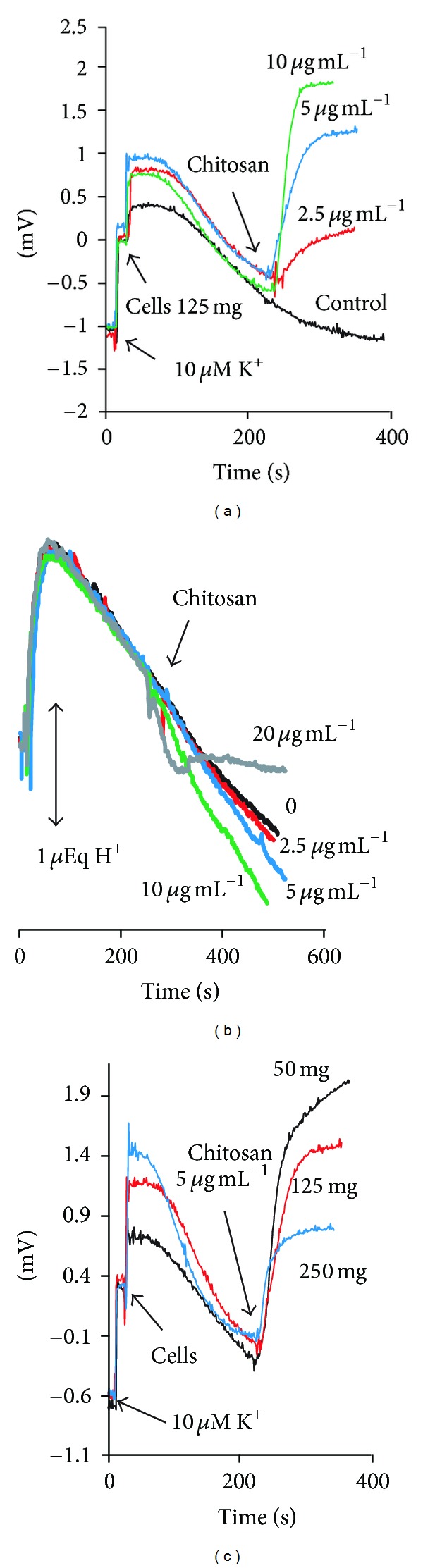
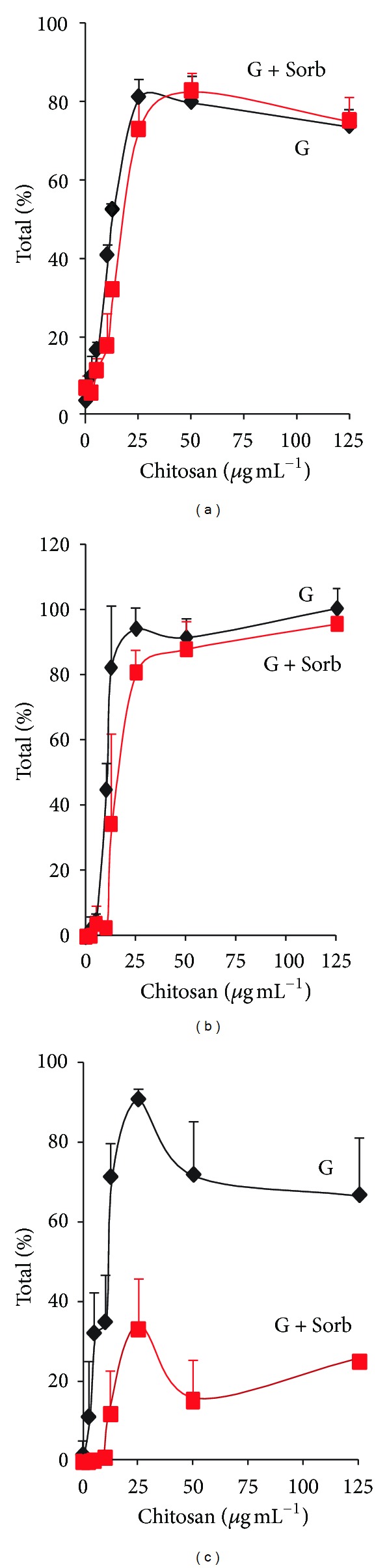
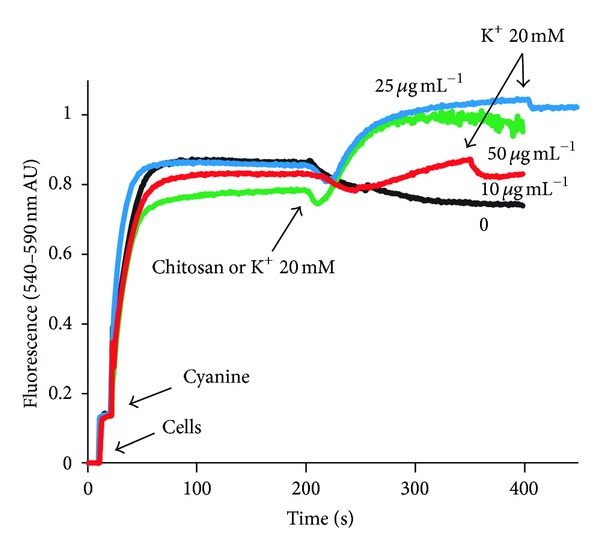
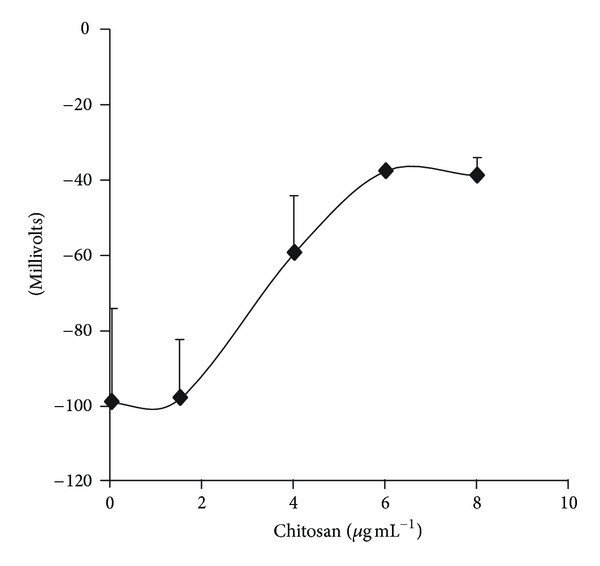
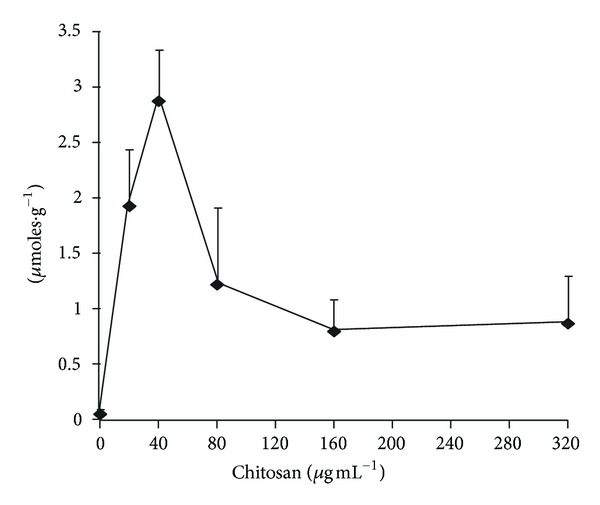
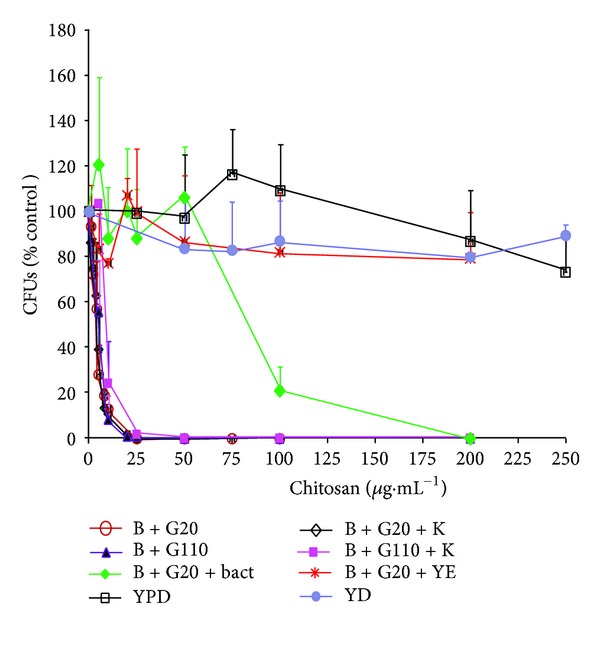
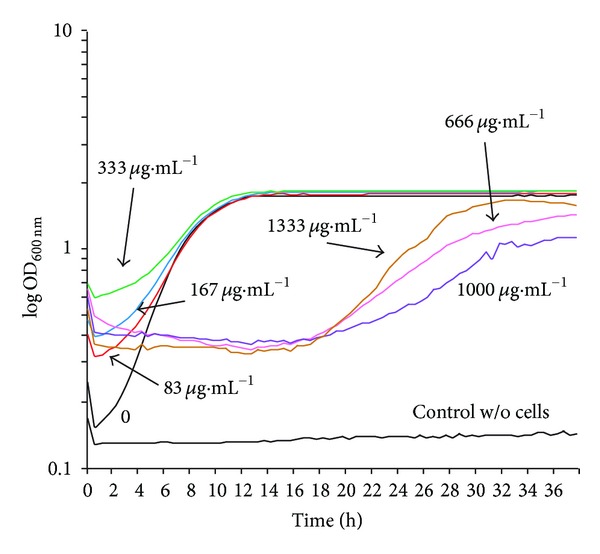
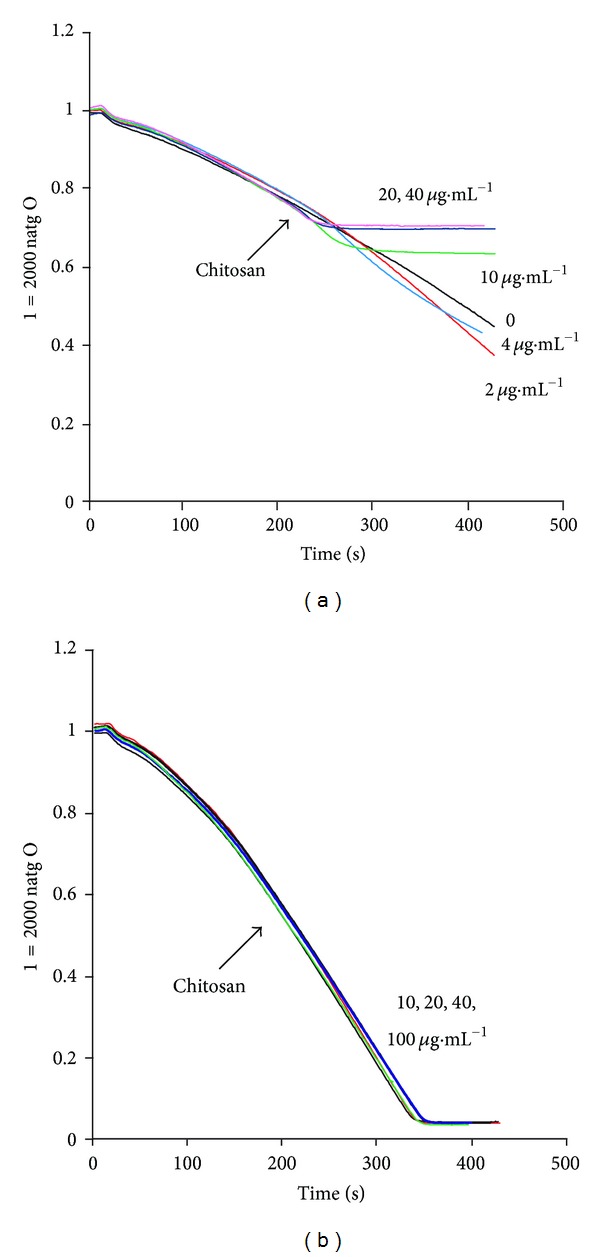
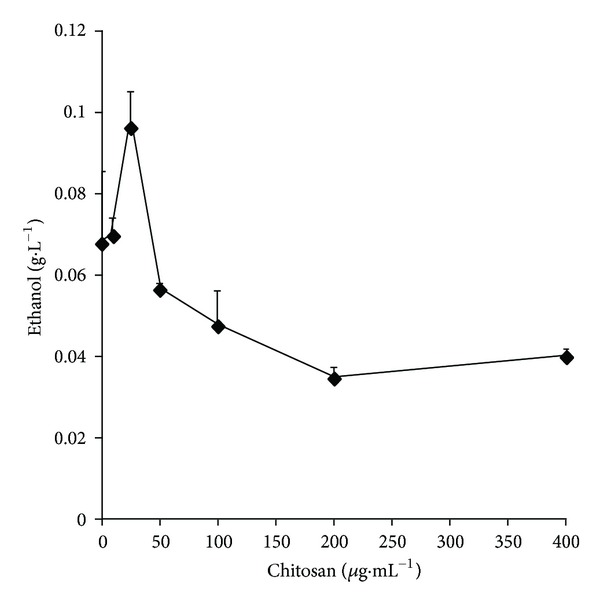
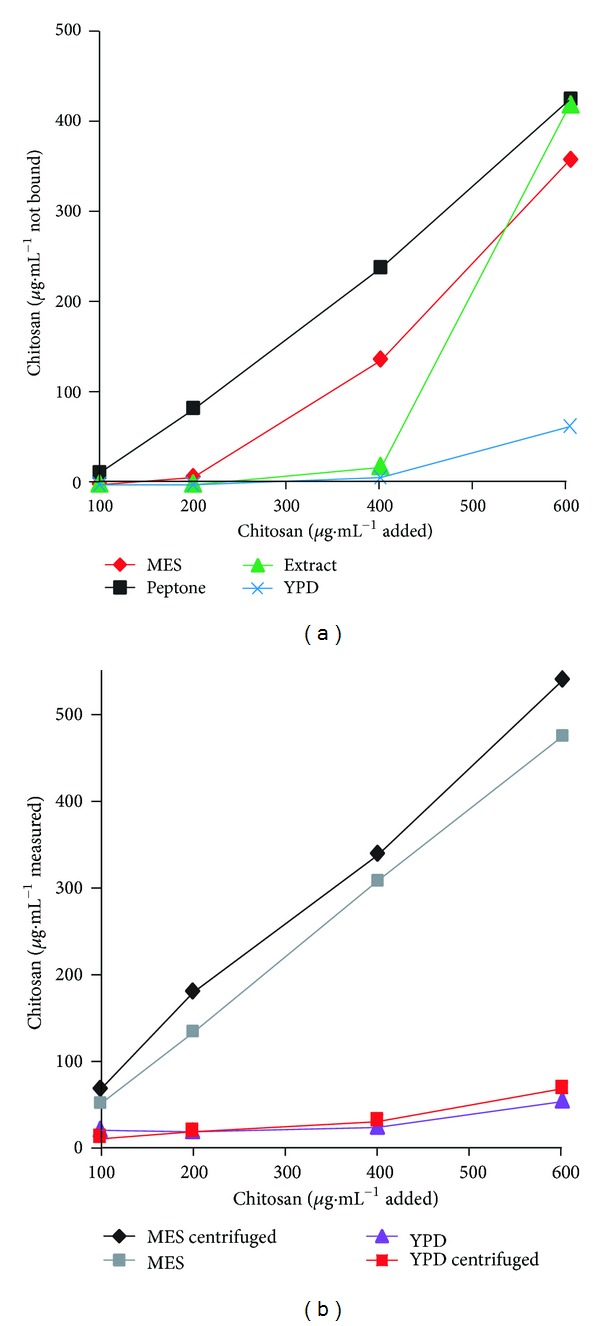
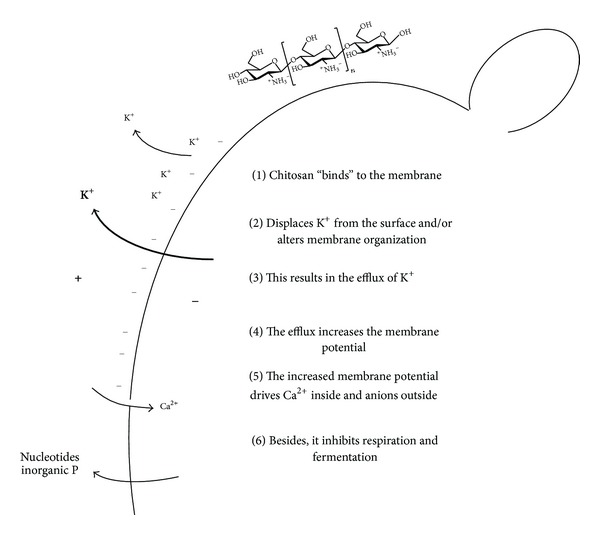
The effects of low molecular weight (96.5 KDa) chitosan on the pathogenic yeast Candida albicans were studied. Low concentrations of chitosan, around 2.5 to 10 μ g·mL(-1) produced (a) an efflux of K(+) and stimulation of extracellular acidification, (b) an inhibition of Rb(+) uptake, (c) an increased transmembrane potential difference of the cells, and (d) an increased uptake of Ca(2+). It is proposed that these effects are due to a decrease of the negative surface charge of the cells resulting from a strong binding of the polymer to the cells. At higher concentrations, besides the efflux of K(+), it produced (a) a large efflux of phosphates and material absorbing at 260 nm, (b) a decreased uptake of Ca(2+), (c) an inhibition of fermentation and respiration, and (d) the inhibition of growth. The effects depend on the medium used and the amount of cells, but in YPD high concentrations close to 1 mg·mL(-1) are required to produce the disruption of the cell membrane, the efflux of protein, and the growth inhibition. Besides the findings at low chitosan concentrations, this work provides an insight of the conditions required for chitosan to act as a fungistatic or antifungal and proposes a method for the permeabilization of yeast cells.
Overview
The claims and statistics of this paper haven’t been checked yet.
Free: it reads the open-access text and checks the first 5 claims that cite a source we can check. Create a free account to check every claim.
Integrity signals
Registry
Cites
Statistics
Figures

Verification
Claims the paper makes
The claims and statistics of this paper haven’t been checked yet.
Free: it reads the open-access text and checks the first 5 claims that cite a source we can check. Create a free account to check every claim.
Claims other papers make about this one
Each is checked against this paper’s own text: does it say what the citing paper says it does?
The cited source says what the claim attributes to it.
In the citing paper
“The antimicrobial activity of chitosan has been documented, but the mechanisms underlying its antifungal action on C. albicans remain unclear (Raafat et al., 2008; Kong et al., 2010; Pena et al., 2013; Cheung et al., 2015).”
From A Potential Antifungal Effect of Chitosan Against Candida albicans Is Mediated via the Inhibition of SAGA Complex Component Expression and the Subsequent Alteration of Cell Surface Integrity (2019) · cites this paper as Pena et al., 2013
The cited source says what the claim attributes to it.
In the citing paper
“Many studies have shown that the antimicrobial effect of chitosan targets the cell surface, which suggests that chitosan is a good alternative approach for antifungal therapy (Kong et al., 2010; Pena et al., 2013; Cheung et al., 2015; Hosseinnejad and Jafari, 2016).”
From A Potential Antifungal Effect of Chitosan Against Candida albicans Is Mediated via the Inhibition of SAGA Complex Component Expression and the Subsequent Alteration of Cell Surface Integrity (2019) · cites this paper as Pena et al., 2013
The cited source says what the claim attributes to it.
In the citing paper
“The antimicrobial activity of chitosan has been documented, but the mechanisms underlying its antifungal action on C. albicans remain unclear (Raafat et al., 2008; Kong et al., 2010; Pena et al., 2013; Cheung et al., 2015).”
From A Potential Antifungal Effect of Chitosan Against Candida albicans Is Mediated via the Inhibition of SAGA Complex Component Expression and the Subsequent Alteration of Cell Surface Integrity (2019) · cites this paper as Pena et al., 2013
Self-check
Percentages, sums and reported differences re-computed from the paper’s own numbers.
The self-check needs the paper’s full text.
Citations
Cites
THE COLORIMETRIC DETERMINATION OF PHOSPHORUS
Fiske, C. H., & Subbarow, Y. (1925) · Journal of Biological Chemistry · doi:10.1016/s0021-9258(18)84756-1 · Cited by 18,997
Chitin and chitosan: Properties and applications
Rinaudo, M. (2006) · Progress in Polymer Science · doi:10.1016/j.progpolymsci.2006.06.001 · Cited by 8,259 · cited 1×
“Chitosan is an N-deacetylated derivative of chitin, mostly extracted from exoskeletons of crustacea; it is biodegradable, biocompatible, and with low toxicity, which makes it useful and convenient in many different practical applications, such as those in water and waste treatment, food and beverages, cosmetics and to…”
BackgroundChitosan as antimicrobial agent: applications and mode of action.
Rabea, E. I., Badawy, M. E.-T., Stevens, C. V., Smagghe, G., & Steurbaut, W. (2003) · Biomacromolecules · doi:10.1021/bm034130m · Cited by 3,123 · cited 4×
“[2] stressed the following: “Chitosan is inexpensive and nontoxic and possesses reactive amino groups.”
BackgroundInfluentialGee, G. (1972) · Polymer · doi:10.1016/0032-3861(72)90025-0 · Cited by 1,360
Chitosan kills bacteria through cell membrane damage
Liu, H., Du, Y., Wang, X., & Sun, L. (2004) · International Journal of Food Microbiology · doi:10.1016/j.ijfoodmicro.2004.01.022 · Cited by 882 · cited 1×
“It was also found that blocking the amino groups prevents the antimycotic properties of chitosan [13].”
BackgroundSullivan, D. J., Haynes, K. A., Bennett, D. E., Coleman, D. C., & Westerneng, T. J. (1995) · Microbiology · doi:10.1099/13500872-141-7-1507 · Cited by 763
Early Events in the Activation of Plant Defense Responses
Dixon, R. (1994) · Annual Review of Phytopathology · doi:10.1146/annurev.phyto.32.1.479 · Cited by 635 · cited 1×
“In plants, the efflux of ions (K, H, Ca, and Cl) has also been observed [10].”
BackgroundChitinase is required for cell separation during growth of Saccharomyces cerevisiae.
Kuranda, M. J., & Robbins, P. W. (1991) · Journal of Biological Chemistry · doi:10.1016/s0021-9258(18)55057-2 · Cited by 591 · cited 1×
“is secreted into the growthmediumwhen cells are grown in a nutrient-rich medium, YPD [23].”
BackgroundChitinolytic Enterobacter agglomerans Antagonistic to Fungal Plant Pathogens
Chernin, L., Ismailov, Z., Haran, S., & Chet, I. (1995) · Applied and Environmental Microbiology · doi:10.1128/aem.61.5.1720-1726.1995 · Cited by 375 · cited 1×
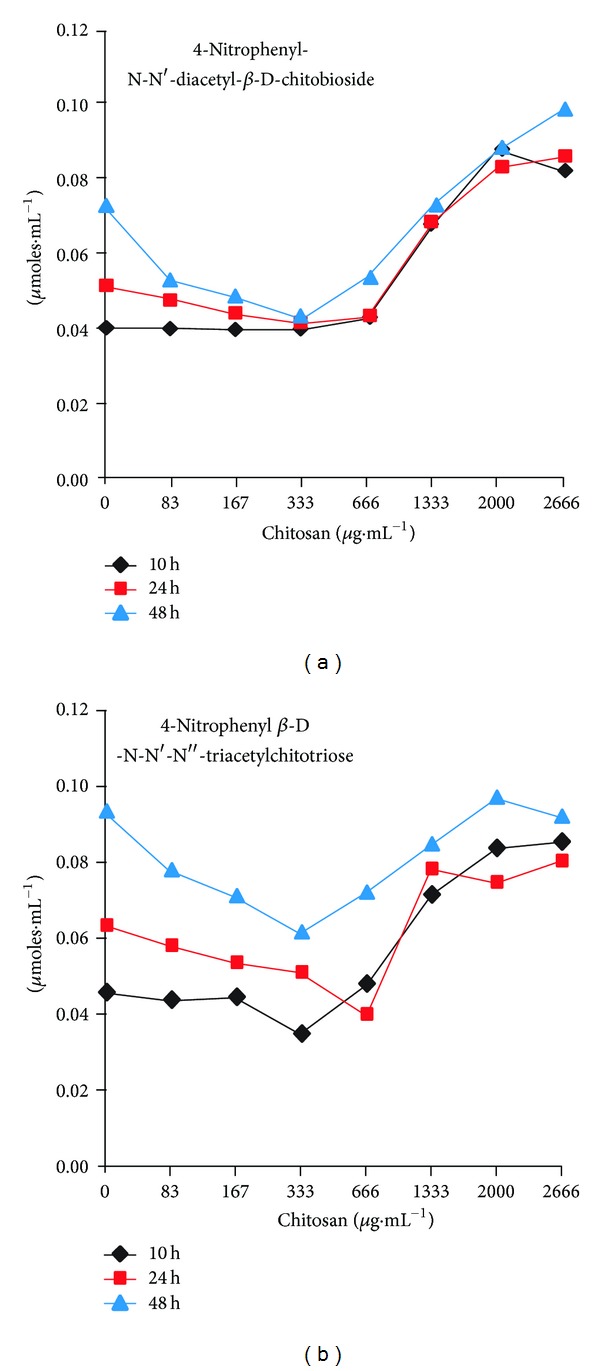
“Results with the exochitinase substrates presented provide information about exosplitting activity on the polymer chains, as it happens on higher analogs of chitin [24, 25].”
BackgroundChitosan Derivatives Killed Bacteria by Disrupting the Outer and Inner Membrane
Je, J.-Y., & Kim, S.-K. (2006) · Journal of Agricultural and Food Chemistry · doi:10.1021/jf061310p · Cited by 318 · cited 1×
“Some studies have demonstrated the disruption of bacterial membranes, both by chitosan itself and by some derivatives [6].”
BackgroundFungal chitinases: diversity, mechanistic properties and biotechnological potential
Hartl, L., Zach, S., & Seidl-Seiboth, V. (2012) · Applied Microbiology and Biotechnology · doi:10.1007/s00253-011-3723-3 · Cited by 315 · cited 2×
“Even though chitosan is deacetylated, chitinases can degrade it [22], and chitosan degradation by chitinases could explain why cells resumed growth after a long period of time at high concentrations.”
BackgroundDecolorization of ion-exchange effluents derived from sugar-mill operations by Bjerkandera sp.BOS55
Moreira, M. T., Palma, C., Feijoo, G., & Lema, J. M. (1997) · International Biodeterioration & Biodegradation · doi:10.1016/s0964-8305(97)00044-9 · Cited by 291
ANNUAL REVIEW OF PHYTOPATHOLOGY, VOL 49
O’Brien, H., Thakur, S., & Guttman, D. S. (2011) · Annual Review of Phytopathology · Cited by 273
Young, D. H., Köhle, H., & Kauss, H. (1982) · Plant Physiology · doi:10.1104/pp.70.5.1449 · Cited by 240 · cited 2×
“[3], or diethylaminoethyl-dextran, increasing the permeability of the plasma membrane [4, 9, 11].”
BackgroundSEYFARTH, F., SCHLIEMANN, S., ELSNER, P., & HIPLER, U. (2007) · International Journal of Pharmaceutics · doi:10.1016/j.ijpharm.2007.11.029 · Cited by 232 · cited 1×
“These effects have also been documented using three Candida species [7].”
BackgroundPalma‐Guerrero, J., Huang, I.-C., Jansson, H., Salinas, J., Lopez-Llorca, L. V., & Read, N. D. (2009) · Fungal Genetics and Biology · doi:10.1016/j.fgb.2009.02.010 · Cited by 174
Dumitru, R., Hornby, J. M., & Nickerson, K. W. (2004) · Antimicrobial Agents and Chemotherapy · doi:10.1128/aac.48.7.2350-2354.2004 · Cited by 143 · cited 2×
“” It is well known that chitosan may be an effective fungicidal, but it has been found that rather high concentrations are required to inhibit yeast growth [2, 6–8, 12, 13, 26–28].”
BackgroundEarly events induced by chitosan on plant cells
Amborabe, B.-E., Bonmort, J., Fleurat-Lessard, P., & Roblin, G. (2008) · Journal of Experimental Botany · doi:10.1093/jxb/ern096 · Cited by 139
Sugar-induced apoptosis in yeast cells
GRANOT, D., LEVINE, A., & DORHEFETZ, E. (2003) · FEMS Yeast Research · doi:10.1016/s1567-1356(03)00154-5 · Cited by 123 · cited 1×
“[32]; glucose in the absence of other necessary nutrients is accompanied by rapid production of ROS, which does not occur in the complete medium (YPD).”
BackgroundCharacterization of a Novel, Broad-Based Fungicidal Activity for the Antiarrhythmic Drug Amiodarone
Courchesne, W. E. (2002) · Journal of Pharmacology and Experimental Therapeutics · doi:10.1124/jpet.300.1.195 · Cited by 105 · cited 4×
“When the cells were incubated in simple buffer, under conditions not very different to those employed by Courchesne [19] and byMaresova et al.”
BackgroundMethodInfluentialPolybase induced lysis of yeast spheroplasts: A new gentle method for preparation of vacuoles
D�rr, M., Böller, T., & Wiemken, A. (1975) · Archives of Microbiology · doi:10.1007/bf00447152 · Cited by 100 · cited 2×
“[3], or diethylaminoethyl-dextran, increasing the permeability of the plasma membrane [4, 9, 11].”
BackgroundMethodDünkler, A., Walther, A., Specht, C. A., & Wendland, J. (2005) · Fungal Genetics and Biology · doi:10.1016/j.fgb.2005.08.001 · Cited by 98 · cited 1×
“albicans has four [37].”
García-Rincón, J., Vega-Pérez, J., Guerra‐Sánchez, M. G., Hernández‐Lauzardo, A. N., Peña-Díaz, A., & Valle, M. G. V.-D. (2010) · Pesticide Biochemistry and Physiology · doi:10.1016/j.pestbp.2010.03.008 · Cited by 96 · cited 1×
“It has also been found that chitosan inhibits the HATPase of Rhizopus stolonifer, but this occurs at very high concentrations of the polycation [35].”
BackgroundSingh, T., Vesentini, D., Singh, A. P., & Daniel, G. (2008) · International Biodeterioration & Biodegradation · doi:10.1016/j.ibiod.2007.09.006 · Cited by 81 · cited 1×
“These fluxes may alter the ionic balance needed to maintain the principal functions of the organisms [12].”
BackgroundMembrane Hyperpolarization Drives Cation Influx and Fungicidal Activity of Amiodarone
Maresova, L., Muend, S., Zhang, Y.-Q., Sychrova, H., & Rao, R. (2009) · Journal of Biological Chemistry · doi:10.1074/jbc.m806693200 · Cited by 78 · cited 2×
“[20], and Muend and Rao [31] is part of the fungicidal mechanism of chitosan, but also that the efflux of nucleotides and substrates of themetabolic pathways results in the inhibition of themain metabolic pathways, respiration, and fermentation depriving the cells of their main energy sources.”
BackgroundHuber-W�lchli, V., & Wiemken, A. (1979) · Archives of Microbiology · doi:10.1007/bf00409100 · Cited by 74 · cited 3×
“This fact may provide another way to permeabilize the cells and to study their metabolism in situ without preparing protoplasts, as required by other methods [5, 36].”
BackgroundMethodMolecular weight and pH effects of aminoethyl modified chitosan on antibacterial activity in vitro
Meng, X., Xing, R., Liu, S., Yu, H., Li, K., Qin, Y., & Li, P. (2012) · International Journal of Biological Macromolecules · doi:10.1016/j.ijbiomac.2012.01.018 · Cited by 69 · cited 1×
“In bacteria, polycationic chitosan can interact with the negatively charged membrane and alter bacterial surface morphology, which either increases membrane permeability, causing leakage of intracellular substances, or decreases membrane functions, preventing nutrient transport [8].”
BackgroundYeast mitochondrial metabolism: From in vitro to in situ quantitative study
Avéret, N., Fitton‐Ouhabi, V., Bunoust, O., Rigoulet, M., & Guérin, B. (1998) · Molecular and Cellular Biochemistry · doi:10.1023/a:1006830810440 · Cited by 69 · cited 1×
“This fact may provide another way to permeabilize the cells and to study their metabolism in situ without preparing protoplasts, as required by other methods [5, 36].”
MethodYeast mitochondrial metabolism: From in vitro to in situ quantitative study
Avéret, N., Fitton‐Ouhabi, V., Bunoust, O., Rigoulet, M., & Guérin, B. (1998) · Springer eBooks · doi:10.1007/978-1-4615-5653-4_6 · Cited by 68
Tews, I., Vincentelli, R., & Vorgias, C. E. (1996) · Gene · doi:10.1016/0378-1119(95)00848-9 · Cited by 68 · cited 1×
“Results with the exochitinase substrates presented provide information about exosplitting activity on the polymer chains, as it happens on higher analogs of chitin [24, 25].”
BackgroundEffect of Some Proteins on the Yeast Cell Membrane
Yphantis, D. A., Dainko, J. L., & Schlenk, F. (1967) · Journal of Bacteriology · doi:10.1128/jb.94.5.1509-1515.1967 · Cited by 59 · cited 4×
“Experiments with other polycationic molecules [3] have demonstrated that their effects can be inhibited by KCl; in the presence of 10mMKCl in the incubationmedium, a very small protection was seen (Figure 6(b)).”
BackgroundInfluentialFungicidal activity of amiodarone is tightly coupled to calcium influx: Ca2+ mediated cell death
Muend, S., & Rao, R. (2008) · FEMS Yeast Research · doi:10.1111/j.1567-1364.2008.00354.x · Cited by 45 · cited 2×
“[20], and Muend and Rao [31] is part of the fungicidal mechanism of chitosan, but also that the efflux of nucleotides and substrates of themetabolic pathways results in the inhibition of themain metabolic pathways, respiration, and fermentation depriving the cells of their main energy sources.”
BackgroundPeña, A., Sánchez, N. S., & Calahorra, M. (2010) · Journal of Bioenergetics and Biomembranes · doi:10.1007/s10863-010-9311-x · Cited by 37 · cited 2×
“This method can be used in this yeast, as shown by the fluorescence increase observed when adding glucose to starved cells, as well as by the decrease produced by the addition of K on this parameter [17].”
MethodSelf-citationHoeberichts, F. A., Pérez‐Valle, J., Montesinos, C., Mulet, J. M., Planes, M. D., Hueso, G., Yenush, L., Sharma, S. C., & Serrano, R. (2010) · Yeast · doi:10.1002/yea.1767 · Cited by 32 · cited 1×
“[33] observed that glucose-induced cell death correlates with K and nucleotides effluxes and can be explained if H”
BackgroundFunctional comparison of plasma-membrane Na+/H+ antiporters from two pathogenic Candida species
Krauke, Y., & Sychrová, H. (2008) · BMC Microbiology · doi:10.1186/1471-2180-8-80 · Cited by 28
Palmeira‐de‐Oliveira, A., Passarinha, L. A., Gaspar, C., Palmeira‐de‐Oliveira, R., Sarmento, B. F. C. C., Martinez‐de‐Oliveira, J., Pina‐Vaz, C., Rodrigues, A. G., & Queiroz, J. A. (2011) · Journal of Chromatography B · doi:10.1016/j.jchromb.2011.07.034 · Cited by 27 · cited 1×
“In the plantMimosa pudica, the proposed primary site of action of chitosan is the H-ATPase, that is, an inhibition of proton pumping [27].”
BackgroundEffects of amiodarone on K+, internal pH and Ca2+homeostasis inSaccharomyces cerevisiae
Peña, A., Calahorra, M., Michel, B., RamÃrez, J., & Sánchez, N. S. (2009) · FEMS Yeast Research · doi:10.1111/j.1567-1364.2009.00538.x · Cited by 25
Self-citationBorst-Pauwels, G. W. F. H., & Theuvenet, A. P. R. (1984) · Biochimica et Biophysica Acta (BBA) - Biomembranes · doi:10.1016/0005-2736(84)90529-7 · Cited by 23 · cited 1×
“In fact, it is known that the surface charge of the cells clearly can influence the kinetic properties of monovalent cation uptake [29].”
BackgroundPotassium ion efflux induced by cationic compounds in yeast
Enríquez-Freire, E., López, R., & Peña, A. (1999) · Biochimica et Biophysica Acta (BBA) - Biomembranes · doi:10.1016/s0005-2736(99)00015-2 · Cited by 18 · cited 1×
“At higher concentrations, besides the efflux of K+, it produced (a) a large efflux of phosphates and material absorbing at 260 nm, (b) a decreased uptake of Ca2+, (c) an inhibition of fermentation and respiration, and (d) the inhibition of growth.”
BackgroundSelf-citationCharacterization of glycolytic metabolism and ion transport of Candida albicans
Calahorra, M., Sánchez, N. S., & Peña, A. (2012) · Yeast · doi:10.1002/yea.2915 · Cited by 15 · cited 2×
“albicans required 48 h to reach almost the same starvation state [15].”
BackgroundSelf-citationGupta, P., Mahanty, S. K., Ansari, S., & Prasad, R. (1991) · PubMed · Cited by 10
Cited by
Antimicrobial Chitosan and Chitosan Derivatives: A Review of the Structure–Activity Relationship
Sahariah, P., & Másson, M. (2017) · Biomacromolecules · doi:10.1021/acs.biomac.7b01058 · Cited by 994
Antimicrobial Actions and Applications of Chitosan
Ke, C.-L., Deng, F.-S., Chuang, C.-Y., & Lin, C.-H. (2021) · Polymers · doi:10.3390/polym13060904 · Cited by 949
“Nevertheless, the minimum inhibitory concentrations (MICs) of chitosan against fungi vary and are highly associated with the MW and degree of deacetylation (DDA) of chitosan, solvent pH, and the type of fungus being targeted [2,90,107,136,140,144,148,149].”
BackgroundChitosan as a Wound Dressing Starting Material: Antimicrobial Properties and Mode of Action
Matica, M. A., Aachmann, F. L., Tøndervik, A., Sletta, H., & Ostafe, V. (2019) · International Journal of Molecular Sciences · doi:10.3390/ijms20235889 · Cited by 818
Molecular Mechanisms of Chitosan Interactions with Fungi and Plants
Lopez-Moya, F., Suarez-Fernandez, M., & Lopez-Llorca, L. V. (2019) · International Journal of Molecular Sciences · doi:10.3390/ijms20020332 · Cited by 288
Chitosan-based nanosystems and their exploited antimicrobial activity
Perinelli, D. R., Fagioli, L., Campana, R., Lam, J. K. W., Baffone, W., Palmieri, G. F., Casettari, L., & Bonacucina, G. (2018) · European Journal of Pharmaceutical Sciences · doi:10.1016/j.ejps.2018.01.046 · Cited by 286
“…activity of chitosan and chitosan nanoparticles against 188 different pathogenic species for humans such as Candida, Aspergillus and Fusarium, demonstrating 189 their disruption effect on fungal lipid membrane (Seyfarth et al., 2008) (Pena et al., 2013) (Park et al., 190 2008) (Ing et al., 2012).”
Background
Metadata
- Authors
- Peña, A., Sánchez, N. S., & Calahorra, M.
- Affiliations
- Universidad Nacional Autónoma de México (MX)
- Corresponding author
- Peña, Antonio
- Venue
- BioMed Research International
- Publisher
- Hindawi Limited
- Published
- 2013
- Volume
- 2013
- Pages
- 1-15
- ISSN
- 1110-7243 (ISSN-L)
- 2314-6133
- 2314-6141
- PMC
- PMC3703409
- OpenAlex
- W2123118282
- Cited by
- 136
- References
- 41
- Citations by year
- 2026: 5 · 2025: 6 · 2024: 9 · 2023: 14 · 2022: 13 · 2021: 15 · 2020: 10 · 2019: 14 · 2018: 16 · 2017: 12 · 2016: 9 · 2015: 6 · 2014: 7
- FWCI
- 5.33
- Type
- journal article
- Language
- en
- Open access
- hybrid
- doi.org
- Locations
- BioMed Research International (publishedVersion, cc-by)
- Europe PMC (PubMed Central) (publishedVersion, cc-by)
- PubMed Central (publishedVersion, cc-by)
- PubMed (publishedVersion)
- DOAJ (DOAJ: Directory of Open Access Journals) (submittedVersion)
- Funders
- Instituto Politécnico Nacional
- Consejo Nacional de Ciencia y Tecnología
- Universidad Nacional Autónoma de México
- Topics
- Health Sciences › Medicine › Infectious Diseases › Antifungal resistance and susceptibility
- Physical Sciences › Materials Science › Biomaterials › Nanocomposite Films for Food Packaging
- Life Sciences › Immunology and Microbiology › Applied Microbiology and Biotechnology › Antimicrobial agents and applications
- Keywords
- chitosan, Candida albicans, antifungal activity, low molecular weight chitosan, potassium efflux, calcium uptake, membrane potential, surface charge, cell membrane damage, fungistatic activity, yeast growth inhibition, fermentation inhibition
- MeSH terms
- Antifungal Agents, Calcium, Candida albicans, Cell Membrane Permeability, Chitinases, Fermentation, Glucosephosphate Dehydrogenase, Kinetics, Membrane Potentials, Microbial Sensitivity Tests, Nucleotides, Oxygen Consumption, Phosphates, Potassium, Rubidium, Colony Count, Microbial, Chitosan, Microbial Viability, Static Electricity, Enzyme Assays
About these checks
Registry, retraction, Cites and statistics results are computed, not judged, with one exception: a printed reference that no index lists is read once by a model before it counts as a citation error. Claims are extracted by a model and kept only when their quote appears verbatim in the text; each cited source is then checked, with a model’s help, for whether it says what the claim relies on. Those verdicts can be wrong — read the claim’s quote and the cited source before relying on one.
Statistics and arithmetic are recomputed, not judged.
Confidence bands are shown only for fields calibrated on our annotated test set. None is calibrated yet, so no band is shown.
What counts as a claim ›How we measure confidence ›How we check this ›
Are you an author, or do you see a problem with this page? Request a review
Data sources
Bibliographic data: Semantic Scholar, OpenAlex, Crossref.
Contains information from the Semantic Scholar Academic Graph Datasets, made available under the ODC Attribution License (ODC-BY 1.0).
Semantic Scholar’s data is described in: Kinney, R., et al. (2023). The Semantic Scholar Open Data Platform. arXiv:2301.10140.
