

Effects of Chitosan on Candida albicans: Conditions for Its Antifungal Activity
Open accessThe DOI matches its Crossref record; 41 of the 41 references it cites were found in a registry or an index.
Abstract
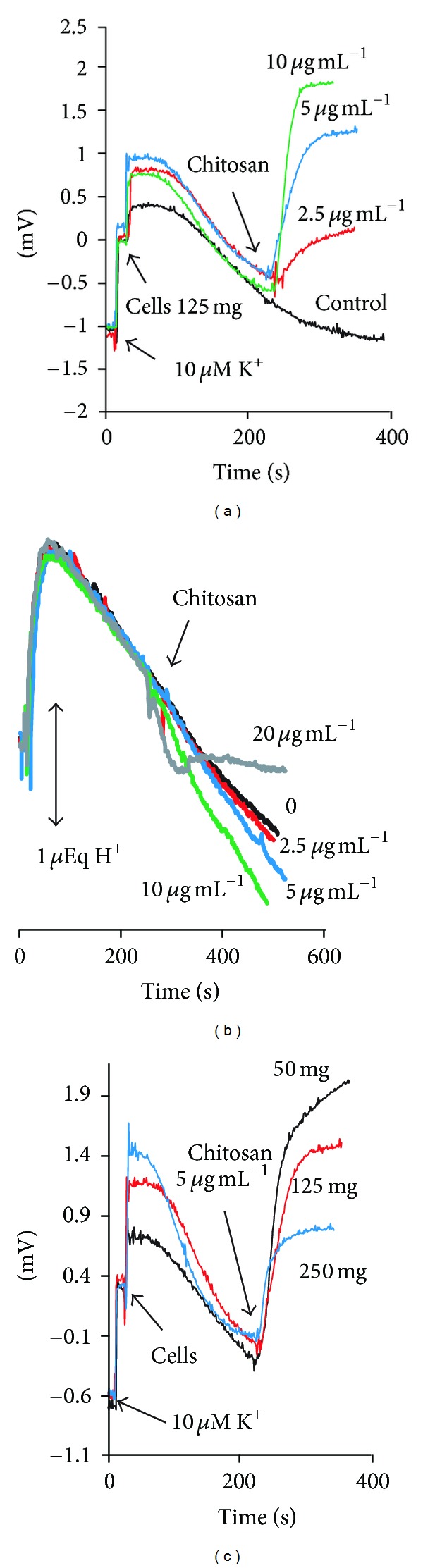
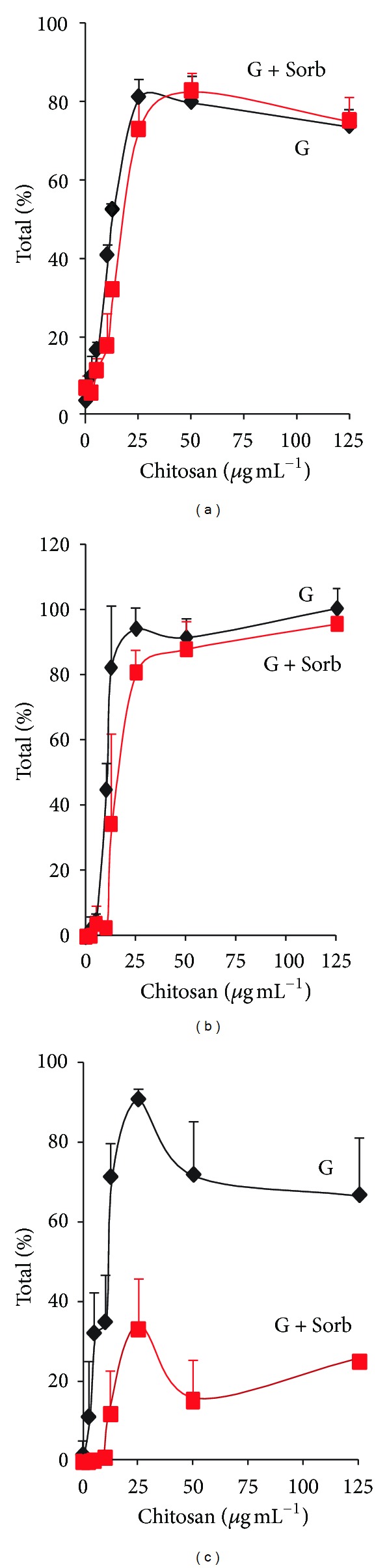
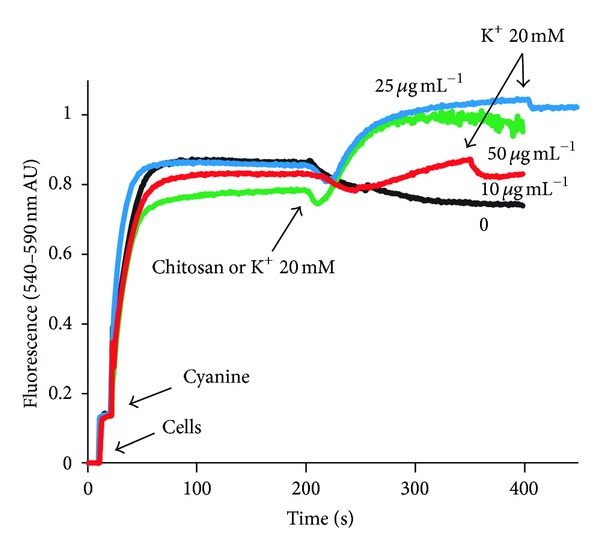
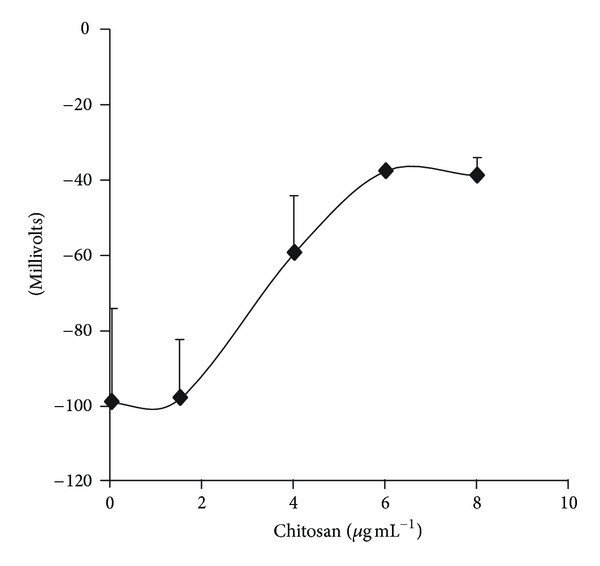
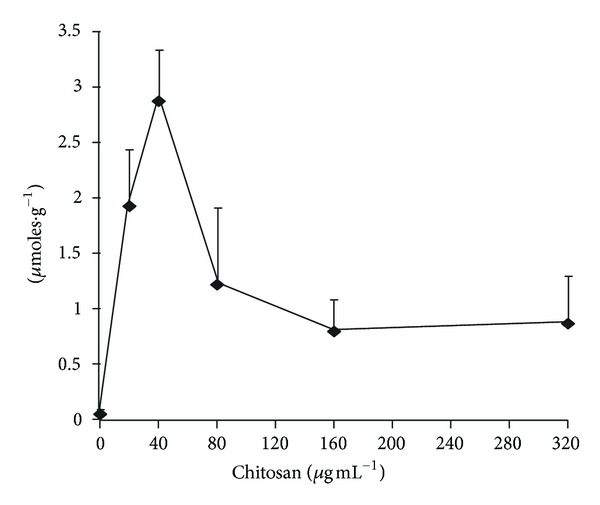
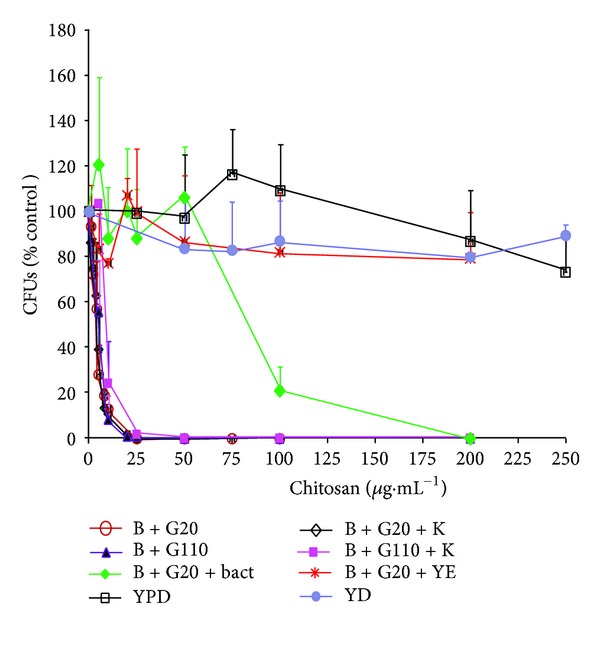
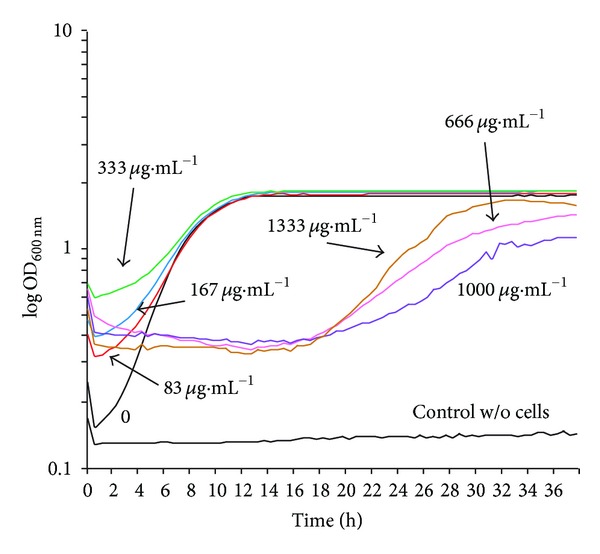
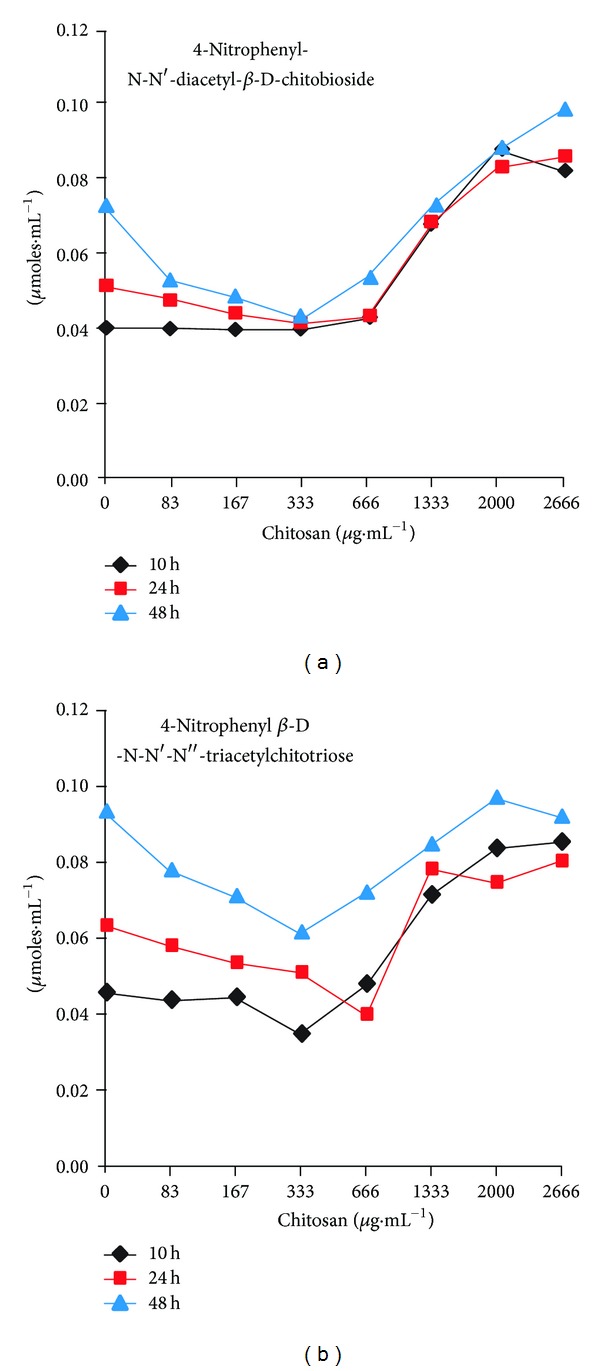
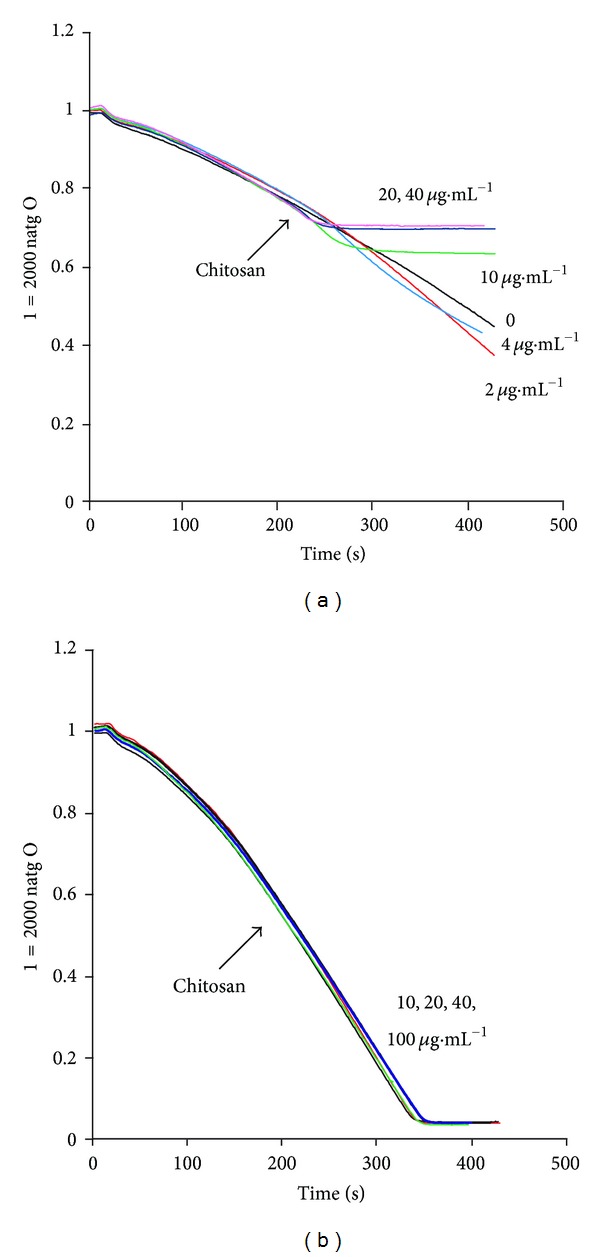
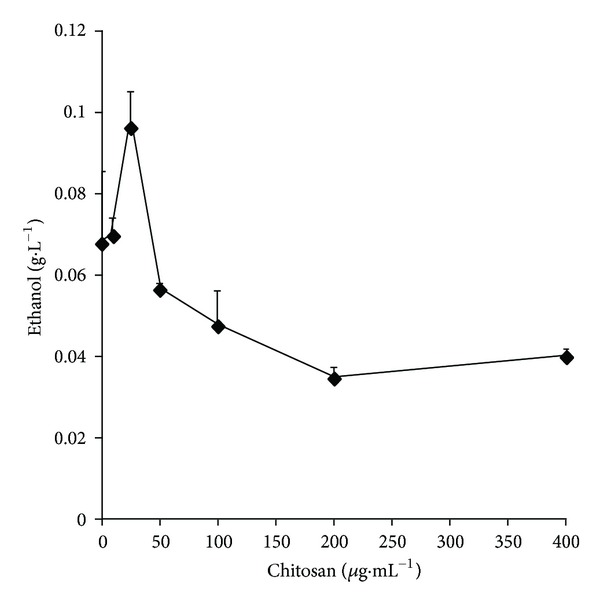
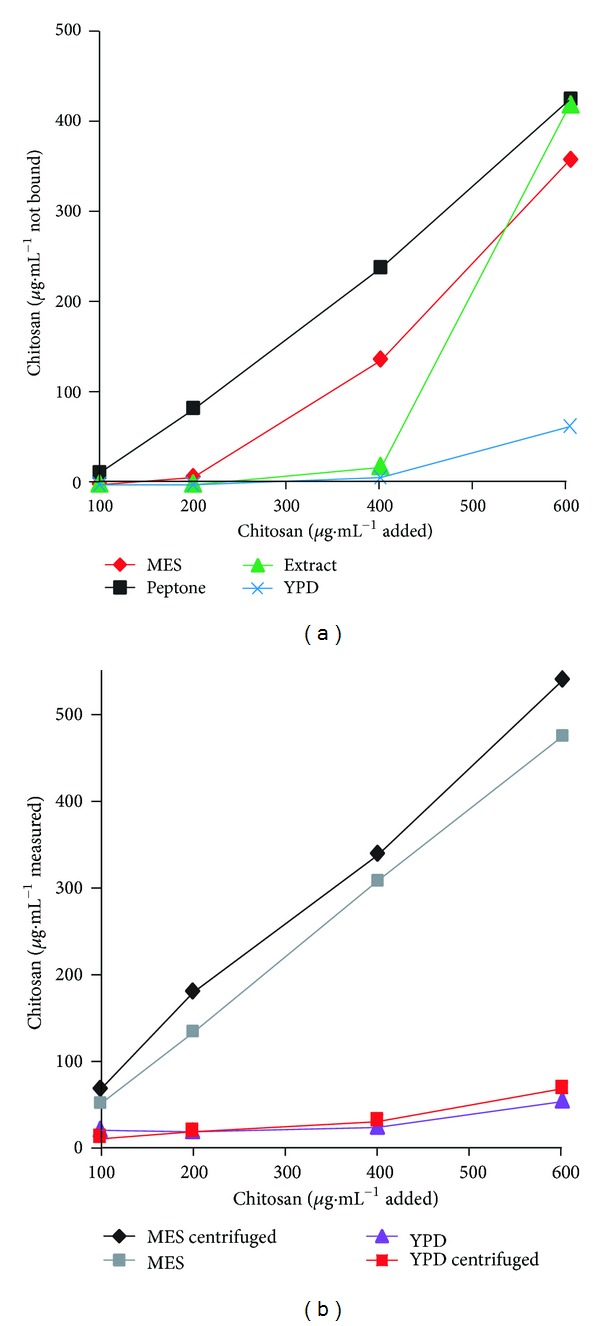
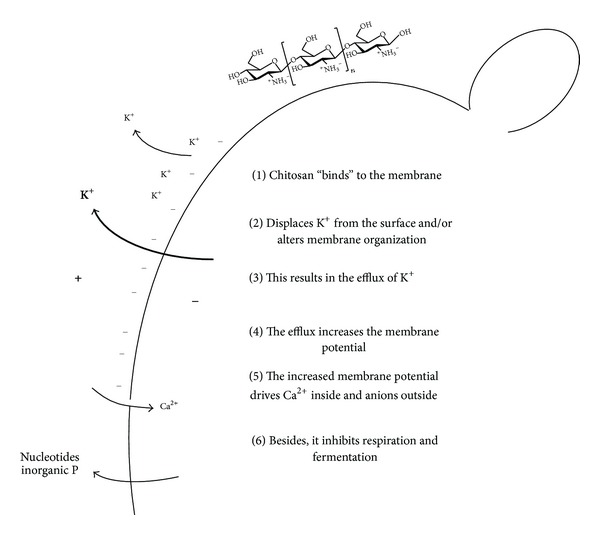
The effects of low molecular weight (96.5 KDa) chitosan on the pathogenic yeast Candida albicans were studied. Low concentrations of chitosan, around 2.5 to 10 μ g·mL(-1) produced (a) an efflux of K(+) and stimulation of extracellular acidification, (b) an inhibition of Rb(+) uptake, (c) an increased transmembrane potential difference of the cells, and (d) an increased uptake of Ca(2+). It is proposed that these effects are due to a decrease of the negative surface charge of the cells resulting from a strong binding of the polymer to the cells. At higher concentrations, besides the efflux of K(+), it produced (a) a large efflux of phosphates and material absorbing at 260 nm, (b) a decreased uptake of Ca(2+), (c) an inhibition of fermentation and respiration, and (d) the inhibition of growth. The effects depend on the medium used and the amount of cells, but in YPD high concentrations close to 1 mg·mL(-1) are required to produce the disruption of the cell membrane, the efflux of protein, and the growth inhibition. Besides the findings at low chitosan concentrations, this work provides an insight of the conditions required for chitosan to act as a fungistatic or antifungal and proposes a method for the permeabilization of yeast cells.
Overview
The claims and statistics of this paper haven’t been checked yet.
Free: it reads the open-access text and checks the first 5 claims that cite a source we can check. Create a free account to check every claim.
Integrity signals
Registry
Cites
Statistics
Figures

Verification
Claims the paper makes
The claims and statistics of this paper haven’t been checked yet.
Free: it reads the open-access text and checks the first 5 claims that cite a source we can check. Create a free account to check every claim.
Claims other papers make about this one
Each is checked against this paper’s own text: does it say what the citing paper says it does?
The cited source says what the claim attributes to it.
In the citing paper
“The antimicrobial activity of chitosan has been documented, but the mechanisms underlying its antifungal action on C. albicans remain unclear (Raafat et al., 2008; Kong et al., 2010; Pena et al., 2013; Cheung et al., 2015).”
From A Potential Antifungal Effect of Chitosan Against Candida albicans Is Mediated via the Inhibition of SAGA Complex Component Expression and the Subsequent Alteration of Cell Surface Integrity (2019) · cites this paper as Pena et al., 2013
The cited source says what the claim attributes to it.
In the citing paper
“Many studies have shown that the antimicrobial effect of chitosan targets the cell surface, which suggests that chitosan is a good alternative approach for antifungal therapy (Kong et al., 2010; Pena et al., 2013; Cheung et al., 2015; Hosseinnejad and Jafari, 2016).”
From A Potential Antifungal Effect of Chitosan Against Candida albicans Is Mediated via the Inhibition of SAGA Complex Component Expression and the Subsequent Alteration of Cell Surface Integrity (2019) · cites this paper as Pena et al., 2013
The cited source says what the claim attributes to it.
In the citing paper
“The antimicrobial activity of chitosan has been documented, but the mechanisms underlying its antifungal action on C. albicans remain unclear (Raafat et al., 2008; Kong et al., 2010; Pena et al., 2013; Cheung et al., 2015).”
From A Potential Antifungal Effect of Chitosan Against Candida albicans Is Mediated via the Inhibition of SAGA Complex Component Expression and the Subsequent Alteration of Cell Surface Integrity (2019) · cites this paper as Pena et al., 2013
Self-check
Percentages, sums and reported differences re-computed from the paper’s own numbers.
The self-check needs the paper’s full text.
Citations
Cites
THE COLORIMETRIC DETERMINATION OF PHOSPHORUS
Fiske, C. H., & Subbarow, Y. (1925) · Journal of Biological Chemistry · doi:10.1016/s0021-9258(18)84756-1 · Cited by 18,997
Chitin and chitosan: Properties and applications
Rinaudo, M. (2006) · Progress in Polymer Science · doi:10.1016/j.progpolymsci.2006.06.001 · Cited by 8,259 · cited 1×
“Chitosan is an N-deacetylated derivative of chitin, mostly extracted from exoskeletons of crustacea; it is biodegradable, biocompatible, and with low toxicity, which makes it useful and convenient in many different practical applications, such as those in water and waste treatment, food and beverages, cosmetics and to…”
BackgroundChitosan as antimicrobial agent: applications and mode of action.
Rabea, E. I., Badawy, M. E.-T., Stevens, C. V., Smagghe, G., & Steurbaut, W. (2003) · Biomacromolecules · doi:10.1021/bm034130m · Cited by 3,123 · cited 4×
“[2] stressed the following: “Chitosan is inexpensive and nontoxic and possesses reactive amino groups.”
BackgroundInfluentialGee, G. (1972) · Polymer · doi:10.1016/0032-3861(72)90025-0 · Cited by 1,360
Chitosan kills bacteria through cell membrane damage
Liu, H., Du, Y., Wang, X., & Sun, L. (2004) · International Journal of Food Microbiology · doi:10.1016/j.ijfoodmicro.2004.01.022 · Cited by 882 · cited 1×
“It was also found that blocking the amino groups prevents the antimycotic properties of chitosan [13].”
BackgroundSullivan, D. J., Haynes, K. A., Bennett, D. E., Coleman, D. C., & Westerneng, T. J. (1995) · Microbiology · doi:10.1099/13500872-141-7-1507 · Cited by 763
Early Events in the Activation of Plant Defense Responses
Dixon, R. (1994) · Annual Review of Phytopathology · doi:10.1146/annurev.phyto.32.1.479 · Cited by 635 · cited 1×
“In plants, the efflux of ions (K, H, Ca, and Cl) has also been observed [10].”
BackgroundChitinase is required for cell separation during growth of Saccharomyces cerevisiae.
Kuranda, M. J., & Robbins, P. W. (1991) · Journal of Biological Chemistry · doi:10.1016/s0021-9258(18)55057-2 · Cited by 591 · cited 1×
“is secreted into the growthmediumwhen cells are grown in a nutrient-rich medium, YPD [23].”
BackgroundChitinolytic Enterobacter agglomerans Antagonistic to Fungal Plant Pathogens
Chernin, L., Ismailov, Z., Haran, S., & Chet, I. (1995) · Applied and Environmental Microbiology · doi:10.1128/aem.61.5.1720-1726.1995 · Cited by 375 · cited 1×
“Results with the exochitinase substrates presented provide information about exosplitting activity on the polymer chains, as it happens on higher analogs of chitin [24, 25].”
BackgroundChitosan Derivatives Killed Bacteria by Disrupting the Outer and Inner Membrane
Je, J.-Y., & Kim, S.-K. (2006) · Journal of Agricultural and Food Chemistry · doi:10.1021/jf061310p · Cited by 318 · cited 1×
“Some studies have demonstrated the disruption of bacterial membranes, both by chitosan itself and by some derivatives [6].”
Background
Cited by
Antimicrobial Chitosan and Chitosan Derivatives: A Review of the Structure–Activity Relationship
Sahariah, P., & Másson, M. (2017) · Biomacromolecules · doi:10.1021/acs.biomac.7b01058 · Cited by 994
Antimicrobial Actions and Applications of Chitosan
Ke, C.-L., Deng, F.-S., Chuang, C.-Y., & Lin, C.-H. (2021) · Polymers · doi:10.3390/polym13060904 · Cited by 949
“Nevertheless, the minimum inhibitory concentrations (MICs) of chitosan against fungi vary and are highly associated with the MW and degree of deacetylation (DDA) of chitosan, solvent pH, and the type of fungus being targeted [2,90,107,136,140,144,148,149].”
BackgroundChitosan as a Wound Dressing Starting Material: Antimicrobial Properties and Mode of Action
Matica, M. A., Aachmann, F. L., Tøndervik, A., Sletta, H., & Ostafe, V. (2019) · International Journal of Molecular Sciences · doi:10.3390/ijms20235889 · Cited by 818
Molecular Mechanisms of Chitosan Interactions with Fungi and Plants
Lopez-Moya, F., Suarez-Fernandez, M., & Lopez-Llorca, L. V. (2019) · International Journal of Molecular Sciences · doi:10.3390/ijms20020332 · Cited by 288
Chitosan-based nanosystems and their exploited antimicrobial activity
Perinelli, D. R., Fagioli, L., Campana, R., Lam, J. K. W., Baffone, W., Palmieri, G. F., Casettari, L., & Bonacucina, G. (2018) · European Journal of Pharmaceutical Sciences · doi:10.1016/j.ejps.2018.01.046 · Cited by 286
“…activity of chitosan and chitosan nanoparticles against 188 different pathogenic species for humans such as Candida, Aspergillus and Fusarium, demonstrating 189 their disruption effect on fungal lipid membrane (Seyfarth et al., 2008) (Pena et al., 2013) (Park et al., 190 2008) (Ing et al., 2012).”
BackgroundPreparation and Antimicrobial Activity of Chitosan and Its Derivatives: A Concise Review
Confederat, L. G., Tuchilus, C. G., Dragan, M., Sha’at, M., & Dragostin, O. M. (2021) · Molecules · doi:10.3390/molecules26123694 · Cited by 247
“which may be responsible for its antifungal activity: a large efflux of K+ and increase of Ca2+ uptake and the inhibition of respiration, fermentation and cell viability [96].”
BackgroundKaraki, N., Aljawish, A., Humeau, C., Muniglia, L., & Jasniewski, J. (2016) · Enzyme and Microbial Technology · doi:10.1016/j.enzmictec.2016.04.004 · Cited by 226
Ardekani, N. T., Khorram, M., Zomorodian, K., Yazdanpanah, S., Veisi, H., & Veisi, H. (2019) · International Journal of Biological Macromolecules · doi:10.1016/j.ijbiomac.2018.12.085 · Cited by 181
Chitosan and Chitosan Nanoparticles: Parameters Enhancing Antifungal Activity
Poznanski, P., Hameed, A., & Orczyk, W. (2023) · Molecules · doi:10.3390/molecules28072996 · Cited by 177
Irimia, T., Ghica, M. V., Popa, L., Anuța, V., Arsene, A., & Dinu‐Pîrvu, C. (2018) · Polymers · doi:10.3390/polym10111221 · Cited by 175
Dananjaya, S. H. S., Kumar, R. S., Yang, M., Nikapitiya, C., Lee, J., & De Zoysa, M. (2018) · International Journal of Biological Macromolecules · doi:10.1016/j.ijbiomac.2017.11.046 · Cited by 141
Shih, P.-Y., Liao, Y.-T., Tseng, Y.-K., Deng, F.-S., & Lin, C.-H. (2019) · Frontiers in Microbiology · doi:10.3389/fmicb.2019.00602 · Cited by 156
Dananjaya, S. H. S., Erandani, W. K. C. U., Kim, C., Nikapitiya, C., Lee, J., & Zoysa, M. D. (2017) · International Journal of Biological Macromolecules · doi:10.1016/j.ijbiomac.2017.07.056 · Cited by 144
Kolge, H., Kadam, K., Galande, S. M., Lanjekar, V. B., & Ghormade, V. (2021) · ACS Applied Bio Materials · doi:10.1021/acsabm.1c00349 · Cited by 131
An antifungal mechanism of curcumin lies in membrane‐targeted action within C andida albicans
Lee, W., & Lee, D. G. (2014) · IUBMB Life · doi:10.1002/iub.1326 · Cited by 131
“Loss of cytoplasmic potassium would therefore lead to cell death in fungi (21).”
Backgroundde Carvalho, F. G., Magalhães, T. C., Teixeira, N. M., Gondim, B. L. C., Carlo, H. L., dos Santos, R. L., de Oliveira, A. R., & Denadai, Â. M. L. (2019) · Materials Science and Engineering C · doi:10.1016/j.msec.2019.109885 · Cited by 117
Apigenin induces cell shrinkage in Candida albicans by membrane perturbation
Lee, H.-J., Woo, E., & Lee, D. G. (2018) · FEMS Yeast Research · doi:10.1093/femsyr/foy003 · Cited by 109
Effect of chitosan nanoparticles on the inhibition of Candida spp. biofilm on denture base surface
Gondim, B. L. C., Castellano, L. R. C., de Castro, R. D., Machado, G., Carlo, H. L., Valença, A. M. G., & de Carvalho, F. G. (2018) · Archives of Oral Biology · doi:10.1016/j.archoralbio.2018.07.004 · Cited by 106
Lara, H. H., Guisbiers, G., Mendoza, J., Mimun, L. C., Vincent, B., Lopez-Ribot, J. L., & Nash, K. L. (2018) · International Journal of Nanomedicine · doi:10.2147/ijn.s151285 · Cited by 104
“Microbicidal and fungicidal properties of CS are well established.(30) The polycationic agents of the polymer interact with anionic components of the yeast reducing the negative surface charge of the outer CW ensuing in a strong attachment of the biopolymer, permeabilizing the CW as a result.”
Chen, J., He, Z.-M., Wang, F., Zhang, Z., Liu, X., Zhai, D., & Chen, W. (2015) · European Journal of Pharmacology · doi:10.1016/j.ejphar.2015.12.038 · Cited by 104
Scolopendin 2, a cationic antimicrobial peptide from centipede, and its membrane-active mechanism
Lee, H.-J., Hwang, J., Lee, J., Kim, J. I., & Lee, D. G. (2014) · Biochimica et Biophysica Acta (BBA) - Biomembranes · doi:10.1016/j.bbamem.2014.11.016 · Cited by 100
“The potassium ion gradient is an important determinant of cell growth and survival because of its role in regulating cytoplasmic pH and cell structure [42]; therefore, a loss of cytoplasmic potassium would lead to cell death in bacteria and fungi [43,44].”
BackgroundChoi, H., Kim, K., & Lee, D. G. (2016) · Fungal Biology · doi:10.1016/j.funbio.2016.09.001 · Cited by 97
Lo, W.-H., Deng, F.-S., Chang, C., & Lin, C. (2020) · Molecules · doi:10.3390/molecules25215114 · Cited by 98
Kumar, S., Kaur, P., Bernela, M., Rani, R., & Thakur, R. (2016) · International Journal of Biological Macromolecules · doi:10.1016/j.ijbiomac.2016.09.042 · Cited by 88
Fungicidal effect of chitosan via inducing membrane disturbance against Ceratocystis fimbriata
Xing, K., Xing, Y., Liu, Y., Zhang, Y., Shen, X., Li, X., Miao, X., Feng, Z., Peng, X., & Qin, S. (2018) · Carbohydrate Polymers · doi:10.1016/j.carbpol.2018.03.053 · Cited by 87
Calvo, N. L., Svetaz, L. A., Álvarez, V. A., Quiroga, A. D., Lamas, M. C., & Leonardi, D. (2018) · International Journal of Pharmaceutics · doi:10.1016/j.ijpharm.2018.12.011 · Cited by 79
Chitosan-Based Drug Delivery Systems for Optimization of Photodynamic Therapy: a Review
Calixto, G. M. F., de Annunzio, S. R., Victorelli, F. D., Frade, M. L., Ferreira, P. S., Chorilli, M., & Fontana, C. R. (2019) · AAPS PharmSciTech · doi:10.1208/s12249-019-1407-y · Cited by 75
Tiwari, N., Kumar, D., Priyadarshani, A., Jain, G. K., Mittal, G., Kesharwani, P., & Aggarwal, G. (2023) · Journal of Drug Delivery Science and Technology · doi:10.1016/j.jddst.2023.104319 · Cited by 74
Dong, F., & Li, S. (2018) · Polymers · doi:10.3390/polym10060673 · Cited by 67
Bernabé, P., Becherán, L., Cabrera‐Barjas, G., Nešić, A., Claudio Alburquenque, O., Tapia, C. V., Taboada, E., Alderete, J. B., & Ríos-Escalante, P. D. L. (2020) · International Journal of Biological Macromolecules · doi:10.1016/j.ijbiomac.2020.01.126 · Cited by 67
Namangkalakul, W., Benjavongkulchai, S., Pochana, T., Promchai, A., Satitviboon, W., Howattanapanich, S., Phuprasong, R., Ungvijanpunya, N., Supakanjanakanti, D., Chaitrakoonthong, T., et al. (2019) · Journal of Prosthetic Dentistry · doi:10.1016/j.prosdent.2019.09.026 · Cited by 65
Torabiardekani, N., Karami, F., Khorram, M., Zare, A., Kamkar, M., Zomorodian, K., & Zareshahrabadi, Z. (2023) · International Journal of Biological Macromolecules · doi:10.1016/j.ijbiomac.2023.125073 · Cited by 63
Fungicidal mechanisms of the antimicrobial peptide Bac8c
Lee, W., & Lee, D. G. (2014) · Biochimica et Biophysica Acta (BBA) - Biomembranes · doi:10.1016/j.bbamem.2014.11.024 · Cited by 64
Lopez‐Moya, F., Colom, M. F., Martínez-Peinado, P., Martinez-Lopez, J. E., Puelles, E., Sempere-Ortells, J. M., & Lopez-Llorca, L. V. (2014) · Fungal Biology · doi:10.1016/j.funbio.2014.12.003 · Cited by 64
Camacho‐Alonso, F., Julián-Belmonte, E., Chiva-García, F., & Beneyto, Y. M. (2017) · Photomedicine and Laser Surgery · doi:10.1089/pho.2016.4148 · Cited by 63
“15 The effects of chitosan on PDT have been assayed, using them directly as a PS 16,17 or as potential enhancers of some PSs, in vitro and in vivo 18 for the treatment of cancer and in vitro for the treatment of bacteria, using rose Bengal as a PS 19 or erythrosine.”
Janik, W., Nowotarski, M., Shyntum, D. Y., Banaś, A., Krukiewicz, K., Kudła, S., & Dudek, G. (2022) · Materials · doi:10.3390/ma15093236 · Cited by 60
“An antifungal effect was noted for STALG, ST and ALG, but no effect of antifungal activity was observed in any of chitosan-based foils, even though chitosan itself is known to exhibit antifungal properties [91].”
BackgroundNacional, I. P., Bautista‐Baños, S., Ventura‐Aguilar, R. I., Nacional, I. P., Correa‐Pacheco, Z. N., Nacional, I. P., Corona‐Rangel, M. L., & Nacional, I. P. (2017) · Revista Chapingo Serie Horticultura · doi:10.5154/r.rchsh.2016.11.030 · Cited by 60
Inhibition of mixed fungal and bacterial biofilms on silicone by carboxymethyl chitosan
Tan, Y., Leonhard, M., Moser, D., Ma, S., & Schneider‐Stickler, B. (2016) · Colloids and Surfaces B Biointerfaces · doi:10.1016/j.colsurfb.2016.08.061 · Cited by 46
“Several works have reported its antimicrobial activity [16-20].”
BackgroundGanan, M., Lorentzen, S. B., Agger, J. W., Heyward, C. A., Bakke, O., Knutsen, S. H., Aam, B. B., Eijsink, V. G. H., Gaustad, P., & Sørlie, M. (2019) · PLoS ONE · doi:10.1371/journal.pone.0210208 · Cited by 46
Ibrahim, A. G., Fouda, A., Elgammal, W. E., Eid, A. M., Elsenety, M. M., Mohamed, A. E., & Hassan, S. M. (2022) · Scientific Reports · doi:10.1038/s41598-022-25772-4 · Cited by 45
Tan, Y., Leonhard, M., Moser, D., & Schneider‐Stickler, B. (2016) · Carbohydrate Polymers · doi:10.1016/j.carbpol.2016.04.101 · Cited by 44
Bahavarnia, F., Hasanzadeh, M., Bahavarnia, P., & Shadjou, N. (2024) · RSC Advances · doi:10.1039/d4ra01370k · Cited by 43
Ke, C.-L., Liao, Y.-T., & Lin, C.-H. (2021) · Virulence · doi:10.1080/21505594.2020.1870082 · Cited by 41
An overview of the potential application of chitosan in meat and meat products
Fernando, S. S., Jo, C., Mudannayake, D. C., & Jayasena, D. D. (2023) · Carbohydrate Polymers · doi:10.1016/j.carbpol.2023.121477 · Cited by 41
Omics for Investigating Chitosan as an Antifungal and Gene Modulator
Lopez‐Moya, F., & Lopez-Llorca, L. V. (2016) · Journal of Fungi · doi:10.3390/jof2010011 · Cited by 40
“Chitosan kills or compromises the growth of plant [3] and human fungal pathogens [4–6].”
BackgroundChitosan Ameliorates Candida auris Virulence in a Galleria mellonella Infection Model
Arias, L. S., Butcher, M. C., Short, B., McKloud, E., Delaney, C., Kean, R., Monteiro, D. R., Williams, C., Ramage, G., & Brown, J. L. (2020) · Antimicrobial Agents and Chemotherapy · doi:10.1128/aac.00476-20 · Cited by 39
Muchintala, D., Velpula, S., Raju, D., & Sashidhar, R. B. (2020) · Materials Science and Engineering C · doi:10.1016/j.msec.2020.110712 · Cited by 37
Shwaiki, L. N., Arendt, E. K., & Lynch, K. M. (2020) · Food Control · doi:10.1016/j.foodcont.2020.107178 · Cited by 36
El‐Zahed, M. M., Baka, Z. A. M., Abou-Dobara, M. I., El-Sayed, A., Aboser, M. M., & Hyder, A. (2021) · Bioresources and Bioprocessing · doi:10.1186/s40643-021-00400-7 · Cited by 34
Chitosan silver nanocomposite (CAgNC) as an antifungal agent againstCandida albicans
Kulatunga, D. C. M., Dananjaya, S. H. S., Godahewa, G. I., Lee, J., & Zoysa, M. D. (2016) · Medical Mycology · doi:10.1093/mmy/myw053 · Cited by 35
Lai, W., Hu, C., Deng, G., Lui, K.-H., Wang, X., Tsoi, T., Wang, S., & Wong, W. (2019) · International Journal of Pharmaceutics · doi:10.1016/j.ijpharm.2019.05.045 · Cited by 35
Lee, W., Hwang, J., & Lee, D. G. (2015) · Biochimie · doi:10.1016/j.biochi.2015.08.015 · Cited by 34
Pardeshi, S. R., More, M. P., Patil, P. B., MUJUMDAR, A. S., & Naik, J. (2022) · Drug Delivery and Translational Research · doi:10.1007/s13346-022-01171-0 · Cited by 32
Tan, Y., Leonhard, M., Ma, S., Moser, D., & Schneider‐Stickler, B. (2017) · International Journal of Biological Macromolecules · doi:10.1016/j.ijbiomac.2017.08.094 · Cited by 32
Khan, S. H., Younus, H., Allemailem, K. S., Almatroudi, A., Alrumaihi, F., Alruwetei, A. M., Alsahli, M. A., Khan, A., & Khan, M. A. (2020) · International Journal of Nanomedicine · doi:10.2147/ijn.s249625 · Cited by 31
Tejada, G., Lamas, M. C., Svetaz, L. A., Salomon, C. J., Álvarez, V. A., & Leonardi, D. (2018) · International Journal of Pharmaceutics · doi:10.1016/j.ijpharm.2018.07.023 · Cited by 30
Silver chitosan nanocomposites as a potential treatment for superficial candidiasis
Bonilla, J. J. A., Honorato, L., Oliveira, D., Gonçalves, R. A., Guimaraes, A. J., de Miranda, K. R., & Nimrichter, L. (2021) · Medical Mycology · doi:10.1093/mmy/myab028 · Cited by 29
Padilla-Garfias, F., Ríos-Cifuentes, L., Sánchez, N. S., Calahorra, M., & Peña, A. (2022) · Biochimica et Biophysica Acta (BBA) - General Subjects · doi:10.1016/j.bbagen.2022.130197 · Cited by 28
Self-citationQiao, H., Zhao, J., Wang, X., Xiao, L., Zhu‐Salzman, K., Lei, J., Xu, D., Xu, G., Tan, Y., & Hao, D. (2023) · Pesticide Biochemistry and Physiology · doi:10.1016/j.pestbp.2023.105481 · Cited by 28
Predoi, D., Ciobanu, C. S., Iconaru, S. L., & Predoi, M. V. (2023) · Coatings · doi:10.3390/coatings13020409 · Cited by 26
Dias, A. M., Cabrera, M. P. D. S., Lima, A. M. F., Taboga, S. R., Vilamaior, P. S. L., Tiera, M. J., & Tiera, V. A. D. O. (2018) · Carbohydrate Polymers · doi:10.1016/j.carbpol.2018.05.032 · Cited by 27
Herrera-Romero, I., Ruales, C., Caviedes, M., & León-Reyes, A. (2017) · Phytoparasitica · doi:10.1007/s12600-017-0565-2 · Cited by 25
“…in vitro and in vivo essays against several pathogenic microorganisms including B. cinerea (Prudent et al. 1995; Bhaskara Reddy et al. 1998; Bautista-Baños et al. 2006; Šegvić Klarić et al. 2007; Garrido Assis 2008; Shabnum and Wagay 2011; Katooli et al. 2012; Uniyal et al. 2012; Peña et al. 2013).”
BackgroundBanche, G., Allizond, V., Mandras, N., Finesso, N., Luganini, A., Genova, T., Argenziano, M., Magnetto, C., Gulino, G. R., Roana, J., et al. (2022) · Toxicology Reports · doi:10.1016/j.toxrep.2022.01.005 · Cited by 26
“In turn, chitosan-driven membrane permeabilization might cause the inhibition of the main metabolic pathways, thus depriving cells of their energy sources [61].”
Insect-derived chitosan, a biopolymer for the increased shelf life of white and red grapes
Guarnieri, A., Triunfo, M., Ianniciello, D., Tedesco, F., Salvia, R., Scieuzo, C., Schmitt, É., Capece, A., & Falabella, P. (2024) · International Journal of Biological Macromolecules · doi:10.1016/j.ijbiomac.2024.133149 · Cited by 24
Long‐term antibiofilm activity of carboxymethyl chitosan on mixed biofilm on silicone
Tan, Y., Leonhard, M., Moser, D., Ma, S., & Schneider‐Stickler, B. (2016) · The Laryngoscope · doi:10.1002/lary.26096 · Cited by 24
Motelica‐Heino, M., Predoi, M. V., Ciobanu, C. S., Iconaru, S. L., & Predoi, D. (2023) · Coatings · doi:10.3390/coatings13020472 · Cited by 22
Smart Stimuli-responsive Alginate Nanogels for Drug Delivery Systems and Cancer Therapy: A Review
Garshasbi, H. R., & Naghib, S. M. (2023) · Current Pharmaceutical Design · doi:10.2174/0113816128283806231211073031 · Cited by 23
Bardakova, K. N., Akopova, T. A., Kurkov, A. V., Goncharuk, G. P., Butnaru, D. V., Бурдуковский, В. Ф., Antoshin, A. A., Farion, I. A., Zharikova, T. M., Shekhter, A. B., et al. (2019) · Marine Drugs · doi:10.3390/md17010048 · Cited by 22
“Moreover, such polycations have the ability to interact with the negative charges of the cell surface [7].”
BackgroundSkin wound healing with chitosan thin films containing supported silver nanospheres
Martínez, M. L. O., Yañez-Sánchez, I., Velásquez-Ordoñez, C., Martínez-Palomar, M. M., Álvarez-Rodríguez, A., García‐Sánchez, M. A., Rojas, F., & Gálvez-Gastélum, F. J. (2015) · Journal of Bioactive and Compatible Polymers · doi:10.1177/0883911515590495 · Cited by 22
Acay, H., Yıldırım, A., Güzel, E. E., Tektemur, N. K., & Baran, M. F. (2020) · Preparative Biochemistry & Biotechnology · doi:10.1080/10826068.2020.1765376 · Cited by 21
Antifungal Activity of Chitosan against Postharvest Fungi of Tropical and Subtropical Fruits
Gutiérrez–Martínez, P., Ledezma-Morales, A., Romero-Islas, L. D. C., Ramos-Guerrero, A., Romero-Islas, J., Rodríguez-Pereida, C., Casas-Junco, P. P., Coronado-Partida, L., & González-Estrada, R. R. (2018) · InTech eBooks · doi:10.5772/intechopen.76095 · Cited by 21
“results in different changes: (a) changes on cell permeability, due to the polycationic nature of the chitosan amino group and the electronegative charges in the outer surface of the fungal or bacteria membrane [18]; (b) affectation on homeostasis (K+, Ca2+), leading to the efflux of small molecules affecting fungal r…”
BackgroundNanosized devices as antibiotics and antifungals delivery: past, news, and outlook
Furneri, P. M., Petronio, G. P., Fuochi, V., Cupri, S., & Pignatello, R. (2017) · Elsevier eBooks · doi:10.1016/b978-0-323-46143-6.00023-3 · Cited by 21
Matei, P. M., Iacomi, B. M., Martín‐Gil, J., Pérez‐Lebeña, E., Ramos-Sánchez, M. C., Barrio-Arredondo, M. T., & Martín‐Ramos, P. (2018) · Agronomy · doi:10.3390/agronomy8110239 · Cited by 22
Bharathala, S., Singh, R., & Sharma, P. (2020) · International Journal of Biological Macromolecules · doi:10.1016/j.ijbiomac.2020.07.086 · Cited by 19
Ignatova, M. G., Manolova, N. E., Rashkov, I. B., Markova, N., Kukeva, R. R., Stoyanova, R. K., Georgieva, A. K., & Toshkova, R. A. (2021) · Polymers · doi:10.3390/polym13162690 · Cited by 19
Chitosan: A Good Candidate for Sustained Release Ocular Drug Delivery Systems
Popa, L., Ghica, M. V., Dinu‐Pîrvu, C. E., & Irimia, T. (2018) · InTech eBooks · doi:10.5772/intechopen.76039 · Cited by 19
Camacho‐Alonso, F., Salinas, J., Sánchez‐Siles, M., Mourelo, J. P., Cotrina‐Veizaga, B. D., & Ortega, N. (2021) · Journal of Periodontology · doi:10.1002/jper.21-0306 · Cited by 18
Chitosan Sensitivity of Fungi Isolated from Mango (Mangifera indica L.) with Anthracnose
Valenzuela-Ortiz, G., Camacho, S. M. G., San-Martín-Hernández, C., Martínez‐Téllez, M. Á., Aispuro‐Hernández, E., Lizardi‐Mendoza, J., & Quintana-Obregón, E. A. (2022) · Molecules · doi:10.3390/molecules27041244 · Cited by 18
“However, after several hours, growth recovers [36].”
BackgroundSzekalska, M., Sosnowska, K., Wróblewska, M., Basa, A., & Winnicka, K. (2022) · International Journal of Molecular Sciences · doi:10.3390/ijms23126775 · Cited by 18
Robles‐Martínez, L., Guerra‐Sánchez, M. G., Hernández‐Lauzardo, A. N., Pardo, J. P., & Valle, M. G. V.-D. (2014) · Journal of Basic Microbiology · doi:10.1002/jobm.201300790 · Cited by 18
“concentrations (2–4mgml (1)) stimulated the respiration of Candida albicans, but high concentrations (20–40mg ml (1)) completely inhibited it [33].”
BackgroundChanaj-Kaczmarek, J., Rosiak, N., Szymanowska, D., Rajewski, M., Wender-Ożegowska, E., & Cielecka‐Piontek, J. (2022) · Pharmaceutics · doi:10.3390/pharmaceutics14040740 · Cited by 16
Peng, K., Li, M., Himawan, A., Domínguez‐Robles, J., Vora, L. K., Duncan, R., Dai, X., Zhang, C., Zhao, L., Li, L., et al. (2022) · Pharmaceutics · doi:10.3390/pharmaceutics14112497 · Cited by 16
Chitosan inhibits the rehabilitation of damaged microbes induced by photodynamic inactivation.
Lin, C.-H., Chien, H.-F., Lin, M.-H., Chen, C.-P., Shen, M., & Chen, C.-T. (2018) · International Journal of Molecular Sciences · doi:10.3390/ijms19092598 · Cited by 16
“Furthermore, within the lower pH solution, chitosan forms stronger cationic polymer and is able to interact with negative-charged microbial cell surface, thereby inhibiting microbial growth [40, 41].”
BackgroundAnti-COVID-19 Credentials of Chitosan Composites and Derivatives: Future Scope?
Gopal, J., Muthu, M., Pushparaj, S. S. C., & Sivanesan, I. (2023) · Antibiotics · doi:10.3390/antibiotics12040665 · Cited by 15
Awaad, S. S., Sherief, M. A., Mousa, S. M., Orabi, A., & Abdel-Salam, A. B. (2023) · Veterinary World · doi:10.14202/vetworld.2023.1991-2001 · Cited by 15
“[51], chitosan was recommended to be used at concentrations higher than 1.”
BackgroundYarlagadda, S., Selvakumar, R. J., Parashar, S. R., Arockiam, S., & Natanasabapathy, V. (2023) · PubMed Central · doi:10.4103/jcd.jcd_305_23 · Cited by 14
“[23,24] 15-18] Diode laser penetrates well into complex anatomies, and it is portable, easy to handle, and inexpensive.”
BackgroundResponse of Ustilago maydis against the Stress Caused by Three Polycationic Chitin Derivatives
Olicón-Hernández, D. R., Uribe‐Alvarez, C., Uribe‐Carvajal, S., Pardo, J. P., & Guerra‐Sánchez, G. (2017) · Molecules · doi:10.3390/molecules22121745 · Cited by 14
“maydis by chitosan and oligochitosan [15,31,33].”
BackgroundInfluentialPeña, A., Sánchez, N. S., González-López, O., & Calahorra, M. (2015) · FEMS Yeast Research · doi:10.1093/femsyr/fov083 · Cited by 14
Self-citationDelic, M., Butorova, I., & Николаевич, К. А. (2025) · Journal of Biotechnology · doi:10.1016/j.jbiotec.2025.09.014 · Cited by 13
Development of denture-fitting, palate-mucoadhesive miconazole nitrate films for denture stomatitis
Abou-Taleb, B. A., Elzoheiry, I. F., Kotry, G. S., Khalafallah, N. M., & Kandil, S. H. (2023) · Journal of Drug Delivery Science and Technology · doi:10.1016/j.jddst.2023.104263 · Cited by 13
Morphological and Ultrastructural Modifications of Chitosan-Treated Fungal Phytopathogens
Bautista‐Baños, S., Necha, L. L. B., Hernández‐López, M., & Rodríguez‐González, F. (2016) · Elsevier eBooks · doi:10.1016/b978-0-12-802735-6.00009-4 · Cited by 15
Abdel-Wahed, R., Hemdan, B. A., Bayoumi, H., Lü, X., Aleem, A. A. H. A., Eisa, W. H., Zayed, M. F., El-Tantawy, A. I., Guibal, E., Galhoum, A. A., et al. (2025) · International Journal of Biological Macromolecules · doi:10.1016/j.ijbiomac.2025.141833 · Cited by 12
Interaction effect of fungicide and chitosan on non-target lichenized fungi
Rola, K., Majewska, E., & Chowaniec, K. (2023) · Chemosphere · doi:10.1016/j.chemosphere.2023.137772 · Cited by 12
Antifungal effect and mode of action of glochidioboside against Candida albicans membranes
Lee, H.-J., Choi, H., Ko, H. J., Woo, E., & Lee, D. G. (2014) · Biochemical and Biophysical Research Communications · doi:10.1016/j.bbrc.2014.01.019 · Cited by 12
Perdana, M. I., Panphon, S., Ruamcharoen, J., & Leelakriangsak, M. (2022) · Journal of Pure and Applied Microbiology · doi:10.22207/jpam.16.4.64 · Cited by 12
Application of Chitosan Biomaterials in Dentistry—A Narrative Review
Krishna, N., & Lolayekar, N. V. (2023) · Journal of Health and Allied Sciences NU · doi:10.1055/s-0043-1768591 · Cited by 11
“26”
Chitosan Nanoparticles: An Overview on Preparation, Characterization and Biomedical Applications
Mesa, A., Mythatha, G. S. S., Lodi, R. S., Ravuri, S. K., & Balli, R. (2021) · Environmental and microbial biotechnology · doi:10.1007/978-981-15-9916-3_17 · Cited by 11
Salama, A. M., Shemis, M. A., Sharma, B. P., Gamal, D., Salem, D., Khaled, M., Gouda, A. E., Chen, J., Zhang, Q., & Lu, J. G. (2025) · International Journal of Biological Macromolecules · doi:10.1016/j.ijbiomac.2025.141966 · Cited by 10
Effective treatment of systemic candidiasis by synergistic targeting of cell wall synthesis
Chung, J. Y., Hong, Y.-K., Jeon, E., Yang, S., Park, A., Weissleder, R., Chong, Y. P., & Chung, H. J. (2025) · Nature Communications · doi:10.1038/s41467-025-60684-7 · Cited by 11
Identification of Fungicide Targets in Pathogenic Fungi
Foster, A. J. (2018) · Springer eBooks · doi:10.1007/978-3-319-71740-1_9 · Cited by 10
Metadata
- Authors
- Peña, A., Sánchez, N. S., & Calahorra, M.
- Affiliations
- Universidad Nacional Autónoma de México (MX)
- Corresponding author
- Peña, Antonio
- Venue
- BioMed Research International
- Publisher
- Hindawi Limited
- Published
- 2013
- Volume
- 2013
- Pages
- 1-15
- ISSN
- 1110-7243 (ISSN-L)
- 2314-6133
- 2314-6141
- PMC
- PMC3703409
- OpenAlex
- W2123118282
- Cited by
- 136
- References
- 41
- Citations by year
- 2026: 5 · 2025: 6 · 2024: 9 · 2023: 14 · 2022: 13 · 2021: 15 · 2020: 10 · 2019: 14 · 2018: 16 · 2017: 12 · 2016: 9 · 2015: 6 · 2014: 7
- FWCI
- 5.33
- Type
- journal article
- Language
- en
- Open access
- hybrid
- doi.org
- Locations
- BioMed Research International (publishedVersion, cc-by)
- Europe PMC (PubMed Central) (publishedVersion, cc-by)
- PubMed Central (publishedVersion, cc-by)
- PubMed (publishedVersion)
- DOAJ (DOAJ: Directory of Open Access Journals) (submittedVersion)
- Funders
- Instituto Politécnico Nacional
- Consejo Nacional de Ciencia y Tecnología
- Universidad Nacional Autónoma de México
- Topics
- Health Sciences › Medicine › Infectious Diseases › Antifungal resistance and susceptibility
- Physical Sciences › Materials Science › Biomaterials › Nanocomposite Films for Food Packaging
- Life Sciences › Immunology and Microbiology › Applied Microbiology and Biotechnology › Antimicrobial agents and applications
- Keywords
- chitosan, Candida albicans, antifungal activity, low molecular weight chitosan, potassium efflux, calcium uptake, membrane potential, surface charge, cell membrane damage, fungistatic activity, yeast growth inhibition, fermentation inhibition
- MeSH terms
- Antifungal Agents, Calcium, Candida albicans, Cell Membrane Permeability, Chitinases, Fermentation, Glucosephosphate Dehydrogenase, Kinetics, Membrane Potentials, Microbial Sensitivity Tests, Nucleotides, Oxygen Consumption, Phosphates, Potassium, Rubidium, Colony Count, Microbial, Chitosan, Microbial Viability, Static Electricity, Enzyme Assays
About these checks
Registry, retraction, Cites and statistics results are computed, not judged, with one exception: a printed reference that no index lists is read once by a model before it counts as a citation error. Claims are extracted by a model and kept only when their quote appears verbatim in the text; each cited source is then checked, with a model’s help, for whether it says what the claim relies on. Those verdicts can be wrong — read the claim’s quote and the cited source before relying on one.
Statistics and arithmetic are recomputed, not judged.
Confidence bands are shown only for fields calibrated on our annotated test set. None is calibrated yet, so no band is shown.
What counts as a claim ›How we measure confidence ›How we check this ›
Are you an author, or do you see a problem with this page? Request a review
Data sources
Bibliographic data: Semantic Scholar, OpenAlex, Crossref.
Contains information from the Semantic Scholar Academic Graph Datasets, made available under the ODC Attribution License (ODC-BY 1.0).
Semantic Scholar’s data is described in: Kinney, R., et al. (2023). The Semantic Scholar Open Data Platform. arXiv:2301.10140.
