

The DOI matches its Crossref record; 117 of the 117 references it cites were found in a registry or an index.
Neuroprotective Function of DJ-1 in Parkinson’s Disease
Open accessAbstract
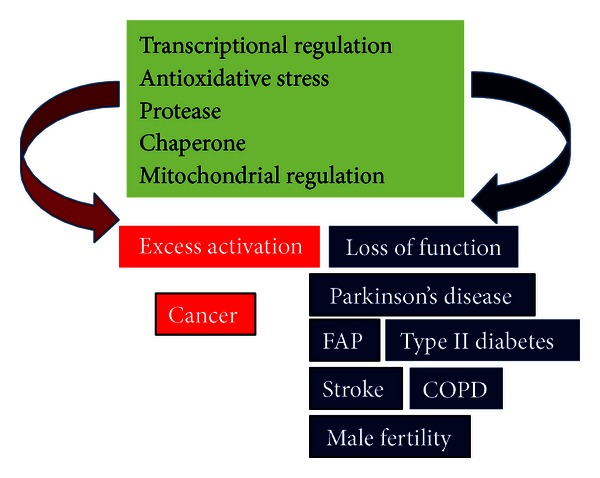
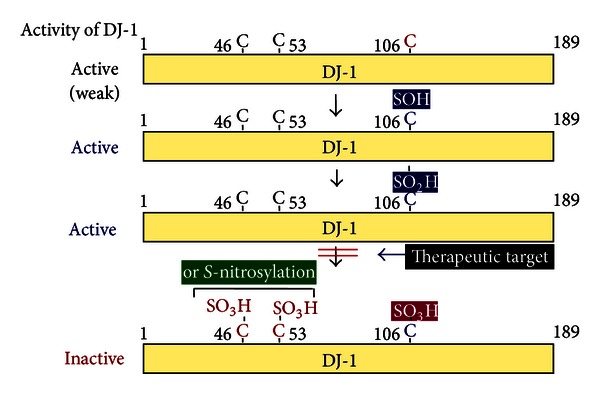
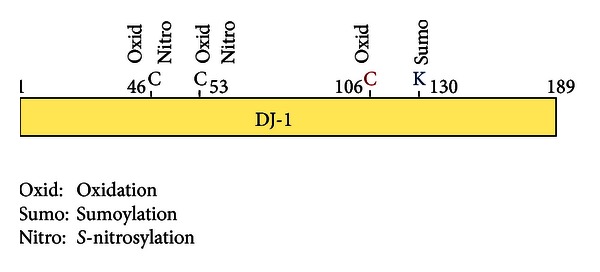
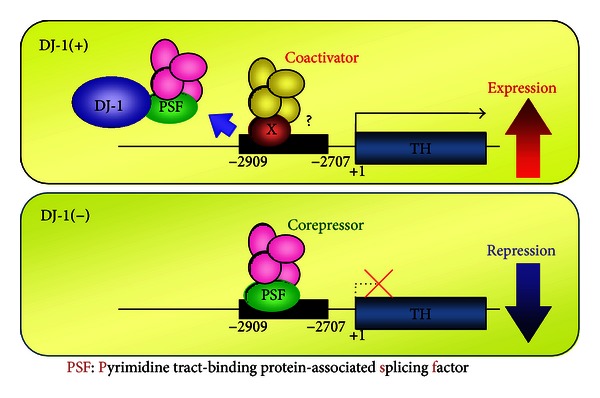
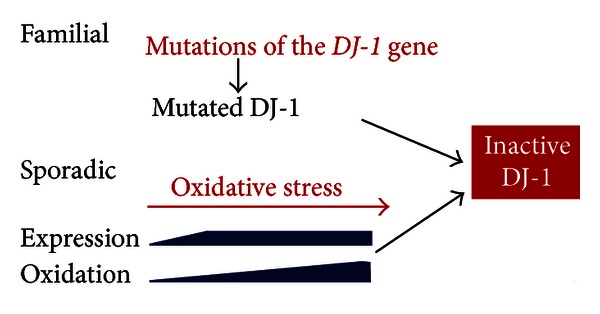
Parkinson’s disease (PD) is caused by dopaminergic neuronal death in the substantia nigra, resulting in a reduced level of dopamine in the striatum. Oxidative stress and mitochondrial dysfunction are thought to be major causes of neurodegeneration in PD. Although genetic and environmental factors are thought to affect the onset of PD, precise mechanisms at the molecular level have not been elucidated. The DJ-1 gene is a causative gene for familial PD ( park7 ) and also an oncogene. DJ-1 has various functions, including transcriptional regulation, antioxidative stress reaction, and chaperone, protease, and mitochondrial regulation, and its activity is regulated by its oxidative status, especially that of cysteine 106 (C106) of DJ-1. Excess oxidation of DJ-1, which renders DJ-1 inactive, has been observed in patients with sporadic PD and Alzheimer’s disease, suggesting that DJ-1 also participates in the onset and pathogenesis of sporadic PD as well as familial PD. DJ-1 is also a stress sensor and its expression is increased upon various stresses, including oxidative stress. In this review, we describe functions of DJ-1 against oxidative stress and possible roles of DJ-1 in the pathogenesis of PD.
Overview
The claims and statistics of this paper haven’t been checked yet.
Run the check — free, no account needed. It reads the open-access text and checks the sources it cites.
Integrity signals
Registry
Cites
Statistics
Figures
Verification
Claims the paper makes
The claims and statistics of this paper haven’t been checked yet.
Run the check — free, no account needed. It reads the open-access text and checks the sources it cites.
Claims other papers make about this one
Each is checked against this paper’s own text: does it say what the citing paper says it does?
The source backs part of the claim, not all of it — or backs it for a different population, condition or comparison.
In the citing paper
“PARK7 is reported to be involved in transcriptional regulation and complexes with processing bodies (P-bodies) suggesting that it may also play a central role in translational regulation as suggested by our PPI network (96,97).”
From Analysis of proteins that rapidly change upon mechanistic/mammalian target of rapamycin complex 1 (mTORC1) repression identifies parkinson protein 7 (PARK7) as a novel protein aberrantly expressed in tuberous sclerosis complex (TSC) (2016) · cites this paper as [96]
Experimental — accuracy not yet measured
Self-check
Percentages, sums and reported differences re-computed from the paper’s own numbers.
The self-check needs the paper’s full text.
Citations
Cites
1 retracted
Malhotra, D., Thimmulappa, R. K., Navas‐Acién, A., Sandford, A. J., Elliott, M., Singh, A., Chen, L., Zhuang, X., Hogg, J. C., Paré, P. D., et al. (2008) · American Journal of Respiratory and Critical Care Medicine · doi:10.1164/rccm.200803-380oc · Cited by 358
RetractedMutations in the DJ-1 Gene Associated with Autosomal Recessive Early-Onset Parkinsonism
Bonifati, V., Rizzu, P., van Baren, M. J., Schaap, O., Breedveld, G. J., Krieger, E., Dekker, M. C. J., Squitieri, F., Ibáñez, P., Joosse, M., et al. (2003) · Science · doi:10.1126/science.1077209 · Cited by 2,854
Mitochondrial Complex I Deficiency in Parkinson's Disease
Schapira, A. H. V., Cooper, J. M., Dexter, D., Clark, J. B., Jenner, P., & Marsden, C. D. (1990) · Journal of Neurochemistry · doi:10.1111/j.1471-4159.1990.tb02325.x · Cited by 2,283
Nishitoh, H., Matsuzawa, A., Tobiume, K., Saegusa, K., Takeda, K., Inoue, K., Hori, S., Kakizuka, A., & Ichijo, H. (2002) · Genes & Development · doi:10.1101/gad.992302 · Cited by 1,372
Canet-Aviles, R., Wilson, M. A., Miller, D. W., Ahmad, R., McLendon, C., Bandyopadhyay, S., Baptista, M. J., Ringe, D., Petsko, G. A., & Cookson, M. (2004) · Proceedings of the National Academy of Sciences · doi:10.1073/pnas.0402959101 · Cited by 1,115
Abnormalities of the electron transport chain in idiopathic parkinson's disease
Parker, W. D., Boyson, S. J., & Parks, J. K. (1989) · Annals of Neurology · doi:10.1002/ana.410260606 · Cited by 1,061
DJ‐1 has a role in antioxidative stress to prevent cell death
Taira, T., Saito, Y., Niki, T., Iguchi‐Ariga, S. M. M., Takahashi, K., & Ariga, H. (2004) · EMBO Reports · doi:10.1038/sj.embor.7400074 · Cited by 866
Self-citationClements, C. M., McNally, R. S., Conti, B. J., Mak, T. W., & Ting, J. P.-Y. (2006) · Proceedings of the National Academy of Sciences · doi:10.1073/pnas.0607260103 · Cited by 818
DJ-1, a Novel Oncogene Which Transforms Mouse NIH3T3 Cells in Cooperation withras
Nagakubo, D., Taira, T., Kitaura, H., Ikeda, M., Tamai, K., Iguchi‐Ariga, S. M. M., & Ariga, H. (1997) · Biochemical and Biophysical Research Communications · doi:10.1006/bbrc.1997.6132 · Cited by 760
Self-citationDeficiencies in Complex I subunits of the respiratory chain in Parkinson's disease
Mizuno, Y., Ohta, S., Tanaka, M., Takamiya, S., Suzuki, K., SATO, T. A., Oya, H., Ozawa, T., & Kagawa, Y. (1989) · Biochemical and Biophysical Research Communications · doi:10.1016/0006-291x(89)91141-8 · Cited by 735
Research works printed but not linked: 11
- 2003, Molecular Cancer Research, 1, 247
- 2005, International Journal of Oncology, 26, 641
- 2007, International Journal of Molecular Medicine, 19, 885
- 2012, PLoS One, 7
- 2001, Clinical Cancer Research, 7, 3328
- 2012, PLoS One, 7
- 2009, Anticancer Research, 29, 4879
- 10.3892/ijo-00000451 · DOI
- 1998, Annals of Neurology, 44, S99
- 2012, PLoS One, 7
- 2013, PLoS One, 8
Cited by
Sorted by citations
Items 301–373 of 373
Upcoming diagnostic biomarkers with promising prospects in neurological disorders
Ahmad, W., Ali, A., Ali, A., Khan, S. I., Khan, S., & Husain, I. (2019) · Clinical and Experimental Pharmacology and Physiology · doi:10.1111/1440-1681.13216 · Cited by 2
Serum salusin-α and -β levels in patients with parkinson’s disease
Algül, F. E., Koç, E., & Tosun, H. (2023) · Neurological Sciences · doi:10.1007/s10072-023-07031-0 · Cited by 2
Pathophysiology and Management Approaches for Parkinson’s Disease
Khan, S. S., Naren, P., Pinjala, P., Uppala, S. N., Singh, S. B., & Khatri, D. K. (2023) · Springer eBooks · doi:10.1007/978-981-99-6807-7_5 · Cited by 2
Chakraborty, S., Choudhuri, A., Mishra, A., & Sengupta, R. (2024) · Nitric Oxide · doi:10.1016/j.niox.2024.09.004 · Cited by 2
Khan, M. R., Rahman, R. A., Rashid, M. H., & Islam, M. S. (2024) · Neuroprotection/Neuroprotection (Chichester, England. Print) · doi:10.1002/nep3.59 · Cited by 2
Otmani, H. E., Tesson, C., Brice, A., & Lesage, S. (2025) · Movement Disorders Clinical Practice · doi:10.1002/mdc3.14339 · Cited by 2
Paraquat: Molecular Mechanisms of Neurotoxicity and its Relation with Autophagy
Baltazar, M. T., Dinis‐Oliveira, R. J., Bastos, M. D. L., & Carvalho, F. D. (2015) · Current topics in neurotoxicity · doi:10.1007/978-3-319-13939-5_9 · Cited by 2
Rodent Models of Autosomal Recessive Parkinson Disease
Gispert, S., Auburger, G. W. J., Kuruvilla, K. P., & LeDoux, M. S. (2014) · Elsevier eBooks · doi:10.1016/b978-0-12-405195-9.00019-6 · Cited by 2
Parkinson’s Disease; Neurodegeneration as Systemic Disease
Choong, C., Sumi‐Akamaru, H., & Mochizuki, H. (2015) · Springer eBooks · doi:10.1007/978-4-431-54541-5_4 · Cited by 2
The Deleterious Duo of Neurodegeneration: Lysosomes and Mitochondria
Nguyen, M. H., Sidransky, E., & Westbroek, W. (2016) · Springer eBooks · doi:10.1007/978-3-319-28637-2_12 · Cited by 2
Heat Shock Protein 70 and Molecular Confession During Neurodegeneration
Panchal, K., Kumar, A., & Tiwari, A. K. (2018) · Heat shock proteins · doi:10.1007/978-3-319-89551-2_1 · Cited by 2
Tear biomarkers in neurodegenerative diseases
Stănescu, I., Bulboacă, A. E., Dogaru, G. B., & Nicula, C. A. (2020) · Balneo Research Journal · doi:10.12680/balneo.2020.339 · Cited by 2
Oláh, J., Lehotzky, A., Szénási, T., & Ovádi, J. (2021) · Cells · doi:10.3390/cells10112909 · Cited by 2
Separation of native and C106-oxidized DJ-1 proteins by using column chromatography
Choi, J., Yoo, H.-J., Cho, K., Kim, H. N., Lee, J., & Ryu, K. (2022) · Protein Expression and Purification · doi:10.1016/j.pep.2022.106092 · Cited by 2
Fernandes, S. A., Dasgupta, S., Tupe, R. S., & Pathan, E. K. (2023) · Biochemical and Biophysical Research Communications · doi:10.1016/j.bbrc.2023.08.058 · Cited by 2
DJ-1 is a useful biomarker for invasive extrahepatic cholangiocarcinoma
Tabata, Y., Nakanishi, Y., Hatanaka, K. C., Hatanaka, Y., Tsuchikawa, T., Okamura, K., Noji, T., Shichinohe, T., Matsuno, Y., & Hirano, S. (2018) · Human Pathology · doi:10.1016/j.humpath.2018.02.010 · Cited by 2
Production of polyclonal antibodies against the DJ-1 protein associated with Parkinson's disease
Mussakhmetov, A., Baltin, K., & Khassenov, B. (2022) · Eurasian journal of applied biotechnology · doi:10.11134/btp.1.2022.5 · Cited by 1
Gock, N., Kim, G., Morin, T., Young, M. A., Mahal, A., Kostka, J., Beischlag, T. V., & Lee, F. J. S. (2026) · Brain Research · doi:10.1016/j.brainres.2026.150322 · Cited by 1
PARK7 Is Required to Protect Epithelia Against Damage in Oral Lichen Planus
Fan, Y., Hao, Y., Ding, Y. P., Wang, X., & Ge, X. (2025) · Oral Diseases · doi:10.1111/odi.15361 · Cited by 1
Manipulating PARK7/DJ-1 Levels by Genotoxic Stress Alters Noncoding RNAs and Cellular Homeostasis
Zohar, K., Zoubi, H. O., Goldberg, M., Eliyahu, T., & Michal Linial, B. (2025) · Cells · doi:10.3390/cells14231860 · Cited by 1
The Potential of Targeting LRRK2 in Parkinson’s Disease
Ho, F. Y., Rosenbusch, K. E., & Kortholt, A. (2014) · InTech eBooks · doi:10.5772/57362 · Cited by 2
Aggarwal, S. K. (2018) · Advances in Pharmacology & Clinical Trials · doi:10.23880/apct-16000142 · Cited by 1
Ding, X., Li, M., Wang, F., Du, J., Wang, L., & Zhang, J. (2020) · Indian Journal of Dermatology · doi:10.4103/ijd.ijd_593_18 · Cited by 1
Petrosino, S. P. (2014) · Journal of Nutritional Health & Food Engineering · doi:10.15406/jnhfe.2014.01.00038 · Cited by 1
Walia, V., Gakkhar, A., & Garg, M. (2018) · Advances in medical diagnosis, treatment, and care (AMDTC) book series · doi:10.4018/978-1-5225-5282-6.ch012 · Cited by 1
Naha, N. (2020) · Elsevier eBooks · doi:10.1016/b978-0-12-820595-2.00014-x · Cited by 1
Genes with Physiological Roles in Callipyge Muscle Hypertrophy
Yu, H. M. (2013) · Purdue e-Pubs (Purdue University System) · Cited by 1
Reactive Oxygen Species Regulate Activity-Dependent Neuronal Structural Plasticity in DrosophilaPreprint
Oswald, M. C. W., Brooks, P. S., Zwart, M., Mukherjee, A., West, R. J. H., Morarach, K., Sweeney, S. T., & Landgraf, M. (2016) · bioRxiv (Cold Spring Harbor Laboratory) · doi:10.1101/081968 · Cited by 3
Design principles of ROS dynamic networks relevant to precision therapies for age-related diseasesPreprint
Kolodkin, A. N., Sharma, R. P., Colangelo, A. M., Ignatenko, A., Martorana, F., Jennen, D. G. J., Briedé, J. J., Brady, N. R., Barberis, M., Mondeel, T. D. G. A., et al. (2019) · bioRxiv (Cold Spring Harbor Laboratory) · doi:10.1101/647776 · Cited by 1
Kochmanski, J. J., Kuhn, N. C., & Bernstein, A. I. (2021) · bioRxiv (Cold Spring Harbor Laboratory) · doi:10.1101/2021.09.08.459434 · Cited by 1
Exploring the link between Parkinson’s disease and Diabetes Mellitus in DrosophilaPreprint
Sanz, F., Solana‐Manrique, C., Lilao‐Garzón, J., Brito‐Casillas, Y., Descalzo, S. M., & Paricio, N. (2022) · bioRxiv (Cold Spring Harbor Laboratory) · doi:10.1101/2022.02.18.481049 · Cited by 1
Oxidative stress pathways in the pathogenesis of renal fibrosis
Eltoweissy, M. (2016) · doi:10.53846/goediss-5627
Prasad, K. N. (2016) · Oxidative stress in applied basic research and clinical practice · doi:10.1007/978-3-319-33486-8_15
Paricio, N. (2017) · Journal of Neurology and Neuromedicine · doi:10.29245/2572.942x/2017/9.1149
Mitochondrial Dysfunction in Aging and Neurodegeneration
Walia, V., & Garg, M. (2018) · Advances in medical diagnosis, treatment, and care (AMDTC) book series · doi:10.4018/978-1-5225-5282-6.ch004
Cumbay, M. G., LaFontaine, M., & Arbor, S. (2018) · Springer eBooks · doi:10.1007/978-981-13-0944-1_20
Some genetic factors of Parkinson’s disease in the Hungarian population
Maszlag-Török, R. (2018) · SZTE Repository of Dissertations (University of Szeged) · doi:10.14232/phd.9951
Molecular Mechanisms Underlying the Role of Mitophagy in Neurodegeneration
Ahlawat, A., Kaira, M., Walia, V., & Garg, M. (2020) · Advances in medical diagnosis, treatment, and care (AMDTC) book series · doi:10.4018/978-1-7998-1317-0.ch003
Recent Advances in Stem Cell Therapy for Parkinson’s Disease
Choudry, U. K. (2020) · American Journal of Biomedical Science & Research · doi:10.34297/ajbsr.2020.07.001158
Insulin resistance and Parkinson’s disease
Farooqui, A. A. (2020) · Elsevier eBooks · doi:10.1016/b978-0-12-819603-8.00007-9
Machine learning discriminates parkinsonian movement disorders in zebrafish
Hughes, G. L. (2019) · White Rose eTheses Online (University of Leeds, The University of Sheffield, University of York)
The DJ-1 gene and protein: links with Parkinson's disease
Musco, V. J., Annesley, S. J., & Fisher, P. R. (2020) · Elsevier eBooks · doi:10.1016/b978-0-12-815950-7.00003-5
Genetic basis of Parkinson’s disease: a brief review
Aljohani, A. A., Ahmed, A., Bukhary, A., & Nazar, S. (2021) · International Journal of Medicine in Developing Countries · doi:10.24911/ijmdc.51-1612790077
VanDuyn, N. (2014) · IUScholarWorks (Indiana University) · doi:10.7912/c2/309
Mitochondrial Dysfunction in Aging and Neurodegeneration
Walia, V., & Garg, M. (2022) · IGI Global eBooks · doi:10.4018/978-1-6684-5295-0.ch016
MODELS OF PARKINSON'S DISEASE IN THE LABORATORY ANIMALS
Bogorodova, V. I., Borozdenko, D. A., Kiseleva, N. M., & Vad.V., N. (2022) · Bulletin Biomedicine and sociology · doi:10.26787/nydha-2618-8783-2022-7-1-47-65
Pal, P., Roy, S., Chowdhury, A., Chatterjee, R., Ray, K., & Ray, J. (2022) · SSRN Electronic Journal · doi:10.2139/ssrn.4074770
ANTIOXIDANT ROLE OF DJ-1 PROTEIN IN THE PATHOGENESIS OF PARKINSON'S DISEASE
Mussakhmetov, A., Utepbergenov, D., & Khassenov, B. (2022) · Eurasian journal of applied biotechnology · doi:10.11134/btp.4.2022.1
The reversible low‐temperature instability of human DJ‐1 oxidative states
Andrews, T., Seravallic, J., & Powers, R. (2023) · Biopolymers · doi:10.1002/bip.23534 · Cited by 1
Mencke, P., Ohnmacht, J., Jeannelle, F., Ries, A. J., de la Maza, M. M., Ullrich, M. M., Massart, F., Mulica, P., Badanjak, K., Hanss, Z., et al. (2024) · bioRxiv (Cold Spring Harbor Laboratory) · doi:10.1101/2024.10.31.621212
The OMICS and PD models: Hopes or hypes
Elsamman, K. (2024) · Elsevier eBooks · doi:10.1016/b978-0-443-16128-5.00020-7
The MitoPark mouse model of Parkinson's disease
Yasser, N., Haggag, A., Ahmed, N. A., Mohamed, B. S., Kumar, J., & Mohamed, H. H. (2024) · Elsevier eBooks · doi:10.1016/b978-0-443-16128-5.00010-4
DJ-1 deficiency and aging: dual drivers of retinal mitochondrial dysfunctionPreprint
Upadhyay, M., Sturgis, J., Bhattacharyya, S., Jiang, K., Hagstrom, S. A., & Bonilha, V. L. (2025) · bioRxiv (Cold Spring Harbor Laboratory) · doi:10.1101/2025.05.19.654941
Bhamare, U. U., Talpade, A., Pingili, R. B., & Palkar, M. B. (2025) · European Journal of Neuroscience · doi:10.1111/ejn.70343
Parkinsonism-dystonia syndrome due to a PARK7 gene mutation
Calvano, A., Bingöl, D., Beccaria, L., Bodlee, F., Timmermann, L., Kurka, N., & Pedrosa, D. J. (2025) · Clinical Parkinsonism & Related Disorders · doi:10.1016/j.prdoa.2025.100412
Additional file 1 of Generation of genome-edited dogs by somatic cell nuclear transfer
Kim, D.-E., Lee, J.-H., Ji, K.-B., Park, K., Kil, T., Koo, O., & Kim, M.-K. (2022) · Figshare · doi:10.6084/m9.figshare.20306744
Tio, M., Wen, R., Choo, C. N., Tan, J. B., Chua, A., Xiao, B., Sundaram, J. R., Chan, C. H. S., & Tan, E.-K. (2024) · Figshare · doi:10.6084/m9.figshare.25282825
Tailoring treatments: pharmacogenomics in the management of neurodegenerative diseases
Roy, K. K., Kumari, R., Upadhyay, A. K., & Mohanty, S. (2026) · Acta Neurologica Belgica · doi:10.1007/s13760-025-02919-4
Upadhyay, M., Milliner, C., & Bonilha, V. L. (2026) · International Journal of Molecular Sciences · doi:10.3390/ijms27062541
de Bourayne, M. (2015) · theses.fr (ABES) · doi:10.70675/fed3e8c8z64c2z4e1ez81a9z054e2d240b5f
Sargent, D. (2018) · theses.fr (ABES) · doi:10.70675/2cd4ead6z0cd7z476dz8376z54bb3bd9a0ea
Teissier, T. (2019) · theses.fr (ABES) · doi:10.70675/f49bc069z5ee6z4c49zb46fz0a1413dbba95
Étude moléculaire de l'inflammation chronique dans la maladie de Parkinson
Compagnion, A. (2019) · theses.fr (ABES) · doi:10.70675/04ca138dz3131z4e24z884czbba2f7954a99
Ying, J., Fang, Z., Zhang, C. L., Liu, X., Cui, J., Li, Z., & Tang, J. (2026) · Health care science · doi:10.1002/hcs2.70087
Li, Y., Zhu, Z., & Zhang, K. (2026) · Frontiers in Neuroscience · doi:10.3389/fnins.2026.1885786
RNA Splicing Dysregulation in Parkinson’s Disease
Bruno, M. G., Menichetti, G., Valentino, A., Javaid, A., Belpinati, F., Ruggiero, A., Valenti, M. T., Paolone, G., Cavaliere, F., Trabetti, E., et al. (2026) · Genes · doi:10.3390/genes17080911
Structural basis of α-synuclein and DJ-1 complex
Kim, H. J., Kim, D. H., Han, C. W., Jeong, M. S., & Jang, S. B. (2026) · International Journal of Biological Macromolecules · doi:10.1016/j.ijbiomac.2026.154021
Cell Death in Neurodegenerative Diseases: Molecular Mechanisms and Therapeutic Targets
Li, T., Zhang, Q., Wu, Y., & Huang, R. (2026) · MedComm · doi:10.1002/mco2.70915
Milardi, D., Han, J., Lee, H. J., Ding, F., Miller, Y., Faller, P., Bush, A. I., Crouch, P. J., Finkelstein, D. I., Double, K. L., et al. (2026) · Chemical Reviews · doi:10.1021/acs.chemrev.5c00420
Abdelaziz, A. M., Fawzy, M. N., & Shokr, M. M. (2026) · Molecular Neurobiology · doi:10.1007/s12035-026-06177-0
Suryadevara, L., Srinivas, V., Barathidasan, R., Mhaske, S. T., Naik, R. R., Gupta, M. K., & Pramod, R. K. (2026) · Molecular Biology Reports · doi:10.1007/s11033-026-13053-6
Metadata
- Authors
- Ariga, H., Takahashi-Niki, K., Kato, I., Maita, H., Niki, T., & Iguchi-Ariga, S. M. M.
- Affiliations
- Hokkaido University (JP)
- Graduate School of Agriculture, Hokkaido University, Kita-ku, Sapporo 060-8589, Japan
- Corresponding author
- Ariga, Hiroyoshi
- ORCID
- Maita, Hiroshi
- Venue
- Oxidative Medicine and Cellular Longevity
- Publisher
- Wiley
- Published
- 2013
- Volume
- 2013
- Pages
- 1-9
- ISSN
- 1942-0994 (ISSN-L)
- 1942-0900
- PMC
- PMC3671546
- OpenAlex
- W1974927898
- Cited by
- 373
- References
- 117
- Citations by year
- 2026: 12 · 2025: 22 · 2024: 24 · 2023: 22 · 2022: 36 · 2021: 30 · 2020: 45 · 2019: 37 · 2018: 27 · 2017: 44 · 2016: 33 · 2015: 21 · 2014: 12 · 2013: 8
- FWCI
- 3.22
- Type
- journal article
- Language
- en
- Open access
- hybrid
- doi.org
- Locations
- Oxidative Medicine and Cellular Longevity (publishedVersion, cc-by)
- Europe PMC (PubMed Central) (publishedVersion, cc-by)
- PubMed Central (publishedVersion, cc-by)
- PubMed (publishedVersion)
- Institutional Repositories DataBase (IRDB) (submittedVersion)
- Hokkaido University Collection of Scholarly and Academic Papers (Hokkaido University) (submittedVersion)
- Funders
- National Institute of Biomedical Innovation
- Japan Society for the Promotion of Science (25830071, 25430059, 24650191, 23790970)
- Topics
- Health Sciences › Medicine › Clinical Neurology › Parkinson's Disease Mechanisms and Treatments
- Life Sciences › Biochemistry, Genetics and Molecular Biology › Molecular Biology › Nuclear Receptors and Signaling
- Life Sciences › Biochemistry, Genetics and Molecular Biology › Molecular Biology › Coenzyme Q10 studies and effects
- Keywords
- DJ-1, Parkinson's disease, neuroprotection, oxidative stress, mitochondrial dysfunction, dopaminergic neuron loss, substantia nigra, familial parkinsonism, sporadic Parkinson's disease, stress sensors, chaperone activity, protease function, transcriptional regulation
- MeSH terms
- Animals, Dopamine, Humans, Mitochondria, Parkinson Disease, Oncogene Proteins, Oxidative Stress, Neuroprotective Agents
About these checks
Registry, retraction, Cites and statistics results are computed, not judged, with one exception: a printed reference that no index lists is read once by a model before it counts as a citation error. Claims are extracted by a model and kept only when their quote appears verbatim in the text; each cited source is then checked, with a model’s help, for whether it says what the claim relies on. Those verdicts can be wrong — read the claim’s quote and the cited source before relying on one.
Statistics and arithmetic are recomputed, not judged.
Confidence bands are shown only for fields calibrated on our annotated test set. None is calibrated yet, so no band is shown.
What counts as a claim ›How we measure confidence ›How we check this ›
Are you an author, or do you see a problem with this page? Request a review
