

Safety of Autonomous Vehicles
Open accessThe DOI matches its Crossref record; 91 of the 93 references it cites were found in a registry or an index.
Abstract
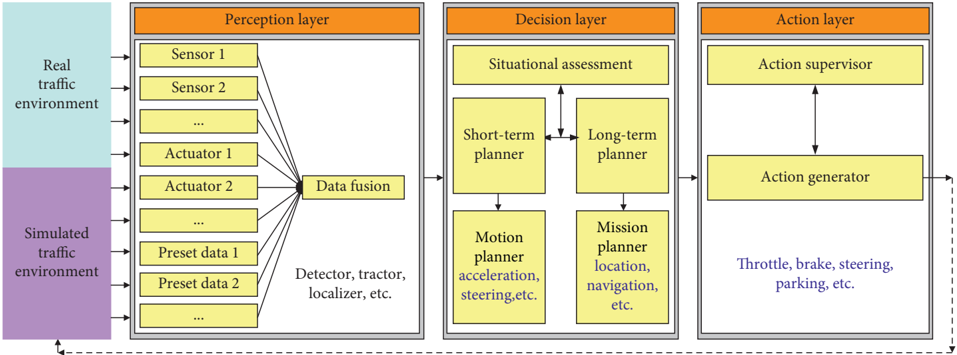
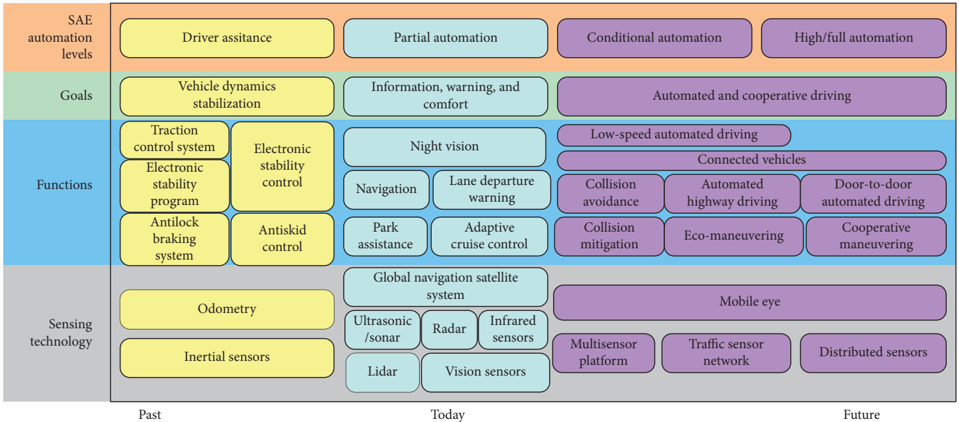
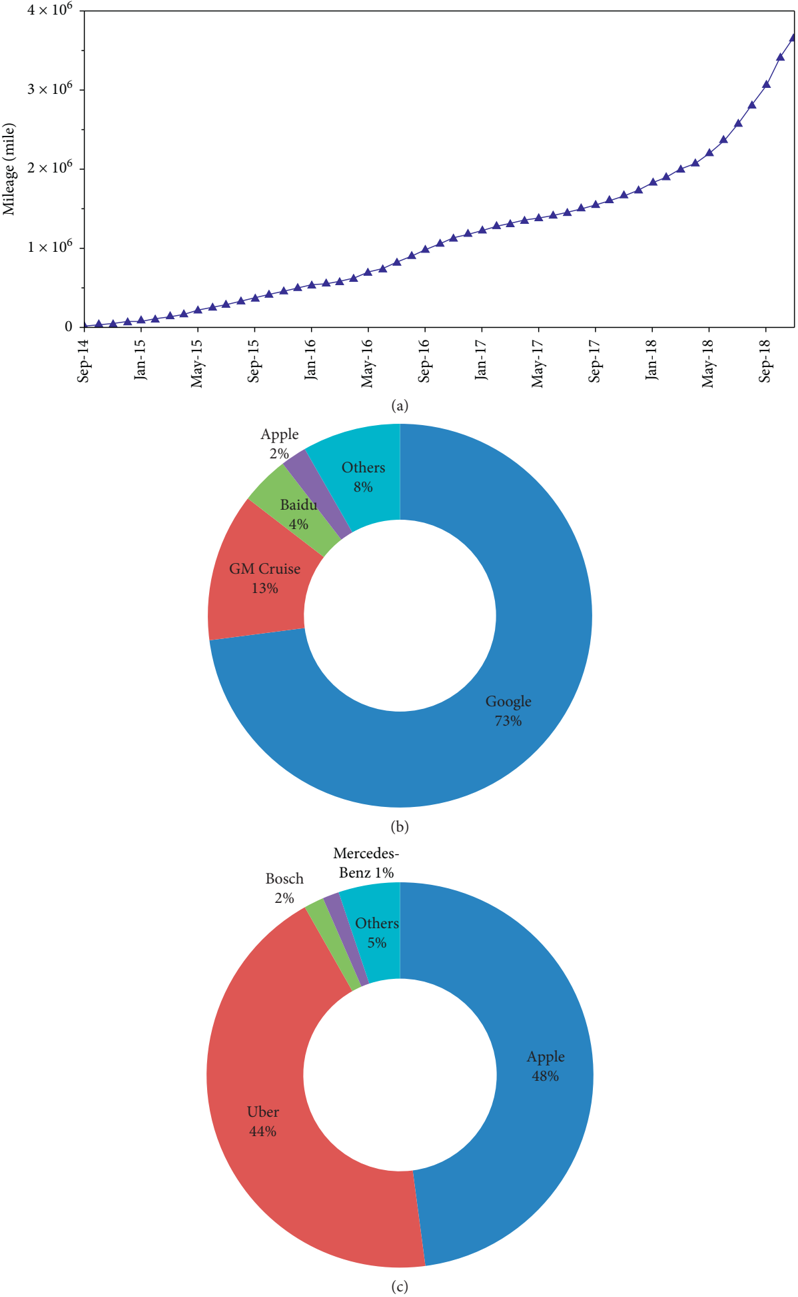
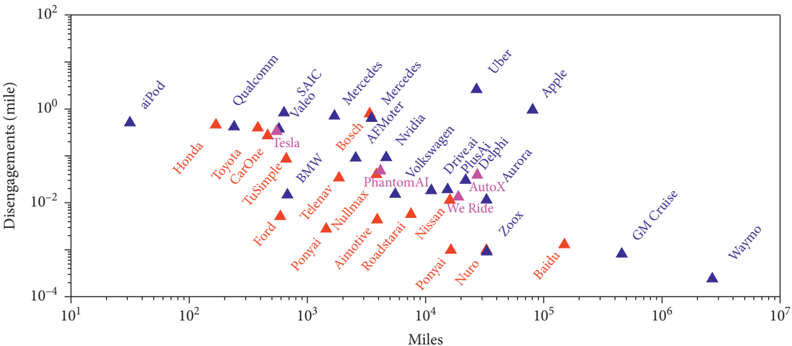
Autonomous vehicle (AV) is regarded as the ultimate solution to future automotive engineering; however, safety still remains the key challenge for the development and commercialization of the AVs. Therefore, a comprehensive understanding of the development status of AVs and reported accidents is becoming urgent. In this article, the levels of automation are reviewed according to the role of the automated system in the autonomous driving process, which will affect the frequency of the disengagements and accidents when driving in autonomous modes. Additionally, the public on-road AV accident reports are statistically analyzed. The results show that over 3.7 million miles have been tested for AVs by various manufacturers from 2014 to 2018. The AVs are frequently taken over by drivers if they deem necessary, and the disengagement frequency varies significantly from 2 × 10⁻⁴ to 3 disengagements per mile for different manufacturers. In addition, 128 accidents in 2014–2018 are studied, and about 63% of the total accidents are caused in autonomous mode. A small fraction of the total accidents (∼6%) is directly related to the AVs, while 94% of the accidents are passively initiated by the other parties, including pedestrians, cyclists, motorcycles, and conventional vehicles. These safety risks identified during on-road testing, represented by disengagements and actual accidents, indicate that the passive accidents which are caused by other road users are the majority. The capability of AVs to alert and avoid safety risks caused by the other parties and to make safe decisions to prevent possible fatal accidents would significantly improve the safety of AVs. Practical applications. This literature review summarizes the safety-related issues for AVs by theoretical analysis of the AV systems and statistical investigation of the disengagement and accident reports for on-road testing, and the findings will help inform future research efforts for AV developments.
Overview
The claims and statistics of this paper haven’t been checked yet.
Free: it reads the open-access text and checks the first 5 claims that cite a source we can check. Create a free account to check every claim.
Integrity signals
Registry
Cites
Statistics
Figures
Verification
Claims the paper makes
The claims and statistics of this paper haven’t been checked yet.
Free: it reads the open-access text and checks the first 5 claims that cite a source we can check. Create a free account to check every claim.
Claims other papers make about this one
Each is checked against this paper’s own text: does it say what the citing paper says it does?
The source backs part of the claim, not all of it — or backs it for a different population, condition or comparison.
In the citing paper
“However, several studies have been published on the performance of ADS-mounted sensors, but research analyzing the level of impact on the driving safety of AVs by ODD is still insufficient [16][17][18][19].”
From Evaluation of Autonomous Driving Safety by Operational Design Domains (ODD) in Mixed Traffic (2024) · cites this paper as [18]
Experimental — accuracy not yet measuredThe check wasn’t confident either way, so it gives no verdict — never disputed.
In the citing paper
“The inadequate evaluation of deep learning systems can have significant consequences, including risks to patient well-being [165] and safety [208].”
From A 2030 Roadmap for Software Engineering (2025) · cites this paper as [208]
Experimental — accuracy not yet measured
Self-check
Percentages, sums and reported differences re-computed from the paper’s own numbers.
The self-check needs the paper’s full text.
Citations
Cites
A model for types and levels of human interaction with automation
Parasuraman, R., Sheridan, T. B., & Wickens, C. D. (2000) · IEEE Transactions on Systems, Man, and Cybernetics - Part A: Systems and Humans · doi:10.1109/3468.844354 · Cited by 4,195 · cited 1×
“*e details of the ten levels of automation can be found elsewhere [33, 34].”
BackgroundPreparing a nation for autonomous vehicles: opportunities, barriers and policy recommendations
Fagnant, D. J., & Kockelman, K. (2015) · Transportation Research Part A: Policy and Practice · doi:10.1016/j.tra.2015.04.003 · Cited by 3,214 · cited 4×
“Audi, BMW, Mercedes-Benz, Volkswagen, Volvo, Ford, General Motors, Toyota, Nissan, as well as Google, Baidu, and other research institutes, have begun testing on- and off-road AVs [13, 28].”
BackgroundInfluentialA Review of Motion Planning Techniques for Automated Vehicles
Gonzalez, D., Perez, J., Milanes, V., & Nashashibi, F. (2016) · IEEE Transactions on Intelligent Transportation Systems · doi:10.1109/tits.2015.2498841 · Cited by 1,670 · cited 3×
“*e communication errors may come from errors resulted from the communication between the AVs and the corresponding infrastructure [57], other road users [44], and the Internet [60].”
BackgroundHuman and Computer Control of Undersea Teleoperators
Sheridan, T. B., & Verplank, W. L. (1978) · doi:10.21236/ada057655 · Cited by 1,227 · cited 3×
“*e details of the ten levels of automation can be found elsewhere [33, 34].”
BackgroundUser preferences regarding autonomous vehicles
Haboucha, C. J., Ishaq, R., & Shiftan, Y. (2017) · Transportation Research Part C: Emerging Technologies · doi:10.1016/j.trc.2017.01.010 · Cited by 996
Three Decades of Driver Assistance Systems: Review and Future Perspectives
Bengler, K., Dietmayer, K., Farber, B., Maurer, M., Stiller, C., & Winner, H. (2014) · IEEE Intelligent Transportation Systems Magazine · doi:10.1109/mits.2014.2336271 · Cited by 868
Internet of vehicles: From intelligent grid to autonomous cars and vehicular clouds
Gerla, M., Lee, E.-K., Pau, G., & Lee, U. (2014) · 2014 IEEE World Forum on Internet of Things (WF-IoT) · doi:10.1109/wf-iot.2014.6803166 · Cited by 828
(2015) · Cited by 809
Dissipation of stop-and-go waves via control of autonomous vehicles: Field experiments
Stern, R. E., Cui, S., Delle Monache, M. L., Bhadani, R., Bunting, M., Churchill, M., Hamilton, N., Haulcy, R., Pohlmann, H., Wu, F., et al. (2018) · Transportation Research Part C: Emerging Technologies · doi:10.1016/j.trc.2018.02.005 · Cited by 800 · cited 1×
“carried out a ring road experiment involving both autonomous and human-operated vehicles, and their results indicate that a single AV can be used to control the traffic flow of at least 20 human-operated vehicles with significant improvements in vehicle velocity standard deviation, excessive braking, and fuel economy…”
MethodPerceptions of autonomous vehicles: Relationships with road users, risk, gender and age
Hulse, L. M., Xie, H., & Galea, E. R. (2018) · Safety Science · doi:10.1016/j.ssci.2017.10.001 · Cited by 698 · cited 1×
“’s studies indicated that the youth with high salary and education male are the most optimistic about the AV safety [29], while western European countries are more pessimistic about the safety in comparison with Asian countries [30].”
Background
Research works printed but not linked: 4
- M. Bonner, R. Taylor, K. Fletcher, and C. Miller, "Adaptive automation and decision aiding in the military fast jet do- main," in Proceedings of the Conference on Human Perfor- mance, Situation Awareness and Automation: User Centered Design for the New Millenium, pp. 154-159, Savannah, GA, USA, October 2000.
- SAE International, Surface Vehicle Recommended Practice (R) Taxonomy and Definitions for Terms Related to Driving Au- tomation Systems for On-Road Motor Vehicles, SAE Inter- national, Pittsburgh, PA, USA, 2018.
- United States Department of Transportation, 2019, Automated Vehicles for Safety
- T. Nimmagadda, Building an Autonomous Ground Traffic System, Technical Report HR-09-09, e University of Texas, Austin, TX, USA, 2007.
Cited by
Items 201–300 of 389
Guo, M., Wei, Y., Zhang, J., Huang, Q., Jin, X., & Ma, J. (2024) · Applied Sciences · doi:10.3390/app142210482 · Cited by 2
Reliability, Resilience, and Alerts: Preferences for Autonomous Vehicles in the United States
Stewart, E., & Gallegos, E. E. (2025) · Future Transportation · doi:10.3390/futuretransp5040164 · Cited by 2
Spatial Aware Feature Extraction for RADAR SLAM
Karthik, S., Thottungal, R., & Pasupathy, S. A. (2025) · Measurement · doi:10.1016/j.measurement.2025.120192 · Cited by 2
Fan, X., Wang, Y., & Che, X. (2026) · International Journal of Intelligent Transportation Systems Research · doi:10.1007/s13177-025-00586-6 · Cited by 2
“Collision avoidance (CA) is a fundamental com - ponent of autonomous vehicle active safety systems [1, 2].”
Birhane, F. N., Sakr, A. M., & El‐Basyouny, K. (2026) · Innovative Infrastructure Solutions · doi:10.1007/s41062-025-02449-1 · Cited by 2
“These asymmet - ric interactions raise new hazards in mixed traffic [ Beyond geometric and safety considerations, the litera - ture highlights substantial system-level implications of AV/ CAV deployment, spanning operational efficiency, energy performance, and broader societal and economic outcomes.”
Dou, J., Ayas, S., Chen, M., Sun, C., Zhang, J., Shi, J., Zhang, L., Xue, C., Chen, S., & Donmez, B. (2026) · Ergonomics · doi:10.1080/00140139.2026.2628873 · Cited by 2
Self-citationPonso, A., Bonfitto, A., Amati, N., Ciuffo, B., & Donà, R. (2026) · Automotive Innovation · doi:10.1007/s42154-025-00411-6 · Cited by 2
“It is to be noted that 93.7% of these crashes are not caused by the AV, but by other road users [70].”
InfluentialDabai, U. S. (2024) · International Journal of Intelligent Systems and Applications in Engineering · Cited by 2
Ding, H., Zhuang, W., Hu, J., Zhao, M., Wang, W., & Yin, G. (2024) · CAA International Conference on Vehicular Control and Intelligence (CVCI) · doi:10.1109/cvci63518.2024.10830189 · Cited by 2
Evaluation of Autonomous Vehicle Control Strategies Using Resilience Engineering
Rojas, J. F., Bradley, T. H., & Asher, Z. D. (2023) · Springer eBooks · doi:10.1007/978-3-031-28016-0_25 · Cited by 2
Advent of Artificial Intelligence in Automotive Engineering
Samuel, A. A., Adeleke, A. A., Anosike-Francis, E. N., Ogedengbe, T. S., Ikubanni, P. P., Adeyemi, F. O., Odusote, J. K., Onuoha, M., & Shuaib, U. (2023) · International Conference on Multidisciplinary Engineering and Applied Science (ICMEAS) · doi:10.1109/icmeas58693.2023.10429907 · Cited by 2
“Making this system is easier said than done, as there is a scenario where there are conflicting decisions, for example, a situation where the AV has to either choose between the safety of the passengers and that of some pedestrians [46].”
BackgroundZhou, Y., & Jiang, Y. (2024) · The Design Journal · doi:10.1080/14606925.2024.2356422 · Cited by 2
“The interaction between driver and machine in different levels of autonomous driving modes may have a significant impact on the safety of self-driving cars (Wang et al. 2020).”
Comparison between references in a rotating calibration bench for accelerometers
Chiominto, L., D’Emilia, G., Natale, E., Prato, A., & Schiavi, A. (2024) · IEEE International Workshop on Metrology for Industry 4.0 & IoT (MetroInd4.0&IoT) · doi:10.1109/metroind4.0iot61288.2024.10584133 · Cited by 2
“This is particularly true about autonomous cars, which are viewed as the automotive industry's future but currently face safety worries in their development and implementation [5, 6].”
BackgroundSmart&Safe Mobility Lab: Mixed Reality Environment with HIL, CV2X for VRU Detection
Capdevila, M. G., Vitorino, N., Poledna, Y., Malena, B., Drechsler, M. F., Albuquerque, G. G., Furlan, T. A. S., & Netto, R. S. (2024) · IEEE International Conference on Cloud Networking · doi:10.1109/cloudnet62863.2024.10815791 · Cited by 2
Understanding Driving Risks via Prompt Learning
Chang, Y., Lyu, F., Zhang, Z., & Wang, L. (2024) · Conference proceedings/Conference proceedings - IEEE International Conference on Systems, Man, and Cybernetics · doi:10.1109/smc54092.2024.10831354 · Cited by 2
“Ensuring passenger safety poses a key challenge for the commercialization of autonomous driving [1], [2].”
Safety regulations and standards for automated driving
Prasanth, A., Sathish, N., Yokesh, V., & Shine, H. (2025) · Elsevier eBooks · doi:10.1016/b978-0-443-30040-0.00004-7 · Cited by 2
Research on Quantitative Safety Risk Assessment Methods at Vehicle Controllability Level
He, L., Li, Z., Yang, X., Zhou, Y., Qu, Z., & Ren, Z. (2025) · IEEE Access · doi:10.1109/access.2025.3568509 · Cited by 2
Bangash, S. H., Husnain, G., Nawaz, A., Tahir, M., Imad, M., Khan, Z. U., Khan, D., & Ahmed, S. (2023) · Journal of Computing & Biomedical Informatics · Cited by 2
Game Theoretic Analysis of Overtaking Maneuvers for Autonomous Vehicles with Moving Obstacles
Crosara, L., Gindullina, E., Leth, P. D., Nielsen, J. S., & Ruiz-Henestrosa, J. B. (2023) · International Balkan Conference on Communications and Networking (BalkanCom) · doi:10.1109/balkancom58402.2023.10167946 · Cited by 2
A Study on the Evaluation Method of Autonomous Vehicle for Fixed TargetsPreprint
Kim, B.-J., & Lee, S.-B. (2021) · Research Square · doi:10.21203/rs.3.rs-520159/v1 · Cited by 2
“reviewed automation levels according to the role of automation systems in the selfdriving process, and statistically analyzed autonomous vehicle accidents on public roads [18].”
BackgroundGeneral-Purpose Multi-Modal OOD Detection Framework
Duong, V., Wu, Q., Zhou, Z., Zavesky, E., Chen, J., Liu, X., Hsu, W.-L., & Shao, H. (2023) · Transactions on machine learning research · doi:10.48550/arxiv.2307.13069 · Cited by 2
“Such detection is crucial for ensuring the safety and reliability of machine learning (ML) systems [48, 13], such like autonomous driving and AI diagnosis [2, 8, 24].”
BackgroundShimanuki, G. K. G., Nascimento, A., Vismari, L. F., Camargo, J. B., Junior, J. R. D. A., & Cugnasca, P. S. (2025) · arXiv (Cornell University) · doi:10.48550/arxiv.2503.00077 · Cited by 3
“It is expected that the wide AV adoption could bring positive societal outcomes such as improving traffic efficiency [3], [4] and reducing accident risks [5], [6].”
Roy-Singh, S., Kolekar, S., Bonny, D. P., & Foss, K. (2025) · arXiv (Cornell University) · doi:10.48550/arxiv.2506.07540 · Cited by 2
“The most widely known application of counterfactual simulations in ADS evaluation is to assess the counterfactual outcome of on-road disengagements by safety drivers, whereby the post-disengagement ADS behavior is simulated as if the safety driver not taken over from the ADS [37][42].”
Hu, Y., Xu, C., Qin, R., Liu, D., Nassereldine, A., Shi, Y., & Xiong, J. (2025) · arXiv (Cornell University) · doi:10.48550/arxiv.2503.07020 · Cited by 2
“Since perception directly influences driving decisions, partial perception deficits caused by sensor failures or attacks can be fatal, leading to catastrophic consequences (Ceccarelli & Secci, 2022; Min et al., 2023; Shafaei et al., 2018; Wang et al., 2020).”
Évolution des systèmes autonomes : de l’outil au coéquipier dans les équipes HAT
Unrein, H. (2023) · theses.fr (ABES) · doi:10.70675/8b88edb9z9c83z4b64z98afz5078780f489c · Cited by 2
Autonóm járművek közúti közlekedésének biztonsága
Szűcs, H. (2022) · Közlekedéstudományi Szemle · doi:10.24228/ktsz.2022.3.5 · Cited by 1
“Ezért kiemelten fontos az AV-k biztonságával és baleseteivel foglalkozni [1, 4-6].”
BackgroundInfluentialDevelopment of Data Fusion Signal Processing Algorithms for LiDAR, RADAR, and Stereo Camera Sensors
Lee, J. H., Kim, Y. H., Kim, E. J., Ko, B. S., Lee, M. H., & Song, J. W. (2024) · Proceedings of the Institute of Navigation ... International Technical Meeting/Proceedings of the ... International Technical Meeting of The Institute of Navigation · doi:10.33012/2024.19533 · Cited by 1
Prediction of Daily Disengagements of Automated Vehicles Using Explainable Machine Learning Approach
Kutela, B., Okafor, S., Novat, N., Chengula, T. J., & Kodi, J. H. (2024) · ASCE International Conference on Transportation and Development (ICTD) · doi:10.1061/9780784485514.058 · Cited by 1
Gender-based Detection and Tracking of Child Pedestrians using Machine Learning
Ward, T. B. (2024) · International Conference on Electrical, Computer and Energy Technologies (ICECET) · doi:10.1109/icecet61485.2024.10698292 · Cited by 1
“Errors in any of these layers can lead to accidents, although the perception and planning layers are most likely to be affected by pedestrian behavior [2].”
BackgroundA TECHNOLOGICAL OVERVIEW OF AUTONOMOUS VEHICLES IN LANE CHANGING AND EMERGENCY COMMUNICATION
Prakash, N. S., & Naganjaneyulu, P. V. (2024) · PARIPEX-INDIAN JOURNAL OF RESEARCH · doi:10.36106/paripex/1408676 · Cited by 1
Exploring Knowledge Domain of Intelligent Safety and Security Studies by Bibliometric Analysis
Mei, T., Liu, H., Tong, B., Tong, C., Zhu, J., Wang, Y., & Kou, M. (2025) · Sustainability · doi:10.3390/su17041475 · Cited by 1
“(2”
Leveraging A* Pathfinding for Efficient Deep Reinforcement Learning in Obstacle-Dense Environments
López-Yépez, J. S., Fagette, A., Dansereau, C., & Sanches, F. C. (2024) · International Conference on Machine Learning and Applications · doi:10.1109/icmla61862.2024.00012 · Cited by 1
“As autonomous systems find broader application, from self-driving cars to Autonomous Aerial Vehicles (AAV), the imperative for efficient, reliable navigation strategies becomes paramount [6]–[8].”
Hasani, A., Nia, M. A., & Atani, R. E. (2024) · Annual Computer Security Applications Conference Workshops (ACSAC Workshops) · doi:10.1109/acsacw65225.2024.00012 · Cited by 1
“Another paper reviews the levels of vehicle automation, discusses the types of accidents and their causes and presents a detailed analysis of on-road testing data including disengagements and accidents [23].”
ePPTM—Enhanced Privacy-Preserving Trajectory Matching on Autonomous Vehicles
George, D. R., & Sciancalepore, S. (2025) · IEEE Internet of Things Journal · doi:10.1109/jiot.2025.3556472 · Cited by 1
“With such an enormous increase in deployed units, risks of collisions of AVs among them and with other (nonautonomous) vehicles and people are even more concrete [9], [10].”
Evaluation of Lidar-Based Autonomous Guided Vehicle
Mahajan, T. N., Gawade, A., Rakhunde, A., Gunjal, A., Patil, B., & Patil, S. (2024) · International Conference on Signal Processing, Communication, Power and Embedded System (SCOPES) · doi:10.1109/scopes64467.2024.10991296 · Cited by 1
“[3] For autonomous cars, precise localization is essential, and 3D-LIDAR sensors work well for this kind of work.”
Situational awareness in autonomous shuttle buses
Kalda, K., Koskinen, K., Sarv, L., & Sell, R. (2025) · Proceedings of the Estonian Academy of Sciences · doi:10.3176/proc.2025.2.23 · Cited by 1
Yamin, M., Mumtaz, M. M., & Firmansyah, R. (2025) · International Journal of Innovation in Mechanical Engineering and Advanced Materials · doi:10.22441/ijimeam.v7i2.31812 · Cited by 1
“SAE J3016 Level 3 autonomous vehicles provide some benefits, such as increased mobility, reduced congestion, and improved fuel efficiency [3].”
Unveiling the Visual World Through AI‐Powered Computer Vision
Shishodia, S. K., Sharma, S., Khan, E., & Babu, L. (2025) · Wiley eBooks · doi:10.1002/9781394302734.ch22 · Cited by 1
LLM-Based Autonomous Vehicle Self-Protection Mechanisms: A Comprehensive Review
Wei, Q. (2025) · Applied and Computational Engineering · doi:10.54254/2755-2721/2025.gl26773 · Cited by 1
Valuing driverless commuting – Downtown parking impacts
Huda, F. Y., Currie, G., Pimenta, A., & Kamruzzaman, M. (2025) · Transport Policy · doi:10.1016/j.tranpol.2025.103807 · Cited by 1
Digital Technologies in Hospital Medical Care (Review of International Publications)
Allau, A. A. (2025) · City Healthcare · doi:10.47619/2713-2617.zm.2025.v.6i3;134-143 · Cited by 1
Mondy, C., & Rust, D. L. (2026) · Transportation Research Interdisciplinary Perspectives · doi:10.1016/j.trip.2026.102135 · Cited by 1
Ho, P., Yu, Y., Jeon, S., Park, L., Yeo, H., & Choi, K. (2025) · Transportation Research Record Journal of the Transportation Research Board · doi:10.1177/03611981251362811 · Cited by 1
“The autonomous vehicles (AVs) offer safety benefits, such as accident prevention and improved alertness, compared with human drivers ( 21 , 23 ).”
Jin, Y., & Han, S. (2025) · International Journal of Control Automation and Systems · doi:10.1007/s12555-025-0126-2 · Cited by 1
“In particular, safe and reliable control is one of the most essential requirements to realize level 5 fully autonomous driving [7,8].”
Pohan, M. A. R. (2025) · Jurnal Teknologi dan Komunikasi Pemerintahan. · doi:10.33701/jtkp.v7i1.4958 · Cited by 1
Jiang, H., Chen, Y., Li, A., & Ma, S. (2025) · IEEE Transactions on Automation Science and Engineering · doi:10.1109/tase.2025.3636398 · Cited by 1
“A S A core technology of the next-generation intelligent transportation system, the safety and reliability of decision-control algorithms for automated driving directly determine the pace of industrial deployment [1], [2], [3].”
A Survey on Enhancing Autonomous Vehicle Safety through Fault Tree Analysis and SOTIF Integration
Dai, L., & Kantarcı, B. (2026) · ACM Journal on Autonomous Transportation Systems · doi:10.1145/3787221 · Cited by 1
“However, as autonomous vehicles are increasingly deployed in dynamic and unpredictable environments, it becomes apparent that fault-based safety approaches are insufficient [112].”
Tamkhade, J. P., Bandari, S. D., & Inumula, K. M. (2026) · Journal of Field Robotics · doi:10.1002/rob.70151 · Cited by 1
“…deceleration, and parking, are made by either an autonomous system or a human driver, depending on the vehicle′s automation level and the system′s analysis of the surrounding environment, such as traffic signals, pedestrians, cyclists, other vehicles, and school zones (Wang et al. 2020).”
A Robust Forward Collision Warning System Using Single Camera
Nosher, N., Muazzam, H., Khawaja, M. E., Rehman, A., & Amjad, A. (2026) · IEEE Access · doi:10.1109/access.2026.3657052 · Cited by 1
Nawaz, S., Razaq, A., Alhamzi, G., & Baidar, A. W. (2026) · Scientific Reports · doi:10.1038/s41598-025-31126-7 · Cited by 1
“Several studies have highlighted the transformative potential of autonomous transport 41 , explored its safety concerns 42 , and summarized methods and barriers to implementation 43 .”
Ko, Y. E., & Park, M. J. (2026) · Transportation Research Part F Traffic Psychology and Behaviour · doi:10.1016/j.trf.2026.103565 · Cited by 1
RFID-Based Vehicle Detection and Positioning for Autonomous Driving
Hou, R. Y.-T., Liu, G., Fong, J., Zhang, H., Jeong, S.-P., Shi, J. Z., & Zheng, A. Y. (2026) · IEEE Transactions on Intelligent Vehicles · doi:10.1109/tiv.2026.3668860 · Cited by 1
Low Latency Communication of Large Data Objects by Subscriber-centric Selective Data Transfer
Sperling, N., & Ernst, R. (2026) · ACM Transactions on Cyber-Physical Systems · doi:10.1145/3800577 · Cited by 1
“These platforms and systems face stringent safety and reliability requirements [48], and reliable wireless communication is crucial for their general connectivity, often being constrained by bandwidth limitations and unreliability.”
High-performance intelligent and robust emergency braking mechanism for autonomous vehicles
Palma-Zubia, A., Luna, L., García-Escalante, A. R., Garrido, R. A., Vazquez-Topete, C. R., Hernández-Melgarejo, G., & Fuentes-Aguilar, R. Q. (2026) · Results in Engineering · doi:10.1016/j.rineng.2026.110078 · Cited by 1
Huang, B., Dong, C., Li, P., Meng, D., & Yan, X. (2026) · IEEE Transactions on Vehicular Technology · doi:10.1109/tvt.2026.3686381 · Cited by 1
“Existing research primarily examines the effects of traditional factors such as driving environment, weather, lighting, road conditions, pre-collision motion, and accident participants on the likelihood of AV accidents, accident severity, and collision locations [4], [5], [6].”
Magnetic guiding system for unmanned ground vehicle using a fuzzy logic controller
Yang, R., Morcego, B., Bernat-Maso, E., & Puig, V. (2026) · Robotics and Autonomous Systems · doi:10.1016/j.robot.2026.105517 · Cited by 1
Masłowski, D. P., Salwin, M., Shmygol, N., Бирський, В. В., Huńko, M., Grześ, B., & Pałęga, M. Ł. (2026) · Sustainability · doi:10.3390/su18104994 · Cited by 1
Ponticelli, L., Bottiglione, F., Rini, G., Timpone, F., & Sakhnevych, A. (2026) · SAE International journal of vehicle dynamics, stability, and NVH · doi:10.4271/10-10-03-0023 · Cited by 1
Navigating autonomous vehicle crashes: The role of corporate communication in shaping public opinion
Testa, G., Andrea, C., Ivaldi, E., & Penco, L. (2026) · Research in Transportation Business & Management · doi:10.1016/j.rtbm.2026.101762 · Cited by 1
Abulehia, A. F. S., Alashqar, M. M., Elshobake, M. R. M., Rahim, A. B. A., & Aziz, A. S. A. (2026) · Journal International Studies · doi:10.32890/jis2026.22.1.5 · Cited by 1
“Due to the lack of harmonized standards, working together internationally on safety, insurance, and ethics in AI-driven transport has not materialized (Wang et al., 2020).”
Ding, Y., Zeng, S., Che, H., & Guo, J. (2022) · International Conference on System Reliability and Safety Engineering (SRSE) · doi:10.1109/srse56746.2022.10067828 · Cited by 1
“However, the most commonly used automation level classification was created by the Society of Automotive Engineers (SAE), defining five levels of autonomy in TABLE I. , which has been widely adopted even by different domains [12][13].”
MethodDoppler Principle Based Situational Awareness Method for Autonomous Driving
Hu, Y. (2023) · International Conference on Communications, Information System and Computer Engineering (CISCE) · doi:10.1109/cisce58541.2023.10142843 · Cited by 1
“Currently, safety concerns surrounding autonomous driving have drawn widespread attention [1].”
BackgroundAssessing the Complexity of Potential Bicycle Interference on Vehicles on Urban Road Segments
Wang, S., Ni, Y. S., & Li, J. (2023) · Journal of Advanced Transportation · doi:10.1155/2023/7304442 · Cited by 1
“With the rapid development of autonomous driving, autonomous vehicles (AVs) are being tested and are even operating commercially on public roadways [5, 6], and the presence of bicycles on mixed trafc roads is likewise a signifcant challenge.”
A contribution to trustworthiness of data from digital MEMS accelerometers for smart mobility
D’Emilia, G., Chiominto, L., Gaspari, A., Natale, E., Prato, A., & Schiavi, A. (2023) · IMEKO TC10 Conference on Measurement for Diagnostics, Optimisation and Control · doi:10.21014/tc10-2023.013 · Cited by 1
Safety of Level 4 Autonomous Vehicle: Still Human in the Loop
Firoz, K. F., Seong, Y., & Sun, Y. (2023) · International Conference on Industrial Engineering and Operations Management (IEOM) · doi:10.46254/ev01.20230119 · Cited by 1
“%) of those accidents were actually directly related to AV's fault, whereas 94% of them were indirectly initiated by the other parties, i.e., fellow road users (Wang et al., 2020).”
BackgroundMethodInfluentialEffects of Using Motion Predictions in Automated Driving in Highway Lane Merging
Geurts, M., Silvaş, E., Katriniok, A., & Heemels, W. P. M. H. (2023) · IEEE International Conference on Intelligent Transportation Systems (ITSC) · doi:10.1109/itsc57777.2023.10422132 · Cited by 1
“As a result, one of the greatest challenges currently identified in literature is to plan safe and optimal trajectories for automated vehicles in complex situations, including movements of manually driven vehicles [7], [8], [18].”
BackgroundHistorical Information Based Longitudinal Motion Prediction Network for Vehicle
Zhao, Y. M., Zhao, H., Xie, H., Lu, X., & Chen, H. (2024) · Chinese Control Conference (CCC) · doi:10.23919/ccc63176.2024.10662707 · Cited by 1
“Additionally, the widespread adoption of autonomous driving technology can prevent unfortunate accidents and help reduce traffic safety risks on roads, providing a more stable safeguard for the lives and properties of individuals [4–6].”
BackgroundAspects of Dependability and Security in Integrated Intelligent Educational Environments
Djambazova, E., Terzieva, V. T., Ilchev, S., & Gaidarski, I. (2024) · IEEE International Conference on Intelligent Systems · doi:10.1109/is61756.2024.10705223 · Cited by 1
“That is of vital importance for industrial control [3, 10, 11], airplane systems [12], automobile computer systems [13], autonomous vehicles [14], etc. Intelligent educational systems (IESs) have different missions and objectives than high-reliability systems.”
BackgroundAcoustic Simultaneous Localization and Mapping for Autonomous Driving
Madan, A., & Li, L. (2024) · International Conference on Cyber-Physical Social Intelligence (ICCSI) · doi:10.1109/iccsi62669.2024.10799478 · Cited by 1
“All these tasks rely on the computational precision and any discrepancy in processing the crucial data could lead to fatal casualties [7].”
InfluentialHwang, I., & Ji, Y. G. (2025) · Transportation Planning and Technology · doi:10.1080/03081060.2025.2462961 · Cited by 1
“Additionally, the literature review revealed that the number of available models and safety significantly influence consumers’ vehicle choices (Chorus, Koetse, and Hoen 2013; Hoen and Geurs 2011; Jing et al. 2020; Koppel et al. 2008; Wang et al. 2020).”
Logistics Challenges: Global and Local Approaches
Ślusarczyk, B. (2024) · doi:10.17512/cut/9788365976116 · Cited by 1
Convolutional neural network-based approach for edge detection in autonomous driving
Mansour, M. B. M., & Mansour, A. M. (2025) · Edelweiss Applied Science and Technology · doi:10.55214/25768484.v9i4.6259 · Cited by 1
“Finally, AVs can be a fascinating development, which could significantly reduce traffic accidents and fatalities; these are caused mainly by human error — speeding, intoxicated driving, and distracted driving [31].”
Enhanced RRT motion planning for autonomous vehicles: a review on safety testing applications
Kaonain, T. E., Rahman, M. A. A., Ariff, M. H. M., Anuar, M. S. M., Ahmad, F., & Yusoff, S. Z. P. S. (2025) · Open Engineering · doi:10.1515/eng-2025-0148 · Cited by 1
Seegert, M., Oefinger, C., Moller, K., Bank, C., & Betz, J. (2026) · arXiv (Cornell University) · doi:10.48550/arxiv.2603.21926 · Cited by 1
“These reports provide a broad overview of commercial vehicle testing, with some studies observing 2 × 10 − 4 up to 3 disengagements per mile [10].”
Constrained Generative Control and Mixed Autonomy
Dyne, H. (2023) · Open Access Victoria University of Wellington | Te Herenga Waka (Figshare) · doi:10.26686/wgtn.22494409
survAIval: Survival Analysis with the Eyes of AI
Kowol, K., Bracke, S., & Gottschalk, H. (2023) · Communications in computer and information science · doi:10.1007/978-3-031-41962-1_8
Asy’ari, M. Z., Phang, M., Suganda, N., & Mariana, Y. (2023) · Lecture notes in electrical engineering · doi:10.1007/978-3-031-29078-7_1
RFID Car Using Arduino Mega 2560 by Dijkstra's Algorithm
Sujay, K., Visweswar, M. V. S., Reddy, B. S. T., Hussain, M. A., Sakhamuri, S., Abualigah, L., & Smerat, A. (2024) · CRC Press eBooks · doi:10.1201/9781003671398-13
Dan, D., Zeng, G., & Yu, X. (2024) · Sensors · doi:10.3390/s24061934
Impact of Level 4 Automated Vehicles on Mode Choice Using a Needs‐Based Approach
Zhijian, C., Ge, Y.-E., Liu, S., Qiu, J., Zhang, J., & Kang, J. (2024) · Journal of Advanced Transportation · doi:10.1155/2024/6671487
Sánchez, N., Santos., R. F. D., Vítor, G. B., & Beleño, R. D. H. (2024) · SSRN Electronic Journal · doi:10.2139/ssrn.4949568
Assessing the Societal Risks of AI’s Rapid Advancement: Innovation or Threat to Safety?Preprint
Zaib, O., & Ali, A. R. (2024) · Preprints.org · doi:10.20944/preprints202409.1217.v1
Jeong, H. Y., Yang, Y. J., & Ko, J.-B. (2024) · Asia-pacific Journal of Convergent Research Interchange · doi:10.47116/apjcri.2024.10.41
Animacy in Cognition: Effects, Mechanisms, and Theories
Parovel, G. (2024) · Frontiers research topics · doi:10.3389/978-2-8325-5696-2
Implementation of Signal Processing Approach for the Intensity Transformation in Autonomous Cars
Mirshad, M., Jose, E., Rose, A., & Binish, M. C. (2024) · International Conference on Sustainable Expert Systems (ICSES) · doi:10.1109/icses63445.2024.10763284
“Wang et al. [11] examine the safety implications of autonomous vehicle technologies in the Journal of Advanced Transportation, emphasizing critical considerations for safe deployment.”
Talathi, A. A., & Jain, A. (2024) · Science Management Design Journal. · doi:10.70295/smdj.2411026
Driving the Future: AI in Transportation
Xu, I., Haque, M., & Fu, S. (2024) · Proceedings of the International Conference on AI Research. · doi:10.34190/icair.5.1.3210
“Handling rare and unpredictable scenarios remains a challenge, as demonstrated by studies showing that 94% of autonomous vehicle accidents are caused by passive actions of other drivers (Wang et al. 2020).”
Fan, S., Fan, X., & Wang, Y. (2024) · IEEE International Conference on Industrial Informatics (INDIN) · doi:10.1109/indin58382.2024.10774403
Autonomous and Manual Vehicles System Based on 5G-Enabled Intelligent Transportation System
Guo, B. (2024) · International Signal Processing, Communications and Engineering Management Conference (ISPCEM) · doi:10.1109/ispcem64498.2024.00122
Hernandez, C. O. (2024) · San José State University ScholarWorks (San Jose State University) · doi:10.31979/etd.vqbt-kwk2
Jamalzadeh, S., Moradi, N., Boroujeni, N. M., & Boroujeni, N. M. (2025) · International Journal of Logistics Systems and Management · doi:10.1504/ijlsm.2025.10069826
Automatic control for unmanned ground vehicles
Yang, R. (2025) · UPCommons institutional repository (Universitat Politècnica de Catalunya) · doi:10.5821/dissertation-2117-433251
Autonomous Vehicle Lane-Changing System using Light GBM
Poornima, S., Elankumaran, K., Nandhana, M., Parthasarathy, B., & Sudharshan, V. (2025) · International Research Journal on Advanced Engineering Hub (IRJAEH) · doi:10.47392/irjaeh.2025.0469
Aslantaş, M., & Gündoğdu, F. K. (2025) · Lecture notes in networks and systems · doi:10.1007/978-3-031-97992-7_82
Security in Autonomous Vehicles: A Review of Attacks and Defenses
Sharma, S. (2025) · International Journal for Research in Applied Science and Engineering Technology · doi:10.22214/ijraset.2025.73521
Real-Time Adaptive Navigation for AVs via Hybrid Deep Learning
Meftah, L. H., & Mnejja, S. (2025) · Lecture notes in computer science · doi:10.1007/978-3-031-98284-2_24
Identification of Autonomous Driving Volatility Hotspots on Urban Roads
Lee, H., Jee, J., Oh, C. H., & Kang, K.-P. (2025) · IEEE Intelligent Vehicles Symposium · doi:10.1109/iv64158.2025.11097676
“Autonomous driving technology is still in its developmental stage, during which road crashes can still occur due to technical errors and conflicts with traditional road users in mixed traffic conditions [5].”
Maidin, S. N., Wahid, N., Saruchi, S. A., Fujita, S. T., & Chowdhury, A. K. (2025) · IEEE International Symposium in Robotics and Manufacturing Automation (ROMA) · doi:10.1109/roma66616.2025.11155472
“According to [6], 94% of incidents are passively caused by other parties, such as pedestrians, cyclists, motorcyclists, and conventional automobiles, with only 6% of all accidents directly attributable to AVs.”
Ethical Challenges in Autonomous Vehicles: Safety, Liability and Public Trust
Sangeetha, R., & Jenifer, V. (2025) · INTERNATIONAL JOURNAL OF RESEARCH AND ANALYTICAL REVIEWS · doi:10.56975/ijrar.v12i3.319515
Functional safety for highly automated vehicles
Barceló, C. C. (2025) · UPCommons institutional repository (Universitat Politècnica de Catalunya) · doi:10.5821/dissertation-2117-442937
Metadata
- Authors
- Wang, J., Zhang, L., Huang, Y., Zhao, J., & Bella, F.
- Affiliations
- Mississippi State University (US)
- University of Waterloo (CA)
- Corresponding author
- Zhao, Jian
- Venue
- Journal of Advanced Transportation
- Publisher
- Wiley
- Published
- 2020-09-15
- Volume
- 2020
- Pages
- 1-13
- ISSN
- 0197-6729 (ISSN-L)
- 2042-3195
- OpenAlex
- W3091936287
- Cited by
- 261
- References
- 93
- Citations by year
- 2026: 38 · 2025: 68 · 2024: 67 · 2023: 55 · 2022: 18 · 2021: 13 · 2020: 1
- FWCI
- 8.05
- Type
- journal article
- Language
- en
- Open access
- gold
- doi.org
- Locations
- Journal of Advanced Transportation (publishedVersion, cc-by)
- DOAJ (DOAJ: Directory of Open Access Journals) (submittedVersion, cc-by-sa)
- Topics
- Physical Sciences › Engineering › Automotive Engineering › Autonomous Vehicle Technology and Safety
- Social Sciences › Human Factors and Ergonomics › Human-Automation Interaction and Safety
- Physical Sciences › Engineering › Safety, Risk, Reliability and Quality › Traffic and Road Safety
- Keywords
- autonomous vehicles, vehicle safety, levels of driving automation, road user interaction, pedestrian and cyclist safety, autonomous driving
About these checks
Registry, retraction, Cites and statistics results are computed, not judged, with one exception: a printed reference that no index lists is read once by a model before it counts as a citation error. Claims are extracted by a model and kept only when their quote appears verbatim in the text; each cited source is then checked, with a model’s help, for whether it says what the claim relies on. Those verdicts can be wrong — read the claim’s quote and the cited source before relying on one.
Statistics and arithmetic are recomputed, not judged.
Confidence bands are shown only for fields calibrated on our annotated test set. None is calibrated yet, so no band is shown.
What counts as a claim ›How we measure confidence ›How we check this ›
Are you an author, or do you see a problem with this page? Request a review
Data sources
Bibliographic data: Semantic Scholar, OpenAlex, Crossref.
Contains information from the Semantic Scholar Academic Graph Datasets, made available under the ODC Attribution License (ODC-BY 1.0).
Semantic Scholar’s data is described in: Kinney, R., et al. (2023). The Semantic Scholar Open Data Platform. arXiv:2301.10140.
