

Predicting Acute Postoperative Pain Trajectories and Long-Term Outcomes of Adolescents after Spinal Fusion Surgery
Open accessThe DOI matches its Crossref record; 41 of the 41 references it cites were found in a registry or an index.
Abstract
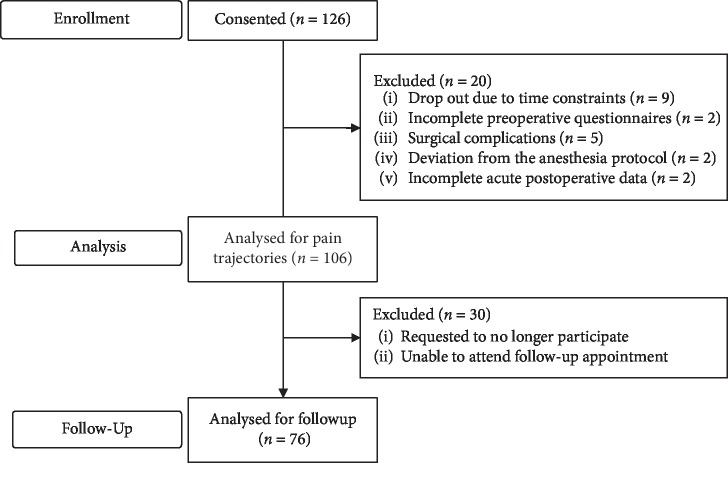
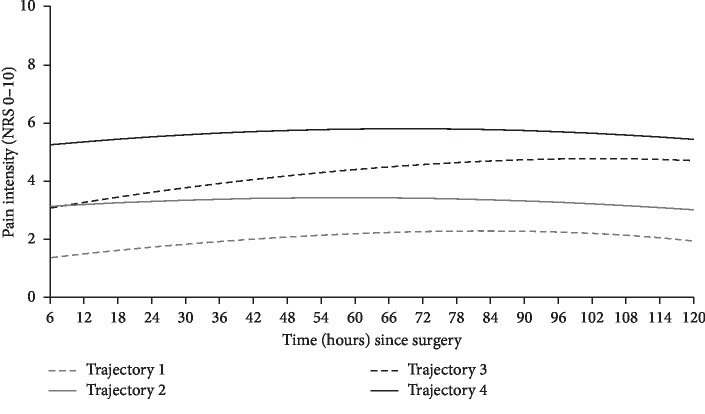
Objectives. Acute pain trajectories are associated with long-term outcomes such as persistent pain and functional disability in adults. However, there are limited data on acute postoperative pain trajectories in the pediatric population. The aims of this study were to investigate acute postoperative pain trajectories, their predictors, and their impact on long- term outcomes in adolescents with idiopathic scoliosis. Methods. We evaluated the preoperative pain intensity, use of analgesics, psychosocial measures and physical functioning of adolescents scheduled to undergo spinal fusion, and their average 6-hour self-reported pain intensity scores for their entire hospital stay. Six months after surgery, baseline variables were reassessed. We used growth mixture modeling to conduct acute postoperative pain trajectory analysis and to identify predictors of pain trajectories. Generalized linear models were conducted to determine whether acute pain trajectories predict long-term outcomes. Results. One hundred and six patients were included in the best-fitted acute pain trajectory model that included four classes that differed in initial pain intensity and rates of change over time. Preoperative pain catastrophizer status and use of analgesics significantly predicted pain trajectory membership. Furthermore, at the 6-month follow-up, patients experiencing moderate-to-severe pain in the acute postoperative period were more likely to report higher levels of pain severity, use pain medication, and miss a greater number of school/work days due to back pain in the last three months. Discussion. Preoperative assessment and analyzing the progression of pain in the acute postoperative period can help identify those at risk of negative long-term outcomes after surgery.
Overview
The claims and statistics of this paper haven’t been checked yet.
Free: it reads the open-access text and checks the first 5 claims that cite a source we can check. Create a free account to check every claim.
Integrity signals
Registry
Cites
Statistics
Figures
Verification
Claims the paper makes
The claims and statistics of this paper haven’t been checked yet.
Free: it reads the open-access text and checks the first 5 claims that cite a source we can check. Create a free account to check every claim.
Claims other papers make about this one
Each is checked against this paper’s own text: does it say what the citing paper says it does?
The source backs part of the claim, not all of it — or backs it for a different population, condition or comparison.
In the citing paper
“and higher acute postsurgical pain intensity scores are a reliable risk factor for developing CPSP. 25,26”
From Virtual psychoeducation for improvement of pain catastrophizing in pediatric presurgical patients and caregivers: a proof-of-concept study (2023) · cites this paper as [26]
Experimental — accuracy not yet measured
Self-check
Percentages, sums and reported differences re-computed from the paper’s own numbers.
The self-check needs the paper’s full text.
Citations
Cites
Neuronal plasticity: Increasing the gain in pain
Woolf, C. J., & Salter, M. W. (2000) · Science · doi:10.1126/science.288.5472.1765 · Cited by 3,781 · cited 1×
“+e patients who were taking pain medication prior to their surgery may have led to the priming of their nervous system to subsequent pain during the acute postoperative period [28].”
BackgroundTheoretical perspectives on the relation between catastrophizing and pain
Sullivan, M. J. L., Thorn, B., Haythornthwaite, J. A., Keefe, F., Martin, M., Bradley, L. A., & Lefebvre, J. C. (2001) · The Clinical Journal of Pain · doi:10.1097/00002508-200103000-00008 · Cited by 2,472 · cited 2×
“Overall, our results suggest that it is primordial in pediatrics to identify before their surgery date pain catastrophizers who are considered to possess maladaptive coping behaviors [29] and intervene via pain counselling/education to reduce the risk of high postoperative pain intensity.”
BackgroundTwelve frequently asked questions about growth curve modeling
Curran, P. J., Obeidat, K., & Losardo, D. (2010) · Journal of Cognition and Development · doi:10.1080/15248371003699969 · Cited by 1,246 · cited 1×
“+e required minimum sample size of 100 for GMM was based on the theoretical foundations of the study, characteristics of the data, measurement reliability, and group differences [10, 20].”
BackgroundRam, N., & Grimm, K. J. (2009) · International Journal of Behavioral Development · doi:10.1177/0165025409343765 · Cited by 1,143 · cited 4×
“+e required minimum sample size of 100 for GMM was based on the theoretical foundations of the study, characteristics of the data, measurement reliability, and group differences [10, 20].”
BackgroundMethodInfluentialCarr, D. B., & Goudas, L. C. (1999) · The Lancet · doi:10.1016/s0140-6736(99)03313-9 · Cited by 653 · cited 1×
“Moreover, the persistent nature of postoperative pain may delay rehabilitation [4, 8].”
BackgroundThe child version of the pain catastrophizing scale (PCS-C): a preliminary validation
Crombez, G., Bijttebier, P., Eccleston, C., Mascagni, T., Mertens, G., Goubert, L., & Verstraeten, K. (2003) · Pain · doi:10.1016/s0304-3959(03)00121-0 · Cited by 652 · cited 1×
“Patients who received a total score of 30 or greater out of 52 on the PCS-c questionnaire were considered pain catastrophizers [13].”
BackgroundConsequences of Inadequate Postoperative Pain Relief and Chronic Persistent Postoperative Pain
Joshi, G. P., & Ogunnaike, B. O. (2005) · Anesthesiology Clinics of North America · doi:10.1016/j.atc.2004.11.013 · Cited by 621 · cited 2×
“Moreover, the persistent nature of postoperative pain may delay rehabilitation [4, 8].”
Backgroundvon Baeyer, C. L., Spagrud, L. J., McCormick, J. C., Choo, E., Neville, K., & Connelly, M. A. (2009) · Pain · doi:10.1016/j.pain.2009.03.002 · Cited by 575 · cited 1×
“+e NRS has been validated in the pediatric population and is strongly recommended as a self-report measure for acute pain intensity for children and adolescents between 6 and 18 years old [15, 16].”
BackgroundYang, M. M. H., Hartley, R. L., Leung, A. A., Ronksley, P. E., Jetté, N., Casha, S., & Riva-Cambrin, J. (2019) · BMJ Open · doi:10.1136/bmjopen-2018-025091 · Cited by 414 · cited 1×
“Furthermore, a recent meta-analysis on preoperative predictors of poor acute postoperative pain control revealed that preoperative analgesia use was a significant predictor [26].”
BackgroundGoubert, L., Eccleston, C., Vervoort, T., Jordan, A., & Crombez, G. (2006) · Pain · doi:10.1016/j.pain.2006.02.035 · Cited by 340 · cited 1×
“Studies have shown that parental psychological factors also play an important role in their children’s response to pain [36, 37].”
Background
Research works printed but not linked: 1
- Merskey H. Bogduk N. Classification of Chronic Pain. Descriptions of Chronic Pain Syndromes and Definitions of Pain Terms 1994 2nd Washington, D.C., USA IASP Press
Cited by
Rabbitts, J. A., Palermo, T. M., & Lang, E. A. (2020) · Journal of Pain Research · doi:10.2147/jpr.s239320 · Cited by 70
Rosenbloom, B. N., & Katz, J. (2022) · Canadian Journal of Pain · doi:10.1080/24740527.2022.2059754 · Cited by 28
“Similarly, Ocay et al.15 found four trajectories with the SRS-30.”
BackgroundEllyson, A. M., Gordon, G., Zhou, C., & Rabbitts, J. A. (2021) · Journal of Pain · doi:10.1016/j.jpain.2021.12.009 · Cited by 26
Rosenbloom, B. N., Frederiksen, S. D., Wang, V., Birnie, K. A., Park, C., Gordon, G., Rasic, N. F., Stinson, J., & Rabbitts, J. A. (2025) · Regional Anesthesia & Pain Medicine · doi:10.1136/rapm-2024-105697 · Cited by 27
Chronic Postsurgical Pain in Children and Adolescents: A Call for Action
Einhorn, L. M., Krishnan, P., Poirier, C., & Ingelmo, P. M. (2024) · Journal of Pain Research · doi:10.2147/jpr.s464009 · Cited by 25
“3,17,81,83,85 Despite the heterogeneity in measurements and number of trajectories identified, the finding of distinct pain recovery pathways has been replicated in many pediatric and adult studies.”
Self-citationCeniza-Bordallo, G., Fraile, A. G., Martín‐Casas, P., Rabbitts, J. A., Li, R., Palermo, T. M., & López‐de‐Uralde‐Villanueva, I. (2024) · Pain · doi:10.1097/j.pain.0000000000003330 · Cited by 19
Shaw, K. A., Fletcher, N. D., Devito, D. P., Schmitz, M. L., Fabregas, J. A., Gidwani, S., Chhatbar, P., & Murphy, J. S. (2021) · Spine Deformity · doi:10.1007/s43390-021-00288-5 · Cited by 18
Sieberg, C. B., Lunde, C. E., Wong, C., Manganella, J. L., Starkweather, A. R., Sethna, N. F., & Perry, M. (2022) · Pain Management Nursing · doi:10.1016/j.pmn.2022.11.001 · Cited by 17
Einhorn, L. M., Monitto, C. L., Ganesh, A., Duan, Q., Lee, J., Ramamurthi, R. J., Barnett, K., Ding, L., & Chidambaran, V. (2025) · Anesthesia & Analgesia · doi:10.1213/ane.0000000000007351 · Cited by 16
Murray, C. B., Bartlett, A., Meyyappan, A., Palermo, T. M., Aaron, R. V., & Rabbitts, J. A. (2022) · Canadian Journal of Pain · doi:10.1080/24740527.2021.2009334 · Cited by 15
Arora, V., Morado-Urbina, C. E., Gwak, Y., Parker, R., Kittel, C., Muñoz-Islas, E., Jimenez-Andrade, J. M., Romero-Sandoval, E., Eisenach, J., & Peters, C. M. (2021) · Molecular Pain · doi:10.1177/1744806921997206 · Cited by 12
Smeland, A. H., Twycross, A. M., Lundeberg, S., Småstuen, M. C., & Rustøen, T. (2021) · Pain Management Nursing · doi:10.1016/j.pmn.2021.09.007 · Cited by 16
Birnie, K. A., Stinson, J., Isaac, L., Tyrrell, J., Campbell, F., Jordan, I. P., Marianayagam, J., Richards, D., Rosenbloom, B. N., Clement, F., et al. (2022) · Canadian Journal of Pain · doi:10.1080/24740527.2022.2038031 · Cited by 13
Lo, C. C., Schwindt, S., Sharma, R., Dubé, R., Faraoni, D., Steinberg, B. E., & Brown, S. (2021) · Anesthesia & Analgesia · doi:10.1213/ane.0000000000005395 · Cited by 15
Pain Catastrophizing Throughout the Perioperative Period in Adolescents With Idiopathic Scoliosis
Chabot, B., Sweatman, H., Ocay, D. D., Premachandran, S., Roy, M., & Ferland, C. E. (2021) · The Clinical Journal of Pain · doi:10.1097/ajp.0000000000000962 · Cited by 12
“The main findings revealed that (1) the PCS-C scores of low pain catastrophizers before surgery increased to a moderate level of catastrophizing during the acute postoperative period, before decreasing back to low scores after discharge from the hospital, (2) the PCS-C scores of moderate pain catastrophizers remain re…”
BackgroundSelf-citationDecoding pain from brain activity
Chen, Z. S. (2021) · Journal of Neural Engineering · doi:10.1088/1741-2552/ac28d4 · Cited by 14
“…focused on classification of pain level and discrimination of chronic pain patients from healthy control; less attention has been focused on identifying the timepoint during acute-to-chronic pain transition or predicting the pain chronification trajectory (e.g. Althaus et al 2018, Ocay et al 2020).”
A systematic review of the prevalence of chronic postsurgical pain in children
Sim, N. Y. W., CHALKIADIS, G. A., Davidson, A. J., & Palmer, G. M. (2024) · Pediatric Anesthesia · doi:10.1111/pan.14918 · Cited by 14
“One found positive association of the moderate trajectories with baseline child catastrophizing status and number of school days missed, 25 one found positive association with early postoperative measure of child anxiety (CASI), 21 and one did not.”
BackgroundLi, M. M. J., Ocay, D. D., Larche, C. L., Vickers, K., Saran, N., Ouellet, J. A., Gélinas, C., & Ferland, C. E. (2023) · Canadian Journal of Pain · doi:10.1080/24740527.2022.2156332 · Cited by 11
“Patients with CP or adolescent idiopathic scoliosis, a three-dimensional deformity of the spine with pronounced single or double curving of the spine,(3) may undergo spinal fusion surgery with instrumentation, which is an invasive and extensive surgery such that persistent pain is a common postoperative complication.(…”
BackgroundSelf-citationCeniza-Bordallo, G., Fraile, A. G., López‐de‐Uralde‐Villanueva, I., Rabbitts, J. A., Li, R., Palermo, T. M., & Martín‐Casas, P. (2025) · Journal of Pain · doi:10.1016/j.jpain.2025.105476 · Cited by 10
Kerr, J., Abraham, E., Vandewint, A., Bigney, E. E., Hébert, J. J., Richardson, E. A., El-Mughayyar, D., Chorney, J. M. L., El‐Hawary, R., PORSCHE Study Group, et al. (2022) · Global Spine Journal · doi:10.1177/21925682221126451 · Cited by 10
“Previous fi ndings have shown that child 12,30-32 and parent 15,17 pain catastrophizing, and anxiety symptoms 13,14,16 are associated with higher postoperative pain intensity and these factors may precipitate negative trajectory membership.”
BackgroundGholami, S., Mojen, L. K., Rassouli, M., Pahlavanzadeh, B., & Farahani, A. S. (2020) · Journal of Pediatric Nursing · doi:10.1016/j.pedn.2020.08.006 · Cited by 10
Li, M. M. J., Larche, C. L., Vickers, K., Vigouroux, M., Ingelmo, P. M., Hovey, R. B., & Ferland, C. E. (2022) · Journal of Patient Experience · doi:10.1177/23743735221092632 · Cited by 8
“Importantly, postoperative pain may lead to prolonged hospital stay, delayed rehabilitation, and chronic postsurgical pain (12,16).”
BackgroundSelf-citationDisability and pain after lumbar surgery–group-based trajectory analysis
Koivunen, K., Arokoski, J. P., Widbom-Kolhanen, S. S., Pernaa, K. I., Juhola, J., & Saltychev, M. (2025) · PLoS ONE · doi:10.1371/journal.pone.0313528 · Cited by 7
Yrjälä, T., Helenius, I. J., Rissanen, T., Ahonen, M., Taittonen, M. T., & Helenius, L. (2022) · Children · doi:10.3390/children9111729 · Cited by 7
“Studies have shown that acute postsurgical pain predicts chronic pain in adolescents [11,22].”
BackgroundCirrincione, P. M., Thakur, A., Zucker, C. P., Wisch, J. L., Groisser, B. N., Nguyen, J., Mintz, D. N., Cunningham, M. E., Hresko, M. T., Haddas, R., et al. (2023) · Journal of Pediatric Orthopaedics · doi:10.1097/bpo.0000000000002493 · Cited by 7
Zhang, X.-F., Peng, C.-G., Guo, H.-J., & Zhang, Z.-M. (2025) · Journal of Cardiothoracic Surgery · doi:10.1186/s13019-024-03310-9 · Cited by 5
“He told me my pain was in my head”: mitigating testimonial injustice through peer support
Vigouroux, M., Newman, G., Amja, K., & Hovey, R. (2023) · Frontiers in Pain Research · doi:10.3389/fpain.2023.1125963 · Cited by 4
“Described as the standard for correcting scoliosis for the past century, spinal fusion is an extensive and invasive surgery that entails straightening the spine and inserting surgical pins and rods to ensure long-term correction (8, 9).”
BackgroundZachariades, F., Maras, D., Mervitz, D., Martelli, B., Prayal-Brown, A., Hayawi, L., Barrowman, N., & Lamontagne, C. (2023) · Canadian Journal of Anesthesia/Journal canadien d anesthésie · doi:10.1007/s12630-023-02583-3 · Cited by 4
“…predict increased acute postsurgical pain, 24 and higher acute postsurgical pain intensity scores are a reliable risk factor for developing CPSP. 25,26 The role of child PC is clearer in pediatric chronic pain samples where higher PC is associated with increased pain, functional disability, and…”
BackgroundSato, K., Iwabuchi, M., Endo, T., Miura, T., Ito, T., & Shirado, O. (2024) · European Spine Journal · doi:10.1007/s00586-024-08534-w · Cited by 4
“Acute postoperative pain changes assessed using pain trajectory have been reported to be associated with the residual pain and postoperative outcome [ 13, 14].”
Stratton, C., Tyrrell, J., Goren, R., Lalloo, C., & Isaac, L. (2022) · Journal of Patient-Reported Outcomes · doi:10.1186/s41687-022-00520-4 · Cited by 5
“Referral to the pedTPS occurs preoperatively for patients with increased risk for acute pain or for developing persistent pain, such as child preoperative anxiety, pain unpleasantness, anxiety sensitivity [10], catastrophizing [11], postoperative pain [12], pain medication use [13, 14], and/or functional disability [1…”
BackgroundYabuki, S., Kaiho, Y., Tarasawa, K., Ikumi, S., Iwasaki, Y., Imaizumi, T., Fujimori, K., Fushimi, K., & Yamauchi, M. (2024) · European Journal of Pain · doi:10.1002/ejp.4774 · Cited by 3
Tomaszek, L., Fenikowski, D., Cież-Piekarczyk, N., & Mędrzycka-Dąbrowska, W. A. (2024) · Journal of Clinical Medicine · doi:10.3390/jcm13030844 · Cited by 3
Zhang, Q., Wu, Y., Hong, S., & Feng, Y. (2023) · BMC Anesthesiology · doi:10.1186/s12871-023-02033-z · Cited by 2
“Different patterns of acute pain trajectories after various surgical procedures have been reported [17, 18].”
BackgroundOka, T., Imai, R., Wada, O., & Mizuno, K. (2022) · The Journal of Knee Surgery · doi:10.1055/s-0042-1743228 · Cited by 1
Chronic Postsurgical Pain in Children
Raghavan, K. C., Anghelescu, D. L., & Frett, M. J. (2025) · Springer eBooks · doi:10.1007/978-3-031-76882-8_44 · Cited by 1
Hou, Z., Wu, J., Chen, C., Lu, H., Yang, J., & Han, T. (2026) · Healthcare · doi:10.3390/healthcare14070856 · Cited by 1
Morfina/ketamina versus morfina en el control del dolor postoperatorio de cirugía renal electiva
Hurtado, L. Á., Perdomo, L. D. L. M. C., de la Paz-Estrada, C., González-Pérez, E., & Aguilar-Reyes, D. D. (2023) · Revista Mexicana de Anestesiología · doi:10.35366/112292 · Cited by 1
Chronic Postsurgical Pain in Children
Raghavan, K. C., Anghelescu, D. L., & Frett, M. J. (2023) · Springer eBooks · doi:10.1007/978-3-030-71113-9_44-1
Oka, T., Kawamura, T., & Shirasaka, W. (2025) · Archives of Orthopaedic and Trauma Surgery · doi:10.1007/s00402-025-05916-7 · Cited by 1
“In this linear model (x-axis: days; y-axis: pain inten - sity), the trajectory for each patient is defined by two pri - mary characteristics: the slope, representing the rate of pain resolution, and the intercept, reflecting the initial pain level following surgery [15, 16].”
Wang, Y., Han, B. R., Zhao, C., Ren, H., Jia, W., & Luo, F. (2025) · BMJ Open · doi:10.1136/bmjopen-2025-100725
Paediatric spinal surgery and perioperative management
Yrjälä, T. (2023) · UTUPub (University of Turku)
Parsons, R. D., Beeckman, M., Bauermeister, S., Jordan, A. L., & Goubert, L. (2026) · Clinical Journal of Pain · doi:10.1097/ajp.0000000000001360
The Clinical Course of Pain Intensity in Children and Youth with Cerebral Palsy
Shearer, H. (2022) · TSpace (University of Toronto)
Salvatore, S. D., Cosimo, G. D., Inverso, M., Brigato, P., Oggiano, L., Sessa, S., Palombi, D., Palmieri, F., Guida, S., Contursi, A., et al. (2026) · Medicina · doi:10.3390/medicina62040698
“Although these hypotheses remain evolving, they provide a plausible conceptual framework linking deformity, psychoemotional characteristics, and pain perception [5,6].”
Ceniza-Bordallo, G., Sieberg, C. B., López‐de‐Uralde‐Villanueva, I., & Martín‐Casas, P. (2026) · Journal of Pain Research · doi:10.2147/jpr.s590486
“Six studies evaluated surgical duration as a potential prognostic factor for CPSP. ,57,61 One multivariate model reported a modest increased risk at 2–3 months (OR = 2.16, 95% CI: 1.17–4.00).”
InfluentialAn Update on Pain Management in Pediatric Spine Surgery
Kiani, S. N., Bach, K. E., Kwok, V. E., & Swarup, I. (2026) · Current Reviews in Musculoskeletal Medicine · doi:10.1007/s12178-026-10037-8
“Current pre-operative pain management for PSF emphasizes multimodal analgesia that targets multiple pain pathways, reduces perioperative use of opioids, and improves postoperative pain control [9, 10].”
佘守章, Yu, W., & Huang, Y. (2026) · International Journal of Pain Research · doi:10.11648/j.ijpr.20260204.12
Wood, J. F., Reddy, M. V. S. R. R., Murphy, S. C., Davuluri, T. S., & Hoyt, A. T. (2026) · European Journal of Orthopaedic Surgery & Traumatology · doi:10.1007/s00590-026-05006-3
Metadata
- Authors
- Ocay, D. D., Li, M. M. J., Ingelmo, P., Ouellet, J. A., Pagé, M. G., & Ferland, C. E.
- Affiliations
- Shriners Hospitals for Children - Canada (CA)
- Montreal Children's Hospital (CA)
- Centre Hospitalier de l’Université de Montréal (CA)
- McGill University Health Centre (CA)
- Corresponding author
- Ferland, Catherine E.
- Venue
- Pain Research and Management
- Publisher
- Wiley
- Published
- 2020-02-25
- Volume
- 2020
- Pages
- 1-10
- ISSN
- 1203-6765 (ISSN-L)
- 1918-1523
- PMC
- PMC7060857
- OpenAlex
- W3008498843
- Cited by
- 45
- References
- 41
- Citations by year
- 2026: 5 · 2025: 9 · 2024: 6 · 2023: 7 · 2022: 8 · 2021: 8 · 2020: 2
- FWCI
- 6.01
- Type
- journal article
- Language
- en
- Open access
- gold
- doi.org
- Locations
- Pain Research and Management (publishedVersion, cc-by)
- PubMed Central (publishedVersion, cc-by)
- PubMed (publishedVersion)
- BOA (University of Milano-Bicocca) (submittedVersion)
- DOAJ (DOAJ: Directory of Open Access Journals) (submittedVersion, cc-by-sa)
- Funders
- Shriners Hospitals for Children
- Topics
- Health Sciences › Medicine › Pediatrics, Perinatology and Child Health › Pediatric Pain Management Techniques
- Health Sciences › Medicine › Anesthesiology and Pain Medicine › Anesthesia and Pain Management
- Health Sciences › Medicine › Surgery › Scoliosis diagnosis and treatment
- Keywords
- acute postoperative pain, pain trajectories, adolescent idiopathic scoliosis, spinal fusion, pain catastrophizing, analgesic use, long-term pain outcomes, functional disability, pediatric back pain
- MeSH terms
- Adolescent, Back Pain, Child, Female, Humans, Male, Pain Measurement, Postoperative Pain, Pain, Postoperative, Scoliosis, Spinal Fusion, Self Report, Chronic Pain, Acute Pain
About these checks
Registry, retraction, Cites and statistics results are computed, not judged, with one exception: a printed reference that no index lists is read once by a model before it counts as a citation error. Claims are extracted by a model and kept only when their quote appears verbatim in the text; each cited source is then checked, with a model’s help, for whether it says what the claim relies on. Those verdicts can be wrong — read the claim’s quote and the cited source before relying on one.
Statistics and arithmetic are recomputed, not judged.
Confidence bands are shown only for fields calibrated on our annotated test set. None is calibrated yet, so no band is shown.
What counts as a claim ›How we measure confidence ›How we check this ›
Are you an author, or do you see a problem with this page? Request a review
Data sources
Bibliographic data: Semantic Scholar, OpenAlex, Crossref.
Contains information from the Semantic Scholar Academic Graph Datasets, made available under the ODC Attribution License (ODC-BY 1.0).
Semantic Scholar’s data is described in: Kinney, R., et al. (2023). The Semantic Scholar Open Data Platform. arXiv:2301.10140.
