

Extraction of Cellulose from Sugarcane Bagasse Optimization and Characterization
Open accessThe DOI matches its Crossref record; 53 of the 53 references it cites were found in a registry or an index.
Abstract
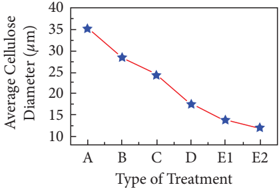
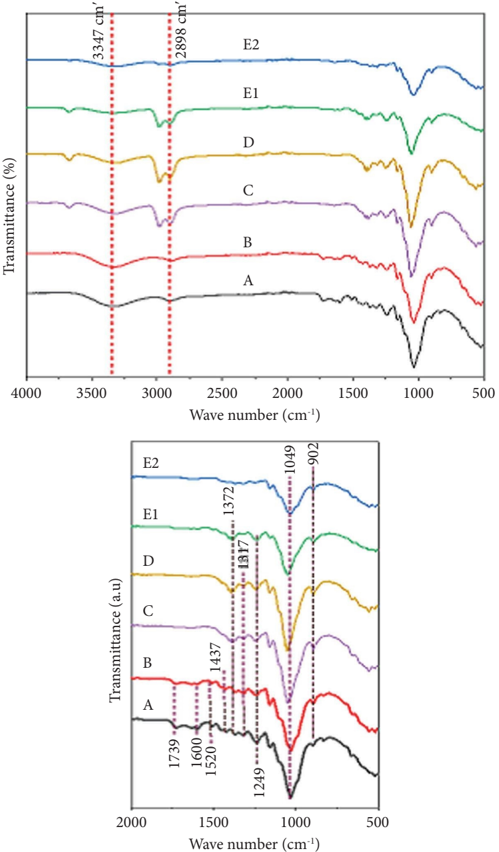
In this study, cellulose was extracted from sugarcane bagasse (SCB) through a convenient five-step treatment, and procedures were performed. During the alkaline curing process of the extraction of cellulose, NaOH has a concentration of (0.5, 1.5, 2.75, and 4%) and the extraction time (15, 30, and 45 min) at a constant temperature of 120°C were taken as variables and perfectly optimized by response surface methodology (RSM) for cellulose with the highest product. The optimum conditions were found to be 2.75% NaOH, 120°C, and 45 min with a cellulose yield of 73.71 ± 0.67% cellulose, 17.22 ± 0.82% hemicellulose, and 9.07 ± 0.95% lignin. Though most of the lignin was eliminated during the alkaline and dilute acid pretreatment process, the remaining lignin was removed by a solution treatment of 4% NaOH, and 21.92% H2O2 at 121°C for 44.97 min where the cellulose yield was found as 89.75 ± 0.64%, hemicellulose was 6.15 ± 0.83%, and lignin was 2.65 ± 0.66%. Morphological analysis revealed that the average diameter of the cellulose was 12.06 µm. Thermal and XRD diffraction analysis showed that the cellulose is thermally stable and has a crystallinity index of 31.63%. FTIR spectra demonstrate that cellulose was successfully extracted due to the removal of noncellulose components.
Overview
The claims and statistics of this paper haven’t been checked yet.
Free: it reads the open-access text and checks the first 5 claims that cite a source we can check. Create a free account to check every claim.
Integrity signals
Registry
Cites
Statistics
Figures

Verification
Claims the paper makes
The claims and statistics of this paper haven’t been checked yet.
Free: it reads the open-access text and checks the first 5 claims that cite a source we can check. Create a free account to check every claim.
Self-check
Percentages, sums and reported differences re-computed from the paper’s own numbers.
The self-check needs the paper’s full text.
Citations
Cites
Segal, L., Creely, J. J., Martin, A. E., & Conrad, C. M. (1959) · Textile Research Journal · doi:10.1177/004051755902901003 · Cited by 8,613 · cited 4×
“(en, the data on the composition analysis of the amount of SCB treated with dilute sulfuric acid of extracted cellulose, hemicellulose, and lignin were collected by gravimetry based on the method developed by Chesson [40], and the results are summarized in Table S2 in SI.”
InfluentialCharacteristics of hemicellulose, cellulose and lignin pyrolysis
Yang, H., Yan, R., Chen, H., Lee, D. H., & Zheng, C. (2007) · Fuel · doi:10.1016/j.fuel.2006.12.013 · Cited by 8,155 · cited 1×
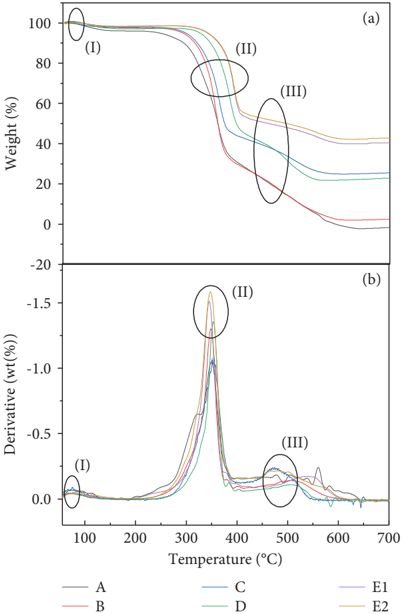
“As shown in Figure 8(a), the initial decomposition happened at temperature between 60 and 150°C due to the evaporation of water molecules and low molecular weight components that were broken down [52].”
Cellulose: Fascinating Biopolymer and Sustainable Raw Material
Klemm, D., Heublein, B., Fink, H., & Bohn, A. (2005) · Angewandte Chemie International Edition · doi:10.1002/anie.200460587 · Cited by 7,551
Methods for Pretreatment of Lignocellulosic Biomass for Efficient Hydrolysis and Biofuel Production
Kumar, P., Barrett, D. M., Delwiche, M. J., & Stroeve, P. (2009) · Industrial & Engineering Chemistry Research · doi:10.1021/ie801542g · Cited by 3,772
Bio-nanocomposites for food packaging applications
Rhim, J.-W., Park, H.-M., & Ha, C.-S. (2013) · Progress in Polymer Science · doi:10.1016/j.progpolymsci.2013.05.008 · Cited by 1,980
Applications of Ultrasound to the Synthesis of Nanostructured Materials
Bang, J. H., & Suslick, K. S. (2010) · Advanced Materials · doi:10.1002/adma.200904093 · Cited by 1,895
A review on alkaline pretreatment technology for bioconversion of lignocellulosic biomass
Kim, J. S., Lee, Y. Y., & Kim, T. H. (2016) · Bioresource Technology · doi:10.1016/j.biortech.2015.08.085 · Cited by 1,581 · cited 2×
“Alkaline pretreatment process is to a greater extent appropriate for enzymatic hydrolysis as it effectively removes lignin and limits carbohydrate degradation compared to other similar methods [34].”
Microbial xylanases and their industrial applications: a review
Beg, Q. K., Kapoor, M., Mahajan, L., & Hoondal, G. S. (2001) · Applied Microbiology and Biotechnology · doi:10.1007/s002530100704 · Cited by 1,371 · cited 1×
“It is the result of the pyrolytic decomposition of the cellulose acetate polymer chain followed by deacetylation as well as the removal of the less stable lignin and hemicellulose polymer from the SCB during treatment processes [54].”
Van Dyk, J. S., & Pletschke, B. I. (2012) · Biotechnology Advances · doi:10.1016/j.biotechadv.2012.03.002 · Cited by 1,015 · cited 2×
“It has been reported that crystallinity is one of the most powerful factors in the efficiency of enzymatic hydrolysis for the reason that giant crystallinity of cellulose makes the biomass unreachable to enzymatic attack [45, 46].”
Cellulose nanocrystals and cellulose nanofibrils based hydrogels for biomedical applications
Du, H., Liu, W., Zhang, M., Si, C., Zhang, X., & Li, B. (2019) · Carbohydrate Polymers · doi:10.1016/j.carbpol.2019.01.020 · Cited by 949 · cited 1×
“(is leads to multiple technological uses of cellulose including transportation of drugs [17], polymer fillers [18], gases, Hindawi Advances in Materials Science and Engineering Volume 2022, Article ID 1712207, 10 pages https://doi.”
Research works printed but not linked: 1
- 10. J. A. R. Rodrigues, "From the mill to a biorefinery: the sugar factory as an industrial enterprise for the generation of biochemicals and biofuels," Química Nova, vol. 34, pp. 1242-1254, 2011.
Cited by
Recent advances in biopolymer synthesis, properties, & commercial applications: a review
Getahun, M. J., Kassie, B. B., & Alemu, T. S. (2024) · Process Biochemistry · doi:10.1016/j.procbio.2024.06.034 · Cited by 109
The versatile world of cellulose-based materials in healthcare: From production to applications
Chandel, N., Jain, K., Jain, A., Raj, T., Patel, A. K., Yang, Y., & Bhatia, S. K. (2023) · Industrial Crops and Products · doi:10.1016/j.indcrop.2023.116929 · Cited by 94
Cellulose-Based Electrochemical Sensors
Sheraz, M., Xiao, S., Siddiqui, A., Wang, Y., Hu, S., & Sun, R. (2025) · Sensors · doi:10.3390/s25030645 · Cited by 90
Panda, J., Mishra, A. K., Mohanta, Y. K., Patowary, K., Rauta, P. R., & Mishra, B. (2024) · Waste and Biomass Valorization · doi:10.1007/s12649-024-02452-0 · Cited by 85
“Carbohydrates are abundant in it, with cellulose accounting for 32–48%, hemicellulose for 25–32%, lignin for 19–24%, raw extractive components for 5–9%, and ash for 3% [88, 89].”
A review on bio-based polymer polylactic acid potential on sustainable food packaging
Rajendran, D. S., Venkataraman, S., Jha, S. K., Chakrabarty, D., & Vaidyanathan, V. K. (2024) · Food Science and Biotechnology · doi:10.1007/s10068-024-01543-x · Cited by 84
Kumar, V., Chakraborty, P., Janghu, P., Umesh, M., Sarojini, S., Pasrija, R., Kaur, K., Lakkaboyana, S. K., Vimal, S., Nandhagopal, M., et al. (2023) · Carbohydrate Polymer Technologies and Applications · doi:10.1016/j.carpta.2023.100366 · Cited by 83
Thermal Insulation Mechanism, Preparation, and Modification of Nanocellulose Aerogels: A Review
Wu, Y., Wang, X., Yao, L., Chang, S., & Wang, X. (2023) · Molecules · doi:10.3390/molecules28155836 · Cited by 64
“[53] treated sugarcane bagasse with sodium hydroxide and obtained 74.”
MethodDandash, A. A., Abu‐Jdayil, B., & Tannous, J. H. (2025) · The Chemical Record · doi:10.1002/tcr.202500045 · Cited by 50
Rasheed, H. A., Adeleke, A. A., Nzerem, P., Olosho, A. I., Ogedengbe, T. S., & Jesuloluwa, S. (2024) · Scientific Reports · doi:10.1038/s41598-024-65229-4 · Cited by 45
“C of the pyranose skeletal ring is connected to the strong absorption peaks near the 1050 cm −1 linked explicitly to cellulose 27,33,41,47 .”
BackgroundResultSkrzypczak, D., Izydorczyk, G., Taf, R., Moustakas, K. G., & Chojnacka, K. (2023) · Industrial Crops and Products · doi:10.1016/j.indcrop.2023.117500 · Cited by 45
Vyas, A., Ng, S., Fu, T., & Anum, I. (2025) · Polymers · doi:10.3390/polym17050579 · Cited by 37
“The tensile strength (TS) of the bioplastic films in this study was measured, and Figure 2 illustrates the results.”
InfluentialAhmed, M. J., Ashfaq, J., Sohail, Z., Channa, I. A., Sánchez‐Ferrer, A., Ali, S. N., & Chandio, A. D. (2024) · Sustainable materials and technologies · doi:10.1016/j.susmat.2024.e01077 · Cited by 44
Gupta, D., Chaudhary, A. K., Singh, V. K., Verma, D., Goh, K. L., & Sharma, M. (2023) · Industrial Crops and Products · doi:10.1016/j.indcrop.2023.117341 · Cited by 35
Biomaterials and Regenerative Agriculture: A Methodological Framework to Enable Circular Transitions
Stathatou, P. M., Corbin, L., Meredith, J. C., & Garmulewicz, A. (2023) · Sustainability · doi:10.3390/su151914306 · Cited by 30
Prasad, B. R., Polaki, S., & Padhi, R. K. (2024) · Biotechnology Letters · doi:10.1007/s10529-023-03463-y · Cited by 30
“…removal of lignin was further substantiated by the absence of peaks The assessment of crystallinity index (CI) in untreated and pretreated lignocellulosic biomass samples was performed using X-ray diffraction (XRD) analysis (Melesse et al. 2022; Montoya-Escobar et al. 2022; Karthika et al. 2012).”
Aditya, D. S., Mahadevaprasad, K. N., Santhosh, K. N., Hemavathi, A. B., Halakarni, M., Yoon, H., & Nataraj, S. K. (2024) · Chemical Engineering Journal · doi:10.1016/j.cej.2024.150910 · Cited by 31
Charoensopa, K., Thangunpai, K., Kong, P., Enomae, T., & Ploysri, W. (2024) · Polymers · doi:10.3390/polym16111612 · Cited by 27
“The broad peak at 2996–3703 cm − 1 indicates the OH stretching vibration of the hydroxyl group in the cellulose, hemicellulose, and lignin [38].”
BackgroundRecent progress in the conversion of agricultural waste into functional materials
Nqoro, X., Taziwa, R., & Popoola, A. P. I. (2023) · Biomass Conversion and Biorefinery · doi:10.1007/s13399-023-05044-5 · Cited by 26
“Melesse et al. extracted cellulose from sugarcane bagasse using different concentrations of sodium hydroxide at controlled reaction times (15, 30, and 45 min) at 120°C [33].”
Optimization of ionic liquid pretreatment of sugar palm fiber for cellulose extraction
Norfarhana, A. S., Ilyas, R. A., Ngadi, N., & Othman, M. H. D. (2024) · Journal of Molecular Liquids · doi:10.1016/j.molliq.2024.124256 · Cited by 26
Yadav, A., Rani, P., Yadav, D. K., Bhardwaj, N., Gupta, A., & Bishnoi, N. R. (2024) · Nature Environment and Pollution Technology · doi:10.46488/nept.2024.v23i01.037 · Cited by 22
Tahmasebi, Z., Zilouei, H., & Kot, A. M. (2024) · Renewable Energy · doi:10.1016/j.renene.2024.120618 · Cited by 20
Kumar, R., Kumar, N., Chaudhary, G., Saini, S., & Singh, C. (2024) · Waste and Biomass Valorization · doi:10.1007/s12649-024-02471-x · Cited by 19
Mubarak, A. A., Ilyas, R. A., Ngadi, N., Nordin, A. H., & Alkbir, M. F. M. (2024) · Biomass Conversion and Biorefinery · doi:10.1007/s13399-024-05692-1 · Cited by 16
Motshabi, N., Lenetha, G. G., Malimabe, M. A., & Gumede, T. P. (2025) · Polymers · doi:10.3390/polym17141947 · Cited by 14
Sagar, B. M., Islam, M. M., Habib, M. L., Ahmed, S., & Hossain, M. S. (2025) · RSC Advances · doi:10.1039/d5ra02896e · Cited by 13
Azhikhanova, Z., Megbenu, H. K., Zhengis, A., Baisalova, G., Shaimardan, M., Aldongarov, A., Karibayev, M., Özler, M. A., & Nuraje, N. (2025) · Scientific Reports · doi:10.1038/s41598-025-31751-2 · Cited by 12
Polyphenol-conjugated polysaccharide nanoplatforms for enhanced therapeutic efficacy
Narayan, S., Nagpal, K., & Kumar, P. (2025) · Expert Opinion on Drug Delivery · doi:10.1080/17425247.2025.2514714 · Cited by 11
Amara, C., Razzak, A., Khiari, R., Dufresne, A., & Khwaldia, K. (2024) · Biomass Conversion and Biorefinery · doi:10.1007/s13399-024-06296-5 · Cited by 10
Akshaya, S., & Nathanael, A. J. (2025) · Materials Advances · doi:10.1039/d5ma00257e · Cited by 10
“31,32 In the alkali-treated fibers, a few peaks with low intensity are present at around 1722 cm (cid:2) 1 and 1504 cm (cid:2) 1 , which are attributed to the presence of aromatic groups in lignin, indicating that lignin is not completely removed after the alkaline treatment.”
Ganesan, A., & Rengarajan, J. (2024) · Iranian Polymer Journal · doi:10.1007/s13726-024-01316-7 · Cited by 10
Harnessing Lignocellulosic Crops for Phytomanagement of Contaminated Soils: A Multi-Country Study
Testa, G., Ciaramella, B. R., Fernando, A. L., Kotoula, D., Scordia, D., Gomes, L. A., Cosentino, S. L., Alexopoulou, E., & Papazoglou, E. G. (2024) · Plants · doi:10.3390/plants13192671 · Cited by 9
“Moreover, the residues from sorghum, such as bagasse and straw, are well-suited for 2G biofuel production, similarly to sugarcane [31,32].”
BackgroundUnderstanding nonwoody cellulose extractions, treatments, and properties for biomedical applications
Salleh, K. M., Selamat, M. E., Nordin, N. A., & Zuo, Q. (2025) · International Journal of Biological Macromolecules · doi:10.1016/j.ijbiomac.2025.142455 · Cited by 10
Gaikwad, A., Debnath, K., & Gupta, M. K. (2023) · Journal of Applied Polymer Science · doi:10.1002/app.54724 · Cited by 9
Jaturapiree, A., Saowapark, T., Sukrat, K., & Chaichana, E. (2025) · Recycling · doi:10.3390/recycling10030110 · Cited by 8
Sachin, K., Jayakrishnan, J. P., Rao, D. R., Koshy, J. T., Sangeetha, D., Vinod, A. R., Rajasekharan, R., & Dalvi, Y. B. (2025) · Results in Engineering · doi:10.1016/j.rineng.2025.107544 · Cited by 11
Duc, C. K. T., Tuan, N. T., Linh, T. C., Lương, H. V. T., & Phạm, D. T. (2025) · Bioresource Technology · doi:10.1016/j.biortech.2025.133603 · Cited by 7
Jayaseelan, P., Rajan, A., & Banerjee, R. (2024) · Journal of the Science of Food and Agriculture · doi:10.1002/jsfa.13399 · Cited by 7
Asrofi, M., Pradiza, R. R., Yusuf, M., D., M. D. C., & Ilyas, R. A. (2025) · Mechanical Engineering for Society and Industry · doi:10.31603/mesi.12721 · Cited by 8
Physicochemical Pretreatment of Vietnamosasa pusilla for Bioethanol and Xylitol Production
Wongleang, S., Premjet, D., & Premjet, S. (2023) · Polymers · doi:10.3390/polym15193990 · Cited by 8
“This method has been successfully utilized for the pretreatment of several types of biomasses, including rice straw [18], water hyacinth [19], soybean hull [20], cassava [21,22], Arachis hypogea shells [16], sugarcane bagasse [23], Pennisetum purpureum [24,25], wheat straw [26], durian peel [17], Sicyos angulatus [15]…”
MethodRasheed, H. A., Ayuba, S., Adeleke, A. A., Ogedengbe, T. S., Nzerem, P., & Ikubanni, P. P. (2023) · International Conference on Multidisciplinary Engineering and Applied Science (ICMEAS) · doi:10.1109/icmeas58693.2023.10379365 · Cited by 6
Zenitova, L. A., THUY, P. T., Dzung, H. T., HUONG, T. T., Giap, V. D., & CUONG, V. T. (2024) · Cellulose Chemistry and Technology · doi:10.35812/cellulosechemtechnol.2024.58.82 · Cited by 7
Vyas, A., Ng, S., Fu, T., & Anum, I. (2025) · Cellulose · doi:10.1007/s10570-025-06485-z · Cited by 6
“The lab then pulverized the dried SCB to a fine powder that could pass through a 0.25-mm screen (Melesse et al. 2022).”
InfluentialKhemla, P., Thammasittirong, A., Jeennor, S., Panchanawaporn, S., & Thammasittirong, S. N.-R. (2025) · Industrial Crops and Products · doi:10.1016/j.indcrop.2025.121628 · Cited by 5
Thanh, N. C., Nhu, P. N. H., Dat, N. Q., Dong, B. P., Huy, N. T., Duy, N. B. A., & Anh, N. T. (2026) · RSC Advances · doi:10.1039/d6ra03420a · Cited by 5
Sitisan, K., Sukthavorn, K., Nootsuwan, N., Jariyasakoolroj, P., Veranitisagul, C., & Laobuthee, A. (2024) · Journal of Polymers and the Environment · doi:10.1007/s10924-024-03222-8 · Cited by 5
Mumtha, C., & Mahalingam, P. U. (2025) · Applied Biochemistry and Biotechnology · doi:10.1007/s12010-025-05298-x · Cited by 4
Adegono, T. O. A., Harzallah, O. A., Mejouyo, P. W. H., Stanislas, T. T., Decker, A., Tagne, N. R. S., Tschamber, V., Foba-Tendo, J., Bistac, S. B., & Njeugna, E. (2025) · Journal of the Textile Institute · doi:10.1080/00405000.2025.2510902 · Cited by 6
“…have focused on the extraction of cellulose from various agricultural residues, such as wheat straw, red banana agricultural waste, olive tree pruning residues, brewery spent grains, and sugarcane bagasse (Imen Landolsi et al., 2022; Nagarajan et al., 2022; Aboody, 2013; Melesse et al., 2022).”
InfluentialMuya, C. N., Onyari, J. M., Njenga, L. W., Onyango, J. O., & Gitari, W. M. (2024) · Green and Sustainable Chemistry · doi:10.4236/gsc.2024.143004 · Cited by 4
Sheikh, Z. U. D., Singh, A., Devi, A., Bajar, S., Kothari, R., Pathania, D., & Bhat, M. A. (2025) · Environmental Science and Pollution Research · doi:10.1007/s11356-025-36623-w · Cited by 4
Jadaun, S., Siddiqui, S., Dunno, K. D., & Bangar, S. P. (2025) · Journal of Food Measurement & Characterization · doi:10.1007/s11694-025-03710-y · Cited by 5
Sustainable and ecofriendly biopolymers for plastic waste reduction: A review
Trilokesh, C. (2026) · Bioresource Technology Reports · doi:10.1016/j.biteb.2026.102740 · Cited by 4
Singhal, S., Mittal, A., Rawat, N., Singhal, N. K., Mangalam, J., & Agarwal, S. (2025) · Chemical Papers · doi:10.1007/s11696-025-04030-7 · Cited by 3
“…of which belong to the category of lignocellulosic wastes, such as sugarcane bagasse, hemp, flax, jute, Ficus leaf and date palm as these contain approximately 30–50% of cellulose (Pahkala et al. 1999; Kamoga et al. 2013; Melesse et al. 2022; Al kamzari et al. 2023; Narayanaperumal et al. 2024).”
InfluentialHussain, M., Bisht, A., Chaudhary, M. N., Ramzan, K., Zehra, S. H., Viškelis, J., Viškelis, P., Balčiūnaitienė, A., & Benjakul, S. (2025) · Trends in Food Science & Technology · doi:10.1016/j.tifs.2025.105295 · Cited by 3
Characterization of Nanocellulose from Orange Peel Waste
Munawar, R. F., Saad, A. F., Othman, I. S., Abid, M. A. ‘. M., & Samat, K. F. (2023) · Journal of Advanced Research in Applied Mechanics · doi:10.37934/aram.112.1.1020 · Cited by 3
Sukthavorn, K., Nootsuwan, N., Sitisan, K., Jariyasakoolroj, P., Laobuthee, A., & Veranitisagul, C. (2025) · Journal of Applied Polymer Science · doi:10.1002/app.57101 · Cited by 2
Tang, Y., Li, J., Xu, W., Xiao, Y., Deng, J., Rong, G., Zhao, J. B., Xu, S., Zhou, M., & Li, Z. (2025) · JOURNAL OF RENEWABLE MATERIALS · doi:10.32604/jrm.2025.02025-0065 · Cited by 2
Piedad, M. D., Almerol, C. G., Korzeniowska, M., Łaba, W., Salazar, J. R., Denson, M. D., & Lavarias, J. A. (2025) · E3S Web of Conferences · doi:10.1051/e3sconf/202566104003 · Cited by 2
Islam, M. H., & Mondal, M. I. H. (2026) · Materials Today Chemistry · doi:10.1016/j.mtchem.2026.103416 · Cited by 6
Verma, A., Singh, G., Srivastava, A., Gupta, S. C., & Mandal, D. D. (2026) · Discover Nano · doi:10.1186/s11671-026-04540-7 · Cited by 2
“These fibrous by-products are rich in cellulose (26– 47%), hemicellulose (19–33%), lignin (14–32%), and some extractives (6–13%), including waxes, lipids, and soluble sugars [5, 6].”
Singh, G., Verma, A., Srivastava, A., Gupta, S. C., & Mandal, D. D. (2026) · Discover Nano · doi:10.1186/s11671-026-04751-y · Cited by 2
Effects of modified sugar cane and plantain pseudo-stem fibers for oil spill remediation
Gbogbo, S., Narh, D., Adofo, Y. K., Mensah, B., Agyei‐Tuffour, B., & Nyankson, E. (2024) · Cogent Engineering · doi:10.1080/23311916.2024.2342442 · Cited by 2
“…and ester linkages in lignin, hemicellulose, pectin at 1727 cm − 1 and the aromatic ring present in lignin and absorbed water at 1603 cm − 1 which are all associated with the SF and PF before the surface treatments (Ahmad et al., 2018; Kumar et al., 2020; Melesse et al., 2022; Zaheer et al., 2014).”
Zainol, N., Radzi, M., & Aziz, N. H. (2024) · Discover Mechanical Engineering · doi:10.1007/s44245-024-00051-w · Cited by 1
“The finding is in good agreement with Melesse et al. [16], who investigated the effect of extraction time (15, 30, and 45 min) and sodium hydroxide concentration (0.5, 1.5, 2.75, and 4”
InfluentialRilyanti, M., Ningrum, A. D. W., Ilim, I., Suharso, S., Mulyono, M., Ayoub, M., & Simanjuntak, W. (2025) · Journal of Multidisciplinary Applied Natural Science · doi:10.47352/jmans.2774-3047.248 · Cited by 1
Reyes‐Cruz, F. M., Sánchez‐Cantú, M., Rubio, E., & Quintana, R. (2025) · Talanta · doi:10.1016/j.talanta.2025.127951 · Cited by 1
Martins, M. V. A., Tateno, N. S., Brito, P. V. R., & Oliveira, J. P. D. C. (2025) · Journal of Polymer Science and Engineering · doi:10.24294/jpse11589 · Cited by 1
“This demonstrates that the basic medium tends to reduce the organic content as the HO − ions react with the lignocellulosic biomass units, as reported in other studies [21,22].”
Thành, N. C., Duy, N. B. A., Dong, B. P., Huy, N. T., & Tran, V. A. (2025) · Polymer Bulletin · doi:10.1007/s00289-025-05984-0 · Cited by 1
Sánchez-Chilero, M. A., Aguilar‐Palazuelos, E., Gutiérrez‐Dorado, R., Rodríguez-González, F. J., Gastélum-Ávila, A., Fitch‐Vargas, P. R., Zazueta‐Morales, J. D. J., Calderón-Castro, A., Camacho‐Hernández, I. L., & Gómez-Favela, M. A. (2025) · Biomass Conversion and Biorefinery · doi:10.1007/s13399-025-06892-z · Cited by 1
Qureshi, S. S., Xu, J., Vancov, T., & Chen, C. R. (2025) · Environmental Research · doi:10.1016/j.envres.2025.122974 · Cited by 2
Paulino, G. D. S., Pereira, J. S., Marques, C. S., Vitalino, K. V. R., Souza, V. G. L., Aguilar, A. P., Almeida, L. F., de Oliveira, T. V., Ribon, A. D. O. B., Ferreira, S. O., et al. (2025) · Resources · doi:10.3390/resources14120191 · Cited by 1
“Studies such as Melesse et al. (2022) [36] and Rasheed et al. (2024) [37] have demonstrated that additional steps, such as the addition of a diluted acid or base, for example, H 2 SO 4 and NaOCl, are necessary to reduce lignin content in plant fibers by 100%, and these methodologies need to be…”
Rachmawati, Y., Rizkyana, A. D., Mualimin, L., Afnani, F., & Prajna, D. (2026) · BIO Web of Conferences · doi:10.1051/bioconf/202621002024 · Cited by 1
Ngwenya, M., Gumede, T. P., & Motloung, B. (2026) · Polymers · doi:10.3390/polym18091132 · Cited by 1
“It typically comprises approximately 40–50% cellulose, 25–35% hemicellulose and 5–10% lignin [16,17].”
Biohydrogen production from bagasse by dark fermentation
Rathi, B. S., Sivaranjanee, R., Kumar, P. S., Sabarigirish, S., Pranson, A. L., Murugeshwari, S., & Rangasamy, G. (2026) · Biofuels · doi:10.1080/17597269.2026.2658235 · Cited by 1
“Conversely, high lignin or more recalcitrant compositions can reduce the enzymatic hydrolysis efficiency by approximately 30% [77,78].”
(2026) · Plant and Crop Letters · doi:10.65822/j.pcl/2026.30 · Cited by 1
Terefe, T. N., Zeleke, T. D., Demsash, H. D., Desissa, T. D., & Edossa, G. D. (2026) · Materials Today Communications · doi:10.1016/j.mtcomm.2026.115732 · Cited by 1
Oil palm empty fruit bunch biomass as a renewable feedstock for energetic nitrocellulose
Darmayanti, R. F., Farahdibah, A., Refael, A., Zulfa, L. L., Ardhyananta, H., Widiyastuti, W., Holilah, H., Tashiro, Y., & Widyastuti, W. (2026) · International Journal of Biological Macromolecules · doi:10.1016/j.ijbiomac.2026.154103 · Cited by 1
Pérez‐Pacheco, E., Canul-Piste, R. A., Ríos‐Soberanis, C. R., Dzul-Cervantes, M. A. A., Pinto, J. C. C., & Ortíz-Fernández, A. (2026) · Polymers · doi:10.3390/polym18182300 · Cited by 1
Ulhusna, A., Amir, R. M., & Yusmaidi, N. (2025) · Agroteknika · doi:10.55043/agroteknika.v8i3.541 · Cited by 2
Agro-waste Valorization and Production of Bioethanol
Bhattacharjee, A., & Nath, R. (2024) · Environmental science and engineering · doi:10.1007/978-3-031-58025-3_10 · Cited by 1
Isolation and Characterization of Cellulose Whiskers from Lampung Sugarcane Bagasse, Indonesia
Afifi, M. R., Aini, Z., Irawadi, T. T., & Purwaningsih, H. (2025) · JURNAL PIJAR MIPA · doi:10.29303/jpm.v20i5.9371 · Cited by 1
“This absorption indicates the formation of a β -glycoside bond between glucose compounds in cellulose [22].”
Sugarcane Bagasse Fibre-Polyhydroxybutyrate Biocomposite – The Study of Adsorption Capacity
Tejada-Tovar, C., Villabona-Ortíz, Á., Jam-Martelo, J., Osorio-Beltrán, N., & Ortega‐Toro, R. (2025) · Journal of Water and Land Development · doi:10.24425/jwld.2025.156037 · Cited by 1
Shari, N. A. S., Razab, M. K. A. A., Noor, A. M., Aziz, M. Z. A., & Abdullah, N. H. (2025) · Journal of Nuclear Engineering and Radiation Science · doi:10.1115/1.4068121
García, E. M. H., Morales, J. J. R., Sánchez-Purihuamán, M., Quispe, A. P. B., Córdova-Rojas, L. M., Scheineder, S. H., Llanos, S. A. V., & Carreño-Farfán, C. (2025) · bioRxiv (Cold Spring Harbor Laboratory) · doi:10.1101/2025.03.17.643815
Agro-Waste based Antibacterial Cellulosic Nanogel for Heavy Metal Adsorption from Contaminated Water
Narkhede, S. (2025) · Journal of chemical health risks · doi:10.52783/jchr.v15.i2.7833
Sari, F. P., Karimah, A., Ismayati, M., Solihat, N. N., Budiman, I., Farobie, O., Nawawi, D. S., Azelee, N. I. W., Sriariyanun, M., & Fatrıasarı, W. (2025) · Waste and Biomass Valorization · doi:10.1007/s12649-025-03164-9 · Cited by 1
Kumari, S., Arora, D., Kaur, M., & Dhania, G. (2026) · BioEnergy Research · doi:10.1007/s12155-026-11008-0
Aziz, M., Palariya, D., Maheshwari, J., Pandey, M., Mehtab, S., & Zaidi, M. T. (2025) · Next Materials · doi:10.1016/j.nxmate.2025.101345
Pham, N. H. N., Pham, V. T., Bui, P. D., Nguyen, T. H., Nguyen, B. A. D., Bach, T. T. G., & Thành, N. C. (2025) · Technical Education Science/Giáo dục Kỹ thuật · doi:10.54644/jte.2025.2002
“Previous studies reported that bagasse contained 35–50% cellulose [9], which was higher than other agricultural residues such as corn cob (33.7 wt%), wheat straw (32.9 wt%), rice straw (36.2 wt%), and corn stalk (35 wt”
InfluentialKamaau, M. M., Mbuvi, H. M., & Maingi, F. M. (2025) · Journal of Scientific Agriculture · doi:10.25081/jsa.2025.v9.9672
“Sugarcane bagasse was collected from Mtito Andei Market, then completely cleaned with distilled water and oven-dried for 24 hours at 105 °C (Melesse et al., 2022).”
Extraction and Characterization of Cellulose from Plant Biomass
Kulkarni, A., Jaiswal, A., Chalke, R., & Rathod, S. (2025) · International Journal For Multidisciplinary Research · doi:10.36948/ijfmr.2025.v07i06.62461
Huaman Jimenez, F. A., & Mora Zambrano, R. B. (2025) · Repositorio Académico UPC (Universidad Peruana de Ciencias Aplicadas)
Valensia (2024) · Repository at Universitas Pendidikan Indonesia (Universitas Pendidikan Indonesia)
Piedad, M., Almerol, C. G., Korzeniowska, M., Łaba, W., Salazar, J., Denson, M., & Lavarias, J. (2025) · Springer Link (Chiba Institute of Technology) · doi:10.1051/e3sconf/202566104003/pdf
Kaur, N., & Banik, N. (2025) · Journal of Bio- and Tribo-Corrosion · doi:10.1007/s40735-025-01091-9
Rachmawati, Y., Rizkyana, A. D., Mualimin, L., Afnani, F., & Prajna, D. (2026) · Springer Link (Chiba Institute of Technology) · doi:10.1051/bioconf/202621002024/pdf
Buste, L. J. R., & Neira, A. A. S. (2026) · Universidad Politécnica Salesiana Repositorio Digital (Universidad Politécnica Salesiana)
Fundamentals of biobased materials
Agarwalla, A., Kaushik, S., & Prasad, B. (2026) · Elsevier eBooks · doi:10.1016/b978-0-443-36538-6.00005-x
Nuithitikul, K., Kabthong, R., Oonoon, N., Thetpitak, T., Rattanasak, U., Sata, V., Jitsangiam, P., Jaturapitakkul, C., & Chindaprasirt, P. (2026) · Cleaner Engineering and Technology · doi:10.1016/j.clet.2026.101196
Núñez-Villacis, L., Núñez, C., Piñaloza, L., & Cadena-Carrera, S. (2026) · F1000Research · doi:10.12688/f1000research.177852.1
Widyastuti, W., Adrevi, E. N., Pratiwi, V. M., Nurdiansyah, H., Gunawan, T., Widiyastuti, W., Anityasari, M., Hamid, Z. A. A., Mahardika, M., Rifai, J., et al. (2026) · Bioresource Technology Reports · doi:10.1016/j.biteb.2026.102732
Rodríguez, W., Ponce, S., Rivera, J., Torres, T., Sevillano, M., Meza, F., Albornoz, L., & Pocohuanca, I. (2026) · Innovative Infrastructure Solutions · doi:10.1007/s41062-026-02623-z
Metadata
- Authors
- Melesse, G. T., Hone, F. G., & Mekonnen, M. A.
- Affiliations
- Jimma University (ET)
- Addis Ababa University (ET)
- Corresponding author
- Mekonnen, Mulualem A.
- Venue
- Advances in Materials Science and Engineering
- Publisher
- Wiley
- Published
- 2022-10-10
- Volume
- 2022
- Pages
- 1-10
- ISSN
- 1687-8434 (ISSN-L)
- 1687-8442
- OpenAlex
- W4304114024
- Cited by
- 99
- References
- 53
- Citations by year
- 2026: 30 · 2025: 35 · 2024: 23 · 2023: 11
- FWCI
- 4.32
- Type
- journal article
- Language
- en
- Open access
- gold
- doi.org
- Locations
- Advances in Materials Science and Engineering (publishedVersion, cc-by)
- DOAJ (DOAJ: Directory of Open Access Journals) (submittedVersion, cc-by-sa)
- Funders
- Jimma Institute of Technology
- Topics
- Physical Sciences › Materials Science › Biomaterials › Advanced Cellulose Research Studies
- Physical Sciences › Engineering › Biomedical Engineering › Biofuel production and bioconversion
- Physical Sciences › Chemical Engineering › Process Chemistry and Technology › Lignin and Wood Chemistry
- Keywords
- cellulose extraction, sugarcane bagasse, alkaline pretreatment, NaOH concentration, dilute acid pretreatment, hydrogen peroxide bleaching, lignin removal, hemicellulose, crystallinity index, cellulose yield, agricultural waste valorization
About these checks
Registry, retraction, Cites and statistics results are computed, not judged, with one exception: a printed reference that no index lists is read once by a model before it counts as a citation error. Claims are extracted by a model and kept only when their quote appears verbatim in the text; each cited source is then checked, with a model’s help, for whether it says what the claim relies on. Those verdicts can be wrong — read the claim’s quote and the cited source before relying on one.
Statistics and arithmetic are recomputed, not judged.
Confidence bands are shown only for fields calibrated on our annotated test set. None is calibrated yet, so no band is shown.
What counts as a claim ›How we measure confidence ›How we check this ›
Are you an author, or do you see a problem with this page? Request a review
Data sources
Bibliographic data: Semantic Scholar, OpenAlex, Crossref.
Contains information from the Semantic Scholar Academic Graph Datasets, made available under the ODC Attribution License (ODC-BY 1.0).
Semantic Scholar’s data is described in: Kinney, R., et al. (2023). The Semantic Scholar Open Data Platform. arXiv:2301.10140.
