

Intelligent Intrusion Detection System for VANET Using Machine Learning and Deep Learning Approaches
Open accessThe DOI matches its Crossref record; 49 of the 49 references it cites were found in a registry or an index.
Abstract
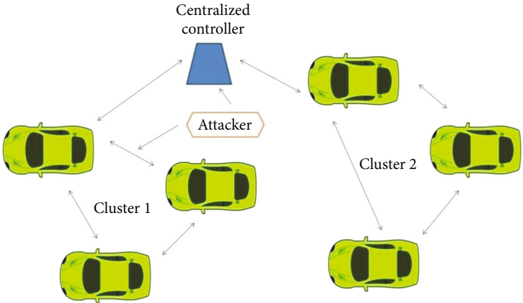
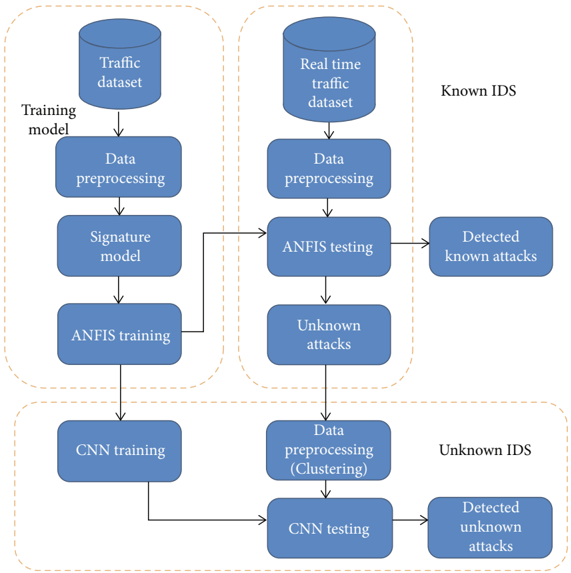
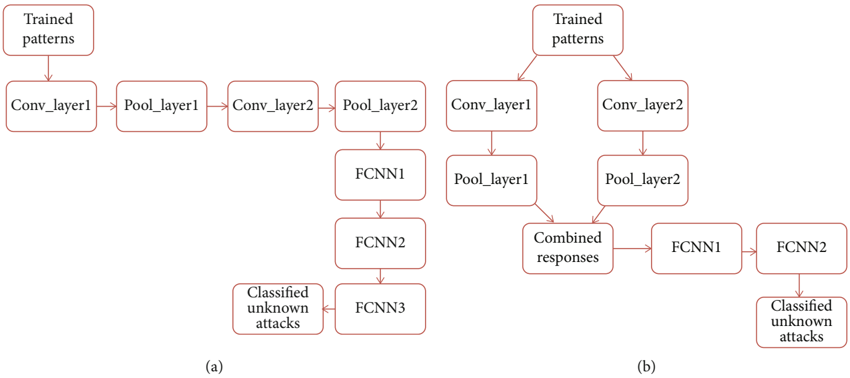
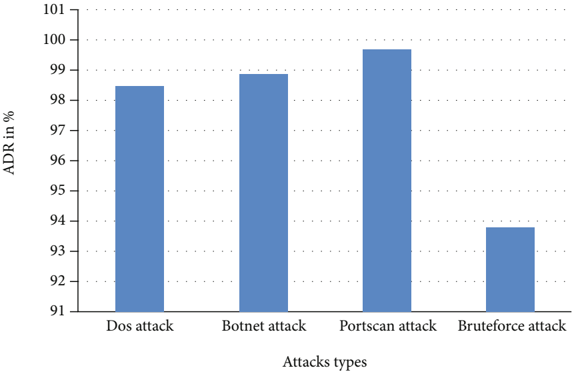
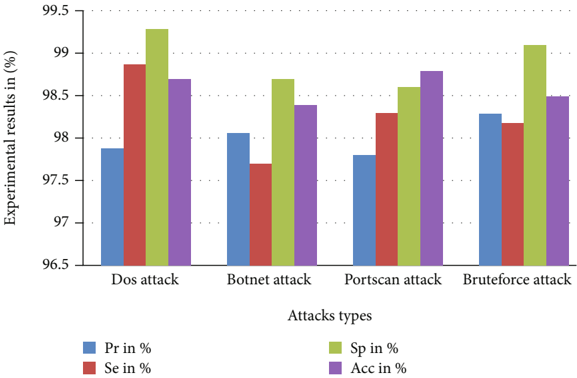
Detecting the attacks in Vehicular Ad hoc Network (VANET) system is very important to provide more secure and reliable communication between all vehicles in the system. In this article, an effective Intelligent Intrusion Detection System (IDS) is proposed using machine learning and deep learning approaches such as Adaptive Neuro Fuzzy Inference System (ANFIS) and Convolutional Neural Networks (CNN), respectively. The existing methods focus on detecting only the known attacks in VANET environment. This limitation is overcome by proposing the Intelligent IDS system using soft computing techniques. The proposed method consists of Known IDS (KIDS) and Unknown IDS (UIDS) modules, which detect both known attacks and unknown attacks. The KIDS module uses ANFIS classification module to detect the known malicious attacks, whereas the UIDS module uses a deep learning algorithm to detect the unknown attacks in VANET. Modified LeeNET (MLNET) architecture is proposed in this article to identify the type of unknown attacks. In this work, DoS attacks, Botnet attacks, PortScan attacks, and Brute Force attacks are detected using this hybrid learning algorithm. The proposed system obtains 96.9% of Pr, 98.3% of Se, 98.7% of Sp, and 98.6% of Acc and consumed 1.75 s for detecting the DoS attack on i‐VANET dataset. The proposed system obtains 98.1% of Pr, 98.9% of Se, 98.1% of Sp, and 98.1% of Acc and consumed 0.95 s for detecting the Botnet attack. The proposed system obtains 98.7% of Pr, 99.1% of Se, 98.9% of Sp, and 99.2% of Acc and consumed 1.38 s for detecting the PortScan attack. The proposed system obtains 99.1of Pr, 97.8% of Se, 98.7% of Sp, and 98.5% of Acc and consumed 1.29 s for detecting the Brute Force attack. The developed methodology is tested on the real‐time CIC‐IDS 2017 dataset, and the experimental results are compared with other state‐of‐the‐art methods.
Overview
The claims and statistics of this paper haven’t been checked yet.
Free: it reads the open-access text and checks the first 5 claims that cite a source we can check. Create a free account to check every claim.
Integrity signals
Registry
Cites
Statistics
Figures
Verification
Claims the paper makes
The claims and statistics of this paper haven’t been checked yet.
Free: it reads the open-access text and checks the first 5 claims that cite a source we can check. Create a free account to check every claim.
Claims other papers make about this one
Each is checked against this paper’s own text: does it say what the citing paper says it does?
The source backs part of the claim, not all of it — or backs it for a different population, condition or comparison.
In the citing paper
“DDoS attacks overwhelm networks with malicious traffic, delaying or blocking critical safety messages, increasing packet loss, and risking accidents6,8–11.”
From A Hybrid Deep Learning Model for Detection and Mitigation of DDoS Attacks in VANETs (2025) · cites this paper as [10]
Experimental — accuracy not yet measured
Self-check
Percentages, sums and reported differences re-computed from the paper’s own numbers.
The self-check needs the paper’s full text.
Citations
Cites
Investigating Ad Transparency Mechanisms in Social Media: A Case Study of Facebook's Explanations
Andreou, A., Venkatadri, G., Goga, O., Gummadi, K. P., Loiseau, P., & Mislove, A. (2018) · Proceedings 2018 Network and Distributed System Security Symposium · doi:10.14722/ndss.2018.23191 · Cited by 1,477
Kitsune: An Ensemble of Autoencoders for Online Network Intrusion Detection
Mirsky, Y., Doitshman, T., Elovici, Y., & Shabtai, A. (2018) · Network and Distributed System Security Symposium · doi:10.14722/ndss.2018.23204 · Cited by 920
Intrusion Detection System Using Deep Neural Network for In-Vehicle Network Security
Kang, M.-J., & Kang, J.-W. (2016) · PLOS ONE · doi:10.1371/journal.pone.0155781 · Cited by 678
A novel hybrid intrusion detection method integrating anomaly detection with misuse detection
Kim, G., Lee, S., & Kim, S. (2014) · Expert Systems with Applications · doi:10.1016/j.eswa.2013.08.066 · Cited by 589
PACP: An Efficient Pseudonymous Authentication-Based Conditional Privacy Protocol for VANETs
Huang, D., Misra, S., Verma, M., & Xue, G. (2011) · IEEE Transactions on Intelligent Transportation Systems · doi:10.1109/tits.2011.2156790 · Cited by 238
A Distributed Key Management Framework with Cooperative Message Authentication in VANETs
Hao, Y., Cheng, Y., Zhou, C., & Song, W. (2011) · IEEE Journal on Selected Areas in Communications · doi:10.1109/jsac.2011.110311 · Cited by 222
A Hierarchical Hybrid Intrusion Detection Approach in IoT Scenarios
Bovenzi, G., Aceto, G., Ciuonzo, D., Persico, V., & Pescape, A. (2020) · GLOBECOM 2020 - 2020 IEEE Global Communications Conference · doi:10.1109/globecom42002.2020.9348167 · Cited by 186
VWCA: An efficient clustering algorithm in vehicular ad hoc networks
Daeinabi, A., Pour Rahbar, A. G., & Khademzadeh, A. (2011) · Journal of Network and Computer Applications · doi:10.1016/j.jnca.2010.07.016 · Cited by 180
Distributed Privacy-Preserving Collaborative Intrusion Detection Systems for VANETs
Zhang, T., & Zhu, Q. (2018) · IEEE Transactions on Signal and Information Processing over Networks · doi:10.1109/tsipn.2018.2801622 · Cited by 168
5G Vehicular Network Resource Management for Improving Radio Access Through Machine Learning
Khan, S., Khattak, H. A., Almogren, A., Shah, M. A., Ud Din, I., Alkhalifa, I., & Guizani, M. (2020) · IEEE Access · doi:10.1109/access.2020.2964697 · Cited by 157
Research works printed but not linked: 1
- 10.6633/ijns.202005_22(3).05 · doi:10.6633/ijns.202005_22(3).05
Cited by
Javaheri, D., Gorgin, S., Lee, J.-A., & Masdari, M. (2023) · Information Sciences · doi:10.1016/j.ins.2023.01.067 · Cited by 119
Rashid, K., Saeed, Y., Ali, A., Jamil, F., Alkanhel, R., & Muthanna, A. (2023) · Sensors · doi:10.3390/s23052594 · Cited by 110
“[47] K-Mean Yes Self-generated VANET NS-3 DDoS 95%”
Saoud, B., Shayea, I. A. M., Yahya, A. E., Shamsan, Z. A., Alhammadi, A., Alawad, M. A., & Alkhrijah, Y. M. (2024) · ICT Express · doi:10.1016/j.icte.2024.05.008 · Cited by 92
Abdel Hakeem, S. A., & Kim, H. (2025) · IEEE Transactions on Intelligent Transportation Systems · doi:10.1109/tits.2025.3558849 · Cited by 90
State-of-the-art authentication and verification schemes in VANETs: A survey
Mazhar, S., Rakib, A., Pan, L., Jiang, F., Anwar, A., Doss, R., & Bryans, J. W. (2024) · Vehicular Communications · doi:10.1016/j.vehcom.2024.100804 · Cited by 76
Metadata
- Authors
- Karthiga, B., Durairaj, D., Nawaz, N., Venkatasamy, T. K., Ramasamy, G., & Hariharasudan, A.
- Affiliations
- Dhanalakshmi Srinivasan Group of Institutions (IN)
- Kingdom University (BH)
- Kalasalingam Academy of Research and Education (IN)
- Corresponding author
- Venkatasamy, Thiruppathy Kesavan
- Venue
- Wireless Communications and Mobile Computing
- Publisher
- Wiley
- Published
- 2022-01
- Volume
- 2022
- Issue
- 1
- ISSN
- 1530-8669 (ISSN-L)
- 1530-8677
- OpenAlex
- W4306153509
- Cited by
- 73
- References
- 47
- Citations by year
- 2026: 10 · 2025: 26 · 2024: 23 · 2023: 14
- FWCI
- 6.99
- Type
- journal article
- Language
- en
- Open access
- hybrid
- doi.org
- Locations
- Wireless Communications and Mobile Computing (publishedVersion, cc-by)
- DOAJ (DOAJ: Directory of Open Access Journals) (submittedVersion)
- Topics
- Physical Sciences › Computer Science › Computer Networks and Communications › Network Security and Intrusion Detection
- Physical Sciences › Engineering › Electrical and Electronic Engineering › Vehicular Ad Hoc Networks (VANETs)
- Physical Sciences › Computer Science › Artificial Intelligence › Adversarial Robustness in Machine Learning
- Keywords
- intrusion detection, vehicular ad hoc networks, VANET security, adaptive neuro-fuzzy inference system, convolutional neural networks, unknown attack detection, denial-of-service attacks, botnet attacks, brute force attacks, hybrid machine learning and deep learning
About these checks
Registry, retraction, Cites and statistics results are computed, not judged, with one exception: a printed reference that no index lists is read once by a model before it counts as a citation error. Claims are extracted by a model and kept only when their quote appears verbatim in the text; each cited source is then checked, with a model’s help, for whether it says what the claim relies on. Those verdicts can be wrong — read the claim’s quote and the cited source before relying on one.
Statistics and arithmetic are recomputed, not judged.
Confidence bands are shown only for fields calibrated on our annotated test set. None is calibrated yet, so no band is shown.
What counts as a claim ›How we measure confidence ›How we check this ›
Are you an author, or do you see a problem with this page? Request a review
How to cite
Cite CoChat for the checks on this page, and the paper for its own findings.
- This page
- CoChat. (2026). Citation check: Intelligent Intrusion Detection System for VANET Using Machine Learning and Deep Learning Approaches. https://app.cochat.ai/papers/10.1155/2022/5069104
- The paper
- Karthiga, B., Durairaj, D., Nawaz, N., Venkatasamy, T. K., Ramasamy, G., & Hariharasudan, A. (2022). Intelligent Intrusion Detection System for VANET Using Machine Learning and Deep Learning Approaches. Wireless Communications and Mobile Computing. https://doi.org/10.1155/2022/5069104
Data sources
Bibliographic data: Semantic Scholar, OpenAlex, Crossref.
Contains information from the Semantic Scholar Academic Graph Datasets, made available under the ODC Attribution License (ODC-BY 1.0).
Semantic Scholar’s data is described in: Kinney, R., et al. (2023). The Semantic Scholar Open Data Platform. arXiv:2301.10140.
