

Antimicrobial Activities and Biopreservation Potential of Lactic Acid Bacteria (LAB) from Raw Buffalo (Bubalus bubalis) Milk
Open accessThe DOI matches its Crossref record; 40 of the 40 references it cites were found in a registry or an index; 5 of the 21 sources its claims cite were checked for support.
Abstract
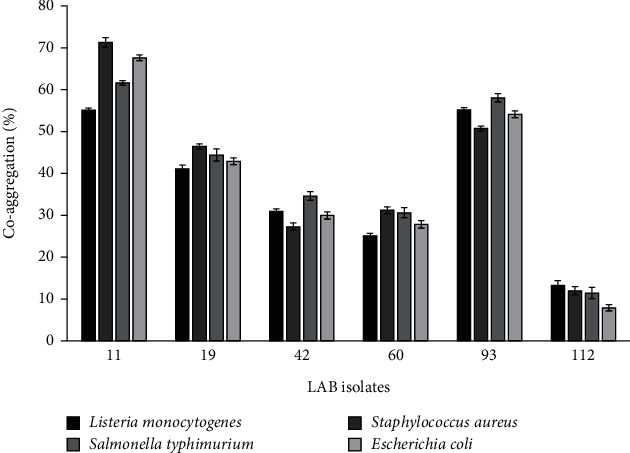
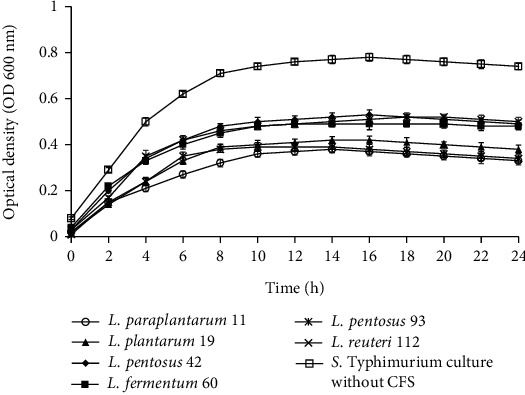
The aim of this study was to investigate the antimicrobial and biopreservation potential of lactic acid bacteria. The strains showed coaggregation capabilities ranging from 7 to 71% with tested food pathogens including Escherichia coli, Staphylococcus aureus, Listeria monocytogenes, and Salmonella enterica subsp. enterica serovar Typhimurium. The biopreservation assay indicated that the potential probiotic strains were effective in reducing the Listeria monocytogenes population in raw buffalo milk.
Overview
CoChat Summary
TL;DR
This study tested six probiotic lactic acid bacteria (LAB) previously isolated from raw buffalo milk for antimicrobial activity against foodborne pathogens and for biopreservation of buffalo milk. The strains showed broad inhibition in vitro and reduced *Listeria monocytogenes* in milk, with complete inhibition after 6–8 days depending on the strain.
Key findings
- In agar spot assays, all six LAB strains inhibited tested pathogens, with inhibition zones ranging from 10 to 21 mm; *Lactobacillus paraplantarum* 11 showed the highest activity against *L. monocytogenes*.
- In coculture, pathogen survival was reduced; for *E. coli* the reduction was 4.1 to less than 3 Log CFU/mL, and for *S. aureus* it was 3.9 to less than 3 Log CFU/mL.
- Coaggregation with pathogens ranged from 7% to 71%; *L. paraplantarum* (BT-11) had the highest coaggregation against *S. aureus* (71%), while *L. reuteri* (112) had the lowest against *E. coli* (7%).
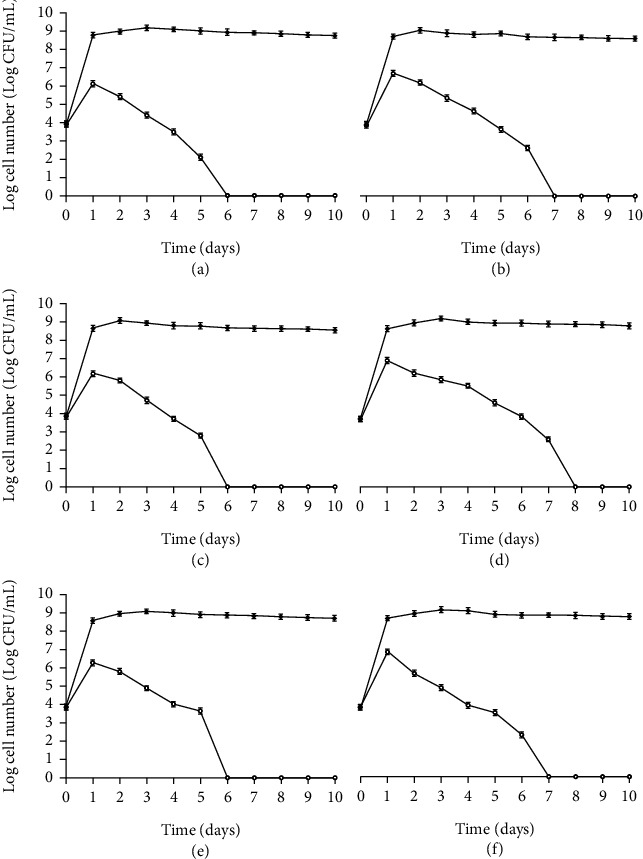
- In raw buffalo milk, *L. monocytogenes* was completely inhibited after 6 days with *L. paraplantarum* 11, *L. pentosus* 42, and *L. pentosus* 93; after 7 days with *L. plantarum* 19 and *L. reuteri* 112; and after 8 days with *L. fermentum* 60.
Methods
- Six LAB strains previously isolated from buffalo milk (*L. paraplantarum* 11, *L. plantarum* 19, *L. pentosus* 42, *L. fermentum* 60, *L. pentosus* 93, *L. reuteri* 112) were tested against 11 ATCC indicator pathogens including *E. coli*, *S. aureus*, *L. monocytogenes*, and *S. Typhimurium*.
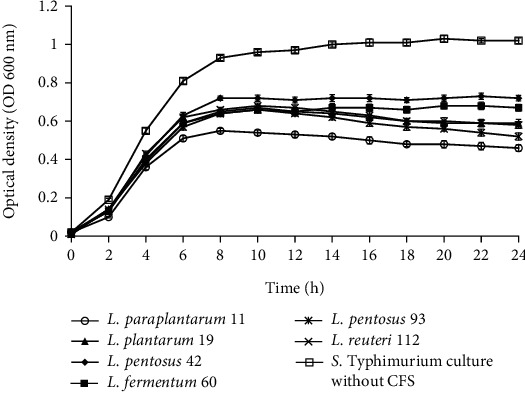
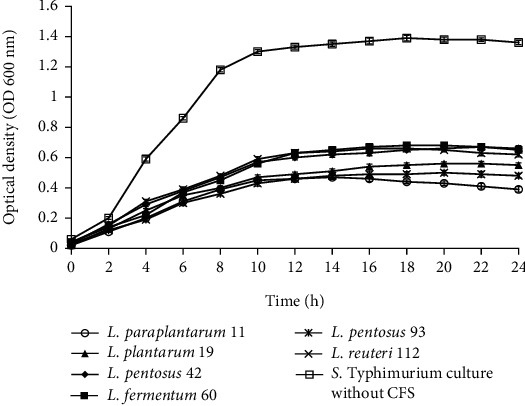
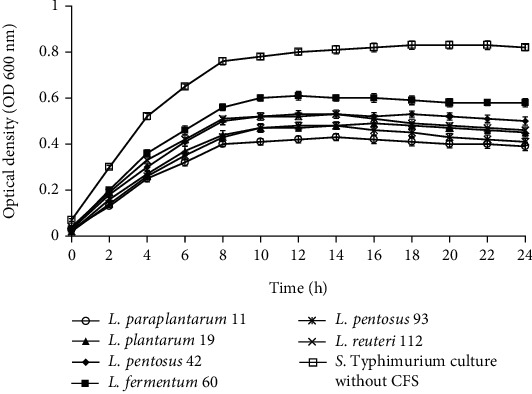
- Antimicrobial activity was assessed using agar spot assays, coculture with plate counts, coaggregation measurements, effects of cell-free supernatants (CFS) on release of 260 nm-absorbing सामग्री, CFS effects on pathogen growth, and a milk biopreservation challenge with *L. monocytogenes*.
- Statistical analysis was done in SPSS 23.0 with results reported as mean ± SD from three independent replicates.
Limitations
- The paper states that purification and characterization of antimicrobial compounds were not performed, because the main objective was to use live LAB culture as an inhibitory substance.
- The text makes evident that the work is largely in vitro / challenge-study based and does not include in vivo safety, mechanism, or sensory evaluation; this is an evident limitation from the reported design.
- The paper does not state a formal sample size for milk experiments beyond 50 mL pasteurized buffalo milk samples, so the broader generalizability of the biopreservation results is not established.
Model-written summary. Check it against the paper before relying on it.
Integrity signals
Registry
Cites
Statistics
Figures
Verification
Claims the paper makes
5 Valid · 0 Not valid · 12 Not checked · 15 Own results and interpretations
The cited sources support only part of this claim — read each source’s verdict below.
In the paper
“Very limited studies have been reported on biopreservative potential of the probiotics from buffalo milk and their antimicrobial metabolites [11, 13].”
§ Antimicrobial Activities and Biopreservation Potential of Lactic Acid Bacteria (LAB) from Raw Buffalo (Bubalus bubalis) Milk > 1. Introduction
What the sources say
- Partly supportedcites [11] Kalhoro M. S. Nguyen L. T. Anal A. K. Evaluation of probiotic potentials of the lactic acid bacteria (LAB) isolated from raw buffalo (Bubalus bubalis) milk Pakistan Veterinary Journal 2019 39 3 395 400 10.29261/pakvetj/2019.015 sourceExperimental — accuracy not yet measured
The Introduction (p. 2) says no study had reported detailed characterization of lactic acid bacteria from buffalo milk, supporting the broader point that research was limited. The Discussion (p. 5) reports that the paper’s isolates inhibited foodborne pathogens, but neither passage establishes that studies of their biopreservative potential or antimicrobial metabolites were scarce. (LLM, conf=0.83)
- Not checked — no full text of the sourcecites [13] Kalhoro M. S. Visessanguan W. Nguyen L. T. Anal A. K. Probiotic potential ofLactobacillus paraplantarumBT‐11 isolated from raw buffalo (Bubalus bubalis) milk and characterization of bacteriocin-like inhibitory substance produced Journal of Food Processing Preservation 2019 43 8, article e14015 10.1111/jfpp.14015 2-s2.0-85066071925 source
plain- Asserted: passes — The authors put it forward as true.
- Checkable: passes — It can be checked against evidence.
- Load-bearing: passes — The paper’s conclusions depend on it.
- Based: passes — The paper gives a reason why it holds.
- Partly supported
The cited sources support only part of this claim — read each source’s verdict below.
In the paper
“Antimicrobial compounds produced by lactic acid bacteria include organic acids, hydrogen peroxide, diacetyl, and bacteriocins, which can inhibit the growth of bacteria as well as fungi [11, 14].”
§ Antimicrobial Activities and Biopreservation Potential of Lactic Acid Bacteria (LAB) from Raw Buffalo (Bubalus bubalis) Milk > 1. Introduction
What the sources say
- Partly supportedcites [11] Kalhoro M. S. Nguyen L. T. Anal A. K. Evaluation of probiotic potentials of the lactic acid bacteria (LAB) isolated from raw buffalo (Bubalus bubalis) milk Pakistan Veterinary Journal 2019 39 3 395 400 10.29261/pakvetj/2019.015 sourceExperimental — accuracy not yet measured
The Introduction (p. 1) says antimicrobial compounds produced by LAB can inhibit bacterial pathogens, and the Results (p. 3) report antibacterial activity by the isolates. Our copy does not identify organic acids, hydrogen peroxide, diacetyl, or bacteriocins as the compounds responsible, or report inhibition of fungi. (LLM, conf=0.88)
- Not checked — no full text of the sourcecites [14] Sirichokchatchawan W. Pupa P. Praechansri P. Autochthonous lactic acid bacteria isolated from pig faeces in Thailand show probiotic properties and antibacterial activity against enteric pathogenic bacteria Microbial Pathogenesis 2018 119 208 215 10.1016/j.micpath.2018.04.031 2-s2.0-85045732767 29678738 source
plainstates a cause- Asserted: passes — The authors put it forward as true.
- Checkable: passes — It can be checked against evidence.
- Load-bearing: passes — The paper’s conclusions depend on it.
- Based: passes — The paper gives a reason why it holds.
- Partly supported
The cited sources support only part of this claim — read each source’s verdict below.
In the paper
“The release of 260 nm absorbing material (DNA and RNA) due to the CFS of probiotic strains leads to the loss of essential cell electrolytes and cell structure and integrity [8].”
§ Antimicrobial Activities and Biopreservation Potential of Lactic Acid Bacteria (LAB) from Raw Buffalo (Bubalus bubalis) Milk > 3. Results and Discussion > 3.4. Effect of CFS on 260 nm Releasing Materials
What the sources say
- Partly supportedcites [8] Bajpai V. K. Han J. H. Rather I. A. Characterization and antibacterial potential of lactic acid bacterium Pediococcus pentosaceus 4I1 isolated from freshwater fish Zacco koreanus Frontiers in Microbiology 2016 7 p. 2037 10.3389/fmicb.2016.02037 2-s2.0-85009343052 28066360 PMC5167689 sourceExperimental — accuracy not yet measured
The Results and Discussion report that the cell-free supernatant of P. pentosaceus 4I1 caused DNA and RNA release from two tested pathogens, alongside loss of membrane integrity and essential electrolytes. The claim reverses the proposed relationship: the Discussion treats membrane damage as the explanation for the release, not the release as the cause of structural damage or electrolyte loss. The findings also concern one strain’s supernatant, not probiotic strains generally. Page numbers were not supplied. (LLM, conf=0.86)
plainstates a cause- Asserted: passes — The authors put it forward as true.
- Checkable: passes — It can be checked against evidence.
- Load-bearing: passes — The paper’s conclusions depend on it.
- Based: passes — The paper gives a reason why it holds.
- Partly supported
A result the paper reports from its own data — it cites no other source for it, so there is none to check. The quote shows it is in the paper.
In the paper
“Fermented milk showed a reduction in the growth of pathogenic bacteria during the storage period.”
§ Antimicrobial Activities and Biopreservation Potential of Lactic Acid Bacteria (LAB) from Raw Buffalo (Bubalus bubalis) Milk > 3. Results and Discussion > 3.6. Biopreservation in Milk
plainstates a cause- Asserted: passes — The authors put it forward as true.
- Checkable: passes — It can be checked against evidence.
- Load-bearing: passes — The paper’s conclusions depend on it.
- Based: passes — The paper gives a reason why it holds.
A result the paper reports from its own data — it cites no other source for it, so there is none to check. The quote shows it is in the paper.
In the paper
“The biopreservation assay indicated that the potential probiotic strains Lactobacillus paraplantarum 11 (BT), Lactiplantibacillus plantarum 19, Lactobacillus pentosus 42, Limosilactobacillus fermentum 60, Lactobacillus pentosus 93, and Limosilactobacillus reuteri 112 were effective in reducing the Listeria monocytogenes population in raw buffalo milk.”
- Also stated in: § 3.6. Biopreservation in Milk · plain
“The results show that the probiotic strains have a biopreservative effect on raw milk against L. monocytogenes.”
§ Antimicrobial Activities and Biopreservation Potential of Lactic Acid Bacteria (LAB) from Raw Buffalo (Bubalus bubalis) Milk > Abstract The aim of this study was to investigate the antimicrobial and biopreservation potential of lactic acid bacteria. The potential probiotic culture inhibited the growth of gram-positive and gram-negative foodborne pathogens in agar spot assay with inhibition zones ranging from 10 to 21 mm in diameter. The strains showed coaggregation capabilities ranging from 7 to 71% with tested food pathogens including Escherichia coli, Staphylococcus aureus, Listeria monocytogenes, and Salmonella enterica subsp. enterica serovar Typhimurium. The effect of cell-free supernatants on the release of 260 nm absorbing material, especially nucleic acids, was evaluated and indicated the antagonistic activity on foodborne pathogens, the highest being Lactobacillus paraplantarum against E. coli (3.77) and S. aureus (3.86) after 60 min. The effect of cell-free supernatant (CFS) on the growth of pathogens showed that Lactobacillus paraplantarum 11 and L. pentosus 93 had the highest inhibitory activity against tested strains. The biopreservation assay indicated that the potential probiotic strains Lactobacillus paraplantarum 11 (BT), Lactiplantibacillus plantarum 19, Lactobacillus pentosus 42, Limosilactobacillus fermentum 60, Lactobacillus pentosus 93, and Limosilactobacillus reuteri 112 were effective in reducing the Listeria monocytogenes population in raw buffalo milk. Complete Listeria monocytogenes inhibition was observed after 6-8 days. This study showed that probiotic LAB from buffalo milk have antimicrobial and biopreservation potential; these strains have the potential to be utilized as biopreservative agents in food products.
plainstates a cause- Asserted: passes — The authors put it forward as true.
- Checkable: passes — It can be checked against evidence.
- Load-bearing: passes — The paper’s conclusions depend on it.
- Based: passes — The paper gives a reason why it holds.
- Also stated in: § 3.6. Biopreservation in Milk · plain
7 more claims
Create a free account to see all 32 claims and to verify the 2 references still open.
- Probably not a substantial claim. 9
- It may state two separate claims as one. 15
- The quote only partly states this claim. 2
Citations
Cites
Lactic Acid Permeabilizes Gram-Negative Bacteria by Disrupting the Outer Membrane
Alakomi, H.-L., Skyttä, E., Saarela, M., Mattila-Sandholm, T., Latva-Kala, K., & Helander, I. M. (2000) · Applied and Environmental Microbiology · doi:10.1128/aem.66.5.2001-2005.2000 · Cited by 1,093 · cited 1×
“Similar results regarding the loss of 260nm absorbing materials of pathogens due to the antimicrobial compounds or LAB were also reported [8, 31, 32].”
ResultChitosan kills bacteria through cell membrane damage
Liu, H., Du, Y., Wang, X., & Sun, L. (2004) · International Journal of Food Microbiology · doi:10.1016/j.ijfoodmicro.2004.01.022 · Cited by 882 · cited 1×
“aureus) was evaluated following the previously described method [18], with slight modifications.”
MethodInteractions between dendrimer biocides and bacterial membranes
Chen, C. Z., & Cooper, S. L. (2002) · Biomaterials · doi:10.1016/s0142-9612(02)00036-4 · Cited by 663 · cited 1×
“The release of the extracellular material indicates the integrity of the cell membrane; nucleotides (DNA, RNA) absorb ultraviolet light at 260 nm; therefore, they are termed 260nm absorbing materials [29].”
BackgroundKumariya, R., Garsa, A. K., Rajput, Y. S., Sood, S. K., Akhtar, N., & Patel, S. (2019) · Microbial Pathogenesis · doi:10.1016/j.micpath.2019.01.002 · Cited by 455 · cited 1×
“Foodborne pathogens are a threat to food quality and result in several diseases and disorders such as respiratory infections, inflammatory diseases, intestinal disorders, and cancer [2].”
BackgroundCharacterization of potential probiotic lactic acid bacteria isolated from camel milk
Abushelaibi, A., Al-Mahadin, S., El-Tarabily, K., Shah, N. P., & Ayyash, M. (2017) · LWT - Food Science and Technology · doi:10.1016/j.lwt.2017.01.041 · Cited by 329 · cited 1×
“Coaggregation with pathogens enhances the probiotic potential and cellular aggregation that promote the colonization of probiotic bacteria [26, 27].”
BackgroundApplication of Bacteriocins in the Control of Foodborne Pathogenic and Spoilage Bacteria
Gálvez, A., López, R. L., Abriouel, H., Valdivia, E., & Omar, N. B. (2008) · Critical Reviews in Biotechnology · doi:10.1080/07388550802107202 · Cited by 305 · cited 1×
“The prevention of food spoilage by using biopreservative agents such as probiotics and their antimicrobial compounds is a satisfactory alternative approach to prevent spoilage without altering the taste and smell of food products [4].”
BackgroundCizeikiene, D., Juodeikiene, G., Paskevicius, A., & Bartkiene, E. (2013) · Food Control · doi:10.1016/j.foodcont.2012.12.004 · Cited by 296 · cited 1×
“Several studies have reported the biopreservation potential of LAB in foods against foodborne pathogens [36, 37].”
BackgroundAmmor, S., Tauveron, G., Dufour, E., & Chevallier, I. (2006) · Food Control · doi:10.1016/j.foodcont.2005.02.006 · Cited by 226
The genomics of lactic acid bacteria
Pfeiler, E. A., & Klaenhammer, T. R. (2007) · Trends in Microbiology · doi:10.1016/j.tim.2007.09.010 · Cited by 192 · cited 1×
“The lactic acid bacteria (LAB), considered potential probiotic candidates, are the diverse group of gram-positive, non-spore-forming, catalase and cytochrome oxidase negative, and nonmotile bacteria, which produce lactic acid as a product of fermentation [5, 6].”
BackgroundMonteagudo-Mera, A., Rodríguez-Aparicio, L., Rúa, J., Martínez-Blanco, H., Navasa, N., García-Armesto, M. R., & Ferrero, M. Á. (2012) · Journal of Functional Foods · doi:10.1016/j.jff.2012.02.014 · Cited by 177
Cited by
Ayed, L., M’hir, S., Nuzzolese, D., Cagno, R. D., & Filannino, P. (2024) · Foods · doi:10.3390/foods13101538 · Cited by 61
Biopreservation of Food Using Probiotics: Approaches and Challenges
Rameez, K. V. M., Santhoshkumar, P., Yoha, K. S., & Moses, J. A. (2024) · Current Research in Nutrition and Food Science Journal · doi:10.12944/crnfsj.12.2.5 · Cited by 30
Pavalakumar, D., Undugoda, L. J. S., Gunathunga, C. J., Manage, P. M., Nugara, R. N., Kannangara, S. D., Lankasena, B. N. S., & Patabendige, C. N. K. (2024) · Probiotics and Antimicrobial Proteins · doi:10.1007/s12602-024-10352-x · Cited by 17
Amenu, D., & Bacha, K. (2024) · Probiotics and Antimicrobial Proteins · doi:10.1007/s12602-024-10272-w · Cited by 9
Probiotic Dairy Innovations: Exploring Buffalo Milk Potential for Food Product Development
Habiba, M. U., Augustin, M. A., Varela, C., Morris, H., Rahman, M. M., & Bozkurt, H. (2025) · Comprehensive Reviews in Food Science and Food Safety · doi:10.1111/1541-4337.70236 · Cited by 20
Metadata
- Authors
- Kalhoro, M. S., Anal, A. K., Kalhoro, D. H., Hussain, T., Murtaza, G., & Mangi, M. H.
- Affiliations
- Asian Institute of Technology (TH)
- Sindh Agriculture University (PK)
- Nuclear Institute for Agriculture and Biology (PK)
- China Agricultural University (CN)
- Corresponding author
- Kalhoro, Muhammad Saleem
- Venue
- Oxidative Medicine and Cellular Longevity
- Publisher
- Wiley
- Published
- 2023-02-07
- Volume
- 2023
- Pages
- 1-10
- ISSN
- 1942-0994 (ISSN-L)
- 1942-0900
- PMC
- PMC9928508
- OpenAlex
- W4319334776
- Cited by
- 26
- References
- 40
- Citations by year
- 2026: 8 · 2025: 7 · 2024: 11
- FWCI
- 3.74
- Type
- journal article
- Language
- en
- Open access
- hybrid
- doi.org
- Locations
- Oxidative Medicine and Cellular Longevity (publishedVersion, cc-by)
- PubMed Central (publishedVersion, cc-by)
- PubMed (publishedVersion)
- Funders
- Higher Education Commission, Pakistan (PD/OS-II/Batch-V/2013/10377)
- Topics
- Life Sciences › Agricultural and Biological Sciences › Food Science › Probiotics and Fermented Foods
- Life Sciences › Agricultural and Biological Sciences › Food Science › Listeria monocytogenes in Food Safety
- Health Sciences › Nursing › Nutrition and Dietetics › Infant Nutrition and Health
- Keywords
- lactic acid bacteria, probiotics, antimicrobial activity, biopreservation, Listeria monocytogenes, foodborne pathogens, co-aggregation, cell-free supernatant, Lactobacillus paraplantarum, Lactobacillus plantarum, Lactobacillus pentosus, Lactobacillus fermentum, Lactobacillus reuteri, Escherichia coli, Staphylococcus aureus, Salmonella typhimurium
- MeSH terms
- Animals, Anti-Infective Agents, Buffaloes, Escherichia coli, Lactobacillus, Listeria monocytogenes, Milk, Staphylococcus aureus, Probiotics, Lactobacillales
About these checks
Registry, retraction, Cites and statistics results are computed, not judged, with one exception: a printed reference that no index lists is read once by a model before it counts as a citation error. Claims are extracted by a model and kept only when their quote appears verbatim in the text; each cited source is then checked, with a model’s help, for whether it says what the claim relies on. Those verdicts can be wrong — read the claim’s quote and the cited source before relying on one.
The claim verdicts this report counts are experimental: their accuracy is not yet measured.
A language model drew the claims from the paper on 2026-10-11, under version 3 of the claim definition (model deepseek-v4.1-flash, prompt extract-v3).
A second model labelled each claim on 2026-10-11 (model jev-1.13-20260917, definition revision gold-guideline-v0.2).
Cited sources are checked with a language model’s help (gpt-6-sol).
Statistics and arithmetic are recomputed, not judged.
Confidence bands are shown only for fields calibrated on our annotated test set. None is calibrated yet, so no band is shown.
What counts as a claim ›How we measure confidence ›How we check this ›
Are you an author, or do you see a problem with this page? Request a review
How to cite
Cite CoChat for the checks on this page, and the paper for its own findings.
- This page
- CoChat. (2026). Citation check: Antimicrobial Activities and Biopreservation Potential of Lactic Acid Bacteria (LAB) from Raw Buffalo (Bubalus bubalis) Milk. https://app.cochat.ai/papers/10.1155/2023/8475995
- The paper
- Kalhoro, M. S., Anal, A. K., Kalhoro, D. H., Hussain, T., Murtaza, G., & Mangi, M. H. (2023). Antimicrobial Activities and Biopreservation Potential of Lactic Acid Bacteria (LAB) from Raw Buffalo (Bubalus bubalis) Milk. Oxidative Medicine and Cellular Longevity. https://doi.org/10.1155/2023/8475995
Data sources
Bibliographic data: Semantic Scholar, OpenAlex, Crossref.
Contains information from the Semantic Scholar Academic Graph Datasets, made available under the ODC Attribution License (ODC-BY 1.0).
Semantic Scholar’s data is described in: Kinney, R., et al. (2023). The Semantic Scholar Open Data Platform. arXiv:2301.10140.
