

HER3 Is an Actionable Target in Advanced Prostate Cancer
Open accessPublished version of a preprint
The DOI matches its Crossref record; 49 of the 49 references it cites were found in a registry or an index.
Abstract
It has been recognized for decades that ERBB signaling is important in prostate cancer, but targeting ERBB receptors as a therapeutic strategy for prostate cancer has been ineffective clinically. However, we show here that membranous HER3 protein is commonly highly expressed in lethal prostate cancer, associating with reduced time to castration resistance (CR) and survival. Multiplex immunofluorescence indicated that the HER3 ligand NRG1 is detectable primarily in tumor-infiltrating myelomonocytic cells in human prostate cancer; this observation was confirmed using single-cell RNA sequencing of human prostate cancer biopsies and murine transgenic prostate cancer models. In castration-resistant prostate cancer (CRPC) patient-derived xenograft organoids with high HER3 expression as well as mouse prostate cancer organoids, recombinant NRG1 enhanced proliferation and survival. Supernatant from murine bone marrow–derived macrophages and myeloid-derived suppressor cells promoted murine prostate cancer organoid growth in vitro, which could be reversed by a neutralizing anti-NRG1 antibody and ERBB inhibition. Targeting HER3, especially with the HER3-directed antibody–drug conjugate U3-1402, exhibited antitumor activity against HER3-expressing prostate cancer. Overall, these data indicate that HER3 is commonly overexpressed in lethal prostate cancer and can be activated by NRG1 secreted by myelomonocytic cells in the tumor microenvironment, supporting HER3-targeted therapeutic strategies for treating HER3-expressing advanced CRPC. Significance: HER3 is an actionable target in prostate cancer, especially with anti-HER3 immunoconjugates, and targeting HER3 warrants clinical evaluation in prospective trials.
Overview
The claims and statistics of this paper haven’t been checked yet.
Free: it reads the open-access text and checks the first 5 claims that cite a source we can check. Create a free account to check every claim.
Integrity signals
Registry
Cites
Statistics
Figures
Verification
Claims the paper makes
The claims and statistics of this paper haven’t been checked yet.
Free: it reads the open-access text and checks the first 5 claims that cite a source we can check. Create a free account to check every claim.
Claims other papers make about this one
Each is checked against this paper’s own text: does it say what the citing paper says it does?
The source backs part of the claim, not all of it — or backs it for a different population, condition or comparison.
In the citing paper
“Preclinical studies have demonstrated that HER3 is frequently overexpressed in lethal prostate cancer, where it is associated with more aggressive disease, reduced time to castration resistance, and poor prognosis175.”
From The evolving landscape of antibody-drug conjugates (ADCs) for treatment of prostate cancer (2025) · cites this paper as [175]
Experimental — accuracy not yet measured
Self-check
Percentages, sums and reported differences re-computed from the paper’s own numbers.
The self-check needs the paper’s full text.
Citations
Cites
Trapnell, C., Roberts, A., Goff, L., Pertea, G., Kim, D., Kelley, D. R., Pimentel, H., Salzberg, S. L., Rinn, J. L., & Pachter, L. (2012) · Nature Protocols · doi:10.1038/nprot.2012.016 · Cited by 12,116 · cited 1×
“Gene expression, fragments per kilobase of transcript per million mapped reads (FPKM), was calculated using Cufflinks (30).”
MethodSlamon, D. J., Clark, G. M., Wong, S. G., Levin, W. J., Ullrich, A., & McGuire, W. L. (1987) · Science · doi:10.1126/science.3798106 · Cited by 11,760 · cited 2×
“Targeting ERBB signaling in clinical trials has to date failed to impart patient bene fi t, perhaps due to feedback loops, continued AR signaling, or insuf fi cient blockade of the entire ERBB axis (9, 10).”
BackgroundSCANPY: large-scale single-cell gene expression data analysis
Wolf, F. A., Angerer, P., & Theis, F. J. (2018) · Genome Biology · doi:10.1186/s13059-017-1382-0 · Cited by 8,881
UMAP: Uniform Manifold Approximation and Projection for Dimension Reduction
McInnes, L., Healy, J., & Melville, J. (2018) · arXiv · doi:10.48550/arxiv.1802.03426 · Cited by 7,101 · cited 1×
“We used the Uniform Manifold Approximation and Projection (UMAP) to display cells on a two-dimensional space (26, 27).”
MethodUntangling the ErbB signalling network
Yarden, Y., & Sliwkowski, M. X. (2001) · Nature Reviews Molecular Cell Biology · doi:10.1038/35052073 · Cited by 6,974
From Louvain to Leiden: guaranteeing well-connected communities
Traag, V. A., Waltman, L., & van Eck, N. J. (2019) · Scientific Reports · doi:10.1038/s41598-019-41695-z · Cited by 5,635 · cited 1×
“We performed clustering analysis using the Leiden algo-rithm with resolution parameter set to 0.15 (22).”
MethodInfluentialDimensionality reduction for visualizing single-cell data using UMAP
Becht, E., McInnes, L., Healy, J., Dutertre, C.-A., Kwok, I. W. H., Ng, L. G., Ginhoux, F., & Newell, E. W. (2019) · Nature Biotechnology · doi:10.1038/nbt.4314 · Cited by 5,358 · cited 1×
“We used the Uniform Manifold Approximation and Projection (UMAP) to display cells on a two-dimensional space (26, 27).”
MethodAran, D., Looney, A. P., Liu, L., Wu, E., Fong, V., Hsu, A., Chak, S., Naikawadi, R. P., Wolters, P. J., Abate, A. R., et al. (2019) · Nature Immunology · doi:10.1038/s41590-018-0276-y · Cited by 4,984 · cited 2×
“Wenowprovide strong evidence to further validate HER3 as a therapeutic target for the treatment of advanced prostate cancer, demonstrating that: (i) its overexpression associates with poorer time to castration resistance and worse OS and higher Ki67; 2) confirming that androgen deprivation can increase HER3 phosphoryl…”
BackgroundMethodAbiraterone and Increased Survival in Metastatic Prostate Cancer
de Bono, J. S., Logothetis, C. J., Molina, A., Fizazi, K., North, S., Chu, L., Chi, K. N., Jones, R. J., Goodman, O. B., Saad, F., et al. (2011) · New England Journal of Medicine · doi:10.1056/nejmoa1014618 · Cited by 4,407 · cited 1×
“While these trials predated the identification of continued AR signaling as a cause of castration resistance, and clinical studies with abiraterone and enzalutamide (42), they discredited targeting ERBB signaling as a therapeutic strategy forCRPC.”
BackgroundSelf-citationDNA-Repair Defects and Olaparib in Metastatic Prostate Cancer
Mateo, J., Carreira, S., Sandhu, S., Miranda, S., Mossop, H., Perez-Lopez, R., Nava Rodrigues, D., Robinson, D., Omlin, A., Tunariu, N., et al. (2015) · New England Journal of Medicine · doi:10.1056/nejmoa1506859 · Cited by 2,185
Self-citationGuidelines for the welfare and use of animals in cancer research
An ad hoc committee of the National Cancer Research Institute, Workman, P., Aboagye, E. O., Balkwill, F., Balmain, A., Bruder, G., Chaplin, D. J., Double, J. A., Everitt, J., Farningham, D. A. H., et al. (2010) · British Journal of Cancer · doi:10.1038/sj.bjc.6605642 · Cited by 1,442 · cited 1×
“All experimental protocols were monitored and approved by The Institute of Cancer Research Animal Welfare and Ethical Review Body, in compliance with guidelines specified by the UK Home Office Animals (Scientific Procedures) Act 1986 and the United Kingdom National Cancer Research Institute guidelines for the welfare…”
MethodSelf-citationCarver, B. S., Chapinski, C., Wongvipat, J., Hieronymus, H., Chen, Y., Chandarlapaty, S., Arora, V. K., Le, C., Koutcher, J., Scher, H., et al. (2011) · Cancer Cell · doi:10.1016/j.ccr.2011.04.008 · Cited by 1,198 · cited 1×
“Morerecentstudieshaveimplicatedthe NRG1/HER3 axis as playing a role in prostate cancer biology, suggest-ingthatneuregulinis fi broblastgenerated(34).”
BackgroundKu, S. Y., Rosario, S., Wang, Y., Mu, P., Seshadri, M., Goodrich, Z. W., Goodrich, M. M., Labbé, D. P., Gomez, E. C., Wang, J., et al. (2017) · Science · doi:10.1126/science.aah4199 · Cited by 1,089
Craft, N., Shostak, Y., Carey, M., & Sawyers, C. L. (1999) · Nature Medicine · doi:10.1038/6495 · Cited by 980 · cited 2×
“Twenty years ago, studies implicated HER2 signaling as a mechanism for endocrine treatment resistance in models of prostate cancer (6).”
BackgroundBBKNN: fast batch alignment of single cell transcriptomes
Polański, K., Young, M. D., Miao, Z., Meyer, K. B., Teichmann, S. A., & Park, J.-E. (2020) · Bioinformatics · doi:10.1093/bioinformatics/btz625 · Cited by 932 · cited 1×
“21).”
The long tail of oncogenic drivers in prostate cancer
PCF/SU2C International Prostate Cancer Dream Team, Armenia, J., Wankowicz, S. A. M., Liu, D., Gao, J., Kundra, R., Reznik, E., Chatila, W. K., Chakravarty, D., Han, G. C., et al. (2018) · Nature Genetics · doi:10.1038/s41588-018-0078-z · Cited by 867 · cited 3×
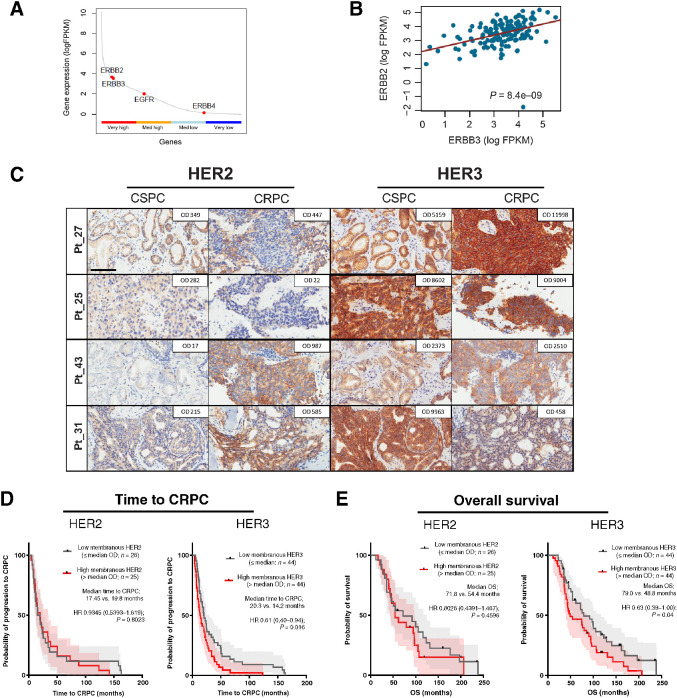
“We fi rst analyzed the transcriptomes of 159 CRPC clinical biopsies acquired by the PCF/SU2C International Prostate Cancer Dream Team (2, 3) and found that ERBB2 and ERBB3 mRNA were highly overexpressed (top 25% quartile), unlike EGFR and ERBB4 ( Fig.”
BackgroundSelf-citationJunttila, T. T., Akita, R. W., Parsons, K., Fields, C., Lewis Phillips, G. D., Friedman, L. S., Sampath, D., & Sliwkowski, M. X. (2009) · Cancer Cell · doi:10.1016/j.ccr.2009.03.020 · Cited by 829 · cited 2×
“Overall, these data suggested that HER2 and HER3 play a clinically important role in prostate cancer biology (32, 33).”
BackgroundOrganoid culture systems for prostate epithelial and cancer tissue
Drost, J., Karthaus, W. R., Gao, D., Driehuis, E., Sawyers, C. L., Chen, Y., & Clevers, H. (2016) · Nature Protocols · doi:10.1038/nprot.2016.006 · Cited by 699
Integrative Clinical Genomics of Advanced Prostate Cancer
Robinson, D., Van Allen, E. M., Wu, Y.-M., Schultz, N., Lonigro, R. J., Mosquera, J.-M., Montgomery, B., Taplin, M.-E., Pritchard, C. C., Attard, G., et al. (2015) · Cell · doi:10.1016/j.cell.2015.06.053 · Cited by 571
Self-citationSartor, O., & de Bono, J. S. (2018) · New England Journal of Medicine · doi:10.1056/nejmra1701695 · Cited by 546 · cited 1×
“Prostate cancer remains one of the commonest male malignancies, and a leading cause of male cancer mortality with increasing global incidence (1).”
BackgroundChen, S., Zhu, G., Yang, Y., Wang, F., Xiao, Y.-T., Zhang, N., Bian, X., Zhu, Y., Yu, Y., Liu, F., et al. (2021) · Nature Cell Biology · doi:10.1038/s41556-020-00613-6 · Cited by 502 · cited 3×
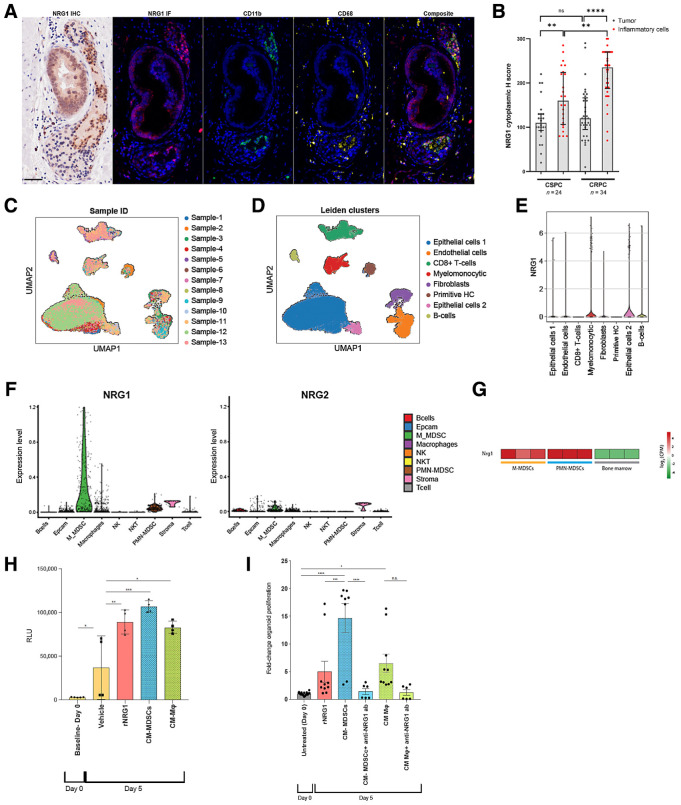
“Wenext analyzed single-cell RNA-seq profiles from an independent cohort of 13 prostate tumor samples, recently published and publicly available (19), and confirmed that the highest levels of NRG1 mRNA were present in CD11b and CD68 positive clusters, with high expression also detected in a TP63 cell cluster, in keepin…”
MethodInfluentialErbB3/HER3 intracellular domain is competent to bind ATP and catalyze autophosphorylation
Shi, F., Telesco, S. E., Liu, Y., Radhakrishnan, R., & Lemmon, M. A. (2010) · Proceedings of the National Academy of Sciences · doi:10.1073/pnas.1002753107 · Cited by 471 · cited 1×
“HER3 is largely considered a kinase-dead receptor due to alterations of conserved residues in the catalytic domain (43), though evidence exists for HER3 autophosphorylation, indicating that this receptor may preserve some weak kinase activity (44).”
BackgroundIl-23 secreted by myeloid cells drives castration-resistant prostate cancer
Calcinotto, A., Spataro, C., Zagato, E., Di Mitri, D., Gil, V., Crespo, M., De Bernardis, G., Losa, M., Mirenda, M., Pasquini, E., et al. (2018) · Nature · doi:10.1038/s41586-018-0266-0 · Cited by 394 · cited 3×
“5 10(6) cells/well in RPMI supplemented with 10% heat-inactivated FCS, 5% P/S, and 40 ng/mL of IL6 and GMCSF for 4 days (29).”
BackgroundMethodSelf-citationAndrogen receptor splice variant-7 expression emerges with castration resistance in prostate cancer
Sharp, A., Coleman, I., Yuan, W., Sprenger, C., Dolling, D., Rodrigues, D. N., Russo, J. W., Figueiredo, I., Bertan, C., Seed, G., et al. (2018) · Journal of Clinical Investigation · doi:10.1172/jci122819 · Cited by 393 · cited 1×
“Persistent AR signaling from constitutively active AR splice variant expression (4), AR aberrations, as well as AR enhancer activity and AR cofactor function contribute to treatment resistance (5).”
BackgroundSelf-citationPatient derived organoids to model rare prostate cancer phenotypes
Puca, L., Bareja, R., Prandi, D., Shaw, R., Benelli, M., Karthaus, W. R., Hess, J., Sigouros, M., Donoghue, A., Kossai, M., et al. (2018) · Nature Communications · doi:10.1038/s41467-018-04495-z · Cited by 361 · cited 1×
“Overall, these results have led to our routine use of rNRG1 in CRPC organoid cultures to enable their longer-duration culture, which had been a major challenge (48).”
Tamura, K., Tsurutani, J., Takahashi, S., Iwata, H., Krop, I. E., Redfern, C., Sagara, Y., Doi, T., Park, H., Murthy, R. K., et al. (2019) · The Lancet Oncology · doi:10.1016/s1470-2045(19)30097-x · Cited by 352
A ROR1–HER3–lncRNA signalling axis modulates the Hippo–YAP pathway to regulate bone metastasis
Li, C., Wang, S., Xing, Z., Lin, A., Liang, K., Song, J., Hu, Q., Yao, J., Chen, Z., Park, P. K., et al. (2017) · Nature Cell Biology · doi:10.1038/ncb3464 · Cited by 316 · cited 1×
“HER3 largely signals through heterodimerization with other ERBB receptors, although heterodimerization with noncanonical receptors has been suggested (33, 45).”
BackgroundTargeting the p300/CBP Axis in Lethal Prostate Cancer
Welti, J., Sharp, A., Brooks, N., Yuan, W., McNair, C., Chand, S. N., Pal, A., Figueiredo, I., Riisnaes, R., Gurel, B., et al. (2021) · Cancer Discovery · doi:10.1158/2159-8290.cd-20-0751 · Cited by 275 · cited 12×
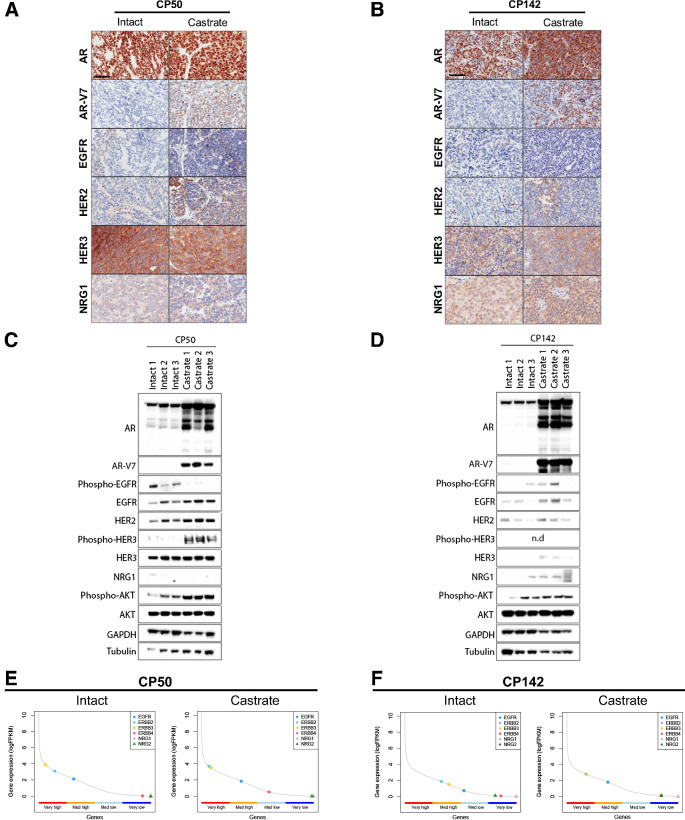
“HER3 is highly expressed in CRPC PDXs We have previously described CP50, a PDX generated from a metastatic CRPC biopsy with chromosome 8 gain (MYC locus), AKT and AR amplification and ATM loss (15, 16).”
BackgroundMethodInfluentialSelf-citationTargeting HER proteins in cancer therapy and the role of the non-target HER3
Hsieh, A. C., & Moasser, M. M. (2007) · British Journal of Cancer · doi:10.1038/sj.bjc.6603910 · Cited by 269 · cited 1×
“Interestingly, we demonstrate an increase in HER2 expression at castration resistance and also demonstrate that in patient biopsies and transgenic mouse models of prostate cancer that NRG1 is largely generated by myelomonocytic inflammatory cells, which increase with castration resistance; these have been previously d…”
BackgroundBLUEPRINT: mapping human blood cell epigenomes
Martens, J. H. A., & Stunnenberg, H. G. (2013) · Haematologica · doi:10.3324/haematol.2013.094243 · Cited by 267 · cited 1×
“We used the Blueprint and ENCODE reference datasets, that consists of bulk RNA-seq data for pure stroma and immune cells generated by Blueprint (24) and ENCODE projects (25).”
MethodTumor Microenvironment-Derived NRG1 Promotes Antiandrogen Resistance in Prostate Cancer
Zhang, Z., Karthaus, W. R., Lee, Y. S., Gao, V. R., Wu, C., Russo, J. W., Liu, M., Mota, J. M., Abida, W., Linton, E., et al. (2020) · Cancer Cell · doi:10.1016/j.ccell.2020.06.005 · Cited by 259 · cited 2×
“NRG1 expression was detectable in stromal fibroblasts as described previously (36), albeit at much lower intensity and sparser density in the peritumoral stroma compared with inflammatory cells.”
BackgroundDi Mitri, D., Mirenda, M., Vasilevska, J., Calcinotto, A., Delaleu, N., Revandkar, A., Gil, V., Boysen, G., Losa, M., Mosole, S., et al. (2019) · Cell Reports · doi:10.1016/j.celrep.2019.07.068 · Cited by 221 · cited 3×
“To study whether NRG1 secretion by myelomonocytic cells fuels prostate cancer growth, mouse prostate cancer organoids (Pten / Trp53 / ) were exposed to conditioned media from their sorted, cultured, MDSCs and macrophages (28, 29).”
BackgroundMethodSelf-citationPharmacological targeting of the pseudokinase Her3
Xie, T., Lim, S. M., Westover, K. D., Dodge, M. E., Ercan, D., Ficarro, S. B., Udayakumar, D., Gurbani, D., Tae, H. S., Riddle, S. M., et al. (2014) · Nature Chemical Biology · doi:10.1038/nchembio.1658 · Cited by 205 · cited 1×
“HER3 is largely considered a kinase-dead receptor due to alterations of conserved residues in the catalytic domain (43), though evidence exists for HER3 autophosphorylation, indicating that this receptor may preserve some weak kinase activity (44).”
BackgroundHashimoto, Y., Koyama, K., Kamai, Y., Hirotani, K., Ogitani, Y., Zembutsu, A., Abe, M., Kaneda, Y., Maeda, N., Shiose, Y., et al. (2019) · Clinical Cancer Research · doi:10.1158/1078-0432.ccr-19-1745 · Cited by 178
de Souza, N. (2012) · Nature Methods · doi:10.1038/nmeth.2238 · Cited by 161 · cited 1×
“We used the Blueprint and ENCODE reference datasets, that consists of bulk RNA-seq data for pure stroma and immune cells generated by Blueprint (24) and ENCODE projects (25).”
MethodDrug discovery in advanced prostate cancer: translating biology into therapy
Yap, T. A., Smith, A. D., Ferraldeschi, R., Al‐Lazikani, B., Workman, P., & Bono, J. S. D. (2016) · Nature Reviews Drug Discovery · doi:10.1038/nrd.2016.120 · Cited by 160 · cited 1×
“There remains an urgent need to develop new therapeutic strategies to improve outcome for advanced prostate cancer (41).”
BackgroundSelf-citationWelti, J. C., Sharp, A., Yuan, W., Dolling, D. I., Rodrigues, D. N., Figueiredo, I., Gil, V., Neeb, A., Clarke, M., Seed, G., et al. (2018) · Clinical Cancer Research · doi:10.1158/1078-0432.ccr-17-3571 · Cited by 157 · cited 3×
“CP142 PDX model was developed as previously described for CP50 (15, 16).”
MethodSelf-citationExpression and Nuclear Localization of ErbB3 in Prostate Cancer
Koumakpayi, I. H., Diallo, J.-S., Le Page, C., Lessard, L., Gleave, M., Bégin, L. R., Mes-Masson, A.-M., & Saad, F. (2006) · Clinical Cancer Research · doi:10.1158/1078-0432.ccr-05-2242 · Cited by 140 · cited 2×
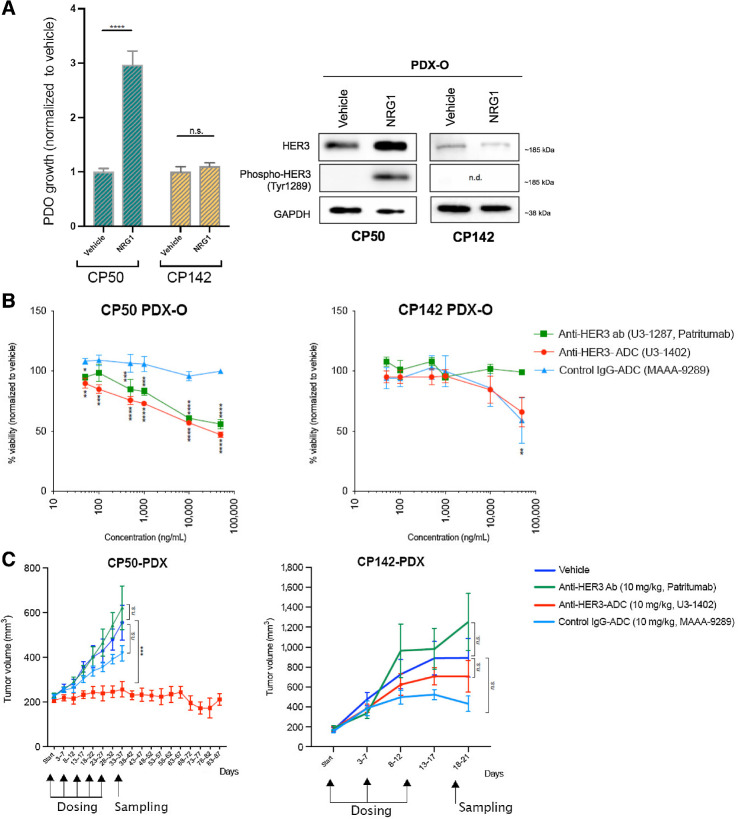
“Targeting HER3 in vitro and in vivo in patient-derived models and cell lines Targeting ERBB signaling in clinical trials has to date failed to impart patient benefit, perhaps due to feedback loops, continued AR signaling, or insufficient blockade of the entire ERBB axis (9, 10).”
Backgroundde Bono, J. S., Bellmunt, J., Attard, G., Droz, J. P., Miller, K., Flechon, A., Sternberg, C., Parker, C., Zugmaier, G., Hersberger-Gimenez, V., et al. (2007) · Journal of Clinical Oncology · doi:10.1200/jco.2006.07.0888 · Cited by 134 · cited 2×
“conduct of multiple clinical trials for men suffering from CRPC using ERBB-targeting drugs including pertuzumab and afatinib but these demonstrated little antitumor activity as single agents (7, 8).”
BackgroundYonesaka, K., Takegawa, N., Watanabe, S., Haratani, K., Kawakami, H., Sakai, K., Chiba, Y., Maeda, N., Kagari, T., Hirotani, K., et al. (2018) · Oncogene · doi:10.1038/s41388-018-0517-4 · Cited by 104 · cited 1×
“11) and is comprised of an anti-HER3 antibody joined, via a peptide-based linker, to a topoisomerase-1-inhibitor payload (DXd), which will generate double-strand DNA breaks that can result in tumor kill (38).”
BackgroundA comprehensive review of heregulins, HER3, and HER4 as potential therapeutic targets in cancer
Mota, J. M., Collier, K. A., Barros Costa, R. L., Taxter, T., Kalyan, A., Leite, C. A., Chae, Y. K., Giles, F. J., & Carneiro, B. A. (2017) · Oncotarget · doi:10.18632/oncotarget.18467 · Cited by 69 · cited 1×
“Ligand-induced activation of HER3 by neuregulins plays a key role in driving proliferation in HER3-positive tumors and has been recently suggested to play a role in prostate cancer biology in a subpopulation of prostate cancer (35).”
BackgroundChen, L., Siddiqui, S., Bose, S., Mooso, B. A., Asuncion, A., Bedolla, R. G., Vinall, R. L., Tepper, C. G., Gandour‐Edwards, R. F., Shi, X.-B., et al. (2010) · Cancer Research · doi:10.1158/0008-5472.can-09-4440 · Cited by 56
Revandkar, A., Perciato, M. L., Toso, A., Alajati, A., Chen, J., Gerber, H., Dimitrov, M., Rinaldi, A., Delaleu, N., Pasquini, E., et al. (2016) · Nature Communications · doi:10.1038/ncomms13719 · Cited by 50 · cited 1×
“This was supported by studies of BM precursors from prostate cancer transgenic models (49).”
ResultSelf-citationTargeting the androgen receptor and overcoming resistance in prostate cancer
Einstein, D. J., Arai, S., & Balk, S. P. (2019) · Current Opinion in Oncology · doi:10.1097/cco.0000000000000520 · Cited by 50 · cited 1×
“Persistent AR signaling from constitutively active AR splice variant expression (4), AR aberrations, as well as AR enhancer activity and AR cofactor function contribute to treatment resistance (5).”
BackgroundMolife, L. R., Omlin, A. G., Jones, R. J., Karavasilis, V., Bloomfield, D. J., Lumsden, G., Fong, P. C. C., Olmos, D., O’Sullivan, J. M., Pedley, I. D., et al. (2014) · Future Oncology · doi:10.2217/fon.13.250 · Cited by 37 · cited 2×
“conduct of multiple clinical trials for men suffering from CRPC using ERBB-targeting drugs including pertuzumab and afatinib but these demonstrated little antitumor activity as single agents (7, 8).”
BackgroundPoovassery, J. S., Kang, J. C., Kim, D., Ober, R. J., & Ward, E. S. (2014) · International Journal of Cancer · doi:10.1002/ijc.29378 · Cited by 35
Shimizu, T., Yonesaka, K., Hayashi, H., Iwasa, T., Haratani, K., Yamada, H., Ohwada, S., Kamiyama, E., & Nakagawa, K. (2017) · Cancer Chemotherapy and Pharmacology · doi:10.1007/s00280-016-3231-3 · Cited by 33
Ptáková, N., Martínek, P., Holubec, L., Janovský, V., Vančurová, J., Grossmann, P., Navarro, P., Rodríguez-Moreno, J. F., Alaghehbandan, R., Hes, O., et al. (2021) · Genes Chromosomes and Cancer · doi:10.1002/gcc.22942 · Cited by 17
Masuda, N., Yonemori, K., Takahashi, S., Kogawa, T., Nakayama, T., Iwase, H., Takahashi, M., Toyama, T., Saeki, T., Saji, S., et al. (2019) · Cancer Research · doi:10.1158/1538-7445.sabcs18-pd1-03 · Cited by 16
Cited by
Zhang, H., Yue, X., Chen, Z., Liu, C., Wu, W., Zhang, N., Liu, Z., Yang, L., Jiang, Q., Cheng, Q., et al. (2023) · Molecular Cancer · doi:10.1186/s12943-023-01860-5 · Cited by 424
“It restored their responsiveness to anti-androgenic therapy [418, 419].”
BackgroundTumor organoids: applications in cancer modeling and potentials in precision medicine
Xu, H., Jiao, D., Liu, A., & Wu, K. (2022) · Journal of Hematology & Oncology · doi:10.1186/s13045-022-01278-4 · Cited by 286
Targeting myeloid chemotaxis to reverse prostate cancer therapy resistance
Guo, C. W., Sharp, A., Gürel, B., Crespo, M., Figueiredo, I., Jain, S., Vogl, U. M., Rekowski, J., Rouhifard, M., Gallagher, L., et al. (2023) · Nature · doi:10.1038/s41586-023-06696-z · Cited by 160
“Several groups have shown, using prostate cancer mouse models, that intratumour myeloid cells can drive paracrine oncogenic signalling, senescence evasion and Article immunosuppression 10–12,14– 17 .”
BackgroundSelf-citationB7-H3 as a Therapeutic Target in Advanced Prostate Cancer
Guo, C. W., Figueiredo, I., Gürel, B., Neeb, A., Seed, G., Crespo, M., Carreira, S., Rekowski, J., Buroni, L., Welti, J. C., et al. (2022) · European Urology · doi:10.1016/j.eururo.2022.09.004 · Cited by 120
Self-citationBreast cancer brain metastasis: Current evidence and future directions
Sun, H., Xu, J., Dai, S., Ma, Y., & Sun, T. (2022) · Cancer Medicine · doi:10.1002/cam4.5021 · Cited by 85
Metadata
- Authors
- Gil, V., Miranda, S., Riisnaes, R., Gurel, B., D’Ambrosio, M., Vasciaveo, A., Crespo, M., Ferreira, A., Brina, D., Troiani, M., Sharp, A., Sheehan, B., Christova, R., Seed, G., Figueiredo, I., Lambros, M., Dolling, D., Rekowski, J., Alajati, A., Clarke, M., Pereira, R., Flohr, P., Fowler, G., Boysen, G., Sumanasuriya, S., Bianchini, D., Rescigno, P., Aversa, C., Tunariu, N., Guo, C., Paschalis, A., Bertan, C., Buroni, L., Ning, J., Carreira, S., Workman, P., Swain, A., Califano, A., Shen, M. M., Alimonti, A., Neeb, A., PCF/SU2C International Prostate Cancer Dream Team, Welti, J., Yuan, W., & de Bono, J.
- Affiliations
- Institute of Cancer Research (GB)
- 1The Institute of Cancer Research, London, United Kingdom.
- Institute of Oncology Research (CH)
- Columbia University (US)
- ORCID
- Gil, Veronica
- Miranda, Susana
- Gurel, Bora
- Vasciaveo, Alessandro
- Crespo, Mateus
- Brina, Daniela
- Dolling, David
- Rekowski, Jan
- Flohr, Penny
- Boysen, Gunther
- Sumanasuriya, Semini
- Rescigno, Pasquale
- Tunariu, Nina
- Guo, Christina
- Paschalis, Alec
- Carreira, Suzanne
- Workman, Paul
- Califano, Andrea
- Shen, Michael M.
- Alimonti, Andrea
- Neeb, Antje
- de Bono, Johann
- Venue
- Cancer Research
- Published
- 2021-11-09
- Volume
- 81
- Issue
- 24
- Pages
- 6207-6218
- ISSN
- 0008-5472 (ISSN-L)
- 1538-7445
- PMC
- PMC8932336
- OpenAlex
- W3214083702
- Semantic Scholar
- c7c16b52d9d623a2742142a4cf2ffa7028772322
- Cited by
- 68
- References
- 49
- Citations by year
- 2026: 9 · 2025: 19 · 2024: 19 · 2023: 14 · 2022: 7
- FWCI
- 7.12
- Type
- journal article
- Language
- en
- Open access
- hybrid
- doi.org
- Licence
- Locations
- Cancer Research (publishedVersion, cc-by-nc-nd)
- PubMed Central (publishedVersion, cc-by-nc-nd)
- PubMed (publishedVersion)
- Padua Research Archive (University of Padova) (submittedVersion, cc-by-nc-nd)
- Newcastle University ePrints (Newcastle Univesity) (cc-by-nc-nd)
- Funders
- Prostate Cancer UK (CEO13-3-002, TLD-PF19-005)
- U.S. Department of Defense (W81XWH19-1-0337)
- Prostate Cancer Foundation (20131017, 20131017-1)
- Stand Up To Cancer (SU2C-AACR-DT0712)
- Cancer Research UK (CRM108X-A25144)
- Imperial Experimental Cancer Medicine Centre (ECMC-CRM064X)
- Daiichi Sankyo Company
- Medical Research Council
- Wellcome Trust Centre for Mitochondrial Research
- Chordoma Foundation
- Mark Foundation For Cancer Research
- Academy of Medical Sciences
- National Cancer Institute (R35 CA197745)
- National Institutes of Health (R01 CA251527)
- Topics
- Life Sciences › Biochemistry, Genetics and Molecular Biology › Cancer Research › Prostate Cancer Treatment and Research
- Health Sciences › Medicine › Oncology › HER2/EGFR in Cancer Research
- Health Sciences › Medicine › Pulmonary and Respiratory Medicine › Lung Cancer Treatments and Mutations
- Keywords
- HER3, advanced prostate cancer, castration-resistant prostate cancer, neuregulin-1, ErbB signaling, myelomonocytic cells, tumor microenvironment, macrophages, myeloid-derived suppressor cells, patient-derived xenografts
- MeSH terms
- Antineoplastic Agents, Immunological, Animals, Camptothecin, Follow-Up Studies, Humans, Male, Organoids, Prognosis, Prospective Studies, Prostatic Neoplasms, Tumor Cells, Cultured, Biomarkers, Tumor, Survival Rate, Mice, SCID, Mice, Inbred NOD, Apoptosis, Neuregulin-1, Receptor, ErbB-3, Xenograft Model Antitumor Assays, Cell Proliferation, Mice, Tumor Microenvironment, Antibodies, Monoclonal, Humanized
About these checks
Registry, retraction, Cites and statistics results are computed, not judged, with one exception: a printed reference that no index lists is read once by a model before it counts as a citation error. Claims are extracted by a model and kept only when their quote appears verbatim in the text; each cited source is then checked, with a model’s help, for whether it says what the claim relies on. Those verdicts can be wrong — read the claim’s quote and the cited source before relying on one.
Statistics and arithmetic are recomputed, not judged.
Confidence bands are shown only for fields calibrated on our annotated test set. None is calibrated yet, so no band is shown.
What counts as a claim ›How we measure confidence ›How we check this ›
Are you an author, or do you see a problem with this page? Request a review
Data sources
Bibliographic data: Semantic Scholar, OpenAlex, Crossref.
Contains information from the Semantic Scholar Academic Graph Datasets, made available under the ODC Attribution License (ODC-BY 1.0).
Semantic Scholar’s data is described in: Kinney, R., et al. (2023). The Semantic Scholar Open Data Platform. arXiv:2301.10140.
