

TNG260 Is a Small-Molecule CoREST Inhibitor That Sensitizes STK11 -Mutant Tumors to Anti–PD-1 Immunotherapy
Open accessPublished version of a preprint
The DOI matches its Crossref record; 47 of the 47 references it cites were found in a registry or an index; 52 of the 70 sources its claims cite were checked for support.
Abstract
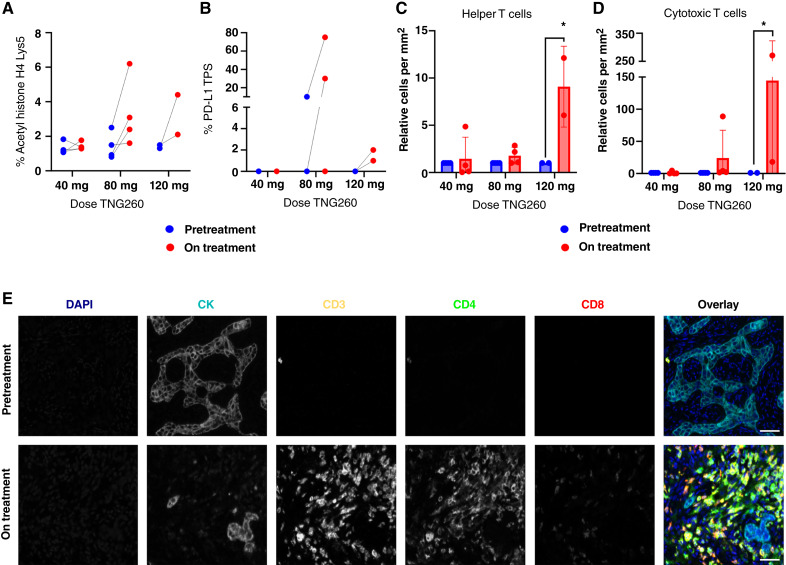
Patients with non-small cell lung cancer (NSCLC) with loss of the tumor suppressor gene STK11 are resistant to immune checkpoint therapies like anti-PD-1. In this study, we conducted an in vivo CRISPR screen that identified histone deacetylase 1 as a target to reverse anti-PD-1 resistance driven by loss of STK11 and developed TNG260, a potent small-molecule inhibitor of the CoREST complex with selectivity exceeding previously generated inhibitors in this class in preclinical studies. Treatment with TNG260 led to increased expression of immunomodulatory genes in STK11-deficient cancer cells. When combined with anti-PD-1, TNG260 induced immune-mediated stasis and/or regression in STK11-deficient syngeneic tumor models and autochthonous NSCLC models. In the tumors of patients with STK11-deficient cancers in a clinical trial (NCT05887492), treatment with a combination of TNG260 and pembrolizumab increased intratumoral histone acetylation, PD-L1 tumor proportion scores, and T-cell infiltration into the tumor microenvironment. This study illustrates a promising treatment strategy for addressing immune evasion in patients with STK11-mutant NSCLC. SIGNIFICANCE: Targeting CoREST with TNG260 sensitizes STK11-deficient non-small cell lung cancer to anti-PD-1 immunotherapy, offering a potential treatment for patients not served by existing therapies. See related commentary by Lin and Shen, p. 3821.
Overview
CoChat Summary
## TL;DR
TNG260 is a selective inhibitor of the HDAC1-containing CoREST complex that, in STK11-deficient tumor models, sensitized tumors to anti–PD-1 therapy and remodeled tumor immune activity. In a phase I/II study of TNG260 plus pembrolizumab, on-treatment biopsies showed increased histone acetylation and signs of a more active immune microenvironment.
## Key findings
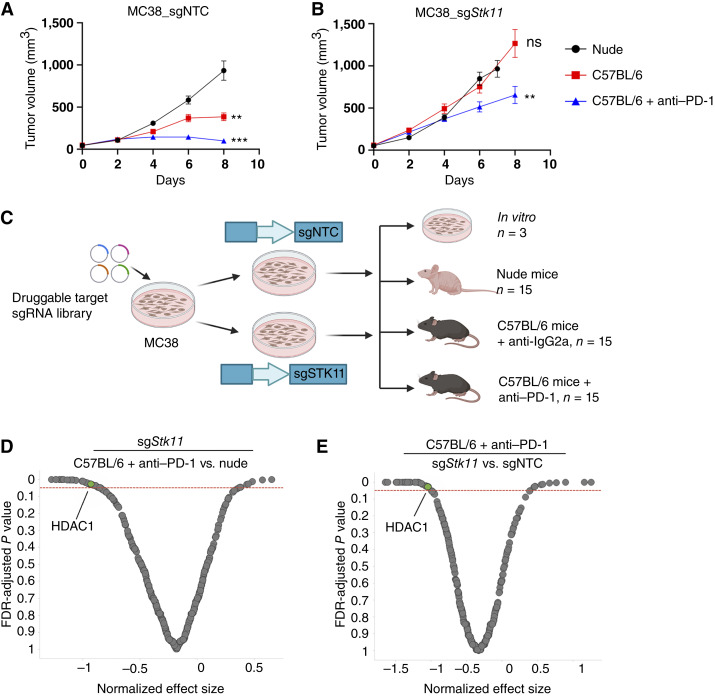
- In an in vivo CRISPR screen in MC38 cells, HDAC1 knockout reversed STK11-driven anti–PD-1 resistance; HDAC1 sgRNAs were significantly depleted in both screen comparisons used to identify sensitizing targets.
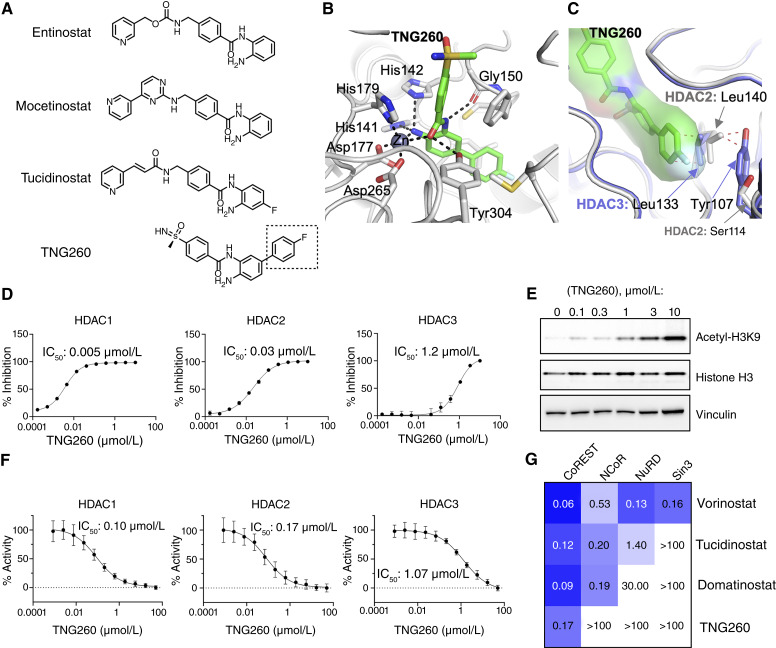
- TNG260 was 230 times more potent for HDAC1 and 37 times more potent for HDAC2 than for HDAC3 in biochemical assay, and in cells it had IC50s of 0.10 µmol/L (HDAC1), 0.17 µmol/L (HDAC2), and 1.07 µmol/L (HDAC3).
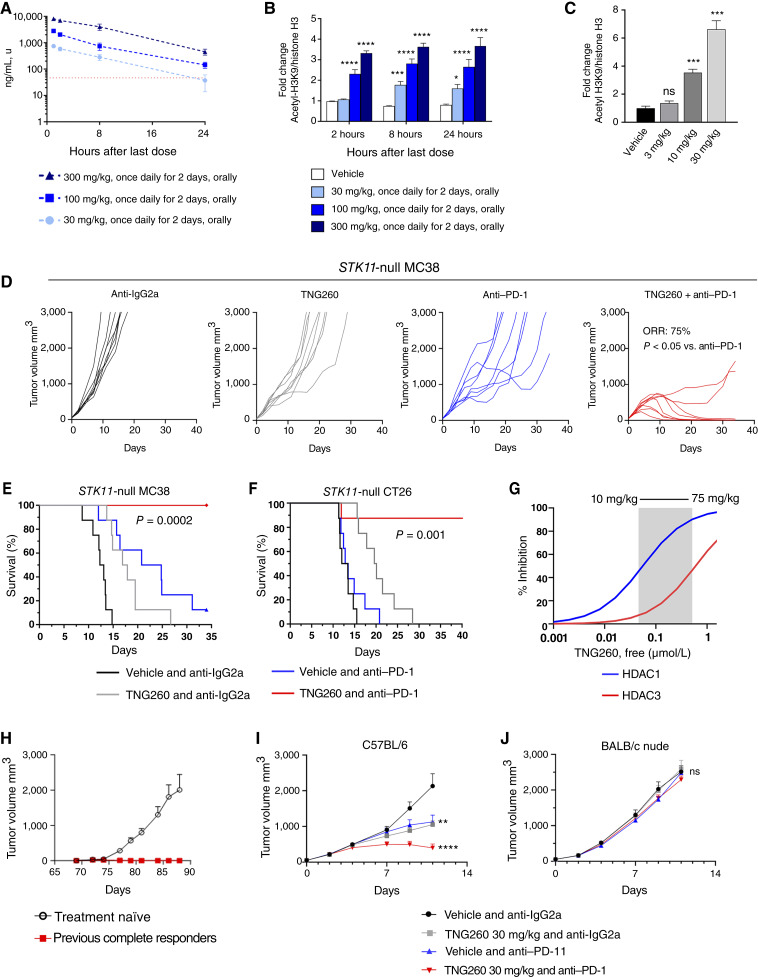
- In the MC38_sgStk11 model, TNG260 + anti–PD-1 produced 5 complete regressions in 8 mice, 100% survival to the end of the experiment, and 75% ORR versus 0% with anti–PD-1 alone; after 11 days, 83% TGI was reported for the combination.
- In the CT26_sgStk11 model, TNG260 + anti–PD-1 produced 88% ORR and 73% TGI after 13 days, with survival improved to 87.5% versus 13 days median survival for anti–PD-1 alone.
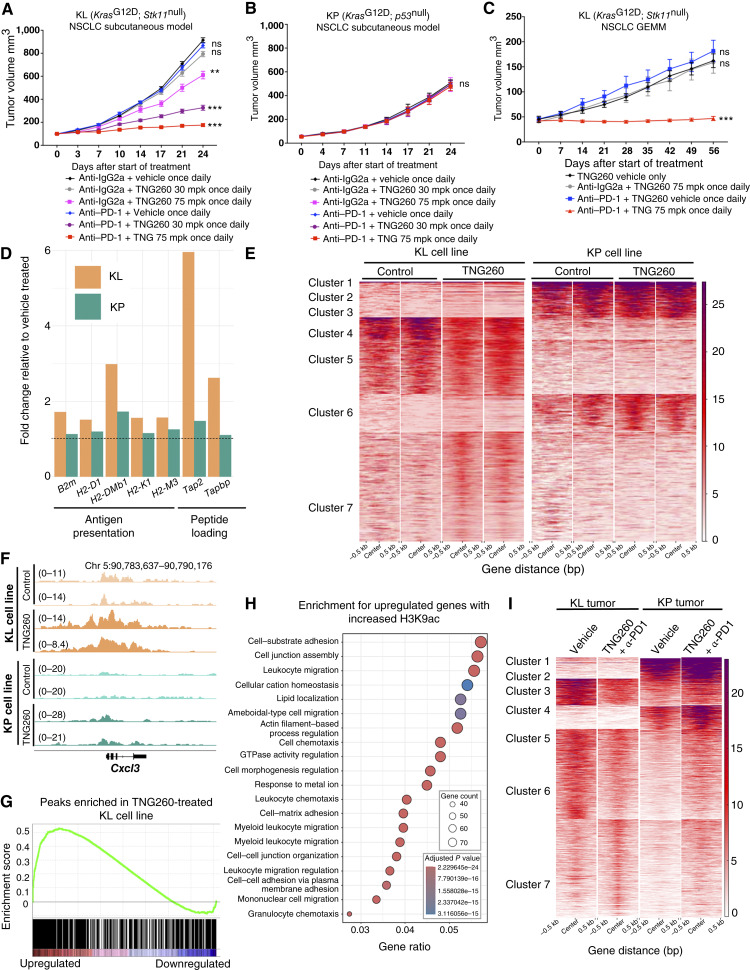
- In the KL GEMM lung model, 75 mg/kg TNG260 + anti–PD-1 caused complete stasis of lung tumor burden for the study duration, while in the KP model the combination did not affect tumor growth.
- In 10 paired patient biopsies from NCT05887492, 80 and 120 mg TNG260 increased histone H4 lysine 5 acetylation; in paired analyses, 4 of 6 patients had increased intratumoral helper T cells, and 6 of 6 had increased intratumoral cytotoxic T cells, with increased PD-L1 TPS at 80 and 120 mg.
## Methods
- The study combined in vivo CRISPR screening, cell-based biochemical and binding assays, syngeneic/allograft/GEMM mouse tumor studies, and paired patient biopsy analysis from the phase I/II trial NCT05887492.
- The screen used MC38 cells with 400 nontargeting sgRNAs and 3,176 sgRNAs targeting 794 genes, followed by anti-IgG2a or anti–PD-1 treatment in mice and next-generation sequencing readout of sgRNA abundance.
- Analyses included biochemical HDAC assays, NanoBRET target engagement, RNA-seq, ChIP-seq, flow cytometry, NanoString profiling, and standard statistical tests including one-way ANOVA and log-rank tests.
## Limitations
- The paper states that its in vivo syngeneic models with engineered STK11 loss may differ from STK11-deficient human tumors because the models evolved with intact STK11.
- It also states that the molecular mechanism underlying the increase in T-cell activity with combination treatment is not yet well understood.
- Evident from the text: the clinical biopsy analysis is based on 10 biopsies from a phase I/II trial, so the human evidence presented here is small and exploratory.
Model-written summary. Check it against the paper before relying on it.
Integrity signals
Registry
Cites
Statistics
Figures
Verification
Claims the paper makes
36 Valid · 0 Not valid · 7 Not checked · 148 Own results and interpretations
The cited sources support only part of this claim — read each source’s verdict below.
In the paper
“STK11-mutant tumors are characterized by lower T-cell infiltration (1, 7, 8), higher levels of immune-suppressive neutrophils (8), and low levels of antigen presentation (9, 10) compared with those wild-type for STK11, contributing to their immune evasive phenotype.”
§ TNG260 Is a Small-Molecule CoREST Inhibitor That Sensitizes STK11-Mutant Tumors to Anti–PD-1 Immunotherapy > Introduction
What the sources say
- Partly supportedcites [9] Deng J, Thennavan A, Dolgalev I, Chen T, Li J, Marzio A,. ULK1 inhibition overcomes compromised antigen presentation and restores antitumor immunity in LKB1-mutant lung cancer. Nat Cancer 2021; 2: 503– 14. 34142094 PMC8205437 sourceExperimental — accuracy not yet measured
In “LKB1 loss suppresses antigen presentation” (page not supplied), the paper reports reduced expression of antigen-processing and presentation machinery in STK11/LKB1-mutant lung adenocarcinomas compared with tumors without that mutation. The comparison is specifically between TP53-mutant tumors with and without a co-occurring STK11/LKB1 mutation; it does not establish the claim for tumors generally. (LLM, conf=0.84)
- Not checked — no full text of the sourcecites [10] Gao Y, Päivinen PJP, Tripathi S, Domenech-Moreno E, Wong IPLPL, Vaahtomeri K,. Inactivation of AMPK leads to attenuation of antigen presentation and immune evasion in lung adenocarcinoma. Clin Cancer Res 2021; 28: 237. 34667030 source
plainstates an association- Asserted: passes — The authors put it forward as true.
- Checkable: passes — It can be checked against evidence.
- Load-bearing: passes — The paper’s conclusions depend on it.
- Based: passes — The paper gives a reason why it holds.
- Partly supported
The cited sources support only part of this claim — read each source’s verdict below.
In the paper
“In a cohort of patients with KRAS-mutant lung adenocarcinoma treated with anti–PD-(L)1, those with STK11 mutations had an overall response rate (ORR) of 11.6% compared with 32.4% for patients with wild-type STK11.”
§ TNG260 Is a Small-Molecule CoREST Inhibitor That Sensitizes STK11-Mutant Tumors to Anti–PD-1 Immunotherapy > Introduction
What the sources say
- Partly supportedcites [1] Ricciuti B, Arbour KC, Lin JJ, Vajdi A, Vokes N, Hong L,. Diminished efficacy of programmed death-(ligand)1 inhibition in STK11- and KEAP1-mutant lung adenocarcinoma is affected by KRAS mutation status. J Thorac Oncol 2022; 17: 399– 410. 34740862 PMC10980559 sourceExperimental — accuracy not yet measured
The Results section reports that, among KRAS-mutant lung adenocarcinomas treated with PD-(L)1 inhibition, STK11 mutations were associated with a significantly worse overall response rate. Our copy does not state the claimed rates of 11.6% and 32.4%, so the numerical comparison cannot be verified from it (page unavailable). (LLM, conf=0.86)
plainstates an association- Asserted: passes — The authors put it forward as true.
- Checkable: passes — It can be checked against evidence.
- Load-bearing: passes — The paper’s conclusions depend on it.
- Based: passes — The paper gives a reason why it holds.
- Partly supported
Every source the paper cites for this claim was checked and supports it.
In the paper
“Existing drugs with a benzamide scaffold inhibit class-I HDAC enzymes, such as entinostat, mocetinostat, and tucidinostat (Fig. 2A; ref. 15). These drugs are approximately equipotent for HDAC1, HDAC2, and HDAC3 in a biochemical deacetylation assay (Supplementary Fig. S3A).”
§ TNG260 Is a Small-Molecule CoREST Inhibitor That Sensitizes STK11-Mutant Tumors to Anti–PD-1 Immunotherapy > Results > TNG260 is a novel, potent, and selective inhibitor of HDAC1 deacetylase activity
What the sources say
- Supportedcites [15] Zhang L, Zhang J, Jiang Q, Zhang L, Song W. Zinc binding groups for histone deacetylase inhibitors. J Enzym Inhib Med Chem 2018; 33: 714– 21. PMC6009916 29616828 source
The citation is attached to the first sentence, which identifies benzamide-scaffold drugs as class-I HDAC inhibitors. The paper’s “Classic ZBGs > Benzamide” section describes benzamide inhibitors as class-I-selective and identifies chidamide, MS-275, and MGCD0103 as examples. The equipotency statement in the next sentence cites the citing paper’s Supplementary Fig. S3A, not this source. (LLM, conf=0.88)
plain- Asserted: passes — The authors put it forward as true.
- Checkable: passes — It can be checked against evidence.
- Load-bearing: passes — The paper’s conclusions depend on it.
- Based: passes — The paper gives a reason why it holds.
- Supported
The cited sources support only part of this claim — read each source’s verdict below.
In the paper
“Overall survival in the same cohort for STK11-mutant patients was 6.2 months compared with 17.3 months in patients with wild-type STK11 (1).”
§ TNG260 Is a Small-Molecule CoREST Inhibitor That Sensitizes STK11-Mutant Tumors to Anti–PD-1 Immunotherapy > Introduction
What the sources say
- Partly supportedcites [1] Ricciuti B, Arbour KC, Lin JJ, Vajdi A, Vokes N, Hong L,. Diminished efficacy of programmed death-(ligand)1 inhibition in STK11- and KEAP1-mutant lung adenocarcinoma is affected by KRAS mutation status. J Thorac Oncol 2022; 17: 399– 410. 34740862 PMC10980559 sourceExperimental — accuracy not yet measured
The Results section reports shorter median overall survival with STK11 mutation in the combined cohort receiving PD-(L)1 inhibition, largely driven by patients with KRAS-mutant lung adenocarcinoma. Our copy does not give the claimed 6.2- versus 17.3-month figures, so it supports the direction of the comparison but not those values. The passage has no page number in the indexed copy. (LLM, conf=0.86)
plainstates an association- Asserted: passes — The authors put it forward as true.
- Checkable: passes — It can be checked against evidence.
- Load-bearing: passes — The paper’s conclusions depend on it.
- Based: passes — The paper gives a reason why it holds.
- Partly supported
Every source the paper cites for this claim was checked and supports it.
In the paper
“STK11-mutant tumors are characterized by lower T-cell infiltration (1, 7, 8), higher levels of immune-suppressive neutrophils (8), and low levels of antigen presentation (9, 10) compared with those wild-type for STK11, contributing to their immune evasive phenotype.”
§ TNG260 Is a Small-Molecule CoREST Inhibitor That Sensitizes STK11-Mutant Tumors to Anti–PD-1 Immunotherapy > Introduction
What the sources say
- Supportedcites [8] Koyama S, Akbay EA, Li YY, Aref AR, Skoulidis F, Herter-Sprie GS,. STK11/LKB1 deficiency promotes neutrophil recruitment and proinflammatory cytokine production to suppress T-cell activity in the lung tumor microenvironment. Cancer Res 2016; 76: 999– 1008. 26833127 PMC4775354 source
The Results (page not provided) report significantly more tumor-associated neutrophils in Kras/Lkb1-deficient mouse lung tumors than in Kras tumors with intact Lkb1. The Discussion (page not provided) describes these neutrophils as having T-cell-suppressive properties, supporting the attributed comparison. (LLM, conf=0.91)
plainstates an association- Asserted: passes — The authors put it forward as true.
- Checkable: passes — It can be checked against evidence.
- Load-bearing: passes — The paper’s conclusions depend on it.
- Based: passes — The paper gives a reason why it holds.
- Supported
122 more claims · 14 with their cited sources checked
Create a free account to see all 191 claims and to verify the 7 references still open.
- Probably not a substantial claim. 21
- It may state two separate claims as one. 49
Citations
Cites
Tissue-based map of the human proteome
Uhlén, M., Fagerberg, L., Hallström, B. M., Lindskog, C., Oksvold, P., Mardinoglu, A., Sivertsson, Å., Kampf, C., Sjöstedt, E., Asplund, A., et al. (2015) · Science · doi:10.1126/science.1260419 · Cited by 15,286
Integrative Analysis of Complex Cancer Genomics and Clinical Profiles Using the cBioPortal
Gao, J., Aksoy, B. A., Dogrusoz, U., Dresdner, G., Gross, B., Sumer, S. O., Sun, Y., Jacobsen, A., Sinha, R., Larsson, E., et al. (2013) · Science Signaling · doi:10.1126/scisignal.2004088 · Cited by 15,160 · cited 1×
“Indeed, studies have shown that STK11 loss-of-function mutations result in epigenetic changes that lead to silencing of immune genes (3, 13).”
DrugBank: a comprehensive resource for in silico drug discovery and exploration
Wishart, D. S. (2006) · Nucleic Acids Research · doi:10.1093/nar/gkj067 · Cited by 3,892 · cited 1×
“The remaining 634 genes were identified as having a high “druggability” score, which were selected to identify target enzymes that have the potential to be inhibited by a small-molecule approach (23–26).”
Defining a Cancer Dependency Map
Tsherniak, A., Vazquez, F., Montgomery, P. G., Weir, B. A., Kryukov, G., Cowley, G. S., Gill, S., Harrington, W. F., Pantel, S., Krill-Burger, J. M., et al. (2017) · Cell · doi:10.1016/j.cell.2017.06.010 · Cited by 3,276 · cited 1×
“The library was designed to include 135 essential genes (22), such as PLK1, to evaluate the range of sgRNA dropout during the screen.”
Self-citationSTK11/LKB1 Mutations and PD-1 Inhibitor Resistance in KRAS -Mutant Lung Adenocarcinoma
Skoulidis, F., Goldberg, M. E., Greenawalt, D. M., Hellmann, M. D., Awad, M. M., Gainor, J. F., Schrock, A. B., Hartmaier, R. J., Trabucco, S. E., Gay, L., et al. (2018) · Cancer Discovery · doi:10.1158/2159-8290.cd-18-0099 · Cited by 1,641 · cited 4×
“Tumors with loss-of-function mutations in STK11 respond poorly to immune checkpoint blockade, leading to shorter progression-free survival and overall survival in these patients (1, 5, 6).”
InfluentialSelf-citationFDA Approval Summary: Vorinostat for Treatment of Advanced Primary Cutaneous T-Cell Lymphoma
Mann, B. S., Johnson, J. R., Cohen, M. H., Justice, R., & Pazdur, R. (2007) · The Oncologist · doi:10.1634/theoncologist.12-10-1247 · Cited by 1,365
Koyama, S., Akbay, E. A., Li, Y. Y., Aref, A. R., Skoulidis, F., Herter-Sprie, G. S., Buczkowski, K. A., Liu, Y., Awad, M. M., Denning, W. L., et al. (2016) · Cancer Research · doi:10.1158/0008-5472.can-15-1439 · Cited by 640 · cited 2×
“STK11 -mutant tumors are characterized by lower T-cell infiltration (1, 7, 8), higher levels of immune-suppressive neutrophils (8), and low levels of antigen presentation (9, 10) compared with those wild-type for STK11 , contributing to their immune evasive phenotype.”
Self-citationSuppression of STING Associated with LKB1 Loss in KRAS-Driven Lung Cancer
Kitajima, S., Ivanova, E., Guo, S., Yoshida, R., Campisi, M., Sundararaman, S. K., Tange, S., Mitsuishi, Y., Thai, T. C., Masuda, S., et al. (2019) · Cancer Discovery · doi:10.1158/2159-8290.cd-18-0689 · Cited by 526 · cited 1×
“For example, it has been observed that STING is silenced in STK11 -deficient tumors, which contributes to their low immunogenicity (12, 13).”
Self-citationQuality control, modeling, and visualization of CRISPR screens with MAGeCK-VISPR
Li, W., Köster, J., Xu, H., Chen, C.-H., Xiao, T., Liu, J. S., Brown, M., & Liu, X. S. (2015) · Genome Biology · doi:10.1186/s13059-015-0843-6 · Cited by 507 · cited 2×
“The file of raw read count of sgRNAs for each sample and design matrix files were created as inputs for Marek MLE analysis (18).”
Structure of Hdac3 Bound to Co-Repressor and Inositol Tetraphosphate
Watson, P. J., Fairall, L., Santos, G. M., & Schwabe, J. W. R. (2012) · Nature · doi:10.1038/nature10728 · Cited by 505
Delcuve, G. P., Khan, D. H., & Davie, J. R. (2012) · Clinical Epigenetics · doi:10.1186/1868-7083-4-5 · Cited by 505 · cited 4×
“HDACs are divided into four classes and are comprised of 11 zinc-dependent enzymes (14).”
InfluentialOpen Targets: a platform for therapeutic target identification and validation
Koscielny, G., An, P., Carvalho-Silva, D., Cham, J. A., Fumis, L., Gasparyan, R., Hasan, S., Karamanis, N., Maguire, M., Papa, E., et al. (2017) · Nucleic Acids Research · doi:10.1093/nar/gkw1055 · Cited by 504 · cited 1×
“The remaining 634 genes were identified as having a high “druggability” score, which were selected to identify target enzymes that have the potential to be inhibited by a small-molecule approach (23–26).”
Ricciuti, B., Arbour, K. C., Lin, J. J., Vajdi, A., Vokes, N., Hong, L., Zhang, J., Tolstorukov, M. Y., Li, Y. Y., Spurr, L. F., et al. (2022) · Journal of Thoracic Oncology · doi:10.1016/j.jtho.2021.10.013 · Cited by 394
Self-citationHdac3 is essential for the maintenance of chromatin structure and genome stability
Bhaskara, S., Knutson, S. K., Jiang, G., Chandrasekharan, M. B., Wilson, A. J., Zheng, S., Yenamandra, A., Locke, K., Yuan, J.-L., Bonine-Summers, A. R., et al. (2010) · Cancer Cell · doi:10.1016/j.ccr.2010.10.022 · Cited by 353 · cited 1×
“HDAC3 was found to be required for genome maintenance and DNA replication in hematopoietic cells (27, 28); therefore, HDAC3 inhibition is suspected to be responsible for bone marrow toxicity seen with nonselective HDAC inhibitors (29).”
Clarke, S. R., Barnden, M., Kurts, C., Carbone, F. R., Miller, J. F., & Heath, W. R. (2000) · Immunology & Cell Biology · doi:10.1046/j.1440-1711.2000.00889.x · Cited by 295 · cited 1×
“To determine whether TNG260 affects antigen presentation, we utilized the MC38-OVA syngeneic model (35) engineered with STK11 knockout (MC38-OVA_sgStk11).”
Galan-Cobo, A., Sitthideatphaiboon, P., Qu, X., Poteete, A., Pisegna, M. A., Tong, P., Chen, P.-H., Boroughs, L. K., Rodriguez, M. L. M., Zhang, W., et al. (2019) · Cancer Research · doi:10.1158/0008-5472.can-18-3527 · Cited by 292 · cited 1×
“Accordingly, we did not identify targets related to pathways previously investigated for STK11 -mutant cancer therapy, such as glutamine synthesis (37) or mTOR signaling (38, 39).”
Self-citationExploration of the HDAC2 foot pocket: Synthesis and SAR of substituted N-(2-aminophenyl)benzamides
Bressi, J. C., Jennings, A. J., Skene, R., Wu, Y., Melkus, R., Jong, R. D., O’Connell, S., Grimshaw, C. E., Navre, M., & Gangloff, A. R. (2010) · Bioorganic & Medicinal Chemistry Letters · doi:10.1016/j.bmcl.2010.03.091 · Cited by 261 · cited 1×
“The fluorophenyl group of TNG260 provides further selectivity between HDAC1/2 and HDAC3 in terms of their access to the foot pocket (30, 31).”
Zinc binding groups for histone deacetylase inhibitors
Zhang, L., Zhang, J., Jiang, Q., Zhang, L., & Song, W. (2018) · Journal of Enzyme Inhibition and Medicinal Chemistry · doi:10.1080/14756366.2017.1417274 · Cited by 240 · cited 1×
“Class-I HDAC enzymes participate in large, multiprotein core-pressor complexes (14, 15), including the HDAC1/2 complexes CoREST, NuRD, MiDAC, and Sin3, and the HDAC3-containing complex NCoR (14, 17).”
Safety and tolerability of histone deacetylase (HDAC) inhibitors in oncology
Shah, R. R. (2019) · Drug Safety · doi:10.1007/s40264-018-0773-9 · Cited by 197 · cited 1×
“HDAC3 was found to be required for genome maintenance and DNA replication in hematopoietic cells (27, 28); therefore, HDAC3 inhibition is suspected to be responsible for bone marrow toxicity seen with nonselective HDAC inhibitors (29).”
Vorinostat in solid and hematologic malignancies
Siegel, D., Hussein, M., Belani, C., Robert, F., Galanis, E., Richon, V. M., Garcia-Vargas, J., Sanz-Rodriguez, C., & Rizvi, S. (2009) · Journal of Hematology & Oncology · doi:10.1186/1756-8722-2-31 · Cited by 195
McFadden, D. G., Politi, K., Bhutkar, A., Chen, F. K., Song, X., Pirun, M., Santiago, P. M., Kim-Kiselak, C., Platt, J. T., Lee, E., et al. (2016) · Proceedings of the National Academy of Sciences · doi:10.1073/pnas.1613601113 · Cited by 194 · cited 2×
“Cancer Res; 85(20 deficient human tumors, this lung tumor model is highly resistant to anti–PD-1 therapy (9, 19).”
CTLA4 blockade abrogates KEAP1/STK11-related resistance to PD-(L)1 inhibitors
Skoulidis, F., Araujo, H. A., Do, M. T., Qian, Y., Sun, X., Galan-Cobo, A., Le, J. T., Montesion, M., Palmer, R., Jahchan, N., et al. (2024) · Nature · doi:10.1038/s41586-024-07943-7 · Cited by 194 · cited 2×
“STK11 was one of several identified genes in the screen that caused resistance to immune checkpoint blockade (20).”
Self-citationMethot, J. L., Chakravarty, P. K., Chenard, M., Close, J., Cruz, J. C., Dahlberg, W. K., Fleming, J., Hamblett, C. L., Hamill, J. E., Harrington, P., et al. (2008) · Bioorganic & Medicinal Chemistry Letters · doi:10.1016/j.bmcl.2007.12.031 · Cited by 191 · cited 1×
“The fluorophenyl group of TNG260 provides further selectivity between HDAC1/2 and HDAC3 in terms of their access to the foot pocket (30, 31).”
HDAC inhibition potentiates immunotherapy in triple negative breast cancer
Terranova-Barberio, M., Thomas, S., Ali, N., Pawlowska, N., Park, J., Krings, G., Rosenblum, M. D., Budillon, A., & Munster, P. N. (2017) · Oncotarget · doi:10.18632/oncotarget.23169 · Cited by 182 · cited 3×
“In models of triple-negative breast cancer, the pan-HDAC inhibitor vorinostat led to increases in PD-L1 and HLA expression in tumor cells and lower T reg cells in coculture systems and syngeneic mouse tumor models (40).”
Histone Deacetylases Positively Regulate Transcription through the Elongation Machinery
Greer, C. B., Tanaka, Y., Kim, Y. J., Xie, P., Zhang, M. Q., Park, I.-H., & Kim, T. H. (2015) · Cell Reports · doi:10.1016/j.celrep.2015.10.013 · Cited by 174 · cited 1×
“These findings suggest a KL-specific effect on gene regulation and are consistent with previous studies that HDAC is required for restricting acetylation of gene bodies (36).”
Self-citationStructure, mechanism, and inhibition of the zinc-dependent histone deacetylases
Porter, N. J., & Christianson, D. W. (2019) · Current Opinion in Structural Biology · doi:10.1016/j.sbi.2019.01.004 · Cited by 146 · cited 2×
“Benzamide inhibitors like entinostat are selective for class-I HDACs, which include HDAC1 to HDAC3 and HDAC8 (14–16).”
Deng, J., Thennavan, A., Dolgalev, I., Chen, T., Li, J., Marzio, A., Poirier, J. T., Peng, D. H., Bulatovic, M., Mukhopadhyay, S., et al. (2021) · Nature Cancer · doi:10.1038/s43018-021-00208-6 · Cited by 140 · cited 5×
“Previous work has shown that STK11 -mutant tumors have impaired antigen presentation, characterized by reduced expression of genes related to neoantigen processing and presentation (9).”
InfluentialSelf-citationHellmann, M. D., Jänne, P. A., Opyrchal, M., Hafez, N., Raez, L. E., Gabrilovich, D. I., Wang, F., Trepel, J. B., Lee, M.-J., Yuno, A., et al. (2021) · Clinical Cancer Research · doi:10.1158/1078-0432.ccr-20-3305 · Cited by 133 · cited 1×
“For example, a phase II trial evaluating the combination of entinostat and pembrolizumab in metastatic NSCLC did not meet its primary endpoint for efficacy (46).”
MPS1 inhibition primes immunogenicity of KRAS-LKB1 mutant lung cancer
Kitajima, S., Tani, T., Springer, B. F., Campisi, M., Osaki, T., Haratani, K., Chen, M., Knelson, E. H., Mahadevan, N. R., Ritter, J., et al. (2022) · Cancer Cell · doi:10.1016/j.ccell.2022.08.015 · Cited by 107 · cited 2×
“For example, it has been observed that STING is silenced in STK11 -deficient tumors, which contributes to their low immunogenicity (12, 13).”
Li, H., Liu, Z., Liu, L., Zhang, H., Han, C., Girard, L., Park, H., Zhang, A., Dong, C., Ye, J., et al. (2022) · Cell Reports Medicine · doi:10.1016/j.xcrm.2022.100554 · Cited by 102 · cited 1×
“STK11 -mutant tumors are characterized by lower T-cell infiltration (1, 7, 8), higher levels of immune-suppressive neutrophils (8), and low levels of antigen presentation (9, 10) compared with those wild-type for STK11 , contributing to their immune evasive phenotype.”
Alessi, J. V., Elkrief, A., Ricciuti, B., Wang, X., Cortellini, A., Vaz, V. R., Lamberti, G., Frias, R. L., Venkatraman, D., Fulgenzi, C. A. M., et al. (2023) · Journal of Thoracic Oncology · doi:10.1016/j.jtho.2023.01.091 · Cited by 97
Pore, N., Wu, S., Standifer, N., Jure-Kunkel, M., de los Reyes, M., Shrestha, Y., Halpin, R., Rothstein, R., Mulgrew, K., Blackmore, S., et al. (2021) · Cancer Discovery · doi:10.1158/2159-8290.cd-20-1543 · Cited by 88
HDAC3 is essential for DNA replication in hematopoietic progenitor cells
Summers, A. R., Fischer, M. A., Stengel, K. R., Zhao, Y., Kaiser, J. F., Wells, C. E., Hunt, A., Bhaskara, S., Luzwick, J. W., Sampathi, S., et al. (2013) · Journal of Clinical Investigation · doi:10.1172/jci60806 · Cited by 87 · cited 1×
“HDAC3 was found to be required for genome maintenance and DNA replication in hematopoietic cells (27, 28); therefore, HDAC3 inhibition is suspected to be responsible for bone marrow toxicity seen with nonselective HDAC inhibitors (29).”
canSAR: an integrated cancer public translational research and drug discovery resource
Halling-Brown, M. D., Bulusu, K. C., Patel, M., Tym, J. E., & Al-Lazikani, B. (2012) · Nucleic Acids Research · doi:10.1093/nar/gkr881 · Cited by 84
Entinostat induces antitumor immune responses through immune editing of tumor neoantigens
Truong, A. S., Zhou, M., Krishnan, B., Utsumi, T., Manocha, U., Stewart, K. G., Beck, W., Rose, T. L., Milowsky, M. I., He, X., et al. (2021) · Journal of Clinical Investigation · doi:10.1172/jci138560 · Cited by 84 · cited 1×
“Several previous studies have demonstrated that inhibition of HDAC enzymes by less-selective compounds can lead to increases in antigen presentation, as well as changes to intratumoral T-cell populations (40–43).”
Bretz, A. C., Parnitzke, U., Kronthaler, K., Dreker, T., Bartz, R., Hermann, F., Ammendola, A., Wulff, T., & Hamm, S. (2019) · Journal for ImmunoTherapy of Cancer · doi:10.1186/s40425-019-0745-3 · Cited by 83 · cited 1×
“Preclinically, these molecules have also demonstrated immune-mediated antitumor effects (41, 42, 45).”
HDAC Inhibition to Prime Immune Checkpoint Inhibitors
Borcoman, E., Kamal, M., Marret, G., Dupain, C., Castel-Ajgal, Z., & Le Tourneau, C. (2021) · Cancers · doi:10.3390/cancers14010066 · Cited by 75 · cited 1×
“Preclinically, these molecules have also demonstrated immune-mediated antitumor effects (41, 42, 45).”
Becher, I., Dittmann, A., Savitski, M. M., Hopf, C., Drewes, G., & Bantscheff, M. (2014) · ACS Chemical Biology · doi:10.1021/cb500235n · Cited by 60 · cited 3×
“Class-I HDAC enzymes participate in large, multiprotein core-pressor complexes (14, 15), including the HDAC1/2 complexes CoREST, NuRD, MiDAC, and Sin3, and the HDAC3-containing complex NCoR (14, 17).”
Heightening Energetic Stress Selectively Targets LKB1-Deficient Non–Small Cell Lung Cancers
Momcilovic, M., McMickle, R., Abt, E., Seki, A., Simko, S. A., Magyar, C., Stout, D. B., Fishbein, M. C., Walser, T. C., Dubinett, S. M., et al. (2015) · Cancer Research · doi:10.1158/0008-5472.can-15-0797 · Cited by 46 · cited 1×
“Accordingly, we did not identify targets related to pathways previously investigated for STK11 -mutant cancer therapy, such as glutamine synthesis (37) or mTOR signaling (38, 39).”
Gao, Y., Päivinen, P., Tripathi, S., Domènech-Moreno, E., Wong, I. P. L., Vaahtomeri, K., Nagaraj, A. S., Talwelkar, S. S., Foretz, M., Verschuren, E. W., et al. (2022) · Clinical Cancer Research · doi:10.1158/1078-0432.ccr-21-2049 · Cited by 40 · cited 1×
“STK11 -mutant tumors are characterized by lower T-cell infiltration (1, 7, 8), higher levels of immune-suppressive neutrophils (8), and low levels of antigen presentation (9, 10) compared with those wild-type for STK11 , contributing to their immune evasive phenotype.”
Bissonnette, R. P., Cesario, R. M., Goodenow, B., Shojaei, F., & Gillings, M. (2021) · BMC Cancer · doi:10.1186/s12885-021-08702-x · Cited by 24 · cited 1×
“Preclinically, these molecules have also demonstrated immune-mediated antitumor effects (41, 42, 45).”
Koenig, M. J., Agana, B. A., Kaufman, J. M., Sharpnack, M. F., Wang, W. Z., Weigel, C., Navarro, F. C. P., Amann, J. M., Cacciato, N., Arasada, R. R., et al. (2021) · Cancer Research · doi:10.1158/0008-5472.can-20-3199 · Cited by 18 · cited 1×
“Lung adenocarcinomas with STK11 loss have also been shown to have an altered epigenetic profile (11).”
Clinicopathologic characteristics and outcomes for patients with KRAS G12D-mutant NSCLC
Cooper, A. J., Muzikansky, A., Lennerz, J., Narinesingh, F., Mino-Kenudson, M., Hung, Y. P., Piotrowska, Z., Dagogo-Jack, I., Sequist, L. V., Gainor, J. F., et al. (2022) · JTO Clinical and Research Reports · doi:10.1016/j.jtocrr.2022.100390 · Cited by 14
Heist, R. S., Yu, J., Donderici, E. Y., Zhang, N., Espenschied, C. R., Lang, K., Korytowsky, B., Chi, A. S., & Christensen, J. G. (2021) · Journal of Clinical Oncology · doi:10.1200/jco.2021.39.15_suppl.9106 · Cited by 12 · cited 1×
“Tumors with loss-of-function mutations in STK11 respond poorly to immune checkpoint blockade, leading to shorter progression-free survival and overall survival in these patients (1, 5, 6).”
Saltos, A. N., Tanvetyanon, T., Creelan, B. C., Shafique, M. R., Antonia, S. J., Haura, E. B., Zheng, H., Yu, X., Saller, J. J., Viracacha, S., et al. (2023) · Journal of Clinical Oncology · doi:10.1200/jco.2023.41.16_suppl.9125 · Cited by 9 · cited 1×
“During this study, half of patients required dose reductions or interruptions of vorinostat dosing because of toxicity such as grade 2 to 3 fatigue or nausea (44), likely contributing to impaired efficacy of the combination.”
A phase II trial of mTORC1/2 inhibition in STK11 deficient non small cell lung cancer
Middleton, G., Robbins, H. L., Fletcher, P., Savage, J., Mehmi, M., Summers, Y., Greystoke, A., Steele, N., Popat, S., Jain, P., et al. (2025) · npj Precision Oncology · doi:10.1038/s41698-025-00838-4 · Cited by 7 · cited 1×
“Accordingly, we did not identify targets related to pathways previously investigated for STK11 -mutant cancer therapy, such as glutamine synthesis (37) or mTOR signaling (38, 39).”
Alexander, B., Sokol, E. S., Danziger, N. A., et al. (2020) · Annals of Oncology · doi:10.1016/j.annonc.2020.08.228 · Cited by 2
Cited by
Asymmetric Synthesis of S -Trifluoromethyl Sulfoxide and Sulfoximine Pharmacophores
Kwon, N. Y., Ye, J., & Ellman, J. A. (2026) · Journal of the American Chemical Society · doi:10.1021/jacs.6c03062 · Cited by 7
Lin, D., & Shen, K. (2025) · Cancer Research · doi:10.1158/0008-5472.can-25-4003 · Cited by 3
Copper-catalyzed three-component radical relay alkenylation of sulfenamides
Wei, R., Zhong, J., Wang, Q., et al. (2026) · Chemical Communications · doi:10.1039/d6cc01311b · Cited by 1
Bree, B. A. V., & Eichner, L. J. (2026) · Science Advances · doi:10.1126/sciadv.aee7295 · Cited by 6
“A CRISPR screen identified HDAC1 as a key effector of STK11-specific anti–PD-1 resistance, and a selective small molecular inhibitor of the HDAC1-containing CoREST complex, TNG260, was developed to target this dependency ( 82 ).”
InfluentialLu, A. Z., Haines, B. B., Zhang, W., Zhang, M., Whittington, D. A., Ji, L., Teng, T., Ferdinez, M. D., Yu, Y., Zhang, H., et al. (2026) · Cancer Research · doi:10.1158/0008-5472.can-25-4720
Self-citation
Metadata
- Authors
- Ahronian, L. G., Sahu, S., Zhang, M., Patel, A. S., Geng, K., Bhattacharya, R., Falchook, G. S., Goldman, J. W., Spira, A. I., Punekar, S. R., Spigel, D. R., Wang, J. S., Skoulidis, F., Stephens, J., Meynardie, M., Powell, J. M., Lopez, A., Ranieri, M., Ploszaj, M. A., Tan, Y. J., Lee, Y. T., Yu, Y., Deng, J., Chen, T., McCarren, P., Tsai, A., Hussain, S. S., Doyon, B., Amemiya, K., Ermolieff, J., Shahagadkar, P., Das, N. M., Flynn, L. R., Shields, J. A., Danielczyk, L., McMillan, B. J., Mignault, A., Meier, S. R., Wu, H.-J., Guerin, D. J., Whittington, D. A., Min, C., Sienczylo, I., Maxwell, J. P., DiBenedetto, H. J., Watanabe, H., Haines, B. B., Huang, A., Crystal, A., Andersen, J. N., Wu, X., & Wong, K.-K.
- Affiliations
- Tango Therapeutics (United States) (US)
- NYU Langone Health (US)
- Tisch Cancer Institute (US)
- HealthONE (US)
- University of California, Los Angeles (US)
- Virginia Cancer Specialists (US)
- Sarah Cannon (US)
- Florida Cancer Specialists & Research Institute (US)
- The University of Texas MD Anderson Cancer Center (US)
- The University of Texas Southwestern Medical Center (US)
- Jnana Therapeutics (United States) (US)
- Corresponding author
- Wong, Kwok-Kin
- ORCID
- Ahronian, Leanne G.
- Sahu, Soumyadip
- Zhang, Minjie
- Patel, Ayushi S.
- Geng, Ke
- Bhattacharya, Reshmee
- Falchook, Gerald S.
- Goldman, Jonathan W.
- Spira, Alexander I.
- Punekar, Salman R.
- Spigel, David R.
- Wang, Judy S.
- Skoulidis, Ferdinandos
- Stephens, Janaye
- Meynardie, Mary
- Powell, Jaylen M.
- Lopez, Alfonso
- Ranieri, Michela
- Ploszaj, Magdalena A.
- Tan, Yi Jer
- Lee, Yeuan Ting
- Yu, Yi
- Deng, Jiehui
- Chen, Ting
- McCarren, Patrick
- Tsai, Alice
- Hussain, Suleman S.
- Doyon, Brian
- Amemiya, Kenjie
- Ermolieff, Jacques
- Shahagadkar, Preksha
- Das, Nikitha M.
- Flynn, Lauren R.
- Shields, Julie A.
- Danielczyk, Laney
- McMillan, Brian J.
- Mignault, Andre
- Meier, Samuel R.
- Wu, Hsin-Jung
- Guerin, David J.
- Whittington, Douglas A.
- Min, Chengyin
- Sienczylo, Iga
- Maxwell, John P.
- DiBenedetto, Heather J.
- Watanabe, Hideo
- Haines, Brian B.
- Huang, Alan
- Crystal, Adam
- Andersen, Jannik N.
- Wu, Xinyuan
- Wong, Kwok-Kin
- Venue
- Cancer Research
- Published
- 2025-08-29
- Volume
- 85
- Issue
- 20
- Pages
- 3966-3982
- ISSN
- 0008-5472 (ISSN-L)
- 1538-7445
- PMC
- PMC12521918
- OpenAlex
- W4413818083
- Cited by
- 9
- References
- 45
- Citations by year
- 2026: 8 · 2025: 1
- FWCI
- 3.70
- Type
- journal article
- Language
- en
- Open access
- hybrid
- doi.org
- Licence
- Locations
- Cancer Research (publishedVersion, cc-by-nc-nd)
- Europe PMC (PubMed Central) (publishedVersion, cc-by-nc-nd)
- PubMed (publishedVersion)
- Digital Commons-TMC (Texas Medical Center) (submittedVersion)
- Funders
- Tango Therapeutics (MA00000054)
- NYU Langone Medical Center (MA00000054)
- National Institutes of Health (R01CA293718)
- Topics
- Health Sciences › Medicine › Oncology › Cancer Immunotherapy and Biomarkers
- Life Sciences › Biochemistry, Genetics and Molecular Biology › Molecular Biology › Histone Deacetylase Inhibitors Research
- Life Sciences › Biochemistry, Genetics and Molecular Biology › Molecular Biology › Epigenetics and DNA Methylation
- Keywords
- CoREST complex, STK11 mutation, non-small cell lung cancer, anti-PD-1 resistance, immune checkpoint inhibitors, HDAC1, histone acetylation, pembrolizumab, tumor immune evasion, CRISPR screen, tumor microenvironment, T cell infiltration, PD-L1 expression
- MeSH terms
- Immune Checkpoint Inhibitors, AMP-Activated Protein Kinase Kinases, Animals, Carcinoma, Non-Small-Cell Lung, Female, Humans, Immunotherapy, Lung Neoplasms, Mutation, Protein Serine-Threonine Kinases, Drug Resistance, Neoplasm, Xenograft Model Antitumor Assays, Cell Line, Tumor, Mice, AMP-Activated Protein Kinases, Tumor Microenvironment, Programmed Cell Death 1 Receptor
About these checks
Registry, retraction, Cites and statistics results are computed, not judged, with one exception: a printed reference that no index lists is read once by a model before it counts as a citation error. Claims are extracted by a model and kept only when their quote appears verbatim in the text; each cited source is then checked, with a model’s help, for whether it says what the claim relies on. Those verdicts can be wrong — read the claim’s quote and the cited source before relying on one.
The claim verdicts this report counts are experimental: their accuracy is not yet measured.
A language model drew the claims from the paper on 2026-10-10, under version 3 of the claim definition (model deepseek-v4.1-flash, prompt extract-v3).
A second model labelled each claim on 2026-10-10 (model jev-1.13-20260917, definition revision gold-guideline-v0.2).
Cited sources are checked with a language model’s help (gpt-6-sol).
Statistics and arithmetic are recomputed, not judged.
Confidence bands are shown only for fields calibrated on our annotated test set. None is calibrated yet, so no band is shown.
What counts as a claim ›How we measure confidence ›How we check this ›
Are you an author, or do you see a problem with this page? Request a review
Data sources
Bibliographic data: Semantic Scholar, OpenAlex, Crossref.
Contains information from the Semantic Scholar Academic Graph Datasets, made available under the ODC Attribution License (ODC-BY 1.0).
Semantic Scholar’s data is described in: Kinney, R., et al. (2023). The Semantic Scholar Open Data Platform. arXiv:2301.10140.
