

Preclinical Modeling of Navtemadlin Pharmacokinetics, Pharmacodynamics, and Efficacy in IDH–Wild-type Glioblastoma
Open accessPublished version of a preprint
The DOI matches its Crossref record; 46 of the 46 references it cites were found in a registry or an index; 33 of the 48 sources its claims cite were checked for support.
Abstract
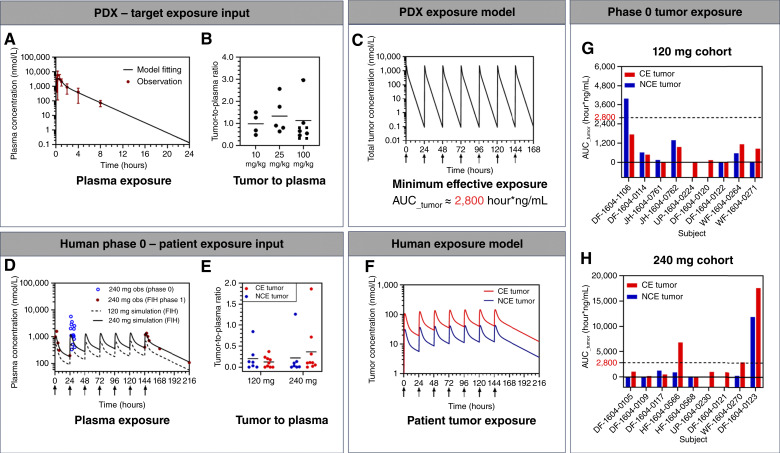
PURPOSE: Navtemadlin is a potent small-molecule inhibitor of MDM2, which has completed a phase 0 window-of-opportunity study in glioblastoma (GBM). To optimally interpret the clinical data, a detailed analysis of navtemadlin pharmacokinetics (PK), pharmacodynamics, and efficacy was performed in GBM patient-derived xenografts (PDX). EXPERIMENTAL DESIGN: Response to navtemadlin was characterized in vitro and in vivo in GBM PDXs with and without MDM2 amplification. Efficacy in vivo was integrated with measured plasma and intra-tumoral drug levels to develop a translational PK/efficacy model comparing exposure effective in PDX to exposure achieved in phase 0 patient samples. RESULTS: In vitro, navtemadlin showed robust on-target activity in TP53-wild-type GBM. In vivo efficacy strongly correlated with MDM2 amplification status. In subcutaneous PDXs, navtemadlin significantly extended survival when dosed at 25 mg/kg in an MDM2-amplified PDX compared with 100 mg/kg in a non-amplified PDX. Central nervous system distribution was limited by blood-brain barrier efflux (Kp_brain = 0.009). In an MDM2-amplified orthotopic PDX model, navtemadlin was ineffective at 100 mg/kg; when established in mice with deficient blood-brain barrier efflux (Rag-/-Abcb1a-/-Abcg2-/-), 25 mg/kg doubled survival. A tumor PK/efficacy model was built to define target exposure for efficacy in GBM, using the effective 25 mg/kg dose. Modeled exposures exceeded this threshold in three (of 16) tumor samples from phase 0 study patients at the 240 mg dose level. CONCLUSIONS: Navtemadlin efficacy was highly dependent on adequate brain penetration. Our translational PK/efficacy model suggests that the minimum effective tumor exposures were achieved only in a minority of patients with GBM.
Overview
CoChat Summary
TL;DR
Navtemadlin shows on-target activity in TP53–wild-type glioblastoma PDXs, with greatest efficacy in MDM2-amplified tumors, but central nervous system delivery is severely limited by P-gp efflux. A translational PK/efficacy model suggests the minimum effective tumor exposure was achieved in only a minority of phase 0 GBM patient samples.
Key findings
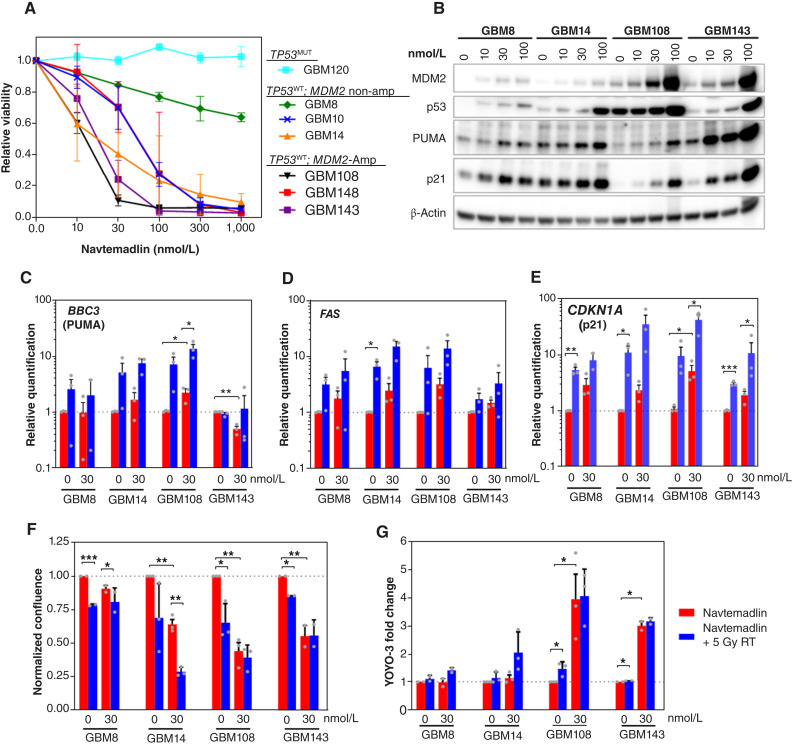
- In vitro, navtemadlin reduced viability in five TP53WT PDXs; TP53MUT GBM120 was resistant and MDM4-amplified GBM8 showed limited response, with EC50 ≤100 nmol/L for TP53WT PDXs except GBM8.
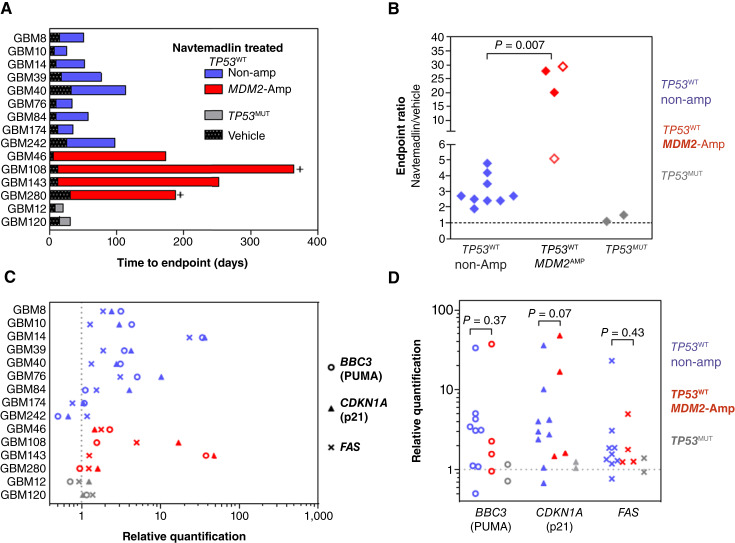
- In a 1×1×1 subcutaneous PDX trial across 15 PDXs, TP53/MDM2 status correlated with response (P = 0.007); MDM2-amplified tumors showed complete durable responses, with recurrence >100 days after dosing in 2 of 4 and 20.1- to 27.8-fold time-to-endpoint extension, versus 1.9- to 4.8-fold in TP53WT MDM2–non-amplified models.
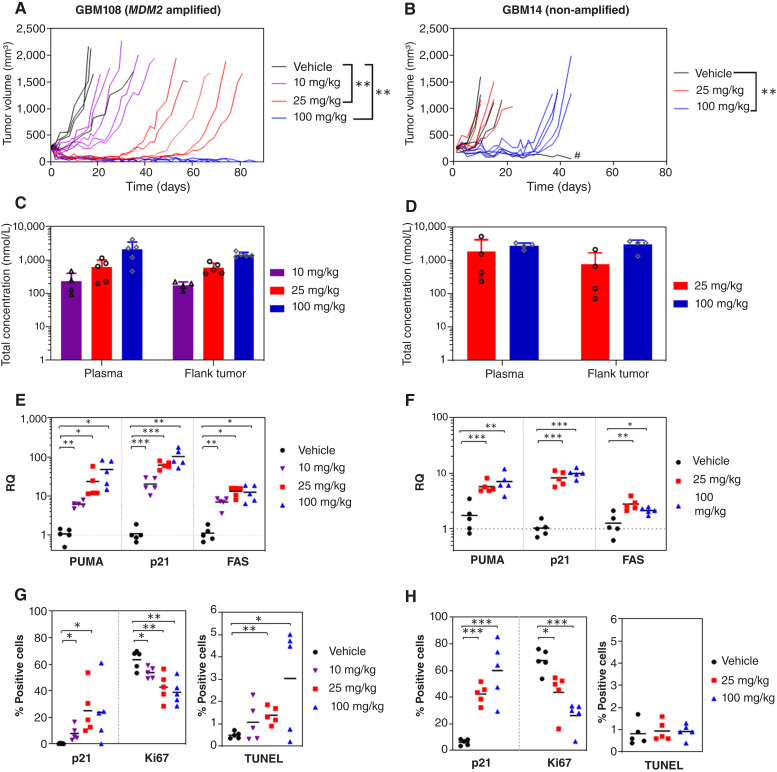
- In subcutaneous GBM108, 25 mg/kg extended median time to endpoint versus vehicle (61 vs. 11 days, P = 0.014), while 100 mg/kg caused regression; in GBM14, only 100 mg/kg extended time to endpoint (37 vs. 12.5 days, P = 0.003).
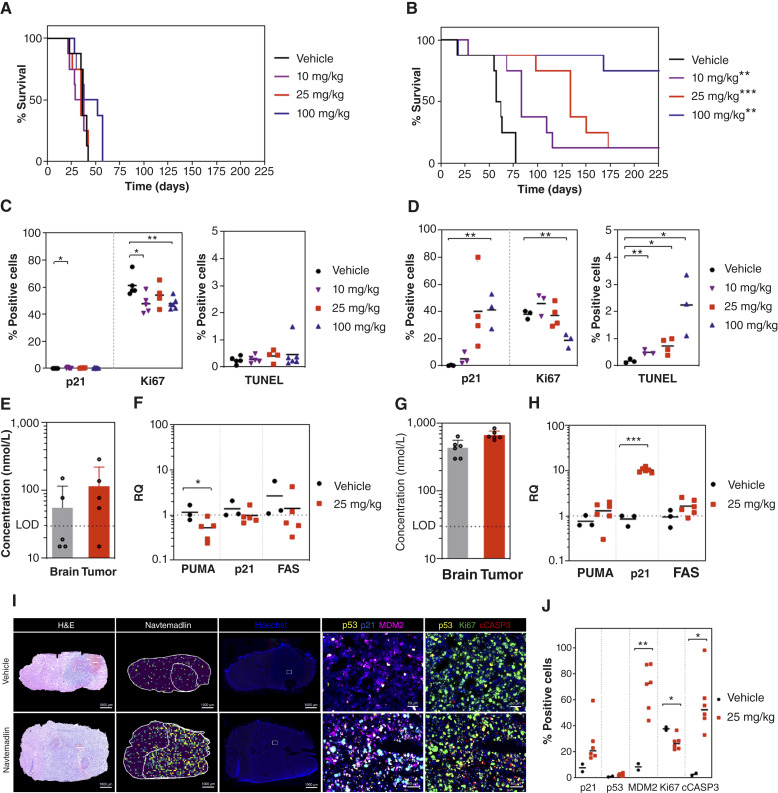
- CNS distribution was limited: Kp_brain = 0.009 in wild-type mice, rising to 0.31 in P-gp/Bcrp-deficient mice (~35-fold higher). Orthotopic GBM108 showed no significant efficacy in wild-type mice, but in DKO mice median survival was 62 days for vehicle, 83 days for 10 mg/kg, 132 days for 25 mg/kg, and >225 days for 100 mg/kg. The modeled minimum effective tumor exposure was AUC_tumor = 2,800 hour*ng/mL; phase 0 samples reaching this threshold were 1 of 16 at 120 mg and 4 of 16 at 240 mg in the Results (the abstract states 3 of 16 at 240 mg).
Methods
- In vitro assays in GBM PDX short-term cultures included viability, Western blotting, qRT-PCR, IncuCyte live-cell imaging, and immunofluorescence; in vivo studies used subcutaneous 1×1×1 screening across 15 PDXs and powered subcutaneous studies in GBM108, GBM148, and GBM14, plus orthotopic GBM108, GBM39, and GBM148 models in athymic nude and Rag1−/−Abcb1a−/−Abcg2−/− DKO mice.
- Drug levels were measured by LC/MS-MS and MALDI-MSI, with PD readouts by IHC, qRT-PCR, and t-CyCIF; unbound fractions were measured by rapid equilibrium dialysis, and PK parameters by noncompartmental analysis.
- A translational PK/efficacy model was built in SAAM II using GBM108 subcutaneous tumor/plasma data at the effective 25 mg/kg dose and phase 0 patient tumor-to-plasma ratios; survival comparisons used Kaplan–Meier and log-rank tests, with P < 0.05 considered significant.
Limitations
- The paper states that the PK/efficacy model assumes navtemadlin PK parameters are equivalent in healthy FVB mice and PDX-bearing nude mice, that tumor-to-plasma ratio is constant over 24 hours in mice and patients, and that target exposure was defined from monotherapy PDX efficacy, which may differ for combination with radiation.
- The paper states that the 1×1×1 design uses subcutaneous tumors, differing from the orthotopic tumor microenvironment, and that PD effects could not be incorporated into the model because p53 target gene upregulation was highly variable and poorly correlated with efficacy.
- Evident from the text: the abstract and Results report different numbers of 240 mg phase 0 samples reaching the target exposure (3 of 16 vs. 4 of 16), and the phase 0 plasma sampling had limited time points that were not sufficient to develop a robust human exposure model.
Model-written summary. Check it against the paper before relying on it.
Integrity signals
Registry
Cites
Statistics
Figures
Verification
Claims the paper makes
23 Valid · 4 Not valid · 9 Not checked · 126 Own results and interpretations
The cited sources support only part of this claim — read each source’s verdict below.
In the paper
“Although a limitation is the differing subcutaneous tumor microenvironment, there is strong evidence that the cytotoxicity of MDM2 inhibitors is largely tumor cell autonomous (39, 40).”
§ Preclinical Modeling of Navtemadlin Pharmacokinetics, Pharmacodynamics, and Efficacy in IDH–Wild-type Glioblastoma > Discussion
What the sources say
- Partly supportedcites [39] Canon J, Osgood T, Olson SH, Saiki AY, Robertson R, Yu D,. The MDM2 inhibitor AMG 232 demonstrates robust antitumor efficacy and potentiates the activity of p53-inducing cytotoxic agents. Mol Cancer Ther 2015; 14: 649– 58. 25567130 sourceExperimental — accuracy not yet measured
Our copy establishes that the cytotoxic/antiproliferative effect of AMG 232 is determined within the tumor cell by its p53 status: the Discussion ('AMG 232 induces p53 signaling and inhibits tumor cell proliferation' / Discussion) reports growth inhibition of p53 wild-type lines with no significant effect on p53-mutant lines and concludes 'the antiproliferative response to AMG 232 is dependent on p53', and the in vivo mechanism section ('AMG 232 blocks DNA synthesis and induces apoptosis in vivo'; Discussion) localises BrdUrd loss and cleaved caspase-3 to the tumor cells themselves. However, no passage states or tests that MDM2-inhibitor cytotoxicity is 'tumor cell autonomous' in the sense of independent of host/stromal/microenvironmental contributions — the paper's models are subcutaneous xenografts in athymic nude mice and it makes no such claim, nor does it generalise across MDM2 inhibitors as a class (it only notes consistency with other reports, e.g. ref. 9, that apoptotic propensity varies across cell lines). The unsupported part of the attributed claim is therefore the autonomy conclusion itself and its class-wide framing. (LLM, conf=0.68)
- Partly supportedcites [40] Koo N, Sharma AK, Narayan S. Therapeutics targeting p53-MDM2 interaction to induce cancer cell death. Int J Mol Sci 2022; 23: 5005. 35563397 PMC9103871 sourceExperimental — accuracy not yet measured
Section 5 (Conclusions; page unavailable) reports that disrupting the p53–MDM2 interaction promotes apoptosis and that these drugs inhibit cancer-cell growth. Section 4.1 (page unavailable) describes p53 activation in treated ovarian-cancer cell lines, supporting a direct tumor-cell effect. The review does not establish that cytotoxicity is largely tumor-cell autonomous rather than dependent on the tumor microenvironment. (LLM, conf=0.83)
boostedstates a cause- Asserted: passes — The authors put it forward as true.
- Checkable: passes — It can be checked against evidence.
- Load-bearing: passes — The paper’s conclusions depend on it.
- Based: passes — The paper gives a reason why it holds.
- Partly supported
Every source the paper cites for this claim was checked and supports it.
In the paper
“Notably, a disconnect between PD and patient survival was also observed in the human phase 0 trial (16).”
§ Preclinical Modeling of Navtemadlin Pharmacokinetics, Pharmacodynamics, and Efficacy in IDH–Wild-type Glioblastoma > Discussion
What the sources say
- Supportedcites [16] Rendo V, Lee EQ, Bossi C, Khuu N, Rudek MA, Pal S,. A window-of-opportunity trial reveals mechanisms of response and resistance to navtemadlin in patients with recurrent glioblastoma. Sci Transl Med 2025; 17: eadn6274. 39970230 PMC11994224 source
The Discussion (page unavailable) reports a pharmacodynamic effect in tumor tissue, but says progression-free and overall survival were similar to historical controls. It also describes a pharmacodynamic response without sufficient cell killing. The trial was not powered to evaluate survival outcomes, so the claim is supported as an observed disconnect, not proof that pharmacodynamic response cannot improve survival. (LLM, conf=0.89)
plain- Asserted: passes — The authors put it forward as true.
- Checkable: passes — It can be checked against evidence.
- Load-bearing: unclear — It is unclear whether the paper’s conclusions depend on it.
- Based: passes — The paper gives a reason why it holds.
- Supported
The cited sources that could be checked couldn’t confirm or dispute this claim.
In the paper
“Although TP53-mutant (TP53MUT) tumors are intrinsically resistant to MDM2 inhibitors, tumors harboring MDM2 amplification are typically very sensitive (3, 4).”
§ Preclinical Modeling of Navtemadlin Pharmacokinetics, Pharmacodynamics, and Efficacy in IDH–Wild-type Glioblastoma > Introduction
What the sources say
- Could not verifycites [3] Fischer M. Census and evaluation of p53 target genes. Oncogene 2017; 36: 3943– 56. 28288132 PMC5511239 sourceExperimental — accuracy not yet measured
The Introduction identifies MDM2 as a p53 target gene but does not discuss responses to MDM2 inhibitors. Searches for TP53-mutant tumors, inhibitor resistance, and wild-type p53 inhibitor response found no passage addressing the claimed intrinsic resistance. (LLM, conf=0.74)
- Not checked — no full text of the sourcecites [4] Hafner A, Bulyk ML, Jambhekar A, Lahav G. The multiple mechanisms that regulate p53 activity and cell fate. Nat Rev Mol Cell Biol 2019; 20: 199– 210. 30824861 source
plainstates a cause- Asserted: passes — The authors put it forward as true.
- Checkable: passes — It can be checked against evidence.
- Load-bearing: passes — The paper’s conclusions depend on it.
- Based: passes — The paper gives a reason why it holds.
- Could not verify
Every source the paper cites for this claim was checked and supports it.
In the paper
“Navtemadlin is a potent small-molecule inhibitor of MDM2, which has completed a phase 0 window-of-opportunity study in glioblastoma (GBM).”
- Also stated in: § Introduction · plain
“Navtemadlin has been evaluated in a phase 0/I clinical trial in GBM (NCT03107780)”
§ Preclinical Modeling of Navtemadlin Pharmacokinetics, Pharmacodynamics, and Efficacy in IDH–Wild-type Glioblastoma > Abstract > Purpose:
What the sources say
- Supportedcites [16] Rendo V, Lee EQ, Bossi C, Khuu N, Rudek MA, Pal S,. A window-of-opportunity trial reveals mechanisms of response and resistance to navtemadlin in patients with recurrent glioblastoma. Sci Transl Med 2025; 17: eadn6274. 39970230 PMC11994224 source
The Results (Trial outcomes) identify NCT03107780 as a Phase 0/1 trial of navtemadlin in GBM and describe its Phase 0 surgical window-of-opportunity component. The same section reports that 21 patients with recurrent GBM enrolled and received treatment in that component; it distinguishes the ongoing Phase 1 component. (LLM, conf=0.93)
plain- Asserted: passes — The authors put it forward as true.
- Checkable: passes — It can be checked against evidence.
- Load-bearing: passes — The paper’s conclusions depend on it.
- Based: passes — The paper gives a reason why it holds.
- Also stated in: § Introduction · plain
The cited sources that could be checked couldn’t confirm or dispute this claim.
In the paper
“Navtemadlin is a potent small-molecule inhibitor of MDM2”
- Also stated in: § Introduction · plain
“Navtemadlin (KRT-232) is a potent small-molecule MDM2 inhibitor”
§ Preclinical Modeling of Navtemadlin Pharmacokinetics, Pharmacodynamics, and Efficacy in IDH–Wild-type Glioblastoma > Abstract > Purpose:
What the sources say
- Could not verifycites [12] Gluck WL, Gounder MM, Frank R, Eskens F, Blay JY, Cassier PA,. Phase 1 study of the MDM2 inhibitor AMG 232 in patients with advanced P53 wild-type solid tumors or multiple myeloma. Invest New Drugs 2020; 38: 831– 43. 31359240 PMC7211202 sourceExperimental — accuracy not yet measured
The Introduction (page unavailable) describes AMG 232 as a selective MDM2 inhibitor with picomolar binding affinity. A search for “navtemadlin” found no passage identifying it as AMG 232, so our copy cannot establish that the claim concerns the drug studied. (LLM, conf=0.75)
plainstates a cause- Asserted: passes — The authors put it forward as true.
- Checkable: passes — It can be checked against evidence.
- Load-bearing: passes — The paper’s conclusions depend on it.
- Based: passes — The paper gives a reason why it holds.
- Also stated in: § Introduction · plain
91 more claims · 5 with their cited sources checked
Create a free account to see all 162 claims and to verify the 4 references still open.
- It may state two separate claims as one. 53
- Probably not a substantial claim. 18
Self-check
Percentages, sums and reported differences re-computed from the paper’s own numbers.
Each contradiction between two passages listed here was confirmed by an independent check.
Rated major: it would touch a result — a value a result rests on, reported and recomputed p-values on opposite sides of the significance level, two passages that conflict with no sign which is right, or a cited work retracted before this paper was published.
In the paper
§ Preclinical Modeling of Navtemadlin Pharmacokinetics, Pharmacodynamics, and Efficacy in IDH–Wild-type Glioblastoma > Abstract > Results:
“Modeled exposures exceeded this threshold in three (of 16) tumor samples from phase 0 study patients at the 240 mg dose level.”
§ Preclinical Modeling of Navtemadlin Pharmacokinetics, Pharmacodynamics, and Efficacy in IDH–Wild-type Glioblastoma > Results > PK–efficacy simulation in mouse and human
“In the 240 mg cohort, four (of 16) samples reached the exposure threshold, including three from CE and one from NCE regions (Fig. 5G and H).”
Rated minor: it would not touch a result — a value no result rests on, a p-value that stays on the same side of the significance level, or a conflict that is clerical, resolved elsewhere in the paper, or outside its own findings.
In the paper
§ Preclinical Modeling of Navtemadlin Pharmacokinetics, Pharmacodynamics, and Efficacy in IDH–Wild-type Glioblastoma > Results > Effects of navtemadlin in vitro
“Response to navtemadlin was evaluated in vitro in seven GBM PDXs of varying TP53 and MDM2 alteration status.”
§ Preclinical Modeling of Navtemadlin Pharmacokinetics, Pharmacodynamics, and Efficacy in IDH–Wild-type Glioblastoma > Materials and Methods > Cell culture and viability assays
“For each PDX model, two (GBM120), three (GBM10, GBM39, GBM148, GBM108, GBM8, and GBM143), or four (GBM14) independent replicates were performed.”
Rated minor: it would not touch a result — a value no result rests on, a p-value that stays on the same side of the significance level, or a conflict that is clerical, resolved elsewhere in the paper, or outside its own findings.
In the paper
§ Preclinical Modeling of Navtemadlin Pharmacokinetics, Pharmacodynamics, and Efficacy in IDH–Wild-type Glioblastoma > Results > Effects of navtemadlin in vitro
“A, Effects of navtemadlin on cell viability. Short-term explant cultures were treated with varying doses of navtemadlin (0–100 nmol/L) and cell viability was measured after 7 days using CellTiter-Glo 3D assay.”
§ Preclinical Modeling of Navtemadlin Pharmacokinetics, Pharmacodynamics, and Efficacy in IDH–Wild-type Glioblastoma > Materials and Methods > Cell culture and viability assays
“cell viability was measured using CellTiter-Glo 3D (Promega) 7 days after treatment with 0 to 1,000 nmol/L navtemadlin.”
Rated minor: it would not touch a result — a value no result rests on, a p-value that stays on the same side of the significance level, or a conflict that is clerical, resolved elsewhere in the paper, or outside its own findings.
In the paper
§ Preclinical Modeling of Navtemadlin Pharmacokinetics, Pharmacodynamics, and Efficacy in IDH–Wild-type Glioblastoma > Results > Distribution of navtemadlin after systemic administration
“the AUC0–∞, plasma was not different between oral and intravenous administrations.”
§ Preclinical Modeling of Navtemadlin Pharmacokinetics, Pharmacodynamics, and Efficacy in IDH–Wild-type Glioblastoma > Results > Distribution of navtemadlin after systemic administration
“Bioavailability is the ratio of AUC (0–∞, plasma and oral) to AUC (0–∞, plasma and intravenous) at the same dose.”
Citations
Cites
QuPath: Open source software for digital pathology image analysis
Bankhead, P., Loughrey, M. B., Fernández, J. A., Dombrowski, Y., McArt, D. G., Dunne, P. D., McQuaid, S., Gray, R. T., Murray, L. J., Coleman, H. G., et al. (2017) · Scientific Reports · doi:10.1038/s41598-017-17204-5 · Cited by 8,908 · cited 3×
“Images were captured using a Leica inverted microscope, and TUNEL-positive nuclei were quantified using QuPath (version 0.3.3).”
InfluentialThe Somatic Genomic Landscape of Glioblastoma
Brennan, C. W., Verhaak, R. G. W., McKenna, A., Campos, B., Noushmehr, H., Salama, S. R., Zheng, S., Chakravarty, D., Sanborn, J. Z., Berman, S. H., et al. (2013) · Cell · doi:10.1016/j.cell.2013.09.034 · Cited by 5,016
Self-citationGao, H., Korn, J. M., Ferretti, S., Monahan, J. E., Wang, Y., Singh, M., Zhang, C., Schnell, C., Yang, G., Zhang, Y., et al. (2015) · Nature Medicine · doi:10.1038/nm.3954 · Cited by 1,393 · cited 1×
“Several large studies have validated this approach, showing high reproducibility and identification of known predictive biomarkers (31, 32, 38).”
The multiple mechanisms that regulate p53 activity and cell fate
Hafner, A., Bulyk, M. L., Jambhekar, A., & Lahav, G. (2019) · Nature Reviews Molecular Cell Biology · doi:10.1038/s41580-019-0110-x · Cited by 1,129 · cited 2×
“Although TP53 -mutant ( TP53 MUT ) tumors are intrinsically resistant to MDM2 inhibitors, tumors harboring MDM2 amplification are typically very sensitive (3, 4).”
Census and evaluation of p53 target genes
Fischer, M. (2017) · Oncogene · doi:10.1038/onc.2016.502 · Cited by 971
Lin, J.-R., Izar, B., Wang, S., Yapp, C., Mei, S., Shah, P. M., Santagata, S., & Sorger, P. K. (2018) · eLife · doi:10.7554/elife.31657 · Cited by 692
Characterizing genetic intra-tumor heterogeneity across 2,658 human cancer genomes
Dentro, S. C., Leshchiner, I., Haase, K., Tarabichi, M., Wintersinger, J., Deshwar, A. G., Yu, K., Rubanova, Y., Macintyre, G., Demeulemeester, J., et al. (2021) · Cell · doi:10.1016/j.cell.2021.03.009 · Cited by 533
p53 post-translational modification: deregulated in tumorigenesis
Dai, C., & Gu, W. (2010) · Trends in Molecular Medicine · doi:10.1016/j.molmed.2010.09.002 · Cited by 523
MCMICRO: a scalable, modular image-processing pipeline for multiplexed tissue imaging
Schapiro, D., Sokolov, A., Yapp, C., Chen, Y.-A., Muhlich, J. L., Hess, J., Creason, A. L., Nirmal, A. J., Baker, G. J., Nariya, M. K., et al. (2022) · Nature Methods · doi:10.1038/s41592-021-01308-y · Cited by 241
Vaubel, R. A., Tian, S., Remonde, D., Schroeder, M. A., Mladek, A. C., Kitange, G. J., Caron, A., Kollmeyer, T. M., Grove, R., Peng, S., et al. (2020) · Clinical Cancer Research · doi:10.1158/1078-0432.ccr-19-0909 · Cited by 227
Self-citationCarlson, B. L., Pokorny, J. L., Schroeder, M. A., & Sarkaria, J. N. (2011) · Current Protocols in Pharmacology · doi:10.1002/0471141755.ph1416s52 · Cited by 227 · cited 2×
“Detailed methods for the establishment of subcutaneous PDX have been published (17).”
Self-citationTherapeutics targeting p53-MDM2 interaction to induce cancer cell death
Koo, N., Sharma, A. K., & Narayan, S. (2022) · International Journal of Molecular Sciences · doi:10.3390/ijms23095005 · Cited by 153 · cited 1×
“Although a limitation is the differing subcutaneous tumor microenvironment, there is strong evidence that the cytotoxicity of MDM2 inhibitors is largely tumor cell autonomous (39, 40).”
Canon, J., Osgood, T., Olson, S. H., Saiki, A. Y., Robertson, R., Yu, D., Eksterowicz, J., Ye, Q., Jin, L., Chen, A., et al. (2015) · Molecular Cancer Therapeutics · doi:10.1158/1535-7163.mct-14-0710 · Cited by 152 · cited 2×
“Similar results were observed in xenografts derived from non-GBM cancer cell lines (39).”
Integrated analysis of TP53 gene and pathway alterations in the cancer genome atlas
Donehower, L. A., Soussi, T., Korkut, A., Liu, Y., Schultz, A., Cardenas, M., Li, X., Babur, O., Hsu, T.-K., Lichtarge, O., et al. (2019) · Cell Reports · doi:10.1016/j.celrep.2019.08.061 · Cited by 150
Estimation of Variance for AUC in Animal Studies
Yuan, J. (1993) · Journal of Pharmaceutical Sciences · doi:10.1002/jps.2600820718 · Cited by 150
Agarwal, S., Uchida, Y., Mittapalli, R. K., Sane, R., Terasaki, T., & Elmquist, W. F. (2012) · Drug Metabolism and Disposition · doi:10.1124/dmd.112.044719 · Cited by 149
Self-citationStitching and registering highly multiplexed whole-slide images of tissues and tumors using ASHLAR
Muhlich, J. L., Chen, Y.-A., Yapp, C., Russell, D., Santagata, S., & Sorger, P. K. (2022) · Bioinformatics · doi:10.1093/bioinformatics/btac544 · Cited by 144
Wong, H., Choo, E. F., Alicke, B., Ding, X., La, H., McNamara, E., Theil, F.-P., Tibbitts, J., Friedman, L. S., Hop, C. E. C. A., et al. (2012) · Clinical Cancer Research · doi:10.1158/1078-0432.ccr-12-0738 · Cited by 133
Gluck, W. L., Gounder, M. M., Frank, R., Eskens, F., Blay, J. Y., Cassier, P. A., Soria, J.-C., Chawla, S., de Weger, V., Wagner, A. J., et al. (2020) · Investigational New Drugs · doi:10.1007/s10637-019-00840-1 · Cited by 127
Verreault, M., Schmitt, C., Goldwirt, L., Pelton, K., Haidar, S., Levasseur, C., Guehennec, J., Knoff, D., Labussière, M., Marie, Y., et al. (2016) · Clinical Cancer Research · doi:10.1158/1078-0432.ccr-15-1015 · Cited by 114
Self-citationCoy, S., Wang, S., Stopka, S. A., Lin, J., Yapp, C., Ritch, C. C., Salhi, L., Baker, G. J., Rashid, R., Baquer, G., et al. (2022) · Nature Communications · doi:10.1038/s41467-022-32430-w · Cited by 104
Self-citationMarin, B.-M., Porath, K. A., Jain, S., Kim, M., Conage-Pough, J. E., Oh, J.-H., Miller, C. L., Talele, S., Kitange, G. J., Tian, S., et al. (2021) · Neuro-Oncology · doi:10.1093/neuonc/noab133 · Cited by 81
Self-citationThe public repository of xenografts enables discovery and randomized phase II-like trials in mice
Townsend, E. C., Murakami, M. A., Christodoulou, A., Christie, A. L., Köster, J., DeSouza, T. A., Morgan, E. A., Kallgren, S. P., Liu, H., Wu, S.-C., et al. (2016) · Cancer Cell · doi:10.1016/j.ccell.2016.06.008 · Cited by 80
Berberich, A., Kessler, T., Thomé, C. M., Pusch, S., Hielscher, T., Sahm, F., Oezen, I., Schmitt, L.-M., Ciprut, S., Hucke, N., et al. (2019) · Clinical Cancer Research · doi:10.1158/1078-0432.ccr-18-1580 · Cited by 75 · cited 1×
“For oral dosing, navte-madlin was resuspended in 15% w/v hydroxypropyl-β -cyclodextrin/ 1% w/v Pluronic F-68 in ddH 2 O. pH was then adjusted using 1N NaOH to ∼ 9.”
Evaluation of Alternative In Vivo Drug Screening Methodology: A Single Mouse Analysis
Murphy, B., Yin, H., Maris, J. M., Kolb, E. A., Gorlick, R., Reynolds, C. P., Kang, M. H., Keir, S. T., Kurmasheva, R. T., Dvorchik, I., et al. (2016) · Cancer Research · doi:10.1158/0008-5472.can-16-0122 · Cited by 69 · cited 1×
“Several large studies have validated this approach, showing high reproducibility and identification of known predictive biomarkers (31, 32, 38).”
Potent effect of the MDM2 inhibitor AMG232 on suppression of glioblastoma stem cells
Her, N.-G., Oh, J.-W., Oh, Y. J., Han, S., Cho, H. J., Lee, Y., Ryu, G. H., & Nam, D.-H. (2018) · Cell Death & Disease · doi:10.1038/s41419-018-0825-1 · Cited by 68
Self-citationKocik, J., Machula, M., Wisniewska, A., Surmiak, E., Holak, T. A., & Skalniak, L. (2019) · Cancers · doi:10.3390/cancers11071014 · Cited by 46
Small-molecule correctors and stabilizers to target p53
Fallatah, M. M. J., Law, F. V., Chow, W. A., & Kaiser, P. (2023) · Trends in Pharmacological Sciences · doi:10.1016/j.tips.2023.02.007 · Cited by 44
Verstovsek, S., Al-Ali, H. K., Mascarenhas, J., Perkins, A., Vannucchi, A. M., Mohan, S. R., Scott, B. L., Woszczyk, D., Koschmieder, S., García-Delgado, R., et al. (2022) · Future Oncology · doi:10.2217/fon-2022-0901 · Cited by 41 · cited 1×
“Effects of navtemadlin were evaluated in vivo across 15 PDX lines using a “1 � 1 � 1 PDX preclinical trial” design (14, 15).”
Kim, M., Ma, D. J., Calligaris, D., Zhang, S., Feathers, R. W., Vaubel, R. A., Meaux, I., Mladek, A. C., Parrish, K. E., Jin, F., et al. (2018) · Molecular Cancer Therapeutics · doi:10.1158/1535-7163.mct-17-0600 · Cited by 39
Self-citationXiong, W., Friese‐Hamim, M., Johne, A., Stroh, C., Klevesath, M., Falchook, G. S., Hong, D. S., Girard, P., & Bawab, S. E. (2021) · CPT Pharmacometrics & Systems Pharmacology · doi:10.1002/psp4.12602 · Cited by 33
Rahman, R. M., Polley, M. C., Alder, L., Brastianos, P. K., Anders, C. K., Tawbi, H. A., Mehta, M. P., Wen, P. Y., Geyer, S. M., de Groot, J., et al. (2023) · The Lancet Oncology · doi:10.1016/s1470-2045(23)00005-0 · Cited by 33
Laramy, J. K., Kim, M., Gupta, S. K., Parrish, K. E., Zhang, S., Bakken, K. K., Carlson, B. L., Mladek, A. C., Ma, D. J., Sarkaria, J. N., et al. (2017) · Journal of Pharmacology and Experimental Therapeutics · doi:10.1124/jpet.117.243477 · Cited by 31
Self-citationMDM2 inhibition in the treatment of glioblastoma: From concept to clinical investigation
Pellot Ortiz, K. I., Rechberger, J. S., Nonnenbroich, L. F., Daniels, D. J., & Sarkaria, J. N. (2023) · Biomedicines · doi:10.3390/biomedicines11071879 · Cited by 30
Self-citationResistance acquisition to MDM2 inhibitors
Cinatl, J., Speidel, D., Hardcastle, I., & Michaelis, M. (2014) · Biochemical Society Transactions · doi:10.1042/bst20140035 · Cited by 30
Wong, H., Bohnert, T., Damian-Iordache, V., Gibson, C., Hsu, C.-P., Krishnatry, A. S., Liederer, B. M., Lin, J., Lu, Q., Mettetal, J. T., et al. (2017) · Drug Discovery Today · doi:10.1016/j.drudis.2017.04.015 · Cited by 27 · cited 1×
“42).”
Negative trials over and over again: how can we do better?
McFaline-Figueroa, J. R., & Wen, P. Y. (2023) · Neuro-Oncology · doi:10.1093/neuonc/noac226 · Cited by 25 · cited 1×
“GBM poses unique treatment challenges, including an inability of otherwise effective drugs to cross the blood–brain barrier and the inter-and intra-tumoral heterogeneity of GBM molecular driver alterations (35).”
Pi, L., Rooprai, J., Allan, D., Atkins, H., Bredeson, C., Fulcher, A., Ito, C., Ramsay, T., Shorr, Stanford, W., et al. (2019) · Leukemia Research · doi:10.1016/j.leukres.2019.106222 · Cited by 25 · cited 1×
“As a drug class, MDM2 inhibitors, including navtemadlin, are dose limited by hematologic, gastrointestinal, and cardiovascular toxicities, metabolic disturbances, and fatigue (37); the recommended phase II dose level for navtemadlin is 240 mg (12).”
Zhang, W., Oh, J.-H., Zhang, W., Rathi, S., Le, J., Talele, S., Sarkaria, J. N., & Elmquist, W. F. (2023) · Pharmaceutical Research · doi:10.1007/s11095-023-03574-1 · Cited by 19 · cited 1×
“Additionally, the expression of the P-gp efflux transporter is approximately two-to fourfold higher in mice than in humans (41).”
Self-citationRendo, V., Lee, E. Q., Bossi, C., Khuu, N., Rudek, M. A., Pal, S., Azazmeh, N., Rashid, R., Lin, J.-R., Cusick, M., et al. (2025) · Science Translational Medicine · doi:10.1126/scitranslmed.adn6274 · Cited by 19 · cited 3×
“Navtemadlin has been evaluated in a phase 0/I clinical trial in GBM (NCT03107780) and the phase 0 component met the prespecified target for measured intra-tumoral drug levels with evidence of p53 pathway modulation in tumor tissue (16).”
InfluentialSelf-citationMascarenhas, J. O., Popov, V. M., Mohan, S., Özkurt, Z. N., Kiladjian, J.-J., Al-Ali, H. K., Perkins, A., Huang, Z., Qamoos, H., McGreivy, J., et al. (2024) · Blood · doi:10.1182/blood-2024-201642 · Cited by 17
Oh, J., Power, E. A., Zhang, W., Daniels, D. J., & Elmquist, W. F. (2022) · Journal of Pharmacology and Experimental Therapeutics · doi:10.1124/jpet.122.001268 · Cited by 15
Self-citationReddy, V. P., Anjum, R., Grondine, M. R., Smith, A., Bhavsar, D., Barry, E., Guichard, S. M., Shao, W., Kettle, J. G., Brown, C., et al. (2020) · Clinical Cancer Research · doi:10.1158/1078-0432.ccr-19-2848 · Cited by 15
Zhang, W., Vaubel, R. A., Oh, J.-H., Mladek, A. C., Talele, S., Zhang, W., Waller, K. L., Burgenske, D. M., Sarkaria, J. N., & Elmquist, W. F. (2024) · Molecular Cancer Therapeutics · doi:10.1158/1535-7163.mct-23-0217 · Cited by 8 · cited 1×
“Multiple MDM2 inhibitors have significant efficacy in GBM preclinical models (7, 8, 10, 11) and have entered early-phase clinical trials in GBM.”
Self-citationMascarenhas, J. O., Bose, P., Hou, H.-A., Homenda, W., Ross, D., Mohan, S. R., Kiladjian, J.-J., Al-Ali, H. K., Perkins, A., Khalina, Y., et al. (2024) · Blood · doi:10.1182/blood-2024-205937 · Cited by 8
Gelles, J. D., Mohammed, J. N., Santos, L. C., Legarda, D., Ting, A. T., & Chipuk, J. E. (2020) · STAR Protocols · doi:10.1016/j.xpro.2020.100034 · Cited by 5
Cited by
MDM2 in Tumor Biology and Cancer Therapy: A Review of Current Clinical Trials
Russano, F., Sturlese, M., Dall’Olmo, L., Callegarin, F., Brugnolo, D., Fiore, P. D., Patti, V., Purpura, A. H.-S., Moro, S., Rastrelli, M., et al. (2025) · International Journal of Molecular Sciences · doi:10.3390/ijms27010099 · Cited by 18
Grossman, S. A., Barone, A. K., Strowd, R. E., III, Rais, R., Duke, E., Wearne, E., Price, L., Hendrix, C. W., Schreck, K. C., Lesser, G. J., et al. (2026) · Neuro-Oncology · doi:10.1093/neuonc/noag051 · Cited by 4
Self-citationVaubel, R. A., Zhang, W., Karbhari, N., Oh, J.-H., Waller, K. L., Mladek, A., Jain, S., Burgenske, D. M., Decker, P. A., Kosel, M. L., et al. (2026) · Neuro-Oncology Advances · doi:10.1093/noajnl/vdaf259
Self-citation
Metadata
- Authors
- Vaubel, R. A., Zhang, W., Oh, J.-H., Mladek, A. C., Pasa, T. I., Gantchev, J. K., Waller, K. L., Baquer, G., Stopka, S. A., Regan, M. S., Hossain, M. A., Decker, P. A., Kosel, M. L., Gupta, S. K., Jain, S., Sarkaria, P. P., Hu, Z., Ott, L. L., Carlson, B. L., Bakken, K. K., Talele, S., Zhang, W., Ligon, K. L., Lee, E. Q., Eckel Passow, J. E., Burgenske, D. M., Agar, N. Y. R., Elmquist, W. F., & Sarkaria, J. N.
- Affiliations
- Mayo Clinic (US)
- University of Minnesota (US)
- Brigham and Women's Hospital (US)
- 1Mayo Clinic, Rochester, Minnesota.
- Harvard University (US)
- Corresponding author
- Sarkaria, Jann N.
- ORCID
- Vaubel, Rachael A.
- Zhang, Wenjuan
- Oh, Ju-Hee
- Mladek, Ann C.
- Pasa, Tugce I.
- Gantchev, Jennifer K.
- Waller, Katie L.
- Baquer, Gerard
- Stopka, Sylwia A.
- Regan, Michael S.
- Hossain, Md Amin
- Decker, Paul A.
- Kosel, Matthew L.
- Gupta, Shiv K.
- Jain, Sonia
- Sarkaria, Paige P.
- Hu, Zeng
- Ott, Lauren L.
- Carlson, Brett L.
- Bakken, Katie K.
- Talele, Surabhi
- Zhang, Wenqiu
- Ligon, Keith L.
- Lee, Eudocia Q.
- Eckel Passow, Jeanette E.
- Burgenske, Danielle M.
- Agar, Nathalie Y.R.
- Elmquist, William F.
- Sarkaria, Jann N.
- Venue
- Clinical Cancer Research
- Published
- 2025-07-01
- Volume
- 31
- Issue
- 17
- Pages
- 3771-3786
- ISSN
- 1078-0432 (ISSN-L)
- 1557-3265
- PMC
- PMC12402800
- OpenAlex
- W4411871462
- Semantic Scholar
- 6b69bdcdb27db67540e13aace2a7a815263f749a
- Cited by
- 2
- References
- 45
- Citations by year
- 2026: 1 · 2025: 1
- FWCI
- 1.28
- Type
- journal article
- Language
- en
- Open access
- hybrid
- doi.org
- Licence
- Locations
- Clinical Cancer Research (publishedVersion, cc-by-nc-nd)
- Europe PMC (PubMed Central) (publishedVersion, cc-by-nc-nd)
- PubMed (publishedVersion)
- PubMed Central (publishedVersion, cc-by-nc-nd)
- Funders
- National Cancer Institute (U19CA264362, U01CA227954, R01CA285536, U19 CA264504, R01CA262462, UM1 CA137443)
- William H. Donnor Professorship
- Topics
- Health Sciences › Medicine › Oncology › Glioma Diagnosis and Treatment
- Health Sciences › Medicine › Oncology › Cancer-related Molecular Pathways
- Health Sciences › Medicine › Oncology › Drug Transport and Resistance Mechanisms
- Keywords
- MDM2 inhibitors, glioblastoma, IDH-wildtype glioblastoma, patient-derived xenografts, pharmacokinetics, pharmacodynamics, MDM2 amplification, brain penetration, TP53
- MeSH terms
- ATP Binding Cassette Transporter, Subfamily G, Member 2, Animals, Antineoplastic Agents, Brain Neoplasms, Disease Models, Animal, Female, Glioblastoma, Humans, Tumor Suppressor Protein p53, Xenograft Model Antitumor Assays, Cell Line, Tumor, Mice, Proto-Oncogene Proteins c-mdm2
About these checks
Registry, retraction, Cites and statistics results are computed, not judged, with one exception: a printed reference that no index lists is read once by a model before it counts as a citation error. Claims are extracted by a model and kept only when their quote appears verbatim in the text; each cited source is then checked, with a model’s help, for whether it says what the claim relies on. Those verdicts can be wrong — read the claim’s quote and the cited source before relying on one.
The claim verdicts this report counts are experimental: their accuracy is not yet measured.
A language model drew the claims from the paper on 2026-10-10, under version 3 of the claim definition (model deepseek-v4.1-flash, prompt extract-v3).
A second model labelled each claim on 2026-10-10 (model jev-1.13-20260917, definition revision gold-guideline-v0.2).
Cited sources are checked with a language model’s help (qwen3.8-omni-flash and gpt-6-sol).
Statistics and arithmetic are recomputed, not judged.
Confidence bands are shown only for fields calibrated on our annotated test set. None is calibrated yet, so no band is shown.
What counts as a claim ›How we measure confidence ›How we check this ›
Are you an author, or do you see a problem with this page? Request a review
Data sources
Bibliographic data: Semantic Scholar, OpenAlex, Crossref.
Contains information from the Semantic Scholar Academic Graph Datasets, made available under the ODC Attribution License (ODC-BY 1.0).
Semantic Scholar’s data is described in: Kinney, R., et al. (2023). The Semantic Scholar Open Data Platform. arXiv:2301.10140.
