

Comprehensive Management of Cardiovascular Risk Factors for Adults With Type 2 Diabetes: A Scientific Statement From the American Heart Association
Open accessThe DOI matches its Crossref record; 315 of the 316 references it cites were found in a registry or an index, and 1 are not checked yet.
Abstract
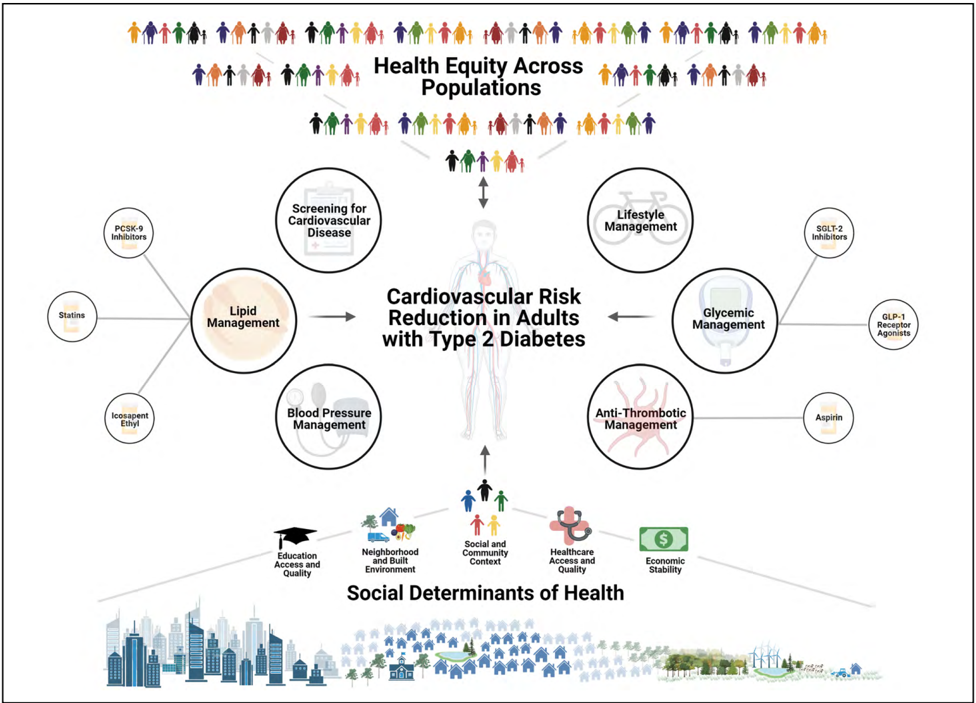
Cardiovascular disease remains the leading cause of death in patients with diabetes. Cardiovascular disease in diabetes is multifactorial, and control of the cardiovascular risk factors leads to substantial reductions in cardiovascular events. The 2015 American Heart Association and American Diabetes Association scientific statement, “Update on Prevention of Cardiovascular Disease in Adults With Type 2 Diabetes Mellitus in Light of Recent Evidence,” highlighted the importance of modifying various risk factors responsible for cardiovascular disease in diabetes. At the time, there was limited evidence to suggest that glucose-lowering medications reduce the risk of cardiovascular events. At present, several large randomized controlled trials with newer antihyperglycemic agents have been completed, demonstrating cardiovascular safety and reduction in cardiovascular outcomes, including cardiovascular death, myocardial infarction, stroke, and heart failure. This AHA scientific statement update focuses on (1) the evidence and clinical utility of newer antihyperglycemic agents in improving glycemic control and reducing cardiovascular events in diabetes; (2) the impact of blood pressure control on cardiovascular events in diabetes; and (3) the role of newer lipid-lowering therapies in comprehensive cardiovascular risk management in adults with diabetes. This scientific statement addresses the continued importance of lifestyle interventions, pharmacological therapy, and surgical interventions to curb the epidemic of obesity and metabolic syndrome, important precursors of prediabetes, diabetes, and comorbid cardiovascular disease. Last, this scientific statement explores the critical importance of the social determinants of health and health equity in the continuum of care in diabetes and cardiovascular disease.
Overview
The claims and statistics of this paper haven’t been checked yet.
Free: it reads the open-access text and checks the first 5 claims that cite a source we can check. Create a free account to check every claim.
Integrity signals
Registry
Cites
Statistics
Figures
Verification
Claims the paper makes
The claims and statistics of this paper haven’t been checked yet.
Free: it reads the open-access text and checks the first 5 claims that cite a source we can check. Create a free account to check every claim.
Claims other papers make about this one
Each is checked against this paper’s own text: does it say what the citing paper says it does?
The source backs part of the claim, not all of it — or backs it for a different population, condition or comparison.
In the citing paper
“Addressing overweight and obesity is central to CKM health, as excess and dysfunctional adiposity are the principal drivers for the development of metabolic risk factors and CKD, with subsequent increased CVD risk.2,22,23”
From 2026 AHA/ACC/ADA/ASN Guideline for the Prevention, Detection, Evaluation, and Management of Cardiovascular-Kidney-Metabolic Syndrome (2026) · cites this paper as [23]
Experimental — accuracy not yet measuredThe source backs part of the claim, not all of it — or backs it for a different population, condition or comparison.
In the citing paper
“A systematic review published in 2024 reported that behavioral lifestyle interventions with varying durations, regardless of their specific mix of behavioral, dietary, and physical activity components, are associated with a weight loss of roughly 5% among patients with overweight or obesity and T2D over a duration of approximately 12 months.23”
From 2026 AHA/ACC/ADA/ASN Guideline for the Prevention, Detection, Evaluation, and Management of Cardiovascular-Kidney-Metabolic Syndrome (2026) · cites this paper as [23]
Experimental — accuracy not yet measuredThe source backs part of the claim, not all of it — or backs it for a different population, condition or comparison.
In the citing paper
“Modeling exercises suggest meaningful gains in major cardiovascular and kidney event-free and overall survival when multiple kidney-protective agents are combined, compared with RASi alone.23”
From 2026 AHA/ACC/ADA/ASN Guideline for the Prevention, Detection, Evaluation, and Management of Cardiovascular-Kidney-Metabolic Syndrome (2026) · cites this paper as [23]
Experimental — accuracy not yet measuredThe source backs part of the claim, not all of it — or backs it for a different population, condition or comparison.
In the citing paper
“Incidentally identified moderate-to-severe coronary calcifications on a nongated chest computed tomography scan typically correlates with CAC ≥100, carries similar prognostic value, and can also identify patients with CKM syndrome most likely to benefit from preventive therapies.21–24”
From 2026 AHA/ACC/ADA/ASN Guideline for the Prevention, Detection, Evaluation, and Management of Cardiovascular-Kidney-Metabolic Syndrome (2026) · cites this paper as [23]
Experimental — accuracy not yet measuredThe source backs part of the claim, not all of it — or backs it for a different population, condition or comparison.
In the citing paper
“In adults across the CKM stages, intensive lifestyle interventions and intensive risk factor control with coordinated care and pharmacotherapies have robust evidence of improving CKM health.22–24”
From 2026 AHA/ACC/ADA/ASN Guideline for the Prevention, Detection, Evaluation, and Management of Cardiovascular-Kidney-Metabolic Syndrome (2026) · cites this paper as [23]
Experimental — accuracy not yet measured
17 more claims about this paper
Create a free account to see every claim other papers make about this one.
Self-check
Percentages, sums and reported differences re-computed from the paper’s own numbers.
The self-check needs the paper’s full text.
Citations
Cites
Reduction in the incidence of type 2 diabetes with lifestyle intervention or metformin
(2002) · New England Journal of Medicine · doi:10.1056/nejmoa012512 · Cited by 19,011
Empagliflozin, Cardiovascular Outcomes, and Mortality in Type 2 Diabetes
Zinman, B., Wanner, C., Lachin, J. M., Fitchett, D., Bluhmki, E., Hantel, S., Mattheus, M., Devins, T., Johansen, O. E., Woerle, H. J., et al. (2015) · New England Journal of Medicine · doi:10.1056/nejmoa1504720 · Cited by 12,315
Grundy, S. M., Cleeman, J. I., Daniels, S. R., Donato, K. A., Eckel, R. H., Franklin, B. A., Gordon, D. J., Krauss, R. M., Savage, P. J., Smith, S. C., et al. (2005) · Circulation · doi:10.1161/circulationaha.105.169404 · Cited by 11,961
Stratton, I. M. (2000) · BMJ · doi:10.1136/bmj.321.7258.405 · Cited by 9,059
Canagliflozin and Cardiovascular and Renal Events in Type 2 Diabetes
Neal, B., Perkovic, V., Mahaffey, K. W., de Zeeuw, D., Fulcher, G., Erondu, N., Shaw, W., Law, G., Desai, M., & Matthews, D. R. (2017) · New England Journal of Medicine · doi:10.1056/nejmoa1611925 · Cited by 7,830
Liraglutide and Cardiovascular Outcomes in Type 2 Diabetes
Marso, S. P., Daniels, G. H., Brown-Frandsen, K., Kristensen, P., Mann, J. F. E., Nauck, M. A., Nissen, S. E., Pocock, S., Poulter, N. R., Ravn, L. S., et al. (2016) · New England Journal of Medicine · doi:10.1056/nejmoa1603827 · Cited by 7,629
Dapagliflozin in Patients with Heart Failure and Reduced Ejection Fraction
McMurray, J. J. V., Solomon, S. D., Inzucchi, S. E., Køber, L., Kosiborod, M. N., Martinez, F. A., Ponikowski, P., Sabatine, M. S., Anand, I. S., Bělohlávek, J., et al. (2019) · New England Journal of Medicine · doi:10.1056/nejmoa1911303 · Cited by 7,140
Semaglutide and Cardiovascular Outcomes in Patients with Type 2 Diabetes
Marso, S. P., Bain, S. C., Consoli, A., Eliaschewitz, F. G., Jódar, E., Leiter, L. A., Lingvay, I., Rosenstock, J., Seufert, J., Warren, M. L., et al. (2016) · New England Journal of Medicine · doi:10.1056/nejmoa1607141 · Cited by 6,900
Dapagliflozin and Cardiovascular Outcomes in Type 2 Diabetes
Wiviott, S. D., Raz, I., Bonaca, M. P., Mosenzon, O., Kato, E. T., Cahn, A., Silverman, M. G., Zelniker, T. A., Kuder, J. F., Murphy, S. A., et al. (2019) · New England Journal of Medicine · doi:10.1056/nejmoa1812389 · Cited by 6,382
Self-citationCanagliflozin and Renal Outcomes in Type 2 Diabetes and Nephropathy
Perkovic, V., Jardine, M. J., Neal, B., Bompoint, S., Heerspink, H. J. L., Charytan, D. M., Edwards, R., Agarwal, R., Bakris, G., Bull, S., et al. (2019) · New England Journal of Medicine · doi:10.1056/nejmoa1811744 · Cited by 6,189
Research works printed but not linked: 1
- 156. Cavender MA, Norhammar A, Birkeland KI, Jørgensen ME, Wilding JP, Khunti K, Fu AZ, Bodegård J, Blak BT, Wittbrodt E, et al; CVD-REAL Investigators and Study Group. SGLT-2 inhibitors and cardiovascular risk: an analysis of CVD-REAL. J Am Coll Cardiol. 2018;71:2497-2506. doi: 10.1016/j.jacc.2018.01.085 · DOI · Paper page
Cited by
Items 201–300 of 737
Ottaiano, A., Santorsola, M., Circelli, L., Perri, F., Cascella, M., Sabbatino, F., Capuozzo, M., Granata, V., Zappavigna, S., Lombardi, A., et al. (2023) · Frontiers in Medicine · doi:10.3389/fmed.2023.1091634 · Cited by 13
Mechanistic insights and therapeutic potential of astilbin and apigenin in diabetic cardiomyopathy
Dhiman, S., Dhankhar, S., Garg, A., Rohilla, M., Saini, M., Singh, T. G., Chauhan, S., Selim, S., Jaouni, S. K. A., Yasmin, S., et al. (2024) · Heliyon · doi:10.1016/j.heliyon.2024.e39996 · Cited by 12
Pencina, K. M., Thanassoulis, G., Pencina, M. J., Toth, P. P., & Sniderman, A. D. (2024) · Cardiovascular Diabetology · doi:10.1186/s12933-024-02525-3 · Cited by 10
Geographic and Sociodemographic Factors and Receipt of Metabolic Disease Specialty Care
Zupa, M. F., Rothenberger, S. D., Bauer, J. G., Zheng, Y., Johnson, A. E., Kinnee, E., & Rosland, A.-M. M. (2025) · JAMA Network Open · doi:10.1001/jamanetworkopen.2025.11559 · Cited by 10
Ruel, M., Sandner, S. E., Ponnambalam, M., Brown, C., Gaudino, M. F. L., Sun, L. Y., Verma, S., & Poirier, P. (2026) · Circulation · doi:10.1161/cir.0000000000001434 · Cited by 11
Song, Z., Wang, X., Wang, X., Liu, J., Luo, S.-Q., Xu, S.-S., Xiao, C., Bai, J., Dong, L., Zhang, C., et al. (2022) · Frontiers in Endocrinology · doi:10.3389/fendo.2022.900114 · Cited by 11
Gut Microbiome: An Effector of Dietary Nitrate That Inhibits Cardiometabolic Disease?
Nakamura, M. (2023) · Diabetes · doi:10.2337/dbi23-0008 · Cited by 10
He, S., Wang, C., Huang, X., Jian, G., Lu, Z., Jiang, K., Xie, G., Sheng, G., & Zou, Y. (2025) · Frontiers in Endocrinology · doi:10.3389/fendo.2024.1494820 · Cited by 10
Hyperlipidemia management in diabetes: First line or supportive therapy?
Gupta, R., & Misra, A. (2022) · Diabetes & Metabolic Syndrome Clinical Research & Reviews · doi:10.1016/j.dsx.2022.102470 · Cited by 10
Shi, R., Gao, Y., Shen, L.-L., Shi, K., Wang, J., Li, J., Li, Y., & Yang, Z.-G. (2022) · Cardiovascular Diabetology · doi:10.1186/s12933-022-01556-y · Cited by 11
Badrooj, N., Jayedi, A., & Shab‐Bidar, S. (2025) · Journal of Health Population and Nutrition · doi:10.1186/s41043-025-00818-1 · Cited by 9
Clusterin ameliorates diabetic atherosclerosis by suppressing macrophage pyroptosis and activation
Xuan, L., Ren, L., Kang, X., Chang, R., Zhang, W., Gong, L., & Liu, L. (2025) · Frontiers in Pharmacology · doi:10.3389/fphar.2025.1536132 · Cited by 9
Caturano, A., Nilo, D., Lorenzo, G. D., Rocco, M. P., Tagliaferri, G., Piacevole, A., Donnarumma, M., Iadicicco, I., Moretto, S. M., Acierno, C., et al. (2025) · Reviews in Cardiovascular Medicine · doi:10.31083/rcm43143 · Cited by 9
“Wearable devices further empower patients by providing actionable feedback and fostering greater adherence to lifestyle interventions [190,191].”
Al-Dahi, W. A., Alenezi, A., Alessa, T., Alhamdan, R., Al-Humood, K., Alqallaf, A., AlOtaibi, T. M., AlRajab, H., Alshammari, A. M., Alyousef, A., et al. (2026) · Diabetes Therapy · doi:10.1007/s13300-025-01838-0 · Cited by 9
He, W. A., Xie, P., Li, W., Yao, F., Liu, Y., Liang, L., & Liu, D. (2022) · Lupus · doi:10.1177/09612033221102713 · Cited by 9
Physical (In)Activity Gender Gap of Slovak Non-athlete Adolescents
Adamčák, Š., Marko, M., & Bartík, P. (2023) · Physical Education Theory and Methodology · doi:10.17309/tmfv.2023.2.18 · Cited by 9
Ding, Y., Zhang, P., Deng, T., Yan, X., Zhang, M., Xie, Z., Huang, G., Wang, P., Cai, T., Zhang, X., et al. (2023) · Diabetes & Metabolic Syndrome Clinical Research & Reviews · doi:10.1016/j.dsx.2023.102939 · Cited by 9
Park, S. Y., Jun, J. E., Jeong, I., Ahn, K. J., Chung, H. Y., & Hwang, Y. (2024) · The Journal of Clinical Endocrinology & Metabolism · doi:10.1210/clinem/dgad714 · Cited by 10
Xue, H. Y., Yin, J., Li, W., & Long, Y. (2024) · ACS Applied Nano Materials · doi:10.1021/acsanm.4c03598 · Cited by 9
Li, J., Li, J., Yu, Y., Sun, Y. B., Yu, B., Shen, W., Cai, L., Wang, N., Wang, B., & Lu, Y. (2024) · The journal of nutrition health & aging · doi:10.1016/j.jnha.2024.100342 · Cited by 9
“Patientswithdiabetesareata2 (cid:1) 3timeshigherrisk of incident cardiovascular disease (CVD) than those without diabetes [2,3],Meanwhile,CVDistheleadingcauseofdeathanddisabilityamong diabetes patients and poses a huge economic and healthcare burden [4].”
Tabesh, M., Sacre, J. W., Mehta, K., Chen, L., Sajjadi, S. F., Magliano, D. J., & Shaw, J. E. (2024) · Diabetes Obesity and Metabolism · doi:10.1111/dom.15938 · Cited by 9
“8 The contemporary management of cardiovascular risk factors might have changed the impact of glycaemic control on HF risk, especially as a declining incidence of coronary artery disease likely reduces the proportion of HF that it accounts for.”
Xu, B., Yang, M., Li, S., Kang, B., & Zhou, J. (2025) · Annals of Pharmacotherapy · doi:10.1177/10600280251317495 · Cited by 9
“3 Therefore, previous meta-analyses have commonly included major cardiovascular outcomes trials for SGLT2 inhibitors, as well as cardio-renal outcomes trials, which are typically large-scale trials.”
Tian, Z., Soltani, S., Bauersachs, J. K., Schmidt-Ott, K. M., Melk, A., & Schmidt, B. M. W. (2025) · Kidney Medicine · doi:10.1016/j.xkme.2025.101234 · Cited by 10
Shi, B., Wang, H., Yin, D., Zhu, C., Feng, L., Wang, H., Jia, L., Fu, R., Song, C., Zhou, Z., et al. (2022) · Journal of Cardiovascular Development and Disease · doi:10.3390/jcdd9100342 · Cited by 9
Titcomb, T. J., Liu, B., Wahls, T. L., Snetselaar, L., Shadyab, A. H., Tabung, F. K., Saquib, N., Arcan, C., Tinker, L. F., Wallace, R. B., et al. (2022) · Journal of the Academy of Nutrition and Dietetics · doi:10.1016/j.jand.2022.12.004 · Cited by 12
Khadanga, S., Barrett, K. V., Sheahan, K. H., & Savage, P. D. (2022) · Journal of Cardiopulmonary Rehabilitation and Prevention · doi:10.1097/hcr.0000000000000761 · Cited by 11
Advancing Equity in Diabetes Prevention, Treatment, and Outcomes
Joseph, J. J. (2023) · Endocrinology and Metabolism Clinics of North America · doi:10.1016/j.ecl.2023.05.001 · Cited by 9
Self-citationA Jordanian Multidisciplinary Consensus Statement on the Management of Dyslipidemia
Mousa, E. A., Al-Azzam, S. I., Araydah, M., Karasneh, R. A., Ghnaimat, M. A., Al-Makhamreh, H. K., Khawaldeh, A., Al-Samen, M. A. A., HADDAD, J. A., Najjar, S. A., et al. (2023) · Journal of Clinical Medicine · doi:10.3390/jcm12134312 · Cited by 9
Boston, D., Larson, A. E., Sheppler, C. R., O’Connor, P. J., Sperl‐Hillen, J. M., Hauschildt, J., & Gold, R. B. (2023) · The Journal of the American Board of Family Medicine · doi:10.3122/jabfm.2022.220391r2 · Cited by 9
Zelko, A., Salerno, P. R. V. D. O., Al-Kindi, S. G., Ho, F. K. W., Petermann-Rocha, F. E., Nasir, K., Rajagopalan, S., Deo, S. V., & Sattar, N. A. (2023) · The American Journal of Cardiology · doi:10.1016/j.amjcard.2023.09.084 · Cited by 9
Prevalence of Cardiovascular Disease and Associated Risk Factors among Adults
Hossain, M. S., Dulal, D., & Faysal, F. (2024) · Dinkum Journal of Medical Innovations · doi:10.71017/djmi.3.05.d-0283 · Cited by 20
Tian, Z., Soltani, S., Bauersachs, J. K., Schmidt-Ott, K. M., Melk, A., & Schmidt, B. M. W. (2024) · medRxiv · doi:10.1101/2024.03.04.24303751 · Cited by 9
Rao, Q., Hua, H., & Zhao, J. (2025) · International Journal of Molecular Sciences · doi:10.3390/ijms26094277 · Cited by 8
“It is associated with severe complications, including cardiovascular disease, chronic kidney disease, neuropathy, and diabetic retinopathy [111–113].”
Liu, L., Chen, X., Wang, Y., Ye, Q., Han, T., & Lin, P. (2025) · Journal of Affective Disorders · doi:10.1016/j.jad.2025.119711 · Cited by 11
Li, J., Lei, L., Zhang, L., Guo, Y., & Yuan, X. (2025) · The journal of nutrition health & aging · doi:10.1016/j.jnha.2025.100613 · Cited by 8
“Efforts targeting comorbidities management have been recommended in current HF guidelines [2,14,15].”
Anyaogu, C. N., Momodu, P. A., Okobi, O. E., Amadi, A. T., Okechukwu, J. K., Polna, O., Adeola, D. A., Dike, O. A., Nwachukwu, E. M., Akudinobi, O. K., et al. (2025) · Cureus · doi:10.7759/cureus.88984 · Cited by 9
“…(ADA) and the American Heart Association (AHA) stress the importance of managing blood sugar and blood pressure carefully, as well as using medications like SGLT2 inhibitors and GLP-1 receptor agonists, which have been shown to help improve heart and kidney health in people with diabetes [12, 13].”
Tasmurzayev, N., Baigarayeva, Z., Amangeldy, B., Иманбек, Б., Kurmanbek, S., Dikhanbayeva, G., & Amirkhanova, G. A. (2025) · Algorithms · doi:10.3390/a18110697 · Cited by 9
“Obesity appeared as a contributing factor but with the least relative influence, which aligns with evidence that higher adiposity increases overall CVD risk [44].”
Tian, P., Liu, Y., Wang, J., Xing, L., Huang, X., Fu, C., Yuan, C., & Liu, P. (2023) · Atherosclerosis · doi:10.1016/j.atherosclerosis.2023.117242 · Cited by 9
Mashaba, R. G., Phoswa, W. N., Maimela, E., & Mokgalaboni, K. (2024) · BMJ Open · doi:10.1136/bmjopen-2023-079209 · Cited by 9
Loneliness, social isolation and incident chronic kidney disease among patients with diabetes
Tang, R., Zhou, J. S., Wang, X., Ma, H., Li, X., Heianza, Y., & Qi, L. (2024) · General Psychiatry · doi:10.1136/gpsych-2023-101298 · Cited by 8
Association between elevated fibrosis-4 index of liver fibrosis and risk of hemorrhagic stroke
Parikh, N. S., Zhang, C., Bruce, S. S., Murthy, S. B., Rosenblatt, R. E., Liberman, A. L., Liao, V., Kaiser, J. H., Navi, B. B., Iadecola, C., et al. (2025) · European Stroke Journal · doi:10.1177/23969873241259561 · Cited by 8
“33 Dyslipidemia was defined as use of lipid-lowering medications or total cholesterol ⩾ 200 mg/dL. 34 Body mass index was categorized using standard cutoffs for normal (18.5– 24.9 kg/m 2 ), underweight ( 18.5 kg/m 2 ), overweight (25– 29.9 kg/m 2 ), and obesity ( ⩾ 30 kg/m 2 ).”
InfluentialTey, S. L., Chee, W. S. S., Deerochanawong, C., Berde, Y., Lim, L., Boonyavarakul, A., Wakefield, B., Baggs, G. E., & Huynh, D. T. T. (2024) · Frontiers in Nutrition · doi:10.3389/fnut.2024.1400580 · Cited by 9
Almohaimeed, G. M., Alonazi, A. S., Alshammari, T. K., Dayel, A. F. B., Alghibiwi, H. K., Alamin, M. A., Almotairi, A. R., Aldawsari, N. A., Alkhelb, D. A., Al‐Rasheed, N. M., et al. (2025) · International Immunopharmacology · doi:10.1016/j.intimp.2025.114530 · Cited by 8
Hypertension and cardiometabolic disorders appear 5–10 years earlier in women with pre-eclampsia
Janssen, E. B. N. J., Ghossein‐Doha, C., Hooijschuur, M. C. E., Mulder, E., Schiffer, V. M. M. M., Alers, R., Jorissen, L. M., Jansen, G., Kroon, A. A., Brugts, J. J., et al. (2025) · European Journal of Preventive Cardiology · doi:10.1093/eurjpc/zwaf187 · Cited by 9
Oyeka, C. P., He, J. H., Ma, J., Michos, E. D., Kalyani, R. R., Woodward, M., Vaidya, D. M., & Bennett, W. L. (2025) · The Journal of Clinical Endocrinology & Metabolism · doi:10.1210/clinem/dgaf287 · Cited by 8
Fayed, A. A., Alzeidan, R. A., Elkouny, R., Tawfik, M., & Naguib, R. (2023) · International Journal of General Medicine · doi:10.2147/ijgm.s404054 · Cited by 8
“Hyperglycemia also contributes to CVD through advanced glycosylated end products and oxidative stress.(7) DM was identified as a CVD risk equivalent for the first time in 1999 in a pioneer study that concluded that the risk of CVD death for diabetic patients without previous myocardial infarction (MI) was comparable w…”
BackgroundResultVolek, J. S., Clinthorne, J. F., & Yancy, W. S. (2023) · Frontiers in Nutrition · doi:10.3389/fnut.2023.1141859 · Cited by 9
Liu, Q., Yang, M., Shen, S., Chen, G., & Lan, Z. (2023) · Open Forum Infectious Diseases · doi:10.1093/ofid/ofad509 · Cited by 11
Emerging Medical Therapies for the Treatment of Obesity in Women with Cardiovascular Diseases
Behrooz, L., Lenneman, C. G., & Hamburg, N. M. (2023) · Current Cardiology Reports · doi:10.1007/s11886-023-01961-z · Cited by 9
“The constellation of associated risk factors with obesity emphasizes the importance of a comprehensive approach to therapies to mitigate atherosclerotic risk [59, 60].”
BackgroundCardio-reno-Metabolic health: discussing the recommendations of the American Heart Association
Izmaylova, M. Y., Demidova, T. Y., & Владимировна, В. В. (2024) · FOCUS Endocrinology · doi:10.62751/2713-0177-2024-5-2-16 · Cited by 8
Angie, E., Girsang, E., & Ikhtiari, R. (2024) · Jurnal Penelitian Pendidikan IPA · doi:10.29303/jppipa.v10i6.7220 · Cited by 8
“Effective management strategies necessitate a multifaceted approach, incorporating lifestyle adjustments, pharmacological interventions, and vigilant monitoring of blood glucose levels to mitigate the progression and adverse effects of the disease (Joseph et al., 2022; Ramalho & Petrica, 2023).”
BackgroundEngineering Supramolecular Nanofiber Depots from a Glucagon-Like Peptide-1 Therapeutic
Chen, W., Xian, S., Webber, B., DeWolf, E. L., Schmidt, C. R., Kilmer, R., Liu, D., Power, E. M., & Webber, M. J. (2024) · ACS Nano · doi:10.1021/acsnano.4c10248 · Cited by 8
Ho, J. C., Staimez, L. R., Narayan, K. M. V., Ohno-Machado, L., Simpson, R. L., & Hertzberg, V. (2022) · Computer Methods and Programs in Biomedicine Update · doi:10.1016/j.cmpbup.2022.100087 · Cited by 9
Levels and correlates of risk factor control in diabetes mellitus –ELSA-Brasil
Chwal, B. C., dos Reis, R. C. P., Schmidt, M. I., Duncan, B. B., Barreto, S. M., & Griep, R. H. (2023) · Diabetology & Metabolic Syndrome · doi:10.1186/s13098-022-00961-3 · Cited by 9
Trends in cardiovascular risk factors control among US adults by glycemic statuses, 2007–2018
Yuan, S., Song, C., He, J., Zhang, R., Bian, X., Song, W., & Dou, K. (2023) · European Journal of Preventive Cardiology · doi:10.1093/eurjpc/zwad080 · Cited by 8
Incremental Prognostic Value of a Coronary Heart Disease Polygenic Risk Score in Type 2 Diabetes
Mordi, I. R., Li, I., George, G., McCrimmon, R. J., Palmer, C. N., Pearson, E. R., Lang, C. C., & Doney, A. S. F. (2024) · Diabetes Care · doi:10.2337/dc24-1489 · Cited by 7
Reytor-González, C., Cevallos-Fernández, E., Jácome, B., & Simancas-Racines, D. (2025) · Frontiers in Cardiovascular Medicine · doi:10.3389/fcvm.2025.1655889 · Cited by 9
Qiu, Z., Qian, F., Zhang, Y., Liu, J., Geng, T., Li, R., Yao, P., Franco, O. H., Rimm, E. B., Manson, J. E., et al. (2025) · Military Medical Research · doi:10.1186/s40779-025-00674-4 · Cited by 9
“…despite recent advancements in medical treatments of T2D (e.g., new oral hypoglycemic agents), which offer significant benefits in improving cardio-metabolic risk factors and reducing disease outcomes, there remains considerable residual risk of macrovascular and microvascular disease [6, 11].”
Translational Lifestyle Medicine Approaches to Cardiovascular–Kidney–Metabolic Syndrome
Papadakis, Z. (2025) · Healthcare · doi:10.3390/healthcare14010051 · Cited by 9
Mesenchymal Stem Cell-Derived Exosomes: A Novel Approach to Diabetes-Associated Cognitive Impairment
Ran, Q., He, T., Lin, J. X., Wang, H., Wang, B., Chen, Z., Song, D. F., & Gong, C. (2023) · Journal of Inflammation Research · doi:10.2147/jir.s429532 · Cited by 7
Strategies for Cardiovascular Disease Prevention in Type 1 Diabetes: A Comprehensive Review
Ahuja, A., Agrawal, S., Acharya, S., Reddy, V., & Batra, N. (2024) · Cureus · doi:10.7759/cureus.66420 · Cited by 8
“This emphasizes the long-term cardiovascular risks accompanying T1D, necessitating vigilant monitoring and management throughout the patient's life [10].”
BackgroundPrathiksha, A. S., Shantaram, P. M., Rashid, M., Poojari, P. G., Nair, S., Acharya, L. D., & Thunga, G. (2024) · Diabetes & Metabolic Syndrome Clinical Research & Reviews · doi:10.1016/j.dsx.2024.103139 · Cited by 7
Alkandari, H., Jayyousi, A., Shalaby, A., Alromaihi, D., Subbarao, G., ElMohamedy, H., Noor, H. A., Malik, R. A., Alwazaq, S., Chetty, S., et al. (2025) · Public Health · doi:10.1016/j.puhe.2025.02.026 · Cited by 7
Білоусова, Н. А., Sirenko, Y., Лучинська, Ю. О., Яковенко, Л. І., & Долженко, М. М. (2025) · HYPERTENSION · doi:10.22141/2224-1485.18.1.2025.374 · Cited by 7
Li, J., Ma, C., Wang, X., Li, J., Liu, P., & Zhu, M. (2025) · Lipids in Health and Disease · doi:10.1186/s12944-025-02602-w · Cited by 7
“It is well known that diabetes and prediabetes are tightly associated with many comorbidities [8–11].”
Sotagliflozin: Two Birds with One Stone?
Requena-Ibáñez, J. A., Kindberg, K. M., Santos‐Gallego, C. G., Zafar, M. U., & Badimón, J. J. (2025) · Cardiovascular Drugs and Therapy · doi:10.1007/s10557-025-07723-z · Cited by 7
Xiong, W., Zhang, X., Zou, X.-L., Peng, S., Lei, H.-J., Liu, X.-N., Zhao, L., & Huang, Z. (2024) · Current Molecular Medicine · doi:10.2174/0115665240262982240109104620 · Cited by 8
Diabetes Prediction Using Machine Learning Algorithm: A Comparative Analysis
Bardia, V., & Sophiya, E. (2024) · International Conference on Advanced Computing and Communication Systems (ICACCS) · doi:10.1109/icaccs60874.2024.10717264 · Cited by 7
Syed, W., Samarkandi, O. A., Alanazi, A. A., Alotaibi, N., & Al‐Rawi, M. B. A. (2024) · Scientific Reports · doi:10.1038/s41598-024-83169-x · Cited by 7
Zhang, Y., Meng, Y., Ji, L., Jianjun, W., & Fan, Y. (2025) · Frontiers in Nutrition · doi:10.3389/fnut.2025.1576983 · Cited by 9
Yu, J.-M., Chen, W., Chen, M., Shia, B., & Wu, S. (2023) · Pharmaceuticals · doi:10.3390/ph16040507 · Cited by 7
Cardiovascular Health Management Compliance with Health Insurance Portability and Accountability Act
Tasnim, M., Patinga, A. J., Shahriar, H., & Sneha, S. (2023) · IEEE Annual International Computer Software and Applications Conference (COMPSAC) · doi:10.1109/compsac57700.2023.00218 · Cited by 9
“Cardiovascular health management devices and software often communicate through secure wireless networks or Bluetooth technology [27].”
BackgroundTraditional Therapeutics and Potential Epidrugs for CVD: Why Not Both?
Gladwell, L. R., Ahiarah, C., Rasheed, S., Rahman, S. M., & Choudhury, M. (2023) · Life · doi:10.3390/life14010023 · Cited by 7
Kolkailah, A. A., Lingvay, I., Dobrecky‐Mery, I., Aharonovich, A., David, J., Holse, C., Rasmussen, S., & McGuire, D. K. (2023) · Diabetes, Obesity and Metabolism · doi:10.1111/dom.14941 · Cited by 6
Gong, L., Yang, R., Cui, H., Zhao, J., Liu, J., Lv, X., & Ding, J. (2025) · Frontiers in Endocrinology · doi:10.3389/fendo.2025.1659340 · Cited by 7
Shen, X., Nan, J., Li, M., Raj, V. M. S., Kosmas, C. E., Sliman, H., & Yuan, H. (2025) · Cardiovascular Diagnosis and Therapy · doi:10.21037/cdt-2025-206 · Cited by 7
Schumacher, L. M., Bass, S. B., Ard, J. D., Rubin, D. J., Herring, S. J., Rao, A. D., Jones, R. M., & Sarwer, D. B. (2025) · Diabetes Care · doi:10.2337/dci25-0094 · Cited by 7
Xie, R., Herder, C., Sha, S., Brenner, H., Carlsson, S., & Schöttker, B. (2025) · Cardiovascular Diabetology · doi:10.1186/s12933-025-03036-5 · Cited by 10
“Despite advances in cardiovascular care, individuals with T2D continue to experience accelerated atherosclerosis and an elevated risk of major adverse cardiovascular events (MACE), underscoring the need for more precise and individualized risk stratification strategies [2, 3].”
Kim, C.-W., do Vale, G. D., Fu, X., McDonald, J. G., Dai, C., Li, C., Wang, Z. V., Sharma, G., Khemtong, C., Malloy, C. R., et al. (2026) · Journal of Clinical Investigation · doi:10.1172/jci202528 · Cited by 6
“Moreover, the incidence of cardiomyopathy is rising, driven by various risk factors, including obesity, hypertension, and diabetes (6–8).”
Kulesh, A. A., Yanishevskiy, S. N., Demin, D. A., Syromyatnikova, L. I., & Vinogradov, O. I. (2023) · Neurology neuropsychiatry Psychosomatics · doi:10.14412/2074-2711-2023-3-4-10 · Cited by 6
Nomura, K., Inagaki, S., Muramae, N., Takahashi, H., Abe, K., Kato, K., Kido, Y., & Matsuda, T. (2024) · Journal of Diabetes and its Complications · doi:10.1016/j.jdiacomp.2024.108746 · Cited by 7
Alkali, N. H., Uloko, A. E., Chiroma, I. K., Mugana, A., Garba, M. A., Okpe, I. O., Gargah, E. T., Abdullahi, U. F., Shadrach, L., & Haladu, I. A. (2024) · Nigerian Postgraduate Medical Journal · doi:10.4103/npmj.npmj_54_24 · Cited by 6
Bu, Z., Jiang, N., Li, K., Lu, Z.-L., Zhang, N., Yan, S.-S., Chen, Z., Hao, Y., Zhang, Y., Xu, R.-B., et al. (2024) · Medicine · doi:10.1097/md.0000000000038747 · Cited by 8
Teekaput, C., Thiankhaw, K., Wongcharoen, W., Prasertwitayakij, N., Gunaparn, S., & Phrommintikul, A. (2025) · Scientific Reports · doi:10.1038/s41598-025-85453-w · Cited by 6
Golden, F., Tran, J., & Wong, N. D. (2025) · American Journal of Preventive Cardiology · doi:10.1016/j.ajpc.2025.100939 · Cited by 6
“…mg/dL in those with ASCVD or 70 mg/dL in those without ASCVD, (3) blood pressure 130/80 mm Hg, (4) BMI 25 kg/m 2 , and (5) smoking status as current, never, or former smoker based on recommendations from the American Diabetes Association (ADA) and/or American Heart Association (AHA) [14,15].”
Revueltas, M., Chiquet, A. J., González, Y. V., Travieso, J. C. F., Reyes, Y., Domínguez, Y. F., González, E., Mendoza, S., Pérez, Y., Pérez, M. D., et al. (2025) · Journal of Clinical Hypertension · doi:10.1111/jch.14948 · Cited by 6
Scheen, A. J. (2025) · Expert Review of Clinical Pharmacology · doi:10.1080/17512433.2025.2527092 · Cited by 6
“- Healthy older people : those individuals should have glycemic goals almost similar as those in younger patients : HbA1c 7.0– Treatment of other cardiovascular risk factors should also be individualized in older adults with diabetes, considering the time frame of benefit [22].”
InfluentialMollace, R., Nardin, M., Arzenton, M., Testerini, F. B. B., Fumagalli, A., Nicoli, F., Licastro, M. C., Nudi, A., Bernardini, V., Frascaro, F., et al. (2025) · Cardiovascular Diabetology · doi:10.1186/s12933-025-03000-3 · Cited by 7
Yu, J.-M., Chen, W., Chen, M., Shia, B.-C., & Wu, S. (2023) · European Journal of Clinical Pharmacology · doi:10.1007/s00228-023-03488-2 · Cited by 6
Ellis, P., Bailey, E. J., Choate, R., Holm, K. E., Sandhaus, R. A., Turner, A. M., & Newnham, M. (2024) · International Journal of COPD · doi:10.2147/copd.s419846 · Cited by 7
“39 Though three-quarters of our cohort were prescribed augmentation therapy, this is unlikely to have impacted on the prevalence of cardiovascular disease as most patients started augmentation therapy within 1 year of baseline assessment.”
BackgroundWang, X., Ma, H., Li, X., Liang, Z., Fonseca, V. A., & Qi, L. (2024) · Diabetes Obesity and Metabolism · doi:10.1111/dom.15443 · Cited by 6
“24 In particular, we also compared the relative importance of clinical biomarkers to socio-economic and psychosocial risk factors, as well as lifestyle factors, in predicting CVD risk in women and men.”
BackgroundEnguita‐Germán, M., Tamayo, I., Librero, J., Ballesteros-Domínguez, A., Oscoz-Villanueva, I., Galbete, A., Arnedo, L., Cambra, K., Gorricho, J., Moreno‐Iribas, C., et al. (2024) · European Journal of Public Health · doi:10.1093/eurpub/ckae048 · Cited by 7
Systematic Mendelian Randomization Exploring Druggable Genes for Hemorrhagic Strokes
Yang, L.-Z., Yang, Y., Hong, C., Wu, Q., Shi, X., Liu, Y.-L., & Chen, G. (2024) · Molecular Neurobiology · doi:10.1007/s12035-024-04336-9 · Cited by 6
“Obesity serves as an important precursor to CVD complications [27].”
Bu, Z., Bai, S., Yang, C., Lu, G., Lei, E., Su, Y., Han, Z., Liu, M., Li, J., Wang, L., et al. (2025) · Acta cardiologica. Supplementum · doi:10.1080/00015385.2025.2481662 · Cited by 6
“However, the clinical application of these algorithms has been hindered by their opaque nature [18].”
Jiménez-Martí, E., Hurtado-Genovés, G., Aguilar-Ballester, M., Martínez‐Hervás, S., & Navarro, H. G. (2022) · Nutrients · doi:10.3390/nu14183775 · Cited by 7
“Thus, the CANTOS trial that evaluated the anti-IL1β antibody did not get approval for CVD prevention despite a successful 15% reduction in CVD events [11].”
BackgroundInfluentialAntidiabetic Drug Prescription Pattern in Hospitalized Older Patients with Diabetes
Ardoino, I., Mandelli, S., Baviera, M., Rossio, R., Nobili, A., Mannucci, P. M., Franchi, C., & Investigator, O. B. O. R. (2023) · International Journal of Environmental Research and Public Health · doi:10.3390/ijerph20032607 · Cited by 6
Wright, W. L., Urquhart, S., & Brunton, S. (2023) · Journal of Primary Care & Community Health · doi:10.1177/21501319231153599 · Cited by 7
Inclusion of Middle Eastern and North African populations in diabetes clinical research
Nasser, S. A., Ghazi, L., & Abuelezam, N. N. (2023) · Journal of the National Medical Association · doi:10.1016/j.jnma.2023.06.008 · Cited by 6
Peddi, D. R., Pallekonda, H., & Reddy, V. (2023) · Cureus · doi:10.7759/cureus.42775 · Cited by 9
“These complications are largely prevented/reduced when hemoglobin A1c (<7), fasting blood sugar, and postprandial blood sugar are maintained within the optimal target goals [7].”
BackgroundKan, M., Fu, H., Xu, Y., Yue, Z., Du, B., Chen, Q., Wang, X., Yu, S., & Zhang, Z. (2023) · Diabetes Obesity and Metabolism · doi:10.1111/dom.15219 · Cited by 6
Metadata
- Authors
- Joseph, J. J., Deedwania, P., Acharya, T., Aguilar, D., Bhatt, D. L., Chyun, D. A., Di Palo, K. E., Golden, S. H., Sperling, L. S., & on behalf of the American Heart Association Diabetes Committee of the Council on Lifestyle and Cardiometabolic Health; Council on Arteriosclerosis, T. A. V. B. C. O. C. C. A. C. O. H.
- Venue
- Circulation
- Published
- 2022-03
- Volume
- 145
- Issue
- 9
- Pages
- e722-e759
- ISSN
- 0009-7322 (ISSN-L)
- 1524-4539
- OpenAlex
- W4205367203
- Semantic Scholar
- 7a57cfa0ae0287001076e9645f541ccafa5d7432
- Cited by
- 660
- References
- 312
- Citations by year
- 2026: 133 · 2025: 171 · 2024: 153 · 2023: 157 · 2022: 45
- FWCI
- 18.76
- Type
- journal article
- Language
- en
- Open access
- hybrid
- doi.org
- Licence
- cc-by-nc
- Locations
- Circulation (publishedVersion, cc-by-nc)
- PubMed (publishedVersion)
- Topics
- Health Sciences › Medicine › Endocrinology, Diabetes and Metabolism › Diabetes Treatment and Management
- Health Sciences › Medicine › Endocrinology, Diabetes and Metabolism › Diabetes, Cardiovascular Risks, and Lipoproteins
- Health Sciences › Medicine › Endocrinology, Diabetes and Metabolism › Diabetes Management and Research
- Keywords
- type 2 diabetes, cardiovascular risk factors, cardiovascular disease prevention, antidiabetic drugs, cardiovascular safety, blood pressure control, lipid-lowering therapy, glycemic control, obesity, metabolic syndrome, prediabetes, lifestyle intervention, bariatric surgery, social determinants of health, health equity
- MeSH terms
- Heart Disease Risk Factors, Adult, American Heart Association, Cardiovascular Diseases, Diabetes Mellitus, Type 2, Humans, United States, Diabetes Complications
About these checks
Registry, retraction, Cites and statistics results are computed, not judged, with one exception: a printed reference that no index lists is read once by a model before it counts as a citation error. Claims are extracted by a model and kept only when their quote appears verbatim in the text; each cited source is then checked, with a model’s help, for whether it says what the claim relies on. Those verdicts can be wrong — read the claim’s quote and the cited source before relying on one.
Statistics and arithmetic are recomputed, not judged.
Confidence bands are shown only for fields calibrated on our annotated test set. None is calibrated yet, so no band is shown.
What counts as a claim ›How we measure confidence ›How we check this ›
Are you an author, or do you see a problem with this page? Request a review
Data sources
Bibliographic data: Semantic Scholar, OpenAlex, Crossref.
Contains information from the Semantic Scholar Academic Graph Datasets, made available under the ODC Attribution License (ODC-BY 1.0).
Semantic Scholar’s data is described in: Kinney, R., et al. (2023). The Semantic Scholar Open Data Platform. arXiv:2301.10140.
