

Comprehensive Management of Cardiovascular Risk Factors for Adults With Type 2 Diabetes: A Scientific Statement From the American Heart Association
Open accessThe DOI matches its Crossref record; 315 of the 316 references it cites were found in a registry or an index, and 1 are not checked yet.
Abstract
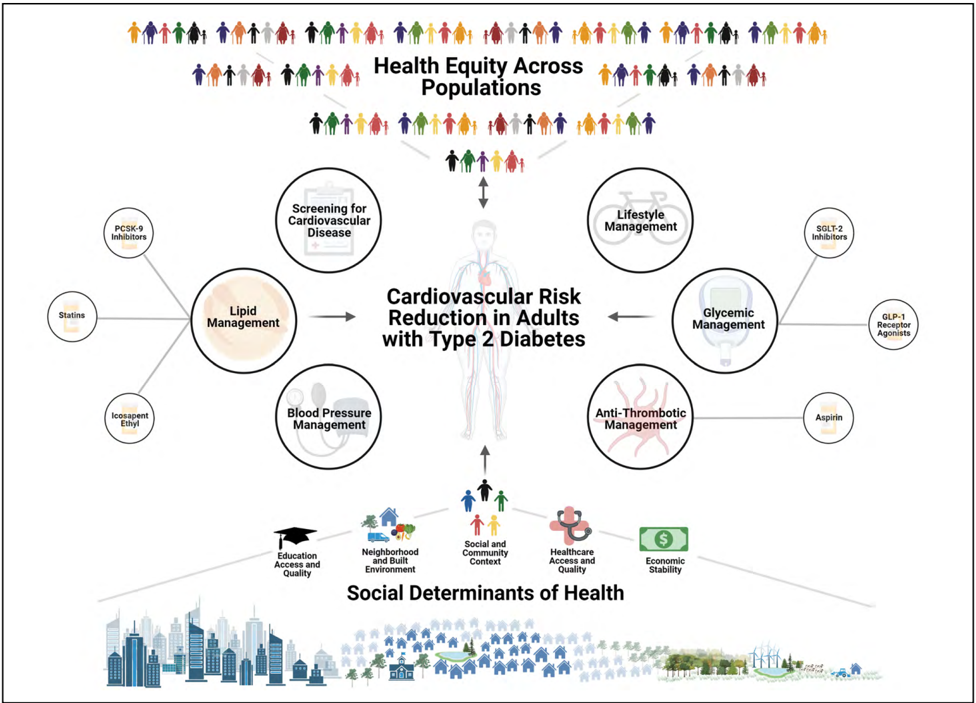
Cardiovascular disease remains the leading cause of death in patients with diabetes. Cardiovascular disease in diabetes is multifactorial, and control of the cardiovascular risk factors leads to substantial reductions in cardiovascular events. The 2015 American Heart Association and American Diabetes Association scientific statement, “Update on Prevention of Cardiovascular Disease in Adults With Type 2 Diabetes Mellitus in Light of Recent Evidence,” highlighted the importance of modifying various risk factors responsible for cardiovascular disease in diabetes. At the time, there was limited evidence to suggest that glucose-lowering medications reduce the risk of cardiovascular events. At present, several large randomized controlled trials with newer antihyperglycemic agents have been completed, demonstrating cardiovascular safety and reduction in cardiovascular outcomes, including cardiovascular death, myocardial infarction, stroke, and heart failure. This AHA scientific statement update focuses on (1) the evidence and clinical utility of newer antihyperglycemic agents in improving glycemic control and reducing cardiovascular events in diabetes; (2) the impact of blood pressure control on cardiovascular events in diabetes; and (3) the role of newer lipid-lowering therapies in comprehensive cardiovascular risk management in adults with diabetes. This scientific statement addresses the continued importance of lifestyle interventions, pharmacological therapy, and surgical interventions to curb the epidemic of obesity and metabolic syndrome, important precursors of prediabetes, diabetes, and comorbid cardiovascular disease. Last, this scientific statement explores the critical importance of the social determinants of health and health equity in the continuum of care in diabetes and cardiovascular disease.
Overview
The claims and statistics of this paper haven’t been checked yet.
Free: it reads the open-access text and checks the first 5 claims that cite a source we can check. Create a free account to check every claim.
Integrity signals
Registry
Cites
Statistics
Figures
Verification
Claims the paper makes
The claims and statistics of this paper haven’t been checked yet.
Free: it reads the open-access text and checks the first 5 claims that cite a source we can check. Create a free account to check every claim.
Claims other papers make about this one
Each is checked against this paper’s own text: does it say what the citing paper says it does?
The source backs part of the claim, not all of it — or backs it for a different population, condition or comparison.
In the citing paper
“Addressing overweight and obesity is central to CKM health, as excess and dysfunctional adiposity are the principal drivers for the development of metabolic risk factors and CKD, with subsequent increased CVD risk.2,22,23”
From 2026 AHA/ACC/ADA/ASN Guideline for the Prevention, Detection, Evaluation, and Management of Cardiovascular-Kidney-Metabolic Syndrome (2026) · cites this paper as [23]
Experimental — accuracy not yet measuredThe source backs part of the claim, not all of it — or backs it for a different population, condition or comparison.
In the citing paper
“A systematic review published in 2024 reported that behavioral lifestyle interventions with varying durations, regardless of their specific mix of behavioral, dietary, and physical activity components, are associated with a weight loss of roughly 5% among patients with overweight or obesity and T2D over a duration of approximately 12 months.23”
From 2026 AHA/ACC/ADA/ASN Guideline for the Prevention, Detection, Evaluation, and Management of Cardiovascular-Kidney-Metabolic Syndrome (2026) · cites this paper as [23]
Experimental — accuracy not yet measuredThe source backs part of the claim, not all of it — or backs it for a different population, condition or comparison.
In the citing paper
“Modeling exercises suggest meaningful gains in major cardiovascular and kidney event-free and overall survival when multiple kidney-protective agents are combined, compared with RASi alone.23”
From 2026 AHA/ACC/ADA/ASN Guideline for the Prevention, Detection, Evaluation, and Management of Cardiovascular-Kidney-Metabolic Syndrome (2026) · cites this paper as [23]
Experimental — accuracy not yet measuredThe source backs part of the claim, not all of it — or backs it for a different population, condition or comparison.
In the citing paper
“Incidentally identified moderate-to-severe coronary calcifications on a nongated chest computed tomography scan typically correlates with CAC ≥100, carries similar prognostic value, and can also identify patients with CKM syndrome most likely to benefit from preventive therapies.21–24”
From 2026 AHA/ACC/ADA/ASN Guideline for the Prevention, Detection, Evaluation, and Management of Cardiovascular-Kidney-Metabolic Syndrome (2026) · cites this paper as [23]
Experimental — accuracy not yet measuredThe source backs part of the claim, not all of it — or backs it for a different population, condition or comparison.
In the citing paper
“In adults across the CKM stages, intensive lifestyle interventions and intensive risk factor control with coordinated care and pharmacotherapies have robust evidence of improving CKM health.22–24”
From 2026 AHA/ACC/ADA/ASN Guideline for the Prevention, Detection, Evaluation, and Management of Cardiovascular-Kidney-Metabolic Syndrome (2026) · cites this paper as [23]
Experimental — accuracy not yet measured
17 more claims about this paper
Create a free account to see every claim other papers make about this one.
Self-check
Percentages, sums and reported differences re-computed from the paper’s own numbers.
The self-check needs the paper’s full text.
Citations
Cites
Reduction in the incidence of type 2 diabetes with lifestyle intervention or metformin
(2002) · New England Journal of Medicine · doi:10.1056/nejmoa012512 · Cited by 19,011
Empagliflozin, Cardiovascular Outcomes, and Mortality in Type 2 Diabetes
Zinman, B., Wanner, C., Lachin, J. M., Fitchett, D., Bluhmki, E., Hantel, S., Mattheus, M., Devins, T., Johansen, O. E., Woerle, H. J., et al. (2015) · New England Journal of Medicine · doi:10.1056/nejmoa1504720 · Cited by 12,315
Grundy, S. M., Cleeman, J. I., Daniels, S. R., Donato, K. A., Eckel, R. H., Franklin, B. A., Gordon, D. J., Krauss, R. M., Savage, P. J., Smith, S. C., et al. (2005) · Circulation · doi:10.1161/circulationaha.105.169404 · Cited by 11,961
Stratton, I. M. (2000) · BMJ · doi:10.1136/bmj.321.7258.405 · Cited by 9,059
Canagliflozin and Cardiovascular and Renal Events in Type 2 Diabetes
Neal, B., Perkovic, V., Mahaffey, K. W., de Zeeuw, D., Fulcher, G., Erondu, N., Shaw, W., Law, G., Desai, M., & Matthews, D. R. (2017) · New England Journal of Medicine · doi:10.1056/nejmoa1611925 · Cited by 7,830
Liraglutide and Cardiovascular Outcomes in Type 2 Diabetes
Marso, S. P., Daniels, G. H., Brown-Frandsen, K., Kristensen, P., Mann, J. F. E., Nauck, M. A., Nissen, S. E., Pocock, S., Poulter, N. R., Ravn, L. S., et al. (2016) · New England Journal of Medicine · doi:10.1056/nejmoa1603827 · Cited by 7,629
Dapagliflozin in Patients with Heart Failure and Reduced Ejection Fraction
McMurray, J. J. V., Solomon, S. D., Inzucchi, S. E., Køber, L., Kosiborod, M. N., Martinez, F. A., Ponikowski, P., Sabatine, M. S., Anand, I. S., Bělohlávek, J., et al. (2019) · New England Journal of Medicine · doi:10.1056/nejmoa1911303 · Cited by 7,140
Semaglutide and Cardiovascular Outcomes in Patients with Type 2 Diabetes
Marso, S. P., Bain, S. C., Consoli, A., Eliaschewitz, F. G., Jódar, E., Leiter, L. A., Lingvay, I., Rosenstock, J., Seufert, J., Warren, M. L., et al. (2016) · New England Journal of Medicine · doi:10.1056/nejmoa1607141 · Cited by 6,900
Dapagliflozin and Cardiovascular Outcomes in Type 2 Diabetes
Wiviott, S. D., Raz, I., Bonaca, M. P., Mosenzon, O., Kato, E. T., Cahn, A., Silverman, M. G., Zelniker, T. A., Kuder, J. F., Murphy, S. A., et al. (2019) · New England Journal of Medicine · doi:10.1056/nejmoa1812389 · Cited by 6,382
Self-citationCanagliflozin and Renal Outcomes in Type 2 Diabetes and Nephropathy
Perkovic, V., Jardine, M. J., Neal, B., Bompoint, S., Heerspink, H. J. L., Charytan, D. M., Edwards, R., Agarwal, R., Bakris, G., Bull, S., et al. (2019) · New England Journal of Medicine · doi:10.1056/nejmoa1811744 · Cited by 6,189
Research works printed but not linked: 1
- 156. Cavender MA, Norhammar A, Birkeland KI, Jørgensen ME, Wilding JP, Khunti K, Fu AZ, Bodegård J, Blak BT, Wittbrodt E, et al; CVD-REAL Investigators and Study Group. SGLT-2 inhibitors and cardiovascular risk: an analysis of CVD-REAL. J Am Coll Cardiol. 2018;71:2497-2506. doi: 10.1016/j.jacc.2018.01.085 · DOI · Paper page
Cited by
Items 601–700 of 737
Chwal, B. C. (2023) · LA Referencia (Red Federada de Repositorios Institucionales de Publicaciones Científicas)
Insikt i Coro-Carotid aterosklerotisk sjukdom hos patienter med akut koronarsyndrom
Shenouda, R. (2023) · DiVA at Umeå University (Umeå University)
Wasonga-Agak, J. N. (2024) · eScholarship (California Digital Library)
Niemistö, C. (2025) · Theseus (Ammattikorkeakoulujen)
Aribandi, S. (2025) · Journal of Posthumanism · doi:10.63332/joph.v5i12.3816
“Consequently, the interaction between humans and digital infrastructure has not been quantified, and the vulnerability of integrity has not been identified (El-Andari et al., 2025; González-Juanatey et al., 2023; Joseph et al., 2022).”
Alijaniha, M., Alijanihai, M., & Mirzaalimohammadi, M. (2025) · Research Square · doi:10.21203/rs.3.rs-8086214/v1
Papannarao, J. B., Coffey, S., Gray, A., Williams, M. J. A., & Katare, R. (2025) · Bioscience Reports · doi:10.1042/bsr20253835
Xie, X., Chen, Y., Wang, P., & Hu, M. (2025) · Annals of Medicine · doi:10.1080/07853890.2025.2603036
“Among these, comprehensive management is essential to improve patient quality of life and mitigate complications [10,11].”
Yau, S. T. Y., Hung, C. M., Leung, E. Y. M., Lee, A., & Yeoh, E. (2026) · Journal of Multimorbidity and Comorbidity · doi:10.1177/26335565251410270
Hou, X., Qiu, S., & Chen, X. (2026) · Patient Preference and Adherence · doi:10.2147/ppa.s561837
Arif, A., Karungi, I., Stevens, C. A. T., Elshorbagy, A. K., & Ray, K. K. (2026) · Atherosclerosis · doi:10.1016/j.atherosclerosis.2026.120644
Ye, N., & Cheng, H. (2026) · Drug Design Development and Therapy · doi:10.2147/dddt.s540082
“1 26–37 In 2023, the American Heart Association (AHA) convened a multidisciplinary group of experts and issued a presidential advisory for CKM, 5 concluding that CKM syndrome represents a multidirectional pathophysiology leading to increased morbidity and mortality, exceeding the mere aggregate of…”
DOENÇAS CARDIOVASCULARES E FATORES DE RISCO: ENQUADRAMENTO TEÓRICO E IMPLICAÇÕES EM SAÚDE PÚBLICA
Rodrigues, F., Alfarroba, M. D. J., Marques, C. S. R., Valentim, G. F., Correia, J. I. S., Fernandes, M. J. C., Alves, T. C., & COELHO, P. M. D. S. C. (2026) · II INTERNATIONAL SEVEN MULTIDISCIPLINARY CONGRESS · doi:10.56238/sevenviiimulti2026-094
Yang, K., Liu, S., Wang, C., Ni, S., Yue, Z., Bi, L., Yang, Y., & Zhang, M. (2026) · BMC Cardiovascular Disorders · doi:10.1186/s12872-025-05227-0
“Studies have demonstrated that IL-6 promotes endothelial dysfunction and renal tubular interstitial damage, which may further exacerbate kidney function decline [37, 38].”
Ullah, M. F., Mir, R., Javid, J., Elfaki, I., Altemani, F., Barnawi, J., Algehainy, N. A., Jalal, M. M., Altayar, M., Albalawi, S. O., et al. (2026) · Biomolecules & biomedicine · doi:10.17305/bb.2026.13200
“Evidence suggests that managing individual cardiovascular risk factors can help prevent or reduce the onset of CAD in diabetic individuals[50].”
Saber, K., Ismail, R. S., Bassyouni, A., El-Shafee, M., & Hassan, M. H. (2026) · European journal of medical research · doi:10.1186/s40001-025-03816-5
“…effect of genotype difference and gender differences of enrolled patients on glycemic response and weight loss response to Vilda plus Met as CVS risk factors and furthermore, explore the potential role of glycemic control and weight loss on Hcy level as another CVS risk factor [9, 13, 14, 43].”
InfluentialSignini, É. D. F., Castro, A., Rehder‐Santos, P., Milan‐Mattos, J. C., de Oliveira, J. M., Porta, A., Carneiro, R. L., Ferreira, A. G., Oliveira, R. V., & Catai, A. M. (2026) · Physiological Reports · doi:10.14814/phy2.70739 · Cited by 1
Açıkgöz, H. K. (2025) · Hasan Kalyoncu University Institutional Repository (Hasan Kalyoncu University)
Moreira, P., Amaral, C. K., Moreira, D. A. R., & Franco, M. D. C. (2026) · Einstein (São Paulo) · doi:10.31744/einstein_journal/2026ao1470
Ismail, F. Z., Yudawisastra, E. P., Nurhayati, N., Putranti, R. A., & Indriani, S. (2025) · Jurnal Kesehatan Tambusai · doi:10.31004/jkt.v6i4.50476
Phan, J. P., Kinninger, A., Roy, S. K., Bhandari, M., & Budoff, M. J. (2026) · The International Journal of Cardiovascular Imaging · doi:10.1007/s10554-026-03654-4
Evaluation of the Cardiovascular Disease Prevention Program among High and Very High Risk Patients
Šoblevičiūtė, G. (2025) · Lithuanian University of Health Sciences
The Potential Role of Antidiabetic Agents in Bipolar Disorder
Landivar, E., Gabriel, F. C., Daolio, L. D., & Lafer, B. (2026) · Current Treatment Options in Psychiatry · doi:10.1007/s40501-026-00375-2
“Large cardiovascular outcome trials have shown that SGLT2 inhibitors and GLP-1RAs reduce major adverse cardiovascular events and improve cardiorenal outcomes [88, 89].”
Perspective Chapter: A Critical Overview of Metformin Use from Past to Present
Türk, A. H., & Kılıç, H. C. (2026) · Pharmaceutical science. · doi:10.5772/intechopen.1012223
Salendu, N. K., Nurahmi, N., Zainuddin, A. A., Sanusi, H. D., Widaningsih, Y., & Kurniawan, L. B. (2026) · Clinical Diabetology · doi:10.5603/cd.111312
Egede, L. E., Walker, R. J., & Williams, J. S. (2026) · Elsevier eBooks · doi:10.1016/b978-0-323-87862-3.00026-4
Li, J., Fang, L., Shi, F., Cui, Q., Fang, C., & Wang, N. (2026) · International Journal of Clinical Practice · doi:10.1155/ijcp/1550880
Bhumika, H. S., Pandareesh, M. D., Narasaraju, T., & Ramadas, D. (2026) · Phytotherapy Research · doi:10.1002/ptr.70293
“Concurrent insulin resistance and dyslipidemia, characterized by elevated low-density lipoprotein (LDL) cholesterol and triglycerides, further drive the development of atherosclerosis (Joseph et al. 2022).”
Ren, J., Sun, X., Zhang, Z., Zhang, Y., Xiong, S., Tao, X., Sun, K., Zhang, C., Yin, B., Zhang, X., et al. (2026) · American Journal of Clinical Nutrition · doi:10.1016/j.ajcnut.2026.101282
Haruna, I., Sulemana, A.-R., Nakua, E. K., & Boateng, D. (2026) · BMC Public Health · doi:10.1186/s12889-026-27118-5
“Mortality rates are high among type 2 diabetes patients with comorbidities such as macrovascular and microvascular conditions, continuing to be the primary cause of death, underscoring the critical need for comprehensive research to find appropriate treatment and management methods [10].”
Xu, W., Wang, S., Yao, H., Luo, R., Li, P., & Lan, X. (2026) · Frontiers in Medicine · doi:10.3389/fmed.2026.1772461
“T2DM and cardiovascular diseases do not exist independently but rather promote each other and are causally related in comorbidity (8).”
Obesity Management and Cardiovascular Risk Reduction: from Tradition to Innovation
Costa, T. A., Harrington, J., Nelson, A. J., Pandey, A., Neeland, I. J., Lee, M. M. Y., Kang, Y. M., & McGuire, D. K. (2026) · Current Treatment Options in Cardiovascular Medicine · doi:10.1007/s11936-026-01138-1
Research Progress on the Effect of T2DM On Cardiovascular Diseases
苏, 克. (2026) · Journal of Clinical Personalized Medicine · doi:10.12677/jcpm.2026.52107
Hotta, V. T., Costa, I. B. S. D. S., Felix, R. C. M., Otto, M. E. B., Romano, M. M. D., Santorio, N. C., Brandão, S. C. S., Rassi, D. D. C., Lianza, A. C., dos Santos, S. N., et al. (2026) · Arquivos Brasileiros de Cardiologia · doi:10.36660/abc.20260221
Tsironikos, G. I., Zakynthinos, G. Ε., Kyprianidou, D., Rammou, V., Antonogiannis, T., Bargiota, Α., Zakynthinos, E. G., & Tsolaki, V. (2026) · World Journal of Cardiology · doi:10.4330/wjc.v18.i4.115712 · Cited by 1
Chen, K.-E., Wang, P.-C., Lin, H., & Lin, S. J. (2026) · Diabetes Obesity and Metabolism · doi:10.1111/dom.70744
Dong, C.-F., He, F., & Guo-Bin, K. (2026) · World Journal of Diabetes · doi:10.4239/wjd.v17.i4.115721
Oletu, H., Oladimeji, A. O., Okobi, E. K., Okwu, S., Kuye, A. A., Okobi, F., Osueni, A., Anya, O. O., Opoku, K. A., & Ogelebor, E. E. (2026) · Cureus · doi:10.7759/cureus.107319
Intellectual developmental disability and risk of developing depression in type 2 diabetes
Lee, J., Park, J. Y., Park, Y.-M. M., Park, Y.-B., Jung, J., Kim, B., & Nam, G. E. (2026) · Psychiatry Research · doi:10.1016/j.psychres.2026.117178
Khdhir, C. J., Hussein, R. H., & Maulood, I. M. (2026) · Journal of Muscle Research and Cell Motility · doi:10.1007/s10974-026-09730-5
de Chipana, L. D. C. T. A. (2025) · LA Referencia (Red Federada de Repositorios Institucionales de Publicaciones Científicas)
Zhang, Y., Nguyen, N. Q., Hanson, P. A., Sevilla-González, M. D. R., Haessler, J., Sarnowski, C., Yao, J., Yu, B., Jamshidi, A., Boerwinkle, E., et al. (2026) · Atherosclerosis · doi:10.1016/j.atherosclerosis.2026.120758
Xiong, P., Hu, M., Liao, X., Zhang, B., & Mo, F. (2026) · Diabetology & Metabolic Syndrome · doi:10.1186/s13098-026-02162-8
“This situation imposes a substantial burden on society and healthcare systems [2].”
Nagovitsin, A. K., Бакутина, Ю. Ю., Kochkina, I. A., & Chernutskiy, V. V. (2026) · Russian Journal of Cardiology · doi:10.15829/10.15829/1560-4071-2026-6899
Atayee, F., & Nesterova, S. (2026) · Theseus (Ammattikorkeakoulujen)
Liu, X. D., Yang, C., Pei, L., Muniasamy, U., Chaykun, G., Ong, M. S., Ihsan, M. O., Gurung, R., Liu, B., & Sorokin, V. A. (2026) · Journal of Translational Medicine · doi:10.1186/s12967-026-08095-0
“Studies have consistently shown that individuals with T2DM have a significantly greater risk of developing various cardiovascular complications, including coronary artery disease, stroke, and peripheral artery disease, than those without this condition [2, 3].”
Simons, R., Bonilauri, I., Vastmans, L., Steegen, L., Heeren, E., Vandenboer, V., Verghote, E., D’Haese, S., Claessen, G., Lambrichts, I., et al. (2026) · Cardiovascular Diabetology – Endocrinology Reports · doi:10.1186/s40842-026-00288-2
“…Society of Cardiology and the American Heart Association advocate for structured lifestyle interventions, emphasising regular physical activity, dietary improvements, and weight management as primary strategies to mitigate metabolic dysfunction and reduce cardiovascular risk in T2DM [10, 11].”
Assessment of Cardiovascular Disease Risk Across the Lifespan
Tapp, D. N., Haygood, D., Tipler, P., Tzoumas, A., & Quesada, O. (2026) · Springer eBooks · doi:10.1007/978-3-032-18203-6_2
Tallam, N., Kumar, H., Parve, S., Tawalare, K. A., Menon, A. T., Danda, P., & Shekhawat, G. S. (2026) · Bioinformation · doi:10.6026/973206300222129
Life’s Essential 8 and Risk of Type 2 Diabetes in the Women’s Health Initiative
Glenn, A. J., Larson, J. C., Hsu, E., Beydoun, H. A., LaMonte, M. J., Martin, L. W., Rivara, A. C., Wactawski‐Wende, J., Rohan, T. E., Richey, P. A., et al. (2026) · Diabetology · doi:10.3390/diabetology7050092
An Introduction of Lifestyle Medicine
Tremewan, C., Ergun-Longmire, B., Patel, D. R., & Goetting, M. G. (2026) · Springer eBooks · doi:10.1007/978-3-032-19116-8_22
Davis, W. (2026) · Journal of Osteopathic Medicine · doi:10.1515/jom-2026-0068
Zhao, Q., Xiao, C., Wang, X., & Jin, J. (2026) · Journal of Diabetes Investigation · doi:10.1111/jdi.70333
Undrajavarapu, P., Santosh Kumar, B., Vadakattu, S. S., Santhi, B., & Rao, D. S. (2026) · Clinical Nutrition Open Science · doi:10.1016/j.nutos.2026.100679
Abushamat, L. A., Reusch, J. E. B., & Ballantyne, C. M. (2026) · American Journal of Preventive Cardiology · doi:10.1016/j.ajpc.2026.101463
“People with type 2 diabetes (T2D) have a 2-to 4-fold higher risk of cardiovascular disease (CVD) than the general population [1].”
Price, P. U., Paganelli, M. O., Campos, M. S. D. A., & Pereira, L. R. L. (2026) · Value in Health Regional Issues · doi:10.1016/j.vhri.2026.101646
Majczak, K. T., Turniak, K., Strzelczyk, D. K., Plasota, A. J., Pojmańska, Z. A., Kret, J., Gajda, I., Białołęcka, M., Olczak, M. K., Marciniuk, A., et al. (2025) · African Journal of Biomedical Research · doi:10.69980/ajbr.v28i4s.8979
Alhazmi, A. S. (2026) · Pharmacognosy Magazine · doi:10.1177/09731296261446642
“Diabetes dramatically raises the risk of stroke, amputation, kidney failure, and blindness; these consequences lead to significant morbidity and early mortality (André, 2021; Joshua et al., 2022).”
Chuang, S., Liu, S.-C., Chien, K., Lin, C. Y., Tsai, M.-C., & Shih, H. (2026) · Diabetes Obesity and Metabolism · doi:10.1111/dom.70915
Gómez-Luján, M., Villagrán, G. A., Borja, B. M. R., Villares, A. J. P., Abel, V. S. B., Urueña, G. P., Hernández, M. D. M., & Lucas, C. P. (2026) · IECCMEXICO · doi:10.64784/208
Obesity, Adipose Biology, and the Next Frontier in Cardiovascular Medicine
Krumholz, H. M. (2026) · Journal of the American College of Cardiology · doi:10.1016/j.jacc.2026.04.028
Position Statement on Multimodal Cardiac Imaging in Patients with Systemic Diseases – 2026
Hotta, V. T., Costa, I. B. S. D. S., Felix, R. C. M., Otto, M. E. B., Romano, M. M. D., Santorio, N. C., Brandão, S. C. S., Rassi, D. D. C., Lianza, A. C., dos Santos, S. N., et al. (2026) · Arquivos Brasileiros de Cardiologia · doi:10.36660/abc.20260221i
Ulrich, F. S., Nielsen, M. F., Napoli, N., & Burden, A. M. (2026) · The Lancet Regional Health - Europe · doi:10.1016/j.lanepe.2026.101738
Vajjiravelu, R., Kirtheka, P. S., Palani, B., Jayakodi, S., & Kirubakaran, D. (2026) · Obesity Medicine · doi:10.1016/j.obmed.2026.100719
Prado, R., Chatterjee, A., Marques, Í. A., Cymbal, M., Khurana, A. T., Patel, R., Firkins, S. A., & Simons-Linares, R. (2026) · Research Square · doi:10.21203/rs.3.rs-9882907/v1
Silva-Tinoco, R., Ávalos-Bracho, A., la Cruz, V. M.-D., Gutiérrez-Morales, G., González-Ledesma, A., Saavedra-Romero, A., & Bernal-Ceballos, F. (2026) · Frontiers in Clinical Diabetes and Healthcare · doi:10.3389/fcdhc.2026.1837250
“Effective management of diabetes requires sustained delivery of evidence-based interventions to attain relevant clinical targets, including glycemic control, blood pressure management, and reduction of the risk of diabetes-related complications (5 – 8).”
Genetic and epigenetic landscape of type 2 diabetes mellitus
Patil, P. C., Surve, S., Kaleem, M., Kayali, A., & Bachhav, R. S. (2026) · Elsevier eBooks · doi:10.1016/b978-0-443-33590-7.00012-5
Sen, N., Modani, S. M., Kuthiala, R., Patel, A. S., Lakhani, H. A., & Upadhayay, P. (2026) · Cureus · doi:10.7759/cureus.111603
“Simultaneous management of glycemia, blood pressure, lipid parameters, smoking, diet, and physical activity was associated with better cardiovascular outcomes than isolated risk-factor control [11,23].”
InfluentialEffect of Finnish Sauna and other heat therapies on type 2 diabetes management and complications
Naziri, A., Chyl, J. R., Zielnik, M., Stróżna, K., Błażowska, O., Nowak, W., Gutowska, O. B., Kostuch, W. M., Jurewicz, A., & Zimon, A. (2026) · Quality in Sport · doi:10.12775/qs.2026.60.72761
Early autonomic neuropathy in prediabetes: an overlooked driver of cardiometabolic risk
Concepción‐Zavaleta, M. J., Fuentes‐Mendoza, J. M., Urteaga, L. A. C., Castillo-Balderas, S. A., Morón-Siguas, J. C., Paz‐Ibarra, J., & Aldave, J. E. Q. (2026) · Expert Review of Cardiovascular Therapy · doi:10.1080/14779072.2026.2696292
Zanatta, H. D. R., Montiel-López, L., Lopez‐Carreola, L., Zambrano, A. Z., Zambrano-Zambrano, K., Bernal‐Alferes, B., Díaz-Basilio, F., & Garduño-Pérez, Á. A. (2026) · medRxiv · doi:10.64898/2026.06.27.26356759
Li, Z., Li, G., Wang, Y., Zang, J., Wang, L., & Jiang, J. (2026) · Journal of Cardiovascular Development and Disease · doi:10.3390/jcdd13070306
Pérez, B. M., Hurtado‐Ortiz, A., López, J., Guerrero, J., Romero, M. E. G., Licht-Ardila, M., & Hernández, E. F. M. (2026) · International Journal of Cardiology Cardiovascular Risk and Prevention · doi:10.1016/j.ijcrp.2026.200680
“Conversely, statin prescription was associated with higher utility values, which may reflect better adherence to guideline-directed medical therapy and closer follow-up, factors that have been linked to improved functional recovery and patient-reported outcomes after myocardial infarction [26].”
Долженко, М. М., Sirenko, Y., & Білоусова, Н. А. (2025) · Digital Library NAES of Ukraine (National Academy of Educational Sciences of Ukraine) · doi:10.55056/bilousova_747684
Lansang, M. C., Petito, L. C., Hegermiller, E., Chelliah, I., Carnahan, R. M., McDonnell, M. E., DEVRIES, A. R., Priest, E., Willey, V., Nair, V. P., et al. (2026) · Diabetes Obesity and Cardiometabolic CARE · doi:10.2337/doc26-0027
Lit, V. F., Bak, J. C. G., van Bon, A. C., Serné, E. H., Sijstermans, K., Brouwer, C. B., Eland, I. A., Stouthart, P. J. H. M., van Bemmel, T., Groenwold, R. H. H., et al. (2026) · Diabetes Research and Clinical Practice · doi:10.1016/j.diabres.2026.113440
Approach to the patient with elevated lipoprotein(a)
McGinnis, T., & Saxon, D. R. (2026) · The Journal of Clinical Endocrinology & Metabolism · doi:10.1210/clinem/dgag286
Demarie, I., Bowen, M. E., Agarwal, S., Mai, C., MARBLE, K., Pak, J., Heitjan, D. F., Xiang, Z., Lehmann, C. U., Lingvay, I., et al. (2026) · JAMIA Open · doi:10.1093/jamiaopen/ooag141
Inzucchi, S. E., Ghani, R. A., Deanfield, J. E., Emerson, S. S., Engelmann, M. D. M., Hovingh, G. K., Jeppesen, O. K., Kellerer, M., Mandavya, K., Mann, J. F. E., et al. (2026) · The Journal of Clinical Endocrinology & Metabolism · doi:10.1210/clinem/dgag290
Frigo, F. F., Fasching, P., & Brath, H. (2026) · Nutrients · doi:10.3390/nu18162672 · Cited by 1
“National and international dietary guidelines vary widely in scope, level of detail, and emphasis on specific macronu-trients or food groups [9,24–26].”
Chen, J., Fang, C., Tang, S., & Wang, H. (2026) · Journal of Trace Elements in Medicine and Biology · doi:10.1016/j.jtemb.2026.127935 · Cited by 1
Zhang, X., Guo, J., Luo, F., Zheng, D., Zhang, Y., & Chen, T. (2026) · BMC Cardiovascular Disorders · doi:10.1186/s12872-026-06366-8
“In adults with diabetes, cardiovascular disease (CVD) remains a major contributor to mortality despite contemporary multifactorial risk control and cardioprotective therapy [1, 2].”
Chen, Y., Xing, Z., & Hu, J. (2026) · Frontiers in Endocrinology · doi:10.3389/fendo.2026.1906084
“Part of this residual risk is likely to arise from social and behavioral conditions that affect what happens between clinic visits, including household structure, social support, and the capacity to carry out daily self-management (3).”
Fordjour, E., Gobe, V. A. D., Manful, C. F., Callahan, G., Sandra, S., Alrayes, L., & Thomas, R. (2026) · Elsevier eBooks · doi:10.1016/b978-0-443-22332-7.00040-4
Liu, Y.-T., Zhu, Y., Yuan, J., Liu, L., Zhang, D., Zhang, R., You, S., Han, Y., You, H., Wu, S., et al. (2026) · Journal of Diabetes Research · doi:10.1155/jdr/8920917
He, C., Hu, X. T., Yin, X., Zhan, M., Cao, W., & Li, R. (2026) · Frontiers in Endocrinology · doi:10.3389/fendo.2026.1900634
“Diabetes constitutes a major risk factor for both the occurrence of a fi rst cardiovascular event and subsequent worsening of prognosis (3, 4).”
Wang, J. J., Hu, J., Dai, W., Liu, Y., Jiang, P., Ye, J., & Cao, Y. H. (2026) · Frontiers in Endocrinology · doi:10.3389/fendo.2026.1901683
Toxic crossroads: environmental pesticides and their endocrine footprints in global metabolic health
Onikanni, S. A., Murucci, M. D., da Costa, T. G., Amos, O. E., Ajayi, O. D., Dao, T., Ajiboye, B. O., Adewole, E., Piperni, S. G., & Miranda‐Alves, L. (2026) · Journal of Molecular Endocrinology · doi:10.1530/jme-25-0183
Huang, S.-C., Cheng, W.-Y., Hou, C.-Y., Wu, J.-Y., Lai, C., & Tseng, W. (2026) · Frontiers in Urology · doi:10.3389/fruro.2026.1855180
Zhu, L., Xiao, Z., Wang, J., Xijie, G., & Ni, C. (2026) · Research Square · doi:10.21203/rs.3.rs-10150947/v1
Amer, A. H., Edrees, W. H., Chaudhari, K., & Haridas, N. (2026) · Scientific Reports · doi:10.1038/s41598-026-66412-5
Liu, Y., Gong, J., Zhang, J., Tan, J., & Tan, C. (2026) · Science Progress · doi:10.1177/00368504261477194
“54,55 Our data indicate that even moderate elevations in cumCRP correspond to clinically significant increments in COPD risk, suggesting CRP as a potential target for preventive interventions.”
Exercise and physical activity interventions in type 2 diabetes mellitus
Su, W., Li, X., Gou, H., Yuan, L., Lin, L., Lin, X., Wang, X., Xiong, Y., & Luan, Y. (2026) · Frontiers in Endocrinology · doi:10.3389/fendo.2026.1887543
Lin, C.-L., Lin, K.-C., Yu, J.-M., Chang, C., Lin, Y.-Y., Fang, C.-Y., Chen, W., & Wu, S. (2026) · Nature Communications · doi:10.1038/s41467-026-77047-5
Martín-Chaves, L., Gómez-Herrera, M., Jiménez, R., Gutiérrez-García, Á. M., Carmona-Segovia, A. D. M., Díaz-Ottaviano, M., Beltrán-Camacho, L., García, G. B., Bodí, V., Sánchez-Chaparro, M. Á., et al. (2026) · Research Square · doi:10.21203/rs.3.rs-10729493/v1
Wang, W., Li, J., Zhang, Z., Hu, Y., & Kong, D. (2026) · Medicine · doi:10.1097/md.0000000000050479
Mitrovic, P. M., Rajic, D., & Djordjevic, N. (2026) · Echocardiography · doi:10.1111/echo.70610
Schneider, V. M., Silva, L. D. L., Carvalho, G., Lemes, G., Pereira, D. M., & Ferrari, R. (2026) · Journal of Human Hypertension · doi:10.1038/s41371-026-01217-7
Ferulic acid liposomes improve diabetic EPC angiogenesis by upregulating the AMPK/KLF4/FAM3A pathway
Zou, X.-L., He, Y.-Y., Zhang, X., Hu, W.-X., Li, S.-Y., Liu, X.-N., Qiao, S.-Y., Wang, Y., Luo, B., Zhao, S.-J., et al. (2026) · In Vitro Cellular & Developmental Biology - Animal · doi:10.1007/s11626-026-01244-1
Metadata
- Authors
- Joseph, J. J., Deedwania, P., Acharya, T., Aguilar, D., Bhatt, D. L., Chyun, D. A., Di Palo, K. E., Golden, S. H., Sperling, L. S., & on behalf of the American Heart Association Diabetes Committee of the Council on Lifestyle and Cardiometabolic Health; Council on Arteriosclerosis, T. A. V. B. C. O. C. C. A. C. O. H.
- Venue
- Circulation
- Published
- 2022-03
- Volume
- 145
- Issue
- 9
- Pages
- e722-e759
- ISSN
- 0009-7322 (ISSN-L)
- 1524-4539
- OpenAlex
- W4205367203
- Semantic Scholar
- 7a57cfa0ae0287001076e9645f541ccafa5d7432
- Cited by
- 660
- References
- 312
- Citations by year
- 2026: 133 · 2025: 171 · 2024: 153 · 2023: 157 · 2022: 45
- FWCI
- 18.76
- Type
- journal article
- Language
- en
- Open access
- hybrid
- doi.org
- Licence
- cc-by-nc
- Locations
- Circulation (publishedVersion, cc-by-nc)
- PubMed (publishedVersion)
- Topics
- Health Sciences › Medicine › Endocrinology, Diabetes and Metabolism › Diabetes Treatment and Management
- Health Sciences › Medicine › Endocrinology, Diabetes and Metabolism › Diabetes, Cardiovascular Risks, and Lipoproteins
- Health Sciences › Medicine › Endocrinology, Diabetes and Metabolism › Diabetes Management and Research
- Keywords
- type 2 diabetes, cardiovascular risk factors, cardiovascular disease prevention, antidiabetic drugs, cardiovascular safety, blood pressure control, lipid-lowering therapy, glycemic control, obesity, metabolic syndrome, prediabetes, lifestyle intervention, bariatric surgery, social determinants of health, health equity
- MeSH terms
- Heart Disease Risk Factors, Adult, American Heart Association, Cardiovascular Diseases, Diabetes Mellitus, Type 2, Humans, United States, Diabetes Complications
About these checks
Registry, retraction, Cites and statistics results are computed, not judged, with one exception: a printed reference that no index lists is read once by a model before it counts as a citation error. Claims are extracted by a model and kept only when their quote appears verbatim in the text; each cited source is then checked, with a model’s help, for whether it says what the claim relies on. Those verdicts can be wrong — read the claim’s quote and the cited source before relying on one.
Statistics and arithmetic are recomputed, not judged.
Confidence bands are shown only for fields calibrated on our annotated test set. None is calibrated yet, so no band is shown.
What counts as a claim ›How we measure confidence ›How we check this ›
Are you an author, or do you see a problem with this page? Request a review
Data sources
Bibliographic data: Semantic Scholar, OpenAlex, Crossref.
Contains information from the Semantic Scholar Academic Graph Datasets, made available under the ODC Attribution License (ODC-BY 1.0).
Semantic Scholar’s data is described in: Kinney, R., et al. (2023). The Semantic Scholar Open Data Platform. arXiv:2301.10140.
