

Comprehensive Management of Cardiovascular Risk Factors for Adults With Type 2 Diabetes: A Scientific Statement From the American Heart Association
Open accessThe DOI matches its Crossref record; 315 of the 316 references it cites were found in a registry or an index, and 1 are not checked yet.
Abstract
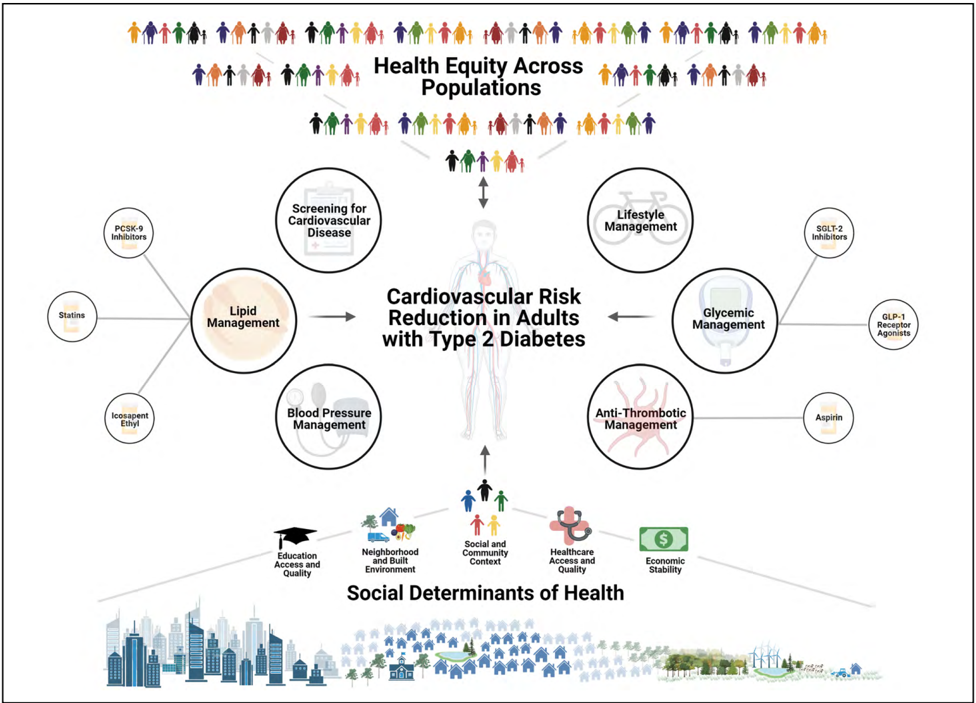
Cardiovascular disease remains the leading cause of death in patients with diabetes. Cardiovascular disease in diabetes is multifactorial, and control of the cardiovascular risk factors leads to substantial reductions in cardiovascular events. The 2015 American Heart Association and American Diabetes Association scientific statement, “Update on Prevention of Cardiovascular Disease in Adults With Type 2 Diabetes Mellitus in Light of Recent Evidence,” highlighted the importance of modifying various risk factors responsible for cardiovascular disease in diabetes. At the time, there was limited evidence to suggest that glucose-lowering medications reduce the risk of cardiovascular events. At present, several large randomized controlled trials with newer antihyperglycemic agents have been completed, demonstrating cardiovascular safety and reduction in cardiovascular outcomes, including cardiovascular death, myocardial infarction, stroke, and heart failure. This AHA scientific statement update focuses on (1) the evidence and clinical utility of newer antihyperglycemic agents in improving glycemic control and reducing cardiovascular events in diabetes; (2) the impact of blood pressure control on cardiovascular events in diabetes; and (3) the role of newer lipid-lowering therapies in comprehensive cardiovascular risk management in adults with diabetes. This scientific statement addresses the continued importance of lifestyle interventions, pharmacological therapy, and surgical interventions to curb the epidemic of obesity and metabolic syndrome, important precursors of prediabetes, diabetes, and comorbid cardiovascular disease. Last, this scientific statement explores the critical importance of the social determinants of health and health equity in the continuum of care in diabetes and cardiovascular disease.
Overview
The claims and statistics of this paper haven’t been checked yet.
Free: it reads the open-access text and checks the first 5 claims that cite a source we can check. Create a free account to check every claim.
Integrity signals
Registry
Cites
Statistics
Figures
Verification
Claims the paper makes
The claims and statistics of this paper haven’t been checked yet.
Free: it reads the open-access text and checks the first 5 claims that cite a source we can check. Create a free account to check every claim.
Claims other papers make about this one
Each is checked against this paper’s own text: does it say what the citing paper says it does?
The source backs part of the claim, not all of it — or backs it for a different population, condition or comparison.
In the citing paper
“Addressing overweight and obesity is central to CKM health, as excess and dysfunctional adiposity are the principal drivers for the development of metabolic risk factors and CKD, with subsequent increased CVD risk.2,22,23”
From 2026 AHA/ACC/ADA/ASN Guideline for the Prevention, Detection, Evaluation, and Management of Cardiovascular-Kidney-Metabolic Syndrome (2026) · cites this paper as [23]
Experimental — accuracy not yet measuredThe source backs part of the claim, not all of it — or backs it for a different population, condition or comparison.
In the citing paper
“A systematic review published in 2024 reported that behavioral lifestyle interventions with varying durations, regardless of their specific mix of behavioral, dietary, and physical activity components, are associated with a weight loss of roughly 5% among patients with overweight or obesity and T2D over a duration of approximately 12 months.23”
From 2026 AHA/ACC/ADA/ASN Guideline for the Prevention, Detection, Evaluation, and Management of Cardiovascular-Kidney-Metabolic Syndrome (2026) · cites this paper as [23]
Experimental — accuracy not yet measuredThe source backs part of the claim, not all of it — or backs it for a different population, condition or comparison.
In the citing paper
“Modeling exercises suggest meaningful gains in major cardiovascular and kidney event-free and overall survival when multiple kidney-protective agents are combined, compared with RASi alone.23”
From 2026 AHA/ACC/ADA/ASN Guideline for the Prevention, Detection, Evaluation, and Management of Cardiovascular-Kidney-Metabolic Syndrome (2026) · cites this paper as [23]
Experimental — accuracy not yet measuredThe source backs part of the claim, not all of it — or backs it for a different population, condition or comparison.
In the citing paper
“Incidentally identified moderate-to-severe coronary calcifications on a nongated chest computed tomography scan typically correlates with CAC ≥100, carries similar prognostic value, and can also identify patients with CKM syndrome most likely to benefit from preventive therapies.21–24”
From 2026 AHA/ACC/ADA/ASN Guideline for the Prevention, Detection, Evaluation, and Management of Cardiovascular-Kidney-Metabolic Syndrome (2026) · cites this paper as [23]
Experimental — accuracy not yet measuredThe source backs part of the claim, not all of it — or backs it for a different population, condition or comparison.
In the citing paper
“In adults across the CKM stages, intensive lifestyle interventions and intensive risk factor control with coordinated care and pharmacotherapies have robust evidence of improving CKM health.22–24”
From 2026 AHA/ACC/ADA/ASN Guideline for the Prevention, Detection, Evaluation, and Management of Cardiovascular-Kidney-Metabolic Syndrome (2026) · cites this paper as [23]
Experimental — accuracy not yet measured
17 more claims about this paper
Create a free account to see every claim other papers make about this one.
Self-check
Percentages, sums and reported differences re-computed from the paper’s own numbers.
The self-check needs the paper’s full text.
Citations
Cites
Reduction in the incidence of type 2 diabetes with lifestyle intervention or metformin
(2002) · New England Journal of Medicine · doi:10.1056/nejmoa012512 · Cited by 19,011
Empagliflozin, Cardiovascular Outcomes, and Mortality in Type 2 Diabetes
Zinman, B., Wanner, C., Lachin, J. M., Fitchett, D., Bluhmki, E., Hantel, S., Mattheus, M., Devins, T., Johansen, O. E., Woerle, H. J., et al. (2015) · New England Journal of Medicine · doi:10.1056/nejmoa1504720 · Cited by 12,315
Grundy, S. M., Cleeman, J. I., Daniels, S. R., Donato, K. A., Eckel, R. H., Franklin, B. A., Gordon, D. J., Krauss, R. M., Savage, P. J., Smith, S. C., et al. (2005) · Circulation · doi:10.1161/circulationaha.105.169404 · Cited by 11,961
Stratton, I. M. (2000) · BMJ · doi:10.1136/bmj.321.7258.405 · Cited by 9,059
Canagliflozin and Cardiovascular and Renal Events in Type 2 Diabetes
Neal, B., Perkovic, V., Mahaffey, K. W., de Zeeuw, D., Fulcher, G., Erondu, N., Shaw, W., Law, G., Desai, M., & Matthews, D. R. (2017) · New England Journal of Medicine · doi:10.1056/nejmoa1611925 · Cited by 7,830
Liraglutide and Cardiovascular Outcomes in Type 2 Diabetes
Marso, S. P., Daniels, G. H., Brown-Frandsen, K., Kristensen, P., Mann, J. F. E., Nauck, M. A., Nissen, S. E., Pocock, S., Poulter, N. R., Ravn, L. S., et al. (2016) · New England Journal of Medicine · doi:10.1056/nejmoa1603827 · Cited by 7,629
Dapagliflozin in Patients with Heart Failure and Reduced Ejection Fraction
McMurray, J. J. V., Solomon, S. D., Inzucchi, S. E., Køber, L., Kosiborod, M. N., Martinez, F. A., Ponikowski, P., Sabatine, M. S., Anand, I. S., Bělohlávek, J., et al. (2019) · New England Journal of Medicine · doi:10.1056/nejmoa1911303 · Cited by 7,140
Semaglutide and Cardiovascular Outcomes in Patients with Type 2 Diabetes
Marso, S. P., Bain, S. C., Consoli, A., Eliaschewitz, F. G., Jódar, E., Leiter, L. A., Lingvay, I., Rosenstock, J., Seufert, J., Warren, M. L., et al. (2016) · New England Journal of Medicine · doi:10.1056/nejmoa1607141 · Cited by 6,900
Dapagliflozin and Cardiovascular Outcomes in Type 2 Diabetes
Wiviott, S. D., Raz, I., Bonaca, M. P., Mosenzon, O., Kato, E. T., Cahn, A., Silverman, M. G., Zelniker, T. A., Kuder, J. F., Murphy, S. A., et al. (2019) · New England Journal of Medicine · doi:10.1056/nejmoa1812389 · Cited by 6,382
Self-citationCanagliflozin and Renal Outcomes in Type 2 Diabetes and Nephropathy
Perkovic, V., Jardine, M. J., Neal, B., Bompoint, S., Heerspink, H. J. L., Charytan, D. M., Edwards, R., Agarwal, R., Bakris, G., Bull, S., et al. (2019) · New England Journal of Medicine · doi:10.1056/nejmoa1811744 · Cited by 6,189
Research works printed but not linked: 1
- 156. Cavender MA, Norhammar A, Birkeland KI, Jørgensen ME, Wilding JP, Khunti K, Fu AZ, Bodegård J, Blak BT, Wittbrodt E, et al; CVD-REAL Investigators and Study Group. SGLT-2 inhibitors and cardiovascular risk: an analysis of CVD-REAL. J Am Coll Cardiol. 2018;71:2497-2506. doi: 10.1016/j.jacc.2018.01.085 · DOI · Paper page
Cited by
Items 401–500 of 737
Risk Factors for Atherosclerotic Cardiovascular Disease
Weidner, C., & Braun, L. T. (2024) · Springer eBooks · doi:10.1007/978-3-031-53705-9_4 · Cited by 3
Emirates consensus recommendations on cardiovascular risk management in type 2 diabetes
Sabbour, H. M., Almahmeed, W. A., Alawadi, F., Shehab, A. M., Zubaidi, A. A., Bashier, A. M., Ghulam, A. R., Rashid, F., Zaky, H., Kassem, H. H., et al. (2025) · Frontiers in Endocrinology · doi:10.3389/fendo.2024.1395630 · Cited by 4
Is the very low carbohydrate diet safe for individuals with chronic kidney disease?
Colledge, B. S., Schofield, E. C., Clarke, B. B., Popovic, G. C., Vattekad, M., & Figtree, P. E. (2025) · Journal of Metabolic Health · doi:10.4102/jmh.v8i1.115 · Cited by 3
“2,22 The therapeutic mechanisms of a very low carbohydrate diet (VLCHD) are strikingly similar to the mechanisms of the sodium-glucose co-transporter-2 inhibitor (SGLT2i), which is now an established treatment for CKD.”
A Call to Action to Address the Burden of Cardiovascular Disease in People with Diabetes
Lorenty, K., Harding, E., & Fenton, O. (2022) · Global Heart · doi:10.5334/gh.1176 · Cited by 3
Oe, M., Fujihara, K., Yamada, M. H., OSAWA, T., Kitazawa, M., Matsubayashi, Y., Sato, T., Yaguchi, Y., Iwanaga, M., Yamada, T., et al. (2024) · Journal of Diabetes Investigation · doi:10.1111/jdi.14277 · Cited by 3
“Type 2 diabetes mellitus is also a well-established risk factor for CVD 4 .”
BackgroundBrai, B. I. C., Joseph, R. O., Komolafe, T. R., Amosun, B. E., Crown, O. O., Komolafe, K., & Ogungbe, I. V. (2024) · Archives of Physiology and Biochemistry · doi:10.1080/13813455.2024.2426497 · Cited by 3
Qin, X., Peng, Q., Chen, H., & Zhang, W. (2024) · Journal of Multidisciplinary Healthcare · doi:10.2147/jmdh.s494004 · Cited by 3
“5 Cardiologists are increasingly called upon to incorporate glycemic control into the broader context of cardiovascular risk management, as managing glycemic levels in patients with CHD and T2DM is complicated by the need to balance glycemic targets with cardiovascular safety, as overly aggressive…”
Raje, S., Maiya, G. A., Ramachandran, P., Prabhu, M. A., Nayak, K., Shivashankara, K. N., Shastry, B. A., & Nataraj, M. (2025) · Journal of Bodywork and Movement Therapies · doi:10.1016/j.jbmt.2025.02.017 · Cited by 2
Haff, N., Horn, D. M., Bhatkhande, G., Sung, M., Colling, C., Wood, W., Robertson, T., Gaposchkin, D. P., Simmons, L. H., Yang, J., et al. (2025) · American Heart Journal · doi:10.1016/j.ahj.2025.02.007 · Cited by 2
Chatur, S., Seth, M., Casey, M., Thompson, M. P., Qureshi, M., Gupta, V. A., Qureshi, M., Samman, B., Forest, A., Gurm, H. S., et al. (2025) · American Heart Journal · doi:10.1016/j.ahj.2025.01.020 · Cited by 2
Agbonlahor, O., Gamble, A., Compretta, C., Mann, J. R., & Faruque, F. (2025) · Preventive Medicine · doi:10.1016/j.ypmed.2025.108272 · Cited by 2
Özdemir, İ., İşleyen, E. K., & Demirtaş, S. (2025) · Halk Sağlığı Hemşireliği Dergisi · doi:10.54061/jphn.1626389 · Cited by 2
Xu, T., Tao, Y., & Lei, Y. (2025) · Nutrition Metabolism and Cardiovascular Diseases · doi:10.1016/j.numecd.2025.104160 · Cited by 2
Aloraini, G. F., McKeown, N. M., Rogers, G. T., Das, S. K., Lichtenstein, A. H., & Jacques, P. F. (2025) · Nutrition Journal · doi:10.1186/s12937-025-01194-6 · Cited by 3
“This support recommendations from the American Diabetes Association and American Heart Association to maintain high-quality carbohydrates and decrease low-quality carbohydrate in moderate LCD patterns to reduce risk of T2D and CVD [81, 82].”
Unraveling the complexity of chronic diseases: an introductory exploration
Prajapati, C., Singh, P., Nand, S., & Singh, S. K. (2025) · Elsevier eBooks · doi:10.1016/b978-0-443-33877-9.00005-7 · Cited by 4
Luo, J., Zhou, H., Yu, F., Zhou, Q., Wu, X., Liu, Q., & Gan, S. (2025) · BMJ Open · doi:10.1136/bmjopen-2024-097626 · Cited by 2
Dewidar, O., Abdi, A., Sabri, H., Dawit, H., Philip, S. C., Barbeau, V. I., Benoît, P., Antunes, P., Jetté, J., Assaouré, J., et al. (2025) · CJC Open · doi:10.1016/j.cjco.2025.10.002 · Cited by 2
Plata, A. A., Otmanowski, E., & Zubcevic, J. A. (2025) · Microbiota and Host · doi:10.1530/mah-25-0008 · Cited by 2
Ghosal, S., & Ghosal, A. (2025) · Diabetes Metabolic Syndrome and Obesity · doi:10.2147/dmso.s575790 · Cited by 2
Zhou, X., Zou, C., Li, X., Tian, H., Miao, Y., Ke, T., & Zhao, L. (2025) · Frontiers in Public Health · doi:10.3389/fpubh.2025.1712899 · Cited by 3
Bokre, S. R., Jumani, D., Waghmare, A. R., & Dipankar, S. P. (2026) · Cureus · doi:10.7759/cureus.102020 · Cited by 2
“Current consensus statements and clinical guidelines recommend that men presenting with ED should undergo assessment for cardiovascular and metabolic risk factors and that lifestyle modification and risk factor optimization should accompany pharmacological treatment [27,28].”
YANG, K. Y., Qin, S., Xu, S., Cui, X., Zhang, Z., Cao, J., Xiao, M.-Y., Yang, Y., He, C., Zhou, X., et al. (2026) · Cardiovascular Diabetology · doi:10.1186/s12933-026-03087-2 · Cited by 2
“The risk of cardiovascular events, including acute myocardial infarction (AMI), is two to four times higher in patients with T2D, and the progression of AMI in T2D is often intricate [2–4].”
Shlomov, T., Nitzan, I., Pollack, R. M., Zloto, O., & Gur, Z. (2026) · Canadian Journal of Ophthalmology · doi:10.1016/j.jcjo.2026.01.010 · Cited by 2
The Cardiovascular Effects of Acute and Chronic Hypoglycemia
Dintakurti, A., Parikh, M. A., Silver, R., Frishman, W. H., & Peterson, S. J. (2025) · Cardiology in Review · doi:10.1097/crd.0000000000001114 · Cited by 2
Cardiometabolic Syndromes and Associated Cardiovascular Risks: A Narrative Review
Ruiz-Saavedra, A., Lara, F. V.-O. D., & Martínez, J. A. (2026) · Journal of Vascular Research · doi:10.1159/000549775 · Cited by 4
“DPP-4i are generally safe but confer limited CV benefit, making them suitable in selected cases [97].”
Drug induced renal injury (DIRI) biomarkers
Sher, E. K., Boras, M. M., Fajkić, A., & Begović, F. (2026) · Advances in clinical chemistry · doi:10.1016/bs.acc.2026.01.006 · Cited by 2
Lipid Lowering in 2026: Still Asking When, in Whom, and How
Greenland, P., & Lloyd‐Jones, D. M. (2026) · JAMA · doi:10.1001/jama.2026.2392 · Cited by 2
Wyss, F. S., Ullauri, V. E., Lara-Terán, J. J., Arteaga-Arellano, A., Martín, C. G., López-Santi, R., Pérez, G., Madrigal, C. A., Ger, M., Piskorz, D. L., et al. (2026) · Diabetology & Metabolic Syndrome · doi:10.1186/s13098-026-02157-5 · Cited by 3
“…mellitus prioritize the consumption of fresh and minimally processed foods, emphasizing the intake of vegetables, fruits, whole grains, legumes, nuts, seeds, and non-tropical vegetable oils, with regular consumption of fish and poultry, and limited intake of processed meats [118, 147, 149, 151].”
Lin, J., HSU, C., Lo, S., Nigam, N., Shenoi, M., Tu, Y.-F., BHANDERI, H., Chen, C., Su, Y., Chang, H., et al. (2026) · Diabetes/Metabolism Research and Reviews · doi:10.1002/dmrr.70188 · Cited by 2
Kondeti, P., Chakrabarti, A., Drexler, Y. R., Mesa, R. A., Tremblay, J. O., Gallo, L. C., Lash, J. P., Rosas, S. E., Franceschini, N., Massera, D., et al. (2026) · Clinical Journal of the American Society of Nephrology · doi:10.2215/cjn.0000001088 · Cited by 2
Pérez, A. P. G., Gutiérrez‐Zarate, D., Rosas-Sánchez, K., Romo, A. M., & Poblano, M. N. (2026) · Case Reports in Critical Care · doi:10.1155/crcc/4896065 · Cited by 2
Hubungan Pengaruh Polimorfisme Genetik Terhadap Risiko Kejadian Diabetes Melitus
Yunita, E., Putri, C. E., Indrian, A., Umar, L. A., & Dita, D. A. A. (2023) · Jurnal Medika Malahayati · doi:10.33024/jmm.v6i4.9004 · Cited by 2
Wu, Q. E., Yu, S., & Peng, K. (2023) · Critical Reviews in Immunology · doi:10.1615/critrevimmunol.2023050364 · Cited by 2
Wen-Li, D. A. I., Zi-Xu, Z. H. A. O., Jiang, C., He, L., Yao, K., Wang, Y., Gao, M., Lai, Y., ZHANG, J.-R., Li, M., et al. (2023) · 老年心脏病学杂志:英文版 · doi:10.26599/1671-5411.2023.10.001 · Cited by 2
Al‐Omar, H. A., Almodaimegh, H., Omaer, A., Alzubaidi, L. M. Y., Al-Harbi, B., Al-Harbi, I., Hassan, M., & Akhtar, O. (2024) · Journal of Medical Economics · doi:10.1080/13696998.2024.2319458 · Cited by 2
Kabata, D., Saeki, N., Kajimoto, K., Tanaka, R., Kakiuchi, N., Shintani, A., & Koretsune, Y. (2024) · Preventive Medicine · doi:10.1016/j.ypmed.2024.107972 · Cited by 2
Effect of Hypoglycemia and Rebound Hyperglycemia on Proteomic Cardiovascular Risk Biomarkers
Nandakumar, M., Sathyapalan, T., Atkin, S. L., & Butler, A. E. (2024) · Biomedicines · doi:10.3390/biomedicines12061137 · Cited by 3
“It is recognized that hyper-glycemia is associated with diabetes-related complications and the reduction in mean blood glucose reduces their incidence [15].”
BackgroundKhunlertkit, T., Viangteeravat, T., Wangprapa, P., Siriwechdaruk, S., Ford, J. M., & Pongpirul, K. (2024) · PLoS ONE · doi:10.1371/journal.pone.0302438 · Cited by 2
Parekh, R. A., Athavale, V. S., & Kelshikar, S. (2024) · Cureus · doi:10.7759/cureus.69164 · Cited by 2
“The incidence and morbidity of DFUs can be significantly decreased using evidence-based preventive and treatment methods [2,3].”
BackgroundBibliometric and visual analysis of SGLT2 inhibitors in cardiovascular diseases
Pan, R., He, Y., Melisandre, W., Zhang, Y., Su, W., Feng, J., Jia, C., Li, S., & Liu, B. (2024) · Frontiers in Pharmacology · doi:10.3389/fphar.2024.1437760 · Cited by 2
Zhu, M., Liu, M., Lu, C., He, D., Li, J., Xu, X., Cui, Y., Zhao, C., Xu, J. L., Zhou, G., et al. (2024) · BMC Cardiovascular Disorders · doi:10.1186/s12872-024-04452-3 · Cited by 2
“Diabetes mellitus is also a major risk factor for the development of coronary artery disease and HF [17, 18], and diabetes mellitus is the most common cause of CKD in Western countries and China [19].”
Bech, A. A., Madsen, M. D., Kvist, A. V., Vestergaard, P., & Rasmussen, N. H. (2025) · Journal of Diabetes · doi:10.1111/1753-0407.70076 · Cited by 3
Kim, H. (2025) · CardioMetabolic Syndrome Journal · doi:10.51789/cmsj.2025.5.e4 · Cited by 2
Петровна, К. Е., Кутишенко, Н. П., Lukina, Y. V., Петрович, С. Д., Martsevich, S. Y., & Drapkina, O. M. (2025) · CARDIOVASCULAR THERAPY AND PREVENTION · doi:10.15829/1728-8800-2025-4222 · Cited by 2
Agvall, B., & Jonasson, J. M. (2025) · BMJ Open · doi:10.1136/bmjopen-2024-096633 · Cited by 2
Goyal, N., Singh, S., Ghosh, A., Naik, S., Kumar, A., Varshney, A., Majumder, N., & Kumar, R. (2025) · Heart India · doi:10.4103/heartindia.heartindia_10_25 · Cited by 2
Wang, Y., Cao, Y., Zhou, X., Liu, Y., Wu, J. T., & Ming, L. (2025) · Diabetology & Metabolic Syndrome · doi:10.1186/s13098-025-01853-y · Cited by 3
“The global epidemic of cardiometabolic comorbidities (i.e., hypertension, diabetes, and dyslipidemia) continues its relentless advance, currently affecting > 2 billion people [1, 2].”
Cardiodiabetology: newer pharmacologic strategies for reducing cardiovascular disease risks
Wong, N. D. (2022) · Canadian Journal of Physiology and Pharmacology · doi:10.1139/cjpp-2022-0065 · Cited by 2
Treatment of Patients Chronic Coronary Heart Disease and Type 2 Diabetes Mellitus
Shchukina, E. V. S., Приколота, О. А., Bagriy, V. A., Андрусяк, А. Ю., Gs, R., Shesterina, Y. B., & Stefano, E. (2023) · The Russian Archives of Internal Medicine · doi:10.20514/2226-6704-2023-13-2-97-109 · Cited by 3
Uzokov, J. (2023) · European Journal of Preventive Cardiology · doi:10.1093/eurjpc/zwad181 · Cited by 2
Serhiyenko, V. A., & Serhiyenko, A. A. (2023) · INTERNATIONAL JOURNAL OF ENDOCRINOLOGY (Ukraine) · doi:10.22141/2224-0721.19.3.2023.1275 · Cited by 1
Tarif, B. S., & Alhillawi, Z. H. (2023) · Acta Chemica Iasi · doi:10.47743/achi-2023-1-0006 · Cited by 1
Qarni, A. A. A., AlSubaiee, M., Husain, M., Alkhazmari, G., AlQahtani, A., Aldossary, I., Gado, W., Albahrani, Z., AlMukhaylid, S., Alarfaj, A., et al. (2023) · Series of Endocrinology Diabetes and Metabolism · doi:10.54178/jsedmv5i2004 · Cited by 2
Which is the best diet to reduce cardiometabolic risk: dietary counseling or home-delivered diet?
Yılmaz, F. Ç., Atilgan, A., & Saka, G. (2023) · Food & Nutrition Research · doi:10.29219/fnr.v67.9855 · Cited by 1
“Therefore, many health-care organizations recommend medical nutrition therapy provided by dietitians for dietary and lifestyle changes (6, 7).”
BackgroundComorbilidades de Diabetes Mellitus Tipo 2: Un Análisis Integral
Arce, A. B. C. (2023) · World Health Journal · doi:10.47422/whj.v4i1.35 · Cited by 1
Abood, D. A., Mahdi, K. S., & Hameed, Z. C. (2024) · Clinical Medicine And Health Research Journal · doi:10.18535/cmhrj.v4i1.307 · Cited by 1
Hui, J. M. H., Lee, Y. H. A., Tse, G., Liu, T., Jeevaratnam, K., & Liu, H. (2024) · Elsevier eBooks · doi:10.1016/b978-0-323-95686-4.00023-x · Cited by 1
Al‐Smadi, A. M., Shajrawi, A. M., Gammoh, O. S., Ashour, A. F., Tawalbeh, L. I., Harb, E., Esmadi, H., & Al‐Akash, H. Y. (2024) · Iranian Journal of Nursing and Midwifery Research · doi:10.4103/ijnmr.ijnmr_350_22 · Cited by 1
“[4] An increasing number of controlled cardiovascular risk factors have been associated with a lower incidence of CVD. [5] Therefore, moving adults toward ideal cardiovascular health is crucially important for prevention of CVD. CVD is the leading cause of premature deaths.”
BackgroundSeow, S. R., Mat, S., Lam, O. H. H., Maktar, J. F., Rajab, N. F., Ismail, I. S., Singh, D. K. A., Shahar, S., & Tan, M. P. (2025) · Journal of Visualized Experiments · doi:10.3791/67521 · Cited by 1
Body Mass Index, Comorbidities, and Ambulatory Care Visits: The REGARDS Study
Levitan, E. B., Zhu, A., Bittner, V., Brown, T. M., Farkouh, M. E., Girguis, M. S., Huang, L., Jackson, E. A., Judd, S. E., Rhodes, S. L., et al. (2025) · Journal of the American Heart Association · doi:10.1161/jaha.124.037034 · Cited by 1
“34,35 However, many of these trials included participants with significantly lower average age than the current study population and the broader population of people with Medicare coverage.”
Kamrul-Hasan, A. B. M., Alam, M. S., Mustari, M., Hannan, M. A., Chowdhury, E. U. R., Chowdhury, S. R., Gaffar, M. A. J., Singha, S. K., Mohana, C. A., Mondal, E., et al. (2025) · International Journal of Cardiology Cardiovascular Risk and Prevention · doi:10.1016/j.ijcrp.2025.200399 · Cited by 3
Gökdemir, Ö., Kazdağlı, H., & Şemin, M. İ. (2025) · Gazi Medical Journal · doi:10.12996/gmj.2024.4118 · Cited by 1
Raje, S., Maiya, A. G., Ramachandran, P., Prabhu, M. A., Nayak, K., Shivashankara, K. N., Shastry, B. A., Nataraj, M., & Mayya, S. S. (2025) · BMC Endocrine Disorders · doi:10.1186/s12902-025-01939-8 · Cited by 2
“Exercise training is an essential aspect of lifestyle management of type 2 diabetes mellitus, which helps in glycemic control, improving HbA1C, improving muscle mass, and cardiovascular risk factors [20].”
TRENDS IN THE DEVELOPMENT OF SCIENCE IN THE DIGITAL TRANSFORMATIONS
International Science Group, & Vladlenov, D. (2025) · doi:10.46299/isg.p.2025.1.17 · Cited by 1
Zhao, Q., Wang, W., Balati, A., Zhang, B., Li, C., Guo, S., Yu, D., & Chen, P. (2025) · BMJ Open · doi:10.1136/bmjopen-2024-094857 · Cited by 1
López-Saldarriaga, C., & Briceño, J. C. (2025) · International Journal of Diabetes in Developing Countries · doi:10.1007/s13410-025-01494-x · Cited by 2
“Notably, the guidelines presented by the American Heart Association (AHA) [7] and the American Association of Clinical Endocrinologists (AACE) [8] emphasize the necessity of a holistic approach that transcends mere blood glucose reduction.”
Wu, Q., & Chen, L. (2025) · Current Problems in Surgery · doi:10.1016/j.cpsurg.2025.101818 · Cited by 1
Yeshurun, S., Cramer, T., Souroujon, D., & Mor, M. (2025) · JMIR mhealth and uhealth · doi:10.2196/64604 · Cited by 2
Campos, C., King, A., Miller, E. M., & Morales, J. (2025) · Clinical Diabetes · doi:10.2337/cd25-0040 · Cited by 1
Bhamri, N., Kumar, A., Mishra, C., Devarbhavi, P., Prasad, S., Rudach, D. S., Potdar, A., Patil, S. N., Tewari, A. K., Jagdish, P. S., et al. (2025) · Cardiovascular Endocrinology & Metabolism · doi:10.1097/xce.0000000000000330 · Cited by 1
Untreated Hypertension and Diabetes in the Chest Pain Observation Unit
Hutchison, B. T., Ashburn, N. P., Snavely, A. C., Shapiro, M. D., Chado, M. A., Ambrosini, A. P., Biglari, A. A., Cannon, H. A., Millard, M. J., Dameron, A. G., et al. (2025) · Western Journal of Emergency Medicine · doi:10.5811/westjem.41560 · Cited by 1
Luthy, J., Nemati, D., Zhao, S., Williams, A., Nafiu, T., Aboagye‐Mensah, E. B., Adesanya, T. M. A., Brock, G. N., & Joseph, J. J. (2025) · Journal of the American Heart Association · doi:10.1161/jaha.125.041568 · Cited by 1
Self-citationTang, D., Gu, X., Xuan, Y., Zhu, F., Shen, Y., & Lu, L. (2025) · Journal of Diabetes Research · doi:10.1155/jdr/4898638 · Cited by 1
“Individuals with T2DM have more than twice the risk of CVD compared to the general population, highlighting the urgent need for early detection of vascular abnormalities [3, 4].”
Dementia Prevalence in the CARhES Cohort: Importance of Socioeconomic Level
Lobo, E., Malo, S., Aguilar‐Palacio, I., Castel-Feced, S., Maldonado, L., de la Cámara, C., & Rabanaque, M. J. (2025) · Journal of Clinical Medicine · doi:10.3390/jcm14207375 · Cited by 1
Coronary heart disease and type 2 diabetes metabolomic signatures in the Middle East
Elshrif, M. M., Isufaj, K., El-Menyar, A. A., Ullah, E., Beotra, A., Al‐Maadheed, M., Mohamed‐Ali, V., Saad, M., & Suwaidi, J. M. S. A. (2025) · Frontiers in Endocrinology · doi:10.3389/fendo.2025.1531525 · Cited by 2
Sleep duration and cardiovascular disease risk in type 2 diabetes: A prospective cohort study
Jin, Z., Wang, H., & Wen, H. B. (2025) · PLoS ONE · doi:10.1371/journal.pone.0337232 · Cited by 2
“First, adequate sleep contributes to improved glycemic control by modulating insulin sensitivity and glucose metabolism [30,40], and optimal glycemic control reduces cardiovascular risk in diabetic patients [41].”
D’Oro, A., D’Costa, Z. U., Tang, J., Min, S., Jackson, L. R., & Essien, U. R. (2025) · American Journal of Preventive Cardiology · doi:10.1016/j.ajpc.2025.101361 · Cited by 1
“Furthermore, pervasive disparities have long existed in diabetes care, especially within Black, Hispanic, and Asian American populations[113].”
Mendes, C., Carvalho, M., AMADO, A., Bravo, J., Martins, S., & Raimundo, A. M. D. M. (2025) · Obesity Surgery · doi:10.1007/s11695-025-08423-1 · Cited by 1
“Obesity is a complex, multifactorial disease associated with significant morbidity and mortality, largely due to its strong links with type 2 diabetes, cardiovascular disease, and other metabolic disorders [ 1 , 2].”
Güngörmüş, Z., & Kaplan, Ö. (2025) · Health Education Research · doi:10.1093/her/cyaf063 · Cited by 1
Shah, P. P., & Bhattacharya, R. (2026) · American Journal of Preventive Cardiology · doi:10.1016/j.ajpc.2026.101418 · Cited by 2
“Semaglutide demonstrated significant reductions in major adverse cardiovascular events in SUSTAIN-6 and, more recently, in non-diabetic patients with established CVD in the SELECT trial [3,22,23].”
Chang, L., Hassan, S., Chasse, J., Stern, G. M., Gabovitch, D., Zelle, D., Colling, C., Crossen, J., Aronson, S., Oates, M., et al. (2026) · American Heart Journal · doi:10.1016/j.ahj.2026.107359 · Cited by 1
Jiao, T., Tengbom, J., Kontidou, E., Garrido, Á. S., Humoud, R., Alvarsson, M., Manickam, K., Yang, J. N., Mahdi, A., Collado, A., et al. (2026) · Physiological Reports · doi:10.14814/phy2.70789 · Cited by 1
Chen, M., Huang, X., Ouyang, L., Chen, X., Pan, J., Wang, L., Zhou, L., Ouyang, F., Hu, Q., & Guo, B. (2026) · Frontiers in Cardiovascular Medicine · doi:10.3389/fcvm.2026.1669037 · Cited by 1
Peter, W. L. S., Neumiller, J. J., Alicic, R. Z., Chow, S. L., Dowell, H., Duru, O. K., Gee, P., Mathew, R. O., Nicholas, S. B., Rangaswami, J., et al. (2026) · JACCP JOURNAL OF THE AMERICAN COLLEGE OF CLINICAL PHARMACY · doi:10.1002/jac5.70198 · Cited by 1
“Pharmacologic therapies, such as sodium-glucose cotransporter-2 inhibitors and glucagon-like peptide-1 receptor agonists, as components of guideline-directed medical therapy (GDMT), have demonstrated potential benefits across cardiovascular, kidney, and metabolic systems [11, 12].”
Cardiovascular risk factor target control in Romanian adults with type 2 diabetes
Luca, S. A., Bungau, R. M., Herascu, A., Avram, V. F., Lazăr, S., & Timar, B. (2026) · Scientific Reports · doi:10.1038/s41598-026-45656-1 · Cited by 1
“Several aspects related to real-world care could likely improve outcomes through consistent CV risk assessment and systematic, risk-based treatment intensification 35 .”
Kaibagarova, I., Ablakimova, N., Smagulova, G., Мавлюдова, Н. М., Mussina, A. Z., Ovsiannikova, A. N., Sartayeva, A., & Zhamaliyeva, L. M. (2026) · Ġylym men densaulyķ saķtau. · doi:10.34689/sh.2026.28.1.006 · Cited by 1
Lim, L.-H., Lau, E. S. H., Lui, J. N. M., Ji, L., Unnikrishnan, A. G., Sirinvaravong, S., Chan, S. P., Lim, S. K., Luk, A. O. Y., & Chan, J. C. N. (2026) · Diabetes Obesity and Metabolism · doi:10.1111/dom.70755 · Cited by 1
Muri, T., Oettl, F. C., Sydler, C., Schöni, M., & Waibel, F. W. A. (2026) · Foot & Ankle International · doi:10.1177/10711007261425671 · Cited by 1
Hsieh, W. C., Henry, B. M., & Édes, I. (2026) · Diabetes Obesity and Metabolism · doi:10.1111/dom.70907 · Cited by 1
Li, K., Zeng, G., Zhang, Z., Zhu, J., Tan, S., Ma, Z. M., Lin, Q., Liu, Z. H., Liu, N., & Liu, Q. (2026) · Scientific Reports · doi:10.1038/s41598-026-51080-2 · Cited by 1
Sivakumar, R., Senghor, K. A. A., Vinodhini, V., & Kumar, J. S. (2026) · Scientific Reports · doi:10.1038/s41598-026-55753-w · Cited by 1
Liu, Y., Wang, Y., Teng, H., Nie, W., Qiao, X., Shen, Y., Wang, Z., & Yao, X. (2026) · Virulence · doi:10.1080/21505594.2026.2670787 · Cited by 1
Zhang, M., Huo, H., Yang, R., Gao, Y., Jia, Y., & Li, J. (2026) · Frontiers in Cardiovascular Medicine · doi:10.3389/fcvm.2026.1866635 · Cited by 1
Multiple applications of cardiac organoids
Jiao, B., Hou, Y., Du, P., Hu, K., Lv, Y., Qin, Z., Zhang, J., & Tang, J. (2026) · Med-X · doi:10.1007/s44258-026-00088-4 · Cited by 1
“Diabetic cardiomyopathy represents a structural abnormality and functional impairment of the myocardium that develops independently of coronary artery disease or hypertension, and has become the primary cause of HF in diabetic patients [46].”
Liang, X., Lu, M., Zou, L., Chen, C., Huang, X., Li, L., Zhang, J., & Wang, R. (2026) · Patient Preference and Adherence · doi:10.2147/ppa.s618817 · Cited by 1
“4 Currently, pharmacotherapy remains the cornerstone of disease management and secondary prevention in this population.”
Wang, Y., Wang, C., & Wang, J. (2026) · Frontiers in Endocrinology · doi:10.3389/fendo.2026.1888466 · Cited by 1
Yannakoulia, Μ., Kontogianni, M. D., Antonopoulou, S., Fragopoulou, E., Kyriacou, A., de Piñeres, V. G., Panagiotakos, D., & Mantzoros, C. S. (2026) · Metabolism · doi:10.1016/j.metabol.2026.156690 · Cited by 2
Alper, A., Fagin, A., Karthikeyan, A., Lerner, M., Gershon, A., Morgan, A. A., Rubinstein, G., Agarwal, R., & FAILLACE, R. T. (2026) · Cardiovascular Diabetology – Endocrinology Reports · doi:10.1186/s40842-026-00333-0 · Cited by 1
“…on atherogenic lipids is similarly multi-factorial: reduced hepatic VLDL production and secretion, delayed gastric emptying that blunts postprandial lipemia, and weight-loss-mediated improvements in insulin sensitivity together act to lower total cholesterol, LDL-C, VLDL-C, and triglycerides [14].”
InfluentialZhong, Y., Tan, X., Zhang, L., & Wu, C. (2026) · Frontiers in Pharmacology · doi:10.3389/fphar.2026.1916932 · Cited by 1
“Consequently, this situation drives elevated mortality rates and imposes a profound socioeconomic and healthcare burden globally (Joseph et al., 2022).”
Paar, M., Aziz, F., Sourij, C., Tripolt, N. J., Kojzar, H., Müller, A., Pferschy, P. N., Obermayer, A. M., Banfic, T., Geronimo, B. D., et al. (2022) · Viruses · doi:10.3390/v15010010 · Cited by 1
Metadata
- Authors
- Joseph, J. J., Deedwania, P., Acharya, T., Aguilar, D., Bhatt, D. L., Chyun, D. A., Di Palo, K. E., Golden, S. H., Sperling, L. S., & on behalf of the American Heart Association Diabetes Committee of the Council on Lifestyle and Cardiometabolic Health; Council on Arteriosclerosis, T. A. V. B. C. O. C. C. A. C. O. H.
- Venue
- Circulation
- Published
- 2022-03
- Volume
- 145
- Issue
- 9
- Pages
- e722-e759
- ISSN
- 0009-7322 (ISSN-L)
- 1524-4539
- OpenAlex
- W4205367203
- Semantic Scholar
- 7a57cfa0ae0287001076e9645f541ccafa5d7432
- Cited by
- 660
- References
- 312
- Citations by year
- 2026: 133 · 2025: 171 · 2024: 153 · 2023: 157 · 2022: 45
- FWCI
- 18.76
- Type
- journal article
- Language
- en
- Open access
- hybrid
- doi.org
- Licence
- cc-by-nc
- Locations
- Circulation (publishedVersion, cc-by-nc)
- PubMed (publishedVersion)
- Topics
- Health Sciences › Medicine › Endocrinology, Diabetes and Metabolism › Diabetes Treatment and Management
- Health Sciences › Medicine › Endocrinology, Diabetes and Metabolism › Diabetes, Cardiovascular Risks, and Lipoproteins
- Health Sciences › Medicine › Endocrinology, Diabetes and Metabolism › Diabetes Management and Research
- Keywords
- type 2 diabetes, cardiovascular risk factors, cardiovascular disease prevention, antidiabetic drugs, cardiovascular safety, blood pressure control, lipid-lowering therapy, glycemic control, obesity, metabolic syndrome, prediabetes, lifestyle intervention, bariatric surgery, social determinants of health, health equity
- MeSH terms
- Heart Disease Risk Factors, Adult, American Heart Association, Cardiovascular Diseases, Diabetes Mellitus, Type 2, Humans, United States, Diabetes Complications
About these checks
Registry, retraction, Cites and statistics results are computed, not judged, with one exception: a printed reference that no index lists is read once by a model before it counts as a citation error. Claims are extracted by a model and kept only when their quote appears verbatim in the text; each cited source is then checked, with a model’s help, for whether it says what the claim relies on. Those verdicts can be wrong — read the claim’s quote and the cited source before relying on one.
Statistics and arithmetic are recomputed, not judged.
Confidence bands are shown only for fields calibrated on our annotated test set. None is calibrated yet, so no band is shown.
What counts as a claim ›How we measure confidence ›How we check this ›
Are you an author, or do you see a problem with this page? Request a review
Data sources
Bibliographic data: Semantic Scholar, OpenAlex, Crossref.
Contains information from the Semantic Scholar Academic Graph Datasets, made available under the ODC Attribution License (ODC-BY 1.0).
Semantic Scholar’s data is described in: Kinney, R., et al. (2023). The Semantic Scholar Open Data Platform. arXiv:2301.10140.
