

Comprehensive Management of Cardiovascular Risk Factors for Adults With Type 2 Diabetes: A Scientific Statement From the American Heart Association
Open accessThe DOI matches its Crossref record; 315 of the 316 references it cites were found in a registry or an index, and 1 are not checked yet.
Abstract
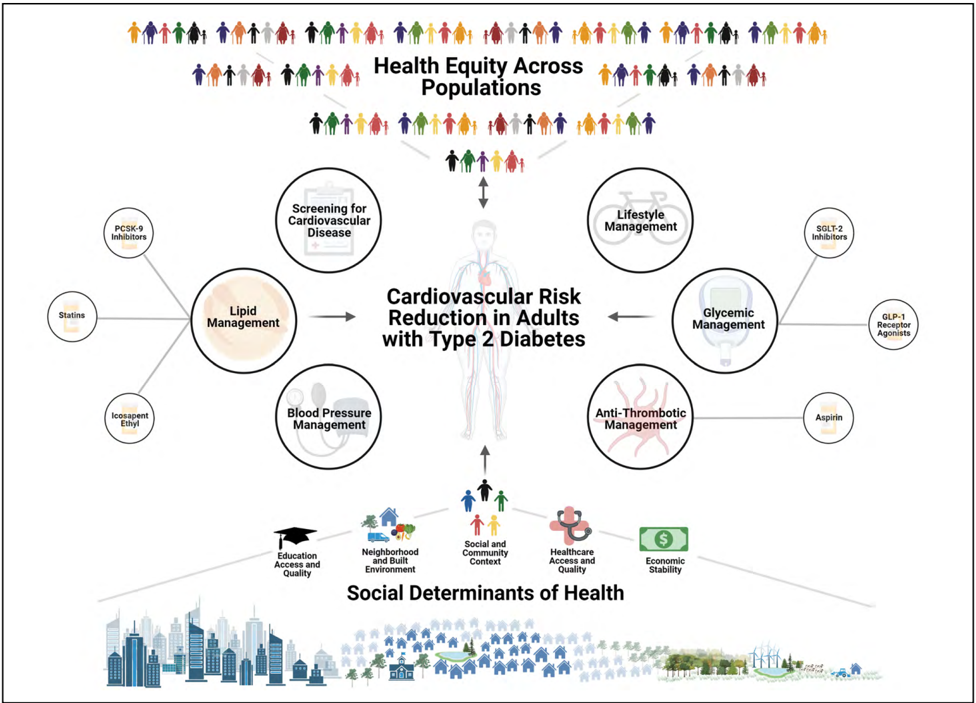
Cardiovascular disease remains the leading cause of death in patients with diabetes. Cardiovascular disease in diabetes is multifactorial, and control of the cardiovascular risk factors leads to substantial reductions in cardiovascular events. The 2015 American Heart Association and American Diabetes Association scientific statement, “Update on Prevention of Cardiovascular Disease in Adults With Type 2 Diabetes Mellitus in Light of Recent Evidence,” highlighted the importance of modifying various risk factors responsible for cardiovascular disease in diabetes. At the time, there was limited evidence to suggest that glucose-lowering medications reduce the risk of cardiovascular events. At present, several large randomized controlled trials with newer antihyperglycemic agents have been completed, demonstrating cardiovascular safety and reduction in cardiovascular outcomes, including cardiovascular death, myocardial infarction, stroke, and heart failure. This AHA scientific statement update focuses on (1) the evidence and clinical utility of newer antihyperglycemic agents in improving glycemic control and reducing cardiovascular events in diabetes; (2) the impact of blood pressure control on cardiovascular events in diabetes; and (3) the role of newer lipid-lowering therapies in comprehensive cardiovascular risk management in adults with diabetes. This scientific statement addresses the continued importance of lifestyle interventions, pharmacological therapy, and surgical interventions to curb the epidemic of obesity and metabolic syndrome, important precursors of prediabetes, diabetes, and comorbid cardiovascular disease. Last, this scientific statement explores the critical importance of the social determinants of health and health equity in the continuum of care in diabetes and cardiovascular disease.
Overview
The claims and statistics of this paper haven’t been checked yet.
Free: it reads the open-access text and checks the first 5 claims that cite a source we can check. Create a free account to check every claim.
Integrity signals
Registry
Cites
Statistics
Figures
Verification
Claims the paper makes
The claims and statistics of this paper haven’t been checked yet.
Free: it reads the open-access text and checks the first 5 claims that cite a source we can check. Create a free account to check every claim.
Claims other papers make about this one
Each is checked against this paper’s own text: does it say what the citing paper says it does?
The source backs part of the claim, not all of it — or backs it for a different population, condition or comparison.
In the citing paper
“Addressing overweight and obesity is central to CKM health, as excess and dysfunctional adiposity are the principal drivers for the development of metabolic risk factors and CKD, with subsequent increased CVD risk.2,22,23”
From 2026 AHA/ACC/ADA/ASN Guideline for the Prevention, Detection, Evaluation, and Management of Cardiovascular-Kidney-Metabolic Syndrome (2026) · cites this paper as [23]
Experimental — accuracy not yet measuredThe source backs part of the claim, not all of it — or backs it for a different population, condition or comparison.
In the citing paper
“A systematic review published in 2024 reported that behavioral lifestyle interventions with varying durations, regardless of their specific mix of behavioral, dietary, and physical activity components, are associated with a weight loss of roughly 5% among patients with overweight or obesity and T2D over a duration of approximately 12 months.23”
From 2026 AHA/ACC/ADA/ASN Guideline for the Prevention, Detection, Evaluation, and Management of Cardiovascular-Kidney-Metabolic Syndrome (2026) · cites this paper as [23]
Experimental — accuracy not yet measuredThe source backs part of the claim, not all of it — or backs it for a different population, condition or comparison.
In the citing paper
“Modeling exercises suggest meaningful gains in major cardiovascular and kidney event-free and overall survival when multiple kidney-protective agents are combined, compared with RASi alone.23”
From 2026 AHA/ACC/ADA/ASN Guideline for the Prevention, Detection, Evaluation, and Management of Cardiovascular-Kidney-Metabolic Syndrome (2026) · cites this paper as [23]
Experimental — accuracy not yet measuredThe source backs part of the claim, not all of it — or backs it for a different population, condition or comparison.
In the citing paper
“Incidentally identified moderate-to-severe coronary calcifications on a nongated chest computed tomography scan typically correlates with CAC ≥100, carries similar prognostic value, and can also identify patients with CKM syndrome most likely to benefit from preventive therapies.21–24”
From 2026 AHA/ACC/ADA/ASN Guideline for the Prevention, Detection, Evaluation, and Management of Cardiovascular-Kidney-Metabolic Syndrome (2026) · cites this paper as [23]
Experimental — accuracy not yet measuredThe source backs part of the claim, not all of it — or backs it for a different population, condition or comparison.
In the citing paper
“In adults across the CKM stages, intensive lifestyle interventions and intensive risk factor control with coordinated care and pharmacotherapies have robust evidence of improving CKM health.22–24”
From 2026 AHA/ACC/ADA/ASN Guideline for the Prevention, Detection, Evaluation, and Management of Cardiovascular-Kidney-Metabolic Syndrome (2026) · cites this paper as [23]
Experimental — accuracy not yet measured
17 more claims about this paper
Create a free account to see every claim other papers make about this one.
Self-check
Percentages, sums and reported differences re-computed from the paper’s own numbers.
The self-check needs the paper’s full text.
Citations
Cites
Reduction in the incidence of type 2 diabetes with lifestyle intervention or metformin
(2002) · New England Journal of Medicine · doi:10.1056/nejmoa012512 · Cited by 19,011
Empagliflozin, Cardiovascular Outcomes, and Mortality in Type 2 Diabetes
Zinman, B., Wanner, C., Lachin, J. M., Fitchett, D., Bluhmki, E., Hantel, S., Mattheus, M., Devins, T., Johansen, O. E., Woerle, H. J., et al. (2015) · New England Journal of Medicine · doi:10.1056/nejmoa1504720 · Cited by 12,315
Grundy, S. M., Cleeman, J. I., Daniels, S. R., Donato, K. A., Eckel, R. H., Franklin, B. A., Gordon, D. J., Krauss, R. M., Savage, P. J., Smith, S. C., et al. (2005) · Circulation · doi:10.1161/circulationaha.105.169404 · Cited by 11,961
Stratton, I. M. (2000) · BMJ · doi:10.1136/bmj.321.7258.405 · Cited by 9,059
Canagliflozin and Cardiovascular and Renal Events in Type 2 Diabetes
Neal, B., Perkovic, V., Mahaffey, K. W., de Zeeuw, D., Fulcher, G., Erondu, N., Shaw, W., Law, G., Desai, M., & Matthews, D. R. (2017) · New England Journal of Medicine · doi:10.1056/nejmoa1611925 · Cited by 7,830
Liraglutide and Cardiovascular Outcomes in Type 2 Diabetes
Marso, S. P., Daniels, G. H., Brown-Frandsen, K., Kristensen, P., Mann, J. F. E., Nauck, M. A., Nissen, S. E., Pocock, S., Poulter, N. R., Ravn, L. S., et al. (2016) · New England Journal of Medicine · doi:10.1056/nejmoa1603827 · Cited by 7,629
Dapagliflozin in Patients with Heart Failure and Reduced Ejection Fraction
McMurray, J. J. V., Solomon, S. D., Inzucchi, S. E., Køber, L., Kosiborod, M. N., Martinez, F. A., Ponikowski, P., Sabatine, M. S., Anand, I. S., Bělohlávek, J., et al. (2019) · New England Journal of Medicine · doi:10.1056/nejmoa1911303 · Cited by 7,140
Semaglutide and Cardiovascular Outcomes in Patients with Type 2 Diabetes
Marso, S. P., Bain, S. C., Consoli, A., Eliaschewitz, F. G., Jódar, E., Leiter, L. A., Lingvay, I., Rosenstock, J., Seufert, J., Warren, M. L., et al. (2016) · New England Journal of Medicine · doi:10.1056/nejmoa1607141 · Cited by 6,900
Dapagliflozin and Cardiovascular Outcomes in Type 2 Diabetes
Wiviott, S. D., Raz, I., Bonaca, M. P., Mosenzon, O., Kato, E. T., Cahn, A., Silverman, M. G., Zelniker, T. A., Kuder, J. F., Murphy, S. A., et al. (2019) · New England Journal of Medicine · doi:10.1056/nejmoa1812389 · Cited by 6,382
Self-citationCanagliflozin and Renal Outcomes in Type 2 Diabetes and Nephropathy
Perkovic, V., Jardine, M. J., Neal, B., Bompoint, S., Heerspink, H. J. L., Charytan, D. M., Edwards, R., Agarwal, R., Bakris, G., Bull, S., et al. (2019) · New England Journal of Medicine · doi:10.1056/nejmoa1811744 · Cited by 6,189
Research works printed but not linked: 1
- 156. Cavender MA, Norhammar A, Birkeland KI, Jørgensen ME, Wilding JP, Khunti K, Fu AZ, Bodegård J, Blak BT, Wittbrodt E, et al; CVD-REAL Investigators and Study Group. SGLT-2 inhibitors and cardiovascular risk: an analysis of CVD-REAL. J Am Coll Cardiol. 2018;71:2497-2506. doi: 10.1016/j.jacc.2018.01.085 · DOI · Paper page
Cited by
Items 301–400 of 737
Du, Y., Gui, C., Gu, L., Chen, Y., & Liu, J. (2024) · Frontiers in Pharmacology · doi:10.3389/fphar.2023.1237583 · Cited by 6
Xu, W., Li, X., Tse, G., Chan, J. S. K., Wu, S., & Liu, T. (2024) · Current Problems in Cardiology · doi:10.1016/j.cpcardiol.2024.102737 · Cited by 6
Peabody, J. W., Ganesan, D., Valdenor, C., Paculdo, D. R., Schrecker, J. P., Westerfield, C., & Heltsley, R. M. (2023) · BMC Family Practice · doi:10.1186/s12875-023-02042-4 · Cited by 5
“Background Treating cardiometabolic diseases relies on sustained efforts ranging from lifestyle modification, public health measures, and procedural interventions to achieve better health outcomes [1].”
BackgroundEstimating the effect of lipid‐lowering agents on novel subtypes of adult‐onset diabetes
Ye, J., Guo, K., Li, J., Li, X., Zhou, Z., & Yang, L. (2024) · Diabetes/Metabolism Research and Reviews · doi:10.1002/dmrr.3793 · Cited by 5
Boxhammer, E., Hammerer, M., Schernthaner, C., Prinz, E., Brandt, M. C., Lichtenauer, M., Berezin, A. Е., Wintersteller, W., Hoppe, U. C., & Kopp, K. (2024) · Biomedicines · doi:10.3390/biomedicines12102223 · Cited by 7
Shi, S., Li, X., Chen, Y., Li, J., & Dai, Y. (2025) · Journal of Diabetes · doi:10.1111/1753-0407.70044 · Cited by 5
Lee, I., Kang, M., Choi, J. H., Lim, H., & Chon, S. (2025) · Diabetes & Metabolism Journal · doi:10.4093/dmj.2025.0675 · Cited by 9
Zhang, Z., Zhuang, H., Fang, C., Lai, Y., Zhang, S., Wang, M., Chen, J., Liu, Q., Wang, J., & Liu, S. (2025) · Journal of Ethnopharmacology · doi:10.1016/j.jep.2025.120667 · Cited by 7
Jin, T., Wang, L., Zhang, R., Wu, M., Fang, X., Wang, B., He, W., Qian, W., Jin, J., & He, Q. (2025) · International Journal of Biological Macromolecules · doi:10.1016/j.ijbiomac.2025.148268 · Cited by 5
Endogenous Testosterone, Testosterone Treatment, and Cardiovascular Health Outcomes in Men
Yeap, B. B., & Anawalt, B. D. (2025) · The Journal of Clinical Endocrinology & Metabolism · doi:10.1210/clinem/dgaf622 · Cited by 7
Wang, X., Wang, X., Zhuang, H., Lu, G., & Zhao, G. (2025) · European Journal of Pharmacology · doi:10.1016/j.ejphar.2025.178429 · Cited by 5
Metabolomics in cardiovascular diseases: from prevention strategies to domain-specific applications
Zhao, Q., Pang, Y. Y., Lim, R. L., Tham, W. K., & Choi, H. (2025) · Expert Review of Proteomics · doi:10.1080/14789450.2025.2606050 · Cited by 6
“Among DM patients, T2D accounts for 90–95% of the cases, with these individuals facing up to several-fold higher risk of CVD morbidity and mortality than non-diabetic individuals [64,65].”
Ferhatbegović, L., Bećirović, M., Bečirović, E., Sarajlić, S., Ribić, A., Šarić, A., Bećirović, A., & Pojskić, B. (2026) · Frontiers in Clinical Diabetes and Healthcare · doi:10.3389/fcdhc.2026.1765597 · Cited by 5
Wang, J., Wu, Y., Ou, H., Yang, Y., Hsu, C., & Hwu, C. (2022) · Frontiers in Endocrinology · doi:10.3389/fendo.2022.984137 · Cited by 5
Nasser, S. A., Arora, N., & Ferdinand, K. C. (2022) · Reviews in Cardiovascular Medicine · doi:10.31083/j.rcm2312411 · Cited by 5
“Importantly Importantly, SGLT-2is are crucial because improved glycemia does not account for the CV benefit [25].”
BackgroundGenomic risk prediction of cardiovascular diseases among type 2 diabetes patients in the UK Biobank
Ye, Y., Hu, J., Pang, F., Cui, C., & Zhao, H. (2024) · Frontiers in Bioinformatics · doi:10.3389/fbinf.2023.1320748 · Cited by 6
Aronov, A. G., Kim, Y. J., Zahid, S., Michos, E. D., & Nazir, N. T. (2025) · American Journal of Preventive Cardiology · doi:10.1016/j.ajpc.2025.101002 · Cited by 5
Main Aspects of Preparing Diabetic Patients in Poland for Self-Care
Pluta, A., Marzec, A., Kobus, E., & Sulikowska, B. (2022) · International Journal of Environmental Research and Public Health · doi:10.3390/ijerph191811365 · Cited by 6
Lin, E., Garmo, H., Hagström, E., Hemelrijck, M. V., Adolfsson, J., Stattin, P. E., Zethelius, B., & Crawley, D. (2022) · British Journal of Cancer · doi:10.1038/s41416-022-02091-z · Cited by 5
An overview of complications associated with type 1 and type 2 diabetes
Wilson, V. (2023) · Nursing Standard · doi:10.7748/ns.2023.e11933 · Cited by 5
Shi, F., Yu, B., Shen, L., Xu, L., Jiang, Y., Gu, Z., Lin, H., & Li, H. (2023) · Diabetes Metabolic Syndrome and Obesity · doi:10.2147/dmso.s425960 · Cited by 5
“glycosylated hemoglobin (HbA1C).(4) Complex diabetes refers to patients with major or multiple comorbidities, requiring high-touch multidisciplinary care and sustainable support for self-management.”
BackgroundPintos, C., Burgos, M. A., Pasik, N. I., Piccioli, S., Ratti, M. F. G., & Russo, M. P. (2023) · Revista de la Facultad de Ciencias Médicas de Córdoba · doi:10.31053/1853.0605.v80.n4.42272 · Cited by 5
Wang, Y., Zhu, J., Tang, Y., & Huang, C. (2024) · International Endodontic Journal · doi:10.1111/iej.14034 · Cited by 5
Sharrack, N., Knott, K. D., Gulsin, G. S., Kotecha, T., Brown, L., Yeo, J. L., Porcari, A., Adam, R. D., Thirunavukarasu, S., Chowdhary, A., et al. (2024) · Scientific Reports · doi:10.1038/s41598-024-77280-2 · Cited by 6
Kelsey, M. D., Ford, C. B., Oakes, M., Soneji, S. S., Bosworth, H. B., & Pagidipati, N. J. (2024) · JAMA Network Open · doi:10.1001/jamanetworkopen.2024.47102 · Cited by 5
Romera, I., Redondo‐Antón, J., Santos, M. R., Díaz‐Cerezo, S., Artime, E., Rafels-Ybern, À., Ortega, E., & Conget, I. (2025) · Diabetes Therapy · doi:10.1007/s13300-025-01727-6 · Cited by 5
“Studies of large cohorts of people with T2D and long follow‑ups have shown the benefit of early insulin treatment to reduce HbA1c levels and, in some cases, a signifi‑ cant reduction of CV risk [7, 11, 12].”
Ferket, B. S., Hunink, M. G. M., Masharani, U. B., Max, W. B., Yeboah, J., & Fleischmann, K. E. (2025) · Journal of the American Heart Association · doi:10.1161/jaha.124.041543 · Cited by 5
Nguyen, V., & Ferdinand, K. C. (2023) · American Heart Journal Plus Cardiology Research and Practice · doi:10.1016/j.ahjo.2023.100278 · Cited by 7
“Control of these risk factors is an opportunity to prevent CVD events, through utilization of therapeutic lifestyle modifications along with pharmacologic therapies [3].”
BackgroundThe choice of coronary revascularization method depending on comorbid pathology
Bazilevich, A. V., Sidorov, R. V., Kaplunovskaya, M. A., Haisheva, L. A., & Shlyk, S. V. (2023) · South Russian Journal of Therapeutic Practice · doi:10.21886/2712-8156-2023-4-4-14-21 · Cited by 4
The comorbidity burden of diabetes and stroke: a retrospective study in Beijing, China
Huang, L., Zeng, J., Luo, Y., Wang, H., Zhang, Z., & Zeng, Y. (2025) · BMC Public Health · doi:10.1186/s12889-025-21705-8 · Cited by 5
“The comprehensive prevention and treatment of diabetes patients with stroke requires multidisciplinary teams and detailed guidelines [37], which can provide individualized help for patients with higher efficiency and benefits.”
Παπάνας, Ν., Tsimihodimos, V., Katsiki, N., Doupis, J., Pagkalos, E. M., Nikas, N., Papakonstantopoulos, N., Karpouzos, G., & Tentolouris, N. (2025) · Journal of Diabetes and its Complications · doi:10.1016/j.jdiacomp.2025.109087 · Cited by 4
Cancer as a novel risk factor for major cardiovascular adverse events in secondary prevention
Melchiori, R. E., Saravia, S. D., Rubio, P., Szlaien, L., Mouriño, R., O’Flaherty, M., Rizzo, M., & Hita, A. (2025) · International Journal of Cardiology Cardiovascular Risk and Prevention · doi:10.1016/j.ijcrp.2025.200501 · Cited by 4
Savvopoulos, S., Hatzikirou, H., & Jelinek, H. F. (2025) · Frontiers in Medicine · doi:10.3389/fmed.2025.1646495 · Cited by 5
Zahedi, M., Das, S., Dabla, P. K., & Kandar, S. (2025) · Biomedical Signal Processing and Control · doi:10.1016/j.bspc.2025.108672 · Cited by 4
Tan, X., Liang, Y. M., Xie, L., Gutierrez, C., Harton, J. G., Muhammad, C., Swift, C., & de Havenon, A. (2025) · Current Medical Research and Opinion · doi:10.1080/03007995.2025.2577762 · Cited by 4
Khattab, M. A., Khalil, S. H. A., Bassyouni, A., Fawzy, F., Elgayar, A. H., Elebrashy, I., Elhadidy, K. E., Abdallah, K., El-Hefnawy, M. H., Halawa, M. R., et al. (2025) · BMC Family Practice · doi:10.1186/s12875-025-03091-7 · Cited by 6
“We also examined relevant AHA cardiovascular guidelines as they pertain to diabetes-related risk management [21, 22].”
Lyu, L., Kao, C., Su, J., Yu, Y., Zhang, X., Lyu, J., Che, J., & Zhang, J. (2026) · Lipids in Health and Disease · doi:10.1186/s12944-025-02852-8 · Cited by 4
Ni, W., Shi, J., Fan, J.-G., & Li, J. (2026) · Journal of Clinical and Translational Hepatology · doi:10.14218/jcth.2025.00711 · Cited by 4
“36 Liraglutide alleviates steatohepatitis without worsening fibrosis and substantially improves glycemic control.”
Bays, H. E., Varney, C., Alexander, L., Ng, J., Tondt, J., Weber, C., Christensen, S. M., Burridge, K., Brown, C., Bindlish, S., et al. (2026) · Obesity Pillars · doi:10.1016/j.obpill.2026.100283 · Cited by 4
Khan, S. S., Ndumele, C. E., Bhave, N. M., Blumenthal, R. S., Coresh, J., Huang, X., Joseph, J. J., Khera, A., Ho, J. E., Lloyd‐Jones, D. M., et al. (2026) · Journal of the American College of Cardiology · doi:10.1016/j.jacc.2026.05.007 · Cited by 4
Self-citationVercalsteren, E., Karampatsi, D., Dekens, D. W., Letsiou, A., Zabala, A., Romanitan, M. O., Klein, T., Nyström, T., Darsalia, V., & Patrone, C. (2023) · International Journal of Molecular Sciences · doi:10.3390/ijms24043989 · Cited by 4
Podzolkov, V. I., Tarzimanova, A. I., Аркадьевна, А. А., Vetluzhskaya, M. V., Medvedev, I. D., & Loriya, I. Z. (2023) · CARDIOVASCULAR THERAPY AND PREVENTION · doi:10.15829/1728-8800-2023-3656 · Cited by 4
Cardiopulmonary outcomes in people with impaired lung function: the role of metabolic syndrome
Sadeghimakki, R., & Tahrani, A. A. (2023) · The Lancet Regional Health - Europe · doi:10.1016/j.lanepe.2023.100796 · Cited by 4
Shen, L., Shi, R., Yang, Z., Gao, Y., Jiang, Y., Fang, H., Min, C., & Li, Y. (2024) · Current Diabetes Reviews · doi:10.2174/0115733998277127231211063107 · Cited by 4
Evaluating Risk Factors and the Burden of Silent Myocardial Ischemia Among Diabetic Patients
Arshad, M. M., Hassan, M. A., Tahir, M., Khan, M. S. N., Gultasib, M. A., & Ali, G. (2024) · Cureus · doi:10.7759/cureus.74341 · Cited by 4
Xu, B., Zhang, T., Kang, B., Yang, X., Li, S., Chen, J., He, Z., & Zhou, J. (2024) · Cardiovascular Drugs and Therapy · doi:10.1007/s10557-024-07653-2 · Cited by 4
“Sudden cardiac death (SCD) and ventricular arrhythmias are significant global health concerns, and their occurrence is becoming more frequent among patients with diabetes and chronic kidney disease [3–7].”
Zomer, E., Talic, S., Pourghaderi, A. R., Earnest, A., Quigley, M., Gašević, D., Wischer, N., Andrikopoulos, S., Kangru, K., Deed, G., et al. (2025) · Diabetes Research and Clinical Practice · doi:10.1016/j.diabres.2025.112121 · Cited by 4
Vinereanu, D., Camafort, M., Dzudié, A., Ivanović, B., Mostaza, J. M., Pećin, I., Postadzhiyan, A., Shaburishvili, T., & Magné, J. (2026) · European Heart Journal - Quality of Care and Clinical Outcomes · doi:10.1093/ehjqcco/qcag002 · Cited by 4
Zhang, X., Yip, T. C., Tse, Y., Hui, V. W., Li, G., Lin, H., Liang, L. Y., Lai, J. C., Lai, M. S., Cheung, J. T. K., et al. (2023) · Alimentary Pharmacology & Therapeutics · doi:10.1111/apt.17428 · Cited by 4
D’Souza, S. E., Khan, K., Jalal, K., Hassam, M., & Uddin, R. (2023) · Molecular Biotechnology · doi:10.1007/s12033-023-00845-5 · Cited by 4
“It is a major risk factor for a number of health conditions including type 2 diabetes, heart disease, and stroke [7].”
Khalimov, Y. S., Семикова, Г. В., & Shutova, Y. A. (2024) · Diabetes Mellitus · doi:10.14341/dm13113 · Cited by 4
Kosaka, T., Yoshimuta, Y., Kokubo, Y., Kida, M., Maeda, Y., Ikebe, K., & Ono, T. (2025) · Journal of Prosthodontic Research · doi:10.2186/jpr.jpr_d_24_00147 · Cited by 5
Roos, P. R., van den Burg, E. L., Schoonakker, M. P., van Peet, P. G., Numans, M. E., Pijl, H., Westenberg, J. J. M., & Lamb, H. J. (2025) · Nutrition Metabolism and Cardiovascular Diseases · doi:10.1016/j.numecd.2025.103860 · Cited by 4
Gonzalez, J. M., Duarte, M., Gattamorta, K. A., Salamanca, M., Diaz, I. D. P., Marroquin, J. C. R., & Clochesy, J. M. (2025) · Discover Health Systems · doi:10.1007/s44250-025-00177-y · Cited by 4
Fabricius, T. W., Verhulst, C. E. M., Svensson, C. H., Wienberg, M., Duijnhouwer, A. L., Tack, C. J., Kristensen, P. L., de Galan, B. E., & Pedersen‐Bjergaard, U. (2025) · Diabetes Obesity and Metabolism · doi:10.1111/dom.16283 · Cited by 4
“Cardiovascular disease (CVD) is the leading cause of mortality in diabetes 1,2 and accounts for around half of the deaths in people with type 1 and type 2 diabetes.”
HADDAD, J. A., Annabi, F. A., Abbasi, H., Al-Samen, M. A. A., Ammari, F. L., Haddad, F., Haddad, S. E., Jaradat, M., Khassawneh, A., Khatib, N., et al. (2025) · Diabetes Therapy · doi:10.1007/s13300-025-01718-7 · Cited by 4
Li, X., Gao, M. Y., & Hua, J. (2025) · BMC Cardiovascular Disorders · doi:10.1186/s12872-025-04745-1 · Cited by 4
“T2DM is closely associated with various cardiometabolic risk factors, such as elevated fasting plasma glucose (FPG), reduced levels of high-density lipoprotein cholesterol (HDL-C), and increased levels of low-density lipoprotein cholesterol (LDL-C) [3, 4].”
Simental‐Mendía, L. E., Simental-Mendía, M. A., Barragán‐Zuñiga, L. J., & Arce‐Quiñones, M. (2025) · Diabetes Obesity and Metabolism · doi:10.1111/dom.16506 · Cited by 4
Zhao, W., Li, J., Li, Y., Xu, Y., & Liu, P. (2025) · Buildings · doi:10.3390/buildings15183364 · Cited by 4
Білоусова, Н. А., & Dolzhenko, M. M. (2025) · Current issues in pharmacy and medicine science and practice · doi:10.14739/2409-2932.2025.1.320493 · Cited by 4
Can low-carbohydrate diets be recommended for reducing cardiovascular risk?
Berger, A., & Thorn, E. (2022) · Current Opinion in Endocrinology Diabetes and Obesity · doi:10.1097/med.0000000000000750 · Cited by 4
Wesche, J., Bakken, T., Vetrhus, M., Hufthammer, K. O., Nyroenning, L. A., Fagertun, H. E., Saethre, I., Wold, B. H., Lyng, C. S., Pettersen, E. M., et al. (2024) · Cardiovascular Diabetology · doi:10.1186/s12933-024-02421-w · Cited by 4
“A multifaceted approach to medical treatment in patients with DM has been shown to reduce cardiovascular complication rates [6–9].”
BackgroundДолженко, М. М., Sirenko, Y., Білоусова, Н. А., Ткаченко, Н. О., Косяченко, К. Л., Середа, П. І., Комаріда, О. О., Шматенко, О. П., Зайченко, Г. В., Бутко, Я. О., et al. (2023) · Digital Library NAES of Ukraine (National Academy of Educational Sciences of Ukraine) · doi:10.32835/978-617-7221-93-6/2023 · Cited by 4
Association between type 1 diabetes mellitus and esophageal varices: a Mendelian randomization study
Feng, K., Yuan, J., Wei, Y., & Li, M. (2024) · Archives of Medical Science · doi:10.5114/aoms/191419 · Cited by 3
“Type 1 diabetes mellitus (T1DM), also known as insulin-dependent diabetes mellitus, is a chronic autoimmune disease, characterized by the T-lym-phocyte-mediated autoimmune destruction of pancreatic β -cells, leading to the loss of pancreatic islet function [12, 13].”
Ren, W., Fan, K., Liu, Z., Wu, Y., An, H., & Liu, H. (2025) · Journal of Diabetes · doi:10.1111/1753-0407.70049 · Cited by 4
Wang, Z., Huang, L., Han, L., Hu, X., Dong, M., Zhang, C., Guo, L., Liu, S., & Liao, L. (2025) · Scientific Reports · doi:10.1038/s41598-025-89459-2 · Cited by 3
Malas, K., Kazmi, S., Kang, Y. M., & McGuire, D. K. (2025) · Expert Opinion on Pharmacotherapy · doi:10.1080/14656566.2025.2504702 · Cited by 4
Tsai, J., Hsu, H., Tai, C.-J., & Wu, C. (2025) · British Journal of Pharmacology · doi:10.1111/bph.70105 · Cited by 3
Ngai, A. W., Baig, A., Zia, M., Arca-Contreras, K., Haque, N. U., Livetsky, V., Rokicki, M., & Sukhram, S. D. (2025) · International Journal of Molecular Sciences · doi:10.3390/ijms26157412 · Cited by 5
“The synergistic benefits of this combination reflect a shift toward multifactorial intervention strategies in DN, as emphasized by the American Heart Association’s recent scientific statement on integrated cardio-renal risk reduction in diabetes [14].”
Chodapuneedi, S., Koh, J. W., Orman, Z., Gašević, D., Magliano, D. J., Zoungas, S., Hamblin, P. S., Trin, C., Zomer, E., Cataldo-Miranda, P., et al. (2025) · Diabetes Research and Clinical Practice · doi:10.1016/j.diabres.2025.112409 · Cited by 3
Oral Semaglutide: A Step Forward in Cardiovascular Risk Management for Type 2 Diabetes
Ceron, E. L., Kattamuri, L. P. V., Duvvuru, S. R., & Mukherjee, D. (2025) · Cardiovascular & Haematological Disorders - Drug Targets · doi:10.2174/011871529x421551250801194823 · Cited by 3
Li, S., Li, H., Wang, B., Zeng, Z., Zhang, R., Yan, H., Zhou, A., Xie, Y., & Zhou, C. (2025) · Life · doi:10.3390/life15081276 · Cited by 5
Berbrier, D. E., Huckins, W., Berkel, E. K. V., Delage, S. I., Hannaian, S. J., Myara, R., Okafor, O. N., Chung, T. H., Tulandi, T., Reinblatt, S. L., et al. (2025) · American Journal of Physiology-Endocrinology and Metabolism · doi:10.1152/ajpendo.00286.2025 · Cited by 3
Ding, Y., Zhou, Q. G., Jiang, Y., Cao, Q., Wu, X., Li, X., Xu, Y., Lu, J., Xu, M., Wang, T., et al. (2025) · Diabetes · doi:10.2337/db25-0197 · Cited by 4
Wang, T., Lin, L., Ding, Y., Zhang, Y., Zhao, Z., Feng, R., Bai, Y., Li, Z., Shi, Y., Li, N., et al. (2025) · Hereditas · doi:10.1186/s41065-025-00568-4 · Cited by 3
“Well-established risk factors for CHD include hypertension, diabetes mellitus, dyslipidemia, smoking, obesity, sedentary lifestyle, and advancing age [8].”
Telehealth for Integrated Cardiovascular and Diabetes Management: A Scoping Review
Estêvão, M. D., Fernandes, M. T., Sousa‐Coelho, A. L. D., Espírito‐Santo, M., & Nascimento, T. (2025) · Journal of Diabetes Research · doi:10.1155/jdr/1093671 · Cited by 3
“Reducing cardiovascular risk in patients with diabetes is a challenge in clinical practice [5, 19].”
InfluentialLi, J., Li, J., Ke, C., Sun, Y., Tan, X. W., Chen, Y., Lu, Y., & Wang, N. (2025) · International Journal of Surgery · doi:10.1097/js9.0000000000004348 · Cited by 3
Tsironikos, G. I., Tsolaki, V., Zakynthinos, G. Ε., Kyprianidou, D., Rammou, V., Antonogiannis, T., Mprotsis, T., Zakynthinos, Ε., & Bargiota, Α. (2025) · Frontiers in Clinical Diabetes and Healthcare · doi:10.3389/fcdhc.2025.1694808 · Cited by 3
Complex interrelationship and therapeutic advances in diabetic patients with atrial fibrillation
Karanikola, A.-E., Tsiachris, D., Argyriou, N., Botis, M., Pamporis, K., Xydis, P., Fragoulis, C., Kordalis, A., & Tsioufis, K. P. (2025) · World Journal of Cardiology · doi:10.4330/wjc.v17.i12.114575 · Cited by 3
Sugiyama, S., Yoshida, A., Kurinami, N., Hieshima, K., Jinnouchi, K., Suzuki, T., MIYAMOTO, F., Kajiwara, K., & Jinnouchi, H. (2025) · Cureus · doi:10.7759/cureus.99998 · Cited by 3
“Therefore, clinical management strategies should consider the prevention of cardiovascular events in addition to glycemic control [2].”
Lemos, G., Neveux, P., Januzzi, J. L., Pop‐Busui, R., & Malachias, M. V. B. (2026) · Value in Health Regional Issues · doi:10.1016/j.vhri.2026.101588 · Cited by 3
Nguefang, G., Boateng, S., Gyabaah, S., Issaka, Y., Mekontso, J. G. K., Landa, E. L., Eze, E., & Njei, B. M. (2026) · Orphanet Journal of Rare Diseases · doi:10.1186/s13023-026-04322-5 · Cited by 3
“In our cohort, GLP-1 RA therapy was associated with a 39% reduction in MACE and a 53% reduction in stroke, findings that exceed the reductions of 13% typically reported in the general T2DM population [8, 11].”
Khan, S., Herbst, W., Tajrishi, F. Z., Notani, S., Knight, A., Jamil, Z., & Ferdinand, K. C. (2026) · Biomedicines · doi:10.3390/biomedicines14040743 · Cited by 4
Management of Adolescent PCOD: A Real Challenge
Akhter, F., Akhter, F., & Siddika, A. (2024) · Scholars International Journal of Obstetrics and Gynecology · doi:10.36348/sijog.2024.v07i02.006 · Cited by 5
Epidemiología de las enfermedades cardiovasculares: una revisión narrativa
Godoy-Valderrama, N. B., Vásquez, R. A., & Valero-Cedeño, N. J. (2024) · UNESUM - Ciencias Revista Científica Multidisciplinaria · doi:10.47230/unesum-ciencias.v8.n1.2024.61-74 · Cited by 5
Lee, H., Shin, J., & Choi, J. W. (2024) · Frontiers in Endocrinology · doi:10.3389/fendo.2024.1493663 · Cited by 3
Liu, Y., & Geng, N. (2025) · Medicine · doi:10.1097/md.0000000000041709 · Cited by 4
“[11,25] Advances in medical technology and improved patient adherence to treatment have enabled more CHD patients to achieve secondary prevention goals, significantly reducing cardiovascular event rates.”
Aspirin reduces the risk of type 2 diabetes associated with COVID-19
Trimarco, V., Izzo, R., Pacella, D., Manzi, M. V., Jankauskas, S. S., Gallo, P., Rozza, F., Giugliano, G., Spinelli, A. M., Esposito, G., et al. (2025) · npj Metabolic Health and Disease · doi:10.1038/s44324-025-00072-3 · Cited by 3
Dhaba, F. A., Alemu, W. A., Kitila, F. L., Tolla, K. S., Alene, A., Wendimagegn, Z. S., Getahun, K. A., Yesuf, H. A., & Woldeyes, S. M. (2025) · Frontiers in Endocrinology · doi:10.3389/fendo.2025.1472300 · Cited by 3
Tan, S., Li, F., Zhou, J., Lin, Q., & Liu, Q. (2025) · Annals of Medicine · doi:10.1080/07853890.2025.2536207 · Cited by 3
“Chronic diseases not only increase mortality risk but may also interact with SDoH, complicating health management further [48,49].”
Requena-Ibáñez, J. A., Zafar, M. U., Ferrández-Escarabajal, M., Escolar, G., Santos‐Gallego, C. G., Lam, D. W.-H., & Badimón, J. J. (2025) · Journal of Cardiovascular Pharmacology · doi:10.1097/fjc.0000000000001747 · Cited by 3
Delavar, M. A., Mirabi, P., Rosenkranz, S. K., Alibabaei-Omran, F., Ahmadi, N., & Ghorbani, Z. (2025) · Diabetology & Metabolic Syndrome · doi:10.1186/s13098-025-01980-6 · Cited by 3
“Given the significant economic and health burdens that CVDs impose on individuals and populations, prioritizing prevention, early detection, and risk factor management is essential to slowing their progression [8, 14].”
Li, Y., Adi, D., Wang, Y.-H., Wang, Y.-T., Li, X., Fu, Z.-Y., Liu, F., Aizezi, A., Abuzhalihan, J., Gai, M., et al. (2023) · PeerJ · doi:10.7717/peerj.15536 · Cited by 3
“1 mmol/L) in the oral glucose tolerance test (Joseph et al., 2022), or subjects who had previously used anti-diabetic drugs (American Diabetes Association Professional Practice C, 2022).”
BackgroundDemidova, T. Y., & Plakhotnyaya, V. M. (2023) · FOCUS Endocrinology · doi:10.15829/1560-4071-2023-24 · Cited by 3
Hsiao, Y.-C., Lee, T., Lin, F., Hsuan, C., Yeh, C., Chang, W., Kao, H., Jeng, J., Wu, Y., Hsieh, C., et al. (2023) · Biomedical Journal · doi:10.1016/j.bj.2023.100653 · Cited by 3
“This risk, however, is not static but subject to change, especially considering recent advancements in the field of antidiabetic medications, which possess the potential to mitigate disease-related risks [30].”
BackgroundNdlovu, M., Dludla, P. V., Muvhulawa, N., Ntamo, Y., Mayeye, A., Luphondo, N., Hlengwa, N., Basson, A. K., Mabhida, S. E., Hanser, S., et al. (2023) · Diabetology · doi:10.3390/diabetology4040050 · Cited by 3
The acceptance and commitment therapy (ACT) reduce stress in patients with type 2 diabetes mellitus
Bistara, D. N., Susanti, S., Pranata, S., & Mustamu, A. C. (2023) · Scripta Medica · doi:10.5937/scriptamed54-45794 · Cited by 5
Zheng, M., Begum, M., Bernardo, C., Stocks, N. P., & González‐Chica, D. A. (2024) · Clinical Therapeutics · doi:10.1016/j.clinthera.2024.03.001 · Cited by 3
Carbohydrate reduction for metabolic disease is distinct from the ketogenic diet for epilepsy
Calkins, M. W., Buchanan, L., Kalayjian, T., Dikeman, D. T., Cucuzzella, M. T., & Westman, E. C. (2024) · Journal of Metabolic Health · doi:10.4102/jmh.v7i1.95 · Cited by 4
“22,23 There have been many large randomised and controlled studies on well-formulated TCR in adults and every point made in the clinical report that is salient to adults has been found to not be of concern.”
Background
Metadata
- Authors
- Joseph, J. J., Deedwania, P., Acharya, T., Aguilar, D., Bhatt, D. L., Chyun, D. A., Di Palo, K. E., Golden, S. H., Sperling, L. S., & on behalf of the American Heart Association Diabetes Committee of the Council on Lifestyle and Cardiometabolic Health; Council on Arteriosclerosis, T. A. V. B. C. O. C. C. A. C. O. H.
- Venue
- Circulation
- Published
- 2022-03
- Volume
- 145
- Issue
- 9
- Pages
- e722-e759
- ISSN
- 0009-7322 (ISSN-L)
- 1524-4539
- OpenAlex
- W4205367203
- Semantic Scholar
- 7a57cfa0ae0287001076e9645f541ccafa5d7432
- Cited by
- 660
- References
- 312
- Citations by year
- 2026: 133 · 2025: 171 · 2024: 153 · 2023: 157 · 2022: 45
- FWCI
- 18.76
- Type
- journal article
- Language
- en
- Open access
- hybrid
- doi.org
- Licence
- cc-by-nc
- Locations
- Circulation (publishedVersion, cc-by-nc)
- PubMed (publishedVersion)
- Topics
- Health Sciences › Medicine › Endocrinology, Diabetes and Metabolism › Diabetes Treatment and Management
- Health Sciences › Medicine › Endocrinology, Diabetes and Metabolism › Diabetes, Cardiovascular Risks, and Lipoproteins
- Health Sciences › Medicine › Endocrinology, Diabetes and Metabolism › Diabetes Management and Research
- Keywords
- type 2 diabetes, cardiovascular risk factors, cardiovascular disease prevention, antidiabetic drugs, cardiovascular safety, blood pressure control, lipid-lowering therapy, glycemic control, obesity, metabolic syndrome, prediabetes, lifestyle intervention, bariatric surgery, social determinants of health, health equity
- MeSH terms
- Heart Disease Risk Factors, Adult, American Heart Association, Cardiovascular Diseases, Diabetes Mellitus, Type 2, Humans, United States, Diabetes Complications
About these checks
Registry, retraction, Cites and statistics results are computed, not judged, with one exception: a printed reference that no index lists is read once by a model before it counts as a citation error. Claims are extracted by a model and kept only when their quote appears verbatim in the text; each cited source is then checked, with a model’s help, for whether it says what the claim relies on. Those verdicts can be wrong — read the claim’s quote and the cited source before relying on one.
Statistics and arithmetic are recomputed, not judged.
Confidence bands are shown only for fields calibrated on our annotated test set. None is calibrated yet, so no band is shown.
What counts as a claim ›How we measure confidence ›How we check this ›
Are you an author, or do you see a problem with this page? Request a review
Data sources
Bibliographic data: Semantic Scholar, OpenAlex, Crossref.
Contains information from the Semantic Scholar Academic Graph Datasets, made available under the ODC Attribution License (ODC-BY 1.0).
Semantic Scholar’s data is described in: Kinney, R., et al. (2023). The Semantic Scholar Open Data Platform. arXiv:2301.10140.
