

Interrater reliability: the kappa statistic
Open accessThe DOI matches its Crossref record; 10 of the 10 references it cites were found in a registry or an index.
Abstract
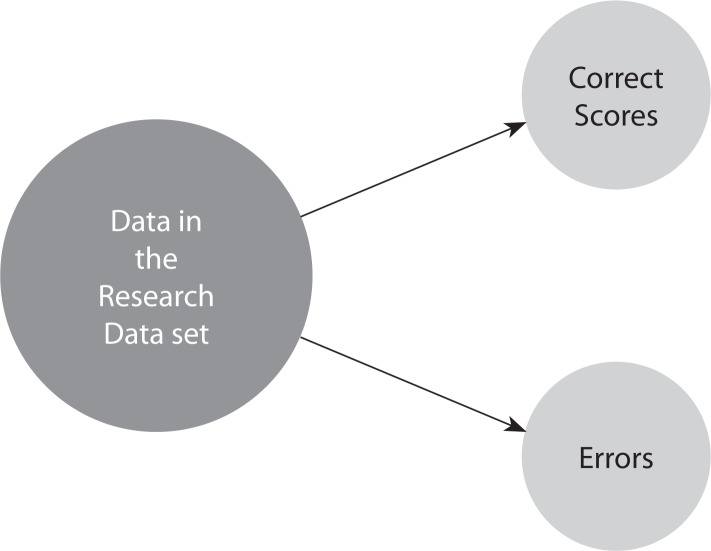
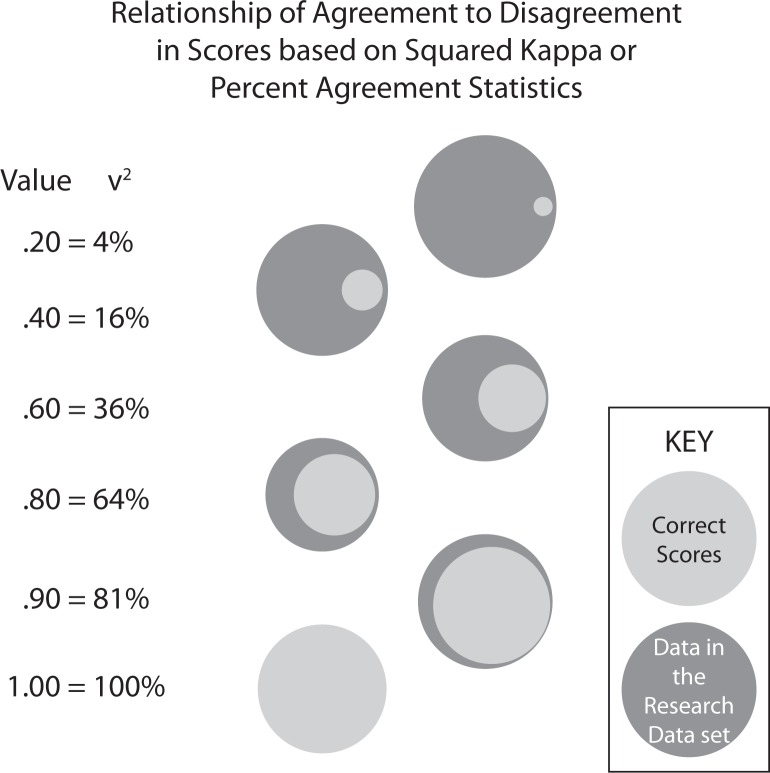
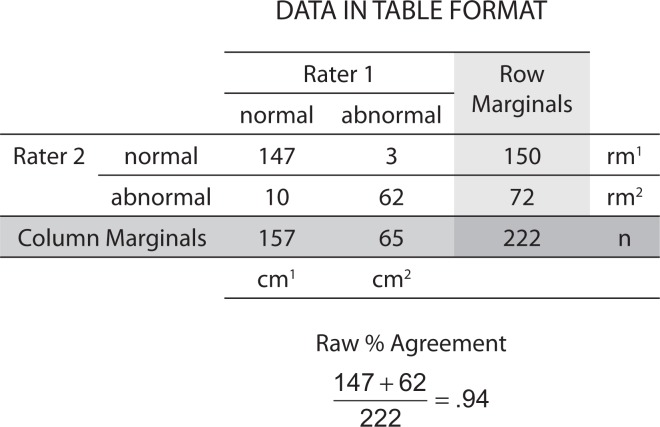
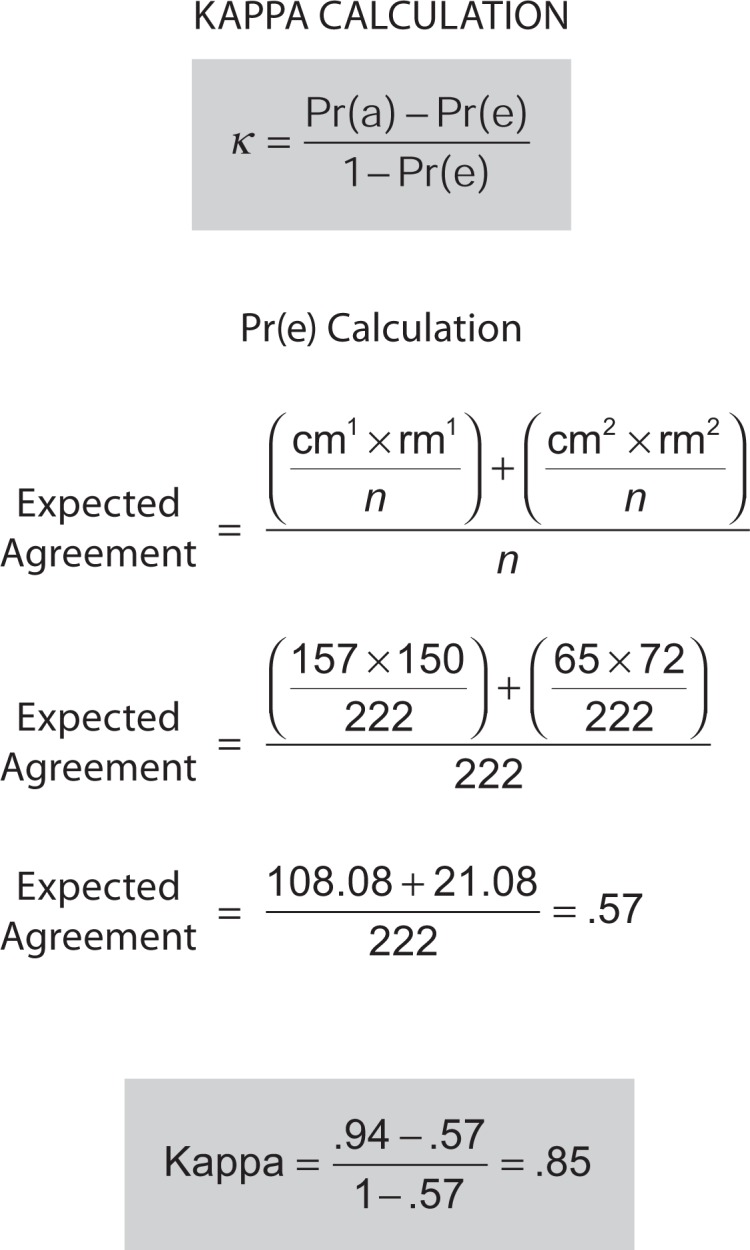
The kappa statistic is frequently used to test interrater reliability. The importance of rater reliability lies in the fact that it represents the extent to which the data collected in the study are correct representations of the variables measured. Measurement of the extent to which data collectors (raters) assign the same score to the same variable is called interrater reliability. While there have been a variety of methods to measure interrater reliability, traditionally it was measured as percent agreement, calculated as the number of agreement scores divided by the total number of scores. In 1960, Jacob Cohen critiqued use of percent agreement due to its inability to account for chance agreement. He introduced the Cohen's kappa, developed to account for the possibility that raters actually guess on at least some variables due to uncertainty. Like most correlation statistics, the kappa can range from -1 to +1. While the kappa is one of the most commonly used statistics to test interrater reliability, it has limitations. Judgments about what level of kappa should be acceptable for health research are questioned. Cohen's suggested interpretation may be too lenient for health related studies because it implies that a score as low as 0.41 might be acceptable. Kappa and percent agreement are compared, and levels for both kappa and percent agreement that should be demanded in healthcare studies are suggested.
Overview
The claims and statistics of this paper haven’t been checked yet.
Free: it reads the open-access text and checks the first 5 claims that cite a source we can check. Create a free account to check every claim.
Integrity signals
Registry
Cites
Statistics
Figures
Verification
Claims the paper makes
The claims and statistics of this paper haven’t been checked yet.
Free: it reads the open-access text and checks the first 5 claims that cite a source we can check. Create a free account to check every claim.
Claims other papers make about this one
Each is checked against this paper’s own text: does it say what the citing paper says it does?
The cited source doesn’t support the claim as written.
In the citing paper
“All raters met the minimum threshold for very good interrater reliability, defined as Cohen’s kappa statistic > 0.75 (McHugh 2012), and percentage agreement with criterion ratings was high (> 80%).”
From Evaluating the quality, safety, and functionality of commonly used smartphone apps for bipolar disorder mood and sleep self-management (2022) · cites this paper as McHugh 2012
Checked by a reasoning model — may be wrong.
Experimental — accuracy not yet measuredThe source backs part of the claim, not all of it — or backs it for a different population, condition or comparison.
In the citing paper
“Codes were compared to determine inter-coder agreement, which was calculated as the percentage of total agreed-upon selected codes compared with the total selected codes. This process was repeated until greater than eighty percent agreement was reached (McHugh, 2012).”
From "It Just Makes It Feel Like You're Not Alone": A Qualitative Study of a Social Support Group for High-Achieving, Low-Income STEM Majors (2024) · cites this paper as McHugh, 2012
Experimental — accuracy not yet measuredThe source backs part of the claim, not all of it — or backs it for a different population, condition or comparison.
In the citing paper
“They then labeled a second batch of 500 tweets, which resulted in an average Cohen’s kappa score of 0.77, indicating substantial interrater agreement (61).”
From Dynamics of cross-platform attention to retracted papers (2022) · cites this paper as [61]
Experimental — accuracy not yet measuredThe source backs part of the claim, not all of it — or backs it for a different population, condition or comparison.
In the citing paper
“The inferred sleep architecture estimates had a fair agreement (κ = 0.37) with the polysomnography ground truth on the internal validation12.”
From Self-supervised learning of accelerometer data provides new insights for sleep and its association with mortality (2024) · cites this paper as [12]
Experimental — accuracy not yet measuredThe source backs part of the claim, not all of it — or backs it for a different population, condition or comparison.
In the citing paper
“The inter-rater agreement for the combined screening process was 83%, indicating strong agreement between the two authors (McHugh, 2012).”
From Unraveling the Complexities of Offender Strategies as Part of Online Sexual Grooming and Technology-Assisted Child Sexual Abuse: A Systematic Review (2026) · cites this paper as McHugh, 2012
Experimental — accuracy not yet measured
35 more claims about this paper
Create a free account to see every claim other papers make about this one.
Self-check
Percentages, sums and reported differences re-computed from the paper’s own numbers.
The self-check needs the paper’s full text.
Citations
Cites
A Coefficient of Agreement for Nominal Scales
Cohen, J. (1960) · Educational and Psychological Measurement · doi:10.1177/001316446002000104 · Cited by 42,398
Stemler, S. E. (2020) · Scholarworks (University of Massachusetts Amherst) · doi:10.7275/96jp-xz07 · Cited by 992
Meta-analysis of Pap Test Accuracy
Fahey, M. T., Irwig, L., & Macaskill, P. (1995) · American Journal of Epidemiology · doi:10.1093/oxfordjournals.aje.a117485 · Cited by 684
Pressure ulcers: prevention, evaluation, and management.
Bluestein, D. A., & Javaheri, A. (2008) · PubMed · Cited by 201
Comparing groups for statistical differences: how to choose the right statistical test?
Marusteri, M., & Bacarea, V. (2010) · Biochemia Medica · doi:10.11613/bm.2010.004 · Cited by 184
Bonnyman, A. M., Webber, C. E., Stratford, P. W., & MacIntyre, N. J. (2012) · Journal of Clinical Densitometry · doi:10.1016/j.jocd.2012.03.005 · Cited by 176
Simundic, A.-M., Nikolac, N., Ivankovic, V., Ferenec-Ruzic, D., Magdic, B., Kvaternik, M., & Topic, E. (2009) · Clinical Chemistry and Laboratory Medicine · doi:10.1515/cclm.2009.306 · Cited by 113
Introductory Statistics for Health and Nursing Using SPSS
Marston, L. (2010) · SAGE Publications Ltd eBooks · doi:10.4135/9781446221570 · Cited by 80
Kottner, J., Halfens, R. J. G., & Dassen, T. W. N. (2009) · International Journal of Nursing Studies · doi:10.1016/j.ijnurstu.2009.03.014 · Cited by 77
de la Morena, E., Martinez, J., Rio, G. D., Latour, J., & Cabrera, P. (1978) · Biochemical Medicine · doi:10.1016/0006-2944(78)90045-5 · Cited by 19
Research works printed but not linked: 2
- [8]8. Marston, L . Introductory Statistics for Health and Nursing Using SPSS . Thousand Oaks, California: Sage Publications, Ltd . 2010 .
- [10]10. Simundic AM . Confidence interval . Biochem Med 2008;18:154-61 .
Cited by
Items 201–300 of 1,219
Woon, A. P. N., Mok, W. Q., Chieng, Y. J. S., Zhang, H. M., Ramos, P., Mustadi, H. B., & Lau, Y. (2021) · Nurse Education Today · doi:10.1016/j.nedt.2020.104655 · Cited by 193
Prediction of Student’s performance by modelling small dataset size
Abu Zohair, L. M. (2019) · International Journal of Educational Technology in Higher Education · doi:10.1186/s41239-019-0160-3 · Cited by 193
Energy Drinks and Their Adverse Health Effects: A Systematic Review and Meta-analysis
Ibrahim, N., Shanmugaraj, A., Sakha, S., Horner, N. S., Ayeni, O. R., & Khan, M. (2020) · Sports Health A Multidisciplinary Approach · doi:10.1177/1941738120949181 · Cited by 193
Bernal-García, M., Jiménez, D. R. S., Pérez, N., & Mesa, M. P. Q. (2018) · Educación Médica · doi:10.1016/j.edumed.2018.08.008 · Cited by 199
Kilian, C., Manthey, J., Carr, S., Hanschmidt, F., Rehm, J., Speerforck, S., & Schomerus, G. (2021) · Alcoholism: Clinical and Experimental Research · doi:10.1111/acer.14598 · Cited by 192
“Similar results for treatment coercion in AUD and other SUDs were observed in Queensland, Australia (AUD: 41%, heroin addiction: 71%; Meurk et al., 2014a, study #14).”
BackgroundMethodResultInfluentialChallenges in Chatbot Development: A Study of Stack Overflow Posts
Abdellatif, A., Costa, D. E., Badran, K., Abdalkareem, R., & Shihab, E. (2020) · International Conference on Mining Software Repositories (MSR) · doi:10.1145/3379597.3387472 · Cited by 195
Tahir, Z., Haseeb, M., Mahmood, S. A., Batool, S., Abdullah-Al-Wadud, M., Ullah, S., & Tariq, A. (2025) · Scientific Reports · doi:10.1038/s41598-025-87796-w · Cited by 191
Anxiety scales used in pregnancy: systematic review
Sinesi, A., Maxwell, M., O'Carroll, R., & Cheyne, H. (2019) · BJPsych Open · doi:10.1192/bjo.2018.75 · Cited by 190
The Link Between Work Engagement and Job Performance: A Meta-Analysis
Corbeanu, A., & Iliescu, D. (2023) · Journal of Personnel Psychology · doi:10.1027/1866-5888/a000316 · Cited by 196
Lazuka, R. F., Wick, M. R., Keel, P. K., & Harriger, J. A. (2020) · Body Image · doi:10.1016/j.bodyim.2020.05.001 · Cited by 189
Transdiagnostic models of anxiety disorder: Theoretical and empirical underpinnings
Norton, P. J., & Paulus, D. J. (2017) · Clinical Psychology Review · doi:10.1016/j.cpr.2017.03.004 · Cited by 191
Ho, G. W. K., Chan, A. C. Y., Chien, W.-T., Bressington, D. T., & Karatzias, T. (2019) · Child Abuse & Neglect · doi:10.1016/j.chiabu.2018.11.009 · Cited by 189
Martinez-Calderon, J., Jensen, M. P., Morales-Asencio, J. M., & Luque-Suarez, A. (2019) · The Clinical Journal of Pain · doi:10.1097/ajp.0000000000000676 · Cited by 188
Green competencies: Construct development and measurement validation
Cabral, C., & Lochan Dhar, R. (2019) · Journal of Cleaner Production · doi:10.1016/j.jclepro.2019.07.014 · Cited by 188
Chan, T. K., Chin, C. S., & Zhong, X. (2018) · IEEE Access · doi:10.1109/access.2018.2885444 · Cited by 188
JailGuard : A Universal Detection Framework for Prompt-based Attacks on LLM Systems
Zhang, X., Zhang, C., Li, T., Huang, Y., Jia, X., Hu, M., Zhang, J., Liu, Y., Ma, S., & Shen, C. Q. (2025) · ACM Transactions on Software Engineering and Methodology · doi:10.1145/3724393 · Cited by 189
Hermens, N., Super, S., Verkooijen, K. T., & Koelen, M. A. (2017) · Research Quarterly for Exercise and Sport · doi:10.1080/02701367.2017.1355527 · Cited by 187
Performance analysis of cost-sensitive learning methods with application to imbalanced medical data
Mienye, I. D., & Sun, Y. (2021) · Informatics in Medicine Unlocked · doi:10.1016/j.imu.2021.100690 · Cited by 187
L-HSAB: A Levantine Twitter Dataset for Hate Speech and Abusive Language
Mulki, H., Haddad, H., Bechikh Ali, C., & Alshabani, H. (2019) · Proceedings of the Third Workshop on Abusive Language Online · doi:10.18653/v1/w19-3512 · Cited by 187
“However, observed agreement and Pairwise Percent Agreements are criticized for their inability to account for chance agreement (McHugh, 2012).”
BackgroundBarriers to rural health care from the provider perspective
Maganty, Byrnes, Hamm, Wasilko, Sabik, L. M., Davies, & Jacobs, J. (2023) · Rural and Remote Health · doi:10.22605/rrh7769 · Cited by 187
Li, M., Gao, Q., & Yu, T. (2023) · BMC Cancer · doi:10.1186/s12885-023-11325-z · Cited by 187
“It accounts for the agreement that would occur by chance, providing a more accurate measure of agreement between raters compared to simple percent agreement [8].”
BackgroundVersluis, A., Verkuil, B., Spinhoven, P., van der Ploeg, M. M., & Brosschot, J. F. (2016) · Journal of Medical Internet Research · doi:10.2196/jmir.5642 · Cited by 186
Tanir, Y., Karayagmurlu, A., Kaya, İ., Kaynar, T. B., Türkmen, G., Dambasan, B. N., Meral, Y., & Coşkun, M. (2020) · Psychiatry Research · doi:10.1016/j.psychres.2020.113363 · Cited by 186
“Cohen's Kappa coefficient was used to measure the inter-rater agreement for qualitative (numeric) items for CY-BOCS scores both before and during the pandemic (McHugh, 2012).”
InfluentialvonHoldt, B. M., Shuldiner, E., Koch, I. J., Kartzinel, R. Y., Hogan, A., Brubaker, L., Wanser, S., Stahler, D., Wynne, C. D. L., Ostrander, E. A., et al. (2017) · Science Advances · doi:10.1126/sciadv.1700398 · Cited by 186
Leis, O., & Lautenbach, F. (2020) · Psychology of sport and exercise · doi:10.1016/j.psychsport.2020.101738 · Cited by 186
Seal, S., Mahale, M., García-Ortegón, M., Joshi, C. K., Hosseini-Gerami, L., Beatson, A., Greenig, M., Shekhar, M., Patra, A., Weis, C., et al. (2025) · Chemical Research in Toxicology · doi:10.1021/acs.chemrestox.5c00033 · Cited by 187
Zhang, M. F., Dawson, J. F., & Kline, R. B. (2021) · British Journal of Management · doi:10.1111/1467-8551.12415 · Cited by 183
“We calculated Cohen’s kappa (Cohen, 1960) for testing the level of consistency in the two coders’ ratings of the 17 randomly selected publications and found that the inter-rater agreement reached a high level (κ = 0.93, p < 0.001; McHugh, 2012).”
MethodInfluentialZhang, L., Carter, R. A., Greene, J. A., & Bernacki, M. L. (2024) · Educational Psychology Review · doi:10.1007/s10648-024-09860-7 · Cited by 183
Survivorship Care Plans in Cancer: A Meta-Analysis and Systematic Review of Care Plan Outcomes
Hill, R. E., Wakefield, C. E., Cohn, R. J., Fardell, J. E., Brierley, M.-E. E., Kothe, E., Jacobsen, P. B., Hetherington, K., & Mercieca-Bebber, R. (2020) · The Oncologist · doi:10.1634/theoncologist.2019-0184 · Cited by 182
Pacheco, T. B. F., de Medeiros, C. S. P., de Oliveira, V. H. B., Vieira, E. R., & de Cavalcanti, F. A. C. (2020) · Systematic Reviews · doi:10.1186/s13643-020-01421-7 · Cited by 182
Chorioamnionitis and Risk for Maternal and Neonatal Sepsis: A Systematic Review and Meta-analysis
Beck, C., Gallagher, K., Taylor, L. A., Goldstein, J. A., Mithal, L. B., & Gernand, A. D. (2021) · Obstetrics and Gynecology · doi:10.1097/aog.0000000000004377 · Cited by 182
Coloring the destination: The role of color psychology on Instagram
Yu, C.-E., Xie, S. Y., & Wen, J. (2020) · Tourism Management · doi:10.1016/j.tourman.2020.104110 · Cited by 181
The impact of inconsistent human annotations on AI driven clinical decision making
Sylolypavan, A., Sleeman, D. H., Wu, H., & Sim, M. R. (2023) · npj Digital Medicine · doi:10.1038/s41746-023-00773-3 · Cited by 182
Gaekwad, J. S., Sal Moslehian, A., Roös, P. B., & Walker, A. (2022) · Frontiers in Psychology · doi:10.3389/fpsyg.2022.750245 · Cited by 179
“This value of Cohen’s kappa represents the higher end of “moderate agreement” (McHugh, 2012) and is considered acceptable given the high level of heterogeneity expected between articles in the review.”
BackgroundMethodInfluentialReconsidering the voice effect when learning from a virtual human
Craig, S. D., & Schroeder, N. L. (2017) · Computers & Education · doi:10.1016/j.compedu.2017.07.003 · Cited by 183
Role of financial literacy in achieving financial inclusion: A review, synthesis and research agenda
Khan, F., Siddiqui, M. A., & Imtiaz, S. (2022) · Cogent Business & Management · doi:10.1080/23311975.2022.2034236 · Cited by 179
Critical Artificial Intelligence literacy: A scoping review and framework synthesis
Veldhuis, A., Lo, P., Kenny, S., & Antle, A. N. (2024) · International Journal of Child-Computer Interaction · doi:10.1016/j.ijcci.2024.100708 · Cited by 184
A Survey of Machine Learning Approaches for Student Dropout Prediction in Online Courses
Prenkaj, B., Velardi, P., Stilo, G., Distante, D., & Faralli, S. (2020) · ACM Computing Surveys · doi:10.1145/3388792 · Cited by 178
Constructive activism in the dark web: cryptomarkets and illicit drugs in the digital ‘demimonde’
Maddox, A., Barratt, M. J., Allen, M., & Lenton, S. R. (2015) · Information Communication & Society · doi:10.1080/1369118x.2015.1093531 · Cited by 178
Systems Measures of a Trauma‐Informed Approach: A Systematic Review
Champine, R. B., Lang, J. M., Nelson, A. M., Hanson, R. F., & Tebes, J. K. (2019) · American Journal of Community Psychology · doi:10.1002/ajcp.12388 · Cited by 176
NegBio: a high-performance tool for negation and uncertainty detection in radiology reports
Peng, Y., Wang, X., Lu, L., Bagheri, M., Summers, R., & Lu, Z. (2017) · arXiv · doi:10.48550/arxiv.1712.05898 · Cited by 175
“In this paper, we used the inter-rater agreement (IRA) to measure the level of agreement between two experts 32 .”
MethodXu, Y., Wang, D., Collins, P., Lee, H., & Warschauer, M. (2021) · Computers & Education · doi:10.1016/j.compedu.2020.104059 · Cited by 175
Komischke-Konnerup, K. B., Zachariae, R., Johannsen, M., Nielsen, L. D., & O'Connor, M. (2021) · Journal of Affective Disorders Reports · doi:10.1016/j.jadr.2021.100140 · Cited by 175
Dubois, P., St‐Pierre, M., Desmarais, C., & Guay, F. (2020) · Journal of Speech Language and Hearing Research · doi:10.1044/2020_jslhr-20-00127 · Cited by 175
Applications of Generative Adversarial Networks in Anomaly Detection: A Systematic Literature Review
Sabuhi, M., Zhou, M., Bezemer, C., & Musílek, P. (2021) · IEEE Access · doi:10.1109/access.2021.3131949 · Cited by 176
Kaster, T. S., Daskalakis, Z. J., Noda, Y., Knyahnytska, Y., Downar, J., Rajji, T. K., Levkovitz, Y., Zangen, A., Butters, M. A., Mulsant, B. H., et al. (2018) · Neuropsychopharmacology · doi:10.1038/s41386-018-0121-x · Cited by 174
A systematic review of neuropsychological studies involving young binge drinkers
Carbia, C., López-Caneda, E., Corral, M., & Cadaveira, F. (2018) · Neuroscience & Biobehavioral Reviews · doi:10.1016/j.neubiorev.2018.04.013 · Cited by 174
“Inter-rater reliability, measured using Kappa coefficient of Cohen, was high to moderate (K=0.73) (McHugh, 2012).”
MethodInfluentialBanwell, H. A., Paris, M. E., Mackintosh, S., & Williams, C. M. (2018) · Journal of Foot and Ankle Research · doi:10.1186/s13047-018-0264-3 · Cited by 174
“A priori decision was set to include all studies meeting the criteria regardless of potential risk of bias and include all measures of flat foot where validity and reliability measures reached a moderate or above rating (see data management for rating parametres), [22, 24, 25].”
BackgroundA survey on machine learning techniques applied to source code
Sharma, T., Kechagia, M., Georgiou, S., Tiwari, R., Vats, I., Moazen, H., & Sarro, F. (2023) · Journal of Systems and Software · doi:10.1016/j.jss.2023.111934 · Cited by 172
Rhodes, R. E., Boudreau, P., Josefsson, K. W., & Ivarsson, A. (2021) · Health Psychology Review · doi:10.1080/17437199.2019.1706614 · Cited by 172
Reinforcement learning application in diabetes blood glucose control: A systematic review
Tejedor, M., Woldaregay, A. Z., & Godtliebsen, F. (2020) · Artificial Intelligence in Medicine · doi:10.1016/j.artmed.2020.101836 · Cited by 172
Li, B., Khan, S., Salata, K., Hussain, M. A., de Mestral, C., Greco, E., Aljabri, B. A., Forbes, T. L., Verma, S., & Al-Omran, M. (2019) · Journal of Vascular Surgery · doi:10.1016/j.jvs.2019.01.076 · Cited by 172
An international systematic review of cyberbullying measurements
Chun, J., Lee, J., Kim, J., & Lee, S. (2020) · Computers in Human Behavior · doi:10.1016/j.chb.2020.106485 · Cited by 171
Predicting Breast Cancer Recurrence Using Machine Learning Techniques: A Systematic Review
Abreu, P. H., Santos, M. S., Abreu, M. H., Andrade, B., & Silva, D. C. (2016) · ACM Computing Surveys · doi:10.1145/2988544 · Cited by 172
Rubenstein, L. D., Ridgley, L. M., Callan, G. L., Karami, S., & Ehlinger, J. (2018) · Teaching and Teacher Education · doi:10.1016/j.tate.2017.11.012 · Cited by 171
“For all open-ended responses, the first and second author independently coded responses, applying the developed coding schemes to establish reproducibility reliability with Cohen's Kappa ranging from substantial 0.66 to almost perfect agreement 0.84 (McHugh, 2012).”
BackgroundMethodInfluentialPauley, D., Cuijpers, P., Papola, D., Miguel, C., & Karyotaki, E. (2021) · Psychological Medicine · doi:10.1017/s0033291721001999 · Cited by 170
“Agreement reliability was interpreted using Cohen ’ s Kappa estimates as follows: none to slight if between 0.01 and 0.2, fair if between 0.21 and 0.4, moderate if between 0.41 and 0.6, substantial if between 0.61 and 0.8, and almost perfect if between 0.81 and 1.0 (McHugh, 2012).”
InfluentialHuman evaluation of automatically generated text: Current trends and best practice guidelines
van der Lee, C., Gatt, A., van Miltenburg, E., & Krahmer, E. (2021) · Computer Speech & Language · doi:10.1016/j.csl.2020.101151 · Cited by 170
Automatic retinopathy detection using Deep learning and \nmedical findings
de la Pava Rodriguez, M. (2021) · LA Referencia (Red Federada de Repositorios Institucionales de Publicaciones Científicas) · Cited by 170
Artificial intelligence in special education: a systematic review
Hopcan, S., Polat, E., Ozturk, M. E., & Ozturk, L. (2023) · Interactive Learning Environments · doi:10.1080/10494820.2022.2067186 · Cited by 169
The traits of “trait ecologists”: An analysis of the use of trait and functional trait terminology
Dawson, S. K., Carmona, C. P., González‐Suárez, M., Jönsson, M. T., Chichorro, F., Mallen‐Cooper, M., Melero, Y., Moor, H., Simaika, J. P., & Duthie, A. B. (2021) · Ecology and Evolution · doi:10.1002/ece3.8321 · Cited by 169
Smigielski, L., Jagannath, V., Rössler, W., Walitza, S., & Grünblatt, E. (2020) · Molecular Psychiatry · doi:10.1038/s41380-019-0601-3 · Cited by 168
Student attitudes to games-based skills development: Learning from video games in higher education
Barr, M. (2017) · Computers in Human Behavior · doi:10.1016/j.chb.2017.11.030 · Cited by 170
Nhu, V., Hoang, N., Nguyen, H., Ngo, P. T. T., Bui, T. T., Hoa, P. V., Samui, P., & Bui, D. T. (2020) · CATENA · doi:10.1016/j.catena.2020.104458 · Cited by 168
University students’ use of mental health services: a systematic review and meta-analysis
Osborn, T. G., Li, S., Saunders, R., & Fonagy, P. (2022) · International Journal of Mental Health Systems · doi:10.1186/s13033-022-00569-0 · Cited by 167
Al‐Hoorie, A. H., Oga-Baldwin, W. L. Q., Hiver, P. V., & Vitta, J. P. (2022) · Language Teaching Research · doi:10.1177/13621688221102686 · Cited by 169
Introducing CAD: the Contextual Abuse Dataset
Vidgen, B., Nguyen, D., Margetts, H. Z., Rossini, P., & Tromble, R. (2021) · Conference of the North American Chapter of the Association for Computational Linguistics: Human Language Technologies (NAACL-HLT) · doi:10.18653/v1/2021.naacl-main.182 · Cited by 170
Turcotte, A.-F., O’Connor, S., Morin, S. N., Gibbs, J. C., Willie, B. M., Jean, S., & Gagnon, C. (2021) · PLOS ONE · doi:10.1371/journal.pone.0252487 · Cited by 166
Patient safety in inpatient mental health settings: a systematic review
Thibaut, B., Dewa, L. H., Ramtale, S. C., D’Lima, D., Adam, S. K., Ashrafian, H., Darzi, A. W., & Archer, S. (2019) · BMJ Open · doi:10.1136/bmjopen-2019-030230 · Cited by 166
Mutaf, B., Sasanguie, D., Smedt, B. D., & Reynvoet, B. (2020) · Frontiers in Psychology · doi:10.3389/fpsyg.2020.02074 · Cited by 166
Hagar, M. T., Soschynski, M., Saffar, R., Rau, A., Taron, J., Weiss, J., Stein, T., Faby, S., von zur Muehlen, C., Ruile, P., et al. (2023) · Radiology · doi:10.1148/radiol.223305 · Cited by 166
Silva-Rodríguez, J., Colomer, A., Sales, M. A., Molina, R., & Naranjo, V. (2020) · Computer Methods and Programs in Biomedicine · doi:10.1016/j.cmpb.2020.105637 · Cited by 165
Exploration, Explanation, and Parent–Child Interaction in Museums
Callanan, M. A., Legare, C. H., Sobel, D. M., Jaeger, G. J., Letourneau, S., McHugh, S. R., Willard, A., Brinkman, A., Finiasz, Z., Rubio, E., et al. (2020) · Monographs of the Society for Research in Child Development · doi:10.1111/mono.12412 · Cited by 165
Hoang, N., & Van-Duc, T. (2023) · Automation in Construction · doi:10.1016/j.autcon.2023.104767 · Cited by 166
Casey, P., Alasmar, M., McLaughlin, J., Ang, Y., McPhee, J., Heire, P., & Sultan, J. (2022) · Journal of Cachexia, Sarcopenia and Muscle · doi:10.1002/jcsm.13041 · Cited by 164
“4 as poor agreement between reviewers.(22) Data were extracted from full manuscripts and imported for analysis.”
MethodUnderstanding News Sharing Across Social Media: Detailing distribution on Facebook and Twitter
Kalsnes, B., & Larsson, A. O. (2018) · Journalism Studies · doi:10.1080/1461670x.2017.1297686 · Cited by 164
Zeng, Y., Yang, W., & Bautista, A. (2023) · Educational Research Review · doi:10.1016/j.edurev.2023.100520 · Cited by 164
Twitter as a tool for social movement: An analysis of feminist activism on social media communities
Li, M., Turki, N., Izaguirre, C. R., DeMahy, C., Thibodeaux, B. L., & Gage, T. (2020) · Journal of Community Psychology · doi:10.1002/jcop.22324 · Cited by 164
Lim, S. M., Shiau, C. W. C., Cheng, L. J., & Lau, Y. (2022) · Behavior Therapy · doi:10.1016/j.beth.2021.09.007 · Cited by 163
Strohmaier, S. (2020) · Mindfulness · doi:10.1007/s12671-020-01319-4 · Cited by 163
Transnormativity and Transgender Identity Development: A Master Narrative Approach
Bradford, N. J., & Syed, M. (2019) · Sex Roles · doi:10.1007/s11199-018-0992-7 · Cited by 163
Saka, A. B., Oyedele, L. O., Akanbi, L. A., Ganiyu, S. A., Chan, D. W. M., & Bello, S. A. (2023) · Advanced Engineering Informatics · doi:10.1016/j.aei.2022.101869 · Cited by 161
Action after Adverse Events in Healthcare: An Integrative Literature Review
Liukka, M., Steven, A., Vizcaya-Moreno, M. F., Sara-Aho, A., Khakurel, J., Pearson, P. H., Turunen, H. E., & Tella, S. (2020) · International Journal of Environmental Research and Public Health · doi:10.3390/ijerph17134717 · Cited by 161
Seitz, M. W., Listl, S., Bartols, A., Schubert, I., Blaschke, K., Haux, C., & Van Der Zande, M. M. (2019) · Preventing Chronic Disease · doi:10.5888/pcd16.180641 · Cited by 161
“They are of long duration and generally slow progression” (16).”
SimpleSafetyTests: a Test Suite for Identifying Critical Safety Risks in Large Language ModelsPreprint
Vidgen, B., Scherrer, N., Kirk, H. R., Qian, R., Kannappan, A., Hale, S. A., & Röttger, P. (2023) · arXiv (Cornell University) · doi:10.48550/arxiv.2311.08370 · Cited by 161
Teo, R. H., Cheng, W. H., Cheng, L. J., Lau, Y., & Lau, S. T. (2023) · Archives of Gerontology and Geriatrics · doi:10.1016/j.archger.2022.104904 · Cited by 160
Kilian, C., O'Donnell, A. J., Potapova, N., López‐Pelayo, H., Schulte, B., Miquel, L., Paniello-Castillo, B., Schmidt, C. S., Gual, A., Rehm, J. T., et al. (2022) · Drug and Alcohol Review · doi:10.1111/dar.13446 · Cited by 160
Kang, E., Lee, J., Kim, K. H., & Yun, Y. H. (2020) · Health Informatics Journal · doi:10.1177/1460458220901360 · Cited by 160
Prakash, A. V., & Das, S. (2021) · Information & Management · doi:10.1016/j.im.2021.103524 · Cited by 164
Yamin, P., Fei, M., Lahlou, S., & Levy, S. (2019) · Sustainability · doi:10.3390/su11205847 · Cited by 160
Yang, L., Driscol, J., Sarigai, S., Wu, Q., Lippitt, C. D., & Morgan, M. (2022) · Sensors · doi:10.3390/s22062416 · Cited by 161
Kamtchum-Tatuene, J., Noubiap, J. J., Wilman, A. H., Saqqur, M., Shuaib, A., & Jickling, G. C. (2020) · JAMA Neurology · doi:10.1001/jamaneurol.2020.2658 · Cited by 160
Multitask Deep Learning for Segmentation and Classification of Primary Bone Tumors on Radiographs
von Schacky, C. E., Wilhelm, N., Schäfer, V. S., Leonhardt, Y., Gassert, F. G., Foreman, S. C., Gassert, F. T., Jung, M., Jungmann, P. M., Russe, M. F., et al. (2021) · Radiology · doi:10.1148/radiol.2021204531 · Cited by 160
Machine learning-based prediction of phases in high-entropy alloys
Machaka, R. (2020) · Computational Materials Science · doi:10.1016/j.commatsci.2020.110244 · Cited by 160
Chayadi, E., Baes, N., & Kiropoulos, L. (2022) · PLOS ONE · doi:10.1371/journal.pone.0269519 · Cited by 159
Successful weight loss maintenance: A systematic review of weight control registries
Paixão, C., Dias, C. M., Jorge, R., Carraça, E. V., Yannakoulia, M., de Zwaan, M., Soini, S., Hill, J. O., Teixeira, P. J., & Santos, I. (2020) · Obesity Reviews · doi:10.1111/obr.13003 · Cited by 158
Social media use and health risk behaviours in young people: systematic review and meta-analysis
Purba, A. K., Thomson, R. M., Henery, P. M., Pearce, A., Henderson, M., & Katikireddi, S. V. (2023) · BMJ · doi:10.1136/bmj-2022-073552 · Cited by 158
Krüsemann, E. J. Z., Boesveldt, S., de Graaf, K. C., & Talhout, R. (2018) · Nicotine & Tobacco Research · doi:10.1093/ntr/nty101 · Cited by 158
Geirhos, R., Meding, K., & Wichmann, F. A. (2020) · neural information processing systems · doi:10.48550/arxiv.2006.16736 · Cited by 164
Individual Characteristics and Physical Activity in Older Adults: A Systematic Review
Notthoff, N., Reisch, P., & Gerstorf, D. (2017) · Gerontology · doi:10.1159/000475558 · Cited by 158
Morgenroth, T., Kirby, T. A., Ryan, M. K., & Sudkämper, A. (2020) · Psychological Bulletin · doi:10.1037/bul0000234 · Cited by 158
Metadata
- Authors
- McHugh, M. L.
- Affiliations
- National University (US)
- Corresponding author
- McHugh, Marry L.
- Venue
- Biochemia Medica
- Published
- 2012
- Volume
- 22
- Issue
- 3
- Pages
- 276-282
- ISSN
- 1330-0962 (ISSN-L)
- 1846-7482
- PMC
- PMC3900052
- OpenAlex
- W4294214983
- Semantic Scholar
- bf3a7271860b1667e3ceb84e5bc400d2635ff8b7
- Cited by
- 19,877
- References
- 10
- Citations by year
- 2026: 2370 · 2025: 2905 · 2024: 2853 · 2023: 2576 · 2022: 2417 · 2021: 2359 · 2020: 1703 · 2019: 1050 · 2018: 748 · 2017: 468 · 2016: 228 · 2015: 63 · 2014: 39 · 2013: 8 · 2012: 5
- FWCI
- 41.68
- Type
- journal article
- Language
- en
- Open access
- diamond
- doi.org
- Licence
- cc-by
- Locations
- Biochemia Medica (publishedVersion, cc-by)
- Europe PMC (PubMed Central) (publishedVersion, other-oa)
- PubMed Central (publishedVersion, cc-by-nc)
- PubMed (publishedVersion)
- University of Zagreb University Computing Centre (SRCE) (submittedVersion, other-oa)
- PubMed
- Topics
- Social Sciences › Decision Sciences › Statistics, Probability and Uncertainty › Reliability and Agreement in Measurement
- Physical Sciences › Mathematics › Statistics and Probability › Statistical Methods in Epidemiology
- Social Sciences › Decision Sciences › Statistics, Probability and Uncertainty › Meta-analysis and systematic reviews
- Keywords
- inter-rater reliability, Cohen's kappa, percent agreement, chance-corrected agreement, rater agreement, interobserver variability
- MeSH terms
- Data Interpretation, Statistical, Reproducibility of Results, Observer Variation
About these checks
Registry, retraction, Cites and statistics results are computed, not judged, with one exception: a printed reference that no index lists is read once by a model before it counts as a citation error. Claims are extracted by a model and kept only when their quote appears verbatim in the text; each cited source is then checked, with a model’s help, for whether it says what the claim relies on. Those verdicts can be wrong — read the claim’s quote and the cited source before relying on one.
Statistics and arithmetic are recomputed, not judged.
Confidence bands are shown only for fields calibrated on our annotated test set. None is calibrated yet, so no band is shown.
What counts as a claim ›How we measure confidence ›How we check this ›
Are you an author, or do you see a problem with this page? Request a review
Data sources
Bibliographic data: Semantic Scholar, OpenAlex, Crossref.
Contains information from the Semantic Scholar Academic Graph Datasets, made available under the ODC Attribution License (ODC-BY 1.0).
Semantic Scholar’s data is described in: Kinney, R., et al. (2023). The Semantic Scholar Open Data Platform. arXiv:2301.10140.
