

Interrater reliability: the kappa statistic
Open accessThe DOI matches its Crossref record; 10 of the 10 references it cites were found in a registry or an index.
Abstract
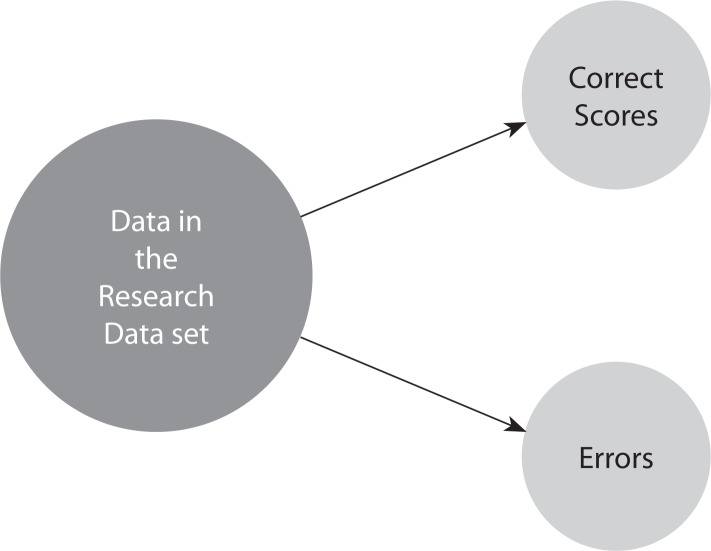
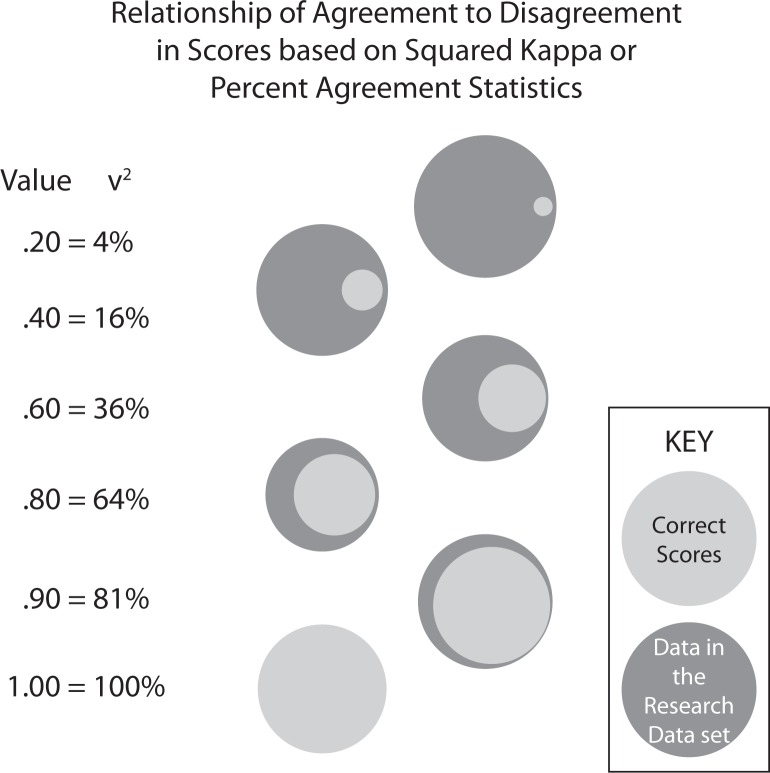
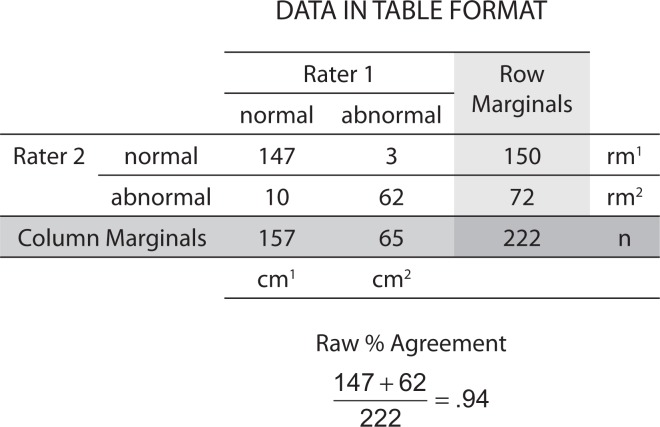
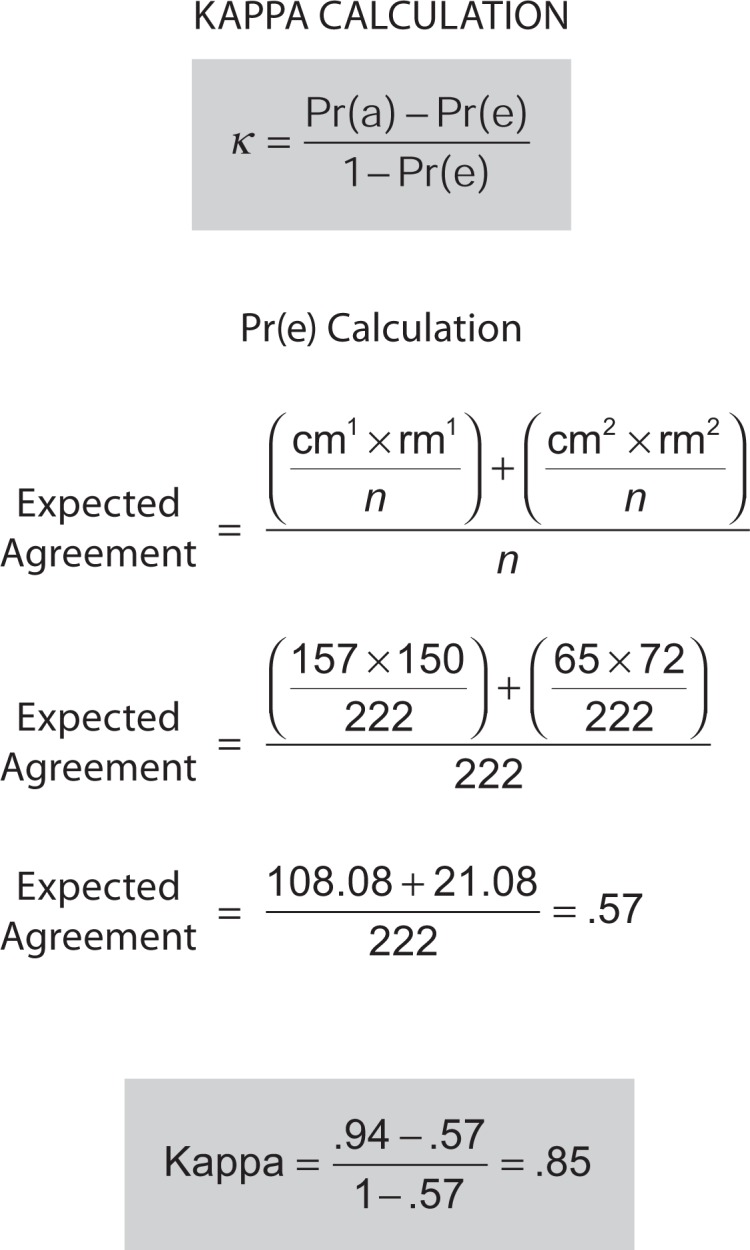
The kappa statistic is frequently used to test interrater reliability. The importance of rater reliability lies in the fact that it represents the extent to which the data collected in the study are correct representations of the variables measured. Measurement of the extent to which data collectors (raters) assign the same score to the same variable is called interrater reliability. While there have been a variety of methods to measure interrater reliability, traditionally it was measured as percent agreement, calculated as the number of agreement scores divided by the total number of scores. In 1960, Jacob Cohen critiqued use of percent agreement due to its inability to account for chance agreement. He introduced the Cohen's kappa, developed to account for the possibility that raters actually guess on at least some variables due to uncertainty. Like most correlation statistics, the kappa can range from -1 to +1. While the kappa is one of the most commonly used statistics to test interrater reliability, it has limitations. Judgments about what level of kappa should be acceptable for health research are questioned. Cohen's suggested interpretation may be too lenient for health related studies because it implies that a score as low as 0.41 might be acceptable. Kappa and percent agreement are compared, and levels for both kappa and percent agreement that should be demanded in healthcare studies are suggested.
Overview
The claims and statistics of this paper haven’t been checked yet.
Free: it reads the open-access text and checks the first 5 claims that cite a source we can check. Create a free account to check every claim.
Integrity signals
Registry
Cites
Statistics
Figures
Verification
Claims the paper makes
The claims and statistics of this paper haven’t been checked yet.
Free: it reads the open-access text and checks the first 5 claims that cite a source we can check. Create a free account to check every claim.
Claims other papers make about this one
Each is checked against this paper’s own text: does it say what the citing paper says it does?
The cited source doesn’t support the claim as written.
In the citing paper
“All raters met the minimum threshold for very good interrater reliability, defined as Cohen’s kappa statistic > 0.75 (McHugh 2012), and percentage agreement with criterion ratings was high (> 80%).”
From Evaluating the quality, safety, and functionality of commonly used smartphone apps for bipolar disorder mood and sleep self-management (2022) · cites this paper as McHugh 2012
Checked by a reasoning model — may be wrong.
Experimental — accuracy not yet measuredThe source backs part of the claim, not all of it — or backs it for a different population, condition or comparison.
In the citing paper
“Codes were compared to determine inter-coder agreement, which was calculated as the percentage of total agreed-upon selected codes compared with the total selected codes. This process was repeated until greater than eighty percent agreement was reached (McHugh, 2012).”
From "It Just Makes It Feel Like You're Not Alone": A Qualitative Study of a Social Support Group for High-Achieving, Low-Income STEM Majors (2024) · cites this paper as McHugh, 2012
Experimental — accuracy not yet measuredThe source backs part of the claim, not all of it — or backs it for a different population, condition or comparison.
In the citing paper
“They then labeled a second batch of 500 tweets, which resulted in an average Cohen’s kappa score of 0.77, indicating substantial interrater agreement (61).”
From Dynamics of cross-platform attention to retracted papers (2022) · cites this paper as [61]
Experimental — accuracy not yet measuredThe source backs part of the claim, not all of it — or backs it for a different population, condition or comparison.
In the citing paper
“The inferred sleep architecture estimates had a fair agreement (κ = 0.37) with the polysomnography ground truth on the internal validation12.”
From Self-supervised learning of accelerometer data provides new insights for sleep and its association with mortality (2024) · cites this paper as [12]
Experimental — accuracy not yet measuredThe source backs part of the claim, not all of it — or backs it for a different population, condition or comparison.
In the citing paper
“The inter-rater agreement for the combined screening process was 83%, indicating strong agreement between the two authors (McHugh, 2012).”
From Unraveling the Complexities of Offender Strategies as Part of Online Sexual Grooming and Technology-Assisted Child Sexual Abuse: A Systematic Review (2026) · cites this paper as McHugh, 2012
Experimental — accuracy not yet measured
35 more claims about this paper
Create a free account to see every claim other papers make about this one.
Self-check
Percentages, sums and reported differences re-computed from the paper’s own numbers.
The self-check needs the paper’s full text.
Citations
Cites
A Coefficient of Agreement for Nominal Scales
Cohen, J. (1960) · Educational and Psychological Measurement · doi:10.1177/001316446002000104 · Cited by 42,398
Stemler, S. E. (2020) · Scholarworks (University of Massachusetts Amherst) · doi:10.7275/96jp-xz07 · Cited by 992
Meta-analysis of Pap Test Accuracy
Fahey, M. T., Irwig, L., & Macaskill, P. (1995) · American Journal of Epidemiology · doi:10.1093/oxfordjournals.aje.a117485 · Cited by 684
Pressure ulcers: prevention, evaluation, and management.
Bluestein, D. A., & Javaheri, A. (2008) · PubMed · Cited by 201
Comparing groups for statistical differences: how to choose the right statistical test?
Marusteri, M., & Bacarea, V. (2010) · Biochemia Medica · doi:10.11613/bm.2010.004 · Cited by 184
Bonnyman, A. M., Webber, C. E., Stratford, P. W., & MacIntyre, N. J. (2012) · Journal of Clinical Densitometry · doi:10.1016/j.jocd.2012.03.005 · Cited by 176
Simundic, A.-M., Nikolac, N., Ivankovic, V., Ferenec-Ruzic, D., Magdic, B., Kvaternik, M., & Topic, E. (2009) · Clinical Chemistry and Laboratory Medicine · doi:10.1515/cclm.2009.306 · Cited by 113
Introductory Statistics for Health and Nursing Using SPSS
Marston, L. (2010) · SAGE Publications Ltd eBooks · doi:10.4135/9781446221570 · Cited by 80
Kottner, J., Halfens, R. J. G., & Dassen, T. W. N. (2009) · International Journal of Nursing Studies · doi:10.1016/j.ijnurstu.2009.03.014 · Cited by 77
de la Morena, E., Martinez, J., Rio, G. D., Latour, J., & Cabrera, P. (1978) · Biochemical Medicine · doi:10.1016/0006-2944(78)90045-5 · Cited by 19
Research works printed but not linked: 2
- [8]8. Marston, L . Introductory Statistics for Health and Nursing Using SPSS . Thousand Oaks, California: Sage Publications, Ltd . 2010 .
- [10]10. Simundic AM . Confidence interval . Biochem Med 2008;18:154-61 .
Cited by
Items 101–200 of 1,219
Jeet, G., Thakur, J. S., Prinja, S., & Singh, M. (2017) · PLOS ONE · doi:10.1371/journal.pone.0180640 · Cited by 280
Probst, C., Kilian, C., Sanchez, S., Lange, S., & Rehm, J. (2020) · The Lancet Public Health · doi:10.1016/s2468-2667(20)30052-9 · Cited by 279
“Fitspiration” on social media: a content analysis of gendered images
Carrotte, E. R., Prichard, I., & Lim, M. S. C. (2017) · Journal of Medical Internet Research · doi:10.2196/jmir.6368 · Cited by 278
“60 [28] and percentage agreements for these variables ranged from 87.”
Clifford, B. K., Mizrahi, D., Sandler, C. X., Barry, B. K., Simar, D., Wakefield, C. E., & Goldstein, D. (2018) · Supportive Care in Cancer · doi:10.1007/s00520-017-3964-5 · Cited by 278
Side effects and perceptions following Sinopharm COVID-19 vaccination
Saeed, B. Q., Al-Shahrabi, R., Alhaj, S. S., Alkokhardi, Z. M., & Adrees, A. O. (2021) · International Journal of Infectious Diseases · doi:10.1016/j.ijid.2021.08.013 · Cited by 278
Garavan, T. N., McCarthy, A. M., Lai, Y., Murphy, K. R., Sheehan, M., & Carbery, R. (2020) · Human Resource Management Journal · doi:10.1111/1748-8583.12284 · Cited by 286
XSleepNet: Multi-View Sequential Model for Automatic Sleep Staging
Phan, H., Chen, O. Y., Tran, M. C., Koch, P., Mertins, A., & De Vos, M. (2021) · IEEE Transactions on Pattern Analysis and Machine Intelligence · doi:10.1109/tpami.2021.3070057 · Cited by 275
Sagar-Ouriaghli, I., Godfrey, E., Bridge, L., Meade, L., & Brown, J. S. L. (2019) · American Journal of Men’s Health · doi:10.1177/1557988319857009 · Cited by 274
“00, almost perfect levels of agreement (Cohen, 1960; McHugh, 2012).”
BackgroundMethodInfluentialNoah, B., Keller, M. S., Mosadeghi, S., Stein, L., Johl, S., Delshad, S., Tashjian, V. C., Lew, D., Kwan, J. T., Jusufagic, A., et al. (2018) · npj Digital Medicine · doi:10.1038/s41746-017-0002-4 · Cited by 273
“85.(49) For studies identified in the second review process, a second independent review was performed.”
BackgroundSchober, P., Mascha, E. J., & Vetter, T. R. (2021) · Anesthesia & Analgesia · doi:10.1213/ane.0000000000005773 · Cited by 271
Shi, D., Wang, T., Xing, H., & Xu, H. (2020) · Knowledge-Based Systems · doi:10.1016/j.knosys.2020.105618 · Cited by 270
Khraisha, Q., Put, S., Kappenberg, J., Warraitch, A., & Hadfield, K. (2024) · Research Synthesis Methods · doi:10.1002/jrsm.1715 · Cited by 269
“We set a five-message limit for titles/abstracts and three for full texts to avoid GPT-4's inaccuracies arising from too much information.”
Khraisha, Q., Put, S., Kappenberg, J., Warraitch, A., & Hadfield, K. (2023) · arXiv · doi:10.48550/arxiv.2310.17526 · Cited by 268
Schachner, T., Keller, R., & v Wangenheim, F. (2020) · Journal of Medical Internet Research · doi:10.2196/20701 · Cited by 267
“After each of these phases, Cohen kappa was calculated to measure interrater reliability between the researchers and determine the level of agreement [47].”
MethodHumanlike robots as employees in the hotel industry: Thematic content analysis of online reviews
Yu, C.-E. (2020) · Journal of Hospitality Marketing & Management · doi:10.1080/19368623.2019.1592733 · Cited by 267
The safety of health care for ethnic minority patients: a systematic review
Chauhan, A., Walton, M., Manias, E., Walpola, R. L., Seale, H., Latanik, M., Leone, D., Mears, S., & Harrison, R. (2020) · International Journal for Equity in Health · doi:10.1186/s12939-020-01223-2 · Cited by 266
Interrater Reliability of Pupillary Assessments
Olson, D. M., Stutzman, S. E., Saju, C., Wilson, M. E., Zhao, W., & Aiyagari, V. (2015) · Neurocritical Care · doi:10.1007/s12028-015-0182-1 · Cited by 262
Garritty, C., Hamel, C., Trivella, M., Gartlehner, G., Nussbaumer-Streit, B., Devane, D., Kamel, C., Griebler, U., & King, V. J. (2024) · BMJ · doi:10.1136/bmj-2023-076335 · Cited by 260
Kost, R. G., & Correa da Rosa, J. (2018) · Journal of Clinical and Translational Science · doi:10.1017/cts.2018.18 · Cited by 260
Lamba, C. D., Gupta, V. K., van Haselen, R., Rutten, L., Mahajan, N., Molla, A. M., & Singhal, R. (2020) · Homeopathy · doi:10.1055/s-0040-1701251 · Cited by 257
Artificial intelligence in systematic reviews: promising when appropriately used
van Dijk, S. H. B., Brusse-Keizer, M. G. J., Bucsán, C. C., van der Palen, J., Doggen, C. J. M., & Lenferink, A. (2023) · BMJ Open · doi:10.1136/bmjopen-2023-072254 · Cited by 256
Imani, M., Beikmohammadi, A., & Arabnia, H. R. (2025) · Technologies · doi:10.3390/technologies13030088 · Cited by 256
Machine-learning-based evidence and attribution mapping of 100,000 climate impact studies
Callaghan, M., Schleussner, C.-F., Nath, S., Lejeune, Q., Knutson, T. R., Reichstein, M., Hansen, G., Theokritoff, E., Andrijevic, M., Brecha, R. J., et al. (2021) · Nature Climate Change · doi:10.1038/s41558-021-01168-6 · Cited by 251
Menon, S., & Jain, K. (2024) · IEEE Transactions on Engineering Management · doi:10.1109/tem.2021.3110903 · Cited by 251
A Benchmark for Studying Diabetic Retinopathy: Segmentation, Grading, and Transferability
Zhou, Y., Wang, B., Huang, L., Cui, S., & Shao, L. (2021) · IEEE Transactions on Medical Imaging · doi:10.1109/tmi.2020.3037771 · Cited by 251
Extracorporeal cardiopulmonary resuscitation for cardiac arrest: A systematic review
Holmberg, M. J., Geri, G., Wiberg, S., Guerguerian, A.-M., Donnino, M. W., Nolan, J. P., Deakin, C. D., & Andersen, L. W. (2018) · Resuscitation · doi:10.1016/j.resuscitation.2018.07.029 · Cited by 250
“80 [12]) a third reviewer reviewed all excluded titles and abstracts to ensure optimized sensitivity.”
BackgroundMehl, M. R. (2017) · Current Directions in Psychological Science · doi:10.1177/0963721416680611 · Cited by 245
Modeling avian full annual cycle distribution and population trends with citizen science data
Fink, D., Auer, T., Johnston, A., Ruiz‐Gutierrez, V., Hochachka, W. M., & Kelling, S. (2020) · Ecological Applications · doi:10.1002/eap.2056 · Cited by 245
“Guidelines for interpreting the magnitude of the Kappa statistic have appeared in the literature (Landis and Koch 1977, McHugh 2012) though they are subjective and tend to be geared toward specific application domains.”
Brailovskaia, J., Schillack, H., & Margraf, J. (2020) · Computers in Human Behavior · doi:10.1016/j.chb.2020.106511 · Cited by 244
Nayak, L., DeAngelis, L. M., Brandes, A. A., Peereboom, D. M., Galanis, E., Lin, N. U., Soffietti, R., Macdonald, D. R., Chamberlain, M., Perry, J., et al. (2017) · Neuro-Oncology · doi:10.1093/neuonc/nox029 · Cited by 244
Basheer, S., Wang, X., Farooque, A. A., Nawaz, R. A., Liu, K., Adekanmbi, T., & Liu, S. (2022) · Remote Sensing · doi:10.3390/rs14194978 · Cited by 244
Reisoğlu, İ., & Çebi, A. (2020) · Computers & Education · doi:10.1016/j.compedu.2020.103940 · Cited by 243
MURA: Large Dataset for Abnormality Detection in Musculoskeletal Radiographs
Rajpurkar, P., Irvin, J., Bagul, A., Ding, D. Y., Duan, T., Mehta, H., Yang, B., Zhu, K., Laird, D., Ball, R. L., et al. (2017) · arXiv (Cornell University) · doi:10.48550/arxiv.1712.06957 · Cited by 243
Multi-label Hate Speech and Abusive Language Detection in Indonesian Twitter
Ibrohim, M. O., & Budi, I. (2019) · Proceedings of the Third Workshop on Abusive Language Online · doi:10.18653/v1/w19-3506 · Cited by 239
“According to (McHugh, 2012), this percentage amount of reliable dataset (data can be used for research experiment) shows that the annotation result has a good level of agreement.”
BackgroundGarcía-Conesa, M.-T., Philippou, E., Pafilas, C., Massaro, M., Quarta, S., Andrade, V., Jorge, R., Chervenkov, M., Ivanova, T., Dimitrova, D., et al. (2020) · Nutrients · doi:10.3390/nu12102960 · Cited by 236
Linares, M., Pérez-Tanoira, R., Carrero, A., Romanyk, J., Pérez-García, F., Gómez-Herruz, P., Arroyo, T., & Cuadros, J. (2020) · Journal of Clinical Virology · doi:10.1016/j.jcv.2020.104659 · Cited by 236
Grooten, W. J. A., Tseli, E., Äng, B. O., Boersma, K., Stålnacke, B.-M., Gerdle, B., & Enthoven, P. (2019) · Diagnostic and Prognostic Research · doi:10.1186/s41512-019-0050-0 · Cited by 235
“In the field of rehabilitation of chronic pain we suggest that the IMMPACT recommendations on outcome measures should be used [13].”
BackgroundA robotic sensory system with high spatiotemporal resolution for texture recognition
Bai, N., Xue, Y., Chen, S., Shi, L., Shi, J., Zhang, Y., Hou, X., Cheng, Y., Huang, K., Wang, W., et al. (2023) · Nature Communications · doi:10.1038/s41467-023-42722-4 · Cited by 233
“…and accuracy ≤ 44% for allcases) together with a small Kappa coef fi cient (0.12, which indicates the lowest level of agreement with unreliable data 45 ) in differentiating a nonstructured surface,andsurfacetextureswithfeaturesizesof10,15,20,30,40,and 50 μ m, based on our experimental results from…”
InfluentialKovács, G., Alonso, P., & Saini, R. (2021) · SN Computer Science · doi:10.1007/s42979-021-00457-3 · Cited by 237
COMPLEX DYNAMIC SYSTEMS THEORY IN LANGUAGE LEARNING: A SCOPING REVIEW OF 25 YEARS OF RESEARCH
Hiver, P. V., Al‐Hoorie, A. H., & Evans, R. (2021) · Studies in Second Language Acquisition · doi:10.1017/s0272263121000553 · Cited by 238
Success factors for serious games to enhance learning: a systematic review
Ravyse, W. S., Seugnet Blignaut, A., Leendertz, V., & Woolner, A. (2017) · Virtual Reality · doi:10.1007/s10055-016-0298-4 · Cited by 231
Xiao, Z., Yuan, X., Liao, Q. V., Abdelghani, R., & Oudeyer, P.-Y. (2023) · 28th International Conference on Intelligent User Interfaces · doi:10.1145/3581754.3584136 · Cited by 230
Stress and eating behaviors in children and adolescents: Systematic review and meta-analysis
Hill, D. C., Moss, R. H., Sykes-Muskett, B., Conner, M., & O'Connor, D. B. (2018) · Appetite · doi:10.1016/j.appet.2017.11.109 · Cited by 230
Bryant‐Waugh, R., Micali, N., Cooke, L., Lawson, E. A., Eddy, K. T., & Thomas, J. J. (2019) · International Journal of Eating Disorders · doi:10.1002/eat.22958 · Cited by 230
What Constitutes Student Well-Being: A Scoping Review Of Students’ Perspectives
Hossain, S., O'Neill, S. C., & Strnadová, I. (2022) · Child Indicators Research · doi:10.1007/s12187-022-09990-w · Cited by 237
Ding, A.-C. E., Shi, L., Yang, H., & Choi, I. (2024) · Computers and Education Open · doi:10.1016/j.caeo.2024.100178 · Cited by 228
Seganfredo, F. B., Blume, C. A., Moehlecke, M., Giongo, A., Casagrande, D. S., Spolidoro, J. V. N., Padoin, A. V., Schaan, B. D., & Mottin, C. C. (2017) · Obesity Reviews · doi:10.1111/obr.12541 · Cited by 228
Williams, J., Allen, L., Wickramasinghe, K., Mikkelsen, B., Roberts, N., & Townsend, N. (2018) · Journal of Global Health · doi:10.7189/jogh.08.020409 · Cited by 228
An Examination of the Use of Large Language Models to Aid Analysis of Textual Data
(2024) · doi:10.1177/16094069241231168 · Cited by 227
Cyberbullying Perpetration and Victimization in Youth: A Meta-Analysis of Longitudinal Studies
Marciano, L., Schulz, P. J., & Camerini, A.-L. (2020) · Journal of Computer-Mediated Communication · doi:10.1093/jcmc/zmz031 · Cited by 226
Zhen, S.-H., Cheng, M., Tao, Y.-B., Wang, Y.-F., Juengpanich, S., Jiang, Z.-Y., Jiang, Y.-K., Yan, Y.-Y., Lu, W., Lue, J.-M., et al. (2020) · Frontiers in Oncology · doi:10.3389/fonc.2020.00680 · Cited by 226
Saba, L., Cau, R., Murgia, A., Nicolaides, A. N., Wintermark, M., Castillo, M., Staub, D., Kakkos, S. K., Yang, Q., Paraskevas, K. I., et al. (2024) · JACC: Cardiovascular Imaging · doi:10.1016/j.jcmg.2023.09.005 · Cited by 226
Braithwaite, J., Herkes, J., Ludlow, K., Lamprell, G., & Testa, L. (2016) · BMJ Open · doi:10.1136/bmjopen-2016-013758 · Cited by 225
Liver biopsy for assessment of chronic liver diseases: a synopsis
Chowdhury, A. B., & Mehta, K. J. (2022) · Clinical and Experimental Medicine · doi:10.1007/s10238-022-00799-z · Cited by 225
The Beighton Score as a measure of generalised joint hypermobility
Malek, S., Reinhold, E. J., & Pearce, G. S. (2021) · Rheumatology International · doi:10.1007/s00296-021-04832-4 · Cited by 224
A systematic review of STEM education research in the GCC countries: trends, gaps and barriers
Kayan-Fadlelmula, F., Sellami, A., Abdelkader, N., & Umer, S. (2022) · International Journal of STEM Education · doi:10.1186/s40594-021-00319-7 · Cited by 223
Clinical Evaluation of Three Sample-to-Answer Platforms for Detection of SARS-CoV-2
Zhen, W., Smith, E., Manji, R., Schron, D., & Berry, G. J. (2020) · Journal of Clinical Microbiology · doi:10.1128/jcm.00783-20 · Cited by 223
Gafita, A., Rauscher, I., Weber, M., Hadaschik, B. A., Wang, H., Armstrong, W. R., Tauber, R., Grogan, T., Czernin, J. G., Rettig, M. B., et al. (2022) · Journal of Nuclear Medicine · doi:10.2967/jnumed.121.263072 · Cited by 221
Li, E., Clarke, J., Ashrafian, H., Darzi, A., & Neves, A. L. (2022) · Journal of Medical Internet Research · doi:10.2196/38144 · Cited by 220
Houssein, E. H., Abohashima, Z., Elhoseny, M., & Mohamed, W. M. (2022) · Journal of Computational Design and Engineering · doi:10.1093/jcde/qwac003 · Cited by 219
Large language model (ChatGPT) as a support tool for breast tumor board
Sorin, V., Klang, E., Sklair-Levy, M., Cohen, I., Zippel, D. B., Balint Lahat, N., Konen, E., & Barash, Y. (2023) · npj Breast Cancer · doi:10.1038/s41523-023-00557-8 · Cited by 218
The critiques and criticisms of positive psychology: a systematic review
van Zyl, L. E., Gaffaney, J., van der Vaart, L., Dik, B. J., & Donaldson, S. I. (2024) · The Journal of Positive Psychology · doi:10.1080/17439760.2023.2178956 · Cited by 217
Hatmal, M. M., Al-Hatamleh, M. A. I., Olaimat, A. N., Hatmal, M., Alhaj-Qasem, D. M., Olaimat, T. M., & Mohamud, R. (2021) · Vaccines · doi:10.3390/vaccines9060556 · Cited by 217
Eating Behaviour Changes during the COVID-19 Pandemic: A Systematic Review of Longitudinal Studies
González-Monroy, C., Gómez-Gómez, I., Olarte-Sánchez, C. M., & Motrico, E. (2021) · International Journal of Environmental Research and Public Health · doi:10.3390/ijerph182111130 · Cited by 215
“The inter-agreement of the total selection between reviewers was almost perfect [25] (Cohen Kappa Index = 0.”
BackgroundDiscourse Markers and (Dis)fluency: Forms and functions across languages and registers
Crible, L. (2018) · Pragmatics & beyond. New series · doi:10.1075/pbns.286 · Cited by 218
Detecting and Monitoring Hate Speech in Twitter
Pereira-Kohatsu, J. C., Quijano-Sánchez, L., Liberatore, F., & Camacho-Collados, M. (2019) · Sensors · doi:10.3390/s19214654 · Cited by 214
“The two main statistical measures of the agreement percentage, popular in labeling processes and areas such as psychology and education [76], are Cohens’ kappa [77], which measures the degree of agreement between two raters, and Fliess’ kappa [78], which makes it possible to measure the concordance among two or more r…”
BackgroundThe Effect of Exercise on Depressive Symptoms in Adolescents: A Systematic Review and Meta-Analysis
Carter, T., Morres, I. D., Meade, O., & Callaghan, P. (2016) · Journal of the American Academy of Child & Adolescent Psychiatry · doi:10.1016/j.jaac.2016.04.016 · Cited by 213
Gréaux, M., Moro, M. F., Kamenov, K., Russell, A. M., Barrett, D., & Cieza, A. (2023) · International Journal for Equity in Health · doi:10.1186/s12939-023-02035-w · Cited by 213
“…were extracted for each included article on barriers and interventions: author(s), year of publication, study contexts (defined by country, WHO region 1 [46], and level of income), methodology, study population, intersectionality, 2 type of healthcare service or intervention, and main outcomes.”
The use of ChatGPT in teaching and learning: a systematic review through SWOT analysis approach
Mai, D. T. T., Da, C. V., & Hanh, N. V. (2024) · Frontiers in Education · doi:10.3389/feduc.2024.1328769 · Cited by 213
“We used ‘inter-rater reliability’ using ‘percent agreement’ (McHugh, 2012; Ha et al., 2023) and a calculated consensus ratio of 43/51 = 0.84 (ie 84%).”
MethodInfluentialMeyers, N., Catarino, A. I., Declercq, A. M., Brenan, A., Devriese, L., Vandegehuchte, M., De Witte, B., Janssen, C., & Everaert, G. (2022) · Science of The Total Environment · doi:10.1016/j.scitotenv.2022.153441 · Cited by 213
Robots in Healthcare: a Scoping Review
Morgan, A. A., Abdi, J., Syed, M. A. Q., Kohen, G. E., Barlow, P. L., & Vizcaychipi, M. P. (2022) · Current Robotics Reports · doi:10.1007/s43154-022-00095-4 · Cited by 213
Compassion in healthcare: an updated scoping review of the literature
Malenfant, S., Jaggi, P., Hayden, K. A., & Sinclair, S. (2022) · BMC Palliative Care · doi:10.1186/s12904-022-00942-3 · Cited by 213
“At level 1, a minimum threshold of 80% agreement (number of agreements/number of agreements + disagreements) [62, 63] was utilized to guide screening of the remaining titles and abstracts.”
MethodIndigenous mental health in a changing climate: A systematic scoping review of the global literature
Middleton, J., Cunsolo, A., Jones-Bitton, A., Wright, C. J., & Harper, S. L. (2020) · Environmental Research Letters · doi:10.1088/1748-9326/ab68a9 · Cited by 212
(2020) · Progress in Molecular Biology and Translational Science · doi:10.1016/bs.pmbts.2020.04.003 · Cited by 212
Lessons from Natural Language Inference in the Clinical Domain
Romanov, A., & Shivade, C. (2018) · Proceedings of the 2018 Conference on Empirical Methods in Natural Language Processing · doi:10.18653/v1/d18-1187 · Cited by 212
Fernández-Gómez, E., Martín-Salvador, A., Luque-Vara, T., Sánchez-Ojeda, M. A., Navarro-Prado, S., & Enrique-Mirón, C. (2020) · Nutrients · doi:10.3390/nu12041136 · Cited by 211
Elements of Trust in Digital Health Systems: Scoping Review
Adjekum, A., Blasimme, A., & Vayena, E. (2018) · Journal of Medical Internet Research · doi:10.2196/11254 · Cited by 211
A lightweight CNN for Diabetic Retinopathy classification from fundus images
S., G., Gopi, V. P., & Palanisamy, P. (2020) · Biomedical Signal Processing and Control · doi:10.1016/j.bspc.2020.102115 · Cited by 210
Fairfax, A., Brehaut, J., Colman, I., Sikora, L., Kazakova, A., Chakraborty, P. K., & Potter, B. K. (2019) · BMC Pediatrics · doi:10.1186/s12887-019-1587-3 · Cited by 211
Akhter, Z., Rankin, J., Ceulemans, D., Ngongalah, L., Ackroyd, R., Devlieger, R., Vieira, R., & Heslehurst, N. (2019) · PLOS Medicine · doi:10.1371/journal.pmed.1002866 · Cited by 209
Data sharing in PLOS ONE: An analysis of Data Availability Statements
Federer, L. M., Belter, C. W., Joubert, D. J., Livinski, A., Lu, Y.-L., Snyders, L. N., & Thompson, H. (2018) · PLOS ONE · doi:10.1371/journal.pone.0194768 · Cited by 208
Managing diagnostic uncertainty in primary care: a systematic critical review
Alam, R., Cheraghi-Sohi, S., Panagioti, M., Esmail, A., Campbell, S., & Panagopoulou, E. (2017) · BMC Family Practice · doi:10.1186/s12875-017-0650-0 · Cited by 208
“High inter-rater reliability was achieved: Cohen’s [25] unweighted κ coefficient = 0.74 and 0.95 for title/abstract and full-text screening, respectively.”
MethodInfluentialOrange, D. E., Agius, P., DiCarlo, E. F., Robine, N., Geiger, H., Szymonifka, J., McNamara, M., Cummings, R., Andersen, K. M., Mirza, S., et al. (2018) · Arthritis & Rheumatology · doi:10.1002/art.40428 · Cited by 207
“…subtypes in our data, we used an algorithm called CIBER-SORT (Cell-type Identification by Estimating Relative Sub-sets of Known RNA Transcripts) (24,25), a machine learning system trained on the profiles of 22 distinct leukocyte data sets over 547 genes, with defined “ barcodes ” of gene…”
MethodBest practices for the human evaluation of automatically generated text
van der Lee, C., Gatt, A., van Miltenburg, E., Wubben, S., & Krahmer, E. (2019) · Proceedings of the 12th International Conference on Natural Language Generation · doi:10.18653/v1/w19-8643 · Cited by 205
“An additional consideration is that some statistics (such as κ ; see McHugh, 2012) make overly restrictive assumptions, though they have the advantage of accounting for chance agreement.”
BackgroundInfluentialBroers, V. J. V., De Breucker, C., Van den Broucke, S., & Luminet, O. (2017) · European Journal of Public Health · doi:10.1093/eurpub/ckx085 · Cited by 205
Harrison, R., Fischer, S., Walpola, R. L., Chauhan, A., Babalola, T., Mears, S., & Le-Dao, H. (2021) · Journal of Healthcare Leadership · doi:10.2147/jhl.s289176 · Cited by 204
Mitić, M., Woodcock, K. A., Amering, M., Krammer, I., Stiehl, K. A. M., Zehetmayer, S., & Schrank, B. (2021) · Frontiers in Psychology · doi:10.3389/fpsyg.2021.589403 · Cited by 210
Exploring Immersive Learning Experiences: A Survey
Kuhail, M. A., ElSayary, A., Farooq, S., & Alghamdi, A. (2022) · Informatics · doi:10.3390/informatics9040075 · Cited by 201
An empirical analysis of knowledge co-construction in YouTube comments
Dubovi, I., & Tabak, I. (2020) · Computers & Education · doi:10.1016/j.compedu.2020.103939 · Cited by 202
Svenningsson, J., Höst, G., Hultén, M., & Hallström, J. (2022) · International Journal of Technology and Design Education · doi:10.1007/s10798-021-09657-7 · Cited by 200
De Groot, L. M., Lee, G., Ackerie, A., & van der Meij, B. S. (2020) · Nutrients · doi:10.3390/nu12082287 · Cited by 200
Muir, R. A., Howard, S. J., & Kervin, L. K. (2023) · Educational Psychology Review · doi:10.1007/s10648-023-09740-6 · Cited by 203
Rice Crop Detection Using LSTM, Bi-LSTM, and Machine Learning Models from Sentinel-1 Time Series
Crisóstomo de Castro Filho, H., Abílio de Carvalho Júnior, O., Ferreira de Carvalho, O. L., Pozzobon de Bem, P., dos Santos de Moura, R., Olino de Albuquerque, A., Rosa Silva, C., Guimarães Ferreira, P. H., Fontes Guimarães, R., & Trancoso Gomes, R. A. (2020) · Remote Sensing · doi:10.3390/rs12162655 · Cited by 199
Water scarcity in the Yellow River Basin under future climate change and human activities
Omer, A., Elagib, N. A., Zhuguo, M., Saleem, F., & Mohammed, A. (2020) · Science of The Total Environment · doi:10.1016/j.scitotenv.2020.141446 · Cited by 199
Puddephatt, J., Irizar, P., Jones, A., Gage, S. H., & Goodwin, L. (2022) · Addiction · doi:10.1111/add.15735 · Cited by 198
The Widening Gap: The Benefits and Harms of Generative AI for Novice Programmers
Prather, J., Reeves, B. N., Leinonen, J., MacNeil, S., Randrianasolo, A. S., Becker, B. A., Kimmel, B., Wright, J., & Briggs, B. (2024) · Proceedings of the 2024 ACM Conference on International Computing Education Research - Volume 1 · doi:10.1145/3632620.3671116 · Cited by 196
Tejada-Gallardo, C., Blasco-Belled, A., Torrelles-Nadal, C., & Alsinet, C. (2020) · Journal of Youth and Adolescence · doi:10.1007/s10964-020-01289-9 · Cited by 195
“An inter-rater reliability of 0.98 was found, which represents an almost perfect level of agreement between authors (McHugh 2012).”
BackgroundInfluentialTaylor‐Weiner, A., Pokkalla, H., Han, L., Jia, C., Huss, R., Chung, C., Elliott, H., Glass, B., Pethia, K., Carrasco‐Zevallos, O., et al. (2021) · Hepatology · doi:10.1002/hep.31750 · Cited by 195
A scoping review of Q-methodology in healthcare research
Churruca, K., Ludlow, K., Wu, W., Gibbons, K., Nguyen, H. M., Ellis, L. A., & Braithwaite, J. (2021) · BMC Medical Research Methodology · doi:10.1186/s12874-021-01309-7 · Cited by 195
“82, which is considered a ‘strong’ level of agreement [36].”
BackgroundShamai, G., Livne, A., Polónia, A., Sabo, E., Cretu, A., Bar-Sela, G., & Kimmel, R. (2022) · Nature Communications · doi:10.1038/s41467-022-34275-9 · Cited by 193
Metadata
- Authors
- McHugh, M. L.
- Affiliations
- National University (US)
- Corresponding author
- McHugh, Marry L.
- Venue
- Biochemia Medica
- Published
- 2012
- Volume
- 22
- Issue
- 3
- Pages
- 276-282
- ISSN
- 1330-0962 (ISSN-L)
- 1846-7482
- PMC
- PMC3900052
- OpenAlex
- W4294214983
- Semantic Scholar
- bf3a7271860b1667e3ceb84e5bc400d2635ff8b7
- Cited by
- 19,877
- References
- 10
- Citations by year
- 2026: 2370 · 2025: 2905 · 2024: 2853 · 2023: 2576 · 2022: 2417 · 2021: 2359 · 2020: 1703 · 2019: 1050 · 2018: 748 · 2017: 468 · 2016: 228 · 2015: 63 · 2014: 39 · 2013: 8 · 2012: 5
- FWCI
- 41.68
- Type
- journal article
- Language
- en
- Open access
- diamond
- doi.org
- Licence
- cc-by
- Locations
- Biochemia Medica (publishedVersion, cc-by)
- Europe PMC (PubMed Central) (publishedVersion, other-oa)
- PubMed Central (publishedVersion, cc-by-nc)
- PubMed (publishedVersion)
- University of Zagreb University Computing Centre (SRCE) (submittedVersion, other-oa)
- PubMed
- Topics
- Social Sciences › Decision Sciences › Statistics, Probability and Uncertainty › Reliability and Agreement in Measurement
- Physical Sciences › Mathematics › Statistics and Probability › Statistical Methods in Epidemiology
- Social Sciences › Decision Sciences › Statistics, Probability and Uncertainty › Meta-analysis and systematic reviews
- Keywords
- inter-rater reliability, Cohen's kappa, percent agreement, chance-corrected agreement, rater agreement, interobserver variability
- MeSH terms
- Data Interpretation, Statistical, Reproducibility of Results, Observer Variation
About these checks
Registry, retraction, Cites and statistics results are computed, not judged, with one exception: a printed reference that no index lists is read once by a model before it counts as a citation error. Claims are extracted by a model and kept only when their quote appears verbatim in the text; each cited source is then checked, with a model’s help, for whether it says what the claim relies on. Those verdicts can be wrong — read the claim’s quote and the cited source before relying on one.
Statistics and arithmetic are recomputed, not judged.
Confidence bands are shown only for fields calibrated on our annotated test set. None is calibrated yet, so no band is shown.
What counts as a claim ›How we measure confidence ›How we check this ›
Are you an author, or do you see a problem with this page? Request a review
Data sources
Bibliographic data: Semantic Scholar, OpenAlex, Crossref.
Contains information from the Semantic Scholar Academic Graph Datasets, made available under the ODC Attribution License (ODC-BY 1.0).
Semantic Scholar’s data is described in: Kinney, R., et al. (2023). The Semantic Scholar Open Data Platform. arXiv:2301.10140.
