

Toward Quantifying Trust Dynamics: How People Adjust Their Trust After Moment-to-Moment Interaction With Automation
Open accessThe DOI matches its Crossref record; 47 of the 48 references it cites were found in a registry or an index; none of the 43 sources its claims cite is checked for support yet.
Abstract
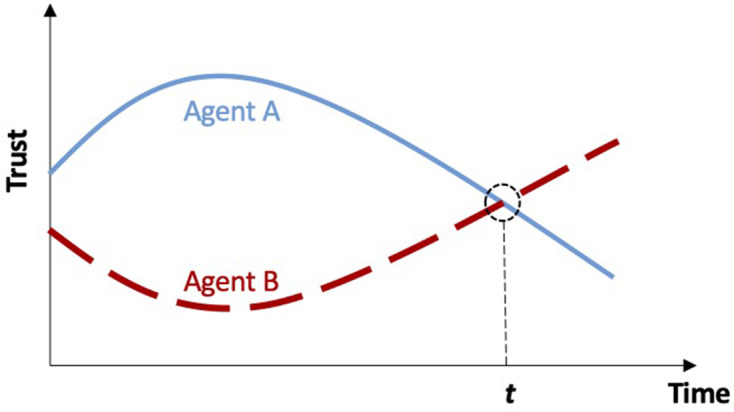
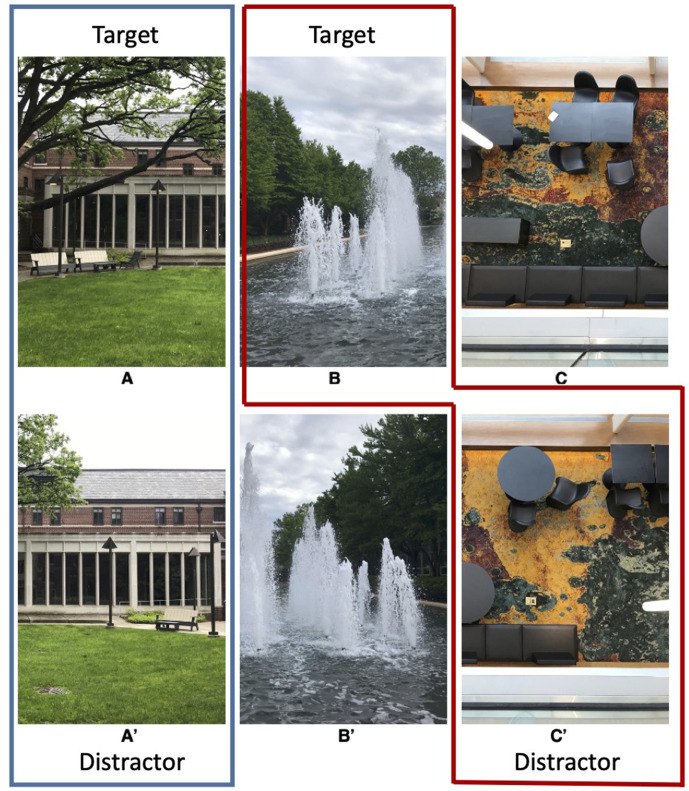
OBJECTIVE: We examine how human operators adjust their trust in automation as a result of their moment-to-moment interaction with automation. BACKGROUND: Most existing studies measured trust by administering questionnaires at the end of an experiment. Only a limited number of studies viewed trust as a dynamic variable that can strengthen or decay over time. METHOD: Seventy-five participants took part in an aided memory recognition task. In the task, participants viewed a series of images and later on performed 40 trials of the recognition task to identify a target image when it was presented with a distractor. In each trial, participants performed the initial recognition by themselves, received a recommendation from an automated decision aid, and performed the final recognition. After each trial, participants reported their trust on a visual analog scale. RESULTS: Outcome bias and contrast effect significantly influence human operators' trust adjustments. An automation failure leads to a larger trust decrement if the final outcome is undesirable, and a marginally larger trust decrement if the human operator succeeds the task by him/herself. An automation success engenders a greater trust increment if the human operator fails the task. Additionally, automation failures have a larger effect on trust adjustment than automation successes. CONCLUSION: Human operators adjust their trust in automation as a result of their moment-to-moment interaction with automation. Their trust adjustments are significantly influenced by decision-making heuristics/biases. APPLICATION: Understanding the trust adjustment process enables accurate prediction of the operators' moment-to-moment trust in automation and informs the design of trust-aware adaptive automation.
Overview
CoChat Summary
## TL;DR
This experiment tracked 75 adults’ trust in an automated decision aid trial-by-trial during a 40-trial aided memory recognition task. Trust rose after automation successes and fell after failures, but the size of the adjustment was also shaped by outcome bias and contrast effect.
## Key findings
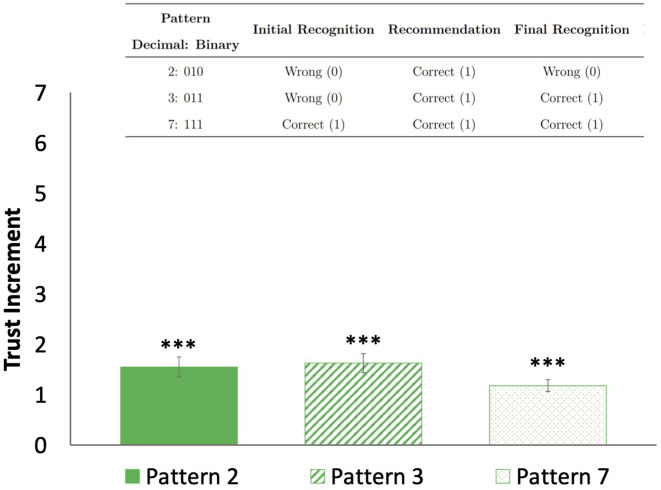
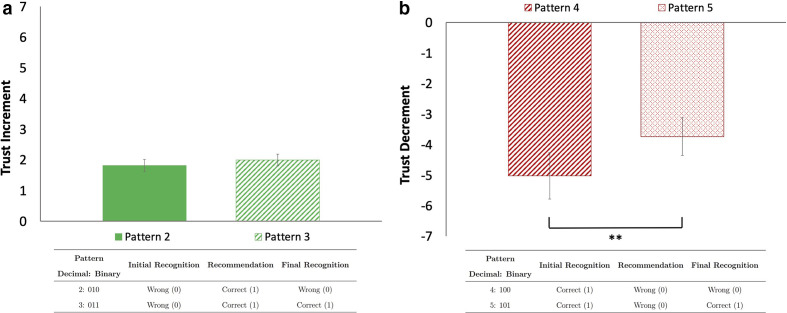
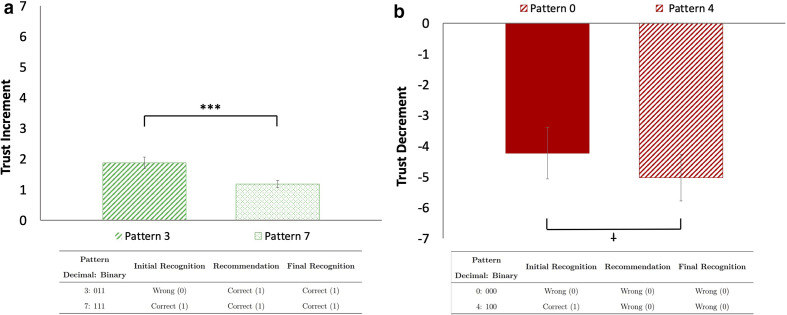
- In one-sample t-tests with Bonferroni adjustment, correct recommendations increased trust for all reported success patterns: Pattern 2, *t*(1,71)=7.81, *p*<.001, *d*=0.92; Pattern 3, *t*(1,70)=12.6, *p*<.001, *d*=1.48; Pattern 7, *t*(1,72)=9.94, *p*<.001, *d*=1.17.
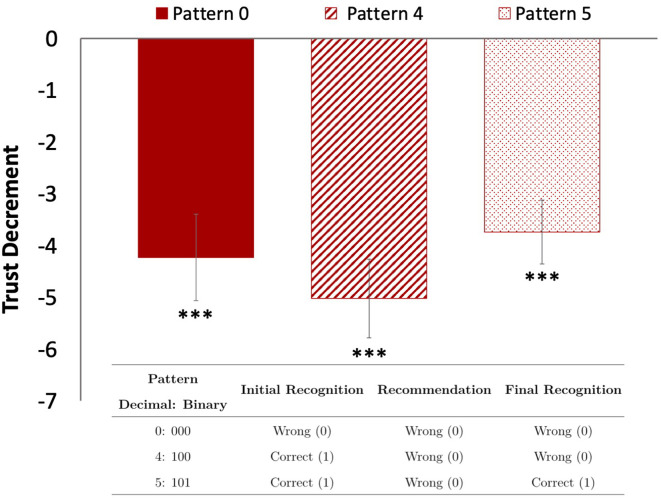
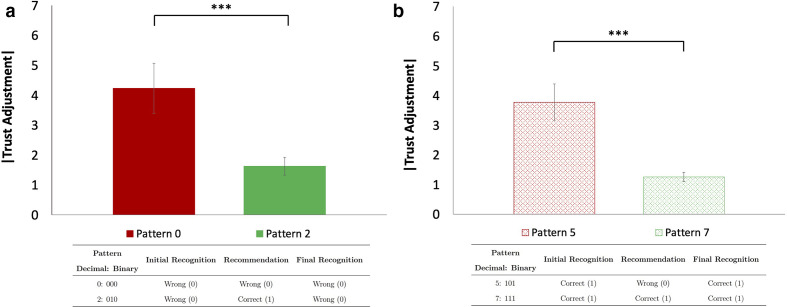
- Wrong recommendations decreased trust for all reported failure patterns: Pattern 0, *t*(1,67)=−8.29, *p*<.001, *d*=1.00; Pattern 4, *t*(1,62)=−8.72, *p*<.001, *d*=1.10; Pattern 5, *t*(1,62)=−6.74, *p*<.001, *d*=0.85.
- Automation failures had a larger impact on trust than automation successes: Pattern 0 vs. 2, *t*(1,65)=5.34, *p*<.001, *d*=0.66; Pattern 5 vs. 7, *t*(1,60)=4.81, *p*<.001, *d*=0.62.
- Heuristic effects were observed: an automation failure produced a larger trust decrement when the final outcome was undesirable, *t*(1,52)=−2.63, *p*=.01, *d*=0.36; and an automation success produced a greater trust increment when the human operator initially failed the task, *t*(1,69)=4.40, *p*<.001, *d*=0.53.
## Methods
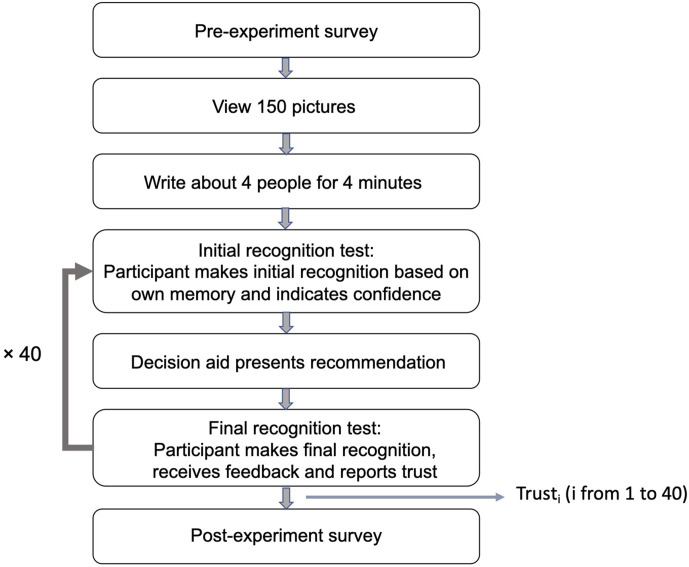
- Mixed design with 75 adults (mean age 23.4 years, SD 4.1); between-subjects automation reliability had 3 levels (70%, 80%, 90%), and within-subjects performance pattern had 8 possible patterns across 40 two-alternative forced-choice trials.
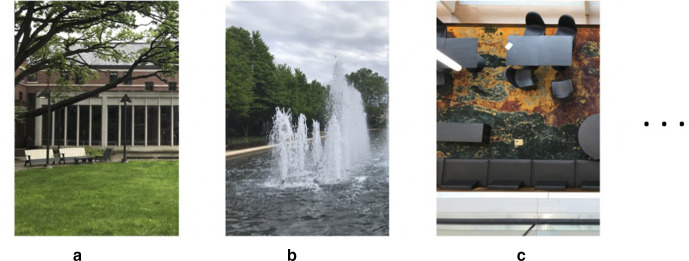
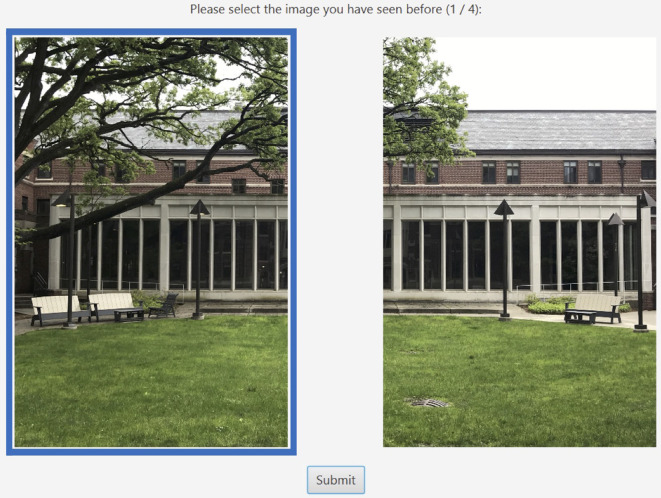
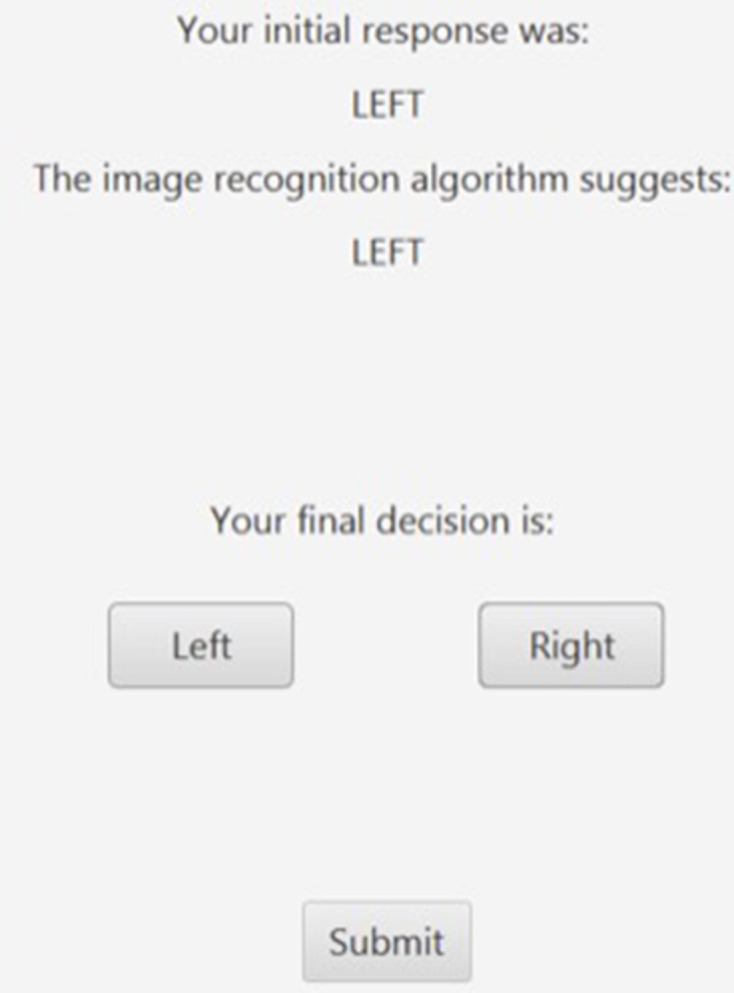
- Participants completed a simulated memory recognition task: viewed 150 images, did an interpolated memory task, then completed 40 trials where they made an initial recognition, received an automated recommendation, made a final recognition, and rated trust after each trial on a visual analog scale.
- Main analyses included planned comparisons, ANCOVAs, one-sample and paired-samples t-tests with Bonferroni adjustments, and linear regressions; trust propensity was tested as a covariate and then removed when nonsignificant.
## Limitations
- The paper states that it used a one-item trust scale, which may not capture all subdimensions of trust as well as multidimensional measures; the authors suggest developing a succinct multi-scale trust measure for repeated interactions.
- Patterns 1 and 6 were excluded from data analysis because they occurred too rarely; the paper says further research should purposely induce these patterns.
- Evident from the text: the task was “fairly simple,” and the authors note that the outcome-bias finding should be explored further in more cognitively demanding tasks such as medical decision making.
Model-written summary. Check it against the paper before relying on it.
Integrity signals
Registry
Cites
Statistics
Figures

Verification
Claims the paper makes
0 Valid · 0 Not valid · 25 Not checked · 40 Own results and interpretations
A result the paper states — it cites no source for it, so there is none to check. The quote shows it is in the paper.
In the paper
“Additionally, automation failures have a larger effect on trust adjustment than automation successes.”
§ Toward Quantifying Trust Dynamics: How People Adjust Their Trust After Moment-to-Moment Interaction With Automation > Abstract > Results
plainstates a cause- Asserted: passes — The authors put it forward as true.
- Checkable: passes — It can be checked against evidence.
- Load-bearing: passes — The paper’s conclusions depend on it.
- Based: passes — The paper gives a reason why it holds.
A result the paper states — it cites no source for it, so there is none to check. The quote shows it is in the paper.
In the paper
“An automation success engenders a greater trust increment if the human operator fails the task.”
§ Toward Quantifying Trust Dynamics: How People Adjust Their Trust After Moment-to-Moment Interaction With Automation > Abstract > Results
plainstates a cause- Asserted: passes — The authors put it forward as true.
- Checkable: passes — It can be checked against evidence.
- Load-bearing: passes — The paper’s conclusions depend on it.
- Based: passes — The paper gives a reason why it holds.
A result the paper reports from its own data — it cites no other source for it, so there is none to check. The quote shows it is in the paper.
In the paper
“Outcome bias and contrast effect significantly influence human operators’ trust adjustments.”
§ Toward Quantifying Trust Dynamics: How People Adjust Their Trust After Moment-to-Moment Interaction With Automation > Abstract > Results
plainstates a cause- Asserted: passes — The authors put it forward as true.
- Checkable: passes — It can be checked against evidence.
- Load-bearing: passes — The paper’s conclusions depend on it.
- Based: passes — The paper gives a reason why it holds.
A result the paper reports from its own data — it cites no other source for it, so there is none to check. The quote shows it is in the paper.
In the paper
“An automation failure leads to a larger trust decrement if the final outcome is undesirable”
§ Toward Quantifying Trust Dynamics: How People Adjust Their Trust After Moment-to-Moment Interaction With Automation > Abstract > Results
plainstates a cause- Asserted: passes — The authors put it forward as true.
- Checkable: passes — It can be checked against evidence.
- Load-bearing: passes — The paper’s conclusions depend on it.
- Based: passes — The paper gives a reason why it holds.
A result the paper reports from its own data — it cites no other source for it, so there is none to check. The quote shows it is in the paper.
In the paper
“and a marginally larger trust decrement if the human operator succeeds the task by him/herself.”
§ Toward Quantifying Trust Dynamics: How People Adjust Their Trust After Moment-to-Moment Interaction With Automation > Abstract > Results
plainstates a cause- Asserted: passes — The authors put it forward as true.
- Checkable: passes — It can be checked against evidence.
- Load-bearing: passes — The paper’s conclusions depend on it.
- Based: passes — The paper gives a reason why it holds.
36 more claims
Create a free account to see all 65 claims and to verify the 6 references still open.
- It may state two separate claims as one. 15
- Probably not a substantial claim. 15
- The quote only partly states this claim. 1
Claims other papers make about this one
Each is checked against this paper’s own text: does it say what the citing paper says it does?
The cited source says what the claim attributes to it.
In the citing paper
“Trust can rapidly change with a single interaction (Chung & Yang, 2024; Yang et al., 2023).”
From Calibrating Trust, Reliance and Dependence in Variable-Reliability Automation (2024) · cites this paper as Yang et al., 2023
Statistics recomputed
Every reported test result, recomputed from its test statistic and degrees of freedom. A result shows as not adding up only once an independent check has confirmed it.
- ConsistentF(1, 73) = 0.73reported p = .4 · recomputed p = .396
“F(1,73)=.73, p = .40”
- Consistentt(72) = 4.91reported p < .001 · recomputed p < .001
“t(72)=4.91, p < .001”
- Consistentt(72) = 2.72reported p < .01 · recomputed p = .008
“t(72)=2.72, p < .01”
- Consistentt(72) = 3.6reported p < .001 · recomputed p < .001
“t(72)=3.60, p < .001”
- Consistentt(72) = 2.74reported p < .01 · recomputed p = .008
“t(72)=2.74, p < .01”
2 more recomputed tests
Create a free account to see every test the Stats check recomputed.
Self-check
Percentages, sums and reported differences re-computed from the paper’s own numbers.
Self-check results appear here once an independent check has confirmed them.
Citations
Cites
An attributional theory of achievement motivation and emotion
Weiner, B. (1985) · Psychological Review · doi:10.1037/0033-295x.92.4.548 · Cited by 7,846 · cited 1×
“This non-significant result could have been due to the self-serving bias (Duval & Silvia, 2002; Miller & Ross, 1975; Weiner, 1985).”
BackgroundA model for types and levels of human interaction with automation
Parasuraman, R., Sheridan, T. B., & Wickens, C. D. (2000) · IEEE Transactions on Systems, Man, and Cybernetics - Part A: Systems and Humans · doi:10.1109/3468.844354 · Cited by 4,195 · cited 2×
“The study employs a simulated memory recognition task adapted from Tulving (1981). Figure 2”
BackgroundMethodSelf-serving biases in the attribution of causality: Fact or fiction?
Miller, D. T., & Ross, M. (1975) · Psychological Bulletin · doi:10.1037/h0076486 · Cited by 2,575 · cited 1×
“This non-significant result could have been due to the self-serving bias (Duval & Silvia, 2002; Miller & Ross, 1975; Weiner, 1985).”
BackgroundHindsight is not equal to foresight: The effect of outcome knowledge on judgment under uncertainty.
Fischhoff, B. (1975) · Journal of Experimental Psychology Human Perception & Performance · doi:10.1037//0096-1523.1.3.288 · Cited by 1,837 · cited 2×
“Hindsight bias, as described by Fischhoff (1975), is the tendency to adjust the estimates of various likelihoods of possible event outcomes in uncertain situations after the event has occurred and the outcome is known.”
BackgroundFoundations for an Empirically Determined Scale of Trust in Automated Systems
Jian, J.-Y., Bisantz, A. M., & Drury, C. G. (2000) · International Journal of Cognitive Ergonomics · doi:10.1207/s15327566ijce0401_04 · Cited by 1,799
Trust, control strategies and allocation of function in human-machine systems
LEE, J., & MORAY, N. (1992) · Ergonomics · doi:10.1080/00140139208967392 · Cited by 1,459 · cited 9×
“Our finding that the magnitude of trust decrements is larger than that of trust increments (supporting H1b) is in line with previous studies in which the number of automation successes significantly exceeded that of automation failures (Lee & Moray, 1992; Manzey et al., 2012).”
BackgroundMethodResultInfluentialMUIR, B. M., & MORAY, N. (1996) · Ergonomics · doi:10.1080/00140139608964474 · Cited by 993 · cited 5×
“After the experiment, participants complete a 12-item trust survey (Jian et al., n.d.) and an 8-item trust survey (Muir & Moray, 1996).”
BackgroundMethodInfluentialTrust, self-confidence, and operators' adaptation to automation
Lee, J. D., & Moray, N. (1994) · International Journal of Human-Computer Studies · doi:10.1006/ijhc.1994.1007 · Cited by 932 · cited 3×
“…that a person’s moment-to-moment trust increases after automation successes and decreases after automation failures (Lee & Moray, 1992; Moray et al., 2000; Yang et al., 2017, 2016), and automation failures have a larger influence on trust adjustment (Lee & Moray, 1992, 1994; Manzey et al., 2012).”
BackgroundOutcome Bias in Decision Evaluation
Baron, J., & Hershey, J. C. (1988) · Journal of Personality and Social Psychology · doi:10.1037/0022-3514.54.4.569 · Cited by 873 · cited 6×
“The probabilities of each outcome are held constant and in some cases even made explicit to participants (Baron & Hershey, 1988; Brownback & Kuhn, 2019), suggesting that any differences between the pre- and post-outcome decision quality judgments can be attributed to the only new information…”
BackgroundResultInfluentialHindsight: Biased judgments of past events after the outcomes are known.
Hawkins, S. A., & Hastie, R. (1990) · Psychological Bulletin · doi:10.1037//0033-2909.107.3.311 · Cited by 855 · cited 2×
“(2003) and Lee and Moray (1994) found that trust tion dependence behaviors—human operators use”
Background
Research works printed but not linked: 2
- Gino F. Moore D. A. Bazerman M. H. (2009). See no evil: When we overlook other people’s unethical behavior. Social Decision Making: Social Dilemmas, Social Values, and Ethical Judgments, 241– 263. 10.1037/0096-1523.1.3.288 · doi:10.1037/0096-1523.1.3.288 · Paper page
- Yang X. J. Guo Y. Schemanske C. (in press). From trust to trust dynamics: Combining empirical and computational approaches to model and predict trust dynamics in human-autonomy interaction. In Duffy V. G. Landry S. J. Lee J. D. Stanton N. A. (Eds.), Human-automation interaction: Transportation. Springer.
Cited by
Liang, C., Le, T.-H., Ham, Y., Mantha, B. R. K., Cheng, M. H., & Lin, J. J. (2024) · Automation in Construction · doi:10.1016/j.autcon.2024.105369 · Cited by 225
Wischnewski, M., Krämer, N., & Müller, E. (2023) · Proceedings of the 2023 CHI Conference on Human Factors in Computing Systems · doi:10.1145/3544548.3581197 · Cited by 146
“trust game [3, 23], collaboration game [24], fanker task [25], image recognition [138, 144], Gaming fnance game [62], frst-person shooter game [67, 129], Pong [50]”
BackgroundSimón, C., Revilla, E., & Sáenz, M. J. (2024) · Journal of Business Research · doi:10.1016/j.jbusres.2024.114783 · Cited by 159
“However, trust is not a binary phenomenon but rather operates as a continuum where there is a continuous calibration over interactions between the agents (Yang et al., 2023), and how this works for AI is yet to be fully explored (Dorton & Harper, 2022a).”
Mark My Words: Analyzing and Evaluating Language Model Watermarks
Piet, J., Sitawarin, C., Fang, V., Mu, N., & Wagner, D. (2023) · arXiv · doi:10.48550/arxiv.2312.00273 · Cited by 61
Roesler, E., Vollmann, M., Manzey, D., & Onnasch, L. (2023) · Computers in Human Behavior · doi:10.1016/j.chb.2023.108008 · Cited by 80
Koo, I., Zaman, U., Ha, H., & Nawaz, S. (2024) · Journal of Open Innovation Technology Market and Complexity · doi:10.1016/j.joitmc.2024.100455 · Cited by 106
Trust in Shared-Space Collaborative Robots: Shedding Light on the Human Brain
Hopko, S. K., & Mehta, R. K. (2022) · Human Factors The Journal of the Human Factors and Ergonomics Society · doi:10.1177/00187208221109039 · Cited by 50
“This was done as participants had limited or no prior experience with collaborative robotics and thus would build trust during the fi rst condition (Lee & Moray, 1994; Yang et al., 2021).”
MethodClustering Trust Dynamics in a Human-Robot Sequential Decision-Making Task
Bhat, S., Lyons, J. B., Shi, C., & Yang, X. J. (2022) · IEEE Robotics and Automation Letters · doi:10.1109/lra.2022.3188902 · Cited by 46
Self-citationThe relationship of trust and dependence
Patton, C. E., & Wickens, C. D. (2024) · Ergonomics · doi:10.1080/00140139.2024.2342436 · Cited by 44
“Researchers have suggested that these may not capture the way trust can change moment to moment (Yang, Schemanske, and Searle 2021), but monitoring of the automation may provide a non-intrusive way to measure trust over time.”
Kahr, P. K., Rooks, G., Willemsen, M. C., & Snijders, C. C. P. (2023) · Proceedings of the 28th International Conference on Intelligent User Interfaces · doi:10.1145/3581641.3584058 · Cited by 39
“Yang et al. [71] found that trust increases with automation successes but decreases even more when seeing it err, thus summarizing that automation failures loom larger than their successes.”
BackgroundHa, T., & Kim, S. (2023) · International Journal of Human-Computer Interaction · doi:10.1080/10447318.2023.2285640 · Cited by 60
“Trust formation is a dynamic process (Kox et al., 2021; Yang et al., 2023).”
Trust is Not a Virtue: Why We Should Not Trust Trust
Bolton, M. L. (2022) · Ergonomics in Design The Quarterly of Human Factors Applications · doi:10.1177/10648046221130171 · Cited by 38
“Even active trust researchers (e.g. Yang et al., 2021) acknowledge that there are more than two dozen distinct factors.”
Li, M., Kamaraj, A. V., & Lee, J. D. (2023) · International Journal of Human-Computer Interaction · doi:10.1080/10447318.2023.2201555 · Cited by 35
“Because trust changes as a dynamic process that varies across interactions (Yang et al., 2021), we designed repeated exposures with the automated system to ensure we captured multiple measures of trust.”
InfluentialLuo, R., Du, N., & Yang, X. J. (2022) · International Journal of Human-Computer Interaction · doi:10.1080/10447318.2022.2097602 · Cited by 36
“More recently, researchers started to emphasize the importance of viewing trust as a dynamic variable and examining the temporal dynamics when a human interacts with an autonomous system over time (de Visser et al., 2020; Guo & Yang, 2021; Yang et al., 2021, 2017).”
BackgroundSelf-citationBhat, S., Lyons, J. B., Shi, C., & Yang, X. J. (2024) · ACM/IEEE International Conference on Human-Robot Interaction (HRI) · doi:10.1145/3610977.3634921 · Cited by 45
“Other research directions include the developing real-time trust prediction algorithms [18, 19, 36, 39, 41], modeling trust dynamics [12, 40, 41], developing trust repair strategies [15, 22], and developing trust-aware planning [2, 5, 8, 9, 33, 44].”
BackgroundSelf-citationCollaborative Robotics: A Survey From Literature and Practitioners Perspectives
Montini, E., Daniele, F., Agbomemewa, L., Confalonieri, M., Cutrona, V., Bettoni, A., Rocco, P., & Ferrario, A. (2024) · Journal of Intelligent & Robotic Systems · doi:10.1007/s10846-024-02141-z · Cited by 35
“For instance, developing effective and intelligent collaboration needs the identification and understanding of these factors [120, 121].”
TIP: A trust inference and propagation model in multi-human multi-robot teams
Guo, Y., Yang, X. J., & Shi, C. (2024) · Autonomous Robots · doi:10.1007/s10514-024-10175-3 · Cited by 32
“Trust has been identified as one central factor for effective human-robot teaming [14, 17, 18].”
BackgroundSelf-citationTrusting Autonomous Teammates in Human-AI Teams - A Literature Review
Duan, W., Flathmann, C., McNeese, N. J., Scalia, M. J., Zhang, R., Gorman, J. C., Freeman, G., Zhou, S., Hauptman, A. I., & Yin, X. (2025) · CHI Conference on Human Factors in Computing Systems · doi:10.1145/3706598.3713527 · Cited by 52
“…as a teammate, either by explicitly calling it a teammate [116, 117], referring to it by a human name [48] or its role on the team [87]; whereas the items in functional trust measurements referred to the agent as the “system” (e.g., [19, 125]) or the name of the “tool” (e.g., [32, 115, 146, 149]).”
InfluentialGuo, Y., Yang, X., & Shi, C. (2023) · Robotics: Science and Systems · doi:10.15607/rss.2023.xix.003 · Cited by 29
“More recently, another line of research has emerged that focuses on understanding the dynamics of trust formation and evolution when a person interacts with autonomy repeatedly [3], [16], [17].”
BackgroundSelf-citationQu, J., Zhou, R., Zhang, Y., & Ma, Q. (2023) · Ergonomics · doi:10.1080/00140139.2023.2191907 · Cited by 26
“A few studies regard trust as a dynamic variable and find that human operators adjust their trust in automation through real-time interaction with automation (Yang, Schemanske, and Searle 2021).”
BackgroundLi, M., Erickson, I. M., Cross, E. V., & Lee, J. D. (2023) · Human Factors The Journal of the Human Factors and Ergonomics Society · doi:10.1177/00187208231166624 · Cited by 28
“While self-reported trust is most frequently used and often treated as the gold standard, it is unable to satisfy the need for unobtrusively monitoring trust dynamics, especially in time-pressured, risky situations, such as space missions or autonomous driving (Li et al., 2020; Yang et al., 2021).”
BackgroundKintz, J. R., Banerjee, N. T., Zhang, J. Y., Anderson, A. P., & Clark, T. K. (2022) · Human Factors The Journal of the Human Factors and Ergonomics Society · doi:10.1177/00187208221129371 · Cited by 32
Trust with increasing and decreasing reliability
Rittenberg, B. S. P., Holland, C. W., Barnhart, G. E., Gaudreau, S. M., & Neyedli, H. F. (2024) · Human Factors: The Journal of the Human Factors and Ergonomics Society · doi:10.1177/00187208241228636 · Cited by 19
“This idea has already been partially explored by a few researchers such as Bhat et al., 2022; Sanchez et al., 2014; Yang et al., 2021.”
Kim, J. Y., Lester, C., & Yang, X. J. (2025) · Human Factors: The Journal of the Human Factors and Ergonomics Society · doi:10.1177/00187208251326795 · Cited by 21
“Consistent with prior literature (Lee & Moray, 1992; Manzey et al., 2012; Yang et al., 2017; Yang, Schemanske, & Searle, 2023), a wrong prediction leads to a trust decrement.”
InfluentialSelf-citationSaghafian, M., Vatn, D. M. K., Moltubakk, S. T., Bertheussen, L. E., Petermann, F. M., Johnsen, S. O., & Alsos, O. A. (2024) · Safety Science · doi:10.1016/j.ssci.2024.106730 · Cited by 28
Measuring trust: a text analysis approach to compare, contrast, and select trust questionnaires
Alsaid, A., Li, M., Chiou, E. K., & Lee, J. D. (2023) · Frontiers in Psychology · doi:10.3389/fpsyg.2023.1192020 · Cited by 28
Kox, E. S., van den Boogaard, J., Turjaka, V., & Kerstholt, J. H. (2024) · ACM Transactions on Human-Robot Interaction · doi:10.1145/3702245 · Cited by 19
TIP: A Trust Inference and Propagation Model in Multi-Human Multi-Robot Teams
Guo, Y., Yang, X. J., & Shi, C. (2023) · ACM/IEEE International Conference on Human-Robot Interaction (HRI) · doi:10.1145/3568294.3580164 · Cited by 18
Self-citationDuan, W., Weng, N., Scalia, M. J., Zhang, R., Tuttle, J., Yin, X., Zhou, S., Freeman, G., Gorman, J. C., Funke, G. J., et al. (2024) · Proceedings of the Human Factors and Ergonomics Society Annual Meeting · doi:10.1177/10711813241272123 · Cited by 18
“This has resulted in a large body of knowledge on how the autonomy’s reliability (Yang et al., 2023), transparency (Chen et al., 2017; Wright et al., 2020), and explain-ability (Hauptman et al., 2024; Zhang et al., 2024) can increase and calibrate humans’ trust.”
Frontiers of medical decision-making in the modern age of data analytics
Denton, B. T. (2022) · IISE Transactions · doi:10.1080/24725854.2022.2092918 · Cited by 17
“More recently, research efforts have aimed to quantify trust in new technologies (Yang et al. , 2021), presenting a natural opportunity for cross-cutting collaborations aimed at the entire pipeline from models to clinical implementation.”
BackgroundA Situated Inspection of Autonomous Vehicle Acceptance – A Population Study in Virtual Reality
Derakhshan, S., Nezami, F. N., Wächter, M. A., Stephan, A., Pipa, G., & König, P. (2024) · International Journal of Human-Computer Interaction · doi:10.1080/10447318.2024.2358577 · Cited by 17
“Recent studies have aimed to demonstrate the dynamic nature of trust in automation, providing evidence that collaboration between humans and AVs could enhance trust (Xie et al., 2023; Yang et al., 2023).”
Xuan, H., & He, G. (2025) · Journal of Business Research · doi:10.1016/j.jbusres.2025.115333 · Cited by 13
Kim, J. Y., Marshall, V. D., Rowell, B. E., Chen, Q., Zheng, Y., Lee, J. D., Kontar, R. A., Lester, C. A., & Yang, X. J. (2025) · JMIR Human Factors · doi:10.2196/60273 · Cited by 17
“Following this step, participants reported their trust in the recognition AI on a visual analog scale, with the leftmost point labeled “Not at all trust” and the rightmost point labeled “Completely trust” (Figure 5) [44,56,57].”
Self-citationAssociations between Trust Dynamics and Personal Characteristics
Chung, H., & Yang, X. J. (2024) · 2024 IEEE 4th International Conference on Human-Machine Systems (ICHMS) · doi:10.1109/ichms59971.2024.10555583 · Cited by 10
“One line of research on trust dynamics explores how trust is formed, violated, and recovered when humans interact with autonomous and robotic agents [10], [11], [13]–[15].”
BackgroundMethodSelf-citationCalibrating Trust, Reliance and Dependence in Variable-Reliability Automation
Holland, C., Perry, G., & Neyedli, H. F. (2024) · Proceedings of the Human Factors and Ergonomics Society Annual Meeting · doi:10.1177/10711813241277531 · Cited by 8
Human-Computer Interaction in Intelligent Environments
Stephanidis, C., & Salvendy, G. (2024) · CRC Press eBooks · doi:10.1201/9781003490685 · Cited by 8
Value Alignment and Trust in Human-Robot Interaction: Insights from Simulation and User Study
Bhat, S., Lyons, J. B., Shi, C., & Yang, X. J. (2024) · Springer eBooks · doi:10.1007/978-3-031-66656-8_3 · Cited by 15
Self-citationChancey, E. T., Politowicz, M. S., Ballard, K. M., Unverricht, J., Buck, B. K., & Geuther, S. C. (2024) · Journal of Cognitive Engineering and Decision Making · doi:10.1177/15553434241296573 · Cited by 14
“In controlled laboratory settings, trust in automated systems has been shown to be quite dynamic as participants acclimate to system characteristics (e.g., Bliss et al., 2020; Lee & Moray, 1992, 1994; Yang, Schemanske, & Searle, 2023).”
Self-Repairing and/or Buoyant Trust in Artificial Intelligence
Dorton, S. L., & Harper, S. B. (2022) · Proceedings of the Human Factors and Ergonomics Society Annual Meeting · doi:10.1177/1071181322661098 · Cited by 13
“Yang, et al. (2021) demonstrated that it is relatively easy to lose trust in autonomy following a bad incident; however, repairing trust is slower, requiring more positive interactions.”
BackgroundWischnewski, M., Krämer, N. C., & Müller, E. (2023) · doi:10.31234/osf.io/qt86s · Cited by 8
Authorship Drift: How Self-Efficacy and Trust Evolve During LLM-Assisted Writing
Park, Y. S., Arvi, N. A. P., Kim, S., & Kim, J. (2026) · Proceedings of the 2026 CHI Conference on Human Factors in Computing Systems · doi:10.1145/3772318.3790276 · Cited by 8
Zhu, Y., Hua, G., Liu, X., Wang, C., & Tang, M. (2025) · Frontiers in Psychology · doi:10.3389/fpsyg.2025.1539054 · Cited by 14
Reward Shaping for Building Trustworthy Robots in Sequential Human-Robot Interaction
Guo, Y., Yang, X. J., & Shi, C. (2023) · IEEE/RSJ International Conference on Intelligent Robots and Systems (IROS) · doi:10.1109/iros55552.2023.10341904 · Cited by 10
“Empirical studies have been conducted to understand the temporal dynamics of trust when a person interacts with autonomy repeatedly [7], [8], [9], [10], [11], [12], [13].”
BackgroundSelf-citationIntroduction to the Emerging Cognitive Science of Distributed Human‐Autonomy Teams
Myers, C. W., Cooke, N. J., Gorman, J. C., & McNeese, N. J. (2024) · Topics in Cognitive Science · doi:10.1111/tops.12744 · Cited by 7
Evaluating the Use of Generative AI Travel Assistants in Smart Tourism through Student Feedback
Banerjee, S. (2025) · Journal of Computers Mechanical and Management · doi:10.57159/jcmm.4.5.25231 · Cited by 9
“Trust is not static; it increases after successful use but can decline rapidly after mistakes [5, 6].”
Dutta, P., Josan, P. K., Wong, R. K. W., Dunbar, B. J., Diaz‐Artiles, A., & Selva, D. (2025) · Journal of Cognitive Engineering and Decision Making · doi:10.1177/15553434251338433 · Cited by 8
“AI agents in fl uence the cognitive states of human operators in various ways (Parasuraman et al., 2008; Yang et al., 2023).”
How Terminology Affects Users’ Responses to System Failures
Candrian, C., & Scherer, A. (2023) · Human Factors The Journal of the Human Factors and Ergonomics Society · doi:10.1177/00187208231202572 · Cited by 11
“Indeed, only a few researchers have considered the dynamic nature of trust (Desai et al., 2013; J. D. Lee & Moray, 1994; J. Lee & Moray, 1992; Manzey et al., 2012; J. X. Yang et al., 2021; X. J. Yang et al., 2016, 2017).”
BackgroundLee, M., & Pitts, B. J. (2026) · Safety Science · doi:10.1016/j.ssci.2025.107062 · Cited by 5
Chung, H., Jiang, R., Shen, S., & Yang, X. J. (2025) · International Journal of Human-Computer Interaction · doi:10.1080/10447318.2025.2526645 · Cited by 6
Self-citationMARKMyWORDS: Analyzing and Evaluating Language Model Watermarks
Piet, J., Sitawarin, C., Fang, V., Mu, N., & Wagner, D. (2025) · IEEE Conference on Secure and Trustworthy Machine Learning (SaTML) · doi:10.1109/satml64287.2025.00012 · Cited by 103
“Then, they can provide an API to look up any text and determine whether it was previously produced with their LLM [10].”
Changes in Trust in Automation (TIA) After Performing a Visual Search Task with an Automated System
Driggs, J. B., & Vangsness, L. (2022) · IEEE International Conference on Human-Machine Systems (ICHMS) · doi:10.1109/ichms56717.2022.9980724 · Cited by 4
“Because of this, future research should also continue to build towards the dynamic measurement of trust in automation, allowing researchers to assess trust in automation at multiple points in time [33] rather than at pre and post interaction points.”
BackgroundEffect of Adapting to Human Preferences on Trust in Human-Robot Teaming
Bhat, S., Lyons, J. B., Shi, C., & Yang, X. J. (2024) · Proceedings of the AAAI Symposium Series · doi:10.1609/aaaiss.v2i1.27642 · Cited by 4
Self-citationSelf-assessment in machines boosts human Trust
Warmsley, D., Choudhary, K., Rego, J., Viani, E., & Pilly, P. K. (2025) · Frontiers in Robotics and AI · doi:10.3389/frobt.2025.1557075 · Cited by 4
“We used a validated trust-in-automation survey (Yang et al., 2023), replacing the term “decision aid” with “classifier” for specificity.”
Chung, H., & Yang, X. J. (2025) · Proceedings of the Human Factors and Ergonomics Society Annual Meeting · doi:10.1177/10711813251358779 · Cited by 5
Self-citationGhaffar, F., Islam, Y. Z., Furtado, N. M., & Burns, C. M. (2025) · Computers in Biology and Medicine · doi:10.1016/j.compbiomed.2025.111132 · Cited by 4
Difficulties in Perceiving and Understanding Robot Reliability Changes in a Sequential Binary Task
Furuya, H., Battistel, L., Choudhary, Z. D., Gottsacker, M., Bruder, G., & Welch, G. (2024) · ACM Symposium on Spatial User Interaction (SUI) · doi:10.1145/3677386.3682083 · Cited by 3
Predicting Return-to-Manual Performance in Lower- and Higher-Degree Automation
Griffiths, N., Bowden, V. K., Wee, S., & Loft, S. D. (2025) · Human Factors The Journal of the Human Factors and Ergonomics Society · doi:10.1177/00187208251323101 · Cited by 2
“The Carter et al. (2024) Human-Automation Trust Expectation Model proposed that trust is dynamically calibrated (i.e. modi fi ed over time; de Visser et al., 2020; Yang et al., 2023) as operators learn to predict automation reliability.”
PerceptiSync: Trustworthy Object Detection using Crowds-in-the-Loop for Cyber-Physical Systems
Wilchek, M., Nguyen, M., Wang, Y., Luther, K., & Batarseh, F. A. (2025) · ACM Transactions on Cyber-Physical Systems · doi:10.1145/3746644 · Cited by 2
Holland, C. W., & Neyedli, H. F. (2025) · Proceedings of the Human Factors and Ergonomics Society Annual Meeting · doi:10.1177/10711813251367370 · Cited by 2
“However, the interaction between these elements, especially under conditions of dynamically changing automation reliability, remains an area of ongoing investigation (Rittenberg et al., 2024; Yang et al., 2023).”
Wang, Y., Zhao, J. L., Ba, Y., Mancenido, M. V., Chiou, E. K., & Maciejewski, R. (2025) · International Journal of Human-Computer Interaction · doi:10.1080/10447318.2025.2564272 · Cited by 3
“…in the AI and perceptions of its capabilities often decline, and trust in AI can be challenging to recover once eroded (Dietvorst et al., 2015; Yang et al., 2023) Unlike the evolution of trust in human-human relationships, in which trust builds gradually through intentionality, social…”
InfluentialSimon, L., Rauffet, P., & Guerin, C. (2026) · Cognition Technology & Work · doi:10.1007/s10111-026-00890-5 · Cited by 2
Modeling and Evaluating Trust Dynamics in Multi-Human Multi-Robot Task Allocation
Obi, I., Wang, R., Jo, W., & Min, B. (2025) · IEEE/RSJ International Conference on Intelligent Robots and Systems (IROS) · doi:10.1109/iros60139.2025.11245873 · Cited by 13
“Over the past decade, researchers have developed various computational approaches to approximate trust in various HRC scenarios, like industrial collaboration [15], [16] and assistive care [17], [18].”
The Architecture of Trust: A Three-Layered Mathematical Model for Human-Robot Collaboration
Alzahrani, A., & Ahmad, M. (2025) · International Conference on Human-Agent Interaction (HAI) · doi:10.1145/3765766.3765792 · Cited by 2
"Should I Rely on You or the AI?" Leaders' Trust and Perceptions in Mixed Human-AI Teams
Chung, H., & Yang, X. J. (2026) · CHI Conference on Human Factors in Computing Systems · doi:10.1145/3772318.3790995 · Cited by 2
“Additionally, as trust is dynamic and evolves as teamwork progresses [69], it is important to examine how trust in different teammates develops or diminishes over time.”
Self-citationZijlstra, M., & Payne, S. J. (2025) · Behaviour and Information Technology · doi:10.1080/0144929x.2025.2478277 · Cited by 3
Wilmes, L., & Jamshidnejad, A. (2025) · IEEE Access · doi:10.1109/access.2025.3555870 · Cited by 3
“The 3 classes of failure explained in Section IV-C were considered for the robots in all the simulations, considering the distributions given in Table 5 (deduced based on empirical findings from human-machine interactions using [58] and [63]).”
Trust Propagation in Multi-Operator Multi-Autonomy (MOMA) Teams: Friends Versus Strangers
Hidalgo, D. T., Guo, Y., Lyons, J. B., Shi, C., & Yang, X. J. (2025) · Proceedings of the Human Factors and Ergonomics Society Annual Meeting · doi:10.1177/10711813251370736 · Cited by 4
Self-citationPredicting Trust Dynamics Type Using Seven Personal Characteristics
Chung, H., & Yang, X. J. (2025) · IEEE Transactions on Human-Machine Systems · doi:10.1109/thms.2025.3627578 · Cited by 7
“Agrowingbodyofresearchstudiesisfocused onunderstandinghowhumans’trustinautomated/autonomous technologiesformsandevolvesduetomoment-to-momentinter-actionwithit[6],[7],[8],[25],[26].”
Self-citationTrust in automation: A survey of neurophysiological perspectives on measurement and modelling
Jui, J. J., Hettiarachchi, I. T., & Bhatti, A. (2026) · Neurocomputing · doi:10.1016/j.neucom.2026.133505 · Cited by 4
Duan, W., Zhou, S., Scalia, M. J., Weng, N., Yin, X., Hao, R., Freeman, G., Funke, G. J., Tolston, M. T., Gorman, J., et al. (2026) · Proceedings of the ACM on Human-Computer Interaction · doi:10.1145/3788055 · Cited by 4
“However, this definition of trust reflects a framing in which humans are positioned primarily as operators of AI technologies, rather than as teammates, with trust grounded largely in the functional characteristics of the AI system [91, 118].”
Trust erodes, fatigue builds: How prompt uncertainty traps users in recrafting loops
Yang, H., Wang, J., & Hu, P. (2026) · Computers in Human Behavior · doi:10.1016/j.chb.2026.109097 · Cited by 1
Kim, J. Y., Rowell, B. E., Whitaker, M., Chen, Q., Kontar, R. A., Lester, C. A., & Yang, X. J. (2026) · JMIR Human Factors · doi:10.2196/92822 · Cited by 1
“While informative, this approach overlooks that trust is a dynamic variable and evolves over the course of repeated, moment-to-moment interactions with autonomous systems [45,47,48].”
Self-citationThe Effectiveness of Adaptive Automation in Human-Technology Interaction
Saghafian, M., Moltubakk, S. T., Bertheussen, L. E., Vatn, D. M. K., Johnsen, S. O., & Alsos, O. A. (2023) · European Safety and Reliability Conference (ESREL) · doi:10.3850/978-981-18-8071-1_p012-cd · Cited by 1
Distributionally Robust Resource Allocation with Trust-aided Parametric Information Fusion
Guo, Y., Zhou, B., Jiang, R., Yang, X. J., & Shen, S. (2024) · IEEE Conference on Decision and Control (CDC) · doi:10.1109/cdc56724.2024.10886572 · Cited by 2
“We further assume that the decision maker has different trust on different sources, depending on their historical feedback and accuracy.”
Self-citationNguyen, D., Cohen, M. C., Kao, H.-T., Engberson, G., Penafiel, L., Lynch, S., McCormack, R., Cassani, L., & Volkova, S. (2025) · Interaction Studies Social Behaviour and Communication in Biological and Artificial Systems · doi:10.1075/is.24052.ngu · Cited by 14
Schuler, P. T., & Yang, X. J. (2022) · IEEE International Conference on Human-Machine Systems (ICHMS) · doi:10.1109/ichms56717.2022.9980609 · Cited by 3
“Since Parasuraman and Riley’s seminal paper on automation use [1], there is an increasing amount of research examining the influence of automation on human behaviors and task performance [2]–[4].”
BackgroundSelf-citationThe Trust Recovery Journey. The Effect of Timing of Errors on the Willingness to Follow AI Advice.Preprint
Kahr, P. K., Rooks, G., Snijders, C. C. P., et al. (2024) · doi:10.31219/osf.io/5awrs · Cited by 1
Measuring trust: A text analysis approach to compare, contrast, and select trust questionnairesPreprint
Alsaid, A., Li, M., Chiou, E. K., et al. (2022) · doi:10.31234/osf.io/5eyur
Kim, J. Y., Marshall, V. D., Rowell, B. E., Chen, Q., Zheng, Y., Lee, J. D., Kontar, R. A., Lester, C. A., & Yang, X. J. (2024) · doi:10.2196/preprints.57835
Self-citationKim, J. Y., Marshall, V. D., Rowell, B. E., Chen, Q., Zheng, Y., Lee, J. D., Kontar, R. A., Lester, C. A., & Yang, X. J. (2024) · doi:10.2196/preprints.60273
Self-citation(2024) · Advances in Machine Learning & Artificial Intelligence · doi:10.33140/amlai.05.02.02
Exploring Dynamic Influences on Trust in Human-Autonomy Teaming: An Entropy and Event Layer Analysis
Yin, X., & Gorman, J. C. (2024) · Proceedings of the Human Factors and Ergonomics Society Annual Meeting · doi:10.1177/10711813241286505
“These findings align with emerging trends in human-automation interaction research, suggesting that machine data, complemented by human data, could offer a more comprehensive understanding of trust dynamics (Yang et al., 2023).”
Tool or Partner: Mental-Aware Human-Robot Collaboration
Ren, J., Liu, Y., Li, P., Meng, X., Dong, Y., & Yuan, X. (2024) · International Conference on Automation, Robotics and Computer Engineering (ICARCE) · doi:10.1109/icarce63054.2024.00076
“The majority of prior literature on trust in automation adopted a “snapshot” view [10] and typically evaluated trust at the end of an experiment.”
Simulating Trust Dynamics in Healthcare Networks: A Multi-agent Game-Theoretic Approach
Anjana, S., & Singhal, S. (2025) · Lecture notes in networks and systems · doi:10.1007/978-981-96-5223-5_10
Crowdsourced Navigation in Mass Evacuation: A Lab Study on User Contribution
Chung, H., Jiang, R., Shen, S., & Yang, X. J. (2025) · IEEE International Conference on Human-Machine Systems (ICHMS) · doi:10.1109/ichms65439.2025.11154377
“Additionally, since trust in AI often predicts system usage [29], we hypothesize that trust in the AI guide influences contribution behavior.”
Self-citationDilemma between bias interaction and trustworthy AI in human–AI collaborated judgments
Shirasuna, M., Honda, H., & Kagawa, R. (2026) · Computers in Human Behavior Artificial Humans · doi:10.1016/j.chbah.2026.100314 · Cited by 1
Trusting in the competence of humans and artificially intelligent agents varying in generosity
Gautam, R., Lauharatanahirun, N., Cloutier, J., & Kubota, J. T. (2026) · Computers in Human Behavior Artificial Humans · doi:10.1016/j.chbah.2026.100265
Implicit neural measures of trust in artificial intelligence
Feldmann‐Wüstefeld, T., & Wiese, E. (2026) · Computers in Human Behavior Artificial Humans · doi:10.1016/j.chbah.2026.100274
Automation Error Bias, Trust, and Dependence Behaviors in a Simulated Drone Collision Avoidance Task
Jackson, A., Sato, T., Glassman, J., Politowicz, M. S., Chancey, E. T., & Yamani, Y. (2026) · Human Factors The Journal of the Human Factors and Ergonomics Society · doi:10.1177/00187208261425068 · Cited by 3
“Additionally, this fi nding relates to more recent work on the development of trust in automation and autonomy (Yang et al., 2023), calling for empirical, computational, and longitudinal approaches to trace and predict the evolution of automation trust.”
Trust and Risk-aware Human–AI Collaboration Framework in AI-Enabled OT Systems
Akbarzadeh, A., & Spathoulas, G. P. (2025) · IEEE Annual Congress on Artificial Intelligence of Things (AIoT) · doi:10.1109/aiot66900.2025.00067
Richardson, K., Maceri, E., Mangalindan, D. H., Srivastava, V., & Rovira, E. M. (2026) · ACM/IEEE International Conference on Human-Robot Interaction (HRI) · doi:10.1145/3776734.3794472
The Influence of Exposure and Error Type on Estimates of Automation Reliability
Patton, C. E., Warden, A. C., Guzman-Bonilla, E., & Pharmer, R. L. (2026) · Human Factors The Journal of the Human Factors and Ergonomics Society · doi:10.1177/00187208261435308 · Cited by 4
“…quick initial estimates of reliability are important for calibrated use, when operators continue working with the automation, it is possible that their estimates of the automation ’ s reliability may change, similar to the dynamic nature of other perceptions, such as trust (Yang et al., 2023).”
Zhou, D., Zhang, G., Peng, T., & Li, S. (2026) · International Journal of Human-Computer Interaction · doi:10.1080/10447318.2026.2647134 · Cited by 1
How Trust Evolves in Human–AI Interaction: A Dynamic Pathway from Calibration to Failure and RepairPreprint
Zhu, Y., Tan, B., He, Y., Wang, C., & Zhang, T. (2026) · SSRN Electronic Journal · doi:10.2139/ssrn.6612500 · Cited by 1
Evaluating the interpretability of clinical speech AI models: Lessons from two user studies
Xu, L., Berisha, V., & Liss, J. (2026) · Computer Speech & Language · doi:10.1016/j.csl.2026.101997 · Cited by 1
Motivation, emotion, and neuroaligned design
Atkinson, R. (2026) · Elsevier eBooks · doi:10.1016/b978-0-443-41359-9.00001-8
From perception to adoption: A longitudinal study of trust and delegation in everyday AI use
Ehrhardt, N., Ivan, I. V., & Klein, S. H. (2026) · Computers in Human Behavior Artificial Humans · doi:10.1016/j.chbah.2026.100325 · Cited by 1
Zijlstra, M., & Payne, S. J. (2026) · International Journal of Human-Computer Studies · doi:10.1016/j.ijhcs.2026.103881
Mekata, Y., OGIYA, M., & Katagiri, H. (2026) · Lecture notes in computer science · doi:10.1007/978-3-032-29459-3_4
Gardella, N., Bolton, M. L., & Riggs, S. L. (2026) · Human Factors The Journal of the Human Factors and Ergonomics Society · doi:10.1177/00187208261467254 · Cited by 2
Metadata
- Authors
- Yang, X. J., Schemanske, C., & Searle, C.
- Affiliations
- University of Michigan (US)
- Corresponding author
- Yang, X. Jessie
- Venue
- Human Factors: The Journal of the Human Factors and Ergonomics Society
- Publisher
- SAGE Publications
- Published
- 2021-08-29
- Volume
- 65
- Issue
- 5
- Pages
- 862-878
- ISSN
- 0018-7208 (ISSN-L)
- 1547-8181
- PMC
- PMC10374998
- OpenAlex
- W3180190266
- Cited by
- 132
- References
- 48
- Citations by year
- 2026: 46 · 2025: 29 · 2024: 32 · 2023: 16 · 2022: 9
- FWCI
- 9.90
- Type
- journal article
- Language
- en
- Open access
- hybrid
- doi.org
- Licence
- Locations
- Human Factors The Journal of the Human Factors and Ergonomics Society (publishedVersion, cc-by-nc)
- PubMed Central (publishedVersion, cc-by-nc)
- PubMed (publishedVersion)
- arXiv (Cornell University) (submittedVersion)
- arXiv (Cornell University) (cc-by)
- University of Michigan Library
- Funders
- National Science Foundation (2045009)
- Topics
- Social Sciences › Human Factors and Ergonomics › Human-Automation Interaction and Safety
- Social Sciences › Psychology › Social Psychology › Social Robot Interaction and HRI
- Physical Sciences › Engineering › Safety, Risk, Reliability and Quality › Risk and Safety Analysis
- Keywords
- trust in automation, trust dynamics, human-automation interaction, outcome bias, contrast effects, heuristic decision making, automated decision aids, automation failure
- MeSH terms
- Heuristics, Automation, Awareness, Humans, Male, Man-Machine Systems, Task Performance and Analysis, Trust
About these checks
Registry, retraction, Cites and statistics results are computed, not judged, with one exception: a printed reference that no index lists is read once by a model before it counts as a citation error. Claims are extracted by a model and kept only when their quote appears verbatim in the text; each cited source is then checked, with a model’s help, for whether it says what the claim relies on. Those verdicts can be wrong — read the claim’s quote and the cited source before relying on one.
A language model drew the claims from the paper on 2026-10-11, under version 3 of the claim definition (model deepseek-v4.1-flash, prompt extract-v3).
A second model labelled each claim on 2026-10-11 (model jev-1.13-20260917, definition revision gold-guideline-v0.2).
Statistics and arithmetic are recomputed, not judged.
Confidence bands are shown only for fields calibrated on our annotated test set. None is calibrated yet, so no band is shown.
What counts as a claim ›How we measure confidence ›How we check this ›
Are you an author, or do you see a problem with this page? Request a review
Data sources
Bibliographic data: Semantic Scholar, OpenAlex, Crossref.
Contains information from the Semantic Scholar Academic Graph Datasets, made available under the ODC Attribution License (ODC-BY 1.0).
Semantic Scholar’s data is described in: Kinney, R., et al. (2023). The Semantic Scholar Open Data Platform. arXiv:2301.10140.
