

Prevalence of Glycemic Control and Factors Associated With Poor Glycemic Control: A Systematic Review and Meta-analysis
Open accessThe DOI matches its Crossref record; 102 of the 102 references it cites were found in a registry or an index; 14 of the 23 sources its claims cite were checked for support.
Abstract
The primary method for preventing health and health-related problems in diabetic people is glycemic control. Numerous studies have documented the importance of glycemic control and the factors that influence it. However, the results are dispersed. This study sought to identify the prevalence of poor glycemic control and associated factors in Ethiopia. Findings will be crucial to reduce the burden of poor glycemic control. Comprehensive search was performed from databases: PubMed, Global Health, CINAHL, IRIS, and FSTA. Gray literature sources were also explored. This document was prepared based on the PRISMA flowchart. The protocol is registered in PROSPERO (ID: CRD42022296583). STATA software was used for data analyses and I 2 test with Cochrane Q statistics, and forest plot were used to verify heterogeneity. When the I 2 value was higher than 50% and the p-value was 0.05, heterogeneity was deemed significant. To confirm publication bias, a funnel plot with an Egger’s regression test was performed. The factors related to poor glycemic control were reported using pooled odds ratios (POR) and a 95% confidence interval. In this study, 46 papers totaling 15 457 people were used to calculate the pooled estimates. It was determined that 32.6% (95% CI: 28.3, 36.9) and 61.92% (95% CI: 57.92, 65.92) of the subjects, respectively, had good and poor glycemic control. Being male protected against poor glycemic control, while poor diet adherence, lack of exercise, poor adherence to anti-diabetic medications, and smoking increased the likelihood of poor glycemic control. Lack of formal education, no family history of diabetes, lack of glucometer for blood glucose monitoring, comorbidity, being overweight and prolonged length of stay with diabetes all contributed to poor glycemic control. Ethiopia had a fairly high rate of poor glycemic control. The main determinants are lifestyle factors. Therefore, it is important to focus on behavioral interventions.
Overview
CoChat Summary
TL;DR
This systematic review and meta-analysis synthesized 46 Ethiopian studies (15,457 people) to estimate glycemic control and its determinants. It found that only 32.6% had good glycemic control and 61.92% had poor glycemic control, with several lifestyle and demographic factors significantly associated with poor control.
Key findings
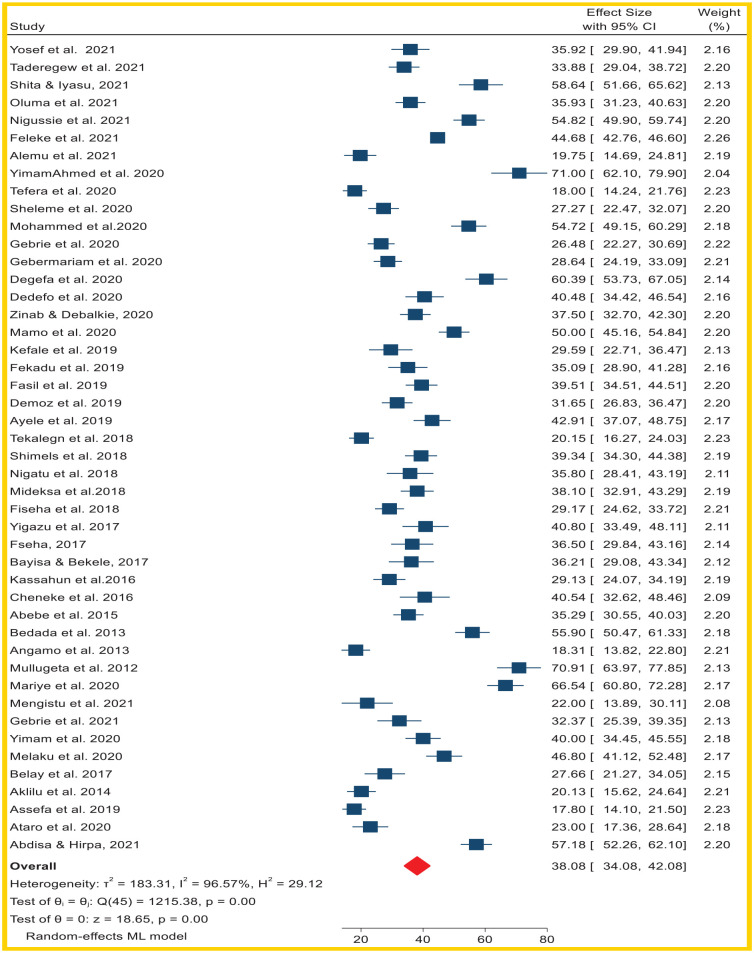
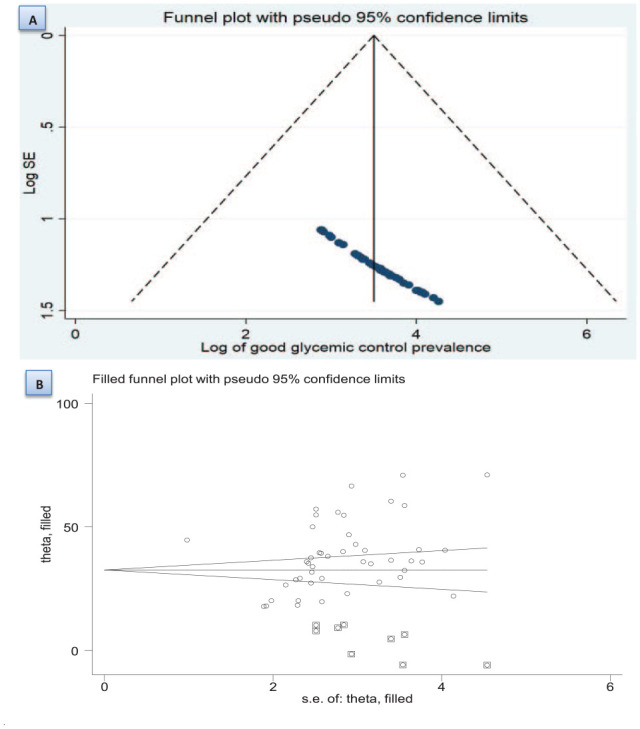
- Across 46 articles, the pooled prevalence of good glycemic control was 38.08% (95% CI 34.08, 42.08) before trim-and-fill; after trim-and-fill, it was 32.6% (95% CI 28.3, 36.9) using 55 articles.
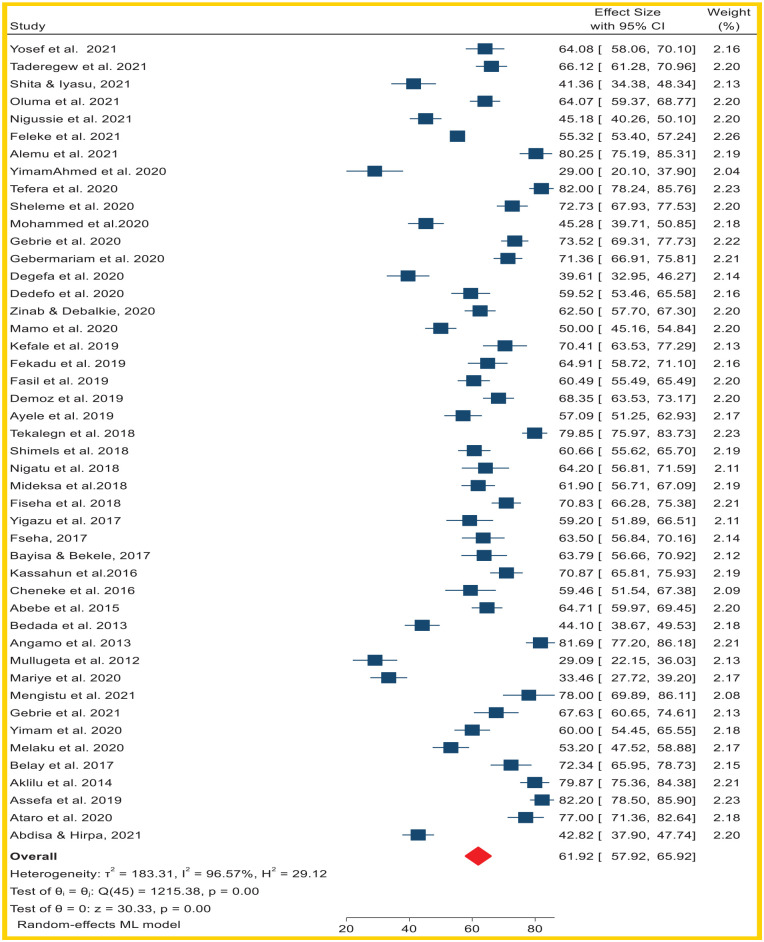
- The pooled prevalence of poor glycemic control was 61.92% (95% CI 57.92, 65.92).
- In subgroup analyses, poor glycemic control was highest in Dire Dawa at 54.78% (95% CI 51.09, 58.46); among T2DM patients it was 38.86% (95% CI 32.17, 45.54); and using glycemic-control reference cut points, 46.66% (95% CI 40.07, 53.26) had poor control.
- Of 19 meta-analyzable variables, 11 were significantly associated with poor glycemic control, including: male sex protective (POR = 0.69, 95% CI 0.53, 0.88), no formal education (POR = 1.54, 95% CI 1.28, 1.87), overweight (POR = 1.43, 95% CI 1.01, 2.06), poor exercise adherence (POR = 2.14, 95% CI 1.61, 2.84), poor diet adherence (POR = 3.30, 95% CI 2.14, 5.08), poor medication adherence (POR = 3.77, 95% CI 2.22, 6.40), comorbidities (POR = 1.38, 95% CI 1.05, 1.82), smoking (POR = 2.07, 95% CI 1.25, 3.42), diabetes duration ≥10 years (POR = 1.62, 95% CI 1.14, 2.31), no regular glucose monitoring (POR = 2.26, 95% CI 1.40, 3.66), and no family history of diabetes (POR = 1.63, 95% CI 1.11, 2.41).
Methods
- Systematic review and meta-analysis of observational studies (cross-sectional, case-control, cohort) reporting glycemic control and associated factors in Ethiopian diabetes patients; protocol registered in PROSPERO (CRD42022296583) and reported per PRISMA.
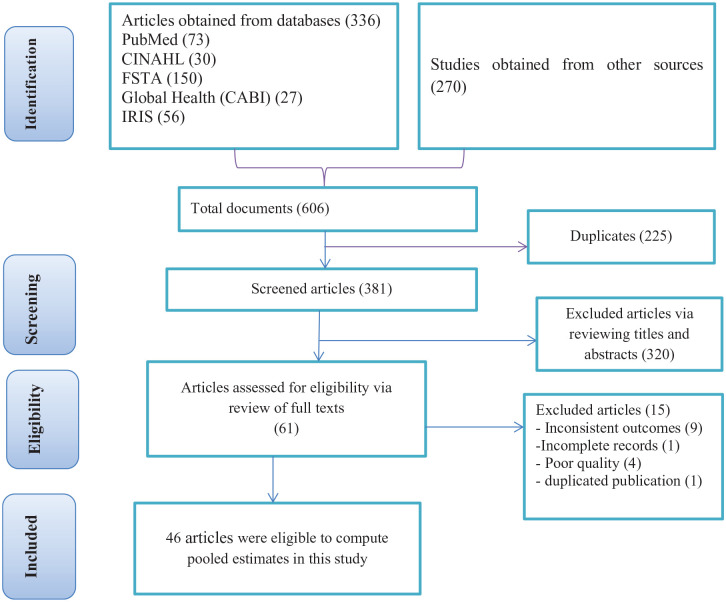
- Searched PubMed/MEDLINE, Global Health, CINAHL, WHO IRIS, FSTA, plus gray literature (Google, WorldCat, Google Scholar) and reference lists; 46 studies were eligible, totaling 16,135 participants, with 15,457 included for pooled prevalence.
- Data were extracted in Excel; study quality was assessed with the JBI checklist; pooled estimates used STATA 16, random-effects models due to high heterogeneity, with subgroup analysis, sensitivity analysis, meta-regression, funnel plots, Begg’s and Egger’s tests.
Limitations
- The paper states that included studies used different reference points/cutoffs for glycemic control, which contributed to heterogeneity; it also notes subgroup analysis was used to handle this.
- The authors say they could not separate glycemic control for T1DM and T2DM because all included studies were on T2DM or both, which could conceal the true magnitude of glycemic control.
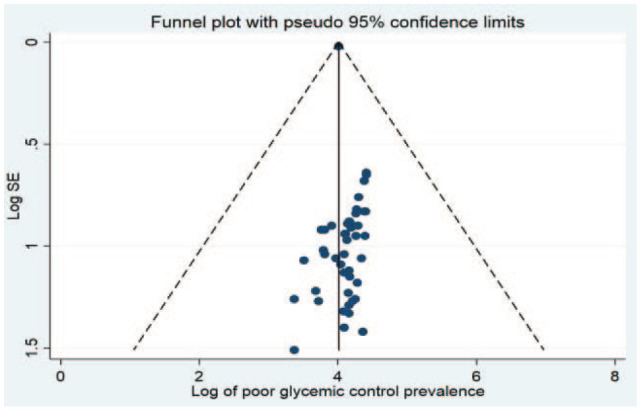
- Evident from the text: there was very high heterogeneity in the pooled prevalence estimates (I2 = 96.57%), and publication-bias assessments were inconsistent (Begg’s test significant, Egger’s test not significant).
Model-written summary. Check it against the paper before relying on it.
Integrity signals
Registry
Cites
Statistics
Figures
Verification
Claims the paper makes
5 Valid · 2 Not valid · 3 Not checked · 40 Own results and interpretations
At least one cited source doesn’t support this claim or points to a different paper, and none confirmed it — see the verdicts below.
In the paper
“Poor glycemic control, for example, ranges from 29%24 to 82.2%.25”
§ Prevalence of Glycemic Control and Factors Associated With Poor Glycemic Control: A Systematic Review and Meta-analysis > Introduction
What the sources say
- Disputedcites [24] YimamAhmed M Hambisa Ejigu S Zewudie Zeleke A Yimam Hassen M. Glycemic control, diabetes complications and their determinants among ambulatory diabetes mellitus patients in southwest ethiopia: A prospective cross-sectional study. Diabetes Metab Syndr Obes. 2020; 13: 1089- 1095. 32308458 PMC7154004 sourceExperimental — accuracy not yet measured
Citation 25 is attached to the 82.2% figure, not the 29% figure. The cited paper’s Discussion reports that 71% of its patients had poorly controlled diabetes, rather than 82.2%; no page number is provided in our copy. (LLM, conf=0.88)
Checked by a reasoning model — may be wrong.
- Not checked — no full text of the sourcecites [25] Assefa S Endris K Ashencho D Eyasu M. Factors associated with level of patient activation and its role to glycemic control and among adults with type II diabetes attending diabetic clinic at hospitals in Addis Ababa. Int J Trop Dis Health. 2019;37(4): 1- 11.34277509 source
plain- Asserted: passes — The authors put it forward as true.
- Checkable: passes — It can be checked against evidence.
- Load-bearing: passes — The paper’s conclusions depend on it.
- Based: passes — The paper gives a reason why it holds.
- Disputed
At least one cited source doesn’t support this claim or points to a different paper, and none confirmed it — see the verdicts below.
In the paper
“Of these articles, 9 articles were excluded from meta-analyses of different factors due to the fact that some articles did not report factors or did not properly report the factors.25,47-54”
§ Prevalence of Glycemic Control and Factors Associated With Poor Glycemic Control: A Systematic Review and Meta-analysis > Results > Article Identification
What the sources say
- Not checked — no full text of the sourcecites [25] Assefa S Endris K Ashencho D Eyasu M. Factors associated with level of patient activation and its role to glycemic control and among adults with type II diabetes attending diabetic clinic at hospitals in Addis Ababa. Int J Trop Dis Health. 2019;37(4): 1- 11.34277509 source
- Disputedcites [47] Taderegew MM Emeria MS Zegeye B. Association of glycemic control and anthropometric measurement among type 2 diabetes mellitus: a cross-sectional study. Diabetol Int. 2021; 12: 356- 363. 34567918 PMC8413419 sourceExperimental — accuracy not yet measured
Our copy of Taderegew et al. (2021) describes a primary, single-site institutional-based cross-sectional study of 366 type 2 DM patients at Debre Berhan Referral Hospital (Study design, settings, and participants; Abstract), analysed with binary/multivariable logistic regression on the study's own 366 participants (Statistical analysis; Discussion, Table 3). It contains no literature search, no pool of 46 eligible articles, and no meta-analysis from which 9 articles could be excluded for incomplete factor reporting; the passage set (Abstract, Study design, Statistical analysis, Discussion, References) shows the opposite of the claim's premise. The 'excluded from meta-analyses' bookkeeping therefore belongs to a review, not to this paper, and our copy names no such review as its origin. (LLM, conf=0.78)
Checked by a reasoning model — may be wrong.
- Could not verifycites [48] Shita NG Iyasu AS. Predictors of glycemic control among patients with type 2 diabetes in North West Ethiopia: a longitudinal study. 2021. https://europepmc.org/article/ppr/ppr366818 sourceExperimental — accuracy not yet measured
Our copy is a single-site retrospective longitudinal/cohort analysis of 191 T2DM patients at Debre Markos and Felege Hiwot Referral Hospitals (Abstract, p. 2; Study design and period, p. 8), with a generalized linear mixed model used to identify predictors (Data Analysis, p. 10; Model Building Strategies, p. 11). It contains no systematic review, no screening of eligible articles and no meta-analysis, so nothing in it addresses the exclusion of 9 of 46 articles for not reporting or not properly reporting factors. Searched our copy with 'eligible articles excluded from meta-analyses because they did not report factors' and 'systematic review meta-analysis PRISMA screening of studies included'; the returned passages concern only the paper's own modeling and its reference list (References, pp. 13-14). (LLM, conf=0.70)
- Could not verifycites [49] Feleke BE Feleke TE Kassahun MB, et al. Glycemic control of diabetes mellitus patients in referral hospitals of Amhara Region, Ethiopia: A cross-sectional study. Biomed Res Int. 2021; 2021: 6691819. 33532494 PMC7834781 sourceExperimental — accuracy not yet measured
The Results and ‘Interpretation of Table 3’ report factors associated with glycemic control. Our copy does not address whether this study was one of nine excluded from the citing paper’s factor meta-analyses, or why it might have been excluded (searched: meta-analysis, excluded articles, reporting of factors). (LLM, conf=0.76)
- Could not verifycites [50] Tekalegn Y Addissie A Kebede T Ayele W. Magnitude of glycemic control and its associated factors among patients with type 2 diabetes at Tikur Anbessa Specialized Hospital, Addis Ababa, Ethiopia. PLoS One. 2018; 13(3):e0193442. PMC5837131 29505602 sourceExperimental — accuracy not yet measured
The Results section (‘Factors associated with glycemic control’; page unavailable) reports factors and odds ratios for this study. It does not say whether a later review included this paper among 46 eligible articles, excluded it from a factor-specific meta-analysis, or judged its reporting unsuitable. Searches for meta-analysis exclusions and factor reporting found no passage that verifies those review decisions. (LLM, conf=0.78)
- Not matchedcites [51] Bayisa B. Bekele M. Glycemic control and associated factors among type II diabetic patients on chronic follow up at southwest Ethiopia. J Med Health Sci. 2017; 6(3): 341- 349.
We don’t have this paper’s reference list.
- Could not verifycites [52] Abebe SM Berhane Y Worku A Alemu S Mesfin N. Level of sustained glycemic control and associated factors among patients with diabetes mellitus in Ethiopia: a hospital-based cross-sectional study. Diabetes Metab Syndr Obes. 2015; 8: 65- 71. 25657591 PMC4315535 sourceExperimental — accuracy not yet measured
The Methods (Data analysis) and Results report factors associated with glycemic control, including adjusted odds ratios. Our copy does not address the citing review’s 46 eligible articles, which nine it excluded, or whether this paper’s reporting met that review’s requirements for meta-analysis. Searches for the exclusion and for factor reporting did not establish the attributed claim. (LLM, conf=0.76)
- Disputedcites [53] Mullugeta Y Chawla R Kebede T Worku Y. Dyslipidemia associated with poor glycemic control in type 2 diabetes mellitus and the protective effect of metformin supplementation. Ind J Clin Biochem. 2012; 27(4): 363- 369. PMC3477460 24082461 sourceExperimental — accuracy not yet measured
Our copy (full text, not truncated) shows Mullugeta et al. 2012 is a primary single-centre clinical study, not a systematic review or meta-analysis: the Patients section states it was 'conducted on the type 2 diabetic out patients attending the diabetes clinic of Tikur Anbessa Specialized Hospital (TASH)... One hundred and sixty-five consecutive patients', the Study Subjects section describes the 68 male/97 female cohort, and Data Analysis says only that 'Data generated as above was analysed using SPSS ver. 16.0'. No passage anywhere in our copy mentions a literature search, 46 eligible articles, or excluding 9 articles from meta-analyses for failing to report factors, so the screening/exclusion step attributed to this source is contrary to what the paper actually reports. (LLM, conf=0.78)
Checked by a reasoning model — may be wrong.
- Could not verifycites [54] Belay E Abera A Mehari A Gebremeskel G Endrias A Endris K. Achievements of diabetes goals and their determinants in type 2 diabetic patients attending outpatient diabetic clinic in northern Ethiopia. Int J Chronic Dis. 2017; 2017: 5713187. 29464189 PMC5804378 sourceExperimental — accuracy not yet measured
The Methods, §2.5 (page unavailable), describe logistic regression to identify factors associated with diabetes-control outcomes. The paper does not address the citing review’s article selection or say whether its factor reporting was suitable for that review’s meta-analyses. Searches for the nine excluded articles and the 46 eligible articles found no such account in our copy. (LLM, conf=0.76)
plain- Asserted: passes — The authors put it forward as true.
- Checkable: passes — It can be checked against evidence.
- Load-bearing: unclear — It is unclear whether the paper’s conclusions depend on it.
- Based: passes — The paper gives a reason why it holds.
The cited sources support only part of this claim — read each source’s verdict below.
In the paper
“All of these unintended consequences of diabetes are linked to poor glycemic control.15”
§ Prevalence of Glycemic Control and Factors Associated With Poor Glycemic Control: A Systematic Review and Meta-analysis > Introduction
What the sources say
- Partly supportedcites [15] Haghighatpanah M Nejad ASM Haghighatpanah M Thunga G Mallayasamy S. Factors that correlate with poor glycemic control in type 2 diabetes mellitus patients with complications. Osong Public Health Res Perspect. 2018; 9(4): 167- 174. 30159222 PMC6110332 sourceExperimental — accuracy not yet measured
The Introduction (page unavailable) links poor glycemic control to progression of diabetic complications and reports increased risk of macrovascular and microvascular complications at HbA1c levels above 7%. It does not establish that all unintended consequences of diabetes are linked to poor glycemic control. (LLM, conf=0.85)
plainstates an association- Asserted: passes — The authors put it forward as true.
- Checkable: passes — It can be checked against evidence.
- Load-bearing: unclear — It is unclear whether the paper’s conclusions depend on it.
- Based: passes — The paper gives a reason why it holds.
- Partly supported
A result the paper reports from its own data — it cites no other source for it, so there is none to check. The quote shows it is in the paper.
In the paper
“Poor glycemic control was 3.30 times more likely in patients with poor adherence to diabetic diets than in those with good dietary adherence (POR = 3.30, 95% CI: 2.14, 5.08, I2 = 84.2%, P < .001).”
§ Prevalence of Glycemic Control and Factors Associated With Poor Glycemic Control: A Systematic Review and Meta-analysis > Results > Factors Associated With Poor Glycemic Control in Ethiopia
plainstates an association- Asserted: passes — The authors put it forward as true.
- Checkable: passes — It can be checked against evidence.
- Load-bearing: passes — The paper’s conclusions depend on it.
- Based: passes — The paper gives a reason why it holds.
A result the paper reports from its own data — it cites no other source for it, so there is none to check. The quote shows it is in the paper.
In the paper
“When compared to normal weight DM patients, the odds of having poor glycemic control was 1.43 times higher in the overweight groups (POR = 1.43, 95% CI: 1.01, 2.06, I2 = 74.5%, P < .001).”
§ Prevalence of Glycemic Control and Factors Associated With Poor Glycemic Control: A Systematic Review and Meta-analysis > Results > Factors Associated With Poor Glycemic Control in Ethiopia
plainstates an association- Asserted: passes — The authors put it forward as true.
- Checkable: passes — It can be checked against evidence.
- Load-bearing: passes — The paper’s conclusions depend on it.
- Based: passes — The paper gives a reason why it holds.
27 more claims
Create a free account to see all 50 claims and to verify the 1 reference still open.
- Probably not a substantial claim. 10
- It may state two separate claims as one. 10
Self-check
Percentages, sums and reported differences re-computed from the paper’s own numbers.
Rated major: it would touch a result — a value a result rests on, reported and recomputed p-values on opposite sides of the significance level, two passages that conflict with no sign which is right, or a cited work retracted before this paper was published.
In the paper
“The total calculated sample size of 46 articles was 16 135 in the current study, of which 15 457 study population were included to estimate the pooled prevalence glycemic control, yielding a non-response rate of 4.18%.”
§ Prevalence of Glycemic Control and Factors Associated With Poor Glycemic Control: A Systematic Review and Meta-analysis > Results > Description of Articles
Reported 4.18 · recomputed 678
Citations
Cites
Preferred reporting items for systematic reviews and meta-analyses: The PRISMA statement
Moher, D., Liberati, A., Tetzlaff, J., Altman, D. G., & the PRISMA Group* (2009) · Annals of Internal Medicine · doi:10.7326/0003-4819-151-4-200908180-00135 · Cited by 37,554
Quantifying heterogeneity in a meta‐analysis
Higgins, J. P. T., & Thompson, S. G. (2002) · Statistics in Medicine · doi:10.1002/sim.1186 · Cited by 36,763
IDF Diabetes Atlas: Global estimates of diabetes prevalence for 2017 and projections for 2045
Cho, N. H., Shaw, J. E., Karuranga, S., Huang, Y., da Rocha Fernandes, J. D., Ohlrogge, A. W., & Malanda, B. (2018) · Diabetes Research and Clinical Practice · doi:10.1016/j.diabres.2018.02.023 · Cited by 7,283
Funnel plots for detecting bias in meta-analysis
Sterne, J. A. C., & Egger, M. (2001) · Journal of Clinical Epidemiology · doi:10.1016/s0895-4356(01)00377-8 · Cited by 3,779
2. Classification and Diagnosis of Diabetes: Standards of Medical Care in Diabetes—2018
American Diabetes Association (2018) · Diabetes Care · doi:10.2337/dc18-s002 · Cited by 3,159
Munn, Z., Moola, S., Lisy, K., Riitano, D., & Tufanaru, C. (2015) · International Journal of Evidence-Based Healthcare · doi:10.1097/xeb.0000000000000054 · Cited by 3,131
Economic Costs of Diabetes in the U.S. in 2017
American Diabetes Association (2018) · Diabetes Care · doi:10.2337/dci18-0007 · Cited by 2,528
Global trends in diabetes complications: a review of current evidence
Harding, J. L., Pavkov, M. E., Magliano, D. J., Shaw, J. E., & Gregg, E. W. (2019) · Diabetologia · doi:10.1007/s00125-018-4711-2 · Cited by 1,650
Undue reliance on I 2 in assessing heterogeneity may mislead
Rücker, G., Schwarzer, G., Carpenter, J. R., & Schumacher, M. (2008) · BMC Medical Research Methodology · doi:10.1186/1471-2288-8-79 · Cited by 1,287
Microvasular and macrovascular complications in diabetes mellitus: Distinct or continuum?
Chawla, R., Chawla, A., & Jaggi, S. (2016) · Indian Journal of Endocrinology and Metabolism · doi:10.4103/2230-8210.183480 · Cited by 1,106
Dal Canto, E., Ceriello, A., Rydén, L., Ferrini, M., Hansen, T. B., Schnell, O., Standl, E., & Beulens, J. W. (2019) · European Journal of Preventive Cardiology · doi:10.1177/2047487319878371 · Cited by 1,009
Williams, R., Karuranga, S., Malanda, B., Saeedi, P., Basit, A., Besançon, S., Bommer, C., Esteghamati, A., Ogurtsova, K., Zhang, P., et al. (2020) · Diabetes Research and Clinical Practice · doi:10.1016/j.diabres.2020.108072 · Cited by 861
The Economic Costs of Type 2 Diabetes: A Global Systematic Review
Seuring, T., Archangelidi, O., & Suhrcke, M. (2015) · PharmacoEconomics · doi:10.1007/s40273-015-0268-9 · Cited by 837
Obesity, Insulin Resistance, and Type 2 Diabetes: Associations and Therapeutic Implications
Wondmkun, Y. T. (2020) · Diabetes, Metabolic Syndrome and Obesity: Targets and Therapy · doi:10.2147/dmso.s275898 · Cited by 706
Forouhi, N. G., & Wareham, N. J. (2014) · Medicine · doi:10.1016/j.mpmed.2014.09.007 · Cited by 695 · cited 1×
“In cl u d ed Excluded articles (15) - Inconsistent outcomes (9) -Incomplete records (1) - Poor quality (4) - duplicated publication (1) Studies obtained from other sources”
BackgroundSaeedi, P., Salpea, P., Karuranga, S., Petersohn, I., Malanda, B., Gregg, E. W., Unwin, N., Wild, S. H., & Williams, R. (2020) · Diabetes Research and Clinical Practice · doi:10.1016/j.diabres.2020.108086 · Cited by 664
Complications of Diabetes 2017
Papatheodorou, K., Banach, M., Bekiari, E., Rizzo, M., & Edmonds, M. (2018) · Journal of Diabetes Research · doi:10.1155/2018/3086167 · Cited by 647
Factors associated with poor glycemic control among patients with type 2 diabetes
Khattab, M., Khader, Y. S., Al-Khawaldeh, A., & Ajlouni, K. (2010) · Journal of Diabetes and its Complications · doi:10.1016/j.jdiacomp.2008.12.008 · Cited by 507
Smoking and the risk of type 2 diabetes
Maddatu, J., Anderson-Baucum, E., & Evans-Molina, C. (2017) · Translational Research · doi:10.1016/j.trsl.2017.02.004 · Cited by 400
The weathering hypothesis as an explanation for racial disparities in health: a systematic review
Forde, A. T., Crookes, D. M., Suglia, S. F., & Demmer, R. T. (2019) · Annals of Epidemiology · doi:10.1016/j.annepidem.2019.02.011 · Cited by 381
Functional Foods and Lifestyle Approaches for Diabetes Prevention and Management
Alkhatib, A., Tsang, C., Tiss, A., Bahorun, T., Arefanian, H., Barake, R., Khadir, A., & Tuomilehto, J. (2017) · Nutrients · doi:10.3390/nu9121310 · Cited by 376
Liu, J., Ren, Z.-H., Qiang, H., Wu, J., Shen, M., Zhang, L., & Lyu, J. (2020) · BMC Public Health · doi:10.1186/s12889-020-09502-x · Cited by 313
Forouhi, N. G., & Wareham, N. J. (2019) · Medicine · doi:10.1016/j.mpmed.2018.10.004 · Cited by 276
Ali, M. K., Bullard, K. M., Imperatore, G., Barker, L. E., & Gregg, E. W. (2012) · PubMed · Cited by 253
Haghighatpanah, M., Nejad, A. S. M., Haghighatpanah, M., Thunga, G., & Mallayasamy, S. (2018) · Osong Public Health and Research Perspectives · doi:10.24171/j.phrp.2018.9.4.05 · Cited by 186 · cited 1×
“In cl u d ed Excluded articles (15) - Inconsistent outcomes (9) -Incomplete records (1) - Poor quality (4) - duplicated publication (1) Studies obtained from other sources”
BackgroundAlzaheb, R., & Altemani, A. (2018) · Diabetes, Metabolic Syndrome and Obesity: Targets and Therapy · doi:10.2147/dmso.s156214 · Cited by 160
Biadgo, B., Melku, M., Abebe, S. M., & Abebe, M. (2016) · Diabetes Metabolic Syndrome and Obesity · doi:10.2147/dmso.s97563 · Cited by 153
Mamo, Y., Bekele, F., Nigussie, T., & Zewudie, A. (2019) · BMC Endocrine Disorders · doi:10.1186/s12902-019-0421-0 · Cited by 147
Increase in the Incidence of Diabetes and Its Implications
Ingelfinger, J. R., & Jarcho, J. A. (2017) · New England Journal of Medicine · doi:10.1056/nejme1616575 · Cited by 143 · cited 1×
“In cl u d ed Excluded articles (15) - Inconsistent outcomes (9) -Incomplete records (1) - Poor quality (4) - duplicated publication (1) Studies obtained from other sources”
BackgroundKassahun, T., Eshetie, T., & Gesesew, H. (2016) · BMC Research Notes · doi:10.1186/s13104-016-1896-7 · Cited by 135
Kamuhabwa, A., & Charles, E. (2014) · Drug, Healthcare and Patient Safety · doi:10.2147/dhps.s68786 · Cited by 132
Impact of cigarette smoking in type 2 diabetes development
Xie, X.-T., Liu, Q., Wu, J., & Wakui, M. (2009) · Acta Pharmacologica Sinica · doi:10.1038/aps.2009.49 · Cited by 130
Fasil, A., Biadgo, B., & Abebe, M. (2018) · Diabetes, Metabolic Syndrome and Obesity: Targets and Therapy · doi:10.2147/dmso.s185614 · Cited by 125
Afroz, A., Ali, L., Karim, M. N., Alramadan, M. J., Alam, K., Magliano, D. J., & Billah, B. (2019) · Scientific Reports · doi:10.1038/s41598-019-46766-9 · Cited by 121
Houle, J., Lauzier-Jobin, F., Beaulieu, M.-D., Meunier, S., Coulombe, S., Côté, J., Lespérance, F., Chiasson, J.-L., Bherer, L., & Lambert, J. (2016) · BMJ Open Diabetes Research & Care · doi:10.1136/bmjdrc-2015-000184 · Cited by 113
Fekadu, G., Bula, K., Bayisa, G., Turi, E., Tolossa, T., & Kebebe, H. (2019) · Journal of Multidisciplinary Healthcare · doi:10.2147/jmdh.s232691 · Cited by 111
Ayele, A. A., Tegegn, H. G., Ayele, T. A., & Ayalew, M. B. (2019) · BMJ Open Diabetes Research & Care · doi:10.1136/bmjdrc-2019-000685 · Cited by 108
Factors associated with glycemic control among diabetic adult out-patients in Northeast Ethiopia
Fiseha, T., Alemayehu, E., Kassahun, W., Adamu, A., & Gebreweld, A. (2018) · BMC Research Notes · doi:10.1186/s13104-018-3423-5 · Cited by 106
Alramadan, M. J., Magliano, D. J., Almigbal, T. H., Batais, M. A., Afroz, A., Alramadhan, H. J., Mahfoud, W. F., Alragas, A. M., & Billah, B. (2018) · BMC Endocrine Disorders · doi:10.1186/s12902-018-0292-9 · Cited by 106
G Duarte, F., da Silva Moreira, S., Almeida, M. D. C. C., de Souza Teles, C. A., Andrade, C. S., Reingold, A. L., & Moreira Jr, E. D. (2019) · BMJ Open · doi:10.1136/bmjopen-2018-023401 · Cited by 103
Tekalegn, Y., Addissie, A., Kebede, T., & Ayele, W. (2018) · PLOS ONE · doi:10.1371/journal.pone.0193442 · Cited by 101
Yigazu, D. M., & Desse, T. A. (2017) · BMC Research Notes · doi:10.1186/s13104-017-2924-y · Cited by 97
Mullugeta, Y., Chawla, R., Kebede, T., & Worku, Y. (2012) · Indian Journal of Clinical Biochemistry · doi:10.1007/s12291-012-0225-8 · Cited by 95
Asmelash, D., Abdu, N., Tefera, S., Baynes, H. W., & Derbew, C. (2019) · Journal of Diabetes Research · doi:10.1155/2019/2593684 · Cited by 95
Demoz, G. T., Gebremariam, A., Yifter, H., Alebachew, M., Niriayo, Y. L., Gebreslassie, G., Woldu, G., Bahrey, D., & Shibeshi, W. (2019) · BMC Research Notes · doi:10.1186/s13104-019-4248-6 · Cited by 93
Mohammed, A. S., Adem, F., Tadiwos, Y., Woldekidan, N. A., & Degu, A. (2020) · Diabetes Metabolic Syndrome and Obesity · doi:10.2147/dmso.s256738 · Cited by 90
Mengesha, M. M., Roba, H. S., Ayele, B. H., & Beyene, A. S. (2019) · BMC Public Health · doi:10.1186/s12889-019-7465-y · Cited by 86
Glycemic control among diabetic patients in Ethiopia: A systematic review and meta-analysis
Gebreyohannes, E. A., Netere, A. K., & Belachew, S. A. (2019) · PLOS ONE · doi:10.1371/journal.pone.0221790 · Cited by 84
Tefera, Y. G., Gebresillassie, B. M., Emiru, Y. K., Yilma, R., Hafiz, F., Akalu, H., & Ayele, A. A. (2020) · PLOS ONE · doi:10.1371/journal.pone.0231291 · Cited by 77
Yosef, T., Nureye, D., & Tekalign, E. (2021) · Diabetes Metabolic Syndrome and Obesity · doi:10.2147/dmso.s321756 · Cited by 77
Hailu, E., Mariam, W. H., Belachew, T., & Birhanu, Z. (2012) · African Journal of Primary Health Care & Family Medicine · doi:10.4102/phcfm.v4i1.311 · Cited by 72
Abebe, S. M., Berhane, Y., Worku, A., Alemu, S., & Mesfin, N. (2015) · Diabetes, Metabolic Syndrome and Obesity: Targets and Therapy · doi:10.2147/dmso.s75467 · Cited by 68
Angamo, M. T., Melese, B. H., & Ayen, W. Y. (2013) · PLoS ONE · doi:10.1371/journal.pone.0061759 · Cited by 68
Ayele, A. A., Emiru, Y. K., Tiruneh, S. A., Ayele, B. A., Gebremariam, A. D., & Tegegn, H. G. (2018) · Clinical Diabetes and Endocrinology · doi:10.1186/s40842-018-0070-7 · Cited by 63
Nigussie, S., Birhan, N., Amare, F., Mengistu, G., Adem, F., & Abegaz, T. M. (2021) · PLOS ONE · doi:10.1371/journal.pone.0251506 · Cited by 62
Oluma, A., Abadiga, M., Mosisa, G., & Etafa, W. (2021) · PLoS ONE · doi:10.1371/journal.pone.0247634 · Cited by 62
Tsadik, A. G., Atey, T. M., Nedi, T., Fantahun, B., & Feyissa, M. (2018) · Journal of Diabetes Research · doi:10.1155/2018/4910962 · Cited by 59
Tesfay, F. H., Zorbas, C., Alston, L. V., Backholer, K., Bowe, S. J., & Bennett, C. M. (2022) · Frontiers in Public Health · doi:10.3389/fpubh.2022.936482 · Cited by 58
Urina-Jassir, M., Herrera-Parra, L. J., Vargas, J. A. H., Valbuena‐Garcia, A. M., Acuña-Merchán, L. A., & Urina‐Triana, M. (2021) · BMC Endocrine Disorders · doi:10.1186/s12902-021-00791-w · Cited by 51
Chetoui, A., Kaoutar, K., Elmoussaoui, S., Boutahar, K., El Kardoudi, A., Chigr, F., & Najimi, M. (2022) · International Health · doi:10.1093/inthealth/ihz107 · Cited by 50
Luijks, H., Biermans, M. C. J., Bor, H. H. J., van Weel, C., Lagro‐Janssen, T., de Grauw, W. J. C., & Schermer, T. R. (2015) · PLoS ONE · doi:10.1371/journal.pone.0138662 · Cited by 50
Cheneke, W., Suleman, S., Yemane, T., & Abebe, G. (2016) · BMC Research Notes · doi:10.1186/s13104-016-1921-x · Cited by 50
Li, J., Chattopadhyay, K., Xu, M., Chen, Y., Hu, F., Chu, J., & Li, L. (2018) · BMJ Open · doi:10.1136/bmjopen-2017-019697 · Cited by 50
Gebremariam, A. D., Tiruneh, S. A., Ayele, A. A., Tegegn, H. G., Ayele, B. A., & Engidaw, M. T. (2020) · Metabolism Open · doi:10.1016/j.metop.2020.100056 · Cited by 50
Sheleme, T., Mamo, G., Melaku, T., & Sahilu, T. (2020) · Diabetes Therapy · doi:10.1007/s13300-020-00861-7 · Cited by 49
Abdissa, D., & Hirpa, D. (2021) · Metabolism Open · doi:10.1016/j.metop.2021.100154 · Cited by 47
Zawudie, A. B., Daka, D. W., Teshome, D., & Ergiba, M. S. (2022) · BMC Health Services Research · doi:10.1186/s12913-022-08819-0 · Cited by 45
Dedefo, M. G., Abate, S. K., Ejeta, B. M., & Korsa, A. T. (2020) · Annals of Medicine and Surgery · doi:10.1016/j.amsu.2020.04.034 · Cited by 44
Alebachew Woldu, M., & Diriba Wami, C. (2014) · Endocrinology & Metabolic Syndrome · doi:10.4172/2161-1017.1000143 · Cited by 43
Predictors of Adherence Toward Specific Domains of Diabetic Self-Care Among Type-2 Diabetes Patients
Degefa, G., Wubshet, K., Tesfaye, S., & Hirigo, A. T. (2020) · Clinical Medicine Insights Endocrinology and Diabetes · doi:10.1177/1179551420981909 · Cited by 39
Hashim, S. A., Yusof, B. N. M., Saad, H. A., Ismail, S., Hamdy, O., & Mansour, A. A. (2021) · Clinical Nutrition ESPEN · doi:10.1016/j.clnesp.2021.07.024 · Cited by 38
Gebrie, A., Tesfaye, B., & Sisay, M. (2020) · Heliyon · doi:10.1016/j.heliyon.2020.e05655 · Cited by 35
Fseha, B. (2017) · Journal of Diabetes & Metabolism · doi:10.4172/2155-6156.1000729 · Cited by 33
Alemu, T., Tadesse, T., & Amogne, G. (2021) · SAGE Open Medicine · doi:10.1177/20503121211023000 · Cited by 32
Are Ethiopian diabetic patients protected from financial hardship?
Tsega, G., Getaneh, G., & Worku, G. T. (2021) · PLoS ONE · doi:10.1371/journal.pone.0245839 · Cited by 31
Mideksa, S., Ambachew, S., Biadgo, B., & Baynes, H. W. (2018) · Adipocyte · doi:10.1080/21623945.2018.1467716 · Cited by 30
Shimels, T., Abebaw, M., Bilal, A. I., & Tesfaye, T. (2018) · Ethiopian Journal of Health Sciences · doi:10.4314/ejhs.v28i4.12 · Cited by 28
YimamAhmed, M., Hambisa Ejigu, S., Zewudie Zeleke, A., & Yimam Hassen, M. (2020) · Diabetes, Metabolic Syndrome and Obesity: Targets and Therapy · doi:10.2147/dmso.s227664 · Cited by 28
Gebrie, D., Manyazewal, T., Ejigu, D. A., & Makonnen, E. (2021) · Diabetes Metabolic Syndrome and Obesity · doi:10.2147/dmso.s312997 · Cited by 28
Yitbarek, G. Y., Ayehu, G. W., Asnakew, S., Chanie, E. S., Bayih, W. A., Feleke, D. G., Jemere, T., Dagnaw, F. T., Teshome, A. A., Arage, G., et al. (2021) · Scientific Reports · doi:10.1038/s41598-021-03669-y · Cited by 28
Dagnew, B., Demissie, G. D., & Angaw, D. A. (2021) · Evidence-based Complementary and Alternative Medicine · doi:10.1155/2021/8896896 · Cited by 26
Aro, A.-K., Karjalainen, M., Tiihonen, M., Kautiainen, H., Saltevo, J., Haanpää, M., & Mäntyselkä, P. (2017) · Primary Care Diabetes · doi:10.1016/j.pcd.2017.07.001 · Cited by 24
Feleke, B. E., Feleke, T. E., Kassahun, M. B., Adane, W. G., Fentahun, N., Girma, A., Alebachew, A., Misgan, E., Desyibelew, H. D., Bayih, M. T., et al. (2021) · BioMed Research International · doi:10.1155/2021/6691819 · Cited by 24
Glycaemic control and its determinants in diabetic patients in Ethiopia
Gebreyohannes, A., & Rahlenbeck, S. I. (1997) · Diabetes Research and Clinical Practice · doi:10.1016/s0168-8227(96)01367-8 · Cited by 23
Belay, E., Abera, A., Mehari, A., Gebremeskel, G., Endrias, A., & Endris, K. (2017) · International Journal of Chronic Diseases · doi:10.1155/2017/5713187 · Cited by 23
Yimam, M. A., Desse, T. A., & Jarso, H. (2020) · Heliyon · doi:10.1016/j.heliyon.2020.e05671 · Cited by 19
Diabète et précarité : enquête en Languedoc
Jaffiol, C., Fontbonne, A., Vannereau, D., Olive, J.-P., & Passeron, S. (2012) · Bulletin de l Académie Nationale de Médecine · doi:10.1016/s0001-4079(19)31782-0 · Cited by 16
Yesuf, T. A., Hiko, D., Mohammed, M. A., & Dekema, N. H. (2014) · Therapeutic Innovation & Regulatory Science · doi:10.1177/2168479014524960 · Cited by 16
Leulseged, T. W., & Ayele, B. T. (2019) · PLoS ONE · doi:10.1371/journal.pone.0220309 · Cited by 14
Kefale, A. T., Biru, T. T., & Addo, H. A. (2019) · Journal of Diabetes & Metabolic Disorders · doi:10.1007/s40200-019-00448-5 · Cited by 13
Taderegew, M. M., Emeria, M. S., & Zegeye, B. (2021) · Diabetology International · doi:10.1007/s13340-021-00490-w · Cited by 12
Sendekie, A. K., Belachew, E. A., Dagnew, E. M., & Netere, A. K. (2022) · BMJ Open · doi:10.1136/bmjopen-2022-065250 · Cited by 12
Mengistu, Y., Dedefo, G., Arkew, M., Assefa, G., Jebessa, G., Atnafu, A., Ataro, Z., & Kinde, S. (2021) · Nutrition and Metabolic Insights · doi:10.1177/11786388211035220 · Cited by 11
Glucose Control in Diabetic Patients Attending Parirenyatwa Group of Hospitals in Zimbabwe
Chirombe, M., Ngara, B., Chibvongodze, R., Charuka, V., & Zhou, D. T. (2018) · The Open Clinical Biochemistry Journal · doi:10.2174/2588778501808010012 · Cited by 8
Beakal, Z., & Debalke, R. (2019) · International Journal of Nutrition and Metabolism · doi:10.5897/ijnam2018.0245 · Cited by 7
Assefa, S., Endris, K., Ashencho, D., & Eyasu, M. (2019) · International Journal of TROPICAL DISEASE & Health · doi:10.9734/ijtdh/2019/v37i430170 · Cited by 6
Mekonnen, G. A., & Abegaz, T. M. (2019) · doi:10.21203/rs.2.18079/v1 · Cited by 5
Achmad, A., Pramestutie, H. R., Kusumawardani, A., et al. (2019) · Indian Journal of Public Health Research & Development · doi:10.5958/0976-5506.2019.01352.4 · Cited by 4
Melaku, T., Chelkeba, L., Mekonnen, Z., & Kumela, K. (2020) · Diabetes, Metabolic Syndrome and Obesity: Targets and Therapy · doi:10.2147/dmso.s266105 · Cited by 4 · cited 2×
“PubMed (including MEDLINE), Global Health, Cumulative Index to Nursing and Allied Health Literature (CINAHL) (EBSCO), WHO’s Institutional Repository for Information Sharing (IRIS), and Food Science and Technology Abstracts (FSTA) were all searched extensively (EBSCO).”
MethodAtaro, B. A., Argaw, Z., Tolera, B. D., Leka, Y. L., & GebreMickael, M. (2021) · SSRN Electronic Journal · doi:10.2139/ssrn.3770675 · Cited by 2
Kiflu, A. (2019) · Turkish Journal of Kinesiology · doi:10.31459/turkjkin.634193 · Cited by 1
Shita, N. G., & Iyasu, A. S. (2021) · doi:10.21203/rs.3.rs-288389/v2 · Cited by 1
Research works printed but not linked: 13
- IDF Diabetes Atlas. 2021. Accessed December, 2022. https://diabetesatlas.org/atlas/tenth-edition/
- Berhe KK Demissie A Kahsay AB, et al. Diabetes self care practices and associated factors among type 2 diabetic patients in Tikur anbessa specialized hospital, Addis Ababa, Ethiopia-a cross sectional study. Int J Pharma Sci Res. 2012; 3(11): 4219.
- Taderegew MM. Status of glycemic control and associated factors among type 2 diabetes mellitus patients in northeast Ethiopia: A cross-sectional study. J Diabetes Metab. 2021; 12: 887. PMC7920498 33658821
- Genet S. Monitoring diabetic control by measuring glycated hemoglobin and fasting blood glucose levels of diabetic patients attending Jimma University Hospital, Jimma Ethiopia. Ethiopian journal of health sciences. 2004; 14(2):81-88.
- Bayisa B. Bekele M. Glycemic control and associated factors among type II diabetic patients on chronic follow up at southwest Ethiopia. J Med Health Sci. 2017; 6(3): 341- 349.
- Mariye T Bahrey D Tasew H Teklay G Gebremichael GB, et al. Determinants of poor glycemic control among diabetes mellitus patients in public hospitals of the central zone, Tigray, North Ethiopia, 2018: unmatched case-control study. Endocrinol Metab. 2020; 4(2): 1.
- Gebermariam AD Tiruneh SA Ayele AA Tegegn HG Ayele BA Engidaw M. Level of glycemic control and its associated factors among type II diabetic patients in debre tabor general hospital, northwest Ethiopia. Metabol Open. 2020; 8: 100056. 32984805 PMC7493082 · DOI
- Nigatu TA Cheneke W Wolide AD, et al. Glycosylated hemoglobin (HbA1C) level as a measure of glycemic control and associated factors among ambulatory diabetic patients in southwest Ethiopia. Int J Pharma Sci Res. 2018; 9(10): 178- 189.
- Bedada T Belachew T Hailu E, et al. Glycogenic control and associated factors among diabetic patients visiting Adama specialized hospital, Oromiya, Ethiopia: A facility based cross sectional study. African Journal of Health Sciences. 2013; 26(4): 302- 313.
- Coccia M. An introduction to theories of national and regional economic development. Turk Econ Rev. 2019; 5(4): 350- 358.
- Yazew KG Walle TA Azagew AW. Prevalence of anti-diabetic medication adherence and determinant factors in Ethiopia: a systemic review and meta-analysis, 2019. Int J Afr Nurs Sci. 2019; 11: 100167.
- Amenu K Gelibo T Getnet M, et al. Magnitude and determinants of physical inactivity in Ethiopia: Evidence form 2015 Ethiopia National NCD Survey. Ethiop J Health Dev. 2017; 31(1): 348- 354.
- Chetty R Pillay S. Glycaemic control and family history of diabetes mellitus: is it all in the genes? J Endocrinol Metabol Diabetes S Afr. 2021; 26(2): 66- 71.
Cited by
Zhao, L., Gao, F., Zheng, C., & Sun, X. (2024) · JMIR Public Health and Surveillance · doi:10.2196/53948 · Cited by 46
“This finding is consistent with those of previous studies highlighting the importance of glycemic control in reducing the risk of complications and improving treatment responses in individuals with DM [17,18].”
ResultSendekie, A. K., Limenh, L. W., Bizuneh, G. K., Kasahun, A. E., Wondm, S. A., Tamene, F. B., Dagnew, E. M., Gete, K. Y., Kassaw, A. T., Dagnaw, A. D., et al. (2025) · Frontiers in Medicine · doi:10.3389/fmed.2025.1488023 · Cited by 38
Azagew, A. W., Mekonnen, C. K., Lambie, M., Shepherd, T. A., & Babatunde, O. O. (2025) · BMC Public Health · doi:10.1186/s12889-025-21828-y · Cited by 41
“This is supported by the study in Ethiopia [83, 84, 91].”
InfluentialSleep quality and glycemic control in adults with type 2 diabetes mellitus
Borzouei, S., Ahmadi, A., & Pirdehghan, A. (2024) · Journal of Family Medicine and Primary Care · doi:10.4103/jfmpc.jfmpc_118_24 · Cited by 24
Garedow, A. W., Tesfaye, G. T., Tamrat, R., & Wynendaele, E. (2024) · BMC Endocrine Disorders · doi:10.1186/s12902-024-01795-y · Cited by 13
Metadata
- Authors
- Bitew, Z. W., Alemu, A., Jember, D. A., Tadesse, E., Getaneh, F. B., Seid, A., & Weldeyonnes, M.
- Affiliations
- St. Paul's Hospital Millennium Medical College (ET)
- Ethiopian Public Health Institute (ET)
- St. Paul’s Hospital Millennium Medical College, Addis Ababa, Ethiopia
- Wollo University (ET)
- Addis Ababa University (ET)
- Corresponding author
- Bitew, Zebenay Workneh
- ORCID
- Venue
- INQUIRY: The Journal of Health Care Organization, Provision, and Financing
- Publisher
- SAGE Publications
- Published
- 2023-01
- Volume
- 60
- Pages
- 469580231155716-469580231155716
- ISSN
- 0046-9580 (ISSN-L)
- 1945-7243
- PMC
- PMC10071101
- OpenAlex
- W4322617380
- Cited by
- 58
- References
- 102
- Citations by year
- 2026: 15 · 2025: 24 · 2024: 16 · 2023: 3
- FWCI
- 2.08
- Type
- journal article
- Language
- en
- Open access
- gold
- doi.org
- Licence
- Locations
- INQUIRY The Journal of Health Care Organization Provision and Financing (publishedVersion, cc-by-nc)
- PubMed Central (publishedVersion, cc-by-nc)
- PubMed (publishedVersion)
- DOAJ (DOAJ: Directory of Open Access Journals) (submittedVersion, cc-by-sa)
- Topics
- Health Sciences › Medicine › Endocrinology, Diabetes and Metabolism › Diabetes Management and Education
- Health Sciences › Medicine › Endocrinology, Diabetes and Metabolism › Diabetes Management and Research
- Health Sciences › Medicine › Endocrinology, Diabetes and Metabolism › Diabetes, Cardiovascular Risks, and Lipoproteins
- Keywords
- glycemic control, poor glycemic control, diabetes mellitus, prevalence, risk factors, dietary adherence, physical inactivity, antidiabetic medication adherence, smoking, blood glucose monitoring, comorbidities, overweight, length of hospital stay, Ethiopia
- MeSH terms
- Glycemic Control, Blood Glucose, Ethiopia, Female, Humans, Male, Blood Glucose Self-Monitoring, Prevalence
About these checks
Registry, retraction, Cites and statistics results are computed, not judged, with one exception: a printed reference that no index lists is read once by a model before it counts as a citation error. Claims are extracted by a model and kept only when their quote appears verbatim in the text; each cited source is then checked, with a model’s help, for whether it says what the claim relies on. Those verdicts can be wrong — read the claim’s quote and the cited source before relying on one.
The claim verdicts this report counts are experimental: their accuracy is not yet measured.
A language model drew the claims from the paper on 2026-10-10, under version 3 of the claim definition (model deepseek-v4.1-flash, prompt extract-v3).
A second model labelled each claim on 2026-10-10 (model jev-1.13-20260917, definition revision gold-guideline-v0.2).
Cited sources are checked with a language model’s help (gpt-6-sol and qwen3.8-omni-flash).
Statistics and arithmetic are recomputed, not judged.
Confidence bands are shown only for fields calibrated on our annotated test set. None is calibrated yet, so no band is shown.
What counts as a claim ›How we measure confidence ›How we check this ›
Are you an author, or do you see a problem with this page? Request a review
Data sources
Bibliographic data: Semantic Scholar, OpenAlex, Crossref.
Contains information from the Semantic Scholar Academic Graph Datasets, made available under the ODC Attribution License (ODC-BY 1.0).
Semantic Scholar’s data is described in: Kinney, R., et al. (2023). The Semantic Scholar Open Data Platform. arXiv:2301.10140.
