

Inhibitory Learning-based Exposure Response Prevention Therapy in Obsessive-compulsive Disorder: A Development and Efficacy Trial Protocol
Open accessThe DOI matches its Crossref record; 64 of the 64 references it cites were found in a registry or an index.
Abstract
Background: Serotonin reuptake inhibitors (SSRIS) and cognitive behavior therapy (CBT), comprising exposure and response prevention (ERP), are the first line of treatment for obsessive compulsive disorders (OCD). However, many patients fail to achieve clinically significant symptom relief from traditional exposure-based therapies. This has led to research on strategies that can optimize the effects of ERP. Inhibitory learning theory (ILT) provides a novel foundation for understanding how exposure therapy reduces fear and has been mainly studied in the context of anxiety and phobia. Novelty: There is limited empirical data on applying the principles of IL, such as expectancy violation, variability, deepened extinction, labelling of affect, and removal of safety signals as mechanisms of extinction that can aid the achievement of favorable outcomes in OCD. In the absence of an existing manual, we describe the development of a novel IL-based ERP therapy intervention and the trial protocol to test its efficacy in patients with OCD. Methods: A quasi-experimental study design with baseline, post-treatment, and follow-up assessments will be adopted. The first phase of this study includes developing and validating an IL-based ERP intervention. A sample of 24 patients diagnosed with OCD will be recruited to receive IL-based ERP as part of the study. Measures of OCD symptom severity will be used to test efficacy. Expected Outcome: This study describes the development of an OCD-specific IL-based ERP intervention and an open-label trial to generate preliminary evidence for its utility in persons with OCD. The use of IL principles in ERP may potentially improve treatment outcomes for OCD.
Overview
The claims and statistics of this paper haven’t been checked yet.
Free: it reads the open-access text and checks the first 5 claims that cite a source we can check. Create a free account to check every claim.
Integrity signals
Registry
Cites
Statistics
Figures
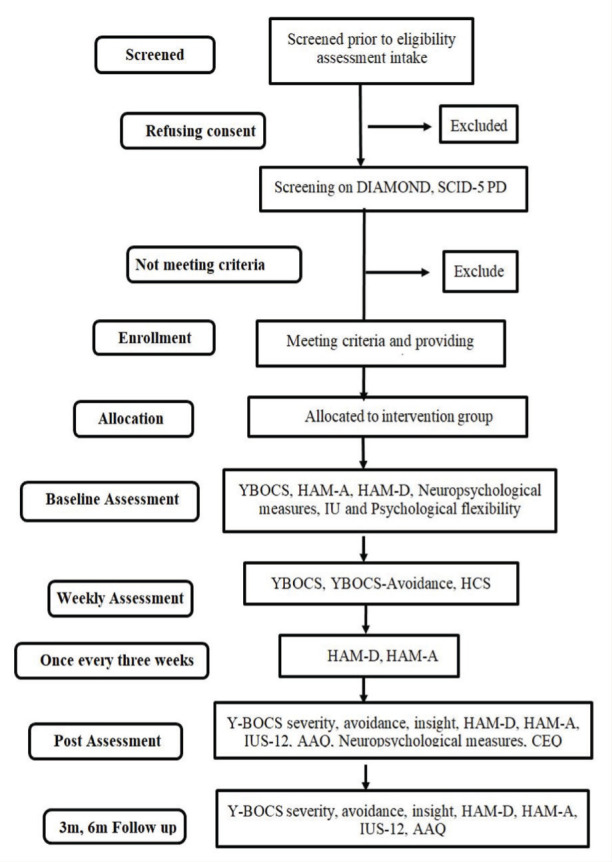
Verification
Claims the paper makes
The claims and statistics of this paper haven’t been checked yet.
Free: it reads the open-access text and checks the first 5 claims that cite a source we can check. Create a free account to check every claim.
Claims other papers make about this one
Each is checked against this paper’s own text: does it say what the citing paper says it does?
The cited source says what the claim attributes to it.
In the citing paper
“ERP requires patients to confront feared stimuli while deliberately refraining from compulsive responses, thereby reducing anxiety through inhibitory learning and modifying maladaptive beliefs [50, 52].”
From Neural correlates of response inhibition following cognitive behavioral therapy in obsessive–compulsive disorder: a randomized controlled EEG study (2026) · cites this paper as [52]
The check wasn’t confident either way, so it gives no verdict — never disputed.
In the citing paper
“one recent fMRI study of a brief, intensive ERP program (using a concentrated therapy format over 2 weeks) did not find significant changes in inhibitory network activation post-treatment [52]”
From Neural correlates of response inhibition following cognitive behavioral therapy in obsessive–compulsive disorder: a randomized controlled EEG study (2026) · cites this paper as [52]
Experimental — accuracy not yet measured
Self-check
Percentages, sums and reported differences re-computed from the paper’s own numbers.
The self-check needs the paper’s full text.
Citations
Cites
Hamilton, M. (1960) · Journal of Neurology, Neurosurgery & Psychiatry · doi:10.1136/jnnp.23.1.56 · Cited by 32,817
The assessment of anxiety states by rating
HAMILTON, M. (1959) · British Journal of Medical Psychology · doi:10.1111/j.2044-8341.1959.tb00467.x · Cited by 11,455
Rescorla, R. A. (1972) · Medical Entomology and Zoology · Cited by 9,661
(1976) · Medical Entomology and Zoology · Cited by 8,899
Jacobson, N. S., & Truax, P. (1991) · Journal of Consulting and Clinical Psychology · doi:10.1037/0022-006x.59.1.12 · Cited by 7,770
The Yale-Brown Obsessive Compulsive Scale: I. Development, Use, and Reliability
Goodman, W. K. (1989) · Archives of General Psychiatry · doi:10.1001/archpsyc.1989.01810110048007 · Cited by 7,712
Emotional processing of fear: Exposure to corrective information.
Foa, E. B., & Kozak, M. J. (1986) · Psychological Bulletin · doi:10.1037/0033-2909.99.1.20 · Cited by 5,396 · cited 2×
“5,6 Fear can reappear due to sponta-neous recovery, renewal, or reinstatement of fear associations.”
Classical conditioning II: Current research and theory.
Black, A. H., & Prokasy, W. F. (1972) · Appleton-Century-Crofts eBooks · Cited by 4,449
Bond, F. W., Hayes, S. C., Baer, R. A., Carpenter, K. M., Guenole, N., Orcutt, H. K., Waltz, T., & Zettle, R. D. (2011) · Behavior Therapy · doi:10.1016/j.beth.2011.03.007 · Cited by 3,950 · cited 2×
“A sample of 24 consecutive patients with a primary diagnosis of OCD (Diagnostic and Statistical Manual of Mental Disor - ders, Fifth Edition, DSM-5) 49 who fulfil the study criteria and provide informed consent will be recruited from a specialty clinic for OCD and the clinical services of a…”
The Yale-Brown Obsessive Compulsive Scale: II. Validity
Goodman, W. K. (1989) · Archives of General Psychiatry · doi:10.1001/archpsyc.1989.01810110054008 · Cited by 2,799
Psychometric properties of the credibility/expectancy questionnaire
Devilly, G. J., & Borkovec, T. D. (2000) · Journal of Behavior Therapy and Experimental Psychiatry · doi:10.1016/s0005-7916(00)00012-4 · Cited by 2,295
Context, time, and memory retrieval in the interference paradigms of Pavlovian learning
Bouton, M. E. (1993) · Psychological Bulletin · doi:10.1037/0033-2909.114.1.80 · Cited by 1,896 · cited 1×
“18,19 Exposure aims to inhibit the retrieval of older threat associations and to increase the retrieval of new nonthreat associations.”
Effects of an expanding-spaced vs massed exposure schedule on fear reduction and return of fear
Rowe, M. K., & Craske, M. G. (1998) · Behaviour Research and Therapy · doi:10.1016/s0005-7967(97)10016-x · Cited by 1,676
Mowrer, O. H. (1960) · doi:10.1037/10802-000 · Cited by 1,670
Optimizing inhibitory learning during exposure therapy
Craske, M. G., Kircanski, K., Zelikowsky, M., Mystkowski, J., Chowdhury, N., & Baker, A. (2008) · Behaviour Research and Therapy · doi:10.1016/j.brat.2007.10.003 · Cited by 1,607 · cited 2×
“6–8 The main criticism of ERP is that a sizeable number of patients do not respond to treatment optimally (14%–31%), and among those who respond, nearly 50%–60% experience at least a partial return of fear (ROF) in follow-ups and about half of the patients endorse impairing residual symptoms.”
On the ability to inhibit simple and choice reaction time responses: A model and a method.
Logan, G. D., Cowan, W. B., & Davis, K. A. (1984) · Journal of Experimental Psychology: Human Perception and Performance · doi:10.1037/0096-1523.10.2.276 · Cited by 1,542
Myers, K. M., & Davis, M. (2007) · Molecular Psychiatry · doi:10.1038/sj.mp.4001939 · Cited by 1,277 · cited 1×
“16,17 New nonthreat associations are formed during exposure, which inhibits the original threat association, but the memory is not erased or replaced.”
Wechsler Abbreviated Scale of Intelligence--Second Edition
Wechsler, D. (2018) · PsycTESTS Dataset · doi:10.1037/t15171-000 · Cited by 1,153
Verbruggen, F., Aron, A. R., Band, G. P., Beste, C., Bissett, P. G., Brockett, A. T., Brown, J. W., Chamberlain, S. R., Chambers, C. D., Colonius, H., et al. (2019) · eLife · doi:10.7554/elife.46323 · Cited by 990
Stein, D. J., Costa, D. L. C., Lochner, C., Miguel, E. C., Reddy, Y. C. J., Shavitt, R. G., van den Heuvel, O. A., & Simpson, H. B. (2019) · Nature Reviews Disease Primers · doi:10.1038/s41572-019-0102-3 · Cited by 895
Self-citationCools, R., Clark, L., Owen, A. M., & Robbins, T. W. (2002) · The Journal of Neuroscience · doi:10.1523/jneurosci.22-11-04563.2002 · Cited by 784
The importance of behaviour in the maintenance of anxiety and panic: A cognitive account
Salkovskis, P. M. (1991) · Behavioural Psychotherapy · doi:10.1017/s0141347300011472 · Cited by 780 · cited 1×
“25,26 Safety cues prevent extinction learning 27 and preventing safety signals and behaviors improves outcomes.”
Bouton, M. E., & King, D. A. (1983) · Journal of Experimental Psychology Animal Behavior Processes · doi:10.1037//0097-7403.9.3.248 · Cited by 769 · cited 1×
“18,19 Exposure aims to inhibit the retrieval of older threat associations and to increase the retrieval of new nonthreat associations.”
The practice of behavior therapy
Rachman, S. (1992) · Behaviour Research and Therapy · doi:10.1016/0005-7967(92)90103-n · Cited by 681
Chamberlain, S. R., Menzies, L., Hampshire, A., Suckling, J., Fineberg, N. A., del Campo, N., Aitken, M., Craig, K., Owen, A. M., Bullmore, E. T., et al. (2008) · Science · doi:10.1126/science.1154433 · Cited by 550
Six steps in quality intervention development (6SQuID)
Wight, D., Wimbush, E., Jepson, R., & Doi, L. (2016) · Journal of Epidemiology and Community Health · doi:10.1136/jech-2015-205952 · Cited by 496 · cited 1×
“38 The first step included defining and understanding the concerns and limitations of the existing ERP strategies.”
Emotional Processing Theory: An Update.
Foa, E. B., Huppert, J. D., & Cahill, S. P. (2006) · Cited by 449
The neuropsychology of adult obsessive–compulsive disorder: A meta-analysis
Abramovitch, A., Abramowitz, J. S., & Mittelman, A. (2013) · Clinical Psychology Review · doi:10.1016/j.cpr.2013.09.004 · Cited by 444
McEvoy, P. M., & Mahoney, A. E. J. (2011) · Journal of Anxiety Disorders · doi:10.1016/j.janxdis.2010.08.010 · Cited by 412
Use of a delayed signal to stop a visual reaction-time response.
Lappin, J. S., & Eriksen, C. W. (1966) · Journal of Experimental Psychology · doi:10.1037/h0021266 · Cited by 377
Pathological anxiety : emotional processing in etiology and treatment
ROTHBAUM, B. O. (2006) · Guilford Press eBooks · Cited by 368
Quirk, G. J. (2002) · Learning & Memory · doi:10.1101/lm.49602 · Cited by 360 · cited 1×
“11,12 Obsessional fears may not be “unlearned” and may remain in memory and compete with newly learned non-threat associations, suggesting the need for additional opportunities to enhance the long-term effects of exposure therapies to prepare for ROF.”
Cognitive functioning in obsessive-compulsive disorder: A meta-analysis
Shin, N. Y., Lee, T. Y., Kim, E., & Kwon, J. S. (2014) · Psychological Medicine · doi:10.1017/s0033291713001803 · Cited by 334
Snyder, H. R., Kaiser, R. H., Warren, S. L., & Heller, W. (2015) · Clinical Psychological Science · doi:10.1177/2167702614534210 · Cited by 325
de Wit, S. J., de Vries, F. E., van der Werf, Y. D., Cath, D. C., Heslenfeld, D. J., Veltman, E. M., van Balkom, A. J. L. M., Veltman, D. J., & van den Heuvel, O. A. (2012) · American Journal of Psychiatry · doi:10.1176/appi.ajp.2012.12010073 · Cited by 303
Arch, J. J., & Craske, M. G. (2009) · Psychiatric Clinics of North America · doi:10.1016/j.psc.2009.05.001 · Cited by 208 · cited 7×
“Therefore, in the absence of a systematic approach to incorporating IL-based principles in OCD, this study will contribute to a small but growing body of evidence on the application of IL-based exposure therapy, specifically in OCD.”
InfluentialEffects of varied-stimulus exposure training on fear reduction and return of fear
Rowe, M. K., & Craske, M. G. (1998) · Behaviour Research and Therapy · doi:10.1016/s0005-7967(97)10017-1 · Cited by 202 · cited 1×
“22 Contextual variability, that is, practicing exposure under variable conditions, has more long-term benefits 23,24 and varied phobic stimuli have resulted in better maintenance of treatment gains at follow-up.”
Protection from extinction in human fear conditioning
Lovibond, P. F., Davis, N. R., & O'Flaherty, A. S. (2000) · Behaviour Research and Therapy · doi:10.1016/s0005-7967(99)00121-7 · Cited by 189 · cited 1×
“25,26 Safety cues prevent extinction learning 27 and preventing safety signals and behaviors improves outcomes.”
Jacoby, R. J., & Abramowitz, J. S. (2016) · Clinical Psychology Review · doi:10.1016/j.cpr.2016.07.001 · Cited by 188 · cited 2×
“13 Traditional exposure-based therapies may not provide clinically significant symptom relief in a substantial proportion of those with OCD, 14 possibly due to deficits in inhibitory learning (IL) and regulation.”
Deepened extinction from compound stimulus presentation.
Rescorla, R. A. (2006) · Journal of Experimental Psychology: Animal Behavior Processes · doi:10.1037/0097-7403.32.2.135 · Cited by 183 · cited 1×
“21 Deepened extinction, that is, combining multiple fear cues, reduces spontaneous recovery and reinstatement of fear.”
Executive function and nonverbal memory in obsessive-compulsive disorder
Penadés, R., Catalán, R., Andrés, S., Salamero, M., & Gastó, C. (2005) · Psychiatry Research · doi:10.1016/j.psychres.2004.09.005 · Cited by 169 · cited 1×
“Notably, there are no structured ERP interventions designed specifically to target IL processes in OCD.”
Fineberg, N. A., Hollander, E., Pallanti, S., Walitza, S., Grünblatt, E., Dell’Osso, B. M., Albert, U., Geller, D. A., Brakoulias, V., Janardhan Reddy, Y. C., et al. (2020) · International Clinical Psychopharmacology · doi:10.1097/yic.0000000000000314 · Cited by 161
Self-citationThe return of fear: Review and prospect
Rachman, S. (1989) · Clinical Psychology Review · doi:10.1016/0272-7358(89)90025-1 · Cited by 159 · cited 4×
“11,12 Obsessional fears may not be “unlearned” and may remain in memory and compete with newly learned non-threat associations, suggesting the need for additional opportunities to enhance the long-term effects of exposure therapies to prepare for ROF.”
InfluentialTsao, J. C. I., & Craske, M. G. (2000) · Behavior Therapy · doi:10.1016/s0005-7894(00)80026-x · Cited by 154 · cited 1×
“22 Contextual variability, that is, practicing exposure under variable conditions, has more long-term benefits 23,24 and varied phobic stimuli have resulted in better maintenance of treatment gains at follow-up.”
Manipulations of exposure-based therapy to reduce return of fear: a replication
Lang, A. J., & Craske, M. G. (2000) · Behaviour Research and Therapy · doi:10.1016/s0005-7967(99)00031-5 · Cited by 149 · cited 1×
“22 Contextual variability, that is, practicing exposure under variable conditions, has more long-term benefits 23,24 and varied phobic stimuli have resulted in better maintenance of treatment gains at follow-up.”
Homework compliance: An uncontrolled variable in cognitive therapy outcome research
Primakoff, L., Epstein, N., & Covi, L. (1986) · Behavior Therapy · doi:10.1016/s0005-7894(86)80073-9 · Cited by 136
Abramowitz, J. S., & Arch, J. J. (2014) · Cognitive and Behavioral Practice · doi:10.1016/j.cbpra.2013.06.004 · Cited by 117 · cited 2×
“37 In the context of IL-based ERP, IU is highly relevant.”
Waters, A. M., Henry, J., & Neumann, D. L. (2009) · Journal of Abnormal Psychology · doi:10.1037/a0015635 · Cited by 111 · cited 1×
“15 Hence, there is a need to examine different ways of optimizing ERP-based CBT in OCD.”
The hippocampus and inhibitory learning: a ‘Gray’ area?
Davidson, T. L., & Jarrard, L. E. (2004) · Neuroscience & Biobehavioral Reviews · doi:10.1016/j.neubiorev.2004.02.001 · Cited by 109 · cited 1×
“25,26 Safety cues prevent extinction learning 27 and preventing safety signals and behaviors improves outcomes.”
Kashyap, H., Kumar, J. K., Kandavel, T., & Reddy, Y. C. J. (2013) · Comprehensive Psychiatry · doi:10.1016/j.comppsych.2012.12.003 · Cited by 104 · cited 1×
“29,30 These strategies can address certain limitations of the traditional ERP model.”
Self-citationNew Directions in the Cognitive-Behavioral Treatment of OCD: Theory, Research, and Practice
Abramowitz, J. S., Blakey, S. M., Reuman, L., & Buchholz, J. L. (2018) · Behavior Therapy · doi:10.1016/j.beth.2017.09.002 · Cited by 98 · cited 2×
“The literature review indicated that despite the evidence to support the efficacy of CBT for OCD incorporating ERP, nearly 14%–31% remain nonresponders, 9 and even responders often experience relapse.”
Intolerance of uncertainty and obsessive-compulsive symptom expression
Sarawgi, S., Oglesby, M. E., & Cougle, J. R. (2013) · Journal of Behavior Therapy and Experimental Psychiatry · doi:10.1016/j.jbtep.2013.06.001 · Cited by 86
Olatunji, B. O., Rosenfield, D., Tart, C. D., Cottraux, J., Powers, M. B., & Smits, J. A. J. (2013) · Journal of Consulting and Clinical Psychology · doi:10.1037/a0031865 · Cited by 85 · cited 1×
“6–8 The main criticism of ERP is that a sizeable number of patients do not respond to treatment optimally (14%–31%), and among those who respond, nearly 50%–60% experience at least a partial return of fear (ROF) in follow-ups and about half of the patients endorse impairing residual symptoms.”
Clinical relevance of retrieval cues for attenuating context renewal of fear
Culver, N. C., Stoyanova, M., & Craske, M. G. (2010) · Journal of Anxiety Disorders · doi:10.1016/j.janxdis.2010.10.002 · Cited by 83 · cited 1×
“62 This is used as a relapse prevention skill.”
An update on the efficacy of psychological treatments for obsessive-compulsive disorder in adults
Ponniah, K., Magiati, I., & Hollon, S. D. (2013) · Journal of Obsessive-Compulsive and Related Disorders · doi:10.1016/j.jocrd.2013.02.005 · Cited by 79
Predictors of response to cognitive behaviour therapy for obsessive-compulsive disorder
Kyrios, M., Hordern, C., & Fassnacht, D. B. (2015) · International Journal of Clinical and Health Psychology · doi:10.1016/j.ijchp.2015.07.003 · Cited by 68 · cited 1×
“36 Interventions such as ERP have shown lasting effects on reducing IU and OCD severity outcomes.”
Valerius, G., Lumpp, A., Kuelz, A.-K., Freyer, T., & Voderholzer, U. (2008) · The Journal of Neuropsychiatry and Clinical Neurosciences · doi:10.1176/jnp.2008.20.2.210 · Cited by 59
Spontaneous recovery from the effects of flooding (exposure) in animals
Baum, M. (1988) · Behaviour Research and Therapy · doi:10.1016/0005-7967(88)90118-0 · Cited by 50 · cited 1×
“11,12 Obsessional fears may not be “unlearned” and may remain in memory and compete with newly learned non-threat associations, suggesting the need for additional opportunities to enhance the long-term effects of exposure therapies to prepare for ROF.”
Verbruggen, F., Aron, A. R., Band, G. P. H., et al. (2019) · doi:10.31219/osf.io/8mzdu · Cited by 50
Implications of a new theory of disuse for the treatment of emotional disorders.
Lang, A. J., Craske, M. G., & Bjork, R. A. (1999) · Clinical Psychology: Science and Practice · doi:10.1093/clipsy.6.1.80 · Cited by 41 · cited 1×
“16,17 New nonthreat associations are formed during exposure, which inhibits the original threat association, but the memory is not erased or replaced.”
Fradkin, I., Strauss, A. Y., Pereg, M., & Huppert, J. D. (2018) · Clinical Psychological Science · doi:10.1177/2167702618756069 · Cited by 35 · cited 1×
“28 Experimental studies suggest clinical strategies to optimize IL in exposure therapy for adults with anxiety disorders.”
Affect Labeling to Facilitate Inhibitory Learning: Clinical Considerations
Marks, E. H., Walker, R. S. W., Ojalehto, H. J., Bedard‐Gilligan, M. A., & Zoellner, L. A. (2018) · Cognitive and Behavioral Practice · doi:10.1016/j.cbpra.2018.05.001 · Cited by 17
Treatment of Obsessive Compulsive Disorder
McGinn, L. K., & Sanderson, W. C. (1999) · Cited by 13
Treatment of Obsessive-Compulsive Disorder
Montgomery, S. (1999) · CNS Spectrums · doi:10.1017/s1092852900007422 · Cited by 8
Research works printed but not linked: 3
- First MB, Williams JBW, Karg RS,. User’s guide to structured clinical interview for DSM-5 disorders (SCID-5-CV): Clinician version. Washington, DC: American Psychiatric Association Publishing, 2015.
- First MB, Williams JBW, Benjamin LS,. SCID-5-PD: User’s guide for the structured clinical interview for DSM-5 personality disorders. Washington, DC: American Psychiatric Association Publishing, 2015.
- Wechsler D. Wechsler Abbreviated Scale of Intelligence—Second Edition [Internet]. PsycTESTS Dataset. American Psychological Association (APA); 2011. DOI: 10.1037/t15171-000. · DOI · Paper page
Cited by
Management of obsessive-compulsive disorder in adults
Abramowitz, J. S., Abramovitch, A., McKay, D., & Draffin, A. (2026) · BMJ · doi:10.1136/bmj-2024-083443 · Cited by 11
“57 58 Thus, although promising and theoretically sound, the application of this model needs further empirical validation.”
Vincenzo, C. D., Demaria, F., Bertoncini, I., Menghini, D., Antonietti, A., Vicari, S., & Pontillo, M. (2026) · Frontiers in Psychiatry · doi:10.3389/fpsyt.2025.1750938 · Cited by 6
Çınaroğlu, M., Ülker, S. V., Yılmazer, E., & Sayar, G. H. (2026) · BMC Psychology · doi:10.1186/s40359-026-05201-1
“ERP requires patients to confront feared stimuli while deliberately refraining from compulsive responses, thereby reducing anxiety through inhibitory learning and modifying mal-adaptive beliefs [50, 52].”
Huang, B., Wu, C., Cao, H., Bi, Z., Song, G., Cheng, J., Gao, J., Wang, Y., Li, D., Zhao, Q., et al. (2025) · European Journal of Psychotraumatology · doi:10.1080/20008066.2025.2580890
“…ERP with affect-focused enhancement, which is not ERP itself but a set of emotion-targeted modules delivered within or alongside ERP (e.g. emotion-regulation training, mindfulness practices, disgust-focused strategies) and aimed at targeting proximal maintaining processes (Thampy et al., 2025).”
InfluentialBohall, B., Gorbis, A., & Gorbis, E. (2026) · Cureus · doi:10.7759/cureus.107663 · Cited by 1
“During the compulsivity-focused phase, ERP targets these processes through inhibitory learning, in which repeated exposure to obsessional cues without ritual engagement promotes the formation of nonthreatening associations and reduces the perceived necessity of compulsive responses [6,114].”
Influential
Metadata
- Authors
- Thampy, M., Sudhir, P. M., Kumar, A., Kashyap, H., Balachander, S., Narayanaswamy, J. C., & Reddy, Y. C. J.
- Affiliations
- National Institute of Mental Health and Neurosciences (IN)
- Goulburn Valley Health (AU)
- Corresponding author
- Sudhir, Paulomi M.
- ORCID
- Venue
- Indian Journal of Psychological Medicine
- Publisher
- SAGE Publications
- Published
- 2025-07-08
- Volume
- 48
- Issue
- 1
- Pages
- 70-77
- ISSN
- 0253-7176 (ISSN-L)
- 0975-1564
- PMC
- PMC12237942
- OpenAlex
- W4412363479
- Cited by
- 5
- References
- 64
- Citations by year
- 2026: 4 · 2025: 1
- FWCI
- 5.91
- Type
- journal article
- Language
- en
- Open access
- diamond
- doi.org
- Licence
- cc-by-nc
- creativecommons.org/licenses/by-nc/4.0/ (vor)
- journals.sagepub.com/page/policies/text-and-data-mining-license (tdm)
- Locations
- Indian Journal of Psychological Medicine (publishedVersion, cc-by-nc)
- PubMed (publishedVersion)
- PubMed Central (publishedVersion, cc-by-nc)
- DOAJ (DOAJ: Directory of Open Access Journals) (submittedVersion, cc-by-sa)
- Topics
- Social Sciences › Psychology › Clinical Psychology › Obsessive-Compulsive Spectrum Disorders
- Social Sciences › Psychology › Experimental and Cognitive Psychology › Anxiety, Depression, Psychometrics, Treatment, Cognitive Processes
- Social Sciences › Psychology › Clinical Psychology › Psychoanalysis and Psychopathology Research
- Keywords
- obsessive-compulsive disorder, exposure and response prevention, expectancy violation, extinction, safety signals, treatment development, treatment efficacy, cognitive behavioral therapy
About these checks
Registry, retraction, Cites and statistics results are computed, not judged, with one exception: a printed reference that no index lists is read once by a model before it counts as a citation error. Claims are extracted by a model and kept only when their quote appears verbatim in the text; each cited source is then checked, with a model’s help, for whether it says what the claim relies on. Those verdicts can be wrong — read the claim’s quote and the cited source before relying on one.
Statistics and arithmetic are recomputed, not judged.
Confidence bands are shown only for fields calibrated on our annotated test set. None is calibrated yet, so no band is shown.
What counts as a claim ›How we measure confidence ›How we check this ›
Are you an author, or do you see a problem with this page? Request a review
Data sources
Bibliographic data: Semantic Scholar, OpenAlex, Crossref.
Contains information from the Semantic Scholar Academic Graph Datasets, made available under the ODC Attribution License (ODC-BY 1.0).
Semantic Scholar’s data is described in: Kinney, R., et al. (2023). The Semantic Scholar Open Data Platform. arXiv:2301.10140.
