

Propranolol for the treatment of anxiety disorders: Systematic review and meta-analysis
Open accessThe DOI matches its Crossref record; 65 of the 65 references it cites were found in a registry or an index.
Abstract
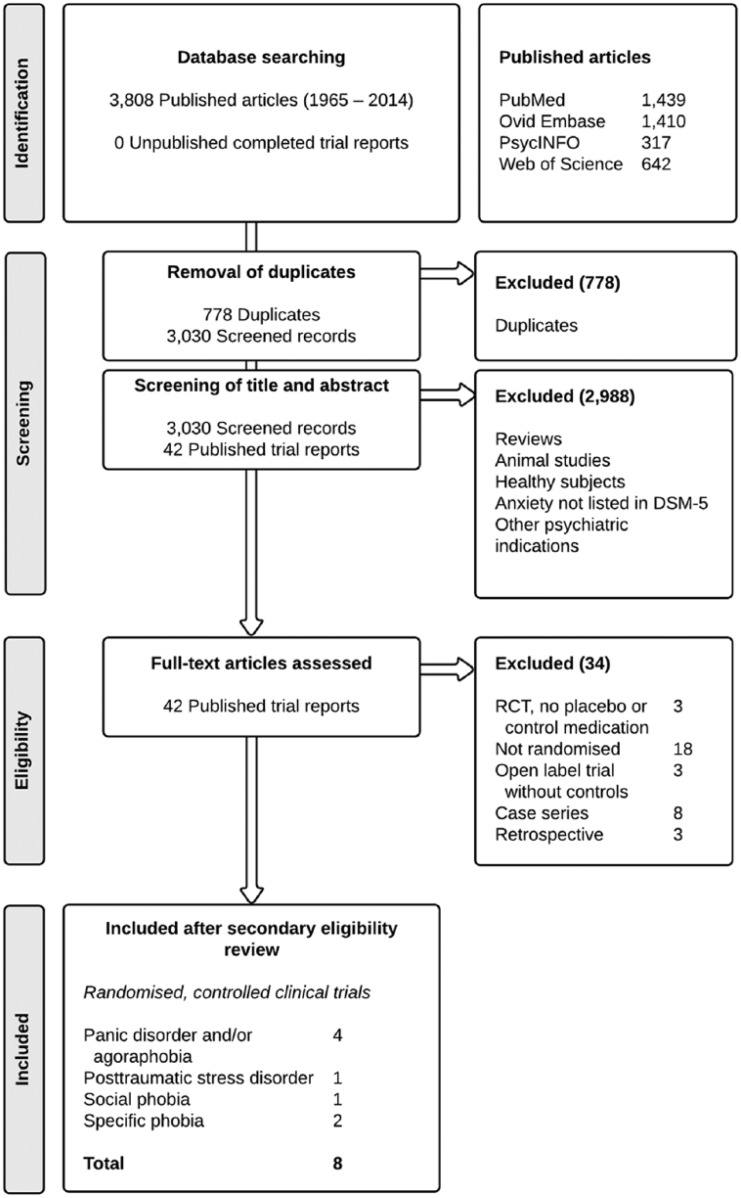
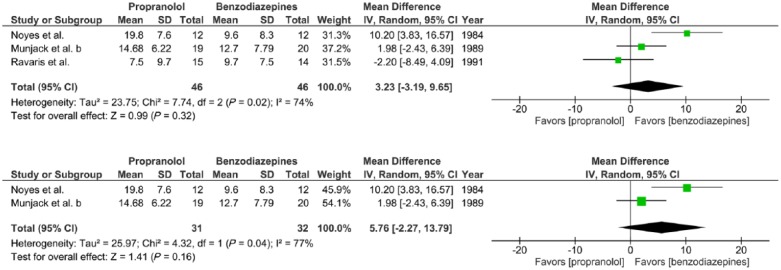
The effects of propranolol in the treatment of anxiety disorders have not been systematically evaluated previously. The aim was to conduct a systematic review and meta-analysis of randomised controlled trials, addressing the efficacy of oral propranolol versus placebo or other medication as a treatment for alleviating either state or trait anxiety in patients suffering from anxiety disorders. Eight studies met the inclusion criteria. These studies concerned panic disorder with or without agoraphobia (four studies, total n = 130), specific phobia (two studies, total n = 37), social phobia (one study, n = 16), and posttraumatic stress disorder (PTSD) (one study, n = 19). Three out of four panic disorder trials qualified for pooled analyses. These meta-analyses found no statistically significant differences between the efficacy of propranolol and benzodiazepines regarding the short-term treatment of panic disorder with or without agoraphobia. Also, no evidence was found for effects of propranolol on PTSD symptom severity through inhibition of memory reconsolidation. In conclusion, the quality of evidence for the efficacy of propranolol at present is insufficient to support the routine use of propranolol in the treatment of any of the anxiety disorders.
Overview
The claims and statistics of this paper haven’t been checked yet.
Free: it reads the open-access text and checks the first 5 claims that cite a source we can check. Create a free account to check every claim.
Integrity signals
Registry
Cites
Statistics
Figures




Verification
Claims the paper makes
The claims and statistics of this paper haven’t been checked yet.
Free: it reads the open-access text and checks the first 5 claims that cite a source we can check. Create a free account to check every claim.
Claims other papers make about this one
Each is checked against this paper’s own text: does it say what the citing paper says it does?
The source backs part of the claim, not all of it — or backs it for a different population, condition or comparison.
In the citing paper
“There is some evidence that patients with 'performance only' social anxiety disorder may respond to beta-adrenergic blockers (such as propranolol or atenolol) 98 .”
From The clinical characterization of the adult patient with an anxiety or related disorder aimed at personalization of management (2021) · cites this paper as [98]
Experimental — accuracy not yet measuredIn the citing paper
“Subsequent trials were negative, and one meta-analysis concluded that there was no evidence for the utility of propranolol in limiting PTSD development 156 .”
From Post‐traumatic stress disorder: a state‐of‐the‐art review of evidence and challenges (2019) · cites this paper as [156]
Self-check
Percentages, sums and reported differences re-computed from the paper’s own numbers.
The self-check needs the paper’s full text.
Citations
Cites
Diagnostic and Statistical Manual of Mental Disorders
American Psychiatric Association (2013) · doi:10.1176/appi.books.9780890425596 · Cited by 116,369
Preferred Reporting Items for Systematic Reviews and Meta-Analyses: the PRISMA statement
Moher, D., Liberati, A., Tetzlaff, J., Altman, D. G., & for the PRISMA Group (2009) · BMJ · doi:10.1136/bmj.b2535 · Cited by 83,823
Preferred Reporting Items for Systematic Reviews and Meta-Analyses: The PRISMA Statement
Moher, D., Liberati, A., Tetzlaff, J., Altman, D. G., & The PRISMA Group (2009) · PLoS Medicine · doi:10.1371/journal.pmed.1000097 · Cited by 64,042
Preferred reporting items for systematic reviews and meta-analyses: the PRISMA Statement.
(2009) · PubMed Central · Cited by 44,859
Cochrane Handbook for Systematic Reviews of Interventions: Cochrane Book Series
(2008) · doi:10.1002/9780470712184 · Cited by 25,048
Preferred Reporting Items for Systematic Reviews and Meta-Analyses: The PRISMA Statement
Moher, D., Liberati, A., Tetzlaff, J., & Altman, D. G. (2009) · Journal of Clinical Epidemiology · doi:10.1016/j.jclinepi.2009.06.005 · Cited by 19,575
Wang, G., Ma, R., Qiao, G., Wada, K., Aizawa, Y., & Satoh, T. (2015) · Integrative Medicine International · doi:10.1159/000368408 · Cited by 18,657
The assessment of anxiety states by rating
HAMILTON, M. (1959) · British Journal of Medical Psychology · doi:10.1111/j.2044-8341.1959.tb00467.x · Cited by 11,455
January, C. T., Wann, L. S., Alpert, J. S., Calkins, H., Cigarroa, J. E., Cleveland, J. C., Conti, J. B., Ellinor, P. T., Ezekowitz, M. D., Field, M. E., et al. (2014) · Circulation · doi:10.1161/cir.0000000000000041 · Cited by 7,115
Diagnostic and Statistical Manual of Mental Disorders, 5th Edition
(2013) · American Psychiatric Association Publishing eBooks · doi:10.1176/appi.books.9780890425596.893619 · Cited by 4,383
Research works printed but not linked: 1
- Roy-Byrne P Stein M Hermann R (2013) Pharmacotherapy for panic disorder.In: Post T (ed.) UpToDate®. Waltham, MA: UpToDate® Available at: http://www.uptodate.com/contents/pharmacotherapy-for-panic-disorder (accessed 9 July 2015).
Cited by
Items 101–200 of 237
Updates on Pharmacological Treatment of Post-Traumatic Stress Disorder
Koirala, R., Søegaard, E. G. I., & Thapa, S. B. (2017) · Journal of Nepal Medical Association · doi:10.31729/jnma.3108 · Cited by 11
Leissner, P., Mars, K., Humphries, S., Karlström, P., Yndigegn, T., Jernberg, T., Hofmann, R., Held, C., & Olsson, E. M. G. (2024) · European Heart Journal Acute Cardiovascular Care · doi:10.1093/ehjacc/zuae112 · Cited by 11
“15 Furthermore, beta-blockers have previously been found effective in treating anxiety in psychiatric patients 16 and in reducing emotional arousal during fear conditioning.”
Treating psychiatric symptoms and disorders with non-psychotropic medications
Hede, V., & Devillé, C. (2019) · Dialogues in Clinical Neuroscience · doi:10.31887/dcns.2019.21.2/vhede · Cited by 8
Sharifpour, A., Sadeghi, M., Zakariaei, Z., & Soleymani, M. (2022) · Clinical Medicine Insights Case Reports · doi:10.1177/11795476221126981 · Cited by 8
Considerations in the Treatment of Depression and Anxiety in Women with PCOS
Alur-Gupta, S., & Dokras, A. (2023) · Seminars in Reproductive Medicine · doi:10.1055/s-0043-1777720 · Cited by 12
“78,79”
GPs’ views of prescribing beta- blockers for people with anxiety disorders: a qualitative study
Archer, C., Kessler, D. S., Wiles, N., Chew-Graham, C. A., & Turner, K. M. (2024) · British Journal of General Practice · doi:10.3399/bjgp.2024.0091 · Cited by 9
Differential Free Intracellular Calcium Release by Class II Antiarrhythmics in Cancer Cell Lines
Reyes‐Corral, M., Sørensen, N. M. M., Thrasivoulou, C., Dasgupta, P., Ashmore, J. F., & Ahmed, A. (2019) · Journal of Pharmacology and Experimental Therapeutics · doi:10.1124/jpet.118.254375 · Cited by 9
Sanjida, S., Janda, M., McPhail, S., Kissane, D. W., Couper, J. W., Scott, J. G., & Obermair, A. (2018) · Gynecologic Oncology · doi:10.1016/j.ygyno.2018.11.018 · Cited by 8
The monthly rhythm of the brain-heart connection
Prinsen, J., Villringer, A., & Sacher, J. (2025) · Science Advances · doi:10.1126/sciadv.adt1243 · Cited by 8
“Research shows that propranolol effectively ameliorates emotional and physical symptoms in the luteal phase in females with severe pre-menstrual symptoms ( 11 ).”
Wong, Y. W., Haqqani, H. M., & Molenaar, P. (2024) · Handbook of experimental pharmacology · doi:10.1007/164_2024_720 · Cited by 12
Yang, F., Liu, S., Wolber, G., Bureik, M., & Parr, M. K. (2022) · International Journal of Molecular Sciences · doi:10.3390/ijms23137476 · Cited by 7
“used to treat anxiety disorder in some cases [17].”
MethodNguyen, T. N. B., Ely, B. A., Pick, D., Patel, M., Xie, H., Kim‐Schulze, S., & Gabbay, V. (2022) · Brain Behavior and Immunity · doi:10.1016/j.bbi.2022.07.163 · Cited by 9
Meessen, J. M. T. A., Abete-Fornara, G., Zarino, B., Castori, M., Tassi, L., Carriero, M. R., D’Alessandris, Q. G., Salman, R. A., Blanda, A., Nicolis, E., et al. (2024) · Frontiers in Neurology · doi:10.3389/fneur.2024.1338941 · Cited by 7
“…anxiety symptoms before the massive use of benzodiazepines; no significant changes in anxiety levels emerged in our sample, considering that at baseline no significant state or trait anxiety levels were present, thus we may exclude a significant interference of propranolol on anxiety symptoms (16).”
BackgroundLack of β2-AR Increases Anxiety-Like Behaviors and Rewarding Properties of Cocaine
Zhu, H., Liu, Z., Zhou, Y., Yin, X., Xu, B., Ma, L., & Liu, X. (2017) · Frontiers in Behavioral Neuroscience · doi:10.3389/fnbeh.2017.00049 · Cited by 8
The role of beta-adrenolytic drugs in treating anxiety disorders
Brudkowska, Ż., Tomczyk, M., Jusiak, K., Karakuła‐Juchnowicz, H., & Rudnicka-Drożak, E. (2018) · Current Problems of Psychiatry · doi:10.2478/cpp-2018-0017 · Cited by 10
Shi, Z., Wen, K., Sammudin, N. H., LoRocco, N. C., & Zhuang, X. (2025) · Molecular Psychiatry · doi:10.1038/s41380-025-03013-0 · Cited by 12
“[ 183 , 184 ] idea is PTSD although clinical trials have not been successful [218, 219].”
Propranolol Hydrochloride Psychiatric Effectiveness and Oxidative Stress: An Update
Serreau, R., Amirouche, A., Benyamina, A., & Berteina‐Raboin, S. (2024) · Oxygen · doi:10.3390/oxygen4020009 · Cited by 10
“A comparison between propranolol and benzodiazepines showed no statistical differences [17].”
BackgroundClonidine for post-traumatic stress disorder: a systematic review of the current evidence
Marchi, M., Grenzi, P., & Boks, M. P. (2024) · European Journal of Psychotraumatology · doi:10.1080/20008066.2024.2366049 · Cited by 9
“However, the quality of the evidence for their e ffi cacy was insu ffi cient to support their use in routine clinical practice (Steenen et al., 2016; Zhang et al., 2020).”
MethodEsfehani, R. J., Kamranian, H., & Jalalyazdi, M. (2017) · Electronic physician · doi:10.19082/3483 · Cited by 6
“On the other hand, there is a high sensitivity to sympathetic activity in some types of anxiety disorder that can be regulated by administration of propranolol (25).”
BackgroundAlmarri, F. K., Alaseem, A. M., Alanazi, M., Alyahya, S., Alsanad, N. H., Alswayed, K. E., Alanazi, J., Alharby, T. N., & Alghamdi, S. A. (2022) · BMC Psychiatry · doi:10.1186/s12888-022-04372-6 · Cited by 12
“Notably, there is insufficient evidence to support its anxiolytic effect as a form of medication [39].”
BackgroundEffect of Propranolol on Motor Cortex Excitability in Essential Tremor: An Exploratory Study
Miguel‐Puga, J. A., Villafuerte, G., Treviño, M., Ortega‐Robles, E., & Arias-Carrión, Ó. (2024) · Tremor and Other Hyperkinetic Movements · doi:10.5334/tohm.829 · Cited by 7
Haghighi, M., Shahlaei, M., Bahrami, K., & Targhan, H. (2021) · Journal of Materials Science Materials in Electronics · doi:10.1007/s10854-021-05439-y · Cited by 6
Ecker, B. (2017) · PsyArXiv (OSF Preprints) · doi:10.31234/osf.io/zrq2m · Cited by 6
Peripheral Beta-Blockade Differentially Enhances Cardiac and Respiratory InteroceptionPreprint
Tyrer, A., Ehmsen, J. F., Hoogervorst, K., Nikolova, N. E., Pando‐Naude, V., Steenkjær, C. H., Courtin, A. S., Fardo, F., Hauser, T. U., Bavato, F., et al. (2025) · bioRxiv (Cold Spring Harbor Laboratory) · doi:10.1101/2025.02.28.640776 · Cited by 9
“Beta-blockers have also been investigated more generally as potential treatments for anxiety and post-traumatic stress disorders, although their efficacy and relevant mechanisms of action have thus far been unclear 61,62 .”
Benefits and Liabilities of Benzodiazepines and Z-Drugs: What We Know and What We Don’t Know
Silberman, E. K. (2025) · Drugs · doi:10.1007/s40265-025-02261-2 · Cited by 8
“Controlled trials have found general equivalence in benefits compared to azapirones, such as buspirone, for a range of anxiety disorders [23], to pregabalin in treatment of GAD [24], and to propranolol in treatment of PD [25].”
Papapetropoulos, S., Doolin, E. E., Odontiadis, M., Paul, D., Jaros, M. J., Rolan, P. E., Taylor, C. T., & Stein, M. B. (2025) · Psychiatry Research · doi:10.1016/j.psychres.2025.116387 · Cited by 7
Lin, C.-C., & Liu, Y. (2022) · Pharmaceuticals · doi:10.3390/ph15070788 · Cited by 6
“Propranolol has been used extensively to relieve the peripheral symptoms of anxiety disorders [45].”
BackgroundMartínez, R. M., Chou, S.-H., Fan, Y., Chen, Y.-C., Goh, K. K., & Chen, C. (2024) · Scientific Reports · doi:10.1038/s41598-024-51345-8 · Cited by 9
“Consequently, it is no surprise that other studies have contested such findings, casting doubt on the anxiolytic and stress-reducing effects of the beta-noradrenergic antagonist 22,62 .”
ResultTreatment of Anxiety Disorders - The Role of Pharmacists
Stanojević, M., & Panic, D. (2019) · Serbian Journal of Experimental and Clinical Research · doi:10.2478/sjecr-2019-0021 · Cited by 5
“conducted meta-analysis from 2016 do not recommend the routine use of propranolol in the treatment of any type of anxiety disorders (39).”
MethodMartínez-Iglesias, O. A., Naidoo, V., Carrera, I., Carril, J. C., Cacabelos, N., & Cacabelos, R. (2023) · Biology · doi:10.3390/biology12091156 · Cited by 4
“Propanolol is commonly prescribed for migraine prophylaxis and anxiety treatment [57,58].”
BackgroundEcker, B. (2024) · Journal of Psychiatry and Psychiatric Disorders · doi:10.26502/jppd.2572-519x0226 · Cited by 9
The Therapeutic Potential of Propranolol and Other Beta-Blockers in Hyperthyroidism
Szybiak, W., Miedziaszczyk, M., Szałek, E., & Łącka, K. (2025) · International Journal of Molecular Sciences · doi:10.3390/ijms26178322 · Cited by 7
“Moreover, propranolol is a weak indirect α 1-adrenoceptor agonist [69,70], and it has been proven that it may act as a weak antagonist of certain serotonin receptors, 5-HT1A, 5-HT1B, and 5-HT2B, thus presenting an anxiolytic effect [71].”
Saini, S., Tahlan, S., & Minocha, N. (2024) · Current Topics in Medicinal Chemistry · doi:10.2174/0115680266296096240408032738 · Cited by 5
Mental Health in Burn Survivors
Bergeron, N., Bond, S., & Boyle, M. (2020) · Springer eBooks · doi:10.1007/978-3-030-39193-5_11 · Cited by 5
Cortese, S., Besag, F., Clark, B., Hollis, C. P., Kilgariff, J., Moreno, C., Nicholls, D., Wilkinson, P. O., Woodbury‐Smith, M., & Sharma, A. (2022) · Journal of Psychopharmacology · doi:10.1177/02698811221140005 · Cited by 5
“There are two problems with this: 1) propranolol is not an effective treatment for anxiety disorders (Steenen et al., 2016); 2) propranolol has significant side effects and is particularly dangerous in overdose.”
Yang, F., Wenzel, M., Bureik, M., & Parr, M. K. (2023) · Molecules · doi:10.3390/molecules28237783 · Cited by 4
A randomized controlled trial of beta-blockers effects on cardiac anxiety
Leissner, P., Mars, K., Humphries, S., Jernberg, T., Held, C., Hofmann, R., & Olsson, E. M. G. (2025) · General Hospital Psychiatry · doi:10.1016/j.genhosppsych.2025.02.010 · Cited by 5
“However, beta-blockers are not only widely used in the spectrum of cardiac diseases [5,6,7], but have also been used for their anxiolytic effects and to reduce emotional arousal during stress [8,9].”
Margatho, R. O., Massoco, C. D. O., Calefi, A. S., da Cruz, D. S. G., Sandini, T. M., Alves, G. J., Flório, J. C., & Palermo‐Neto, J. (2017) · NeuroImmunoModulation · doi:10.1159/000477938 · Cited by 4
Speech disorders and anxiety: interaction mechanisms and therapy potential
Васенина, Е. Е., & Levin, O. S. (2020) · S S Korsakov Journal of Neurology and Psychiatry · doi:10.17116/jnevro2020120041136 · Cited by 5
Hekmat, A. S., Farjam, M., Javanmardi, K., Behrouz, S., Zarenezhad, E., & Rad, M. N. S. (2021) · ChemistrySelect · doi:10.1002/slct.202101920 · Cited by 4
The problem of propranolol poisoning
Williams, H., Jagpal, P. S., Sandilands, E. A., Morrison, E. E., Gray, L. A., Thanacoody, H. K. R., Beg, E., Bradberry, S., & Ferner, R. E. (2025) · British Journal of Clinical Pharmacology · doi:10.1002/bcp.70147 · Cited by 3
“…efficacy of propranolol at present is insufficient to support the routine use of propranolol in the treatment of any of the anxiety disorders ’ , 7 and a more recent review concluded that, while β -adrenoceptor antagonists may reduce symptoms of performance anxiety, they are not recommended for…”
Treatment of Anxiety for Adults in Primary Care Settings: A Review
Shepardson, R. L., Khan, J. S., Buckheit, K. A., & Funderburk, J. S. (2026) · JAMA Internal Medicine · doi:10.1001/jamainternmed.2026.0395 · Cited by 5
Brain systems in cocaine abstinence-induced anxiety-like behavior in rodents: A review
Barbee, B. R., & Gourley, S. L. (2022) · Addiction Neuroscience · doi:10.1016/j.addicn.2022.100012 · Cited by 5
Propranolol in anxiety: poor evidence for efficacy and toxicity in overdose
Phelan, R., Cottrell, A., Gee, S., & Rifkin, L. (2024) · British Journal of General Practice · doi:10.3399/bjgp24x739881 · Cited by 4
Sharaf, A. M., Muhammad, R. N., Khalifa, H. O., Kandil, E. A., & Ahmed, L. A. (2025) · Neuropharmacology · doi:10.1016/j.neuropharm.2025.110657 · Cited by 3
Musical Performance Anxiety (MPA)
Rocha, S. D. F. (2021) · IntechOpen eBooks · doi:10.5772/intechopen.91646 · Cited by 9
“The beta-blockers are very efficient in the containment of somatic symptoms, mainly the tremors and muscle tension; however, they do not have any action on the cognitive and behavioral symptoms [41].”
BackgroundAdrenoceptors: A Focus on Psychiatric Disorders and Their Treatments
Stanford, S. C., & Heal, D. J. (2023) · Handbook of experimental pharmacology · doi:10.1007/164_2023_675 · Cited by 4
Szeleszczuk, Ł., Bethanis, K., Christoforides, E., & Pisklak, D. M. (2024) · CrystEngComm · doi:10.1039/d4ce01105h · Cited by 3
Anxiety Disorders Among Older Adults: Empirically Supported Treatments and Special Considerations
Ishikawa, R. Z., Vyas, C. M., & Okereke, O. I. (2019) · Current clinical psychiatry · doi:10.1007/978-3-030-30687-8_9 · Cited by 3
So, H., Lau, A., Chau, C. K., & Wong, S. (2017) · bioRxiv (Cold Spring Harbor Laboratory) · doi:10.1101/132563 · Cited by 3
Ogata, N., & Dantas, L. M. D. S. (2019) · Wiley eBooks · doi:10.1002/9781119226253.ch11 · Cited by 4
Inappropriate use of propranolol among medical students in Palestine: cross-sectional study
Younis, O., Abed, M. T., Anabseh, Y., Hamshari, S., Ktaifan, M., & Zyoud, S. H. (2025) · BMC Medical Education · doi:10.1186/s12909-025-07094-x · Cited by 2
“Propranolol shows promise as a treatment for these conditions [4].”
Szighardtova, M., Aziriova, S., Stanko, P., Repova, K., Baka, T., Krajcirovicova, K., Zórad, Š., Adamcová, M., Sabaka, P., Borbélyová, V., et al. (2025) · International Journal of Molecular Sciences · doi:10.3390/ijms262210905 · Cited by 2
Rosa, R., & ALMEIDA, R. B. (2019) · Publicatio UEPG Ciencias Biologicas e da Saude · doi:10.5212/publ.biologicas.v.25i1.0001 · Cited by 4
Pharmacological Treatment of Anxiety in Later Life
Byrne, G. J. (2021) · Cambridge University Press eBooks · doi:10.1017/9781139087469.012 · Cited by 3
Adrenergic-Angiogenic Crosstalk in Head and Neck Cancer: Mechanisms and Therapeutic Implications
Vincent–Chong, V. K., & Seshadri, M. (2021) · Frontiers in Oral Health · doi:10.3389/froh.2021.689482 · Cited by 3
“PRO is FDA-approved for treating patients with variety of conditions ranging from hypertension and cardiac failure to neurological disorders including anxiety, migraines, tremors and glaucoma [49, 50].”
BackgroundPropranolol Use Among Healthcare Students in Saudi Arabia
Aljahdali, S. H., Badr, R., Alotaibi, M. S., Alhelali, S., Abdullatif, G., Alshanberi, A. M., Fairaq, A., Elashmony, S. M., Falemban, A. H., Alsanosi, S., et al. (2023) · Cureus · doi:10.7759/cureus.48606 · Cited by 3
“A meta-analysis study showed that propranolol is as effective as benzodiazepines in reducing panic disorder and posttraumatic stress disorder [9-11].”
BackgroundHuska, B., Niccoli, S., Phenix, C. P., & Lees, S. J. (2020) · Biomedicines · doi:10.3390/biomedicines8060159 · Cited by 2
“Propranolol is a nonselective β-adrenoreceptor antagonist that is clinically used to target noradrenergic systems and block β-adrenoreceptors in the central nervous system to treat various ailments [35,36].”
BackgroundEvidence-Based Pharmacotherapies for Panic Disorder
Norrholm, S. D. (2022) · IntechOpen eBooks · doi:10.5772/intechopen.106205 · Cited by 3
Bernstorff, M., Rask, C. U., Rytter, D., Hansen, S. N., & Bech, B. H. (2021) · Scandinavian Journal of Public Health · doi:10.1177/14034948211036619 · Cited by 2
“[33] Steenen SA, Van Wijk AJ, Van Der Heijden gJ, et al.”
BackgroundNishimoto‐Kusunose, S., Hirakawa, A., Tanaka, A., Yoshizawa, K., Makino, K., Takahashi, H., & Higashi, T. (2023) · Steroids · doi:10.1016/j.steroids.2023.109272 · Cited by 2
Foundations of Disaster Psychiatry
Ursano, R. J., Fullerton, C. S., Weisæth, L., & Raphael, B. (2017) · Cambridge University Press eBooks · doi:10.1017/9781316481424.003 · Cited by 2
FUNCIONALIZAÇÃO DE LIGAÇÕES C—H EM ESTÁGIO TARDIO EM SÍNTESE ORGÂNICA
Rocha, E. C. S., Salmazo, Y., Hayashi, M., Zaragoza, C. A. D., & Júnior, E. C. D. L. (2023) · Química Nova · doi:10.21577/0100-4042.20170949 · Cited by 2
Psychopharmacology for Pediatric Anxiety Disorders
Ballard, R., Romba, C., & Walkup, J. T. (2024) · Springer eBooks · doi:10.1007/978-3-031-57472-6_14 · Cited by 1
Szultka‐Młyńska, M. (2025) · Separations · doi:10.3390/separations12090243 · Cited by 1
“Propranolol (PRO) belongs to the group of drugs from the β -blockers group, blocking the action of catecholamines (adrenaline and noradrenaline) on the heart (Figure S4, Supplementary Information) [12,13].”
Carnaval, T., Bui, M., Villoria, J., Cumplido, D. R., Menchón, J. M., Ciruela, F., & Videla, S. (2025) · Psychiatry and Clinical Neurosciences · doi:10.1111/pcn.13892 · Cited by 3
“24 Additionally, nitric oxide (NO) donors — particularly sodium nitropr-usside (SNP) — have received growing interest following promising early clinical fi ndings in schizophrenia patients (i.e., the rapid improvement of symptoms following a single infusion).”
Schicktanz, N., Dechent, F., Huber, C. A., Zimmer, A., Iseli, G. C., Howald, J., Schenker, M. T., Gräff, J., Lang, U. E., de Quervain, D. J. ‐., et al. (2025) · Psychological Medicine · doi:10.1017/s0033291725101475 · Cited by 1
“However, the benefits of the propranolol reconsolidation paradigm have not been equally observed in all translational studies in anxiety disorders, including specific phobias (Elsey et al., 2020; Steenen et al., 2016).”
Study of Metabolomic Markers of β-Blocker Neurotoxicity Using Zebrafish as a Model Organism
Moskaleva, N. E., Марсельевич, Р. П., Samoilov, V. M., Varzieva, V. G., Baskhanova, S. N., & Appolonova, S. A. (2025) · Bulletin of Experimental Biology and Medicine · doi:10.1007/s10517-026-06628-7 · Cited by 1
Durán, E., Novitskaya, Y., & Eschenko, O. (2025) · Neuropharmacology · doi:10.1016/j.neuropharm.2025.110721 · Cited by 1
Potential use of propranolol in autism spectrum disorder: A narrative review
Soriano, L. F., Huguet, A. I., Tauler, J. M. A., Cañellas, J. M., Gost, C. V. S., Motilla, S. J., Rodríguez-Quiroga, A., Quintero, M., & Quintero, J. (2025) · Journal of Psychopharmacology · doi:10.1177/02698811251399567 · Cited by 2
Ayerbe, L., Pablos, E. B., Boreu, Q. F., Pérez-Piñar, M., & Ayis, S. (2026) · Journal of Psychosomatic Research · doi:10.1016/j.jpsychores.2026.112534 · Cited by 1
Therapeutic potential of propranolol in central nervous system disorders
Zhao, J.-N., Zhang, H., Jing-yu, Y., Yin, Y., & Zhang, L. (2026) · Frontiers in Psychiatry · doi:10.3389/fpsyt.2026.1752025 · Cited by 2
“A case report described worsening depressive episodes in three patients following Prop treatment for medical conditions, with a dose-dependent effect and rapid relief upon discontinuation of Prop (43).”
InfluentialBroers, E., Lodder, P., Spek, V., Widdershoven, J. W. M. G., Pedersen, S. S., & Habibović, M. (2019) · Pacing and Clinical Electrophysiology · doi:10.1111/pace.13636
Drugs to Treat Anxiety and Insomnia
Baldwin, D. S., & Huneke, N. T. M. (2020) · Cambridge University Press eBooks · doi:10.1017/9781911623465.010 · Cited by 1
Medications for Anxiety Disorders
Narita, Z. C., Fujimoto, M., Winter, E., Nestadt, P. S., & Sawa, A. (2023) · Springer eBooks · doi:10.1007/978-3-030-42825-9_136-1 · Cited by 1
Baldwin, D. S., Impey, B., & Masdrakis, V. G. (2024) · Cambridge University Press eBooks · doi:10.1017/9781911623861.014 · Cited by 2
Bajaber, D., Alsubhi, A. S., Felimban, S. A., Alotaibi, R. Z., Almalki, A., Allahyani, N. S., Yaseen, R. Y., Kofiah, F. B., Almatrafi, A. A., & Alzahrani, S. A. (2024) · Cureus · doi:10.7759/cureus.68862 · Cited by 1
“However, other studies in the meta-analysis tend to support the use of beta-blockers as a supplement rather than a single therapy [19].”
ResultMedicinal Mishap: Propranolol overdose following prescription for anxiety
Browne, E., Huber, J. P., & Murnion, B. P. (2025) · Australian Prescriber · doi:10.18773/austprescr.2025.005 · Cited by 1
Lapointe, T., Baidoo, N., Renda, B., & Leri, F. (2025) · Neuropharmacology · doi:10.1016/j.neuropharm.2025.110651 · Cited by 1
Joo, S. W., 최상천, 박은정, & 민영기 (2016) · Journal of the Korean society of clinical toxicology · doi:10.22537/jksct.2016.14.2.100 · Cited by 1
Therapeutic drug monitoring of cardioactive drugs
Dasgupta, A., & Krasowski, M. D. (2019) · Elsevier eBooks · doi:10.1016/b978-0-12-815849-4.00012-8 · Cited by 1
Propranolol Inhibits Reactivation of Fear Memory
Pennington, Z. T., & Cai, D. J. (2021) · Biological Psychiatry · doi:10.1016/j.biopsych.2021.04.007 · Cited by 1
Sanjida, S. (2020) · Queensland University of Technology · doi:10.5204/thesis.eprints.192103
13 Common Errors in Psychopharmacology
Ameen, S. (2015) · Kerala Journal of Psychiatry · doi:10.30834/kjp.28.2.2015.54 · Cited by 2
La psychocardiologie : une nouvelle spécialité
Houppe, J.-P. (2017) · HEGEL - HEpato-GastroEntérologie Libérale · doi:10.3917/heg.071.0036 · Cited by 2
Margatho, R. O. (2016) · Digital Library of Theses and Dissertations (Universidade de São Paulo) · doi:10.11606/d.10.2016.tde-02062016-152358 · Cited by 3
Innovative pharmakologische Strategien gegen Angststörungen
Kiebs, M., & Hurlemann, R. (2018) · NeuroTransmitter · doi:10.1007/s15016-018-6296-x
Experimental Medicine Models in Generalized Anxiety Disorder and Social Anxiety Disorder
Baldwin, D. S., & Abou-Aisha, A. (2019) · Handbook of behavioral neuroscience · doi:10.1016/b978-0-12-803161-2.00025-4 · Cited by 1
Current trends in treatment of anxiety disorders
Nosková, E., Stopková, P., & Šebela, A. (2017) · Psychiatrie pro praxi · doi:10.36290/psy.2017.020
Neurobiology of Disaster Exposure: Fear, Anxiety, Trauma, and Resilience
Averill, L. A., Smith, R. P., Katz, C. L., Charney, D. S., & Southwick, S. M. (2017) · Cambridge University Press eBooks · doi:10.1017/9781316481424.005
Post-traumatic Stress Disorder in the Emergency Department
McDowell, A. K., & Simpson, S. A. (2021) · Springer eBooks · doi:10.1007/978-3-030-52520-0_11
Nguyen, T. N. B., Ely, B. A., Pick, D., Patel, M., Xie, H., Kim‐Schulze, S., & Gabbay, V. (2021) · bioRxiv (Cold Spring Harbor Laboratory) · doi:10.1101/2021.08.07.455522
An in silico Modeling for the Prediction of Propranolol-Omniscan Interaction
Zhang, T., Zhou, Z., Wang, Y., & Xia, J. (2021) · International Journal of Pharmacology · doi:10.3923/ijp.2022.96.103
Drago, F., & Caraci, F. (2020) · Faculty Opinions – Post-Publication Peer Review of the Biomedical Literature · doi:10.3410/f.732500679.793576055
Shihora, D., Bono, K. R., & Modak, A. (2022) · Journal of Clinical Hypertension · doi:10.1111/jch.14484
Advances in the pathogenesis and pharmacotherapy of acute stress disorder
Wang, X., Tian, W., & Fu, F. (2022) · International Journal of Science and Research Archive · doi:10.30574/ijsra.2022.5.1.0031
“Beta blockers According to literature reports, the application of beta-blockers such as propranolol can reduce some symptoms of patients with acute stress, such as sympathetic symptoms, for example, tachycardia and sweating, but has no significant effect on the incidence, occurrence and development of stress disorder[…”
Background(2018) · Elsevier eBooks · doi:10.1016/b978-0-12-811351-6.00026-7
Motta, R. W. (2022) · IntechOpen eBooks · doi:10.5772/intechopen.102252 · Cited by 1
(2022) · Elsevier eBooks · doi:10.1016/b978-2-294-77735-6.00014-8
Anxiety, Post-Traumatic Stress Disorder, and Other Trauma-Related Disorders
McDowell, A. K., & Simpson, S. A. (2023) · Oxford University Press eBooks · doi:10.1093/med/9780197624005.003.0011
Metadata
- Authors
- Steenen, S. A., van Wijk, A. J., van der Heijden, G. J., van Westrhenen, R., de Lange, J., & de Jongh, A.
- Affiliations
- Amsterdam UMC Location University of Amsterdam (NL)
- Department of Social Dentistry and Behavioural Sciences, Academic Centre for Dentistry Amsterdam, University of Amsterdam and VU University, Amsterdam, the Netherlands
- Department of Psychiatry, Erasmus University Medical Centre, Rotterdam, the Netherlands
- Department of Oral and Maxillofacial Surgery, Academic Medical Centre, University of Amsterdam, Amsterdam, the Netherlands
- Corresponding author
- Steenen, Serge A
- ORCID
- Steenen, Serge A
- Venue
- Journal of Psychopharmacology
- Publisher
- SAGE Publications
- Published
- 2015-10-20
- Volume
- 30
- Issue
- 2
- Pages
- 128-139
- ISSN
- 0269-8811 (ISSN-L)
- 1461-7285
- PMC
- PMC4724794
- OpenAlex
- W2266059207
- Cited by
- 237
- References
- 65
- Citations by year
- 2026: 14 · 2025: 29 · 2024: 31 · 2023: 24 · 2022: 28 · 2021: 24 · 2020: 17 · 2019: 20 · 2018: 24 · 2017: 18 · 2016: 7 · 2015: 1
- FWCI
- 2.17
- Type
- journal article
- Language
- en
- Open access
- hybrid
- doi.org
- Licence
- cc-by-nc
- journals.sagepub.com/page/policies/text-and-data-mining-license (tdm)
- Locations
- Journal of Psychopharmacology (publishedVersion, cc-by-nc)
- PubMed Central (publishedVersion, cc-by-nc)
- PubMed (publishedVersion)
- UvA-DARE (University of Amsterdam) (publishedVersion, cc-by-nc)
- EUR Research Repository (Erasmus University Rotterdam) (publishedVersion)
- VU Research Portal (publishedVersion, other-oa)
- Data Archiving and Networked Services (DANS) (submittedVersion)
- EUR Research Repository (Erasmus University Rotterdam) (submittedVersion)
- RePub (Erasmus University Rotterdam) (submittedVersion, other-oa)
- UvA-DARE (University of Amsterdam) (submittedVersion, cc-by-nc)
- Pure Amsterdam UMC (submittedVersion, other-oa)
- Data Archiving and Networked Services (DANS) (submittedVersion, other-oa)
- Funders
- Universiteit van Amsterdam
- Topics
- Social Sciences › Psychology › Experimental and Cognitive Psychology › Anxiety, Depression, Psychometrics, Treatment, Cognitive Processes
- Health Sciences › Medicine › Cardiology and Cardiovascular Medicine › Cardiac Health and Mental Health
- Health Sciences › Medicine › Public Health, Environmental and Occupational Health › Maternal Mental Health During Pregnancy and Postpartum
- Keywords
- propranolol, anxiety disorders, panic disorder, agoraphobia, specific phobia, social anxiety disorder, post-traumatic stress disorder, benzodiazepines, memory reconsolidation, state anxiety, trait anxiety, beta-blockers
- MeSH terms
- Administration, Oral, Adrenergic beta-Antagonists, Anxiety Disorders, Humans, Propranolol, Severity of Illness Index, Anti-Anxiety Agents, Randomized Controlled Trials as Topic
About these checks
Registry, retraction, Cites and statistics results are computed, not judged, with one exception: a printed reference that no index lists is read once by a model before it counts as a citation error. Claims are extracted by a model and kept only when their quote appears verbatim in the text; each cited source is then checked, with a model’s help, for whether it says what the claim relies on. Those verdicts can be wrong — read the claim’s quote and the cited source before relying on one.
Statistics and arithmetic are recomputed, not judged.
Confidence bands are shown only for fields calibrated on our annotated test set. None is calibrated yet, so no band is shown.
What counts as a claim ›How we measure confidence ›How we check this ›
Are you an author, or do you see a problem with this page? Request a review
Data sources
Bibliographic data: Semantic Scholar, OpenAlex, Crossref.
Contains information from the Semantic Scholar Academic Graph Datasets, made available under the ODC Attribution License (ODC-BY 1.0).
Semantic Scholar’s data is described in: Kinney, R., et al. (2023). The Semantic Scholar Open Data Platform. arXiv:2301.10140.
