

Anti-inflammatory treatment for major depressive disorder: implications for patients with an elevated immune profile and non-responders to standard antidepressant therapy
Open accessThe DOI matches its Crossref record; 174 of the 175 references it cites were found in a registry or an index.
Abstract
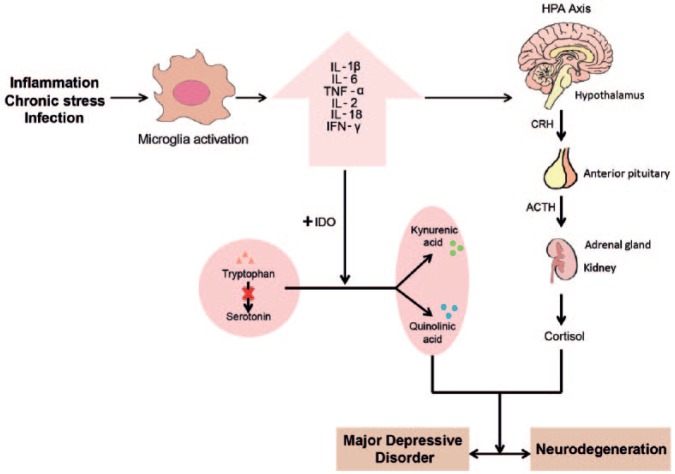
Major depressive disorder (MDD) is a prevalent and disabling psychiatric disease with rates of non-responsiveness to antidepressants ranging from 30–50%. Historically, the monoamine depletion hypothesis has dominated the view on the pathophysiology of depression. However, the lack of responsiveness to antidepressants and treatment resistance suggests that additional mechanisms might play a role. Evidence has shown that a subgroup of depressive patients may have an underlying immune deregulation that could explain the lack of therapeutic benefit from antidepressants. Stimuli like inflammation and infection can trigger the activation of microglia to release pro-inflammatory cytokines, acting on two main pathways: (1) activation of the hypothalamic–pituitary adrenal axis, generating an imbalance in the serotonergic and noradrenergic circuits; (2) increased activity of the enzyme indoleamine-2,3-dioxygenase, resulting in depletion of serotonin levels and the production of quinolinic acid. If this hypothesis is proven true, the subgroup of MDD patients with increased levels of pro-inflammatory cytokines, mainly IL-6, TNF-α and IL-1β, might benefit from an anti-inflammatory intervention. Here, we discuss the pre-clinical and clinical studies that have provided support for treatment with non-steroidal anti-inflammatory drugs in depressed patients with inflammatory comorbidities or an elevated immune profile, as well as evidences for anti-inflammatory properties of standard antidepressants.
Overview
The claims and statistics of this paper haven’t been checked yet.
Free: it reads the open-access text and checks the first 5 claims that cite a source we can check. Create a free account to check every claim.
Integrity signals
Registry
Cites
Statistics
Figures
Verification
Claims the paper makes
The claims and statistics of this paper haven’t been checked yet.
Free: it reads the open-access text and checks the first 5 claims that cite a source we can check. Create a free account to check every claim.
Claims other papers make about this one
Each is checked against this paper’s own text: does it say what the citing paper says it does?
The source backs part of the claim, not all of it — or backs it for a different population, condition or comparison.
In the citing paper
“Evidence of altered inflammation-related markers across psychiatric conditions [6–8], along with reports of anti-inflammatory effects from psychotropic medications [9, 10] and the ameliorative impact of anti-inflammatory drugs on psychiatric symptoms [11–14], suggests a strong link between abnormal inflammatory responses and major psychiatric disorders.”
From Inflammatory ratios as predictors of length of hospitalization in psychiatric patients: A multicenter study (2025) · doi:10.1007/s00406-025-02033-9 · cites this paper as [11]
Experimental — accuracy not yet measuredThe source backs part of the claim, not all of it — or backs it for a different population, condition or comparison.
In the citing paper
“On one hand, drugs that target IRFs have been proposed for treating psychiatric disorders, including major depression (MDD)10–12, schizophrenia (SCZ)13 and bipolar disorder (BD)14, particularly in a subset of patients with chronic inflammation10”
From Inflammation-related biomarkers in major psychiatric disorders: a cross-disorder assessment of reproducibility and specificity in 43 meta-analyses (2019) · cites this paper as [12]
Experimental — accuracy not yet measured
Self-check
Percentages, sums and reported differences re-computed from the paper’s own numbers.
The self-check needs the paper’s full text.
Citations
Cites
Diagnostic and Statistical Manual of Mental Disorders
American Psychiatric Association (2013) · doi:10.1176/appi.books.9780890425596 · Cited by 116,369
Hamilton, M. (1960) · Journal of Neurology, Neurosurgery & Psychiatry · doi:10.1136/jnnp.23.1.56 · Cited by 32,817 · cited 2×
“Moreover, PET tracer uptake (microglia activation) was correlated with the Hamilton Depression Rating Scale (HDRS) score (Hamilton, 1960) in the anterior cingulated cortex (Setiawan et al., 2015).”
MethodPolazzi, E., Mengoni, I., Caprini, M., Peña-Altamira, E., Kurtys, E., & Monti, B. (2013) · Neurosignals · doi:10.1159/000337115 · Cited by 8,994
Molecular Mechanisms of Depression: Perspectives on New Treatment Strategies
Lang, U. E., & Borgwardt, S. (2013) · Cellular Physiology and Biochemistry · doi:10.1159/000350094 · Cited by 8,475
Kessler, R. C., Berglund, P., Demler, O., Jin, R., Koretz, D., Merikangas, K. R., Rush, A. J., Walters, E. E., & Wang, P. S. (2003) · JAMA · doi:10.1001/jama.289.23.3095 · Cited by 7,988 · cited 1×
“Not only the high incidence of MDD and the disability associated with the disease, but also the high rate of inadequate treatment of the disorder remains a serious concern (Kessler et al., 2003).”
BackgroundGlutamate neurotoxicity and diseases of the nervous system
CHOI, D. (1988) · Neuron · doi:10.1016/0896-6273(88)90162-6 · Cited by 7,972
From inflammation to sickness and depression: when the immune system subjugates the brain
Dantzer, R., O'Connor, J. C., Freund, G. G., Johnson, R. W., & Kelley, K. W. (2008) · Nature Reviews Neuroscience · doi:10.1038/nrn2297 · Cited by 7,395 · cited 4×
“vagus nerve), delivering cytokine signals to relevant brain regions including the nucleus of the solitary tract and hypothalamus (Dantzer et al., 2008; Miller et al., 2009).”
BackgroundInfluentialRush, A. J., Trivedi, M. H., Wisniewski, S. R., Nierenberg, A. A., Stewart, J. W., Warden, D., Niederehe, G., Thase, M. E., Lavori, P. W., Lebowitz, B. D., et al. (2006) · American Journal of Psychiatry · doi:10.1176/ajp.2006.163.11.1905 · Cited by 5,643 · cited 2×
“It is estimated that 30–50% of the patients do not respond to treatment with antidepressants (Bschor et al., 2012) due to either lack of efficacy or intolerable side effects (Rush et al., 2006).”
BackgroundA Meta-Analysis of Cytokines in Major Depression
Dowlati, Y., Herrmann, N., Swardfager, W., Liu, H., Sham, L., Reim, E. K., & Lanctôt, K. L. (2010) · Biological Psychiatry · doi:10.1016/j.biopsych.2009.09.033 · Cited by 4,729 · cited 8×
“Major depression disorder (MDD) is an important public health issue (Dowlati et al., 2010; Miller et al., 2009), predicted to be the second leading cause of disability by the year of 2020 behind only ischemic heart disease (Rush et al.”
BackgroundInfluentialOverweight, Obesity, and Depression: A Systematic Review and Meta-analysis of Longitudinal Studies
Luppino, F. S., de Wit, L. M., Bouvy, P. F., Stijnen, T., Cuijpers, P., Penninx, B. W. J. H., & Zitman, F. G. (2010) · Archives of General Psychiatry · doi:10.1001/archgenpsychiatry.2010.2 · Cited by 4,322 · cited 2×
“Depression’s causal role in obesity might be due to neuroendocrine disturbances, through a long-term activation of the HPA axis and release of cortisol, along with an unhealthy lifestyle (Luppino et al., 2010).”
BackgroundResult
Cited by
Items 101–200 of 292
Psychopharmacology of chronic pain
Ciaramella, A. (2019) · Handbook of clinical neurology · doi:10.1016/b978-0-444-64012-3.00019-8 · Cited by 26
Effects of adjunctive inflammatory modulation on IL-1β in treatment resistant bipolar depression
Murata, S., Murphy, M. L. M., Hoppensteadt, D., Fareed, J., Welborn, A., & Halaris, A. E. (2020) · Brain Behavior and Immunity · doi:10.1016/j.bbi.2020.01.004 · Cited by 26
NLRP3 inflammatory pathway. Can we unlock depression?
Jahromi, G. G., Razi, S., & Rezaei, N. (2023) · Brain Research · doi:10.1016/j.brainres.2023.148644 · Cited by 26
Cortisol, dehydroepiandrosterone sulfate, fatty acids, and their relation in recurrent depression
ter Horst, D. M., Schene, A. H., Figueroa, C. A., Assies, J., Lok, A., Bockting, C., Ruhé, H. G., & Mocking, R. J. T. (2018) · Psychoneuroendocrinology · doi:10.1016/j.psyneuen.2018.10.012 · Cited by 25
Zhang, K., Zhao, Y., Chen, X., Li, Y., Lan, T., Chang, M., Wang, W., Wang, C., Zhuang, X., Zhang, B., et al. (2025) · Redox Biology · doi:10.1016/j.redox.2025.103836 · Cited by 23
“Increased OS activates proinflammatory signaling pathways, which elevate cytokine levels, impair neurogenesis, and drive neuroprogression, thereby exacerbating the pathophysiology of MDD [8,9].”
Ayahuasca, a potentially rapid acting antidepressant: focus on safety and tolerability
Rossi, G. N., Dias, I. C. D. S., Baker, G. B., Bouso, J. C., Dursun, S. M., Hallak, J. E. C., & SANTOS, R. G. D. (2022) · Expert Opinion on Drug Safety · doi:10.1080/14740338.2022.2054988 · Cited by 23
Cytokines and depression in cancer patients and caregivers
Li, M., Kouzmina, E., McCusker, M., Rodin, D. L., Boutros, P. C., Paige, C. J., & Rodin, G. (2017) · Neuropsychiatric Disease and Treatment · doi:10.2147/ndt.s144774 · Cited by 24
“Anti-inflammatory approaches for the treatment of depression are now being explored.(36) Studies suggest that nonsteroidal anti-inflammatory drugs (NSAIDs) given solely or as adjuncts to antidepressants are more effective than placebo in treating the symptoms of depression.”
BackgroundTran, L., Sharrad, K., Kopsaftis, Z., Stallman, H. M., Tai, A., Spurrier, N., Esterman, A., & Carson-Chahhoud, K. (2021) · Journal of Asthma · doi:10.1080/02770903.2020.1731826 · Cited by 22
Kim, Y. R., Park, B.-K., Seo, C., Kim, N. S., & Lee, M. Y. (2021) · Frontiers in Behavioral Neuroscience · doi:10.3389/fnbeh.2021.650833 · Cited by 23
“…of depression remains unknown, antidepressants have been shown to affect monoamine activity as well as feature anti-inflammatory and neuroprotective effects (Kopschina Feltes et al., 2017); specifically, antidepressants reportedly affect the production of cytokines (Obuchowicz et al., 2014).”
BackgroundChen, L., Jiang, H., Bao, T., Wang, Y., Meng, H., Sun, Y., Liu, P., Quan, S., Li, W., Qi, S., et al. (2022) · Frontiers in Psychiatry · doi:10.3389/fpsyt.2022.903004 · Cited by 24
Wang, X., Yu, J., & Zhang, X. (2022) · Molecules · doi:10.3390/molecules27217637 · Cited by 22
“The most typical form of depression, major depressive disorder (MDD), is a serious and incapacitating mental condition [26].”
BackgroundMitogen-stimulated cell proliferation and cytokine production in major depressive disorder patients
Lin, P., Ding, B., Wu, Y., Dong, K., & Li, Q. (2018) · BMC Psychiatry · doi:10.1186/s12888-018-1906-5 · Cited by 22
MiR-129-5p prevents depressive-like behaviors by targeting MAPK1 to suppress inflammation
Chang, J., Zhang, Y., Shen, N., Zhou, J., & Zhang, H. (2021) · Experimental Brain Research · doi:10.1007/s00221-021-06203-8 · Cited by 23
Abbasian, F., Bagheri, S., Moradi, K., Keykhaei, M., Etemadi, A., Shalbafan, M., Shariati, B., Vaseghi, S., Samsami, F.-S., & Akhondzadeh, S. (2022) · Clinical Neuropharmacology · doi:10.1097/wnf.0000000000000518 · Cited by 21
Cano, M., & Camprodon, J. A. (2023) · JAMA Psychiatry · doi:10.1001/jamapsychiatry.2023.0728 · Cited by 20
He, H., Xie, X., Kang, X., Zhang, J., Wang, L., Hu, N., Xie, L., Peng, C. Y., & You, Z. (2023) · European Journal of Pharmacology · doi:10.1016/j.ejphar.2023.176120 · Cited by 21
“In 30–50% of patients, clinically available therapeutics against MDD fail to relieve depressive symptoms or they induce intolerable side effects [2, 3], which re�ects in part the biological heterogeneity of depression [4].”
BackgroundParoxetine modulates immune responses by activating a JAK2/STAT3 signaling pathway
Kabiri, M., Hemmatpour, A., Zare, F., Hadinedoushan, H., & Karimollah, A. (2020) · Journal of Biochemical and Molecular Toxicology · doi:10.1002/jbt.22464 · Cited by 21
Ribeiro, M. A., Aguiar, R. P., Scarante, F. F., Fusse, E. J., de Oliveira, R. M. W., Guimarães, F. S., & Campos, A. C. (2022) · Frontiers in Pharmacology · doi:10.3389/fphar.2021.805758 · Cited by 20
“It have been demonstrated that both CB2 receptors (Ashton and Glass, 2007; Benito et al., 2008) and antidepressants (Tynan et al., 2012; Kopschina Feltes et al., 2017) can decrease the pro-inflammatory environment of the brain.”
BackgroundMcNeill, R. V., Kehrwald, C., Brum, M., Knopf, K., Brunkhorst-Kanaan, N., Etyemez, S., Koreny, C., Bittner, R. A., Freudenberg, F., Herterich, S., et al. (2022) · Brain Behavior and Immunity · doi:10.1016/j.bbi.2022.01.006 · Cited by 19
Hursitoglu, O., Kurutas, E. B., Strawbridge, R., Oner, E., Gungor, M., Tuman, T. C., & Uygur, O. F. (2023) · Progress in Neuro-Psychopharmacology and Biological Psychiatry · doi:10.1016/j.pnpbp.2022.110670 · Cited by 18
Identification of a microglial activation-dependent antidepressant effect of amphotericin B liposome
Gao, M., Hu, P., Cai, Z., Wu, Y. H., Wang, D., Hu, W., Xu, X., Zhang, Y.-R., Lu, X., Chen, D., et al. (2019) · Neuropharmacology · doi:10.1016/j.neuropharm.2019.04.005 · Cited by 19
Branchi, I., Viglione, A., Vai, B., Cirulli, F., Benedetti, F., & Poggini, S. (2023) · Neuroscience Applied · doi:10.1016/j.nsa.2023.103923 · Cited by 19
Gorbunova, A. P., Rukavishnikov, G. V., Kasyanov, E. D., & Mazo, G. E. (2024) · V M BEKHTEREV REVIEW OF PSYCHIATRY AND MEDICAL PSYCHOLOGY · doi:10.31363/2313-7053-2024-794 · Cited by 20
Biomarkers of stress resilience: A review
Paribello, P., Branchi, I., Viglione, A., Mancini, G. F., Morena, M., Campolongo, P., & Manchia, M. (2024) · Neuroscience Applied · doi:10.1016/j.nsa.2024.104052 · Cited by 18
“…and tested as effective treatments in psychiatry, and several drugs dampening immune overactivation are currently under investigation for treating depression (Fourrier et al., 2018; Kohler et al., 2014; Kopschina Feltes et al., 2017; Muller, 2019; Rosenblat et al., 2014; Tyring et al., 2006).”
Sun, R., Liang, Y., Zhu, S., Yin, Q., Bian, Y., Ma, H., Zhao, F., Yin, G., & Tang, D. (2024) · Journal of Ethnopharmacology · doi:10.1016/j.jep.2024.118038 · Cited by 19
Gao, W., Gao, Y., Xu, Y., Liang, J., Sun, Y., Zhang, Y., Shan, F., Ge, J., & Xia, Q. (2024) · BMC Psychiatry · doi:10.1186/s12888-024-05910-0 · Cited by 18
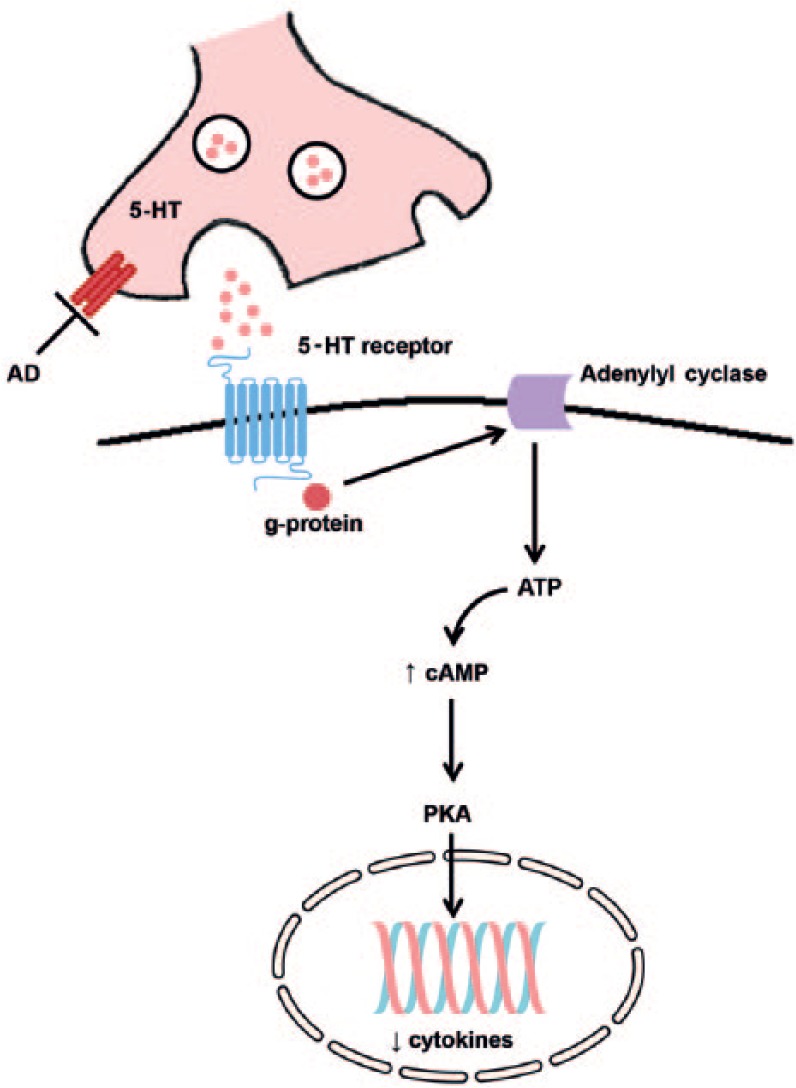
“The literature has documented the role of cyclic adenosyl monophosphate (cAMP), the hypothalamic‒ pituitary‒adrenal (HPA) axis, serotonin metabolism, and neurogenesis in the modulation of cytokine functioning by antidepressants [39, 40].”
BackgroundFriedman, M., Chang, R. P., Amin, Z. M., Rajan, T., SINGH, R. K., Yousefzai, S., Shahid, I., Nasir, K., & Javed, Z. (2025) · Frontiers in Psychiatry · doi:10.3389/fpsyt.2024.1422877 · Cited by 20
Effect of Physical State on Pain Mediated Through Emotional Health in Rheumatoid Arthritis
Nakagami, Y., Sugihara, G., Takei, N., Fujii, T., Hashimoto, M., Murakami, K., Furu, M., Ito, H., Uda, M., Torii, M., et al. (2019) · Arthritis Care & Research · doi:10.1002/acr.23779 · Cited by 21
“Of particular interest are findings of clinical studies showing that antiinflammatory drugs are effective in treating patients with depression (15).”
BackgroundFilho, A. J. M. C., Mottin, M., Soares, M. V.-R., Jucá, P. M., Andrade, C. H., & Macêdo, D. S. (2021) · Behavioural Pharmacology · doi:10.1097/fbp.0000000000000585 · Cited by 19
Yoshioka, T., Yamada, D., Segi‐Nishida, E., Nagase, H., & Saitoh, A. (2023) · Neuropharmacology · doi:10.1016/j.neuropharm.2023.109511 · Cited by 17
ENĂTESCU, V. R. (2020) · FARMACIA · doi:10.31925/farmacia.2020.3.14 · Cited by 16
Karadağ, H., Saygih, G., Yüksel, R. N., Usta, M. B., Topçuoğlu, C., & Erzın, G. (2021) · Psychiatria Danubina · doi:10.24869/psyd.2021.314 · Cited by 16
“Increased pro-inflammatory agents, such as TNF, may exemplify low-grade inflammation in major depressive disorder (MDD), which is similar to bipolar disorder (Kopschina et al. 2017).”
BackgroundAl‐Hakeim, H. K., Twayej, A. J., & Al-Dujaili, A. H. (2018) · Neurology Psychiatry and Brain Research · doi:10.1016/j.npbr.2018.10.001 · Cited by 20
Rossi, G. N., Hallak, J. E. C., Baker, G. B., Dursun, S. M., & SANTOS, R. G. D. (2022) · European Archives of Psychiatry and Clinical Neuroscience · doi:10.1007/s00406-022-01460-2 · Cited by 16
“Selective serotonin reuptake inhibitors (SSRIs) comprise the first-line treatments for MDD, but the lack of response for a considerable proportion of patients (ranging from 30 to 50%) and the relatively long time (several weeks) it takes for the therapeutic effects to manifest are major handicaps associated with their…”
BackgroundObesity and Depression: Common Link and Possible Targets
Jitte, S., Keluth, S., Bisht, P., Wal, P., Singh, S., Murti, K., & Kumar, N. (2024) · CNS & Neurological Disorders - Drug Targets · doi:10.2174/0118715273291985240430074053 · Cited by 15
Abraham, C., Sloan, S. N. B., Coker, C., Freed, B., McAuliffe, M., Nielsen, H., Riscoe, T., Steele, R., Dettwiler, A., Oberley, G., et al. (2021) · PubMed Central · Cited by 27
He, Z., Yu, H., Wu, H., Su, L., Shi, K., Zhao, Y., Zong, Y., Chen, W., & Du, R. (2022) · Pharmaceutical Biology · doi:10.1080/13880209.2022.2099429 · Cited by 15
“Especially, NLRP3 inflammasome may be a factor leading to depression (Kopschina Feltes et al. 2017; Adzic et al. 2018).”
BackgroundZhao, J., Lao, L., Cui, W., & Rong, J. (2019) · Journal of Neuroinflammation · doi:10.1186/s12974-019-1610-5 · Cited by 15
“Nevertheless, the existing antidepressant drugs may exacerbate the inflammatory responses in the brain [42].”
Sarawi, W. S. (2025) · Molecular Neurobiology · doi:10.1007/s12035-025-05210-y · Cited by 14
“They also affect the levels of 5-HT and glutamate and regulate the main energy source, nicotinamide adenine dinucleotide (NAD+) homeostasis, and cellular redox balance [33, 37, 38].”
Ciani, M., Rigillo, G., Benatti, C., Pani, L., Blom, J. M. C., Brunello, N., Tascedda, F., & Alboni, S. (2024) · Current Neuropharmacology · doi:10.2174/1570159x22666240705143649 · Cited by 16
Pharmacological Monotherapy for Depressive Disorders: Current and Future—A Narrative Review
Gao, K., Oruc, E. B., & Koparal, B. (2025) · Medicina · doi:10.3390/medicina61040558 · Cited by 14
“The overall impression is that anti-inflammatory drug monotherapy might be beneficial in reducing depressive symptoms in patients with inflammatory comorbidities [78,81,84].”
Cheng, Y., An, Q., Wang, J., Wang, Y., Dong, J., & Yin, J. (2020) · Gene · doi:10.1016/j.gene.2020.144817 · Cited by 14
Systemic Catecholaminergic Deficiency in Depressed Patients with and without Coronary Artery Disease
Hoppmann, U., Engler, H., Krause, S., Rottler, E., Hoech, J., Szabo, F., Radermacher, P., & Waller, C. (2021) · Journal of Clinical Medicine · doi:10.3390/jcm10050986 · Cited by 15
Blood Inflammatory Cytokines as Predictors of Depression in Patients With Glioma
Li, H., Shi, X., Yang, F., Zhang, X., & Li, F. (2022) · Frontiers in Psychiatry · doi:10.3389/fpsyt.2022.930985 · Cited by 14
Role of sleep deprivation in the causation of postpartum obsessive-compulsive disorder
Sharma, V. (2018) · Medical Hypotheses · doi:10.1016/j.mehy.2018.10.016 · Cited by 15
Zhao, Y.-N., Cao, Y.-F., Zhang, Y.-H., Lu, Y., Ping, X., Qin, S.-K., Liu, S.-N., Chu, L., Sun, G.-Q., & Pei, L. (2020) · Evidence-Based Complementary and Alternative Medicine · doi:10.1155/2020/3056954 · Cited by 13
“However, reported antidepressant therapies have undesirable related adverse side effects [12].”
BackgroundJia, N., Zhu, Z., Liu, Y., Yin, X., Man, L., Hou, W., Zhang, H., Yu, Q., & Hui, L. (2024) · SLEEP · doi:10.1093/sleep/zsae209 · Cited by 14
Anesthetics as Treatments for Depression: Clinical Insights and Underlying Mechanisms
Breault, M. S., Orguc, S., Kwon, O., Kang, G. H., Tseng, B., Schreier, D. R., & Brown, E. N. (2025) · Annual Review of Neuroscience · doi:10.1146/annurev-neuro-112723-062031 · Cited by 13
Self-reported depression and anxiety among COPD patients. A case-control study
Hurtado-Ruzza, R., Álvarez-Calderón-Iglesias, Ó., Vallejo, R., Calvo‐Lobo, C., San‐Antolín, M., Losa‐Iglesias, M. E., Morales, C. R., & López‐López, D. (2022) · Sao Paulo Medical Journal · doi:10.1590/1516-3180.2021.0235.r1.17062021 · Cited by 13
He, Q., Wu, K. C. H., Bennett, A. N., Fan, B., Liu, J., Huang, R., Kong, A. P. S., Tian, X. Y., Kwok, M. K., & Chan, K. H. K. (2022) · The Pharmacogenomics Journal · doi:10.1038/s41397-023-00302-1 · Cited by 13
“Over the past 20 years, studies have proposed the notion that inflammation and brain-immune interactions are involved in MDD pathogenesis [14, 15].”
GABAB receptor intracellular signaling: novel pathways for depressive disorder treatment?
Korczak, M., Kurowski, P. N., Leśniak, A., Grönbladh, A., Filipowska, A., & Bujalska‐Zadrożny, M. (2020) · European Journal of Pharmacology · doi:10.1016/j.ejphar.2020.173531 · Cited by 14
Effects of Current Psychotropic Drugs on Inflammation and Immune System
Bhatt, S., Dhar, A. K., Samanta, M. K., & Suttee, A. (2023) · Advances in experimental medicine and biology · doi:10.1007/978-981-19-7376-5_18 · Cited by 13
Cha, J., Raj, D., Choi, K. S., Rajendra, J. K., Nemeroff, C. B., Felger, J. C., Craighead, W. E., Mayberg, H. S., & Dunlop, B. W. (2025) · Biological Psychiatry · doi:10.1016/j.biopsych.2025.06.026 · Cited by 12
Sakopoulos, S., & Todman, M. (2025) · International Journal of Molecular Sciences · doi:10.3390/ijms26146673 · Cited by 12
“For example, Cognitive Behavioral Therapy (CBT) has been associated with improved regulation of the hypothalamic–pituitary–adrenal (HPA) axis, as evidenced by enhanced cortisol habituation responses [45].”
Jiang, S., Li, Q., Han, S., Wang, H., Tang, X., Wang, T., & Meng, X. (2023) · Clinical and Experimental Pharmacology and Physiology · doi:10.1111/1440-1681.13774 · Cited by 12
“There are many anti-inflammatory drugs at present, such as 5-aminosalicylic acid drugs, glucocorticoids, aspirin, etc.(7) Unfortunately, a number of side effects have been reported with the use of”
Background“Influence of diet on mood and social cognition: a pilot study”
Ugartemendia, L., Bravo, R., Castaño, M. Y., Cubero, J., Zamoscik, V., Kirsch, P., Rodríguez, A. B., & Reuter, M. (2020) · Food & Function · doi:10.1039/d0fo00620c · Cited by 12
Grolli, R. E., Bertollo, A. G., Behenck, J. P., Borba, L. A., Plissari, M. E., Soares, S. J. B., Mânica, A., Joaquim, L. D. S., Petronilho, F. C., Quevedo, J., et al. (2023) · Naunyn-Schmiedeberg s Archives of Pharmacology · doi:10.1007/s00210-023-02406-8 · Cited by 14
Towards Novel Potential Molecular Targets for Antidepressant and Antipsychotic Pharmacotherapies
Kositsyn, Y. M., de Abreu, M. S., Kolesnikova, T. O., Lagunin, A. A., Poroikov, V., Harutyunyan, H. S., Yenkoyan, K. B., & Kalueff, A. V. (2023) · International Journal of Molecular Sciences · doi:10.3390/ijms24119482 · Cited by 12
Safari, H., & Mashayekhan, S. (2023) · Current Pharmaceutical Design · doi:10.2174/0113816128251883231031054700 · Cited by 14
Agranyoni, O., Sur, D., Amidror, S., Shidlovsky, N., Bagaev, A., Yissachar, N., Pinhasov, A., & Navon‐Venezia, S. (2024) · BMC Medicine · doi:10.1186/s12916-024-03323-0 · Cited by 12
Modulation of serotonin transporter expression by escitalopram under inflammation
Mena, S., Cruikshank, A., Best, J. A., Nijhout, H. F., Reed, M. C., & Hashemi, P. (2024) · Communications Biology · doi:10.1038/s42003-024-06240-3 · Cited by 13
“Despite a substantial body of evidence from animal and clinical studies supporting the hypothesis 5 – 10 and the potential ef fi cacy of SSRIs 11 , their clinicaluseremainsasubjectofcontroversy.”
BackgroundInfluentialPlateau Environment, Gut Microbiota, and Depression: A Possible Concealed Connection?
Qiao, Y., Cheng, R., Li, X., Zheng, H., Guo, J., Wei, L., Gao, T., & Bi, H. (2025) · Current Issues in Molecular Biology · doi:10.3390/cimb47070487 · Cited by 10
“Notably, patients with depression often present elevated levels of peripheral and central inflammatory markers [122], and anti-inflammatory treatments have been shown to alleviate depressive symptoms [123].”
Sarker, R., Qusar, M. S., Islam, S. M. A., Bhuiyan, M. A., & Islam, M. R. (2023) · Scientific Reports · doi:10.1038/s41598-023-46401-8 · Cited by 38
Apweiler, M., Streyczek, J., Saliba, S. W., Ditrich, J., Muñóz, E., & Fiebich, B. L. (2021) · Frontiers in Pharmacology · doi:10.3389/fphar.2021.789074 · Cited by 10
Varzaghani, V., Sharifi, M., Hajiaghaee, R., Bagheri, S., Momtaz, S., Tarassoli, Z., & Razmi, A. (2022) · Phytotherapy Research · doi:10.1002/ptr.7380 · Cited by 10
Broome, C. M., Hooda, N., Su, J., Jiang, X., Nicholson, G., Frankenfeld, C. L., Iglesias‐Rodriguez, M., Fryzek, J. P., & Patel, P. (2022) · PLoS ONE · doi:10.1371/journal.pone.0276617 · Cited by 10
“Other studies have demonstrated that the pathogenesis of depression may be related to a pro-infammatory state secondary to complement activation [27, 28].”
BackgroundAnti-Inflammatory Therapy as a Promising Target in Neuropsychiatric Disorders
Ballaz, S., & Bourin, M. (2023) · Advances in experimental medicine and biology · doi:10.1007/978-981-19-7376-5_20 · Cited by 17
Auvinen, P., Mäntyselkä, P. T., Koponen, H., Kautiainen, H., Korniloff, K., Ahonen, T., & Vanhala, M. J. (2018) · Journal of Psychosomatic Research · doi:10.1016/j.jpsychores.2018.09.008 · Cited by 10
Comparative analysis of the consumption of antidepressants in Ukraine, Estonia and Norway
Ткачова, О. В., Яковлєва, Л. В., Gerasymova, О. O., Butko, Y. O., & Kovalenko, L. (2023) · ScienceRise Pharmaceutical Science · doi:10.15587/2519-4852.2023.281833 · Cited by 9
Xu, Y.-Q., Gou, Y.-H., Yuan, J.-J., Zhu, Y.-X., Ma, X., Chen, C., Huang, X., Yang, Z., & Zhou, Y.-M. (2023) · Journal of Inflammation Research · doi:10.2147/jir.s436907 · Cited by 11
“…chronic inflammation, increased levels of TNF-α would enhance SERT-mediated 5-HT uptake and significantly impact the available extra-cellular 5-HT. 64 As reported, acupuncture could induce the down-regulation of TNF-α by inhibiting Th1 cell responses, 65,66 which is closely related to the…”
BackgroundGalkina, S. I., Golenkina, E. A., Fedorova, N. V., Ksenofontov, A. L., Serebryakova, M. V., Arifulin, E. A., Stadnichuk, V. I., Baratova, L. A., & Sud’ina, G. F. (2021) · Frontiers in Pharmacology · doi:10.3389/fphar.2021.709719 · Cited by 9
“Stimuli such as inflammation, chronic stress and infection can trigger the activation of microglia, the brain’s immune cells, to release pro-inflammatory cytokines that may lead to MDD and neurodegeneration (Kopschina Feltes et al., 2017).”
BackgroundHorikawa, I., Nagai, H., Taniguchi, M., Chen, G., Shinohara, M., Suzuki, T., Ishii, S., Katayama, Y., Kitaoka, S., & Furuyashiki, T. (2024) · Journal of Pharmacological Sciences · doi:10.1016/j.jphs.2024.02.010 · Cited by 8
Wang, H., Zhang, J., Ning, J., Cui, Y., Hou, H., Liu, M. R., Liu, J., Tang, R., & Wang, J. (2025) · The journal of nutrition health & aging · doi:10.1016/j.jnha.2025.100575 · Cited by 8
de Aquino, G. Â., de Sousa, C. N. S., Medeiros, I. D. S., de Almeida, J. C., Filho, F. M. S. C., Júnior, M. A. S., & Vasconcelos, S. M. M. (2021) · Journal of Basic and Clinical Physiology and Pharmacology · doi:10.1515/jbcpp-2021-0056 · Cited by 9
Khiroya, K., Sekyere, E. O., McEwen, B. J., & Bayes, J. (2023) · Nutrition Research Reviews · doi:10.1017/s0954422423000276 · Cited by 12
“As mentioned previously, alterations to the tryptophan – kynurenine (KYN) pathway (62) can result in depleted levels of serotonin (62) .”
Therapeutic potential of COX-2 inhibitors in neuropsychiatric disorders
Sharma, V., Sharma, P., & Singh, T. G. (2025) · Journal of Neural Transmission · doi:10.1007/s00702-025-02932-0 · Cited by 9
Sánchez‐Carro, Y., de la Torre‐Luque, A., Portella, M. J., Leal‐Leturia, I., Salvat‐Pujol, N., Massaneda‐Tuneu, C., de Arriba‐Arnau, A., Urretavizcaya, M., Peretó, M., Toll, A., et al. (2021) · Psychoneuroendocrinology · doi:10.1016/j.psyneuen.2021.105631 · Cited by 8
“More research is necessary in this regard, since there are few studies related to this topic (Chang et al., 2012; Grassi-Oliveira et al., 2011; Krogh et al., 2014), not supporting these relationships in all of them (Chen et al., 2020).”
Background1,25(OH)2D3 attenuates sleep disturbance in mouse models of Lewis lung cancer, in silico and in vivo
Ai, M., Li, S., Chen, H., Wang, X., Sun, J., Hou, B., Cai, W., Zhou, Y., & Qiu, L. (2021) · Journal of Cellular Physiology · doi:10.1002/jcp.30458 · Cited by 8
“Inflammatory events compromise neuroplasticity via reduction of 5‐HT and neurotrophic factors, and then result in neuropsychiatric disorders and sleep disturbance in this way (Golia et al., 2019; Kopschina Feltes et al., 2017).”
BackgroundRachayon, M., Jirakran, K., Sodsai, P., Sughondhabirom, A., & Maes, M. (2023) · medRxiv · doi:10.1101/2023.05.03.23289312 · Cited by 8
“patients with an elevated immune profile (62).”
Zhao, L., Yin, R., Zhang, K., Huang, J., Zheng, R., Zhu, Y., Li, G., Lei, N., Xiong, L., & Xie, Y. (2025) · Molecular Neurobiology · doi:10.1007/s12035-025-05325-2 · Cited by 7
Han, S., Yang, Y., Liu, Z., Liu, Y., Xing, B., Wang, X., Yu, J., Ping, F., Li, W., Xu, L., et al. (2026) · Diabetes Obesity and Metabolism · doi:10.1111/dom.70692 · Cited by 8
“Neuroinflammation plays a key role in the onset and development of depression and anxiety [29–31].”
Cho, C.-Y., Jeon, J. H., Kang, H., Kim, J., Jhon, M., Lee, J., Kim, S., Shin, I.-S., & Kim, J.-M. (2025) · European Neuropsychopharmacology · doi:10.1016/j.euroneuro.2025.03.004 · Cited by 8
The Effects of Ibuprofen Consumption on the Incidence of Postpartum Depression
Kapulsky, L., Christos, P. J., Ilagan, J., & Kocsis, J. H. (2021) · Clinical Neuropharmacology · doi:10.1097/wnf.0000000000000448 · Cited by 7
“Inflammatory cytokines, such as IL-1β, IL-2, IL-6, INF-γ, and TNF-α, increase the activity of indoleamine 2,3dioxygenase, which is thought to result in a reduction of the production of serotonin via the tryptophan kynurenine pathway.(12,14) Given the evidence for an association between inflammation and MDD, anti-infla…”
BackgroundLi, C., Li, B., Liu, H., Qu, L., & Wang, H. (2023) · Annals of Translational Medicine · doi:10.21037/atm-23-236 · Cited by 7
Flores‐Ramos, M., Bernabé, R.-R. G., Guiza-Zayas, R., Solares‐Bravo, M., & Rodríguez-Bores, L. (2024) · Journal of Psychiatric Research · doi:10.1016/j.jpsychires.2024.01.047 · Cited by 7
Involvement of proBDNF in Monocytes/Macrophages with Gastrointestinal Disorders in Depressive Mice
Yu, Y.-Q., Zhang, Y., Wang, Z., Liu, Y., Li, H., Zhou, X., Hu, Z., & Dai, R. (2020) · Neurotoxicity Research · doi:10.1007/s12640-020-00235-8 · Cited by 7
Aw, T. B. H., & Zainal, N. H. (2025) · Brain Behavior & Immunity - Health · doi:10.1016/j.bbih.2025.101122 · Cited by 8
Napora, P., Kobrzycka, A. T., Pierzchała, K., & Wieczorek, M. (2022) · Behavioural Brain Research · doi:10.1016/j.bbr.2022.114143 · Cited by 6
Farinha‐Ferreira, M., Magalhães, D. M., Neuparth‐Sottomayor, M., Rafael, H., Miranda‐Lourenço, C., & Sebastião, A. M. (2024) · Journal of Neurochemistry · doi:10.1111/jnc.16083 · Cited by 6
Yang, H., Sun, M., Zhang, S., Wang, T., Hu, J. Y., Zhang, X., Pan, Y., Yu, B., Wang, M., Jin, L., et al. (2021) · Journal of Affective Disorders · doi:10.1016/j.jad.2021.04.002 · Cited by 6
Birth Month and Course of Recurrent Depressive Disorders in a Polish Population
Talarowska, M. E., Bliźniewska-Kowalska, K. M., Wargacka, K., & Gałecki, P. (2018) · Medical Science Monitor · doi:10.12659/msm.907823 · Cited by 6
“Furthermore, infections affecting patients at subsequent stages of life are equally important [39,40].”
BackgroundShaikh, N. F., & Sambamoorthi, U. (2019) · Psychiatric Quarterly · doi:10.1007/s11126-019-09693-6 · Cited by 6
Ha, S., Kang, H., Lee, T. H., Kang, K., Kim, J.-M., & Lee�, H. (2026) · Journal of Affective Disorders · doi:10.1016/j.jad.2026.121259 · Cited by 6
Yang, M., Tian, S., Han, X., Xu, L., You, J., Wu, M., Cao, Y., Jiang, Y., Zheng, Z., Liu, J., et al. (2024) · Gene · doi:10.1016/j.gene.2024.148966 · Cited by 5
Chen, C., Yu, R., Xue, Z., Yan, Z., Bian, Q., Hou, Y., Chen, Y., Liu, Y., & Chen, J. (2020) · Journal of Traditional Chinese Medical Sciences · doi:10.1016/j.jtcms.2020.08.001 · Cited by 5
Takekawa, D., Kudo, T., Saito, J., Nikaido, Y., Sawada, K., Takanashi, S., & Hirota, K. (2020) · Psychiatry Research · doi:10.1016/j.psychres.2020.113453 · Cited by 5
Xia, W., Xu, Y., Gong, Y., Cheng, X., Tian-gui, Y., & Yu, G. (2022) · Oxidative Medicine and Cellular Longevity · doi:10.1155/2022/2049371 · Cited by 5
“Studies have shown that elevated levels of cytokines such as IL-1β, IL-6, and TNF-α in serum are related to the incidence of depression [85, 86].”
RetractedDavis, R. L. (2019) · Journal of Neurochemistry · doi:10.1111/jnc.14659 · Cited by 5
Wu, X., You, Z., Zhang, T., Zeng, J., Li, M., Yan, S., Li, J., Li, P., Shen, J., Liu, S., et al. (2026) · Metabolic Brain Disease · doi:10.1007/s11011-025-01785-6 · Cited by 4
“(Cui et al. 2024 ; Kopschina Feltes et al. 2017 ; Zhang et al. 2016 ).”
Inflammatory Biomarkers in Acute Suicidal Behaviors
Lewandowska, M., Leszczyński-Czeczatka, J., & Siemiński, M. (2026) · International Journal of Molecular Sciences · doi:10.3390/ijms27041691 · Cited by 4
Metadata
- Authors
- Kopschina Feltes, P., Doorduin, J., Klein, H. C., Juárez-Orozco, L. E., Dierckx, R. A., Moriguchi-Jeckel, C. M., & de Vries, E. F.
- Affiliations
- Department of Nuclear Medicine and Molecular Imaging, University Medical Center Groningen, Groningen, the Netherlands
- University Medical Center Groningen (NL)
- Instituto de Geriatria e Gerontologia, Pontifícia Universidade Católica do Rio Grande do Sul, Porto Alegre, Brasil
- Venue
- Journal of Psychopharmacology
- Publisher
- SAGE Publications
- Published
- 2017-06-27
- Volume
- 31
- Issue
- 9
- Pages
- 1149-1165
- ISSN
- 0269-8811 (ISSN-L)
- 1461-7285
- PMC
- PMC5606303
- OpenAlex
- W2730275538
- Cited by
- 279
- References
- 175
- Citations by year
- 2026: 19 · 2025: 27 · 2024: 28 · 2023: 41 · 2022: 41 · 2021: 36 · 2020: 39 · 2019: 29 · 2018: 17 · 2017: 2
- FWCI
- 1.62
- Type
- journal article
- Language
- en
- Open access
- hybrid
- doi.org
- Licence
- cc-by-nc
- journals.sagepub.com/page/policies/text-and-data-mining-license (tdm)
- Locations
- Journal of Psychopharmacology (publishedVersion, cc-by-nc)
- Europe PMC (PubMed Central) (publishedVersion, cc-by-nc)
- PubMed Central (publishedVersion, cc-by-nc)
- PubMed (publishedVersion)
- University of Groningen research database (University of Groningen / Centre for Information Technology) (submittedVersion, cc-by-nc)
- Topics
- Life Sciences › Neuroscience › Biological Psychiatry › Tryptophan and brain disorders
- Health Sciences › Medicine › Pharmacology (medical) › Treatment of Major Depression
- Life Sciences › Neuroscience › Behavioral Neuroscience › Stress Responses and Cortisol
- Keywords
- major depressive disorder, treatment-resistant depression, anti-inflammatory therapy, nonsteroidal anti-inflammatory drugs, immune dysregulation, inflammatory cytokines, microglial activation, hypothalamic-pituitary-adrenal axis, indoleamine 2,3-dioxygenase, serotonin depletion, quinolinic acid, inflammatory comorbidities
- MeSH terms
- Anti-Inflammatory Agents, Antidepressive Agents, Depressive Disorder, Major, Major Depressive Disorder, Humans, Hypothalamo-Hypophyseal System, Inflammation, Pituitary-Adrenal System, Serotonin
About these checks
Registry, retraction, Cites and statistics results are computed, not judged, with one exception: a printed reference that no index lists is read once by a model before it counts as a citation error. Claims are extracted by a model and kept only when their quote appears verbatim in the text; each cited source is then checked, with a model’s help, for whether it says what the claim relies on. Those verdicts can be wrong — read the claim’s quote and the cited source before relying on one.
Statistics and arithmetic are recomputed, not judged.
Confidence bands are shown only for fields calibrated on our annotated test set. None is calibrated yet, so no band is shown.
What counts as a claim ›How we measure confidence ›How we check this ›
Are you an author, or do you see a problem with this page? Request a review
Data sources
Bibliographic data: Semantic Scholar, OpenAlex, Crossref.
Contains information from the Semantic Scholar Academic Graph Datasets, made available under the ODC Attribution License (ODC-BY 1.0).
Semantic Scholar’s data is described in: Kinney, R., et al. (2023). The Semantic Scholar Open Data Platform. arXiv:2301.10140.
