

Anti-inflammatory treatment for major depressive disorder: implications for patients with an elevated immune profile and non-responders to standard antidepressant therapy
Open accessThe DOI matches its Crossref record; 174 of the 175 references it cites were found in a registry or an index.
Abstract
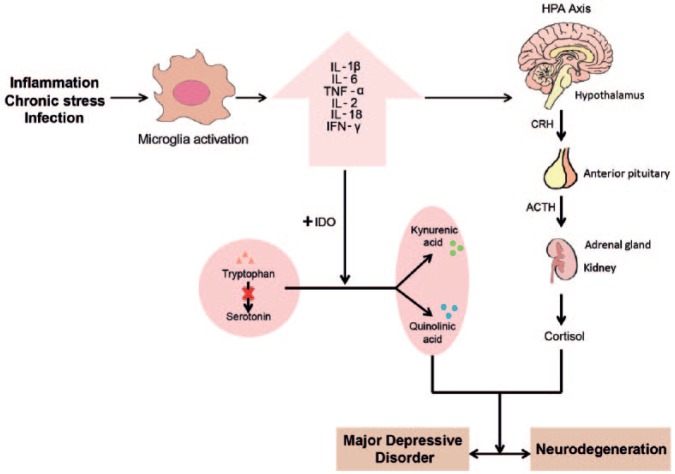
Major depressive disorder (MDD) is a prevalent and disabling psychiatric disease with rates of non-responsiveness to antidepressants ranging from 30–50%. Historically, the monoamine depletion hypothesis has dominated the view on the pathophysiology of depression. However, the lack of responsiveness to antidepressants and treatment resistance suggests that additional mechanisms might play a role. Evidence has shown that a subgroup of depressive patients may have an underlying immune deregulation that could explain the lack of therapeutic benefit from antidepressants. Stimuli like inflammation and infection can trigger the activation of microglia to release pro-inflammatory cytokines, acting on two main pathways: (1) activation of the hypothalamic–pituitary adrenal axis, generating an imbalance in the serotonergic and noradrenergic circuits; (2) increased activity of the enzyme indoleamine-2,3-dioxygenase, resulting in depletion of serotonin levels and the production of quinolinic acid. If this hypothesis is proven true, the subgroup of MDD patients with increased levels of pro-inflammatory cytokines, mainly IL-6, TNF-α and IL-1β, might benefit from an anti-inflammatory intervention. Here, we discuss the pre-clinical and clinical studies that have provided support for treatment with non-steroidal anti-inflammatory drugs in depressed patients with inflammatory comorbidities or an elevated immune profile, as well as evidences for anti-inflammatory properties of standard antidepressants.
Overview
The claims and statistics of this paper haven’t been checked yet.
Free: it reads the open-access text and checks the first 5 claims that cite a source we can check. Create a free account to check every claim.
Integrity signals
Registry
Cites
Statistics
Figures
Verification
Claims the paper makes
The claims and statistics of this paper haven’t been checked yet.
Free: it reads the open-access text and checks the first 5 claims that cite a source we can check. Create a free account to check every claim.
Claims other papers make about this one
Each is checked against this paper’s own text: does it say what the citing paper says it does?
The source backs part of the claim, not all of it — or backs it for a different population, condition or comparison.
In the citing paper
“Evidence of altered inflammation-related markers across psychiatric conditions [6–8], along with reports of anti-inflammatory effects from psychotropic medications [9, 10] and the ameliorative impact of anti-inflammatory drugs on psychiatric symptoms [11–14], suggests a strong link between abnormal inflammatory responses and major psychiatric disorders.”
From Inflammatory ratios as predictors of length of hospitalization in psychiatric patients: A multicenter study (2025) · doi:10.1007/s00406-025-02033-9 · cites this paper as [11]
Experimental — accuracy not yet measuredThe source backs part of the claim, not all of it — or backs it for a different population, condition or comparison.
In the citing paper
“On one hand, drugs that target IRFs have been proposed for treating psychiatric disorders, including major depression (MDD)10–12, schizophrenia (SCZ)13 and bipolar disorder (BD)14, particularly in a subset of patients with chronic inflammation10”
From Inflammation-related biomarkers in major psychiatric disorders: a cross-disorder assessment of reproducibility and specificity in 43 meta-analyses (2019) · cites this paper as [12]
Experimental — accuracy not yet measured
Self-check
Percentages, sums and reported differences re-computed from the paper’s own numbers.
The self-check needs the paper’s full text.
Citations
Cites
Diagnostic and Statistical Manual of Mental Disorders
American Psychiatric Association (2013) · doi:10.1176/appi.books.9780890425596 · Cited by 116,369
Hamilton, M. (1960) · Journal of Neurology, Neurosurgery & Psychiatry · doi:10.1136/jnnp.23.1.56 · Cited by 32,817 · cited 2×
“Moreover, PET tracer uptake (microglia activation) was correlated with the Hamilton Depression Rating Scale (HDRS) score (Hamilton, 1960) in the anterior cingulated cortex (Setiawan et al., 2015).”
MethodPolazzi, E., Mengoni, I., Caprini, M., Peña-Altamira, E., Kurtys, E., & Monti, B. (2013) · Neurosignals · doi:10.1159/000337115 · Cited by 8,994
Molecular Mechanisms of Depression: Perspectives on New Treatment Strategies
Lang, U. E., & Borgwardt, S. (2013) · Cellular Physiology and Biochemistry · doi:10.1159/000350094 · Cited by 8,475
Kessler, R. C., Berglund, P., Demler, O., Jin, R., Koretz, D., Merikangas, K. R., Rush, A. J., Walters, E. E., & Wang, P. S. (2003) · JAMA · doi:10.1001/jama.289.23.3095 · Cited by 7,988 · cited 1×
“Not only the high incidence of MDD and the disability associated with the disease, but also the high rate of inadequate treatment of the disorder remains a serious concern (Kessler et al., 2003).”
BackgroundGlutamate neurotoxicity and diseases of the nervous system
CHOI, D. (1988) · Neuron · doi:10.1016/0896-6273(88)90162-6 · Cited by 7,972
From inflammation to sickness and depression: when the immune system subjugates the brain
Dantzer, R., O'Connor, J. C., Freund, G. G., Johnson, R. W., & Kelley, K. W. (2008) · Nature Reviews Neuroscience · doi:10.1038/nrn2297 · Cited by 7,395 · cited 4×
“vagus nerve), delivering cytokine signals to relevant brain regions including the nucleus of the solitary tract and hypothalamus (Dantzer et al., 2008; Miller et al., 2009).”
BackgroundInfluentialRush, A. J., Trivedi, M. H., Wisniewski, S. R., Nierenberg, A. A., Stewart, J. W., Warden, D., Niederehe, G., Thase, M. E., Lavori, P. W., Lebowitz, B. D., et al. (2006) · American Journal of Psychiatry · doi:10.1176/ajp.2006.163.11.1905 · Cited by 5,643 · cited 2×
“It is estimated that 30–50% of the patients do not respond to treatment with antidepressants (Bschor et al., 2012) due to either lack of efficacy or intolerable side effects (Rush et al., 2006).”
BackgroundA Meta-Analysis of Cytokines in Major Depression
Dowlati, Y., Herrmann, N., Swardfager, W., Liu, H., Sham, L., Reim, E. K., & Lanctôt, K. L. (2010) · Biological Psychiatry · doi:10.1016/j.biopsych.2009.09.033 · Cited by 4,729 · cited 8×
“Major depression disorder (MDD) is an important public health issue (Dowlati et al., 2010; Miller et al., 2009), predicted to be the second leading cause of disability by the year of 2020 behind only ischemic heart disease (Rush et al.”
BackgroundInfluentialOverweight, Obesity, and Depression: A Systematic Review and Meta-analysis of Longitudinal Studies
Luppino, F. S., de Wit, L. M., Bouvy, P. F., Stijnen, T., Cuijpers, P., Penninx, B. W. J. H., & Zitman, F. G. (2010) · Archives of General Psychiatry · doi:10.1001/archgenpsychiatry.2010.2 · Cited by 4,322 · cited 2×
“Depression’s causal role in obesity might be due to neuroendocrine disturbances, through a long-term activation of the HPA axis and release of cortisol, along with an unhealthy lifestyle (Luppino et al., 2010).”
BackgroundResultBombardier, C., Laine, L., Reicin, A., Shapiro, D., Burgos-Vargas, R., Davis, B., Day, R., Ferraz, M. B., Hawkey, C. J., Hochberg, M. C., et al. (2000) · New England Journal of Medicine · doi:10.1056/nejm200011233432103 · Cited by 4,027 · cited 1×
“Selective COX-2 inhibitors present an advantage in this matter as the incidence of clinically significant ulcers were reduced by 54% and ulcer complications by 57%, as compared with nonselective NSAIDs (Bombardier et al., 2000).”
BackgroundTrivedi, M. H., Rush, A. J., Wisniewski, S. R., Nierenberg, A. A., Warden, D., Ritz, L., Norquist, G., Howland, R. H., Lebowitz, B., McGrath, P. J., et al. (2006) · American Journal of Psychiatry · doi:10.1176/appi.ajp.163.1.28 · Cited by 3,879 · cited 1×
“Remission, that is, (virtual) absence of symptoms should be the objective of MDD treatment, since it is related to better functioning and a better prognosis than a response without remission (Rush et al., 2006; Trivedi et al., 2006).”
BackgroundInflammation and Its Discontents: The Role of Cytokines in the Pathophysiology of Major Depression
Miller, A. H., Maletic, V., & Raison, C. L. (2009) · Biological Psychiatry · doi:10.1016/j.biopsych.2008.11.029 · Cited by 3,848 · cited 8×
“Increased pro-inflammatory cytokines are known to induce acute phase (inflammatory) response in the liver, increasing the levels of CRP (Miller et al., 2009) and lower albumin and zinc in depression (Maes, 1995; Roomruangwong et al., 2016), suggesting that these could be useful biomarkers of…”
BackgroundInfluentialAssociations of depression with C-reactive protein, IL-1, and IL-6: a meta-analysis.
Howren, M. B., Lamkin, D. M., & Suls, J. (2009) · Psychosomatic Medicine · doi:10.1097/psy.0b013e3181907c1b · Cited by 2,766 · cited 2×
“, 2008); (5) elevated profile of pro-inflammatory cytokines in the blood of depressed patients as compared with controls (Howren et al., 2009); (6) development of ‘depressive-like behavior’ in rodents systemically exposed to inflammatory conditions, exhibiting elevated levels of activated microglia (Wohleb et al.”
BackgroundSystemic LPS causes chronic neuroinflammation and progressive neurodegeneration
Qin, L., Wu, X., Block, M. L., Liu, Y., Breese, G. R., Hong, J., Knapp, D. J., & Crews, F. T. (2007) · Glia · doi:10.1002/glia.20467 · Cited by 2,144 · cited 1×
“Thus, animal studies have shown that systemic exposure to inflammatory challenges, such as LPS, not only causes a systemic inflammation but also induces a central inflammatory response in the brain, which is reflected by activation of microglia (Qin et al., 2007).”
BackgroundRaison, C. L., Rutherford, R. E., Woolwine, B. J., Shuo, C., Schettler, P., Drake, D. F., Haroon, E., & Miller, A. H. (2013) · JAMA Psychiatry · doi:10.1001/2013.jamapsychiatry.4 · Cited by 1,617 · cited 2×
“However, when analyzing baseline hs-CRP values to predict response to infliximab, a plasma hs-CRP concentration greater than 5mg/L was found to be the point at which infliximab-treated patients exhibited a greater decrease in HAM-D score than placebo patients (Raison et al., 2013).”
BackgroundImmune modulation of learning, memory, neural plasticity and neurogenesis
Yirmiya, R., & Goshen, I. (2011) · Brain, Behavior, and Immunity · doi:10.1016/j.bbi.2010.10.015 · Cited by 1,483 · cited 1×
“Nevertheless, indiscriminate use of anti-inflammatory treatments for MDD patients without inflammation might be harmful, since inflammatory cytokines play a pivotal role in learning and memory, as well as in neural integrity, neurogenesis and synaptic pruning (Yirmiya and Goshen, 2011).”
BackgroundKearney, P. M., Baigent, C., Godwin, J., Halls, H., Emberson, J. R., & Patrono, C. (2006) · BMJ · doi:10.1136/bmj.332.7553.1302 · Cited by 1,445 · cited 3×
“With regard to selective COX-2 inhibitors vs traditional NSAIDs, no significant difference was found regarding the risk of vascular events (Kearney et al., 2006).”
BackgroundMethodMaes, M., Galecki, P., Chang, Y. S., & Berk, M. (2011) · Progress in Neuro-Psychopharmacology and Biological Psychiatry · doi:10.1016/j.pnpbp.2010.05.004 · Cited by 1,140 · cited 10×
“QUIN acts as a neurotoxin, gliotoxin, pro-inflammatory mediator and can also alter the integrity of the blood–brain barrier (BBB). glutathione, ascorbic acid, vitamin E, zinc and polyunsaturated fatty acids are regularly detected in the blood of depressed patients (Maes et al., 2011; Slyepchenko et al., 2016), support…”
BackgroundInfluentialSequenced treatment alternatives to relieve depression (STAR*D): Rationale and design
Rush, A. J., Fava, M., Wisniewski, S. R., Lavori, P. W., Trivedi, M. H., Sackeim, H. A., Thase, M. E., Nierenberg, A. A., Quitkin, F. M., Kashner, T. M., et al. (2004) · Controlled Clinical Trials · doi:10.1016/s0197-2456(03)00112-0 · Cited by 1,076 · cited 2×
“, 2009), predicted to be the second leading cause of disability by the year of 2020 behind only ischemic heart disease (Rush et al., 2004).”
BackgroundEvidence for an immune response in major depression: A review and hypothesis
Maes, M. (1995) · Progress in Neuro-Psychopharmacology and Biological Psychiatry · doi:10.1016/0278-5846(94)00101-m · Cited by 1,003 · cited 2×
“…pro-inflammatory cytokines are known to induce acute phase (inflammatory) response in the liver, increasing the levels of CRP (Miller et al., 2009) and lower albumin and zinc in depression (Maes, 1995; Roomruangwong et al., 2016), suggesting that these could be useful biomarkers of depression.”
BackgroundHaroon, E., Raison, C. L., & Miller, A. H. (2012) · Neuropsychopharmacology · doi:10.1038/npp.2011.205 · Cited by 1,000 · cited 1×
“Moreover, BH4 is also an enzyme co-factor for the conversion of arginine to nitric oxide (NO) through nitric oxide synthase (NOS) (Haroon et al., 2012).”
BackgroundCRP, IL-6 and depression: a systematic review and meta-analysis of longitudinal studies.
Valkanova, V., Ebmeier, K. P., & Allan, C. L. (2013) · Journal of Affective Disorders · doi:10.1016/j.jad.2013.06.004 · Cited by 972 · cited 14×
“A meta-analysis conducted by Morgan et al. (2014) demonstrated a significant effect of MBTs in decreasing CRP as compared with controls (Morgan et al., 2014).”
BackgroundInfluentialKöhler, O., Benros, M. E., Nordentoft, M., Farkouh, M. E., Iyengar, R. L., Mors, O., & Krogh, J. (2014) · JAMA Psychiatry · doi:10.1001/jamapsychiatry.2014.1611 · Cited by 941 · cited 4×
“Treatment with NSAIDs in a subgroup of patients with low depressive symptoms and immune deregulation/inflammatory comorbidities (Köhler et al., 2014) seems to be the best approach for future research.”
BackgroundInfluentialSetiawan, E., Wilson, A. A., Mizrahi, R., Rusjan, P. M., Miler, L., Rajkowska, G., Suridjan, I., Kennedy, J. L., Rekkas, P. V., Houle, S., et al. (2015) · JAMA Psychiatry · doi:10.1001/jamapsychiatry.2014.2427 · Cited by 939 · cited 4×
“…by depression (Raison, 2014); (3) presence of neuroinflammation during a major depressive episode in MDD patients visualized through PET imaging (Setiawan et al., 2015); (4) significant microgliosis in depressed patients that committed suicide (Steiner et al., 2008); (5) elevated profile of…”
BackgroundMethodInfluentialThe macrophage theory of depression
Smith, R. S. (1991) · Medical Hypotheses · doi:10.1016/0306-9877(91)90272-z · Cited by 931 · cited 1×
“The theory was based on observations that cytokines produced by macrophages, when given to healthy volunteers, induced symptoms of depression and had brain effects that included the activation of the HPA axis (Dantzer et al., 2011; Smith, 1991).”
BackgroundHannestad, J., DellaGioia, N., & Bloch, M. (2011) · Neuropsychopharmacology · doi:10.1038/npp.2011.132 · Cited by 914 · cited 1×
“The effect on IL-6 is in agreement with other studies published (Basterzi et al., 2005; Hannestad et al., 2011; Sluzewska et al., 1995; Taraz et al., 2013; Yoshimura et al., 2009).”
ResultMiller, A. H., Haroon, E., Raison, C. L., & Felger, J. C. (2013) · Depression and Anxiety · doi:10.1002/da.22084 · Cited by 892 · cited 2×
“BH4 is an essential enzyme co-factor for phenylalanine hydroxylase, tryptophan hydroxylase and tyrosine hydroxylase which are rate-limiting enzymes for the synthesis of serotonin, dopamine and norepinephrine, respectively (Miller et al., 2013).”
BackgroundPace, T. W. W., Mletzko, T. C., Alagbe, O., Musselman, D. L., Nemeroff, C. B., Miller, A. H., & Heim, C. M. (2006) · American Journal of Psychiatry · doi:10.1176/ajp.2006.163.9.1630 · Cited by 810 · cited 1×
“During their activation, microglia change from a ramified to a hyper-ramified (Pace et al., 2006; Rawdin et al., 2013; Zunszain et al., 2011) phenotype and subsequently adopt an amoeboid morphology, a mechanism which has been suggested to help microglia to invade lesions (Raivich, 2005).”
BackgroundMüller, N., Schwarz, M. J., Dehning, S., Douhe, A., Cerovecki, A., Goldstein-Müller, B., Spellmann, I., Hetzel, G., Maino, K., Kleindienst, N., et al. (2006) · Molecular Psychiatry · doi:10.1038/sj.mp.4001805 · Cited by 794 · cited 1×
“Interestingly, 45% of the patients in the celecoxib group showed complete remission after 6 weeks, compared with 20% in the placebo group (Müller et al., 2006).”
ResultSteiner, J., Bielau, H., Brisch, R., Danos, P., Ullrich, O., Mawrin, C., Bernstein, H.-G., & Bogerts, B. (2008) · Journal of Psychiatric Research · doi:10.1016/j.jpsychires.2006.10.013 · Cited by 791 · cited 4×
“…in MDD patients visualized through PET imaging (Setiawan et al., 2015); (4) significant microgliosis in depressed patients that committed suicide (Steiner et al., 2008); (5) elevated profile of pro-inflammatory cytokines in the blood of depressed patients as compared with controls (Howren et…”
BackgroundResultInfluentialMaes, M. H. J., Kubera, M., & Leunis, J. (2008) · PubMed · Cited by 746
Cytokine Production and Treatment Response in Major Depressive Disorder
Lanquillon, S. (2000) · Neuropsychopharmacology · doi:10.1016/s0893-133x(99)00134-7 · Cited by 735 · cited 2×
“Lanquillon et al. (2000), performed a study in 24 MDD patients and 15 controls, using a 6-week treatment protocol with amitriptyline (TCA) and evaluating immunological parameters such as IL-6 and TNF- α in whole blood.”
MethodNeuroinflammation and psychiatric illness
Najjar, S., Pearlman, D. M., Alper, K., Najjar, A., & Devinsky, O. (2013) · Journal of Neuroinflammation · doi:10.1186/1742-2094-10-43 · Cited by 733
Cellular changes in the postmortem hippocampus in major depression
Stockmeier, C. A., Mahajan, G. J., Konick, L. C., Overholser, J. C., Jurjus, G. J., Meltzer, H. Y., Uylings, H. B. M., Friedman, L., & Rajkowska, G. (2004) · Biological Psychiatry · doi:10.1016/j.biopsych.2004.08.022 · Cited by 732 · cited 1×
“The atrophy of the hippocampus in patients with MDD has been demonstrated, not only by imaging techniques such as magnetic resonance imaging (MRI) but also in post mortem studies (Stockmeier et al., 2004).”
MethodMaes, M., Bosmans, E., De Jongh, R., Kenis, G., Vandoolaeghe, E., & Neels, H. (1997) · Cytokine · doi:10.1006/cyto.1997.0238 · Cited by 728 · cited 1×
“Afterwards, Maes et al. corroborated the theory by collecting biochemical evidence for the immunological activation in depressed patients (Maes et al., 1995, 1997).”
BackgroundInflammation-associated depression: From serotonin to kynurenine
Dantzer, R., O’Connor, J. C., Lawson, M. A., & Kelley, K. W. (2011) · Psychoneuroendocrinology · doi:10.1016/j.psyneuen.2010.09.012 · Cited by 726 · cited 2×
“The theory was based on observations that cytokines produced by macrophages, when given to healthy volunteers, induced symptoms of depression and had brain effects that included the activation of the HPA axis (Dantzer et al., 2011; Smith, 1991).”
BackgroundSSRI Antidepressant Medications: Adverse Effects and Tolerability
Ferguson, J. M. (2001) · The Primary Care Companion For CNS Disorders · doi:10.4088/pcc.v03n0105 · Cited by 669 · cited 1×
“Moreover, TCAs have a narrow therapeutic index and at higher doses, they might cause seizures and death due to slowing of intraventricular conduction, leading to complete heart block or ventricular re-entry arrhythmias (Ferguson, 2001).”
BackgroundKreisel, T., Frank, M. G., Licht, T., Reshef, R., Ben-Menachem-Zidon, O., Baratta, M. V., Maier, S. F., & Yirmiya, R. (2014) · Molecular Psychiatry · doi:10.1038/mp.2013.155 · Cited by 663 · cited 2×
“, 2011, 2012), however the data that would confirm the presence of activated microglia in humans are still limited (Kreisel et al., 2014).”
BackgroundWohleb, E. S., Hanke, M. L., Corona, A. W., Powell, N. D., Stiner, L. M., Bailey, M. T., Nelson, R. J., Godbout, J. P., & Sheridan, J. F. (2011) · The Journal of Neuroscience · doi:10.1523/jneurosci.0450-11.2011 · Cited by 638 · cited 1×
“Activated microglia have already been found in the brain of stress-induced animal models of depression (Wohleb et al., 2011, 2012), however the data that would confirm the presence of activated microglia in humans are still limited (Kreisel et al., 2014).”
BackgroundDepression and sickness behavior are Janus-faced responses to shared inflammatory pathways
Maes, M., Berk, M., Goehler, L., Song, C., Anderson, G., Gałecki, P., & Leonard, B. (2012) · BMC Medicine · doi:10.1186/1741-7015-10-66 · Cited by 629 · cited 1×
“Pro-inflammatory cytokines, TRYCATs and O&NS together may contribute to a state called neuroprogression, related to neurodegeneration, reduced neurogenesis, neural plasticity and apoptosis (Maes et al., 2012).”
BackgroundPace, T. W. W., Hu, F., & Miller, A. H. (2007) · Brain, Behavior, and Immunity · doi:10.1016/j.bbi.2006.08.009 · Cited by 621 · cited 1×
“Cytokines might also increase glucocorticoid receptor resistance through several signaling pathways, including activation of the p38 mitogen-activated protein kinase (MAPK) and by stimulating changes in the expression of glucocorticoid receptors (Anders et al., 2013; Pace et al., 2007).”
BackgroundInflamed moods: A review of the interactions between inflammation and mood disorders
Rosenblat, J. D., Cha, D. S., Mansur, R. B., & McIntyre, R. S. (2014) · Progress in Neuro-Psychopharmacology and Biological Psychiatry · doi:10.1016/j.pnpbp.2014.01.013 · Cited by 609 · cited 2×
“As such, activated microglia can be a triggering factor for mood disorders (Rosenblat et al., 2014).”
BackgroundPathophysiology of depression: do we have any solid evidence of interest to clinicians?
HASLER, G. (2010) · World Psychiatry · doi:10.1002/j.2051-5545.2010.tb00298.x · Cited by 604 · cited 4×
“…cytokines interleukin (IL)-1β, IL-6, IL-18, tumor necrosis factor alpha (TNF-α), interferon-gamma (INF-γ) (Alboni et al., 2010; Dowlati et al., 2010; Hasler, 2010; Krogh et al., 2014; Loftis et al., 2010; Maes, 2011; Messay et al., 2012; Najjar et al., 2013; Pace and Miller, 2009; Raison and…”
BackgroundInfluentialQuinolinic acid, the inescapable neurotoxin
Guillemin, G. J. (2012) · The FEBS Journal · doi:10.1111/j.1742-4658.2012.08485.x · Cited by 595 · cited 9×
“The silencing of over-activated glia by antidepressants could stop neuroinflammation and may therefore be beneficial not only for MDD, but also for other CNS diseases.”
BackgroundInfluentialSteiner, J., Walter, M., Gos, T., Guillemin, G. J., Bernstein, H.-G., Sarnyai, Z., Mawrin, C., Brisch, R., Bielau, H., zu Schwabedissen, L., et al. (2011) · Journal of Neuroinflammation · doi:10.1186/1742-2094-8-94 · Cited by 568 · cited 4×
“Elevated pro-inflammatory cytokines and hypothalamic–pituitary–adrenal (HPA) dysfunction in major depressive disorder Numerous studies have indicated that MDD is accompanied by elevated levels of inflammatory biomarkers, such as the proinflammatory cytokines interleukin (IL)-1β, IL-6, IL-18, tumor necrosis factor alph…”
BackgroundInfluentialGlucocorticoids, cytokines and brain abnormalities in depression
Zunszain, P. A., Anacker, C., Cattaneo, A., Carvalho, L. A., & Pariante, C. M. (2011) · Progress in Neuro-Psychopharmacology and Biological Psychiatry · doi:10.1016/j.pnpbp.2010.04.011 · Cited by 554 · cited 7×
“Numerous studies have indicated that MDD is accompanied by elevated levels of inflammatory biomarkers, such as the proinflammatory cytokines interleukin (IL)-1β, IL-6, IL-18, tumor necrosis factor alpha (TNF-α), interferon-gamma (INF-γ) (Alboni et al., 2010; Dowlati et al., 2010; Hasler, 2010; Krogh et al., 2014; Loft…”
BackgroundInfluentialZhu, C.-B., Blakely, R. D., & Hewlett, W. A. (2006) · Neuropsychopharmacology · doi:10.1038/sj.npp.1301029 · Cited by 549
Maes, M. (2011) · Progress in Neuro-Psychopharmacology and Biological Psychiatry · doi:10.1016/j.pnpbp.2010.06.014 · Cited by 544 · cited 4×
“…factor alpha (TNF-α), interferon-gamma (INF-γ) (Alboni et al., 2010; Dowlati et al., 2010; Hasler, 2010; Krogh et al., 2014; Loftis et al., 2010; Maes, 2011; Messay et al., 2012; Najjar et al., 2013; Pace and Miller, 2009; Raison and Miller, 2011; Rawdin et al., 2013; Steiner et al., 2011;…”
BackgroundInfluentialIs depression an inflammatory disorder?
Raison, C. L., & Miller, A. H. (2011) · Current Psychiatry Reports · doi:10.1007/s11920-011-0232-0 · Cited by 524 · cited 4×
“…Dowlati et al., 2010; Hasler, 2010; Krogh et al., 2014; Loftis et al., 2010; Maes, 2011; Messay et al., 2012; Najjar et al., 2013; Pace and Miller, 2009; Raison and Miller, 2011; Rawdin et al., 2013; Steiner et al., 2011; Sukoff Rizzo et al., 2012; Zunszain et al., 2011) and the acute phase…”
BackgroundInfluentialAdjunctive Nutraceuticals for Depression: A Systematic Review and Meta-Analyses
Sarris, J., Murphy, J., Mischoulon, D., Papakostas, G. I., Fava, M., Berk, M., & Ng, C. H. (2016) · American Journal of Psychiatry · doi:10.1176/appi.ajp.2016.15091228 · Cited by 436 · cited 1×
“For example, nutraceuticals like zinc and omega-3 fatty acids were shown to have beneficial effects on depression (Sarris et al., 2016).”
BackgroundAkhondzadeh, S., Jafari, S., Raisi, F., Nasehi, A. A., Ghoreishi, A., Salehi, B., Mohebbi-Rasa, S., Raznahan, M., & Kamalipour, A. (2009) · Depression and Anxiety · doi:10.1002/da.20589 · Cited by 397 · cited 2×
“The combination of celecoxib with fluoxetine was able to reduce the HDRS score with 90%, while placebo + fluoxetine reduced only 50% (Akhondzadeh et al., 2009).”
BackgroundTuglu, C., Kara, S. H., Caliyurt, O., Vardar, E., & Abay, E. (2003) · Psychopharmacology · doi:10.1007/s00213-003-1566-z · Cited by 391
Cytokine–serotonin interaction through IDO: a neurodegeneration hypothesis of depression
Myint, A. M., & Kim, Y. K. (2003) · Medical Hypotheses · doi:10.1016/s0306-9877(03)00207-x · Cited by 374 · cited 1×
“It was hypothesized that during inflammation, pro-inflammatory cytokines such as IL-1β, IL-2, IL-6, INF-γ and TNF-α (Anderson et al., 2013; Kim et al., 2012; Myint and Kim, 2003) increase the activity of IDO and reduce the production of serotonin.”
BackgroundVenneti, S., Lopresti, B. J., & Wiley, C. A. (2006) · Progress in Neurobiology · doi:10.1016/j.pneurobio.2006.10.002 · Cited by 373 · cited 2×
“, 2013) that may cause neuronal dysfunction and aggravate underlying pathologies (Venneti et al., 2006).”
BackgroundMaes, M. (1999) · Neuropsychopharmacology · doi:10.1016/s0893-133x(98)00088-8 · Cited by 357 · cited 3×
“In another in vitro study, clomipramine, sertraline (SSRI) and trazodone (heterocyclic antidepressant) were able to decrease IFN-γ levels and increase the production of the anti-inflammatory cytokine IL-10 (Maes et al., 1999).”
BackgroundO’Brien, S. M., Scully, P., Fitzgerald, P., Scott, L. V., & Dinan, T. G. (2007) · Journal of Psychiatric Research · doi:10.1016/j.jpsychires.2006.05.013 · Cited by 355 · cited 2×
“Another study conducted by O’Brien et al. (2007) investigated the differences in the levels of IL-6, IL-8, IL-10, soluble IL-6 receptor (which may act as an agonist of IL-6) and TNF-α between depressive patients who were SSRI-treatment resistant, former SSRI-treatment-resistant patients that are…”
BackgroundCytokines and Glucocorticoid Receptor Signaling
Pace, T. W. W., & Miller, A. H. (2009) · Annals of the New York Academy of Sciences · doi:10.1111/j.1749-6632.2009.04984.x · Cited by 339 · cited 1×
“…(Alboni et al., 2010; Dowlati et al., 2010; Hasler, 2010; Krogh et al., 2014; Loftis et al., 2010; Maes, 2011; Messay et al., 2012; Najjar et al., 2013; Pace and Miller, 2009; Raison and Miller, 2011; Rawdin et al., 2013; Steiner et al., 2011; Sukoff Rizzo et al., 2012; Zunszain et al., 2011) and…”
Abbasi, S.-H., Hosseini, F., Modabbernia, A., Ashrafi, M., & Akhondzadeh, S. (2012) · Journal of Affective Disorders · doi:10.1016/j.jad.2012.03.033 · Cited by 339 · cited 2×
“Abbasi et al. (2012) conducted a clinical trial assessing the cytokine profile and depressive symptoms in a group of patients treated with sertraline + celecoxib and in a group treated with sertraline + placebo; 40 patients were randomly assigned to each group and the HDRS score as well as the…”
BackgroundMethodCOX-2 Inhibitors and Cardiovascular Risk
Funk, C. D., & FitzGerald, G. A. (2007) · Journal of Cardiovascular Pharmacology · doi:10.1097/fjc.0b013e318157f72d · Cited by 330
Brain indoleamine 2,3-dioxygenase contributes to the comorbidity of pain and depression
Kim, H., Chen, L., Lim, G., Sung, B., Wang, S., McCabe, M. F., Rusanescu, G., Yang, L., Tian, Y., & Mao, J. (2012) · Journal of Clinical Investigation · doi:10.1172/jci61884 · Cited by 324 · cited 1×
“It was hypothesized that during inflammation, pro-inflammatory cytokines such as IL-1β, IL-2, IL-6, INF-γ and TNF-α (Anderson et al., 2013; Kim et al., 2012; Myint and Kim, 2003) increase the activity of IDO and reduce the production of serotonin.”
BackgroundVogelzangs, N., Duivis, H. E., Beekman, A. T. F., Kluft, C., Neuteboom, J., Hoogendijk, W., Smit, J. H., de Jonge, P., & Penninx, B. W. J. H. (2012) · Translational Psychiatry · doi:10.1038/tp.2012.8 · Cited by 323 · cited 2×
“‘The Netherlands Study of Depression and Anxiety’ evaluated IL-6 and TNF-α levels in depressed patients and found that SSRIs were able to decrease IL-6 levels, but not TNF-α (Vogelzangs et al., 2012).”
BackgroundCzeh, M., Gressens, P., & Kaindl, A. M. (2011) · Developmental Neuroscience · doi:10.1159/000328989 · Cited by 321 · cited 2×
“In the CNS, microglia cells are the main cellular regulators of the innate immune response to both physiological and pathological conditions (Czeh et al., 2011).”
BackgroundXia, Z., Depierre, J. W., & Nässberger, L. (1996) · Immunopharmacology · doi:10.1016/0162-3109(96)00111-7 · Cited by 318 · cited 3×
“In another study, Xia et al. (1996) tested the inhibitory effect of the antidepressants imipramine, clomipramine (TCAs) and citalopram (SSRI) on the release of the pro-inflammatory cytokines IL-1β, IL-6 and TNF-α by stimulated human lymphocytes and monocytes.”
BackgroundEndotoxin and the hypothalamo-pituitary-adrenal (HPA) axis
Beishuizen, A., & Thijs, L. G. (2003) · Journal of Endotoxin Research · doi:10.1179/096805103125001298 · Cited by 315 · cited 1×
“The immune and neuroendocrine systems act together in order to restore and maintain physiological homeostasis during inflammation and other harmful stimuli that might induce systemic cytokine production (Beishuizen and Thijs, 2003).”
BackgroundInterleukin‐6 Serum Levels in Depressed Patients before and after Treatment with Fluoxetine
SŁUŻEWSKA, A., RYBAKOWSKI, J. K., LACIAK, M., MACKIEWICZ, A., SOBIESKA, M., & WIKTOROWICV, K. (1995) · Annals of the New York Academy of Sciences · doi:10.1111/j.1749-6632.1995.tb32372.x · Cited by 306
Wohleb, E. S., McKim, D. B., Shea, D. T., Powell, N. D., Tarr, A. J., Sheridan, J. F., & Godbout, J. P. (2014) · Biological Psychiatry · doi:10.1016/j.biopsych.2013.11.029 · Cited by 300 · cited 1×
“…of pro-inflammatory cytokines in the blood of depressed patients as compared with controls (Howren et al., 2009); (6) development of ‘depressive-like behavior’ in rodents systemically exposed to inflammatory conditions, exhibiting elevated levels of activated microglia (Wohleb et al., 2012, 2014).”
BackgroundThe monocyte-T-lymphocyte hypothesis of major depression
Maes, M., Smith, R., & Simon, S. (1995) · Psychoneuroendocrinology · doi:10.1016/0306-4530(94)00066-j · Cited by 299 · cited 1×
“Afterwards, Maes et al. corroborated the theory by collecting biochemical evidence for the immunological activation in depressed patients (Maes et al., 1995, 1997).”
BackgroundAlboni, S., Cervia, D., Sugama, S., & Conti, B. (2010) · Journal of Neuroinflammation · doi:10.1186/1742-2094-7-9 · Cited by 299
Microglial Dysregulation in Psychiatric Disease
Frick, L. R., Williams, K., & Pittenger, C. (2013) · Clinical and Developmental Immunology · doi:10.1155/2013/608654 · Cited by 299 · cited 4×
“In response to infection or inflammatory conditions, peripherally produced cytokines can act on the brain and cause behavioral symptoms (Dantzer et al., 2008), such as malaise, prostration, fatigue, numbness and anorexia (Frick et al., 2013).”
BackgroundInfluentialThe Effects of Mind-Body Therapies on the Immune System: Meta-Analysis
Morgan, N., Irwin, M. R., Chung, M., & Wang, C. (2014) · PLoS ONE · doi:10.1371/journal.pone.0100903 · Cited by 294 · cited 2×
“(2014) demonstrated a significant effect of MBTs in decreasing CRP as compared with controls (Morgan et al., 2014).”
BackgroundCytokines mediated inflammation and decreased neurogenesis in animal models of depression
Song, C., & Wang, H. (2011) · Progress in Neuro-Psychopharmacology and Biological Psychiatry · doi:10.1016/j.pnpbp.2010.06.020 · Cited by 291 · cited 1×
“Over the last 20 years, psychiatric research has provided support for the hypothesis that inflammatory processes and brain–immune interactions are involved in the pathogenesis of MDD and may contribute to the serotonergic and noradrenergic dysfunction (Song and Wang, 2011).”
BackgroundPro-inflammatory cytokines and treatment response to escitaloprsam in major depressive disorder
Eller, T., Vasar, V., Shlik, J., & Maron, E. (2008) · Progress in Neuro-Psychopharmacology and Biological Psychiatry · doi:10.1016/j.pnpbp.2007.09.015 · Cited by 290 · cited 2×
“Eller et al. (2008) also found that higher levels of TNF-α are predictive for nonresponse in depressed patients (Eller et al., 2008).”
Slyepchenko, A., Maes, M., Jacka, F. N., Köhler, C. A., Barichello, T., McIntyre, R. S., Berk, M., Grande, I., Foster, J. A., Vieta, E., et al. (2017) · Psychotherapy and Psychosomatics · doi:10.1159/000448957 · Cited by 278 · cited 1×
“Increased IgM and IgA levels indicate an increased gut permeability, allowing invasive enterobacteria to cause a systemic and central inflammation (Maes et al., 2008; Slyepchenko et al., 2017).”
BackgroundDepression and Oxidative Stress: Results From a Meta-Analysis of Observational Studies
Palta, P., Samuel, L. J., Miller, E. R., & Szanton, S. L. (2014) · Psychosomatic Medicine · doi:10.1097/psy.0000000000000009 · Cited by 277 · cited 1×
“Recently, a meta-analysis confirmed the association between depression and oxidative stress, measured mainly in plasma or serum of depressed patients and healthy controls (Palta et al., 2014).”
BackgroundWohleb, E. S., Fenn, A. M., Pacenta, A. M., Powell, N. D., Sheridan, J. F., & Godbout, J. P. (2012) · Psychoneuroendocrinology · doi:10.1016/j.psyneuen.2012.02.003 · Cited by 275 · cited 2×
“Activated microglia have already been found in the brain of stress-induced animal models of depression (Wohleb et al., 2011, 2012), however the data that would confirm the presence of activated microglia in humans are still limited (Kreisel et al., 2014).”
BackgroundSavitz, J., Drevets, W. C., Smith, C. M., Victor, T. A., Wurfel, B. E., Bellgowan, P. S., Bodurka, J., Teague, T. K., & Dantzer, R. (2015) · Neuropsychopharmacology · doi:10.1038/npp.2014.194 · Cited by 272 · cited 1×
“An aberrant NMDA receptor stimulation associated with pro-inflammatory cytokines may suppress brain-derived neurotrophic factor translation, neurogenesis, provoke changes in brain volume, along with dendritic atrophy and synaptic loss (Savitz et al., 2015; Swardfager et al., 2016).”
BackgroundLavretsky, H., Alstein, L. L., Olmstead, R. E., Ercoli, L. M., Riparetti-Brown, M., St. Cyr, N., & Irwin, M. R. (2011) · The American Journal of Geriatric Psychiatry · doi:10.1097/jgp.0b013e31820ee9ef · Cited by 268 · cited 1×
“Non-pharmacologic augmentation strategies such as exercise and mind–body therapies (MBTs) have demonstrated anti-inflammatory effects in several diseases, such as heart failure (Pullen et al., 2008) and depression (Lavretsky et al., 2011).”
BackgroundBidirectional association between depression and obesity in middle–aged and older women
Pan, A., Sun, Q., Czernichow, S., Kivimaki, M., Okereke, O. I., Lucas, M., Manson, J. E., Ascherio, A., & Hu, F. B. (2012) · International Journal of Obesity · doi:10.1038/ijo.2011.111 · Cited by 264 · cited 1×
“Obesity has also been linked to the development of depression via the elevated inflammatory profile associated with the disorder (Pan et al., 2012).”
BackgroundShelton, R. C., & Miller, A. H. (2010) · Progress in Neurobiology · doi:10.1016/j.pneurobio.2010.04.004 · Cited by 261 · cited 1×
“This relation might be partially explained by the fact that adipocytes in the white adipose tissue secrete cytokines, mainly IL-6 and TNFα, that are referred to as adipocytokines (Shelton and Miller, 2010).”
BackgroundInflammation and Specific Symptoms of Depression
Jokela, M., Virtanen, M., Batty, G. D., & Kivimäki, M. (2016) · JAMA Psychiatry · doi:10.1001/jamapsychiatry.2015.1977 · Cited by 260 · cited 14×
“A meta-analysis conducted by Morgan et al. (2014) demonstrated a significant effect of MBTs in decreasing CRP as compared with controls (Morgan et al., 2014).”
BackgroundInfluentialThe Anti-Inflammatory Effects of Prostaglandins
Scher, J. U., & Pillinger, M. H. (2009) · Journal of Investigative Medicine · doi:10.2310/jim.0b013e31819aaa76 · Cited by 259 · cited 1×
“This possible mixed anti-inflammatory and pro-inflammatory effect of COX-2 deserves consideration before chronic usage recommendation in clinical practice (Scher and Pillinger, 2009).”
BackgroundDysregulated relationship of inflammation and oxidative stress in major depression
Rawdin, B. J., Mellon, S. H., Dhabhar, F. S., Epel, E. S., Puterman, E., Su, Y., Burke, H. M., Reus, V. I., Rosser, R., Hamilton, S. P., et al. (2013) · Brain, Behavior, and Immunity · doi:10.1016/j.bbi.2012.11.011 · Cited by 255 · cited 5×
“Numerous studies have indicated that MDD is accompanied by elevated levels of inflammatory biomarkers, such as the proinflammatory cytokines interleukin (IL)-1β, IL-6, IL-18, tumor necrosis factor alpha (TNF-α), interferon-gamma (INF-γ) (Alboni et al., 2010; Dowlati et al., 2010; Hasler, 2010; Krogh et al., 2014; Loft…”
BackgroundInfluentialLoftis, J. M., Huckans, M., & Morasco, B. J. (2010) · Neurobiology of Disease · doi:10.1016/j.nbd.2009.11.015 · Cited by 252 · cited 4×
“Elevated pro-inflammatory cytokines and hypothalamic–pituitary–adrenal (HPA) dysfunction in major depressive disorder Numerous studies have indicated that MDD is accompanied by elevated levels of inflammatory biomarkers, such as the proinflammatory cytokines interleukin (IL)-1β, IL-6, IL-18, tumor necrosis factor alph…”
BackgroundInfluentialSukoff Rizzo, S. J., Neal, S. J., Hughes, Z. A., Beyna, M., Rosenzweig-Lipson, S., Moss, S. J., & Brandon, N. J. (2012) · Translational Psychiatry · doi:10.1038/tp.2012.120 · Cited by 241 · cited 1×
“…Maes, 2011; Messay et al., 2012; Najjar et al., 2013; Pace and Miller, 2009; Raison and Miller, 2011; Rawdin et al., 2013; Steiner et al., 2011; Sukoff Rizzo et al., 2012; Zunszain et al., 2011) and the acute phase proteins such as C-reactive protein (CRP) (Jokela et al., 2015; Valkanova et al.,…”
BackgroundTargeting cyclooxygenases-1 and -2 in neuroinflammation: Therapeutic implications
Aïd, S., & Bosetti, F. (2011) · Biochimie · doi:10.1016/j.biochi.2010.09.009 · Cited by 239 · cited 2×
“PGH2 is transformed into PGE2, PGF2α, PGD2, PGI2 and TXB2 by specific terminal synthases (Aïd and Bosetti, 2011).”
BackgroundKynurenines: from the perspective of major psychiatric disorders
Myint, A. M. (2012) · The FEBS Journal · doi:10.1111/j.1742-4658.2012.08551.x · Cited by 229 · cited 2×
“IDO catalyzes tryptophan (TRP) catabolism through the kynurenine pathway (Dobos et al., 2012; Myint, 2012; Myint et al., 2013), producing kynurenic acid (KYN), quinolinic acid (QUIN) and nicotinamide adenine dinucleotide (NAD+) (Guillemin, 2012; Zunszain et al., 2011).”
BackgroundHigher plasma interleukin-6 (IL-6) level is associated with SSRI- or SNRI-refractory depression
Yoshimura, R., Hori, H., Ikenouchi-Sugita, A., Umene-Nakano, W., Ueda, N., & Nakamura, J. (2009) · Progress in Neuro-Psychopharmacology and Biological Psychiatry · doi:10.1016/j.pnpbp.2009.03.020 · Cited by 227 · cited 3×
“Yoshimura et al. (2009) found a correlation between high baseline levels of IL-6 with refractory depression (Yoshimura et al., 2009).”
BackgroundResultLike cops on the beat: the active role of resting microglia
Raivich, G. (2005) · Trends in Neurosciences · doi:10.1016/j.tins.2005.09.001 · Cited by 225 · cited 1×
“During their activation, microglia change from a ramified to a hyper-ramified (Pace et al., 2006; Rawdin et al., 2013; Zunszain et al., 2011) phenotype and subsequently adopt an amoeboid morphology, a mechanism which has been suggested to help microglia to invade lesions (Raivich, 2005).”
BackgroundIL-6 levels decrease with SSRI treatment in patients with major depression
Basterzi, A. D., Aydemir, Ç., Kisa, C., Aksaray, S., Tuzer, V., Yazici, K., & Göka, E. (2005) · Human Psychopharmacology: Clinical and Experimental · doi:10.1002/hup.717 · Cited by 219 · cited 1×
“The effect on IL-6 is in agreement with other studies published (Basterzi et al., 2005; Hannestad et al., 2011; Sluzewska et al., 1995; Taraz et al., 2013; Yoshimura et al., 2009).”
ResultEffects of Yoga on Inflammation and Exercise Capacity in Patients With Chronic Heart Failure
Pullen, P. R., Nagamia, S. H., Mehta, P. K., Thompson, W. R., Benardot, D., Hammoud, R., Parrott, J. M., Sola, S., & Khan, B. V. (2008) · Journal of Cardiac Failure · doi:10.1016/j.cardfail.2007.12.007 · Cited by 217 · cited 2×
“Non-pharmacologic augmentation strategies such as exercise and mind–body therapies (MBTs) have demonstrated anti-inflammatory effects in several diseases, such as heart failure (Pullen et al., 2008) and depression (Lavretsky et al., 2011).”
BackgroundHannestad, J., DellaGioia, N., Gallezot, J.-D., Lim, K., Nabulsi, N., Esterlis, I., Pittman, B., Lee, J.-Y., O’Connor, K. C., Pelletier, D., et al. (2013) · Brain, Behavior, and Immunity · doi:10.1016/j.bbi.2013.06.010 · Cited by 204 · cited 2×
“Hannestad et al. (2013) also conducted a study to evaluate the presence of neuroinflammation in patients with mild-to-moderate depression using [11C]PBR28, another TSPO ligand.”
MethodResultNeural aspects of immunomodulation: Focus on the vagus nerve
Thayer, J. F., & Sternberg, E. M. (2010) · Brain, Behavior, and Immunity · doi:10.1016/j.bbi.2010.07.247 · Cited by 200 · cited 1×
“This might be due to two factors: the length of the study was too short to observe any effects on cytokine levels, or because of the known pro-inflammatory effect of norepinephrine on innate immune cells (Thayer and Sternberg, 2010).”
BackgroundRosenblat, J. D., Kakar, R., Berk, M., Kessing, L. V., Vinberg, M., Baune, B. T., Mansur, R. B., Brietzke, E., Goldstein, B. I., & McIntyre, R. S. (2016) · Bipolar Disorders · doi:10.1111/bdi.12373 · Cited by 199 · cited 2×
“This result might be attributable to the low level of add-on NSAID studies in bipolar disorder and therefore, it might be underpowered and less robust than other metaanalyses (Rosenblat et al., 2016).”
MethodResultMaes, M., Mihaylova, I., & Leunis, J.-C. (2007) · Journal of Affective Disorders · doi:10.1016/j.jad.2006.08.021 · Cited by 197 · cited 1×
“The investigated subjects were diagnosed with MDD and presented specific symptoms which have been correlated to increased levels of IgM and IgA to lipopolysaccharide (LPS) of enterobacteria in chronic fatigue syndrome (Maes et al., 2007).”
BackgroundMolecular imaging of microglia/macrophages in the brain
Venneti, S., Lopresti, B. J., & Wiley, C. A. (2013) · Glia · doi:10.1002/glia.22357 · Cited by 189 · cited 2×
“When chronically activated, microglia can produce a wide variety of neurotoxins such as proinflammatory cytokines, free radicals, nitric oxide, chemokines, proteinases and eicosanoids (Venneti et al., 2013) that may cause neuronal dysfunction and aggravate underlying pathologies (Venneti et al.”
BackgroundKrogh, J., Benros, M. E., Jørgensen, M. B., Vesterager, L., Elfving, B., & Nordentoft, M. (2014) · Brain, Behavior, and Immunity · doi:10.1016/j.bbi.2013.08.014 · Cited by 185 · cited 4×
“…interleukin (IL)-1β, IL-6, IL-18, tumor necrosis factor alpha (TNF-α), interferon-gamma (INF-γ) (Alboni et al., 2010; Dowlati et al., 2010; Hasler, 2010; Krogh et al., 2014; Loftis et al., 2010; Maes, 2011; Messay et al., 2012; Najjar et al., 2013; Pace and Miller, 2009; Raison and Miller, 2011;…”
BackgroundInfluentialPlasma L -Tryptophan Concentration in Major Depressive Disorder: New Data and Meta-Analysis
Ogawa, S., Fujii, T., Koga, N., Hori, H., Teraishi, T., Hattori, K., Noda, T., Higuchi, T., Motohashi, N., & Kunugi, H. (2014) · The Journal of Clinical Psychiatry · doi:10.4088/jcp.13r08908 · Cited by 183 · cited 1×
“These data suggest that psychotropic therapy (antidepressants, antipsychotics and benzodiazepines) reduced the difference in TRP levels between groups (Ogawa et al., 2014).”
BackgroundHawkey, C. J., & Langman, M. J. S. (2003) · Gut · doi:10.1136/gut.52.4.600 · Cited by 179 · cited 1×
“Protective strategies as co-prescription of a protective drug such as misoprostol or a proton pump inhibitor can be applied to reduce those events (Hawkey, 2003).”
BackgroundCasolini, P., Catalani, A., Zuena, A. R., & Angelucci, L. (2002) · Journal of Neuroscience Research · doi:10.1002/jnr.10192 · Cited by 174 · cited 2×
“This experiment also demonstrated a possibility for improvement of cognitive impairment and the inflammatory state at the beginning of the aging process (Casolini et al., 2002).”
BackgroundMethodMassart, R., Mongeau, R., & Lanfumey, L. (2012) · Philosophical Transactions of the Royal Society B: Biological Sciences · doi:10.1098/rstb.2012.0212 · Cited by 170 · cited 1×
“It suggests that an imbalance, mainly in serotonergic and noradrenergic neurotransmission is the core of the pathophysiology of depression (Massart et al., 2012; Prins et al., 2011).”
BackgroundKynurenine pathway metabolites and suicidality
Bryleva, E. Y., & Brundin, L. (2017) · Neuropharmacology · doi:10.1016/j.neuropharm.2016.01.034 · Cited by 168 · cited 1×
“O&NS damages lipids, proteins and the DNA, as demonstrated through lipid peroxidation, DNA strand breaks, increased protein carbonyl formation and disruption of mitochondrial function (Bryleva and Brundin, 2017; Morris et al., 2017).”
BackgroundCarvalho, L. A., Torre, J. P., Papadopoulos, A. S., Poon, L., Juruena, M. F., Markopoulou, K., Cleare, A. J., & Pariante, C. M. (2013) · Journal of Affective Disorders · doi:10.1016/j.jad.2012.10.036 · Cited by 167 · cited 1×
“Evidence also shows that lack of therapeutic benefit of antidepressants might be associated with persistent immunological impairment (Carvalho et al., 2013).”
BackgroundFever and sickness behavior: Friend or foe?
Harden, L. M., Kent, S., Pittman, Q. J., & Roth, J. (2015) · Brain, Behavior, and Immunity · doi:10.1016/j.bbi.2015.07.012 · Cited by 161 · cited 2×
“These pro-inflammatory cytokines can trigger an inflammatory cascade in the brain, which includes the induction of cyclooxygenases (COXs) that are key enzymes in the production of prostaglandins (Harden et al., 2015).”
BackgroundChoi, S., Langenbach, R., & Bosetti, F. (2008) · The FASEB Journal · doi:10.1096/fj.07-9411com · Cited by 159 · cited 2×
“Indeed, Choi et al. (2008) demonstrated that mice deficient of COX-1 showed less neuron degeneration, less microglia activation and lower expression of pro-inflammatory cytokines and PGE2 after exposure to LPS via lateral ventricle injection than wild-type mice.”
BackgroundMethodThe importance of cytokines and autoantibodies in depression
Postal, M., & Appenzeller, S. (2014) · Autoimmunity Reviews · doi:10.1016/j.autrev.2014.09.001 · Cited by 155 · cited 2×
“…clinical condition and the inadequate adaptation to stress cause persistent hyper-secretion of stress hormones; (2) persistent elevation of pro-inflammatory cytokines due to the chronic inflammation leading to neuroinflammation through the aforementioned pathways (Postal and Appenzeller, 2015).”
BackgroundAid, S., Langenbach, R., & Bosetti, F. (2008) · Journal of Neuroinflammation · doi:10.1186/1742-2094-5-17 · Cited by 149
Guo, J.-Y., Li, C.-Y., Ruan, Y.-P., Sun, M., Qi, X.-L., Zhao, B.-S., & Luo, F. (2009) · European Journal of Pharmacology · doi:10.1016/j.ejphar.2009.03.076 · Cited by 148
The embodied mind: A review on functional genomic and neurological correlates of mind-body therapies
Muehsam, D. J., Lutgendorf, S. K., Mills, P. J., Rickhi, B., Chevalier, G., Bat, N., Chopra, D., & Gurfein, B. T. (2016) · Neuroscience & Biobehavioral Reviews · doi:10.1016/j.neubiorev.2016.12.027 · Cited by 145 · cited 1×
“(Muehsam et al., 2017).”
Malynn, S., Campos‐Torres, A., Moynagh, P. N., & Haase, J. K. (2013) · Neurochemical Research · doi:10.1007/s11064-012-0967-y · Cited by 143 · cited 2×
“Afterwards, another study showed that prolonged in vitro treatment with TNF-α enhances SERT expression and activity in both glial and neuronal cells, suggesting that the p38 MAPK pathway could be involved (Malynn et al., 2013).”
BackgroundGałecki, P., Gałecka, E., Maes, M., Chamielec, M., Orzechowska, A., Bobińska, K., Lewiński, A., & Szemraj, J. (2012) · Journal of Affective Disorders · doi:10.1016/j.jad.2012.01.016 · Cited by 141 · cited 1×
“Indeed, elevated COX-2 messenger ribonucleic acid (mRNA) expression was found for the first time in peripheral blood of patients with recurrent depressive disorder by Gałecki et al. (2012) (Gałecki et al., 2012).”
BackgroundBak, S., Tsiropoulos, I., Kjærsgaard, J. O., Andersen, M., Mellerup, E., Hallas, J., García Rodríguez, L. A., Christensen, K., & Gaist, D. (2002) · Stroke · doi:10.1161/01.str.0000018589.56991.ba · Cited by 140 · cited 2×
“In a secondary analysis, an investigation of current associations of SSRI and NSAIDs, only five events of intracerebral hemorrhage were described among 659 total intracerebral hemorrhage events (Bak et al., 2002).”
BackgroundResultDifferences in cytokines between non-suicidal patients and suicidal patients in major depression
Kim, Y.-K., Lee, S.-W., Kim, S.-H., Shim, S.-H., Han, S.-W., Choi, S.-H., & Lee, B.-H. (2008) · Progress in Neuro-Psychopharmacology and Biological Psychiatry · doi:10.1016/j.pnpbp.2007.08.041 · Cited by 140 · cited 1×
“HPA hyperactivity has been associated with the pathophysiology of suicidal behavior, excessive activity of the noradrenergic system and dysfunction of the serotonergic system (Kim et al., 2008; Steiner et al., 2008).”
BackgroundHernández, M. E., Mendieta, D., Martínez-Fong, D., Loría, F., Moreno, J., Estrada, I., Bojalil, R., & Pavón, L. (2008) · European Neuropsychopharmacology · doi:10.1016/j.euroneuro.2008.08.001 · Cited by 140
Pro-inflammatory biomakers in depression: Treatment with venlafaxine
Piletz, J. E., Halaris, A., Iqbal, O., Hoppensteadt, D., Fareed, J., Zhu, H., Sinacore, J., & DeVane, C. L. (2009) · The World Journal of Biological Psychiatry · doi:10.3109/15622970802573246 · Cited by 130 · cited 2×
“(Piletz et al., 2009).”
BackgroundMapping inflammation onto mood: inflammatory mediators of anhedonia
Swardfager, W., Rosenblat, J. D., Benlamri, M., & McIntyre, R. S. (2016) · Neuroscience & Biobehavioral Reviews · doi:10.1016/j.neubiorev.2016.02.017 · Cited by 125 · cited 1×
“An aberrant NMDA receptor stimulation associated with pro-inflammatory cytokines may suppress brain-derived neurotrophic factor translation, neurogenesis, provoke changes in brain volume, along with dendritic atrophy and synaptic loss (Savitz et al., 2015; Swardfager et al., 2016).”
BackgroundNadjar, A., Bluthé, R.-M., May, M. J., Dantzer, R., & Parnet, P. (2005) · Neuropsychopharmacology · doi:10.1038/sj.npp.1300755 · Cited by 120 · cited 1×
“Production of inflammatory cytokines can also be induced directly within the brain, via stress or other processes (e.g. vascular insults in late life depression) (Miller et al., 2009; Nadjar et al., 2005).”
BackgroundThe Role of Indoleamine 2,3-Dioxygenase in a Mouse Model of Neuroinflammation-Induced Depression
Dobos, N., de Vries, E. F. J., Kema, I. P., Patas, K., Prins, M., Nijholt, I. M., Dierckx, R. A., Korf, J., den Boer, J. A., Luiten, P. G. M., et al. (2012) · Journal of Alzheimer's Disease · doi:10.3233/jad-2011-111097 · Cited by 118 · cited 2×
“IDO catalyzes tryptophan (TRP) catabolism through the kynurenine pathway (Dobos et al., 2012; Myint, 2012; Myint et al., 2013), producing kynurenic acid (KYN), quinolinic acid (QUIN) and nicotinamide adenine dinucleotide (NAD+) (Guillemin, 2012; Zunszain et al., 2011).”
BackgroundSelf-citationNSAIDs Are Associated with Lower Depression Scores in Patients with Osteoarthritis
Iyengar, R. L., Gandhi, S., Aneja, A., Thorpe, K. E., Razzouk, L., Greenberg, J., Mosovich, S., & Farkouh, M. E. (2013) · The American Journal of Medicine · doi:10.1016/j.amjmed.2013.02.037 · Cited by 117 · cited 2×
“In patients with osteoarthritis, depression is 2–3 times more prevalent than in age-matched controls (Iyengar et al., 2013).”
BackgroundMaciel, I. D. S., Silva, R. B. M., Morrone, F. B., Calixto, J. Β., & Campos, M. M. (2013) · PLoS ONE · doi:10.1371/journal.pone.0077227 · Cited by 114 · cited 1×
“Several theories are available to explain the pathophysiology of MDD, mainly focusing on the involvement of environmental factors associated with genetic and biochemical components (Maciel et al., 2013).”
BackgroundImpact of antidepressants on cytokine production of depressed patients in Vitro
Munzer, A., Sack, U., Mergl, R., Schönherr, J., Petersein, C., Bartsch, S., Kirkby, K., Bauer, K., & Himmerich, H. (2013) · Toxins · doi:10.3390/toxins5112227 · Cited by 114 · cited 5×
“…such as C-reactive protein (CRP) (Jokela et al., 2015; Valkanova et al., 2013) Munzer et al. (2013) even suggested that, besides, for example, stress hormones and psychopathological measures, cytokines may serve as biomarkers for individualized treatment of depression (Munzer et al., 2013).”
BackgroundInfluentialMyint, A. M., Steinbusch, H. W. M., Goeghegan, L., Luchtman, D., Kim, Y. K., & Leonard, B. E. (2007) · Neuroimmunomodulation · doi:10.1159/000107420 · Cited by 109 · cited 1×
“Behavioral alterations of OBX rats were reversed by the drug, whereas pro-inflammatory cytokines IL-1 and TNF-α levels in the pre-frontal cortex and hypothalamus decreased, probably by reduction of systemic PGE2 synthesis (Myint et al., 2007).”
BackgroundImipramine attenuates neuroinflammatory signaling and reverses stress-induced social avoidance
Ramirez, K., Shea, D. T., McKim, D. B., Reader, B. F., & Sheridan, J. F. (2015) · Brain, Behavior, and Immunity · doi:10.1016/j.bbi.2015.01.016 · Cited by 108 · cited 2×
“Moreover, imipramine was also able to decrease mRNA levels for IL-6 in brain microglia in a rat model of social defeat, which was accompanied by a reversal in social avoidance behavior (Ramirez et al., 2015).”
BackgroundDoorduin, J., de Vries, E., Dierckx, R., & Klein, H. (2008) · Current Pharmaceutical Design · doi:10.2174/138161208786549443 · Cited by 108 · cited 1×
“Evidence for neuroinflammation in MDD could be obtained noninvasively by positron emission tomography (PET) using radioligands that bind to the translocator protein (TSPO), a receptor that is upregulated in the mitochondria of activated microglia cells (Doorduin et al., 2008).”
BackgroundSelf-citationLeo, R., Di Lorenzo, G., Tesauro, M., Razzini, C., Forleo, G. B., Chiricolo, G., Cola, C., Zanasi, M., Troisi, A., Siracusano, A., et al. (2006) · The Journal of Clinical Psychiatry · doi:10.4088/jcp.v67n1114 · Cited by 107 · cited 2×
“Also, the sample size of the study of Leo et al. (2006) was of 46 MDD patients and 46 age-matched healthy controls.”
BackgroundMaes, M. H. J., & Rief, W. (2012) · Psychiatry Research · doi:10.1016/j.psychres.2011.09.029 · Cited by 105 · cited 1×
“Since depression and somatization shared common pathways, it may be difficult to discriminate between these effects (Maes and Rief, 2012).”
BackgroundBrunello, N., Alboni, S., Capone, G., Benatti, C., Blom, J. M. C., Tascedda, F., Kriwin, P., & Mendlewicz, J. (2006) · International Clinical Psychopharmacology · doi:10.1097/00004850-200607000-00004 · Cited by 104 · cited 2×
“The high rate of treatment resistance, together with the high suicide risk in unresponsive patients and the overwhelming economic costs to society constitute the basis of the search for new therapeutic agents (Brunello et al., 2006), aiming to improve the quality of life or Anti-inflammatory treatment for major depres…”
BackgroundMicroglia activation in the hypothalamic PVN following myocardial infarction
Rana, I., Stebbing, M. J., Kompa, A. R., Kelly, D. J., Krum, H., & Badoer, E. (2010) · Brain Research · doi:10.1016/j.brainres.2010.02.028 · Cited by 103 · cited 1×
“These cytokines can be transported across the blood–brain barrier and promote the activation of microglia (Rana et al., 2010).”
BackgroundMorris, G., Berk, M., Klein, H. C., Walder, K. R., Gałecki, P., & Maes, M. H. J. (2016) · Molecular Neurobiology · doi:10.1007/s12035-016-9975-2 · Cited by 103 · cited 1×
“O&NS damages lipids, proteins and the DNA, as demonstrated through lipid peroxidation, DNA strand breaks, increased protein carbonyl formation and disruption of mitochondrial function (Bryleva and Brundin, 2017; Morris et al., 2017).”
BackgroundSelf-citationMiller, A. H., & Raison, C. L. (2015) · JAMA Psychiatry · doi:10.1001/jamapsychiatry.2015.22 · Cited by 101 · cited 1×
“Since the majority of anti-inflammatory therapies have an effect on inflammatory markers, it can be easily determined through blood/plasma samples if the treatment is indeed acting on the desired target (Miller and Raison, 2015) and terminated as soon as the inflammation is resolved.”
BackgroundDifferential microglial activation between acute stress and lipopolysaccharide treatment
Sugama, S., Takenouchi, T., Fujita, M., Conti, B., & Hashimoto, M. (2008) · Journal of Neuroimmunology · doi:10.1016/j.jneuroim.2008.11.007 · Cited by 101 · cited 1×
“Thus, activation of microglia in stress might be different from microglial activation during inflammation or infection (Sugama et al., 2009).”
BackgroundLiu, H., Luiten, P. G. M., Eisel, U. L. M., DeJongste, M. J. L., & Schoemaker, R. G. (2013) · Neuroscience & Biobehavioral Reviews · doi:10.1016/j.neubiorev.2013.02.004 · Cited by 101 · cited 3×
“…of depression and this might provide further clues for our understanding of the underlying mechanism of MDD. Patients with a myocardial infarction (MI), for example, have a prevalence of depressive disorder that is about three times higher than in the general population (Liu et al., 2013).”
BackgroundInfluentialShin, J.-Y., Park, M.-J., Lee, S. H., Choi, S.-H., Kim, M.-H., Choi, N.-K., Lee, J., & Park, B.-J. (2015) · BMJ · doi:10.1136/bmj.h3517 · Cited by 97
Prins, J., Olivier, B., & Korte, S. M. (2011) · Expert Opinion on Investigational Drugs · doi:10.1517/13543784.2011.594039 · Cited by 97 · cited 1×
“It suggests that an imbalance, mainly in serotonergic and noradrenergic neurotransmission is the core of the pathophysiology of depression (Massart et al., 2012; Prins et al., 2011).”
BackgroundFields, C., Drye, L., Vaidya, V., & Lyketsos, C. (2012) · The American Journal of Geriatric Psychiatry · doi:10.1097/jgp.0b013e318227f4da · Cited by 96 · cited 1×
“After the treatment with either drug, the GDS score was not reduced (Fields et al., 2012).”
BackgroundTaraz, M., Khatami, M., Dashti‐Khavidaki, S., Akhondzadeh, S., Noorbala, A.-A., Ghaeli, P., & Taraz, S. (2013) · International Immunopharmacology · doi:10.1016/j.intimp.2013.09.020 · Cited by 95 · cited 2×
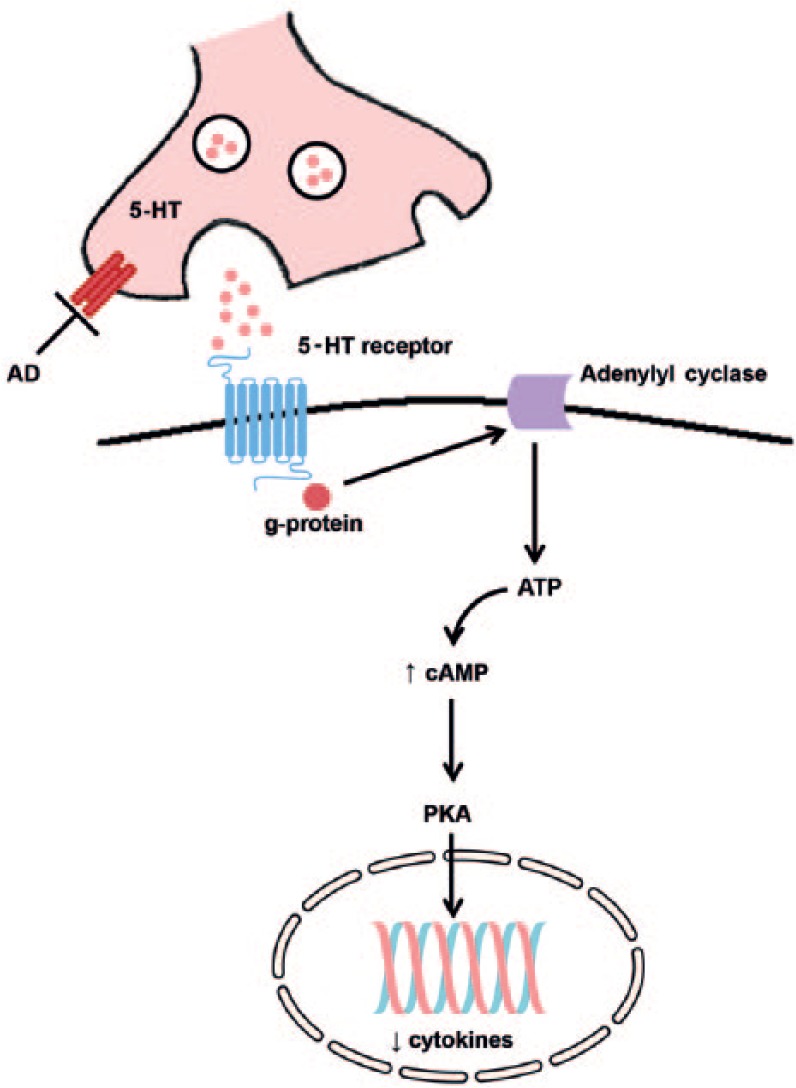
“The influence on the cytokine production might be related to antidepressant action on cyclic adenosyl monophosphate (cAMP), serotonin metabolism, the HPA axis or through a direct action on neurogenesis (Taraz et al., 2013).”
BackgroundResultPasco, J. A., Jacka, F. N., Williams, L. J., Henry, M. J., Nicholson, G. C., Kotowicz, M. A., & Berk, M. (2010) · Psychotherapy and Psychosomatics · doi:10.1159/000319530 · Cited by 95 · cited 1×
“This study suggests that exposure to aspirin seems to be associated with a reduced risk of developing MDD (Pasco et al., 2010).”
BackgroundDepression as an evolutionary strategy for defense against infection
Anders, S. L., Tanaka, M., & Kinney, D. K. (2012) · Brain Behavior and Immunity · doi:10.1016/j.bbi.2012.12.002 · Cited by 92 · cited 2×
“Increased cytokine production may contribute to the development of depression directly via activation of the HPA axis or indirectly through cytokine-induced glucocorticoid receptor resistance (Anders et al., 2013).”
BackgroundAnderson, G., Kubera, M., Duda, W., Lasoń, W., Berk, M., & Maes, M. (2013) · Pharmacological Reports · doi:10.1016/s1734-1140(13)71526-3 · Cited by 91 · cited 2×
“NAD+ is important for the induction of sirtuins, which contribute to many of the processes that are deregulated in depression including neurogenesis, circadian rhythms and mitochondrial regulation (Anderson et al., 2013).”
BackgroundThe Immune System and Electroconvulsive Therapy for Depression
Guloksuz, S., Rutten, B. P. F., Arts, B., van Os, J., & Kenis, G. (2014) · The Journal of ECT · doi:10.1097/yct.0000000000000127 · Cited by 90 · cited 1×
“The high levels of circulating stress hormones in the CNS might affect the neurotransmitter homeostasis, the neuronal growth factor synthesis and ultimately, disturb the functioning of neuronal circuits of the limbic system (Guloksuz et al., 2014).”
BackgroundFaridhosseini, F., Sadeghi, R., Farid, L., & Pourgholami, M. (2014) · Human Psychopharmacology: Clinical and Experimental · doi:10.1002/hup.2401 · Cited by 89 · cited 2×
“No adverse effects attributable to celecoxib were observed (Faridhosseini et al., 2014).”
BackgroundMethodSlyepchenko, A., Maes, M., Köhler, C. A., Anderson, G., Quevedo, J., Alves, G. S., Berk, M., Fernandes, B. S., & Carvalho, A. F. (2016) · Neuroscience & Biobehavioral Reviews · doi:10.1016/j.neubiorev.2016.02.002 · Cited by 89 · cited 2×
“QUIN also increases glutamate release to neurotoxic levels, inducing oxidative and nitrosative stress (O&NS) in MDD (Slyepchenko et al., 2016).”
Scali, C., Giovannini, M. G., Prosperi, C., Bellucci, A., Pepeu, G., & Casamenti, F. (2003) · Neuroscience · doi:10.1016/s0306-4522(02)00839-4 · Cited by 86
Current understanding of the bi-directional relationship of major depression with inflammation
Messay, B., Lim, A., & Marsland, A. L. (2012) · Biology of Mood & Anxiety Disorders · doi:10.1186/2045-5380-2-4 · Cited by 80 · cited 4×
“…alpha (TNF-α), interferon-gamma (INF-γ) (Alboni et al., 2010; Dowlati et al., 2010; Hasler, 2010; Krogh et al., 2014; Loftis et al., 2010; Maes, 2011; Messay et al., 2012; Najjar et al., 2013; Pace and Miller, 2009; Raison and Miller, 2011; Rawdin et al., 2013; Steiner et al., 2011; Sukoff…”
BackgroundInfluentialObuchowicz, E., Bielecka, A., Paul-Samojedny, M., Pudełko, A., & Kowalski, J. (2014) · Pharmacological Reports · doi:10.1016/j.pharep.2013.08.002 · Cited by 79 · cited 3×
“A recently published study by Obuchowicz et al. (2014) evaluated the anti-inflammatory effects of imipramine, a tricyclic antidepressant (TCA), and fluoxetine, a selective serotonin reuptake inhibitor (SSRI), on IL-6, IL-1β and TNF-α secretion by primary mixed glial cultures stimulated with LPS.”
BackgroundInfluentialTryptophan Metabolism and Immunogenetics in Major Depression: A Role for Interferon-γ Gene
Myint, A. M., Bondy, B., Baghai, T. C., Eser, D., Nothdurfter, C., Schüle, C., Zill, P., Müller, N., Rupprecht, R., & Schwarz, M. J. (2013) · Brain, Behavior, and Immunity · doi:10.1016/j.bbi.2013.04.003 · Cited by 74 · cited 2×
“IDO catalyzes tryptophan (TRP) catabolism through the kynurenine pathway (Dobos et al., 2012; Myint, 2012; Myint et al., 2013), producing kynurenic acid (KYN), quinolinic acid (QUIN) and nicotinamide adenine dinucleotide (NAD+) (Guillemin, 2012; Zunszain et al., 2011).”
BackgroundBlais, V., Turrin, N. P., & Rivest, S. (2005) · Journal of Neurochemistry · doi:10.1111/j.1471-4159.2005.03480.x · Cited by 72 · cited 1×
“PGE2 is the main prostaglandin implicated in the inflammatory response, pain, fever and autonomic functions (Blais et al., 2005).”
BackgroundIs Regular Exercise a Friend or Foe of the Aging Immune System? A Systematic Review
Haaland, D. A., Sabljic, T. F., Baribeau, D. A., Mukovozov, I. M., & Hart, L. E. (2008) · Clinical Journal of Sport Medicine · doi:10.1097/jsm.0b013e3181865eec · Cited by 71 · cited 1×
“Evidence also suggests that regular endurance exercise decreases inflammatory markers, mainly CRP (Haaland et al., 2008).”
BackgroundSchjerning Olsen, A.-M., Fosbøl, E. L., Lindhardsen, J., Andersson, C., Folke, F., Nielsen, M. B., Køber, L., Hansen, P. R., Torp-Pedersen, C., & Gislason, G. H. (2013) · PLoS ONE · doi:10.1371/journal.pone.0054309 · Cited by 70
Brunoni, A. R., Machado-Vieira, R., Zarate, C. A., Valiengo, L., Vieira, E. L., Benseñor, I. M., Lotufo, P. A., Gattaz, W. F., & Teixeira, A. L. (2014) · Psychopharmacology · doi:10.1007/s00213-013-3322-3 · Cited by 69 · cited 2×
“For instance, Brunoni et al. (2014) recently published the results of a trial with 103 depressed patients treated with sertraline for 6 weeks.”
ResultThe negative immunoregulatory effects of fluoxetine in relation to the cAMP-dependent PKA pathway
Maes, M. H. J., Kenis, G., Kubera, M., de Baets, M., Steinbusch, H. W. M., & Bosmans, E. (2004) · International Immunopharmacology · doi:10.1016/j.intimp.2004.11.008 · Cited by 68 · cited 5×
“(2005) found that fluoxetine (SSRI) also has immunomodulatory effects on the secretion of cytokines, such as TNF-α and IFN-γ (Maes et al., 2005).”
BackgroundInfluentialManaging the side effects associated with commonly used treatments for bipolar depression
Kemp, D. E. (2014) · Journal of Affective Disorders · doi:10.1016/s0165-0327(14)70007-2 · Cited by 62 · cited 3×
“Antidepressants that also act on the noradrenergic system (i.e. SNRIs) are associated with significantly greater increase in blood pressure and heart rate than SSRIs (Kemp, 2014) and also with gastrointestinal effects, activation syndrome, insomnia and sexual dysfunction (Miskovic, 2015).”
BackgroundAspirin decreases the risk of depression in older men with high plasma homocysteine
Almeida, O. P., Flicker, L., Yeap, B. B., Alfonso, H., McCaul, K., & Hankey, G. J. (2012) · Translational Psychiatry · doi:10.1038/tp.2012.79 · Cited by 62 · cited 1×
“…is associated with an increased risk of depression, with an odds ratio (OR) of 1.80 (95% confidence interval (CI) = 1.39–2.35) and that the usage of aspirin is associated with a decrease in the risk of depression among these patients, with an OR of 0.60 (95% CI = 0.20–1.79) (Almeida et al., 2012).”
BackgroundInfluentialMaes, M. H. J. (2012) · Metabolic Brain Disease · doi:10.1007/s11011-012-9326-6 · Cited by 59 · cited 1×
“COX-2 is detected in synaptic dendrites and excitatory terminals, mainly in cortex, hippocampus and amygdala, whereas COX-1 is expressed by microglia and perivascular cells (Maes, 2012).”
BackgroundBah, T. M., Benderdour, M., Kaloustian, S., Karam, R., Rousseau, G., & Godbout, R. (2011) · Behavioural Brain Research · doi:10.1016/j.bbr.2011.07.039 · Cited by 54 · cited 1×
“Plasma levels of IL-1β, TNF-α and PGE2 were significantly decreased after treatment (Bah et al., 2011).”
Alboni, S., Benatti, C., Montanari, C., Tascedda, F., & Brunello, N. (2013) · European Journal of Pharmacology · doi:10.1016/j.ejphar.2013.08.046 · Cited by 53 · cited 2×
“Alboni et al. (2013) demonstrated promising effects with imipramine and fluoxetine.”
BackgroundTowards achieving remission in the treatment of depression
Mendlewicz, J. (2008) · Dialogues in Clinical Neuroscience · doi:10.31887/dcns.2008.10.4/jmendlewicz · Cited by 52 · cited 1×
“For those patients who fail to respond to the initial antidepressant therapy, alternative treatment approaches are switching medication, augmentation or combination therapies (Mendlewicz, 2008).”
BackgroundRoomruangwong, C., Kanchanatawan, B., Sirivichayakul, S., Mahieu, B., Nowak, G., & Maes, M. H. J. (2016) · Molecular Neurobiology · doi:10.1007/s12035-016-9741-5 · Cited by 50 · cited 2×
“…pro-inflammatory cytokines are known to induce acute phase (inflammatory) response in the liver, increasing the levels of CRP (Miller et al., 2009) and lower albumin and zinc in depression (Maes, 1995; Roomruangwong et al., 2016), suggesting that these could be useful biomarkers of depression.”
BackgroundTousoulis, D., Drolias, A., Antoniades, C. A., Vasiliadou, C., Marinou, K., Latsios, G., Stefanadi, E., Gounari, P., Siasos, G., Παπαγεωργίου, Ν., et al. (2008) · International Journal of Cardiology · doi:10.1016/j.ijcard.2008.02.013 · Cited by 49 · cited 2×
“Tousoulis et al. (2009) conducted a clinical study in 154 patients that suffered from heart failure and developed MDD.”
BackgroundResultAntidepressant Self-Discontinuation: Results From the Collaborative Psychiatric Epidemiology Surveys
Samples, H., & Mojtabai, R. (2015) · Psychiatric Services · doi:10.1176/appi.ps.201400021 · Cited by 45 · cited 1×
“Side effects were reported by 20% of the patients as the main cause of discontinuation (Samples and Mojtabai, 2015).”
BackgroundASPIRIN USE, DEPRESSION, AND COGNITIVE IMPAIRMENT IN LATER LIFE: THE HEALTH IN MEN STUDY
Almeida, O. P., Alfonso, H., Jamrozik, K., Hankey, G. J., & Flicker, L. (2010) · Journal of the American Geriatrics Society · doi:10.1111/j.1532-5415.2010.02827.x · Cited by 44 · cited 1×
“One possible explanation is that aspirin might lead to greater medical complications due to bleeding, increasing the risk of small cerebrovascular lesions that contribute to a higher incidence of depression (Almeida et al., 2010).”
BackgroundFeeding the beast: Can microglia in the senescent brain be regulated by diet?
Johnson, R. W. (2015) · Brain, Behavior, and Immunity · doi:10.1016/j.bbi.2014.09.022 · Cited by 44 · cited 1×
“These nutrients may exert their effect by interaction with inflammatory pathways (Johnson, 2015).”
BackgroundCavanagh, J., Paterson, C., McLean, J., Pimlott, S. L., McDonald, M., Patterson, J., Wyper, D. J., & McInnes, I. B. (2010) · Annals of the Rheumatic Diseases · doi:10.1136/ard.2009.107912 · Cited by 43 · cited 3×
“In a proof-ofconcept study conducted by Cavanagh et al. (2010), six patients with rheumatoid arthritis were treated with adalimumab (a TNFα inhibitor) and tested the hypothesis that TNF-α blockade would alter SERT activity in the brain of the patients, through single photon emission tomography…”
BackgroundInfluentialBschor, T., Ising, M., Erbe, S., Winkelmann, P., Ritter, D., Uhr, M., & Lewitzka, U. (2011) · Journal of Psychiatric Research · doi:10.1016/j.jpsychires.2011.09.020 · Cited by 43 · cited 2×
“It is estimated that 30–50% of the patients do not respond to treatment with antidepressants (Bschor et al., 2012) due to either lack of efficacy or intolerable side effects (Rush et al., 2006).”
BackgroundEller, T., Vasar, V, Shlik, J., & Maron, E. (2009) · Journal of Psychopharmacology · doi:10.1177/0269881108091077 · Cited by 40
Padol, I. T., & Hunt, R. H. (2010) · Rheumatology · doi:10.1093/rheumatology/kep225 · Cited by 37 · cited 2×
“This response leads to increased production of pro-atherogenic cytokines, attracting lymphocytes and macrophages that will exacerbate the inflammation, increase plaque instability and vulnerability to rupture, embolization and consequent MI (Padol and Hunt, 2010).”
BackgroundRaison, C. L. (2016) · Current Topics in Behavioral Neurosciences · doi:10.1007/7854_2016_26 · Cited by 36 · cited 2×
“The effect size of participants with hs-CRP levels higher than 5mg/L was 0.41, which is in line with the efficacy of antidepressants against placebo in most studies (Raison, 2016).”
ResultInfluentialKurhe, Y., Mahesh, R., & Gupta, D. (2014) · Neurochemical Research · doi:10.1007/s11064-014-1322-2 · Cited by 30
Nicotinic receptor-associated 43K protein and progressive stabilization of the postsynaptic membrane
Hill, J. A. (1992) · Molecular Neurobiology · doi:10.1007/bf02935564 · Cited by 29
Maintenance therapy of celecoxib for major depression with mimicking neuropsychological dysfunction
Chen, C., Tzeng, N., & Chen, Y.-C. (2010) · General Hospital Psychiatry · doi:10.1016/j.genhosppsych.2010.07.001 · Cited by 28
Jump-starting natural resilience reverses stress susceptibility
Friedman, A. (2014) · Science · doi:10.1126/science.1260781 · Cited by 16 · cited 1×
“Another possible reason for the ineffectual treatment of MDD has been the incomplete understanding of the nature of depression (Friedman, 2014).”
BackgroundInflammatory Depression: A Trifecta of Trouble
Raison, C. L. (2014) · The Journal of Clinical Psychiatry · doi:10.4088/jcp.14ac09217 · Cited by 11 · cited 2×
“…conditions (Frick et al., 2013); (2) pro-inflammatory conditions like obesity, MI and autoimmune diseases that are often accompanied by depression (Raison, 2014); (3) presence of neuroinflammation during a major depressive episode in MDD patients visualized through PET imaging (Setiawan et al.,…”
BackgroundChu, C., Chou, P., Lin, C., Cheng, C., Tsai, C.-J., Lan, T., Huang, M.-W., & Nestadt, G. (2016) · PLoS ONE · doi:10.1371/journal.pone.0162239 · Cited by 11
Comparison of Tolerance of Venlafaxine, Paroxetine and Amitriptyline in Depression Therapy
Miskovic, M. (2015) · Medical Archives · doi:10.5455/medarh.2015.69.107-109 · Cited by 5 · cited 3×
“The most common side effects related to SSRIs are gastrointestinal like nausea, activation syndrome, sexual dysfunction, body weight gain, insomnia and serotonin syndrome (Miskovic, 2015).”
Background
Cited by
Role of oxidative stress in depression
Bhatt, S., Nagappa, A. N., & Patil, C. R. (2020) · Drug Discovery Today · doi:10.1016/j.drudis.2020.05.001 · Cited by 821
Microglia in depression: an overview of microglia in the pathogenesis and treatment of depression
Wang, H., He, Y., Sun, Z., Ren, S., Liu, M., Wang, G., & Yang, J. (2022) · Journal of Neuroinflammation · doi:10.1186/s12974-022-02492-0 · Cited by 571
Yuan, N., Chen, Y., Xia, Y., Dai, J., & Liu, C. (2019) · Translational Psychiatry · doi:10.1038/s41398-019-0570-y · Cited by 428
Beyond a neurotransmitter: The role of serotonin in inflammation and immunity
Wu, H., Denna, T. H., Storkersen, J. N., & Gerriets, V. A. (2019) · Pharmacological Research · doi:10.1016/j.phrs.2018.06.015 · Cited by 338
Microglia in depression: current perspectives
Jia, X., Gao, Z., & Hu, H. (2021) · Science China Life Sciences · doi:10.1007/s11427-020-1815-6 · Cited by 282
“…the selective serotonin reuptake inhibitors (SSRIs), serotonin/norepinephrine reuptake inhibitors (SNRIs), tricyclic antidepressants (TCAs) and monoamine oxidase inhibitors (MAOIs), have been shown to have an impact on microglial activation and neuroinflammation (Kopschina Feltes et al., 2017).”
Background
Metadata
- Authors
- Kopschina Feltes, P., Doorduin, J., Klein, H. C., Juárez-Orozco, L. E., Dierckx, R. A., Moriguchi-Jeckel, C. M., & de Vries, E. F.
- Affiliations
- Department of Nuclear Medicine and Molecular Imaging, University Medical Center Groningen, Groningen, the Netherlands
- University Medical Center Groningen (NL)
- Instituto de Geriatria e Gerontologia, Pontifícia Universidade Católica do Rio Grande do Sul, Porto Alegre, Brasil
- Venue
- Journal of Psychopharmacology
- Publisher
- SAGE Publications
- Published
- 2017-06-27
- Volume
- 31
- Issue
- 9
- Pages
- 1149-1165
- ISSN
- 0269-8811 (ISSN-L)
- 1461-7285
- PMC
- PMC5606303
- OpenAlex
- W2730275538
- Cited by
- 279
- References
- 175
- Citations by year
- 2026: 19 · 2025: 27 · 2024: 28 · 2023: 41 · 2022: 41 · 2021: 36 · 2020: 39 · 2019: 29 · 2018: 17 · 2017: 2
- FWCI
- 1.62
- Type
- journal article
- Language
- en
- Open access
- hybrid
- doi.org
- Licence
- cc-by-nc
- journals.sagepub.com/page/policies/text-and-data-mining-license (tdm)
- Locations
- Journal of Psychopharmacology (publishedVersion, cc-by-nc)
- Europe PMC (PubMed Central) (publishedVersion, cc-by-nc)
- PubMed Central (publishedVersion, cc-by-nc)
- PubMed (publishedVersion)
- University of Groningen research database (University of Groningen / Centre for Information Technology) (submittedVersion, cc-by-nc)
- Topics
- Life Sciences › Neuroscience › Biological Psychiatry › Tryptophan and brain disorders
- Health Sciences › Medicine › Pharmacology (medical) › Treatment of Major Depression
- Life Sciences › Neuroscience › Behavioral Neuroscience › Stress Responses and Cortisol
- Keywords
- major depressive disorder, treatment-resistant depression, anti-inflammatory therapy, nonsteroidal anti-inflammatory drugs, immune dysregulation, inflammatory cytokines, microglial activation, hypothalamic-pituitary-adrenal axis, indoleamine 2,3-dioxygenase, serotonin depletion, quinolinic acid, inflammatory comorbidities
- MeSH terms
- Anti-Inflammatory Agents, Antidepressive Agents, Depressive Disorder, Major, Major Depressive Disorder, Humans, Hypothalamo-Hypophyseal System, Inflammation, Pituitary-Adrenal System, Serotonin
About these checks
Registry, retraction, Cites and statistics results are computed, not judged, with one exception: a printed reference that no index lists is read once by a model before it counts as a citation error. Claims are extracted by a model and kept only when their quote appears verbatim in the text; each cited source is then checked, with a model’s help, for whether it says what the claim relies on. Those verdicts can be wrong — read the claim’s quote and the cited source before relying on one.
Statistics and arithmetic are recomputed, not judged.
Confidence bands are shown only for fields calibrated on our annotated test set. None is calibrated yet, so no band is shown.
What counts as a claim ›How we measure confidence ›How we check this ›
Are you an author, or do you see a problem with this page? Request a review
Data sources
Bibliographic data: Semantic Scholar, OpenAlex, Crossref.
Contains information from the Semantic Scholar Academic Graph Datasets, made available under the ODC Attribution License (ODC-BY 1.0).
Semantic Scholar’s data is described in: Kinney, R., et al. (2023). The Semantic Scholar Open Data Platform. arXiv:2301.10140.
