

Anti-inflammatory treatment for major depressive disorder: implications for patients with an elevated immune profile and non-responders to standard antidepressant therapy
Open accessThe DOI matches its Crossref record; 174 of the 175 references it cites were found in a registry or an index.
Abstract
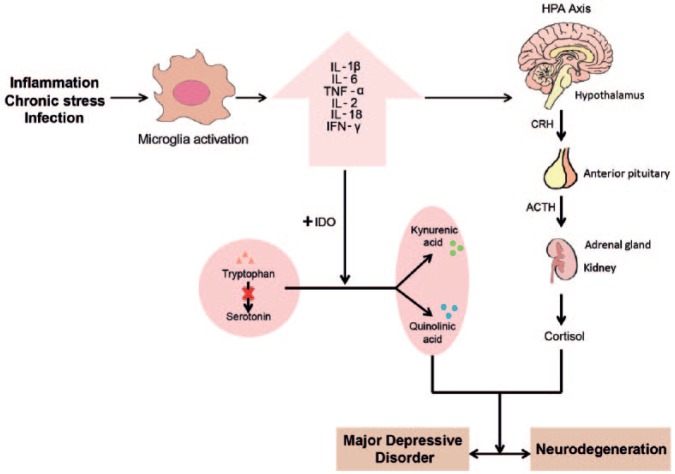
Major depressive disorder (MDD) is a prevalent and disabling psychiatric disease with rates of non-responsiveness to antidepressants ranging from 30–50%. Historically, the monoamine depletion hypothesis has dominated the view on the pathophysiology of depression. However, the lack of responsiveness to antidepressants and treatment resistance suggests that additional mechanisms might play a role. Evidence has shown that a subgroup of depressive patients may have an underlying immune deregulation that could explain the lack of therapeutic benefit from antidepressants. Stimuli like inflammation and infection can trigger the activation of microglia to release pro-inflammatory cytokines, acting on two main pathways: (1) activation of the hypothalamic–pituitary adrenal axis, generating an imbalance in the serotonergic and noradrenergic circuits; (2) increased activity of the enzyme indoleamine-2,3-dioxygenase, resulting in depletion of serotonin levels and the production of quinolinic acid. If this hypothesis is proven true, the subgroup of MDD patients with increased levels of pro-inflammatory cytokines, mainly IL-6, TNF-α and IL-1β, might benefit from an anti-inflammatory intervention. Here, we discuss the pre-clinical and clinical studies that have provided support for treatment with non-steroidal anti-inflammatory drugs in depressed patients with inflammatory comorbidities or an elevated immune profile, as well as evidences for anti-inflammatory properties of standard antidepressants.
Overview
The claims and statistics of this paper haven’t been checked yet.
Free: it reads the open-access text and checks the first 5 claims that cite a source we can check. Create a free account to check every claim.
Integrity signals
Registry
Cites
Statistics
Figures
Verification
Claims the paper makes
The claims and statistics of this paper haven’t been checked yet.
Free: it reads the open-access text and checks the first 5 claims that cite a source we can check. Create a free account to check every claim.
Claims other papers make about this one
Each is checked against this paper’s own text: does it say what the citing paper says it does?
The source backs part of the claim, not all of it — or backs it for a different population, condition or comparison.
In the citing paper
“Evidence of altered inflammation-related markers across psychiatric conditions [6–8], along with reports of anti-inflammatory effects from psychotropic medications [9, 10] and the ameliorative impact of anti-inflammatory drugs on psychiatric symptoms [11–14], suggests a strong link between abnormal inflammatory responses and major psychiatric disorders.”
From Inflammatory ratios as predictors of length of hospitalization in psychiatric patients: A multicenter study (2025) · doi:10.1007/s00406-025-02033-9 · cites this paper as [11]
Experimental — accuracy not yet measuredThe source backs part of the claim, not all of it — or backs it for a different population, condition or comparison.
In the citing paper
“On one hand, drugs that target IRFs have been proposed for treating psychiatric disorders, including major depression (MDD)10–12, schizophrenia (SCZ)13 and bipolar disorder (BD)14, particularly in a subset of patients with chronic inflammation10”
From Inflammation-related biomarkers in major psychiatric disorders: a cross-disorder assessment of reproducibility and specificity in 43 meta-analyses (2019) · cites this paper as [12]
Experimental — accuracy not yet measured
Self-check
Percentages, sums and reported differences re-computed from the paper’s own numbers.
The self-check needs the paper’s full text.
Citations
Cites
Diagnostic and Statistical Manual of Mental Disorders
American Psychiatric Association (2013) · doi:10.1176/appi.books.9780890425596 · Cited by 116,369
Hamilton, M. (1960) · Journal of Neurology, Neurosurgery & Psychiatry · doi:10.1136/jnnp.23.1.56 · Cited by 32,817 · cited 2×
“Moreover, PET tracer uptake (microglia activation) was correlated with the Hamilton Depression Rating Scale (HDRS) score (Hamilton, 1960) in the anterior cingulated cortex (Setiawan et al., 2015).”
MethodPolazzi, E., Mengoni, I., Caprini, M., Peña-Altamira, E., Kurtys, E., & Monti, B. (2013) · Neurosignals · doi:10.1159/000337115 · Cited by 8,994
Molecular Mechanisms of Depression: Perspectives on New Treatment Strategies
Lang, U. E., & Borgwardt, S. (2013) · Cellular Physiology and Biochemistry · doi:10.1159/000350094 · Cited by 8,475
Kessler, R. C., Berglund, P., Demler, O., Jin, R., Koretz, D., Merikangas, K. R., Rush, A. J., Walters, E. E., & Wang, P. S. (2003) · JAMA · doi:10.1001/jama.289.23.3095 · Cited by 7,988 · cited 1×
“Not only the high incidence of MDD and the disability associated with the disease, but also the high rate of inadequate treatment of the disorder remains a serious concern (Kessler et al., 2003).”
BackgroundGlutamate neurotoxicity and diseases of the nervous system
CHOI, D. (1988) · Neuron · doi:10.1016/0896-6273(88)90162-6 · Cited by 7,972
From inflammation to sickness and depression: when the immune system subjugates the brain
Dantzer, R., O'Connor, J. C., Freund, G. G., Johnson, R. W., & Kelley, K. W. (2008) · Nature Reviews Neuroscience · doi:10.1038/nrn2297 · Cited by 7,395 · cited 4×
“vagus nerve), delivering cytokine signals to relevant brain regions including the nucleus of the solitary tract and hypothalamus (Dantzer et al., 2008; Miller et al., 2009).”
BackgroundInfluentialRush, A. J., Trivedi, M. H., Wisniewski, S. R., Nierenberg, A. A., Stewart, J. W., Warden, D., Niederehe, G., Thase, M. E., Lavori, P. W., Lebowitz, B. D., et al. (2006) · American Journal of Psychiatry · doi:10.1176/ajp.2006.163.11.1905 · Cited by 5,643 · cited 2×
“It is estimated that 30–50% of the patients do not respond to treatment with antidepressants (Bschor et al., 2012) due to either lack of efficacy or intolerable side effects (Rush et al., 2006).”
BackgroundA Meta-Analysis of Cytokines in Major Depression
Dowlati, Y., Herrmann, N., Swardfager, W., Liu, H., Sham, L., Reim, E. K., & Lanctôt, K. L. (2010) · Biological Psychiatry · doi:10.1016/j.biopsych.2009.09.033 · Cited by 4,729 · cited 8×
“Major depression disorder (MDD) is an important public health issue (Dowlati et al., 2010; Miller et al., 2009), predicted to be the second leading cause of disability by the year of 2020 behind only ischemic heart disease (Rush et al.”
BackgroundInfluentialOverweight, Obesity, and Depression: A Systematic Review and Meta-analysis of Longitudinal Studies
Luppino, F. S., de Wit, L. M., Bouvy, P. F., Stijnen, T., Cuijpers, P., Penninx, B. W. J. H., & Zitman, F. G. (2010) · Archives of General Psychiatry · doi:10.1001/archgenpsychiatry.2010.2 · Cited by 4,322 · cited 2×
“Depression’s causal role in obesity might be due to neuroendocrine disturbances, through a long-term activation of the HPA axis and release of cortisol, along with an unhealthy lifestyle (Luppino et al., 2010).”
BackgroundResult
Cited by
Items 201–292 of 292
Воробьева, О. В., Fateeva, V. V., Nikulina, K. V., Khacheva, K. K., Khakimova, G. R., & Epstein, O. I. (2020) · IntechOpen eBooks · doi:10.5772/intechopen.88693 · Cited by 5
Falaiye, T. A., Okobi, O. E., Oramu, C. I., & Jegede, A. O. (2025) · Cureus · doi:10.7759/cureus.78251 · Cited by 6
“In this regard, various longitudinal studies have disclosed that persons with lower Dietary Inflammatory Index scores tend to experience depression incidences, whose symptoms may be alleviated through the use of anti-inflammatory medications [26,27].”
Overactivation of Microglia as a Shared Pathophysiology in Different Neuropsychiatric Disorders
Eltokhi, A. (2024) · Integrated science · doi:10.1007/978-3-031-72079-6_11 · Cited by 4
Li, C., Wang, Y., Chen, J., Xiao, S., Lou, M., Ding, M., & Xing, Y. (2026) · BMC Psychiatry · doi:10.1186/s12888-025-07685-4 · Cited by 5
“Additionally, inflammatory processes are involved in the onset and persistence of MDD [14], and inflammation can make patients more susceptible to treatment-resistant depression and worsen depressive symptoms [15–17], further complicating interpretations.”
Investigating the Antidepressant Mechanism of Acupuncture with a Focus on Mitochondrial Homeostasis
Wei, Y., Ma, Z., Xu, N., He, Y., Cao, M., & Wang, L. (2026) · International Journal of General Medicine · doi:10.2147/ijgm.s584012 · Cited by 3
Chamanara, S., Irandoost, E., Dahmardeh, N., & Aghaamoo, S. (2026) · Journal of Psychiatric Research · doi:10.1016/j.jpsychires.2026.05.014 · Cited by 5
Inflammation in treatment-resistant depression: From mechanisms to therapeutics
Wu, S., Gao, X., Zhou, Y., Lin, Z., Chen, C. H., Luo, J., Liu, X., Lin, L., 邵红伟, & Liu, S. (2026) · Brain Research Bulletin · doi:10.1016/j.brainresbull.2026.111953 · Cited by 3
Celecoxib Reimagined: Multifunctional Roles in Advanced Drug Delivery and Therapeutics
Sharma, K., Kumar, D., Chandna, N., & Kapoor, J. K. (2025) · ChemistrySelect · doi:10.1002/slct.202502652 · Cited by 3
Sousa-Santos, N., Fialho, M., Madeira, T., Clara, C., Veiga, S., Martins, R. A., Barros, N., Santos, G., Santos, O., Almeida, C., et al. (2023) · BMC Psychiatry · doi:10.1186/s12888-023-04705-z · Cited by 4
Wang, D., Fukuda, T., Wu, T., Xu, X., Isaji, T., & Gu, J. (2025) · Journal of Biological Chemistry · doi:10.1016/j.jbc.2025.108230 · Cited by 3
“In fl ammation has even been proposed as a biomarker in the treatment of depression (17).”
Cognitive impairment in depression and cerebrovascular disease
Reverchuk, I. V. (2025) · Neurology neuropsychiatry Psychosomatics · doi:10.14412/2074-2711-2025-2-107-115 · Cited by 2
Sadeghi, M. T., Khiali, S., Karimi, M., Shahidi, M., Khani, E., Mousavi, Z., & Entezari‐Maleki, T. (2025) · Journal of Cardiovascular and Thoracic Research · doi:10.34172/jcvtr.025.33169 · Cited by 2
Nakamura, S. (2023) · IntechOpen eBooks · doi:10.5772/intechopen.102340 · Cited by 3
Potential of an antioxidant combination Twendee X® to treat depressive disorders
You, F., Harakawa, Y., Toshikazu, Y., & Inufusa, H. (2023) · Archives of Depression and Anxiety · doi:10.17352/2455-5460.000083 · Cited by 2
“The production of the in fl ammatory markers interleukin (IL)-1 and IL-18, the formation of pores in the cell membrane, and the leakage of substances from the cell all contribute to cell death [20,21].”
BackgroundMay the SSRIs play a role in the onset of peri- and post-menopausal cervical cancer?
Isacco, C. G., Prete, R. D., Distratis, P., Lazzaro, R., Nguyen, K. C. D., Inchingolo, F., Pham, V. H., Tran, C. T., Santacroce, L., & Balzanelli, M. G. (2024) · Discover Applied Sciences · doi:10.1007/s42452-024-06030-w · Cited by 3
Glia as a New Target for Therapeutic Actions of Electroconvulsive Therapy
Hashioka, S. (2024) · CNS & Neurological Disorders - Drug Targets · doi:10.2174/0118715273319405240707164638 · Cited by 2
Enătescu, I., Kalinovic, R., Giurgi-Oncu, C., Poroch, V., Stratulat, I. S., Vlad, G., Neda-Stepan, O., Simu, M. A., Papavă, I., Oancea, R., et al. (2020) · Applied Sciences · doi:10.3390/app10165615 · Cited by 2
“The presence of pro-inflammatory markers was overly represented in studied subjects compared to other researches [25,26].”
ResultRheumatoid Arthritis, Depression, and the Role of Celecoxib
Al-Baz, N., & Karim, M. A. (2020) · SN Comprehensive Clinical Medicine · doi:10.1007/s42399-020-00468-w · Cited by 2
Efficacy of a Functional Therapy Program for Depression and C-Reactive Protein: A Pilot Study.
Maniaci, G., Cascia, C. L., Giammanco, A., Ferraro, L., Sardella, Z., Bivona, G., Ciaccio, M., & Barbera, D. L. (2021) · PubMed Central · doi:10.36131/cnfioritieditore20210402 · Cited by 2
“…who are non-responders to traditional pharmacological treatment: indeed, recent studies underlined that nonresponders to psychopharmacological treatment become responders when they receive anti-inflammatory drugs (e.g. Kopschina Feltes et al., 2017; Petralia et al., 2020a; Petralia et al., 2020b).”
BackgroundParvizi, Y., Sadati, S. M., Porbaha, P., Masumi, S., Mahdian, S., Vafaei, S. A., & Afshar, S. (2024) · Iranian Journal of Psychiatry · doi:10.18502/ijps.v19i4.16550 · Cited by 4
Lane, R. (2019) · ORCA Online Research @Cardiff (Cardiff University) · doi:10.13140/rg.2.2.27055.59049 · Cited by 2
(2025) · doi:10.1007/s00406-025-02033-9 · Cited by 1
Matłoka, M., Gajos‐Draus, A., Majkowska, I., Kokhanovska, S., Pankiewicz, P., Janowska, S., Wojcik, K., Wieczorek, M., & Pieczykolan, J. (2021) · European Neuropsychopharmacology · doi:10.1016/j.euroneuro.2021.10.080 · Cited by 1
Schulzki, R., Apweiler, M., Röttger, C., Grathwol, C. W., Struchtrup, N., Mirate, S. A. E., Normann, C., Braese, S., & Fiebich, B. L. (2025) · Molecules · doi:10.3390/molecules30112452 · Cited by 1
“The neuroinflammation hypothesis assumes that inflammatory mechanisms might be involved in the genesis and progression of neuropsychiatric disorders [33].”
InfluentialMedication-overuse headache: Bridging therapies for detoxification
Wakerley, B. R., & Koonalintip, P. (2025) · Clinical Neurology and Neurosurgery · doi:10.1016/j.clineuro.2025.109205 · Cited by 1
Moon, C., Melanie, M., Calaprice, D., Pasupuleti, U., & Fitzgerald, M. L. (2025) · Medical Research Archives · doi:10.18103/mra.v13i10.7017 · Cited by 1
Curcumin, an anti-inflammatory drug: a key player in treating depression
Singh, A. P., & Sharma, N. (2026) · Natural Product Research · doi:10.1080/14786419.2026.2613762 · Cited by 4
León‐Rodríguez, A., Fernández‐Arjona, M. D. M., Pedraza, C., López‐Aranda, M. F., Visser, R., & López-Ávalos, M. D. (2026) · Frontiers in Immunology · doi:10.3389/fimmu.2026.1828445 · Cited by 1
The use of cyclooxygenase-2 inhibitors in depression: a narrative review of the state of evidence
Abbas, A., Kumar, N., & Choudhary, R. (2019) · International Journal of Basic & Clinical Pharmacology · doi:10.18203/2319-2003.ijbcp20194286 · Cited by 1
Koshkina, A., Volkova, O., & Fedotova, J. (2020) · IntechOpen eBooks · doi:10.5772/intechopen.89357 · Cited by 1
Wong, W., Chan, B., Lee, M. M., Yee, B. K., & Tai, W. (2021) · Springer eBooks · doi:10.1007/978-3-030-61721-9_26 · Cited by 1
Depression in late life: Linking the immunometabolic dysregulation with clinical features
de la Torre‐Luque, A., & Ayuso‐Mateos, J. L. (2021) · Revista de Psiquiatría y Salud Mental (English Edition) · doi:10.1016/j.rpsm.2021.06.004 · Cited by 1
Kverno, K. S. (2023) · Journal of Psychosocial Nursing and Mental Health Services · doi:10.3928/02793695-20230417-01 · Cited by 1
Is psyche-soma dichotomy still clinically appropriate?
Torta, R., Botto, R., Giorgi, V., & Sarzi‐Puttini, P. (2023) · Clinical and Experimental Rheumatology · doi:10.55563/clinexprheumatol/x3pyfb · Cited by 3
“Another example is the co-morbidity of depression and a somatic pathology such as the menopause, rheumatological disease, diabetes, or thyroid disorders, to which a complete response can be obtained using drugs that are active on both, such as hormones and antiinflammatory treatments, including monoclonal antibodies (…”
Backgroundde Silva, P. N. (2023) · British Journal of Hospital Medicine · doi:10.12968/hmed.2022.0455 · Cited by 1
Jedut, P., Glibowski, P., Styk, W., & Iłowiecka, K. (2023) · Medycyna Ogólna i Nauki o Zdrowiu · doi:10.26444/monz/170102 · Cited by 1
Mokhtari, T., Sheikhbahaei, F., Saadat, M., & Uludağ, K. (2024) · Advances in medical diagnosis, treatment, and care (AMDTC) book series · doi:10.4018/979-8-3693-3065-4.ch009 · Cited by 2
Трофимов, А. Н. (2024) · Research Publications (Maastricht University) · doi:10.26481/dis.20240205at · Cited by 1
Cytokines in the physiopathology of depression
Paredes-Espinosa, M. B., & Sulen, M. E. (2018) · Bionatura · doi:10.21931/rb/2018.03.01.13
The two sides of the coin of psychosocial stress: evaluation by positron emission tomography
Feltes, P. K. (2018) · University of Groningen research database (University of Groningen / Centre for Information Technology)
Molecular Analysis of the Glutathione S-Transferase System in Patients with Depression
dos Anjos, L. R. B., Silveira, L. C., Santos, R. D. S., Machado, V. H., & Reis, Â. A. D. S. (2018) · Multi-Science Journal · doi:10.33837/msj.v1i13.541
Li, Y., Yuan, Q., Yu, Y. T., Zhao, Z., & Guo, R. (2019) · Neuropsychiatry · doi:10.4172/neuropsychiatry.1000562
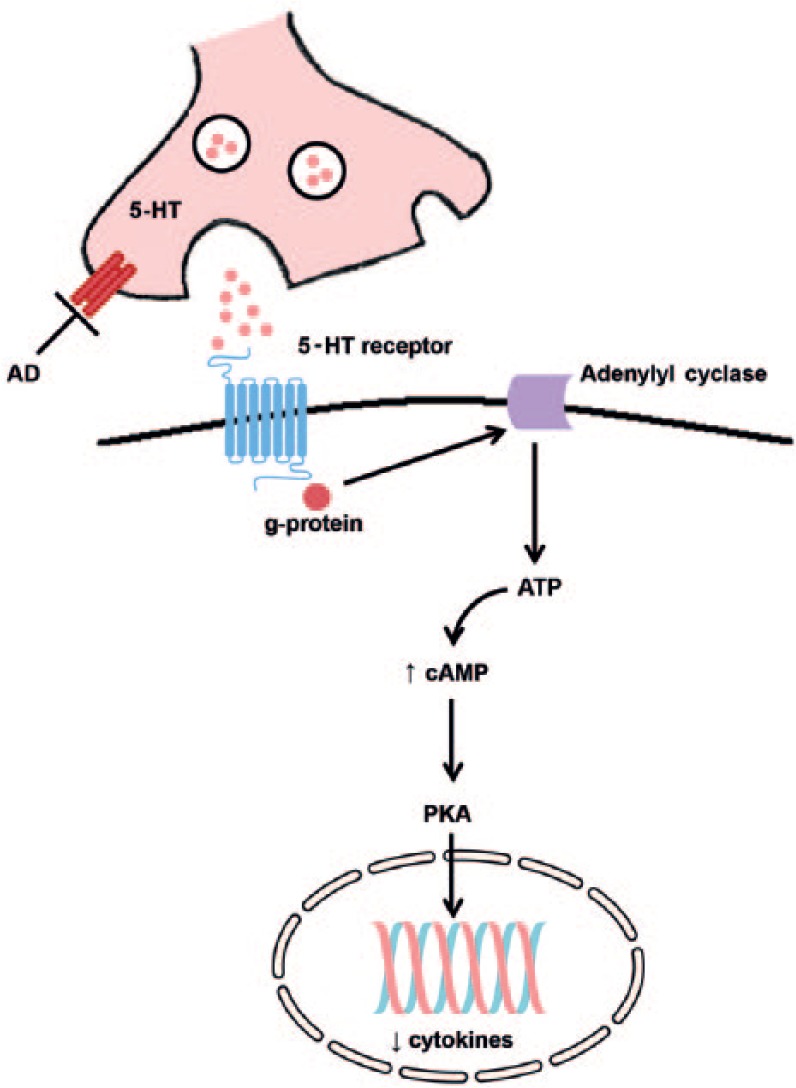
“effects: 5-HT can increase the level of cAMP through the interaction between 5-HT receptor and G protein-mediated adenylate cyclase, and reduce the expression of cytokines by inhibiting protein kinase A (PKA) pathway to produce anti-inflammatory effect, thereby reducing ROS released by inflammatory cells [40].”
BackgroundYang, C. (2019) · University of Groningen research database (University of Groningen / Centre for Information Technology) · doi:10.33612/diss.98153713 · Cited by 1
Malatesta, E. M., & del Río, M. A. S. (2020) · Journal of Psoriasis and Psoriatic Arthritis · doi:10.1177/2475530320911637
Psychiatric comorbidities in spondyloartrities
Cankurtaran, E. Ş. (2020) · Ulusal Romatoloji Dergisi · doi:10.4274/raed.galenos.2020.s109
Al-Dujaili, A. H., Al‐Hakeim, H. K., Twayej, A. J., & Maes, M. H. J. (2019) · Preprints.org · doi:10.20944/preprints201902.0236.v1
Immunoregulatory effects of paroxetine in healthy volunteers: An in vitro investigation
Karimollah, A., Hemmatpur, A., Asadi, M., & Hadinedoushan, M. (2021) · Journal of Reports in Pharmaceutical Sciences · doi:10.4103/jrptps.jrptps_66_20
Paroxetine effect on expression of TLR2 and TLR4 genes in PBMCs of mentally normal individuals
Ganjalishahi, F., Hemmatpur, A., Dehghan-Manshadi, M., nedoushan, H. H., & Karimollah, A. (2021) · Medical Journal of Tabriz University of Medical Sciences and Health Services · doi:10.34172/mj.2021.050
Prospects for the use of drugs with anti-inflammatory properties for the treatment of depression
Komysheva, N. P., & Shishkina, G. T. (2021) · S S Korsakov Journal of Neurology and Psychiatry · doi:10.17116/jnevro2021121061124
Trompetter, I., & Appel, K. (2021) · Zeitschrift für Phytotherapie · doi:10.1055/s-0041-1731512
Cytokines as Depression Underpinning
Zaydiner, B. (2022) · Pharmaceutics and Pharmacology Research · doi:10.31579/2693-7247/073
Anais do I Congresso Internacional Interdisciplinar da Uningá: Resumos Expandidos
(2023) · Editora UNINGÁ eBooks · doi:10.46311/978-65-80328-02-4
A Selective Summary of Psychopharmacology Research Published in Second Half of 2017
Therayil, M. K. (2018) · Kerala Journal of Psychiatry · doi:10.30834/kjp.30.2.2018.134
Shaikh, N. F. (2022) · The Research Repository @ WVU (West Virginia University) · doi:10.33915/etd.11372
von Knebel, K. A. (2022) · eDiss (Georg-August-Universität Göttingen) · doi:10.53846/goediss-9504
Brain RAS in CNS Diseases: Beneficial Effects of Small Molecule Agonists and Inhibitors
Wright, J. W., & Harding, J. W. (2022) · Annals of Hematology & Oncology · doi:10.26420/annhematoloncol.2022.1388
Gonzalez, B. L., Freire, A. C. S., Centro Universitário Ingá – Uningá, M., Bonassoli, V. T., Centro Universitário Ingá – Uningá, M., Teston, A. P. M., Centro Universitário Ingá – Uningá, M., de Mello, J. C. P., Araújo, D. C. D. M., & Centro Universitário Ingá – Uningá, M. (2023) · doi:10.46311/ed.un.20211025293
Kukuia, K. K. E., Takyi, F. Y., Dugbartey, G. J., Amoateng, P., Kudzi, W., Amponsah, S. K., Koomson, A. E., Appiah, F., Adi‐Dako, O., Ameyaw, E. O., et al. (2023) · Molecular Psychology Brain Behavior and Society · doi:10.12688/molpsychol.17508.1 · Cited by 1
Purinergic Signaling in Depression
Ribeiro, D. E., Kaster, M. P., Ulrich, H., Lisboa, S. F. D. S., & Joca, S. R. L. (2023) · Springer eBooks · doi:10.1007/978-3-031-26945-5_7
Deciphering the Role of Various Signaling Pathways in the Pathophysiology of Depression
Vashisht, E., Vats, V., Verma, R., Parashar, J., Garg, V., Dutt, R., Mittal, V., Singh, G., & Kaushik, D. K. (2023) · Current Signal Transduction Therapy · doi:10.2174/0115743624255521230920070219
Non-steroidal Anti-inflammatory Drugs (NSAIDs) in Major Depressive Disorder (MDD) Treatment
He, Q., Bennett, A. N., & Chan, K. H. K. (2025) · Springer eBooks · doi:10.1007/978-3-031-32035-4_28-1
Crespi, F. (2024) · Psychology and Mental Health Care · doi:10.31579/2637-8892/310
Neuroinflammation in the Pathogenesis of Psychiatric Disorder
Sutantio, E. H., & Octaviani, I. D. (2025) · Bulletin of Counseling and Psychotherapy · doi:10.51214/002025071341000
Maytalman, E., Kıroğlu, O., Berktaş, F., Samur, D. N., & Aksu, F. (2025) · Interdisciplinary Medical Journal · doi:10.17944/interdiscip.1687684
Adjunctive strategies for treatment-resistant depression
Thase, M. E. (2022) · Elsevier eBooks · doi:10.1016/b978-0-12-824067-0.00011-6 · Cited by 1
Non-steroidal Anti-inflammatory Drugs (NSAIDs) in Major Depressive Disorder (MDD) Treatment
He, Q., Bennett, A. N., & Chan, K. H. K. (2025) · Springer eBooks · doi:10.1007/978-3-031-73368-0_28
Wang, H., He, Y., Sun, Z., Ren, S., Liu, M., Wang, G., & Yang, J. (2022) · Figshare · doi:10.6084/m9.figshare.20012331
Agranyoni, O., Sur, D., Amidror, S., Shidlovsky, N., Bagaev, A., Yissachar, N., Pinhasov, A., & Navon‐Venezia, S. (2024) · Figshare · doi:10.6084/m9.figshare.26714068
Mental health and well-being of late working age and older adults in Estonian urban and rural areas
Nosikova, A. (2024) · DSpace repository (University of Tartu)
The role of interferon gamma in cortical synaptic plasticity and behavioural output
Abuzgaya, M. (2023) · eScholarship@McGill (McGill) · doi:10.82308/16664
Kim, Y.-C., Kang, S.-G., Kim, J.-W., Kang, H.-J., Jhon, M., Lee, J.-Y., Kim, S.-W., Shin, I.-S., & Kim, J. (2026) · Scientific Reports · doi:10.1038/s41598-026-35097-1 · Cited by 1
Investigation of TRPA1 receptor involvement in different models of depression in mice
Pereira, G. C. (2024) · LA Referencia (Red Federada de Repositorios Institucionales de Publicaciones Científicas)
Investigating the Behavioural and Electrophysiological Consequences of Early Life Stress
Wilkinson, M. P. (2021) · Bristol Research (University of Bristol) · Cited by 2
Naissance par césarienne en cas de prématurité : impact sur le cerveau en développement ?
Morin, C. (2021) · theses.fr (ABES) · doi:10.70675/2a854c17zaa63z4bfdzbcebz3e26e3145c5f · Cited by 1
Dave, S., Vanzara, A., & Solebo, A. L. (2026) · JMIR Research Protocols · doi:10.2196/88888
“The positive association between the pathology of inflammation and major depressive disorder and anxiety in children, adolescents, and adults has been studied previously [2-6]; however, none of these studies specifically include IODs.”
Tang, Y., Zhao, S., Huang, Q., Chen, X., Lin, S., Li, Y., Hao, J., Liao, Z., & Shen, H. (2026) · Brain and Behavior · doi:10.1002/brb3.71437 · Cited by 1
“Numerous studies have identified a connection between depression and inflammation, suggesting that inflammatory processes play a role in the onset and persistence of depression, leading to the proposal of the “inflammation hypothesis” (Kopschina Feltes et al. 2017 ; Osimo et al. 2019 ).”
Breit, S. (2026) · Journal of Psychiatry and Brain Science · doi:10.20900/jpbs.20260006
Mechanism of endocannabinoid system activation in regulating depression
Xin-Sheng, L. I. U., Liang, J., & Yan, L. I. (2026) · Shengming kexue · doi:10.3724/cbls.2026090
Juárez-Paredes, F. C., & al., E. (2026) · PubMed Central · doi:10.5281/zenodo.19076242
Zaika, V., & Tytarenko, Y. (2026) · Psychosomatic Medicine and General Practice · doi:10.26766/pmgp.v11i2.720
Chronic stress and myeloid immunosuppression in cancer: A neuroimmune link to behavioral dysfunction
Rivera-López, Y. A., Meléndez-Rodríguez, L. L., Torres-Rodríguez, O. I., Rivera-Pérez, L. M., Torres-Rosado, A. P., Tworoger, S. S., & Armaiz-Peña, G. N. (2026) · Brain Behavior & Immunity - Health · doi:10.1016/j.bbih.2026.101322
“(Kopschina Feltes et al., 2017; Zhao et al., 2019).”
Park, M. K., Causland, F. R. M., & Ravi, K. S. (2026) · The American Journal of Medicine · doi:10.1016/j.amjmed.2026.08.010
Sun, Y., Liao, W., Sze, S. C. W., Feng, Y., Rong, J., & Zhao, J. (2026) · Journal of Advanced Research · doi:10.1016/j.jare.2026.09.001
Moschou, D., Adaïdi, H., & Stellwagen, D. (2026) · Molecular Psychiatry · doi:10.1038/s41380-026-03861-4
Wang, S., Shu, J., Yu, H., Shi, Y., Zhang, C., Hu, X., & Shu, J. H. (2026) · Glycobiology · doi:10.1093/glycob/cwag080
Depression, C-Reactive Protein, and the Risk of Mortality During Middle and Late Adulthood
Banerjee, S. K., Khubchandani, J., Beydoun, M. A., Nkemjika, S., & Batra, K. (2026) · Epidemiologia · doi:10.3390/epidemiologia7050133
Tian, F., Li, Y., Dai, M., Guo, Y., Liao, B., Zhang, Y.-D., Gong, X., Liu, L., Shi, D., & Wang, Z. (2026) · CNS Neuroscience & Therapeutics · doi:10.1002/cns.71178
“Levels of pro-inflammatory factors, including interleukin (IL)- 1β, IL-6, and tumor necrosis factor (TNF)- α, are elevated in patients with depression [8, 9], and these elevations may be attenuated following antidepressant treatment [10–12].”
InfluentialAnalysis of psychiatric contraindications to the use of ketamine as an adjunct in psychotherapy
Zaika, V., & Tytarenko, Y. (2026) · Psychosomatic Medicine and General Practice · doi:10.26766/pmgp.v11i3.741
The interplay between inflammation and metabolism in chronic stress pathophysiology
Nagai, H. (2026) · Folia Pharmacologica Japonica · doi:10.1254/fpj.26065
Apweiler, M., Streyczek, J., Saliba, S. W., Ditrich, J., Muñoz, E., & Fiebich, B. L. (2021) · doi:10.3389/fphar.2021.789074.s001
Metadata
- Authors
- Kopschina Feltes, P., Doorduin, J., Klein, H. C., Juárez-Orozco, L. E., Dierckx, R. A., Moriguchi-Jeckel, C. M., & de Vries, E. F.
- Affiliations
- Department of Nuclear Medicine and Molecular Imaging, University Medical Center Groningen, Groningen, the Netherlands
- University Medical Center Groningen (NL)
- Instituto de Geriatria e Gerontologia, Pontifícia Universidade Católica do Rio Grande do Sul, Porto Alegre, Brasil
- Venue
- Journal of Psychopharmacology
- Publisher
- SAGE Publications
- Published
- 2017-06-27
- Volume
- 31
- Issue
- 9
- Pages
- 1149-1165
- ISSN
- 0269-8811 (ISSN-L)
- 1461-7285
- PMC
- PMC5606303
- OpenAlex
- W2730275538
- Cited by
- 279
- References
- 175
- Citations by year
- 2026: 19 · 2025: 27 · 2024: 28 · 2023: 41 · 2022: 41 · 2021: 36 · 2020: 39 · 2019: 29 · 2018: 17 · 2017: 2
- FWCI
- 1.62
- Type
- journal article
- Language
- en
- Open access
- hybrid
- doi.org
- Licence
- cc-by-nc
- journals.sagepub.com/page/policies/text-and-data-mining-license (tdm)
- Locations
- Journal of Psychopharmacology (publishedVersion, cc-by-nc)
- Europe PMC (PubMed Central) (publishedVersion, cc-by-nc)
- PubMed Central (publishedVersion, cc-by-nc)
- PubMed (publishedVersion)
- University of Groningen research database (University of Groningen / Centre for Information Technology) (submittedVersion, cc-by-nc)
- Topics
- Life Sciences › Neuroscience › Biological Psychiatry › Tryptophan and brain disorders
- Health Sciences › Medicine › Pharmacology (medical) › Treatment of Major Depression
- Life Sciences › Neuroscience › Behavioral Neuroscience › Stress Responses and Cortisol
- Keywords
- major depressive disorder, treatment-resistant depression, anti-inflammatory therapy, nonsteroidal anti-inflammatory drugs, immune dysregulation, inflammatory cytokines, microglial activation, hypothalamic-pituitary-adrenal axis, indoleamine 2,3-dioxygenase, serotonin depletion, quinolinic acid, inflammatory comorbidities
- MeSH terms
- Anti-Inflammatory Agents, Antidepressive Agents, Depressive Disorder, Major, Major Depressive Disorder, Humans, Hypothalamo-Hypophyseal System, Inflammation, Pituitary-Adrenal System, Serotonin
About these checks
Registry, retraction, Cites and statistics results are computed, not judged, with one exception: a printed reference that no index lists is read once by a model before it counts as a citation error. Claims are extracted by a model and kept only when their quote appears verbatim in the text; each cited source is then checked, with a model’s help, for whether it says what the claim relies on. Those verdicts can be wrong — read the claim’s quote and the cited source before relying on one.
Statistics and arithmetic are recomputed, not judged.
Confidence bands are shown only for fields calibrated on our annotated test set. None is calibrated yet, so no band is shown.
What counts as a claim ›How we measure confidence ›How we check this ›
Are you an author, or do you see a problem with this page? Request a review
Data sources
Bibliographic data: Semantic Scholar, OpenAlex, Crossref.
Contains information from the Semantic Scholar Academic Graph Datasets, made available under the ODC Attribution License (ODC-BY 1.0).
Semantic Scholar’s data is described in: Kinney, R., et al. (2023). The Semantic Scholar Open Data Platform. arXiv:2301.10140.
