

When Is an Adolescent an Adult? Assessing Cognitive Control in Emotional and Nonemotional Contexts
Open accessThe DOI matches its Crossref record; 47 of the 47 references it cites were found in a registry or an index; 15 of the 38 sources its claims cite were checked for support.
Abstract
Assesses cognitive control in emotional and nonemotional contexts across adolescents and young adults (ages 13-25), demonstrating diminished cognitive control under emotional arousal in 18- to 21-year-olds relative to older adults, linked to neurobiological maturation of fronto-parietal and ventromedial prefrontal circuitry.
Overview
CoChat Summary
TL;DR
In a 13- to 25-year-old community sample, 18- to 21-year-olds showed diminished cognitive control under negative emotional arousal relative to adults over 21, while neutral and positive conditions showed different age patterns. This behavioral effect was paralleled by altered prefrontal activity and connectivity, suggesting continued development of cognitive control in emotional contexts into young adulthood.
Key findings
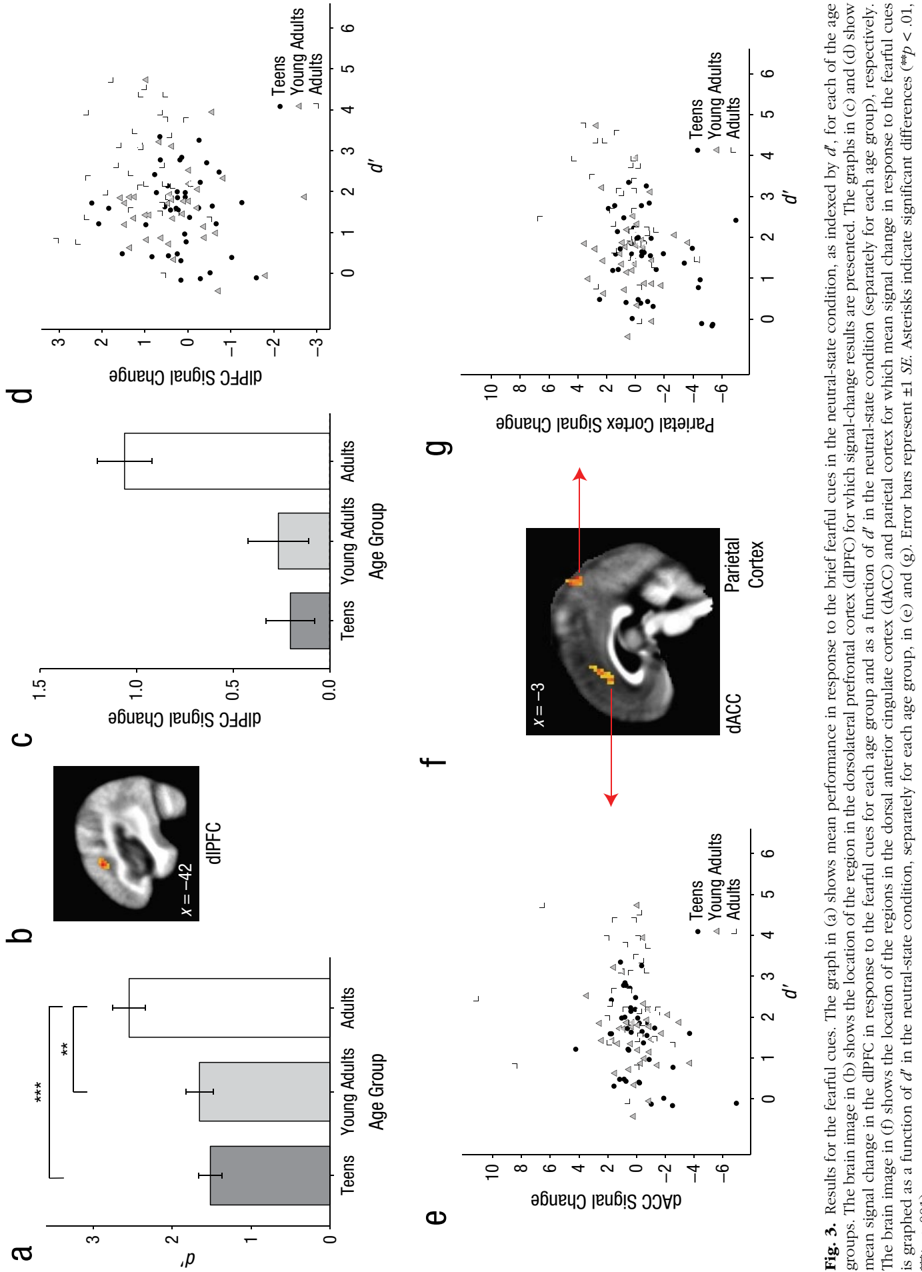
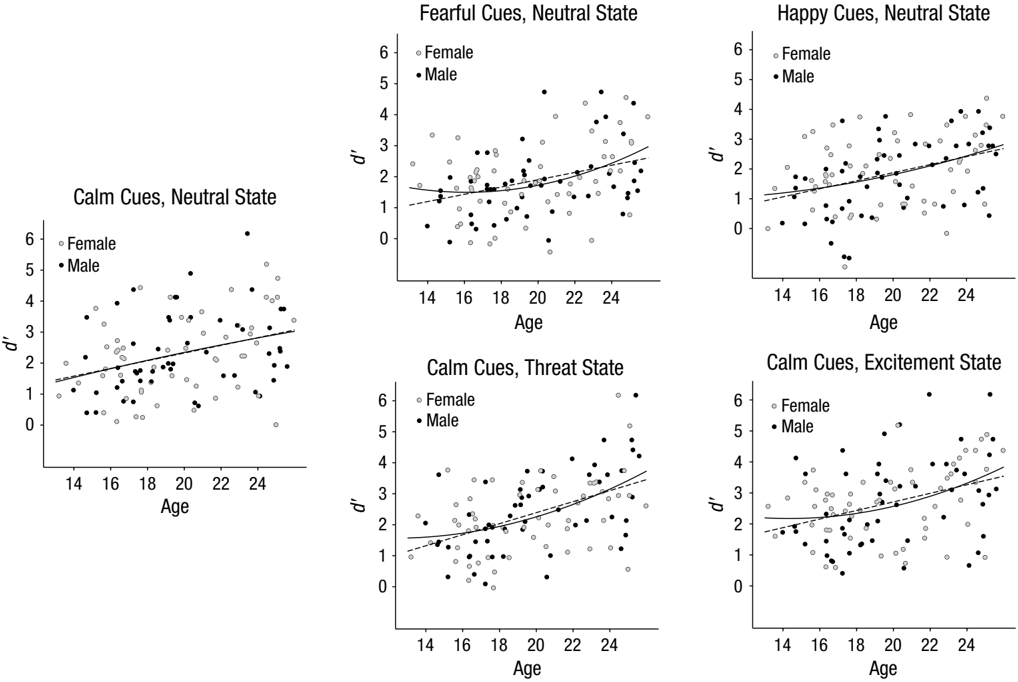
- In neutral-state blocks, age group affected performance for fearful cues, \(F(2, 98) = 11.11, p < .001, \eta_p^2 = .16\); happy cues, \(F(2, 98) = 10.90, p < .001, \eta_p^2 = .15\); and calm cues, \(F(2, 98) = 7.81, p < .001, \eta_p^2 = .10\). For fearful cues, teens and 18- to 21-year-olds performed worse than adults over 21; for happy cues, young adults and adults performed better than teens; for calm cues, only teens and adults differed significantly.
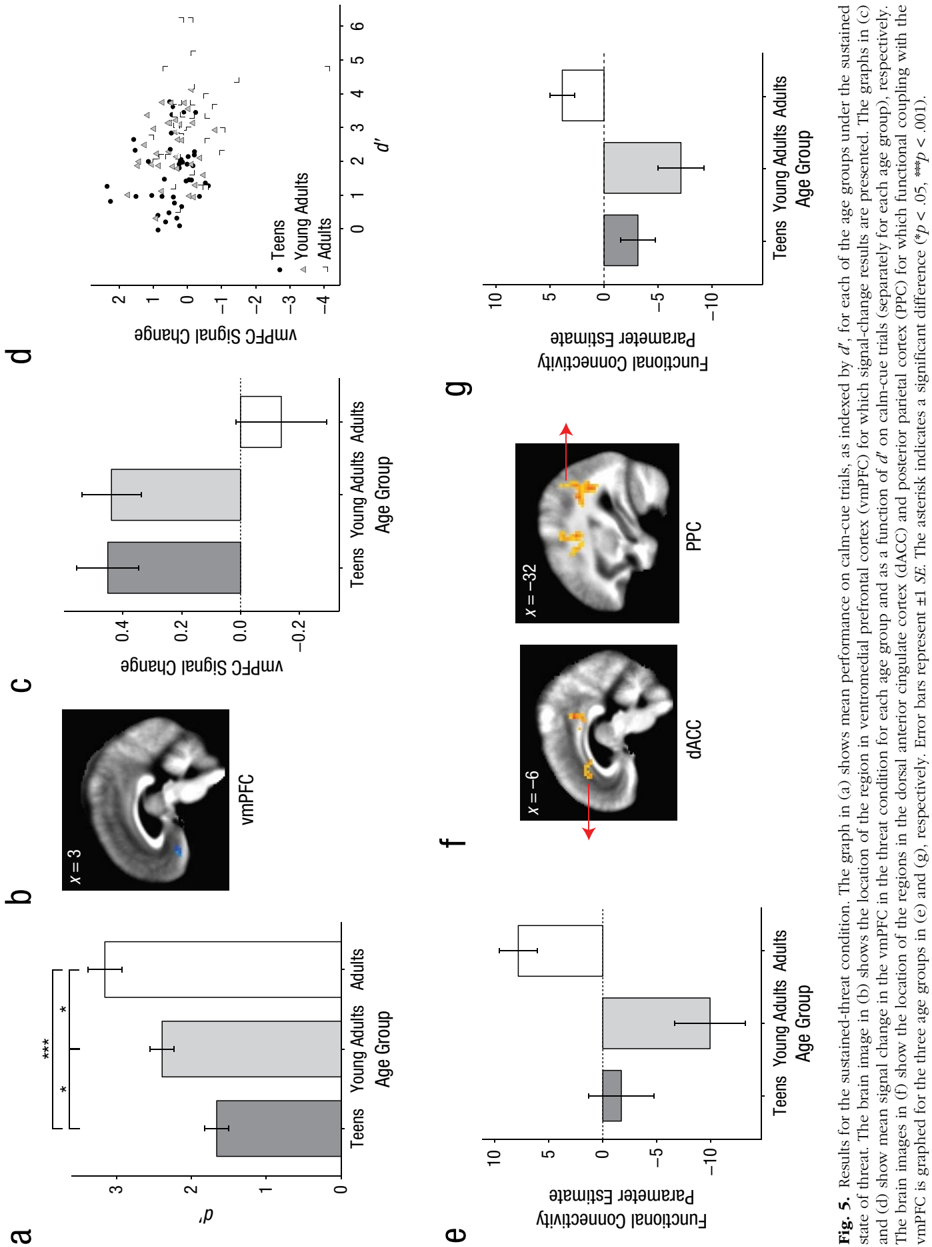
- Under sustained threat, age group affected performance to calm cues, \(F(2, 98) = 17.57, p < .001, \eta_p^2 = .24\); teens and young adults both showed diminished performance relative to adults (teens vs. adults: \(t(60.47) = 5.40, p < .001, d = 1.24\); young adults vs. adults: \(t(59.51) = 2.75, p = .014, d = 0.66\)). Under excitement, the age-group effect was \(F(2, 98) = 8.65, p < .001, \eta_p^2 = .13\), with only teens and adults differing significantly.
- For fearful cues, teens and young adults showed less activity than adults in right dlPFC (47 voxels; \(Z = -4.66, p < .02\), corrected) and right thalamus (57 voxels; \(Z = -3.88, p < .02\), corrected). Under threat, a vmPFC cluster survived PFC correction (13 voxels; \(Z = 3.58, p < .05\), PFC corrected), and vmPFC signal change was negatively correlated with threat-condition performance, \(r(108) = -.308, p = .001\), remaining significant when controlling for age, \(r(107) = -.215, p = .023\).
- Whole-brain gPPI analyses found nine clusters showing less functional coupling with vmPFC in teens and young adults than in adults across the threat condition, including dACC and posterior parietal cortex.
Methods
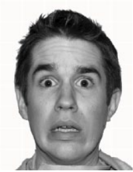
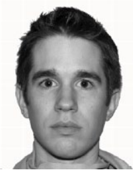
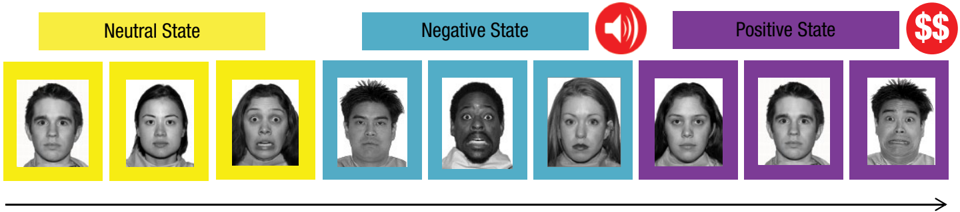
- Participants were 110 individuals from a larger sample of 147 healthy, right-handed 13- to 25-year-olds recruited from New York City and Los Angeles: 41 teens ages 13–17 (\(M = 16.19, SD = 1.20\)), 35 young adults ages 18–21 (\(M = 19.88, SD = 1.09\)), and 34 adults ages 22–25 (\(M = 24.08, SD = 1.04\)). They completed an adapted emotional go/no-go task (Cognitive Control Under Emotion task) during fMRI under sustained threat, excitement, and neutral states, with happy, fearful, and calm faces as go/no-go cues.
- Behavioral accuracy was indexed by \(d'\) and analyzed with ANOVA models including sex and scanning site, Bonferroni-adjusted alpha of .01, plus linear and quadratic models with age continuous. fMRI data were preprocessed and analyzed in AFNI using GLMs and group linear mixed-effects models with sex and site as between-subjects variables; whole-brain voxel threshold was \(p = .005\), cluster threshold \(p = .05\) corrected, with an anatomical PFC ROI for the threat condition and gPPI connectivity analyses using dlPFC and vmPFC seeds.
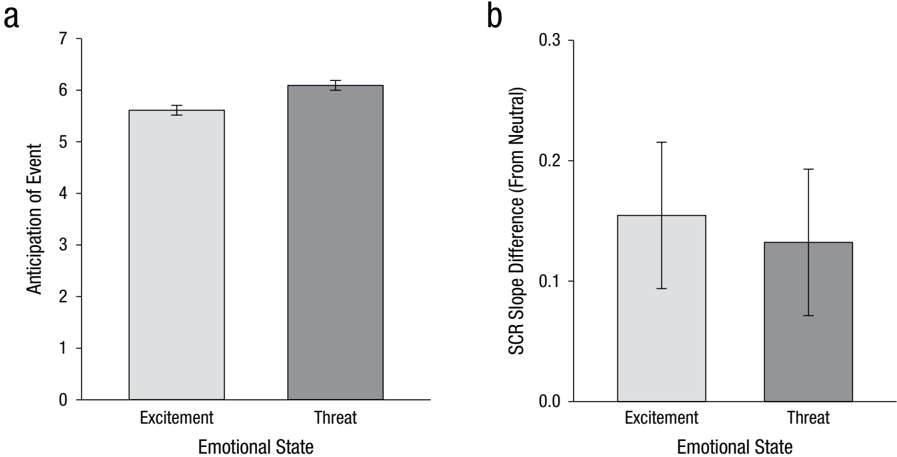
- Debriefing questions and skin conductance response (SCR) were used to validate the emotional-state manipulation.
Limitations
- The paper states that behaviors were measured within a controlled research setting and that the experimentally manipulated emotional conditions did not capture the complex real-world situations in which individuals typically make decisions.
- The paper states that the sample, although community based and representative of the racial and ethnic distribution in Los Angeles and New York City, was relatively small, with 110 participants ages 13 to 25, and that replication is warranted.
- Evident from the text: the study is cross-sectional, so it cannot directly establish within-person developmental change; additionally, portions of data from 38 adults in this sample are included in a separate report focusing on different experimental questions.
Model-written summary. Check it against the paper before relying on it.
Integrity signals
Registry
Cites
Statistics
Figures

Verification
Claims the paper makes
12 Valid · 3 Not valid · 7 Not checked · 105 Own results and interpretations
The cited sources support only part of this claim — read each source’s verdict below.
In the paper
“Studies show that adolescence, typically defined as ages 13 through 17, is a time of heightened sensitivity to motivational, social, and emotional information (Casey, 2015; Steinberg, 2010).”
What the sources say
- Not checked — no full text of the sourcecites Casey, 2015 matched to “Beyond simple models of self-control to circuit-based accounts of adolescent behavior” (2015) source
- Partly supportedcites Steinberg, 2010 matched to “A dual systems model of adolescent risk‐taking” (2010) sourceExperimental — accuracy not yet measured
The Introduction links adolescence to increased reward-seeking and activity in the socioemotional system, and the Discussion reports heightened reward-seeking most clearly in mid-adolescence. The paper does not define adolescence as ages 13–17 or establish heightened sensitivity to motivational, social, and emotional information generally; its Participants section studies ages 10–30. (LLM, conf=0.86)
plainstates an association- Asserted: passes — The authors put it forward as true.
- Checkable: passes — It can be checked against evidence.
- Load-bearing: passes — The paper’s conclusions depend on it.
- Based: passes — The paper gives a reason why it holds.
The cited sources support only part of this claim — read each source’s verdict below.
In the paper
“which shows marked change into the early 20s (Gogtay et al., 2004; Sowell et al., 2004).”
What the sources say
- Partly supportedcites Gogtay et al., 2004 matched to “Dynamic mapping of human cortical development during childhood through early adulthood” (2004) sourceExperimental — accuracy not yet measured
The Results report that the prefrontal cortex matures late and that orbitofrontal regions continued to mature until the oldest age studied; the Methods give the study’s age range as 4–21 years. This supports structural prefrontal change into the early 20s, but the paper maps cortical gray matter rather than measuring prefrontal circuitry. (LLM, conf=0.83)
- Not checked yetcites Sowell et al., 2004 matched to “Longitudinal Mapping of Cortical Thickness and Brain Growth in Normal Children” (2004) source
Checked before — its earlier verdict is held back until a new check runs.
plainstates an association- Asserted: passes — The authors put it forward as true.
- Checkable: passes — It can be checked against evidence.
- Load-bearing: passes — The paper’s conclusions depend on it.
- Based: passes — The paper gives a reason why it holds.
- Partly supported
The sources with a verdict support this claim; the rest weren’t checked yet, have no full text we could read, or their verdicts aren’t rated yet.
In the paper
“Behavioral regulation in response to these inputs has been shown to rely on prefrontal circuitry (Dreyfuss et al., 2014; Hare et al., 2008; Somerville et al., 2011)”
What the sources say
- Not checked yetcites Dreyfuss et al., 2014 matched to “Teens impulsively react rather than retreat from threat” (2014) source
Checked before — its earlier verdict is held back until a new check runs.
- Not checked — no full text of the sourcecites Hare et al., 2008 matched to “Biological Substrates of Emotional Reactivity and Regulation in Adolescence During an Emotional Go-Nogo Task” (2008) source
- Supportedcites Somerville et al., 2011 matched to “Frontostriatal maturation predicts cognitive control failure to appetitive cues in adolescents” (2011) source
The Discussion describes interactions involving the prefrontal cortex as critical to regulating motivated behavior and links frontostriatal engagement to suppressing responses to happy faces. The Conclusion also describes a prefrontal regulatory system involved in controlling approach behavior. The supplied passages do not give page numbers. (LLM, conf=0.87)
plainstates a cause- Asserted: passes — The authors put it forward as true.
- Checkable: passes — It can be checked against evidence.
- Load-bearing: passes — The paper’s conclusions depend on it.
- Based: passes — The paper gives a reason why it holds.
- Not checked yet
The cited sources support only part of this claim — read each source’s verdict below.
In the paper
“Specifically, during adolescence, cognitive-control capacities and decision making appear to be especially influenced by incentives (Galvan et al., 2006; Geier, Terwilliger, Teslovich, Velanova, & Luna, 2010; Somerville, Hare, & Casey, 2011; Van Leijenhorst et al., 2010), threats (CohenGilbert & Thomas, 2013; Dreyfuss et al., 2014; GroseFifer, Rodrigues, Hoover, &”
What the sources say
- Not checked — no full text of the sourcecites Galvan et al., 2006 matched to “Earlier development of the accumbens relative to orbitofrontal cortex might underlie risk-taking behavior in adolescents.” (2006) source
- Not checked — no full text of the sourcecites Hare et al., 2008 matched to “Biological Substrates of Emotional Reactivity and Regulation in Adolescence During an Emotional Go-Nogo Task” (2008) source
- Partly supportedcites Chein et al., 2011 matched to “Peers increase adolescent risk taking by enhancing activity in the brain’s reward circuitry” (2011) sourceExperimental — accuracy not yet measured
The Discussion reports that peers influenced adolescents’ risky decisions through increased reward-system activity. It also says cognitive-control activity was insensitive to peer context, so this source does not support peer influence on cognitive-control capacities. The incentive and threat citations in the printed sentence appear to be separate from this source. (LLM, conf=0.88)
hedgedstates an association- Asserted: passes — The authors put it forward as true.
- Checkable: passes — It can be checked against evidence.
- Load-bearing: passes — The paper’s conclusions depend on it.
- Based: passes — The paper gives a reason why it holds.
The cited sources support only part of this claim — read each source’s verdict below.
In the paper
“Resting-state functional-connectivity data show prolonged development of long-range cortical connectivity that does not stabilize until the 20s (Dosenbach et al., 2011; Fair et al., 2009).”
What the sources say
- Not matchedcites Dosenbach et al., 2011
An author–year citation the paper’s reference list doesn’t settle. We don’t search these by name.
- Partly supportedcites Fair et al., 2009 matched to “Functional brain networks develop from a local to distributed organization” (2009) sourceExperimental — accuracy not yet measured
The Results (Figure 5; page unavailable) report that many long-range functional connections strengthen from childhood to adulthood. The Methods compare children with an adult group averaging about 25 years old, but the paper does not establish when those connections stabilize; in fact, it notes that many long-range connections do not change significantly with age. (LLM, conf=0.86)
plainstates an association- Asserted: passes — The authors put it forward as true.
- Checkable: passes — It can be checked against evidence.
- Load-bearing: passes — The paper’s conclusions depend on it.
- Based: passes — The paper gives a reason why it holds.
- Not matched
64 more claims · 2 with their cited sources checked
Create a free account to see all 127 claims and to verify the 6 references still open.
- Probably not a substantial claim. 42
- It may state two separate claims as one. 31
Claims other papers make about this one
Each is checked against this paper’s own text: does it say what the citing paper says it does?
The cited source says what the claim attributes to it.
In the citing paper
“In contrast to subcortical changes, activity in ventromedial prefrontal cortex and its connectivity, show more protracted changes with age [18,35].”
From Development of the emotional brain (2019) · cites this paper as [18]
In the citing paper
“Teens showed diminished cognitive control relative to adults under both negative and positive emotional states. Like teens, young adults showed diminished performance relative to adults over 21, but only in the context of negatively valenced arousal.”
From Development of the emotional brain (2019) · cites this paper as [18]
In the citing paper
“This behavioral pattern was paralleled by enhanced ventromedial prefrontal activity associated with emotional regulation and diminished lateral prefrontal activity implicated in cognitive control in the teens and young adults.”
From Development of the emotional brain (2019) · cites this paper as [18]
Statistics that don’t add up
Each reported p-value recomputed from its test statistic and degrees of freedom, each partial η² from its F, and each ratio, mean difference or B printed with a p checked against its own confidence interval.
Rated minor: it would not touch a result — a value no result rests on, a p-value that stays on the same side of the significance level, or a conflict that is clerical, resolved elsewhere in the paper, or outside its own findings.
In the paper
“r (107) = .277, p = .002”
Reported p = .002 · recomputed p = .004
Rated minor: it would not touch a result — a value no result rests on, a p-value that stays on the same side of the significance level, or a conflict that is clerical, resolved elsewhere in the paper, or outside its own findings.
In the paper
“r (107) = .166, p = .081”
Reported p = .081 · recomputed p = .085
Rated minor: it would not touch a result — a value no result rests on, a p-value that stays on the same side of the significance level, or a conflict that is clerical, resolved elsewhere in the paper, or outside its own findings.
In the paper
“r (107) = -.215, p = .023”
Reported p = .023 · recomputed p = .025
Rated minor: it would not touch a result — a value no result rests on, a p-value that stays on the same side of the significance level, or a conflict that is clerical, resolved elsewhere in the paper, or outside its own findings.
In the paper
“F (2, 98) = 10.90, p < .001, η p 2 = .15”
Reported ηp² = .15 · recomputed ηp² = .1820
Rated minor: it would not touch a result — a value no result rests on, a p-value that stays on the same side of the significance level, or a conflict that is clerical, resolved elsewhere in the paper, or outside its own findings.
In the paper
“F (2, 98) = 7.81, p < .001, η p 2 = .10”
Reported ηp² = .10 · recomputed ηp² .1374–.1375
3 more findings
Create a free account to see every finding of this check.
Statistics recomputed
Every reported test result, recomputed from its test statistic and degrees of freedom. A result shows as not adding up only once an independent check has confirmed it.
- Doesn’t add upr(107) = 0.166reported p = .081 · recomputed p = .085
“r (107) = .166, p = .081”
- Doesn’t add upr(107) = 0.277reported p = .002 · recomputed p = .004
“r (107) = .277, p = .002”
- Doesn’t add upr(107) = -0.215reported p = .023 · recomputed p = .025
“r (107) = -.215, p = .023”
- Not confirmedt(74) = 1.92reported p = .029 · recomputed p = .059
“t (74) = 1.92, p = .029”
- Not confirmedt(74) = 1.65reported p = .051 · recomputed p = .103
“t (74) = 1.65, p = .051”
44 more recomputed tests
Create a free account to see every test the Stats check recomputed.
Self-check
Percentages, sums and reported differences re-computed from the paper’s own numbers.
Each contradiction between two passages listed here was confirmed by an independent check.
Rated minor: it would not touch a result — a value no result rests on, a p-value that stays on the same side of the significance level, or a conflict that is clerical, resolved elsewhere in the paper, or outside its own findings.
In the paper
§ Behavioral and psychophysiological data acquisition · p. 5
“SCR data were acquired from all the participants.”
§ Behavioral data analysis · p. 6
“Six subjects had no SCR data because of technical difficulties in the collection of these data”
Citations
Cites
R: A Language and Environment for Statistical Computing
R Core Team (2025) · doi:10.32614/r.manuals · Cited by 352,181
Advances in functional and structural MR image analysis and implementation as FSL
Smith, S. M., Jenkinson, M., Woolrich, M. W., Beckmann, C. F., Behrens, T. E. J., Johansen-Berg, H., Bannister, P. R., De Luca, M., Drobnjak, I., Flitney, D. E., et al. (2004) · NeuroImage · doi:10.1016/j.neuroimage.2004.07.051 · Cited by 13,630
AFNI: Software for analysis and visualization of functional magnetic resonance neuroimages
Cox, R. W. (1996) · Computers and Biomedical Research · doi:10.1006/cbmr.1996.0014 · Cited by 10,913
Dynamic mapping of human cortical development during childhood through early adulthood
Gogtay, N., Giedd, J. N., Lusk, L., Hayashi, K. M., Greenstein, D., Vaituzis, A. C., Nugent, T. F., Herman, D. H., Clasen, L. S., Toga, A. W., et al. (2004) · Proceedings of the National Academy of Sciences · doi:10.1073/pnas.0402680101 · Cited by 5,604 · cited 3×
“, 2014), whereas development of prefrontal cortex (PFC) exhibits a roughly linear trajectory (Galvan et al., 2006; Gogtay et al., 2004; Sowell et al., 2004).”
BackgroundResultCasey, B. J., Jones, R. M., & Hare, T. A. (2008) · Annals of the New York Academy of Sciences · doi:10.1196/annals.1440.010 · Cited by 3,345
Self-citationGardner, M., & Steinberg, L. (2005) · Developmental Psychology · doi:10.1037/0012-1649.41.4.625 · Cited by 2,218
Self-citationPrediction of individual brain maturity using fMRI
Dosenbach, N. U. F., Nardos, B., Cohen, A. L., Fair, D. A., Power, J. D., Church, J. A., Nelson, S. M., Wig, G. S., Vogel, A. C., Lessov-Schlaggar, C. N., et al. (2010) · Science · doi:10.1126/science.1194144 · Cited by 2,183 · cited 1×
“Resting-state functional-connectivity data show prolonged development of long-range cortical connectivity that does not stabilize until the 20s (Dosenbach et al., 2011; Fair et al., 2009).”
BackgroundSelf-citationConflict monitoring versus selection-for-action in anterior cingulate cortex
Botvinick, M., Nystrom, L. E., Fissell, K., Carter, C. S., & Cohen, J. D. (1999) · Nature · doi:10.1038/46035 · Cited by 2,044
Evidence for a Frontoparietal Control System Revealed by Intrinsic Functional Connectivity
Vincent, J. L., Kahn, I., Snyder, A. Z., Raichle, M. E., & Buckner, R. L. (2008) · Journal of Neurophysiology · doi:10.1152/jn.90355.2008 · Cited by 1,869 · cited 1×
“When presented with fearful cues, teens and young adults showed less activity than older adults in dlPFC, a region implicated in affective and cognitive regulation (Silvers et al., 2015; Vincent et al., 2008), and in the dACC and parietal cortex.”
BackgroundCasey, B. J., Getz, S., & Galvan, A. (2008) · Developmental Review · doi:10.1016/j.dr.2007.08.003 · Cited by 1,810
Self-citation
Research works printed but not linked: 2
- Scott, E. S. (2013). 'Children are different': Constitutional values and justice policy. Ohio State Journal of Criminal Law , 11 , 71-105.
- Taylor-Thompson, K. (2014). Minority rule: Redefining the age of criminality. N.Y.U. Review of Law & Social Change , 38 , 143-200.
Cited by
Items 101–200 of 275
Predicting depression risk in early adolescence via multimodal brain imaging
Gracia-Tabuenca, Z., Barbeau, É. B., Xia, Y., & Chai, X. J. (2024) · NeuroImage Clinical · doi:10.1016/j.nicl.2024.103604 · Cited by 19
Scholz, V., Waltmann, M., Herzog, N., Reiter, A. M. F., Horstmann, A., & Deserno, L. (2023) · Journal of Neuroscience · doi:10.1523/jneurosci.1418-22.2023 · Cited by 12
The effect of social feedback from peers on adolescent cognitive control
Hollarek, M., Lee, N. C., & Krabbendam, L. (2020) · Journal of Adolescence · doi:10.1016/j.adolescence.2020.09.010 · Cited by 15
Glenn, D. E., Feldman, J. S., Ivie, E. J., Shechner, T., Leibenluft, E., Pine, D. S., Peters, M. A. K., & Michalska, K. J. (2021) · Developmental Psychobiology · doi:10.1002/dev.22185 · Cited by 12
The Timing of Brain Maturation, Early Experience, and the Human Social Niche
Finlay, B. L., & Uchiyama, R. (2020) · Elsevier eBooks · doi:10.1016/b978-0-12-820584-6.00034-9 · Cited by 14
Zeballos, D., Magno, L., Soares, F., Filho, M. E., Amorim, L. D. A. F., Pinto, J. A., Greco, D. B., Grangeiro, A., & Dourado, I. C. (2023) · Journal of Adolescent Health · doi:10.1016/j.jadohealth.2023.08.005 · Cited by 12
McCormick, E. M., Gates, K. M., & Telzer, E. H. (2018) · NeuroImage · doi:10.1016/j.neuroimage.2018.12.042 · Cited by 15
“Furthermore, despite previous suggestions that young adults (ages 18–20) should more-closely resemble adolescents (Cohen et al., 2016), we found that young adults were significantly more risky than adolescents and showed no significant differences from adults.”
Zou, Y., Zhang, H., Chen, X., Ji, W., Mao, L., & Lei, H. C. (2019) · Neurochemistry International · doi:10.1016/j.neuint.2019.104503 · Cited by 10
Sheed, A. T., McEwan, T. E., Simmons, M., Spivak, B., & Papalia, N. L. (2023) · Journal of Family Violence · doi:10.1007/s10896-023-00529-3 · Cited by 10
“…support for young people up to 25 years old given neuroscientific and psychosocial evidence of ongoing brain maturation into the third decade of life (Cohen et al., 2016; Scott et al., 2016), indicating a need for research to consider this young adult cohort alongside their adolescent counterparts.”
Developmental shift in testosterone influence on prefrontal emotion control
Tyborowska, A., Volman, I., Niermann, H. C. M., Dapprich, A. L., Smeekens, S., Cillessen, A. H. N., Toni, I., & Roelofs, K. (2023) · Developmental Science · doi:10.1111/desc.13415 · Cited by 11
Johnston, C. R., Quarmley, M., Nelson, B. D., Helion, C., Murty, V. P., & Jarcho, J. M. (2023) · Proceedings of the National Academy of Sciences · doi:10.1073/pnas.2308593120 · Cited by 12
“Study 2 participants were composed of two samples that spanned the transition from early adolescence into midadulthood (66, 67).”
BackgroundEmotional valence and arousal: the impact of AI-generated image stimuli on design creativity
Hou, G., & Wang, X. (2024) · International Journal of Technology and Design Education · doi:10.1007/s10798-024-09941-2 · Cited by 16
“Research suggested that heightened arousal states could influence the unfolding of creative thinking by impacting individuals’ attention allocation and utilization of cognitive resources (Fredrickson, 2004; Cohen et al., 2016).”
Haag, A., Cha, C. B., Noll, J. G., Gee, D. G., Shenk, C. E., Schreier, H. M. C., Heim, C. C., Shalev, I., Rose, E. J., Jorgensen, A., et al. (2022) · Assessment · doi:10.1177/10731911221090465 · Cited by 14
Algorithmic Rights and Protections for Children
Ito, M., Cross, R., Dinakar, K., & Odgers, C. (2023) · The MIT Press eBooks · doi:10.7551/mitpress/13654.001.0001 · Cited by 24
Sheed, A. T., McEwan, T. E., Papalia, N. L., Spivak, B., & Simmons, M. (2023) · Criminal Justice and Behavior · doi:10.1177/00938548231170799 · Cited by 12
“Increasingly, researchers, organizations, and service providers are recognizing the need for a developmentally informed approach for young people aged up to 25-year old given neuroscientific and psychological evidence of delayed brain maturation into the 20s (Cohen et al., 2016; Scott et al., 2016).”
BackgroundMiranda Misconceptions of Criminal Detainees: Differences Based on Age Groups and Prior Arrests
Winningham, D. B., Rogers, R., & Drogin, E. Y. (2018) · International Journal of Forensic Mental Health · doi:10.1080/14999013.2017.1405125 · Cited by 9
“For instance, Cohen et al. (2016, 2017) found that cues of potential threat (e.g., police questioning) diminished cognitive control more in youth and young adults (18–21), than their older counterparts.”
BackgroundResting-state cortical hubs in youth organize into four categories
Demeter, D. V., Gordon, E. M., Nugiel, T., Garza, A., Larguinho, T. L., & Church, J. A. (2023) · Cell Reports · doi:10.1016/j.celrep.2023.112521 · Cited by 8
“38,62,63 The EN-back task is a variant of the Human Connectome Project n-back task 63 and measures working memory processes.”
Inhibition and individual differences in behavior and emotional regulation in adolescence
Malagoli, C., Chiorri, C., Traverso, L., & Usai, M. C. (2021) · Psychological Research · doi:10.1007/s00426-021-01565-8 · Cited by 14
Setting the occasion for adolescent inhibitory control
Meyer, H. C., & Bucci, D. J. (2016) · Neurobiology of Learning and Memory · doi:10.1016/j.nlm.2016.11.010 · Cited by 8
“This is consistent with an emerging theory that age-related differences in behavioral control are correlated with cognitive load, which increases alongside the emotional salience of the surrounding environment (Cohen et al., 2016; Mills, Dumontheil, Speekenbrink, & Blakemore, 2015).”
Emotional Response Categorization in Adolescents and Young Adults
Herry, C., Maintenant, C., Blanchette, I., Tricard, É., Gimenes, G., & Pennequin, V. (2018) · Psychological Reports · doi:10.1177/0033294118784864 · Cited by 9
“Cohen et al. (2016) showed that adolescents had poorer cognitive performance than adults under brief and prolonged negative emotional arousal.”
BackgroundThe Role of Affective Control in Emotion Regulation during AdolescencePreprint
Schweizer, S., Gotlib, I. H., & Blakemore, S. (2019) · doi:10.31234/osf.io/asq9j · Cited by 8
“Everyone was wasted”! Insights from adolescents’ alcohol experience narratives
Knox, K., Schmidtke, D. J., Dietrich, T., & Rundle-Thiele, S. R. (2016) · Young Consumers Insight and Ideas for Responsible Marketers · doi:10.1108/yc-02-2016-00585 · Cited by 7
White, S. F., Gonzalez, S. M. E., & Moriarty, E. M. (2022) · Frontiers in Behavioral Neuroscience · doi:10.3389/fnbeh.2022.853697 · Cited by 12
Sbeglia, C., Simmons, C., Icenogle, G., Levick, M., Peniche, M., Beardslee, J., & Cauffman, E. E. (2024) · Journal of Research on Adolescence · doi:10.1111/jora.12989 · Cited by 12
“In fact, with a growing body of evidence suggesting that adult levels of maturity are not fully reached until the mid-twenties or later (Cohen et al., 2016; Hooper et al., 2004; Ordaz et al., 2013; Steinberg et al., 2018).”
Cauffman, E. E., Donley, S., & Thomas, A. G. (2017) · Criminology & Public Policy · doi:10.1111/1745-9133.12257 · Cited by 7
Social bodies and social justice
Lewis, S., & Thomson, M. (2019) · International Journal of Law in Context · doi:10.1017/s1744552319000053 · Cited by 12
Perino, M. T., Moreira, J. F. G., McCormick, E. M., & Telzer, E. H. (2019) · Social Cognitive and Affective Neuroscience · doi:10.1093/scan/nsz063 · Cited by 9
“as our behavioral measure of emotion regulation (Cohen et al., 2016).”
BackgroundLawler, S., Barrett, E. L., Stapinski, L. A., Bright, D. A., & Teesson, M. (2020) · Australian & New Zealand Journal of Criminology · doi:10.1177/0004865820907149 · Cited by 13
“This transitional period is a distinct developmental stage from both adolescence and adulthood (Bonnie, Stroud, & Breiner, 2014); however, research indicates young adults aged 18–21 are more like teenagers than older adults in their tendency to engage in high risk, impulsive behaviour (Cohen et al., 2016).”
BackgroundTillem, S., Conley, M. I., & Baskin-sommers, A. R. (2021) · Development and Psychopathology · doi:10.1017/s0954579421000237 · Cited by 10
“Forty-eight of these pictures were the same stimuli used during an emotional n-back task completed earlier in the session (for details see Casey et al., 2018; Cohen et al., 2016) and 48 pictures were novel.”
MethodVetter, N. C., Fröhner, J. H., Hoffmann, K., Backhausen, L. L., & Smolka, M. N. (2022) · Developmental Cognitive Neuroscience · doi:10.1016/j.dcn.2022.101131 · Cited by 6
“Young adults continued to react specifically to negatively valenced emotional information together with an ongoing development of prefrontal circuitries (Cohen et al., 2016).”
Kardan, O., Sereeyothin, C., Schertz, K. E., Angstadt, M., Weigard, A. S., Berman, M. G., Heitzeg, M. M., & Rosenberg, M. D. (2026) · Developmental Cognitive Neuroscience · doi:10.1016/j.dcn.2026.101719 · Cited by 7
Asymmetric developmental change regarding the effect of reward and punishment on response inhibition
Miyasaka, M., & Nomura, M. (2019) · Scientific Reports · doi:10.1038/s41598-019-49037-9 · Cited by 6
Pedersen, M. L., Alnæs, D., van der Meer, D., FERNÁNDEZ, S. R., Berthet, P., Dahl, A., Kjelkenes, R., Schwarz, E., Thompson, W. K., Barch, D. M., et al. (2021) · doi:10.31234/osf.io/jxfqd · Cited by 6
Hercules, K., Liu, Z., Christofilea, E., Wei, J., Venegas, G., Ciocca, O., Dyer, A., Lee, G. E., Santini-Bishop, S., Shappell, H. M., et al. (2025) · Biological Psychiatry Global Open Science · doi:10.1016/j.bpsgos.2025.100506 · Cited by 8
Three Opportunities for the Future of Juvenile Forensic Assessment
Grisso, T. (2019) · Criminal Justice and Behavior · doi:10.1177/0093854819883671 · Cited by 8
“Studies in juvenile detention centers in the Netherlands report remarkable differences between Dutch native, Moroccan, and Surinamese youth on standardized self-report mental health screening tools often used in the United States (Colins et al., 2013; Veen, Stevens, Doreleijers, van der Ende, & Vollebergh, 2010).”
BackgroundCollins, S. A., & Ninan, I. (2021) · Cerebral Cortex Communications · doi:10.1093/texcom/tgab007 · Cited by 5
Babies Having Babies: Incarcerated Adolescent Parents and Their Emotional Well-Being
Young, B. C., & Diamond, B. (2023) · Youth Violence and Juvenile Justice · doi:10.1177/15412040231191725 · Cited by 6
“The average teen is still developing skills that could be useful in coping with being incarcerated or being a teenage parent (Arain et al., 2013; Cohen et al., 2016; Hartshorne & Germine, 2015), and they therefore might struggle more with incarceration than their adult counterparts.”
BackgroundKwon, M., Kim, H., Yang, J., Lee, Y., Hur, J. K., Lee, T., Bjork, J. M., & Ahn, W. (2023) · Substance Use & Misuse · doi:10.1080/10826084.2023.2259471 · Cited by 8
Sex and drugs and self-control: how the teen brain navigates risk
Smith, K. (2018) · Nature · doi:10.1038/d41586-018-02170-3 · Cited by 6
Law and Neuroscience: Progress, Promise, and Pitfalls
Jones, O. D., & Wagner, A. D. (2020) · The MIT Press eBooks · doi:10.7551/mitpress/11442.003.0115 · Cited by 5
Early Adolescents’ Perspectives on Digital Privacy
Santer, N. D., Manago, A. M., Starks, A., & Reich, S. M. (2023) · The MIT Press eBooks · doi:10.7551/mitpress/13654.003.0012 · Cited by 10
Nixon, C. L., & Linkie, C. A. (2023) · Springer eBooks · doi:10.1007/978-3-031-31547-3_100 · Cited by 11
The Neurobiology of Adolescent Self‐Control
Cohen, A. O., & Casey, B. J. (2017) · Wiley eBooks · doi:10.1002/9781118920497.ch26 · Cited by 7
Self-citationMultimodal neuroimaging and suicidality in a US population-based sample of school-aged childrenPreprint
Vidal‐Ribas, P., Janiri, D., Doucet, G. E., Pornpattananangkul, N., Nielson, D. M., Frangou, S., & Stringaris, A. K. (2019) · medRxiv · doi:10.1101/19013193 · Cited by 5
A cognitive-computational account of mood swings in adolescencePreprint
Gregorová, K., Eldar, E., Deserno, L., & Reiter, A. M. F. (2022) · doi:10.31234/osf.io/u62vr · Cited by 5
Exploring the late maturation of an intrinsic episodic memory network: A resting-state fMRI study
Andrade, M. Â., Raposo, A., & Andrade, A. (2024) · Developmental Cognitive Neuroscience · doi:10.1016/j.dcn.2024.101453 · Cited by 3
“The age limits of adolescence have been much debated, but the most consensual period for human adolescence is between 13 and 17 years old (Cohen et al., 2016).”
BackgroundPsychological jurisprudence and the role of police psychology in community psychology
Arrigo, B. A., & Sellers, B. G. (2021) · Elsevier eBooks · doi:10.1016/b978-0-12-816544-7.00007-3 · Cited by 5
Children’s Scientific Reasoning Skills in Light of General Cognitive Development
Edelsbrunner, P. A., Schumacher, R., & Stern, E. (2022) · Cambridge University Press eBooks · doi:10.1017/9781108399838.033 · Cited by 5
Fountain, E., Mikytuck, A. M., & Woolard, J. L. (2021) · Translational Issues in Psychological Science · doi:10.1037/tps0000248 · Cited by 5
The social and emotional foundations of learning
Gotlieb, R. J. M., Hickey-Moody, A. C., Güroğlu, B., Burnard, P., Horn, C., Willcox, M. G., Saadatmand, M., Linzarini, A., Vandenbroucke, A. R. E., Albanese, D., et al. (2022) · UNESCO MGIEP eBooks · doi:10.56383/yrhy1735 · Cited by 10
Density regression and uncertainty quantification with Bayesian deep noise neural networks
Zhang, D., Liu, T., & Kang, J. (2023) · Stat · doi:10.1002/sta4.604 · Cited by 7
“Although B-DeepNoise combined with a softmax activation in the output layer is capable of handling categorical outcomes (Section S5.”
Beard, E. C., Venkatraman, V., & Chein, J. M. (2023) · Journal of the Association for Consumer Research · doi:10.1086/728205 · Cited by 7
Self-citationPoljac, E., Haartsen, R., van der Cruijsen, R., Kiesel, A., & Poljac, E. (2017) · Psychological Research · doi:10.1007/s00426-017-0927-x · Cited by 5
“In fact, a recent neuroimaging study focused on cognitive control capacities in 13–25-year-old individuals and demonstrated diminished cognitive performance under brief and prolonged negative emotional arousal in 18–21 years relative to adults over 21 (Cohen et al., 2016).”
BackgroundInfluentialDecision making processes and alcohol use among college students
Wolff, J. M., & Crockett, L. J. (2018) · Journal of American College Health · doi:10.1080/07448481.2018.1499654 · Cited by 4
“to individuals over age 21 and this impaired performance corresponded to decreased activity in CC areas.(25)”
BackgroundSun, Z., Dai, J., & Xie, S. (2026) · Acta Psychologica · doi:10.1016/j.actpsy.2026.106227 · Cited by 9
Neural correlates of preferred activities: development of an interest-specific go/nogo task
Bos, D. J., Ajodan, E. L., Silverman, M. R., Dyke, J. P., Durston, S., Power, J. D., & Jones, R. M. (2017) · Social Cognitive and Affective Neuroscience · doi:10.1093/scan/nsx127 · Cited by 4
“Our age range of 18–29 years spans late adolescence into adulthood and prior work suggests age differences to motivational stimuli across this period (Cohen-Gilbert et al., 2014; Cohen et al., 2016).”
BackgroundSelf-citationWillms, M., & Virji‐Babul, N. (2020) · Developments in neuroethics and bioethics · doi:10.1016/bs.dnb.2020.03.006 · Cited by 3
Kentopp, S. D., Fredrickson, G. F., Weishaar, M. G., & Conner, B. T. (2021) · Deviant Behavior · doi:10.1080/01639625.2021.1949254 · Cited by 3
“Data indicate that late adolescence and early adulthood are periods of heightened risk for engagement in a variety of health risk behaviors (Cohen et al. 2016; Yancey et al. 2011).”
BackgroundHaney, C. W., Baumgartner, F. R., & Steele, K. A. (2022) · Journal of Pediatric Neuropsychology · doi:10.1007/s40817-022-00134-0 · Cited by 4
“Studies also show that cognitive performance in emotionally arousing situations is more adversely affected for late adolescent class members than for adults, and that this difference “is paralleled by dynamic developmental changes in prefrontal circuitry” (Cohen, et al., 2016, p. 559).”
Herber, C. C. L. M., Lott-Sandkamp, L. L., Straub, E., & Tuschen‐Caffier, B. (2024) · Scientific Reports · doi:10.1038/s41598-024-72336-9 · Cited by 4
Gaillard, M., Jones, S. A., Kliamovich, D., Flores, A. L., & Nagel, B. J. (2025) · Brain and Cognition · doi:10.1016/j.bandc.2025.106303 · Cited by 4
Salem, T., Fristad, M. A., Arnold, L. E., Taylor, H. G., Frazier, T. W., Horwitz, S. M., Findling, R. L., & The LAMS Group (2020) · Journal of Affective Disorders · doi:10.1016/j.jad.2020.03.150 · Cited by 6
Golan, M., Benifla, S., Samo, A., Alon, N., & Mozeikov, M. (2022) · BMC Public Health · doi:10.1186/s12889-022-12581-7 · Cited by 4
“The shift from worshiping the collective and the community to individuality in western societies [44] is also expressed in the imbalanced parentschool partnership.”
BackgroundWeissmann, L. (2022) · Indiana Law Review · doi:10.18060/26417 · Cited by 3
Ybarra, M. L., Saewyc, E., Rosario, M., & DUNSIGER, S. I. (2023) · Prevention Science · doi:10.1007/s11121-023-01493-6 · Cited by 5
“In addition, among those aged 14–18 years, self-control decreases with youthfulness (Cohen et al., 2016).”
BackgroundMoorman, J., & Romano, E. (2023) · Child Abuse & Neglect · doi:10.1016/j.chiabu.2023.106402 · Cited by 8
Young adults' reasoning for involving a parent in a genomic decision‐making research study
Pascal, J. M., McGowan, M. L., Blumling, A. A., Prows, C. A., Lipstein, E. A., & Myers, M. F. (2023) · Journal of Genetic Counseling · doi:10.1002/jgc4.1768 · Cited by 3
“Individuals provide informed consent for medical care and research in the United States upon reaching adulthood (18 years old in most states); however, there is no evidence to suggest that decision-making capacity is achieved upon turning 18 (Cohen, Bonnie, et al., 2016 ).”
BackgroundChen, Y., Xia, X., Zhou, Z., Yuan, M., Peng, Y., Liu, Y., Tang, J., & Fu, Y. (2024) · Brain Imaging and Behavior · doi:10.1007/s11682-024-00871-0 · Cited by 3
“For example, a research on brain function testing revealed that compared with the brain function of the 22–25 age group, the brain function of the 18–21 years old individuals is closer to that of the 13–17 years old individuals (Cohen et al., 2016).”
Foundations of addictive problems in adolescents: Neurobiological factors
Dash, G. F., Thomsen, K. R., Ewing, S. W. F., & Silvers, J. A. (2020) · Elsevier eBooks · doi:10.1016/b978-0-12-818626-8.00002-5 · Cited by 3
Bettens, T., & Warren, A. R. (2022) · Applied Cognitive Psychology · doi:10.1002/acp.4030 · Cited by 5
Ryan, J. (2020) · Open Access Victoria University of Wellington | Te Herenga Waka (Figshare) · doi:10.26686/wgtn.17151092.v1 · Cited by 4
A Systems Perspective on the Development of Coping: “We’re Going to Need a Bigger Boat”
Skinner, E. A., & Zimmer‐Gembeck, M. J. (2023) · Cambridge University Press eBooks · doi:10.1017/9781108917230.002 · Cited by 7
European Justice Systems and a Developmental Approach to Young Adults’ Incarceration
Zeijlmans, K., Sipma, T., & van der Laan, A. M. (2021) · Springer eBooks · doi:10.1007/978-3-030-82265-1_5 · Cited by 3
Llamas, N. E., & Marinaro, J. Á. (2021) · SCIO Revista de Filosofía · doi:10.46583/scio_2021.21.825 · Cited by 7
Nixon, C. L., & Linkie, C. A. (2023) · Springer eBooks · doi:10.1007/978-3-030-98711-4_100-1 · Cited by 3
Pocius, E., & Малинаускас, Р. К. (2023) · Children · doi:10.3390/children10060914 · Cited by 5
Ronzón‐Tirado, R., Redondo, N., & Muñoz-Rivas, M. J. (2023) · Aggression and Violent Behavior · doi:10.1016/j.avb.2023.101872 · Cited by 5
Criminalisation of Juvenile Justice: Questioning the Assumptions of Juvenile Transfer Laws in India
Ramaswamy, S., Ashok, S. S., Seshadri, S. P., Mander, H., Bunders, J., & Lokur, J. M. (2024) · The International Journal of Children s Rights · doi:10.1163/15718182-32020006 · Cited by 9
Baiamonte, R., & Gámez, A. M. (2025) · Behavioural Processes · doi:10.1016/j.beproc.2025.105191 · Cited by 2
Wáng, Q., Xiao, H., Yin, H., Wei, J., Li, S., & Shi, B. (2025) · The Journal of Creative Behavior · doi:10.1002/jocb.70024 · Cited by 2
Genetic risk-dependent brain markers of resilience to childhood Trauma
Han, L., Rolls, E. T., Liu, H., Stein, D. J., Sahakian, B. J., Elliott, R., Jia, T., Xie, C., Xiang, S., Wang, N., et al. (2025) · Nature Communications · doi:10.1038/s41467-025-61471-0 · Cited by 4
“The negative >neutral activations during 0 back in the EN-back task 79 were used.”
Neurocognitive Development During Adolescence
Lee, N. C., Hollarek, M., & Krabbendam, L. (2018) · Oxford University Press eBooks · doi:10.1093/oso/9780190847128.003.0003 · Cited by 5
Rethinking sentencing for young adult offenders
Chalton, A., Kenny, A., & Nguyen, H. Q. (2019) · Cited by 15
Mathys, C., Lenoir, P., & Damit, C. (2022) · Neuropsychiatrie de l Enfance et de l Adolescence · doi:10.1016/j.neurenf.2022.01.004 · Cited by 2
Bettens, T., & Normile, C. J. (2023) · Psychology Crime and Law · doi:10.1080/1068316x.2023.2196424 · Cited by 2
“Crucially, emotionally arousing or psychologically stressful situations — like that of an interview or interrogation with a school administrator — further hinders an adolescent ’ s ability to make rational and mature judgments (Cohen et al., 2016; Figner et al., 2009; Ice-nogle et al., 2019).”
Children in Police Custody: Adversity and Adversariality Behind Closed Doors
Bevan, M. (2024) · doi:10.1093/oso/9780192855497.001.0001 · Cited by 7
Police-Induced Confessions, 2.0: Risk Factors and RecommendationsPreprint
Kassin, S. M., Cleary, H. M. D., Gudjonsson, G. H., et al. (2025) · SSRN Electronic Journal · doi:10.2139/ssrn.5151782 · Cited by 2
Di, X., Hanna, G. B., & Biswal, B. B. (2025) · bioRxiv (Cold Spring Harbor Laboratory) · doi:10.1101/2025.11.07.687226 · Cited by 2
Modi, H. H., Davis, M. M., Troop‐Gordon, W., Telzer, E. H., & Rudolph, K. D. (2023) · Child Development · doi:10.1111/cdev.13875 · Cited by 6
“…compared to adults, adolescents exhibit worse cognitive control (more errors on a Go/No-go task) in the context of aversive cues (fearful facial expressions, Cohen et al., 2016; angry facial expressions, Kwon et al., 2019) relative to neutral cues (calm facial expressions; Dreyfuss et al., 2014).”
BackgroundMethodResultInfluentialBeltrani, A., Kang, T., Lee, A. F., McGrath, R. E., & PRENTKY, R. A. (2023) · Criminal Justice and Behavior · doi:10.1177/00938548231193414 · Cited by 1
“…maturational change in virtually all domains of development, from physical and biological to emotional, cognitive, social, sexual, and behavioral (e.g., Abrams, 2013; Bonnie & Scott, 2013; Casey et al., 2020, 2022; Cohen et al., 2016; grisso, 2019; Monahan et al., 2015; Steinberg & Icenogle, 2019).”
BackgroundDirect and Indirect Self-Injury
Rubæk, L., & Møhl, B. (2023) · Oxford University Press eBooks · doi:10.1093/oxfordhb/9780197611272.013.4 · Cited by 2
Bettens, T., & Cleary, H. M. D. (2024) · Psychology, Crime & Law · doi:10.1080/1068316x.2024.2391971
“Hypersensitivity to rewards is particularly apparent in negative, emotionally arousing situations (Cohen et al., 2016), such as a police interrogation.”
Shi, Z., Yang, B., Zhou, Z., Haase, C. M., & Qu, Y. (2025) · Cerebral Cortex · doi:10.1093/cercor/bhaf170 · Cited by 1
Student Differences in a Social–Emotional Learning Program: Engagement and Individual Factors
Tang, D., Zheng, L. R., Hein, T. C., Albrecht, J. R., Rodríguez‐Quintana, N., & Bilek, E. L. (2026) · Journal of School Health · doi:10.1111/josh.70164 · Cited by 2
Luciana, M. M., Duffy, K. A., & Thompson, W. K. (2026) · Developmental Cognitive Neuroscience · doi:10.1016/j.dcn.2026.101744 · Cited by 1
“One of these measures, the EN-back task (Barch et al., 2013; Cohen et al., 2016), requires memory as well as emotion regulation for successful completion.”
Process vs protection: Evaluating devolved child National Referral Mechanism decision-making pilots
Smith, A. H., & Heys, A. (2026) · Probation Journal · doi:10.1177/02645505261453295 · Cited by 1
“…social environment can play a powerful role in inclining teenagers into risk-taking behaviour because, compared to adults, adolescents are particularly responsive to external stimuli (their peers for example), less able to regulate their emotions and easily emotionally aroused (Cohen et al., 2016).”
Chen, Y. D., Agrawal, S., Anokhin, A. P., Luciana, M. M., Gee, D. G., & Cho, Y. (2026) · Developmental Cognitive Neuroscience · doi:10.1016/j.dcn.2026.101772 · Cited by 1
Simmons, C., & Cavanagh, C. (2026) · Policy Insights from the Behavioral and Brain Sciences · doi:10.1177/23727322261470696 · Cited by 1
“…often demonstrate cognitive capacities comparable to adults under structured, low-emotion conditions (Casey et al., 2022; Icenogle et al., 2019), these capacities are less consistently expressed under heightened emotional, social, or cognitive demands (Cauffman et al., 2010; Cohen et al., 2016).”
Richards, C. (2017) · Palgrave Macmillan UK eBooks · doi:10.1057/978-1-137-51053-2_8 · Cited by 1
Identification of Relationship between the Quality and Uses of Public Parks in India
Jogdande, A., & Bandyopadhyay, A. (2023) · Civil Engineering and Architecture · doi:10.13189/cea.2023.110112 · Cited by 1
Metadata
- Authors
- Cohen, A. O., Breiner, K., Steinberg, L., Bonnie, R. J., Scott, E. S., Taylor-Thompson, K., Rudolph, M. D., Chein, J., Richeson, J. A., Heller, A. S., Silverman, M. R., Dellarco, D. V., Fair, D. A., Galván, A., & Casey, B. J.
- Affiliations
- Weill Cornell Medicine (US)
- University of California, Los Angeles (US)
- Temple University (US)
- University of Virginia (US)
- Columbia University (US)
- New York University School of Law, New York University
- Oregon Health & Science University (US)
- Northwestern University (US)
- University of Miami (US)
- Corresponding author
- Casey, B. J.
- ORCID
- Venue
- Psychological Science
- Publisher
- SAGE Publications
- Published
- 2016-02-24
- Volume
- 27
- Issue
- 4
- Pages
- 549-562
- ISSN
- 0956-7976 (ISSN-L)
- 1467-9280
- OpenAlex
- W2276111811
- Semantic Scholar
- 91967831cac862d6102be8355188a9ce476f44c5
- Cited by
- 272
- References
- 46
- Citations by year
- 2026: 20 · 2025: 13 · 2024: 38 · 2023: 35 · 2022: 29 · 2021: 25 · 2020: 27 · 2019: 31 · 2018: 18 · 2017: 25 · 2016: 10
- FWCI
- 17.77
- Type
- journal article
- Language
- en
- Update notices
- correction (2017-02-13)
- Open access
- green
- escholarship.org
- Licence
- journals.sagepub.com/page/policies/text-and-data-mining-license (tdm)
- Locations
- Psychological Science (publishedVersion)
- PubMed (publishedVersion)
- eScholarship (California Digital Library) (submittedVersion)
- Topics
- Life Sciences › Neuroscience › Cognitive Neuroscience › Neural and Behavioral Psychology Studies
- Social Sciences › Psychology › Clinical Psychology › Child and Adolescent Psychosocial and Emotional Development
- Social Sciences › Psychology › Clinical Psychology › Historical and Modern Theater Studies
- Keywords
- cognitive control, adolescence, emotional arousal, negative emotions, positive emotions, emotional go/no-go task, ventromedial prefrontal cortex, cognitive development, brain activity
- MeSH terms
- Adolescent, Adult, Arousal, Brain, Brain Mapping, Cognition, Emotions, Female, Humans, Image Processing, Computer-Assisted, Magnetic Resonance Imaging, Male, Nerve Net, New York City, Reaction Time, Los Angeles, Young Adult
About these checks
Registry, retraction, Cites and statistics results are computed, not judged, with one exception: a printed reference that no index lists is read once by a model before it counts as a citation error. Claims are extracted by a model and kept only when their quote appears verbatim in the text; each cited source is then checked, with a model’s help, for whether it says what the claim relies on. Those verdicts can be wrong — read the claim’s quote and the cited source before relying on one.
The claim verdicts this report counts are experimental: their accuracy is not yet measured.
A language model drew the claims from the paper on 2026-10-10, under version 3 of the claim definition (model deepseek-v4.1-flash, prompt extract-v3).
A second model labelled each claim on 2026-10-10 (model jev-1.13-20260917, definition revision gold-guideline-v0.2).
Cited sources are checked with a language model’s help (gpt-6-sol).
Statistics and arithmetic are recomputed, not judged.
Confidence bands are shown only for fields calibrated on our annotated test set. None is calibrated yet, so no band is shown.
What counts as a claim ›How we measure confidence ›How we check this ›
Are you an author, or do you see a problem with this page? Request a review
Data sources
Bibliographic data: Semantic Scholar, OpenAlex, Crossref.
Contains information from the Semantic Scholar Academic Graph Datasets, made available under the ODC Attribution License (ODC-BY 1.0).
Semantic Scholar’s data is described in: Kinney, R., et al. (2023). The Semantic Scholar Open Data Platform. arXiv:2301.10140.
