

When Is an Adolescent an Adult? Assessing Cognitive Control in Emotional and Nonemotional Contexts
Open accessThe DOI matches its Crossref record; 47 of the 47 references it cites were found in a registry or an index; 15 of the 38 sources its claims cite were checked for support.
Abstract
Assesses cognitive control in emotional and nonemotional contexts across adolescents and young adults (ages 13-25), demonstrating diminished cognitive control under emotional arousal in 18- to 21-year-olds relative to older adults, linked to neurobiological maturation of fronto-parietal and ventromedial prefrontal circuitry.
Overview
CoChat Summary
TL;DR
In a 13- to 25-year-old community sample, 18- to 21-year-olds showed diminished cognitive control under negative emotional arousal relative to adults over 21, while neutral and positive conditions showed different age patterns. This behavioral effect was paralleled by altered prefrontal activity and connectivity, suggesting continued development of cognitive control in emotional contexts into young adulthood.
Key findings
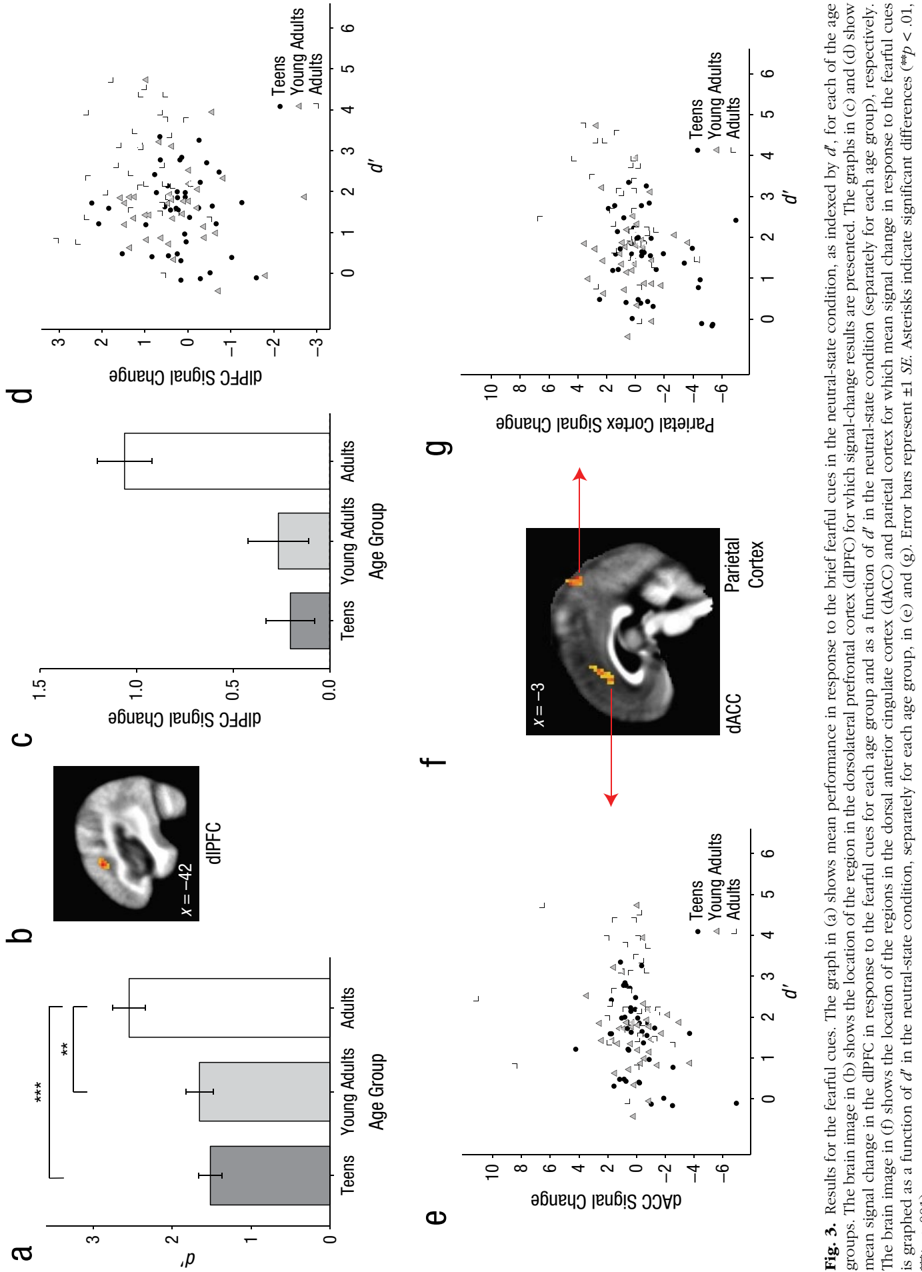
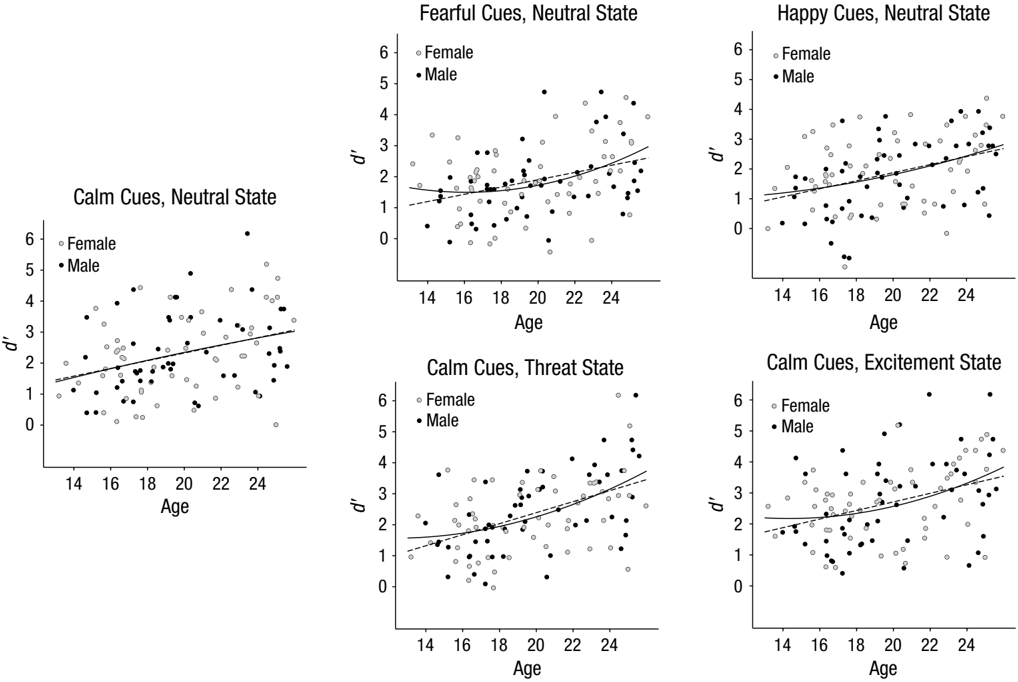
- In neutral-state blocks, age group affected performance for fearful cues, \(F(2, 98) = 11.11, p < .001, \eta_p^2 = .16\); happy cues, \(F(2, 98) = 10.90, p < .001, \eta_p^2 = .15\); and calm cues, \(F(2, 98) = 7.81, p < .001, \eta_p^2 = .10\). For fearful cues, teens and 18- to 21-year-olds performed worse than adults over 21; for happy cues, young adults and adults performed better than teens; for calm cues, only teens and adults differed significantly.
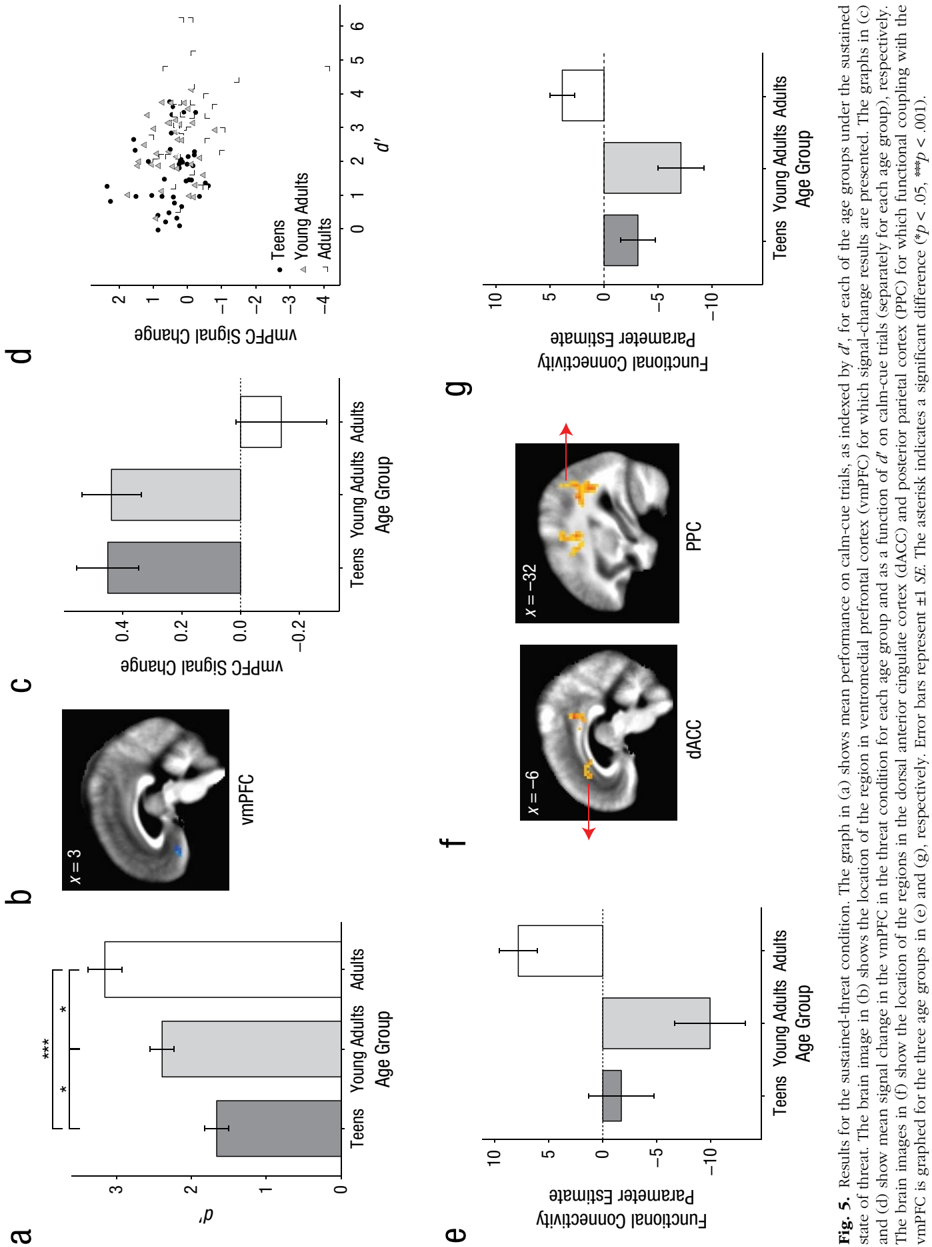
- Under sustained threat, age group affected performance to calm cues, \(F(2, 98) = 17.57, p < .001, \eta_p^2 = .24\); teens and young adults both showed diminished performance relative to adults (teens vs. adults: \(t(60.47) = 5.40, p < .001, d = 1.24\); young adults vs. adults: \(t(59.51) = 2.75, p = .014, d = 0.66\)). Under excitement, the age-group effect was \(F(2, 98) = 8.65, p < .001, \eta_p^2 = .13\), with only teens and adults differing significantly.
- For fearful cues, teens and young adults showed less activity than adults in right dlPFC (47 voxels; \(Z = -4.66, p < .02\), corrected) and right thalamus (57 voxels; \(Z = -3.88, p < .02\), corrected). Under threat, a vmPFC cluster survived PFC correction (13 voxels; \(Z = 3.58, p < .05\), PFC corrected), and vmPFC signal change was negatively correlated with threat-condition performance, \(r(108) = -.308, p = .001\), remaining significant when controlling for age, \(r(107) = -.215, p = .023\).
- Whole-brain gPPI analyses found nine clusters showing less functional coupling with vmPFC in teens and young adults than in adults across the threat condition, including dACC and posterior parietal cortex.
Methods
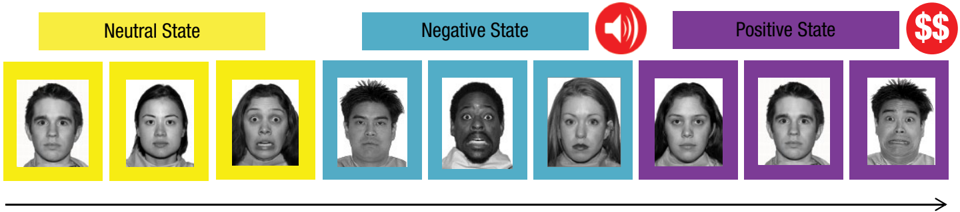
- Participants were 110 individuals from a larger sample of 147 healthy, right-handed 13- to 25-year-olds recruited from New York City and Los Angeles: 41 teens ages 13–17 (\(M = 16.19, SD = 1.20\)), 35 young adults ages 18–21 (\(M = 19.88, SD = 1.09\)), and 34 adults ages 22–25 (\(M = 24.08, SD = 1.04\)). They completed an adapted emotional go/no-go task (Cognitive Control Under Emotion task) during fMRI under sustained threat, excitement, and neutral states, with happy, fearful, and calm faces as go/no-go cues.
- Behavioral accuracy was indexed by \(d'\) and analyzed with ANOVA models including sex and scanning site, Bonferroni-adjusted alpha of .01, plus linear and quadratic models with age continuous. fMRI data were preprocessed and analyzed in AFNI using GLMs and group linear mixed-effects models with sex and site as between-subjects variables; whole-brain voxel threshold was \(p = .005\), cluster threshold \(p = .05\) corrected, with an anatomical PFC ROI for the threat condition and gPPI connectivity analyses using dlPFC and vmPFC seeds.
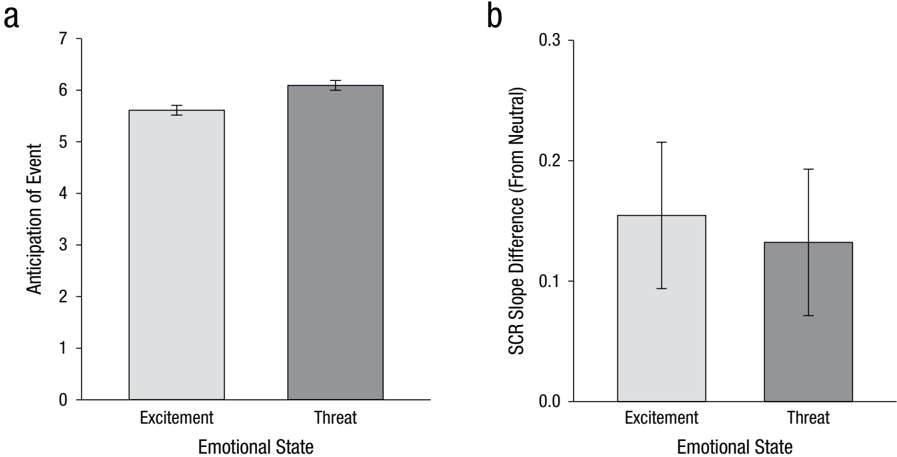
- Debriefing questions and skin conductance response (SCR) were used to validate the emotional-state manipulation.
Limitations
- The paper states that behaviors were measured within a controlled research setting and that the experimentally manipulated emotional conditions did not capture the complex real-world situations in which individuals typically make decisions.
- The paper states that the sample, although community based and representative of the racial and ethnic distribution in Los Angeles and New York City, was relatively small, with 110 participants ages 13 to 25, and that replication is warranted.
- Evident from the text: the study is cross-sectional, so it cannot directly establish within-person developmental change; additionally, portions of data from 38 adults in this sample are included in a separate report focusing on different experimental questions.
Model-written summary. Check it against the paper before relying on it.
Integrity signals
Registry
Cites
Statistics
Figures



Verification
Claims the paper makes
12 Valid · 3 Not valid · 7 Not checked · 105 Own results and interpretations
The cited sources support only part of this claim — read each source’s verdict below.
In the paper
“Studies show that adolescence, typically defined as ages 13 through 17, is a time of heightened sensitivity to motivational, social, and emotional information (Casey, 2015; Steinberg, 2010).”
What the sources say
- Not checked — no full text of the sourcecites Casey, 2015 matched to “Beyond simple models of self-control to circuit-based accounts of adolescent behavior” (2015) source
- Partly supportedcites Steinberg, 2010 matched to “A dual systems model of adolescent risk‐taking” (2010) sourceExperimental — accuracy not yet measured
The Introduction links adolescence to increased reward-seeking and activity in the socioemotional system, and the Discussion reports heightened reward-seeking most clearly in mid-adolescence. The paper does not define adolescence as ages 13–17 or establish heightened sensitivity to motivational, social, and emotional information generally; its Participants section studies ages 10–30. (LLM, conf=0.86)
plainstates an association- Asserted: passes — The authors put it forward as true.
- Checkable: passes — It can be checked against evidence.
- Load-bearing: passes — The paper’s conclusions depend on it.
- Based: passes — The paper gives a reason why it holds.
The cited sources support only part of this claim — read each source’s verdict below.
In the paper
“which shows marked change into the early 20s (Gogtay et al., 2004; Sowell et al., 2004).”
What the sources say
- Partly supportedcites Gogtay et al., 2004 matched to “Dynamic mapping of human cortical development during childhood through early adulthood” (2004) sourceExperimental — accuracy not yet measured
The Results report that the prefrontal cortex matures late and that orbitofrontal regions continued to mature until the oldest age studied; the Methods give the study’s age range as 4–21 years. This supports structural prefrontal change into the early 20s, but the paper maps cortical gray matter rather than measuring prefrontal circuitry. (LLM, conf=0.83)
- Not checked yetcites Sowell et al., 2004 matched to “Longitudinal Mapping of Cortical Thickness and Brain Growth in Normal Children” (2004) source
Checked before — its earlier verdict is held back until a new check runs.
plainstates an association- Asserted: passes — The authors put it forward as true.
- Checkable: passes — It can be checked against evidence.
- Load-bearing: passes — The paper’s conclusions depend on it.
- Based: passes — The paper gives a reason why it holds.
- Partly supported
The sources with a verdict support this claim; the rest weren’t checked yet, have no full text we could read, or their verdicts aren’t rated yet.
In the paper
“Behavioral regulation in response to these inputs has been shown to rely on prefrontal circuitry (Dreyfuss et al., 2014; Hare et al., 2008; Somerville et al., 2011)”
What the sources say
- Not checked yetcites Dreyfuss et al., 2014 matched to “Teens impulsively react rather than retreat from threat” (2014) source
Checked before — its earlier verdict is held back until a new check runs.
- Not checked — no full text of the sourcecites Hare et al., 2008 matched to “Biological Substrates of Emotional Reactivity and Regulation in Adolescence During an Emotional Go-Nogo Task” (2008) source
- Supportedcites Somerville et al., 2011 matched to “Frontostriatal maturation predicts cognitive control failure to appetitive cues in adolescents” (2011) source
The Discussion describes interactions involving the prefrontal cortex as critical to regulating motivated behavior and links frontostriatal engagement to suppressing responses to happy faces. The Conclusion also describes a prefrontal regulatory system involved in controlling approach behavior. The supplied passages do not give page numbers. (LLM, conf=0.87)
plainstates a cause- Asserted: passes — The authors put it forward as true.
- Checkable: passes — It can be checked against evidence.
- Load-bearing: passes — The paper’s conclusions depend on it.
- Based: passes — The paper gives a reason why it holds.
- Not checked yet
The cited sources support only part of this claim — read each source’s verdict below.
In the paper
“Specifically, during adolescence, cognitive-control capacities and decision making appear to be especially influenced by incentives (Galvan et al., 2006; Geier, Terwilliger, Teslovich, Velanova, & Luna, 2010; Somerville, Hare, & Casey, 2011; Van Leijenhorst et al., 2010), threats (CohenGilbert & Thomas, 2013; Dreyfuss et al., 2014; GroseFifer, Rodrigues, Hoover, &”
What the sources say
- Not checked — no full text of the sourcecites Galvan et al., 2006 matched to “Earlier development of the accumbens relative to orbitofrontal cortex might underlie risk-taking behavior in adolescents.” (2006) source
- Not checked — no full text of the sourcecites Hare et al., 2008 matched to “Biological Substrates of Emotional Reactivity and Regulation in Adolescence During an Emotional Go-Nogo Task” (2008) source
- Partly supportedcites Chein et al., 2011 matched to “Peers increase adolescent risk taking by enhancing activity in the brain’s reward circuitry” (2011) sourceExperimental — accuracy not yet measured
The Discussion reports that peers influenced adolescents’ risky decisions through increased reward-system activity. It also says cognitive-control activity was insensitive to peer context, so this source does not support peer influence on cognitive-control capacities. The incentive and threat citations in the printed sentence appear to be separate from this source. (LLM, conf=0.88)
hedgedstates an association- Asserted: passes — The authors put it forward as true.
- Checkable: passes — It can be checked against evidence.
- Load-bearing: passes — The paper’s conclusions depend on it.
- Based: passes — The paper gives a reason why it holds.
The cited sources support only part of this claim — read each source’s verdict below.
In the paper
“Resting-state functional-connectivity data show prolonged development of long-range cortical connectivity that does not stabilize until the 20s (Dosenbach et al., 2011; Fair et al., 2009).”
What the sources say
- Not matchedcites Dosenbach et al., 2011
An author–year citation the paper’s reference list doesn’t settle. We don’t search these by name.
- Partly supportedcites Fair et al., 2009 matched to “Functional brain networks develop from a local to distributed organization” (2009) sourceExperimental — accuracy not yet measured
The Results (Figure 5; page unavailable) report that many long-range functional connections strengthen from childhood to adulthood. The Methods compare children with an adult group averaging about 25 years old, but the paper does not establish when those connections stabilize; in fact, it notes that many long-range connections do not change significantly with age. (LLM, conf=0.86)
plainstates an association- Asserted: passes — The authors put it forward as true.
- Checkable: passes — It can be checked against evidence.
- Load-bearing: passes — The paper’s conclusions depend on it.
- Based: passes — The paper gives a reason why it holds.
- Not matched
64 more claims · 2 with their cited sources checked
Create a free account to see all 127 claims and to verify the 6 references still open.
- Probably not a substantial claim. 42
- It may state two separate claims as one. 31
Claims other papers make about this one
Each is checked against this paper’s own text: does it say what the citing paper says it does?
The cited source says what the claim attributes to it.
In the citing paper
“In contrast to subcortical changes, activity in ventromedial prefrontal cortex and its connectivity, show more protracted changes with age [18,35].”
From Development of the emotional brain (2019) · cites this paper as [18]
In the citing paper
“Teens showed diminished cognitive control relative to adults under both negative and positive emotional states. Like teens, young adults showed diminished performance relative to adults over 21, but only in the context of negatively valenced arousal.”
From Development of the emotional brain (2019) · cites this paper as [18]
In the citing paper
“This behavioral pattern was paralleled by enhanced ventromedial prefrontal activity associated with emotional regulation and diminished lateral prefrontal activity implicated in cognitive control in the teens and young adults.”
From Development of the emotional brain (2019) · cites this paper as [18]
Statistics that don’t add up
Each reported p-value recomputed from its test statistic and degrees of freedom, each partial η² from its F, and each ratio, mean difference or B printed with a p checked against its own confidence interval.
Rated minor: it would not touch a result — a value no result rests on, a p-value that stays on the same side of the significance level, or a conflict that is clerical, resolved elsewhere in the paper, or outside its own findings.
In the paper
“r (107) = .277, p = .002”
Reported p = .002 · recomputed p = .004
Rated minor: it would not touch a result — a value no result rests on, a p-value that stays on the same side of the significance level, or a conflict that is clerical, resolved elsewhere in the paper, or outside its own findings.
In the paper
“r (107) = .166, p = .081”
Reported p = .081 · recomputed p = .085
Rated minor: it would not touch a result — a value no result rests on, a p-value that stays on the same side of the significance level, or a conflict that is clerical, resolved elsewhere in the paper, or outside its own findings.
In the paper
“r (107) = -.215, p = .023”
Reported p = .023 · recomputed p = .025
Rated minor: it would not touch a result — a value no result rests on, a p-value that stays on the same side of the significance level, or a conflict that is clerical, resolved elsewhere in the paper, or outside its own findings.
In the paper
“F (2, 98) = 10.90, p < .001, η p 2 = .15”
Reported ηp² = .15 · recomputed ηp² = .1820
Rated minor: it would not touch a result — a value no result rests on, a p-value that stays on the same side of the significance level, or a conflict that is clerical, resolved elsewhere in the paper, or outside its own findings.
In the paper
“F (2, 98) = 7.81, p < .001, η p 2 = .10”
Reported ηp² = .10 · recomputed ηp² .1374–.1375
3 more findings
Create a free account to see every finding of this check.
Statistics recomputed
Every reported test result, recomputed from its test statistic and degrees of freedom. A result shows as not adding up only once an independent check has confirmed it.
- Doesn’t add upr(107) = 0.166reported p = .081 · recomputed p = .085
“r (107) = .166, p = .081”
- Doesn’t add upr(107) = 0.277reported p = .002 · recomputed p = .004
“r (107) = .277, p = .002”
- Doesn’t add upr(107) = -0.215reported p = .023 · recomputed p = .025
“r (107) = -.215, p = .023”
- Not confirmedt(74) = 1.92reported p = .029 · recomputed p = .059
“t (74) = 1.92, p = .029”
- Not confirmedt(74) = 1.65reported p = .051 · recomputed p = .103
“t (74) = 1.65, p = .051”
44 more recomputed tests
Create a free account to see every test the Stats check recomputed.
Self-check
Percentages, sums and reported differences re-computed from the paper’s own numbers.
Each contradiction between two passages listed here was confirmed by an independent check.
Rated minor: it would not touch a result — a value no result rests on, a p-value that stays on the same side of the significance level, or a conflict that is clerical, resolved elsewhere in the paper, or outside its own findings.
In the paper
§ Behavioral and psychophysiological data acquisition · p. 5
“SCR data were acquired from all the participants.”
§ Behavioral data analysis · p. 6
“Six subjects had no SCR data because of technical difficulties in the collection of these data”
Citations
Cites
R: A Language and Environment for Statistical Computing
R Core Team (2025) · doi:10.32614/r.manuals · Cited by 352,181
Advances in functional and structural MR image analysis and implementation as FSL
Smith, S. M., Jenkinson, M., Woolrich, M. W., Beckmann, C. F., Behrens, T. E. J., Johansen-Berg, H., Bannister, P. R., De Luca, M., Drobnjak, I., Flitney, D. E., et al. (2004) · NeuroImage · doi:10.1016/j.neuroimage.2004.07.051 · Cited by 13,630
AFNI: Software for analysis and visualization of functional magnetic resonance neuroimages
Cox, R. W. (1996) · Computers and Biomedical Research · doi:10.1006/cbmr.1996.0014 · Cited by 10,913
Dynamic mapping of human cortical development during childhood through early adulthood
Gogtay, N., Giedd, J. N., Lusk, L., Hayashi, K. M., Greenstein, D., Vaituzis, A. C., Nugent, T. F., Herman, D. H., Clasen, L. S., Toga, A. W., et al. (2004) · Proceedings of the National Academy of Sciences · doi:10.1073/pnas.0402680101 · Cited by 5,604 · cited 3×
“, 2014), whereas development of prefrontal cortex (PFC) exhibits a roughly linear trajectory (Galvan et al., 2006; Gogtay et al., 2004; Sowell et al., 2004).”
BackgroundResultCasey, B. J., Jones, R. M., & Hare, T. A. (2008) · Annals of the New York Academy of Sciences · doi:10.1196/annals.1440.010 · Cited by 3,345
Self-citationGardner, M., & Steinberg, L. (2005) · Developmental Psychology · doi:10.1037/0012-1649.41.4.625 · Cited by 2,218
Self-citationPrediction of individual brain maturity using fMRI
Dosenbach, N. U. F., Nardos, B., Cohen, A. L., Fair, D. A., Power, J. D., Church, J. A., Nelson, S. M., Wig, G. S., Vogel, A. C., Lessov-Schlaggar, C. N., et al. (2010) · Science · doi:10.1126/science.1194144 · Cited by 2,183 · cited 1×
“Resting-state functional-connectivity data show prolonged development of long-range cortical connectivity that does not stabilize until the 20s (Dosenbach et al., 2011; Fair et al., 2009).”
BackgroundSelf-citationConflict monitoring versus selection-for-action in anterior cingulate cortex
Botvinick, M., Nystrom, L. E., Fissell, K., Carter, C. S., & Cohen, J. D. (1999) · Nature · doi:10.1038/46035 · Cited by 2,044
Evidence for a Frontoparietal Control System Revealed by Intrinsic Functional Connectivity
Vincent, J. L., Kahn, I., Snyder, A. Z., Raichle, M. E., & Buckner, R. L. (2008) · Journal of Neurophysiology · doi:10.1152/jn.90355.2008 · Cited by 1,869 · cited 1×
“When presented with fearful cues, teens and young adults showed less activity than older adults in dlPFC, a region implicated in affective and cognitive regulation (Silvers et al., 2015; Vincent et al., 2008), and in the dACC and parietal cortex.”
BackgroundCasey, B. J., Getz, S., & Galvan, A. (2008) · Developmental Review · doi:10.1016/j.dr.2007.08.003 · Cited by 1,810
Self-citation
Research works printed but not linked: 2
- Scott, E. S. (2013). 'Children are different': Constitutional values and justice policy. Ohio State Journal of Criminal Law , 11 , 71-105.
- Taylor-Thompson, K. (2014). Minority rule: Redefining the age of criminality. N.Y.U. Review of Law & Social Change , 38 , 143-200.
Cited by
The Adolescent Brain Cognitive Development (ABCD) study: Imaging acquisition across 21 sites
Casey, B. J., Cannonier, T., Conley, M. I., Cohen, A. O., Barch, D. M., Heitzeg, M. M., Soules, M. E., Teslovich, T., Dellarco, D. V., Garavan, H., et al. (2018) · Developmental Cognitive Neuroscience · doi:10.1016/j.dcn.2018.03.001 · Cited by 2,204
“This task is a recognition memory test and a variant of the lifespan HCP task (http://www.humanconnectome.org/; Barch et al., 2013; Cohen et al., 2016a, 2016b; Supplemental Fig.”
BackgroundMethodInfluentialSelf-citationNigg, J. T. (2017) · Journal of Child Psychology and Psychiatry · doi:10.1111/jcpp.12675 · Cited by 1,518
“Adolescence, for example, is typified by asynchronous, nonlinear development across different kinds or aspects of SR (Casey, 2015), moderated by emotion context (Cohen et al., 2016).”
Importance of investing in adolescence from a developmental science perspective
Dahl, R. E., Allen, N. B., Wilbrecht, L., & Suleiman, A. B. (2018) · Nature · doi:10.1038/nature25770 · Cited by 1,196
Steinberg, L., Icenogle, G., Shulman, E. P., Breiner, K., Chein, J., Bacchini, D., Chang, L., Chaudhary, N., Giunta, L. D., Dodge, K. A., et al. (2018) · Developmental Science · doi:10.1111/desc.12532 · Cited by 514
“…around age 15 in relatively less arousing, ‘cool’ contexts (Casey, 2015), but when tasks become more demanding or emotionally arousing, adult- like performance may not be reached until closer to the mid- 20s (Cohen et al., 2016; Shulman et al., 2016; Veroude, Jolles, Croiset, & Krabbendam, 2013).”
Self-citationDevelopment of the emotional brain
Casey, B. J., Heller, A. S., Gee, D. G., & Cohen, A. O. (2019) · Neuroscience Letters · doi:10.1016/j.neulet.2017.11.055 · Cited by 485
“Recently, Cohen and colleagues [18] attempted to address this question by examining cognitive control under emotionally arousing conditions across development.”
InfluentialSelf-citationAlexander, R., Aragón, O. R., Bookwala, J., Cherbuin, N., Gatt, J. M., Kahrilas, I. J., Kästner, N., Lawrence, A., Lowe, L., Morrison, R. G., et al. (2021) · Neuroscience & Biobehavioral Reviews · doi:10.1016/j.neubiorev.2020.12.002 · Cited by 303
“For example, Cohen et al. (2016) reported that being in a positive state (excitement condition due to ability to win $100) generally increased performance on a go-no-go task and activation in a fronto-striatal neural network; however, reward responsivity to a monetary incentive and positive affect…”
van Duijvenvoorde, A. C. K., Peters, S., Braams, B. R., & Crone, E. A. (2016) · Neuroscience & Biobehavioral Reviews · doi:10.1016/j.neubiorev.2016.06.037 · Cited by 245
“For example, Cohn and Westenberg (2004) suggested that age by itself is a poor proxy of development.”
BackgroundIcenogle, G., Steinberg, L., Duell, N., Chein, J., Chang, L., Chaudhary, N., Di Giunta, L., Dodge, K. A., Fanti, K. A., Lansford, J. E., et al. (2019) · Law and Human Behavior · doi:10.1037/lhb0000315 · Cited by 207
Self-citationBeyond simple models of adolescence to an integrated circuit-based account: A commentary
Casey, B., Galván, A., & Somerville, L. H. (2016) · Developmental Cognitive Neuroscience · doi:10.1016/j.dcn.2015.12.006 · Cited by 206
Self-citationThe role of affective control in emotion regulation during adolescence
Schweizer, S., Gotlib, I. H., & Blakemore, S.-J. (2020) · Emotion · doi:10.1037/emo0000695 · Cited by 199
“Furthermore, increasing age was associated with stronger coupling between the prefrontal cortex and task-relevant brain regions (including the dorsal anterior cingulate; Cohen et al., 2016).”
BackgroundChildhood socioeconomic status and executive function in childhood and beyond
Last, B. S., Lawson, G. M., Breiner, K., Steinberg, L., & Farah, M. J. (2018) · PLOS ONE · doi:10.1371/journal.pone.0202964 · Cited by 186
“This sample was drawn from a larger study on emotional influences on cognitive control (N = 276) (see [12], for details of recruitment criteria and procedures), to include just the participants for whom age 8-10-year parental SES information was available.”
BackgroundMethodSelf-citationParenting and Self-Control Across Early to Late Adolescence: A Three-Level Meta-Analysis
Li, J.-B., Willems, Y. E., Stok, F. M., Deković, M., Bartels, M., & Finkenauer, C. (2019) · Perspectives on Psychological Science · doi:10.1177/1745691619863046 · Cited by 179
Prediction complements explanation in understanding the developing brain
Rosenberg, M. D., Casey, B. J., & Holmes, A. J. (2018) · Nature Communications · doi:10.1038/s41467-018-02887-9 · Cited by 173
Self-citationPolice-induced confessions, 2.0: Risk factors and recommendations.
Kassin, S. M., Cleary, H. M. D., Gudjonsson, G. H., Leo, R. A., Meissner, C. A., Redlich, A. D., & Scherr, K. C. (2025) · Law and Human Behavior · doi:10.1037/lhb0000593 · Cited by 171
Searching for Signatures of Brain Maturity: What Are We Searching For?
Somerville, L. H. (2016) · Neuron · doi:10.1016/j.neuron.2016.10.059 · Cited by 165
Development of Hippocampal–Prefrontal Cortex Interactions through Adolescence
Calabro, F. J., Murty, V. P., Jalbrzikowski, M., Tervo-Clemmens, B., & Luna, B. (2020) · Cerebral Cortex · doi:10.1093/cercor/bhz186 · Cited by 124
“relationship to cognitive development (Klingberg et al. 2002; Luna et al. 2015; Cohen et al. 2016; Crone and Steinbeis 2017).”
Tseng, W., Deveney, C. M., Stoddard, J., Kircanski, K., Frackman, A., Yi, J. Y., Hsu, D., Moroney, E., Machlin, L., Donahue, L. M., et al. (2018) · American Journal of Psychiatry · doi:10.1176/appi.ajp.2018.18040491 · Cited by 129
“Indeed, while many behavioral studies document the development of emotion regulation (9, 10), neuroimaging research has just begun to elucidate the maturation of brain systems supporting such capacity (11, 12).”
BackgroundNeural Correlates of Emotion Regulation in Adolescents and Emerging Adults: A Meta-analytic Study
Pozzi, E., Vijayakumar, N., Rakesh, D., & Whittle, S. (2021) · Biological Psychiatry · doi:10.1016/j.biopsych.2020.08.006 · Cited by 115
Adolescent decision making: A decade in review
Icenogle, G., & Cauffman, E. E. (2021) · Journal of Research on Adolescence · doi:10.1111/jora.12608 · Cited by 157
Silvers, J. A., Insel, C., Powers, A., Franz, P., Helion, C., Martin, R., Weber, J., Mischel, W., Casey, B. J., & Ochsner, K. N. (2017) · Developmental Cognitive Neuroscience · doi:10.1016/j.dcn.2016.06.005 · Cited by 99
Self-citationGruskin, D. C., Rosenberg, M. D., & Holmes, A. J. (2019) · NeuroImage · doi:10.1016/j.neuroimage.2019.116217 · Cited by 90
Neurobiology of eating behavior, nutrition, and health
Stover, P. J., Field, M. S., Andermann, M. L., Bailey, R. L., Batterham, R. L., Cauffman, E. E., Frühbeck, G., Iversen, P. O., Starke-Reed, P. E., Sternson, S. M., et al. (2023) · Journal of Internal Medicine · doi:10.1111/joim.13699 · Cited by 96
Oshri, A., Hallowell, E. S., Liu, S., MacKillop, J. M., Galván, A., Kogan, S. M., & Sweet, L. H. (2019) · Developmental Cognitive Neuroscience · doi:10.1016/j.dcn.2019.100642 · Cited by 87
“, 2018a,b) and a reduced potential for executive systems, such as WM, to effectively evaluate and weigh long-term versus short-term behavioral outcomes to yield less impulsive choices (Bechara, 2005; Cohen et al., 2016; D’Argembeau et al., 2008).”
BackgroundSelf-citationAdolescent brain science and juvenile justice policymaking.
Steinberg, L. D. (2017) · Psychology Public Policy and Law · doi:10.1037/law0000128 · Cited by 118
Self-citationThe neural basis of reactive aggression and its development in adolescence
Lickley, R. A., & Sebastian, C. L. (2018) · Psychology Crime and Law · doi:10.1080/1068316x.2017.1420187 · Cited by 97
“Finally, there is a wealth of literature documenting ongoing development of Inhibition (e.g. inhibitory control) and its neural bases during adolescence (e.g. Cohen et al., 2016), but relatively little linking this with inhibition of aggressive responding specifically.”
BackgroundAdolescent brain development and contextual influences: a decade in review
Galván, A. (2021) · Journal of Research on Adolescence · doi:10.1111/jora.12687 · Cited by 77
Rudolph, M. D., Miranda-Domínguez, O., Cohen, A. O., Breiner, K., Steinberg, L., Bonnie, R. J., Scott, E. S., Taylor-Thompson, K., Chein, J., Fettich, K. C., et al. (2017) · Developmental Cognitive Neuroscience · doi:10.1016/j.dcn.2017.01.010 · Cited by 76
Self-citationIndividual differences in the learning potential of human beings
Stern, E. (2017) · npj Science of Learning · doi:10.1038/s41539-016-0003-0 · Cited by 124
Executive functioning and substance use in adolescence: Neurobiological and behavioral perspectives
Kim‐Spoon, J., Kahn, R. E., Lauharatanahirun, N., Deater-Deckard, K. D., Bickel, W. K., Chiu, P. H., & King‐Casas, B. (2017) · Neuropsychologia · doi:10.1016/j.neuropsychologia.2017.04.020 · Cited by 77
Hunting for What Works: Adolescents in Addiction Treatment
Silvers, J. A., Squeglia, L. M., Rømer Thomsen, K., Hudson, K. A., & Feldstein Ewing, S. W. (2019) · Alcoholism: Clinical and Experimental Research · doi:10.1111/acer.13984 · Cited by 68
“Importantly, turning up the socioemotional dial also impacts functional coupling (i.e., connectivity) in nascent prefrontalparietal (Cohen et al., 2016) and prefrontal-subcortical networks (Somerville et al., 2011).”
BackgroundZottoli, T. M., Daftary‐Kapur, T., Winters, G. M., & Hogan, C. (2016) · Psychology Public Policy and Law · doi:10.1037/law0000095 · Cited by 83
Peters, S., Van Duijvenvoorde, A. C. K., Koolschijn, P. C. M. P., & Crone, E. A. (2016) · Developmental Cognitive Neuroscience · doi:10.1016/j.dcn.2016.04.004 · Cited by 59
Nock, N. L., Minnes, S., & Alberts, J. L. (2017) · Birth Defects Research · doi:10.1002/bdr2.1182 · Cited by 61
“The ages used to define adolescence or, more specifically, achieving independence and mature social and personal responsibilities (Cohen et al., 2016), varies with broader definitions, including ages spanning from 10 to 22 years and narrower ranges encompassing ages 12–17 years (as illustrated above with the substance…”
BackgroundSaragosa‐Harris, N. M., Cohen, A. O., Reneau, T. R., Villano, W. J., Heller, A. S., & Hartley, C. A. (2022) · Psychological Science · doi:10.1177/09567976221102070 · Cited by 66
“Although the legally defined distinction between adolescence and adulthood is arbitrary (Cohen et al., 2016; Nelson & Luster, 2015), societal expectations and sociocultural factors that map onto this age-based discretization may play an important role in modulating effects of interest.”
BackgroundSelf-citationIonescu, T. (2017) · Review of General Psychology · doi:10.1037/gpr0000110 · Cited by 69
“In the case of cognitive-affective flexibility, the term affective is justified through the use of affective stimuli in variations of classic shifting tasks, a situation named by other researchers “cognitive control in emotional and nonemotional contexts” (Cohen et al., 2016, p. 549).”
MethodCombined effects of peer presence, social cues, and rewards on cognitive control in adolescents
Breiner, K., Li, A., Cohen, A. O., Steinberg, L. D., Bonnie, R. J., Scott, E. S., Taylor‐Thompson, K., Rudolph, M. D., Chein, J. M., Richeson, J. A., et al. (2018) · Developmental Psychobiology · doi:10.1002/dev.21599 · Cited by 68
“Positive social cues (Cohen, Breiner, et al., 2016; Silva, Shulman, Chein, & Steinberg, 2015; Somerville et al., 2011; Van Hoorn et al., 2016) and social feedback (Jones et al., 2014) are associated with increased activation of prefrontal and reward circuitry, diminished cognitive control (Cohen,…”
InfluentialSelf-citationUsing Developmental Science to Distinguish Adolescents and Adults Under the Law
Steinberg, L. D., & Icenogle, G. (2019) · Annual Review of Developmental Psychology · doi:10.1146/annurev-devpsych-121318-085105 · Cited by 56
“Two recent studies of middle adolescents, late adolescents, and individuals in their midtwenties illustrate this point (Cohen et al. 2016, Rudolph et al. 2017).”
BackgroundSelf-citationSkehan, B., & Davis, M. (2017) · Child and Adolescent Psychiatric Clinics of North America · doi:10.1016/j.chc.2016.12.003 · Cited by 60
Ibrahim, K., Noble, S., He, G. S., Lacadie, C., Crowley, M. J., McCarthy, G., Scheinost, D., & Sukhodolsky, D. G. (2021) · Molecular Psychiatry · doi:10.1038/s41380-021-01317-5 · Cited by 46
Vidal-Ribas, P., Janiri, D., Doucet, G. E., Pornpattananangkul, N., Nielson, D. M., Frangou, S., & Stringaris, A. (2021) · American Journal of Psychiatry · doi:10.1176/appi.ajp.2020.20020120 · Cited by 45
“Specifically, we examine neural correlates of processes that have been implicated with suicidal behavior in clinical and at-risk samples of youth, named reward processing (30–33) with the Monetary Incentive Delay task (34), inhibitory control (35, 36) with the Stop Signal Task (37), and working memory and affective pr…”
MethodParents’ Expectations of High Schools in Firearm Violence Prevention
Payton, E., Khubchandani, J., Thompson, A. J., & Price, J. H. (2017) · Journal of Community Health · doi:10.1007/s10900-017-0360-5 · Cited by 50
Koppensteiner, P., Itter, R. V., Melani, R., Galvin, C., Lee, F. S., & Ninan, I. (2019) · Biological Psychiatry · doi:10.1016/j.biopsych.2019.04.035 · Cited by 45
“Consistent with the notion that the phylogenetically newer brain areas undergo a protracted development (15), the medial prefrontal cortex (mPFC) is believed to undergo a prolonged rearrangement (16, 17).”
BackgroundPrenatal cannabis exposure predicts attention problems, without changes on fMRI in adolescents
Cioffredi, L., Anderson, H., Loso, H., East, J., Nguyen, P., Garavan, H., & Potter, A. (2022) · Neurotoxicology and Teratology · doi:10.1016/j.ntt.2022.107089 · Cited by 45
The influences of described and experienced information on adolescent risky decision making
Rosenbaum, G. M., Venkatraman, V., Steinberg, L. D., & Chein, J. M. (2017) · Developmental Review · doi:10.1016/j.dr.2017.09.003 · Cited by 45
“…to date focuses on risk taking in relation to reward opportunity, and hence, in positively valenced conditions, but the specific role of positive vs. negative valence in adolescents’ propensity to take risks is a question that has received scant attention (c.f. Cohen et al., 2016; Ernst, 2014).”
BackgroundSelf-citationWillems, Y. E., Li, J., Hendriks, A. M., Bartels, M., & Finkenauer, C. (2018) · International Journal of Environmental Research and Public Health · doi:10.3390/ijerph15112468 · Cited by 57
“We adopted this wide age range to explore the association from the start of puberty into solidification of adulthood [24,64] (see Figure 1 for the flowchart).”
MethodMeta‐analytic evidence for a joint neural mechanism underlying response inhibition and state anger
Puiu, A. A., Wudarczyk, O. A., Kohls, G., Bzdok, D., Herpertz‐Dahlmann, B., & Konrad, K. (2020) · Human Brain Mapping · doi:10.1002/hbm.25004 · Cited by 41
Behavioral and brain signatures of substance use vulnerability in childhood
Rapuano, K. M., Rosenberg, M. D., Maza, M. T., Dennis, N. J., Dorji, M., Greene, A. S., Horien, C. L., Scheinost, D., Constable, R. T., & Casey, B. J. (2020) · Developmental Cognitive Neuroscience · doi:10.1016/j.dcn.2020.100878 · Cited by 43
“Emotional n-Back Task The emotional n-back Task (Cohen et al., 2016a; Cohen et al., 2016b) measures working memory by manipulating cognitive load and emotional processes by using emotive faces in addition to places as stimuli (Barch et al., 2013; Casey et al., 2018).”
MethodSelf-citationMottis, G., Kandasamey, P., & Peleg‐Raibstein, D. (2025) · Frontiers in Public Health · doi:10.3389/fpubh.2025.1590083 · Cited by 54
Hubbard, N. A., Siless, V., Frosch, I. R., Goncalves, M., Lo, N., Wang, J., Bauer, C. C. C., Conroy, K., Cosby, E. A., Hay, A. C., et al. (2020) · NeuroImage Clinical · doi:10.1016/j.nicl.2020.102240 · Cited by 41
Sex differences and brain development during puberty and adolescence
Peper, J. S., Burke, S., & Wierenga, L. M. (2020) · Handbook of clinical neurology · doi:10.1016/b978-0-444-64123-6.00003-5 · Cited by 52
The beautiful adolescent brain: An evolutionary developmental perspective
Casey, B. J., Cohen, A. O., & Galván, A. (2025) · Annals of the New York Academy of Sciences · doi:10.1111/nyas.15314 · Cited by 53
“10,11 As such, any one snapshot in time of any one individual will not wholly be generalizable for understanding the entire group of individuals or set of studies.”
Self-citationMoses, M., Tiego, J., Demontis, D., Bragi Walters, G., Stefansson, H., Stefansson, K., Børglum, A. D., Arnatkeviciute, A., & Bellgrove, M. A. (2022) · Molecular Psychiatry · doi:10.1038/s41380-022-01775-5 · Cited by 31
“Working memory performance in the ABCD Study was measured with the emotional N-back task [8, 70].”
MethodMakowski, C., Brown, T. T., Zhao, W., Hagler, D. J., Parekh, P., Garavan, H., Nichols, T. E., Jernigan, T. L., & Dale, A. M. (2024) · Cerebral Cortex · doi:10.1093/cercor/bhae223 · Cited by 34
Maalouf, E., Salameh, P., Haddad, C., Sacre, H., Hallit, S. R., & Obeïd, S. (2022) · BMC Psychology · doi:10.1186/s40359-022-00813-9 · Cited by 53
“Young adulthood is a period in which cognitive control is particularly susceptible to negative emotional factors [20], as they are confronted with issues related to identity, separation, relationships, and purpose.”
BackgroundUsing Dual Process Models to Examine Impulsivity Throughout Neural Maturation
Leshem, R. (2016) · Developmental Neuropsychology · doi:10.1080/87565641.2016.1178266 · Cited by 37
“However, as impulsive behaviors are known to occur when neuropsychological evidence of cognitive deficits is absent, it stands to reason that deficits in affective/motivational processes can directly trigger impulsive behaviors (Bechara, 2005; Casey, 2015; Cohen et al., 2016).”
BackgroundMethodInfluentialThe ‘Threat of Scream’ paradigm: a tool for studying sustained physiological and subjective anxiety
Beaurenaut, M., Tokarski, E., Dezecache, G., & Grèzes, J. (2020) · Scientific Reports · doi:10.1038/s41598-020-68889-0 · Cited by 38
Casey, B. J., Simmons, C., Somerville, L. H., & Baskin-sommers, A. R. (2021) · Annual Review of Criminology · doi:10.1146/annurev-criminol-030920-113250 · Cited by 37
“Figure 2 shows variability in cognitive abilities among adolescents (13–17 years), young adults (18–21 years), and adults (22 years and older) in emotionally arousing versus nonarousing conditions (Cohen et al. 2016b).”
BackgroundResultInfluentialSelf-citationLi, R. (2017) · Developmental Cognitive Neuroscience · doi:10.1016/j.dcn.2017.08.007 · Cited by 32
Neurodevelopmental shifts in learned value transfer on cognitive control during adolescence
Insel, C., Charifson, M., & Somerville, L. H. (2019) · Developmental Cognitive Neuroscience · doi:10.1016/j.dcn.2019.100730 · Cited by 31
“2 While the majority of prior developmental research has tested cognitive control to neutral cues, a growing body of work investigates how cues denoting motivational value interact with the execution of cognitive control differentially with age (Cohen et al., 2016; Davidow et al., 2018b; Hare et al., 2008; Somerville…”
The Timing of Brain Maturation, Early Experience, and the Human Social Niche
Finlay, B. L., & Uchiyama, R. (2016) · Elsevier eBooks · doi:10.1016/b978-0-12-804042-3.00134-2 · Cited by 33
Silvers, J. A., & Peris, T. S. (2023) · Journal of Child Psychology and Psychiatry · doi:10.1111/jcpp.13776 · Cited by 40
Reward processing and irritability in young adults
Deveney, C. M. (2019) · Biological Psychology · doi:10.1016/j.biopsycho.2019.02.002 · Cited by 32
Rewards Enhance Proactive and Reactive Control in Adolescence and Adulthood
Magis‐Weinberg, L., Custers, R., & Dumontheil, I. (2019) · Social Cognitive and Affective Neuroscience · doi:10.1093/scan/nsz093 · Cited by 30
Attention, mindwandering, and mood
Hobbiss, M. H., Fairnie, J., Jafari, K., & Lavie, N. (2019) · Consciousness and Cognition · doi:10.1016/j.concog.2019.04.007 · Cited by 34
Poverty and Puberty: A Neurocognitive Study of Inhibitory Control in the Transition to Adolescence
Deater-Deckard, K. D., Li, M., Lee, J., King‐Casas, B., & Kim‐Spoon, J. (2019) · Psychological Science · doi:10.1177/0956797619863780 · Cited by 31
Dreyfuss, M., Riegel, M., Pedersen, G. A., Cohen, A. O., Silverman, M. R., Dyke, J. P., Mayer, L., Walsh, B. T., Casey, B. J., & Broft, A. I. (2017) · Psychiatry Research Neuroimaging · doi:10.1016/j.pscychresns.2017.05.001 · Cited by 30
“We expected these behavioral patterns would be paralleled by functional differences in prefrontal circuitry implicated in cognitive and emotion regulation (Cohen et al., 2016a).”
BackgroundMethodInfluentialSelf-citationGranot, Y., & Tyler, T. R. (2019) · Social and Personality Psychology Compass · doi:10.1111/spc3.12503 · Cited by 45
Learning in anticipation of reward and punishment: perspectives across the human lifespan
Betts, M. J., Richter, A., de Boer, L., Tegelbeckers, J., Perosa, V., Baumann, V., Chowdhury, R., Dolan, R. J., Seidenbecher, C. I., Schott, B. H., et al. (2020) · Neurobiology of Aging · doi:10.1016/j.neurobiolaging.2020.08.011 · Cited by 26
Pre-adolescent stress disrupts adult, but not adolescent, safety learning
Meyer, H. C., Gerhard, D. M., Amelio, P., & Lee, F. S. (2020) · Behavioural Brain Research · doi:10.1016/j.bbr.2020.113005 · Cited by 23
Adolescent neurocognitive development and decision-making abilities regarding gender-affirming care
Ravindranath, O., Perica, M. I., Parr, A. C., Ojha, A., McKeon, S. D., Montano, G. T., Ullendorff, N., Luna, B., & Edmiston, E. K. (2024) · Developmental Cognitive Neuroscience · doi:10.1016/j.dcn.2024.101351 · Cited by 31
“This has resulted in an overturn of the juvenile death penalty (Graham v. Florida, 2010; Miller v. Alabama, 2012; Roper v. Simmons, 2005; Jones et al., 2014) and has been considered by several legal briefs regarding culpability assessments in juvenile sentencing (Cohen et al., 2016).”
BackgroundInfluentialO’Brien, K. J., Barch, D. M., Kandala, S., & Karcher, N. R. (2020) · Biological Psychiatry Cognitive Neuroscience and Neuroimaging · doi:10.1016/j.bpsc.2020.02.012 · Cited by 28
“The EN-back task (56) is a variant of the original Human Connectome Project n-back task (57) that taps into implicit emotion regulation and reactivity processes, as well as working memory, and has been shown to activate a number of”
BackgroundNeurobehavioral maturation of motor response inhibition in adolescence – A narrative review
Weiss, H., & Luciana, M. M. (2022) · Neuroscience & Biobehavioral Reviews · doi:10.1016/j.neubiorev.2022.104646 · Cited by 28
Executive functioning moderates neural mechanisms of irritability during reward processing in youth
Kryza‐Lacombe, M., Palumbo, D., Wakschlag, L. S., Dougherty, L. R., & Wiggins, J. L. (2022) · Psychiatry Research Neuroimaging · doi:10.1016/j.pscychresns.2022.111483 · Cited by 25
van Hoorn, J., McCormick, E. M., & Telzer, E. H. (2018) · Social Cognitive and Affective Neuroscience · doi:10.1093/scan/nsy016 · Cited by 25
“goals (Cohen et al., 2016), these findings intuitively make sense.”
Organizing as “Collective-Self” Care Among African American Youth in Precarious Times
Ortega‐Williams, A. (2020) · Journal of African American Studies · doi:10.1007/s12111-020-09506-2 · Cited by 29
Caballero, C., Nook, E. C., & Gee, D. G. (2022) · Neuroscience & Biobehavioral Reviews · doi:10.1016/j.neubiorev.2022.105002 · Cited by 26
Leon, M. D. C., Moreira, J. F. G., Saragosa‐Harris, N. M., Waizman, Y. H., Sedykin, A., Peris, T. S., & Silvers, J. A. (2022) · Child Psychiatry & Human Development · doi:10.1007/s10578-022-01416-6 · Cited by 28
“First-year college students exhibit psychological and behavioral phenotypes similar to those of adolescents [4] which together with the social, academic and geographic transitions associated with college might partly explain why they are sensitive to friendship disruptions [12].”
BackgroundEmotional Response Inhibition Is Greater in Older Than Younger Adults
Waring, J. D., Greif, T. R., & Lenze, E. J. (2019) · Frontiers in Psychology · doi:10.3389/fpsyg.2019.00961 · Cited by 28
Fisher, C. B., Puri, L. I., Macapagal, K. R., Feuerstahler, L. M., Ahn, J., & Mustanski, B. S. (2020) · AIDS and Behavior · doi:10.1007/s10461-020-03077-9 · Cited by 18
Geckeler, K. C., Barch, D. M., & Karcher, N. R. (2022) · Neuropsychopharmacology · doi:10.1038/s41386-022-01286-5 · Cited by 22
“The EN-back [96] is a variant of the original HCP n-back task [15] measuring implicit emotion regulation and working memory (Supplement for task description).”
InfluentialNeurolaw in Australia: The Use of Neuroscience in Australian Criminal Proceedings
Alimardani, A., & Chin, J. M. (2019) · Neuroethics · doi:10.1007/s12152-018-09395-z · Cited by 22
“While brain development and biological maturity are historically considered to have been achieved by the age of eighteen or during early adulthood, some relatively recent studies have found that the connection between a person’s prefrontal cortex and the areas of the brain associated with rewarding giving and respondi…”
BackgroundDistinct and similar patterns of emotional development in adolescents and young adults
Bos, D. J., Dreyfuss, M., Tottenham, N., Hare, T. A., Galván, A., Casey, B. J., & Jones, R. (2019) · Developmental Psychobiology · doi:10.1002/dev.21942 · Cited by 23
“…self-regulation (Cohen-Gilbert & Thomas, 2013; Dreyfuss et al., 2014; Grose-fifer et al., 2013; Hare et al., 2008; Somerville et al., 2011; Tottenham et al., 2011), by suggesting that young adults continue to show reactivity to negatively valenced emotional information (Cohen et al., 2016).”
BackgroundSelf-citationPedersen, M. L., Alnæs, D., van der Meer, D., Fernández‐Cabello, S., Berthet, P., Dahl, A., Kjelkenes, R., Schwarz, E., Thompson, W. K., Barch, D. M., et al. (2022) · Biological Psychiatry Cognitive Neuroscience and Neuroimaging · doi:10.1016/j.bpsc.2022.03.012 · Cited by 24
Reward and threat in the adolescent brain: implications for leadership development
RIDDELL, P. M. (2017) · Leadership & Organization Development Journal · doi:10.1108/lodj-03-2015-0062 · Cited by 20
Healthy development as a human right: insights from developmental neuroscience for youth justice
Casey, B. J., Taylor-Thompson, K., Rubien-Thomas, E., Robbins, M., & Baskin-Sommers, A. (2020) · Annual Review of Law and Social Science · doi:10.1146/annurev-lawsocsci-101317-031101 · Cited by 16
“As in Browder’s case, such detentions can lead to prolonged separation of youth from their families, which has long-lasting effects on brain and psychological development and health (Cohen et al. 2013; Gee et al. 2013a; Tottenham et al. 2010, 2011), making reform efforts all the more important.”
BackgroundSelf-citationSchwartz, Y., Williams, T. S., Roberts, S. D., Hellmann, J., & Shaul, R. Z. (2018) · Paediatrics & Child Health · doi:10.1093/pch/pxy037 · Cited by 16
“Additionally, emotional states such as perception of threat or perceived immediate reward, were associated with more impulsive responses by adolescents compared to young adults and children (13,14).”
ResultLessons from the health policies for children during the pandemic in Japan
Shobako, N. (2022) · Frontiers in Public Health · doi:10.3389/fpubh.2022.1015955 · Cited by 14
“showed that cognitive abilities in emotional situations may be developing even in teenagers and young adults (97).”
BackgroundMarchitelli, R., Martinot, M. P., Trouvé, A., Banaschewski, T., Bokde, A. L. W., Desrivières, S., Flor, H., Garavan, H., Gowland, P. A., Heinz, A., et al. (2024) · Molecular Psychiatry · doi:10.1038/s41380-024-02610-9 · Cited by 16
The interactive effects of peers and alcohol on functional brain connectivity in young adults
Sherman, L. E., Rosenbaum, G. M., Smith, A. R., Botdorf, M., Fettich, K. C., Patrianakos, J. L., McCloskey, M. S., Steinberg, L. D., & Chein, J. M. (2019) · NeuroImage · doi:10.1016/j.neuroimage.2019.04.003 · Cited by 21
Self-citationHow does social evaluation influence Hot and Cool inhibitory control in adolescence?
Bouhours, L., Camarda, A., Ernst, M., Osmont, A., Borst, G., & Cassotti, M. (2021) · PLoS ONE · doi:10.1371/journal.pone.0257753 · Cited by 19
Healthy Development as a Human Right: Lessons from Developmental Science
Casey, B. J. (2019) · Neuron · doi:10.1016/j.neuron.2019.03.035 · Cited by 17
Self-citationSensation seeking and risk-taking
Glicksohn, J., Naor‐Ziv, R., & Leshem, R. (2018) · Elsevier eBooks · doi:10.1016/b978-0-12-811323-3.00008-0 · Cited by 24
Demidenko, M. I., Ip, K. I., Kelly, D. P., Constante, K., Goetschius, L. G., & Keating, D. P. (2021) · Cortex · doi:10.1016/j.cortex.2021.02.032 · Cited by 14
Yi, C., Wei, J., Ti, Y., & Li, J. (2023) · Applied Research in Quality of Life · doi:10.1007/s11482-023-10258-w · Cited by 17
“This is not only in accordance with brain maturation (Achter-berg et al., 2016; Cohen et al., 2016; Jiang et al., 2022), but also echoes the social maturation principle, which posits that individuals tend to experience maturation in personal traits over time, such as self-control, that marks social…”
A cognitive-computational account of mood swings in adolescence
Gregorová, K., Eldar, E., Deserno, L., & Reiter, A. M. F. (2024) · Trends in Cognitive Sciences · doi:10.1016/j.tics.2024.02.006 · Cited by 22
“Potentially related to the computational concept of a mood bias, classical accounts of adolescent decision-making emphasize that an emotional context exerts a particularly strong effect on choices in adolescence [38,86 – 88].”
Neufeld, M. Y., Janeway, M. G., Lee, S. Y., Miller, M. I., Smith, E. A., Kalesan, B., Allee, L. C., Dechert, T. A., & Sanchez, S. E. (2020) · The American Journal of Surgery · doi:10.1016/j.amjsurg.2020.06.031 · Cited by 14
Meyer, H. C., Fields, A., Vannucci, A., Gerhard, D. M., Bloom, P. A., Heleniak, C. M., Opendak, M. M., Sullivan, R. M., Tottenham, N., Callaghan, B. L., et al. (2022) · Biological Psychiatry Global Open Science · doi:10.1016/j.bpsgos.2022.02.002 · Cited by 16
“Development of the prefrontal cortex is highly protracted, particularly in the context of affective regulation, continuing into the early 20s in humans (15).”
BackgroundThe Cambridge Handbook of the Development of Coping
Skinner, E. A., Zimmer‐Gembeck, M. J., Aldwin, C. M., Kurth, M., Brockmann, A., Lee, H. S., Magro, S. W., VanMeter, F., Roisman, G. I., Raftery-Helmer, J. N., et al. (2023) · Cambridge University Press eBooks · doi:10.1017/9781108917230 · Cited by 23
Executive functioning moderates neural reward processing in youth
Kryza‐Lacombe, M., Christian, I. R., Liuzzi, M. T., Owen, C. E., Hernandez, B. N., Dougherty, L. R., & Wiggins, J. L. (2020) · Cognitive Affective & Behavioral Neuroscience · doi:10.3758/s13415-020-00851-z · Cited by 15
Susceptibility to peer influence in adolescents: Associations between psychophysiology and behavior
Meehan, Z. M., Hubbard, J. A., Moore, C. C., & Mlawer, F. (2024) · Development and Psychopathology · doi:10.1017/s0954579422000967 · Cited by 12
“Albert and Steinberg (2011) also theorized that heightened emotional arousal or blunted emotion regulation might increase adolescents’ susceptibility to peer influence, a theory backed by empirical support (Chein et al., 2011; Cohen et al., 2016).”
Background
Metadata
- Authors
- Cohen, A. O., Breiner, K., Steinberg, L., Bonnie, R. J., Scott, E. S., Taylor-Thompson, K., Rudolph, M. D., Chein, J., Richeson, J. A., Heller, A. S., Silverman, M. R., Dellarco, D. V., Fair, D. A., Galván, A., & Casey, B. J.
- Affiliations
- Weill Cornell Medicine (US)
- University of California, Los Angeles (US)
- Temple University (US)
- University of Virginia (US)
- Columbia University (US)
- New York University School of Law, New York University
- Oregon Health & Science University (US)
- Northwestern University (US)
- University of Miami (US)
- Corresponding author
- Casey, B. J.
- ORCID
- Venue
- Psychological Science
- Publisher
- SAGE Publications
- Published
- 2016-02-24
- Volume
- 27
- Issue
- 4
- Pages
- 549-562
- ISSN
- 0956-7976 (ISSN-L)
- 1467-9280
- OpenAlex
- W2276111811
- Semantic Scholar
- 91967831cac862d6102be8355188a9ce476f44c5
- Cited by
- 272
- References
- 46
- Citations by year
- 2026: 20 · 2025: 13 · 2024: 38 · 2023: 35 · 2022: 29 · 2021: 25 · 2020: 27 · 2019: 31 · 2018: 18 · 2017: 25 · 2016: 10
- FWCI
- 17.77
- Type
- journal article
- Language
- en
- Update notices
- correction (2017-02-13)
- Open access
- green
- escholarship.org
- Licence
- journals.sagepub.com/page/policies/text-and-data-mining-license (tdm)
- Locations
- Psychological Science (publishedVersion)
- PubMed (publishedVersion)
- eScholarship (California Digital Library) (submittedVersion)
- Topics
- Life Sciences › Neuroscience › Cognitive Neuroscience › Neural and Behavioral Psychology Studies
- Social Sciences › Psychology › Clinical Psychology › Child and Adolescent Psychosocial and Emotional Development
- Social Sciences › Psychology › Clinical Psychology › Historical and Modern Theater Studies
- Keywords
- cognitive control, adolescence, emotional arousal, negative emotions, positive emotions, emotional go/no-go task, ventromedial prefrontal cortex, cognitive development, brain activity
- MeSH terms
- Adolescent, Adult, Arousal, Brain, Brain Mapping, Cognition, Emotions, Female, Humans, Image Processing, Computer-Assisted, Magnetic Resonance Imaging, Male, Nerve Net, New York City, Reaction Time, Los Angeles, Young Adult
About these checks
Registry, retraction, Cites and statistics results are computed, not judged, with one exception: a printed reference that no index lists is read once by a model before it counts as a citation error. Claims are extracted by a model and kept only when their quote appears verbatim in the text; each cited source is then checked, with a model’s help, for whether it says what the claim relies on. Those verdicts can be wrong — read the claim’s quote and the cited source before relying on one.
The claim verdicts this report counts are experimental: their accuracy is not yet measured.
A language model drew the claims from the paper on 2026-10-10, under version 3 of the claim definition (model deepseek-v4.1-flash, prompt extract-v3).
A second model labelled each claim on 2026-10-10 (model jev-1.13-20260917, definition revision gold-guideline-v0.2).
Cited sources are checked with a language model’s help (gpt-6-sol).
Statistics and arithmetic are recomputed, not judged.
Confidence bands are shown only for fields calibrated on our annotated test set. None is calibrated yet, so no band is shown.
What counts as a claim ›How we measure confidence ›How we check this ›
Are you an author, or do you see a problem with this page? Request a review
Data sources
Bibliographic data: Semantic Scholar, OpenAlex, Crossref.
Contains information from the Semantic Scholar Academic Graph Datasets, made available under the ODC Attribution License (ODC-BY 1.0).
Semantic Scholar’s data is described in: Kinney, R., et al. (2023). The Semantic Scholar Open Data Platform. arXiv:2301.10140.
