

Preclinical and Clinical Amelioration of Bone Fractures with Mesenchymal Stromal Cells: a Systematic Review and Meta-Analysis
Open accessThe DOI matches its Crossref record; 52 of the 52 references it cites were found in a registry or an index.
Abstract
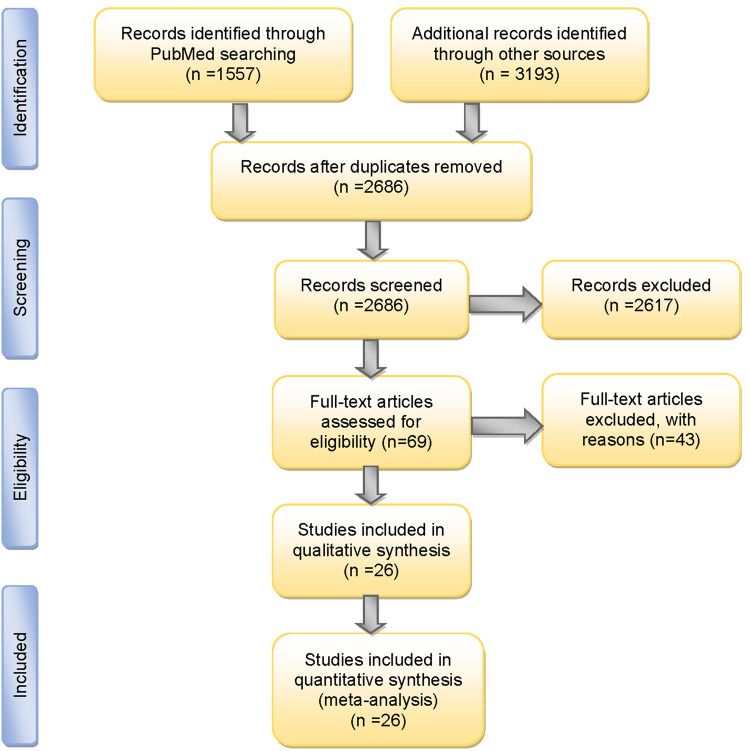
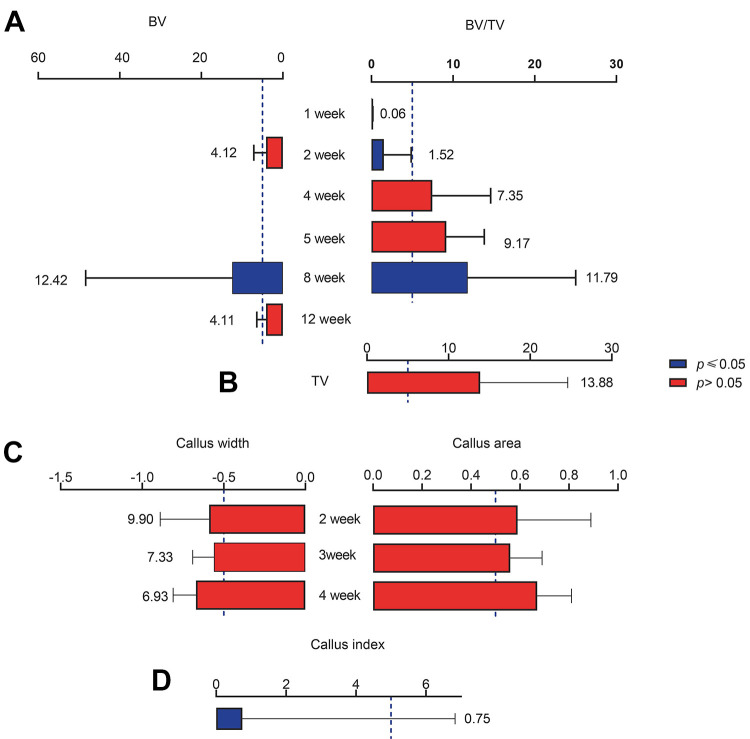
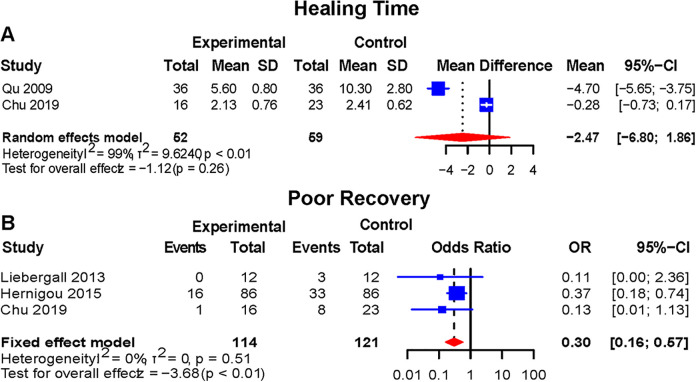
Even though reunion of bone fracture confronts clinicians, mesenchymal stromal cells (MSCs) are investigated to be curative in bone fracture. This study aimed to explore the application potential of MSCs for healing bone fractures. By inputting search terms and retrieving studies published up to March 2021, multiple databases, including PubMed, EMBASE, Web of Science, and Cochrane Library, were searched to identify eligible studies. The mean difference (MD) and 95% confidence interval (95% CI) were calculated to analyze the main results in the meta-analysis. Data analysis was performed using Engauge Digitizer 10.8 and R Software. Of the 31 articles, 26 were preclinical studies ( n = 913), and 5 were clinical trials ( n = 335). Preclinically, MSCs therapy significantly augmented the progress of bone regeneration [(bone volume over tissue volume (MD7.35, p < 0.01)], despite some non-significant effects (on the callus index, bone strength, work to failure, and stiffness). Clinically, the MSC group had a significantly reduced incidence of poor recovery (odds ratio (OR) 0.30, p < 0.01); however, a significant decrease in healing time was not observed in the MSC group (MD 2.47, p = 0.26). In summary, our data suggest that patients with bone fractures benefited from MSC administration and that MSCs are a potentially useful agent for bone regeneration. Despite these satisfactory outcomes, larger randomised clinical trials (RCTs) are necessary to confirm these findings.
Overview
The claims and statistics of this paper haven’t been checked yet.
Free: it reads the open-access text and checks the first 5 claims that cite a source we can check. Create a free account to check every claim.
Integrity signals
Registry
Cites
Statistics
Figures
Verification
Claims the paper makes
The claims and statistics of this paper haven’t been checked yet.
Free: it reads the open-access text and checks the first 5 claims that cite a source we can check. Create a free account to check every claim.
Claims other papers make about this one
Each is checked against this paper’s own text: does it say what the citing paper says it does?
The cited source says what the claim attributes to it.
In the citing paper
“The available clinical studies on the amelioration of fracture-healing by MSCs in patients (not specifically focusing on healing acceleration) were summarized in a systematic review and meta-analysis by Yi et al. (95), which revealed no decrease in healing time in the MSC group.”
From Methods to accelerate fracture healing – a narrative review from a clinical perspective (2024) · cites this paper as [95]
Self-check
Percentages, sums and reported differences re-computed from the paper’s own numbers.
The self-check needs the paper’s full text.
Citations
Cites
Preferred Reporting Items for Systematic Reviews and Meta-Analyses: the PRISMA statement
Moher, D., Liberati, A., Tetzlaff, J., Altman, D. G., & for the PRISMA Group (2009) · BMJ · doi:10.1136/bmj.b2535 · Cited by 83,823
Preferred Reporting Items for Systematic Reviews and Meta-Analyses: The PRISMA Statement
Moher, D., Liberati, A., Tetzlaff, J., Altman, D. G., & The PRISMA Group (2009) · PLoS Medicine · doi:10.1371/journal.pmed.1000097 · Cited by 64,042
The Cochrane Collaboration's tool for assessing risk of bias in randomised trials
Higgins, J. P. T., Altman, D. G., Gotzsche, P. C., Juni, P., Moher, D., Oxman, A. D., Savovic, J., Schulz, K. F., Weeks, L., Sterne, J. A. C., et al. (2011) · BMJ · doi:10.1136/bmj.d5928 · Cited by 33,817
Dermyshi, E., Wang, Y., Yan, C., Hong, W., Qiu, G., Gong, X., & Zhang, T. (2017) · Neonatology · doi:10.1159/000454668 · Cited by 24,451
Self-citationWang, G., Ma, R., Qiao, G., Wada, K., Aizawa, Y., & Satoh, T. (2015) · Integrative Medicine International · doi:10.1159/000368408 · Cited by 18,657
SYRCLE’s risk of bias tool for animal studies
Hooijmans, C. R., Rovers, M. M., de Vries, R. B., Leenaars, M., Ritskes-Hoitinga, M., & Langendam, M. W. (2014) · BMC Medical Research Methodology · doi:10.1186/1471-2288-14-43 · Cited by 4,415
Fracture healing: mechanisms and interventions
Einhorn, T. A., & Gerstenfeld, L. C. (2015) · Nature Reviews Rheumatology · doi:10.1038/nrrheum.2014.164 · Cited by 1,807
Immunoregulatory mechanisms of mesenchymal stem and stromal cells in inflammatory diseases
Shi, Y., Wang, Y., Li, Q., Liu, K., Hou, J., Shao, C., & Wang, Y. (2018) · Nature Reviews Nephrology · doi:10.1038/s41581-018-0023-5 · Cited by 1,223
Self-citationTGF-β1–induced migration of bone mesenchymal stem cells couples bone resorption with formation
Tang, Y., Wu, X., Lei, W., Pang, L., Wan, C., Shi, Z., Zhao, L., Nagy, T. R., Peng, X., Hu, J., et al. (2009) · Nature Medicine · doi:10.1038/nm.1979 · Cited by 1,165
Peripheral-Blood Stem Cells versus Bone Marrow from Unrelated Donors
Anasetti, C., Logan, B. R., Lee, S. J., Waller, E. K., Weisdorf, D. J., Wingard, J. R., Cutler, C. S., Westervelt, P., Woolfrey, A., Couban, S., et al. (2012) · New England Journal of Medicine · doi:10.1056/nejmoa1203517 · Cited by 920
He, L., He, T., Xing, J., Zhou, Q., Fan, L., Liu, C., Chen, Y., Wu, D., Tian, Z., Liu, B., et al. (2020) · Stem Cell Research & Therapy · doi:10.1186/s13287-020-01781-w · Cited by 435 · cited 3×
“of fractures; (6) model strain/species; (7) sex/age; (8) fracture site; (9) fracture model; (10) dosage; (11) administration; and (12) observation time (post model).”
Tissue Engineering and Cell-Based Therapies for Fractures and Bone Defects
Perez, J. R., Kouroupis, D., Li, D. J., Best, T. M., Kaplan, L., & Correa, D. (2018) · Frontiers in Bioengineering and Biotechnology · doi:10.3389/fbioe.2018.00105 · Cited by 390 · cited 2×
“of fractures; (6) model strain/species; (7) sex/age; (8) fracture site; (9) fracture model; (10) dosage; (11) administration; and (12) observation time (post model).”
PDGF in bone formation and regeneration: New insights into a novel mechanism involving MSCs
Caplan, A. I., & Correa, D. (2011) · Journal of Orthopaedic Research · doi:10.1002/jor.21462 · Cited by 312
Zhang, Z.-Y., Teoh, S.-H., Chong, M. S. K., Schantz, J. T., Fisk, N. M., Choolani, M. A., & Chan, J. (2009) · Stem Cells · doi:10.1634/stemcells.2008-0456 · Cited by 303
Role of FGFs/FGFRs in skeletal development and bone regeneration
Du, X., Xie, Y., Xian, C. J., & Chen, L. (2012) · Journal of Cellular Physiology · doi:10.1002/jcp.24083 · Cited by 185
Dallari, D., Savarino, L., Stagni, C., Cenni, E., Cenacchi, A., Fornasari, P. M., Albisinni, U., Rimondi, E., Baldini, N., & Giunti, A. (2007) · The Journal of Bone & Joint Surgery · doi:10.2106/jbjs.f.01026 · Cited by 182
Mills, L. A., & Simpson, A. H. R. W. (2013) · BMJ Open · doi:10.1136/bmjopen-2012-002276 · Cited by 182
Generation of Functional Mesenchymal Stem Cells from Different Induced Pluripotent Stem Cell Lines
Hynes, K., Menicanin, D., Mrozik, K., Gronthos, S., & Bartold, P. M. (2014) · Stem Cells and Development · doi:10.1089/scd.2013.0111 · Cited by 171
Whole Bone Mechanics and Bone Quality
Cole, J. H., & van der Meulen, M. C. H. (2011) · Clinical Orthopaedics & Related Research · doi:10.1007/s11999-011-1784-3 · Cited by 169
Bone morphogenetic proteins in orthopaedic surgery
Axelrad, T. W., & Einhorn, T. A. (2009) · Cytokine & Growth Factor Reviews · doi:10.1016/j.cytogfr.2009.10.003 · Cited by 161
Chen, W., Liu, J., Manuchehrabadi, N., Weir, M. D., Zhu, Z., & Xu, H. H. K. (2013) · Biomaterials · doi:10.1016/j.biomaterials.2013.09.002 · Cited by 157
Sequential BMP‐2/BMP‐7 delivery from polyester nanocapsules
Yilgor, P., Hasirci, N., & Hasirci, V. (2010) · Journal of Biomedical Materials Research Part A · doi:10.1002/jbm.a.32520 · Cited by 152 · cited 2×
“of fractures; (6) model strain/species; (7) sex/age; (8) fracture site; (9) fracture model; (10) dosage; (11) administration; and (12) observation time (post model).”
Kassem, M. S., & Abdallah, B. M. (2007) · Cell and Tissue Research · doi:10.1007/s00441-007-0509-0 · Cited by 151
Liebergall, M., Schroeder, J., Mosheiff, R., Gazit, Z., Yoram, Z., Rasooly, L., Daskal, A., Khoury, A., Weil, Y., & Beyth, S. (2013) · Molecular Therapy · doi:10.1038/mt.2013.109 · Cited by 134
Patil, A. S., Sable, R. B., & Kothari, R. M. (2011) · Journal of Cellular Physiology · doi:10.1002/jcp.22698 · Cited by 133
Global Forum: Fractures in the Elderly
Court-Brown, C. M., & McQueen, M. M. (2016) · Journal of Bone and Joint Surgery · doi:10.2106/jbjs.15.00793 · Cited by 125 · cited 5×
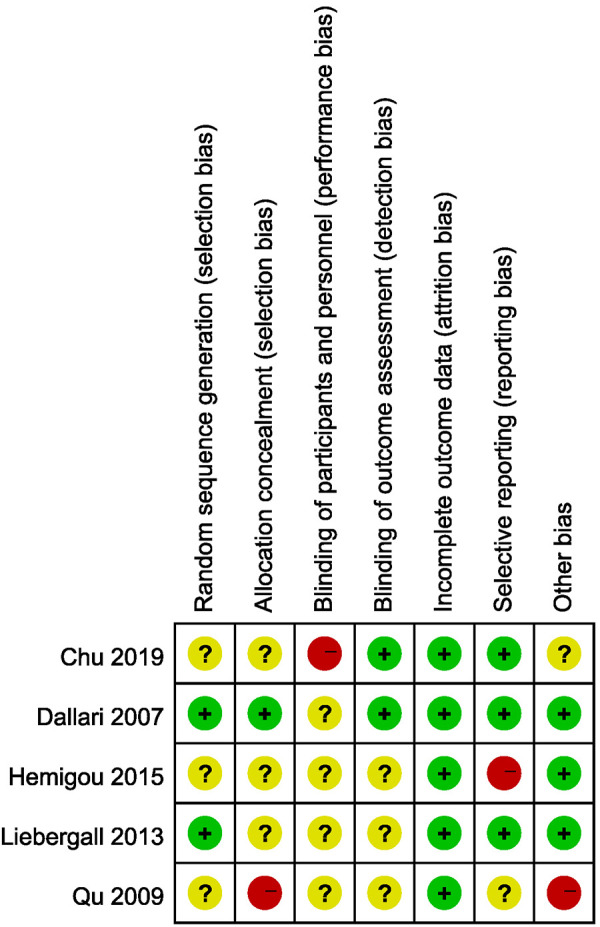
“For clinical trials, the Cochrane Risk of Bias (Rob) tool for randomized control trials (RCTs)(20) was used, and the individual domains were (1) random-sequence generation; (2) allocation sequence concealment; (3) blinding of participants and personnel; (4) blinding of outcome assessment; and (5) completeness of outco…”
BackgroundMethodInfluentialGriffin, X. L., Costa, M. L., Parsons, N., & Smith, N. (2011) · Cochrane Database of Systematic Reviews · doi:10.1002/14651858.cd008471.pub2 · Cited by 123 · cited 5×
“For clinical trials, the Cochrane Risk of Bias (Rob) tool for randomized control trials (RCTs)(20) was used, and the individual domains were (1) random-sequence generation; (2) allocation sequence concealment; (3) blinding of participants and personnel; (4) blinding of outcome assessment; and (5) completeness of outco…”
BackgroundMethodInfluentialStimulation of Fracture-Healing with Systemic Intermittent Parathyroid Hormone Treatment
Barnes, G. L., Kakar, S., Vora, S., Morgan, E. F., Gerstenfeld, L. C., & Einhorn, T. A. (2008) · Journal of Bone and Joint Surgery · doi:10.2106/jbjs.g.01443 · Cited by 117
Todeschi, M. R., El Backly, R., Capelli, C., Daga, A., Patrone, E., Introna, M., Cancedda, R., & Mastrogiacomo, M. (2015) · Stem Cells and Development · doi:10.1089/scd.2014.0490 · Cited by 103
Giannotti, S., Trombi, L., Bottai, V., Ghilardi, M., D'Alessandro, D., Danti, S., Dell'Osso, G., Guido, G., & Petrini, M. (2013) · PLoS ONE · doi:10.1371/journal.pone.0073893 · Cited by 97
The Role of Recombinant PTH in Human Fracture Healing: A Systematic Review
Zhang, D., Potty, A., Vyas, P., & Lane, J. (2014) · Journal of Orthopaedic Trauma · doi:10.1097/bot.0b013e31828e13fe · Cited by 87 · cited 2×
“of fractures; (6) model strain/species; (7) sex/age; (8) fracture site; (9) fracture model; (10) dosage; (11) administration; and (12) observation time (post model).”
Virk, M. S., Alaee, F., Tang, H., Ominsky, M. S., Ke, H. Z., & Lieberman, J. R. (2013) · Journal of Bone and Joint Surgery · doi:10.2106/jbjs.l.00285 · Cited by 84
Hernigou, P., Guissou, I., Homma, Y., Poignard, A., Chevallier, N., Rouard, H., & Flouzat Lachaniette, C. H. (2015) · International Orthopaedics · doi:10.1007/s00264-015-2738-2 · Cited by 80
Small molecule–driven direct conversion of human pluripotent stem cells into functional osteoblasts
Kang, H., Shih, Y.-R. V., Nakasaki, M., Kabra, H., & Varghese, S. (2016) · Science Advances · doi:10.1126/sciadv.1600691 · Cited by 80
Zhang, H., Kot, A., Lay, Y.-A. E., Fierro, F. A., Chen, H., Lane, N. E., & Yao, W. (2017) · Stem Cells Translational Medicine · doi:10.1002/sctm.17-0039 · Cited by 63 · cited 5×
“For clinical trials, the Cochrane Risk of Bias (Rob) tool for randomized control trials (RCTs)(20) was used, and the individual domains were (1) random-sequence generation; (2) allocation sequence concealment; (3) blinding of participants and personnel; (4) blinding of outcome assessment; and (5) completeness of outco…”
BackgroundMethodInfluentialBenavides-Castellanos, M. P., Orjuela, N. G., & Linero, I. (2020) · Cell Regeneration · doi:10.1186/s13619-020-00047-3 · Cited by 62
Chan, C.-K., Wu, K., Lee, Y.-S., Hwang, S., Lee, M., Liao, S.-K., Cheng, E., See, L., Tsai, C., Kuo, M., et al. (2012) · Transplantation · doi:10.1097/tp.0b013e31825940a4 · Cited by 54
Huang, S., Xu, L., Sun, Y., Zhang, Y., & Li, G. (2015) · Stem Cell Research & Therapy · doi:10.1186/s13287-015-0198-7 · Cited by 53
Zhou, G.-P., Jiang, Y.-Z., Sun, L.-Y., & Zhu, Z.-J. (2020) · Stem Cell Research & Therapy · doi:10.1186/s13287-020-01935-w · Cited by 53 · cited 1×
“of fractures; (6) model strain/species; (7) sex/age; (8) fracture site; (9) fracture model; (10) dosage; (11) administration; and (12) observation time (post model).”
Wongchuensoontorn, C., Liebehenschel, N., Schwarz, U. S., Schmelzeisen, R., Gutwald, R., Ellis, E., & Sauerbier, S. (2009) · Journal of Cranio-Maxillofacial Surgery · doi:10.1016/j.jcms.2008.11.002 · Cited by 50
Cheung, W., Chin, W., Wei, F., Li, G., & Leung, K. (2012) · Ultrasound in Medicine & Biology · doi:10.1016/j.ultrasmedbio.2012.08.015 · Cited by 48
General Office, D. O. O. A. T., Wei, F.-Y., Chow, S., Leung, K.-S., Qin, J., Guo, A., Yu, O., Li, G., & Cheung, W.-H. (2016) · European Cells and Materials · doi:10.22203/ecm.v031a22 · Cited by 44
Efficacy of mesenchymal stem cells in animal models of lupus nephritis: a meta-analysis
Zhou, T., Liao, C., Li, H., Lin, W., Lin, S., & Zhong, H. (2020) · Stem Cell Research & Therapy · doi:10.1186/s13287-019-1538-9 · Cited by 44
Dilogo, I. H., Primaputra, M. R. A., Pawitan, J. A., & Liem, I. K. (2017) · International Journal of Surgery Case Reports · doi:10.1016/j.ijscr.2017.03.002 · Cited by 42
Voss, P. J., Matsumoto, A., Alvarado, E., Schmelzeisen, R., Duttenhoefer, F., & Poxleitner, P. J. (2017) · Odontology · doi:10.1007/s10266-017-0295-4 · Cited by 31
Yi, H., Wang, Y., Yang, Z. H., & Xie, Z. (2020) · Stem Cell Research & Therapy · doi:10.1186/s13287-020-01879-1 · Cited by 27 · cited 2×
“of fractures; (6) model strain/species; (7) sex/age; (8) fracture site; (9) fracture model; (10) dosage; (11) administration; and (12) observation time (post model).”
Self-citationYakubovich, D. C., Sheyn, D., Bez, M., Schary, Y., Yalon, E., Sirhan, A., Amira, M., Yaya, A., Mel, S. D., Da, X., et al. (2017) · Stem Cell Research & Therapy · doi:10.1186/s13287-017-0502-9 · Cited by 26
Saiz, A. M., Gionet‐Gonzales, M., Lee, M., & Leach, J. K. (2019) · Bone · doi:10.1016/j.bone.2019.05.018 · Cited by 22
Chu, W., Wang, X., Gan, Y., Zhuang, Y., Shi, D., Liu, F., Sun, Y., Zhao, J., Tang, T., & Dai, K. (2019) · Regenerative Medicine · doi:10.2217/rme-2018-0047 · Cited by 21
Choi, W.-Y., Kim, H., Kim, M.-J., Kim, U., Kim, J., & Koh, Y. (2010) · Materials Science and Engineering C · doi:10.1016/j.msec.2010.07.018 · Cited by 20
Voss, P. J., Matsumoto, A., Alvarado, E., Schmelzeisen, R., Duttenhoefer, F., & Poxleitner, P. J. (2019) · Odontology · doi:10.1007/s10266-018-00409-z · Cited by 19
[Clinical study on treatment of bone nonunion with MSCs derived from human umbilical cord].
Qu, Z., Mi, S., & Fang, G. (2009) · PubMed · Cited by 13
Research works printed but not linked: 4
- Saiz AJ Gionet-Gonzales MA Lee MA Leach JK. Conditioning of myoblast secretome using mesenchymal stem/stromal cell spheroids improves bone repair. Bone. 2019; 125: 151– 159. 31102712 PMC6589400 · DOI
- Zhiguo Q Shufeng M Guojun F. Clinical study on treatment of bone nonunion with MSCs derived from human umblical cord. Zhongguo Xiu Fu Chong Jian Wai Ke Za Zhi. 2009; 23(3): 345– 347. 19366151
- Bradley C Harrison J. Descriptive Epidemiology of T raumatic Fractures in Australia. AIHW; 2004: 88– 96.
- Einhorn TA Gerstenfeld LC. Fracture healing: mechanisms and interventions. Nat Rev Rheumatol. 2014; 11(1): 45– 54. 25266456 PMC4464690 · DOI · Paper page
Cited by
Theodosaki, A. M., Tzemi, M., Galanis, N., Bakopoulou, A., Kotsiomiti, E., Aggelidou, E., & Κritis, A. (2024) · Stem Cell Reviews and Reports · doi:10.1007/s12015-024-10696-5 · Cited by 51
“Although the study assesses the administration of stem cells alone, their application seems to be effective in the treatment of bone fractures [27].”
BackgroundMethods to accelerate fracture healing – a narrative review from a clinical perspective
Ganse, B. (2024) · Frontiers in Immunology · doi:10.3389/fimmu.2024.1384783 · Cited by 33
Han, S., Li, T., Cao, Y., Li, Z., Mai, Y., Fan, T., Zeng, M., Wen, X., Han, W., Lin, L., et al. (2024) · British Journal of Sports Medicine · doi:10.1136/bjsports-2023-107625 · Cited by 26
Revolutionizing bone defect healing: the power of mesenchymal stem cells as seeds
Zhang, Y., Fan, M., & Zhang, Y. (2024) · Frontiers in Bioengineering and Biotechnology · doi:10.3389/fbioe.2024.1421674 · Cited by 24
“A systematic review and meta-analysis con fi rmed that MSCs therapy signi fi cantly augmented the progress of bone regeneration and signi fi cantly reduced the incidence of poor recovery (Yi et al., 2022).”
BackgroundNasadiuk, K., Kolanowski, T. J., Kowaléwski, C., Woźniak, K., Ołdak, T., & Rozwadowska, N. (2024) · International Journal of Molecular Sciences · doi:10.3390/ijms26010199 · Cited by 16
“Clinically, MSC’s application was shown to be characterized by a significantly reduced incidence of poor recovery, and patients with bone fractures were reported to benefit from MSCs administration although larger randomized clinical trials are necessary to confirm these findings [64].”
Metadata
- Authors
- Yi, H., Wang, Y., Liang, Q., & Mao, X.
- Affiliations
- Sun Yat-sen University (CN)
- Second Affiliated Hospital of Guangzhou Medical University (CN)
- Corresponding author
- Yi, Hanxiao
- Mao, Xiaoqun
- Venue
- Cell Transplantation
- Publisher
- SAGE Publications
- Published
- 2022-01-01
- Volume
- 31
- Pages
- 9636897211051743-9636897211051743
- ISSN
- 0963-6897 (ISSN-L)
- 1555-3892
- PMC
- PMC9350497
- OpenAlex
- W4289537149
- Cited by
- 18
- References
- 52
- Citations by year
- 2026: 5 · 2025: 2 · 2024: 9 · 2023: 2
- FWCI
- 0.54
- Type
- journal article
- Language
- en
- Open access
- gold
- doi.org
- Licence
- Locations
- Cell Transplantation (publishedVersion, cc-by-nc)
- PubMed Central (publishedVersion, cc-by-nc)
- PubMed (publishedVersion)
- DOAJ (DOAJ: Directory of Open Access Journals) (submittedVersion)
- Funders
- Nurturing funds for nursing young talents of Sun Yat-sen University
- Topics
- Life Sciences › Biochemistry, Genetics and Molecular Biology › Cell Biology › Mesenchymal stem cell research
- Health Sciences › Medicine › Orthopedics and Sports Medicine › Bone fractures and treatments
- Physical Sciences › Engineering › Biomedical Engineering › Bone Tissue Engineering Materials
- Keywords
- mesenchymal stem cells, bone fractures, fracture healing, bone regeneration, bone strength, healing time, cell therapy
- MeSH terms
- Bone and Bones, Bone Regeneration, Humans, Fractures, Bone, Mesenchymal Stem Cells
About these checks
Registry, retraction, Cites and statistics results are computed, not judged, with one exception: a printed reference that no index lists is read once by a model before it counts as a citation error. Claims are extracted by a model and kept only when their quote appears verbatim in the text; each cited source is then checked, with a model’s help, for whether it says what the claim relies on. Those verdicts can be wrong — read the claim’s quote and the cited source before relying on one.
Statistics and arithmetic are recomputed, not judged.
Confidence bands are shown only for fields calibrated on our annotated test set. None is calibrated yet, so no band is shown.
What counts as a claim ›How we measure confidence ›How we check this ›
Are you an author, or do you see a problem with this page? Request a review
Data sources
Bibliographic data: Semantic Scholar, OpenAlex, Crossref.
Contains information from the Semantic Scholar Academic Graph Datasets, made available under the ODC Attribution License (ODC-BY 1.0).
Semantic Scholar’s data is described in: Kinney, R., et al. (2023). The Semantic Scholar Open Data Platform. arXiv:2301.10140.
