

Exploring the Consistent Roles of Motor Areas Across Voluntary Movement and Locomotion
Open accessThe DOI matches its Crossref record; 106 of the 106 references it cites were found in a registry or an index.
Abstract
Multiple cortical motor areas are critically involved in the voluntary control of discrete movement (e.g., reaching) and gait. Here, we outline experimental findings in nonhuman primates with clinical reports and research in humans that explain characteristic movement control mechanisms in the primary, supplementary, and presupplementary motor areas, as well as in the dorsal premotor area. We then focus on single-neuron activity recorded while monkeys performed motor sequences consisting of multiple discrete movements, and we consider how area-specific control mechanisms may contribute to the performance of complex movements. Following this, we explore the motor areas in cats that we have considered as analogs of those in primates based on similarities in their cortical surface topology, anatomic connections, microstimulation effects, and activity patterns. Emphasizing that discrete movement and gait modification entail similar control mechanisms, we argue that single-neuron activity in each area of the cat during gait modification is compatible with the function ascribed to the activity in the corresponding area in primates, recorded during the performance of discrete movements. The findings that demonstrate the premotor areas’ contribution to locomotion, currently unique to the cat model, should offer highly valuable insights into the control mechanisms of locomotion in primates, including humans.
Overview
The claims and statistics of this paper haven’t been checked yet.
Free: it reads the open-access text and checks the first 5 claims that cite a source we can check. Create a free account to check every claim.
Integrity signals
Registry
Cites
Statistics
Figures
Verification
Claims the paper makes
The claims and statistics of this paper haven’t been checked yet.
Free: it reads the open-access text and checks the first 5 claims that cite a source we can check. Create a free account to check every claim.
Claims other papers make about this one
Each is checked against this paper’s own text: does it say what the citing paper says it does?
The cited source says what the claim attributes to it.
In the citing paper
“The precentral gyrus is directly engaged in motor execution and gait control,[33] while cerebellar lobule VI plays an important role in visuomotor tasks.[34]”
From Brain Rewires to Stabilize Walking During Visual Impairment · cites this paper as [33]
Self-check
Percentages, sums and reported differences re-computed from the paper’s own numbers.
The self-check needs the paper’s full text.
Citations
Cites
Neuronal Population Coding of Movement Direction
Georgopoulos, A. P., Schwartz, A. B., & Kettner, R. E. (1986) · Science · doi:10.1126/science.3749885 · Cited by 3,161
Georgopoulos, A., Kalaska, J., Caminiti, R., & Massey, J. (1982) · The Journal of Neuroscience · doi:10.1523/jneurosci.02-11-01527.1982 · Cited by 2,130
Functional role of the supplementary and pre-supplementary motor areas
Nachev, P., Kennard, C., & Husain, M. (2008) · Nature Reviews Neuroscience · doi:10.1038/nrn2478 · Cited by 1,928
High-performance neuroprosthetic control by an individual with tetraplegia
Collinger, J. L., Wodlinger, B., Downey, J. E., Wang, W., Tyler-Kabara, E. C., Weber, D. J., McMorland, A. J., Velliste, M., Boninger, M. L., & Schwartz, A. B. (2013) · The Lancet · doi:10.1016/s0140-6736(12)61816-9 · Cited by 1,848 · cited 1×
“Combining the specificity of individual neurons, M1 contains a neuronal population encoding of limb kinematics (Georgopoulos and others 1986), an insight that has led to the proof-of-concept development of robotic arm neuroprostheses in humans (Collinger and others 2013).”
Descending Pathways in Motor Control
Lemon, R. N. (2008) · Annual Review of Neuroscience · doi:10.1146/annurev.neuro.31.060407.125547 · Cited by 1,599 · cited 2×
“In humans, nonhuman primates, and other mammals, M1 is the core area responsible for generating voluntary movements (Lemon 2008; Omrani and others 2017).”
The origin of corticospinal projections from the premotor areas in the frontal lobe
Dum, R., & Strick, P. (1991) · The Journal of Neuroscience · doi:10.1523/jneurosci.11-03-00667.1991 · Cited by 1,442 · cited 1×
“Difficulty in inducing movements from pre-SMA aligns with its connectivity: unlike SMA, pre-SMA does not connect directly with M1 (Luppino and others 1993) and has few direct projections to the spinal cord (Dum and Strick 1991).”
Functional significance of the cortico-subthalamo-pallidal “hyperdirect” pathway
Nambu, A., Tokuno, H., & Takada, M. (2002) · Neuroscience Research · doi:10.1016/s0168-0102(02)00027-5 · Cited by 1,371
Relation of pyramidal tract activity to force exerted during voluntary movement.
Evarts, E. V. (1968) · Journal of Neurophysiology · doi:10.1152/jn.1968.31.1.14 · Cited by 1,249 · cited 1×
“…voluntary arm movements have shown that the activity of M1 neurons within the representation of the performing limb closely correlates in time and magnitude with low-level parameters of the movements, including muscle activity (Evarts 1968) and movement direction (Georgopoulos and others 1982).”
Cisek, P., & Kalaska, J. F. (2005) · Neuron · doi:10.1016/j.neuron.2005.01.027 · Cited by 1,054 · cited 1×
“These have converged on a role in action selection based on arbitrary cues (Cisek and Kalaska 2005; Yamagata and others 2009; see Wise and others 1997) and in guidance of the effector in reference to visuospatial information (Pesaran and others 2006; Raos and others 2004).”
PREMOTOR AND PARIETAL CORTEX: Corticocortical Connectivity and Combinatorial Computations
Wise, S. P., Boussaoud, D., Johnson, P. B., & Caminiti, R. (1997) · Annual Review of Neuroscience · doi:10.1146/annurev.neuro.20.1.25 · Cited by 953
He, S., Dum, R., & Strick, P. (1993) · The Journal of Neuroscience · doi:10.1523/jneurosci.13-03-00952.1993 · Cited by 872
Cortical Control of Arm Movements: A Dynamical Systems Perspective
Shenoy, K. V., Sahani, M., & Churchland, M. M. (2013) · Annual Review of Neuroscience · doi:10.1146/annurev-neuro-062111-150509 · Cited by 839
Cortical activity in the null space: permitting preparation without movement
Kaufman, M. T., Churchland, M. M., Ryu, S. I., & Shenoy, K. V. (2014) · Nature Neuroscience · doi:10.1038/nn.3643 · Cited by 831
Corticocortical connections of area F3 (SMA‐proper) and area F6 (pre‐SMA) in the macaque monkey
Luppino, G., Matelli, M., Camarda, R., & Rizzolatti, G. (1993) · Journal of Comparative Neurology · doi:10.1002/cne.903380109 · Cited by 798
Muakkassa, K. F., & Strick, P. L. (1979) · Brain Research · doi:10.1016/0006-8993(79)90928-4 · Cited by 630 · cited 1×
“This interhemispheric connection and bidirectional connection with ipsilateral M1 (Luppino and others 1993; Muakkassa and Strick 1979) allow each SMA to influence M1 in both hemispheres.”
The premotor cortex of the monkey
Weinrich, M., & Wise, S. (1982) · The Journal of Neuroscience · doi:10.1523/jneurosci.02-09-01329.1982 · Cited by 617 · cited 1×
“…deficits that could be observed following its bilateral ablation in the primate at the time subsumed in the “lateral premotor cortex”; Halsband and Passingham 1982) and (2) the relationship of its single-neuron activity with visuospatial features of reaching tasks (Weinrich and Wise 1982).”
Constraints on Somatotopic Organization in the Primary Motor Cortex
Schieber, M. H. (2001) · Journal of Neurophysiology · doi:10.1152/jn.2001.86.5.2125 · Cited by 596 · cited 1×
“Microstimulation of individual sites in the arm or leg representation elicits focal movements restricted to biomechanically coupled joints (Schieber 2001).”
Clinical consequences of corticectomies involving the supplementary motor area in man
Laplane, D., Talairach, J., Meininger, V., Bancaud, J., & Orgogozo, J. M. (1977) · Journal of the Neurological Sciences · doi:10.1016/0022-510x(77)90148-4 · Cited by 559
Dum, R. P., & Strick, P. L. (2005) · The Journal of Neuroscience · doi:10.1523/jneurosci.3902-04.2005 · Cited by 556 · cited 1×
“It is also densely interconnected with M1 (Dum and Strick 2005; Hatanaka and others 2001).”
Halsband, U., Ito, N., Tanji, J., & Freund, H.-J. (1993) · Brain · doi:10.1093/brain/116.1.243 · Cited by 550
Luppino, G., Matelli, M., Camarda, R. M., Gallese, V., & Rizzolatti, G. (1991) · Journal of Comparative Neurology · doi:10.1002/cne.903110403 · Cited by 544
Cortical Preparatory Activity: Representation of Movement or First Cog in a Dynamical Machine?
Churchland, M. M., Cunningham, J. P., Kaufman, M. T., Ryu, S. I., & Shenoy, K. V. (2010) · Neuron · doi:10.1016/j.neuron.2010.09.015 · Cited by 526
Matsuzaka, Y., Aizawa, H., & Tanji, J. (1992) · Journal of Neurophysiology · doi:10.1152/jn.1992.68.3.653 · Cited by 500
He, S., Dum, R., & Strick, P. (1995) · The Journal of Neuroscience · doi:10.1523/jneurosci.15-05-03284.1995 · Cited by 458
Tanji, J., Okano, K., & Sato, K. C. (1988) · Journal of Neurophysiology · doi:10.1152/jn.1988.60.1.325 · Cited by 450
The role of the pre-supplementary motor area in the control of action
Nachev, P., Wydell, H., O’Neill, K., Husain, M., & Kennard, C. (2007) · NeuroImage · doi:10.1016/j.neuroimage.2007.03.034 · Cited by 438
Switching from automatic to controlled action by monkey medial frontal cortex
Isoda, M., & Hikosaka, O. (2007) · Nature Neuroscience · doi:10.1038/nn1830 · Cited by 434 · cited 2×
“Furthermore, Isoda and Hikosaka (2007) found that the activities of switch-related neurons were heterogeneous—some were thought to inhibit an action, others to facilitate the alternative, and the remaining to engage in inhibition and facilitation.”
Rouiller, E., Babalian, A., Kazennikov, O., Moret, V., Yu, X.-H., & Wiesendanger, M. (1994) · Experimental Brain Research · doi:10.1007/bf00227511 · Cited by 392
Brinkman, C. (1984) · The Journal of Neuroscience · doi:10.1523/jneurosci.04-04-00918.1984 · Cited by 381 · cited 1×
“…in spontaneous movements of the contralateral limbs (Laplane and others 1977) and decreased muscle tone (Travis 1955), as well as impairments in anticipatory postural adjustments (Viallet and others 1992), rhythm production (Halsband and others 1993), and bimanual coordination (Brinkman 1984).”
Pesaran, B., Nelson, M. J., & Andersen, R. A. (2006) · Neuron · doi:10.1016/j.neuron.2006.05.025 · Cited by 370
Sadato, N., Yonekura, Y., Waki, A., Yamada, H., & Ishii, Y. (1997) · The Journal of Neuroscience · doi:10.1523/jneurosci.17-24-09667.1997 · Cited by 360
Shima, K., & Tanji, J. (2000) · Journal of Neurophysiology · doi:10.1152/jn.2000.84.4.2148 · Cited by 351 · cited 2×
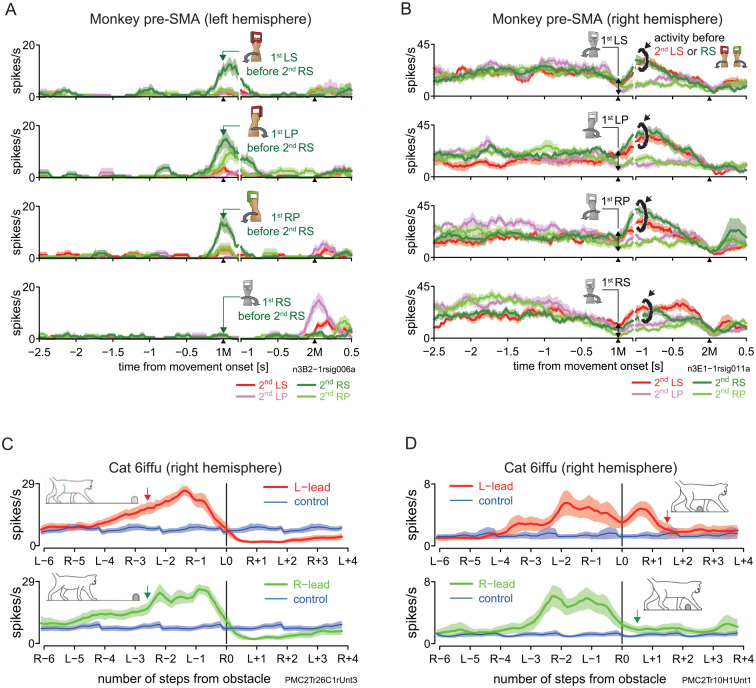
“Later, Shima and Tanji (2000) showed that pre-SMA neurons, more frequently than SMA neurons, represent the ordinal position of actions in a sequence performed by the monkey, irrespective of the action’s specific details (see Clower and Alexander 1998).”
Visuomotor Coordination in Reaching and Locomotion
Georgopoulos, A. P., & Grillner, S. (1989) · Science · doi:10.1126/science.2675307 · Cited by 325 · cited 1×
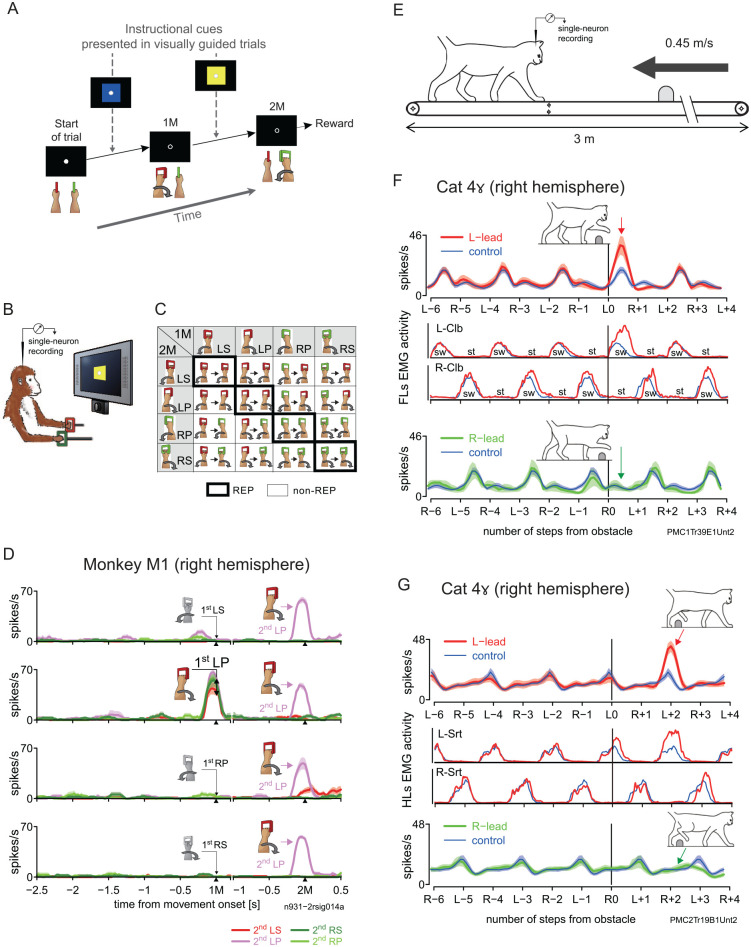
“…activity maintains its quantitative relationship with the activity pattern of specific muscles in the two behaviors (Yakovenko and Drew 2015), the properties of M1 con-trol over reaching movements and gait modifications appear fundamentally similar (see Georgopoulos and Grillner 1989).”
Role for Subthalamic Nucleus Neurons in Switching from Automatic to Controlled Eye Movement
Isoda, M., & Hikosaka, O. (2008) · The Journal of Neuroscience · doi:10.1523/jneurosci.0487-08.2008 · Cited by 320 · cited 1×
“Isoda and Hikosaka (2008) extended the recording to the subthalamic nucleus and suggested that signals from pre-SMA act to suppress habitual actions through a hyperdirect pathway (Nambu and others 2002).”
Interval time coding by neurons in the presupplementary and supplementary motor areas
Mita, A., Mushiake, H., Shima, K., Matsuzaka, Y., & Tanji, J. (2009) · Nature Neuroscience · doi:10.1038/nn.2272 · Cited by 301
A midline dissociation between error-processing and response-conflict monitoring
Garavan, H., Ross, T. J., Kaufman, J., & Stein, E. A. (2003) · NeuroImage · doi:10.1016/s1053-8119(03)00334-3 · Cited by 297
Brain Areas Involved in Interlimb Coordination: A Distributed Network
Debaere, F., Swinnen, S. P., Béatse, E., Sunaert, S., Van Hecke, P., & Duysens, J. (2001) · NeuroImage · doi:10.1006/nimg.2001.0892 · Cited by 294
The somatotopic organization of the supplementary motor area: intracortical microstimulation mapping
Mitz, A., & Wise, S. (1987) · The Journal of Neuroscience · doi:10.1523/jneurosci.07-04-01010.1987 · Cited by 292 · cited 3×
“First, it generally requires a stronger current than M1 to induce movement (Luppino and others 1991; Mitz and Wise 1987).”
InfluentialDrew, T. (1993) · Journal of Neurophysiology · doi:10.1152/jn.1993.70.1.179 · Cited by 285 · cited 1×
“Frequent in CST-projecting neurons, this rhythmic activity is modified during voluntary gait modifications (Beloozerova and Sirota 1993; Drew 1993; Drew and others 2002) and matches the changes of activity of functionally synergistic muscles in the contralateral limb as they perform their part of…”
Maier, M. A. (2002) · Cerebral Cortex · doi:10.1093/cercor/12.3.281 · Cited by 275
Shima, K., & Tanji, J. (1998) · Journal of Neurophysiology · doi:10.1152/jn.1998.80.6.3247 · Cited by 272 · cited 2×
“Critically, pharmacologic inactivation of bilateral SMA deteriorated performance in the task (Shima and Tanji 1998).”
Neurons related to reaching-grasping arm movements in the rostral part of area 6 (area 6a?)
Rizzolatti, G., Gentilucci, M., Camarda, R. M., Gallese, V., Luppino, G., Matelli, M., & Fogassi, L. (1990) · Experimental Brain Research · doi:10.1007/bf00231253 · Cited by 268
Medial Frontal Cortex Infarction and the Alien Hand Sign
Goldberg, G., Mayer, N. H., & Toglia, J. U. (1981) · Archives of Neurology · doi:10.1001/archneur.1981.00510110043004 · Cited by 265
Neuronal Activity in Medial Frontal Cortex During Learning of Sequential Procedures
Nakamura, K., Sakai, K., & Hikosaka, O. (1998) · Journal of Neurophysiology · doi:10.1152/jn.1998.80.5.2671 · Cited by 262
The role of premotor and parietal cortex in the direction of action
Halsband, U., & Passingham, R. (1982) · Brain Research · doi:10.1016/0006-8993(82)90239-6 · Cited by 254 · cited 2×
“…association deficits that could be observed following its bilateral ablation in the primate at the time subsumed in the “lateral premotor cortex”; Halsband and Passingham 1982) and (2) the relationship of its single-neuron activity with visuospatial features of reaching tasks (Weinrich and…”
Keizer, K., & Kuypers, H. G. J. M. (1989) · Experimental Brain Research · doi:10.1007/bf00248864 · Cited by 244 · cited 1×
“Like SMA, PMd possesses its own access to descending motor pathways, projecting strongly to the cervical and lumbar spinal cord (He and others 1993; Morecraft and others 2019), as well as to the pontomedullary reticular formation (Fregosi and others 2017; Keizer and Kuypers 1989).”
Viallet, F., Massion, J., Massarino, R., & Khalil, R. (1992) · Experimental Brain Research · doi:10.1007/bf00228197 · Cited by 239
Takakusaki, K., Chiba, R., Nozu, T., & Okumura, T. (2016) · Journal of Neural Transmission · doi:10.1007/s00702-015-1475-4 · Cited by 236
The role of the motor cortex in the control of accuracy of locomotor movements in the cat
Beloozerova, I. N., & Sirota, M. G. (1993) · The Journal of Physiology · doi:10.1113/jphysiol.1993.sp019498 · Cited by 236 · cited 2×
“This includes overcoming low obstacles (Drew and others 2002) or stepping precisely in other complex environments (Beloozerova and Sirota 1993; Liddell and Phillips 1944).”
Cortical control of normal gait and precision stepping: An fNIRS study
Koenraadt, K. L. M., Roelofsen, E. G. J., Duysens, J., & Keijsers, N. L. W. (2014) · NeuroImage · doi:10.1016/j.neuroimage.2013.04.070 · Cited by 206
THE LONG-TERM EFFECTS OF REMOVAL OF SENSORIMOTOR CORTEX IN INFANT AND ADULT RHESUS MONKEYS
PASSINGHAM, R. E., PERRY, V. H., & WILKINSON, F. (1983) · Brain · doi:10.1093/brain/106.3.675 · Cited by 200
Contributions of the motor cortex to the control of the hindlimbs during locomotion in the cat
Drew, T., Jiang, W., & Widajewicz, W. (2002) · Brain Research Reviews · doi:10.1016/s0165-0173(02)00200-x · Cited by 194
Cortical electrical stimulation in humans. The negative motor areas.
Lüders, H. O., Dinner, D. S., Morris, H. H., Wyllie, E., & Comair, Y. G. (1995) · PubMed · Cited by 193
Luppino, G., Rozzi, S., Calzavara, R., & Matelli, M. (2003) · European Journal of Neuroscience · doi:10.1046/j.1460-9568.2003.02476.x · Cited by 192
Inconvenient Truths about neural processing in primary motor cortex
Scott, S. H. (2008) · The Journal of Physiology · doi:10.1113/jphysiol.2007.146068 · Cited by 188 · cited 1×
“…explicit physical quantities in egocentric reference frames is a robust feature of M1 activity, these vary across tasks and studies, pointing to the complexity of the computational mechanisms through which M1 integrates higher-order inputs to command movements (Omrani and others 2017; Scott 2008).”
Extracting kinematic parameters for monkey bipedal walking from cortical neuronal ensemble activity
Fitzsimmons, N. A. (2009) · Frontiers in Integrative Neuroscience · doi:10.3389/neuro.07.003.2009 · Cited by 186
Hoshi, E., & Tanji, J. (2004) · Journal of Neurophysiology · doi:10.1152/jn.00547.2004 · Cited by 184 · cited 2×
“During action execution, neuronal activity is often suppressed (Hoshi and Tanji 2004; Rizzolatti and others 1990), implying that pre-SMA disinhibits the action in a timely manner.”
Raos, V., Umiltá, M.-A., Gallese, V., & Fogassi, L. (2004) · Journal of Neurophysiology · doi:10.1152/jn.00154.2004 · Cited by 176
Discharges of pyramidal tract and other motor cortical neurones during locomotion in the cat.
Armstrong, D. M., & Drew, T. (1984) · The Journal of Physiology · doi:10.1113/jphysiol.1984.sp015036 · Cited by 175 · cited 1×
“Armstrong and Drew (1984) were among the pioneering groups that studied how the primary motor area in the cat controls locomotion at the single-neuron level.”
Rash, J. E., Duffy, H. S., Dudek, F. E., Bilhartz, B. L., Whalen, L. R., & Yasumura, T. (1997) · Journal of Comparative Neurology · doi:10.1002/(sici)1096-9861(19971117)388:2<265::aid-cne6>3.0.co;2-# · Cited by 165
Effects on movement of surgical incisions into the human spinal cord
Nathan, P. W. (1994) · Brain · doi:10.1093/brain/117.2.337 · Cited by 164 · cited 1×
“More severely, CST transection causes a sustained inability to walk (Nathan 1994), although one should note that pre-motor areas are major contributors to the human CST (Usuda and others 2022).”
Map of the synapses onto layer 4 basket cells of the primary visual cortex of the cat
Ahmed, B., Anderson, J. C., Martin, K. A. C., & Nelson, J. C. (1997) · The Journal of Comparative Neurology · doi:10.1002/(sici)1096-9861(19970407)380:2<230::aid-cne6>3.0.co;2-4 · Cited by 155
Social error monitoring in macaque frontal cortex
Yoshida, K., Saito, N., Iriki, A., & Isoda, M. (2012) · Nature Neuroscience · doi:10.1038/nn.3180 · Cited by 150
Matsuzaka, Y., & Tanji, J. (1996) · Journal of Neurophysiology · doi:10.1152/jn.1996.76.4.2327 · Cited by 142 · cited 1×
“To investigate the role of pre-SMA in action switching, Matsuzaka and Tanji (1996) and Isoda and Hikosaka (2007) trained monkeys to perform a button-pressing task and an oculomotor task, respectively.”
Visual responses in the dorsal premotor area F2 of the macaque monkey
Fogassi, L., Raos, V., Franchi, G., Gallese, V., Luppino, G., & Matelli, M. (1999) · Experimental Brain Research · doi:10.1007/s002210050835 · Cited by 134
Perspectives on classical controversies about the motor cortex
Omrani, M., Kaufman, M. T., Hatsopoulos, N. G., & Cheney, P. D. (2017) · Journal of Neurophysiology · doi:10.1152/jn.00795.2016 · Cited by 133
Courtine, G., Roy, R. R., Raven, J., Hodgson, J., Mckay, H., Yang, H., Zhong, H., Tuszynski, M. H., & Edgerton, V. R. (2005) · Brain · doi:10.1093/brain/awh604 · Cited by 132 · cited 1×
“While targeted lesions of M1 or the CST in quadrupedal primates (Courtine and others 2005) and cats (Liddell and Phillips 1944) disrupt but do not preclude basic locomotion, evidence in cats shows a severe loss of the ability to proactively adapt their gait.”
Fu, Z., Wu, D.-A. J., Ross, I., Chung, J. M., Mamelak, A. N., Adolphs, R., & Rutishauser, U. (2019) · Neuron · doi:10.1016/j.neuron.2018.11.016 · Cited by 126 · cited 1×
“Other studies detected pre-SMA activity triggered by errors in one’s own actions (Fu and others 2019) or even others’ actions (Yoshida and others 2012).”
Gait apraxia after bilateral supplementary motor area lesion
Sala, S. D., Francescani, A., & Spinnler, H. (2002) · Journal of Neurology Neurosurgery & Psychiatry · doi:10.1136/jnnp.72.1.77 · Cited by 125 · cited 1×
“In humans, while many case reports indicate that SMA is essential for normal walking (e.g., Della Sala 2002), it also seems to play a role in coordinating voluntary steps.”
Clower, W. T., & Alexander, G. E. (1998) · Journal of Neurophysiology · doi:10.1152/jn.1998.80.3.1562 · Cited by 121 · cited 1×
“Later, Shima and Tanji (2000) showed that pre-SMA neurons, more frequently than SMA neurons, represent the ordinal position of actions in a sequence performed by the monkey, irrespective of the action’s specific details (see Clower and Alexander 1998).”
Martin, J. H., & Ghez, C. P. (1993) · Experimental Brain Research · doi:10.1007/bf00230201 · Cited by 116 · cited 1×
“Because area 4 γ is critical to accurate reaching (Martin and Ghez 1993) and voluntary gait modifications (see previous references) and given that single-neuron activity maintains its quantitative relationship with the activity pattern of specific muscles in the two behaviors (Yakovenko and Drew…”
LIDDELL, E. G. T., & PHILLIPS, C. G. (1944) · Brain · doi:10.1093/brain/67.1.1 · Cited by 116 · cited 3×
“This includes overcoming low obstacles (Drew and others 2002) or stepping precisely in other complex environments (Beloozerova and Sirota 1993; Liddell and Phillips 1944).”
Human electrocortical dynamics while stepping over obstacles
Nordin, A. D., Hairston, W. D., & Ferris, D. P. (2019) · Scientific Reports · doi:10.1038/s41598-019-41131-2 · Cited by 113
Raos, V., Franchi, G., Gallese, V., & Fogassi, L. (2003) · Journal of Neurophysiology · doi:10.1152/jn.00661.2002 · Cited by 108
Filevich, E., Kühn, S., & Haggard, P. (2012) · Cortex · doi:10.1016/j.cortex.2012.04.014 · Cited by 100
Fregosi, M., Contestabile, A., Hamadjida, A., & Rouiller, E. M. (2017) · European Journal of Neuroscience · doi:10.1111/ejn.13576 · Cited by 98
NEUROLOGICAL DEFICIENCIES FOLLOWING SUPPLEMENTARY MOTOR AREA LESIONS IN MACACA MULATTA
TRAVIS, A. M. (1955) · Brain · doi:10.1093/brain/78.2.174 · Cited by 95 · cited 1×
“…causes various symptoms: global reduction in spontaneous movements of the contralateral limbs (Laplane and others 1977) and decreased muscle tone (Travis 1955), as well as impairments in anticipatory postural adjustments (Viallet and others 1992), rhythm production (Halsband and others 1993),…”
Schubert, M. J. W., Curt, A. E. P., Colombo, G., Berger, W., & Dietz, V. (1999) · Experimental Brain Research · doi:10.1007/s002210050767 · Cited by 94
Lajoie, K., & Drew, T. (2007) · Journal of Neurophysiology · doi:10.1152/jn.01196.2006 · Cited by 81 · cited 1×
“The plant paw must be placed at an appropriate distance from the obstacle for smooth clearance (Lajoie and Drew 2007).”
Rho, M.-J., Lavoie, S., & Drew, T. (1999) · Journal of Neurophysiology · doi:10.1152/jn.1999.81.5.2297 · Cited by 74
Hatanaka, N., Nambu, A., Yamashita, A., Takada, M., & Tokuno, H. (2001) · Neuroscience Research · doi:10.1016/s0168-0102(01)00210-3 · Cited by 73
Functional MRI in the assessment of cortical activation during gait-related imaginary tasks
Wang, J., Wai, Y., Weng, Y.-H., Ng, K., Huang, Y., Ying, L. L., Liu, H., & Wang, C. (2009) · Journal of Neural Transmission · doi:10.1007/s00702-009-0269-y · Cited by 72
A freely-moving monkey treadmill model
D Foster, J., Nuyujukian, P., Freifeld, O., Gao, H., Walker, R., I Ryu, S., H Meng, T., Murmann, B., J Black, M., & V Shenoy, K. (2014) · Journal of Neural Engineering · doi:10.1088/1741-2560/11/4/046020 · Cited by 71
Berger, M., Agha, N. S., & Gail, A. (2020) · eLife · doi:10.7554/elife.51322 · Cited by 68
Control of Lead and Trail Limbs During Obstacle Crossing Following Stroke
Said, C. M., Goldie, P. A., Culham, E. G., Sparrow, W. A., Patla, A. E., & Morris, M. E. (2005) · Physical Therapy · doi:10.1093/ptj/85.5.413 · Cited by 65
Ohbayashi, M., Picard, N., & Strick, P. L. (2016) · Journal of Neuroscience · doi:10.1523/jneurosci.2356-15.2016 · Cited by 65
Corticospinal control of normal and visually guided gait in healthy older and younger adults
Spedden, M. E., Choi, J. T., Nielsen, J. B., & Geertsen, S. S. (2019) · Neurobiology of Aging · doi:10.1016/j.neurobiolaging.2019.02.005 · Cited by 64
Similar Motor Cortical Control Mechanisms for Precise Limb Control during Reaching and Locomotion
Yakovenko, S., & Drew, T. (2015) · Journal of Neuroscience · doi:10.1523/jneurosci.1908-15.2015 · Cited by 59 · cited 2×
“…and given that single-neuron activity maintains its quantitative relationship with the activity pattern of specific muscles in the two behaviors (Yakovenko and Drew 2015), the properties of M1 con-trol over reaching movements and gait modifications appear fundamentally similar (see…”
Neurofilament protein distribution in the macaque monkey dorsolateral premotor cortex
Geyer, S., Zilles, K., Luppino, G., & Matelli, M. (2000) · European Journal of Neuroscience · doi:10.1046/j.1460-9568.2000.00042.x · Cited by 57
Rho, M.-J., Cabana, T., & Drew, T. (1997) · The Journal of Comparative Neurology · doi:10.1002/(sici)1096-9861(19971117)388:2<228::aid-cne4>3.0.co;2-3 · Cited by 56
Ghosh, S. (1997) · The Journal of Comparative Neurology · doi:10.1002/(sici)1096-9861(19970407)380:2<191::aid-cne4>3.0.co;2-z · Cited by 54 · cited 4×
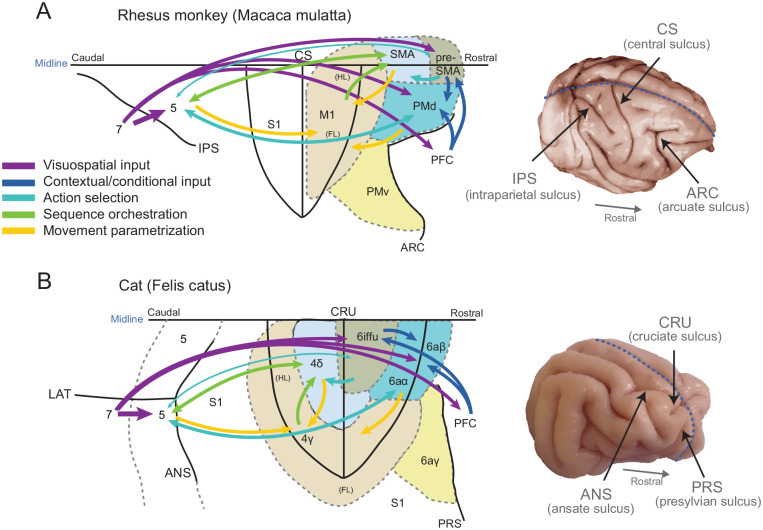
“…between area 6a—containing areas 6a α , 6a β , and 6a γ in Figure 1B—and the primate lateral pre-motor areas (Fortier-Lebel and others 2021; Ghosh 1997b), with 6a α in particular being most coherent with PMd. Applied during locomotion, microstimulation of area 6a α shows often-strong…”
InfluentialKrouchev, N. I., & Drew, T. (2013) · Frontiers in Computational Neuroscience · doi:10.3389/fncom.2013.00083 · Cited by 51 · cited 1×
“…activity is modified during voluntary gait modifications (Beloozerova and Sirota 1993; Drew 1993; Drew and others 2002) and matches the changes of activity of functionally synergistic muscles in the contralateral limb as they perform their part of the gait modification (Krouchev and Drew 2013).”
Morecraft, R. J., Ge, J., Stilwell‐Morecraft, K. S., Rotella, D. L., Pizzimenti, M. A., & Darling, W. G. (2019) · Journal of Comparative Neurology · doi:10.1002/cne.24706 · Cited by 43
Yamagata, T., Nakayama, Y., Tanji, J., & Hoshi, E. (2009) · Journal of Neurophysiology · doi:10.1152/jn.00452.2009 · Cited by 38
Nakajima, T., Hosaka, R., & Mushiake, H. (2022) · Journal of Neuroscience · doi:10.1523/jneurosci.2356-21.2022 · Cited by 37 · cited 1×
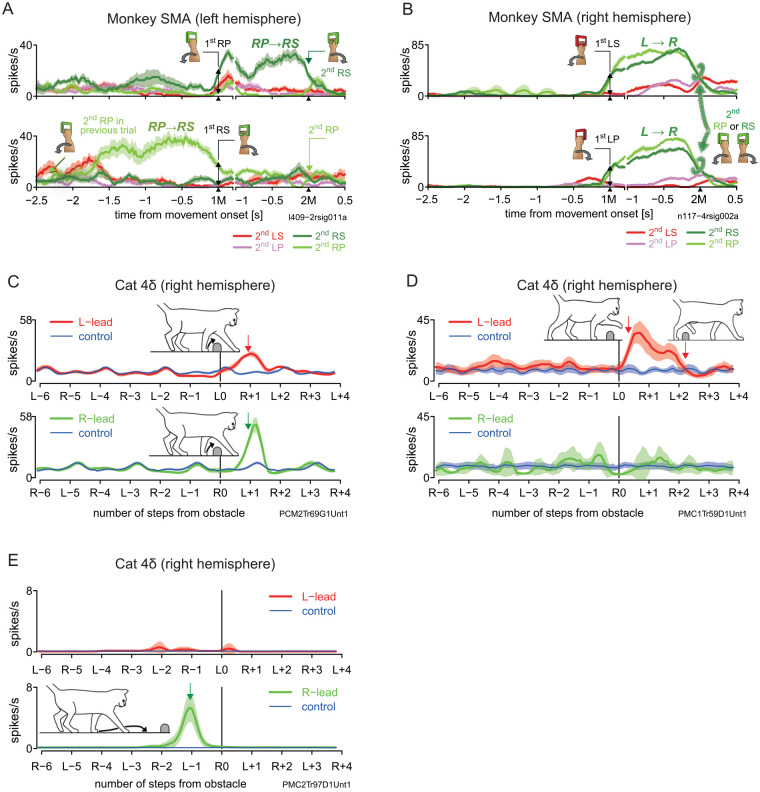
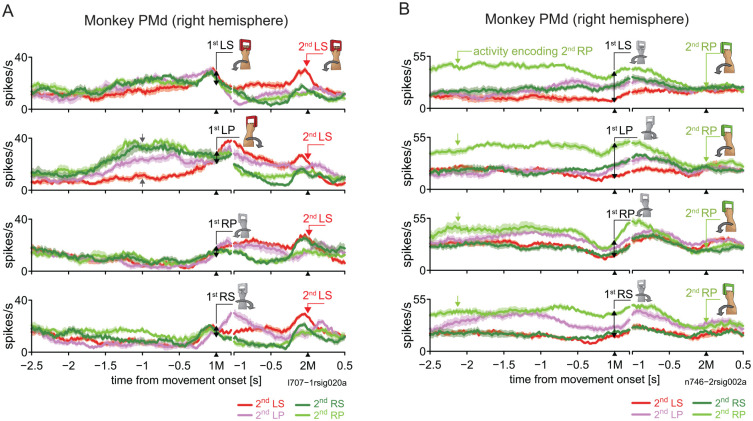
“In this experiment, Nakajima and others (2013; Nakajima, Hosaka, and Mushiake 2022) recorded in SMA, pre-SMA, and PMd, as well as M1 (unpublished data), of macaque monkeys performing multiple motor sequences, each consisting of two movements separated by a delay.”
Self-citationAbounader, R., & Hamel, É. (1997) · The Journal of Comparative Neurology · doi:10.1002/(sici)1096-9861(19971124)388:3<444::aid-cne7>3.0.co;2-0 · Cited by 33
Nakajima, T., Fortier-Lebel, N., & Drew, T. (2019) · Cerebral Cortex · doi:10.1093/cercor/bhz039 · Cited by 29
Self-citationQuantitative comparison of corticospinal tracts arising from different cortical areas in humans
Usuda, N., Sugawara, S. K., Fukuyama, H., Nakazawa, K., Amemiya, K., & Nishimura, Y. (2022) · Neuroscience Research · doi:10.1016/j.neures.2022.06.008 · Cited by 24
Xing, D., Truccolo, W., & Borton, D. A. (2022) · Journal of Neuroscience · doi:10.1523/jneurosci.0746-22.2022 · Cited by 20
Fortier-Lebel, N., Nakajima, T., Yahiaoui, N., & Drew, T. (2021) · Cerebral Cortex · doi:10.1093/cercor/bhab167 · Cited by 17
Self-citationNakajima, T., Hosaka, R., Tsuda, I., Tanji, J., & Mushiake, H. (2013) · Journal of Neuroscience · doi:10.1523/jneurosci.0855-13.2013 · Cited by 16
Self-citationGoldring, A. B., Cooke, D. F., Pineda, C. R., Recanzone, G. H., & Krubitzer, L. A. (2022) · Journal of Neurophysiology · doi:10.1152/jn.00279.2021 · Cited by 11
Nakajima, T., Fortier-Lebel, N., & Drew, T. (2022) · Cerebral Cortex · doi:10.1093/cercor/bhac068 · Cited by 9 · cited 4×
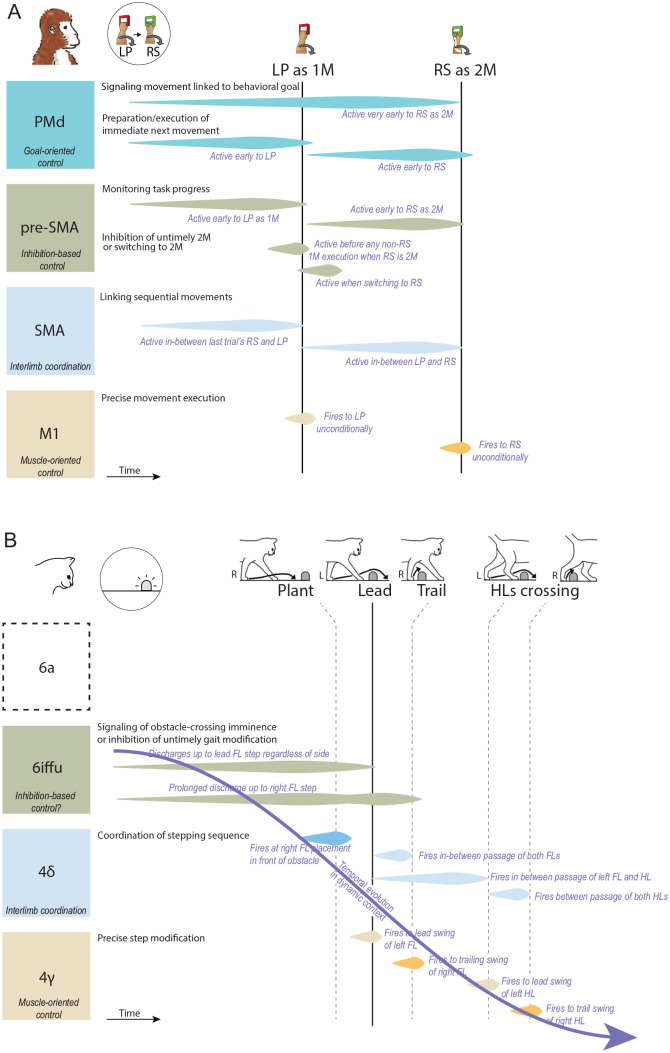
“Our recent single-neuron recordings have shown evidence that 4 δ is responsible for interlimb coordination (Nakajima, Fortier-Lebel, and Drew 2022; Nakajima and others 2019).”
InfluentialSelf-citationActivity of cat premotor cortex neurons during visually guided stepping
Prisco, G. V. D., Marlinski, V., & Beloozerova, I. N. (2023) · Journal of Neurophysiology · doi:10.1152/jn.00114.2023 · Cited by 7
Cortical contribution to visuomotor coordination in locomotion and reaching
Drew, T., Fortier-Lebel, N., & Nakajima, T. (2023) · Current Opinion in Neurobiology · doi:10.1016/j.conb.2023.102755 · Cited by 7
Self-citationMatelli (1998) · doi:10.1002/(sici)1096-9861(19981221)402:3<327::aid-cne4>3.0.co;2-z
Cited by
Zhang, Y.-S., Li, Y.-D., Ou, C.-X., Bi, Z.-T., Xiao, J., Zhang, J., Wei, J.-X., Xu, J., & Huang, L. (2026) · Frontiers in Physiology · doi:10.3389/fphys.2026.1744260 · Cited by 4
Investigation of changes in the interaction of cerebral cortex during the oral swallowing task
Zhang, Y., Li, X., Lin, J., Mao, X., Wu, Y., Hu, H., Lin, J., Wang, Y., Yang, H., Fu, D., et al. (2025) · Brain Research Bulletin · doi:10.1016/j.brainresbull.2025.111399 · Cited by 4
(n.d.) · Chinese Medical Journal / Neuroscience News · doi:10.1097/cm9.0000000000004040
“The precentral gyrus is directly engaged in motor execution and gait control, [33] while cerebellar lobule VI plays an important role in visuomotor tasks.”
Zeng, J., Li, J., Liu, B., Yu, Q., Lei, Z., Yang, F., Ding, M., & Fan, W. (2025) · Bioengineering · doi:10.3390/bioengineering12060619
“The precentral gyrus, which contains the primary motor cortex, plays a crucial role in voluntary motor control [14,33].”
Metadata
- Authors
- Fortier-Lebel, N., & Nakajima, T.
- Affiliations
- Université de Montréal (CA)
- Kindai University (JP)
- Corresponding author
- Nakajima, Toshi
- Venue
- The Neuroscientist
- Publisher
- SAGE Publications
- Published
- 2024-07-23
- Volume
- 31
- Issue
- 3
- Pages
- 279-295
- ISSN
- 1073-8584 (ISSN-L)
- 1089-4098
- PMC
- PMC12103638
- OpenAlex
- W4400921183
- Cited by
- 4
- References
- 102
- Citations by year
- 2026: 2 · 2025: 2
- FWCI
- 0.26
- Type
- journal article
- Language
- en
- Open access
- hybrid
- doi.org
- Licence
- cc-by
- creativecommons.org/licenses/by/4.0/ (unspecified)
- journals.sagepub.com/page/policies/text-and-data-mining-license (tdm)
- Locations
- The Neuroscientist (publishedVersion, cc-by)
- PubMed Central (publishedVersion, cc-by)
- PubMed (publishedVersion)
- Funders
- Fonds de Recherche Québec – Santé
- Japan Society for the Promotion of Science (JP19K06934, JP19KK0414, JP24K02337)
- Topics
- Life Sciences › Neuroscience › Cognitive Neuroscience › Motor Control and Adaptation
- Life Sciences › Neuroscience › Cognitive Neuroscience › Memory and Neural Mechanisms
- Life Sciences › Neuroscience › Cognitive Neuroscience › Neural and Behavioral Psychology Studies
- Keywords
- motor cortex, primary motor cortex, supplementary motor area, pre-supplementary motor area, dorsal premotor cortex, gait control, locomotion, discrete movements, reaching, single-unit activity, motor sequences, cat model, non-human primates
- MeSH terms
- Animals, Cats, Humans, Locomotion, Motor Cortex, Movement
About these checks
Registry, retraction, Cites and statistics results are computed, not judged, with one exception: a printed reference that no index lists is read once by a model before it counts as a citation error. Claims are extracted by a model and kept only when their quote appears verbatim in the text; each cited source is then checked, with a model’s help, for whether it says what the claim relies on. Those verdicts can be wrong — read the claim’s quote and the cited source before relying on one.
Statistics and arithmetic are recomputed, not judged.
Confidence bands are shown only for fields calibrated on our annotated test set. None is calibrated yet, so no band is shown.
What counts as a claim ›How we measure confidence ›How we check this ›
Are you an author, or do you see a problem with this page? Request a review
Data sources
Bibliographic data: Semantic Scholar, OpenAlex, Crossref.
Contains information from the Semantic Scholar Academic Graph Datasets, made available under the ODC Attribution License (ODC-BY 1.0).
Semantic Scholar’s data is described in: Kinney, R., et al. (2023). The Semantic Scholar Open Data Platform. arXiv:2301.10140.
