

Validation of the Mind Excessively Wandering Scale and the Relationship of Mind Wandering to Impairment in Adult ADHD
Open accessThe DOI matches its Crossref record; 33 of the 33 references it cites were found in a registry or an index.
Abstract
Objective: This study investigates excessive mind wandering (MW) in adult ADHD using a new scale: the Mind Excessively Wandering Scale (MEWS). Method: Data from two studies of adult ADHD was used in assessing the psychometric properties of the MEWS. Case-control differences in MW, the association with ADHD symptoms, and the contribution to functional impairment were investigated. Results: The MEWS functioned well as a brief measure of excessive MW in adult ADHD, showing good internal consistency (α > .9), and high sensitivity (.9) and specificity (.9) for the ADHD diagnosis, comparable with that of existing ADHD symptom rating scales. Elevated levels of MW were found in adults with ADHD, which contributed to impairment independently of core ADHD symptom dimensions. Conclusion: Findings suggest excessive MW is a common co-occurring feature of adult ADHD that has specific implications for the functional impairments experienced. The MEWS has potential utility as a screening tool in clinical practice to assist diagnostic assessment.
Overview
The claims and statistics of this paper haven’t been checked yet.
Free: it reads the open-access text and checks the first 5 claims that cite a source we can check. Create a free account to check every claim.
Integrity signals
Registry
Cites
Statistics
Figures
Verification
Claims the paper makes
The claims and statistics of this paper haven’t been checked yet.
Free: it reads the open-access text and checks the first 5 claims that cite a source we can check. Create a free account to check every claim.
Claims other papers make about this one
Each is checked against this paper’s own text: does it say what the citing paper says it does?
The cited source doesn’t support the claim as written.
In the citing paper
“Increased mind wandering is negatively correlated with ADHD symptom severity8,9.”
From Effects of l-theanine–caffeine combination on sustained attention and inhibitory control among children with ADHD: a proof-of-concept neuroimaging RCT (2020) · cites this paper as [9]
Checked by a reasoning model — may be wrong.
Experimental — accuracy not yet measuredThe source backs part of the claim, not all of it — or backs it for a different population, condition or comparison.
In the citing paper
“Impaired sustained attention and inhibitory control in patients with ADHD is associated with increased task-associated mind wandering8–12.”
From Effects of l-theanine–caffeine combination on sustained attention and inhibitory control among children with ADHD: a proof-of-concept neuroimaging RCT (2020) · cites this paper as [9]
Experimental — accuracy not yet measured
Self-check
Percentages, sums and reported differences re-computed from the paper’s own numbers.
The self-check needs the paper’s full text.
Citations
Cites
Diagnostic and Statistical Manual of Mental Disorders
American Psychiatric Association (2013) · doi:10.1176/appi.books.9780890425596 · Cited by 116,369
A wandering mind is an unhappy mind
Killingsworth, M. A., & Gilbert, D. T. (2010) · Science · doi:10.1126/science.1192439 · Cited by 2,575 · cited 2×
“…human experience; individuals in the general population are estimated to spend between 24% and 50% of their waking hours engaging in self-generated thoughts unrelated to their external environment (Kane et al., 2007; Killingsworth & Gilbert, 2010; Smallwood & Schooler, 2015; Song & Wang, 2012).”
BackgroundChristoff, K., Gordon, A. M., Smallwood, J., Smith, R., & Schooler, J. W. (2009) · Proceedings of the National Academy of Sciences · doi:10.1073/pnas.0900234106 · Cited by 1,769 · cited 1×
“…rating scales, as reported here, as well as experience sampling during daily life (Killingsworth & Gilbert, 2010), or during sustained attention tasks (Shaw & Giambra, 1993) and neuroimaging studies (Baird, Smallwood, Lutz, & Schooler, 2014; Christoff, Gordon, Smallwood, Smith, & Schooler, 2009).”
BackgroundThe Science of Mind Wandering: Empirically Navigating the Stream of Consciousness
Smallwood, J., & Schooler, J. W. (2015) · Annual Review of Psychology · doi:10.1146/annurev-psych-010814-015331 · Cited by 1,685 · cited 4×
“…human experience; individuals in the general population are estimated to spend between 24% and 50% of their waking hours engaging in self-generated thoughts unrelated to their external environment (Kane et al., 2007; Killingsworth & Gilbert, 2010; Smallwood & Schooler, 2015; Song & Wang, 2012).”
BackgroundInfluentialCross-national prevalence and correlates of adult attention-deficit hyperactivity disorder
Fayyad, J., De Graaf, R., Kessler, R., Alonso, J., Angermeyer, M., Demyttenaere, K., De Girolamo, G., Haro, J. M., Karam, E. G., Lara, C., et al. (2007) · British Journal of Psychiatry · doi:10.1192/bjp.bp.106.034389 · Cited by 1,321 · cited 1×
“For these analyses, we fixed the z value threshold for affection status corresponding to 3.4% prevalence of ADHD in adults (Fayyad et al., 2007).”
MethodInfluentialMaximum Likelihood Estimation of the Polychoric Correlation Coefficient
Olsson, U. (1979) · Psychometrika · doi:10.1007/bf02296207 · Cited by 1,127 · cited 1×
“Convergent validity of the MEWS in relation to ADHD symptom scales was assessed using polyserial correlations to provide unbiased estimates of cross-variable correlations in case-control samples (Olsson, 1979).”
MethodKane, M. J., Brown, L. H., McVay, J. C., Silvia, P. J., Myin-Germeys, I., & Kwapil, T. R. (2007) · Psychological Science · doi:10.1111/j.1467-9280.2007.01948.x · Cited by 979
Fox, K. C. R., Spreng, R. N., Ellamil, M., Andrews-Hanna, J. R., & Christoff, K. (2015) · NeuroImage · doi:10.1016/j.neuroimage.2015.02.039 · Cited by 690
Reaction time variability in ADHD: A meta-analytic review of 319 studies
Kofler, M. J., Rapport, M. D., Sarver, D. E., Raiker, J. S., Orban, S. A., Friedman, L. M., & Kolomeyer, E. G. (2013) · Clinical Psychology Review · doi:10.1016/j.cpr.2013.06.001 · Cited by 648 · cited 3×
“It will also be advantageous to see how it relates to various cognitive measures such as omission and commission errors (Losier, McGrath, & Klein, 1996), and RTV (Kofler et al., 2013), which may reveal further information about the underlying neurobiology of ADHD.”
BackgroundInfluentialKorolczuk, I., Burle, B., Coull, J. T., & Śmigasiewicz, K. (2021) · Journal of Cognitive Neuroscience · doi:10.1162/jocn_a_01795 · Cited by 528
Research works printed but not linked: 2
- Barkley R. A. (1998). A clinical workbook: Attention-deficit hyperactivity disorder. New York, NY: Guilford Press.
- Conners C. K. Erhardt D. Sparrow E. (1999). Conner’s Adult ADHD Rating Scales: Technical Manual. Toronto, Ontario, Canada: Multi-Health Systems.
Cited by
Updated European Consensus Statement on diagnosis and treatment of adult ADHD
Kooij, J. J. S., Bijlenga, D., Salerno, L., Jaeschke, R., Bitter, I., Balázs, J., Thome, J., Dom, G., Kasper, S., Nunes Filipe, C., et al. (2019) · European Psychiatry · doi:10.1016/j.eurpsy.2018.11.001 · Cited by 686
“In ADHD it can be measured using the Mind Excessively Wandering Scale [116,118,120] (Table 1).”
BackgroundMethodSelf-citationAdult attention-deficit hyperactivity disorder: key conceptual issues
Asherson, P., Buitelaar, J., Faraone, S. V., & Rohde, L. A. (2016) · The Lancet Psychiatry · doi:10.1016/s2215-0366(16)30032-3 · Cited by 347
Self-citationMind wandering perspective on attention-deficit/hyperactivity disorder
Bozhilova, N. S., Michelini, G., Kuntsi, J., & Asherson, P. (2018) · Neuroscience & Biobehavioral Reviews · doi:10.1016/j.neubiorev.2018.07.010 · Cited by 182
Self-citationRubia, K., Criaud, M., Wulff, M., Alegria, A., Brinson, H., Barker, G., Stahl, D., & Giampietro, V. (2019) · NeuroImage · doi:10.1016/j.neuroimage.2018.11.055 · Cited by 111
“…poor deactivation of the DMN during cognitive task performance based on fMRI studies is in line with behavioural studies showing abnormally increased mind-wandering in ADHD patients as shown in self-ratings on mind-wandering scales (Biederman et al., 2017; Mowlem et al., 2016; Seli et al., 2015).”
Increasing participant motivation reduces rates of intentional and unintentional mind wandering
Seli, P., Schacter, D. L., Risko, E. F., & Smilek, D. (2019) · Psychological Research · doi:10.1007/s00426-017-0914-2 · Cited by 80
Testing the construct validity of competing measurement approaches to probed mind-wandering reports
Kane, M. J., Smeekens, B. A., Meier, M. E., Welhaf, M. S., & Phillips, N. E. (2021) · Behavior Research Methods · doi:10.3758/s13428-021-01557-x · Cited by 136
Asherson, P. J., Leaver, L., Adamou, M., Arif, M., Askey, G., Butler, M., Cubbin, S., Newlove‐Delgado, T., Kustow, J., Lanham-Cook, J., et al. (2022) · BMC Psychiatry · doi:10.1186/s12888-022-04290-7 · Cited by 90
Self-citationMind Wandering (Internal Distractibility) in ADHD: A Literature Review
Lanier, J., Noyes, E., & Biederman, J. (2021) · Journal of Attention Disorders · doi:10.1177/1087054719865781 · Cited by 72
“One study reported mind wandering in those with ADHD symptomatology increased impairment and reduced overall wellbeing even after accounting for the effects of ADHD symptoms (Mowlem et al., 2019).”
BackgroundJonkman, L. M., Markus, C. R., Franklin, M. S., & van Dalfsen, J. H. (2017) · PLOS ONE · doi:10.1371/journal.pone.0181213 · Cited by 67
Westwood, S. J., Criaud, M., Lam, S.-L., Lukito, S., Wallace-Hanlon, S., Kowalczyk, O. S., Kostara, A., Mathew, J. P., Agbedjro, D., Wexler, B. E., et al. (2021) · Psychological Medicine · doi:10.1017/s0033291721001859 · Cited by 75
Self-citationKucyi, A., Kam, J. W. Y., Andrews‐Hanna, J. R., Christoff, K., & Whitfield, S. (2023) · Nature Mental Health · doi:10.1038/s44220-023-00133-w · Cited by 75
“These findings have important implications for the use of stimulant medications that are commonly used to treat mental illness (for example, ADHD and depression) and include the noradrenergic system as a central target.”
BackgroundInfluentialFredrick, J. W., Kofler, M. J., Jarrett, M. A., Burns, G. L., Luebbe, A. M., Garner, A. A., Harmon, S. L., & Becker, S. P. (2020) · Journal of Psychiatric Research · doi:10.1016/j.jpsychires.2020.01.016 · Cited by 52
Mind-wandering, depression, anxiety and ADHD: Disentangling the relationship
de Figueiredo, T. C., Lima, G., Erthal, P., Coelho, R. M., MORAES, P. C. B., Leonel, M., Ayrão, V., Fortes, D., & Mattos, P. (2020) · Psychiatry Research · doi:10.1016/j.psychres.2020.112798 · Cited by 60
Norman, L. J., Carlisi, C. O., Christakou, A., Cubillo, A., Murphy, C. M., Chantiluke, K., Simmons, A., Giampietro, V., Brammer, M., Mataix-Cols, D., et al. (2017) · NeuroImage: Clinical · doi:10.1016/j.nicl.2017.04.013 · Cited by 44
Kahathuduwa, C. N., Wakefield, S., West, B. D., Blume, J., Dassanayake, T. L., Weerasinghe, V. S., & Mastergeorge, A. (2020) · Scientific Reports · doi:10.1038/s41598-020-70037-7 · Cited by 45
Mowlem, F. D., Agnew-Blais, J., Pingault, J.-B., & Asherson, P. (2019) · Scientific Reports · doi:10.1038/s41598-019-39227-w · Cited by 43
Self-citationLam, S.-L., Criaud, M., Lukito, S., Westwood, S. J., Agbedjro, D., Kowalczyk, O. S., Curran, S. R., Barret, N., Abbott, C., Liang, H., et al. (2022) · American Journal of Psychiatry · doi:10.1176/appi.ajp.21100999 · Cited by 43
Murray, A. L., Eisner, M., Obsuth, I., & Ribeaud, D. (2017) · Psychiatry Research · doi:10.1016/j.psychres.2017.01.005 · Cited by 35
“…associated with depression (e.g. Robinson and Alloy, 2008), poor control over maladaptive thoughts in attention-deficit hyperactivity disorder (e.g. Mowlem et al., 2016), heightened threat sensitivity in anxiety disorders (e.g. Pine, 2007) hostile attributional styles in externalising disorders…”
The Neuroscience of Spontaneous Thought: An Evolving, Interdisciplinary FieldPreprint
Andrews‐Hanna, J. R., Irving, Z. C., Fox, K. C. R., Spreng, R. N., & Kalina Christoff, A. (2017) · arXiv (Cornell University) · doi:10.48550/arxiv.1704.02533 · Cited by 39
“, 2013), and the recent Mind Excessively Wandering Scale (Mowlem et al., 2016).”
BackgroundVatansever, D., Bozhilova, N. S., Asherson, P. J., & Smallwood, J. (2018) · Psychological Medicine · doi:10.1017/s0033291718003598 · Cited by 35
Self-citationTraining satisfaction relative to turnover intention: the mediating role of employee loyalty
Albtoosh, Q. A. A., Ngah, A. H., & Yusoff, Y. M. (2022) · Industrial and Commercial Training · doi:10.1108/ict-06-2021-0047 · Cited by 56
Helfer, B., Cooper, R. E., Bozhilova, N., Maltezos, S., Kuntsi, J., & Asherson, P. (2019) · European Psychiatry · doi:10.1016/j.eurpsy.2018.09.006 · Cited by 32
Self-citationBozhilova, N., Cooper, R., Kuntsi, J., Asherson, P., & Michelini, G. (2020) · Behavioural Brain Research · doi:10.1016/j.bbr.2020.112632 · Cited by 32
Self-citationReconceptualizing mind wandering from a switching perspective
Wong, Y.-S., Willoughby, A. R., & Machado, L. (2022) · Psychological Research · doi:10.1007/s00426-022-01676-w · Cited by 43
“This account could explain why individuals with ADHD tend to experience more mind wandering episodes (Bozhilova et al., 2018; Franklin et al., 2017; Mowlem et al., 2019; Seli et al., 2015; Shaw & Giambra, 1993).”
BackgroundSaoji, A. A., Raghavendra, B. R., Madle, K., & Manjunath, N. K. (2018) · EXPLORE · doi:10.1016/j.explore.2018.02.005 · Cited by 37
Social Cognition in Adult ADHD: A Systematic Review
Morellini, L., Ceroni, M., Rossi, S., Zerboni, G., Rege-Colet, L., Biglia, E., Morese, R., & Sacco, L. (2022) · Frontiers in Psychology · doi:10.3389/fpsyg.2022.940445 · Cited by 45
“However, they described a slowdown of ADHD subjects in categorizing emotion, probably related to the mind wandering effect (measured via the Mind Excessively Wandering Scale, MEWS; Mowlem et al., 2019).”
MethodMind‐wandering in children with and without ADHD
Frick, M. A., Asherson, P., & Brocki, K. C. (2020) · British Journal of Clinical Psychology · doi:10.1111/bjc.12241 · Cited by 31
Self-citationLam, S.-L., Criaud, M., Alegría, A. A., Barker, G. J., Giampietro, V., & Rubia, K. (2020) · NeuroImage Clinical · doi:10.1016/j.nicl.2020.102291 · Cited by 27
Context Regulation of Mind Wandering in ADHD
Bozhilova, N. S., Michelini, G., Jones, C., Kuntsi, J., Rubia, K., & Asherson, P. J. (2020) · Journal of Attention Disorders · doi:10.1177/1087054720956714 · Cited by 32
“Clinical observations of adults with ADHD describe poorly controlled and excessive mind wandering (MW) (Asherson, 2005), which strongly predicts spontaneous before but not deliberate MW (Mowlem et al., 2019; Seli et al., 2015).”
BackgroundSelf-citationWestwood, S. J., Bozhilova, N. S., Criaud, M., Lam, S.-L., Lukito, S., Wallace-Hanlon, S., Kowalczyk, O. S., Kostara, A., Mathew, J. P., Wexler, B. E., et al. (2021) · IBRO Neuroscience Reports · doi:10.1016/j.ibneur.2021.12.005 · Cited by 33
“Also measured were related difficulties and functional impairments (Weekly Parent Ratings of Evening and Morning Behavior-Revised scale, WREMB-R(Wehmeier et al., 2009); Columbia Impairment Scale-Parent version, CIS(Bird et al., 1993)); irritability (child- and caregiver-rated Affective Reactivity Index, ARI(Stringaris…”
BackgroundSelf-citationMartz, É., Weibel, S., & Weiner, L. (2021) · Journal of Affective Disorders · doi:10.1016/j.jad.2021.12.060 · Cited by 33
The Four Factors of Mind Wandering Questionnaire : Content, Construct, and Clinical Validity
Lopez, A., Caffò, A. O., Tinella, L., & Bosco, A. (2021) · Assessment · doi:10.1177/10731911211058688 · Cited by 36
“With respect to retrospective methods, the most commonly used MW questionnaires include (a) the Mind Excessively Wandering Scale (MEWS; Mowlem et al., 2019), a unidimensional structure that detects MW in ADHD, based on patient descriptions of MW in ADHD; (b) the Mind Wandering Questionnaire (MWQ; Mrazek et al., 2013),…”
BackgroundMethodUnique Patterns of Eye Movements Characterizing Inattentive Reading in ADHD
Stern, P., Kolodny, T., Tsafrir, S., Cohen, G., & Shalev, L. (2024) · Journal of Attention Disorders · doi:10.1177/10870547231223728 · Cited by 22
“…adults with ADHD self-report more mind wandering in questionnaires pertaining to daily life (e.g., Arabacı & Parris, 2018; Biederman et al., 2017; Mowlem et al., 2019; Seli et al., 2015), and several previous studies using cognitive tasks with probes also demonstrated increased mind wandering in…”
BackgroundKandeğer, A., Ünal, Ş. O., Ergün, M. T., & Ataşlar, E. Y. (2023) · Clinical Psychology & Psychotherapy · doi:10.1002/cpp.2940 · Cited by 30
Yegüez, C. E., Hill, R. M., Buitron, V., & Pettit, J. W. (2018) · Cognitive Therapy and Research · doi:10.1007/s10608-018-9910-0 · Cited by 23
“It may be that emerging adults with ADHD symptoms, who are prone to negative automatic thoughts and mind-wandering (Mitchell et al. 2013; Mowlem et al. 2016), have a vulnerability to ruminate in response to these high levels of daily stress, which in turn, increases levels of suicidal thoughts.”
BackgroundHelfer, B., Boxhoorn, S., Songa, J., Steel, C., Maltezos, S., & Asherson, P. J. (2020) · Journal of Psychiatric Research · doi:10.1016/j.jpsychires.2020.12.059 · Cited by 25
Self-citationMore than off-task: Increased freely-moving thought in ADHD
Alperin, B. R., Christoff, K., Mills, C., & Karalunas, S. L. (2021) · Consciousness and Cognition · doi:10.1016/j.concog.2021.103156 · Cited by 27
Spontaneous mind-wandering tendencies linked to cognitive flexibility in young adults
Wong, Y.-S., Willoughby, A. R., & Machado, L. (2022) · Consciousness and Cognition · doi:10.1016/j.concog.2022.103335 · Cited by 27
Wandering minds in attention-deficit/hyperactivity disorder and borderline personality disorder
Moukhtarian, T. R., Reinhard, I., Morillas-Romero, A., Ryckaert, C., Mowlem, F. D., Bozhilova, N. S., Moran, P., Ebner‐Priemer, U., & Asherson, P. J. (2020) · European Neuropsychopharmacology · doi:10.1016/j.euroneuro.2020.07.005 · Cited by 25
Self-citationTesting the construct validity of competing measurement approaches to probed mind-wandering reportsPreprint
Kane, M. J., Smeekens, B. A., Meier, M. E., Welhaf, M., & Phillips, N. (2020) · PsyArXiv (OSF Preprints) · doi:10.31234/osf.io/te9yc · Cited by 22
Asherson, P. J., Johansson, L. C., Holland, R., Fahy, T., Forester, A., Howitt, S., Lawrie, S. M., Strang, J., Young, S., Landau, S., et al. (2019) · Trials · doi:10.1186/s13063-019-3705-9 · Cited by 24
Self-citationOsborne, J. B., Zhang, H., Carlson, M., Shah, P., & Jonides, J. (2023) · Frontiers in Psychiatry · doi:10.3389/fpsyt.2023.1173989 · Cited by 26
“These results appear to support previous notions that spontaneous mindwandering is strongly associated with both inattentive and hyperactive symptoms of ADHD (69).”
ResultMind-wandering and sleepiness in adults with attention-deficit/hyperactivity disorder
Madiouni, C., Lopez, R., Gély-Nargeot, M.-C., Lebrun, C., & Bayard, S. (2020) · Psychiatry Research · doi:10.1016/j.psychres.2020.112901 · Cited by 26
Albtoosh, Q. A. A., & Ngah, A. H. (2022) · International Journal of Public Administration · doi:10.1080/01900692.2022.2081338 · Cited by 33
“Individuals vary in the frequency and intention-ality of their MW, depending on its pervasiveness (Mowlem et al., 2019).”
BackgroundYang, X., Zhang, L., Yu, J., & Wang, M. (2025) · Frontiers in Psychiatry · doi:10.3389/fpsyt.2025.1516878 · Cited by 25
“Spontaneous mind-wandering is a central feature of ADHD symptomatology (46) and may underlie many functional impairments of ADHD (46, 47).”
Validation of the dispositional adult hyperfocus questionnaire (AHQ-D)
Hupfeld, K. E., Osborne, J. B., Tran, Q. T., Hyatt, H. W., Abagis, T. R., & Shah, P. (2024) · Scientific Reports · doi:10.1038/s41598-024-70028-y · Cited by 18
Siebelink, N. M., Asherson, P. J., Antonova, E., Bögels, S. M., Speckens, A. E. M., Buitelaar, J. K., & Greven, C. U. (2019) · European Child & Adolescent Psychiatry · doi:10.1007/s00787-019-01279-8 · Cited by 18
Self-citationMerrill, B. M., Raiker, J. S., Mattfeld, A. T., Macphee, F. L., Ramos, M. C., Zhao, X., Altszuler, A. R., Schooler, J. W., Coxe, S. J., Gnagy, E. M., et al. (2022) · Research on Child and Adolescent Psychopathology · doi:10.1007/s10802-022-00912-6 · Cited by 17
“Further, mind-wandering has been shown to contribute to impairment beyond ADHD symptoms (Mowlem et al., 2016).”
BackgroundBozhilova, N., Kuntsi, J., Rubia, K., Michelini, G., & Asherson, P. (2021) · NeuroImage: Clinical · doi:10.1016/j.nicl.2020.102547 · Cited by 13
“Experience-sampling for periods of MW and self-report MW scales in adults (Seli et al., 2015; Franklin et al., 2017; Mowlem et al., 2016; 2019;; Biederman et al., 2019) and children with ADHD (Van den Driessche et al., 2017; Frick et al., 2020) further show that MW is increased in ADHD across the…”
BackgroundSelf-citationDisentangling the Phenomenology of Mind-Wandering
de Figueiredo, T. C., & Mattos, P. (2021) · Journal of Attention Disorders · doi:10.1177/1087054721997550 · Cited by 16
“Mowlem et al. (2019) developed the original version MEWS scale used in our study, which captures unintentional and uncontrollable mind-wandering.”
MethodRubia, K., Johansson, L. C., Carter, B., Stringer, D., Santosh, P., Mehta, M. A., Conti, A. A., Bozhilova, N. S., Eraydin, I. E., & Cortese, S. (2024) · BMC Psychiatry · doi:10.1186/s12888-024-05650-1 · Cited by 14
“The degree of mind-wandering as assessed by the self-rated Mind Excessive Wandering Questionnaire (MEWS) [18] e. Ratings of depression and anxiety using the revised child and adolescent depression scale rated by children and by parents (RCADS-25 and RCADS 25-”
MethodAn item-level systematic review of the presentation of ADHD in females
Williams, T., Horstmann, L., Kayani, L., Lim, A. X. H., Russell, A. E., Ford, T. J., John, A. M., Sayal, K. S., Thapar, A., Langley, K., et al. (2025) · Neuroscience & Biobehavioral Reviews · doi:10.1016/j.neubiorev.2025.106064 · Cited by 15
“Six studies used validated measures of impact (see Table 1 ) , with one study using a questionnaire devised by the lead author and consultant educational psychologist, which was validated by experienced paediatricians and psychologists and another study using the Mind Excessively Wandering Scale (MEWS) (Mowlem et al.,…”
Influentialde Figueiredo, T. C., Erthal, P., Fortes, D., Asherson, P. J., & Mattos, P. (2018) · Trends in Psychiatry and Psychotherapy · doi:10.1590/2237-6089-2017-0117 · Cited by 13
Self-citationThe brief mind wandering three-factor scale (BMW-3)
Schubert, A., Frischkorn, G. T., Sadus, K., Welhaf, M. S., Kane, M. J., & Rummel, J. (2024) · Behavior Research Methods · doi:10.3758/s13428-024-02500-6 · Cited by 16
“Moreover, exploring other demographics, including adolescents with ADHD or individuals with clinical depression or OCD, may uncover additional areas where the BMW-3 may prove useful.”
BackgroundInfluentialResting-State Brain Variability in Youth With Attention-Deficit/Hyperactivity Disorder
Hong, S., & Hwang, S.-S. (2022) · Frontiers in Psychiatry · doi:10.3389/fpsyt.2022.918700 · Cited by 13
“Individuals with attention-deficit/hyperactivity disorder (ADHD) have difficulties in maintaining focus on tasks and are easily distracted by unrelated thoughts (10, 11).”
BackgroundWiggs, K. K., Fredrick, J. W., Tamm, L., Epstein, J. N., Simon, J. O., & Becker, S. P. (2024) · Journal of Psychiatric Research · doi:10.1016/j.jpsychires.2024.02.020 · Cited by 14
Does Mind-Wandering Explain ADHD-Related Impairment in Adolescents?
Dekkers, T. J., Flisar, A., Motaghi, A. K., Karl, A., Frick, M. A., & Boyer, B. E. (2023) · Child Psychiatry & Human Development · doi:10.1007/s10578-023-01557-2 · Cited by 12
“For example, in adults with ADHD, mind-wandering explained functional impairment across major life domains and well-being beyond ADHD symptoms [45, 46].”
InfluentialVanutelli, M. E., Grigis, C., & Lucchiari, C. (2024) · Brain Sciences · doi:10.3390/brainsci14040302 · Cited by 14
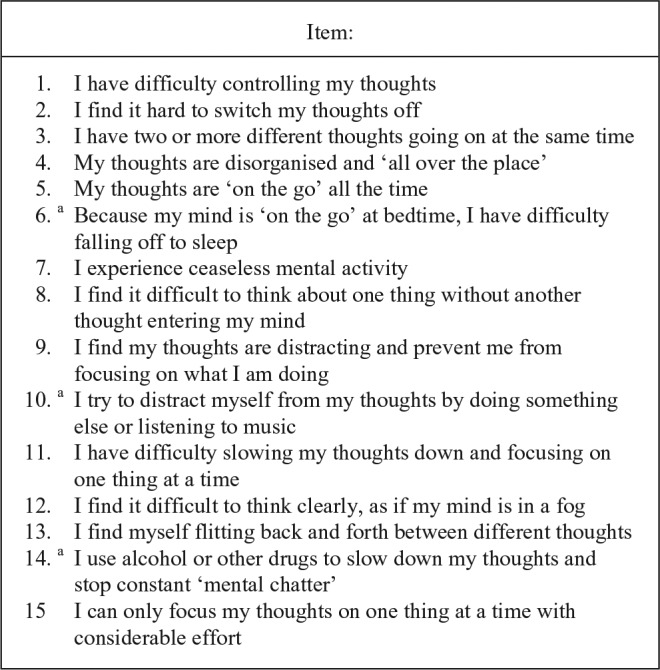
“The Mind Excessive Wandering Scale (MEWS) is a self-report scale composed of 15 items that assess mind-wandering traits [44].”
MethodThe Connection Between Mind Wandering, ADHD, and Level of Performance on an Attention Task
Alali-Morlevy, K., & Goldfarb, L. (2020) · Journal of Attention Disorders · doi:10.1177/1087054720946371 · Cited by 10
“Our findings regarding the general propensity to MW questionnaire are in line with previous studies which reported that participants with ADHD display more mind wandering, using the general questionnaire technique that related to mind wandering in daily life (Jonkman et al., 2017; Mowlem et al., 2019; Seli et al., 201…”
MethodResultKandeğer, A., Güler, H. A., Özaltın, M. S., Bayırlı, Ö., Söylemez, H., Yıldız, E., & Semerci, B. (2025) · Journal of Attention Disorders · doi:10.1177/10870547241310990 · Cited by 15
“Additionally, excessive mind wandering refers to continuous mental overactivity characterized by multiple, rapid, unrelated, and fleeting thoughts (Mowlem et al., 2019).”
Raffaelli, Q., Rai, S., Galbraith, A., Krupa, A., Buerkner, J., Andrews‐Hanna, J. R., Callahan, B. L., & Kam, J. W. Y. (2025) · Scientific Reports · doi:10.1038/s41598-025-93053-x · Cited by 12
“…relationship has been reported between hyperactive and inattentive symptoms of ADHD and the propensity to experience (1) thoughts constantly on the go, (2) thoughts fleeting from one to another, and (3) multiple thoughts at the same time based on the Mind Excessively Wandering Scale 22,23 .”
Ceroni, M., Rossi, S., Zerboni, G., Biglia, E., Soldini, E., Izzo, A., Morellini, L., & Sacco, L. (2022) · Frontiers in Psychology · doi:10.3389/fpsyg.2022.1015102 · Cited by 12
“Moreover, other self-report measures could have been employed, such as the Behavior Rating Inventory of Executive Functions (BRIEF-A; Roth et al., 2005), the Adult Executive Functioning Inventory (ADEXI; Holst and Thorell, 2018) or the Mind Wandering Excessively Scale (MEWS; Mowlem et al., 2019).”
MethodThe Interaction of the Dorsolateral and Ventromedial Prefrontal Cortex During Mind Wandering
Nejati, V., Zamiran, B., & Nitsche, M. A. (2023) · Brain Topography · doi:10.1007/s10548-023-00970-z · Cited by 10
Nazari, S., Fitzgerald, P. B., & Kazemi, R. B. (2025) · Brain and Behavior · doi:10.1002/brb3.70764 · Cited by 9
Takım, U., & Gökçay, H. (2024) · Psychological Reports · doi:10.1177/00332941241281816 · Cited by 8
“Spontaneous MW, which hampers performance, has been suggested as a mechanism that explains many of the symptoms and impairments associated with ADHD (Mowlem et al., 2019).”
Measurement Informed Care in Attention-Deficit/Hyperactivity Disorder (ADHD)
Weiss, M. D., & Stein, M. A. (2022) · Child and Adolescent Psychiatric Clinics of North America · doi:10.1016/j.chc.2022.03.010 · Cited by 8
Disentangling racing thoughts from mind wandering in adult attention deficit hyperactivity disorder
Martz, É., Weiner, L., Bonnefond, A., & Weibel, S. (2023) · Frontiers in Psychology · doi:10.3389/fpsyg.2023.1166602 · Cited by 7
Gelner, H., Bagrowska, P., Jeronimus, B. F., Misiak, B., Samochowiec, J., & Gawęda, Ł. (2024) · Journal of Clinical Medicine · doi:10.3390/jcm13226727 · Cited by 8
Metacognitive scaffolding for digital reading and mind-wandering in adults with and without ADHD
Brann, A., & Sidi, Y. (2024) · Learning and Instruction · doi:10.1016/j.learninstruc.2024.102051 · Cited by 9
Pinggal, E., Jackson, J., Kusztor, A., Chapman, D., Windt, J., Drummond, S. P. A., Silk, T. J., Bellgrove, M. A., & Andrillon, T. (2026) · Journal of Neuroscience · doi:10.1523/jneurosci.1694-25.2025 · Cited by 9
Psychopathology and mind wandering in young university students
Gionet, S., Arseneau, J., & Plourde, V. (2023) · Journal of Psychiatric Research · doi:10.1016/j.jpsychires.2023.05.075 · Cited by 11
Validation of the German Version of the Mind Excessively Wandering Scale (MEWS-G)
Nakovics, H., Benoit, D., Asherson, P. J., Luderer, M., Alm, B., Vollstädt‐Klein, S., Philipsen, A., Mowlem, F. D., Fischer, N., & Sobanski, E. (2021) · Fortschritte der Neurologie · Psychiatrie · doi:10.1055/a-1362-9743 · Cited by 7
“In extension to the validation study of the original English scale [7] we showed, that MEWS-G does not only distinguish between adult ADHD patients and healthy but also clinical controls and that the one factorial structure underlying the scale remains stable irrespective of sample size.”
BackgroundMethodInfluentialSelf-citationAksoy, U. M., Aksoy, Ş. G., & Semerci, B. (2022) · Nöro Psikiyatri Arşivi · doi:10.29399/npa.27804 · Cited by 8
Gau, S. S., Hwang-Gu, S.-L., Lin, Y. T., Hsu, C., & Ni, H. (2022) · Taiwanese Journal of Psychiatry · doi:10.4103/tpsy.tpsy_16_22 · Cited by 9
The effect of background sounds on mind wandering
Alali-Morlevy, K., & Goldfarb, L. (2022) · Psychological Research · doi:10.1007/s00426-022-01751-2 · Cited by 9
“(2014) and is similar to other studies such as that of Mowlem et al. (2016). The analysis suggests that in each group, the current sample size is sufficient for detecting a possible correlation between MW and ADHD symptoms if indeed those variables are correlated under the different experimental conditions.”
ResultCommonalities between mind wandering and task-set switching: An event-related potential study
Wong, Y.-S., Pat, N., & Machado, L. (2023) · Neuropsychologia · doi:10.1016/j.neuropsychologia.2023.108585 · Cited by 7
Cheung, R. Y. M., & Djekou, L. (2024) · Scientific Reports · doi:10.1038/s41598-024-58395-y · Cited by 9
“Although Mowlem et al. 57 indicated measurement invariance across individuals with or without ADHD diagnosis, future studies should utilize multiple measures 76 and different methods, such as naturalistic observation and probing methods 77 , to assess mind wandering.”
MethodDagar, C., Agrawal, A., & Pandey, A. (2024) · The International Journal of Management Education · doi:10.1016/j.ijme.2024.101089 · Cited by 9
Theodor‐Katz, N., & Soffer‐Dudek, N. (2025) · Journal of Attention Disorders · doi:10.1177/10870547251319081 · Cited by 6
“To conclude, such a dynamic thought pattern is considered the prototypical distraction pattern characterizing ADHD (e.g., Mowlem et al., 2019).”
Huțanu, T.-E., & Holman, A. C. (2026) · Journal of Pacific Rim Psychology · doi:10.1177/18344909261416561 · Cited by 4
Zanesco, A. P., Dam, N. T. V., Denkova, E., & Jha, A. P. (2024) · Behavior Research Methods · doi:10.3758/s13428-024-02446-9 · Cited by 9
Tamura, T., Takagi, S., Takahashi, H., & Sugihara, G. (2025) · Scientific Reports · doi:10.1038/s41598-025-88303-x · Cited by 11
Theodor‐Katz, N., & Soffer‐Dudek, N. (2025) · International Journal of Clinical and Health Psychology · doi:10.1016/j.ijchp.2025.100616 · Cited by 5
“MW was assessed using the Mind Excessively Wan-dering Scale (MEW) (Mowlem et al., 2019).”
Conti, A. A., Bozhilova, N. S., Eraydin, I. E., Stringer, D., Johansson, L. C., Marhenke, R., Bilbow, A., Masri, S. E., Hyde, J., Giaroli, G., et al. (2026) · Nature Medicine · doi:10.1038/s41591-025-04075-x · Cited by 7
“…Index (ARI) 57 , parent and child-reported Child and Adolescent Anxiety and Depression scale (RCADS-25) 58 , child-reported C-SSRS 59 , child-reported MEWS 39 , parent-reported Sleep Disturbance Scale for Children (SDSC) 60 and the investigator-scored, parent-rated ADHD-RS 21 at 6-month follow-up.”
Luderer, M., Seidt, J., Gerhardt, S., Hoffmann, S., Vollstädt‐Klein, S., Reif, A., & Sobanski, E. (2023) · Frontiers in Psychiatry · doi:10.3389/fpsyt.2023.1112843 · Cited by 7
“The Mind Excessively Wandering Scale (MEWS) consists of 15 items (29, 30).”
MethodUnraveling the relationship between executive function and mind wandering in childhood ADHD
Hasan, F., Shah, H. P., Kam, J. W. Y., & Murias, K. (2024) · Child Neuropsychology · doi:10.1080/09297049.2024.2435545 · Cited by 6
“The Mind Excessively Wandering Scale (MEWS) explores mind wandering based on 12 self-reported items, rated on a 4-point Likert scale: 0 (not at all or rarely) to 3 (nearly all of the time or constantly; Mowlem et al., 2019).”
Croatian Translation and Validation of the Mind-Wandering Questionnaire (MWQ)
Kovačević, M. P., Ćurković, M., Gorjanski, D., & Matić, I. (2020) · Psihologijske teme · doi:10.31820/pt.29.3.4 · Cited by 7
ADHD and Interfering Thoughts in High and Low Conflict Conditions
Alali-Morlevy, K., & Goldfarb, L. (2021) · Journal of Attention Disorders · doi:10.1177/10870547211036511 · Cited by 5
“Using this technique, participants with ADHD symptoms were found to have more reports of MW (Jonkman et al., 2017; Mowlem et al., 2019; Seli et al., 2015; Weyandt et al., 2003).”
MethodResultExamining the effects of a modified SART when measuring mind‐wandering
Liu, Y., Dong, Q., Yu, C., Jin, Y., Fang, C., Hu, Y., & Zhou, Q. (2023) · Brain and Behavior · doi:10.1002/brb3.3175 · Cited by 4
Schmidt, L. M., Chaieb, L., Derner, M., Reber, T. P., & Fell, J. (2024) · Frontiers in Psychology · doi:10.3389/fpsyg.2024.1375717 · Cited by 4
Xu, D., & Albeaino, G. (2025) · Journal of Information Technology in Construction · doi:10.36680/j.itcon.2025.075 · Cited by 5
de Melo, I. H., & França, G. (2026) · Frontiers in Psychiatry · doi:10.3389/fpsyt.2026.1813029 · Cited by 4
“Validated instruments already exist, notably mind − wandering scales such as the Mind Excessively Wandering Scale (MEWS) (23), on which individuals with ADHD score markedly higher than controls.”
OROS-methylphenidate to reduce ADHD symptoms in male prisoners aged 16–25 years: a RCT
Asherson, P. J., Johansson, L., Holland, R., Bedding, M., Forrester, A., Giannulli, L., Ginsberg, Y., Howitt, S., Kretzschmar, I., Lawrie, S. M., et al. (2022) · Efficacy and Mechanism Evaluation · doi:10.3310/thei8200 · Cited by 6
Self-citationSánchez-Soto, L., & Suricalday, Á. S. (2023) · Journal for the Study of Education and Development Infancia y Aprendizaje · doi:10.1080/02103702.2023.2191427 · Cited by 16
Spanish and cross-cultural validation of the mind excessively wandering scale
Morillas-Romero, A., de la Torre‐Luque, A., Mowlem, F. D., & Asherson, P. J. (2023) · Frontiers in Psychology · doi:10.3389/fpsyg.2023.1181294 · Cited by 6
“Florence Mowlem provided permission for the translation and adaptation of the MEWS scale (Mowlem et al., 2016).”
BackgroundMethodInfluentialSelf-citationINVESTIGATING MIND WANDERING IN UNIVERSITY AND COMMUNITY SAMPLES
Ostojic, D. (2018) · Scholarship at UWindsor (University of Windsor) · Cited by 6
Peloso, F. C., Zibetti, M. R., Nardi, A. E., & Catelan, R. F. (2024) · Brazilian Journal of Psychiatry · doi:10.47626/1516-4446-2023-3312 · Cited by 8
“29 However, the MEWS assesses excessive and/or pathological aspects of MW, whereas the MWQ conducts a more general assessment.”
Kérébel, A., Caille, J.-A., & Sackur, J. (2024) · Consciousness and Cognition · doi:10.1016/j.concog.2024.103735 · Cited by 10
“…an experimental observation of the phenomenon of racing thoughts, and in that regard, we predict that similar associations would be found with questionnaires such as the Mind Excessively Wandering Scale (MEWS, Mowlem et al., 2019) or clinical conditions associated with racing thought, as hypomania.”
Oschinsky, F. M., Niehaves, B., Riedl, R., Klesel, M., Wriessnegger, S. C., & Müller-Putz, G. (2021) · Lecture notes in information systems and organisation · doi:10.1007/978-3-030-88900-5_16 · Cited by 3
The brief mind wandering three-factor scale (BMW-3)Preprint
Schubert, A., Frischkorn, G. T., Sadus, K., Welhaf, M., Kane, M. J., & Rummel, J. (2023) · doi:10.31234/osf.io/cy9rx · Cited by 2
Metadata
- Authors
- Mowlem, F. D., Skirrow, C., Reid, P., Maltezos, S., Nijjar, S. K., Merwood, A., Barker, E., Cooper, R., Kuntsi, J., & Asherson, P.
- Affiliations
- King's College London (GB)
- Corresponding author
- Asherson, Philip
- ORCID
- Venue
- Journal of Attention Disorders
- Publisher
- SAGE Publications
- Published
- 2016-06-02
- Volume
- 23
- Issue
- 6
- Pages
- 624-634
- ISSN
- 1087-0547 (ISSN-L)
- 1557-1246
- PMC
- PMC6429624
- OpenAlex
- W2415390687
- Cited by
- 156
- References
- 32
- Citations by year
- 2026: 20 · 2025: 15 · 2024: 21 · 2023: 24 · 2022: 26 · 2021: 10 · 2020: 18 · 2019: 6 · 2018: 9 · 2017: 5 · 2016: 2
- FWCI
- 6.52
- Type
- journal article
- Language
- en
- Open access
- hybrid
- doi.org
- Licence
- cc-by
- journals.sagepub.com/page/policies/text-and-data-mining-license (tdm)
- Locations
- Journal of Attention Disorders (publishedVersion, cc-by)
- Europe PMC (PubMed Central) (publishedVersion, cc-by)
- PubMed Central (publishedVersion, cc-by)
- PubMed (publishedVersion)
- Explore Bristol Research (publishedVersion, other-oa)
- Greenwich Academic Literature Archive (University of Greenwich) (acceptedVersion)
- UCL Discovery (University College London) (submittedVersion)
- Research Portal (King's College London) (submittedVersion, cc-by)
- Funders
- Vifor Pharma (PADWUDB)
- National Institute for Health Research (RCPG0308-10245)
- Topics
- Health Sciences › Medicine › Psychiatry and Mental health › Attention Deficit Hyperactivity Disorder
- Life Sciences › Neuroscience › Cognitive Neuroscience › Mind wandering and attention
- Social Sciences › Psychology › Experimental and Cognitive Psychology › Anxiety, Depression, Psychometrics, Treatment, Cognitive Processes
- Keywords
- mind wandering, adult ADHD, scale validation, functional disability, ADHD screening, psychometric properties
- MeSH terms
- Adult, Attention, Attention Deficit Disorder with Hyperactivity, Female, Humans, Male, Memory, Short-Term, Case-Control Studies, Wandering Behavior, Executive Function, Mindfulness
About these checks
Registry, retraction, Cites and statistics results are computed, not judged, with one exception: a printed reference that no index lists is read once by a model before it counts as a citation error. Claims are extracted by a model and kept only when their quote appears verbatim in the text; each cited source is then checked, with a model’s help, for whether it says what the claim relies on. Those verdicts can be wrong — read the claim’s quote and the cited source before relying on one.
Statistics and arithmetic are recomputed, not judged.
Confidence bands are shown only for fields calibrated on our annotated test set. None is calibrated yet, so no band is shown.
What counts as a claim ›How we measure confidence ›How we check this ›
Are you an author, or do you see a problem with this page? Request a review
Data sources
Bibliographic data: Semantic Scholar, OpenAlex, Crossref.
Contains information from the Semantic Scholar Academic Graph Datasets, made available under the ODC Attribution License (ODC-BY 1.0).
Semantic Scholar’s data is described in: Kinney, R., et al. (2023). The Semantic Scholar Open Data Platform. arXiv:2301.10140.
