

The efficacy of ultrasound-guided peripheral intravenous cannulation versus the landmark technique in emergency department patients with difficult intravenous access: A systematic review and meta-analysis
Open accessThe DOI matches its Crossref record; 46 of the 46 references it cites were found in a registry or an index.
Abstract
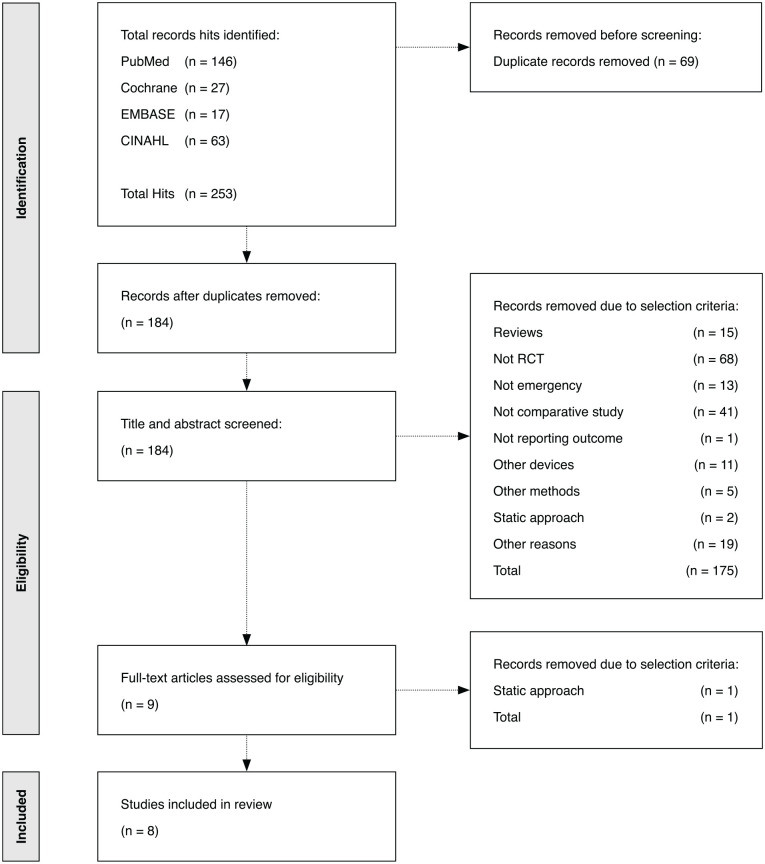
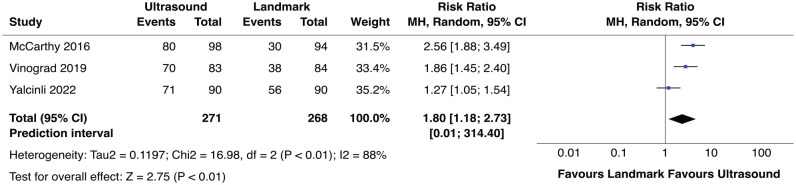
Introduction: The aim of this study was to review the evidence comparing the traditional landmark technique with the ultrasound-guided cannulation technique for peripheral intravenous catheter insertion in emergency department patients with difficult intravenous access (DIVA). Methods: A systematic review and meta-analysis was performed in accordance with PRISMA-guidelines. The protocol was prospectively registered on PROSPERO (CRD42024573146). PubMed, Cochrane, EMBASE, and CINAHL were searched between August 2024 and April 2025. Bias assessment was performed using Revised Cochrane Risk of Bias tool for randomized trials. Randomized controlled trials of emergency department patients with DIVA were eligible for inclusion. The primary outcome was first-attempt success rate. Secondary outcomes were number of intravenous insertion-attempts and patient satisfaction. A random-effects meta-analysis plot using DerSimonian and Laird method was used to calculate risk ratio (RR) of the primary outcome measure. Results: Eight randomized controlled trials with a total of 1477 emergency department patients were included in the review and 940 patients in the meta-analysis. The use of ultrasound in the emergency setting was associated with a higher first-attempt success rate (RR, 1.80; 95% CI, 1.18–2.73; p < 0.01). Secondary outcomes; number of attempts and patient satisfaction had heterogenous results. The small number of studies included in the meta-analysis is a limitation. Discussion: Ultrasound guided cannulation improved the first-attempt success rate compared to the traditional landmark technique in patients with DIVA. Future policy makers should consider the use of ultrasound guidance as the first choice in order to reduce unnecessary insertion attempts in emergency department patients.
Overview
The claims and statistics of this paper haven’t been checked yet.
Free: it reads the open-access text and checks the first 5 claims that cite a source we can check. Create a free account to check every claim.
Integrity signals
Registry
Cites
Statistics
Figures
Verification
Claims the paper makes
The claims and statistics of this paper haven’t been checked yet.
Free: it reads the open-access text and checks the first 5 claims that cite a source we can check. Create a free account to check every claim.
Claims other papers make about this one
Each is checked against this paper’s own text: does it say what the citing paper says it does?
The source backs part of the claim, not all of it — or backs it for a different population, condition or comparison.
In the citing paper
“Recent evidence11 36 also shows significant improvements in the success rate after the first attempt, in the experience of the patient, and the reduction in the amount of time needed for the procedure.”
From Difficult intravenous access (DIVA) in the adult population: an umbrella review (2026) · cites this paper as [36]
Experimental — accuracy not yet measured
Self-check
Percentages, sums and reported differences re-computed from the paper’s own numbers.
The self-check needs the paper’s full text.
Citations
Cites
Bias in meta-analysis detected by a simple, graphical test
Egger, M., Smith, G. D., Schneider, M., & Minder, C. (1997) · BMJ · doi:10.1136/bmj.315.7109.629 · Cited by 56,722 · cited 1×
“31 Results were considered significant if p 0.05.”
InfluentialMeta-analysis in clinical trials
DerSimonian, R., & Laird, N. (1986) · Controlled Clinical Trials · doi:10.1016/0197-2456(86)90046-2 · Cited by 39,552
RoB 2: a revised tool for assessing risk of bias in randomised trials
Sterne, J. A. C., Savović, J., Page, M. J., Elbers, R. G., Blencowe, N. S., Boutron, I., Cates, C. J., Cheng, H.-Y., Corbett, M. S., Eldridge, S. M., et al. (2019) · BMJ · doi:10.1136/bmj.l4898 · Cited by 34,787 · cited 1×
“28 In case of any inclusion and bias assessments disagreements the authors (AGW and MSP) were consulted.”
The PRISMA 2020 statement: An updated guideline for reporting systematic reviews
Page, M. J., McKenzie, J. E., Bossuyt, P. M., Boutron, I., Hoffmann, T. C., Mulrow, C. D., Shamseer, L., Tetzlaff, J. M., Akl, E. A., Brennan, S. E., et al. (2021) · Journal of Clinical Epidemiology · doi:10.1016/j.jclinepi.2021.03.001 · Cited by 4,265 · cited 1×
“27 The protocol was prospectively registered with PROSPERO (CRD42024573146).”
International evidence-based recommendations on ultrasound-guided vascular access
Lamperti, M., Bodenham, A. R., Pittiruti, M., Blaivas, M., Augoustides, J. G., Elbarbary, M., Pirotte, T., Karakitsos, D., LeDonne, J., Doniger, S., et al. (2012) · Intensive Care Medicine · doi:10.1007/s00134-012-2597-x · Cited by 834 · cited 1×
“10,17 25 But, to date none of the existing reviews have focused solely on the emergency setting.”
Franco‐Sadud, R., Schnobrich, D., Mathews, B. K., Candotti, C., Abdel‐Ghani, S., Perez, M. G., Rodgers, S. C., Mader, M. J., Haro, E. K., Dancel, R., et al. (2019) · Journal of Hospital Medicine · doi:10.12788/jhm.3287 · Cited by 260 · cited 1×
“13,14 The evidence of previous research shows increased success rate with ultrasound guidance (USG) compared to the blind LMT for PIVC placement.”
Doniger, S. J., Ishimine, P., Fox, J. C., & Kanegaye, J. T. (2009) · Pediatric Emergency Care · doi:10.1097/pec.0b013e31819a8946 · Cited by 242 · cited 4×
“Doniger et al. 32 measured overall success rate, where the use of USG had a higher success rate compared to the LM technique (80% vs 64%, p = 0.21).”
InfluentialUltrasound guidance for difficult peripheral venous access: Systematic review and meta-analysis
Egan, G., Healy, D., O'Neill, H., Clarke-Moloney, M., Grace, P. A., & Walsh, S. R. (2013) · Emergency Medicine Journal · doi:10.1136/emermed-2012-201652 · Cited by 222 · cited 1×
“43 These studies have their origin from over the world and from various hospital settings, for example, trauma centers, ED, OR, etc. 5,19,44 Bauman et al. 44 reported patient satisfaction improved statistically significantly in their study with fewer insertion attempts and complications.”
Visualisation of needle position using ultrasonography
Chapman, G. A., Johnson, D., & Bodenham, A. R. (2006) · Anaesthesia · doi:10.1111/j.1365-2044.2005.04475.x · Cited by 207
van Loon, F. H. J., Buise, M. P., Claassen, J. J. F., Dierick-van Daele, A. T. M., & Bouwman, A. R. A. (2018) · British Journal of Anaesthesia · doi:10.1016/j.bja.2018.04.047 · Cited by 195
Ultrasound-guided peripheral venous access: A meta-analysis and systematic review
Stolz, L. A., Stolz, U., Howe, C., Farrell, I. J., & Adhikari, S. (2015) · The Journal of Vascular Access · doi:10.5301/jva.5000346 · Cited by 189
Occupational stress in the ED: a systematic literature review
Basu, S., Qayyum, H., & Mason, S. (2017) · Emergency Medicine Journal · doi:10.1136/emermed-2016-205827 · Cited by 179 · cited 1×
“26 Thus, the ED environment may affect the first-attempt PIVC insertion success rate.”
Ultrasound-guidance vs. standard technique in difficult vascular access patients by ed technicians
Bauman, M., Braude, D., & Crandall, C. (2009) · The American Journal of Emergency Medicine · doi:10.1016/j.ajem.2008.02.005 · Cited by 160 · cited 1×
“43 These studies have their origin from over the world and from various hospital settings, for example, trauma centers, ED, OR, etc. 5,19,44 Bauman et al. 44 reported patient satisfaction improved statistically significantly in their study with fewer insertion attempts and complications.”
van Loon, F. H. J., van Hooff, L. W. E., de Boer, H. D., Koopman, S. S. H. A., Buise, M. P., Korsten, H. H. M., Dierick-van Daele, A. T. M., & Bouwman, A. R. A. (2019) · Journal of Clinical Medicine · doi:10.3390/jcm8020144 · Cited by 157
Bahl, A., Pandurangadu, A. V., Tucker, J., & Bagan, M. (2016) · The American Journal of Emergency Medicine · doi:10.1016/j.ajem.2016.06.098 · Cited by 146 · cited 7×
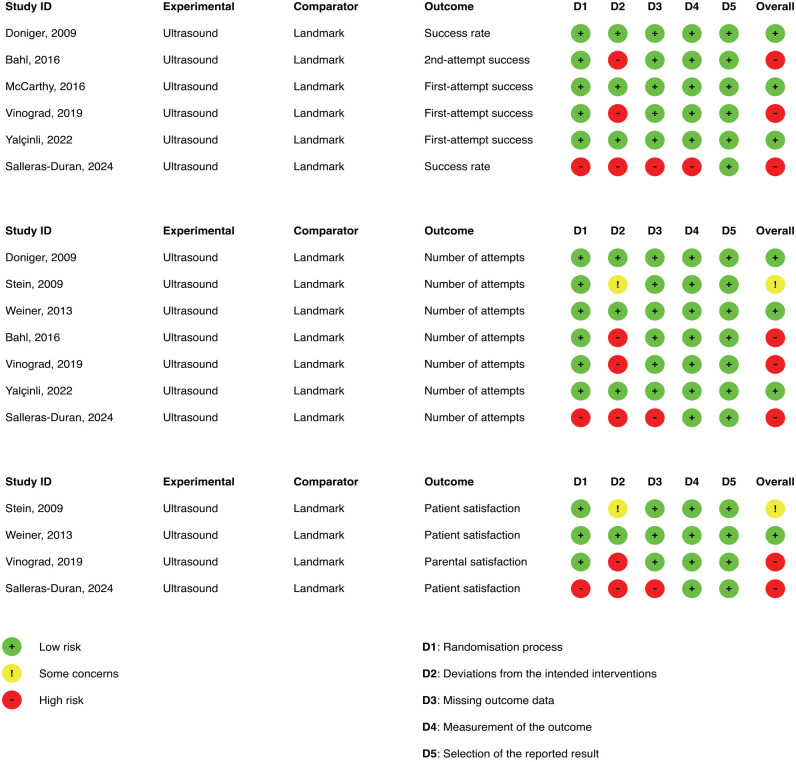
“Six of the included studies 32,35–39 in our review investigated the outcome of success rate.”
Influentialvan Loon (2016) · doi:10.1097/md.0000000000003428 · Cited by 124
Stein, J. C., George, B. C., River, G., Hebig, A., & McDERMOTT, D. J. (2008) · Annals of Emergency Medicine · doi:10.1016/j.annemergmed.2008.07.048 · Cited by 122
Heinrichs, J., Fritze, Z., Vandermeer, B., Klassen, T. P., & Curtis, S. J. (2013) · Annals of Emergency Medicine · doi:10.1016/j.annemergmed.2012.11.014 · Cited by 106
McCarthy, M. L., Shokoohi, H., Boniface, K. S., Eggelton, R., Lowey, A., Lim, K., Shesser, R. F., Li, X., & Zeger, S. L. (2015) · Annals of Emergency Medicine · doi:10.1016/j.annemergmed.2015.09.009 · Cited by 98
Clemmesen, L., Knudsen, L., Sloth, E., & Bendtsen, T. (2012) · Ultraschall in der Medizin - European Journal of Ultrasound · doi:10.1055/s-0032-1312824 · Cited by 93 · cited 1×
“10,15 Dynamic Needle Tip Positioning (DNTP) is a dynamic short-axis approach 15,16 which has proven to have a markedly higher success rate (97”
Defining difficult intravenous access (DIVA): a systematic review
Bahl, A., Johnson, S., Alsbrooks, K., Mares, A., Gala, S., & Hoerauf, K. (2023) · The Journal of Vascular Access · doi:10.1177/11297298211059648 · Cited by 82
Weiner, S. G., Sarff, A. R., Esener, D. E., Shroff, S. D., Budhram, G. R., Switkowski, K. M., Mostofi, M. B., Barus, R., Coute, R. A., & Darvish, A. H. (2012) · Journal of Emergency Medicine · doi:10.1016/j.jemermed.2012.08.021 · Cited by 75 · cited 1×
“A recent published systematic review and meta-analysis 23 by Tran et al. found only two existing RCTs, from the ED and ICU, 34,45 on the subject of patient satisfaction and state the need for further investigation of this outcome in future studies.”
Ultrasound-guided peripheral venous access: a systematic review of randomized-controlled trials
Liu, Y. T., Alsaawi, A., & Bjornsson, H. M. (2013) · European Journal of Emergency Medicine · doi:10.1097/mej.0b013e328363bebc · Cited by 65
Curtis, S. J., Craig, W. R., Logue, E., Vandermeer, B., Hanson, A., & Klassen, T. P. (2015) · Canadian Medical Association Journal · doi:10.1503/cmaj.141012 · Cited by 61 · cited 1×
“11,12 Failed PIVC attempts are often rescued by insertion of central venous catheters, which is a far more invasive, time consuming, expensive and challenging procedure, and may lead to serious complications, for example, pneumothorax.”
Ultrasound-guided peripheral venous cannulation in critically ill patients: a practical guideline
Blanco, P. (2019) · The Ultrasound Journal · doi:10.1186/s13089-019-0144-5 · Cited by 60 · cited 1×
“3,6,7 DIVA can be caused by different predictors, for example, dehydration, obesity, vascular pathology, chronic illness, edema, smaller veins, intravenous drug abuse, chemotherapy treatment, malnutrition, hypovolemia, diabetes, etc.”
Vinograd, A. M., Chen, A. E., Woodford, A. L., Fesnak, S., Gaines, S., Elci, O. U., & Zorc, J. J. (2019) · Annals of Emergency Medicine · doi:10.1016/j.annemergmed.2019.02.019 · Cited by 58
Bridey, C., Thilly, N., Lefevre, T., Maire-Richard, A., Morel, M., Levy, B., Girerd, N., & Kimmoun, A. (2018) · BMJ Open · doi:10.1136/bmjopen-2017-020220 · Cited by 54 · cited 1×
“A recent published systematic review and meta-analysis 23 by Tran et al. found only two existing RCTs, from the ED and ICU, 34,45 on the subject of patient satisfaction and state the need for further investigation of this outcome in future studies.”
Improving outcomes of short peripheral vascular access in oncology and chemotherapy administration
Bertoglio, S., van Boxtel, T., Goossens, G. A., Dougherty, L., Furtwängler, R., Lennan, E., Pittiruti, M., Sjövall, K., & Stas, M. (2017) · The Journal of Vascular Access · doi:10.5301/jva.5000668 · Cited by 52
Hoskins, M. J., Nolan, B., Evans, K. L., & Phillips, B. (2023) · Medicine · doi:10.1097/md.0000000000033624 · Cited by 49
Vitto, M. J., Myers, M., Vitto, C. M., & Evans, D. P. (2016) · Journal of Ultrasound in Medicine · doi:10.7863/ultra.15.06057 · Cited by 47
Ultrasound guidance versus landmark method for peripheral venous cannulation in adults
Tada, M., Yamada, N., Matsumoto, T., Takeda, C., Furukawa, T. A., & Watanabe, N. (2022) · Cochrane Database of Systematic Reviews · doi:10.1002/14651858.cd013434.pub2 · Cited by 42
Kleidon, T. M., Schults, J. A., Paterson, R., Rickard, C. M., & Ullman, A. J. (2022) · Journal of Paediatrics and Child Health · doi:10.1111/jpc.15985 · Cited by 38
Stone, R., Walker, R., Marsh, N. M., & Ullman, A. J. (2023) · Australasian Emergency Care · doi:10.1016/j.auec.2023.06.001 · Cited by 38 · cited 1×
“3,6,7 DIVA can be caused by different predictors, for example, dehydration, obesity, vascular pathology, chronic illness, edema, smaller veins, intravenous drug abuse, chemotherapy treatment, malnutrition, hypovolemia, diabetes, etc.”
Tran, Q. K., Flanagan, K., Fairchild, M., Yardi, I., & Pourmand, A. (2022) · Journal of Emergency Nursing · doi:10.1016/j.jen.2021.12.003 · Cited by 33 · cited 1×
“A recent published systematic review and meta-analysis 23 by Tran et al. found only two existing RCTs, from the ED and ICU, 34,45 on the subject of patient satisfaction and state the need for further investigation of this outcome in future studies.”
Poulsen, E., Aagaard, R., Bisgaard, J., Sørensen, H. T., & Juhl-Olsen, P. (2023) · European Journal of Emergency Medicine · doi:10.1097/mej.0000000000000993 · Cited by 30 · cited 2×
“10,15 Dynamic Needle Tip Positioning (DNTP) is a dynamic short-axis approach 15,16 which has proven to have a markedly higher success rate (97”
Gopalasingam, N., Obad, D. S., Kristensen, B. S., Lundgaard, P., Veien, M., Gjedsted, J., Sloth, E., & Juhl‐Olsen, P. (2017) · Acta Anaesthesiologica Scandinavica · doi:10.1111/aas.12901 · Cited by 30 · cited 2×
“43 These studies have their origin from over the world and from various hospital settings, for example, trauma centers, ED, OR, etc. 5,19,44 Bauman et al. 44 reported patient satisfaction improved statistically significantly in their study with fewer insertion attempts and complications.”
A successful model to learn and implement ultrasound‐guided venous catheterization in apheresis
Gopalasingam, N., Thomsen, A. E. T., Folkersen, L., Juhl‐Olsen, P., & Sloth, E. (2017) · Journal of Clinical Apheresis · doi:10.1002/jca.21533 · Cited by 25 · cited 1×
“13,14 The evidence of previous research shows increased success rate with ultrasound guidance (USG) compared to the blind LMT for PIVC placement.”
Yalçınlı, S., Karbek Akarca, F., Can, Ö., Uz, İ., & Konakçı, G. (2022) · Prehospital and Disaster Medicine · doi:10.1017/s1049023x21001217 · Cited by 23 · cited 6×
“Yet only three RCTs 36,37,39 were included in our meta-analysis plot, since they met the criteria of the primary outcome first-attempt success rate.”
InfluentialUnderstanding the challenges to vascular access in an ageing population
Gabriel, J. (2017) · British Journal of Nursing · doi:10.12968/bjon.2017.26.14.s15 · Cited by 22 · cited 1×
“5,8–10 Failed attempts cause significant delays in acute treat-ment of patients and may extend the length of hospital stay resulting in increased costs to the health care system.”
Ultrasound-guided peripheral intravenous access placement for children in the emergency department
Otani, T., Morikawa, Y., Hayakawa, I., Atsumi, Y., Tomari, K., Tomobe, Y., Uda, K., Funakoshi, Y., Sakaguchi, C., Nishimoto, S., et al. (2018) · European Journal of Pediatrics · doi:10.1007/s00431-018-3201-3 · Cited by 22
Salleras-Duran, L., Fuentes-Pumarola, C., Fontova-Almató, A., Roqueta-Vall-Llosera, M., Cámara-Liebana, D., & Ballester-Ferrando, D. (2024) · Pain Management Nursing · doi:10.1016/j.pmn.2023.07.010 · Cited by 19 · cited 4×
“One RCT by Salleras-Duran et al. 38 did not give a clear definition in their article whether or not they measured the first-attempt or second-attempt success rate or overall success rate, yet still they had a significantly higher success rate in favor of USG (92.5% vs 80.4%, p = 0.04).”
InfluentialNishizawa, T., Matsumoto, T., Todaka, T., Sasano, M., Kitagawa, H., & Shimabuku, A. (2020) · Journal of the Association for Vascular Access · doi:10.2309/j.java.2020.002.001 · Cited by 15
Thompson, J., & Garrett, J. H. (2018) · Journal of the Association for Vascular Access · doi:10.1016/j.java.2018.08.001 · Cited by 12 · cited 1×
“42 Several studies report that the use of USG improves success rate, reduces insertion attempts and overall time, and has increased patient satisfaction.”
Feng, L., Huang, B., Chen, O., Wang, F., Zhu, A., & Li, W. (2022) · The Journal of Vascular Access · doi:10.1177/11297298221126811 · Cited by 12
A Technique for Ultrasound-Guided Blood Sampling from a Dry and Gel-Free Puncture Area
Thorn, S., Gopalasingam, N., Bendtsen, T. F., Knudsen, L., & Sloth, E. (2016) · The Journal of Vascular Access · doi:10.5301/jva.5000540 · Cited by 11 · cited 1×
“43 These studies have their origin from over the world and from various hospital settings, for example, trauma centers, ED, OR, etc. 5,19,44 Bauman et al. 44 reported patient satisfaction improved statistically significantly in their study with fewer insertion attempts and complications.”
Ultrasound guidance versus landmark method for peripheral venous cannulation in adults
Tada, M., Matsumoto, T., Takeda, C., Yamada, N., Furukawa, T. A., & Watanabe, N. (2019) · Cochrane Database of Systematic Reviews · doi:10.1002/14651858.cd013434 · Cited by 6 · cited 1×
“10,17 25 But, to date none of the existing reviews have focused solely on the emergency setting.”
Cited by
Feasibility Study of Noninvasive Subcutaneous Imaging for Vein Localization
Bing, S., Huang, M.-H., Cao, H., & Chiao, J. ‐. (2026) · Electronics · doi:10.3390/electronics15102082 · Cited by 1
Difficult intravenous access (DIVA) in the adult population: an umbrella review
Torné-Ruiz, A., Delgado, M., Moreno, S., Corral-Núñez, A., Cemeli, T., & Roca, J. (2026) · BMJ Open · doi:10.1136/bmjopen-2026-121458
Crean, R., Doyle, A. J., Orban, I. K., Singh, S., Boland, F., Woo, M. H., Tyrell, O., Ahmed, D. B., Alam, I., Nordberg, J., et al. (2025) · Research Square · doi:10.21203/rs.3.rs-7448244/v1
Murat, S., Yıldız, A., & Murat, B. (2026) · Annals of Noninvasive Electrocardiology · doi:10.1111/anec.70165
“…venous filling and vascular access, objective assessment tools such as ultra-sonography, which has been shown to significantly increase first-attempt and overall success rates in venous cannulation compared with landmark techniques, were not addressed (Anderssen et al. 2025; Liccardo et al. 2018).”
A GAVeCeLT-IVAS bundle for Safe Insertion of Long Peripheral Catheters: The SILPeC protocol
Giustivi, D., Scoppettuolo, G., Faraone, V., Annetta, M. G., Bastos, R., Brescia, F., Miluy, G. O., Pinelli, F., Gidaro, A., Elli, S., et al. (2026) · The Journal of Vascular Access · doi:10.1177/11297298261444199
Metadata
- Authors
- Anderssen, L. M., Petersen, M. S., Wang, A. G., Mohr, M., & Fjallheim, A. S.
- Affiliations
- Department of Research, The National Hospital of the Faroe Islands, Tórshavn, Faroe Islands
- University of the Faroe Islands (FO)
- Corresponding author
- Anderssen, Lisa Maria
- ORCID
- Venue
- The Journal of Vascular Access
- Publisher
- SAGE Publications
- Published
- 2025-06-26
- Volume
- 27
- Issue
- 2
- Pages
- 435-443
- ISSN
- 1129-7298 (ISSN-L)
- 1724-6032
- PMC
- PMC12920684
- OpenAlex
- W4411736915
- Cited by
- 11
- References
- 44
- Citations by year
- 2026: 10 · 2025: 1
- FWCI
- 2.62
- Type
- journal article
- Language
- en
- Open access
- hybrid
- doi.org
- Licence
- cc-by-nc
- creativecommons.org/licenses/by-nc/4.0/ (vor)
- journals.sagepub.com/page/policies/text-and-data-mining-license (tdm)
- Locations
- The Journal of Vascular Access (publishedVersion, cc-by-nc)
- PubMed (publishedVersion)
- PubMed Central (publishedVersion, cc-by-nc)
- University of Southern Denmark Research Portal (University of Southern Denmark) (submittedVersion, cc-by-nc)
- Topics
- Health Sciences › Medicine › Critical Care and Intensive Care Medicine › Central Venous Catheters and Hemodialysis
- Health Sciences › Medicine › Pulmonary and Respiratory Medicine › Vascular Procedures and Complications
- Physical Sciences › Engineering › Biomedical Engineering › Intravenous Infusion Technology and Safety
- Keywords
- ultrasound-guided cannulation, landmark technique, peripheral venous cannulation, difficult venous access, emergency department patients, first-attempt success rate, insertion attempts, patient satisfaction, vascular access
- MeSH terms
- Aged, Catheterization, Peripheral, Emergency Service, Hospital, Female, Humans, Male, Middle Aged, Punctures, Risk Factors, Randomized Controlled Trials as Topic, Treatment Outcome, Patient Satisfaction, Ultrasonography, Interventional, Anatomic Landmarks
About these checks
Registry, retraction, Cites and statistics results are computed, not judged, with one exception: a printed reference that no index lists is read once by a model before it counts as a citation error. Claims are extracted by a model and kept only when their quote appears verbatim in the text; each cited source is then checked, with a model’s help, for whether it says what the claim relies on. Those verdicts can be wrong — read the claim’s quote and the cited source before relying on one.
Statistics and arithmetic are recomputed, not judged.
Confidence bands are shown only for fields calibrated on our annotated test set. None is calibrated yet, so no band is shown.
What counts as a claim ›How we measure confidence ›How we check this ›
Are you an author, or do you see a problem with this page? Request a review
Data sources
Bibliographic data: Semantic Scholar, OpenAlex, Crossref.
Contains information from the Semantic Scholar Academic Graph Datasets, made available under the ODC Attribution License (ODC-BY 1.0).
Semantic Scholar’s data is described in: Kinney, R., et al. (2023). The Semantic Scholar Open Data Platform. arXiv:2301.10140.
