

The DOI matches its Crossref record; 35 of the 47 references it cites were found in a registry or an index.
What should autism research focus upon? Community views and priorities from the United Kingdom
Open accessAbstract
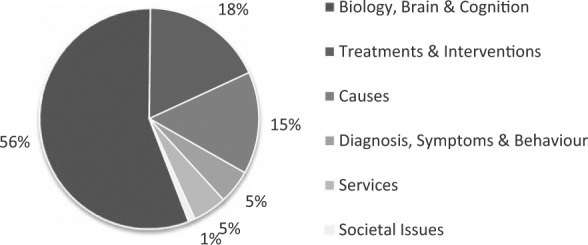
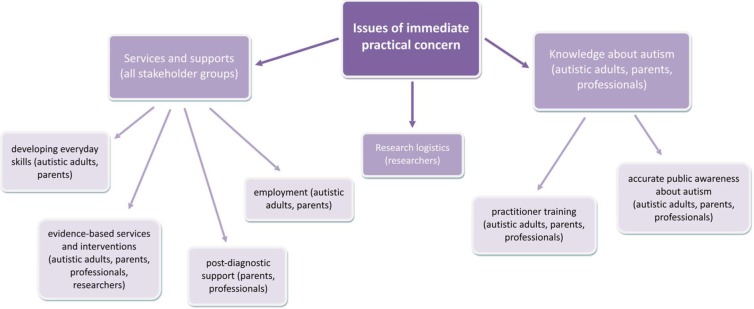
The rise in the measured prevalence of autism has been accompanied by much new research and research investment internationally. This study sought to establish whether the pattern of current UK autism research funding maps on to the concerns of the autism community. Interviews and focus groups were conducted with autistic adults, family members, practitioners and researchers to identify their priorities for research. We also captured the views of a large number of stakeholders via an online survey. There was a clear disparity between the United Kingdom’s pattern of funding for autism research and the priorities articulated by the majority of participants. There was general consensus that future priorities for autism research should lie in those areas that make a difference to people’s day-to-day lives. There needs to be greater involvement of the autism community both in priority setting and in research more broadly to ensure that resources reach where they are most needed and can make the most impact.
Overview
The claims and statistics of this paper haven’t been checked yet.
Run the check — free, no account needed. It reads the open-access text and checks the sources it cites.
Integrity signals
Registry
Cites
Statistics
Figures
Verification
Claims the paper makes
The claims and statistics of this paper haven’t been checked yet.
Run the check — free, no account needed. It reads the open-access text and checks the sources it cites.
Claims other papers make about this one
Each is checked against this paper’s own text: does it say what the citing paper says it does?
The cited source says what the claim attributes to it.
In the citing paper
“Fostering trust and mutual respect in the process of developing research results in higher quality products that are useful to the community, as exemplified by research priorities developed in collaboration with the autism community in the United Kingdom (e.g. Pellicano et al., 2014; Warner et al., 2019).”
From Listening to the autistic voice: Mental health priorities to guide research and practice in autism from a stakeholder-driven project (2020) · cites this paper as Pellicano et al., 2014
Self-check
Percentages, sums and reported differences re-computed from the paper’s own numbers.
The self-check needs the paper’s full text.
Citations
Cites
Using thematic analysis in psychology
Braun, V., & Clarke, V. (2006) · Qualitative Research in Psychology · doi:10.1191/1478088706qp063oa · Cited by 194,414 · cited 1×
“The resulting data were analysed using thematic analysis (Braun and Clarke, 2006).”
MethodGlobal Prevalence of Autism and Other Pervasive Developmental Disorders
Elsabbagh, M., Divan, G., Koh, Y., Kim, Y. S., Kauchali, S., Marcín, C., Montiel‐Nava, C., Patel, V., Paula, C. S., Wang, C., et al. (2012) · Autism Research · doi:10.1002/aur.239 · Cited by 2,636 · cited 1×
“…in the United Kingdom (UK) has an autism spectrum condition (Baird et al., 2006; Brugha et al., 2011) – more than a 20-fold increase from the results of the first epidemiological study (Lotter, 1966) – and such estimates are similar in other parts of the world (e.g. Elsabbagh et al., 2012).”
ResultBaird, G., Simonoff, E., Pickles, A., Chandler, S., Loucas, T., Meldrum, D., & Charman, T. (2006) · The Lancet · doi:10.1111/j.1365-2214.2006.00706_3.x · Cited by 2,363 · cited 2×
“Recent figures estimate that approximately 1% of the population in the United Kingdom (UK) has an autism spectrum condition (Baird et al., 2006; Brugha et al., 2011) – more than a 20-fold increase from the results of the first epidemiological study (Lotter, 1966) – and such estimates are similar in…”
ResultSelf-citationFrederickson, R. (1997) · Molecular Therapy · doi:10.1016/j.ymthe.2005.01.001 · Cited by 2,221 · cited 2×
“The snowball sampling technique we used has advantages (of accessing previously ‘hidden’ populations; Atkinson and Flint, 2001) but is potentially biased towards the inclusion of individuals with greater inter-connections (e.”
MethodAdult outcome for children with autism
Howlin, P., Goode, S., Hutton, J., & Rutter, M. (2004) · Journal of Child Psychology and Psychiatry · doi:10.1111/j.1469-7610.2004.00215.x · Cited by 1,813 · cited 1×
“Autistic people are less likely to have a well-paying job than non-autistic people; many have fewer social contacts and connections outside their immediate family and many also struggle with their mental health and material well-being (e.g. Howlin et al., 2004, 2013; Howlin and Moss, 2012).”
BackgroundEpidemiology of Autism Spectrum Disorders in Adults in the Community in England
Brugha, T. S., McManus, S., Bankart, J., Scott, F., Purdon, S., Smith, J., Bebbington, P., Jenkins, R., & Meltzer, H. (2011) · Archives of General Psychiatry · doi:10.1001/archgenpsychiatry.2011.38 · Cited by 903 · cited 2×
“Recent figures estimate that approximately 1% of the population in the United Kingdom (UK) has an autism spectrum condition (Baird et al., 2006; Brugha et al., 2011) – more than a 20-fold increase from the results of the first epidemiological study (Lotter, 1966) – and such estimates are similar in…”
ResultEpidemiology of autistic conditions in young children: 1. Prevalence
Lotter, V. (1966) · Social Psychiatry · doi:10.1007/bf00584048 · Cited by 780 · cited 2×
“…in the United Kingdom (UK) has an autism spectrum condition (Baird et al., 2006; Brugha et al., 2011) – more than a 20-fold increase from the results of the first epidemiological study (Lotter, 1966) – and such estimates are similar in other parts of the world (e.g. Elsabbagh et al., 2012).”
ResultAdults with Autism Spectrum Disorders
Howlin, P., & Moss, P. (2012) · The Canadian Journal of Psychiatry · doi:10.1177/070674371205700502 · Cited by 559 · cited 1×
“Autistic people are less likely to have a well-paying job than non-autistic people; many have fewer social contacts and connections outside their immediate family and many also struggle with their mental health and material well-being (e.g. Howlin et al., 2004, 2013; Howlin and Moss, 2012).”
BackgroundThe Relation between Funding by the National Institutes of Health and the Burden of Disease
Gross, C. P., Anderson, G. F., & Powe, N. R. (1999) · New England Journal of Medicine · doi:10.1056/nejm199906173402406 · Cited by 509 · cited 1×
“Defining the value of a human life in monetary terms is obviously far from straightforward (Gross et al., 1999), often involving multiple and valueladen assumptions.”
BackgroundHowlin, P., Moss, P., Savage, S., & Rutter, M. L. (2013) · Journal of the American Academy of Child & Adolescent Psychiatry · doi:10.1016/j.jaac.2013.02.017 · Cited by 462 · cited 1×
“Autistic people are less likely to have a well-paying job than non-autistic people; many have fewer social contacts and connections outside their immediate family and many also struggle with their mental health and material well-being (e.g. Howlin et al., 2004, 2013; Howlin and Moss, 2012).”
Background
Research works printed but not linked: 7
- 10.1016/S0140-6736(06)69041-7 · DOI · Paper page
- Charman T, 2004, Mapping Autism Research: Identifying UK Priorities for the Future
- Dawson G, 2013, Archives of General Psychiatry, 70, 9
- Milton DEM, 2013, Medical Sociology Online, 7, 61
- Ne’eman A, 2011, Talk about Autism Q&A: Ari Ne’eman –
- Pellicano E, 2013, A future made together: Shaping autism research in the UK
- Pellicano E, PLOS One
Cited by
Sorted by citations
Items 501–600 of 714
Wagner, L., Frisch, M., Turner‐Brown, L., Andrews, S. M., Edwards, A., Moultrie, R., Rivas, A. A., Wheeler, A., & Raspa, M. (2020) · Disability and health journal · doi:10.1016/j.dhjo.2020.100927 · Cited by 3
“Other work has shown that those with NDDs want to be active participants in research, starting with the development of research questions and study design (18, 19).”
BackgroundAutism Acceptance and Mental Health
Cage, E. (2019) · Springer eBooks · doi:10.1007/978-1-4614-6435-8_102427-1 · Cited by 5
Autisme als meerduidig en dynamisch fenomeen
Hens, K., & Goidsenhoven, L. V. (2018) · Algemeen Nederlands Tijdschrift voor Wijsbegeerte · doi:10.5117/antw2018.4.003.hens · Cited by 3
An Autoethnography of Parenting a Daughter whose Complex Disability was Diagnosed in her Adulthood
Alcock, J. (2016) · Autism - Open Access · doi:10.4172/2165-7890.1000193 · Cited by 3
Expanding our understanding of behavioural difficulties associated with autism spectrum disorder
Smith, I. (2016) · Developmental Medicine & Child Neurology · doi:10.1111/dmcn.12855 · Cited by 3
“This strategy reflects a recent shift in the ASD literature toward researchers’ greater acknowledgment of the ASD community’s perspectives and wishes.(2) The authors indicated that their choice of the Developmental Behaviour Checklist(3) was based on parental preferences expressed in discussions of four questionnaires…”
ResultNoticing the unusual: a self-prompt strategy for adults with autism
Silver, K., & Parsons, S. (2015) · Advances in Autism · doi:10.1108/aia-05-2015-0006 · Cited by 3
Generation A and Autism in the Workplace
Hurley-Hanson, A. E., Giannantonio, C. M., & Griffiths, A. J. (2019) · Palgrave explorations in workplace stigma · doi:10.1007/978-3-030-29049-8_1 · Cited by 5
Bennett, M., Webster, A. A., Goodall, E., & Rowland, S. (2018) · Springer eBooks · doi:10.1007/978-981-13-3359-0_5 · Cited by 2
Exploring the Identity of Autistic Individuals: Reconstructing the Autism Epidemic Myth
Bennett, M., Webster, A. A., Goodall, E., & Rowland, S. (2018) · Springer eBooks · doi:10.1007/978-981-13-3359-0_2 · Cited by 5
Translating Autism Myths into Positive Futures
Bennett, M., Webster, A. A., Goodall, E., & Rowland, S. (2018) · Springer eBooks · doi:10.1007/978-981-13-3359-0_1 · Cited by 8
de Souza, B. (2026) · South African Journal of Childhood Education · doi:10.4102/sajce.v16i1.1879 · Cited by 2
Nadwodny, N., VanHook, B., Esham, B., Larsen, L. N., Levinson, S., & Eisenhower, A. (2026) · Autism · doi:10.1177/13623613261426691 · Cited by 3
“However, much of autism research still does not include autistic researchers and does not adequately meet autistic people’s needs (Dinishak & Akhtar, 2023; Pellicano et al., 2014).”
Khudiakova, V., Sin, J., Suzuki, M., & Barnicot, K. (2026) · Journal of Developmental and Physical Disabilities · doi:10.1007/s10882-026-10055-x · Cited by 5
“Tensions between Autistic people, families, clinicians, and Autism research - ers are well-documented, notably in relation to issues of conceptualisation of Autism and support priorities (Akbulut & Bird, 2025; Bertilsdotter Rosqvist et al., 2023 ; Pellicano et al., 2014).”
Caruana, N., Goetz, T., Nalepka, P., & Pellicano, E. (2025) · Autism · doi:10.1177/13623613251406114 · Cited by 2
“There is also now growing recognition that the lived experiences and priorities of autistic people should guide research and strategies for improving social outcomes (Pellicano et al., 2014).”
Self-citationKaplan‐Kahn, E. A., Benecke, R. M., Holmes, L. G., & Miller, J. S. (2025) · Autism · doi:10.1177/13623613251394995 · Cited by 3
“Measuring quality-of-life (QoL) outcomes is an identified priority of the autistic community (Pellicano et al., 2014).”
Cibralic, S., Barker, L., Hawker, P. J., Tonge, B. J., Williams, K. J., Elliott, E. J., Bellgrove, M. A., Silk, T. J., Anderson, V. A., Kohn, M. R., et al. (2025) · Child and Adolescent Psychiatry and Mental Health · doi:10.1186/s13034-025-00963-9 · Cited by 2
“…in So, McCord [27] review, including that the research focused on USA based studies, the research topic may not have been a government research priority area in the USA or internationally [30], or because historically Autistic children have often been excluded from mainstream research [31].”
van Asselt, A., Roke, Y., Begeer, S., & Scheeren, A. M. (2025) · Autism · doi:10.1177/13623613251376893 · Cited by 4
“However, as most research has so far been conducted in autistic youth, fundamental mechanisms underlying the low quality of life of autistic adults remain poorly understood (Pellicano et al., 2014).”
Berry, L. M., Sutherland, D., Monk, R., Lim, M. S., & McLay, L. (2025) · Research in Neurodiversity · doi:10.1016/j.rin.2025.100003 · Cited by 2
A Picture Paints a Thousand Words: Understanding How People Conceptualise Autism Through Images
Atherton, G., Dawson, E., Piovesan, A., Hawksworth-Quill, L., & Cross, L. (2025) · Neurodiversity · doi:10.1177/27546330251377445 · Cited by 1
“This deeper empathy is vital for inclusive policy, practice, and research (Pellicano et al., 2014).”
Olsson, N. C., Björkman, J. N., Lackell, R., Bergens, O., Fischer, H., Döllinger, L., Bergström, J., Carlbring, P., & Laukka, P. (2025) · Internet Interventions · doi:10.1016/j.invent.2025.100861 · Cited by 3
“Pellicano et al. (2014) emphasized the importance of including autistic individuals in the development of interventions to ensure they reflect their needs and preferences.”
Polo-Blanco, I., Chimoni, M., Goñi-Cervera, J., & Pitta‐Pantazi, D. (2025) · Educational Studies in Mathematics · doi:10.1007/s10649-025-10416-x · Cited by 5
“For this purpose, several studies involved participants with autism across different age groups to address small sample sizes or the need for developmental insight (e.g., Lord et al., 2012; Pellicano et al., 2014).”
Gathering Autistic Children's Views on Their Educational Experiences: A Systematic Review of Methods
Wård, L., & Gormley, L. (2025) · Education and Training in Autism and Developmental Disabilities · doi:10.1177/215416472506000105 · Cited by 2
“…this paradigm is becoming evident (Leadbitter et al., 2021), with some recent research seeking to identify key priorities of the adult autistic community (e.g., Pellicano et al., 2014; Roche et al., 2021) and elevate the perspectives of those with fi rst-hand lived experience of the research topic.”
Crane, L. (2024) · JCPP Advances · doi:10.1002/jcv2.12289 · Cited by 1
“In recent years, there has been increasing awareness that research on neurodivergence does not always map onto the needs and priorities of the communities that it seeks to serve (Pellicano et al., 2014).”
Field survey of support groups for people with neurodevelopmental disorders in Japan
Hamatani, S., & Mizuno, Y. (2024) · Psychiatry and Clinical Neurosciences · doi:10.1002/pcn5.70028 · Cited by 2
Enhancing daily living skills in autistic individuals through extended reality: a scoping review
Gu, P., Qian, X., Xu, X., Zhang, L., & Ma, Z. (2024) · International Journal of Developmental Disabilities · doi:10.1080/20473869.2024.2410535 · Cited by 3
Savard, L., Prelock, P., Medeiros, S., & Lodestone, A. “. (2024) · Topics in Language Disorders · doi:10.1097/tld.0000000000000351 · Cited by 3
Shaughnessy, N., Herbert, R., Williams, E., Walduck, J., von Jungenfeld, R., & Newman, H. (2024) · Frontiers in Psychology · doi:10.3389/fpsyg.2024.1324036 · Cited by 3
Heart rate variability biofeedback to reduce anxiety in autism spectrum disorder – a mini review
Coulter, H., Donnelly, M. P., Yakkundi, A., McAneney, H., Barr, O. G., & Kernohan, G. W. (2024) · Frontiers in Psychiatry · doi:10.3389/fpsyt.2024.1409173 · Cited by 14
Neurodivergent participatory action research for Virtual Reality (VR)
Millington, E., Hayashibara, E., Arthur, T., Husselman, T.-A., Savickaite, S., & Taylor, R. (2022) · Journal of Enabling Technologies · doi:10.1108/jet-05-2022-0037 · Cited by 7
Feasibility of a best–worst scaling exercise to set priorities for autism research
Davis, S., Howard, K., Ellis, A. R., Jonas, D. E., Carey, T. S., MORRISSEY, J. P., & Thomas, K. C. (2022) · Health Expectations · doi:10.1111/hex.13508 · Cited by 5
“Setting Them Up for Success”: Including Youth on the Autism Spectrum in 4-H
McCormick, C. E. B., Pesková, V., Morgan, A., Carlson, E., & Mason, R. A. (2022) · Frontiers in Psychiatry · doi:10.3389/fpsyt.2022.913600 · Cited by 2
Reactions of Parents to the Diagnosis of Autism in Addis Ababa, Ethiopia
Befkadu, B., Ero, D., & Adamek, M. (2022) · Journal of Multidisciplinary Studies · doi:10.69974/glskalp.02.02.28 · Cited by 2
“…follow-up, and direction) among the top research priorities in the future, while many suffered frustrations, at the time of leaving the feedback session and noted that, they were feeling directionless, without adequate supports (Crane et al., 2018; Pellicano, Dinsmore, & Charman, 2014).”
BackgroundBeamish, W., Taylor, A., Macdonald, L., Hay, S., Tucker, M., & Paynter, J. (2021) · Research in Developmental Disabilities · doi:10.1016/j.ridd.2021.103942 · Cited by 2
Cultural Priming Effects and the Human Brain
Han, S., & Northoff, G. (2020) · Cambridge University Press eBooks · doi:10.1017/9781108695374.011 · Cited by 5
Kirmayer, L. J., Gómez-Carrillo, A., Langlois‐Thérien, T., Ramstead, M. J. D., & Gold, I. (2020) · Cambridge University Press eBooks · doi:10.1017/9781108695374.012 · Cited by 6
Stendel, M. S., Ramstead, M. J. D., & Veissière, S. P. L. (2020) · Cambridge University Press eBooks · doi:10.1017/9781108695374.026 · Cited by 2
Towards empathetic autism research: Developing an autism-specific Research Passport
Ashworth, M., Crane, L., Steward, R., Bovis, M., & Pellicano, L. (2020) · doi:10.31219/osf.io/dh3y5 · Cited by 2
Oughtism and Oughtistic Narratives in the Lives of Autistic People and their Families
Evans, M. (2019) · Ought The Journal of Autistic Culture · doi:10.9707/2833-1508.1013 · Cited by 4
“…written about increasing rates of diagnosis of autism, which many feel is due to an increase in knowledge or changes in diagnostic processes rather than an increase in the prevalence of autism itself (Arvidsson et al., 2018; Grandin, 2014; Hassall, 2016; Elkington & Jones, 2015; Russell, 2012).”
BackgroundReutebuch, C. K., Roberts, G. J., Thompson, J., Zein, F. E., Mize, M., Weinberg, A. N., Austin, C. R., Forbis, A., & Rodriguez, K. (2018) · Research in Autism · doi:10.1016/j.rasd.2018.10.009 · Cited by 4
Gagnon, M., & Milot, É. (2018) · Revue de psychoéducation · doi:10.7202/1054062ar · Cited by 3
“Elle adhère aussi au paradigme constructiviste qui croit que les individus donnent un sens propre à leur réalité (Savoie-Zajc, 2003).”
BackgroundGrimley, M., Moss, T., Donaldson, E., & Hogan, E. (2018) · ASCILITE Publications · doi:10.14742/apubs.2018.1963 · Cited by 2
“Research into the condition tends to focus on intervention and theory, with less attention given to pragmatic issues important to the autism community, such as educational intervention and developing broader coping mechanisms (Pellicano, Dinsmore & Charman, 2014).”
Harkry, L. (2017) · Goldsmiths (University of London) · doi:10.25602/gold.00021998
The Transition Needs of Young Adults with Autism
Hurley-Hanson, A. E., Giannantonio, C. M., & Griffiths, A. J. (2019) · Palgrave explorations in workplace stigma · doi:10.1007/978-3-030-29049-8_5 · Cited by 3
Ansiedad y trastornos del espectro del autismo: notas para la intervención psicoeducativa
Sánchez-Cueva, M. S., Alcantud Marín, F., & Alonso-Esteban, Y. (2022) · Siglo Cero: Revista Española sobre Discapacidad Intelectual · doi:10.14201/scero2022534930 · Cited by 1
“…asociadas, se necesita integrar en las intervenciones psicoeducativas programas efectivos que permitan abordar adecuadamente sus necesidades y mejorar la calidad de vida de las personas autistas y de sus familias, habiéndose declarado como una prioridad en la investigación (Pellicano et al., 2014).”
BackgroundCascio, M. A., Weiss, J. A., & Racine, É. (2020) · Review Journal of Autism and Developmental Disorders · doi:10.1007/s40489-020-00204-z · Cited by 179
“Although there are important clinical and neurobiological differences between Rett syndrome and autism (Percy 2011), we recognize that several academic and popular sources have described Rett syndrome as part of the autism spectrum (Autism Support Network 2016; Chien et al. 2011; Cukier et al.…”
BackgroundHowell, M., Bradshaw, J., & Langdon, P. E. (2020) · Review Journal of Autism and Developmental Disorders · doi:10.1007/s40489-020-00205-y · Cited by 21
“…se fu l’ fo r ed uc at or s M ay be ‘u se fu l’ fo r ed uc at or s A ut is m Fr eq ue nc y an d im pa ct of se ns or y be ha vi ou rs and current or previous versions of AAMR Adaptive Behavior Scale-II (AAMR ABS-II) (e.g. Mayfield et al. 1984; Spreat 1982; Wells, Condillac, Perry and Factor 1989).”
BackgroundMethodInfluentialGrillo, V. D., Tanini, G., Rana, F. C., & Venuti, P. (2026) · Frontiers in Child and Adolescent Psychiatry · doi:10.3389/frcha.2026.1770399
“These conceptual tensions are not unique to virtual environments; they also echo broader unresolved questions in autism intervention science about what counts as “improvement”, whose standards apply, and who holds interpretive authority [i.e., (85) – (89)].”
Carpenter, V. (2026) · Frontiers in Education · doi:10.3389/feduc.2026.1740959 · Cited by 1
Wikipediautism: A Multilingual Analysis of Autism-Related Wikipedia Articles in Six Languages
Rebecchi, K., López-Resa, P., Skafle, I., Kalandadze, T., Gabarrón, E., & Nordahl‐Hansen, A. (2026) · Journal of Autism and Developmental Disorders · doi:10.1007/s10803-026-07416-y · Cited by 1
Hwang, C. P., Øien, R. A., & Volkmar, F. R. (2026) · Journal of Autism and Developmental Disorders · doi:10.1007/s10803-026-07428-8 · Cited by 1
Experiencing Independence: A Qualitative Study with Autistic Adults in India
Bhattacharya, P., Banerjee, M., Ray, D., Rasool, T., Swaminathan, S., Heath, H., Woodcock, K. A., & Surtees, A. D. R. (2026) · Autism in Adulthood · doi:10.1177/25739581261457361
Support services for autistic adults: What helps and why?
Jonkman, K. M., Back, E., Scheeren, A. M., Begeer, S., & Staal, W. (2026) · Research in Autism · doi:10.1016/j.reia.2026.202929 · Cited by 1
Gatekeeping potentially harmful research: The case of autism genetics
Gopakumar, M. (2026) · Synthese · doi:10.1007/s11229-026-05597-8 · Cited by 1
“Several studies highlight a significant disparity between the funding allocated to autism research and the research priorities of the autistic community (Hobson et al., 2023 ; Pellicano et al., 2014; Roche et al., 2021 ).”
Transition Out of School for Autistic Young People: An Umbrella Review
Richards, N., Pellicano, E., Han, E. K. L., Spiegler, J., & Crane, L. (2026) · Review of Educational Research · doi:10.3102/00346543261442123 · Cited by 1
Self-citationWhen Is Engagement ‘Good’? Values and Integrity in Community-Engaged Autism Research
van Rensburg, M. J. (2026) · Autism in Adulthood · doi:10.1177/25739581261441775 · Cited by 2
Navigating Financial Lives: How Autistic Adults Adapt Financial Technologies, Tools and Strategies
Lyhme, H. M., Pena, B. B., & Wilson, S. (2026) · CHI Conference on Human Factors in Computing Systems · doi:10.1145/3772318.3791131 · Cited by 1
“Additionally, much of the research on digital tools has targeted autistic children [2], leaving the experiences and challenges of autistic adults underex-plored [37].”
Rejection Sensitivity Dysphoria in Autistic Adults: A Scoping Review
van Asselt, A., Reekers, D., & Roke, Y. (2026) · Neurodiversity · doi:10.1177/27546330261441753 · Cited by 1
Villegas, F. E., Berlang, E., van der Steen, S., & Minnaert, A. E. M. G. (2026) · Journal of Research in Special Educational Needs · doi:10.1111/1471-3802.70087 · Cited by 2
Shore, E., & Powell, L. (2026) · Journal of Research in Special Educational Needs · doi:10.1111/1471-3802.70077 · Cited by 3
Communication Research Priorities for Autism Research: Insights from a Caregiver Survey
Huntley, T., & Haebig, E. (2026) · Behavioral Sciences · doi:10.3390/bs16030430 · Cited by 1
Assessment accommodations for autistic learners in South African schools: Stakeholder perspectives
Nell, Y., Kritzinger, A., Graham, M. A., & Eccles, R. (2026) · African Journal of Disability · doi:10.4102/ajod.v15i0.1803 · Cited by 2
“Research on autistic self-advocacy similarly notes that autistic individuals often emphasise relational and regulatory supports that may be under-recognised in clinical or educational frameworks (Milton 2019; Pellicano et al. 2014).”
The relationship between speed and curvature differs in autistic and non-autistic tracing movements
Cook, J. L., Fraser, D. S., Hickman, L., Brewer, R., & Huh, D. (2026) · Scientific Reports · doi:10.1038/s41598-026-37067-z · Cited by 1
Pugsley, K., Siryj, N., Alvares, G. A., Baxter, E. W., Bellgrove, M. A., Chau, T., Cooper, L., Curd, H., Douglas, S., Furley, K., et al. (2026) · Autism in Adulthood · doi:10.1177/25739581251370568 · Cited by 2
Self-citationInteroception in Autism, Pitfalls, and Promise: A Participatory Research Perspective
Palser, E. R., Lawson, W. B., Goodall, E., & Pellicano, E. (2026) · Autism in Adulthood · doi:10.1177/25739581251414545 · Cited by 1
Self-citationPradelli, L., Summer, E., Ciardi, G., Parisi, R. A., Suter, N., Rossetti, M., & Bellini, G. (2025) · Research in Developmental Disabilities · doi:10.1016/j.ridd.2025.105195 · Cited by 1
Falk, S. F., Hellquist, A., & Tammimies, K. (2026) · Autism · doi:10.1177/13623613261458410 · Cited by 1
“These views are consistent with prior studies in the United Kingdom and other countries (Asbury et al., 2024; Fletcher-Watson, Larsen, et al., 2019; Nicolaidis, 2012; Pellicano et al., 2014).”
Osogo, D., Macharia, T. N., Owii, H. A., Kathoka, F., Platis, M., Griffiths, P. L., & Kimani-Murage, E. W. (2025) · Wellcome Open Research · doi:10.12688/wellcomeopenres.24022.1 · Cited by 1
de Wit, M. M., Zinkstok, J., Buijsman, R., Abdellaoui, A., Begeer, S., & Polderman, T. J. C. (2025) · Autism · doi:10.1177/13623613251384342 · Cited by 1
“…be at odds with previous studies indicating priority for research that has direct practical implications (Cage et al., 2024; Ellis & Asbury, 2023; Pellicano et al., 2014), however, it should be understood that our study was not aimed at priority setting and our results do not imply that the…”
Autism and the Pseudoscience of Mind
LaCroix, T. (2025) · Psychological Inquiry · doi:10.1080/1047840x.2025.2605590 · Cited by 2
Brief Report: Parental Perceptions of Helpfulness of Support Services for Autistic Children
Jonkman, K. M., Back, E., Begeer, S., Staal, W., & Scheeren, A. M. (2025) · Journal of Autism and Developmental Disorders · doi:10.1007/s10803-025-07032-2 · Cited by 1
Sugden, N., Barna, L. S., Foor, K., Kee, J., & Gunter, C. (2025) · Autism · doi:10.1177/13623613251365979
“…Kingdom have consistently found that overall autistic people strongly favor research designed to help autistic people flourish, including research into co-occurring conditions, lifespan issues, and effective service provision (Frazier et al., 2018; Pellicano et al., 2014; Roche et al., 2021).”
Jenks, E., Selman, F., Harmens, M., Graham, R., Boon, S., Tran, T., Hobson, H., Eagle, S., & Sedgewick, F. (2025) · Journal of Participatory Research Methods · doi:10.35844/001c.137307 · Cited by 1
“This can be seen, for example, in the differing priorities of autism research funders who have, to date, largely focused on biological “cause” research, compared to many within the autism community who wish to prioritise mental health and daily living support (Pellicano et al., 2014).”
Supporting adolescent autistic girls’ wellbeing in school: harnessing the “well” in “being”
Connolly, K. S., & Bunn, H. (2025) · Educational Psychology in Practice · doi:10.1080/02667363.2025.2538576 · Cited by 1
“…experience wellbeing has been a priority research area within psychology and autism communities for some time (British Psychological Society, 2021; Pellicano et al., 2014; Rodogno et al., 2016), with a call for researchers to respect human diversity and celebrate autistic people’s strengths and…”
Autism and Gender Identity: Social, Cognitive, and Behavioral Profiles in a Self-Identified Sample
Voulgarakis, H. M., Lisa, J. S., Carpenter, M., & El‐Meouchy, P. (2025) · Advances in Neurodevelopmental Disorders · doi:10.1007/s41252-025-00453-1 · Cited by 2
Jacobs, D., Steyaert, J., Dierickx, K., & Hens, K. (2025) · L'Évolution Psychiatrique · doi:10.1016/j.evopsy.2025.06.004 · Cited by 1
Gelotophobia in adults with and without autism spectrum disorder
Murray, A., Mannion, A., Whelan, S., Chen, J. L., Coyne, R., & Leader, G. (2025) · Current Psychology · doi:10.1007/s12144-025-07732-z · Cited by 1
“It is critical to conduct research in adults with ASD, as most of the current research focuses on children and adolescents (Pellicano et al., 2014).”
Suvarna, V., Farrell, L. J., Adams, D., Emerson, L., & Paynter, J. M. (2025) · Clinical Psychologist · doi:10.1080/13284207.2025.2498396 · Cited by 6
Hayden‐Evans, M., Afsharnejad, B., Lee, E. A. L., Milbourn, B. T., Picen, T., Johnson, M., Bölte, S., & Girdler, S. J. (2025) · BMC Pediatrics · doi:10.1186/s12887-025-05686-6 · Cited by 1
“While a few studies have incorporated young people’s lived-experience of participating in SSGPs [18–20], further exploration of the factors affecting outcomes is needed to better understand the utility of these programs [21].”
Differentiation of autistic adults’ perceptions of research by gender: a mixed methods exploration
Wolpe, S., Tien, I. S., Lee, N., & Sozeri, S. (2025) · Advances in Autism · doi:10.1108/aia-03-2024-0021
Music‐Based Interventions (MBI) for Adolescents and Young Adults With Autism: Comprehensive Analysis
Bhat, G., & Bikkina, N. (2025) · Journal of Theoretical Social Psychology · doi:10.1155/jts5/2416087 · Cited by 1
Jacques-Fricke, B. T. (2024) · Developmental Biology · doi:10.1016/j.ydbio.2024.12.015 · Cited by 1
Experiences of autistic people in supported employment in France: a participatory research project
Dachez, J., Seksek, S., Ete, N., Bianciotto, M., Toubhans, M.-P., Nasri, Z. R., Bureau, R., & Garnier, P. (2024) · Advances in Autism · doi:10.1108/aia-03-2024-0022 · Cited by 3
Editorial: COVID and autism 2023: lessons learnt and future directions for research
Liz, G. P., DuBay, M. F., & Montiel‐Nava, C. (2024) · Frontiers in Psychiatry · doi:10.3389/fpsyt.2024.1476002 · Cited by 1
Kaplan‐Kahn, E. A., Benecke, R. M., Guthrie, W., Yerys, B. E., Holmes, L. G., & Miller, J. S. (2024) · Quality of Life Research · doi:10.1007/s11136-024-03742-9 · Cited by 1
“Autistic 1 advocates and their families prioritize research and clinical services focused on outcomes [3–6].”
BackgroundRevealing Conflicting Ideologies
Vidal, V., Urra, P., Diez, M. F. C., León, C. B., Alarcón, M. C. R., & Cortés, J. P. (2024) · Topics in Language Disorders · doi:10.1097/tld.0000000000000334 · Cited by 7
“…broad focus of the selected journals and is consistent with research conducted in the United Kingdom, indicating that most funded research in autism has focused on the biological and cognitive aspects, and that only 18% of it have focused on treatments and interventions (Pellicano et al., 2014).”
ResultThe promise and peril of predicting adaptive behavior in toddlers with autism
Yerys, B. E. (2023) · Nature Mental Health · doi:10.1038/s44220-023-00060-w · Cited by 1
Monahan, J. L., Freedman, B. H., Singh, V., Kalb, L. G., & Edmondson, C. (2023) · Measurement and Evaluation in Counseling and Development · doi:10.1080/07481756.2023.2170246 · Cited by 2
“…a shift to include the autistic community, most autism research is not reflective of what the autistic community would like to be researched, which contributes to a lack of science that directly benefits those in the community (Chown et al., 2017; Pellicano et al., 2014; Walmsley et al., 2018).”
BackgroundLeedham, A. T., Wicks, L., Laxton-Kane, M., Hammond, S., Broom, L., Tunnicliffe, P., Jones, T., & Enright, L. (2023) · Clinical Psychology Forum · doi:10.53841/bpscpf.2023.1.362.18 · Cited by 1
BERNIER, C. S.-C., Tremblay, I., St-Charles, L., & Harrisson, B. (2022) · Neuropsychiatrie de l Enfance et de l Adolescence · doi:10.1016/j.neurenf.2022.02.005 · Cited by 1
Botha, M., Grant, A., Memmott, A., Milton, D., Pearson, A., Williams, G. L., & Woods, R. (2021) · doi:10.31219/osf.io/9578b · Cited by 1
Autism Spectrum Disorder in Males
Testa, R., & Tonge, B. J. (2021) · Cambridge University Press eBooks · doi:10.1017/9781108646765.003
Capturing Context Is Not Enough
Lemelson, R., & Tucker, A. (2020) · Cambridge University Press eBooks · doi:10.1017/9781108695374.023 · Cited by 2
Worthman, C. M. (2020) · Cambridge University Press eBooks · doi:10.1017/9781108695374.007 · Cited by 3
The Reward of Musical Emotions and Expectations
Gold, B. P., & Zatorre, R. J. (2020) · Cambridge University Press eBooks · doi:10.1017/9781108695374.021 · Cited by 4
Cities, Psychosis, and Social Defeat
Sayanvala, F., Bornstein, L., Choudhury, S., Shah, J. L., Weinstock, D., & Gold, I. (2020) · Cambridge University Press eBooks · doi:10.1017/9781108695374.025 · Cited by 1
Culture, Mind, and Brain in Human Evolution
Stout, D. (2020) · Cambridge University Press eBooks · doi:10.1017/9781108695374.005 · Cited by 1
The Neural Mechanisms Underlying Social Norms
Mu, Y., & Gelfand, M. J. (2020) · Cambridge University Press eBooks · doi:10.1017/9781108695374.015 · Cited by 2
Jacobs, D., Steyaert, J., Dierickx, K., & Hens, K. (2020) · doi:10.21203/rs.3.rs-23065/v1 · Cited by 1
“5% in developed countries (13,14), and this prevalence led to a surge in investment in autism research (15).”
BackgroundNatural kinds, normative kinds and human behavior
Pérez, D. I., & Ciccia, L. (2019) · Filosofia Unisinos · doi:10.4013/fsu.2019.203.04 · Cited by 2
Pellicano, E., & Stears, M. (2019) · Journal of Empirical Research on Human Research Ethics · doi:10.1177/1556264619858524a · Cited by 3
Self-citation
Metadata
- Authors
- Pellicano, E., Dinsmore, A., & Charman, T.
- Affiliations
- University of London (GB)
- King's College London (GB)
- Corresponding author
- Pellicano, Elizabeth
- Venue
- Autism
- Publisher
- SAGE Publications
- Published
- 2014-04-30
- Volume
- 18
- Issue
- 7
- Pages
- 756-770
- ISSN
- 1362-3613 (ISSN-L)
- 1461-7005
- PMC
- PMC4230972
- OpenAlex
- W2155427676
- Cited by
- 800
- References
- 47
- Citations by year
- 2026: 83 · 2025: 89 · 2024: 88 · 2023: 70 · 2022: 78 · 2021: 73 · 2020: 109 · 2019: 58 · 2018: 58 · 2017: 39 · 2016: 27 · 2015: 23 · 2014: 5
- FWCI
- 17.48
- Type
- journal article
- Language
- en
- Open access
- hybrid
- doi.org
- Locations
- Autism (publishedVersion, cc-by)
- Europe PMC (PubMed Central) (publishedVersion, cc-by)
- PubMed Central (publishedVersion, cc-by)
- PubMed (publishedVersion)
- Research Portal (King's College London) (publishedVersion, other-oa)
- UWA Profiles and Research Repository (UWA) (submittedVersion, other-oa)
- Funders
- Waterloo Foundation
- Wolfson Foundation
- Topics
- Life Sciences › Neuroscience › Cognitive Neuroscience › Autism Spectrum Disorder Research
- Health Sciences › Health Professions › General Health Professions › Mental Health and Patient Involvement
- Social Sciences › Psychology › Clinical Psychology › Family and Disability Support Research
- Keywords
- research funding, autism community, stakeholder perspectives, autistic adults, priority setting, community-engaged research, research investment, United Kingdom
- MeSH terms
- Adolescent, Adult, Aged, Aged, 80 and over, Attitude to Health, Autistic Disorder, Child, Child, Preschool, Female, United Kingdom, Health Services Needs and Demand, Humans, Interviews as Topic, Male, Middle Aged, Research, Residence Characteristics, Patient Satisfaction, Focus Groups, Young Adult
About these checks
Registry, retraction, Cites and statistics results are computed, not judged, with one exception: a printed reference that no index lists is read once by a model before it counts as a citation error. Claims are extracted by a model and kept only when their quote appears verbatim in the text; each cited source is then checked, with a model’s help, for whether it says what the claim relies on. Those verdicts can be wrong — read the claim’s quote and the cited source before relying on one.
Statistics and arithmetic are recomputed, not judged.
Confidence bands are shown only for fields calibrated on our annotated test set. None is calibrated yet, so no band is shown.
What counts as a claim ›How we measure confidence ›How we check this ›
Are you an author, or do you see a problem with this page? Request a review
