

Pharmacological or non-pharmacological interventions for treatment of common mental disorders associated with Tuberculosis: A systematic review
Open accessThe DOI matches its Crossref record; 34 of the 34 references it cites were found in a registry or an index; 20 of the 27 sources its claims cite were checked for support.
Abstract
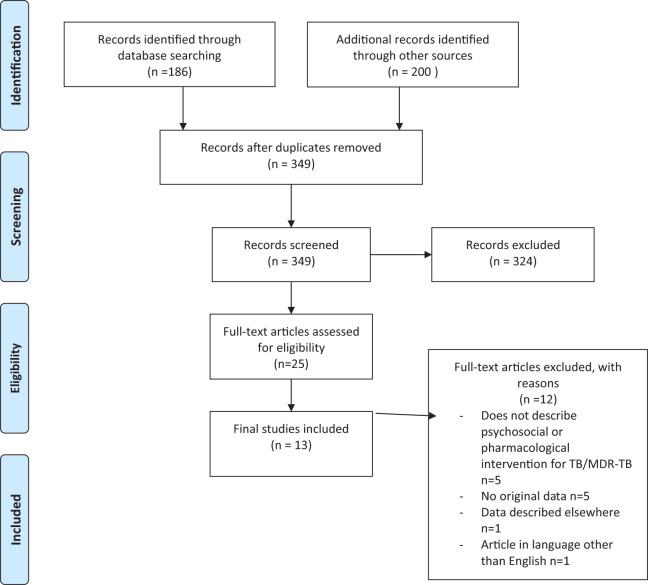
We aimed to review the literature on interventions for treating Common Mental Disorders (CMD) in people with Tuberculosis (TB). We followed PRISMA guidelines and the protocol was registered at PROSPERO. The electronic databases (PsycInfo, CINAHL, Medline, Google Scholar, Embase) were searched from 1982 to 2020. 349 relevant records were screened, with 26 examined at full text. 13 studies were included totalling 4326 participants. A meta-analysis was not possible due to nature of data, thus descriptive synthesis was conducted. Eleven studies evaluated psychosocial interventions, which significantly improved adherence or cure rates from TB, anxiety and depression. The elements of effective psychosocial interventions included; combating stigma, socioeconomic disadvantage, managing associated guilt and fear of contagion, and explanatory models of illness in local population. Two articles evaluated pharmacological interventions (antidepressants and Vitamin D). This is the first systematic review of interventions to treat CMD in TB. The studies were mostly low quality and mental health outcomes were not adequately described. However, this review suggests that it is feasible to develop and test interventions for improving mental health outcomes and enhancing treatment adherence in TB. © The Author(s) 2021.
Overview
CoChat Summary
TL;DR
This systematic review identified 13 studies (4,326 participants) on pharmacological and psychosocial interventions for common mental disorders in people with TB, and found mostly positive signals for psychosocial approaches. A meta-analysis was not possible, and the evidence was limited by low study quality and poorly reported mental health outcomes.
Key findings
- The review included 13 studies with 4,326 participants; 11 evaluated psychosocial interventions and 2 evaluated pharmacological interventions.
- Psychosocial interventions were reported to improve TB adherence or cure rates, and in some studies also anxiety and depression; the abstract states effective elements included combating stigma, socioeconomic disadvantage, managing guilt and fear of contagion, and local explanatory models of illness.
- Reported outcomes included:
- Pharmacy-based intervention: depression improved from moderate depression 54.26% to 11.43%, and severe depression 37.14% to zero at the end of intervention.
- Psychotherapy vs treatment as usual: TB treatment adherence improved 83% vs 47%, and cure rates 72% vs 42%.
- Psychological intervention (counselling + education): treatment non-adherence was 9.5% vs 25.4% in control; psychological distress improved with Kessler-10 scores 14 vs 19 at follow-up.
- Pharmacological studies: imipramine improved depression in 86.7% vs 48.3% control (P < 0.01), while vitamin D lowered Beck Depression Inventory scores in both groups but showed no significant between-group difference after 8 weeks (P = 0.38).
- The review notes that all studies reported improvement in adherence or cure rates from TB/MDR-TB, but specific anxiety/depression outcomes were often not adequately described.
Methods
- Systematic review conducted according to PRISMA, with a protocol registered in PROSPERO.
- Searched PsycInfo, CINAHL, Medline, Embase, PubMed, and Google Scholar for studies from 1982 to 2020; included studies of people older than 5 years with TB or MDR-TB and interventions for CMD.
- Two reviewers independently screened and extracted data; due to heterogeneity and inconsistent reporting, the authors conducted a descriptive/narrative synthesis rather than a meta-analysis.
Limitations
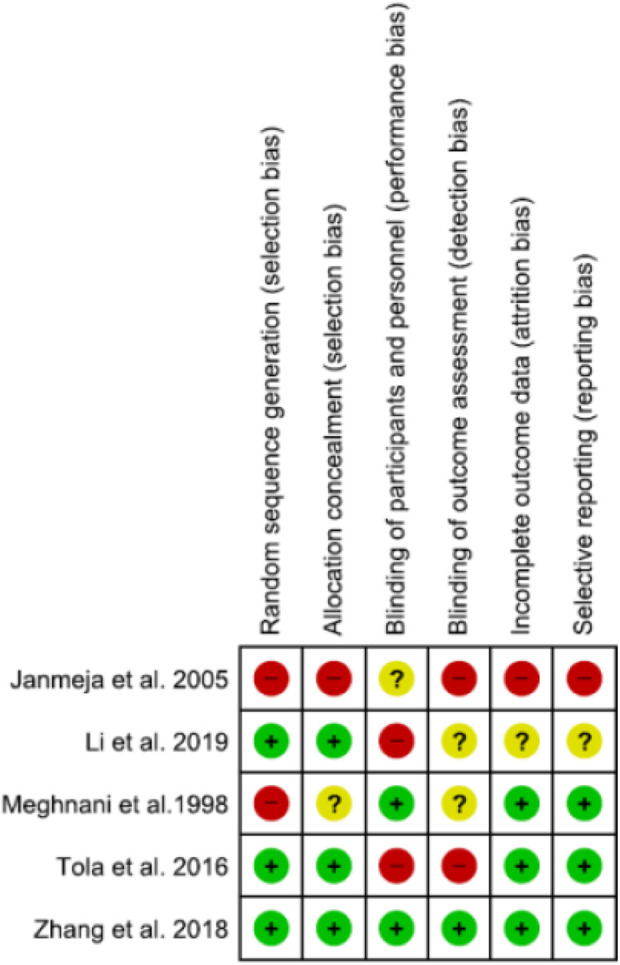
- The paper states that included studies were mostly low quality, with poorly reported mental health outcomes; almost all controlled trials had high or unclear risk of bias.
- The review was limited to English-language studies, so relevant studies in other languages may have been missed; the authors also note possible publication bias.
- Evident from the text: the evidence base was small and heterogeneous, with only 13 studies, diverse designs and interventions, and in some studies no specific mental health outcomes were reported, which prevented pooling.
Model-written summary. Check it against the paper before relying on it.
Integrity signals
Registry
Cites
Statistics
Figures
Verification
Claims the paper makes
13 Valid · 1 Not valid · 3 Not checked · 23 Own results and interpretations
The cited sources support only part of this claim — read each source’s verdict below.
In the paper
“The relationship between depression and TB is bidirectional.”
§ Pharmacological or non-pharmacological interventions for treatment of common mental disorders associated with Tuberculosis: A systematic review > Introduction
What the sources say
- Partly supportedcites [7] de Araújo GS Pereira SM dos Santos DN, et al. Common mental disorders associated with tuberculosis: a matched case-control study. PLoS One 2014; 9(6): e99551. 24937319 PMC4061008 sourceExperimental — accuracy not yet measured
The Discussion describes plausible pathways in both directions between TB and mental illness, including effects of stress on illness and effects of TB diagnosis on mental health. But the study examined common mental disorders, not depression specifically, and the Conclusions call for cohort studies to establish the direction of causality; it does not establish a bidirectional relationship. (LLM, conf=0.88)
- Partly supportedcites [8] Ambaw F Mayston R Hanlon C, et al. Depression among patients with tuberculosis: determinants, course and impact on pathways to care and treatment outcomes in a primary care setting in southern Ethiopia – a study protocol. BMJ Open 2015; 5(7): e007653. PMC4499723 26155818 sourceExperimental — accuracy not yet measured
The “Possible mechanisms for the association between TB and depression” section describes pathways between TB and depression in both directions, but says they are “likely” multidirectional and that their contributions remain unclear. The claim presents that tentative relationship as established. (LLM, conf=0.84)
- Supportedcites [9] Sweetland AC Kritski A Oquendo MA, et al. Addressing the tuberculosis–depression syndemic to end the tuberculosis epidemic. Int J Tubercul Lung Dis 2017; 21(8): 852– 861. PMC5759333 28786792 source
The Abstract describes both directions: depression may increase the risk of TB reactivation, while TB infection or disease reactivation may precipitate depression. The “Synergies Between Tuberculosis and Depression” section also describes their interacting risk factors. (LLM, conf=0.93)
plainstates a cause- Asserted: passes — The authors put it forward as true.
- Checkable: passes — It can be checked against evidence.
- Load-bearing: passes — The paper’s conclusions depend on it.
- Based: passes — The paper gives a reason why it holds.
- Partly supported
The cited sources support only part of this claim — read each source’s verdict below.
In the paper
“Two articles evaluated pharmacological interventions (antidepressants and Vitamin D).”
§ Pharmacological or non-pharmacological interventions for treatment of common mental disorders associated with Tuberculosis: A systematic review > Abstract
What the sources say
- Supportedcites [31] Zhang L Wang S Zhu Y, et al. Vitamin D3 as adjunctive therapy in the treatment of depression in tuberculosis patients: a short-term pilot randomized double-blind controlled study. Neuropsychiatr Dis Treat 2018; 14: 3103– 3109. 30532541 PMC6241718 source
The Methods (Study procedures; page not provided) describe a randomized comparison of oral vitamin D3 with placebo in patients with tuberculosis, with depressive symptoms assessed as an outcome. This confirms that the cited article evaluated the vitamin D intervention; the sentence’s antidepressant intervention refers to the other article. (LLM, conf=0.91)
- Not matchedcites [32] Meghnani ML Motiani PD Purohit DR, et al. Depression in hospitalized patients of pulmonary tuberculosis and role of anti-depressants-a pilot study. Lung India 1988; 6(1): 22– 25.
We don’t have this paper’s reference list.
plain- Asserted: passes — The authors put it forward as true.
- Checkable: passes — It can be checked against evidence.
- Load-bearing: unclear — It is unclear whether the paper’s conclusions depend on it.
- Based: passes — The paper gives a reason why it holds.
- Supported
The cited sources support only part of this claim — read each source’s verdict below.
In the paper
“Pharmacological treatment of TB in depression is particularly challenging in view of significant interactions between ATT and antidepressants.39”
§ Pharmacological or non-pharmacological interventions for treatment of common mental disorders associated with Tuberculosis: A systematic review > Discussion
What the sources say
- Partly supportedcites [39] Trenton AJ Currier GW. Treatment of comorbid tuberculosis and depression. Primary Care Companion to the Journal of Clinical Psychiatry 2001; 3(6): 236. PMC181192 15014591 sourceExperimental — accuracy not yet measured
The treatment-concerns passage discusses potential interactions between isoniazid and antidepressants, supporting the need for care in treating comorbid TB and depression. But the Conclusion says there is no clinical evidence of interactions between isoniazid and any SSRI, so the claim overstates the interactions as significant and established. Page numbers are not available in our copy. (LLM, conf=0.88)
plainstates a cause- Asserted: passes — The authors put it forward as true.
- Checkable: passes — It can be checked against evidence.
- Load-bearing: passes — The paper’s conclusions depend on it.
- Based: passes — The paper gives a reason why it holds.
- Partly supported
The cited sources support only part of this claim — read each source’s verdict below.
In the paper
“Out of six studies, four studies used a validated measurement tool to measure mental health outcomes.25–28”
§ Pharmacological or non-pharmacological interventions for treatment of common mental disorders associated with Tuberculosis: A systematic review > Results > Quality assessment of included studies
What the sources say
- Partly supportedcites [25] Rocha C Montoya R Zevallos K, et al. The innovative socio-economic interventions against tuberculosis (ISIAT) project: an operational assessment. Int J Tubercul Lung Dis 2011; 15(6): S50– 57. PMC3160483 21740659 sourceExperimental — accuracy not yet measured
The Methods (Baseline studies; page unavailable) say quantitative studies used questionnaires and measured depression. Our copy does not establish that the depression measure was validated, and this single paper cannot substantiate the count of four out of six studies. (LLM, conf=0.80)
- Not matchedcites [26] Kaukab I Nasir B Abrar MA, et al. Effect of pharmacist-led patient education on management of depression in drug resistance tuberculosis patients using cycloserine. A prospective study. Lat Am J Pharm 2015; 34: 1403– 1410.
We don’t have this paper’s reference list.
- Supportedcites [27] Walker IF Khanal S Hicks JP, et al. Implementation of a psychosocial support package for people receiving treatment for multidrug-resistant tuberculosis in Nepal: a feasibility and acceptability study. PLoS One 2018; 13(7): e0201163. 30048495 PMC6062069 source
In Methods (The piloted intervention), the paper says the PHQ-9 had been validated in Nepal and was used to monitor depression during counselling. Results (Preliminary HAP outcomes) reports changes in PHQ-9 and HSCL-Depression scores. This paper therefore supports its role as one of the cited studies using a validated tool to measure mental health outcomes. (LLM, conf=0.90)
- Not checked — no full text of the sourcecites [28] Sari GM Amin M Hidayati L. Acceptance and commitment therapy on depression of pulmonary tuberculosis patient: an intervention based on the health belief model. Indonesian Nurs J Educ Clin (INJEC) 2020; 5(2): 107– 115. source
plain- Asserted: passes — The authors put it forward as true.
- Checkable: passes — It can be checked against evidence.
- Load-bearing: unclear — It is unclear whether the paper’s conclusions depend on it.
- Based: passes — The paper gives a reason why it holds.
- Partly supported
The cited sources support only part of this claim — read each source’s verdict below.
In the paper
“Poor adherence with TB treatment leads to multi drug resistant TB (MDR-TB)5”
§ Pharmacological or non-pharmacological interventions for treatment of common mental disorders associated with Tuberculosis: A systematic review > Introduction
What the sources say
- Partly supportedcites [5] Sweetland A Oquendo M Wickramaratne P, et al. Depression: a silent driver of the global tuberculosis epidemic. World Psychiatry 2014; 13(3): 325– 326. 25273311 PMC4219079 sourceExperimental — accuracy not yet measured
In the main text, the paper says inconsistent or incomplete TB treatment can lead to drug resistance and may contribute to MDR-TB epidemics. The claim states more definitively that poor adherence leads to MDR-TB, omitting those qualifications. (LLM, conf=0.84)
plainstates a cause- Asserted: passes — The authors put it forward as true.
- Checkable: passes — It can be checked against evidence.
- Load-bearing: passes — The paper’s conclusions depend on it.
- Based: passes — The paper gives a reason why it holds.
- Partly supported
8 more claims
Create a free account to see all 40 claims and to verify the 2 references still open.
- Probably not a substantial claim. 15
- It may state two separate claims as one. 19
Claims other papers make about this one
Each is checked against this paper’s own text: does it say what the citing paper says it does?
The cited source says what the claim attributes to it.
In the citing paper
“Farooq et al. [25] concluded that psychosocial stressors, particularly stigma, socioeconomic disadvantage, guilt, and fear of contagion, shape the mental health and treatment experiences of people with TB.”
From Psychosocial Interventions for Improving Treatment Adherence in Tuberculosis Patients: A Scoping Review of Evidence-Based Approaches. (2026) · cites this paper as [25]
In the citing paper
“After completing the search process and screening for relevant abstracts, examination of full text articles for inclusion and data extraction was completed by two reviewers (SF & RC) independently, as outlined in the protocol.20”
From Pharmacological or non-pharmacological interventions for treatment of common mental disorders associated with Tuberculosis: A systematic review (2021) · cites this paper as [20]
Self-check
Percentages, sums and reported differences re-computed from the paper’s own numbers.
Each contradiction between two passages listed here was confirmed by an independent check.
Rated major: it would touch a result — a value a result rests on, reported and recomputed p-values on opposite sides of the significance level, two passages that conflict with no sign which is right, or a cited work retracted before this paper was published.
In the paper
§ Pharmacological or non-pharmacological interventions for treatment of common mental disorders associated with Tuberculosis: A systematic review > Results > Pharmacological treatments
“Meghnani et al.32 compared Imipramine (25 mg) versus placebo.”
§ Pharmacological or non-pharmacological interventions for treatment of common mental disorders associated with Tuberculosis: A systematic review > Results > Characteristics of interventions
“Two pharmacological intervention studies used Imipramine 75 mg32 and Vitamin D supplementation31 for treatment of depressive symptoms in people with TB.”
Rated minor: it would not touch a result — a value no result rests on, a p-value that stays on the same side of the significance level, or a conflict that is clerical, resolved elsewhere in the paper, or outside its own findings.
In the paper
“These included 186 records from electronic searches of the scientific literature databases (PubMed, Psychinfo, Medline & CINHAL) and 200 from the Google Scholar search.”
§ Pharmacological or non-pharmacological interventions for treatment of common mental disorders associated with Tuberculosis: A systematic review > Results
Reported 349 · recomputed 386
Citations
Cites
Preferred Reporting Items for Systematic Reviews and Meta-Analyses: The PRISMA Statement
Moher, D., Liberati, A., Tetzlaff, J., Altman, D. G., & The PRISMA Group (2009) · PLoS Medicine · doi:10.1371/journal.pmed.1000097 · Cited by 64,042 · cited 1×
“We followed the Preferred Reporting Items for Systematic Reviews and Meta-Analyses (PRISMA) statement guidelines.(16) A protocol defining the key methodological parameters was developed prior to the literature search and was registered at the International Prospective Register of Systematic Reviews (PROSPERO) (https:/…”
MethodStages and processes of self-change of smoking: Toward an integrative model of change.
Prochaska, J. O., & DiClemente, C. C. (1983) · Journal of Consulting and Clinical Psychology · doi:10.1037/0022-006x.51.3.390 · Cited by 9,098 · cited 2×
“ACT focuses on accepting difficult feelings and emotions to enhance psychological flexibility.34 Janmeja and colleagues29 used a psychological intervention based on behaviour therapy and Motivational Enhancement Therapy (MET) of Prochaska and DiClemenete.35 Li et al.30 used Morita therapy,36 a kind of cognitive behavi…”
Katon, W., Lin, E. H. B., & Kroenke, K. (2007) · General Hospital Psychiatry · doi:10.1016/j.genhosppsych.2006.11.005 · Cited by 965 · cited 1×
“These factors then lead to further depression and anxiety.(9,10) Common mental disorders, especially depression may be linked to non-adherence to ATT, which is a major barrier in Tuberculosis control.”
BackgroundKöhler, O., Benros, M. E., Nordentoft, M., Farkouh, M. E., Iyengar, R. L., Mors, O., & Krogh, J. (2014) · JAMA Psychiatry · doi:10.1001/jamapsychiatry.2014.1611 · Cited by 941
Acceptance and Commitment Therapy as a Unified Model of Behavior Change
Hayes, S. C., Pistorello, J., & Levin, M. E. (2012) · The Counseling Psychologist · doi:10.1177/0011000012460836 · Cited by 718 · cited 1×
“ACT focuses on accepting difficult feelings and emotions to enhance psychological flexibility.(34) Janmeja and colleagues(29) used a psychological intervention based on behaviour therapy and Motivational Enhancement Therapy (MET) of Prochaska and DiClemenete.”
Backgroundvan Ginneken, N., Tharyan, P., Lewin, S., Rao, G. N., Meera, S., Pian, J., Chandrashekar, S., & Patel, V. (2013) · Cochrane Database of Systematic Reviews · doi:10.1002/14651858.cd009149.pub2 · Cited by 575
Barbui, C., Purgato, M., Abdulmalik, J., Acarturk, C., Eaton, J., Gastaldon, C., Gureje, O., Hanlon, C., Jordans, M., Lund, C., et al. (2020) · The Lancet Psychiatry · doi:10.1016/s2215-0366(19)30511-5 · Cited by 349 · cited 1×
“The non-pharmacological interventions include any psychosocial interventions that are focused on psychological or social factors, including, but not limited to, individual, family, or group psychological therapies, education, or training.(15) We will refer to non-pharmacological interventions as psychosocial intervent…”
BackgroundTola, H. H., Shojaeizadeh, D., Tol, A., Garmaroudi, G., Yekaninejad, M. S., Kebede, A., Ejeta, L. T., Kassa, D., & Klinkenberg, E. (2016) · PLOS ONE · doi:10.1371/journal.pone.0155147 · Cited by 215 · cited 4×
“Tola et al.33 described a therapy based on health belief models of the local population about anxiety and depression.”
BackgroundInfluentialPachi, A., Bratis, D., Moussas, G., & Tselebis, A. (2013) · Tuberculosis Research and Treatment · doi:10.1155/2013/489865 · Cited by 185 · cited 1×
“Common mental disorders, especially depression may be linked to non-adherence to ATT, which is a major barrier in Tuberculosis control.(11) Untreated depression at baseline is independently associated with greater disability, poorer quality of life,(12,13) TB treatment default(12) and negative TB treatment outcomes.”
BackgroundFarooq, S., Large, M., Nielssen, O., & Waheed, W. (2009) · Schizophrenia Research · doi:10.1016/j.schres.2009.01.008 · Cited by 182 · cited 4×
“We have used this search strategy previously to identify literature from LMIC.(17) WHO estimates were used to determine the 20 countries where TB prevalence is highest.”
MethodInfluentialSelf-citation
Research works printed but not linked: 5
- National Collaborating Centre for Mental Health (UK). Common Mental Health Disorders: Identification and Pathways to Care. Leicester (UK): British Psychological Society. (NICE Clinical Guidelines, No. 123.) 2, COMMON MENTAL HEALTH DISORDERS, https://www.ncbi.nlm.nih.gov/books/NBK92254/ (2011, accessed 31 October 2020). 22536621
- Syakiratin Q Wibowo A Febriani E. Psychological challenges faced by multidrug-resistant tuberculosis patients: a systematic review. Berita Kedokteran Masyarakat 2019; 35(5): 155– 161.
- PROSPERO. Pharmacological or non pharmacological interventions for treatment of common mental disorders associated with Tuberculosis: a systematic review, https://www.crd.york.ac.uk/prospero/display_record.php?RecordID=176124 (2020, accessed 17 September 2020). PMC8082988 33896235
- Kaukab I Nasir B Abrar MA, et al. Effect of pharmacist-led patient education on management of depression in drug resistance tuberculosis patients using cycloserine. A prospective study. Lat Am J Pharm 2015; 34: 1403– 1410.
- Meghnani ML Motiani PD Purohit DR, et al. Depression in hospitalized patients of pulmonary tuberculosis and role of anti-depressants-a pilot study. Lung India 1988; 6(1): 22– 25.
Cited by
Nightingale, R., Carlin, F., Meghji, J. Z., McMullen, K., Evans, D. H., van der Zalm, M. M., Anthony, M. G., Bittencourt, M. S., Byrne, A., Preez, K. D., et al. (2023) · The International Journal of Tuberculosis and Lung Disease · doi:10.5588/ijtld.22.0514 · Cited by 196
Köhler‐Forsberg, O., Stiglbauer, V., Brasanac, J., Chae, W. R., Wagener, F., Zimbalski, K., Jefsen, O. H., Liu, S., Seals, M. R., Gamradt, S., et al. (2023) · JAMA Psychiatry · doi:10.1001/jamapsychiatry.2023.2983 · Cited by 57
Depression care integration in tuberculosis services: A feasibility assessment in Pakistan
Afaq, S., Ayub, A., Faisal, M. R., Nisar, Z., Zala, Z., Rehman, A. U., Ahmed, A., Todowede, O. O., & Siddiqi, N. (2024) · Health Expectations · doi:10.1111/hex.13985 · Cited by 19
Depression symptoms among Afghan TB patients: A multi-center study
Stanikzai, M. H., Ishaq, N., Zafar, M. N., Baray, A. H., Anwary, Z., Ahmad, M., & Stanikzai, K. A. (2024) · Indian Journal of Tuberculosis · doi:10.1016/j.ijtb.2024.08.016 · Cited by 12
Fonseka, N., Khan, Z., Lewis, M., Kibria, Z., Ahmad, F., Khan, M. F., Ul-Haq, M., Haq, Z. U., Sanauddin, N., Majid, M., et al. (2024) · BMJ Open · doi:10.1136/bmjopen-2023-083483 · Cited by 9
“It was concluded that CBT can relieve anxiety, and depression symptoms and increase the quality of life in subjects with pulmonary TB. Farooq et al 16 systematically reviewed the literature on psychosocial interventions to treat common mental disorders in TB and reported that these interventions are mainly focused on…”
BackgroundSelf-citationMunteanu, I., Kalambayi, F., Toth, A., Dendrino, D., Burdusel, B., Vlasceanu, S.-G., Parliteanu, O., Dragomir, A., Nemes, R. M., & Mahler, B. (2025) · Applied Sciences · doi:10.3390/app15158173 · Cited by 4
Sousa, S., & Aguiar, A. (2024) · Mental Health Global Challenges Journal · doi:10.56508/mhgcj.v7i1.180 · Cited by 4
Jarde, A., Ma, R., Todowede, O. O., Latif, A., Yaqoob, A., Afaq, S., Ferdous, T., Tomeny, E., Roșu, L., Mrema, L. E., et al. (2022) · medRxiv · doi:10.1101/2022.09.22.22280228 · Cited by 3
Danso‐Appiah, A., Yankey, M., Appiah, I. K., & Twum, W. A. (2025) · BMJ Open · doi:10.1136/bmjopen-2024-095280 · Cited by 4
“6 31–35 One systematic review covered SSA, but the focus was depression in adults living with HIV, 31 and another assessed the effects of mental health disorders among HIV patients in Ethi-opia, 32 while the remaining four reviews focused on TB alone.”
Bin Qamar, R. A., Pereira, H., & Alckmin-Carvalho, F. (2026) · Advances in respiratory medicine · doi:10.3390/arm94030032 · Cited by 1
“The remaining six studies were multinational evidence syntheses or conceptual reviews drawing on data from multiple countries and regions [6,7,9,25–27].”
The COVID-19 pandemic as a catalyst for integrated global mental healthcare and tuberculosis care
Chu, A. L., Pasha, A., Contreras, C. C., Lecca, L. W., Sweetland, A. C., & Galea, J. T. (2023) · BJPsych International · doi:10.1192/bji.2023.3 · Cited by 1
Nava-Ruelas, R., Todowede, O. O., Siddiqi, N., & Elsey, H. (2024) · Global Health Research · doi:10.3310/grwh1425 · Cited by 4
Herliany, Y. S., & Nurdin, H. (2024) · International Journal of Global Operations Research · doi:10.47194/ijgor.v5i1.291 · Cited by 1
Contreras, C. C., Cruz, J. S., Galea, J. T., Chu, A. L., Puma, D., Ramos, L., Tovar, M. A., Peinado, J., Lecca, L. W., Keshavjee, S. A., et al. (2024) · Cambridge Prisms Global Mental Health · doi:10.1017/gmh.2024.21 · Cited by 3
“A more recently published systematic review by Farooq et al. considered 2 pharmacological and 11 psychosocial interventions for addressing common mental disorders such as depression among persons with TB ( n = 4,326) in various low-and middle-income countries (LMICs; Farooq et al., 2021).”
BackgroundBook review: Building Family Business Champions
Salmon, U. (2017) · The International Journal of Entrepreneurship and Innovation · doi:10.1177/1465750317717881
CRD Editor’s corner archive: April-June 2021
STEINER, M. C., & Harrison, S. L. (2021) · Chronic Respiratory Disease · doi:10.1177/14799731211035461
“In the journal this month, Farooq et al.8 publish a systematic review summarising interventions to ameliorate the psychological consequences of TB.”
BackgroundContreras, C. C., Cruz, J. S., Galea, J. T., et al. (2024) · Cambridge Prisms Global Mental Health · doi:10.1017/gmh.2024.21.pr5
Contreras, C. C. (2023) · Cambridge Prisms Global Mental Health · doi:10.1017/gmh.2024.21.pr4
Contreras, C. C., Cruz, J. S., Galea, J. T., et al. (2024) · Cambridge Prisms Global Mental Health · doi:10.1017/gmh.2024.21.pr6
Contreras, C. C., Cruz, J. S., Galea, J. T., et al. (2023) · Cambridge Prisms Global Mental Health · doi:10.1017/gmh.2024.21.pr3
Contreras, C., Cruz, J. S., Galea, J. T., et al. (2023) · Cambridge Prisms Global Mental Health · doi:10.1017/gmh.2024.21.pr2
Contreras, C., Cruz, J. S., Galea, J. T., et al. (2024) · Cambridge Prisms Global Mental Health · doi:10.1017/gmh.2024.21.pr9
Contreras, C. C., Cruz, J. S., Galea, J. T., et al. (2024) · Cambridge Prisms Global Mental Health · doi:10.1017/gmh.2024.21.pr8
Contreras, C. C. (2023) · Cambridge Prisms Global Mental Health · doi:10.1017/gmh.2024.21.pr1
Contreras, C. C. (2024) · Cambridge Prisms Global Mental Health · doi:10.1017/gmh.2024.21.pr7
Eyal, K. C., Wagner, R. G., & Geel, J. A. (2025) · BMJ Open · doi:10.1136/bmjopen-2025-102839
Feasibility of integrating depression care into tuberculosis services in India
Thekkumkara, S. N., Shree, V., Adhikary, A., Todowede, O. O., Dahale, A. B., Muliyala, K. P., Akshata, J. S., Chaturvedi, S. K., Murthy, P., Siddiqi, N., et al. (2025) · Mental Health & Prevention · doi:10.1016/j.mhp.2025.200472 · Cited by 1
Ahmad, F., Rahim, M., Qazi, F. K., Khan, Z., Rasool, S., Kibria, Z., Sanauddin, N., Gul, M., Naeem, F., Firaz, M., et al. (2025) · Trials · doi:10.1186/s13063-025-09284-w
“Cognitive behavioral therapy (CBT), an evidence-based approach to managing depression and anxiety, has demonstrated effectiveness in reducing depressive symptoms and enhancing adherence to medical treatment [10, 11].”
Self-citationA review on advanced management of tuberculosis
Katteti, M., Yeddu, S., Patan, A., & Yadala, P. C. (2025) · Learnovate-International · doi:10.70604/learnint.v2i3.106
Chen, T., Ge, L., Zhang, D., Zhang, Y., Zhang, H., & Wang, Y. (2026) · Genes · doi:10.3390/genes17101198
Metadata
- Authors
- Farooq, S., Tunmore, J., & Comber, R.
- Affiliations
- Midlands Partnership NHS Foundation Trust (GB)
- Corresponding author
- Farooq, Saeed
- ORCID
- Farooq, Saeed
- Venue
- Chronic Respiratory Disease
- Publisher
- SAGE Publications
- Published
- 2021-01-01
- Volume
- 18
- Pages
- 14799731211003937-14799731211003937
- ISSN
- 1479-9723 (ISSN-L)
- 1479-9731
- PMC
- PMC8082988
- OpenAlex
- W3159773707
- Semantic Scholar
- 842813e4eadf9a285b09c85545c53bbe8918e81f
- Cited by
- 31
- References
- 30
- Citations by year
- 2026: 3 · 2025: 6 · 2024: 11 · 2023: 8 · 2022: 1 · 2021: 1
- FWCI
- 0.61
- Type
- journal article
- Language
- en
- Open access
- gold
- doi.org
- Locations
- Chronic Respiratory Disease (publishedVersion, cc-by)
- PubMed Central (publishedVersion, cc-by)
- PubMed (publishedVersion)
- Keele Research Repository (Keele University) (submittedVersion, cc-by)
- Funders
- National Institute for Health and Care Research (NIHR201773)
- Topics
- Health Sciences › Medicine › Infectious Diseases › Tuberculosis Research and Epidemiology
- Health Sciences › Medicine › Psychiatry and Mental health › Mental Health Treatment and Access
- Social Sciences › Psychology › Clinical Psychology › COVID-19 and Mental Health
- Keywords
- common mental disorders, tuberculosis, psychosocial interventions, pharmacological interventions, antidepressants, vitamin D, medication adherence, stigma, depression, anxiety, guilt, fear of contagion, explanatory models of illness, socioeconomic deprivation
- MeSH terms
- Anxiety, Mental Disorders, Humans, Tuberculosis
About these checks
Registry, retraction, Cites and statistics results are computed, not judged, with one exception: a printed reference that no index lists is read once by a model before it counts as a citation error. Claims are extracted by a model and kept only when their quote appears verbatim in the text; each cited source is then checked, with a model’s help, for whether it says what the claim relies on. Those verdicts can be wrong — read the claim’s quote and the cited source before relying on one.
The claim verdicts this report counts are experimental: their accuracy is not yet measured.
A language model drew the claims from the paper on 2026-10-11, under version 3 of the claim definition (model deepseek-v4.1-flash, prompt extract-v3).
A second model labelled each claim on 2026-10-11 (model jev-1.13-20260917, definition revision gold-guideline-v0.2).
Cited sources are checked with a language model’s help (gpt-6-sol).
Statistics and arithmetic are recomputed, not judged.
Confidence bands are shown only for fields calibrated on our annotated test set. None is calibrated yet, so no band is shown.
What counts as a claim ›How we measure confidence ›How we check this ›
Are you an author, or do you see a problem with this page? Request a review
Data sources
Bibliographic data: Semantic Scholar, OpenAlex, Crossref.
Contains information from the Semantic Scholar Academic Graph Datasets, made available under the ODC Attribution License (ODC-BY 1.0).
Semantic Scholar’s data is described in: Kinney, R., et al. (2023). The Semantic Scholar Open Data Platform. arXiv:2301.10140.
