

The DOI matches its Crossref record; 96 of the 96 references it cites were found in a registry or an index; 27 of the 121 sources its claims cite were checked for support.
Does difficulty moderate learning? A comparative analysis of the desirable difficulties framework and cognitive load theory
Open accessAbstract
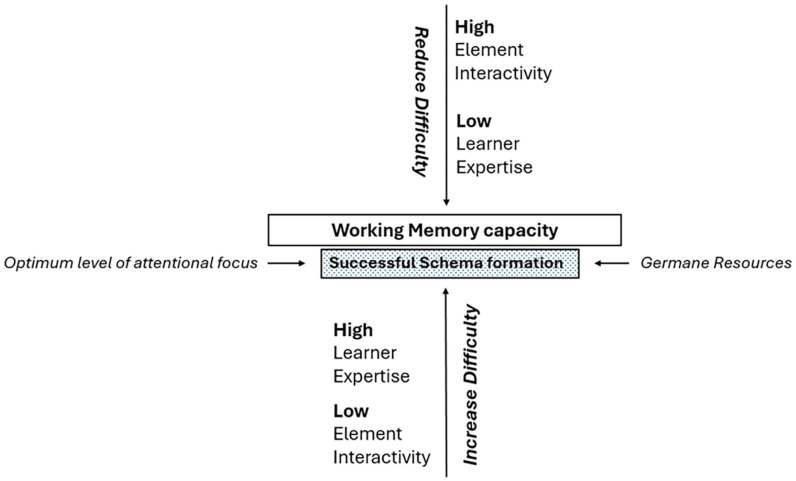
There is evidence to suggest that variations in difficulty during learning can moderate long-term retention. However, the direction of this effect is under contention throughout the literature. According to both the Desirable Difficulties Framework (DDF) and the Retrieval Effort Hypothesis (REH), increasing difficulty (thus relative effort) during retrieval-based learning can help achieve superior long-term retention. One reason for this is due to improved schema formation following a deeper encoding strategy, allowing for more efficient retrieval techniques. A conflicting theory discussed in this review is the Cognitive Load Theory (CLT). The CLT states that conditions for learning are best when extraneous load is reduced, and intrinsic load is optimised. By doing this, germane resources can focus on schema formation. While both theories consider schema formation key to successful retention, the way in which it is best achieved is conflicting. To date, both theories have yet to be compared despite their commonalities. This review evaluates the aforementioned theories, before proposing a new model of difficulty in learning. The proposed model integrates principles from the DDF, REH, and CLT, incorporating insights from Perceptual Load Theory (PLT). It suggests that task difficulty should be adjusted based on the material’s complexity and the learner’s expertise. Increasing difficulty benefits low-element-interactivity tasks by enhancing focus and retention, while reducing difficulty in high-element-interactivity tasks prevents cognitive overload.
Overview
CoChat Summary
## TL;DR
This is a review comparing the Desirable Difficulties Framework / Retrieval Effort Hypothesis with Cognitive Load Theory to explain when making learning harder helps or hurts retention. It proposes a new model: increase difficulty for low-element-interactivity tasks, but reduce difficulty for high-element-interactivity tasks and for less experienced learners.
## Key findings
- The review states that DDF/REH and CLT both treat schema formation as central, but disagree on whether difficulty should be increased or reduced for better learning.
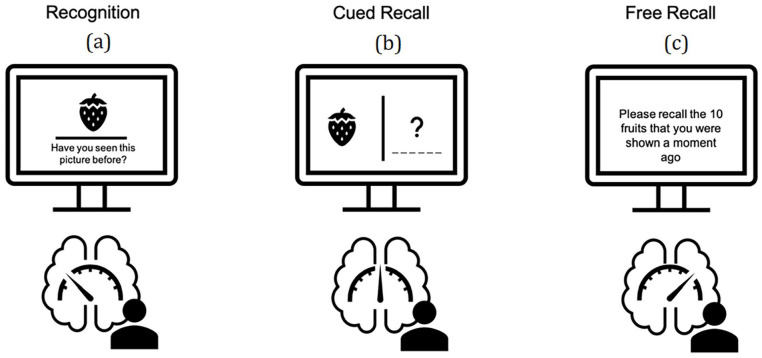
- For DDF/REH, retrieval-based learning tasks such as cued and free recall generally outperform recognition, and the paper cites studies showing improved long-term retention, including a strong retrieval practice effect in de Lima et al. (2020) and benefits of expanding spaced intervals in some studies.
- For CLT, reducing extraneous load and supporting schema construction is emphasized; the paper notes that increasing extraneous load through task difficulty and time pressure led to lower recall performance in Galy et al. (2012), while worked examples and goal-free problems improved memorisation.
- The proposed model says difficulty should be adjusted to material complexity and learner expertise: increasing difficulty helps low-element-interactivity tasks by improving focus and retention, while reducing difficulty helps prevent overload in high-element-interactivity tasks.
## Methods
- This is a narrative review, not an original experiment: it compares the Desirable Difficulties Framework, Retrieval Effort Hypothesis, Cognitive Load Theory, and related Perceptual Load Theory ideas.
- The paper synthesizes prior experimental and review literature across learning tasks such as recognition, cued recall, free recall, spacing, worked examples, goal-free problems, and divided-attention paradigms.
- The main analysis is conceptual/comparative, using cited studies to build a new integrated model of difficulty in learning.
## Limitations
- The paper itself notes that the two frameworks have “yet to be compared” directly, and that much of the CLT evidence it reviews is “dated” and would benefit from more recent evidence.
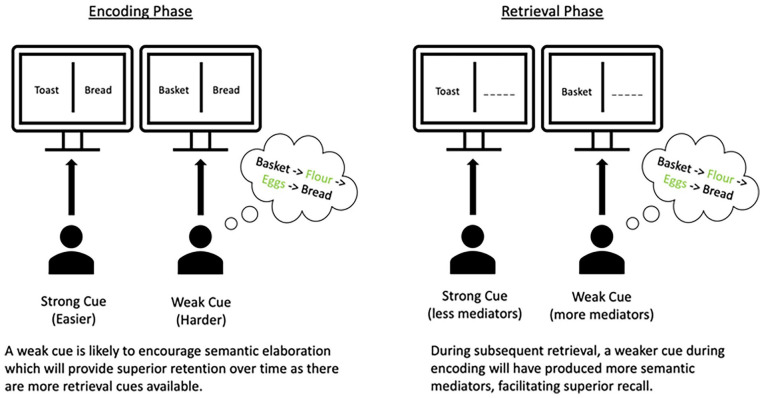
- The paper states that item-difficulty effects and the role of semantic mediators in retrieval learning are “still open to debate,” and that the REH perspective on item difficulty “requires further exploration before a conclusion can be made.”
- Evident from the text: this is a review article, so it does not present a new empirical dataset or a direct head-to-head experiment testing the proposed model.
Model-written summary. Check it against the paper before relying on it.
Integrity signals
Registry
Cites
Statistics
Figures

Verification
Claims the paper makes
21 Valid · 2 Not valid · 54 Not checked · 45 Own results and interpretations
Every source the paper cites for this claim was checked and supports it.
In the paper
“and when spacing is implemented (increasing difficulty), improved results are shown compared to massed study (Middleton et al., 2016, 2019).”
§ Does difficulty moderate learning? A comparative analysis of the desirable difficulties framework and cognitive load theory > DDF > RBL The concept of learning via retrieval has had its place in the literature since the early 20th century (Abbott, 1909; Gates, 1917; Spitzer, 1939). There has been much research on RBL, the fundamental basis of which relies on repeated testing of the participant on the subject material (Roediger & Butler, 2011). Typically, the participant is first shown the target stimuli (known as a study phase) before they move on to the next stage, the testing phase. Following this, there may be various patterns of study and test phases before a final test. In an experimental situation, this final test often measures the efficacy of RBL compared to say, study alone. An example of this pattern in an experimental group may be: Study, Test, Study, Test (STST); compared to a control Study alone group (SSSS). Learning via retrieval has consistently been shown to be more effective than studying the material alone (Carpenter et al., 2008; de Lima et al., 2020; Fazio & Marsh, 2019; Karpicke & Aue, 2015; Karpicke & Grimaldi, 2012; Karpicke & Roediger, 2008; Kornell et al., 2011; Roediger & Karpicke, 2006). Furthermore, as well as healthy populations, RBL has also been shown to be effective in language-impaired populations, compared to repetitive study (de Lima et al., 2021) and when spacing is implemented (increasing difficulty), improved results are shown compared to massed study (Middleton et al., 2016, 2019). In an experimental setting, the difference in performance between the retrieval group and the study-only group is known as the “testing effect.”
What the sources say
- Supportedcites Middleton et al., 2016 source
The Abstract/Results summary (Results) states 'spaced learning outperformed massed learning at retention test and at follow-up. Increases in spacing in the retrieval practice condition yielded more robust learning of retrieved information,' and the Spacing Effects results (Results, Fig. 1/Table 1) give the coefficients (Coef = 0.71, p < .001 retention; Coef = 0.45, p = .006 follow-up). The difficulty/effort parenthetical is also carried by the paper: lag-by-event analysis showed training accuracy fell with increasing lag while retention accuracy stayed stable, interpreted as effortful successful retrieval being more potent (Results). The demonstration is in 4 people with aphasia doing naming treatment, but the claim states no narrower or wider qualifier, so nothing attributed to this source is unsupported. (LLM, conf=0.85)
- Supportedcites Middleton et al., 2019 source
The Results (Spacing Effects; page not provided) report significantly better retention after spaced than massed learning. The Introduction explains that spacing separates trials beyond short-term-memory limits, whereas massed trials remain accessible; this is consistent with the parenthetical description of increased difficulty. The follow-up advantage was only marginal. (LLM, conf=0.90)
plainstates a cause- Asserted: passes — The authors put it forward as true.
- Checkable: passes — It can be checked against evidence.
- Load-bearing: unclear — It is unclear whether the paper’s conclusions depend on it.
- Based: passes — The paper gives a reason why it holds.
- Supported
The cited sources support only part of this claim — read each source’s verdict below.
In the paper
“Regardless of the spacing, there is evidence to suggest that repeated retrieval sessions with corrective feedback improves long-term retention (Butler, 2010; Karpicke & Roediger, 2007b; Tse et al., 2010); for a review, see (Binks, 2018).”
§ Does difficulty moderate learning? A comparative analysis of the desirable difficulties framework and cognitive load theory > DDF > Task difficulty
What the sources say
- Not checked — no full text of the sourcecites Butler, 2010 source
- Not matchedcites Karpicke & Roediger, 2007b
Couldn’t be matched to a paper in Crossref, so it can’t be checked.
- Partly supportedcites Tse et al., 2010 sourceExperimental — accuracy not yet measured
Experiment 2’s Results report that feedback restored the benefit of repeated testing for final recall of face–name pairs, particularly in the oldest adults. The Present Research section specifies a 1.5-hour retention interval, and the paper does not establish that the benefit holds regardless of spacing. (LLM, conf=0.86)
hedgedstates a cause- Asserted: passes — The authors put it forward as true.
- Checkable: passes — It can be checked against evidence.
- Load-bearing: passes — The paper’s conclusions depend on it.
- Based: passes — The paper gives a reason why it holds.
The sources with a verdict support this claim; the rest weren’t checked yet, have no full text we could read, or their verdicts aren’t rated yet.
In the paper
“Learning via retrieval has consistently been shown to be more effective than studying the material alone (Carpenter et al., 2008; de Lima et al., 2020; Fazio & Marsh, 2019; Karpicke & Aue, 2015; Karpicke & Grimaldi, 2012; Karpicke & Roediger, 2008; Kornell et al., 2011; Roediger & Karpicke, 2006).”
§ Does difficulty moderate learning? A comparative analysis of the desirable difficulties framework and cognitive load theory > DDF > RBL The concept of learning via retrieval has had its place in the literature since the early 20th century (Abbott, 1909; Gates, 1917; Spitzer, 1939). There has been much research on RBL, the fundamental basis of which relies on repeated testing of the participant on the subject material (Roediger & Butler, 2011). Typically, the participant is first shown the target stimuli (known as a study phase) before they move on to the next stage, the testing phase. Following this, there may be various patterns of study and test phases before a final test. In an experimental situation, this final test often measures the efficacy of RBL compared to say, study alone. An example of this pattern in an experimental group may be: Study, Test, Study, Test (STST); compared to a control Study alone group (SSSS). Learning via retrieval has consistently been shown to be more effective than studying the material alone (Carpenter et al., 2008; de Lima et al., 2020; Fazio & Marsh, 2019; Karpicke & Aue, 2015; Karpicke & Grimaldi, 2012; Karpicke & Roediger, 2008; Kornell et al., 2011; Roediger & Karpicke, 2006). Furthermore, as well as healthy populations, RBL has also been shown to be effective in language-impaired populations, compared to repetitive study (de Lima et al., 2021) and when spacing is implemented (increasing difficulty), improved results are shown compared to massed study (Middleton et al., 2016, 2019). In an experimental setting, the difference in performance between the retrieval group and the study-only group is known as the “testing effect.”
What the sources say
- Supportedcites Carpenter et al., 2008 source
The General Discussion reports that test/study produced better recall than study alone in all three experiments and says the results are consistent with prior studies. The paper also states that testing has an advantage over simply restudying material. (LLM, conf=0.93)
- Not matchedcites de Lima et al., 2020
Couldn’t be matched to a paper in Crossref, so it can’t be checked.
- Not checked — no full text of the sourcecites Fazio & Marsh, 2019 source
boostedstates a cause- Asserted: passes — The authors put it forward as true.
- Checkable: passes — It can be checked against evidence.
- Load-bearing: unclear — It is unclear whether the paper’s conclusions depend on it.
- Based: passes — The paper gives a reason why it holds.
- Supported
The sources with a verdict support this claim; the rest weren’t checked yet, have no full text we could read, or their verdicts aren’t rated yet.
In the paper
“There are several studies that have directly tested the REH, each finding evidence in support of this notion (Carpenter & DeLosh, 2006; Karpicke & Roediger, 2007b; Pyc & Rawson, 2009).”
§ Does difficulty moderate learning? A comparative analysis of the desirable difficulties framework and cognitive load theory > DDF > REH
What the sources say
- Supportedcites Carpenter & DeLosh, 2006 source
The General Discussion reports that Experiments 2 and 3 varied retrieval-cue support and found better final retention for items retrieved with fewer cues. The paper calls this support for the elaborative retrieval hypothesis rather than using the term “Retrieval Effort Hypothesis,” but its direct test and finding support the point for which this study is cited. (LLM, conf=0.87)
- Not matchedcites Karpicke & Roediger, 2007b
Couldn’t be matched to a paper in Crossref, so it can’t be checked.
- Not checked — no full text of the sourcecites Pyc & Rawson, 2009 source
plainstates a cause- Asserted: passes — The authors put it forward as true.
- Checkable: passes — It can be checked against evidence.
- Load-bearing: unclear — It is unclear whether the paper’s conclusions depend on it.
- Based: passes — The paper gives a reason why it holds.
- Supported
The cited sources support only part of this claim — read each source’s verdict below.
In the paper
“This holds even when there is a mismatch in task type (i.e., recall during learning and recognition during retrieval; (Carpenter & DeLosh, 2006; Endres & Renkl, 2015; Rowland, 2014; Stenlund et al., 2016), highlighting the positive influence of recall during the learning phase.”
§ Does difficulty moderate learning? A comparative analysis of the desirable difficulties framework and cognitive load theory > DDF > Task difficulty
What the sources say
- Partly supportedcites Carpenter & DeLosh, 2006 sourceExperimental — accuracy not yet measured
The Final retention section reports that free recall during learning was associated with nominally higher retention on a later recognition test, so the paper addresses the task mismatch. But the effect was not statistically significant for the recognition-test group; the claim presents the positive influence as established in that condition. (LLM, conf=0.88)
- Partly supportedcites Endres & Renkl, 2015 sourceExperimental — accuracy not yet measured
The Results (Main Analysis; page not provided) report a testing benefit on both free-recall and short-answer posttests, supporting a benefit across the formats studied. The Methods (Procedure; page not provided) show that the posttests did not use recognition, so this paper does not establish the specific recall-during-learning, recognition-during-retrieval mismatch claimed. (LLM, conf=0.88)
- Not matchedcites Rowland, 2014
Couldn’t be matched to a paper in Crossref, so it can’t be checked.
plainstates a cause- Asserted: passes — The authors put it forward as true.
- Checkable: passes — It can be checked against evidence.
- Load-bearing: unclear — It is unclear whether the paper’s conclusions depend on it.
- Based: passes — The paper gives a reason why it holds.
- Partly supported
49 more claims · 9 with their cited sources checked
Create a free account to see all 122 claims and to verify the 5 references still open.
- It may state two separate claims as one. 32
- Probably not a substantial claim. 50
Citations
Cites
Cognitive Load During Problem Solving: Effects on Learning
Sweller, J. (1988) · Cognitive Science · doi:10.1016/0364-0213(88)90023-7 · Cited by 11,048 · cited 7×
“While MEA could solve the problem, it is incompatible with learning because it is working memory intensive and does not lead to schema construction (Sweller, 1988; Sweller et al., 1998).”
InfluentialCognitive Architecture and Instructional Design
Sweller, J., van Merrienboer, J. J. G., & Paas, F. G. W. C. (1998) · Educational Psychology Review · doi:10.1023/a:1022193728205 · Cited by 6,023 · cited 7×
“Beyond these foundational assumptions, while cognitive load can generally be defined as the number of working memory resources employed to perform a task, CLT distinguishes between three different types (Sweller et al., 1998, 2019) each of which are reviewed below.”
InfluentialSweller, J., Ayres, P., & Kalyuga, S. (2011) · doi:10.1007/978-1-4419-8126-4 · Cited by 5,531
Sweller, J. (2011) · Psychology of Learning and Motivation · doi:10.1016/b978-0-12-387691-1.00002-8 · Cited by 4,856
Sweller, J. (2012) · Encyclopedia of the Sciences of Learning · doi:10.1007/978-1-4419-1428-6_446 · Cited by 4,405
Test-Enhanced Learning: Taking Memory Tests Improves Long-Term Retention
Roediger, H. L., & Karpicke, J. D. (2006) · Psychological Science · doi:10.1111/j.1467-9280.2006.01693.x · Cited by 2,867
Cognitive Architecture and Instructional Design: 20 Years Later
Sweller, J., van Merriënboer, J. J. G., & Paas, F. (2019) · Educational Psychology Review · doi:10.1007/s10648-019-09465-5 · Cited by 2,337 · cited 4×
“As a result, the emphasis has moved from simply increasing germane load to ensuring that learners’ cognitive efforts are directed towards the most meaningful and supportive tasks in the learning process (Sweller et al., 2019).”
InfluentialA spreading activation theory of memory.
Anderson, J. R. (1983) · Journal of Verbal Learning and Verbal Behavior · doi:10.1016/s0022-5371(83)90201-3 · Cited by 2,199 · cited 1×
“Spreading activation can be defined as the implicit creation of new cues in memory, which can then be utilised during retrieval (J. R. Anderson, 1983).”
Element Interactivity and Intrinsic, Extraneous, and Germane Cognitive Load
Sweller, J. (2010) · Educational Psychology Review · doi:10.1007/s10648-010-9128-5 · Cited by 2,020 · cited 3×
“As with intrinsic load, element interactivity is also relevant to extraneous load (Sweller et al., 2019), in the sense that a poor instructional design increases element interactivity , imposing a greater cognitive load (and therefore having a detrimental effect on memorisation (Sweller, 2010).”
The critical role of retrieval practice in long-term retention
Roediger, H. L., & Butler, A. C. (2011) · Trends in Cognitive Sciences · doi:10.1016/j.tics.2010.09.003 · Cited by 1,796 · cited 1×
“There has been much research on RBL, the fundamental basis of which relies on repeated testing of the participant on the subject material (Roediger & Butler, 2011).”
Research works printed but not linked: 3
- Chi M., Glaser R., Rees E. (1982). Expertise in problem solving. In Sternberg R. (Ed.), Advances in the psychology of human intelligence (pp. 7–75). Erlbaum.
- Gates A. I. (1917). Recitation as a factor in memorizing. Archives of Psychology, 6(40), 104.
- Trafton J. G., Reiser B. J. (1993). Studying examples and solving problems: Contributions to skill acquisition. In Proceedings of the 15th Conference of the Cognitive Science Society (pp. 1017–1022). Lawrence Erlbaum Associates, Inc.
Cited by
Zhong, Y., Guo, K., Xu, L., & Fryer, L. K. (2026) · Educational Research Review · doi:10.1016/j.edurev.2026.100767 · Cited by 6
Immersive competence as a source of bias in virtual reality clinical assessment
Schaal, J., Leutritz, T., Lindner, M., Zamzow, A., Backhaus, J., Koenig, S., & Mühling, T. (2026) · npj Digital Medicine · doi:10.1038/s41746-026-02482-z · Cited by 6
EyeGPT: A Cognitive Load-Adaptive GenAI Assistant with Eye Tracking for Programming Education
Schulz, T., Krisam, C., & Seitz, J. (2025) · Lecture notes in information systems and organisation · doi:10.1007/978-3-032-00815-2_4 · Cited by 4
Eureka in the Age of Agentic AI: Educational Foundations for Creative Futures
Andreadakis, Z. (2026) · Advances in computational intelligence and robotics book series · doi:10.4018/979-8-3373-6471-1.ch009
Mora-Ruano, D., & Mora-Ruano, R. (2026) · Ensayos: Revista de la Facultad de Educación de Albacete · doi:10.18239/ensayos.v41i2.3949
Metadata
- Authors
- Pyke, W., Lunau, J., & Javadi, A.-H.
- Affiliations
- University of Kent (GB)
- Corresponding author
- Javadi, Amir-Homayoun
- ORCID
- Pyke, Wesley
- Venue
- Quarterly Journal of Experimental Psychology
- Publisher
- SAGE Publications
- Published
- 2024-12-24
- Volume
- 78
- Issue
- 10
- Pages
- 2181-2195
- ISSN
- 0033-555X (ISSN-L)
- 1747-0218
- 1747-0226
- PMC
- PMC12432286
- OpenAlex
- W4405116276
- Cited by
- 15
- References
- 95
- Citations by year
- 2026: 13 · 2025: 1
- FWCI
- 3.25
- Type
- journal article
- Language
- en
- Open access
- hybrid
- doi.org
- Licence
- cc-by-nc
- creativecommons.org/licenses/by-nc/4.0/ (vor)
- journals.sagepub.com/page/policies/text-and-data-mining-license (tdm)
- Locations
- Quarterly Journal of Experimental Psychology (publishedVersion, cc-by-nc)
- PubMed (publishedVersion)
- Kent Academic Repository (University of Kent) (submittedVersion)
- PubMed Central (submittedVersion, cc-by-nc)
- Europe PMC (PubMed Central) (submittedVersion, cc-by-nc)
- Topics
- Physical Sciences › Computer Science › Artificial Intelligence › Intelligent Tutoring Systems and Adaptive Learning
- Life Sciences › Neuroscience › Cognitive Neuroscience › Memory Processes and Influences
- Physical Sciences › Computer Science › Information Systems › Information Retrieval and Search Behavior
- Keywords
- desirable difficulties, cognitive load theory, task difficulty, long-term retention, schema formation, perceptual load theory, extraneous cognitive load, germane cognitive load
- MeSH terms
- Cognition, Humans, Learning, Models, Psychological, Psychological Theory, Retention, Psychology
About these checks
Registry, retraction, Cites and statistics results are computed, not judged, with one exception: a printed reference that no index lists is read once by a model before it counts as a citation error. Claims are extracted by a model and kept only when their quote appears verbatim in the text; each cited source is then checked, with a model’s help, for whether it says what the claim relies on. Those verdicts can be wrong — read the claim’s quote and the cited source before relying on one.
The claim verdicts this report counts are experimental: their accuracy is not yet measured.
A language model drew the claims from the paper on 2026-10-11, under version 3 of the claim definition (model deepseek-v4.1-flash, prompt extract-v3).
A second model labelled each claim on 2026-10-11 (model jev-1.13-20260917, definition revision gold-guideline-v0.2).
Cited sources are checked with a language model’s help (qwen3.8-omni-flash and gpt-6-sol).
Statistics and arithmetic are recomputed, not judged.
Confidence bands are shown only for fields calibrated on our annotated test set. None is calibrated yet, so no band is shown.
What counts as a claim ›How we measure confidence ›How we check this ›
Are you an author, or do you see a problem with this page? Request a review
How to cite
Cite CoChat for the checks on this page, and the paper for its own findings.
- This page
- CoChat. (2026). Citation check: Does difficulty moderate learning? A comparative analysis of the desirable difficulties framework and cognitive load theory. https://app.cochat.ai/papers/10.1177/17470218241308143
- The paper
- Pyke, W., Lunau, J., & Javadi, A.-H. (2025). Does difficulty moderate learning? A comparative analysis of the desirable difficulties framework and cognitive load theory. Quarterly Journal of Experimental Psychology. https://doi.org/10.1177/17470218241308143
Data sources
Bibliographic data: Semantic Scholar, OpenAlex, Crossref.
Contains information from the Semantic Scholar Academic Graph Datasets, made available under the ODC Attribution License (ODC-BY 1.0).
Semantic Scholar’s data is described in: Kinney, R., et al. (2023). The Semantic Scholar Open Data Platform. arXiv:2301.10140.
