

Validation of a wearable biosensor device for vital sign monitoring in septic emergency department patients in Rwanda
Open accessThe DOI matches its Crossref record; 47 of the 47 references it cites were found in a registry or an index.
Abstract
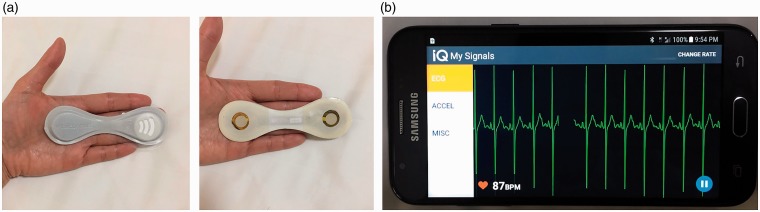
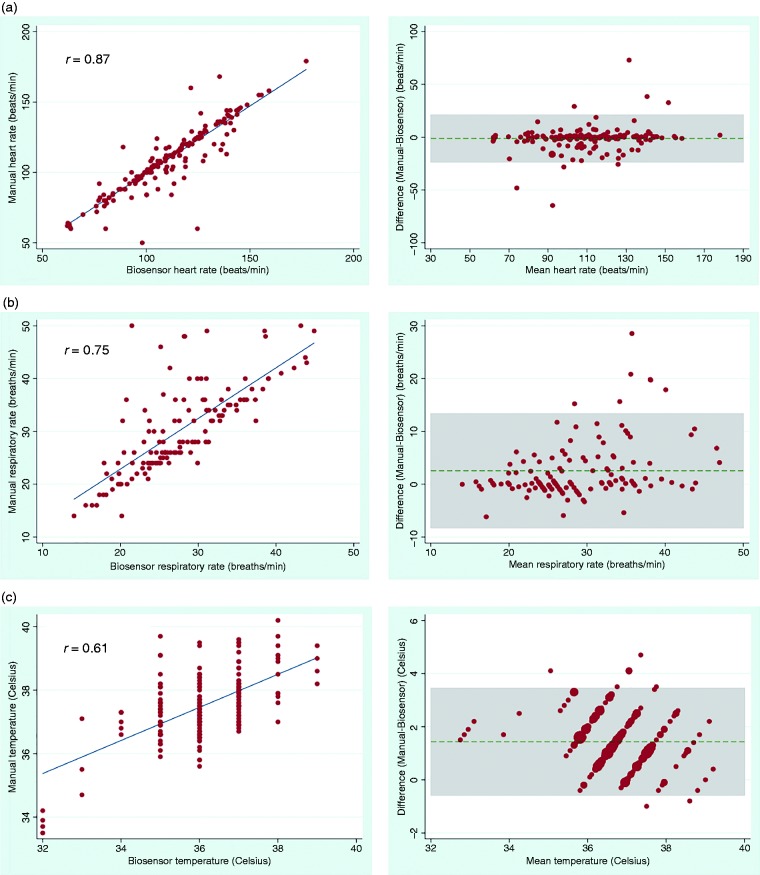
Objective: Critical care capabilities needed for the management of septic patients, such as continuous vital sign monitoring, are largely unavailable in most emergency departments (EDs) in low- and middle-income country (LMIC) settings. This study aimed to assess the feasibility and accuracy of using a wireless wearable biosensor device for continuous vital sign monitoring in ED patients with suspected sepsis in an LMIC setting. Methods: This was a prospective observational study of pediatric (≥2 mon) and adult patients with suspected sepsis at the Kigali University Teaching Hospital ED. Heart rate, respiratory rate and temperature measurements were continuously recorded using a wearable biosensor device for the duration of the patients’ ED course and compared to intermittent manually collected vital signs. Results: A total of 42 patients had sufficient data for analysis. Mean duration of monitoring was 32.8 h per patient. Biosensor measurements were strongly correlated with manual measurements for heart rate (r = 0.87, p < 0.001) and respiratory rate (r = 0.75, p < 0.001), although were less strong for temperature (r = 0.61, p < 0.001). Mean (SD) differences between biosensor and manual measurements were 1.2 (11.4) beats/min, 2.5 (5.5) breaths/min and 1.4 (1.0)°C. Technical or practical feasibility issues occurred in 12 patients (28.6%) although were minor and included biosensor detachment, connectivity problems, removal for a radiologic study or exam, and patient/parent desire to remove the device. Conclusions: Wearable biosensor devices can be feasibly implemented and provide accurate continuous heart rate and respiratory rate monitoring in acutely ill pediatric and adult ED patients with sepsis in an LMIC setting.
Overview
The claims and statistics of this paper haven’t been checked yet.
Free: it reads the open-access text and checks the first 5 claims that cite a source we can check. Create a free account to check every claim.
Integrity signals
Registry
Cites
Statistics
Figures
Verification
Claims the paper makes
The claims and statistics of this paper haven’t been checked yet.
Free: it reads the open-access text and checks the first 5 claims that cite a source we can check. Create a free account to check every claim.
Claims other papers make about this one
Each is checked against this paper’s own text: does it say what the citing paper says it does?
In the citing paper
“They further explained that the process of data gathering is simplified and automated, is less likely to contain errors, and has the potential to revolutionize digital health care [186].”
From Digital Health Technologies for Maternal and Child Health in Africa and Other Low- and Middle-Income Countries: Cross-disciplinary Scoping Review With Stakeholder Consultation (2023) · doi:10.2196/42161 · cites this paper as [186]
Self-check
Percentages, sums and reported differences re-computed from the paper’s own numbers.
The self-check needs the paper’s full text.
Citations
Cites
STATISTICAL METHODS FOR ASSESSING AGREEMENT BETWEEN TWO METHODS OF CLINICAL MEASUREMENT
Martin Bland, J., & Altman, D. (1986) · The Lancet · doi:10.1016/s0140-6736(86)90837-8 · Cited by 47,965
Bone, R. C., Balk, R. A., Cerra, F. B., Dellinger, R. P., Fein, A. M., Knaus, W. A., Schein, R. M. H., & Sibbald, W. J. (1992) · Chest · doi:10.1378/chest.101.6.1644 · Cited by 13,198 · cited 1×
“Suspected sepsis was defined as having two or more systemic inflammatory response syndrome criteria with suspected source of infection, and confirmation of suspected sepsis with the patients’ treating physician.(16) Verbal and written informed consent were obtained from the patient and/or their parent/guardian after e…”
MethodFleischmann, C., Scherag, A., Adhikari, N. K. J., Hartog, C. S., Tsaganos, T., Schlattmann, P., Angus, D. C., & Reinhart, K. (2016) · American Journal of Respiratory and Critical Care Medicine · doi:10.1164/rccm.201504-0781oc · Cited by 3,548 · cited 1×
“As sepsis mortality declines in high-income countries (HICs), this progress has yet to be translated to LMICs, where outcomes remain far poorer due to lack of resources.(1,3) Healthcare workers in LMICs often face major barriers to implementing recommended sepsis guidelines due to the prohibitive investments in infras…”
BackgroundValidation of a modified Early Warning Score in medical admissions
Subbe, C. P. (2001) · QJM · doi:10.1093/qjmed/94.10.521 · Cited by 1,762
Sample Size Requirements for Estimating Pearson, Kendall and Spearman Correlations
Bonett, D. G., & Wright, T. A. (2000) · Psychometrika · doi:10.1007/bf02294183 · Cited by 1,095 · cited 1×
“2, requiring at least 178 vital sign measurements using standard calculations from the statistical literature.(19,20) Assuming each participant had approximately four vital sign measurements during their ED course, a total of 45 patients was required to ensure significance.”
MethodAccuracy of wrist-worn heart rate monitors
Wang, R., Blackburn, G., Desai, M., Phelan, D., Gillinov, L., Houghtaling, P., & Gillinov, M. (2017) · JAMA Cardiology · doi:10.1001/jamacardio.2016.3340 · Cited by 386 · cited 1×
“The vast majority of prior studies evaluating wearable devices have taken place in highly controlled laboratory conditions in stable, healthy volunteers.(12,14) This study’s participants had highly varying ages and clinical acuity—including quite stable patients (often boarding while waiting for an inpatient bed) as w…”
BackgroundDuncan, H., Hutchison, J., & Parshuram, C. S. (2006) · Journal of Critical Care · doi:10.1016/j.jcrc.2006.06.007 · Cited by 381
Taenzer, A. H., Pyke, J. B., McGrath, S. P., & Blike, G. T. (2010) · Anesthesiology · doi:10.1097/aln.0b013e3181ca7a9b · Cited by 315
Baelani, I., Jochberger, S., Laimer, T., Otieno, D., Kabutu, J., Wilson, I., Baker, T., & Dünser, M. W. (2011) · Critical Care · doi:10.1186/cc9410 · Cited by 251
Sensitivity of the Pediatric Early Warning Score to Identify Patient Deterioration
Akre, M., Finkelstein, M., Erickson, M., Liu, M., Vanderbilt, L., & Billman, G. (2010) · Pediatrics · doi:10.1542/peds.2009-0338 · Cited by 238
Continuous Monitoring of Vital Signs Using Wearable Devices on the General Ward: Pilot Study
Weenk, M., van Goor, H., Frietman, B., Engelen, L. J., van Laarhoven, C. J., Smit, J., Bredie, S. J., & van de Belt, T. H. (2017) · JMIR mHealth and uHealth · doi:10.2196/mhealth.7208 · Cited by 223 · cited 1×
“The VP was selected due to its battery life, prior use in hospitalized patients and the authors’ familiarity with the device.(17,18) Data from the VP was continuously transmitted through Bluetooth connection to a Samsung Galaxy J3 smartphone running physIQ’s mobile application and subsequently transmitted from the sma…”
MethodContinuous Monitoring in an Inpatient Medical-Surgical Unit: A Controlled Clinical Trial
Brown, H., Terrence, J., Vasquez, P., Bates, D. W., & Zimlichman, E. (2014) · The American Journal of Medicine · doi:10.1016/j.amjmed.2013.12.004 · Cited by 211
Recommendations for sepsis management in resource-limited settings
Dünser, M. W., Festic, E., Dondorp, A., Kissoon, N., Ganbat, T., Kwizera, A., Haniffa, R., Baker, T., Schultz, M. J., & Global Intensive Care Working Group of the European Society of Intensive Care Medicine (2012) · Intensive Care Medicine · doi:10.1007/s00134-012-2468-5 · Cited by 176
The reliability of vital sign measurements
Edmonds, Z. V., Mower, W. R., Lovato, L. M., & Lomeli, R. (2002) · Annals of Emergency Medicine · doi:10.1067/mem.2002.122017 · Cited by 150 · cited 1×
“Additionally, numerous studies have described the difficulty in obtaining reliable RR measurements, even in the most controlled settings.(35,36) As diagnosis and management of pneumonia, the leading cause of child mortality worldwide, is largely based on RR in LMICs (using Integrated Management of Childhood Illness cr…”
BackgroundCardona, M., Prgomet, M., Turner, R. M., Nicholson, M., & Hillman, K. (2016) · International Journal of Clinical Practice · doi:10.1111/ijcp.12846 · Cited by 150
Strategies to Reduce Mortality from Bacterial Sepsis in Adults in Developing Countries
Cheng, A. C., West, T. E., Limmathurotsakul, D., & Peacock, S. J. (2008) · PLoS Medicine · doi:10.1371/journal.pmed.0050175 · Cited by 143
Wireless and continuous monitoring of vital signs in patients at the general ward
Weenk, M., Koeneman, M., van de Belt, T. H., Engelen, L. J. L. P. G., van Goor, H., & Bredie, S. J. H. (2019) · Resuscitation · doi:10.1016/j.resuscitation.2019.01.017 · Cited by 134 · cited 1×
“up to 10 h earlier than during standard nurse MEWS measurements.(27) A review of the current literature shows that only four studies have evaluated any form of wireless wearable technology in LMIC settings: one pilot study (conducted by two of this study’s authors) evaluating the use of a wearable device in patients w…”
BackgroundPrediction of human core body temperature using non-invasive measurement methods
Niedermann, R., Wyss, E., Annaheim, S., Psikuta, A., Davey, S., & Rossi, R. M. (2013) · International Journal of Biometeorology · doi:10.1007/s00484-013-0687-2 · Cited by 131 · cited 1×
“However, detection of trends in skin temperature measurement may prove valuable, and conversion of skin temperature to body temperature may also be possible.(44) There are few studies that have investigated the use of wearable sensors for continuous temperature measurement, with highly variable reports of accuracy (me…”
BackgroundBreteler, M. J. M., Huizinga, E., van Loon, K., Leenen, L. P. H., Dohmen, D. A. J., Kalkman, C. J., & Blokhuis, T. J. (2018) · BMJ Open · doi:10.1136/bmjopen-2017-020162 · Cited by 124 · cited 1×
“The VP was selected due to its battery life, prior use in hospitalized patients and the authors’ familiarity with the device.(17,18) Data from the VP was continuously transmitted through Bluetooth connection to a Samsung Galaxy J3 smartphone running physIQ’s mobile application and subsequently transmitted from the sma…”
MethodKroll, R. R., Boyd, J. G., & Maslove, D. M. (2016) · Journal of Medical Internet Research · doi:10.2196/jmir.6025 · Cited by 123
Global Health Care of the Critically Ill in Low-Resource Settings
Murthy, S., & Adhikari, N. K. (2013) · Annals of the American Thoracic Society · doi:10.1513/annalsats.201307-246ot · Cited by 117
Wireless patch sensor for remote monitoring of heart rate, respiration, activity, and falls
Chan, A. M., Selvaraj, N., Ferdosi, N., & Narasimhan, R. (2013) · 2013 35th Annual International Conference of the IEEE Engineering in Medicine and Biology Society (EMBC) · doi:10.1109/embc.2013.6610948 · Cited by 105 · cited 1×
“The vast majority of prior studies evaluating wearable devices have taken place in highly controlled laboratory conditions in stable, healthy volunteers.(12,14) This study’s participants had highly varying ages and clinical acuity—including quite stable patients (often boarding while waiting for an inpatient bed) as w…”
BackgroundHeart rate variability as predictor of mortality in sepsis: A prospective cohort study
de Castilho, F. M., Ribeiro, A. L. P., da Silva, J. L. P., Junior, V. A. N., & de Sousa, M. R. (2017) · PLoS ONE · doi:10.1371/journal.pone.0180060 · Cited by 102
Sun, G., Nakayama, Y., Dagdanpurev, S., Abe, S., Nishimura, H., Kirimoto, T., & Matsui, T. (2017) · International Journal of Infectious Diseases · doi:10.1016/j.ijid.2017.01.007 · Cited by 94
Toward wearable wireless thermometers for internal body temperature measurements
Popovic, Z. B., Momenroodaki, P., & Scheeler, R. (2014) · IEEE Communications Magazine · doi:10.1109/mcom.2014.6917412 · Cited by 89
A Systematic Review of Tools to Measure Respiratory Rate in Order to Identify Childhood Pneumonia
Ginsburg, A. S., Lenahan, J. L., Izadnegahdar, R., & Ansermino, J. M. (2018) · American Journal of Respiratory and Critical Care Medicine · doi:10.1164/rccm.201711-2233ci · Cited by 88
Hernandez-Silveira, M., Ahmed, K., Ang, S.-S., Zandari, F., Mehta, T., Weir, R., Burdett, A., Toumazou, C., & Brett, S. J. (2015) · BMJ Open · doi:10.1136/bmjopen-2014-006606 · Cited by 83
Chen, W., Dols, S., Oetomo, S. B., & Feijs, L. M. G. (2010) · International Conference on Body Area Networks · doi:10.1145/2221924.2221960 · Cited by 80
A “three delays” model for severe sepsis in resource-limited countries
Papali, A. C., McCurdy, M. T., & Calvello, E. J. B. (2015) · Journal of Critical Care · doi:10.1016/j.jcrc.2015.04.003 · Cited by 78 · cited 1×
“Continuous vital sign monitoring, a component of care widely available in HICs and highly valuable for management of septic patients, is largely unavailable in LMIC hospitals, with vital signs often being measured as infrequently as once per day due to human resource constraints.(8,9) Purely vital sign–driven protocol…”
BackgroundBohanon, F. J., Mrazek, A. A., Shabana, M. T., Mims, S., Radhakrishnan, G. L., Kramer, G. C., & Radhakrishnan, R. S. (2015) · The American Journal of Surgery · doi:10.1016/j.amjsurg.2015.06.002 · Cited by 73 · cited 1×
“The algorithms may further take advantage of non-conventional vital signs, such as HR variability, which have shown promising potential in predicting deterioration and mortality in septic patients.(49,50) Studies investigating use of these tools are currently being planned by this study’s authors.”
MethodPediatric Sepsis Guidelines: summary for resource-limited countries
Lodha, R., Chugh, K., Udani, S. V., Ranjit, S., Deopujari, S., Ramachandran, B., Uttam, R., Ali, U., Singhi, S., Khilnani, P., et al. (2010) · Indian Journal of Critical Care Medicine · doi:10.4103/0972-5229.63029 · Cited by 72
Current Developments in Wearable Thermometers
Tamura, T., Huang, M., & Togawa, T. (2018) · Advanced Biomedical Engineering · doi:10.14326/abe.7.88 · Cited by 65
Vital Signs Directed Therapy: Improving Care in an Intensive Care Unit in a Low-Income Country
Baker, T., Schell, C. O., Lugazia, E., Blixt, J., Mulungu, M., Castegren, M., Eriksen, J., & Konrad, D. (2015) · PLOS ONE · doi:10.1371/journal.pone.0144801 · Cited by 64 · cited 1×
“Purely vital sign–driven protocols have shown promise for reducing mortality in hypotensive intensive care unit patients in Tanzania, and heart rate (HR) normalization remains one of the most reliable signs of shock resolution in children.(10,11) Innovative, cost-effective methods for monitoring critically ill patient…”
BackgroundAluisio, A. R., Barry, M. A., Martin, K. D., Mbanjumucyo, G., Mutabazi, Z. A., Karim, N., Moresky, R. T., Nyinawankusi, J. D., Byiringiro, J. C., & Levine, A. C. (2018) · African Journal of Emergency Medicine · doi:10.1016/j.afjem.2018.10.002 · Cited by 52 · cited 1×
“Median ED length of stay is 1 d, although this can vary considerably due to overcrowding and boarding.(15) The adult ED is separated into zones by level of acuity: red (highest acuity), orange, yellow, and triage.”
BackgroundSelf-citationJacob, S. T., Lim, M., Banura, P., Bhagwanjee, S., Bion, J., Cheng, A. C., Cohen, H., Farrar, J., Gove, S., Hopewell, P., et al. (2013) · BMC Medicine · doi:10.1186/1741-7015-11-107 · Cited by 48
Steinhubl, S. R., Feye, D., Levine, A. C., Conkright, C., Wegerich, S. W., & Conkright, G. (2016) · BMJ Global Health · doi:10.1136/bmjgh-2016-000070 · Cited by 47 · cited 2×
“2, requiring at least 178 vital sign measurements using standard calculations from the statistical literature.(19,20) Assuming each participant had approximately four vital sign measurements during their ED course, a total of 45 patients was required to ensure significance.”
BackgroundMethodSelf-citationOgero, M. O., Ayieko, P., Makone, B., Julius, T., Malla, L., Oliwa, J. N., Irimu, G., & English, M. (2018) · Journal of Global Health · doi:10.7189/jogh.08.010409 · Cited by 47 · cited 1×
“A recent study among pediatric inpatients admitted to district-level hospitals in Kenya found that the frequency of vital sign measurements was far lower than the stated goal benchmark of three sets of vital sign measurements in a 24-h period.(34) Additionally, numerous studies have described the difficulty in obtaini…”
BackgroundAsiimwe, S. B., Okello, S., & Moore, C. C. (2014) · PLoS ONE · doi:10.1371/journal.pone.0089879 · Cited by 43 · cited 2×
“5 h earlier than standard vital sign monitoring; even greater gains are expected in other hospitals where vital signs are measured less frequently than at this study site.(9) These findings are similar to a 2019 study in the Netherlands which showed that measurements from a wearable device in a general ward detected h…”
BackgroundResultMugyenyi, G. R., Atukunda, E. C., Ngonzi, J. N. J., Boatin, A. A., Wylie, B. J., & Haberer, J. E. (2017) · BMC Pregnancy and Childbirth · doi:10.1186/s12884-017-1361-1 · Cited by 29 · cited 1×
“A review of the current literature shows that only four studies have evaluated any form of wireless wearable technology in LMIC settings: one pilot study (conducted by two of this study’s authors) evaluating the use of a wearable device in patients with suspected Ebola virus disease in Sierra Leone; and three studies…”
BackgroundProblems with the WHO guidelines for management of childhood pneumonia
Mulholland, K. (2017) · The Lancet Global Health · doi:10.1016/s2214-109x(17)30468-0 · Cited by 28
State of emergency medicine in Rwanda 2015: an innovative trainee and trainer model
Mbanjumucyo, G., DeVos, E., Pulfrey, S., & Epino, H. M. (2015) · International Journal of Emergency Medicine · doi:10.1186/s12245-015-0067-2 · Cited by 27 · cited 1×
“Notably, the KUTH EDs have implemented specialist residency training programs as well as quality improvement projects in recent years and as a result offer a high standard of care and level of organization, which may underestimate logistical issues for other LMIC hospitals.(42,43) Furthermore, the KUTH ED has a reliab…”
BackgroundSelf-citationSun, G., Okada, M., Nakamura, R., Matsuo, T., Kirimoto, T., Hakozaki, Y., & Matsui, T. (2018) · Clinical Case Reports · doi:10.1002/ccr3.1922 · Cited by 19 · cited 1×
“As new sensor technology for clinical applications continues to advance, it is also important to note that non-contact sensors, such as image-based complementary metal oxide semiconductor camera infrared thermography and medical radar systems, offer even further possibilities for remote vital sign monitoring and reduc…”
BackgroundPoor Agreement and Imprecision of Respiratory Rate Measurements in Children in a Low-Income Setting
Amirav, I., Masumbuko, C. K., & Hawkes, M. (2018) · American Journal of Respiratory and Critical Care Medicine · doi:10.1164/rccm.201807-1301le · Cited by 18 · cited 1×
“Additionally, numerous studies have described the difficulty in obtaining reliable RR measurements, even in the most controlled settings.(35,36) As diagnosis and management of pneumonia, the leading cause of child mortality worldwide, is largely based on RR in LMICs (using Integrated Management of Childhood Illness cr…”
BackgroundSaurabh, K., Rao, H., Amrutur, B. S., & Asokan, S. (2014) · International Conference on Biomedical Electronics and Devices · doi:10.5220/0004889901810186 · Cited by 13
Pipke, R. M., Wegerich, S., Saidi, A., & Stehlik, J. (2013) · Wireless Health · doi:10.1145/2534088.2534107 · Cited by 9
Self-citationTrying to Improve Sepsis Care in Low-Resource Settings
Machado, F. R., & Angus, D. C. (2017) · JAMA · doi:10.1001/jama.2017.10547 · Cited by 7 · cited 1×
“As sepsis mortality declines in high-income countries (HICs), this progress has yet to be translated to LMICs, where outcomes remain far poorer due to lack of resources.(1,3) Healthcare workers in LMICs often face major barriers to implementing recommended sepsis guidelines due to the prohibitive investments in infras…”
BackgroundByakika‐Kibwika, P., Muwonge, M., Watts, W., Kange, J., & Watts, R. (2016) · Annals of Global Health · doi:10.1016/j.aogh.2015.12.009 · Cited by 3
Research works printed but not linked: 3
- 26. Ngonzi J, Boatin A. A functionality and acceptability study of wireless maternal vital sign monitor in a tertiary university teaching hospital in rural Uganda. J Womens Health Gynecol 2017; 1: 1.
- 38. World Health Organization. Integrated Management of Childhood Illness chart booklet. WHO, 2017.
- 43. Byiringiro JC, Wong R, Davis C, et al. Applying quality improvement principles to improve accident and emergency department overcrowding and flow in Rwanda: a case study. J Hosp Adm 2015; 4: 47–51.
Cited by
Cesarean section one hundred years 1920–2020: the Good, the Bad and the Ugly
Antoine, C., & Young, B. K. (2021) · Journal of Perinatal Medicine · doi:10.1515/jpm-2020-0305 · Cited by 266
“CDs carry overall higher rates of maternal mortality and morbidity than vaginal deliveries [95, 96].”
Background(2023) · doi:10.2196/42161 · Cited by 106
“Other areas of health research in LMIC show a trend similar to these studies, including sensor and wearable technologies for remote patient monitoring [184], monitoring optimal health and nutrition [185], and measuring sepsis in patients in the emergency room [186].”
BackgroundThe Use of Wearable ECG Devices in the Clinical Setting: A Review
Kamga, P., Mostafa, R., & Zafar, S. (2022) · Current Emergency and Hospital Medicine Reports · doi:10.1007/s40138-022-00248-x · Cited by 94
Chan, P., Ryan, N. P., Chen, D. C., McNeil, J. J., & Hopper, I. (2022) · Anaesthesia · doi:10.1111/anae.15834 · Cited by 57
“When assessing respiratory rate, there was ratedependent bias in seven wearable device studies, with three of these having devices that would consistently underestimate respiratory rate at higher values [13, 21, 31].”
BackgroundWearable devices for patient monitoring in the intensive care unit
Angelucci, A., Greco, M., Cecconi, M., & Aliverti, A. (2025) · Intensive Care Medicine Experimental · doi:10.1186/s40635-025-00738-8 · Cited by 60
“There were nine significant vital signs changes in the enrolled population, and the WD detected them an average of 5.5 h earlier than standard intermittent monitoring, highlighting its potential utility in resource-constrained settings [16].”
Influential
Metadata
- Authors
- Garbern, S. C., Mbanjumucyo, G., Umuhoza, C., Sharma, V. K., Mackey, J., Tang, O., Martin, K. D., Twagirumukiza, F. R., Rosman, S. L., McCall, N., Wegerich, S. W., & Levine, A. C.
- Affiliations
- Brown University (US)
- University of Rwanda (RW)
- Michigan State University (US)
- Columbia University (US)
- Boston Children's Hospital (US)
- Yale University (US)
- physIQ, Inc., Chicago, USA
- Corresponding author
- Garbern, Stephanie C
- ORCID
- Venue
- DIGITAL HEALTH
- Publisher
- SAGE Publications
- Published
- 2019-01
- Volume
- 5
- Pages
- 2055207619879349-2055207619879349
- ISSN
- 2055-2076 (ISSN-L)
- PMC
- PMC6769214
- OpenAlex
- W2977396413
- Cited by
- 39
- References
- 47
- Citations by year
- 2026: 5 · 2025: 10 · 2024: 5 · 2023: 7 · 2022: 5 · 2021: 5 · 2020: 1
- FWCI
- 0.97
- Type
- journal article
- Language
- en
- Open access
- gold
- doi.org
- Licence
- cc-by-nc
- journals.sagepub.com/page/policies/text-and-data-mining-license (tdm)
- Locations
- Digital Health (publishedVersion, cc-by-nc)
- PubMed Central (publishedVersion, cc-by-nc)
- PubMed (publishedVersion)
- DOAJ (DOAJ: Directory of Open Access Journals) (submittedVersion, cc-by-sa)
- Funders
- Brown Emergency Medicine (701-7909)
- Topics
- Physical Sciences › Engineering › Biomedical Engineering › Non-Invasive Vital Sign Monitoring
- Health Sciences › Medicine › Critical Care and Intensive Care Medicine › Sepsis Diagnosis and Treatment
- Health Sciences › Medicine › Surgery › Healthcare Technology and Patient Monitoring
- Keywords
- wearable biosensors, continuous vital sign monitoring, sepsis, emergency department patients, heart rate, respiratory rate, body temperature, low- and middle-income countries, pediatric patients, intensive care, device feasibility, measurement accuracy
About these checks
Registry, retraction, Cites and statistics results are computed, not judged, with one exception: a printed reference that no index lists is read once by a model before it counts as a citation error. Claims are extracted by a model and kept only when their quote appears verbatim in the text; each cited source is then checked, with a model’s help, for whether it says what the claim relies on. Those verdicts can be wrong — read the claim’s quote and the cited source before relying on one.
Statistics and arithmetic are recomputed, not judged.
Confidence bands are shown only for fields calibrated on our annotated test set. None is calibrated yet, so no band is shown.
What counts as a claim ›How we measure confidence ›How we check this ›
Are you an author, or do you see a problem with this page? Request a review
Data sources
Bibliographic data: Semantic Scholar, OpenAlex, Crossref.
Contains information from the Semantic Scholar Academic Graph Datasets, made available under the ODC Attribution License (ODC-BY 1.0).
Semantic Scholar’s data is described in: Kinney, R., et al. (2023). The Semantic Scholar Open Data Platform. arXiv:2301.10140.
