

Artificial intelligence and the future of psychiatry: Qualitative findings from a global physician survey
Open accessThe DOI matches its Crossref record; 74 of the 74 references it cites were found in a registry or an index.
Abstract
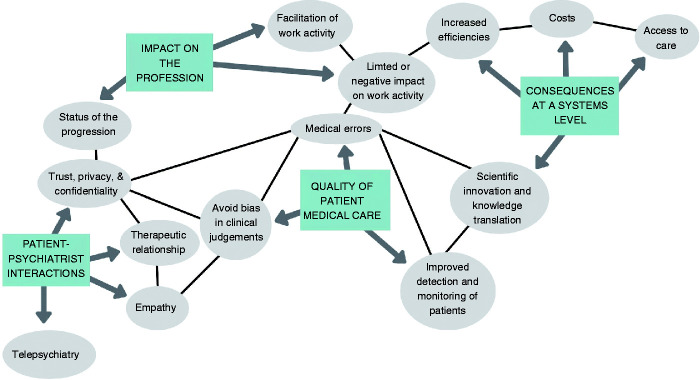
Background: The potential for machine learning to disrupt the medical profession is the subject of ongoing debate within biomedical informatics. Objective: This study aimed to explore psychiatrists’ opinions about the potential impact innovations in artificial intelligence and machine learning on psychiatric practice Methods: In Spring 2019, we conducted a web-based survey of 791 psychiatrists from 22 countries worldwide. The survey measured opinions about the likelihood future technology would fully replace physicians in performing ten key psychiatric tasks. This study involved qualitative descriptive analysis of written responses (“comments”) to three open-ended questions in the survey. Results: Comments were classified into four major categories in relation to the impact of future technology on: (1) patient-psychiatrist interactions; (2) the quality of patient medical care; (3) the profession of psychiatry; and (4) health systems. Overwhelmingly, psychiatrists were skeptical that technology could replace human empathy. Many predicted that ‘man and machine’ would increasingly collaborate in undertaking clinical decisions, with mixed opinions about the benefits and harms of such an arrangement. Participants were optimistic that technology might improve efficiencies and access to care, and reduce costs. Ethical and regulatory considerations received limited attention. Conclusions: This study presents timely information on psychiatrists’ views about the scope of artificial intelligence and machine learning on psychiatric practice. Psychiatrists expressed divergent views about the value and impact of future technology with worrying omissions about practice guidelines, and ethical and regulatory issues.
Overview
The claims and statistics of this paper haven’t been checked yet.
Free: it reads the open-access text and checks the first 5 claims that cite a source we can check. Create a free account to check every claim.
Integrity signals
Registry
Cites
Statistics
Figures
Verification
Claims the paper makes
The claims and statistics of this paper haven’t been checked yet.
Free: it reads the open-access text and checks the first 5 claims that cite a source we can check. Create a free account to check every claim.
Claims other papers make about this one
Each is checked against this paper’s own text: does it say what the citing paper says it does?
The cited source says what the claim attributes to it.
In the citing paper
“many studies reported an expected increase in overall efficiency [38, 41, 44, 45, 55, 56, 62, 67, 77–80] as a facilitating factor, a reduction in overall workload [82–84] or improved time management [52, 66].”
Self-check
Percentages, sums and reported differences re-computed from the paper’s own numbers.
The self-check needs the paper’s full text.
Citations
Cites
Using thematic analysis in psychology
Braun, V., & Clarke, V. (2006) · Qualitative Research in Psychology · doi:10.1191/1478088706qp063oa · Cited by 194,414 · cited 1×
“Descriptive content analysis was used to investigate these responses.(42,43) Responses were collated and imported into QCAmap (coUnity Software Development GmbH) for analysis.”
MethodPredicting the future - big data, machine learning, and clinical medicine
Obermeyer, Z., & Emanuel, E. J. (2016) · New England Journal of Medicine · doi:10.1056/nejmp1606181 · Cited by 3,652 · cited 4×
“Notwithstanding the wide spectrum of opinion, similar to the views of many experts, a dominant, overarching theme was speculation about a hybrid collaboration between ‘man and machine’ in undertaking psychiatric care.(18,25,26) Like informaticians, in particular, many participants highlighted the potential for AI in r…”
BackgroundInfluentialArtificial intelligence in healthcare
Yu, K.-H., Beam, A. L., & Kohane, I. S. (2018) · Nature Biomedical Engineering · doi:10.1038/s41551-018-0305-z · Cited by 2,817 · cited 1×
“Against the promise of pattern detection mediated by machine learning, many informaticians acknowledge that current AI is far from sufficient to fully undertake diagnostic decisions unaided, and significant breakthroughs will be necessary if machines are to avoid pitfalls in reasoning, and demonstrate causal and count…”
Background(2016) · Cited by 2,334
The Inevitable Application of Big Data to Health Care
Murdoch, T. B., & Detsky, A. S. (2013) · JAMA · doi:10.1001/jama.2013.393 · Cited by 1,664 · cited 2×
“Although a considerable number of participants conceived of clinical decisions as essentially and ineffably, a human “art”, biomedical informaticians argue that the ability to mine large scale health data for patterns in diagnosis and behavior is where machine learning presents unprecedented potential to disrupt diagn…”
BackgroundLin, L. Y., Sidani, J. E., Shensa, A., Radovic, A., Miller, E., Colditz, J. B., Hoffman, B. L., Giles, L. M., & Primack, B. A. (2016) · Depression and Anxiety · doi:10.1002/da.22466 · Cited by 1,111
Firth, J., Torous, J., Nicholas, J., Carney, R., Pratap, A., Rosenbaum, S., & Sarris, J. (2017) · World Psychiatry · doi:10.1002/wps.20472 · Cited by 1,097
Computer-based personality judgments are more accurate than those made by humans
Youyou, W., Kosinski, M., & Stillwell, D. (2015) · Proceedings of the National Academy of Sciences · doi:10.1073/pnas.1418680112 · Cited by 1,086 · cited 1×
“Going even further, and drawing on findings in the nascent field of affective computing, some informaticians speculate that in the long-term, computers may play a critical role in augmenting or replacing human-mediated empathy; for example, emerging studies suggest that under certain conditions, computers can surpass…”
Background(2019) · Cited by 986
Machine learning in medicine: Addressing ethical challenges
Vayena, E., Blasimme, A., & Cohen, I. G. (2018) · PLOS Medicine · doi:10.1371/journal.pmed.1002689 · Cited by 912 · cited 1×
“In light of high levels of patient interest in mental health apps, the effectiveness, reliability, and safety of machine learning technologies present serious ethical, legal, and regulatory considerations that require the sustained engagement of the psychiatric community.(72,73,76,77) So far, the efficacy and safety o…”
Background
Cited by
Sharma, A., Lin, I. W., Miner, A. S., Atkins, D. C., & Althoff, T. (2023) · Nature Machine Intelligence · doi:10.1038/s42256-022-00593-2 · Cited by 500
“One concern is that AI, if used in practice, may cause harm to multiple stakeholders from support seekers to care providers and peer supporters, through inappropriate interventions, role confusion and data sharing concerns 31,32,64 .”
BackgroundArtificially intelligent chatbots in digital mental health interventions: a review
Boucher, E. M., Harake, N. R., Ward, H. E., Stoeckl, S. E., Vargas, J., Minkel, J., Parks, A. C., & Zilca, R. (2021) · Expert Review of Medical Devices · doi:10.1080/17434440.2021.2013200 · Cited by 440
“are not often considered by psychiatrists when evaluating the role of AI in mental health [136].”
BackgroundArtificial intelligence technologies and compassion in healthcare: A systematic scoping review
Morrow, E., Zidaru, T., Ross, F., Mason, C., Patel, K. D., Ream, M., & Stockley, R. (2023) · Frontiers in Psychology · doi:10.3389/fpsyg.2022.971044 · Cited by 250
“There is a strong anticipation perspective relating to concerns about role replacement (Johnston, 2018; Blease et al., 2019; Bridge and Bridge, 2019; Powell, 2019; Blease et al., 2020; Doraiswamy et al., 2020; Alrassi et al., 2021) and which parts of healthcare practice, can and should be entrusted to AI technologies…”
BackgroundChen, M., Zhang, B., Cai, Z., Seery, S., Gonzalez, M. J., Ali, N. M., Ren, R., Qiao, Y., Xue, P., & Jiang, Y. (2022) · Frontiers in Medicine · doi:10.3389/fmed.2022.990604 · Cited by 258
Berardi, C., Antonini, M., Jordan, Z., Wechtler, H., Paolucci, F., & Hinwood, M. (2024) · BMC Health Services Research · doi:10.1186/s12913-023-10536-1 · Cited by 190
“There is a perceived risk of digital devices being hacked [42, 62, 100, 101, 106], and data being lost or stolen [97, 109].”
BackgroundInfluentialExploring the Ethical Challenges of Conversational AI in Mental Health Care: Scoping Review
Rahsepar Meadi, M., Sillekens, T., Metselaar, S., van Balkom, A., Bernstein, J., & Batelaan, N. (2025) · JMIR Mental Health · doi:10.2196/60432 · Cited by 211
“Concerns have also been raised about users manipulating or misusing CAI, for example, using it to reinforce unhealthy self-narratives [68] or to simulate illnesses [8] or modifying questions to elicit inappropriate responses, such as ChatGPT advising on medication use [66].”
InfluentialArtificial intelligence in psychiatry research, diagnosis, and therapy
Sun, J., Dong, Q., Wang, S.-W., Zheng, Y., Liu, X., Lu, T., Yuan, K., Shi, J., Hu, B., Hu, B., et al. (2023) · Asian Journal of Psychiatry · doi:10.1016/j.ajp.2023.103705 · Cited by 200
Jussupow, E., Spohrer, K., & Heinzl, A. (2022) · JMIR Formative Research · doi:10.2196/28750 · Cited by 138
“Although multiple studies have investigated attitudes toward AI [11-13], they did not consider how resistance attitudes toward AI are formed.”
BackgroundChatGPT and mental healthcare: balancing benefits with risks of harms
Blease, C., & Torous, J. (2023) · BMJ Mental Health · doi:10.1136/bmjment-2023-300884 · Cited by 122
Self-citationBlease, C., Worthen, A., & Torous, J. (2024) · Psychiatry Research · doi:10.1016/j.psychres.2024.115724 · Cited by 113
Self-citationTran, A. Q., Nguyen, L. H., Nguyen, H. S. A., Nguyen, C. T., Vu, L. G., Zhang, M., Vu, T. M. T., Nguyen, S. H., Tran, B. X., Latkin, C. A., et al. (2021) · Frontiers in Public Health · doi:10.3389/fpubh.2021.755644 · Cited by 87
“Participants were asked to respond using a 5-point Likert scale ranging from “strongly disagree” (1), “disagree” (2), “somewhat agree” (3), “agree” (4) to “strongly agree” (5).”
BackgroundMethodInfluentialBlease, C., Kharko, A., Bernstein, M., Bradley, C., Houston, M., Walsh, I., Hägglund, M., DesRoches, C., & Mandl, K. D. (2022) · BMJ Health & Care Informatics · doi:10.1136/bmjhci-2021-100480 · Cited by 81
Self-citationShinners, L., Aggar, C., Grace, S., & Smith, S. (2021) · DIGITAL HEALTH · doi:10.1177/20552076211003433 · Cited by 62
“A qualitative study measuring psychiatrists perceptions of AI role replacement, 32 found that their views were divergent about the value and impact of AI, but that it would never replace the relational aspects of psychiatric care.”
BackgroundPedro, A. R., Dias, M. B., Laranjo, L., Cunha, A. S., & Cordeiro, J. V. (2023) · PLOS ONE · doi:10.1371/journal.pone.0290613 · Cited by 74
THE ROLE OF TECHNOLOGY IN ENHANCING MENTAL HEALTH ADVOCACY: A SYSTEMATIC REVIEW
Okoro, Y. O., Ayo-Farai, O., Maduka, C. P., Okongwu, C. C., & Sodamade, O. T. (2024) · International Journal of Applied Research in Social Sciences · doi:10.51594/ijarss.v6i1.690 · Cited by 99
Publics’ views on ethical challenges of artificial intelligence: a scoping review
Machado, H., Silva, S., & Neiva, L. (2023) · AI and Ethics · doi:10.1007/s43681-023-00387-1 · Cited by 83
“…and/or sensitivity [52, 66, 90, 99]; isolation and fewer social connections [42, 47, 90]; laziness [50, 83]; anxious counterreactions [83, 99]; communication problems [90]; technology dependence [60]; plagiarism and cheating in education [50]; and becoming too emotionally attached to a robot [65].”
InfluentialRogan, J., Bucci, S., & Firth, J. (2024) · JMIR Mental Health · doi:10.2196/49577 · Cited by 63
“[ Participant in Blease et al [34] ] Having said this, it was proposed that allowing service users to submit data to clinicians, who could then respond with recommendations, would enable remote support and continuity of care, which could strengthen the therapeutic relationship [23].”
BackgroundMethodInfluentialZhang, M., Scandiffio, J., Younus, S., Jeyakumar, T., Karsan, I., Charow, R., Salhia, M., & Wiljer, D. (2023) · JMIR Formative Research · doi:10.2196/47847 · Cited by 67
“For example, our finding that negative or fearful perceptions of AI may be due to minimal exposure to it is in line with the findings of Blease et al [37], who discovered that differing levels of enthusiasm and fear in using AI may result from a lack of knowledge of it.”
ResultFazakarley, C.-A., Breen, M. A., Leeson, P., Thompson, B. T., & Williamson, V. (2023) · BMJ Open · doi:10.1136/bmjopen-2023-076950 · Cited by 75
Understanding Sophia? On human interaction with artificial agents
Fuchs, T. A. E. (2022) · Phenomenology and the Cognitive Sciences · doi:10.1007/s11097-022-09848-0 · Cited by 87
“20 The application of AI systems in psychiatry and psychotherapy is often justified with the prospect that they could help reach underserved populations in need of mental health services and promote patients’ self-management skills (Blease et al., 2020).”
Jain, G., Pareek, S., & Carlbring, P. (2024) · Internet Interventions · doi:10.1016/j.invent.2024.100745 · Cited by 74
“Initially, users might trust AI for its technical expertise, but over time, they may gravitate more towards human responses for more empathetic and personalized interactions (Blease et al., 2020; Doraiswamy et al., 2020).”
BackgroundBlease, C., Kharko, A., Annoni, M., Gaab, J., & Locher, C. (2021) · Frontiers in Public Health · doi:10.3389/fpubh.2021.623088 · Cited by 48
“In qualitative research, psychiatrists express divergent opinions on the benefits and harms of AI/ML in treating mental health patients with comments demonstrating scarce reflection of ethical and regulatory considerations for patient care (6).”
BackgroundSelf-citationHenzler, D., Schmidt, S., Koçar, A., Herdegen, S., Lindinger, G. L., Maris, M. T., Bak, M. A. R., Willems, D. L., Tan, H. L., Lauerer, M., et al. (2025) · BMC Health Services Research · doi:10.1186/s12913-025-12664-2 · Cited by 54
“AI's lack of empathy and human touch, considered essential in healthcare, can diminish this relationship [30, 32, 46, 47, 52, 77, 78, 82, 83].”
Stroud, A. M., Curtis, S., Weir, I. B., Stout, J., Barry, B. A., Bobo, W. V., Athreya, A. P., & Sharp, R. R. (2025) · JMIR Mental Health · doi:10.2196/64414 · Cited by 49
“Survey research on general AI applications [40] and on generative AI [30] in psychiatry has contributed high-level considerations for physician attitudes.”
Bibliometric analysis on the adoption of artificial intelligence applications in the e-health sector
Shaikh, A. K., Alhashmi, S. M., Khalique, N., Khedr, A. M., Raahemifar, K., & Bukhari, S. (2023) · Digital Health · doi:10.1177/20552076221149296 · Cited by 55
Huang, L. L., Chen, R. P., & Chan, K. W. (2024) · Journal of the Academy of Marketing Science · doi:10.1007/s11747-024-01017-w · Cited by 43
Cecil, J., Kleine, A., Lermer, E., & Gaube, S. (2025) · BMC Health Services Research · doi:10.1186/s12913-025-12715-8 · Cited by 48
“…by artificial intelligence (AI) are advancing and gaining relevance in the support and delivery of patient care, owing to their potential for improving patient outcomes through an early detection of mental disorders and personalized treatment [3], and facilitating the work of practitioners [4].”
Fazakarley, C.-A., Breen, M. A., Thompson, B. T., Leeson, P., & Williamson, V. (2024) · Digital Health · doi:10.1177/20552076241230075 · Cited by 38
“15,16,19,20,23,25,31 Additionally, there were fears that the vast data collection and storage needed for AI technology could place patients at risk of exploitation or extortion, 15,32 and these dangers needed to be considered when developing regulations.”
BackgroundHoose, S., & Králiková, K. (2024) · Administrative Sciences · doi:10.3390/admsci14090227 · Cited by 47
“The review included only papers where ethical approval was noted or where it could be well assumed that ethical approval or a corresponding statement had been received (Blease et al. 2020).”
Eastwood, K. W., May, R., Andreou, P., Abidi, S., Abidi, S. S. R., & Loubani, O. M. (2023) · BMC Health Services Research · doi:10.1186/s12913-023-09740-w · Cited by 36
Blease, C., Kharko, A., Sanchez, C. G., Alderman, J. E., Kumpunen, S., Sundemo, D. S., & Torous, J. (2025) · Journal of Medical Internet Research · doi:10.2196/74428 · Cited by 39
Self-citationUS primary care in 2029: A Delphi survey on the impact of machine learning
Blease, C., Kharko, A., Locher, C., DesRoches, C. M., & Mandl, K. D. (2020) · PLOS ONE · doi:10.1371/journal.pone.0239947 · Cited by 27
“In qualitative research a common prediction among physicians is that, by liberating health professionals from administrative tasks, AI/ML will indirectly facilitate more time with patients thereby enhancing levels of empathy [11, 15] Survey research also indicates skepticism among physicians that AI/ML will be able to…”
BackgroundSelf-citationImpact of artificial intelligence in transforming the doctor–cancer patient relationship
Heudel, P., Crochet, H., & Blay, J. (2024) · ESMO Real World Data and Digital Oncology · doi:10.1016/j.esmorw.2024.100026 · Cited by 33
“For example, Blease et al. explore clinicians ’ attitudes toward AI and the potential for deskilling 47,48 discussing the impact of AI on the skills of future doctors, improving their abilities with advanced tools or leading to a decline in crucial skills.”
Orlova, I. A., Akopyan, Z. A., Plisyuk, A. G., Tarasova, E. V., Borisov, E. N., Dolgushin, G. O., Khvatova, E. I., Grigoryan, M. A., Gabbasova, L. A., & Kamalov, A. A. (2023) · BMC Health Services Research · doi:10.1186/s12913-023-09493-6 · Cited by 27
“A close attitude to the prospects of using AI in medicine is demonstrated by medical specialists in other countries [19, 22].”
BackgroundGÜLTEKİN, M., & ŞAHİN, M. (2024) · Cyberpsychology Journal of Psychosocial Research on Cyberspace · doi:10.5817/cp2024-1-6 · Cited by 33
A Review of Converging Technologies in eHealth Pertaining to Artificial Intelligence
Pap, I. A., & Oniga, S. (2022) · International Journal of Environmental Research and Public Health · doi:10.3390/ijerph191811413 · Cited by 27
“Various legal and ethical issues may arise, leading to new challenges and concerns, such as AI and the future of psychiatry [64,65], whether or not AI can replace tasks that mental health practitioners perform, and how ethical aspects have received little attention.”
BackgroundEthical Dimensions of Digital Phenotyping Within the Context of Mental Healthcare
D’Alfonso, S., Coghlan, S., Schmidt, S., & Mangelsdorf, S. N. (2024) · Journal of Technology in Behavioral Science · doi:10.1007/s41347-024-00423-9 · Cited by 28
“…of digital phenotyping and the use of diagnostic and triaging apps among respondents contrasts with the predictions of biomedical informaticians who argue that apps and mobile technologies will play an increasing role in accumulating salient personal health information (Blease, 2020, p. 14).”
Sharif, L., Almabadi, R., Alahmari, A., Alqurashi, F., Alsahafi, F., Qusti, S. N., Akash, W., Mahsoon, A. N., Poudel, D. B., Sharif, K., et al. (2025) · Frontiers in Psychiatry · doi:10.3389/fpsyt.2025.1601456 · Cited by 28
General practitioners’ opinions of generative artificial intelligence in the UK: An online survey
Kharko, A., Sanchez, C. G., Hagström, J., Gaab, J., Locher, C., McMillan, B., Sundemo, D. S., & Blease, C. (2025) · Digital Health · doi:10.1177/20552076251360863 · Cited by 22
Self-citationStarke, G., Schmidt, B. R., Clercq, E. D., & Elger, B. S. (2022) · AI and Ethics · doi:10.1007/s43681-022-00177-1 · Cited by 27
“A recent evaluation of an online survey among psychiatrists in 22 countries found a surprising lack of engagement with AI ethics, reporting that only 9 out of a sample of 791 participants mentioned ethical considerations when asked about the impact of ML and AI on future psychiatric practice [21].”
BackgroundÇitil, E. T., & Canbay, F. Ç. (2022) · Health Care For Women International · doi:10.1080/07399332.2022.2055760 · Cited by 23
“Surprisingly, contrary to the known benefits of AI, the health professionals and patient groups who thought that AI threatened the position of professions, people’s happiness and safety were considerably a lot (Blease et al., 2019; 2020; Fiske et al., 2019; Gao et al., 2020; Kolanska et al., 2021).”
BackgroundInfluentialApplicability of denoising-based artificial intelligence to forecast the environmental externalities
Cai, D., Aziz, G., Sarwar, S., Alsaggaf, M. I., & Sinha, A. (2023) · Geoscience Frontiers · doi:10.1016/j.gsf.2023.101740 · Cited by 17
Weir, I. B., Stroud, A. M., Stout, J., Barry, B. A., Athreya, A. P., Bobo, W. V., & Sharp, R. R. (2025) · JMIR Mental Health · doi:10.2196/81970 · Cited by 17
“However, others acknowledge that AI tools might facilitate better communication with patients who have not experienced adequate rapport with providers in the past [13,24].”
Samiun, M., Rony, M. K. K., Yeasmin, S., Manik, M. M. T. G., Debnath, A., Aziz, M. B., Tasnim, A. F., & Nilima, S. I. (2025) · Discover Public Health · doi:10.1186/s12982-025-00814-0 · Cited by 18
“AI-assisted clinical decision support systems analyze patient history, medication responses, and genetic profiles to recommend optimal pharmacological and therapeutic interventions [38].”
Rogan, J., Firth, J., & Bucci, S. (2024) · Health Expectations · doi:10.1111/hex.70116 · Cited by 18
Ooi, P. B., & Wilkinson, G. G. (2024) · British Journal of Guidance and Counselling · doi:10.1080/03069885.2024.2373180 · Cited by 16
“…professionals towards the use of AI revealing some concerns about the lack of empathy of AI systems, data privacy, and potential loss of jobs (Blease et al., 2020), as well as the finding that those professionals involved in cognitive behavioural approaches appear more receptive to the idea…”
Levkovich, I., Rabin, E., Brann, M., & Elyoseph, Z. (2024) · Digital Health · doi:10.1177/20552076241294182 · Cited by 16
Faria, V., Goturi, N., Dynak, A., Talbert, C., Pondelis, N. J., Annoni, M., Blease, C., Holmes, S. A., & Moulton, E. A. (2025) · Frontiers in Psychology · doi:10.3389/fpsyg.2025.1612215 · Cited by 12
“…studies indicating that early genAI adoption in medicine is strongest in documentation-related tasks, and is driven by the desire to reduce administrative burden and free up time for direct patient care (Blease et al., 2020, 2022; Doraiswamy et al., 2020; Sharma B. et al., 2023; Shuaib, 2024).”
Self-citationBlease, C., Kharko, A., Bernstein, M., Bradley, C., Houston, M., Walsh, I., & D Mandl, K. (2023) · JMIR Medical Education · doi:10.2196/42639 · Cited by 10
Self-citationMotegi, M., Shino, M., Kuwabara, M., Takahashi, H., Matsuyama, T., Tada, H., Hagiwara, H., & Chikamatsu, K. (2025) · Scientific Reports · doi:10.1038/s41598-025-06769-1 · Cited by 10
Desafios Sociais e Éticos da Inteligência Artificial no Século XXI
Machado, H., & Silva, S. (2024) · UMinho Editora eBooks · doi:10.21814/uminho.ed.130 · Cited by 17
The future of psychiatry with artificial intelligence: can the man-machine duo redefine the tenets?
Sahoo, J. P., Narayan, B. N., & Santi, N. S. (2023) · Consortium Psychiatricum · doi:10.17816/cp13626 · Cited by 9
“This is another significant benefit of AI applications [5, 7].”
BackgroundArtificial Intelligence in Healthcare and Psychiatry
Krysta, K., Cullivan, R., Brittlebank, A. D., Dragašek, J., Hermans, M. H. M., Strkalj-Ivezić, S., van Veelen, N., & Dias, M. C. (2024) · Academic Psychiatry · doi:10.1007/s40596-024-02036-z · Cited by 8
“In a global survey by Blease et al. [8], psychiatrists expressed hope that AI would increase efficiencies, e.g., assist with administrative tasks but were skeptical about replacing human empathy.”
Nestor, B. A., Chimoff, J., Koike, C., Weitzman, E. R., Riley, B. L., Uhl, K., & Kossowsky, J. (2023) · Journal of Medical Internet Research · doi:10.2196/47781 · Cited by 7
“An inductive coding process [27], which is considered an efficient methodology for qualitative data, was used to conduct qualitative analysis of open-ended responses in Microsoft Excel (Microsoft Corp).”
Baseera, A., Scaria, J. M., Trivedi, A., Sharma, T., Yadav, A. M., & Nair, R. (2024) · IEEE International Conference on ICT in Business Industry & Government (ICTBIG) · doi:10.1109/ictbig64922.2024.10911856 · Cited by 7
“To eliminate algorithmic bias, researchers are trying to discover and correct dataset errors before they impair AI performance [8].”
Okesanya, O. J., Adebayo, U. O., Ngwoke, I., Agboola, A. O., Atewologun, F. A., Ajayi, S. B., Olaleke, N. O., Oso, T. A., & Lucero‐Prisno, D. E. (2025) · Exploration of Digital Health Technologies · doi:10.37349/edht.2025.101174 · Cited by 6
Albayrak, E., & Güler, K. G. (2026) · Issues in Mental Health Nursing · doi:10.1080/01612840.2025.2596210 · Cited by 5
“Another study of psychiatrists reported that future technology predicts potential harms to patients, lack of concern about ethical and regulatory issues, loss of communication with clinicians, and even harm (Blease et al., 2020).”
InfluentialКорнетов, А. Н. (2022) · Bulletin of Siberian Medicine · doi:10.20538/1682-0363-2022-2-175-185 · Cited by 6
Could Robots Empatize? A Review on The Employment of Social Robots in Mental Healthcare
GÜLTEKİN, M. (2022) · Türk Psikolojik Danışma ve Rehberlik Dergisi · doi:10.17066/tpdrd.1225040 · Cited by 6
Human AI: Ethics and broader impact for mental healthcare
Singh, S., Joshi, R., Jain, P., & Abilash, K. (2023) · Elsevier eBooks · doi:10.1016/b978-0-443-19096-4.00005-5 · Cited by 8
Sanchez, C. G., Kharko, A., Hägglund, M., Riggare, S. S., & Blease, C. (2025) · JMIR Research Protocols · doi:10.2196/73602 · Cited by 4
Self-citationAI Ethics Education in India: A Syllabus-Level Review of Computing Courses
Mittal, A. M., Parthasarathy, P. D., & Joshi, S. (2025) · Communications in computer and information science · doi:10.1007/978-3-032-14583-3_6 · Cited by 7
“Beyond technical failures, AI also raises deeper social challenges, such as job displacement [35], emotional detachment in care-related contexts [36], and ethical dilemmas like digital plagiarism [29].”
Social distance “nudge:” a context aware mHealth intervention in response to COVID pandemics
Ho, S. M., Liu, X., Seraj, M. S., & Dickey, S. L. (2022) · Computational and Mathematical Organization Theory · doi:10.1007/s10588-022-09365-0 · Cited by 4
The Future of Public Health through Science Fiction
Matas, J. D. (2022) · Humanities · doi:10.3390/h11050127 · Cited by 3
“(Key 2021, p. 210) Dr. Hairston’s turn to digital psychiatry imagines a loss of the therapeutic relationship including a lack of rapport and contact identified in the survey of psychiatrists (Blease et al. 2020, p. 6).”
BackgroundGruber, E. N., Zlatec, L. G., & Biočina, S. M. (2025) · Psychiatria Danubina · doi:10.24869/psyd.2025.141 · Cited by 4
From lecture hall to clinic: dental students’ AI readiness and anxiety across educational stages
Çakan, K. N., & İpek, İ. (2025) · BMC Medical Education · doi:10.1186/s12909-025-08181-9 · Cited by 5
Ethical aspects of the application of artificial intelligence in psychiatry
Stępień, M., & Silczuk, A. (2025) · Postępy Psychiatrii i Neurologii · doi:10.5114/ppn.2025.156785 · Cited by 3
“The lack of empathy and compassion that distinguishes an AI tool from high-quality professionals is another ethical issue that must not be neglected forgotten [43].”
Arab, A. H. (2026) · Frontiers in Human Dynamics · doi:10.3389/fhumd.2026.1722990 · Cited by 5
Mlakar, I., Šafran, V., Plohl, N., Kumperščak, H. G., Močnik, S., Smogavc, Ž., & Smrke, U. (2026) · PLOS Digital Health · doi:10.1371/journal.pdig.0001069 · Cited by 4
“…studies examining psychiatrists’ perceptions of AI-assisted/technology-mediated diagnostic tools show favorable ratings for efficiency and accessibility (typically above scale midpoints), but lower confidence ratings for clinical validity and integration with existing assessment protocols [45,46].”
Drapkina, Y. S., Makarova, N. P., Kalinin, A. P., & Smolnikova, V. Y. (2025) · Medical Opponent · doi:10.64831/2619-0001-2025.3.311016 · Cited by 3
Xu, C., Zhang, Y., Li, H., & Mao, Z. (2025) · Cyberpsychology Behavior and Social Networking · doi:10.1177/21522715251371092 · Cited by 4
“21,22 Ethical concerns include algorithmic bias, 23,24 technological dependency, 25 and data privacy.”
Emotional Robotics: Curse or Blessing in Psychiatric Care?
Al-Ameery-Brosche, I., & Resch, F. (2022) · Springer eBooks · doi:10.1007/978-3-031-04198-3_15 · Cited by 3
Risks of digitalization in mental health care
Volpe, U., Ramalho, R., & Gäebel, W. (2025) · Neuropsychiatrie · doi:10.1007/s40211-025-00551-5 · Cited by 2
Lavrentieva, O. (2025) · Alfred Nobel University Journal of Pedagogy and Psychology · doi:10.32342/3041-2196-2025-2-30-20 · Cited by 2
Kıraklı, E. K. (2022) · Turkish Journal of Oncology · doi:10.5505/tjo.2022.3613 · Cited by 2
Ahmed, N., Reagu, S. M., Alkhoori, S. A., Cherchali, A., Purushottamahanti, P., & Siddiqui, U. (2024) · Journal of Multidisciplinary Healthcare · doi:10.2147/jmdh.s475078 · Cited by 3
“68,103 For a greater move towards the use of electronic enablers in primary care in LMICs to facilitate improved diagnosis and monitoring, shared clinical decision-making, and truly patient-centred care, policy-level commitments are required to ensure the equitable delivery of affordable,…”
BackgroundSchwarz, J., Goer, V., Guzhova, O., Holtz, L., Muehlensiepen, F., & Blease, C. (2025) · doi:10.2196/preprints.83017 · Cited by 2
Self-citationAral, A., Gerdan, G., Usta, M. B., & Aral, A. E. (2025) · Frontiers in Psychiatry · doi:10.3389/fpsyt.2025.1668814 · Cited by 1
Xiong, Y., Zhai, Y., & Fulmer, R. (2026) · Journal of Counseling & Development · doi:10.1002/jcad.70044 · Cited by 1
Evaluating AI-based Mental Health Interventions
Sharma, A. (2026) · ACM eBooks · doi:10.1145/3749728.3749733 · Cited by 1
Clinicians’ Attitudes and Perceptions on the Adoption of AI in Mental Health Care: Scoping Review
Hudson, C., Phan, T. L., & Randall, M. (2026) · Journal of Medical Internet Research · doi:10.2196/92370 · Cited by 2
“AI was deemed most likely to impact administrative, documentation, and information processing tasks [25,26,29,30,33], while assessment, therapeutic engagement, and professional judgment were likely to remain unchanged [25,26,29,33,35].”
InfluentialPetrović, S. A., & Marić, N. P. (2022) · Medicinska istrazivanja · doi:10.5937/medi55-37718 · Cited by 2
“We agree with Blease et al. (62) that lacking adequate education on ML technology and its potential to impact the lives of patients, as well as many related ethical issues, future psychiatrists will be ill-equipped to steer mental health care in the right direction.”
BackgroundInfluentialEkellem, E. A. F. (2024) · doi:10.36227/techrxiv.170555330.07605038/v1 · Cited by 3
Yousafzai, A., Fatima, R., & Fatima, Z. (2025) · Research Square · doi:10.21203/rs.3.rs-7820094/v1 · Cited by 1
Shinners, L. (2023) · Cross Connect (Southern Cross University) · doi:10.25918/thesis.312 · Cited by 1
Jian Huang1, Y. W. (2024) · The Frontiers of Society Science and Technology · doi:10.25236/fsst.2024.060209
Bayrampour, H., & Lodo, L. (2024) · doi:10.2196/preprints.59388
Investigating Factors Shaping Future Doctors' Willingness to Adopt AI Diagnosis Support Systems
Mishra, M. K., & Upadhyaya, A. (2024) · SN Computer Science · doi:10.1007/s42979-024-02896-0 · Cited by 2
“The use of enormous datasets, cutting-edge machine learning, and deep learning techniques are what enable artificial intelligence to improve behavioral prediction and medical diagnosis [3, 4].”
Navigating ethical horizon: A dive into metaverse and analytics of things in healthcare system
Jasrotia, S. S., Kamila, M. K., & Kushwaha, P. S. (2024) · Elsevier eBooks · doi:10.1016/b978-0-443-24049-2.00001-7 · Cited by 1
Singh, B., Jermsittiparsert, K., Lal, S., & Arora, M. K. (2024) · Advances in human and social aspects of technology book series · doi:10.4018/979-8-3693-6190-0.ch018
Singh, B. (2024) · Advances in human and social aspects of technology book series · doi:10.4018/979-8-3693-6190-0.ch019
Huertas, J. L., de Vallejos, A. D. L. N. P., Zarate, L. F., & Malvaceda-Espinoza, E. (2025) · ECONDATA · doi:10.56205/econdata.1-1.3
“Es importante destacar que, aunque las IA aún no manejan habilidades blandas, los trabajadores deben mantenerse informados sobre las mismas (Bhargava et al., 2021; Blease et al., 2020).”
Reclik, M., Lubecka, E., Kwaśnica, B., Kożuch, A., Łosiewicz, A., & Krysta, K. (2025) · Journal of Technology in Behavioral Science · doi:10.1007/s41347-025-00506-1
Bayrampour, H., & Loro, L. (2025) · International Symposium on Medical Information and Communication Technology · doi:10.1109/ismict64722.2025.11059425 · Cited by 1
Artificial Intelligence in Mental Health Care: Less Hype, More Accountability
Dalvi-Garcia, F., Cardoso, E. C. S., Quagliato, L. A., & Nardi, A. E. (2025) · Trends in Psychiatry and Psychotherapy · doi:10.47626/2237-6089-2025-1203
Orlova, I. A., Akopyan, Z. A., Plisyuk, A. G., Tarasova, E. V., Борисов, Е. Н., Dolgushin, G. O., Khvatova, E. I., Grigoryan, M. A., Адыгамовна, Г. Л., & Kamalov, A. A. (2024) · Figshare · doi:10.6084/m9.figshare.26603956
Akanbi, A. (2025) · Machine Learning Research · doi:10.11648/j.mlr.20251002.17
Human–AI Collaboration to Support Mental Health and Well-Being
Sharma, A. (2026) · ACM eBooks · doi:10.1145/3749728 · Cited by 1
Metadata
- Authors
- Blease, C., Locher, C., Leon-Carlyle, M., & Doraiswamy, M.
- Affiliations
- University College Dublin (IE)
- University of Basel (CH)
- University of Toronto (CA)
- Departments of Psychiatry and Behavioral Science, and Medicine, Duke University Medical School, Durham, NC, USA
- Corresponding author
- Blease, C
- Venue
- DIGITAL HEALTH
- Publisher
- SAGE Publications
- Published
- 2020-01
- Volume
- 6
- Pages
- 2055207620968355-2055207620968355
- ISSN
- 2055-2076 (ISSN-L)
- PMC
- PMC7597571
- OpenAlex
- W2981836947
- Cited by
- 121
- References
- 73
- Citations by year
- 2026: 29 · 2025: 26 · 2024: 29 · 2023: 17 · 2022: 15 · 2021: 4 · 2020: 1
- FWCI
- 2.72
- Type
- journal article
- Language
- en
- Open access
- gold
- doi.org
- Licence
- Locations
- Digital Health (publishedVersion, cc-by-nc)
- PubMed Central (publishedVersion, cc-by-nc)
- PubMed (publishedVersion)
- arXiv (Cornell University) (submittedVersion)
- DOAJ (DOAJ: Directory of Open Access Journals) (submittedVersion, cc-by-sa)
- arXiv (Cornell University)
- Sage Journals Data (cc-by)
- Funders
- Irish Research Council-Marie Skłodowska-Curie Actions (CLNE/2017/226)
- Topics
- Health Sciences › Medicine › Health Informatics › Artificial Intelligence in Healthcare and Education
- Physical Sciences › Computer Science › Artificial Intelligence › Ethics and Social Impacts of AI
- Health Sciences › Health Professions › Health Information Management › Artificial Intelligence in Healthcare
- Keywords
- artificial intelligence in psychiatry, machine learning, psychiatrists' attitudes, access to mental health care, health care costs, future of psychiatry
About these checks
Registry, retraction, Cites and statistics results are computed, not judged, with one exception: a printed reference that no index lists is read once by a model before it counts as a citation error. Claims are extracted by a model and kept only when their quote appears verbatim in the text; each cited source is then checked, with a model’s help, for whether it says what the claim relies on. Those verdicts can be wrong — read the claim’s quote and the cited source before relying on one.
Statistics and arithmetic are recomputed, not judged.
Confidence bands are shown only for fields calibrated on our annotated test set. None is calibrated yet, so no band is shown.
What counts as a claim ›How we measure confidence ›How we check this ›
Are you an author, or do you see a problem with this page? Request a review
Data sources
Bibliographic data: Semantic Scholar, OpenAlex, Crossref.
Contains information from the Semantic Scholar Academic Graph Datasets, made available under the ODC Attribution License (ODC-BY 1.0).
Semantic Scholar’s data is described in: Kinney, R., et al. (2023). The Semantic Scholar Open Data Platform. arXiv:2301.10140.
