

Educating Future Physicians in Artificial Intelligence (AI): An Integrative Review and Proposed Changes
Open accessThe DOI matches its Crossref record; 54 of the 55 references it cites were found in a registry or an index, and 1 are not checked yet; 15 of the 51 sources its claims cite were checked for support.
Abstract
BACKGROUND: As medicine and the delivery of healthcare enters the age of Artificial Intelligence (AI), the need for competent human–machine interaction to aid clinical decisions will rise. Medical students need to be sufficiently proficient in AI, its advantages to improve healthcare's expenses, quality, and access. Similarly, students must be educated about the shortfalls of AI such as bias, transparency, and liability. Overlooking a technology that will be transformative for the foreseeable future would place medical students at a disadvantage. However, there has been little interest in researching a proper method to implement AI in the medical education curriculum. This study aims to review the current literature that covers the attitudes of medical students towards AI, implementation of AI in the medical curriculum, and describe the need for more research in this area. METHODS: An integrative review was performed to combine data from various research designs and literature. Pubmed, Medline (Ovid), GoogleScholar, and Web of Science articles between 2010 and 2020 were all searched with particular inclusion and exclusion criteria. Full text of the selected articles was analyzed using the Extension of Technology Acceptance Model and the Diffusions of Innovations theory. Data were successively pooled together, recorded, and analyzed quantitatively using a modified Hawkings evaluation form. The Preferred Reporting Items for Systematic Reviews and Meta-Analyses was utilized to help improve reporting. RESULTS: A total of 39 articles meeting inclusion criteria were identified. Primary assessments of medical students attitudes were identified (n = 5). Plans to implement AI in the curriculum for the purpose of teaching students about AI (n = 6) and articles reporting actual implemented changes (n = 2) were assessed. Finally, 26 articles described the need for more research on this topic or calling for the need of change in medical curriculum to anticipate AI in healthcare. CONCLUSIONS: There are few plans or implementations reported on how to incorporate AI in the medical curriculum. Medical schools must work together to create a longitudinal study and initiative on how to successfully equip medical students with knowledge in AI.
Verified 2026-10-07 · 1 reference not checked yet
Overview
CoChat Summary
TL;DR
This integrative review found that although the literature broadly agrees AI should be taught in undergraduate medical education, there is little actual curriculum planning or implementation. The authors call for a national, multiinstitutional longitudinal initiative to equip future physicians with AI knowledge.
Key findings
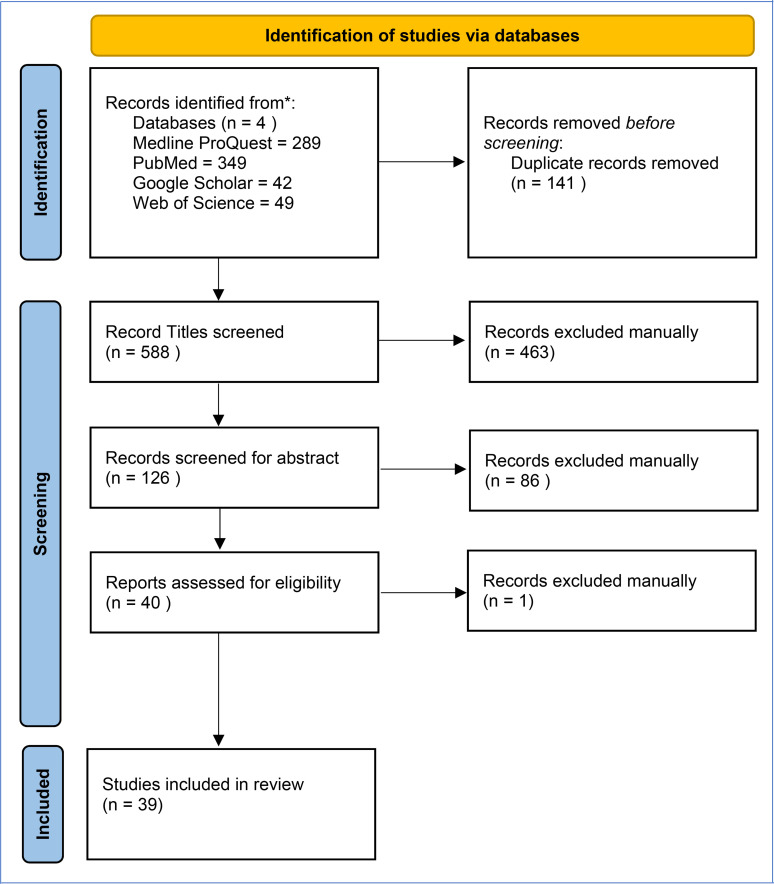
- The search yielded 729 articles, 588 after duplicate removal, and 39 articles meeting inclusion criteria.
- Relevance scoring found 26 articles calling for change with speculative reform, 5 assessing student/faculty attitudes, 6 with thorough curriculum plans, and 2 reporting implemented curriculum change or institutional programs.
- The 2 implemented changes were pilot programs for individual students, not changes to an entire medical school or medical class; there was no indication of published follow-up on the 6 curriculum plans.
- Lack of AI knowledge among medical school faculty was identified as the single most important hindrance to incorporating AI into the curriculum; one cited 2015 publication noted 30% of surveyed US medical students had interest in clinical informatics but could not identify training opportunities.
Methods
- Integrative review using PRISMA, searching Pubmed, Medline (Ovid), GoogleScholar, and Web of Science for English-language experimental and nonexperimental articles from 2010 to 2020, with key terms combining AI/artificial intelligence/machine learning, medical education/undergraduate medical education, and curriculum/learning/teaching.
- Two authors independently screened articles for inclusion and exclusion, with a third author resolving discrepancies; full texts were analyzed using the Extension of Technology Acceptance Model and the Diffusions of Innovations theory.
- Data were pooled, recorded, and analyzed quantitatively using a modified Hawkings evaluation form, and articles were scored on a 4-point relevance scale: 1—call for change with speculative reform, 2—student and faculty attitudes, 3—thorough curriculum change plans, 4—implemented curriculum change or institutional programs.
Limitations
- Stated by the authors: limited databases searched and limited search queries; they accounted for this by checking included studies’ references, and tried to limit bias in relevance scoring by using a third author and discussing discrepancies.
- Evident from the text: among the 6 articles with proposed curriculum changes, there was no evidence-based method backing the proposals, and among the 2 implemented changes there were no prior studies researching what students hoped to gain or what methods would be most effective.
- Evident from the text: the review found no institutional comprehensive studied and researched initiatives, and the authors note that further research is required to investigate the status or effects of innovative educational programs in each medical school.
Model-written summary. Check it against the paper before relying on it.
Integrity signals
Registry
Cites
Statistics
Figures
Verification
Claims the paper makes
7 Valid · 1 Not valid · 22 Not checked · 23 Own results and interpretations
The sources with a verdict support this claim; the rest weren’t checked yet, have no full text we could read, or their verdicts aren’t rated yet.
In the paper
“Already strained under a regular medical school curriculum, accumulating dynamically changing information without proper aid will present an unprecedented challenge in medical education and medical careers.5,6”
§ Educating Future Physicians in Artificial Intelligence (AI): An Integrative Review and Proposed Changes > Introduction > Trends in Healthcare
What the sources say
- Not checked yetcites [5] Sanal MG Paul K Kumar S Ganguly NK. Artificial intelligence and deep learning: the future of medicine and medical practice. J Assoc Physicians India. 2019; 67(4): 71– 73. https://login.ezproxy.fau.edu/login?url=https://search.proquest.com/docview/2258734066?accountid=10902. 31309802
- Supportedcites [6] Wartman SA Combs CD. Reimagining medical education in the age of AI. AMA J Ethics. 2019; 21(2): 146– 152. doi: 10.1001/amajethics.2019.146.. 30794124 source
The Information Overload discussion (indexed under Abstract; page not supplied) describes a crisis caused by both the volume of medical knowledge and the rapidity of its increase. The Medicine and AI section says medical curricula should shift from information acquisition to knowledge management, supporting the claim that learners and physicians need better ways to handle changing information. (LLM, conf=0.90)
plainstates a cause- Asserted: passes — The authors put it forward as true.
- Checkable: passes — It can be checked against evidence.
- Load-bearing: passes — The paper’s conclusions depend on it.
- Based: passes — The paper gives a reason why it holds.
- Rests on an assumption not shown here.
The cited sources support only part of this claim — read each source’s verdict below.
In the paper
“Ultimately, physicians roles are changing due to the superior efficacy of AI in dealing with many established physician practices, 15 chemical synthesis planning, and drug discovery.”
§ Educating Future Physicians in Artificial Intelligence (AI): An Integrative Review and Proposed Changes > Introduction > Rise of AI
What the sources say
- Partly supportedcites [15] Chen J. Playing to our human strengths to prepare medical students for the future. Korean J Med Educ. 2017; 29(3): 193– 197. 10.3946/kjme.2017.65 28870022 PMC5583434 sourceExperimental — accuracy not yet measured
In “Medical practice: a brave new world,” Chen says AI may take over diagnosis and that technology is changing doctors’ roles. The cited example finds that computers identified malignant skin lesions as accurately as dermatologists, not with superior efficacy across many established physician practices. Citation 15 appears after that part of the sentence, so the later claims about chemical synthesis and drug discovery are not assessed here. (LLM, conf=0.86)
plainstates a cause- Asserted: passes — The authors put it forward as true.
- Checkable: passes — It can be checked against evidence.
- Load-bearing: passes — The paper’s conclusions depend on it.
- Based: passes — The paper gives a reason why it holds.
- Partly supported
The cited sources support only part of this claim — read each source’s verdict below.
In the paper
“Based on our results of the previous literature, we found that the lack of knowledge in AI among medical school faculty is the single most important hindrance in incorporating it among the curriculum.34,47,49,55”
§ Educating Future Physicians in Artificial Intelligence (AI): An Integrative Review and Proposed Changes > Discussion > Lack of Implementation
What the sources say
- Could not verifycites [34] Han ER Yeo S Kim MJ Lee YH Park KH Roh H. Medical education trends for future physicians in the era of advanced technology and artificial intelligence: an integrative review. BMC Med Educ. 2019; 19(1). doi: 10.1186/s12909-019-1891-5. PMC6907217 31829208 sourceExperimental — accuracy not yet measured
Our copy of Han et al. (2019) contains no statement about medical school faculty lacking AI knowledge, nor any ranking of barriers to curriculum integration: searched 'faculty lack of knowledge AI barrier', 'barriers/challenges implementing technology', 'faculty training / digital literacy', 'AI curriculum integration challenges'. The only AI-specific content is the Discussion's caution that computer-based learning and AI algorithms may be biased [59, 60] and a recommendation for further study to 'develop a critical digital literacy curriculum' — neither attributes a hindrance to faculty. Decisively, the Discussion (limitations) states that innovative methods such as the application of artificial intelligence in medical education 'may not be published and hence not included in this study', so the review reports no findings on AI implementation barriers at all; the theme table (Results) likewise lists only four trends with no barrier category. Absence of the point here is not contradiction, so the attribution cannot be checked against this source. (LLM, conf=0.70)
- Not checked yetcites [47] Fan KY Hu R Singla R. Introductory machine learning for medical students: a pilot. Med Educ. 2020; 54(11): 1042– 1043. doi: 10.1111/medu.14318. 32862464 source
- Partly supportedcites [49] Briganti G Le Moine O. Artificial intelligence in medicine: today and tomorrow. Front Med. 2020; 7(February): 1– 6. doi: 10.3389/fmed.2020.00027. PMC7012990 32118012 sourceExperimental — accuracy not yet measured
The Introduction (Section 1) of Briganti & Le Moine (2020) does attribute resistance to augmented medicine partly to 'unpreparedness as to the potential of digital medicine ... due to the evident lack of basic and continuing education regarding this discipline,' and Section 3.3 ('The Need to Educate Augmented Doctors') plus Section 3.5 call for a major revision/upgrading of the medical curriculum and ongoing retraining of graduated physicians. However, the paper presents this as the FIRST OF FOUR co-listed, 'widely discussed' reasons (alongside administrative burden from EHRs, fear of AI replacing physicians, and the absence of a liability framework) and never ranks lack of education as the single most important hindrance. It also speaks of physicians, trainees and 'future medical leaders' rather than of medical school faculty specifically, so the superlative and the faculty-specific attribution are not supported by our copy. (LLM, conf=0.78)
- Partly supportedcites [55] Masters K. Artificial intelligence developments in medical education: a conceptual and practical framework. MedEdPublish. 2020; 9(1): 1– 20. doi: 10.15694/mep.2020.000239.1. PMC10697470 38058891 sourceExperimental — accuracy not yet measured
The Abstract of Masters (2020) does support the substance of the hindrance: 'Most medical education administrators and educators are aware of AI, but are not necessarily familiar enough with it to understand the areas of possible application... they are at a disadvantage of not understanding the current lie of the land, and are at an even greater disadvantage of not being able to influence and guide future AI projects.' However, nowhere in our copy does the paper rank this as the 'single most important' hindrance; it is a conceptual/practical framework paper that lists several obstacles without prioritising them — e.g. 'The Framework' section ('it is unlikely that medical schools will have the expertise to implement all of these and simultaneously') and 'Content to be Taught' ('It is a truism, however, that medical curricula are already overloaded... The difficult task will be removing items from the curriculum as these new items are inserted'). The superlative claim of primacy, and the pooling of this with three other citations to assert a single dominant barrier, is therefore not supported by this source. (LLM, conf=0.72)
plainstates a cause- Asserted: passes — The authors put it forward as true.
- Checkable: passes — It can be checked against evidence.
- Load-bearing: passes — The paper’s conclusions depend on it.
- Based: passes — The paper gives a reason why it holds.
- Could not verify
The sources with a verdict support this claim; the rest weren’t checked yet, have no full text we could read, or their verdicts aren’t rated yet.
In the paper
“Of the 6 articles mentioning plans for curricular change, there is no indication of published articles following up on these plans.38,44,50,51”
§ Educating Future Physicians in Artificial Intelligence (AI): An Integrative Review and Proposed Changes > Discussion > Lack of Implementation
What the sources say
- Supportedcites [38] Kang J Thompson RF Aneja S, et al. National cancer institute workshop on artificial intelligence in radiation oncology: training the next generation. Pract Radiat Oncol. Published online June 13, 2020. 10.1016/j.prro.2020.06.001 PMC7293478 32544635 source
In AP2: Implement Practical Didactic Curriculum, the paper proposes a curriculum draft for medical physics and radiation oncology trainees, so it is an example of an article mentioning plans for curricular change. The statement about no published follow-up is the citing authors’ assessment across the six articles, not a finding attributed to this source. (LLM, conf=0.88)
- Not checked yetcites [44] Carin L. On artificial intelligence and deep learning within medical education. Acad Med. Published online August 4, 2020. 10.1097/ACM.0000000000003630 32769462 source
- Could not verifycites [50] Paranjape K Schinkel M Panday RN Car J Nanayakkara P. Introducing artificial intelligence training in medical education. J Med Internet Res. 2019; 21(12). doi: 10.2196/16048. PMC6918207 31793895 sourceExperimental — accuracy not yet measured
The Practical Considerations section says that AI curriculum changes had not yet reached the implementation stage, but it does not count six articles or discuss whether their plans received published follow-up. Searches for curricular-change plans and follow-up publications found no passage addressing that claim. (LLM, conf=0.75)
- Not checked yetcites [51] Wartman SA Donald Combs C. Medical education must move from the information age to the age of artificial intelligence. Acad Med. 2018; 93(8): 1107– 1109. doi: 10.1097/ACM.0000000000002044. 29095704 source
plain- Asserted: passes — The authors put it forward as true.
- Checkable: passes — It can be checked against evidence.
- Load-bearing: passes — The paper’s conclusions depend on it.
- Based: passes — The paper gives a reason why it holds.
- Supported
The cited sources support only part of this claim — read each source’s verdict below.
In the paper
“Similarly, among the 6 articles with proposed changes to medical curriculum, there was no evidence-based method backing these proposals.40,54”
§ Educating Future Physicians in Artificial Intelligence (AI): An Integrative Review and Proposed Changes > Discussion > What is the Best way Forward?
What the sources say
- Partly supportedcites [40] Hasan Sapci A Aylin Sapci H. Artificial intelligence education and tools for medical and health informatics students: systematic review. JMIR Med Educ. 2020; 6(1). doi: 10.2196/19285. PMC7367541 32602844 sourceExperimental — accuracy not yet measured
Sapci et al.'s Results (OCEBM paragraph) state that of 26 included articles 18 (69%) were Level IV (case series) and 8 (31%) Level V (expert opinions), "considered poor reference standards", and Table 2 explicitly flags curriculum-recommending papers as unsupported (Wartman and Combs 2019 [32]: "This commentary article summarized the authors' perspective and did not provide supporting evidence"; Conde et al [25]: "the paper did not provide any evidence"), so the direction of the claim — curriculum proposals lacking evidence-based backing — is in our copy. However, our copy nowhere enumerates "6 articles with proposed changes to the medical curriculum": it identifies 10 Category 2 (AI education) publications and names curriculum-proposing works individually (Park [31], Wartman and Combs [32,33], Beregi [34], Kolachalama and Garg [30], Paranjape [39], Masters [36]) without giving that count or restricting the evidence-level finding to them. The Discussion Overview likewise states only that "the majority of studies were classified as Level IV and V". The specific number 6 and the attribution of the evidence gap to that subset are not supported by this source. (LLM, conf=0.70)
- Could not verifycites [54] Lang J Repp H. Artificial intelligence in medical education and the meaning of interaction with natural intelligence – an interdisciplinary approach. GMS J Med Educ. 2020; 37: Doc59. doi: 10.3205/zma001352. PMC7672386 33225051 sourceExperimental — accuracy not yet measured
Our copy of Lang, Repp & Rapp (10.3205/zma001352) is a short GMS project description of the interdisciplinary SciTecMed/NWTmed AI teaching course at JLU Giessen: the Abstract, Description, Results, Discussion and Conclusion report 47 participants, a Likert-scale self-assessment of knowledge (2.3 to 3.8) and student interest, and the general statement that AI is 'not yet sufficiently represented in medical education'. No passage reports a review or count of '6 articles' proposing curriculum changes, nor any appraisal of whether such proposals were backed by evidence-based methods (searched: 'six articles proposed changes to the medical curriculum no evidence-based method', 'six publications analyzed curriculum proposals lacked evidence', 'literature review of studies on AI in medical curriculum evidence', 'NKLM learning objectives review of literature'). The paper's reference list ([1]-[8]) contains no such analysis either, so nothing in our copy supports or contradicts the attributed finding. (LLM, conf=0.70)
plain- Asserted: passes — The authors put it forward as true.
- Checkable: passes — It can be checked against evidence.
- Load-bearing: passes — The paper’s conclusions depend on it.
- Based: passes — The paper gives a reason why it holds.
- Partly supported
15 more claims
Create a free account to see all 53 claims and to verify the 36 references still open.
- Probably not a substantial claim. 26
- It may state two separate claims as one. 10
Claims other papers make about this one
Each is checked against this paper’s own text: does it say what the citing paper says it does?
The source backs part of the claim, not all of it — or backs it for a different population, condition or comparison.
In the citing paper
“Overall, this includes learning the AI terminology [13,37,45], strengths and limitations of AI [12,13,16,37,42], risks of AI [12,13,17,37,39,42], controlling for bias [42], critical appraisal AI literature and tools [12,13,34,37,39,45,46], and shared decision-making [12,13,37,41,45].”
From An evidence-based approach to artificial intelligence education for medical students: A systematic review (2023) · cites this paper as [42]
Experimental — accuracy not yet measuredThe source backs part of the claim, not all of it — or backs it for a different population, condition or comparison.
In the citing paper
“Eleven studies suggest that physicians should understand the role of data science in AI [12,13,16,37,39,41,42,45].”
From An evidence-based approach to artificial intelligence education for medical students: A systematic review (2023) · cites this paper as [42]
Experimental — accuracy not yet measuredThe source backs part of the claim, not all of it — or backs it for a different population, condition or comparison.
In the citing paper
“Three key types of communication were identified: communication for clinical decision-making [13], communication for implementation [13,37], and communication for knowledge dissemination [12,13,37,41,42].”
From An evidence-based approach to artificial intelligence education for medical students: A systematic review (2023) · cites this paper as [42]
Experimental — accuracy not yet measuredThe source backs part of the claim, not all of it — or backs it for a different population, condition or comparison.
In the citing paper
“This would equip them with the skills needed to critically appraise AI literature and tools before implementing them [12,13,34,37,39], interpret model output [13,37,42], and communicate AI findings to others [12,13,42].”
From An evidence-based approach to artificial intelligence education for medical students: A systematic review (2023) · cites this paper as [42]
Experimental — accuracy not yet measuredThe source backs part of the claim, not all of it — or backs it for a different population, condition or comparison.
In the citing paper
“Although other publications acknowledge the importance of ethics in AI education, they do not provide specific content or guidance [36-39].”
From Proposing a Principle-Based Approach for Teaching AI Ethics in Medical Education (2024) · cites this paper as [36]
Experimental — accuracy not yet measured
9 more claims about this paper
Create a free account to see every claim other papers make about this one.
Self-check
Percentages, sums and reported differences re-computed from the paper’s own numbers.
Each contradiction between two passages listed here was confirmed by an independent check.
Rated minor: it would not touch a result — a value no result rests on, a p-value that stays on the same side of the significance level, or a conflict that is clerical, resolved elsewhere in the paper, or outside its own findings.
In the paper
§ Educating Future Physicians in Artificial Intelligence (AI): An Integrative Review and Proposed Changes > Results > Data Evaluation
“| Introductory machine learning for medical students: a pilot 44 | Fan KY, Hu R, Singla R | 2020 | 4 |”
§ Educating Future Physicians in Artificial Intelligence (AI): An Integrative Review and Proposed Changes > References
“47. Fan KY Hu R Singla R. Introductory machine learning for medical students: a pilot.”
Rated minor: it would not touch a result — a value no result rests on, a p-value that stays on the same side of the significance level, or a conflict that is clerical, resolved elsewhere in the paper, or outside its own findings.
In the paper
§ Educating Future Physicians in Artificial Intelligence (AI): An Integrative Review and Proposed Changes > Abstract > METHODS
“Pubmed, Medline (Ovid), GoogleScholar, and Web of Science articles between 2010 and 2020 were all searched with particular inclusion and exclusion criteria.”
§ Educating Future Physicians in Artificial Intelligence (AI): An Integrative Review and Proposed Changes > Results > Data Evaluation
“| Machine learning: the next paradigm shift in medical education 46 | James C, Wheelock K, Woolliscroft J. | 2021 | 1 |”
Citations
Cites
High-performance medicine: the convergence of human and artificial intelligence
Topol, E. J. (2019) · Nature Medicine · doi:10.1038/s41591-018-0300-7 · Cited by 10,450
The integrative review: updated methodology
Whittemore, R., & Knafl, K. (2005) · Journal of Advanced Nursing · doi:10.1111/j.1365-2648.2005.03621.x · Cited by 10,241 · cited 2×
“31 The sequential approach to integrative review is problem identi fi cation, literature search, data evaluation, data analysis, and presentation.”
BackgroundThe potential for artificial intelligence in healthcare
Davenport, T., & Kalakota, R. (2019) · Future Healthcare Journal · doi:10.7861/futurehosp.6-2-94 · Cited by 3,800 · cited 1×
“meated everyday life, business and in particular, AI is increasingly applied to healthcare.(7) The technology has the potential”
BackgroundArtificial intelligence in healthcare
Yu, K.-H., Beam, A. L., & Kohane, I. S. (2018) · Nature Biomedical Engineering · doi:10.1038/s41551-018-0305-z · Cited by 2,817
The Inevitable Application of Big Data to Health Care
Murdoch, T. B., & Detsky, A. S. (2013) · JAMA · doi:10.1001/jama.2013.393 · Cited by 1,664 · cited 1×
“We selected articles dating from 2010 in order to include the period before the major growth in electronic health records and digital information in 2011.(32,33) Article inclusion criteria included studies discussing the need for AI to be incorporated in the medical curriculum either at undergraduate level.”
MethodHealth Care Spending in the United States and Other High-Income Countries
Papanicolas, I., Woskie, L. R., & Jha, A. K. (2018) · JAMA · doi:10.1001/jama.2018.1150 · Cited by 1,626
Big data deep learning: Challenges and perspectives
Chen, X.-W., & Lin, X. (2014) · IEEE Access · doi:10.1109/access.2014.2325029 · Cited by 1,255 · cited 2×
“We selected articles dating from 2010 in order to include the period before the major growth in electronic health records and digital information in 2011.(32,33) Article inclusion criteria included studies discussing the need for AI to be incorporated in the medical curriculum either at undergraduate level.”
BackgroundMethodBarriers and solutions to online learning in medical education – an integrative review
O’Doherty, D., Dromey, M., Lougheed, J., Hannigan, A., Last, J., & McGrath, D. (2018) · BMC Medical Education · doi:10.1186/s12909-018-1240-0 · Cited by 1,032 · cited 1×
“The exposure of gaps in medical faculty knowledge of AI is in the process of research but is likely to conclude that there is a need to restructure faculty positions to bridge these gaps; these gaps may be inhibiting learners who have an active interest in AI applications but lack exposure to knowledgeable faculty to…”
BackgroundChan, K. S., & Zary, N. (2019) · JMIR Medical Education · doi:10.2196/13930 · Cited by 877 · cited 1×
“Previous literature has proclaimed the importance of AI incorporation into the medical school curriculum.(37) AI holds the potential to transform lives across the United States through increased economic prosperity, improved educational opportunities, and quality of life.”
BackgroundArtificial Intelligence in Medicine: Today and Tomorrow
Briganti, G., & Le Moine, O. (2020) · Frontiers in Medicine · doi:10.3389/fmed.2020.00027 · Cited by 743 · cited 3×
“Medical education trends for future physicians in the era of advanced technology and artificial intelligence: an integrative review.(49) Han ER, Yeo S, Kim MJ, Lee YH, Park KH, Roh H.”
BackgroundResultInfluential
Research works printed but not linked: 1
- Robeznieks A. 3 ways medical AI can improve workflow for physicians. American Medical Association. 2018
Cited by
Bond, M., Khosravi, H., De Laat, M., Bergdahl, N., Negrea, V., Oxley, E., Pham, P., Chong, S. W., & Siemens, G. (2024) · International Journal of Educational Technology in Higher Education · doi:10.1186/s41239-023-00436-z · Cited by 852
Nazaretsky, T., Ariely, M., Cukurova, M., & Alexandron, G. (2022) · British Journal of Educational Technology · doi:10.1111/bjet.13232 · Cited by 589
“However, what exactly practitioners should know about AI to understand the nature of AI, to be able to explain and justify the origin of AI decisions, and to use AI's results in their practice effectively is still an active research area (Grunhut et al., 2021; McCoy et al., 2020).”
BackgroundAlqahtani, T., Badreldin, H. A., Alrashed, M., Alshaya, A. I., Alghamdi, S. S., bin Saleh, K., Alowais, S. A., Alshaya, O. A., Rahman, I., Al Yami, M. S., et al. (2023) · Research in Social and Administrative Pharmacy · doi:10.1016/j.sapharm.2023.05.016 · Cited by 565
A scoping review of artificial intelligence in medical education: BEME Guide No. 84
Gordon, M., Daniel, M., Ajiboye, A., Uraiby, H., Xu, N. Y., Bartlett, R., Hanson, J., Haas, M., Spadafore, M., Grafton-Clarke, C., et al. (2024) · Medical Teacher · doi:10.1080/0142159x.2024.2314198 · Cited by 679
Artificial intelligence in medical education: a cross-sectional needs assessment
Civaner, M. M., Uncu, Y., Bulut, F., Chalil, E. G., & Tatli, A. (2022) · BMC Medical Education · doi:10.1186/s12909-022-03852-3 · Cited by 363
“The AMA Council encourages the review of medical curricula and urges medical school deans to be proactive in recruiting non-clinicians such as data scientists and engineers [14].”
BackgroundMethodResultInfluentialSallam, M., Salim, N., Barakat, M., & Al-Tammemi, A. (2023) · Narra J · doi:10.52225/narra.v3i1.103 · Cited by 331
“Additionally, AI-based technologies might be helpful in enhancing the clinical reasoning skills through providing medical students with realistic case scenarios with instantaneous feedback on their diagnostic and treatment decisions [41].”
BackgroundFritsch, S. J., Blankenheim, A., Wahl, A., Hetfeld, P., Maassen, O., Deffge, S., Kunze, J., Rossaint, R., Riedel, M., Marx, G., et al. (2022) · DIGITAL HEALTH · doi:10.1177/20552076221116772 · Cited by 232
“In this context, and with the increasing introduction of AI into clinical practice, there should be a stronger focus on AI education, especially in the training of future physicians.(65,66)”
BackgroundArtificial Intelligence in Medical Education- Perception Among Medical Students
Jackson, P., S, G. P., Babu, C., Tony, C., Jack, D. S., Davis, D., R, R. V., Kurian, N., & John, A. (2024) · doi:10.21203/rs.3.rs-3833999/v1 · Cited by 187
Artificial intelligence in medical education - perception among medical students
Jackson, P., Ponath Sukumaran, G., Babu, C., Tony, M. C., Jack, D. S., Reshma, V. R., Davis, D., Kurian, N., & John, A. (2024) · BMC Medical Education · doi:10.1186/s12909-024-05760-0 · Cited by 185
“Grunhut et al. had recommended in 2021 that national surveys need to be carried out among medical students on the attitude and expectations of learning AI in medical colleges for developing a curriculum [21].”
BackgroundNeeds, Challenges, and Applications of Artificial Intelligence in Medical Education Curriculum
Grunhut, J., Marques, O., & Wyatt, A. T. M. (2022) · JMIR Medical Education · doi:10.2196/35587 · Cited by 166
“Previously, we have shown that most of the current literature agrees that medical students do not need to learn how to code and create AI tools, but they should understand how AI works and its limitations [17].”
BackgroundInfluentialSelf-citation(2021) · doi:10.2196/preprints.35587 · Cited by 166
Self-citationTolentino, R., Baradaran, A., Gore, G., Pluye, P., & Abbasgholizadeh-Rahimi, S. (2024) · JMIR Medical Education · doi:10.2196/54793 · Cited by 165
“From the 19 papers that describe an educational program, 30 current or previously offered educational programs were identified (Table 2) [12,25,31-33 ,42-55].”
BackgroundMethodInfluentialVo, V., Chen, G., Aquino, Y. S. J., Carter, S. M., Do, Q. N., & Woode, M. E. (2023) · Social Science & Medicine · doi:10.1016/j.socscimed.2023.116357 · Cited by 154
Teaching AI Ethics in Medical Education: A Scoping Review of Current Literature and Practices
Weidener, L., & Fischer, M. (2023) · Perspectives on Medical Education · doi:10.5334/pme.954 · Cited by 133
“In addition to two reviews [43, 44] and one cross-sectional study among medical students [45], commentaries or ‘viewpoints’ were the predominant study design among the included studies [22, 23, 42, 46–49].”
BackgroundInfluentialBusch, F., Hoffmann, L., Truhn, D., Ortiz-Prado, E., Makowski, M. R., Bressem, K. K., Adams, L. C., COMFORT Consortium, Abdala, N., Navarro, Á. A., et al. (2024) · BMC Medical Education · doi:10.1186/s12909-024-06035-4 · Cited by 108
Western Australian medical students’ attitudes towards artificial intelligence in healthcare
Stewart, J., Lu, J., Gahungu, N., Goudie, A., Fegan, P. G., Bennamoun, M., Sprivulis, P., & Dwivedi, G. (2023) · PLOS ONE · doi:10.1371/journal.pone.0290642 · Cited by 104
(2023) · PubMed Central
Adus, S., Macklin, J. A., & Pinto, A. D. (2023) · BMC Health Services Research · doi:10.1186/s12913-023-10098-2 · Cited by 120
Ahsan, Z. (2025) · BMC Medical Education · doi:10.1186/s12909-025-07744-0 · Cited by 143
Liu, D. S., Sawyer, J., Luna, A., Aoun, J., Wang, J., Boachie, L., Halabi, S., & Joe, B. (2022) · JMIR Medical Education · doi:10.2196/38325 · Cited by 90
“Furthermore, exploration into how US medical students want to learn about AI topics and what specific AI topics they most prefer has not been conducted [25].”
BackgroundAI in the Health Sector: Systematic Review of Key Skills for Future Health Professionals
Gazquez-Garcia, J., Sánchez-Bocanegra, C. L., & Sevillano, J. L. (2025) · JMIR Medical Education · doi:10.2196/58161 · Cited by 88
Proposing a Principle-Based Approach for Teaching AI Ethics in Medical Education
Weidener, L., & Fischer, M. (2024) · JMIR Medical Education · doi:10.2196/55368 · Cited by 90
“Although other publications acknowledge the importance of ethics in AI education, they do not provide specific content or guidance [36-39].”
BackgroundAI-Powered Renal Diet Support: Performance of ChatGPT, Bard AI, and Bing Chat
Qarajeh, A., Tangpanithandee, S., Thongprayoon, C., Suppadungsuk, S., Krisanapan, P., Aiumtrakul, N., Garcia Valencia, O. A., Miao, J., Qureshi, F., & Cheungpasitporn, W. (2023) · Clinics and Practice · doi:10.3390/clinpract13050104 · Cited by 82
Advancements in artificial intelligence transforming medical education: a comprehensive overview
Khakpaki, A. (2025) · Medical Education Online · doi:10.1080/10872981.2025.2542807 · Cited by 131
“…Wu et al.[32], Kharbas et al.[39] Ethical Oversight Few address privacy, plagiarism, or over-reliance risks empirically Galdames[5], Bahroun[23], Eysenbach[25], van der Niet[80] Clinical Validation Simulated performance ≠ real-world impact; rare patient outcome studies Harder[10 [113,116].”
Pupic, N., Ghaffari-zadeh, A., Hu, R., Singla, R., Darras, K., Karwowska, A., & Forster, B. B. (2023) · PLOS Digital Health · doi:10.1371/journal.pdig.0000255 · Cited by 79
Medical education and physician training in the era of artificial intelligence
Xu, Y., Jiang, Z., Ting, D. S. W., Kow, A. W. C., Bello, F., Car, J., Tham, Y.-C., & Wong, T. Y. (2024) · Singapore Medical Journal · doi:10.4103/singaporemedj.smj-2023-203 · Cited by 76
“[47,48] However, previous surveys also brought attention to emerging concerns regarding potential pitfalls associated with AI, including data biases, ethical dilemmas and the occasional AI ‘hallucination’ — all of which could erode trust between physicians and patients.”
BackgroundWeidener, L., & Fischer, M. (2023) · JMIR Medical Education · doi:10.2196/46428 · Cited by 70
“…comparability and practical implications of current research are further limited not only due to a lack of standardization in terms of the definition of AI and possible teaching content but rather due to differences in the structure of medical education between different countries in general [19].”
BackgroundInfluentialMartín-Núñez, J. L., Ar, A. Y., Fernández, R. P., Abbas, A., & Radovanović, D. (2023) · Computers and Education: Artificial Intelligence · doi:10.1016/j.caeai.2023.100128 · Cited by 69
“In a similar fashion, Grunhut et al. (2021) also touches upon AI predictive failures during the learning period and its disadvantageous nature in terms of limited interactive capabilities as well as misleading learning conceptualization.”
Alzubaidi, L., Al-Dulaimi, K., Salhi, A., Alammar, Z., Fadhel, M. A., Albahri, A. S., Alamoodi, A. H., Albahri, O. S., Hasan, A. F., Bai, J., et al. (2024) · Artificial Intelligence in Medicine · doi:10.1016/j.artmed.2024.102935 · Cited by 84
Laupichler, M. C., Hadizadeh, D. R., Wintergerst, M. W. M., von der Emde, L., Paech, D., Dick, E. A., & Raupach, T. (2022) · BMC Medical Education · doi:10.1186/s12909-022-03866-x · Cited by 62
“However, the current medical school curricula very rarely cover aspects of medical informatics, let alone AI, as part of their mandatory study programs [16–18].”
BackgroundNaseer, M. A., Saeed, S., Afzal, A., Ali, S., & Malik, M. G. R. (2025) · BMC Medical Education · doi:10.1186/s12909-024-06552-2 · Cited by 60
Expectations for Artificial Intelligence (AI) in Psychiatry
Monteith, S., Glenn, T., Geddes, J., Whybrow, P. C., Achtyes, E., & Bauer, M. (2022) · Current Psychiatry Reports · doi:10.1007/s11920-022-01378-5 · Cited by 55
“Physicians will need to understand how to critically assess the capabilities, benefits, limitations, and risks of AI in clinical practice, and AI training must be integrated across the wide range of medical education [67, 129, 130].”
BackgroundDeveloping a Canadian artificial intelligence medical curriculum using a Delphi study
Singla, R., Pupic, N., Ghaffarizadeh, S.-A., Kim, C., Hu, R., Forster, B. B., & Hacihaliloglu, I. (2024) · npj Digital Medicine · doi:10.1038/s41746-024-01307-1 · Cited by 56
Seth, P., Hueppchen, N., Miller, S. D., Rudzicz, F., Ding, J., Parakh, K., & Record, J. D. (2023) · JMIR Medical Education · doi:10.2196/46344 · Cited by 52
Machine Learning Operations in Health Care: A Scoping Review
Rajagopal, A., Ayanian, S., Ryu, A. J., Qian, R., Legler, S. R., Peeler, E. A., Issa, M., Coons, T. J., & Kawamoto, K. (2024) · Mayo Clinic Proceedings: Digital Health · doi:10.1016/j.mcpdig.2024.06.009 · Cited by 52
“126,127 Financial Considerations In terms of fi nancial considerations in MLOps, there have been only a few detailed accounts of the costs to train, deploy, and maintain an AI model.”
Fazakarley, C.-A., Breen, M. A., Leeson, P., Thompson, B. T., & Williamson, V. (2023) · BMJ Open · doi:10.1136/bmjopen-2023-076950 · Cited by 75
Performance of ChatGPT on registered nurse license exam in Taiwan: a descriptive study
Huang, H. (2023) · Healthcare · doi:10.3390/healthcare11212855 · Cited by 48
“By utilizing ChatGPT for step-by-step guidance, interactive learning, and feedback, it is possible to enhance students’ skills and knowledge, individual learning capabilities, and clinical reasoning skills and facilitate their understanding of complex concepts in healthcare education [6–8].”
BackgroundMethodMoldt, J.-A., Festl-Wietek, T., Fuhl, W., Zabel, S., Claassen, M., Wagner, S., Nieselt, K., & Herrmann-Werner, A. (2024) · JMIR Medical Education · doi:10.2196/58355 · Cited by 47
“However, studies indicate that the integration of AI into the medical curriculum to enhance understanding of AI algorithms and optimize their use remains in its early stages, particularly in Germany [22-24].”
BackgroundDetermining medical students' anxiety and readiness levels about artificial intelligence
Özbek Güven, G., Yilmaz, Ş., & Inceoğlu, F. (2024) · Heliyon · doi:10.1016/j.heliyon.2024.e25894 · Cited by 44
“Grunhut et al. also suggested that medical students ’ knowledge of artificial intelligence is alarmingly low and insufficient [30].”
BackgroundAlruwaili, A. N., Alshammari, A. M., Alhaiti, A., Elsharkawy, N. B., Ali, S. I., & Ramadan, O. M. E. (2025) · BMC Nursing · doi:10.1186/s12912-025-03044-6 · Cited by 64
Artificial Intelligence in Health Professions Education
Shankar, P. R. (2022) · Archives of Medicine and Health Sciences · doi:10.4103/amhs.amhs_234_22 · Cited by 40
A smarter perspective: Learning with and from AI-cases
Arbelaez Ossa, L., Rost, M., Lorenzini, G., Shaw, D. M., & Elger, B. S. (2023) · Artificial Intelligence in Medicine · doi:10.1016/j.artmed.2022.102458 · Cited by 39
Clinician's guide to trustworthy and responsible artificial intelligence in cardiovascular imaging
Szabo, L., Raisi-Estabragh, Z., Salih, A., McCracken, C., Ruiz Pujadas, E., Gkontra, P., Kiss, M., Maurovich-Horvath, P., Vago, H., Merkely, B., et al. (2022) · Frontiers in Cardiovascular Medicine · doi:10.3389/fcvm.2022.1016032 · Cited by 36
“(133) proposed crucial points to improve AI literacy in medical education programs.”
BackgroundJacobs, S. M., Lundy, N. N., Issenberg, S. B., & Chandran, L. (2023) · JMIR Medical Education · doi:10.2196/50903 · Cited by 33
“However, a recent literature review reflects a slow response by educators to meaningfully address the role of AI in medicine and its implementation in training [35].”
BackgroundArtificial Intelligence in Oral and Maxillofacial Surgery Education
Krishnan, D. G. (2022) · Oral and Maxillofacial Surgery Clinics of North America · doi:10.1016/j.coms.2022.03.006 · Cited by 37
An Artificial Intelligence Training Workshop for Diagnostic Radiology Residents
Hu, R., Rizwan, A. P., Hu, Z., Li, A., Chung, A. D., & Kwan, B. Y. M. (2023) · Radiology Artificial Intelligence · doi:10.1148/ryai.220170 · Cited by 42
Shahrani, A. S. A., Alhumaidan, N. I., Alhindawi, Z., Althobaiti, A., Aloufi, K., Almughamisi, R. H., & Aldalbahi, A. (2024) · Healthcare · doi:10.3390/healthcare12242504 · Cited by 41
“Key gaps include the absence of standardized curricula [9], insufficient practical application of AI tools [10], limited availability of faculty with AI expertise [11], limited students’ knowledge and skills [12], and variability in students’ attitudes and levels of preparedness [13,14].”
Chai, S. Y., Hayat, A., & Flaherty, G. T. (2022) · British Journal of Haematology · doi:10.1111/bjh.18343 · Cited by 35
“23 Grunhut et al. 6 in their recent thoughtful review on the education of future physicians in AI reiterate the importance of exposing learners to the limitations and inherent biases of AI, as well as the ethical aspects of implementing AI for shared clinical decision-making.”
BackgroundUsing AI for Adaptive Learning and Adaptive Assessment
Khine, M. S. (2024) · Springer eBooks · doi:10.1007/978-981-97-9350-1_3 · Cited by 45
ChatGPT in healthcare education: a double-edged sword of trends, challenges, and opportunities
Adarkwah, M. A., Badu, S. A., Osei, E. A., Adu-Gyamfi, E., Odame, J., & Schneider, K. (2025) · Discover Education · doi:10.1007/s44217-024-00393-3 · Cited by 44
“In special education, AI addresses educational, adaptive, and social skill gaps among students with intellectual disabilities and persistent health issues [3, 5, 7].”
Connolly, C., Hernon, O., Carr, P. J., Worlikar, H., McCabe, I., Doran, J., Walsh, J. C., Simpkin, A. J., & O'Keeffe, D. T. (2023) · Computers in the Schools · doi:10.1080/07380569.2023.2247393 · Cited by 30
“For example, medical and healthcare educators have called for the wider healthcare community to embrace AI in daily practice (Coakley et al., 2022; Grunhut et al., 2021).”
BackgroundBallard, D. H., Antigua-Made, A., Barré, E., Edney, E. A., Gordon, E. B., Kelahan, L. C., Lodhi, T., Martin, J. G., Özkan, M. U., Serdynski, K. C., et al. (2024) · Academic Radiology · doi:10.1016/j.acra.2024.10.023 · Cited by 28
Jabbarpour, A., Ghassel, S., Lang, J., Leung, E., Gal, G. L., Klein, R., & Moulton, E. J. (2023) · Seminars in Nuclear Medicine · doi:10.1053/j.semnuclmed.2023.03.002 · Cited by 24
Mensah, G., & Dutta, P. K. (2024) · Mesopotamian Journal of Artificial Intelligence in Healthcare · doi:10.58496/mjaih/2024/006 · Cited by 39
“Integrating artificial intelligence (AI) systems to assist in medical diagnosis [19][20], treatment recommendations, and other aspects of healthcare creates risks as well as potential benefits.”
Artificial intelligence, medications, pharmacogenomics, and ethics
Haga, S. B. (2024) · Pharmacogenomics · doi:10.1080/14622416.2024.2428587 · Cited by 33
Abuadas, M. H., & Albikawi, Z. F. (2025) · Ethics & Behavior · doi:10.1080/10508422.2025.2511336 · Cited by 36
“…incorporating modules or short courses on key principles such as transparency, fairness, accountability, and data protection can help students develop these ethical competencies continuously, ensuring they are equipped to navigate the evolving ethical landscape of AI usage (Grunhut et al., 2021).”
Tolentino, R., Baradaran, A., Gore, G. C., Pluye, P., & Rahimi, S. A. (2023) · JBI Evidence Synthesis · doi:10.11124/jbies-22-00374 · Cited by 21
Precision education – a call to action to transform medical education
Coates, W. C. (2025) · International Journal of Emergency Medicine · doi:10.1186/s12245-025-00819-1 · Cited by 22
Twelve tips for developing and implementing AI curriculum for undergraduate medical education
Kim, D.-H., Kang, Y. J., & Lee, Y. (2025) · Medical Education Online · doi:10.1080/10872981.2025.2585637 · Cited by 32
“While a minority of physicians will be involved in developing AI tools, the majority will interact with AI systems as end users [42].”
Hassan, A. H., bin Sulaiman, R., Abdulgabber, M. A., & Kahtan, H. (2023) · International Journal of Advanced Computer Science and Applications · doi:10.14569/ijacsa.2023.0140341 · Cited by 25
“Moreover, Healthcare professionals may also require new training and skills as a result of the technologies, which can be challenging [34], [35].”
BackgroundHopson, S., Mildon, C., Hassard, K., Kubalek, C., Laverty, L., Urie, P., & Corte, D. D. (2025) · BMC Medical Education · doi:10.1186/s12909-025-07556-2 · Cited by 17
Assessing medical students’ readiness for artificial intelligence after pre-clinical training
Alzaabi, A. A., & Masters, K. (2025) · BMC Medical Education · doi:10.1186/s12909-025-07008-x · Cited by 30
“For example, medical students expressed a desire to gain specific knowledge and skills on many more topics related to AI, such as applications for assisting clinical decision-making and reducing medical errors, AI-assisted emergency response, and AI-assisted risk analysis for diseases [11, 12].”
InfluentialRani, S., Kumari, A., Ekka, S. C., & Chakraborty, R. (2025) · Cureus · doi:10.7759/cureus.77514 · Cited by 23
Almarzouki, A. F., Alem, A., Shrourou, F., Kaki, S., Khushi, M., Mutawakkil, A., Bamabad, M., Fakharani, N., Alshehri, M., & Binibrahim, M. (2025) · BMC Medical Education · doi:10.1186/s12909-024-06446-3 · Cited by 19
Busch, F., Hoffmann, L., Truhn, D., et al. (2023) · medRxiv · doi:10.1101/2023.12.09.23299744 · Cited by 13
Tolentino, R., Hersson-Edery, F., Yaffe⃰, M. J., & Rahimi, S. A. (2025) · JMIR Medical Education · doi:10.2196/66828 · Cited by 29
Gandhi, R. B., Parmar, A. J., Kagathara, J., Lakkad, D., Kakadiya, J. P., & Yogesh, M. (2024) · Cureus · doi:10.7759/cureus.67288 · Cited by 21
“This may include the development of AI-focused courses, workshops, and experiential learning opportunities that align with students' identified knowledge gaps and interests [45].”
BackgroundKim, J. P., Yang, H., Kim, B., Ryan, K., & Roberts, L. W. (2024) · JMIR Research Protocols · doi:10.2196/54787 · Cited by 10
“Given this potential, there is a need to better anticipate decision-making in AI-augmented settings as well as identify potential vulnerabilities that may compromise decision-making [30].”
Wagner, G., Ringeval, M., Raymond, L., & Paré, G. (2025) · Medical Education Online · doi:10.1080/10872981.2025.2459910 · Cited by 13
Vidiyala, N., Sunkishala, P., Parupathi, P. R., & Nyavanandi, D. (2025) · AAPS PharmSciTech · doi:10.1208/s12249-025-03134-3 · Cited by 14
“The AI models need to be developed for each therapeutic function and need to be trained and updated with the new data frequently which seems to be an ongoing process [44, 51, 60].”
Medical Education 4.0: A Neurology Perspective
Zafar, Z., Umair, M., Faheem, F., Bhatti, D., & Kalia, J. S. (2022) · Cureus · doi:10.7759/cureus.31668 · Cited by 22
Gürce, M. Y., Wang, Y., & Zheng, Y. (2023) · Emerald Group Publishing Limited eBooks · doi:10.1108/978-1-80262-277-520231022 · Cited by 10
Kitto, S. C., Ng, Y. Y., & Cleland, J. (2024) · Singapore Medical Journal · doi:10.4103/singaporemedj.smj-2023-190 · Cited by 9
Performance of ChatGPT on Registered Nurse License Exam in Taiwan: A Descriptive StudyPreprint
Huang, H. (2023) · Preprints.org · doi:10.20944/preprints202309.1625.v1 · Cited by 8
Hou, Z., Chen, J., & Guo, H. (2026) · Frontiers in Medicine · doi:10.3389/fmed.2025.1754139 · Cited by 11
Artificial intelligence for digital healthcare in the low and medium income countries
Sibiya, S. S., Hurchund, R., Omondi, B. O., & Owira, P. M. O. (2025) · Health and Technology · doi:10.1007/s12553-025-00950-2 · Cited by 12
From Anatomy to Algorithm: Scope of AI-Assisted Diagnostic Competencies in Health Sciences Education
Galdames, I. S. (2024) · International Journal of Medical and Surgical Sciences · doi:10.32457/ijmss.v11i3.2818 · Cited by 10
Chen, X., Chen, Y., Xie, Y., & Cheng, L. (2025) · BMC Nursing · doi:10.1186/s12912-025-03852-w · Cited by 13
“…include the absence of standardized curricula [6], limited practical implementation of AI tools [7], restricted access to AI training [8], inadequate student knowledge and competencies [9], a shortage of educators with AI expertise [10], and varying student attitudes and preparedness levels [11].”
ChatGPT usage among nursing students in Taiwan: a qualitative study
Huang, H. (2026) · BMC Nursing · doi:10.1186/s12912-026-04341-4 · Cited by 7
“ChatGPT enhances the skills, knowledge, learning capabilities, and clinical reasoning of students and facilitates an understanding of complex healthcare concepts [6–8].”
The Future of Education in Radiation Oncology
Boldrini, L., Porta, L. L., Gasparotto, C., et al. (2024) · Seminars in Radiation Oncology · doi:10.1016/j.semradonc.2024.07.009 · Cited by 6
Ryan, K., Kasun, M., Roberts, L. W., & Kim, J. P. (2025) · Big Data & Society · doi:10.1177/20539517251343853 · Cited by 5
“Reconciling patient desire for information about clinical AI and physician ability to provide it in an effective manner that does not upend interrelated clinical processes is a crucial step toward ensuring the future ethical use of these tools.”
Baigi, S. F. M., Aval, R. N., Sarbaz, M., Tabatabaei, S. M., & Kimiafar, K. (2025) · BMC Medical Education · doi:10.1186/s12909-025-08328-8 · Cited by 8
Hosseini, M. M., Hosseini, S. T. M., & Qayumi, K. A. (2024) · Journal of Medical Education · doi:10.5812/jme-140890 · Cited by 21
“8.”
BackgroundMethodScharf, J. L., Dracopoulos, C., Gembicki, M., Rody, A., Welp, A., & Weichert, J. (2024) · Echocardiography · doi:10.1111/echo.15833 · Cited by 4
Artificial General Intelligence (AGI) for Medical Education and TrainingPreprint
Lema, K. G. (2023) · AfricArXiv (OSF Preprints) · doi:10.31730/osf.io/xytzm · Cited by 6
Paving the Roadmap for XAI and IML in Healthcare: Data-Driven Discoveries and the FIXAIH FrameworkPreprint
Alghamdi, S., Mehmood, R., Alqurashi, F. A., et al. (2025) · SSRN Electronic Journal · doi:10.2139/ssrn.5086713 · Cited by 4
Framework for AI integration into the undergraduate medical curricula: a scoping review
Cheng, D., Chan, E. Y. S., Song, Y., Cui, A., Chang, A., & Wang, W. (2026) · BMC Medical Education · doi:10.1186/s12909-026-08620-1 · Cited by 4
“Ethical content was often delivered through case-based discussion and scenario analysis, focusing on issues such as informed consent for AI use, transparency of AI systems, data stewardship, and consequences of biased or low-quality datasets [36, 43, 49].”
InfluentialPudjiadi, A. H., Alatas, F. S., Faizi, M., Rusdi, R., Sulistijono, E., Nency, Y. M., Julia, M., Juliaty, A., Hartoyo, E., Susanah, S., et al. (2024) · Healthcare Informatics Research · doi:10.4258/hir.2024.30.3.244 · Cited by 9
Equipping Future Physicians with Artificial Intelligence Competencies through Student Associations
Hopson, S., Mildon, C., Hassard, K., Urie, P. M., & Corte, D. D. (2024) · International Medical Education · doi:10.3390/ime3040029 · Cited by 5
“Examples of possible implementations were also presented, including classes taught in continuing medical education programs, MCAT testing, and clinical phase education [9,10,15–18].”
Bridging the Gap: Integrating Artificial Intelligence into Medical Education
Tippur, A. (2023) · DHR Proceedings · doi:10.47488/dhrp.v3is1.94 · Cited by 5
Rosenheck, M. (2024) · Elsevier eBooks · doi:10.1016/b978-0-443-23901-4.00003-9 · Cited by 3
Ramezanzade, S., Dascalu, T., Bakhshandeh, A., Uribe, S. E., Ibragimov, B., & Bjørndal, L. (2025) · International Endodontic Journal · doi:10.1111/iej.70046 · Cited by 3
“…to incorporate AI in healthcare professionals' educational settings by offering courses in technology infrastructure, machine learning (ML), deep learning (DL), and data management alongside traditional biology courses (Islam et al. 2022; Turkkahraman 2023; Thurzo et al. 2023; Grunhut et al. 2021).”
The Role of Artificial Intelligence in Workforce Adaptation and Skill Development
Karmali, Y. (2026) · Biomedical visualization · doi:10.1007/978-3-032-06520-9_10 · Cited by 2
Coker, E., Lockspeiser, T. M., & Hilgenberg, S. L. (2026) · Academic Pediatrics · doi:10.1016/j.acap.2026.103225 · Cited by 2
Huang, H. (2026) · Clinical Simulation in Nursing · doi:10.1016/j.ecns.2026.101958 · Cited by 4
Fu, C., Li, J., Fan, H., Ren, R., Kefei, C., Zhang, Y., Yu, J., & Li, J. (2026) · Frontiers in Medicine · doi:10.3389/fmed.2026.1871524 · Cited by 5
Prospective Physicians’ Intention to Adopt Artificial Intelligence: A Configurational Perspective
Paré, G., Raymond, L., Castonguay, A., & Wagner, G. (2023) · Hawaii International Conference on System Sciences (HICSS) · doi:10.24251/hicss.2023.369 · Cited by 2
Chennappan, R., Nandhakumar, S., & Palarimath, S. (2024) · Advanced technologies and societal change · doi:10.1007/978-981-97-3312-5_11 · Cited by 2
Solic, K., Jurić, I., & Pakšić, B. H. (2025) · International Convention on Information and Communication Technology, Electronics and Microelectronics · doi:10.1109/mipro65660.2025.11131809 · Cited by 2
Artificial intelligence in healthcare in Nepal
Shankar, P. R. (2022) · Janaki Medical College Journal of Medical Science · doi:10.3126/jmcjms.v10i1.44622 · Cited by 2
“Even in developed nations there are few plans regarding incorporating AI in the medical curriculum [14].”
Background
Metadata
- Authors
- Grunhut, J., Wyatt, A. T., & Marques, O.
- Affiliations
- Florida Atlantic University (US)
- Corresponding author
- Grunhut, Joel
- Venue
- Journal of Medical Education and Curricular Development
- Publisher
- SAGE Publications
- Published
- 2021-01
- Volume
- 8
- Pages
- 23821205211036836-23821205211036836
- ISSN
- 2382-1205 (ISSN-L)
- PMC
- PMC8580487
- OpenAlex
- W3197755468
- Semantic Scholar
- 2e0222d81aac2026a7b245a60a8f35bbcc90b135
- Cited by
- 161
- References
- 55
- Citations by year
- 2026: 35 · 2025: 41 · 2024: 40 · 2023: 27 · 2022: 18
- FWCI
- 1.75
- Type
- journal article
- Language
- en
- Open access
- gold
- doi.org
- Licence
- cc-by-nc
- creativecommons.org/licenses/by-nc/4.0/ (unspecified)
- journals.sagepub.com/page/policies/text-and-data-mining-license (tdm)
- Locations
- Journal of Medical Education and Curricular Development (publishedVersion, cc-by-nc)
- Europe PMC (PubMed Central) (publishedVersion, other-oa)
- PubMed Central (publishedVersion, cc-by-nc)
- PubMed (publishedVersion)
- DOAJ (DOAJ: Directory of Open Access Journals) (submittedVersion, cc-by-sa)
- Topics
- Health Sciences › Medicine › Health Informatics › Artificial Intelligence in Healthcare and Education
- Social Sciences › Education › Innovations in Medical Education
- Social Sciences › Education › Artificial Intelligence in Education
- Keywords
- artificial intelligence in healthcare, medical curriculum, human-machine interaction, clinical decision support, AI liability, technology acceptance model, diffusion of innovations, medical curriculum reform
About these checks
Registry, retraction, Cites and statistics results are computed, not judged, with one exception: a printed reference that no index lists is read once by a model before it counts as a citation error. Claims are extracted by a model and kept only when their quote appears verbatim in the text; each cited source is then checked, with a model’s help, for whether it says what the claim relies on. Those verdicts can be wrong — read the claim’s quote and the cited source before relying on one.
The claim verdicts this report counts are experimental: their accuracy is not yet measured.
A language model drew the claims from the paper on 2026-10-07, under version 3 of the claim definition (model deepseek-v4.1-flash, prompt extract-v3).
A second model labelled each claim on 2026-10-07 (model jev-1.13-20260917, definition revision gold-guideline-v0.2).
Cited sources are checked with a language model’s help (gpt-6-sol and qwen3.8-omni-flash).
Statistics and arithmetic are recomputed, not judged.
Confidence bands are shown only for fields calibrated on our annotated test set. None is calibrated yet, so no band is shown.
What counts as a claim ›How we measure confidence ›How we check this ›
Are you an author, or do you see a problem with this page? Request a review
Data sources
Bibliographic data: Semantic Scholar, OpenAlex, Crossref.
Contains information from the Semantic Scholar Academic Graph Datasets, made available under the ODC Attribution License (ODC-BY 1.0).
Semantic Scholar’s data is described in: Kinney, R., et al. (2023). The Semantic Scholar Open Data Platform. arXiv:2301.10140.
