

Ketamine, but Not the NMDAR Antagonist Lanicemine, Increases Prefrontal Global Connectivity in Depressed Patients
Open accessThe DOI matches its Crossref record; 49 of the 49 references it cites were found in a registry or an index.
Abstract
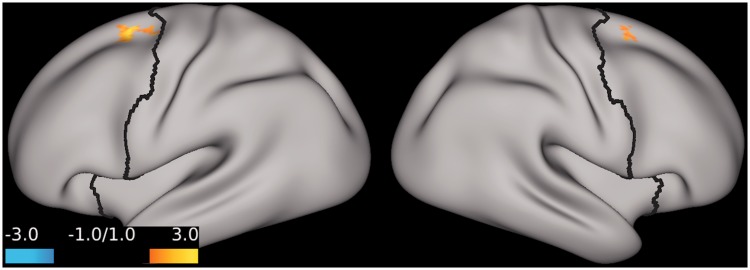
Background: Identifying the neural correlates of ketamine treatment may facilitate and expedite the development of novel, robust, and safe rapid-acting antidepressants. Prefrontal cortex (PFC) global brain connectivity with global signal regression (GBCr) was recently identified as a putative biomarker of major depressive disorder. Accumulating evidence have repeatedly shown reduced PFC GBCr in major depressive disorder, an abnormality that appears to normalize following ketamine treatment. Methods: Fifty-six unmedicated participants with major depressive disorder were randomized to intravenous placebo (normal saline; n = 18), ketamine (0.5 mg/kg; n = 19), or lanicemine (100 mg; n = 19). PFC GBCr was computed using time series from functional magnetic resonance imaging scans that were completed at baseline, during infusion, and at 24-h posttreatment. Results: Compared to placebo, ketamine significantly increased average PFC GBCr during infusion ( p = 0.01) and at 24-h posttreatment ( p = 0.02). Lanicemine had no significant effects on GBCr during infusion ( p = 0.45) and at 24-h posttreatment ( p = 0.23) compared to placebo. Average delta PFC GBCr (during minus baseline) showed a pattern of positively predicting depression improvement in participants receiving ketamine ( r = 0.44; p = 0.06; d = 1.0) or lanicemine ( r = 0.55; p = 0.01; d = 1.3) but not those receiving placebo ( r = −0.1; p = 0.69; d = 0.02). Follow-up vertex-wise analyses showed ketamine-induced GBCr increases in the dorsolateral, dorsomedial, and frontomedial PFC during infusion and in the dorsolateral and dorsomedial PFC at 24-h posttreatment ( corrected p < 0.05). Exploratory vertex-wise analyses examining the relationship with depression improvement showed positive correlation with GBCr in the dorsal PFC during infusion and at 24-h posttreatment but negative correlation with GBCr in the ventral PFC during infusion ( uncorrected p < 0.01). Conclusions: In a randomized placebo-controlled approach, the results provide the first evidence in major depressive disorder of ketamine-induced increases in PFC GBCr during infusion and suggest that ketamine’s rapid-acting antidepressant properties are related to its acute effects on prefrontal connectivity. Overall, the study findings underscore the similarity and differences between ketamine and another N-methyl-D-aspartate receptor antagonist while proposing a pharmacoimaging paradigm for the optimization of novel rapid-acting antidepressants prior to testing in costly clinical trials.
Overview
The claims and statistics of this paper haven’t been checked yet.
Free: it reads the open-access text and checks the first 5 claims that cite a source we can check. Create a free account to check every claim.
Integrity signals
Registry
Cites
Statistics
Figures
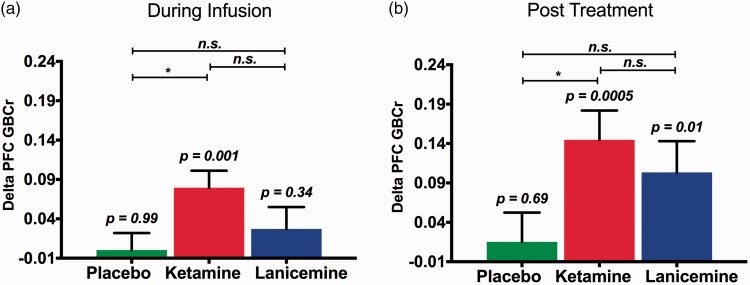
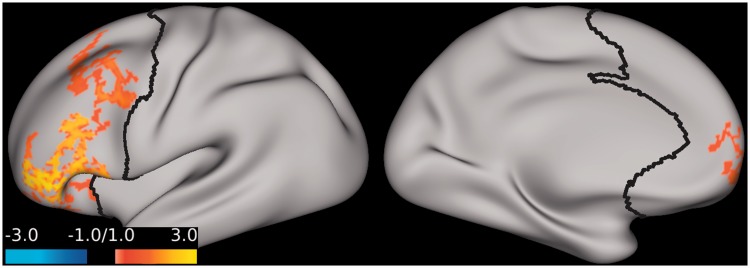
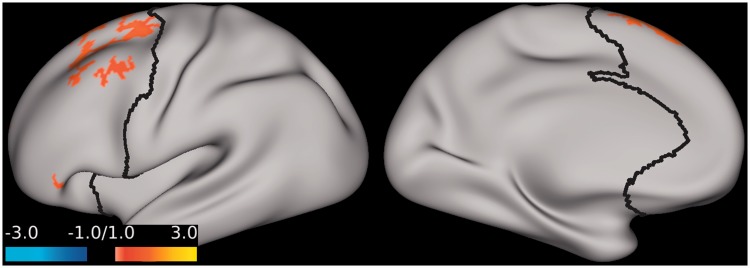
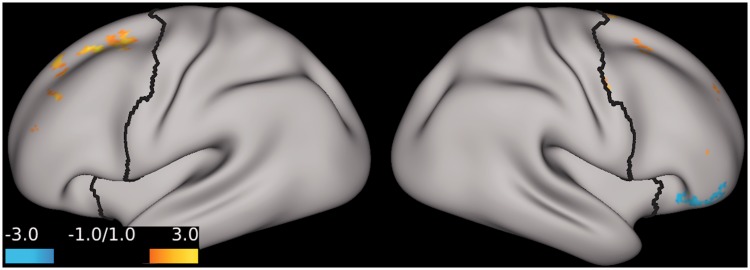
Verification
Claims the paper makes
The claims and statistics of this paper haven’t been checked yet.
Free: it reads the open-access text and checks the first 5 claims that cite a source we can check. Create a free account to check every claim.
Claims other papers make about this one
Each is checked against this paper’s own text: does it say what the citing paper says it does?
The source backs part of the claim, not all of it — or backs it for a different population, condition or comparison.
In the citing paper
“ketamine was found to normalize the PFC GBC deficits in MDD at 24 h post treatment”
From Challenges and rewards of in vivo synaptic density imaging, and its application to the study of depression (2025) · cites this paper as [38]
Experimental — accuracy not yet measuredThe source backs part of the claim, not all of it — or backs it for a different population, condition or comparison.
In the citing paper
“the ketamine induced PFC GBC normalization was associated with the antidepressant response”
From Challenges and rewards of in vivo synaptic density imaging, and its application to the study of depression (2025) · cites this paper as [38]
Experimental — accuracy not yet measured
Self-check
Percentages, sums and reported differences re-computed from the paper’s own numbers.
The self-check needs the paper’s full text.
Citations
Cites
Complex brain networks: graph theoretical analysis of structural and functional systems
Bullmore, E., & Sporns, O. (2009) · Nature Reviews Neuroscience · doi:10.1038/nrn2575 · Cited by 11,820 · cited 1×
“degree) measures have been used extensively in neuroscience research to investigate normal brain functions as well as pathophysiology.(15) In major depressive disorder (MDD), studies have repeatedly shown reduced global connectivity within the PFC using GBCr or other functional connectivity strength measures.”
The organization of the human cerebral cortex estimated by intrinsic functional connectivity
Thomas Yeo, B. T., Krienen, F. M., Sepulcre, J., Sabuncu, M. R., Lashkari, D., Hollinshead, M., Roffman, J. L., Smoller, J. W., Zöllei, L., Polimeni, J. R., et al. (2011) · Journal of Neurophysiology · doi:10.1152/jn.00338.2011 · Cited by 9,182
The organization of the human cerebellum estimated by intrinsic functional connectivity
Buckner, R. L., Krienen, F. M., Castellanos, A., Diaz, J. C., & Yeo, B. T. T. (2011) · Journal of Neurophysiology · doi:10.1152/jn.00339.2011 · Cited by 7,304
The minimal preprocessing pipelines for the Human Connectome Project
Glasser, M. F., Sotiropoulos, S. N., Wilson, J. A., Coalson, T. S., Fischl, B., Andersson, J. L., Xu, J., Jbabdi, S., Webster, M., Polimeni, J. R., et al. (2013) · NeuroImage · doi:10.1016/j.neuroimage.2013.04.127 · Cited by 5,253 · cited 1×
“The Human Connectome Pipeline was adapted to conduct surfacebased preprocessing and optimize registration.(26) Details of the image processing are provided in the Supplemental Information.”
How to improve R&D productivity: the pharmaceutical industry's grand challenge
Paul, S. M., Mytelka, D. S., Dunwiddie, C. T., Persinger, C. C., Munos, B. H., Lindborg, S. R., & Schacht, A. L. (2010) · Nature Reviews Drug Discovery · doi:10.1038/nrd3078 · Cited by 3,566 · cited 1×
“A significant barrier to the development of psychotropic agents is the lack of reliable, clinically relevant biomarkers that could guide early stages of drug development.(10) For example, the low-trapping NMDAR antagonist lanicemine (AZD6765) has shown promise in early small studies(11) but failed to reach primary ant…”
Permutation inference for the general linear model
Winkler, A. M., Ridgway, G. R., Webster, M. A., Smith, S. M., & Nichols, T. E. (2014) · NeuroImage · doi:10.1016/j.neuroimage.2014.01.060 · Cited by 3,563 · cited 1×
“05).(28) Independent t tests compared PFC delta GBCr (during infusion—baseline and 24 h—baseline) between treatment groups (ketamine vs.”
Synaptic Dysfunction in Depression: Potential Therapeutic Targets
Duman, R. S., & Aghajanian, G. K. (2012) · Science · doi:10.1126/science.1222939 · Cited by 1,651 · cited 3×
“Moreover, the reversal of synaptic dysconnectivity appears to be a necessary step to exert antidepressant effects.(18) Ketamine has been found to robustly reverse the prefrontal synaptic dysconnectivity in animal models of depression and to normalize related network disturbances in humans.”
NMDAR inhibition-independent antidepressant actions of ketamine metabolites
Zanos, P., Moaddel, R., Morris, P. J., Georgiou, P., Fischell, J., Elmer, G. I., Alkondon, M., Yuan, P., Pribut, H. J., Singh, N. S., et al. (2016) · Nature · doi:10.1038/nature17998 · Cited by 1,609
Neurobiological and Systemic Effects of Chronic Stress
McEwen, B. S. (2017) · Chronic Stress · doi:10.1177/2470547017692328 · Cited by 1,059 · cited 1×
“Based on extensive preclinical evidence and suggestive clinical findings, it was proposed that prefrontal synaptic loss and dysconnectivity underlie the pathophysiology of depression.(1,18,23,32,33) In this model, the altered synaptic connectivity affects large-scale networks precipitating and perpetuating depressive…”
Liang, X., Zou, Q., He, Y., & Yang, Y. (2013) · Proceedings of the National Academy of Sciences · doi:10.1073/pnas.1214900110 · Cited by 677 · cited 1×
“Supporting the putative relationship between GBCr and glutamate synaptic connectivity is the known coupling between brain energy needs and glutamate neurotransmission,(19) combined with the positive correlation between GBCr and indices of brain energy consumption.(20) This relationship is also supported by the recent…”
Cited by
Lower synaptic density is associated with depression severity and network alterations
Holmes, S. E., Scheinost, D., Finnema, S. J., Naganawa, M., Davis, M. T., DellaGioia, N., Nabulsi, N., Matuskey, D., Angarita, G. A., Pietrzak, R. H., et al. (2019) · Nature Communications · doi:10.1038/s41467-019-09562-7 · Cited by 484
Hashimoto, K. (2019) · Psychiatry and Clinical Neurosciences · doi:10.1111/pcn.12902 · Cited by 335
The Biology of Human Resilience: Opportunities for Enhancing Resilience Across the Life Span
Feder, A., Fred-Torres, S., Southwick, S. M., & Charney, D. S. (2019) · Biological Psychiatry · doi:10.1016/j.biopsych.2019.07.012 · Cited by 269
Treatment of Posttraumatic Stress Disorder: A State-of-the-art Review
Burback, L., Brémault-Phillips, S., Nijdam, M. J., McFarlane, A., & Vermetten, E. (2024) · Current Neuropharmacology · doi:10.2174/1570159x21666230428091433 · Cited by 208
Sartori, S. B., & Singewald, N. (2019) · Pharmacology & Therapeutics · doi:10.1016/j.pharmthera.2019.107402 · Cited by 236
Abdallah, C. G., Sanacora, G., Duman, R. S., & Krystal, J. H. (2018) · Pharmacology & Therapeutics · doi:10.1016/j.pharmthera.2018.05.010 · Cited by 219
Self-citationMatveychuk, D., Thomas, R. K., Swainson, J., Khullar, A., MacKay, M.-A., Baker, G. B., & Dursun, S. M. (2020) · Therapeutic Advances in Psychopharmacology · doi:10.1177/2045125320916657 · Cited by 209
Kohtala, S. (2021) · Pharmacological Reports · doi:10.1007/s43440-021-00232-4 · Cited by 142
“Nevertheless, another trial found ketamine, but not lanicemine, to increase prefrontal global connectivity [222], hinting at a possible difference between effective and non-effective NMDAR antagonists.”
BackgroundKadriu, B., Greenwald, M., Henter, I. D., Gilbert, J. R., Kraus, C., Park, L. T., & Zarate, C. A. (2021) · International Journal of Neuropsychopharmacology · doi:10.1093/ijnp/pyaa087 · Cited by 99
Dean, R. L., Hurducas, C., Hawton, K., Spyridi, S., Cowen, P. J., Hollingsworth, S., Marquardt, T., Barnes, A., Smith, R., McShane, R., et al. (2021) · Cochrane Database of Systematic Reviews · doi:10.1002/14651858.cd011612.pub3 · Cited by 95
Price, R. B., Kissel, N., Baumeister, A., Rohac, R., Woody, M. L., Ballard, E. D., Zarate, C. A., Deakin, W., Abdallah, C. G., Feder, A., et al. (2022) · Molecular Psychiatry · doi:10.1038/s41380-022-01757-7 · Cited by 82
Self-citationA unified model of ketamine’s dissociative and psychedelic properties
Marguilho, M., Figueiredo, I., & Castro-Rodrigues, P. (2022) · Journal of Psychopharmacology · doi:10.1177/02698811221140011 · Cited by 78
“, 2016) and that GBCr in the PFC positively predicted depression improvement (Abdallah et al., 2018).”
BackgroundSimultaneous EEG/fMRI recorded during ketamine infusion in patients with major depressive disorder
McMillan, R., Sumner, R., Forsyth, A., Campbell, D., Malpas, G., Maxwell, E., Deng, C., Hay, J., Ponton, R., Sundram, F., et al. (2020) · Progress in Neuro-Psychopharmacology and Biological Psychiatry · doi:10.1016/j.pnpbp.2019.109838 · Cited by 61
Muscat, S.-A., Hartelius, G., Crouch, C., & Morin, K. W. (2021) · Frontiers in Psychiatry · doi:10.3389/fpsyt.2021.710338 · Cited by 63
“(110) used GBCr to compare the efficacy of ketamine, lanicemine as an alternate NMDAR antagonist, and placebo in normalizing brain connectivity in 56 MDD patients.”
BackgroundMethodNeurobiology of the rapid-acting antidepressant effects of ketamine: impact and opportunities
Shinohara, R., Aghajanian, G. K., & Abdallah, C. G. (2021) · Biological Psychiatry · doi:10.1016/j.biopsych.2020.12.006 · Cited by 54
Self-citationKraus, C., Mkrtchian, A., Kadriu, B., Nugent, A. C., Zarate, C. A., & Evans, J. W. (2020) · Neuropsychopharmacology · doi:10.1038/s41386-020-0624-0 · Cited by 54
The neurophysiology of ketamine: an integrative review
McMillan, R. L., & Muthukumaraswamy, S. D. (2020) · Reviews in the Neurosciences · doi:10.1515/revneuro-2019-0090 · Cited by 56
Siegel, J. S., Palanca, B. J. A., Ances, B. M., Kharasch, E. D., Schweiger, J. A., Yingling, M. D., Snyder, A. Z., Nicol, G. E., Lenze, E. J., & Farber, N. B. (2021) · Psychopharmacology · doi:10.1007/s00213-021-05762-6 · Cited by 50
“2020), and increased connectivity of some dorsolateral prefrontal regions (Abdallah et al. 2018; Gärtner et al. 2019).”
BackgroundMedeiros, G. C., Matheson, M., Demo, I., Reid, M. J., Matheson, S., Twose, C., Smith, G. S., Gould, T. D., Zarate, C. A., Barrett, F. S., et al. (2023) · The Lancet Psychiatry · doi:10.1016/s2215-0366(23)00183-9 · Cited by 49
Rantamäki, T., & Kohtala, S. (2020) · Pharmacological Reviews · doi:10.1124/pr.119.018697 · Cited by 45
“…ofNMDARspresent onGABAergic interneurons, which leads to decreased inhibition of excitatory pyramidal neurons and increased glutamatergic signaling (Homayoun and Moghaddam, 2007), as demonstrated in animals (Moghaddam et al., 1997; Chowdhury et al., 2017) and humans (Abdallah et al., 2018a).”
BackgroundInfluentialReduced Salience and Enhanced Central Executive Connectivity Following PTSD Treatment
Abdallah, C. G., Averill, C. L., Ramage, A. E., Averill, L. A., Alkin, E., Nemati, S., Krystal, J. H., Roache, J. D., A. Resick, P., Young-McCaughan, S., et al. (2019) · Chronic Stress · doi:10.1177/2470547019838971 · Cited by 41
“Early neuroimaging PTSD studies identified a number of regions of interest, which were then integrated into circuitry related hypotheses and more recently into network-based models (2-5).”
BackgroundSelf-citationDePierro, J. M., Lepow, L., Feder, A., & Yehuda, R. (2019) · Biological Psychiatry · doi:10.1016/j.biopsych.2019.07.009 · Cited by 44
“Ketamine has been found to increase prefrontal connectivity in depressed patients (76, 77)—a circuit thought to be disrupted in PTSD (78, 79).”
BackgroundNeis, V. B., Moretti, M., da Rosa, P. B., Dalsenter, Y. D. O., Werle, I., Platt, N., Kaufmann, F. N., Rosado, A. F., Besen, M. H., & Rodrigues, A. L. S. (2020) · Pharmacology Biochemistry and Behavior · doi:10.1016/j.pbb.2020.173020 · Cited by 42
Imaging synaptic density in depression
Holmes, S. E., Abdallah, C., & Esterlis, I. (2023) · Neuropsychopharmacology · doi:10.1038/s41386-022-01368-4 · Cited by 39
“Notably, the ketamine induced PFC GBC normalization was associated with the antidepressant response [30, 31].”
BackgroundSelf-citationNeuroimaging-Derived Biomarkers of the Antidepressant Effects of Ketamine
Zavaliangos‐Petropulu, A., Al‐Sharif, N., Taraku, B., Leaver, A. M., Sahib, A. K., Espinoza, R. T., & Narr, K. L. (2022) · Biological Psychiatry Cognitive Neuroscience and Neuroimaging · doi:10.1016/j.bpsc.2022.11.005 · Cited by 40
“In a larger sample, the same investigators found an increase in PFC GBC regression (GBCr) 24 hours after ketamine when compared with placebo and baseline (48,49), which negatively correlated with symptom improvement.”
Salience Network Disruption in U.S. Army Soldiers With Posttraumatic Stress Disorder
Abdallah, C. G., Averill, C. L., Ramage, A. E., Averill, L. A., Goktas, S., Nemati, S., Krystal, J. H., Roache, J. D., Resick, P. A., Young-McCaughan, S., et al. (2019) · Chronic Stress · doi:10.1177/2470547019850467 · Cited by 38
“Consistent with this hypothesis, GBCr is known to be directly affected by acute brain functions as evident by (1) an increased GBCr during treatment with ketamine (a drug known to induce transient glutamate neurotransmission), (2) a reduced GBCr by the glutamate release inhibitor lamotrigine, and (3) an association be…”
BackgroundSelf-citationAbdallah, C. G., Ahn, K.-H., Averill, L. A., Nemati, S., Averill, C. L., Fouda, S., Ranganathan, M., Morgan, P. T., D’Souza, D. C., Mathalon, D. H., et al. (2021) · Neuropsychopharmacology · doi:10.1038/s41386-020-00864-9 · Cited by 32
Self-citationKetamine induces multiple individually distinct whole-brain functional connectivity signatures
Moujaes, F., Ji, J. L., Rahmati, M., Burt, J. B., Schleifer, C. H., Adkinson, B. D., Savić, A., Santamauro, N. P., Tamayo, Z., Diehl, C., et al. (2024) · eLife · doi:10.7554/elife.84173 · Cited by 34
Abdallah, C., Averill, L. A., Gueorguieva, R., Goktas, S., Purohit, P., Ranganathan, M., D'Souza, D. C., Formica, R., Southwick, S. M., Duman, R. S., et al. (2018) · doi:10.1101/500959 · Cited by 30
Self-citationIntrinsic Connectivity Networks of Glutamate-Mediated Antidepressant Response: A Neuroimaging Review
Demchenko, I., Tassone, V. K., Kennedy, S. H., Dunlop, K., & Bhat, V. (2022) · Frontiers in Psychiatry · doi:10.3389/fpsyt.2022.864902 · Cited by 29
“(133) 56, 0 fMRI N/A Average correlation between BOLD time”
BackgroundInfluentialChaki, S., & Fukumoto, K. (2019) · International Journal of Molecular Sciences · doi:10.3390/ijms20061270 · Cited by 30
“The imaging and postmortem studies showed the importance of the mPFC in the pathophysiology and treatment of depression, supporting this suggestion [51,52].”
Nemati, S., & Abdallah, C. G. (2020) · Chronic Stress · doi:10.1177/2470547019899962 · Cited by 29
Self-citationNovel Targets for Fast Antidepressant Responses: Possible Role of Endogenous Neuromodulators
Camargo, A., & Rodrigues, A. L. S. (2019) · Chronic Stress · doi:10.1177/2470547019858083 · Cited by 28
A Unique Brain Connectome Fingerprint Predates and Predicts Response to Antidepressants
Nemati, S., Akiki, T. J., Roscoe, J., Ju, Y., Averill, C. L., Fouda, S., Dutta, A., McKie, S., Krystal, J. H., Deakin, J. F. W., et al. (2020) · iScience · doi:10.1016/j.isci.2019.100800 · Cited by 25
Self-citationAlario, A. A., & Niciu, M. J. (2021) · Chronic Stress · doi:10.1177/24705470211014210 · Cited by 26
Averill, L. A., Jiang, L., Purohit, P., Coppoli, A., Averill, C. L., Roscoe, J., Kelmendi, B., Feyter, H. M. D., de Graaf, R. A., Gueorguieva, R. V., et al. (2022) · Chronic Stress · doi:10.1177/24705470221092734 · Cited by 27
“Moreover, disruption in global brain connectivity in the prefrontal gray matter was repeatedly related to the pathology and treatment of PTSD and other stress-related disorders [27-38].”
BackgroundSelf-citationTranscranial magnetic stimulation and ketamine: implications for combined treatment in depression
Dębowska, W., Więdłocha, M., Dębowska, M. D., Kownacka, Z., Marcinowicz, P., & Szulc, A. (2023) · Frontiers in Neuroscience · doi:10.3389/fnins.2023.1267647 · Cited by 23
Ketamine and rapid acting antidepressants: Are we ready to cure, rather than treat depression?
Abdallah, C. G., & Krystal, J. H. (2020) · Behavioural Brain Research · doi:10.1016/j.bbr.2020.112628 · Cited by 23
“Antidepressants, particularly ketamine, were shown to reverse this functional dysconnectivity [32, 36, 38, 47].”
BackgroundSelf-citationRapid and Sustained Restoration of Astrocytic Functions by Ketamine in Depression Model Mice
Ma, X., Yang, S., Zhang, Z., Liu, L., Shi, W., Yang, S., Li, S., Cai, X., & Zhou, Q. (2021) · Biochemical and Biophysical Research Communications · doi:10.1016/j.bbrc.2022.03.068 · Cited by 21
Thai, M., Başgöze, Z., Klimes‐Dougan, B., Mueller, B. A., Fiecas, M. J. A., Lim, K. O., Albott, C. S., & Cullen, K. R. (2020) · Frontiers in Psychiatry · doi:10.3389/fpsyt.2020.00820 · Cited by 21
“Inclusion criteria included a current diagnosis of Major Depressive Disorder (MDD), a Children’s Depression Rating Scale-Revised [CDRS-R (31)] raw score >40, stable psychotherapy for 2 months (Years in therapy: M = 3.26; SD = 2.66), stable psychotropic medication dose for 2 months, and evidence of treatment resistance.”
BackgroundInfluentialPretreatment Brain Connectome Fingerprint Predicts Treatment Response in Major Depressive Disorder
Fan, S., Nemati, S., Akiki, T. J., Roscoe, J., Averill, C. L., Fouda, S., Averill, L. A., & Abdallah, C. G. (2020) · Chronic Stress · doi:10.1177/2470547020984726 · Cited by 20
Self-citationThe Tower of Babel of Pharma-Food Study on Extra Virgin Olive Oil Polyphenols
Clodoveo, M. L., Muraglia, M., Crupi, P., Hbaieb, R. H., Santis, S. D., Desantis, A., & Corbo, F. (2022) · Foods · doi:10.3390/foods11131915 · Cited by 21
Could ketamine be the answer to treating treatment‐resistant major depressive disorder?
Ramadan, A., & Mansour, I. (2020) · General Psychiatry · doi:10.1136/gpsych-2020-100227 · Cited by 21
(2020) · Advances in Pharmacology · doi:10.1016/bs.apha.2020.04.003 · Cited by 18
Self-citationTargeting of Metabotropic Glutamate Receptors for the Development of Novel Antidepressants
Chaki, S., Koike, H., & Fukumoto, K. (2019) · Chronic Stress · doi:10.1177/2470547019837712 · Cited by 21
Kohtala, S., & Rantamäki, T. (2021) · Basic & Clinical Pharmacology & Toxicology · doi:10.1111/bcpt.13598 · Cited by 16
Yun, J., & Kim, Y. (2024) · Psychiatry Research · doi:10.1016/j.psychres.2024.116092 · Cited by 19
“The mean age of the TRD participants per study (N = 41) was distributed as follows: mid-teens, (Roy et al., 2021), 20’s (Abdallah et al., 2018; Burrows et al., 2023), 30’s (N = 21), 40’s (N = 16), and early 50’s (Sterpenich et al., 2019).”
MethodCastillo, A., Dubois, J., Field, R. M., Fishburn, F. A., Gundran, A., Ho, W. C., Jawhar, S., Kates‐Harbeck, J., Aghajan, Z. M., Miller, N., et al. (2023) · Scientific Reports · doi:10.1038/s41598-023-38258-8 · Cited by 16
Camargo, A., Torrá, A. C. N. C., Dalmagro, A. P., Valverde, A. P., Kouba, B. R., Fraga, D. B., Alves, E. C., & Rodrigues, A. L. S. (2022) · Progress in Neuro-Psychopharmacology and Biological Psychiatry · doi:10.1016/j.pnpbp.2022.110509 · Cited by 14
Asch, R. H., Abdallah, C. G., Carson, R. E., & Esterlis, I. (2025) · Neuropsychopharmacology · doi:10.1038/s41386-024-01913-3 · Cited by 13
Self-citationNeurobiological studies of trauma-related psychopathology: a public health perspective
Akiki, T. J., Averill, L. A., & Abdallah, C. G. (2018) · European Journal of Psychotraumatology · doi:10.1080/20008198.2018.1556554 · Cited by 12
“Our recent pharmacoimaging work has found putative in vivo neural signatures for response to rapidacting antidepressants (Abdallah et al., 2018b).”
BackgroundSelf-citationYu, W., Wu, Z., Li, X., Ding, M., Xu, Y., & Zhao, P. (2023) · Molecular Neurobiology · doi:10.1007/s12035-023-03474-w · Cited by 11
Averill, C. L., Averill, L. A., Akiki, T. J., Fouda, S., Krystal, J. H., & Abdallah, C. G. (2024) · NPP—Digital Psychiatry and Neuroscience · doi:10.1038/s44277-024-00011-y · Cited by 11
“We used the HCP ’ s minimal preprocessing pipeline (github.com/ Washington-University/Pipelines) to preprocess our scans as described in previous studies [42 – 45].”
MethodSelf-citationDanböck, S. K., Duek, O. A., Ben‐Zion, Z., Korem, N., Amen, S. L., Kelmendi, B., Wilhelm, F. H., Levy, I., & Harpaz‐Rotem, I. (2023) · Psychopharmacology · doi:10.1007/s00213-023-06479-4 · Cited by 10
“…converges with initial studies pointing towards effects of ketamine, a dissociation-inducing-drug, on prefrontal global functional connectivity (Abdallah et al. 2017, 2018; Castillo et al. 2023; but see also Kraus et al. 2020), stressing the potential of an in-depth exploration of prefrontal…”
d’Andrea, G., Chiappini, S., Ciavoni, L., Tucci, R., Martino, F., Semeraro, F. M., Battista, D. D., Mosca, A., Miuli, A., Carlo, F. D., et al. (2025) · Translational Psychiatry · doi:10.1038/s41398-025-03654-3 · Cited by 11
“Ketamine administration reduced BDI [43, 45, 52, 68, 69], HAM-D and MADRS [47, 50, 52, 59, 62, 68 – 74] scores compared to placebo.”
InfluentialMunch, A. S., Amat-Foraster, M., Agerskov, C., Bastlund, J. F., Herrik, K. F., & Richter, U. (2023) · Journal of Psychopharmacology · doi:10.1177/02698811231164231 · Cited by 8
“If our observation of ketamine-induced increase in spike reliability in the auditory cortex is replicated in other parts of the cortex, such data could serve as an explanatory model for the observed ketamine-induced increase in neuronal connectivity (Abdallah et al., 2018), since spike timing could influence neural co…”
BackgroundInfluentialFunctional connectome-based predictive modeling of suicidal ideation
Averill, L. A., Tamman, A. J. F., Fouda, S., Averill, C. L., Nemati, S., Ragnhildstveit, A., Gosnell, S. N., Akiki, T. J., Salas, R., & Abdallah, C. G. (2025) · Journal of Affective Disorders · doi:10.1016/j.jad.2025.119518 · Cited by 6
Self-citationNetwork localization of brain functional effects of ketamine treatment for major depression
Ma, H., Liu, H., Zhang, W., Zhao, X., Zhang, D., an, K., Qian, Y., & Zhu, J. (2026) · European Psychiatry · doi:10.1192/j.eurpsy.2026.10164 · Cited by 5
Gärtner, M., Weigand, A., Meiering, M. S., Weigner, D., Carstens, L., Keicher, C., Hertrampf, R., Beckmann, C. F., Mennes, M., Wunder, A., et al. (2024) · Translational Psychiatry · doi:10.1038/s41398-024-02977-x · Cited by 5
“Expected effect sizes were based on previous reports [39].”
Biomarkers in Psychiatric Drug Development: From Precision Medicine to Novel Therapeutics
Carreon, R. L., Rivas-Grajales, A. M., Murphy, N., Mathew, S. J., & Jha, M. K. (2023) · Advances in neurobiology · doi:10.1007/978-3-031-21054-9_12 · Cited by 4
Wallach, J. V., Cameron, S., Dybek, M. B., Stanley, B., Orme, C., Riad, N., Kavanagh, P. V., Brandt, S. D., Knapp, A., Gamrat, J. M., et al. (2026) · Journal of Medicinal Chemistry · doi:10.1021/acs.jmedchem.5c02700 · Cited by 2
Coutellier, L. D., Musazzi, L., & Pavlovic, Z. M. (2022) · Springer eBooks · doi:10.1007/978-3-030-87480-3_4 · Cited by 2
KETAMINE: Neural- and network-level changes
Bharmauria, V., Ramezanpour, H., Ouelhazi, A., Belkacemi, Y. Y., Flouty, O. E., & Molotchnikoff, S. (2024) · Neuroscience · doi:10.1016/j.neuroscience.2024.09.010 · Cited by 1
Detecting neuroplastic effects induced by ketamine in healthy human subjects: A multimodal approach
Agnorelli, C., Peill, J. M., Sawicka, G., Kurtin, D. L., Shatalina, E., Ahmad, K., Wall, M. B., Rua, C., Godfrey, K., Ertl, N., et al. (2026) · Journal of Cerebral Blood Flow & Metabolism · doi:10.1177/0271678x261431447 · Cited by 1
“19 Many studies have demonstrated that ketamine acutely reduces resting-state functional connectivity (FC) within the default mode network (DMN) 20,21 (although not universally reported 19 ), which is involved in ‘narrative’ self-experience and is hyperactive in depression.”
Ketamine: Recent application in administration of anesthesia, torment and medicare
Komal, K., & Kishor, K. (2023) · AIP conference proceedings · doi:10.1063/5.0113226
Ahuja, J., & Leontieva, L. (2024) · Case Reports in Psychiatry · doi:10.1155/2024/2143372 · Cited by 1
“Additionally, the modest success of other NMDAR antagonists in treating depression underscores the need to reevaluate the importance of this receptor [15].”
BackgroundScholkmann, F., Field, R. M., Aghajan, Z. M., Perdue, K. L., & Ryan, W. C. (2025) · Neuromethods · doi:10.1007/978-1-0716-4603-8_16
Ketamine’s Multifaceted Neuropharmacological and Neurobiological Actions
Kohtala, S., & Annala, I. (2025) · Neuromethods · doi:10.1007/978-1-0716-4603-8_2
Detecting neuroplastic effects induced by ketamine in healthy human subjects: a multimodal approach
Agnorelli, C., Peill, J. M., Sawicka, G., Kurtin, D. L., Shatalina, E., Ahmad, K., Wall, M., Rua, C., Godfrey, K., Erl, N., et al. (2026) · Neuroscience Applied · doi:10.1016/j.nsa.2025.105744
Lees, T., Scott, J. N., Boyle, B. W., Esfand, S. M., Linton, S. R., Miller, C., Li, M., Woronko, S. E., Dunayev, R., Bogdanov, M., et al. (2026) · Translational Psychiatry · doi:10.1038/s41398-026-03928-4
“Indeed, several studies have found that ketamine alters global brain connectivity of the PFC (which includes key DMN, FPN, and SN structures) [35, 36], with node-based analyses suggesting that ketamine reduces within-PFC connectivity and enhances PFC connectivity to other brain regions [35, 37].”
Metadata
- Authors
- Abdallah, C. G., Dutta, A., Averill, C. L., McKie, S., Akiki, T. J., Averill, L. A., & William Deakin, J. F.
- Affiliations
- United States Department of Veterans Affairs (US)
- University of Manchester (GB)
- Department of Psychiatry, University of Manchester, Manchester, UK
- Corresponding author
- Abdallah, Chadi G.
- ORCID
- Venue
- Chronic Stress
- Publisher
- SAGE Publications
- Published
- 2018-01
- Volume
- 2
- ISSN
- 2470-5470 (ISSN-L)
- PMC
- PMC6154502
- OpenAlex
- W2890782117
- Cited by
- 70
- References
- 49
- Citations by year
- 2026: 2 · 2025: 5 · 2024: 7 · 2023: 9 · 2022: 10 · 2021: 7 · 2020: 14 · 2019: 12 · 2018: 4
- FWCI
- 5.97
- Type
- journal article
- Language
- en
- Open access
- gold
- doi.org
- Licence
- cc-by-nc
- journals.sagepub.com/page/policies/text-and-data-mining-license (tdm)
- Locations
- Chronic Stress (publishedVersion, cc-by-nc)
- Europe PMC (PubMed Central) (publishedVersion, cc-by-nc)
- PubMed Central (publishedVersion, cc-by-nc)
- PubMed (publishedVersion)
- DOAJ (DOAJ: Directory of Open Access Journals) (submittedVersion)
- Research Explorer (The University of Manchester) (submittedVersion, other-oa)
- Funders
- National Institute of Mental Health (MH101498)
- AstraZeneca
- Topics
- Health Sciences › Medicine › Pharmacology (medical) › Treatment of Major Depression
- Life Sciences › Neuroscience › Cognitive Neuroscience › Functional Brain Connectivity Studies
- Life Sciences › Neuroscience › Neurology › Transcranial Magnetic Stimulation Studies
- Keywords
- major depressive disorder, prefrontal cortex, global brain connectivity, global signal regression, NMDA receptor antagonists, rapid-acting antidepressants, treatment response biomarkers, dorsolateral prefrontal cortex, dorsomedial prefrontal cortex, ventral prefrontal cortex, ketamine infusion
About these checks
Registry, retraction, Cites and statistics results are computed, not judged, with one exception: a printed reference that no index lists is read once by a model before it counts as a citation error. Claims are extracted by a model and kept only when their quote appears verbatim in the text; each cited source is then checked, with a model’s help, for whether it says what the claim relies on. Those verdicts can be wrong — read the claim’s quote and the cited source before relying on one.
Statistics and arithmetic are recomputed, not judged.
Confidence bands are shown only for fields calibrated on our annotated test set. None is calibrated yet, so no band is shown.
What counts as a claim ›How we measure confidence ›How we check this ›
Are you an author, or do you see a problem with this page? Request a review
Data sources
Bibliographic data: Semantic Scholar, OpenAlex, Crossref.
Contains information from the Semantic Scholar Academic Graph Datasets, made available under the ODC Attribution License (ODC-BY 1.0).
Semantic Scholar’s data is described in: Kinney, R., et al. (2023). The Semantic Scholar Open Data Platform. arXiv:2301.10140.
