

Role of SALL4 in the progression and metastasis of colorectal cancer
Open accessThe DOI matches its Crossref record; 37 of the 38 references it cites were found in a registry or an index.
Abstract
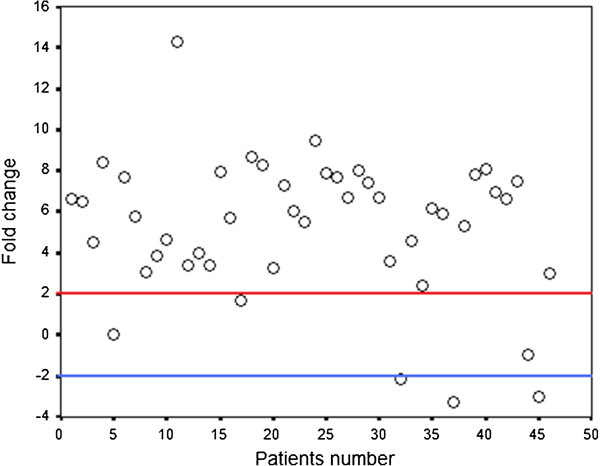
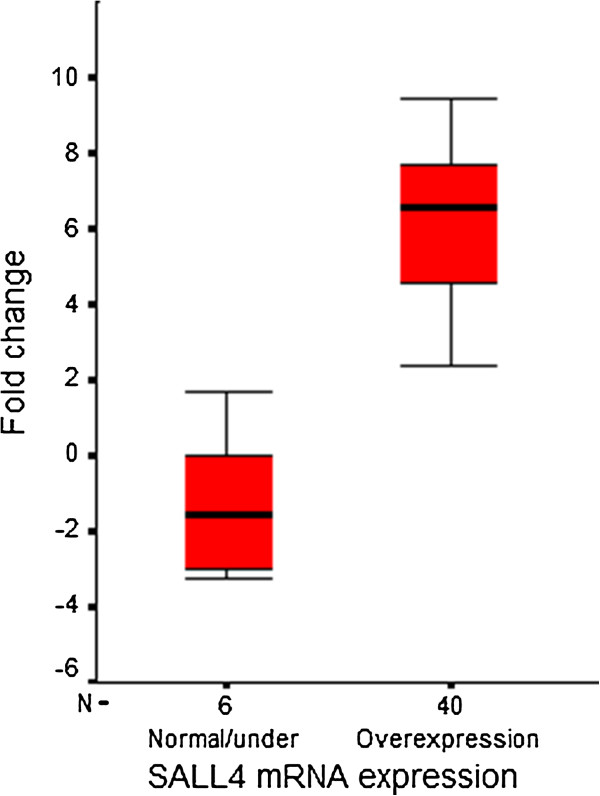
BACKGROUND: Human cancer cells resemble stem cells in expression signatures leading them to share some features, most notably, self-renewal. A complex network of transcription factors and signaling molecules are required for continuance of this trait. SALL4 is a zinc finger transcriptional activator crucial for maintenance of self-renewal in stem cells; however, its expression level has not yet been elucidated in colorectal tumor cells. To determine this level and probable clinicopathological consequences, its expression was analyzed. METHODS: SALL4 expression in fresh tumoral and distant tumor-free tissues from 46 colorectal samples was compared by real-time polymerase chain reaction (PCR). RESULTS: Greater than a two-fold increase in SALL4 expression was detected in 87% of tumors vs. normal related tissues. SALL4 expression was significantly correlated with tumor cell metastasis to lymph nodes, especially in moderately-differentiated tumor samples (P < 0.05). Furthermore, higher levels of SALL4 mRNA expression were significantly associated with younger than older patients with tumor cells in stages I and II (P < 0.05). CONCLUSIONS: These results indicate a relationship between SALL4 expression and tumor cell metastasis to lymph nodes and consequent advancement of tumors to advanced stages III and IV. Along with the promising evidence of its role in self-renewal in various cancers, SALL4 may have a role in progression, development and maintenance of colorectal cancers.
Overview
The claims and statistics of this paper haven’t been checked yet.
Free: it reads the open-access text and checks the first 5 claims that cite a source we can check. Create a free account to check every claim.
Integrity signals
Registry
Cites
Statistics
Figures
Verification
Claims the paper makes
The claims and statistics of this paper haven’t been checked yet.
Free: it reads the open-access text and checks the first 5 claims that cite a source we can check. Create a free account to check every claim.
Claims other papers make about this one
Each is checked against this paper’s own text: does it say what the citing paper says it does?
The source backs part of the claim, not all of it — or backs it for a different population, condition or comparison.
In the citing paper
“These data suggest that in melanoma—similar to other cancer types—Sall4 is essential for tumor growth, while its depletion or downregulation leads to increased micrometastases formation”
From Epigenetic control of melanoma cell invasiveness by the stem cell factor SALL4 (2021) · cites this paper as [36]
Experimental — accuracy not yet measured
Self-check
Percentages, sums and reported differences re-computed from the paper’s own numbers.
The self-check needs the paper’s full text.
Citations
Cites
Jemal, A., Bray, F., Center, M. M., Ferlay, J., Ward, E., & Forman, D. (2011) · CA: A Cancer Journal for Clinicians · doi:10.3322/caac.20107 · Cited by 54,679
Andersen, C. L., Jensen, J. L., & Ørntoft, T. F. (2004) · Cancer Research · doi:10.1158/0008-5472.can-04-0496 · Cited by 7,127 · cited 1×
“Data were normalized to glyceraldehyde 3-phosphate dehydrogenase (GAPDH) expression [24] applying the comparative threshold cycle method.”
MethodZhang, J., Tam, W.-L., Tong, G. Q., Wu, Q., Chan, H.-Y., Soh, B.-S., Lou, Y., Yang, J., Ma, Y., Chai, L., et al. (2006) · Nature Cell Biology · doi:10.1038/ncb1481 · Cited by 568 · cited 1×
“In embryonic stem cells (ESCs), SALL4 has significant roles in the maintenance of pluripotency and selfrenewal, efficient proliferation/stabilization, and cell fate decision [6,7].”
BackgroundNanog and Oct4 associate with unique transcriptional repression complexes in embryonic stem cells
Liang, J., Wan, M., Zhang, Y., Gu, P., Xin, H., Jung, S. Y., Qin, J., Wong, J., Cooney, A. J., Liu, D., et al. (2008) · Nature Cell Biology · doi:10.1038/ncb1736 · Cited by 453 · cited 1×
“It activates OCT4 as a transcriptional factor and interacts with Nanog in a protein-protein complex [26,27].”
BackgroundOkihiro syndrome is caused by SALL4 mutations
Kohlhase, J. (2002) · Human Molecular Genetics · doi:10.1093/hmg/11.23.2979 · Cited by 320 · cited 1×
“Structural properties of human SALL consist of several C2H2 zinc finger domains that can bind DNA, and in some cases, RNA and proteins [5].”
BackgroundSall4 Interacts with Nanog and Co-occupies Nanog Genomic Sites in Embryonic Stem Cells
Wu, Q., Chen, X., Zhang, J., Loh, Y.-H., Low, T.-Y., Zhang, W., Zhang, W., Sze, S.-K., Lim, B., & Ng, H.-H. (2006) · Journal of Biological Chemistry · doi:10.1074/jbc.c600122200 · Cited by 292
SALL4 Is a Novel Diagnostic Marker for Testicular Germ Cell Tumors
Cao, D., Li, J., Guo, C. C., Allan, R. W., & Humphrey, P. A. (2009) · American Journal of Surgical Pathology · doi:10.1097/pas.0b013e3181a13eef · Cited by 234 · cited 3×
“Nonetheless, SALL4 expression is reported in numerous malignancies, such as breast and lung cancers [14,15], precursor B-cell lymphoblastic lymphoma [16], myelodysplastic syndromes (MDS) [11], acute myeloid leukemia (AML) [10,11], endometriotic samples [17], ovarian germ cell tumors [18], all types of testicular germ…”
BackgroundLim, C. Y., Tam, W.-L., Zhang, J., Ang, H. S., Jia, H., Lipovich, L., Ng, H.-H., Wei, C.-L., Sung, W. K., Robson, P., et al. (2008) · Cell Stem Cell · doi:10.1016/j.stem.2008.08.004 · Cited by 224 · cited 4×
“Furthermore, expression of such genes is regulated by SALL4 in ES cells [12].”
BackgroundInfluentialOver-expression of Nanog predicts tumor progression and poor prognosis in colorectal cancer
Meng, H.-M., Zheng, P., Wang, X.-Y., Liu, C., Sui, H.-M., Wu, S.-J., Zhou, J., Ding, Y.-Q., & Li, J. (2010) · Cancer Biology & Therapy · doi:10.4161/cbt.9.4.10666 · Cited by 220
Ma, Y., Cui, W., Yang, J., Qu, J., Di, C., Amin, H. M., Lai, R., Ritz, J., Krause, D. S., & Chai, L. (2006) · Blood · doi:10.1182/blood-2006-02-001594 · Cited by 215 · cited 7×
“Having direct interaction with key cell-signaling pathways such as Wnt and TGF-beta, SALL4 can play essential roles in cell fate decision and survival of ESCs [10,11].”
BackgroundInfluential
Cited by
Cancer stem cells in colorectal cancer: a review
Munro, M. J., Wickremesekera, S. K., Peng, L., Tan, S. T., & Itinteang, T. (2018) · Journal of Clinical Pathology · doi:10.1136/jclinpath-2017-204739 · Cited by 304
“39 40 A study by Hao et al 39 involving 186 patients with a range of benign and malignant tumours shows that SALL4 co-localises with β -catenin in both the nucleus and cytoplasm of the crypt epithelium, therefore implicating it in the Wnt pathway.”
BackgroundMiettinen, M., Wang, Z., McCue, P. A., Sarlomo-Rikala, M., Rys, J., Biernat, W., Lasota, J., & Lee, Y.-S. (2014) · American Journal of Surgical Pathology · doi:10.1097/pas.0000000000000116 · Cited by 204
SALL4, the missing link between stem cells, development and cancer
Tatetsu, H., Kong, N. R., Chong, G., Amabile, G., Tenen, D. G., & Chai, L. (2016) · Gene · doi:10.1016/j.gene.2016.02.019 · Cited by 130
MYC as a Multifaceted Regulator of Tumor Microenvironment Leading to Metastasis
Meškytė, E. M., Keskas, S., & Ciribilli, Y. (2020) · International Journal of Molecular Sciences · doi:10.3390/ijms21207710 · Cited by 117
SALL4: An emerging cancer biomarker and target
Zhang, X., Yuan, X., Zhu, W., Qian, H., & Xu, W. (2014) · Cancer Letters · doi:10.1016/j.canlet.2014.11.037 · Cited by 104
Molecular Signaling in Tumorigenesis of Gastric Cancer
Molaei, F., Forghanifard, M. M., Fahim, Y., & Abbaszadegan, M. R. (2018) · Iranian Biomedical Journal · doi:10.29252/ibj.22.4.217 · Cited by 95
Self-citationForghanifard, M. M., Khales, S. A., Javdani-Mallak, A., Rad, A., Farshchian, M., & Abbaszadegan, M. R. (2014) · Medical Oncology · doi:10.1007/s12032-014-0922-7 · Cited by 83
“The related fold changes of the gene expression were measured as described before [7].”
BackgroundMethodSelf-citationSALL4 as a new biomarker for early colorectal cancers
Khales, S. A., Abbaszadegan, M. R., Abdollahi, A., Raeisossadati, R., Tousi, M. F., & Forghanifard, M. M. (2014) · Journal of Cancer Research and Clinical Oncology · doi:10.1007/s00432-014-1808-y · Cited by 76
“SALL4 overexpression can cause increased cell proliferation, enhanced apoptosis repression and aggressive tumor progression (Forghanifard et al. 2013).”
BackgroundSelf-citationIntricate relationship between cancer stemness, metastasis, and drug resistance
Dakal, T. C., Bhushan, R., Xu, C., Gadi, B. R., Cameotra, S. S., Yadav, V., Maciaczyk, J., Schmidt‐Wolf, I. G. H., Kumar, A., & Sharma, A. (2024) · MedComm · doi:10.1002/mco2.710 · Cited by 90
Liu, L., Zhang, J., Yang, X., Fang, C., Xu, H., & Xi, X. (2015) · PLOS ONE · doi:10.1371/journal.pone.0138515 · Cited by 67
“The recent researches have shown that SALL4 was involved in the metastasis and progression in colorectal cancer [34].”
RetractedTargeting cancer addiction for SALL4 by shifting its transcriptome with a pharmacologic peptide
Liu, B. H., Jobichen, C., Chia, C. S. B., Chan, T. H. M., Tang, J. P., Chung, T. X. Y., Li, J., Poulsen, A., Hung, A. W., Koh-Stenta, X., et al. (2018) · Proceedings of the National Academy of Sciences · doi:10.1073/pnas.1801253115 · Cited by 67
Bahadori, M., Baharara, J., & Amini, E. (2016) · Iranian Journal of Biotechnology · doi:10.15171/ijb.1374 · Cited by 60
SALL4 Oncogenic Function in Cancers: Mechanisms and Therapeutic Relevance
Sun, B., Xu, L., Bi, W., & Ou, W. (2022) · International Journal of Molecular Sciences · doi:10.3390/ijms23042053 · Cited by 58
“SALL4 is overexpressed in the majority of CRCs and plays an oncogenic role in CRC progression, maintenance, and metastasis [173].”
BackgroundmiR-219-5p plays a tumor suppressive role in colon cancer by targeting oncogene Sall4
Cheng, J., Deng, R., Zhang, P., Wu, C., Wu, K., Shi, L., LIU, X., Bai, J., Deng, M., Shuai, X., et al. (2015) · Oncology Reports · doi:10.3892/or.2015.4168 · Cited by 50
Zhang, L., Yan, Y., Jiang, Y., Cui, Y., Zou, Y., Qian, J., Luo, C., Lu, Y., & Wu, X. (2014) · Journal of Neuro-Oncology · doi:10.1007/s11060-014-1646-4 · Cited by 48
“[10, 28] and anti-apoptosis capacity [29] in cancer.”
Han, S.-X., Wang, J.-L., Guo, X.-J., He, C.-C., Ying, X., Ma, J.-L., Zhang, Y.-Y., Zhao, Q., & Zhu, Q. (2014) · Journal of Immunology Research · doi:10.1155/2014/262385 · Cited by 42
“At the meaning time, some other kinds of tumor such as colorectal cancer, breast cancer, and Wilms tumors also express SALL4 [4, 7, 8].”
BackgroundXiang, Y., Yang, T., Pang, B.-Y., Zhu, Y., & Liu, Y. (2016) · Stem Cells International · doi:10.1155/2016/7614971 · Cited by 42
Itou, J., Matsumoto, Y., Yoshikawa, K., & Toi, M. (2013) · FEBS Letters · doi:10.1016/j.febslet.2013.07.049 · Cited by 40
“An increase in SALL4 expression has also been reported in breast-[7,8], lung-[9], colo- rectal-[10] and liver cancers [11] as well as germ cell tumors [12,13].”
BackgroundSALL4 promotes glycolysis and chromatin remodeling via modulating HP1α-Glut1 pathway
Kim, J., Xu, S., Xiong, L., Yu, L., Fu, X., & Xu, Y. (2017) · Oncogene · doi:10.1038/onc.2017.265 · Cited by 42
Pádua, D., Figueira, P., Ribeiro, I. C. G., Almeida, R., & Mesquita, P. (2020) · Frontiers in Cell and Developmental Biology · doi:10.3389/fcell.2020.00442 · Cited by 49
“In CRC, SALL4 overexpression is detected in 87% of tumor tissues and it is correlated with tumor cell metastasis to lymph nodes being associated with poor prognosis and showing its essential role in maintaining the properties of CSCs (Forghanifard et al., 2013; Zhang et al., 2015).”
BackgroundSALL Proteins; Common and Antagonistic Roles in Cancer
Álvarez, C., Quiroz, A., Benítez-Riquelme, D., Riffo, E., Castro, A. F., & Pincheira, R. (2021) · Cancers · doi:10.3390/cancers13246292 · Cited by 37
Forghanifard, M. M., Taleb, S., & Abbaszadegan, M. R. (2014) · Pathology & Oncology Research · doi:10.1007/s12253-014-9849-8 · Cited by 36
“For checking the fold change of gene expression, the comparative threshold cycle method was used [17].”
MethodSelf-citationEpigenetic control of melanoma cell invasiveness by the stem cell factor SALL4
Diener, J., Baggiolini, A., Pernebrink, M., Dalcher, D., Lerra, L., Cheng, P. F., Varum, S., Häusel, J., Stierli, S., Treier, M., et al. (2021) · Nature Communications · doi:10.1038/s41467-021-25326-8 · Cited by 34
YUE, X., Xiao, L., Yang, Y., Liu, W., ZHANG, K., Shi, G.-Y., Zhou, H., Geng, J., NING, X., Wu, J., et al. (2015) · Neoplasma · doi:10.4149/neo_2015_119 · Cited by 35
“Consecutively, the expression of SALL4 has been recorded in varied kinds of cancers and is deemed to have a clinical value for diagnosis in a few of them, including germ cell tumor, aggressive hepatocellular carcinoma, colorectal cancer, gastric cancer and extragonadal yolk sac tumors [11-15].”
BackgroundSALL4 promotes tumor progression in breast cancer by targeting EMT
Chen, T., Tsang, J. Y. S., Su, X., Li, P., Sun, W., Wong, I. L. K., Choy, K., Yang, Q., Tse, G. M. K., Chan, T. H., et al. (2020) · Molecular Carcinogenesis · doi:10.1002/mc.23250 · Cited by 32
Expression and clinical significance of SALL4 and β-catenin in colorectal cancer
Hao, L., Zhao, Y., Wang, Z., Yin, H., Zhang, X., He, T., Song, S., Sun, S., Wang, B., Li, Z., et al. (2016) · Journal of Molecular Histology · doi:10.1007/s10735-016-9656-5 · Cited by 35
“indicated that the expression of SALL4 is twofold higher in tumor tissue compared to paired normal tissue and its expression is significantly correlated with lymph node metastasis and progression to TNM stage III and IV (Forghanifard et al. 2013).”
InfluentialAberrant expression of DPPA2 and HIWI genes in colorectal cancer and their impacts on poor prognosis
Raeisossadati, R., Abbaszadegan, M. R., Moghbeli, M., Tavassoli, A., Kihara, A. H., & Forghanifard, M. M. (2014) · Tumor Biology · doi:10.1007/s13277-014-1690-x · Cited by 29
“In accordance with the Mashhad University of Medical Sciences (MUMS) ethical guidelines, all of the enrolled patients were informed about the study and gave their written consent for the investigation as described before [29].”
MethodSelf-citationChen, Y., Li, Z.-Z., Ye, Y., Xu, F., Niu, R., Zhang, H., Zhang, Y., Liu, Y., & Han, B. (2016) · BMC Molecular Biology · doi:10.1186/s12867-016-0055-y · Cited by 32
Murakami, T., Yao, T., Yatagai, N., Yamashiro, Y., Saito, T., Sakamoto, N., & Nagahara, A. (2019) · Histopathology · doi:10.1111/his.13973 · Cited by 33
“However, colorectal adenocarcinomas are only rarely positive for SALL4 (nine of 305 cases, 3%).27 Of the positive cases in this study, three had liver metastases, suggesting that SALL4 might be associated with liver metastasis in colorectal carcinoma.27 Furthermore, Forghanifard et al.28 revealed that high expression…”
BackgroundTargeting an Inducible SALL4-Mediated Cancer Vulnerability with Sequential Therapy
Yang, J., Gao, C., Liu, M., Liu, Y., Kwon, J., Qi, J., Tian, X., Stein, A. J., Liu, Y. V., Kong, N. R., et al. (2021) · Cancer Research · doi:10.1158/0008-5472.can-21-0030 · Cited by 29
Functional and clinical significance of SALL4 in breast cancer
Dirican, E., & Akkіprіk, M. (2016) · Tumor Biology · doi:10.1007/s13277-016-5150-7 · Cited by 25
“With similar findings, the overexpression of SALL4 also has been shown in several malignancies [32, 48].”
BackgroundInhibition of SALL4 suppresses carcinogenesis of colorectal cancer via regulating Gli1 expression.
Cheng, J., Deng, R., Wu, C., Zhang, P., Wu, K., Shi, L., Liu, X., Bai, J., Deng, M., Gao, J., et al. (2015) · PubMed · Cited by 24
Huynh, D. L., Zhang, J., Chandimali, N., Ghosh, M., Gera, M., Kim, N., Park, Y. H., Kwon, T., & Jeong, D. K. (2018) · Biochemical and Biophysical Research Communications · doi:10.1016/j.bbrc.2018.06.145 · Cited by 23
Kozuka, M., Battaglin, F., Jayachandran, P., Wang, J., Arai, H., Soni, S., Zhang, W., Hirai, M., Matsusaka, S., & Lenz, H. (2021) · Cancers · doi:10.3390/cancers13194862 · Cited by 20
Itou, J., Tanaka, S., Li, W., Iida, A., Sehara‐Fujisawa, A., Sato, F., & Toi, M. (2016) · Biochimica et Biophysica Acta (BBA) - Molecular Cell Research · doi:10.1016/j.bbamcr.2016.10.012 · Cited by 21
Nakamura, Y., Matsuda, K., Yokoyama, S., Tamura, K., Mitani, Y., Iwamoto, H., Mizumoto, Y., Murakami, D., Fujimoto, M., & Yamaue, H. (2018) · Surgical Case Reports · doi:10.1186/s40792-018-0520-6 · Cited by 21
Rodriguez, E. F., Chen, L., Ao, M.-H., Geddes, S., Gabrielson, E., Askin, F. B., Zhang, H., & Li, Q. K. (2014) · Translational Respiratory Medicine · doi:10.1186/s40247-014-0010-7 · Cited by 24
“The expression of SALL4 has also been correlated with different stages of colorectal [23] and breast cancers [24].”
BackgroundRole of MAML1 and MEIS1 in Esophageal Squamous Cell Carcinoma Depth of Invasion
Abbaszadegan, M. R., & Moghbeli, M. (2017) · Pathology & Oncology Research · doi:10.1007/s12253-017-0243-1 · Cited by 19
“phosphate dehydrogenase (GAPDH) as a normalizer [31, 32].”
BackgroundSelf-citationSahraei, S. S., Kowsari, A., Asl, F. D., Sheykhhasan, M., Naserpoor, L., & Sheikholeslami, A. (2022) · Anatomy & Cell Biology · doi:10.5115/acb.21.169 · Cited by 18
“Many studies revealed that SALL4 expression changes in numerous cancers and endometriosis [18, 19].”
BackgroundThe new advance of SALL4 in cancer: Function, regulation, and implication
Abouelnazar, F. A., Zhang, X., Wang, M., Zhang, J., Yu, D. B., Zang, X., Zhang, J., Li, Y., Xu, J., Yang, Q., et al. (2023) · Journal of Clinical Laboratory Analysis · doi:10.1002/jcla.24927 · Cited by 20
Stem Cell Gene SALL4 in Aggressive Hepatocellular Carcinoma: A Cancer Stem Cell-Specific Target?
Yakaboski, E., Jares, A., & Ma, Y. (2013) · Hepatology · doi:10.1002/hep.26956 · Cited by 19
“SALL4 expression was also detected in lymphoma, plasma cell myeloma, and acute lymphoblastic leukemia,(11) as well as in solid tumors including breast,(12) lung,(13) and colorectal cancer.(14) Recently, we have shown that SALL4 is also an important transcriptional regulator in normal adult hematopoiesis.”
BackgroundGhodsi, M., Jafarian, A. H., Montazer, M., Sadeghian, M. H., & Forghanifard, M. M. (2014) · International Journal of Surgery · doi:10.1016/j.ijsu.2014.11.036 · Cited by 17
Self-citationRole of SALL4 in HER2+ Breast Cancer Progression: Regulating PI3K/AKT Pathway
Pattanayak, B., Lameirinhas, A., Torres‐Ruiz, S., Burgués, O., Rovira, A., Martínez, M. T., Tapia, M., Zazo, S., Albanell, J., Rojo, F., et al. (2022) · International Journal of Molecular Sciences · doi:10.3390/ijms232113292 · Cited by 16
“Beforehand, it has been studied that SALL4 is involved in the EMT process in several types of cancer, including BC [38], gastric cancer [39], endometrial cancer [40], colorectal cancer [41] and esophageal squamous cell carcinoma [28].”
BackgroundEffect of SALL4 on the Proliferation, Invasion and Apoptosis of Breast Cancer Cells
Liu, C., Yao, F., Mao, X., Li, W., & Chen, H. (2020) · Technology in Cancer Research & Treatment · doi:10.1177/1533033820980074 · Cited by 19
Expression and clinical significance of SALL4 and LGR5 in patients with lung cancer
GAUTAM, A. K., Wang, C., Zeng, J., Wang, J., Lu, J., Wei, J., Huang, G., Mo, B.-F., Luo, M., & Mo, B. (2015) · Oncology Letters · doi:10.3892/ol.2015.3772 · Cited by 18
Ren, L., Deng, H. X., Jiang, Y., & Liu, C. (2023) · Digestive Diseases and Sciences · doi:10.1007/s10620-022-07790-4 · Cited by 15
“SALL4 level has been observed as the silence state in completely differentiated cells while its overexpression was reported in a variety of cancers, such as lung cancer 26 , central nervous system tumor 27 , liver cancer 28 , colorectal cancer (CRC) 29 , leukemia 30 , breast cancer (BC) 31 , glioma 32 , endometrial ca…”
BackgroundWu, H., Liu, C., Xiao-xia, F., Wang, H., & Zhou, L. (2017) · Cancer Biomarkers · doi:10.3233/cbm-170204 · Cited by 17
“Forghanifard et al. also reported that SALL4 expressions could inhibit cell apoptosis, transcription of pro-apoptotic gene, tumor suppressor gene phosphatase and tensin homolog deleted on chromosome ten (PTEN), which could promote tumor development.”
InfluentialMahmoudian, R. A., & Forghanifard, M. M. (2020) · Molecular Biology Reports · doi:10.1007/s11033-020-05423-5 · Cited by 15
Self-citationSharbatoghli, M., Shamshiripour, P., Fattahi, F., Kalantari, E., Shams, Z. H., Panahi, M., Totonchi, M., Asadi-Lari, Z., Madjd, Z., & Zanjani, L. S. (2022) · Journal of Ovarian Research · doi:10.1186/s13048-021-00921-x · Cited by 16
“It has been observed that the expression of SALL4 is silenced in entirely differentiated cells while its expression is reactivated in various types of cancer such as central nervous system tumor [18], lung cancer [19], colorectal cancer (CRC) [20], liver cancer [21], leukemia [22], endometrial cancer [23], breast canc…”
BackgroundZhou, J., Peng, S., Fan, H., Li, J., Li, Z., Wang, G., Zeng, L., Guo, Z., Lai, Y., & Huang, H. W. (2023) · Cancer Medicine · doi:10.1002/cam4.5998 · Cited by 14
Gutiérrez, M. L., Corchete, L. A., Sarasquete, M. E., Abad, M., Bengoechea, Ó., Fermiñán, E., Anduaga, M. F., del Carmen, S., Iglesias, M. J. I., Esteban, C., et al. (2017) · Oncotarget · doi:10.18632/oncotarget.22591 · Cited by 12
“Up-regulation of the SPP1, miR-122, SRPX2, ADH1B, miR-21, SALL4 and PRAP1 genes, as well as down-regulation of miR-378e have been previously associated with an increased tumor cell migration capacity among sCRC [44–46], greater tumor progression potential [45, 47, 48], a metastatic phenotype [10, 45, 48, 49] and inhib…”
BackgroundLi, Y., Fan, L., Zheng, J., Nie, X., Sun, Y. L., Qin, F., Lian, S., Bai, W., Cai, W., Yang, Y., et al. (2022) · Cancer Biology and Medicine · doi:10.20892/j.issn.2095-3941.2021.0585 · Cited by 11
“The median age of patients with LS and sporadic CRCs was 53 (22-71) and 60 (23-86), respectively.”
BackgroundExpression analysis of CD44 isoforms S and V3, in patients with esophageal squamous cell carcinoma.
Mansouri, A., Foroughmand, A. M., Abbaszadegan, M. R., Memar, B., Mahmoudian, R. A., & Gholamin, M. (2015) · Europe PMC (PubMed Central) · Cited by 11
Self-citationKnockdown of sal‐like 4 expression by small interfering RNA induces apoptosis in breast cancer cells
Hesari, A., Anoshiravani, A. A., Talebi, S., Noruzi, S., Mohammadi, R., Salarinia, R., Zare, R., & Ghasemi, F. (2018) · Journal of Cellular Biochemistry · doi:10.1002/jcb.28214 · Cited by 10
“Role of SALL4 gene as an oncogene in colorectal cancer was first shown in 2013 by Forghanifard et al.(89) However, a previous study by Habano et al(88) in 2007 hypothesized that SALL4 gene is hypermethylated, thus downregulated in colorectal cancer.”
SALL4 in gastrointestinal tract cancers: upstream and downstream regulatory mechanisms
Wang, T., Jin, Y., Wang, M., Chen, B., Sun, J., Zhang, J., Yang, H., Deng, X., Cao, X., Wang, L., et al. (2024) · Molecular Medicine · doi:10.1186/s10020-024-00812-z · Cited by 9
Cancer stem cells: Masters of all traits
Leck, L. Y. W., El-Aziz, Y. S. A., McKelvey, K. J., Park, K. C., Sahni, S., Lane, D. J. R., Skoda, J., & Jansson, P. J. (2024) · Biochimica et Biophysica Acta (BBA) - Molecular Basis of Disease · doi:10.1016/j.bbadis.2024.167549 · Cited by 12
Role of miRNA Gene Variants in the Susceptibility and Pharmacogenetics of Colorectal Cancer
Aghabozorgi, A. S., Sharif, S., Esfehani, R. J., Vakili, S., & Abbaszadegan, M. R. (2021) · Pharmacogenomics · doi:10.2217/pgs-2020-0159 · Cited by 9
Self-citationKoshkin, S. A., Anatskaya, O. V., Vinogradov, A. E., Uversky, V. N., Dayhoff, G. W., Bystriakova, M. A., Pospelov, V. A., & Tolkunova, E. N. (2021) · International Journal of Molecular Sciences · doi:10.3390/ijms22094682 · Cited by 11
CD166 as a Stem Cell Marker? A Potential Target for Therapy Colorectal Cancer?
Dana, H. (2016) · Journal of Stem Cell Research & Therapeutics · doi:10.15406/jsrt.2016.01.00041 · Cited by 9
“Colorectal cancer (CRC) is the third most common cancer in men and the second in women worldwide, accounting for almost 10 % of all cases [1,2].”
BackgroundDi, C., Sun, J. Y., Zhang, H., Zhou, P., & Kong, J. (2018) · PubMed Central · Cited by 9
Higher expression of SALL4 predicts poor cancer prognosis: A meta-analysis
Shen, H., Li, L., Wang, D., Yang, S., Chen, X., Zhou, S., Zhong, S., Zhao, J., & Tang, J. (2017) · Cancer Biomarkers · doi:10.3233/cbm-160052 · Cited by 7
Assarnia, S., Khales, S. A., & Forghanifard, M. M. (2018) · Journal of Biochemical and Molecular Toxicology · doi:10.1002/jbt.22262 · Cited by 8
Self-citationLiu, K. F., & Shan, Y. X. (2016) · Genetics and Molecular Research · doi:10.4238/gmr.15027885 · Cited by 11
“For example, SALL4 is overexpressed in about 90% of samples of colorectal cancer and its levels closely correlate with lymphatic metastasis and degree of differentiation (Forghanifard et al., 2013).”
BackgroundKnockdown of Sal‐like 4 expression by siRNA induces apoptosis in colorectal cancer
Hesari, A., Rajab, S., Rezaei, M., Basam, M., Golmohamadi, S., & Ghasemi, F. (2019) · Journal of Cellular Biochemistry · doi:10.1002/jcb.28433 · Cited by 6
“Aberrant expression of SALL4 gene is shown to be associated with development, progression, metastasis, and poor survival in several cancers including colorectal, breast, lung cancers, germ cell tumors, yolk sac tumors, B cell lymphoma, and acute myeloid leukemia.(44-50) Knockdown of SALL4 genes in leukemic cells using…”
BackgroundIdentification of Clinical Relevant Molecular Subtypes of Pheochromocytoma
Saddozai, U. A. K., Wang, F., Akbar, M. U., Zhang, L., An, Y., Zhu, W., Xie, L., Li, Y., Ji, X., & Guo, X. (2021) · Frontiers in Endocrinology · doi:10.3389/fendo.2021.605797 · Cited by 5
Noruzi, S., Vatanchian, M., Azimian, A., Niroomand, A., Salarinia, R., & Oroojalian, F. (2020) · Avicenna Journal of Medical Biotechnology · doi:10.18502/ajmb.v13i1.4580 · Cited by 4
“SALL4 is important for stem cells to maintain their pluripotency and self-* renewal capacities 8,9 .”
BackgroundFarawela, H. M., Zawam, H. M., Al-Wakeel, H. A., El-Nagdy, M. H., Elrefaey, F. A., & Abdel-Rahman, H. A. (2019) · Scandinavian Journal of Clinical and Laboratory Investigation · doi:10.1080/00365513.2018.1555854 · Cited by 6
“SALL4 has been implicated as a potential oncogenic marker in different tumors including AML [5], CML [6], lymphoma, plasma cell myeloma, and acute lymphoblastic leukemia [7], as well as in solid tumors including breast [8], lung [9], and colorectal cancer [10].”
BackgroundRahmani, S., Babajani, A., Abolhasani, M., Ghods, R., Kalantari, E., & Madjd, Z. (2025) · World Journal of Surgical Oncology · doi:10.1186/s12957-025-03681-w · Cited by 3
Rodriguez, A., Corchete, L. A., Alcázar, J. A. S., Montero, J. C., González, M. R., Chinchilla-Tábora, L. M., Tocino, R. V., Moyano, C., Muñoz-Bravo, S., Sayagués, J. M., et al. (2022) · Cancers · doi:10.3390/cancers14174076 · Cited by 3
“[16] described the association between overexpression of the SALL4 oncogene with tumour differentiation grade and advanced stages [16–19].”
BackgroundLakpour, N., Ghods, R., Abolhasani, M., Zanjani, L. S., Saliminejad, K., Kalantari, E., Saki, S., Ranjbar, M. M., Balay‐Goli, L., Sadeghi, M. R., et al. (2024) · Biomarkers · doi:10.1080/1354750x.2024.2361796 · Cited by 5
“…of sall4 was linked to reduced survival rates (Yang et al. 2021) and lymph node metastasis, particularly in moderately differentiated tumour samples (Forghanifard et al. 2013). our study reports convincing evidence regarding the clinical significance of sall4 a in testicular carcinomas, however,…”
Alawad, D. M., Fertel, M., & Hicks, C. (2026) · Cancers · doi:10.3390/cancers18101503 · Cited by 2
Cancer stem cell research in Iran: potentials and challenges
Roudi, R., Ebrahimi, M., Shariftabrizi, A., & Madjd, Z. (2017) · Future Oncology · doi:10.2217/fon-2017-0091 · Cited by 2
Function of the Developmental Transcription Factor SALL4 in Cancer
Toi, J. I. M. (2014) · Journal of Carcinogenesis & Mutagenesis · doi:10.4172/2157-2518.1000159 · Cited by 2
“Up-regulation of SALL4 level has been reported in breast cancer [10,11], lung cancer [8], colorectal cancer [17], liver cancer [9] and glioma [18], as well as in acute myeloid leukemia [5].”
BackgroundDiagnostic and Prognostic Significance of Intracellular Markers of CSCs in Patients with Cancers
Soha, K., Rahman, M. A., & Islam, F. (2023) · Springer eBooks · doi:10.1007/978-981-99-3185-9_19 · Cited by 2
Induction of a SALL4-dependency for targeted cancer therapyPreprint
Yang, J., Gao, C., Liu, M., Chen, Z., Liu, Y., Kwon, J., Qi, J., Tian, X., Stein, A. J., Liu, Y., et al. (2020) · bioRxiv (Cold Spring Harbor Laboratory) · doi:10.1101/2020.07.10.197434 · Cited by 2
“While SALL4 expression is silenced in most healthy adult tissues, it is re-expressed in various cancers and is regarded as an important biomarker for poor outcomes (3-6).”
BackgroundJiang, Y., & Tang, Y. (2023) · Nucleosides Nucleotides & Nucleic Acids · doi:10.1080/15257770.2023.2253279 · Cited by 1
“[12] At present, SALL4 has been a novel marker for early diagnosis of malignant CC tumors.”
BackgroundSahraei, S. S., Kowsari, A., Asl, F. D., Sheykhhasan, M., Naserpoor, L., & Sheikholeslami, A. (2021) · Research Square · doi:10.21203/rs.3.rs-249510/v1 · Cited by 1
“Many studies revealed that SALL4 expression changes in numerous cancers and endometriosis [19,20].”
BackgroundSALL4 is expressed in pancreatic acinar cell carcinoma
Ding, Y., Cho, M., Chan, A., Gu, P., Yao, Y., Ziober, A. F., & Bai, S. (2014) · Case Reports in Clinical Pathology · doi:10.5430/crcp.v1n2p36
“SALL4 expression is reported in numerous malignancies, such as breast cancer ([13]), lung cancer ([14]), colorectal carcinomas ([15]), hepatocellular carcinomas ([16]), and other malignant neoplasms ([17-20]).”
BackgroundZhang, W. (2021) · Research Square · doi:10.21203/rs.3.rs-1195553/v1
“In esophageal, colon and endometrial cancers, overexpression of SALL4 was associated with stronger migratory and invasive abilities, while inhibition of SALL4 resulted in less migration and invasion[28,34,35].”
BackgroundForghanifard, M. M., & Salehi, S. (2022) · Egyptian Journal of Medical Human Genetics · doi:10.1186/s43042-022-00333-6
“It has been observed that expression of SALL4 is significantly associated with metastasis of tumor cells in CRC [16].”
BackgroundMethodInfluentialSelf-citationProgress of Alpha-Fetoprotein-Positive in Non-Hepatic Digestive System Tumors
任, 晫. (2022) · Advances in Clinical Medicine · doi:10.12677/acm.2022.12111549
Data from Targeting an Inducible SALL4-Mediated Cancer Vulnerability with Sequential Therapy
Yang, J., Gao, C., Liu, M., Liu, Y., Kwon, J., Qi, J., Tian, X., Stein, A., Liu, Y. V., Kong, N. R., et al. (2023) · doi:10.1158/0008-5472.c.6513625.v1
Metadata
- Authors
- Forghanifard, M. M., Moghbeli, M., Raeisossadati, R., Tavassoli, A., Mallak, A. J., Boroumand-Noughabi, S., & Abbaszadegan, M. R.
- Affiliations
- Islamic Azad University, Damghan Branch (IR)
- Mashhad University of Medical Sciences (IR)
- Ghaem Hospital (IR)
- Corresponding author
- Forghanifard, Mohammad Mahdi
- ORCID
- Venue
- Journal of Biomedical Science
- Published
- 2013
- Volume
- 20
- Issue
- 1
- Pages
- 6
- ISSN
- 1021-7770 (ISSN-L)
- 1423-0127
- PMC
- PMC3599462
- OpenAlex
- W2125629897
- Cited by
- 82
- References
- 38
- Citations by year
- 2026: 1 · 2025: 1 · 2024: 4 · 2023: 6 · 2022: 8 · 2021: 9 · 2020: 7 · 2019: 3 · 2018: 7 · 2017: 7 · 2016: 9 · 2015: 6 · 2014: 12 · 2013: 2
- FWCI
- 5.17
- Type
- journal article
- Language
- en
- Open access
- diamond
- doi.org
- Licence
- cc-by
- Locations
- Journal of Biomedical Science (publishedVersion, cc-by)
- Europe PMC (PubMed Central) (publishedVersion, cc-by)
- PubMed Central (publishedVersion, cc-by)
- PubMed (publishedVersion)
- Topics
- Health Sciences › Medicine › Oncology › Cancer Cells and Metastasis
- Life Sciences › Biochemistry, Genetics and Molecular Biology › Molecular Biology › Mechanisms of cancer metastasis
- Life Sciences › Biochemistry, Genetics and Molecular Biology › Molecular Biology › Developmental Biology and Gene Regulation
- Keywords
- SALL4, colorectal cancer, tumor progression, metastasis, lymph node metastasis, zinc finger transcription factor, cancer stem cell self-renewal, gene expression, tumor differentiation, tumor stage
- MeSH terms
- Adult, Aged, Aged, 80 and over, Female, Humans, Lymph Nodes, Lymphatic Metastasis, Male, Middle Aged, Neoplasm Staging, Prognosis, Transcription Factors, Colorectal Neoplasms, Gene Expression Regulation, Neoplastic, Disease Progression
About these checks
Registry, retraction, Cites and statistics results are computed, not judged, with one exception: a printed reference that no index lists is read once by a model before it counts as a citation error. Claims are extracted by a model and kept only when their quote appears verbatim in the text; each cited source is then checked, with a model’s help, for whether it says what the claim relies on. Those verdicts can be wrong — read the claim’s quote and the cited source before relying on one.
Statistics and arithmetic are recomputed, not judged.
Confidence bands are shown only for fields calibrated on our annotated test set. None is calibrated yet, so no band is shown.
What counts as a claim ›How we measure confidence ›How we check this ›
Are you an author, or do you see a problem with this page? Request a review
Data sources
Bibliographic data: Semantic Scholar, OpenAlex, Crossref.
Contains information from the Semantic Scholar Academic Graph Datasets, made available under the ODC Attribution License (ODC-BY 1.0).
Semantic Scholar’s data is described in: Kinney, R., et al. (2023). The Semantic Scholar Open Data Platform. arXiv:2301.10140.
